Front fences run from free pallets to Corten steel you never repaint, and the right one matches your house and gives the privacy you need.
Most front-yard fences stand around 3 feet, while privacy takes 6 feet or more, and local zoning may cap height, material or placement.
1. Low Split-Rail Fence
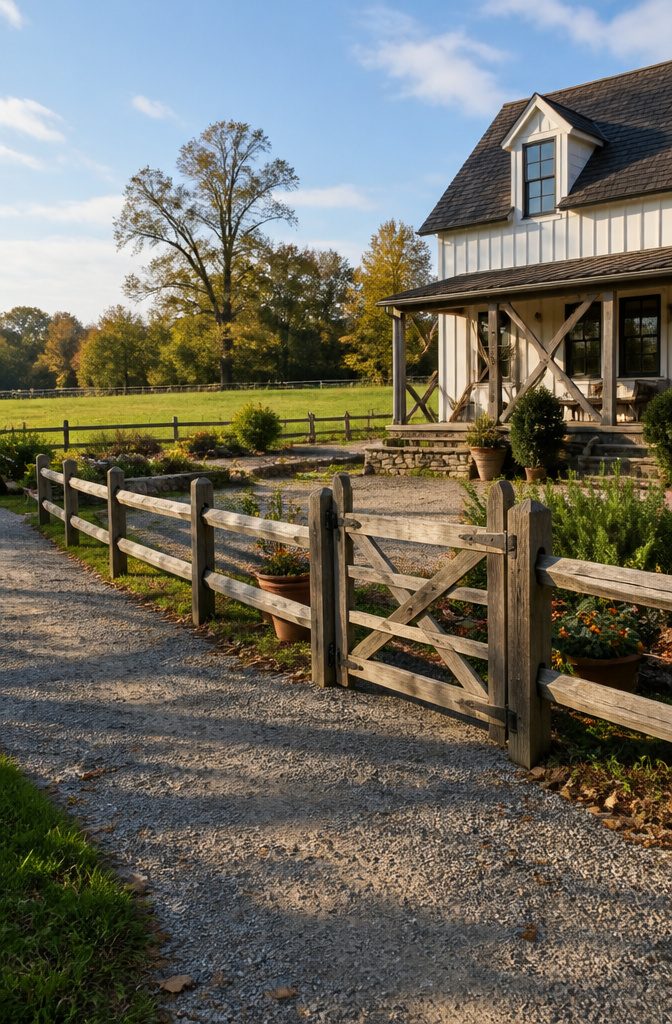
A low split-rail fence marks the boundary without blocking the view, so the landscape beyond stays part of your yard. Emily Henderson’s Oregon farmette shows how: a low split-rail wraps the backyard courtyard, and double-hinged swinging gates open it up.
It reads as "come on in" rather than "keep out." Post-and-rail is the classic build, and pole variants suit the same rustic look. Both pair well with country-style houses and rural decor.
A post-and-rail fence can also pick up a detail already on the house, as it does on an Alabama Tudor, where the wood echoes the X-shaped porch railings. I’d skip it wherever privacy matters, since open rails hide nothing.
Recommended Products

Authentic western backdrop design: Transform any space with these realistic 3D split rail fence posts featuring detailed faux wood grain texture - perfect for creating immersive farm, cowboy, and rustic party atmospheres

DIMENSIONS: Each panel measures 32” H x 48” W

EASY ORDERING: Everything you need for your fence project is in the box except for the final post. Only ONE additional post, BL19112, is required for the end of your project. A gate is available by searching BL19111.
2. White Picket Fence
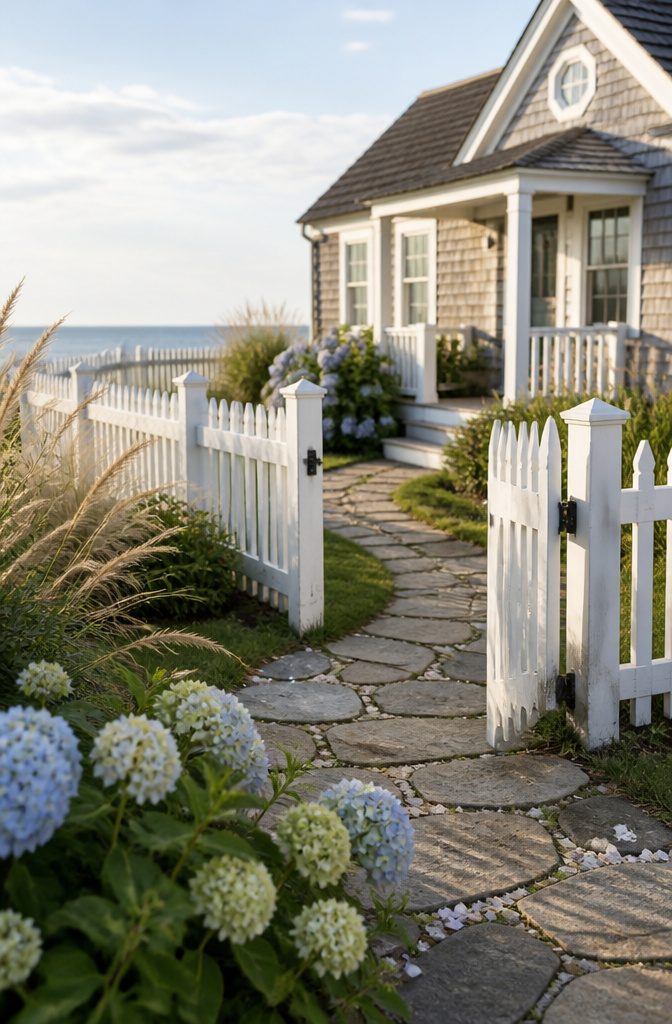
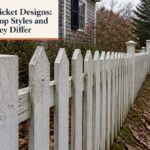
A white picket fence earns its curb appeal by framing the house instead of hiding it.
A Massachusetts beach house shows the formula: white pickets circle the whole exterior, and a stone walkway leads guests toward the door. The fence and the path work as a pair.
Keep the pickets low, usually 3–4 feet, and hang swinging gates where the walkway meets the street.
A low fence with swinging gates reads as a welcome rather than a boundary. This suits cottages, bungalows, traditional homes and coastal houses.
On a sleek modern house the same fence can look too sweet, closer to a stage set than a property line. It also gives almost no privacy or security, so I’d pick something taller if either one matters to you.
Recommended Products

PET & CHILD SAFE: Create a safe outdoor play area for fur babies and children. Rest assured that this fence will create a sturdy barrier to protect your family.

DIMENSIONS: This fence measures 40"W x 30"H ;This item brings 2 panels
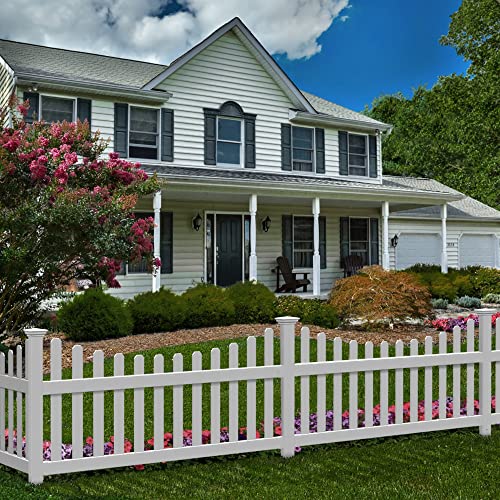
PET & CHILD SAFE: Create a safe outdoor play area for fur babies and children. Rest assured that this fence will create a sturdy barrier to protect your family.
3. Rustic and Antique Wood
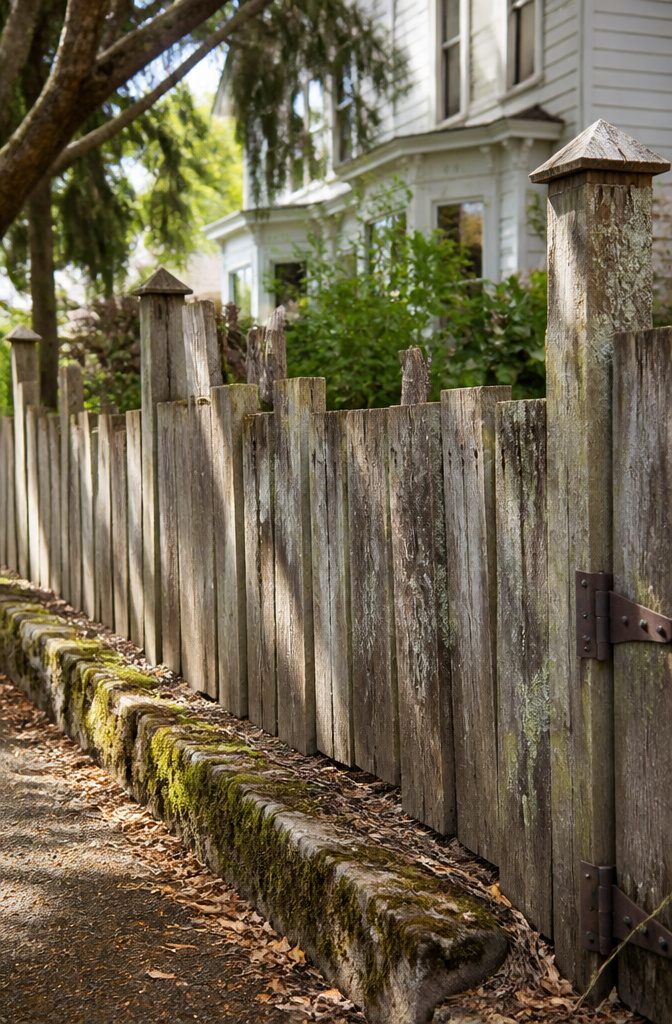
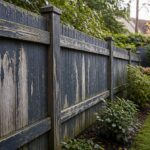
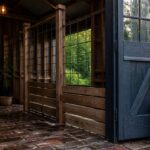
Weathered wood works best when it matches the house. The fence in front of a historic 1800s home in a California State Park shows how: its aged posts echo the building, and some wear tiny roofs.
Knots, chipped paint, and boards of different lengths and widths add to the look rather than spoil it.
This suits older houses and anyone who would rather not chase a flawless finish. I’d choose it over a crisp new fence for a period home.
The upkeep trade-off is that aged wood still rots at the ground line, so check post bases each spring and replace a soft post instead of painting over it. Chipped paint is charm; crumbling wood is not.
Recommended Products

Penetrates & Seals for Long-Lasting Protection – Creates a durable, weatherproof barrier that helps prevent rot, decay, and rust.

✅ Feature: To assemble the Fence brackets for wood.

The fence post clamp fixes the wooden fence securely to the steel fence post
4. Wavy Tops, Stains and Mixed Heights
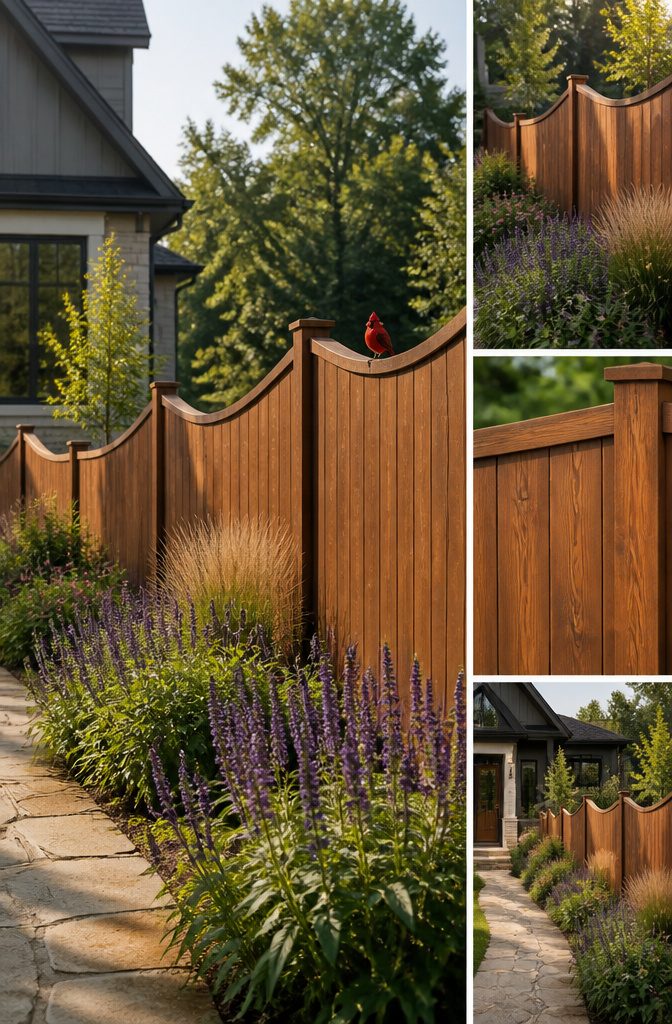
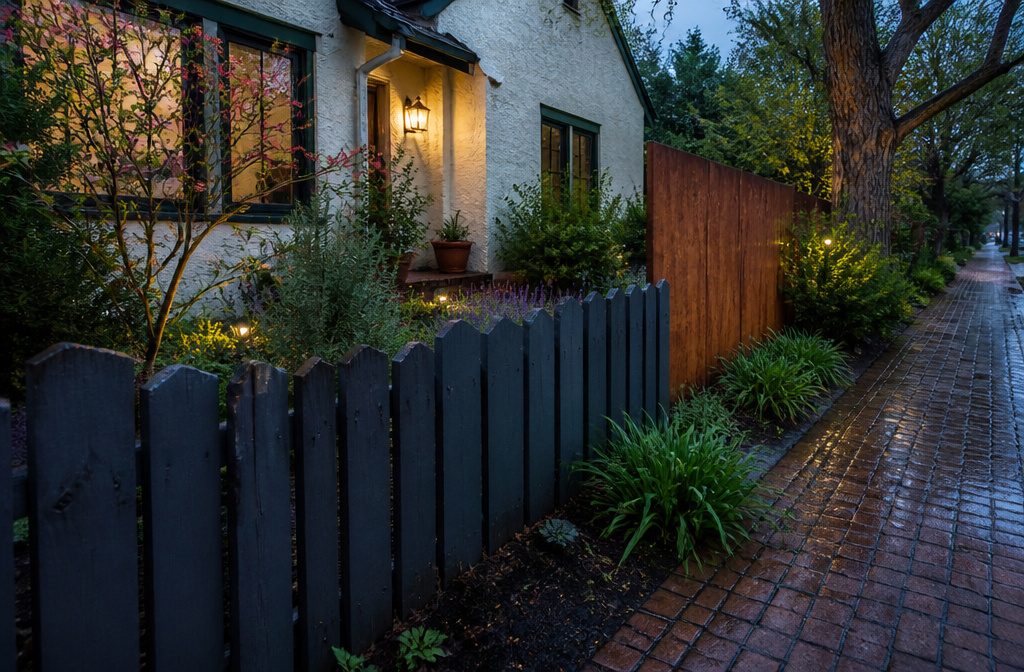
A run of identical flat-topped panels reads as a wall. Varying panel heights breaks that up: step some panels up and others down so the top line has a rhythm instead of a ruler edge.
A wavy top goes further by turning that edge into a curve. I’d keep it to a short front run, because a long stretch of waves gets busy fast, and it is the loudest option here.
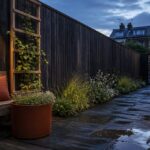
Stain does the quietest work. On a contemporary fence, a warm tone looks best when you pick a stain that complements the perennials planted below it.
Test the color beside your plants before committing to the whole fence. A wood top rail also gives visiting cardinals somewhere to perch.
Recommended Products

DURABLE MATERIAL: Veradek's Outdoor Privacy Screen panels are made from a thick gauge corten steel that will develop a beautiful rust patina naturally over time

DURABLE MATERIAL: Veradek's Outdoor Privacy Screen sets are made from a thick gauge corten steel that will develop a beautiful rust patina naturally over time

DURABLE MATERIAL: Veradek's Outdoor Privacy Screen panels are made from a thick gauge corten steel that will develop a beautiful rust patina naturally over time
5. Vertical Batten and Horizontal Slat
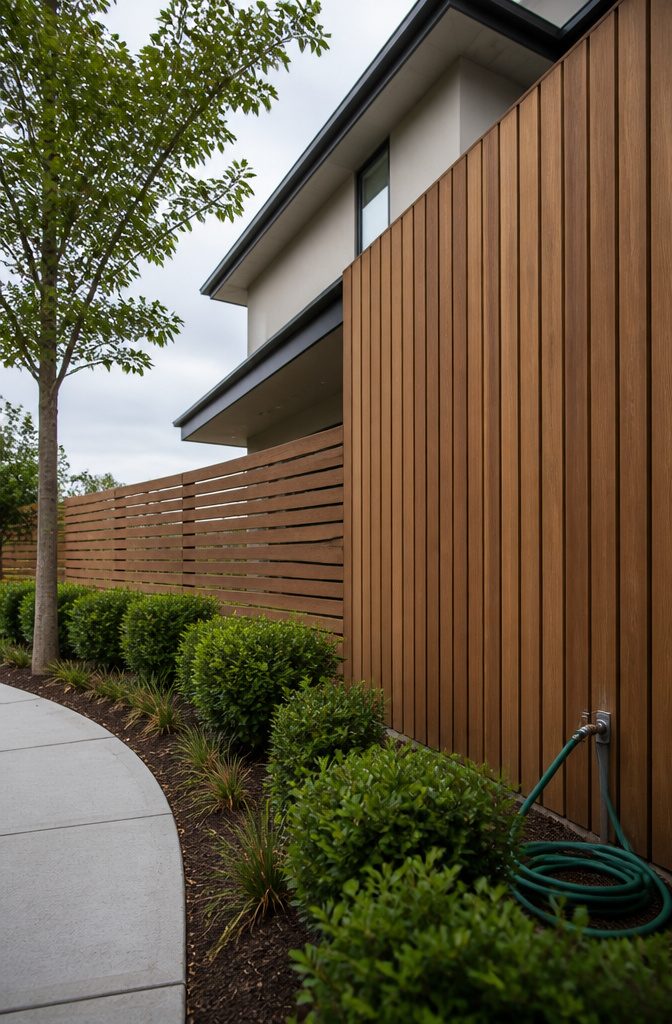
Vertical batten panels are the better pick for keeping dogs and children in. The boards are tall and sturdy, and a wooden batten fence leaves no gaps for a small body to slip through.
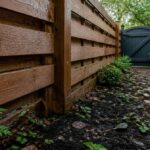
Horizontal slats set with narrow spacing give the same privacy a modern look, and I’d choose them for a plain, contemporary house. Bare slats can look stiff, so plant trees or shrubs in front of them.
Privacy fencing generally runs 6 feet or taller. Front yards are often held to a lower limit than back yards, so check your local height rules before you order panels.
Recommended Products
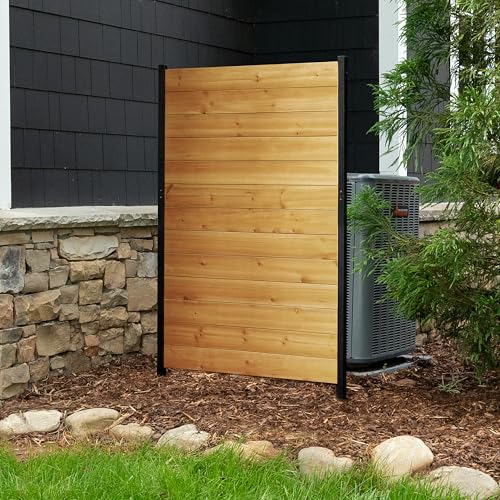
STYLISH NATURAL WOOD: This FSC certified wood screen is made with real wood meaning no two boards have the same grain color, finish, or wood knots differing it from vinyl outdoor privacy fence screen panels.

Brown Fence Slat - Designed for a 4' high fence, slats are approximately 44.5" in length to accommodate the bottom locking channel and to prevent the slats from being above the top of the fence. (Available Colors: Beige, Black, Brown, Gray, Green, Redwood, Royal Blue, Sky Blue, White)

Innovative Design: The wooden fence panels posts features a U-channel design—simply attach the brackets to the posts and slide in (3/4" x 5.5") wood planks to lock. Easy DIY installation and plank replacement, even for one person, saving time, effort, and labor costs in the short and long term
6. Trellis and Planter Fences
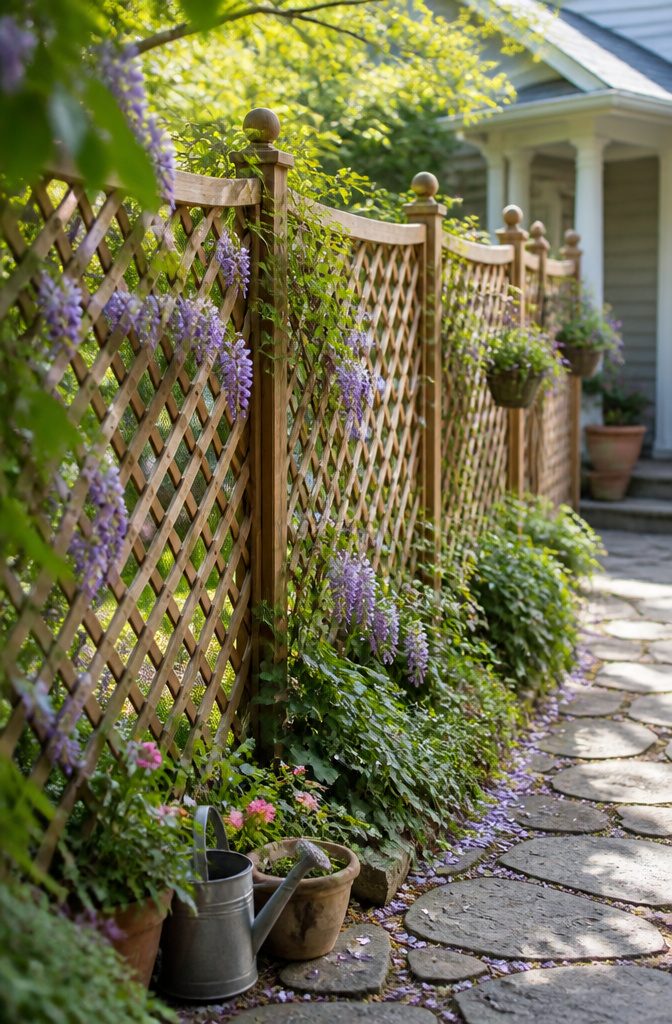
Lattice gives climbing flowers something to grip and still lets a summer breeze through, which a solid board fence can’t do. One Rhode Island homeowner built a backyard fence from trellis and let wisteria fill the gaps.
The same idea works across a front yard, and I’d choose it over solid panels wherever privacy isn’t the main goal, since the vines do the screening as they fill in.
A plain vertical privacy fence you already own can borrow the effect.
Climbing ivy, flowers and shrubs along the base, plus hanging planters, soften a flat wall of boards. Pots set on or beside the posts add color and give a small yard extra container-garden space without using any ground.
Recommended Products

【Renewable Materials】Our wood lattice fence panels is made of natural wood and belongs to Renewable resource. The wooden lattice will not release toxic gases that cause damage to the environment. Therefore, it also not causing harm to you or your plants

【Easeful Elegance】 Transform your backyard into a curated sanctuary with our innovative metal fence post. Designed for those who appreciate both form and function, these privacy fence post allow you to effortlessly assemble horizontal wooden boards into a sleek, modern fence that complements gardens, patios, and lush landscapes. No more uneven nails or messy installations—just clean lines and timeless style.

STYLISH NATURAL WOOD: This FSC certified wood screen is made with real wood meaning no two boards have the same grain color, finish, or wood knots differing it from vinyl outdoor privacy fence screen panels.
7. Wire and Chain-Link Fences
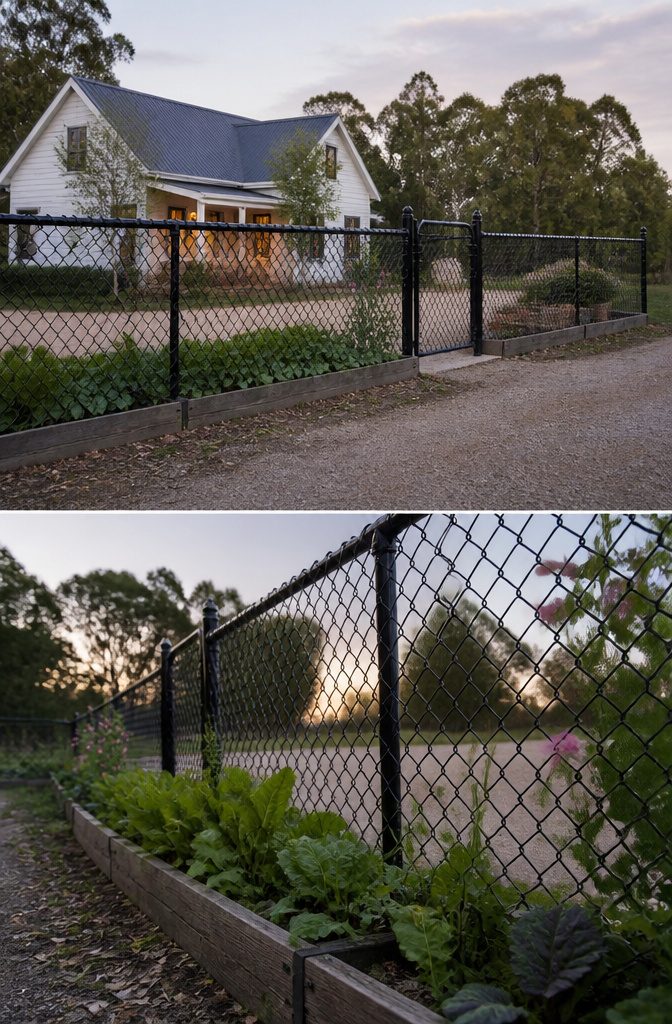
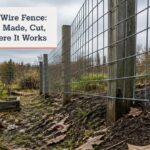
Wood-and-wire keeps unwanted critters out and still lets you see through, which a solid panel can’t do. Hog wire between wooden posts also leaves room for plants, so climbers and trailing flowers can weave through the openings.
For a front vegetable bed, a layer of chicken wire behind a black fence is a proven pairing: it keeps out the animals on a Florida horse farm with 95 of them.
Wire is likely the cheapest fence to install, and chain link is the tried-and-true version.
If the standard metal look bothers you, choose black chain link. It does the same job and looks sleek and modern.
Recommended Products

DOG FENCE: This no dig fence is great for creating an outdoor dog playpen to keep your pet contained. Have peace of mind knowing that your puppy is safe to run within the boundaries of your backyard. Ideal for small to medium sized dogs.

DIMENSIONS: Each panel measures 24" W x 24" H. One box comes with 6 total linear feet of white vinyl picket fence for your garden.

DIMENSIONS: This fence panel measures 30"H x 42"W
8. Wrought Iron and Ornamental Metal
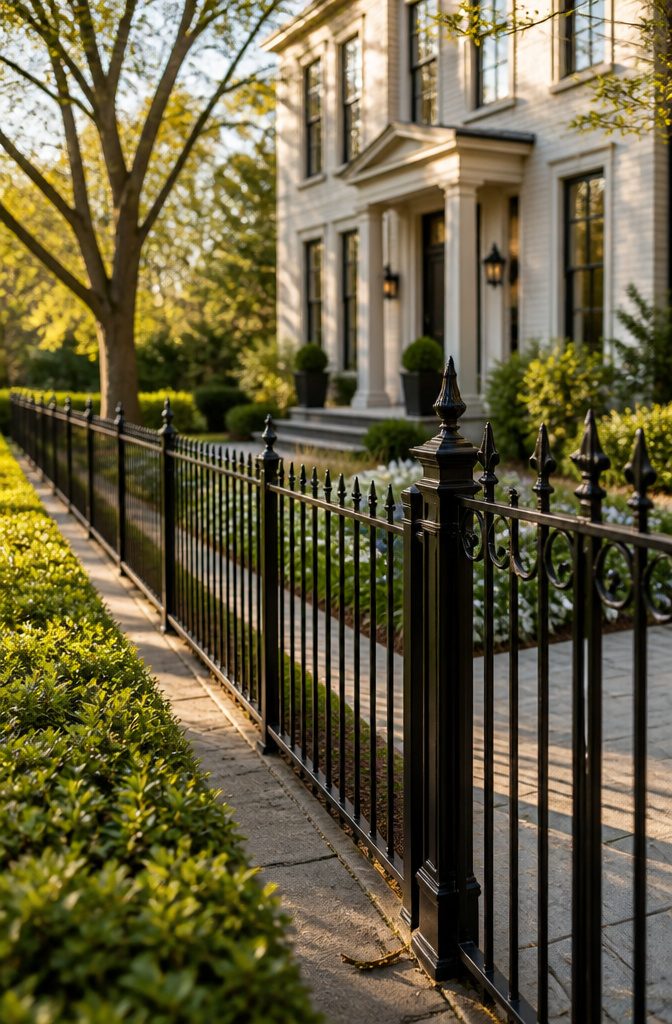
Wrought iron gives a front yard a clean, classic outline.
Slim vertical bars, with scrollwork or finials if you want them, look formal without feeling heavy. Because you can see straight through them, your plants and the house stay part of the picture.
That openness is also the limit. Open metal gives you almost no privacy: neighbors, delivery drivers and anyone walking past can see the whole yard.
For curb appeal and a clearly marked property line, I’d pick iron. If you want the porch screened, plant a hedge behind it or choose a solid style.
A matching driveway gate carries the fence out from the front yard and makes the exterior read as a finished set.
Recommended Products

Track your travels on this beautiful National Geographic push pin travel map

AFFORDABLE and EASY – Create classroom decor for less with Fadeless bulletin board paper. More affordable than non-paper solutions; this bulletin board paper can transform a classroom and be easily changed out.

The iron brackets can be used to securely fix 2-1/2" (2-3/8" OD) wooden fence poles
9. Corten and Modern Metal
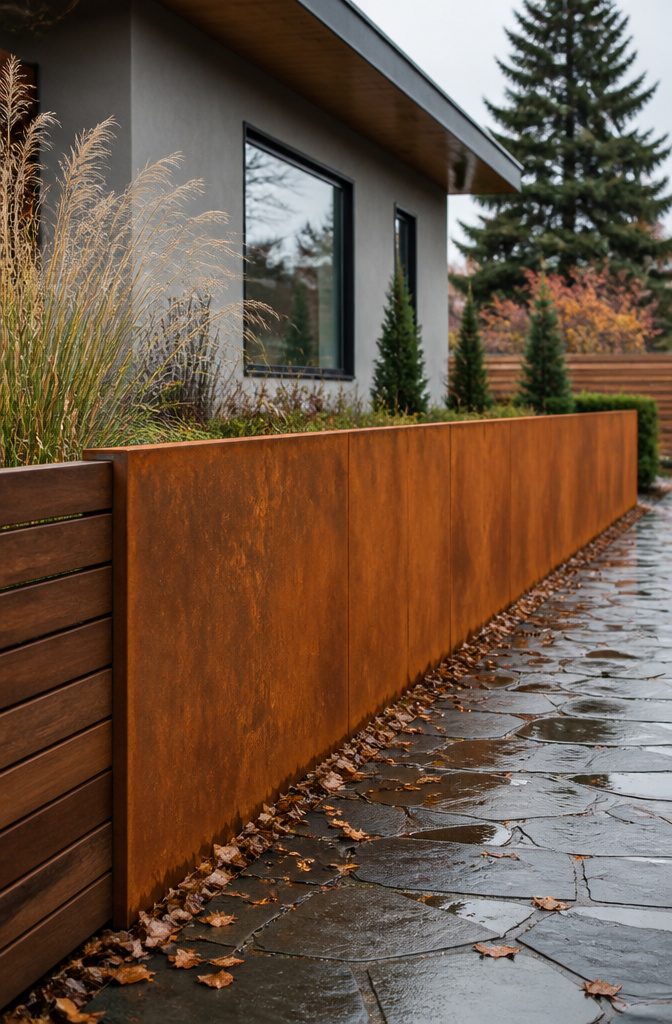
Corten steel starts out silver, then turns orange-brown as an oxidation coating forms in the weather. That coating is the finish, so you never rustproof or repaint it.
Rain, snow, fog and ice don’t undo it, which suits a front yard that takes whatever the season sends. I’d pick it for a modern house with plain lines, where the rust tone reads as deliberate.
Other sturdy metal fencing also gives privacy and holds up in areas prone to flooding or snow.
If solid metal feels cold next to your house, combine it with wood. A wood-and-metal fence adds structural support and keeps the contemporary look, with a warmer face toward the street.
Recommended Products
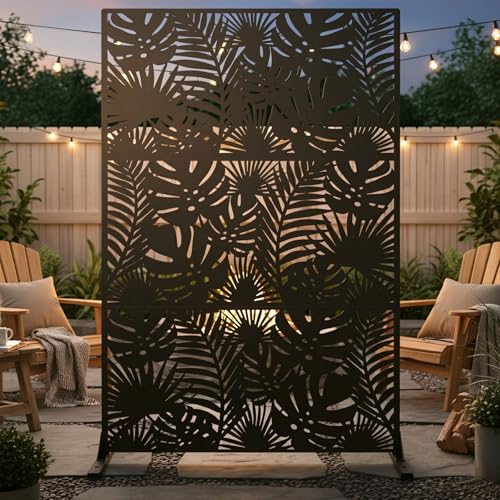
𝗢𝘂𝘁𝗱𝗼𝗼𝗿 𝗣𝗿𝗶𝘃𝗮𝗰𝘆 𝗦𝗰𝗿𝗲𝗲𝗻 𝗳𝗼𝗿 𝗣𝗮𝘁𝗶𝗼, 𝗚𝗮𝗿𝗱𝗲𝗻 & 𝗕𝗮𝗹𝗰𝗼𝗻𝘆:Transform your outdoor area with this decorative metal privacy screen. The 72x44in freestanding panel creates a modern garden divider that shields unwanted views while adding a contemporary touch to your patio, balcony, or backyard.

1 SCREEN PURCHASE: You will receive preassembled materials to construct 1 cedar wood outdoor privacy screen in a charcoal finish with your purchase

【𝐇𝐢𝐝𝐞 𝐎𝐮𝐭𝐝𝐨𝐨𝐫 𝐄𝐲𝐞𝐬𝐨𝐫𝐞𝐬 & 𝐈𝐦𝐩𝐫𝐨𝐯𝐞 𝐂𝐮𝐫𝐛 𝐀𝐩𝐩𝐞𝐚𝐥】Create a cleaner, more organized outdoor space with this air conditioner fence. Featuring 3 panels, each measuring 42" H x 38" W, it provides a total coverage width of up to 9.5 FT. It effectively conceals AC units, trash cans, pool equipment, generators, and utility boxes while creating a cleaner backyard appearance.
10. Brick, Stone and Concrete
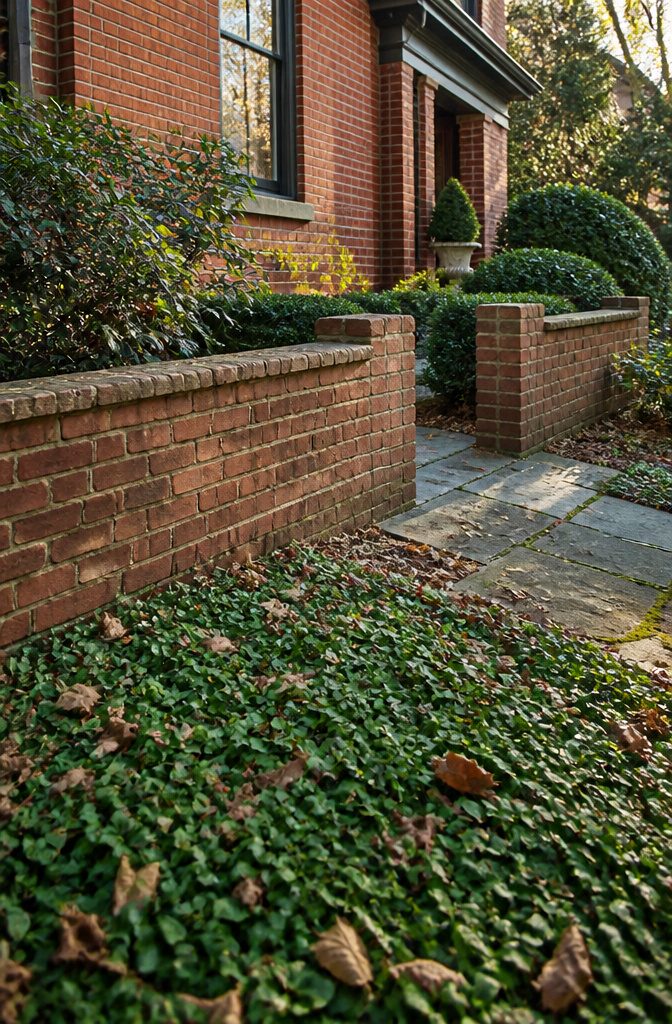
Masonry works best when the house already has some.
Mirror the brick, stone or concrete already on your house, and the fence reads as part of the original design. Brick is the easy choice for a brick home, and it holds up for years.
Limestone, marble and concrete suit homes with stone details, and your budget and the look you want decide among them.
Stone can run short and stout or tall, and either way it looks rustic. For privacy, I’d pick precast concrete panels, which last a long time.
On a house with no masonry at all, I’d choose another material, because a lone stone wall can look out of place.
Recommended Products

Durable, Weather-Resistant Wood: Built for outdoor living. Crafted from solid fir wood and finished with a water-resistant coating, this privacy screen stands up to sun and moisture. The smooth, low-maintenance surface wipes clean easily and can be repainted or re-stained whenever you’re ready for a new look.

Versatility: This wooden privacy screen provides a discreet enclosure, creating a sense of mystery and concealment. It is perfect for hiding unsightly elements like trash cans, HVAC units, and pool equipment, elevating the overall aesthetic of your outdoor space

DIMENSIONS - Outdoor Privacy screen with 3 panels assembled unit measures 38in H x 32in W x 32in D.
11. Stucco Walls and Gabions
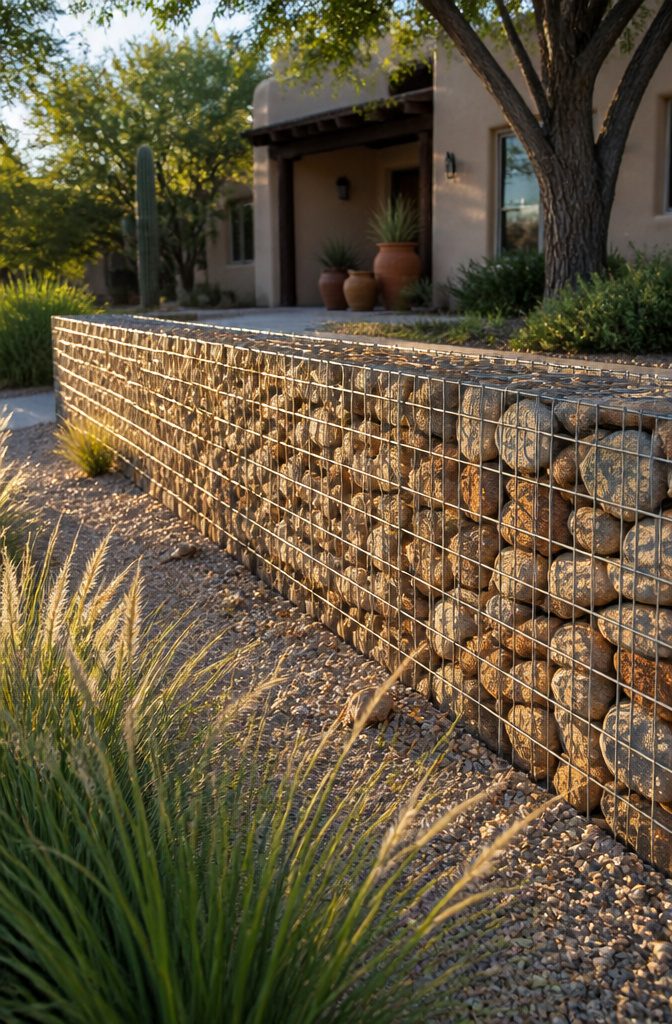
Stucco gives a front yard the feel of a Southwestern or Spanish-style courtyard.
A low stucco or adobe wall breaks wind and shades the space behind it, and it looks best against a house with a matching finish. Keeping it near the common front-yard height of 3 feet leaves the entry open.
Gabions take a different route. A metal cage or basket holds tons of rocks and stones, which gives a stone-wall look with no mortar or masonry.
For a first-time builder I’d pick gabions over a mortared wall, because the job is filling baskets rather than laying courses. Check local zoning for height and material limits before committing to either.
12. Hedge, Bamboo and Woven Screens
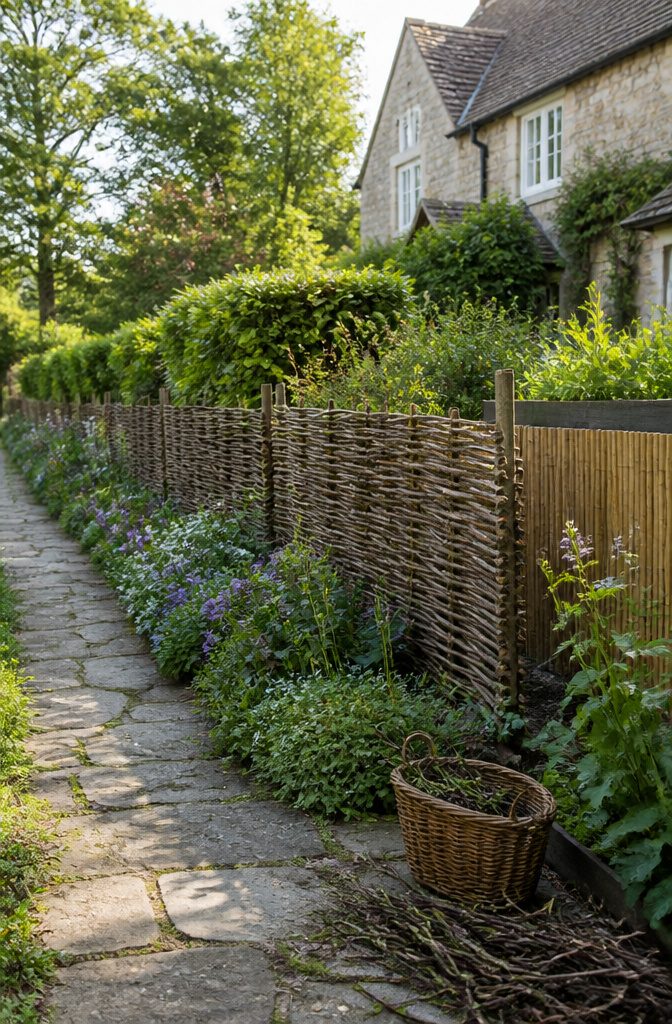
A dense hedge gives privacy without any hardware, but it costs you trimming and ongoing landscaping, so I’d plant one only if you like that kind of weekend work.
Bamboo fencing skips most of it. It’s strong against the elements, costs less than wood or picket, and works as a privacy screen or a border around a garden bed.
The Backyard X-Scapes Rolled Bamboo Fencing is $264 at Wayfair. Buy cut bamboo fencing rather than live plants, because bamboo growing wild in a yard is a problem of its own.
Woven fences, whether loose sticks in a wattle or a tighter basket weave, add movement and a natural look. For a cottage-style front yard I’d choose a weave over a flat bamboo screen, which can feel stiff.
13. Pallet and Wagon-Wheel Fences
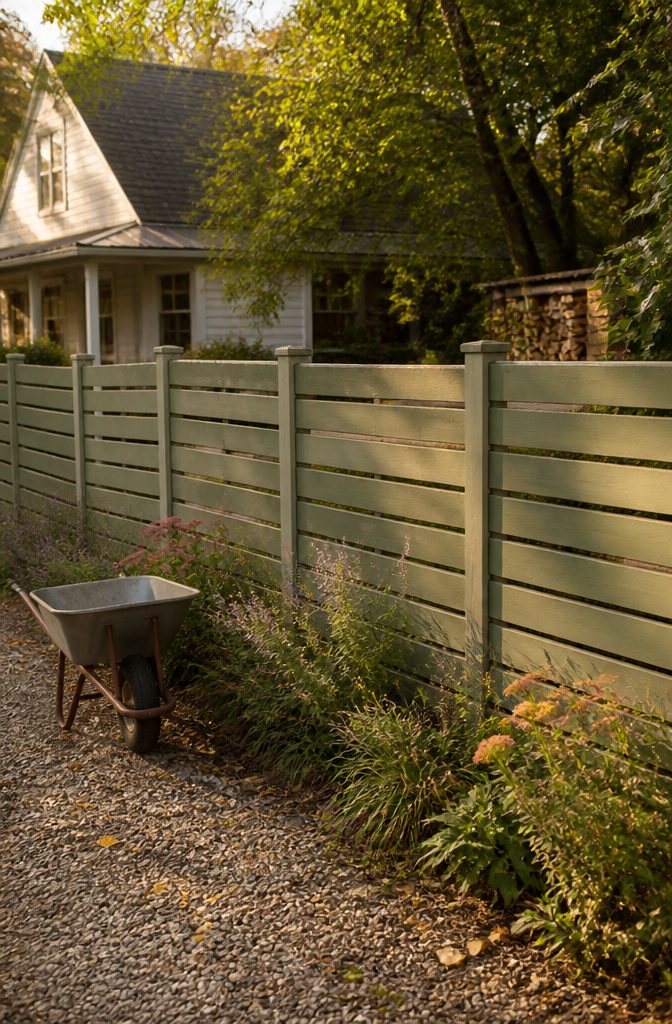
Pallets cost nothing if you ask small businesses, which often have extras to get rid of.
Lining them up cohesively or painting them a bold color keeps the fence from looking like a scrap pile. The effort is real, though.
You’ll be hauling, sorting and matching mismatched pallets before a single section goes up. Repurposed material is the cheapest route after wire, and it is also the most environmentally friendly.
Wagon wheels joined side by side make a far more unusual fence.
It’s a statement piece that suits a rustic or cottage-style house better than a modern one. Commit to either neat, uniform rows or openly mismatched, chipped and weathered pieces, because a half-and-half fence looks unfinished.
Privacy, Height and Local Rules
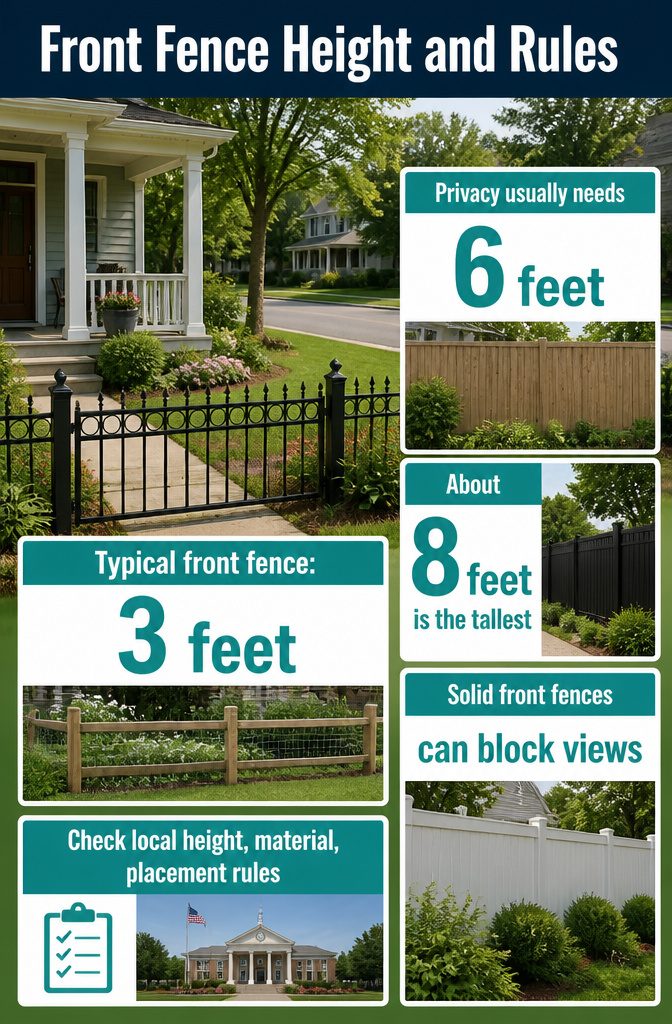
Most front-yard fences stand around 3 feet. That height marks the boundary and still lets you see the street, the porch and anyone coming up the walk.
Split rail, wrought iron and wood-and-wire all work at that height. For privacy, plan on 6 feet or higher; 8 feet is about the tallest you’ll see.
I’d save a solid 6-footer for the side and back yards, since in front it can wall off the house and cut your view of the street.
Check your local zoning before you build.
Rules can limit the fence’s height, its material or where it sits on the lot. A local fence company can tell you what’s allowed and handle the permits.
Match the Fence to the House
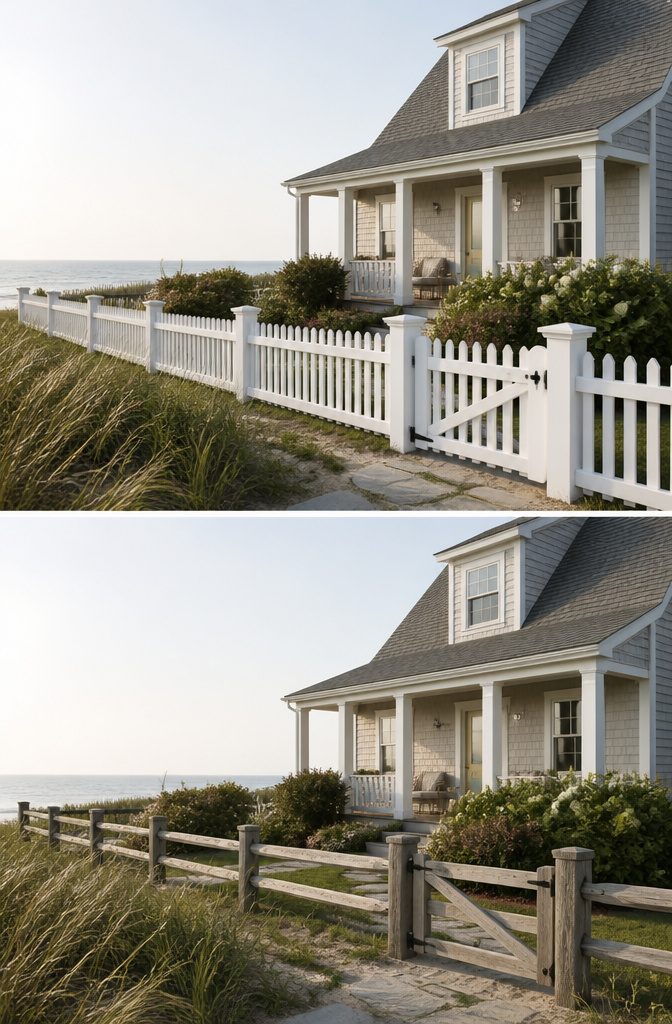
Modern houses suit horizontal slat fences or plain metal; a picket fence on a flat-roofed box looks borrowed from another street.
Farmhouses want weathered or painted wood, and a fence that echoes a detail of the house looks planned, like the tiny roofs over the posts at one historic California home.
For a beach house, go white.
A white fence and a stone walkway give one Massachusetts beach house nearly all its curb appeal. Vinyl, also called PVC, is the budget route to that look because it’s affordable, easy to clean and generally long-lasting.
Southwestern homes suit stone or earth-toned metal. Masonry houses look best with a stone or wrought iron fence that lets the walls stay the focus.
Frequently Asked Questions
Can I put a fence around the front of my house?
Usually yes, but local zoning decides.
Rules can cap the fence height, limit the materials, or restrict where on the lot it can stand, so confirm them before you buy anything. A local fence company can tell you what is allowed and handle the permits.
What is a good height for a front yard fence?
About 3 feet. That height marks the boundary while you can still see the street and the walk.
A privacy fence runs 6 feet or taller, and 8 feet is about the highest you will see, though front yards often have lower limits than back yards.
What is the cheapest fence to put around your property?
Wire fencing, such as hog wire or chicken wire, is likely the cheapest to install, and chain link is the common version.
Repurposed materials like pallets come next in cost. Pallets can be free if you ask small businesses for their spares.