
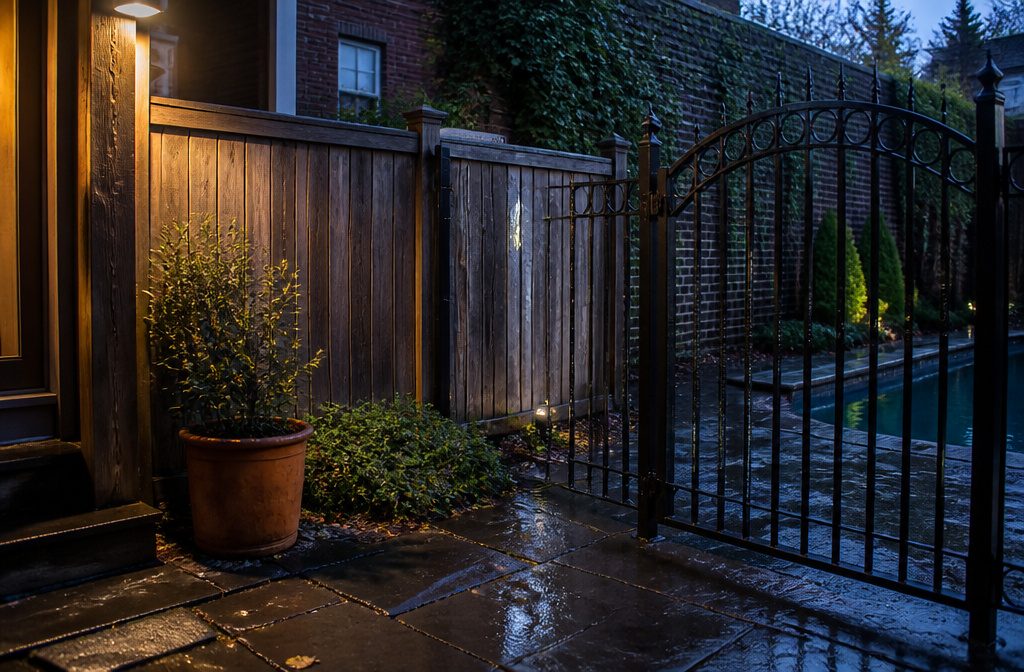
What the fence must do picks the style: solid wood for privacy, wrought iron at least 4 feet high with a self-closing gate for a pool, vines for a small yard.
Call your building department before buying anything, because privacy fences typically stop at 6 feet and toppers or pergolas may count toward that height.
1. Solid Privacy Fence
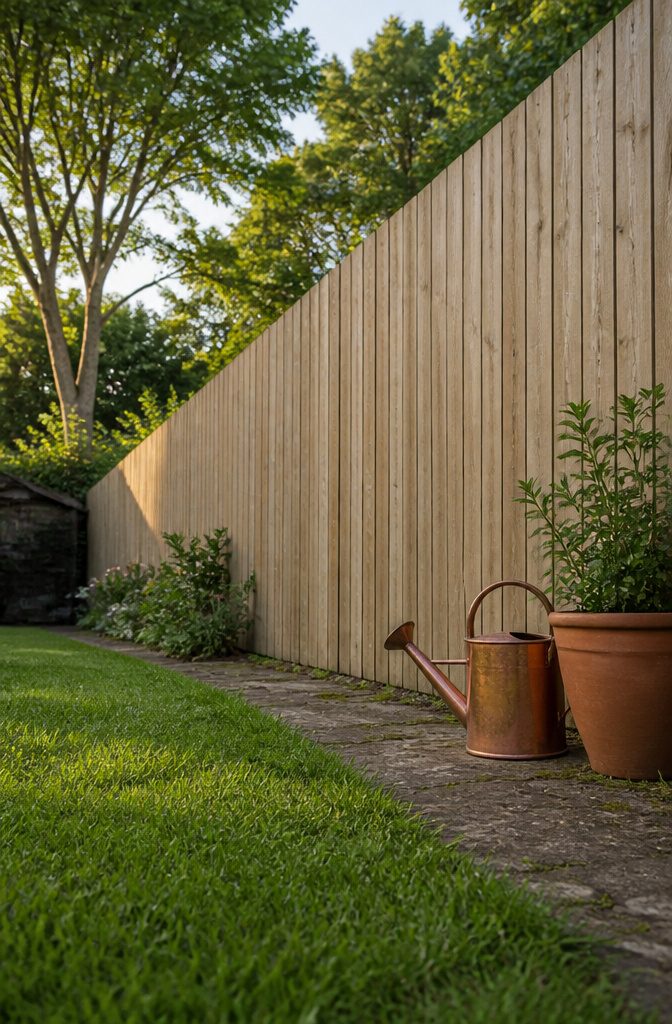
Privacy is one of the most common reasons to fence a yard, and a tall, solid fence is the direct answer. Landscaping Network puts the basic choice simply:
A tall solid fence will separate your outdoor spaces from your neighbors. Privacy fences are usually built with wood, but are available in vinyl also.
For most yards, wood is the better pick, because wood allows more customization.
You can build it plain now and add details later. Vinyl suits a yard where you want a plain solid wall and don’t expect to change it.
Recommended Products
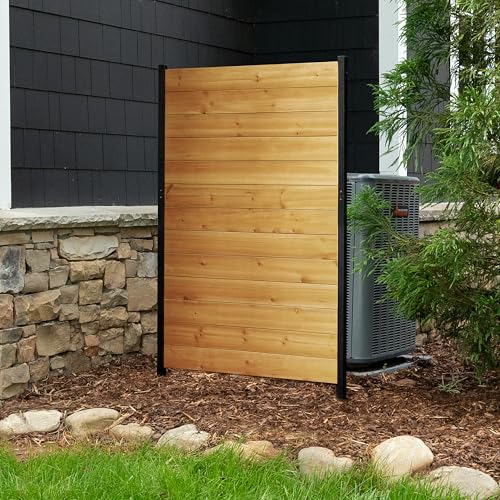
STYLISH NATURAL WOOD: This FSC certified wood screen is made with real wood meaning no two boards have the same grain color, finish, or wood knots differing it from vinyl outdoor privacy fence screen panels.

【Natural Solid Wood with Unique Grain】Crafted from real wood, each privacy screen features its own natural grain patterns, color variations, and wood knots, bringing warmth and character to your outdoor space. Unlike vinyl or composite alternatives, the natural wood construction blends beautifully with gardens, patios, and landscaping.

STYLISH NATURAL WOOD: This FSC certified wood screen is made with real wood meaning no two boards have the same grain color, finish, or wood knots differing it from vinyl outdoor privacy fence screen panels.
2. A 4-Foot Pool Fence
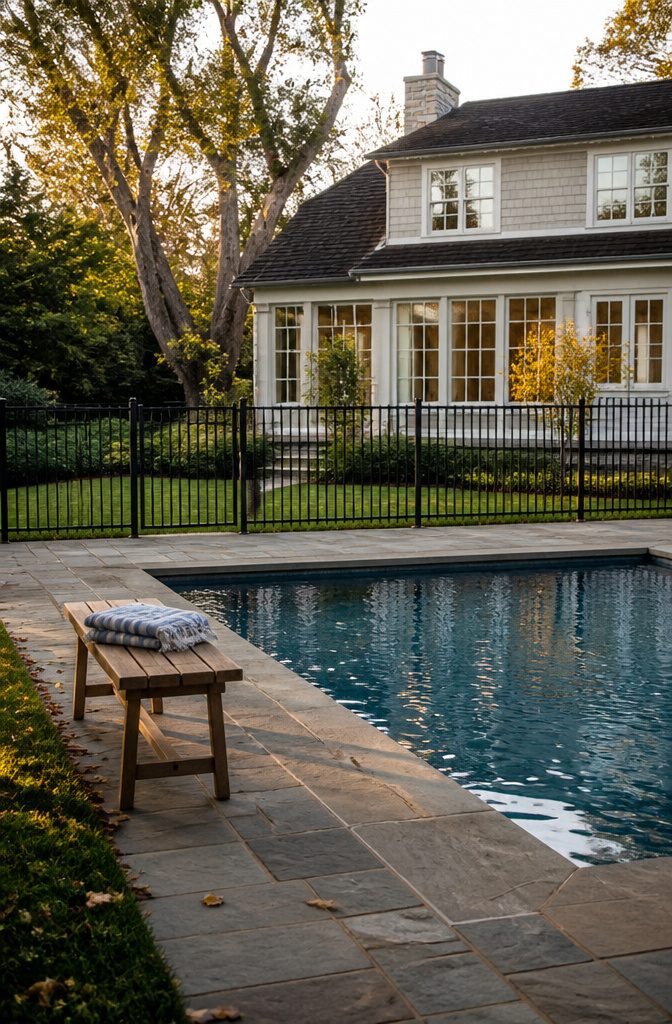
A pool fence exists to keep young children away from the water, so safety settles the design before looks do.
Build it at least 4 feet high and hang the gate so it closes on its own. A gate that relies on someone remembering to shut it will fail on the first busy afternoon.
Height alone doesn’t stop a determined toddler. The best pool fences can’t be scaled, which means no footholds in the design and no chairs, planters or tables nearby that a child could climb.
Wrought iron is the common choice, and I think it earns that spot: the vertical bars give small hands and feet little to grip, and the open look keeps the water in view from the house.
Recommended Products

PREMIUM PROTECTION: This yard lock is for inward and outward swinging wood or metal doors. Its thick steel construction uses gravity locking to provide true safety for dogs, pets, and babies, by preventing predators from getting into your garden.

Removable, mesh, pool safety fencing for use around swimming pools to help protect against accidental falls into the pool.

Portable & Lightweight Iron Design:Experience the perfect balance of portability and strength. Unlike bulky permanent barriers, this portable pool fence features an innovative, lightweight iron mesh design that is incredibly easy to lift, move, and reposition. It offers the sleek protection of a metal pool enclosure without the heavy, unmanageable weight.
3. A Planted Bed Beside the Fence
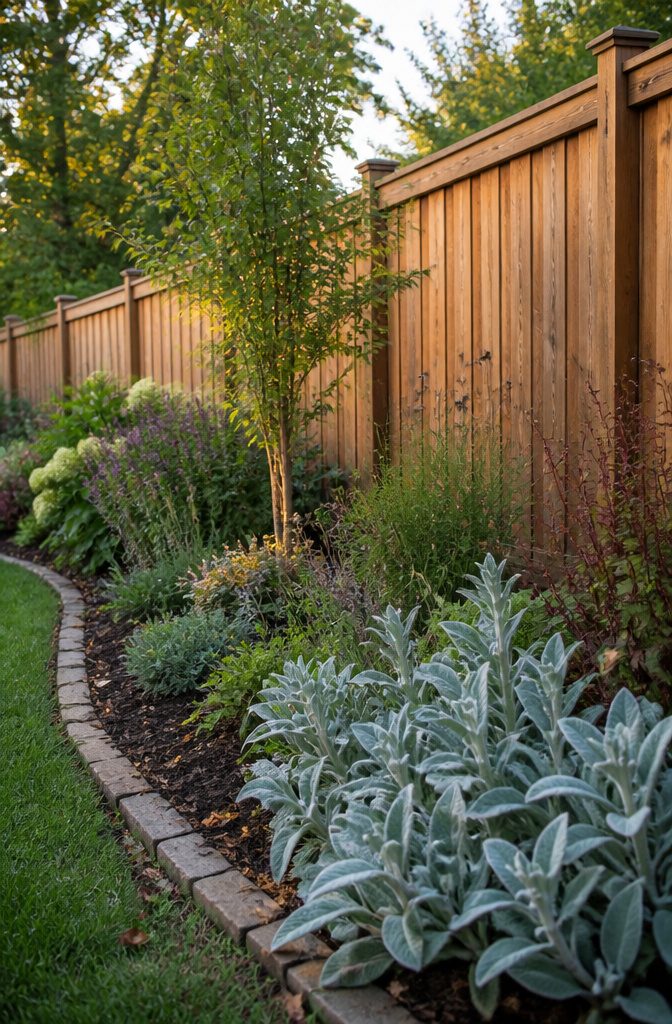
A solid privacy fence reads as a flat wall, and a bed along its base breaks that up.
Curve the front edge in a slow, meandering line rather than cutting it straight, and the eye follows the plants instead of the boards.
I’d fill it with water-wise perennials plus a few other plants at different heights, so the bed looks full without constant watering.
A small tree in the bed is worth planting. It does little at first, but as it matures it adds privacy above the fence line, where a flat panel can’t.
The bed also replaces lawn, and every square foot of bed is a square foot you no longer mow or water. On a tight yearly budget, that saving is real.
Recommended Products

Easy-to-install, do-it-yourself gate kit for use with the Pool Fence DIY safety system; helps keep kids safe from accidental falls into your pool

Sturdy Gate Frame: The exquisitely crafted pool fence gate features 1" thick square aluminum poles and 3.9" long stainless steel legs, providing superior corrosion resistance and durability for long-term stability and safety.

Fast & Easy DIY Installation—The Pool Fence Gate Kit offers the easiest setup for your DIY pool fence gate. Arriving pre-assembled with hinges and a latch, it installs within 25-35 minutes—no drilling or special tools required for setting up the gate components. Ideal for quick pool fence DIY projects, only 2 holes are needed for the gate to secure to your deck.
4. Climbing Vines
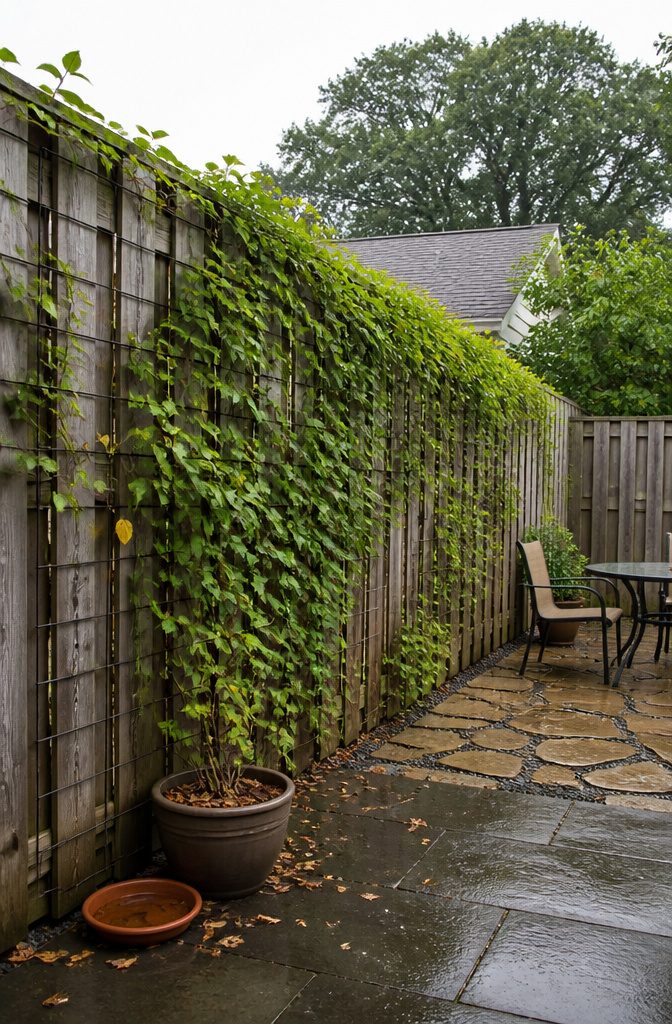
In a small yard, a planted bed along the fence takes ground you may not have to spare, while a vine takes almost none.
The roots sit in a narrow strip or one large container at the base, and the growth heads up the fence face instead of out across the patio or lawn.
Bare boards or panels pick up the softness of leaves without the yard getting any smaller.
Climbers need something to grip, so fix wire, a trellis panel or lattice to the fence first. A flat board gives them nothing to hold.
In a tight yard I’d choose this over a bed every time. A pergola works the same way if you can fit one: vines climb its posts and spread overhead.
Recommended Products

100% REAL WILLOW WICKER MATERIAL: Crafted from premium natural willow wicker fence sticks (1/4" to 3/8" thick), our handcrafted wooden lattice panels are hand-polished without burrs. Weather-resistant, rustproof, and eco-friendly, this willow trellis offers long-lasting natural charm that far outlasts standard wood lattice panels

Enhanced Outdoor Aesthetics: Transform your space with a balcony cover that adds a touch of elegance; enjoy the beauty of faux ivy while ensuring patio fence privacy

This expandable faux ivy fence privacy screen are made of real woods with realistic look artificial leaves.Free replacement within 3 months if you are not satisfied with our products.
5. Reclaimed Wood
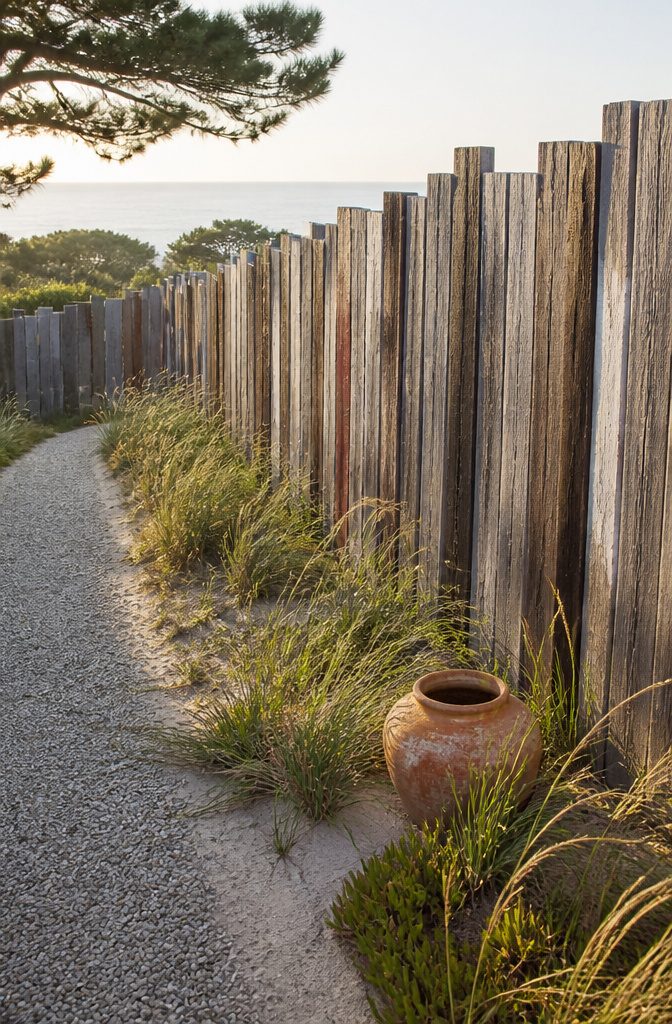
Boards salvaged from old barns, decks and docks rarely match, and that is the appeal.
Set them vertically in mixed lengths so the top edge steps up and down, and let grays, browns and faded reds sit side by side, with the odd board still carrying flecks of old paint.
From a distance the patchwork looks playful, yet the fence still blocks sight lines as long as you butt the boards tight edge to edge.
Near the coast, weathered planks read as driftwood, which suits sea grass and sandy soil better than fresh-cut cedar.
Gather every board before you start and check thicknesses, because uneven stock leaves gaps. I would skip this style if you can’t source enough boards in one go.
Recommended Products

【Renewable Materials】Our wood lattice fence panels is made of natural wood and belongs to Renewable resource. The wooden lattice will not release toxic gases that cause damage to the environment. Therefore, it also not causing harm to you or your plants

Complete Package for Convenience: the wire trellis kit Includes 61m trellis wire and 20 eye screws (diameter 2/10 inches); This package ensures you have all necessary components right at your fingertips, making set up a breeze and eliminating the need for additional purchases

PRODUCT SIZE - Trellis netting 5Ft *15 Ft, 3.5 inch square mesh, easily cut to desired size to use. Important note: The trellis netting comes in a vacuum sealed bag.
6. Two-Tone Wood
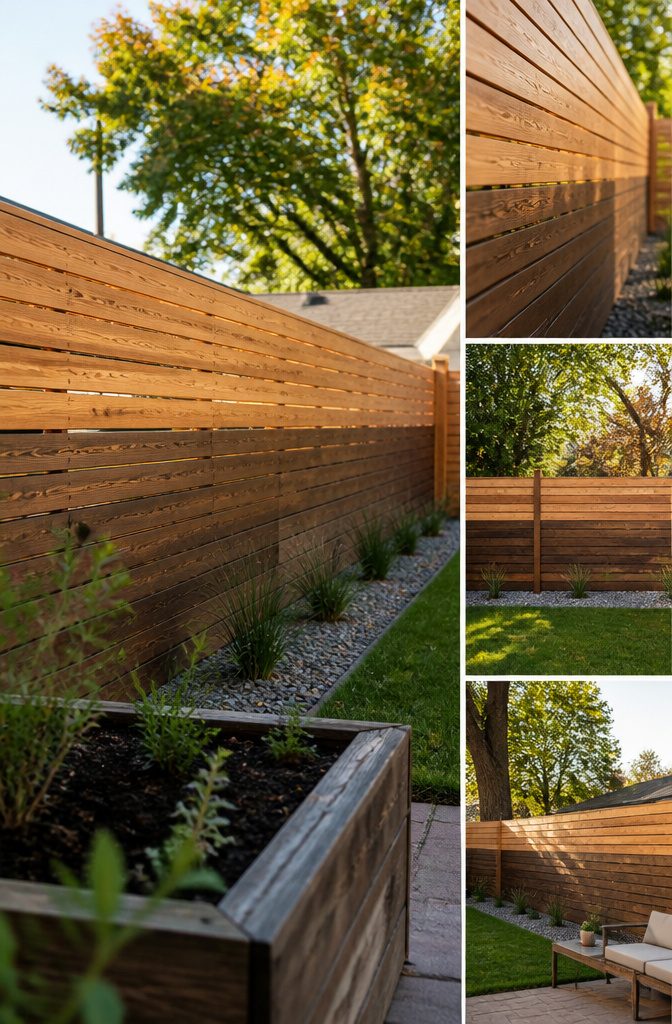
A sealer soaks into the wood and deepens its color, so the grain lines, knots and shifts from pale to dark show up sharply instead of staying muted.
Every board ends up with its own pattern, and a run of them side by side reads as a deliberate design.
The grain does the decorating, and the sealer only reveals it. Paint would cover the very thing that makes this fence look modern, which is why I’d choose sealer over paint for any yard with good-looking boards.
Two tones add contrast. Try a darker lower section under a lighter top, or alternate board colors along the run.
Recommended Products

【Natural Solid Wood with Unique Grain】Crafted from real wood, each privacy screen features its own natural grain patterns, color variations, and wood knots, bringing warmth and character to your outdoor space. Unlike vinyl or composite alternatives, the natural wood construction blends beautifully with gardens, patios, and landscaping.

STYLISH NATURAL WOOD: This FSC certified wood screen is made with real wood meaning no two boards have the same grain color, finish, or wood knots differing it from vinyl outdoor privacy fence screen panels.

Elegant Privacy Solution: This wooden privacy screen create a private retreat with a stylish privacy screen that not only divides spaces but also seamlessly complements your interior décor, enhancing both aesthetics and privacy.
7. Lattice Toppers and Pergolas
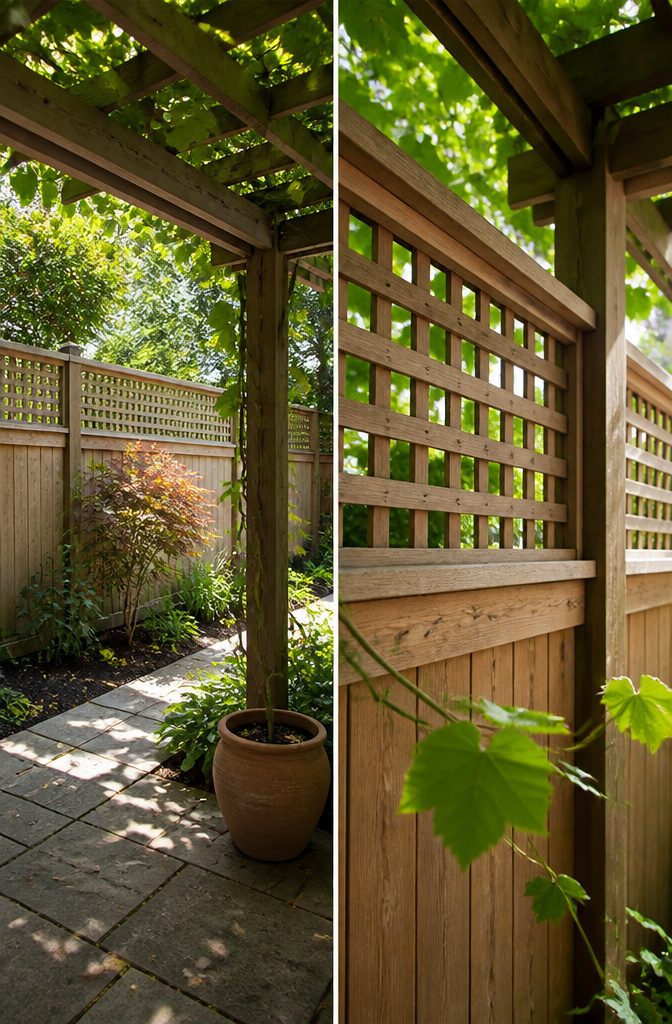
Wood is the material that takes custom carpentry, and two additions are worth the effort.
A lattice topper sits on top of a solid fence and breaks up the flat line of boards. Light and air pass through the gaps, so a tall privacy run feels less like a wall.
A pergola goes further.
Set the posts tall enough to carry the pergola from the start, because stretching them later means cutting into a finished fence. Climbing vines then get a frame overhead as well as along the boards.
For a plain existing fence I’d pick the topper, and save the pergola for a new build where the posts can be planned in. Check local height limits before adding either.
Recommended Products

2. 5" Safety Latch for Pool Fence DIY
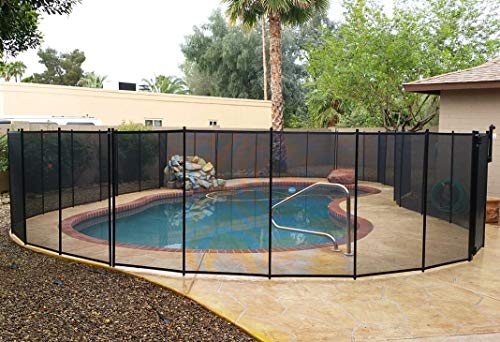
Pool Safety Fence. Our in-ground swimming pool safety fence is designed prevent your pool area from an accidental drowning. Safety Fence which it is a great choice to keep out pets or kids and gives your peace of mind that your child will be safe.

ArrogantF Sleeve and Cap Set for Pool Safety Fence Poles,Can Be Used with Concrete, Pavers, Deck, Ground,For use with the Pool Fence DIY backyard pool safety system from Life Saver or any standard safety fence with ½ inch stainless steel pins.
The 6-Foot Limit and Local Codes
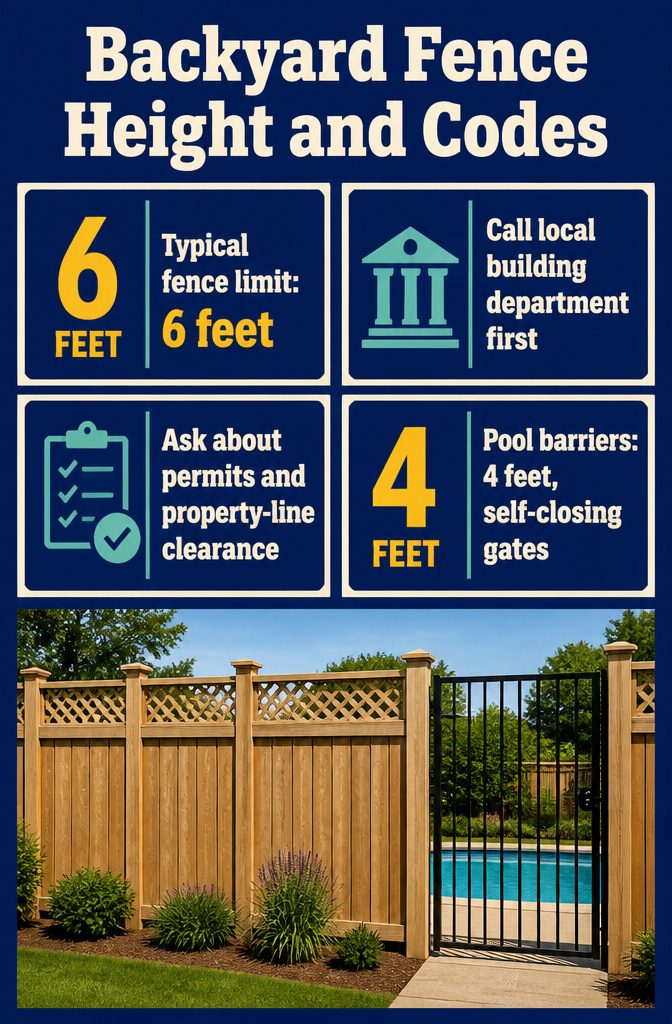
A privacy fence typically cannot go past 6 feet tall, and your local building code has the final word.
Before you commit to any idea above, call the city or county building department and ask 3 things: the maximum backyard fence height, whether you need a permit, and how close to the property line the fence can sit.
Lattice toppers and pergola posts add height on top of the fence itself, so I’d ask whether they count toward the limit before you buy materials.
If a pool is planned, ask what barrier the code requires. A pool fence at least 4 feet high with self-closing gates is the common standard, but your town may ask for more.
Recommended Products

[MATERIAL/FINISH] Made of high quality carbon steel ,Black powder coated. Size:14". Fit for Side Gate,Front Gate,Single Gate, Privacy Gate

𝗔𝗱𝗷𝘂𝘀𝘁𝗮𝗯𝗹𝗲 𝗧𝗲𝗻𝘀𝗶𝗼𝗻 𝗦𝗽𝗿𝗶𝗻𝗴𝘀: Our patented tension adjustment system allows you to customize the closing speed using the included Allen-key. Precisely align the self-closing hinges and latch posts for smooth gate operation and secure latching.

【Automatic Self-Latching & Self-Closing Mechanism 】. Equipped with a premium self-latching gate system and self-closing hinge, this pool safety fence automatically secures the gate behind you every time you pass through. No need to manually check or lock – the pool gate closes and latches instantly, providing continuous protection for children and pets. This hands-free design ensures your pool area remains safely enclosed even when adults are distracted, giving you true peace of mind.
Wood, Vinyl and Wrought Iron
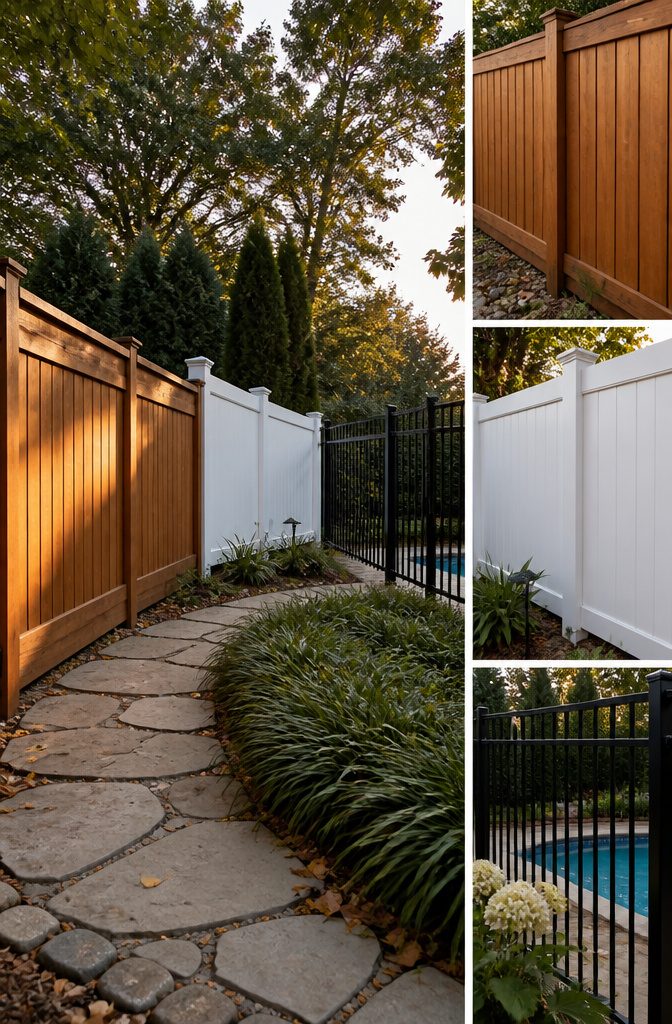
I pick wood for most privacy fences because it gives you the most room to customize: it takes a sealer, a lattice topper or an attached pergola for vines.
Vinyl is the alternative for privacy. For a pool, wrought iron is the usual choice because children can’t scale the best pool fences.
| Material | Typical use | Look | Customizing |
|---|---|---|---|
| Wood | Privacy fences | Natural grain, deepened by sealer | Sealer, lattice, pergolas |
| Vinyl | Privacy fences | n/a | n/a |
| Wrought iron | Pool fences | n/a | n/a |
| Reclaimed wood | Privacy fences | Whimsical, like driftwood | Boards in mixed lengths and colors |
Recommended Products
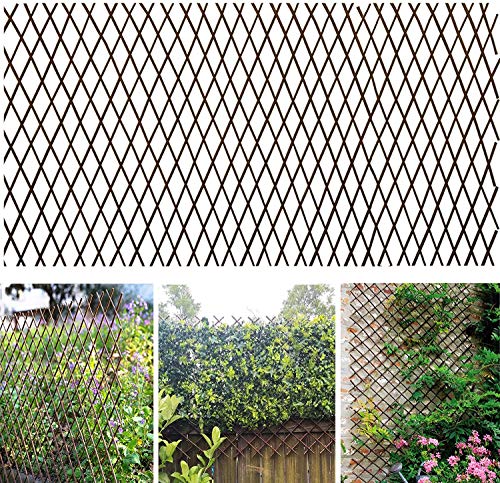
Willow Garden Trellis:This vine trellis are made of 100% real willow,willow sticks is are about 1/4” to 3/8” thick

Details: Artificial ivy wall is 120 inches long and 60 inches wide, with green faux ivy leaves. Made up of 18 small panels (connected).Can cover 50 square feet. the faux Ivy Vine are textured and look real. You can reassemble or cut to get the size you want. 50 cable ties are included to assist in installation.

Excellent material:The expandable faux ivy privacy fence are made of real willow wood material with realistic look artificial leaves. Realistic and textured artificial leaves are made of high-quality stabilized polyethylene materials, so it’s sunlight & water resistant and all year green.
Frequently Asked Questions
Recommended Products

Willow Trellis:This plant support are made of 100% real willow,willow sticks is are about 1/4” to 3/8” thick

Material:The fixed clip knob made of high-quality environmentally friendly ABS resin material,High-viscosity adhesive,no longer worries about falling off.The fixed clip knob is designed to be easy to use and firm.

Trellis Netting Polyester Nylon: Our trellis netting is made of durable polyester nylon materials,strong and durable, not easy to break, reusable,can support extremely heavy crop loads, protect plants from damage, able to grow vertically
What is the best fence for privacy in a backyard?
A tall solid fence built with wood is the best choice for privacy.
Wood lets you customize the design later, while vinyl works if you want a plain wall you won’t change. Add a planted bed or climbing vines along the base to soften the flat look.
How tall should a pool fence be?
A pool fence should be at least 4 feet high with a self-closing gate.
The design must prevent climbing, so avoid footholds and keep chairs or planters away from the fence line. Wrought iron is the standard pick because vertical bars give small hands and feet little to grip.
What is the maximum height for a backyard fence?
Most backyard fences cannot go past 6 feet tall, but your local building code sets the final limit. Call the city or county building department before you start, and ask whether lattice toppers or pergola posts count toward the height restriction.
What can I plant along a fence for privacy?
Plant a bed with water-wise perennials at different heights along the fence base, and curve the front edge so the eye follows the plants instead of the boards.
Add a small tree for privacy above the fence line as it matures. Climbing vines work in tight yards where a bed would take too much ground.
Should I use wood or vinyl for a privacy fence?
Wood is better for most privacy fences because it takes sealers, lattice toppers and pergolas for vines.
Vinyl suits a yard where you want a plain solid wall and don’t plan to change it. Both block sight lines when installed correctly.
How do I make a tall fence look less like a wall?
Add a lattice topper on top of the solid fence so light and air pass through the gaps.
Plant a bed along the base with a curved front edge, or train climbing vines up the boards. A small tree in the bed adds height and softness as it grows.
What should I put on a wood fence to make the grain show?
A sealer soaks into the wood and deepens its color so the grain lines and knots stand out sharply.
Every board ends up with its own pattern, and a run of them reads as a deliberate design. Paint would cover the grain, which is why sealer is the right pick for good-looking boards.









