
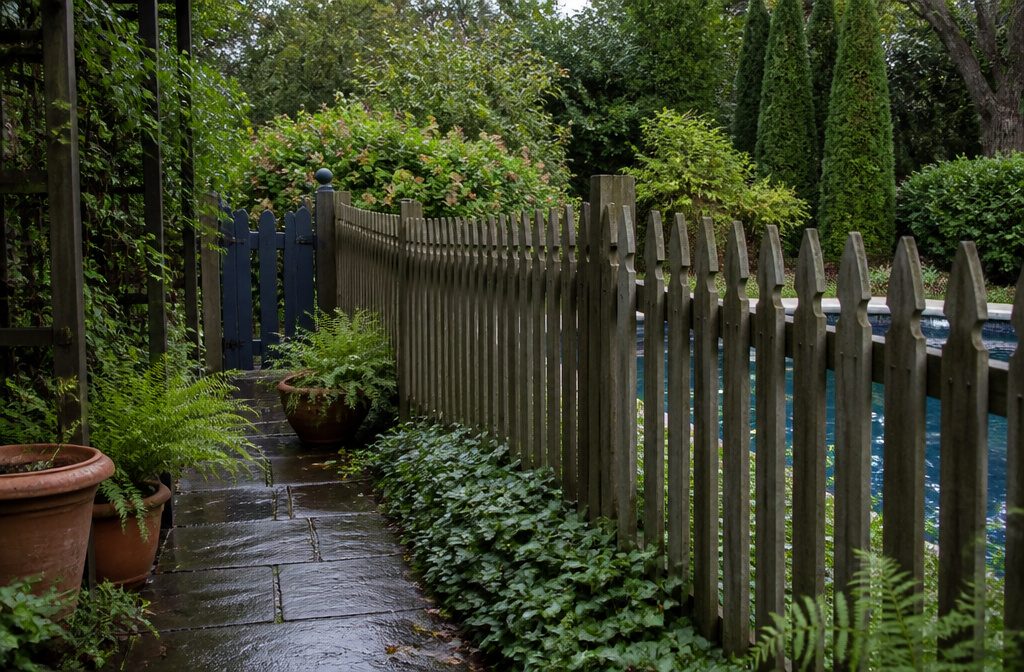
What the fence has to do decides the style. A 3-foot picket only frames a yard and won’t keep a pet in or a stranger out, while tall, tight-board pickets give privacy but cost more because they need larger pieces.
Near a pool, the 4-foot Victorian is the one listed as code compliant, so check local code first.
1. Classic Named Picket Styles
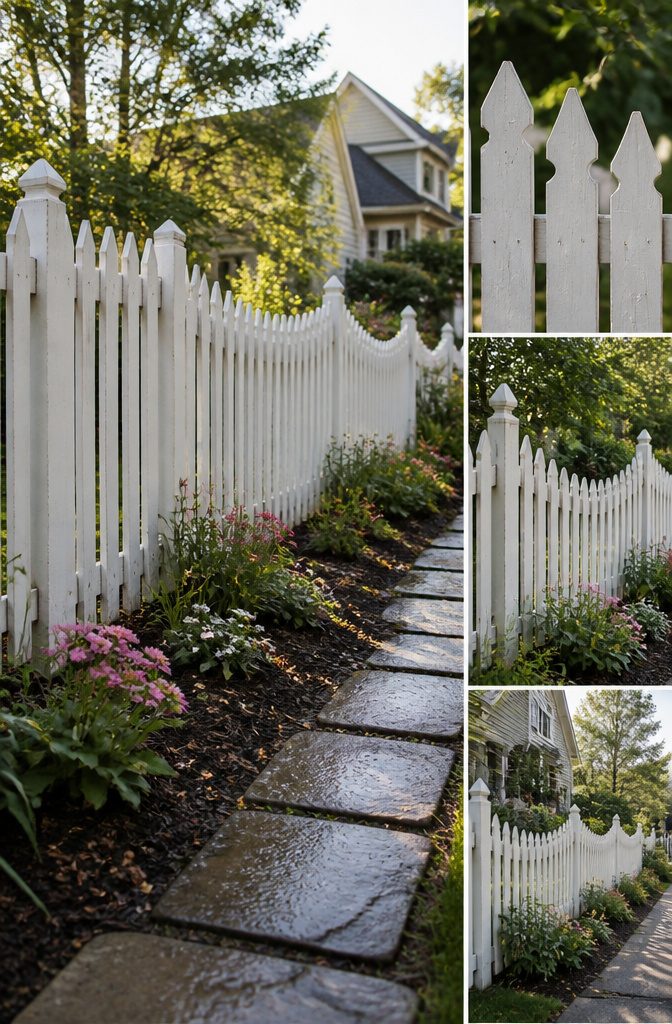
"Picket" comes from the French piquet, a pointed stake, and the top shape still separates one named style from the next. Gothic pickets end in a sharp point and look the most formal.
Dog ear pickets have clipped corners, which reads softer and more rustic. Victorian, Bishop, Cottage, Stockade and Board pickets fill out the traditional lineup, usually at 3, 4 or 5 feet.
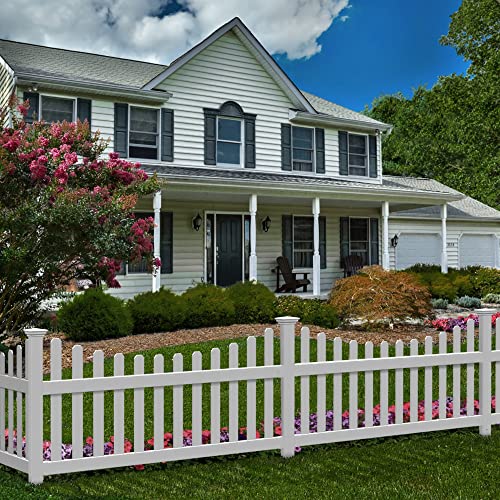
Spacing and top line matter as much as the picket. A scalloped top dips in an arc between posts and feels more decorative, while a straight top looks cleaner and more modern.
For a pool, the 4-foot Victorian picket is the one listed as pool code compliant, but confirm your local code first.
Recommended Products

PET & CHILD SAFE: Create a safe outdoor play area for fur babies and children. Rest assured that this fence will create a sturdy barrier to protect your family.

NO-DIG GARDEN FENCE FOR SMALL DOGS: Create a visible boundary around gardens, patios, or yards—discourages wandering without permanent installation (light pet barrier).
2. Decorative Wave Fence
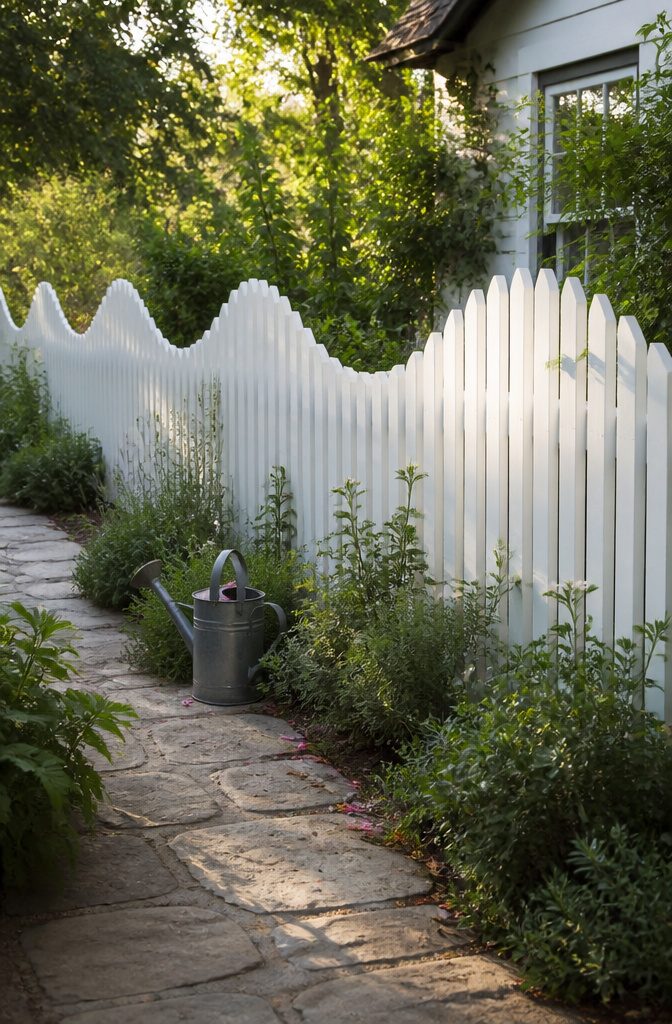
A wave fence is made by cutting a wave-shaped edge into each vertical slat, then mounting the slats on horizontal rails. Side by side, the cut edges create a rolling top line.
A straight-top picket reads as tidy and orderly, while the wave line makes the same fence look ornamental and playful. It is most often shown in white, which keeps the curve crisp against greenery.
I’d use it on a cottage or a relaxed, casual house, where the movement adds charm. On a strict, formal facade with sharp rooflines, the curves can compete with the architecture, and a plain picket is the safer pick.
Recommended Products

Miniature Adorable Size: This outdoor fairy garden accessory measures 90cm (35.5") in total length and 5cm (2") in height. Its perfectly miniature size helps create enchanting tiny landscapes and enhances your fairy garden supplies collection.

EASY ORDERING: Everything you need for your fence project is in the box except for the final post. Only ONE additional post (BL19042) is required for the end of your project. The compatible gate is (BL19102).

【Mini Fairy Garden Decoration】Fairy garden accessories outdoor are perfect for enhancing your miniature world. Fairy garden decor like this white picket fence adds charm to any setting. Fairy Garden supplies can be used for a variety of creative DIY projects
3. Cut-Out Ornamental Panels
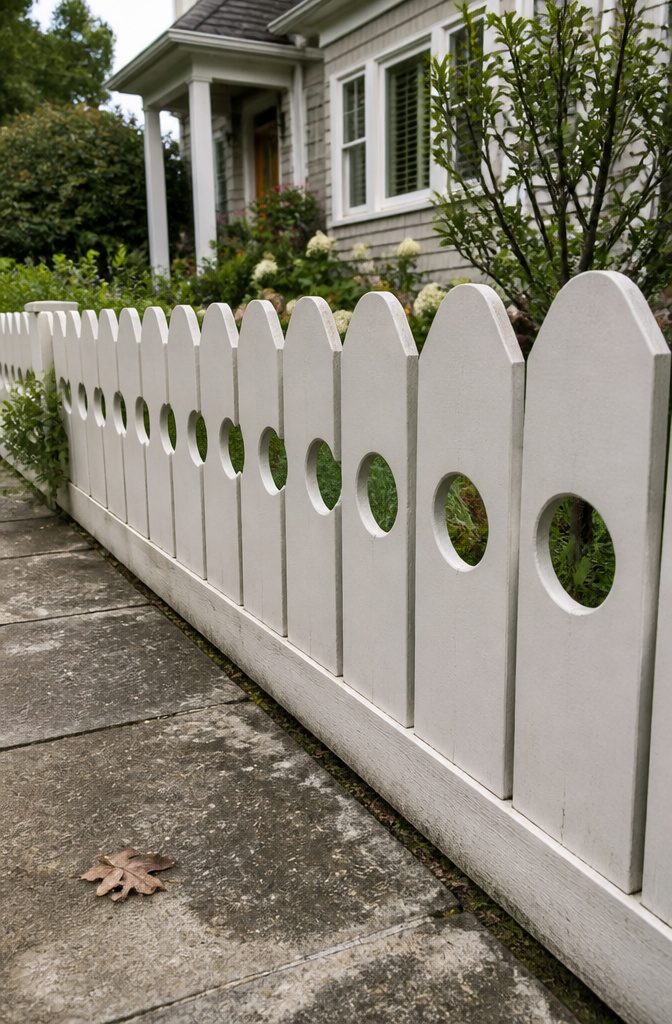
Square, circle and diamond openings cut into fence panels add decoration and a touch of whimsy that plain boards can’t.
Simple usually wins: I’d pick one shape and repeat it along the run. You can combine patterns, but only a plain house can carry that much going on.
Cut-outs work best on a front-yard fence or along a walkway, where passersby actually see them. They also give a dog a spot to greet people on the other side.
Every opening is a gap, though, so cut-outs are a decorative choice, not a privacy one. If you want a screened seating area, keep those panels solid and save the cut-outs for the sections facing the street.
Recommended Products

Sufficient Quantity: our product package includes 4 x Vinyl pocket rails; These are precision-crafted and come in an aesthetic white color adding value and elegance to your property; Trust our quality and design to provide your property with an attractive, durable and secure construction

Brown Fence Slat - Designed for a 6' high fence, slats are approximately 68.5" in length to accommodate the bottom locking channel and to prevent the slats from being above the top of the fence. (Available Colors: Beige, Black, Brown, Gray, Green, Redwood, Royal Blue, Sky Blue, White)

DIMENSIONS: This fence measures 40"W x 30"H ;This item brings 2 panels
4. Rounded Paddle Pickets
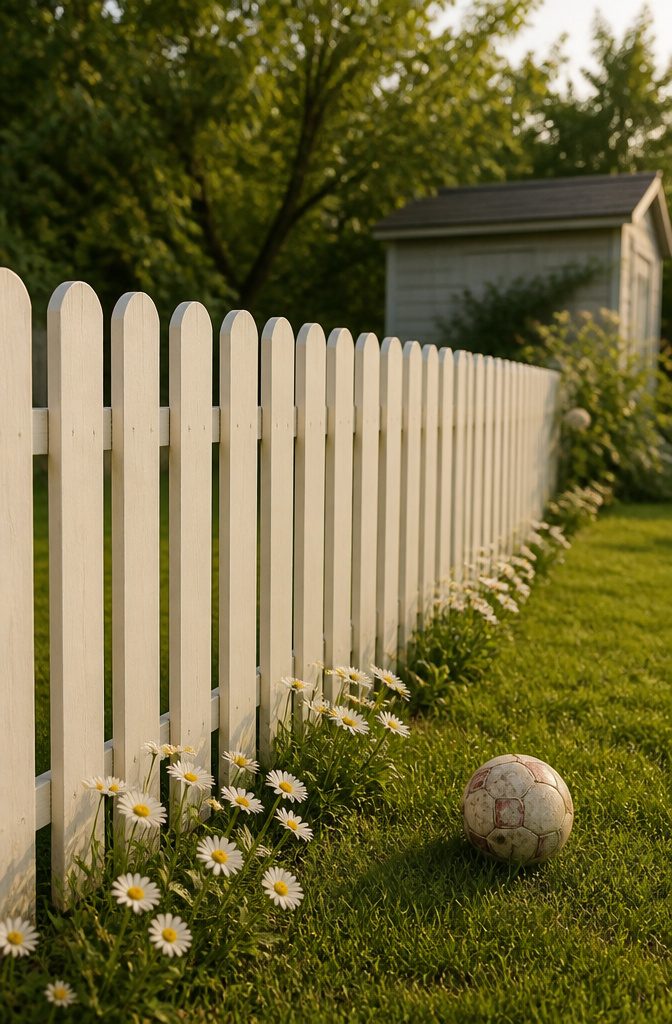
Rounded tops are the safest picket for a yard where kids run, climb and lean on the fence, because there is no tip or sharp corner to poke a hand or scrape an arm.
A picket with a rounded top is called a paddle picket.
Pointed Gothic tops end in a tip, and dog ear tops keep angled corners, so both look sharper up close. For a family yard I’d choose the rounded paddle top over either one.
It also adds a soft, cheerful look to a garden or backyard. Gothic points suit a more formal front yard, but you give up that gentler edge.
Recommended Products

MADE IN THE USA
6 PICKET FENCE CUTOUTS: Includes 6 white cardstock fence decorations featuring pointed pickets and a classic garden-inspired design

2-Piece Mini Fence Set: This set includes 2 white mini picket fence pieces, giving you enough decorative material for small landscape arrangements, plant pot projects, dollhouse scenes, and DIY display ideas.
5. Tall Privacy Pickets
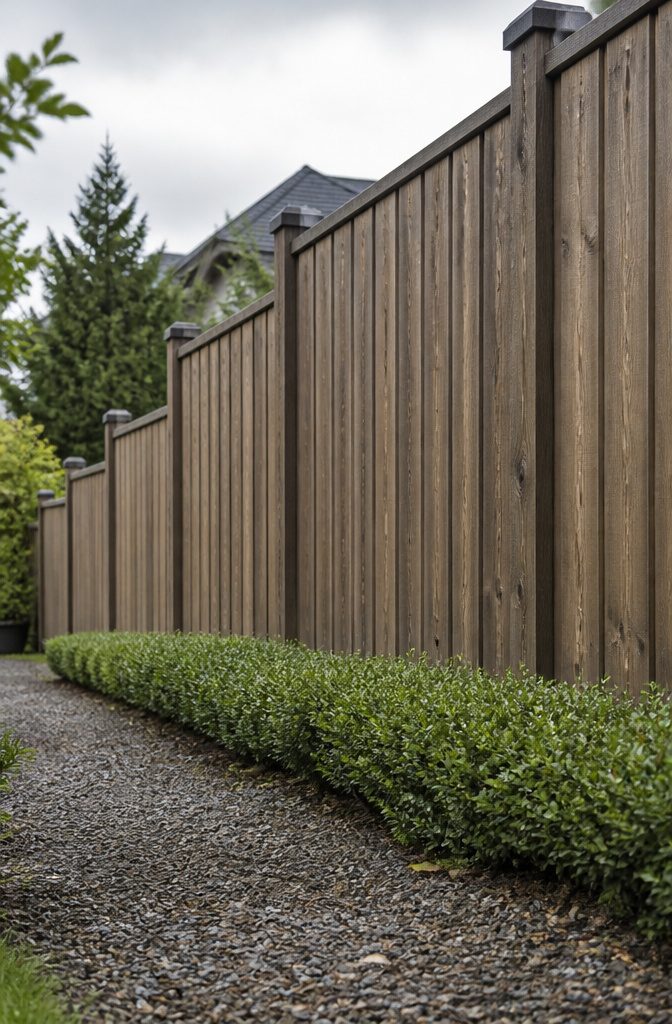
Close up the gaps between pickets and the fence starts working like a privacy fence.
Tight boards block views into the yard and stop a small dog or a toddler from slipping through. Closely built panels also hold up against heavy rain, storms and snow drifts.
Height adds security.
A tall picket fence is the better choice if burglars are your worry, because it hides the house and yard from the street. Taller pickets cost more, since they need larger pieces of wood, vinyl, metal, composite or PVC.
To keep the bill down, I’d go tall only where privacy matters most, such as the sides facing neighbors, and keep the front section lower.
Recommended Products

Product Size: The size of each mini fairy garden fences is about 90x5cm/34.43x1.96in, which can be cut into suitable lengths as needed to suit the decoration of any space.

DIMENSIONS: Each unit is 41" H x 44" W and includes 2 complete fence panels with posts for a total of 88in of fence.

DOG FENCE: This no dig fence is great for creating an outdoor dog playpen to keep your pet contained. Have peace of mind knowing that your puppy is safe to run within the boundaries of your backyard. Ideal for small to medium sized dogs.
6. Short Decorative Fence
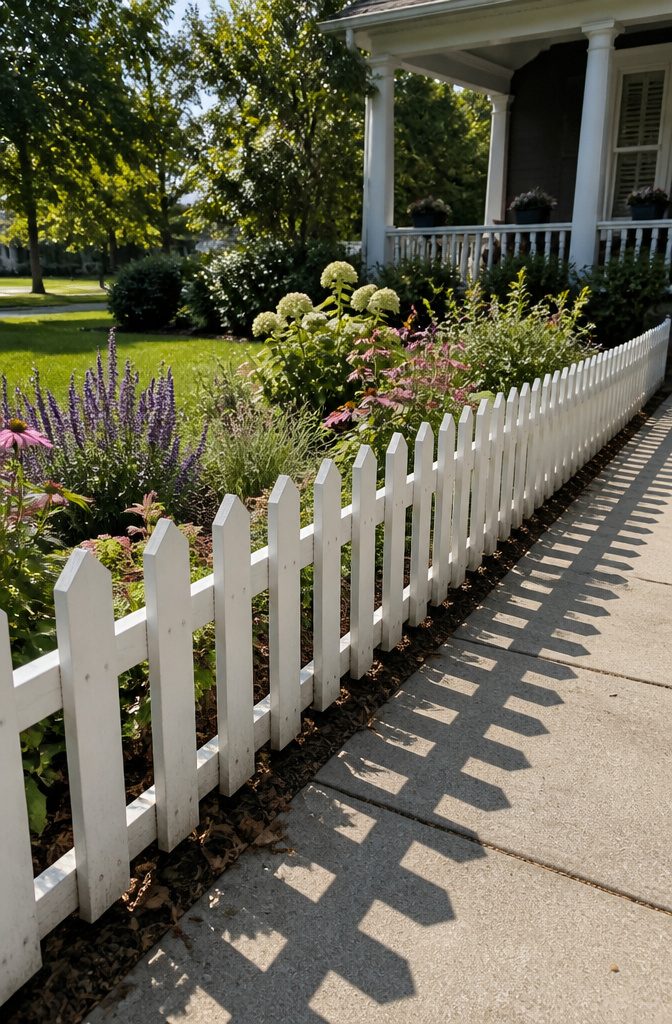
A 3-foot picket fence is built for looks. It edges a front-yard border, a flower bed or a walkway and gives the house a neat, friendly frame.
It does very little to protect the yard, so it won’t keep a pet in, keep a stranger out or hide anything from the street.
I’d choose it for a front border where curb appeal is the only job.
If you need privacy, security or a safe space for kids or a dog, go taller. Putting money into a short fence for those jobs means paying twice.
Recommended Products

Flexible Design: Each set measures 84"W x 36"H with 20 Pickets (Include two 42"x36" panels). The adjustable post bases allow installation on slopes or uneven ground, and there are different base options for soft and hard surfaces. This product features a straight top edge. If you prefer a scalloped top, please let us know
PET & CHILD SAFE: Create a safe outdoor play area for fur babies and children. Rest assured that this fence will create a sturdy barrier to protect your family.

Flexible Installation for Various Terrains: Each fence set, measuring 84"W x 36"H with 34 pickets (including two 42"x36" panels), comes with adjustable post bases. This allows for easy installation on slopes or uneven ground. Plus, there are different base options tailored for soft and hard surfaces
7. Curved and Stepped Layouts
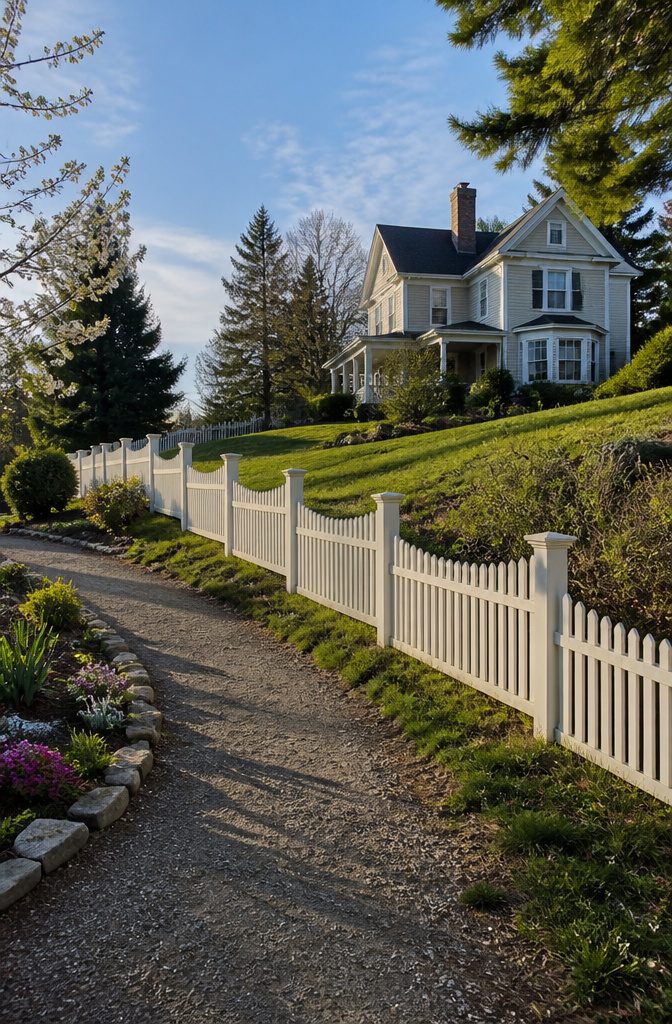
A curved white picket fence frames a front yard better than a straight run. It can echo the garden’s natural shape or wrap around flower beds, and either way it adds to curb appeal.
If you want the curve without the work, a 3-foot Victorian picket with a curved corner and hidden line posts bends only where the lot turns.
On a sloped lot, I’d choose a stepped layout, because each section stays level and the tops drop in clean stages.
A scalloped Victorian picket with a 6-foot and 4-foot slope shows how heights can shift along a grade. A spaced cottage picket can also transition into a privacy fence where the yard needs more screening.
Recommended Products

Material: wood and iron wire. This product is intended for greater than 12years.

3-1/2 ft. height ideal for low-profile, spaced picket fencing

【Wonderland Garden Decoration】Elevate your miniature world with fairy garden decor to any Wonderland Garden decoration and an essential Wonderland Garden accessory. The classic white finish and realistic fence design add a whimsical touch to any indoor or outdoor setting
8. Flower-Framed Fence
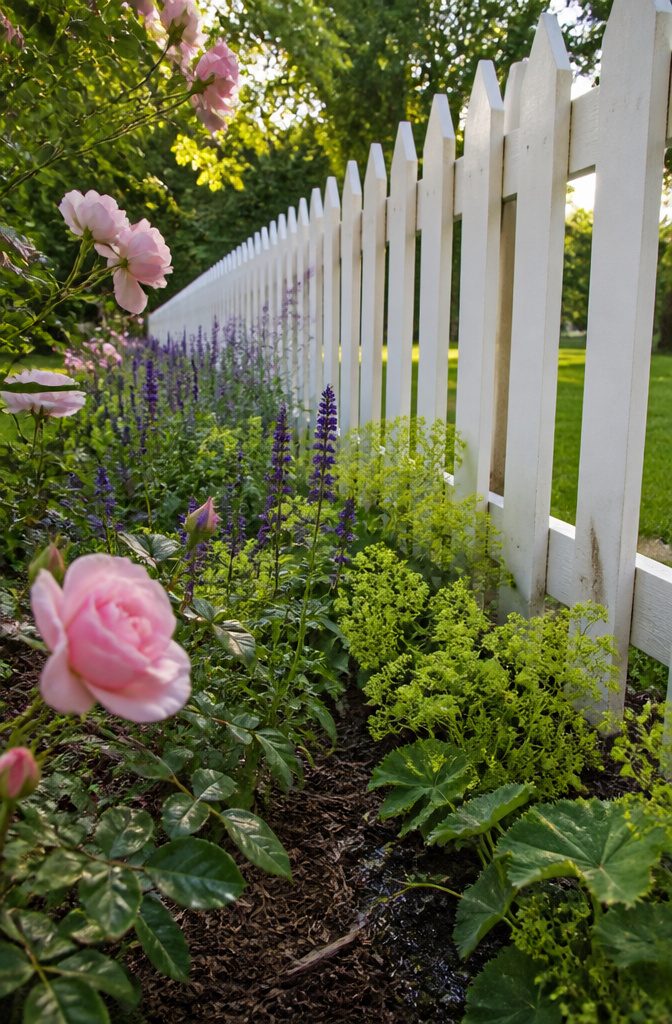
White pickets make a plain backdrop, so the color comes from what grows beside them. I’d start with roses, pink or white, with salvia, catmint and lady’s mantle filling in at their feet.
Impatiens suit a shadier run. Ivy or another creeper can twine around the panels if you want the fence softened rather than just lined.
Give each plant room to reach full size, because crowded stems press against the pickets and hold moisture there. Wood is prone to rot, so water at the soil line, not over the fence.
White also shows dirt fast: soil splash and leaf stains stand out on fresh paint. Mulch the bed and expect to wipe down the lower rails now and then.
Recommended Products
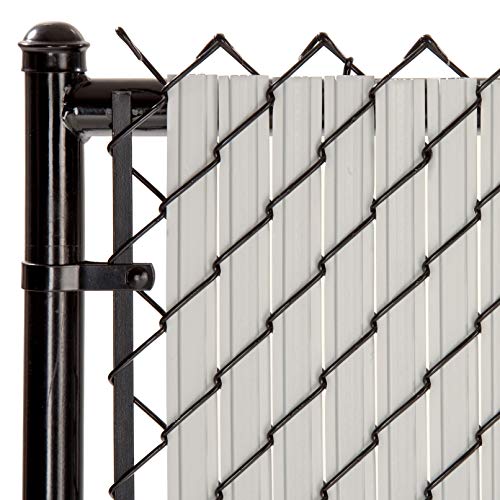
FENCE PRIVACY: Unlike fence tape, these slats are designed to easily slide vertically through your chain-link fence for optimal outdoor privacy. Determine the diamond size of your fence by measuring diagonally between the parallel wires, not corner to corner. The added privacy of the wings leaves no unsightly perforations or wave pattern. Compatible with 4', 6', and 8' height fences.
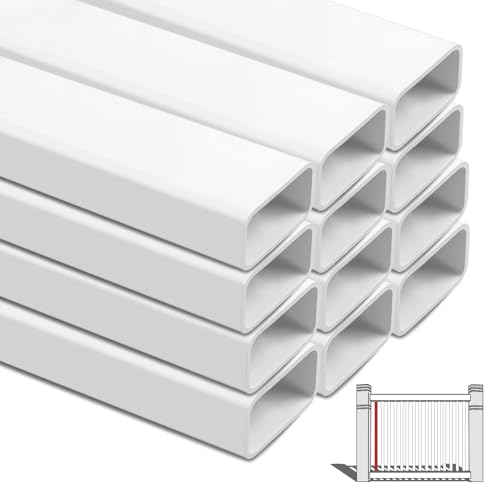
Quality Material: This picket fence features fence pickets made from sturdy PVC, crafted to meet consistent standards for outdoor use; The material is chosen for its ability to hold shape and resist common outdoor stresses, making it a reliable base for building or enhancing your vinyl picket fence

White Fence Slat - Designed for a 4' high fence, slats are approximately 44.5" in length to accommodate the bottom locking channel and to prevent the slats from being above the top of the fence. (Available Colors: Beige, Black, Brown, Gray, Green, Redwood, Royal Blue, Sky Blue, White)
9. Fence With a Gate
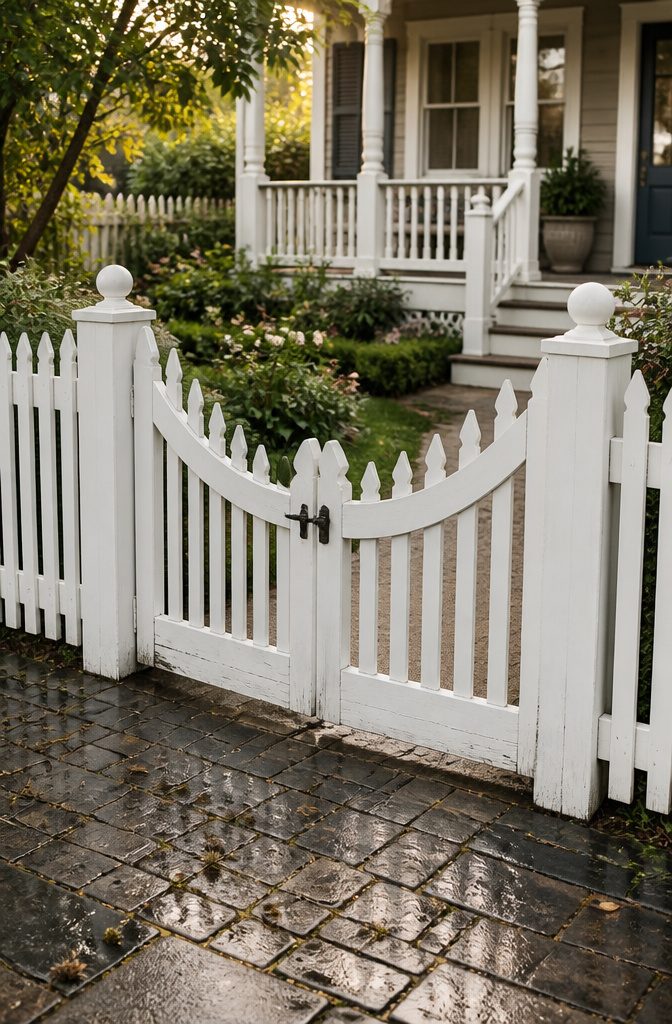
A gate turns a picket fence from a boundary into an entrance.
Put it where visitors already walk: opening onto the driveway, or lined up with the path to the front door. Either spot makes the house feel quaint and welcoming before anyone reaches the porch.
A single gate suits a footpath, and a 3′ spaced cottage picket with a gate keeps the look light. For a driveway, a double gate is the better call.
Victorian pickets and 4′ spaced Bishop pickets with Federal post caps both come that way. I especially like the reverse-scallop double gate on a Victorian picket, since the curved top line draws the eye straight to the opening.
Recommended Products

6-Pack White Vinyl Picket Fence Replacement Pickets: Includes 6 hollow PVC pickets, each measuring 7/8" thick x 3" wide x 47" high. Pickets only. Measure your existing rail opening before ordering.
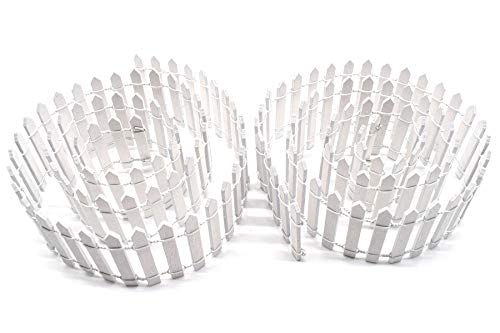
Package Included: 2 x Fairy Garden Ornament Fence

Order is for a 4-Pack of fencing, giving a total of 32 feet of fencing in length
10. Arbors and Post Caps
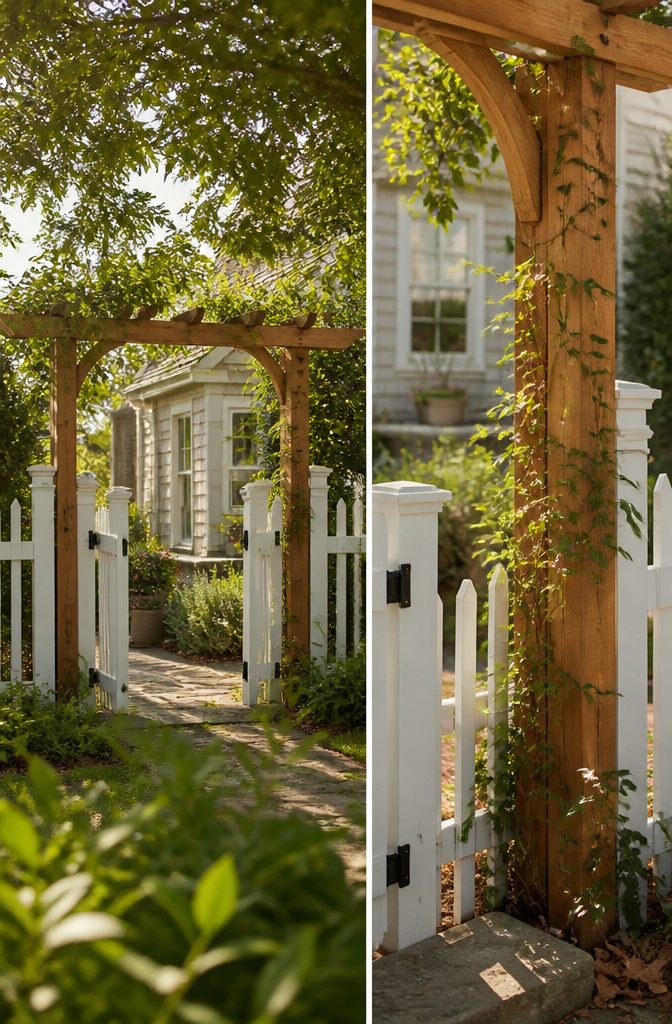
An arbor over the gate changes a picket fence more than any other accent. Cedar and Nantucket arbors both appear over 3-foot and 4-foot pickets, and they turn a plain opening into an entrance that can carry a climbing vine.
Posts come second. 5-by-5 posts give the line more weight than the pickets alone, and the same size works for a matching mailbox post at the street.
Caps then set the mood. Federal and Pyramid caps are the most common pairings with Bishop and Cottage pickets, Island caps sit lower and plainer, and Gothic caps belong with Gothic pickets.
If you want a cleaner look, I’d choose chamfered 5-by-5 posts and skip the cap entirely.
Recommended Products

DIMENSIONS: This fence panel measures 30"H x 42"W

Quality Material: This picket fence features fence pickets made from sturdy PVC, crafted to meet consistent standards for outdoor use; The material is chosen for its ability to hold shape and resist common outdoor stresses, making it a reliable base for building or enhancing your vinyl picket fence
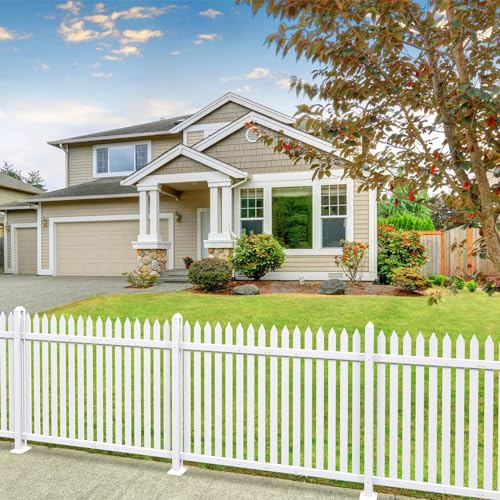
Fence is 84" inches wide and 36" inches high. Each panel measures 42" inches wide and 36" inches high, (2) panels included. Both scalloped and straight top are available. Two heights options: 36 inches, 30 inches.
11. Mixed-Material Panels
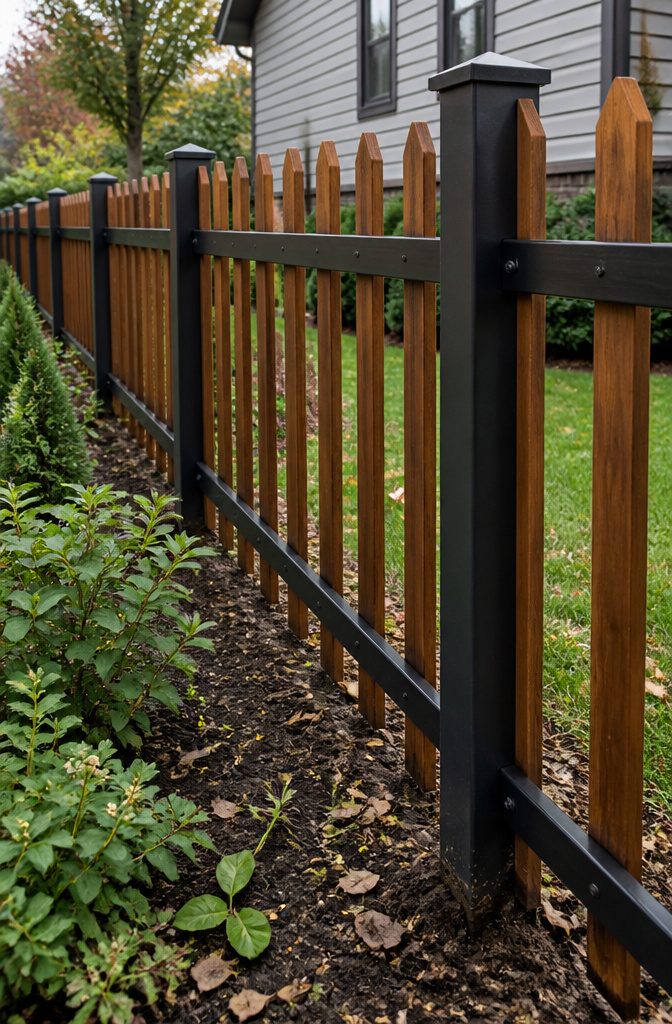
Wooden slats on metal posts give each material the job it does best.
The metal posts carry the structure and sit in the ground, which is the hardest place on a fence, while the wood slats supply the warm, familiar picket look and can be painted or stained to match the house.
The pairing makes for a very durable picket fence, but it may cost more than an all-wood build.
If the budget only stretches so far, I’d put the money into the posts first, because they take the most abuse. Wood pickets are easier to replace one at a time later.
12. Minimalist Vinyl Fence
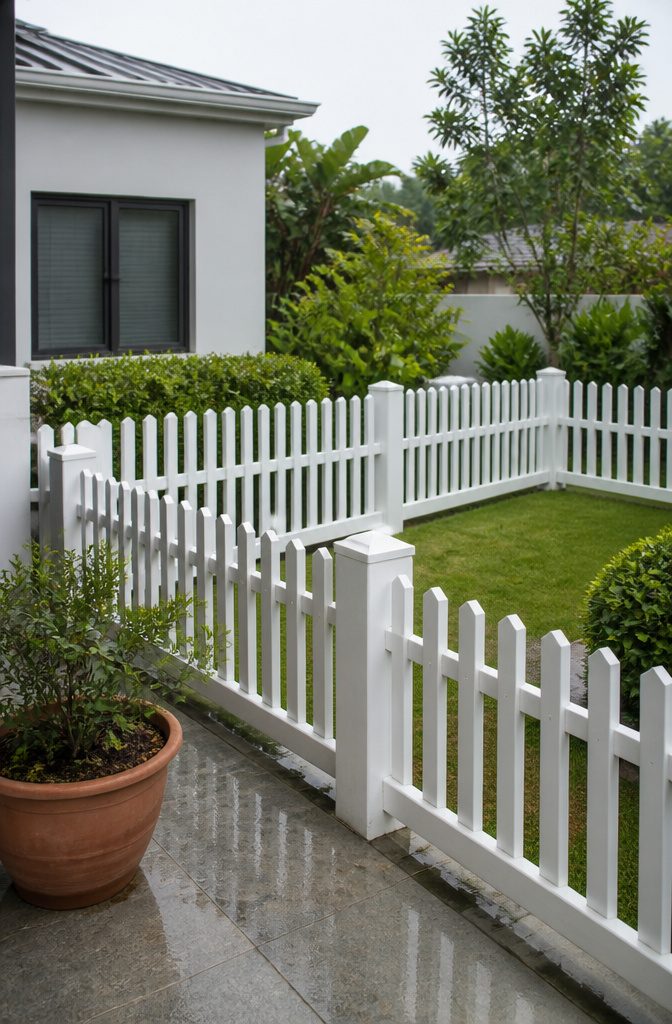
Vinyl is the picket material I’d pick for a small yard. The panels are lightweight, the lines stay clean, and the glossy white finish can pass for painted wood without the repainting.
Insects, moisture and rot don’t affect it, and it won’t rust the way metal can, so it suits humid climates especially well. A good vinyl picket fence can last 15–30 years, which is why it’s such a common choice.
Vinyl looks modern and polished rather than rustic, so it suits some houses better than others. If you want a weathered cottage feel, wood still wins on character.
13. Enclosure for Plants and Pets
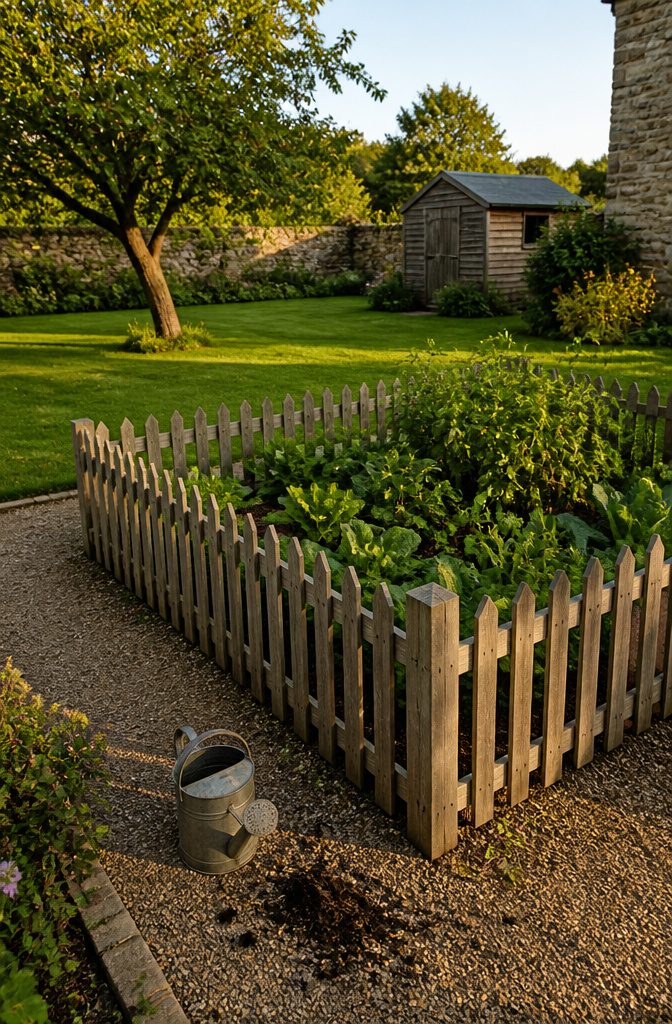
Picket fences started out as a boundary around the whole yard, marking where the home ends and keeping children and pets inside. A smaller run does the same job at a smaller scale.
Fence in a vegetable bed, a row of shrubs or a dog run, and the pickets form a box that blocks harsh wind and other weather from whatever is inside.
For a small yard, I’d choose a partial enclosure over fencing the whole lot.
It is cheaper and easier to install because there is far less fence to put up. Sturdy pickets also hold up against strong winds, snow drifts and water-logging, which protects nearby trees and plants too.
Picket Fence Materials Compared
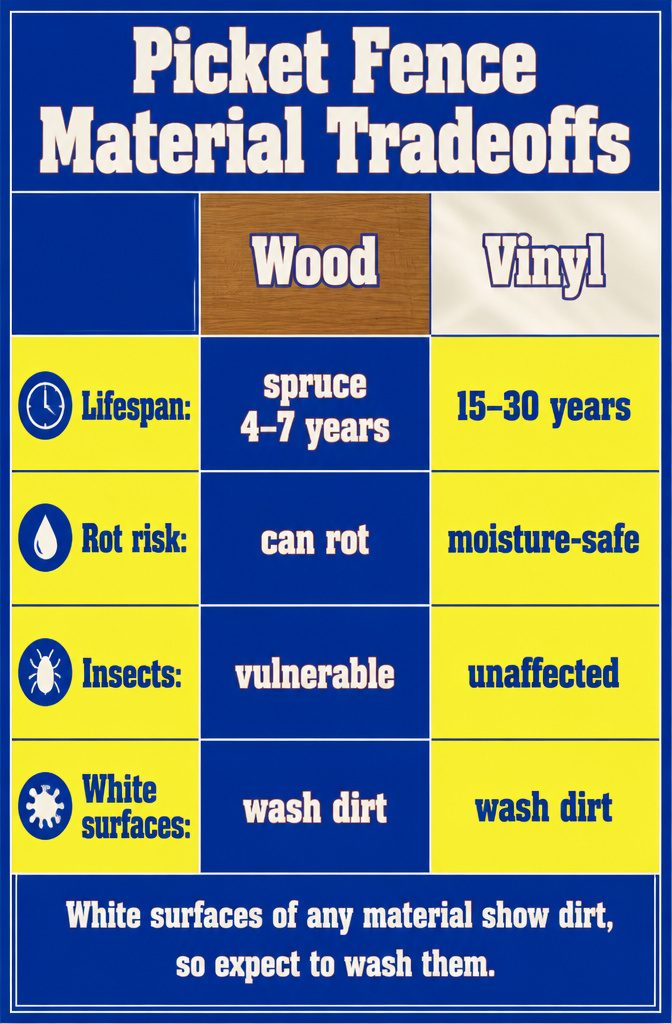
Wood is cheapest per foot, but it can rot, and spruce gives only 4–7 years.
In a humid yard, vinyl is the safer buy: insects and moisture don’t affect it, and it lasts as long as cedar. White surfaces of any material show dirt, so expect to wash them.
| Material | Lifespan | Cost per linear foot |
|---|---|---|
| Cedar | 15–30 years | n/a |
| Redwood | n/a | $4–7 |
| Spruce | 4–7 years | n/a |
| Pine | 5–12 years | n/a |
| Vinyl | 15–30 years | $17–38 |
| Aluminum | n/a | $24–32 |
| Steel | n/a | $23–45 |
| Composite | n/a | $11–46 |
Panels, Kits, or a Pro
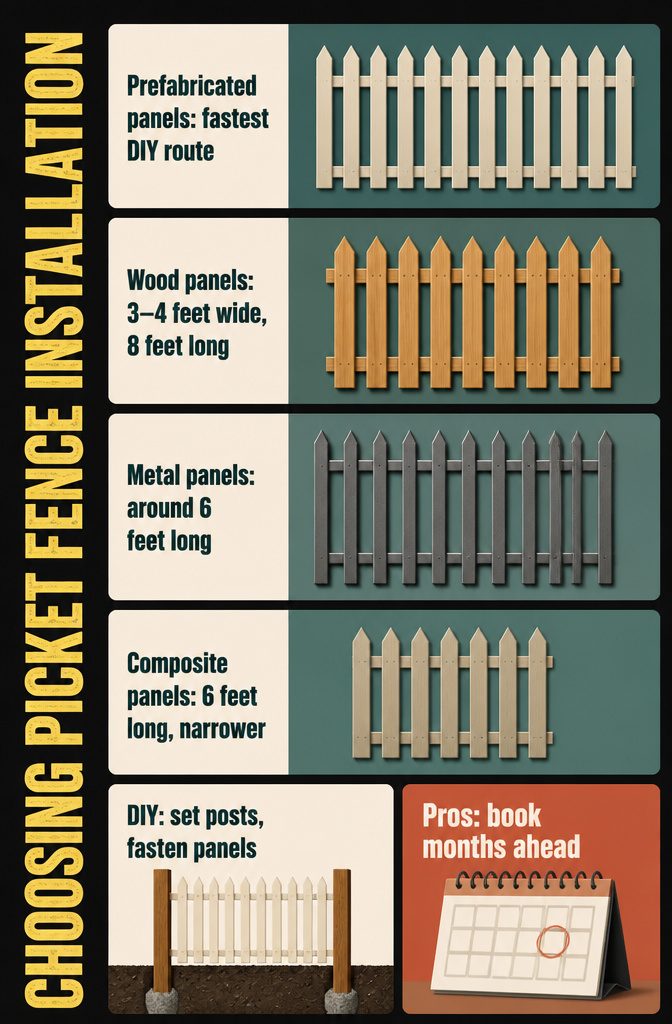
Prefabricated panels are the fastest DIY route. Home centers stock wood panels typically 3–4 feet wide and 8 feet long, metal panels around 6 feet long, and composite panels that are 6 feet long and narrower.
You only set the posts in the ground and fasten the panels to them, which is why I’d steer a first-timer toward panels or a ready-to-assemble kit from a lumberyard or Home Depot rather than buying loose lumber.
A professional installer costs more than DIY, but you get more configuration and style choices than a stock panel allows. Good installers are often booked well ahead, so request quotes months before you want the fence standing.
Frequently Asked Questions
What materials are picket fence panels made of?
Picket fences come in wood (cedar, redwood, spruce or pine), vinyl or PVC, metal (aluminum or steel), and composite. Lifespan varies widely within wood: cedar lasts 15–30 years, while spruce lasts only 4–7.
What is the best material for a white picket fence?
Vinyl is the best choice for most yards.
It lasts 15–30 years, resists rot, insects and moisture, and is lighter and cheaper than metal. Metal lasts longest but costs the most, while wood is the pick if you want a weathered, rustic look.
Why are white picket fences so popular?
They mark a property line, add curb appeal, and keep children and pets inside the yard.
A smaller run around a garden bed or shrubs can also block wind and other harsh weather. Taller, tightly spaced pickets add privacy and some security.
What are the disadvantages of white picket fences?
They need regular upkeep.
Wood can rot, and white surfaces of any material show dirt, so plan on washing the fence. A short 3-foot picket also does little to keep pets in, keep strangers out, or block views.
Should I install a picket fence myself or hire a professional?
Prefabricated panels or a ready-to-assemble kit are the easiest DIY route, since you only set the posts and fasten the panels to them.
A professional costs more but offers more style and configuration choices than stock panels. Good installers book up early, so request quotes months ahead.









