
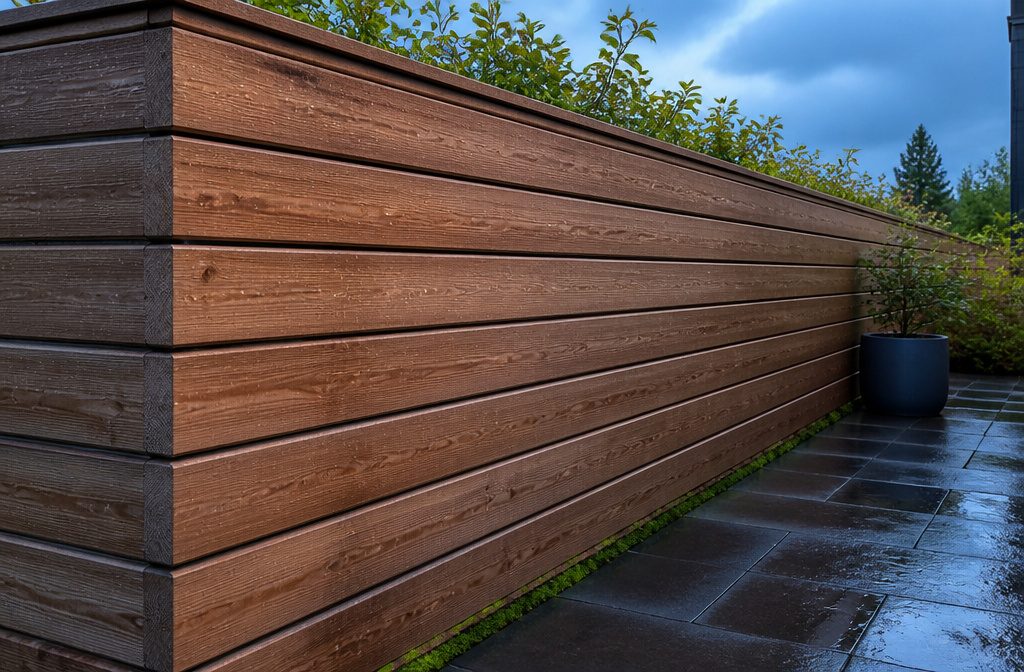
Closely stacked cedar boards with no gaps give the most privacy, and cedar lasts 10–20 years with regular cleaning and resealing.
Louvers, basket-weave, shadow-box and spaced boards let in light and air but weaken the screen. Aluminum slats tend to mark a boundary more than they block a view.
1. Natural Cedar Privacy Boards
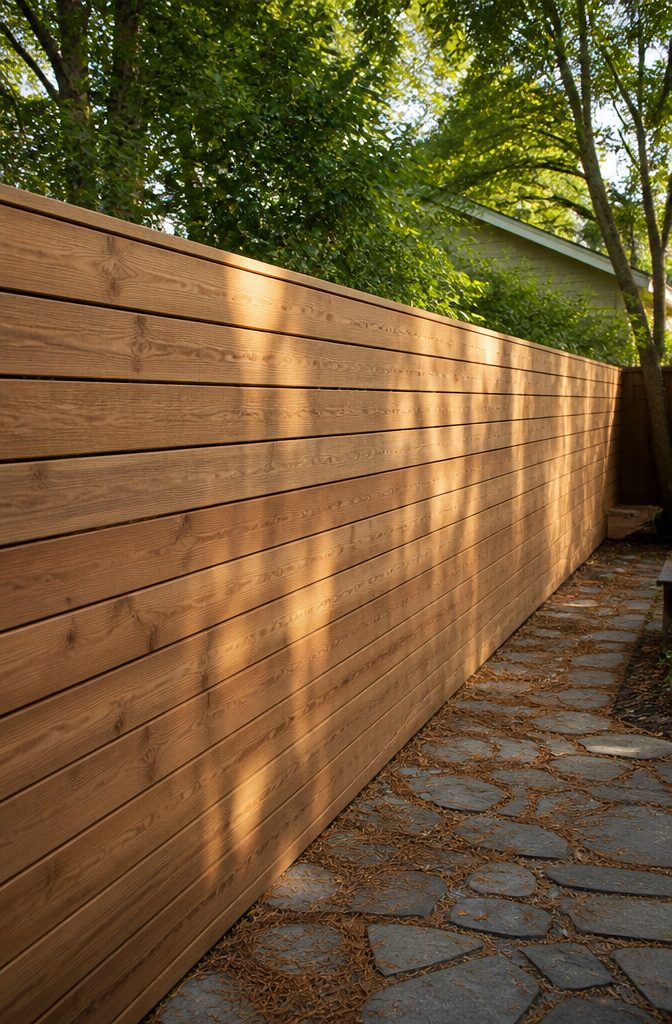
Closely stacked horizontal cedar boards with no gaps between them make a solid privacy wall, and the natural finish keeps the look warm instead of painted.
Cedar is the wood I’d pick for this style because it resists rot, insects and weather on its own, so the fence isn’t relying on a coating to survive.
A solid run also shows every flaw, so it makes sense to use a wood that holds up outdoors.
Expect a wood fence to last 10–20 years with proper care. Cedar’s resistance doesn’t replace upkeep: plan on periodic cleaning and resealing to stay at the long end of that range.
2. Stepped Horizontal Wood Fence
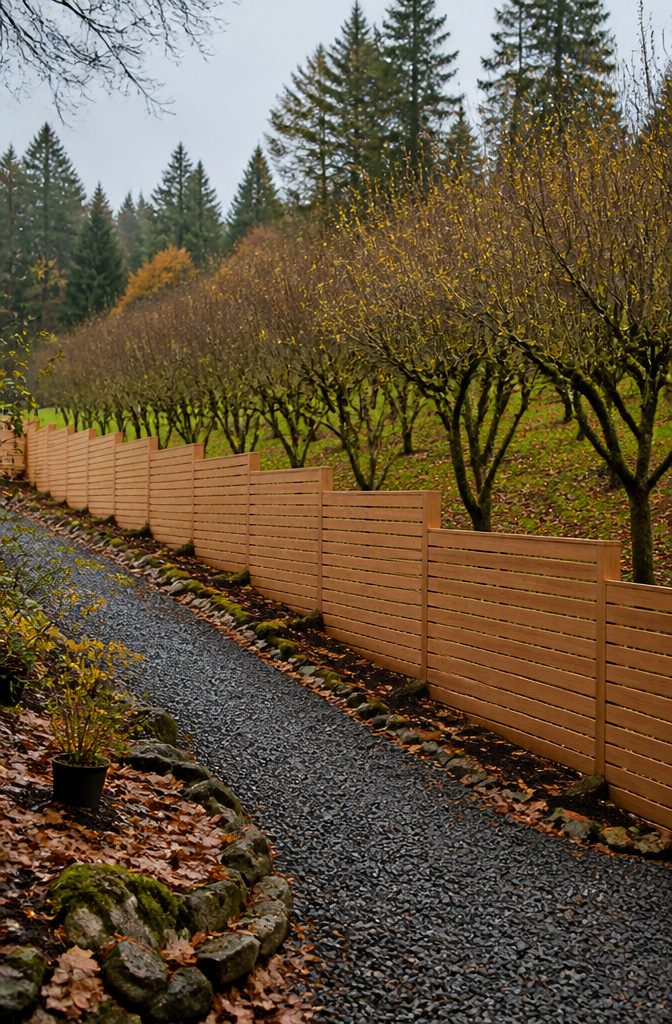
On a slope, a horizontal fence that follows the grade tilts every board line. A stepped fence keeps each section level and drops it down the hill in stages.
With a stepped horizontal wood fence, the same number of fence panels are stacked on top of each other creating the same height for the entire fence.
— Ergeon
Because every section carries the same number of panels, the fence stays the same height at each step, and only the ground changes.
The boards inside a section run dead level, so the eye follows the repeated lines across the yard and reads one continuous fence, with the steps showing as clean breaks.
On any noticeable grade, I’d choose this over a sloped fence.
3. Horizontal Vinyl Fence
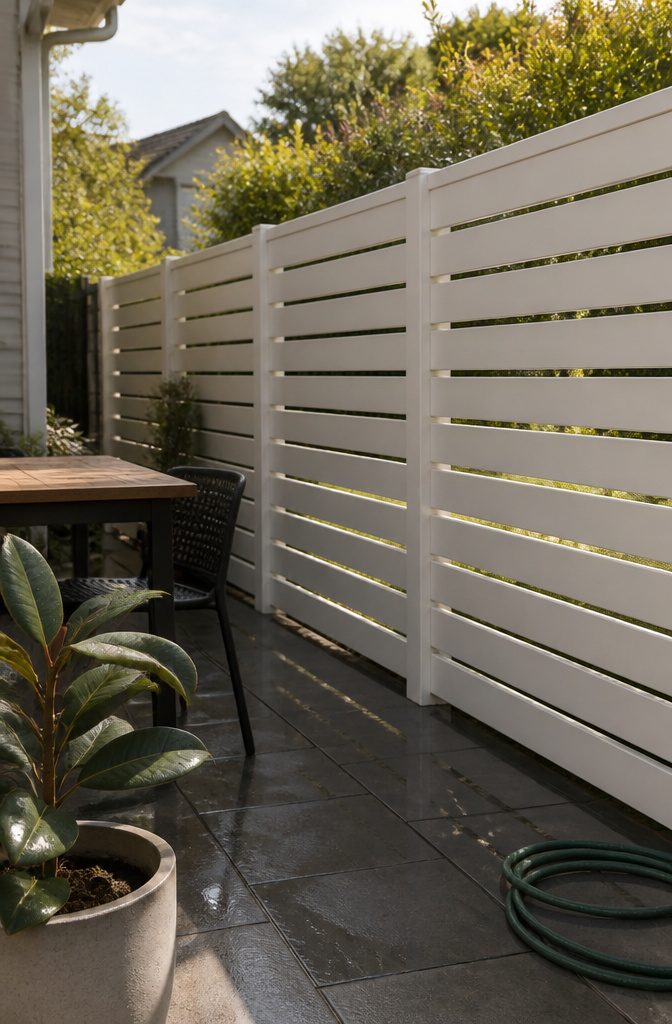
Vinyl is quickly becoming one of the top materials for horizontal fences because it lasts and needs very little upkeep. There is no staining or sealing to schedule.
On a patio, I like leaving small gaps between the boards. Spacing is how you balance privacy against light: narrow gaps keep the space feeling enclosed, and wider ones let in more light and air.
What vinyl gives up is the character of real wood. It has no natural grain or color variation, and you can’t restain it later to change the shade.
Wood also lets you mix plank widths or add metal accents. Pick vinyl if you would rather skip maintenance than have wood’s grain.
4. Cedar With Black Aluminum Accents
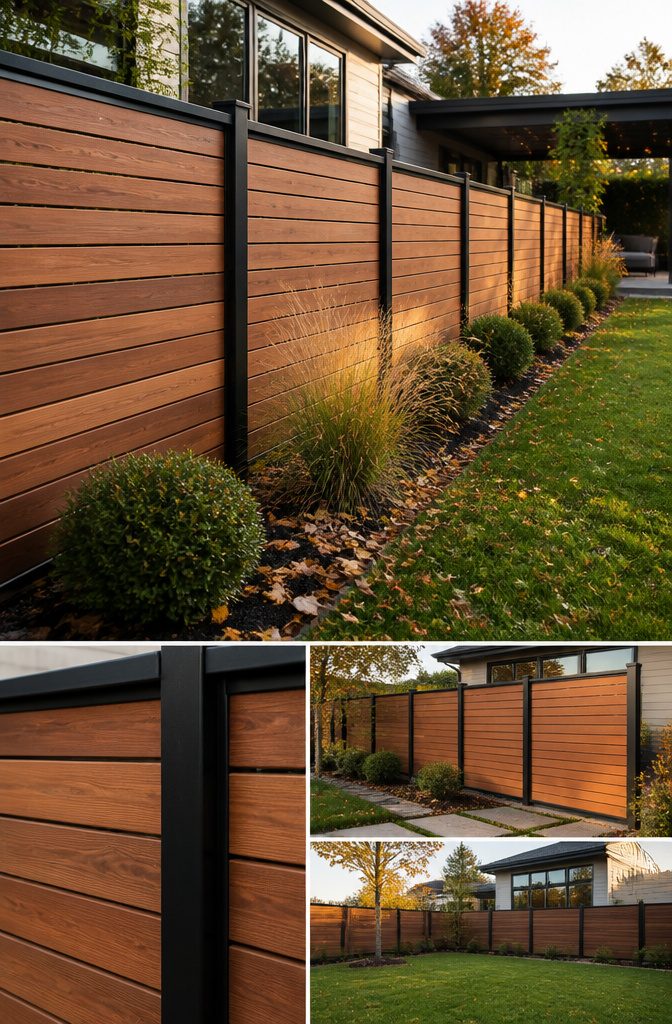
Warm cedar boards against black aluminum is the pairing that makes a horizontal slat fence read as contemporary instead of rustic.
The metal works as a frame. A black top rail caps the boards with a thin, crisp line, while black posts break the run into clean, evenly spaced panels.
If I had to pick one, I would go with the posts, especially when the house has black window frames or door hardware that they can echo.
Either way, put the black aluminum on the posts or the top rail, and let the cedar fill the middle. The dark metal also makes the wood’s reddish-tan color look richer, and aluminum does not rust.
5. Horizontal Aluminum Fence
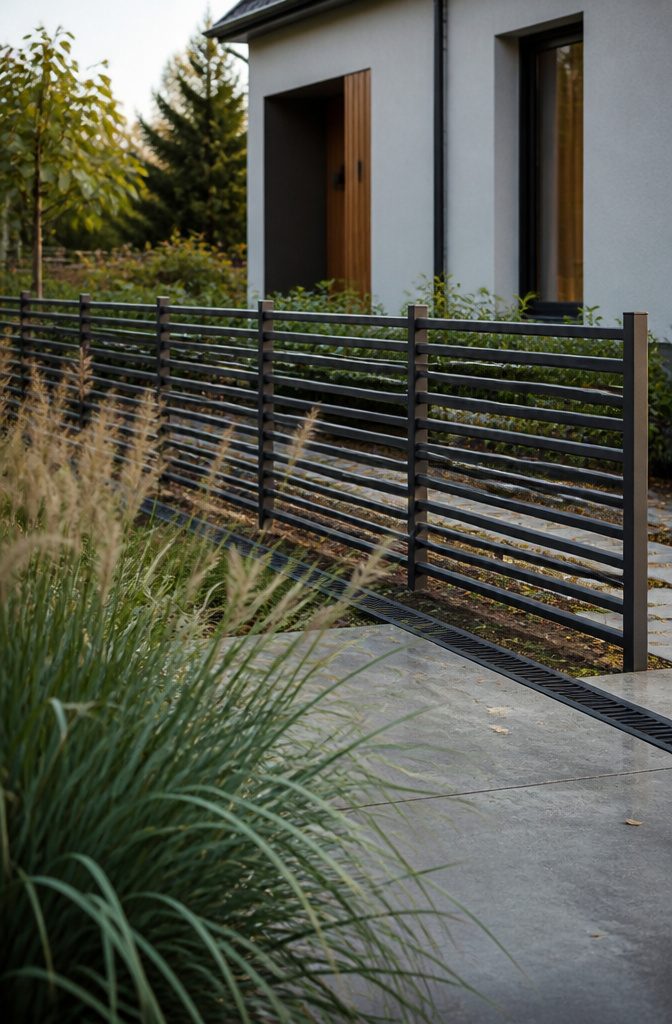
Aluminum doesn’t rust, and weather wears on it far less than on wood, which is why a horizontal aluminum fence counts as low-maintenance.
It’s also lightweight and durable, so it holds up well in harsh climates. I’d pick it for a modern house where upkeep matters more than coziness.
It falls short on warmth and privacy. Metal slats look crisp, but they read cooler than the grain of cedar.
A metal slat fence also tends to work as a boundary line more than a screen. If you want to block a neighbor’s view of your patio, I’d choose wood instead.
6. Cedar Front-Yard Fence
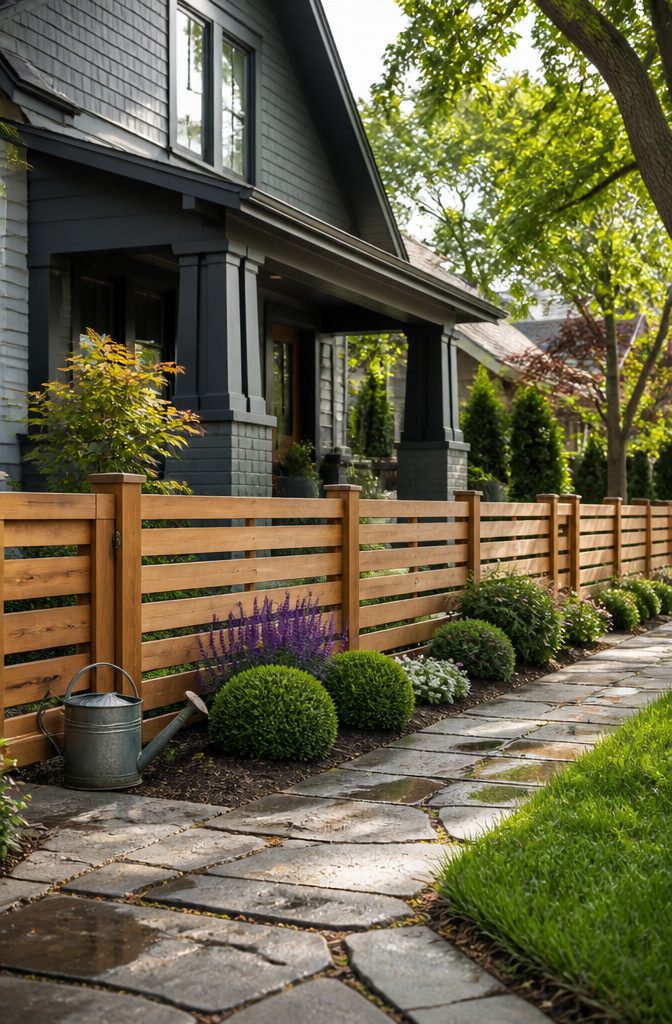
A front-yard fence has a different job than a backyard one. Privacy isn’t the goal, so a lower horizontal cedar fence fits: it marks the property line or keeps small children and pets from wandering out.
The level boards read cleanly from the street, which matters on a fence everyone sees every day.
Most residential fences run 4 to 8 feet tall, and front-yard fences stay lower than backyard ones. I’d size yours to the job.
A dog or toddler barrier needs only enough height to stop them, and a boundary marker can be shorter still. Local zoning laws set the actual height limit, so check with your city or county before you buy any lumber.
7. Horizontal Garden Fence
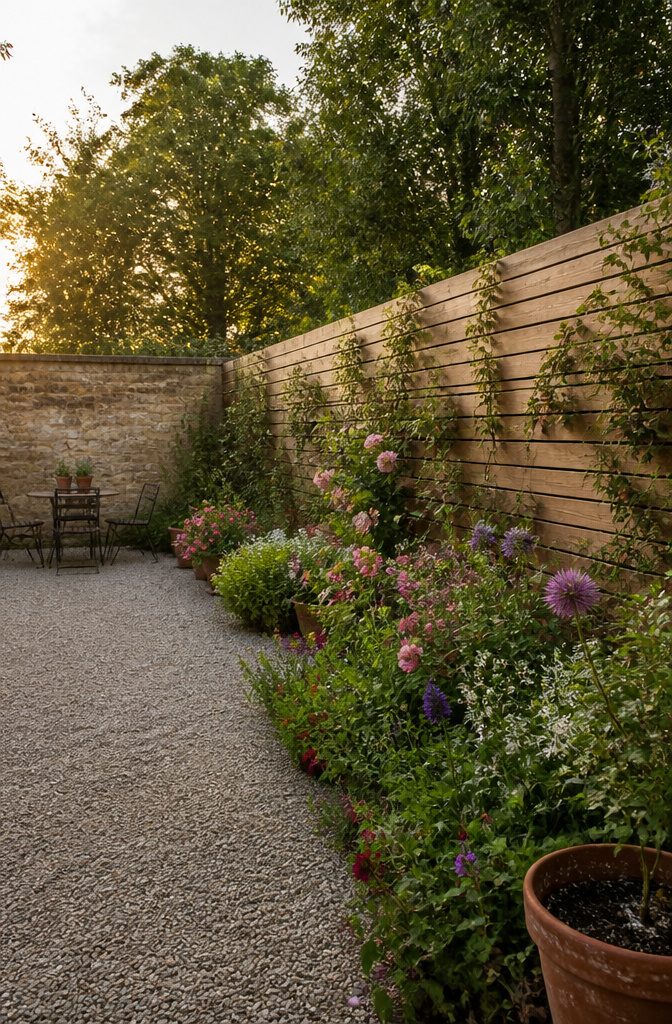
Wooden horizontal slats give a rustic backdrop that lets plants and flowers carry the color. The long, level lines read as a calm band behind a bed, so blooms and foliage stand out instead of competing with a busy pattern.
In a small yard, the lines also make the space feel wider, because the eye travels along the fence rather than up it.
Each slat works as a rung for climbers, so a vine can scale the fence without a separate trellis.
For a garden fence, I’d pick a natural or lightly stained finish over a bold paint color. It keeps the wood looking rustic and leaves the flowers as the brightest thing in view.
8. Powder-Coated Aluminum
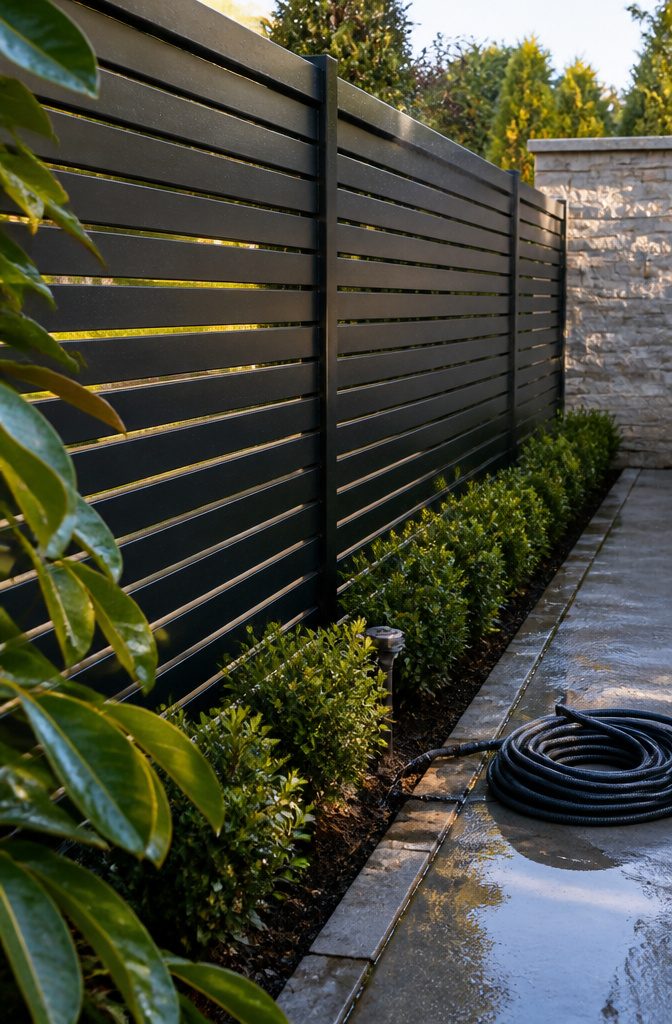
Powder coating is a dry paint baked onto the metal, and it does most of the protective work on a horizontal aluminum fence.
The cured layer resists fading, so a black or charcoal slat stays close to its original color under years of sun.
It also holds up to scratches from string trimmers, dragged hoses and kids’ bikes better than brushed-on paint, and it keeps moisture off the metal underneath, which slows corrosion near sprinklers or in rainy climates.
Upkeep comes down to an occasional rinse with a hose and mild soap. There is no staining, sealing or repainting, which is the main reason I’d pick it over wood slats for a low-effort yard.
Watch for deep chips that expose bare metal, and dab them with matching touch-up paint before moisture gets in.
9. Basket-Weave Wood Fence
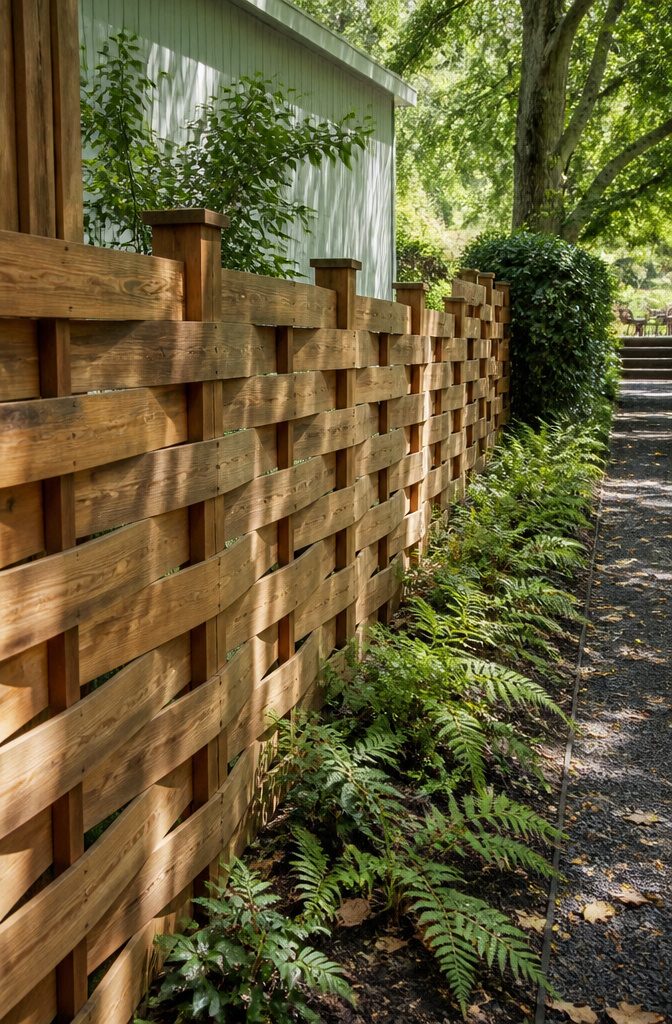
Basket-weave fencing runs each horizontal slat behind one post, then in front of the next. The boards snake along the line instead of sitting flat on one face, and the evenly spaced posts show through the pattern.
That in-and-out rhythm gives the fence a rustic, textured look that a flat slat fence, with its single smooth plane, can’t match.
Expect some privacy, not complete privacy. The weave lets light and glimpses through, so it suits a garden border or side yard better than a patio that neighbors can see into.
I’d choose it for the look and a soft screen. If you want to sit unseen, a solid horizontal board design is the better pick.
10. Louvered Horizontal Fence
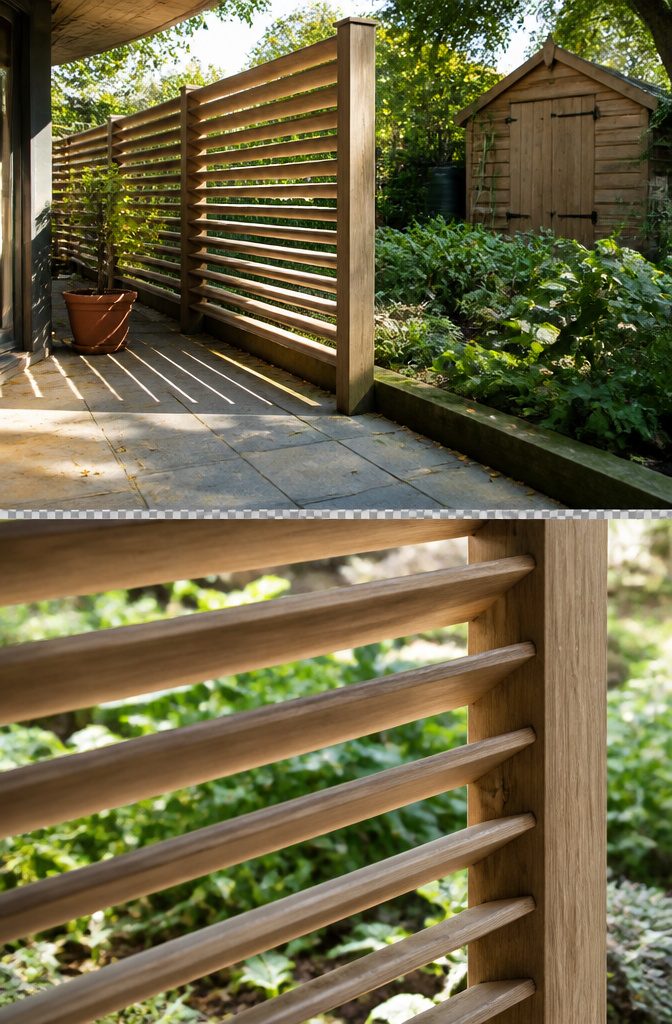
A louvered horizontal fence tilts each slat at an angle, like a shutter laid on its side, so air and light pass through the gaps between boards. What you see through it depends on where you stand.
Look straight along the tilt and you can see out; step to the side and the slats overlap and block the view. A steeper angle gives more cover, and a flatter one lets in more light and breeze.
This is not a true privacy fence, and I’d skip it where you need a solid screen, such as next to a neighbor’s window or a hot tub.
It works well around a patio or a vegetable bed, where you want a more private feel without losing the airflow or the view out.
11. Stained Douglas Fir
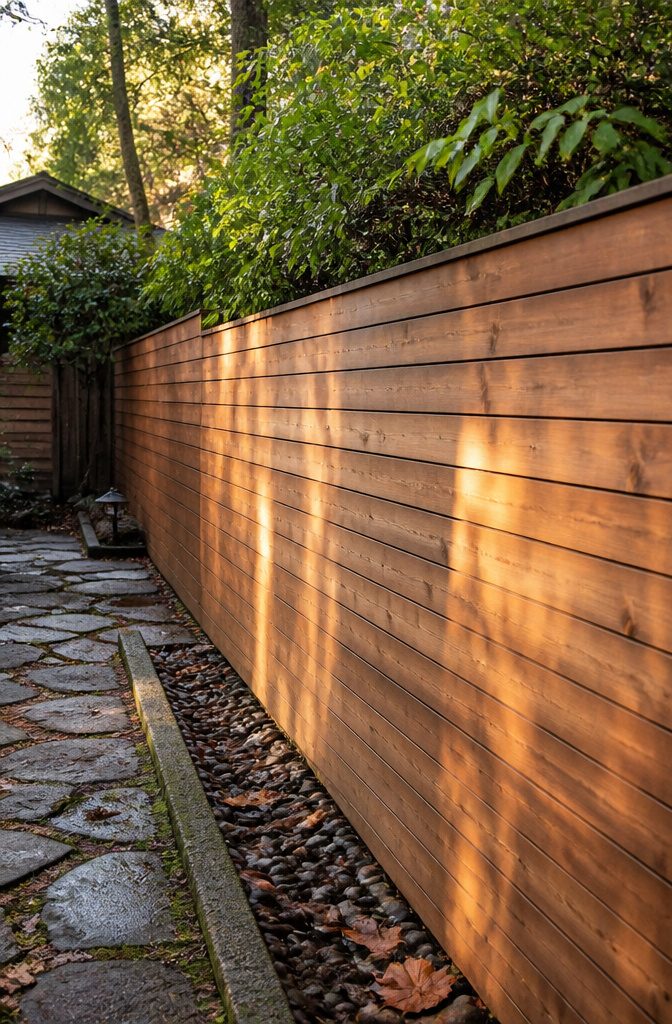
Semi-transparent stain is the finish I’d choose for a horizontal Douglas fir fence.
It keeps the grain visible while protecting the wood from moisture penetration, UV damage and discoloration, which extends the fence’s life. Long, level boards put that grain on display, so a finish that shows it suits the style.
The same transparency is the limit. A stain that lets the grain through also lets knots, blemishes and board-to-board color differences show, so a board you dislike before staining will look the same after.
If you want one flat, uniform color, choose an opaque finish instead, or pick cleaner boards from the start.
12. Shadow-Box Horizontal Fence
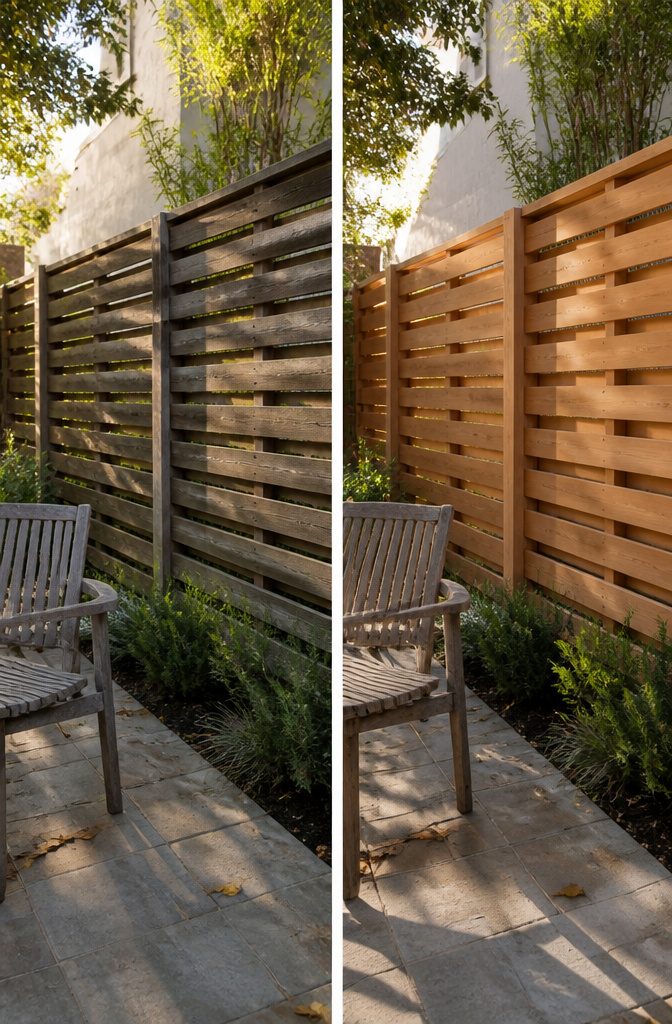
Slats alternate from one side of the rails to the other, so the boards overlap when you look straight at the fence and leave gaps at an angle.
Anyone standing directly in front of it sees a solid wall. That covers a neighbor’s back window, a car parked across the street, or a patio chair facing the fence line.
Privacy weakens as the viewing angle gets steeper.
Someone walking along the fence can catch slivers of your yard, and you can see out the same way. Air passes through those gaps too, which helps a hot patio or a windy lot.
For a hot tub or a yard beside a sidewalk, I’d choose a solid horizontal fence instead. Where the sightline that matters runs straight across, the shadow-box style is the better pick.
13. Wooden Pallet Fence
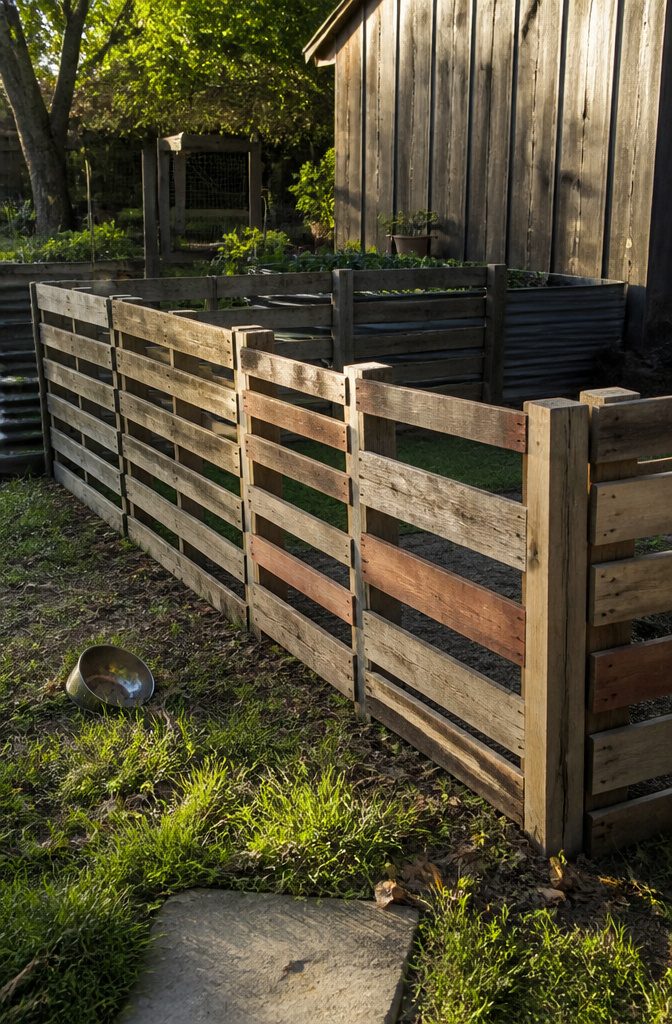
Pallets come as ready-made horizontal panels, which makes them the cheapest way into this style for a short dog or pet enclosure.
Set them upright, fasten them to posts, and the slats are already spaced and attached, so most of the work of a slat fence is done before you start.
The look is casual and rustic, and I’d keep it there.
Pallet panels suit a low pet run, not a long-term privacy fence. The slats leave gaps that screen very little, and boards that don’t match give a patchwork finish no one will mistake for a designed fence.
For a backyard corner where a dog needs room on a small budget, they work well. For a property line you want to look good for years, buy milled boards.
14. Horizontal Reed Fence
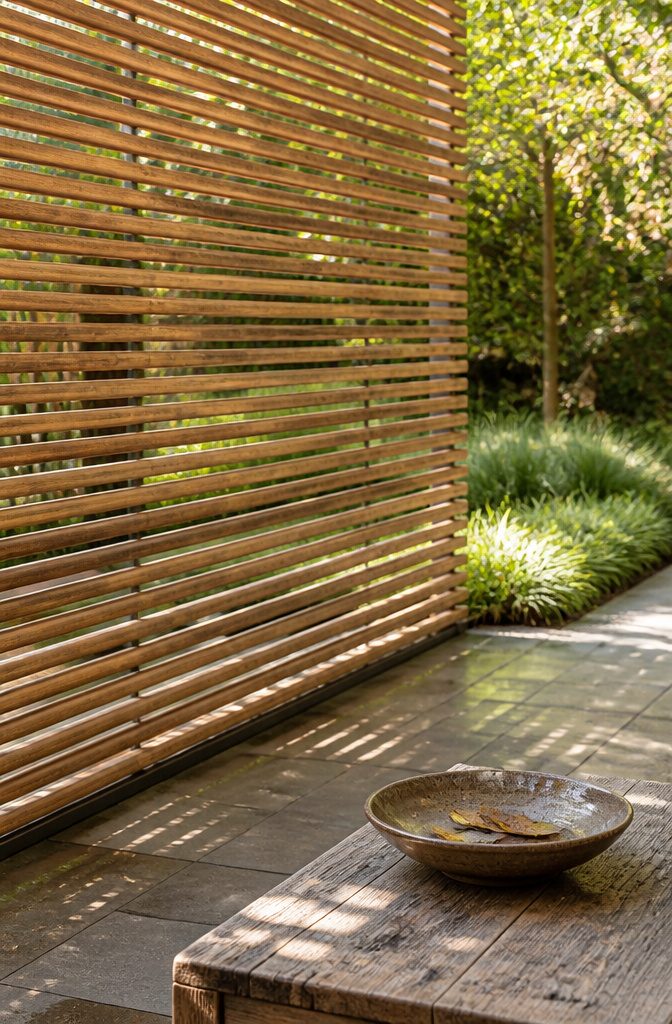
A reed fence swaps wide boards for narrow horizontal slats set at even intervals, and the gaps define the look.
Light passes through them, so a small yard or shaded patio stays brighter than it would behind a solid wall. Privacy depends on how wide you leave the gaps.
Tight spacing hides most of the yard from passersby, while wider spacing lets people see through, especially when they stand close and look straight on. **For a patio that needs real screening, keep the gaps narrow.
For a front yard or a view you want to keep, open them up.** Keep the spacing identical from board to board, because uneven gaps spoil the clean, modern look.
15. Black Horizontal Fence
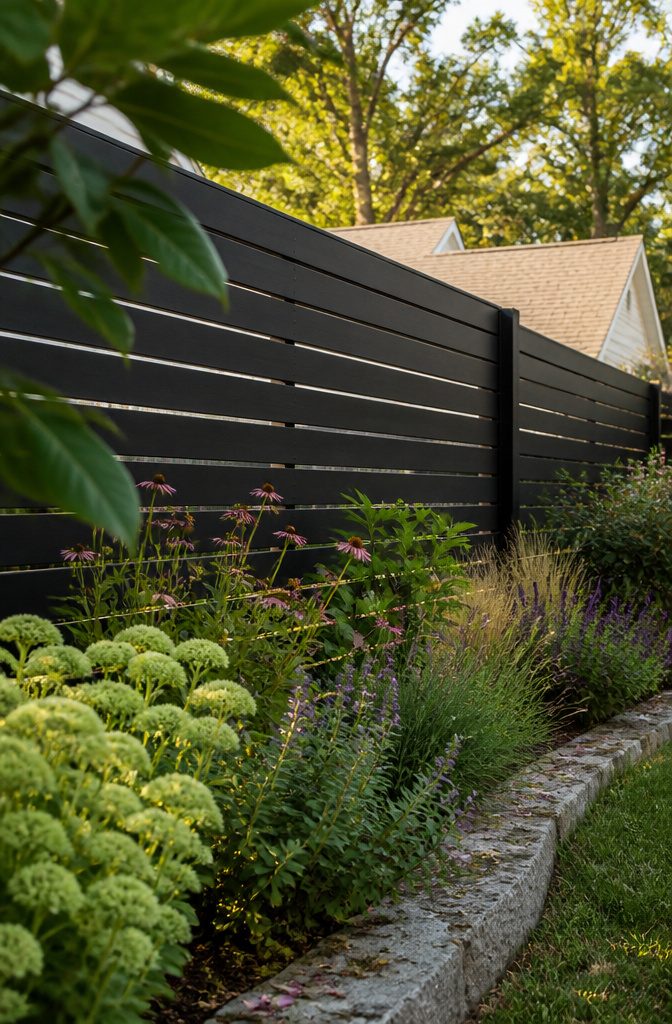
Black suits a contemporary yard, and it works on aluminum, vinyl, wood and composite. Aluminum is the practical choice: it is lightweight and holds up in all kinds of weather.
Vinyl can be painted black. For wood, stick to a high-quality species like redwood or cedar, and composite slats carry the look just as well.
Dark horizontal lines recede behind plants. Green leaves, flowers and ornamental grasses stand out against black, so the fence frames the planting instead of competing with it.
I’d put it behind a mixed border rather than facing a bare lawn, where those dark lines are all the eye has to land on.
Frequently Asked Questions
How tall can a horizontal fence be?
Most residential horizontal fences run 4 to 8 feet tall, and front-yard fences usually stay lower than backyard ones. Your city or county zoning rules set the actual limit, so check them before buying lumber.
Is a horizontal fence more expensive than a vertical fence?
It can be, mainly with wood.
The boards have to be level and evenly spaced, which takes more precision to install than a vertical fence. One metal panel maker says its panels cost the same in either orientation, so the price gap depends on the material.
Which is better, a horizontal or a vertical fence?
Neither wins outright; it depends on the look and budget you want.
A horizontal fence reads as modern, can make a yard look larger, and allows more choice in board size, spacing and pattern. A vertical fence is simpler to build in wood and may cost less.
How long does a horizontal fence last?
A wood horizontal fence lasts 10–20 years with proper care, while composite, vinyl and metal can last 25 years or more. Cedar still needs periodic cleaning and resealing to reach the long end of the wood range.
What’s so attractive about horizontal fences?
Horizontal lines draw the eye along the fence, which creates a sense of continuity and a clean, contemporary look.
They can also make a yard feel wider. Board size, spacing and pattern are easy to customize, so the fence can match your style.
What type of wood is best for a horizontal slat fence?
Cedar is the best choice for most yards because it resists rot, insects and weather without relying on a coating.
Redwood is another good option. Douglas fir also works if you protect it with a semi-transparent stain.









