
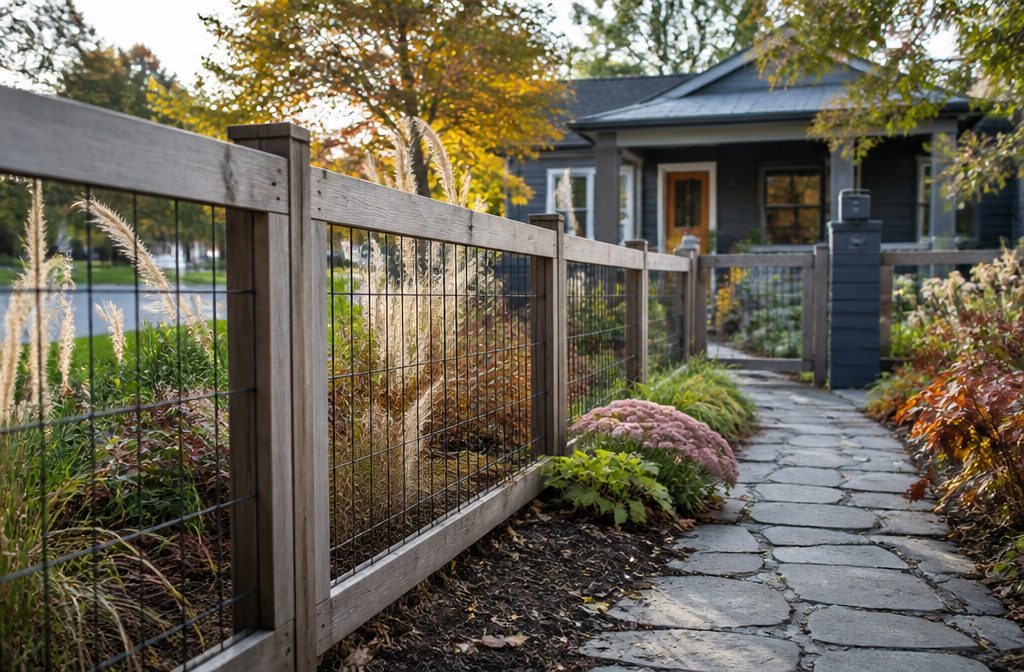
Steel hog-wire panels framed in cedar are the top pick for a front yard with plantings worth showing off, since they frame the beds instead of hiding them.
No height from 3–7 feet gives privacy from the street, and unlike vinyl or aluminum it comes with no low-upkeep promise, so ask the installer what it needs.
1. Hog Wire for Open Views
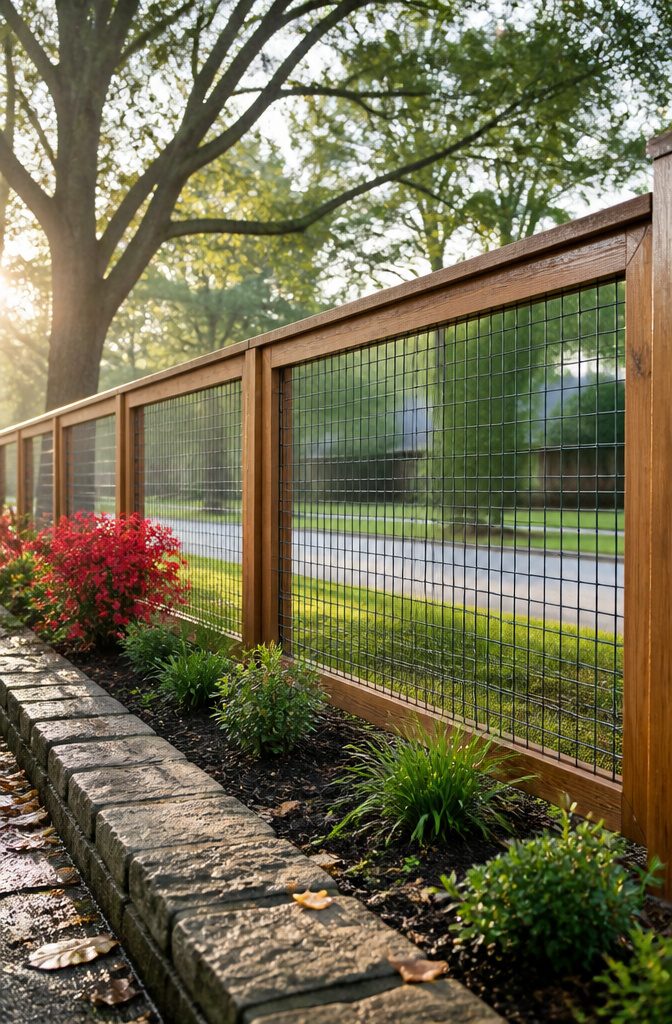
Steel hog-wire panels framed in cedar keep the yard visible from the street and the street visible from the yard, while still marking a firm property line.
For a front yard with plantings worth showing off, I’d pick this style, because the fence frames the beds instead of hiding them.
It also keeps the yard connected to the surroundings, so the property doesn’t feel walled off. Panels come in heights of 3–7 feet: a low run suits a garden edge, and a taller one adds security around a larger lot.
Skip it if you want privacy from the street. The open wire is the whole design, and no height changes that.
Recommended Products

Made of durable black powder-coated steel

# Super Sturdy construction; Made of 12.5 gauge heavy duty galvanized wire, Galvanized before welding providing a double coating for maximum rust resistance, Class 1 galvanized zinc coating for long-life, the Galvanized Welded Wire would be a good choice for everyone

Heavy-Duty Construction Size: 100ft (length) × 48" (height) Material: High-strength galvanized steel wire ,Surface Treatment: Hot-dip galvanized for superior rust resistance & extended lifespan
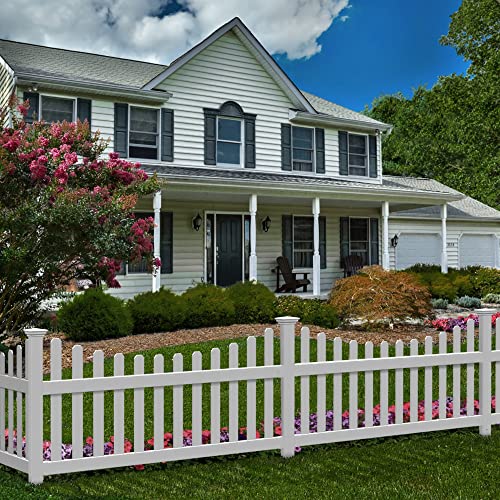
2. Hood Vinyl Picket Fence
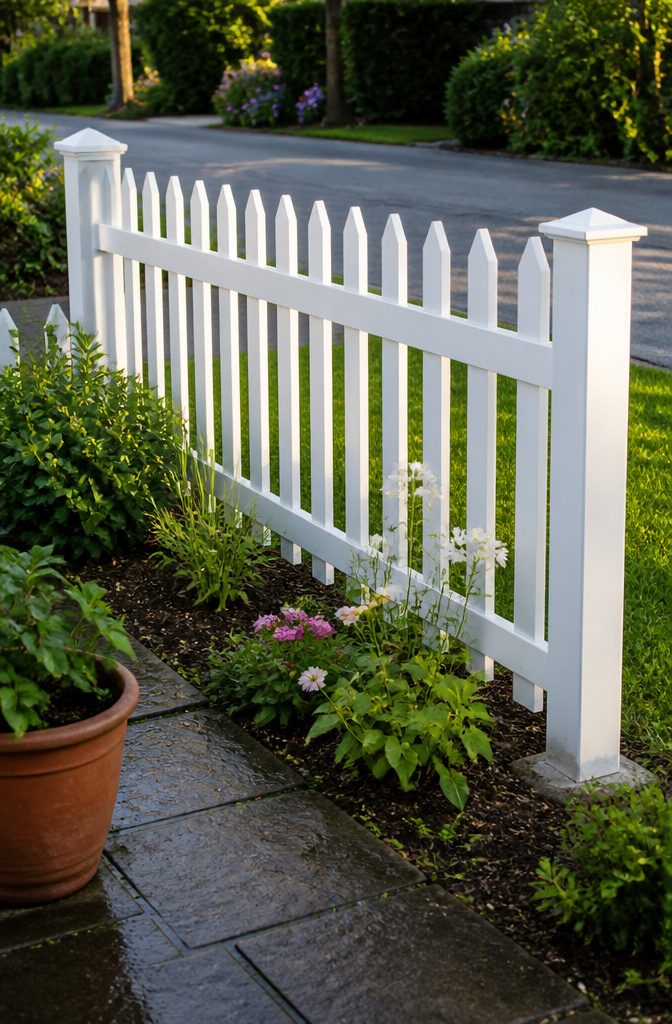
The Hood is the classic picket look in vinyl, and it suits a front yard because it doesn’t rot or suffer weather damage and doesn’t need frequent upkeep.
Heights run 3–7 feet. A picket style reads best at the short end, where it frames the yard without walling it off.
The posts are vinyl with an optional steel reinforcement and sit in concrete footings. I’d take the steel, especially on taller runs.
Skip it if you want natural wood. This is a vinyl style, so it won’t give you real grain or the look of a painted wood picket fence.
Recommended Products

PET & CHILD SAFE: Create a safe outdoor play area for fur babies and children. Rest assured that this fence will create a sturdy barrier to protect your family.

Flexible Design: Each set measures 84"W x 36"H with 20 Pickets (Include two 42"x36" panels). The adjustable post bases allow installation on slopes or uneven ground, and there are different base options for soft and hard surfaces. This product features a straight top edge. If you prefer a scalloped top, please let us know

EASY ORDERING: Everything you need for your fence project is in the box except for the final post. Only ONE additional post (BL19042) is required for the end of your project. The compatible gate is (BL19102).
3. Montage Ornamental Fence
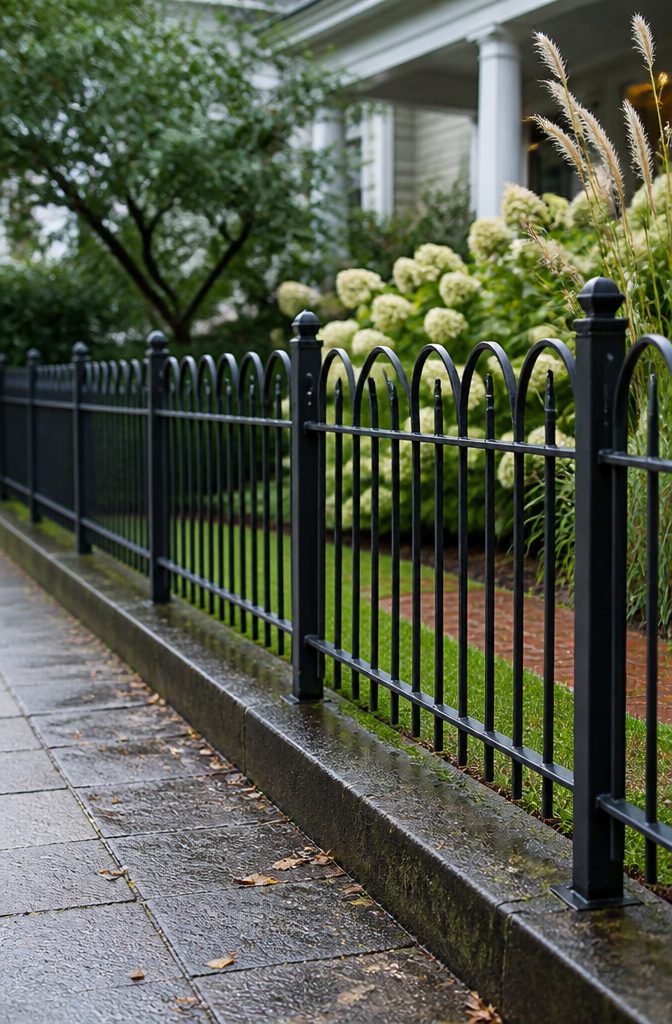
Montage is a wrought-iron-style fence made of powder-coated steel with fully welded panels, sold in heights from 3 to 6 feet. That range runs from a low border along the sidewalk to a full-height line at the property edge.
It is listed for front yards and decorative fencing, and it is described as durable and easier to keep up than metal fences usually are.
Skip it if you want privacy. The wrought-iron look frames the house rather than hiding the yard, and it is sold as decorative.
Skip it too if you need a fence taller than 6 feet, because 6 feet is the top of the range. For curb appeal alone, though, it suits a front yard better than most screening styles.
Recommended Products

🛡 Rustproof Powder-Coated Steel — A high-strength steel core resists bending and warping, while the powder-coated finish guards against rust, corrosion, and water damage. Built to hold up through rain, snow, sun, and wind for dependable, long-lasting outdoor use.

【Heavy-Duty Rustproof Steel 】 Made from high-strength steel with a durable powder-coated finish that resists rust, corrosion, bending, and harsh weather. Built to hold their shape season after season for dependable, long-lasting outdoor performance.

Sturdy Welded Wire Fence: This welded chicken wire fence manufactured using advanced welding technology to ensure that each solder joint is strong and durable, features a 16GA wire diameter, with 2 inch x 4 inch mesh openings, sturdy enough to effectively protect your yard and poultry safety
4. Ornamental Aluminum Fence
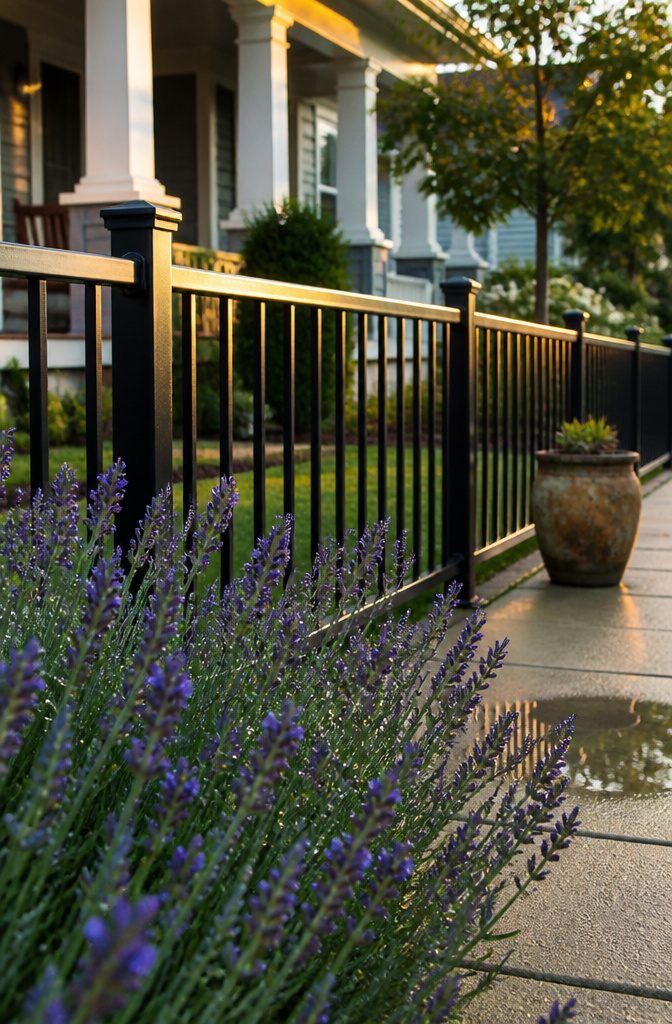
For a front yard where you want a neat, decorative border rather than a barrier, ornamental aluminum is the style I’d pick.
It looks sophisticated, stays lightweight and durable, comes in multiple styles, and runs 3–6 feet tall. Posts set in concrete footings, so plan on digging.
Next to the Montage steel style, aluminum is the lightweight, low-maintenance option. That makes it the easier choice if you want a fence you can mostly forget after it’s up.
Skip it if you need a fence taller than 6 feet or want full privacy. It frames a yard but doesn’t hide it.
Recommended Products

Sturdy Structure - This garden fence is crafted from tubing that is 10 times thicker than wire fencing, resisting bending and strong winds. It also lasts significantly longer than flimsy alternatives, offering exceptional durability. Each panel measures 32"H × 29"W, with a total of 10 panels spanning 24Ft in length.

WHAT'S INCLUDED: 1 Gate + 4 Panels + 6 Stakes in a bundle. Gate sized 41” (H) x 27.5” (W), each Fence Panel sized 42"(H)x27.5"(W), the linear length 11.5 feet, Black color.

WHAT'S INCLUDED: 5 Fence Panels+6 Stakes in a bundle. Each fence panel is 18 inch (H) x 24 inch (W), each Stake ‘s height is 24 inches, linear length 10 feet, Black color.
5. Tillamook Customizable Picket Fence
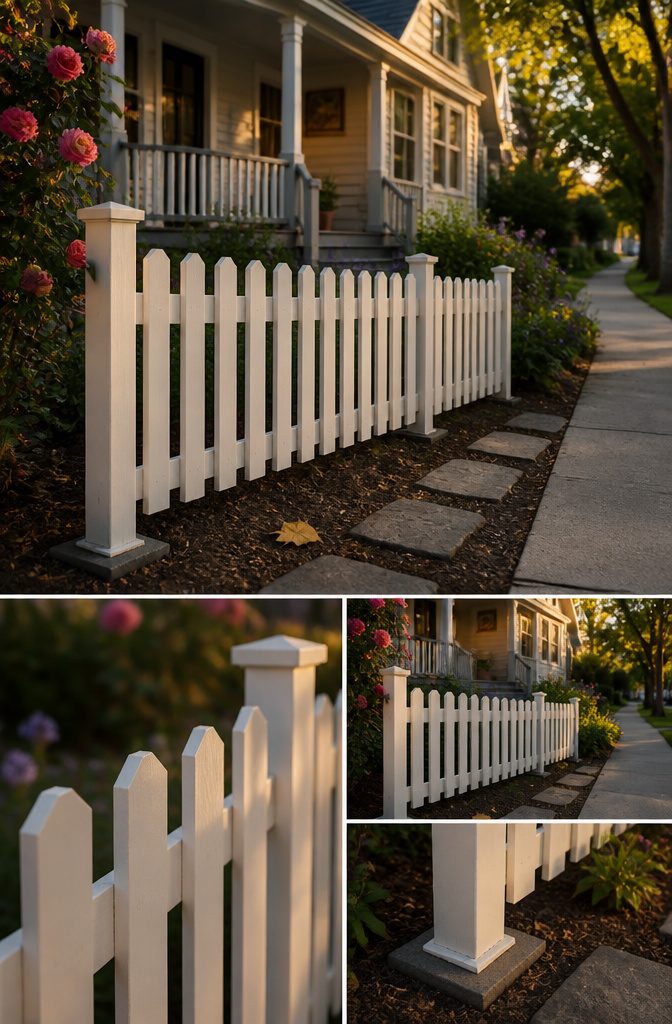
The picket top sets the character of this fence. Dogeared pickets have clipped corners, which reads as traditional and a little rustic.
Chevron tops come to a shallow point, so the fence line looks sharper and more tailored. Flat tops are the plainest, and I’d choose them for a modern or cottage-style house where the fence should stay quiet beside the porch.
Concrete footings hold the posts, and heights run 3–5 feet.
Stay near 3 feet to keep the front yard open to the street, or go toward 5 feet for more of a boundary. Anyone who wants a taller fence should skip this one, because the Tillamook tops out at 5 feet.
Recommended Products

Heavy-Duty Aluminum Construction: Crafted from premium aluminum with high-temperature powder coating, this gate features a sturdy frame with L-brackets and retaining plates, ensuring a rock-solid, wobble-free structure for long-lasting outdoor use.

【Low-Maintenance & Built to Last】Tired of replacing wood posts that rot or metal posts that rust? Our heavy-duty aluminum fence post is rustproof, weather-resistant, and maintenance-free—perfect for harsh outdoor conditions. Unlike wood, it won’t crack, warp, or require constant upkeep, saving you time and money year after year.

High-Strength Aluminum Structure: Made of high-grade aluminum with high-temperature powder coating, it is equipped with a solid frame, reinforced L-brackets and fixing plates, ensuring stable structure and long-term outdoor use without shaking.
Privacy Versus Visibility
Start with what the fence needs to do. If you want the street and neighbors to stay part of the view, hog wire panels framed in cedar mark the boundary and keep the sightline open.
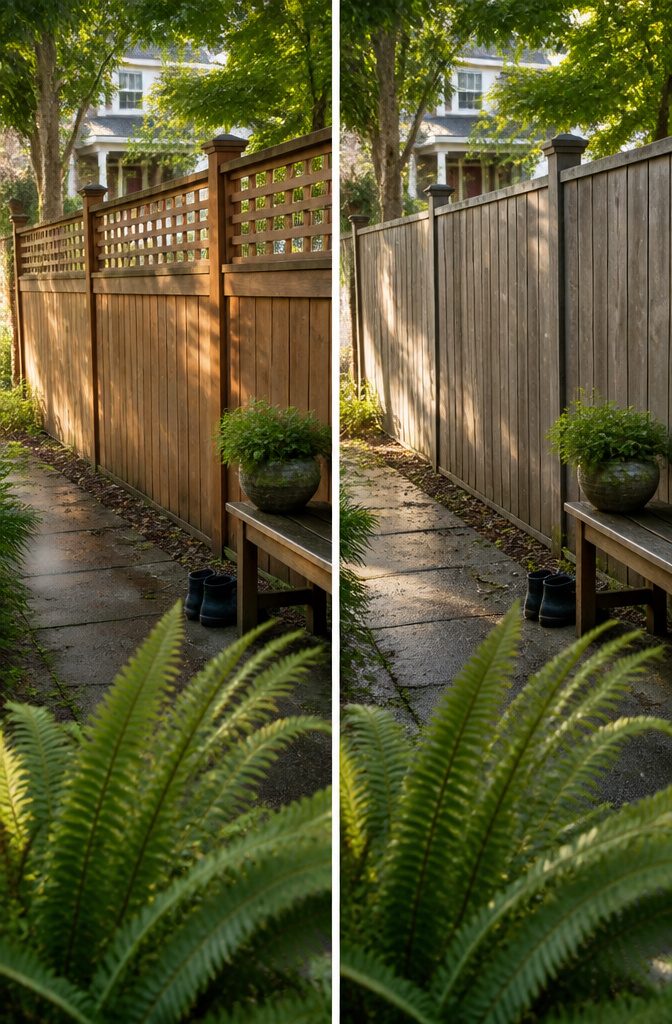
Picket and ornamental styles are decorative: they dress the front of the house instead of hiding it. For seclusion, a privacy fence gives full or partial cover, and the cedar version with a lattice top runs 5–7 feet tall.
I favor partial privacy for a front yard, since the lattice adds height and visual interest without giving up security, and it looks less like a wall facing the sidewalk than solid boards to the top.
Full privacy suits a spot you actually sit in.
Recommended Products

Superior Material and Sturdy Structure:Crafted from high-quality 14-gauge galvanized steel wire, the surface undergoes hot-dip galvanization, boasting exceptional hardness, outstanding durability, and excellent corrosion resistance to ensure long-term stable use. The thickened steel wire not only enhances overall strength but also reliably resists external impacts, providing solid protection for farms.

4'' x 4" Opening Square Mesh Weave; With 4 inch by 4 inch mesh, the welded wire is flexible and tight enough to leave out large ground crawling arachnids

Sturdy Structure: The cattle fencing is woven from high-quality 14-gauge steel wire with a hot-dip galvanized surface. Ensure that all welding points are galvanized to avoid rust problems on welding points and greatly extend the service life.
Materials and Upkeep
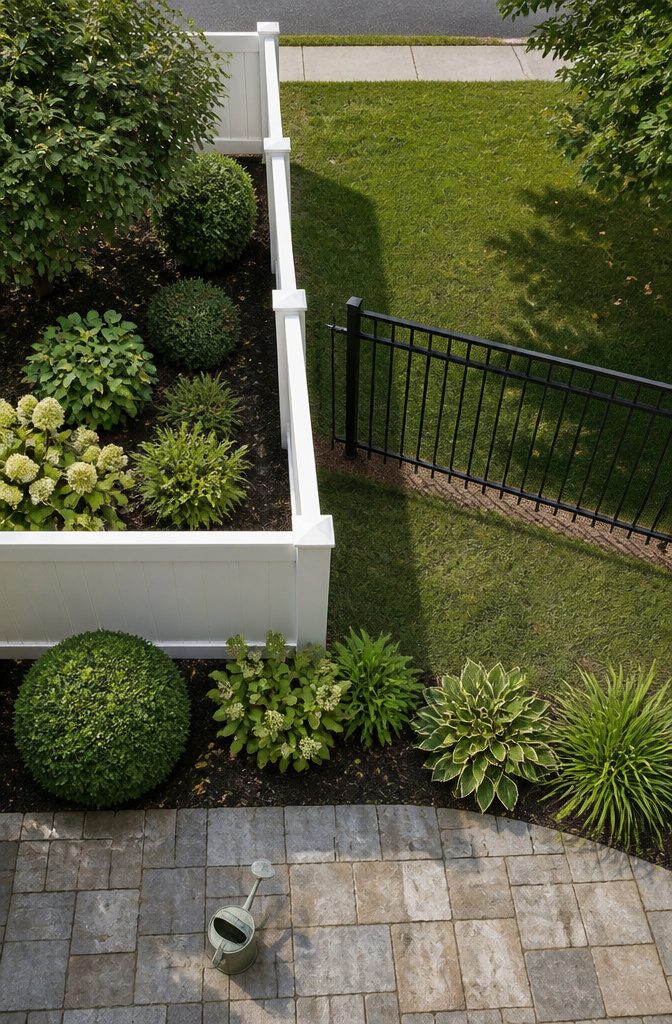
Vinyl and ornamental aluminum are the low-effort picks.
Vinyl resists rot and doesn’t need frequent upkeep, so it suits anyone who wants full privacy without a maintenance routine. Aluminum is lightweight, durable and also low-maintenance, which makes it an easy match for a front yard.
The cedar-framed hog-wire panels and the powder-coated steel fence come with no comparable promise.
I wouldn’t assume they match vinyl or aluminum. Before you buy, ask the installer what each of those two needs to stay in good shape and how often, then count that time or money as part of the price.
Recommended Products

DIMENSIONS: This fence panel measures 30"H x 42"W
PET & CHILD SAFE: Create a safe outdoor play area for fur babies and children. Rest assured that this fence will create a sturdy barrier to protect your family.

Product Dimensions: W 84'' x H 38.6'' with 20 Pickets Straight Sets. Each set includes 2 panels, the width of each panel is 42". Our vinyl fence can flexibly adjust the horizontal position of the fence posts and the height of the fence section, which is very important for different installation scenarios, especially the uneven ground.









