
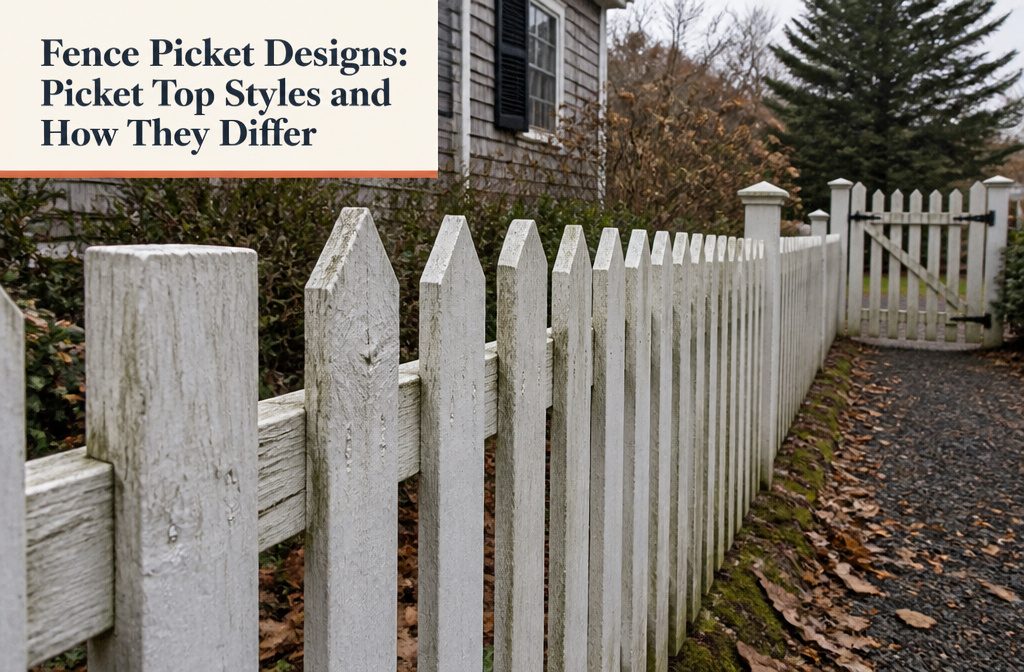
Picket tops run from a plain flat cut to an ornate Fleur De Lis, and the deciding factor is how much detail the house already has.
A busy house suits a flat-top; a plainer one can carry more. Scalloped tops are the exception: they are cut across several pickets during installation, so they come custom, not ready-made.
1. Colonial Gothic (French Gothic)
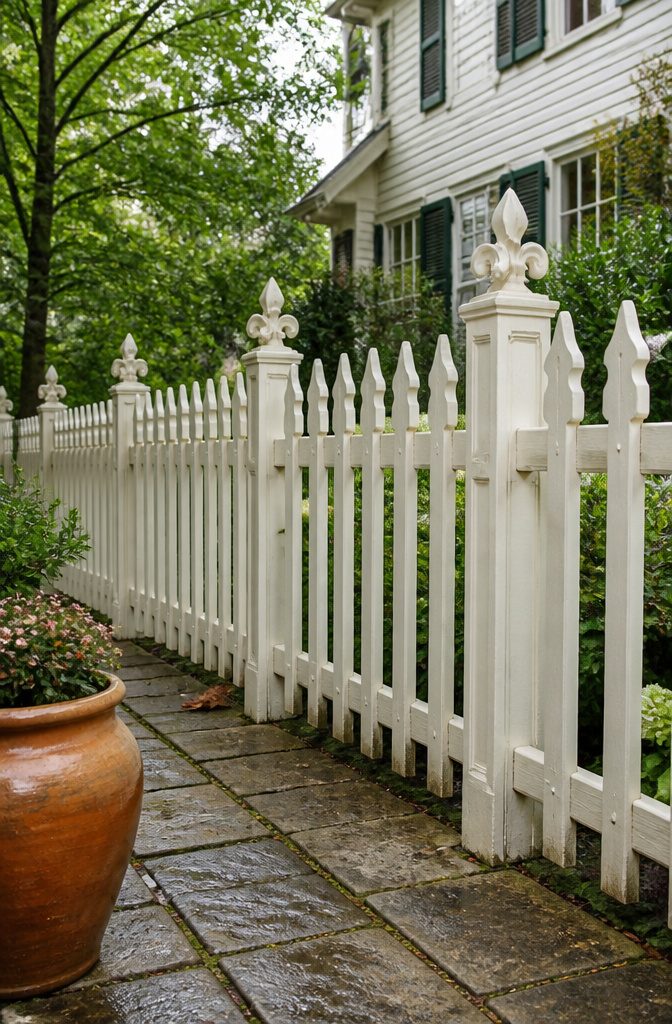
The Colonial Gothic top, also called French Gothic, is the elegant, ornamental option in this group.
A Fleur De Lis embellishment crowns the picket, and Frederick Fence sells the look as its Fredericktown fence. The symbolism is part of the appeal.
The Fleur De Lis traditionally stands for French royalty, perfection, light and life, which makes it a fitting choice for a homeowner who is happy with their surroundings and wants the fence to show it.
A full run of ornate pickets can feel like a lot, so I’d also consider the Fleur De Lis as a post style.
Pointed pickets paired with Fleur De Lis posts give a simple fence one decorative accent at each post.
2. Flat-Top
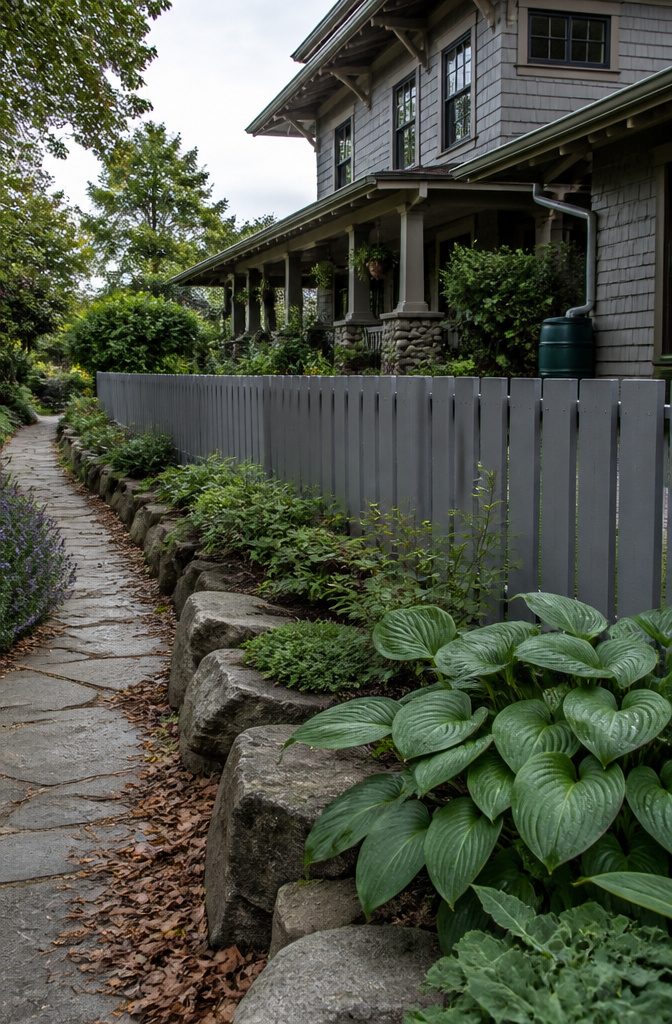
A flat-top picket is cut straight across, with no points, notches or curves on the top edge.
That absence is the design. The result is a classic fence that reads as understated, with a clean, even line that lets the house and the plantings do the talking.
It suits any home design, and it pairs especially well with Craftsman-style homes, which is where its second name comes from.
I would choose it for a house that already has plenty of detail of its own, since a decorative top would only compete.
3. Rounded (Comus)
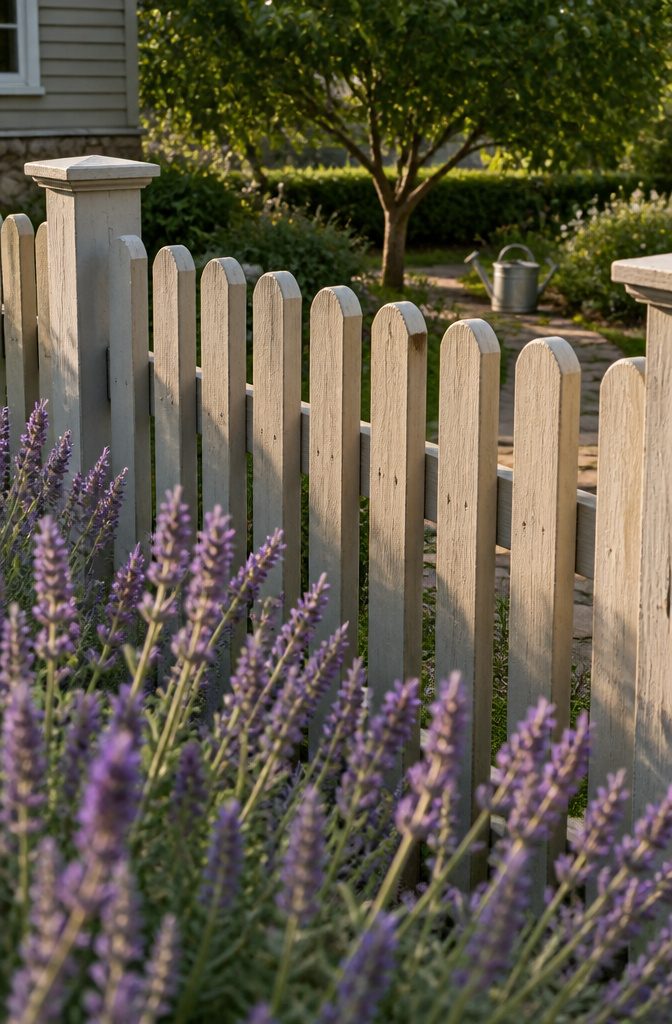
The rounded top, also called Comus, is the simplest step up from a flat-cut picket.
Each picket gets a soft curve across the top instead of a square edge, so the fence line reads as a gentle row of arches rather than a hard horizontal.
The curve takes the sharpness off the fence without adding points or notches, which keeps it traditional.
I’d choose it over a flat top when you want some decoration without a fussy fence.
It is the easiest way to move past a basic flat-top while still looking classic, and it ranks among the most popular picket styles. Plain pickets with a rounded cap suit most yards and house styles.
4. Dog-Ear
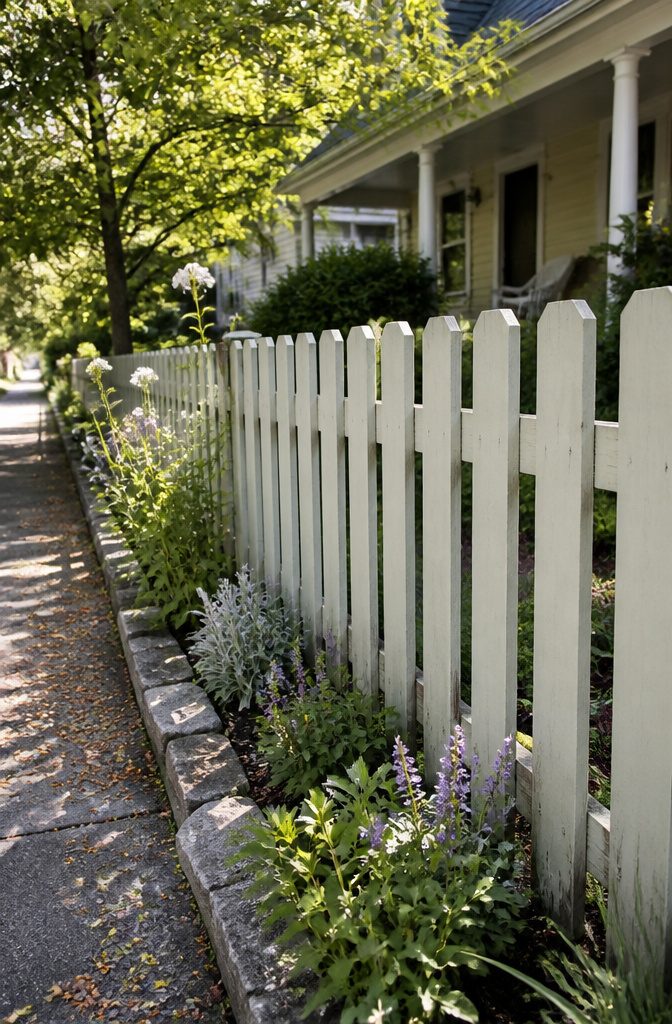
A dog-ear picket is a flat-top board with its top corners cut off at an angle.
The cut leaves a short flat edge in the middle and a slanted shoulder on each side, so the board still reads as squared off, just with the sharp corners removed.
That puts it between a plain flat-top, where both corners stay square, and a pointed picket, where the angles run all the way up to a single tip.
I’d choose it when a flat top looks too plain but a pointed top feels fussier than the house calls for.
Because only the two top corners are cut, the profile stays simple, and the fence still looks like a classic picket fence from the street.
5. Gothic (Victorian)
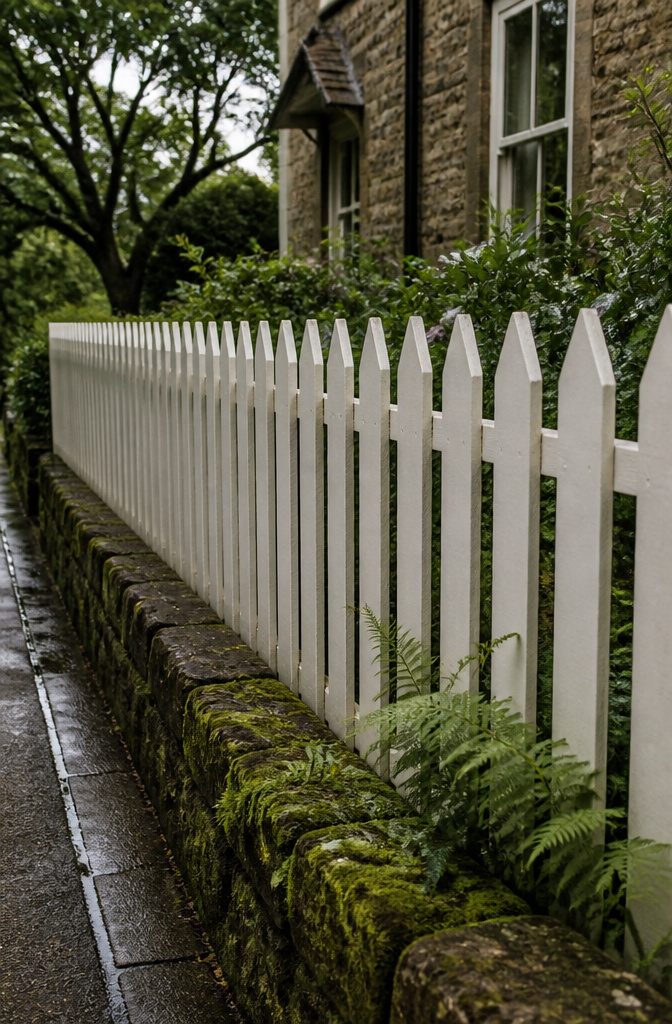
Gothic, also called Victorian, pickets end in one smooth point.
Both edges run straight up the board and meet at a clean tip, and nothing interrupts the line. This is the plainest of the pointed tops, and I’d pick it for a traditional look without fussy detail.
Colonial Gothic is the style most often mistaken for it, and the sides of the top give it away.
Gothic has no side notches and no Fleur De Lis style ornament. Colonial Gothic has notches cut into the sides, which are often paired with a decorative shape at the tip.
From the street, a Gothic fence reads as a row of simple, even points.
If the tops look carved, you’re looking at Colonial Gothic. A plain point is also easier to paint and keep clean than a notched one.
6. Pointed (Spear)
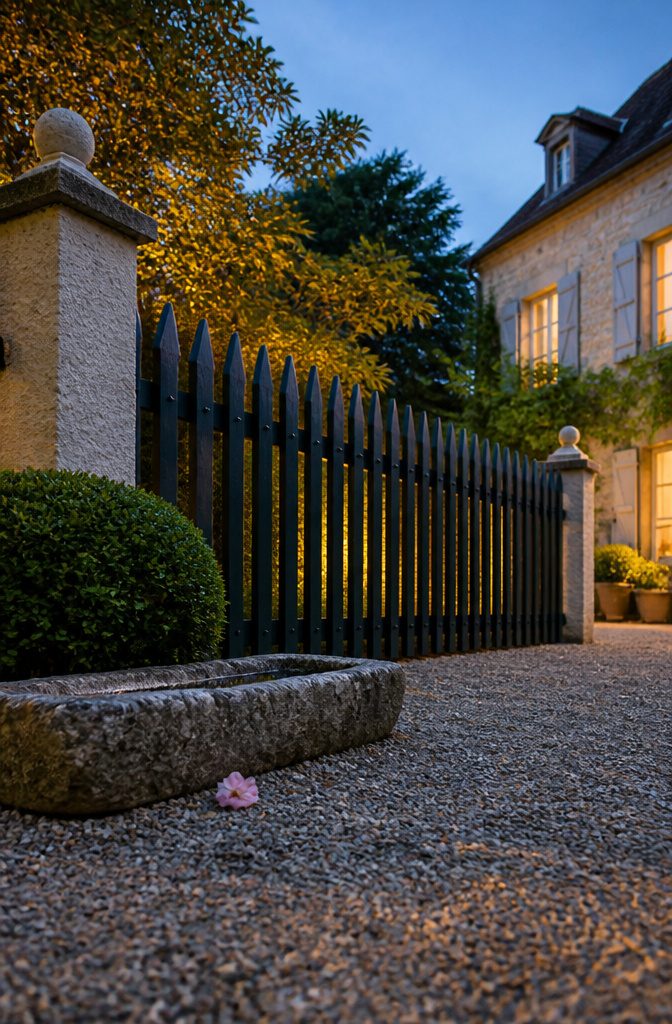
A pointed picket, usually called a spear, ends in a sharp tip formed by two straight angled cuts that meet at a peak.
The edges stay crisp with no curve anywhere along the cut. The Gothic top is a different shape, with a smooth tip and shoulders that curve into it.
Spear pickets look more formal than flat or rounded tops, and they hold up next to ornate posts. Pair them with Colonial Gothic posts if you want a traditional, slightly dressy fence.
On plain square posts the spear still looks clean, but the fence gets its character from the pickets alone. I’d choose it over a Gothic top when you want a sharper, more graphic line along the top of the fence.
7. Convex or Concave Scalloped Tops
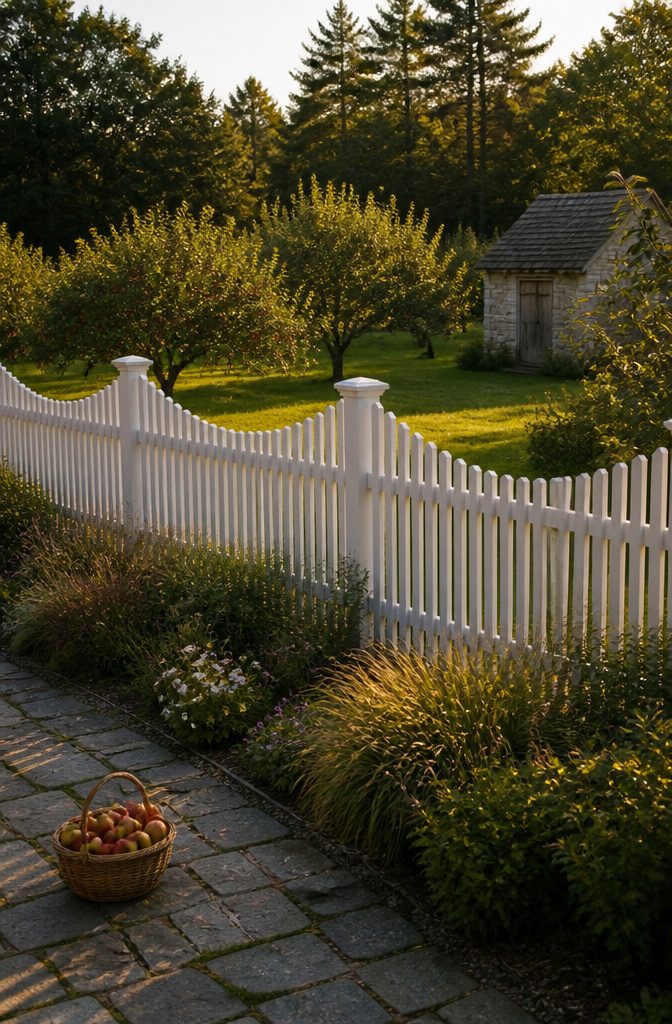
Scalloped tops are the one style on this list shaped across several pickets at once rather than on each picket alone.
The pickets go up at full height, then the installer cuts a rounded rise (convex) or a dip (concave) across their tops between posts.
The fence line rolls from post to post, which gives it a sense of flow and a more pleasing look than a tall, flat privacy fence.
Because the curve is cut during installation, it is custom to your fence run and doesn’t come as a ready-made pattern.
Plan on a careful installer, or mark one smooth curve and reuse it as a guide for every span. I’d pick convex for a soft, rounded look and concave if you want the posts to stand tall.
How Picket Fences Are Built
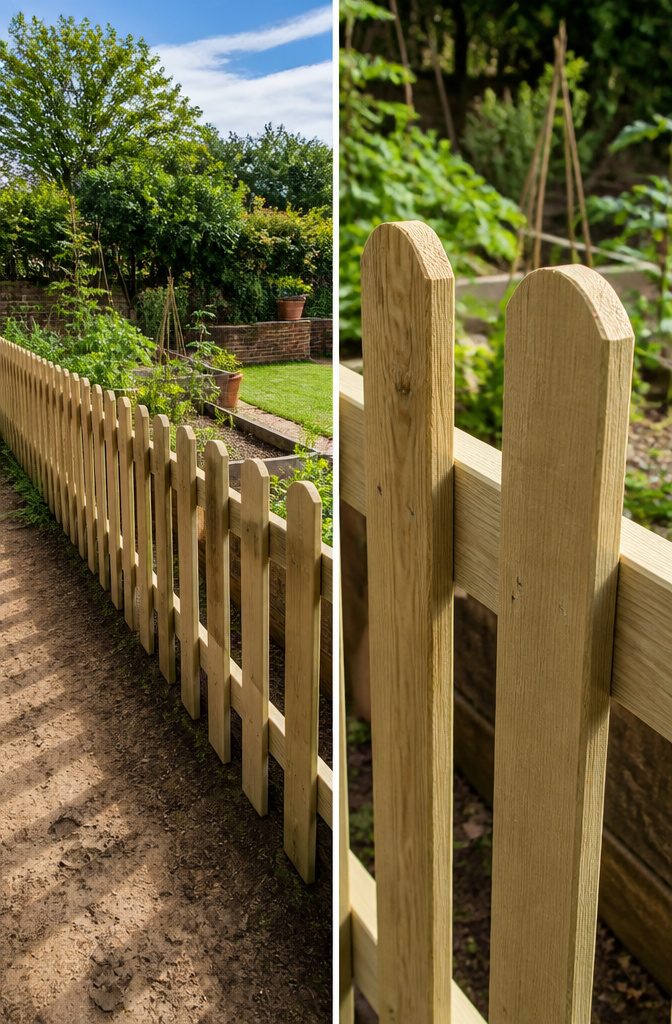
A picket fence has two parts: vertical boards, the pickets, set at even intervals and fastened to horizontal rails.
The rails hold the structure together, while the pickets are what the street sees. Even spacing is what makes the fence read as neat, so I’d check it before fastening anything for good.
The fence is a decorative, cost-effective boundary. It shows off the property and keeps children and pets inside it, which is why it remains one of the most popular fences in the nation.
The gaps between boards mean it marks a line without blocking the view, so it won’t give you privacy. If privacy is the goal, a different style fits better.
Why the Top Shape Matters
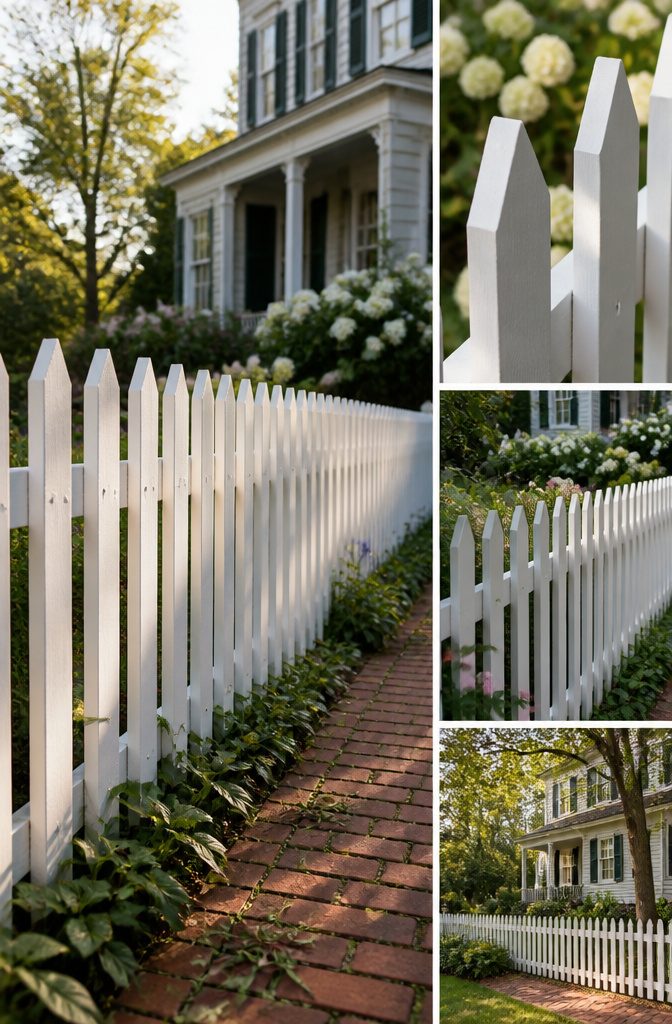
Every picket fence is built the same way: evenly spaced vertical boards attached to horizontal rails. That leaves the cut at the top of each picket as the one place a picket fence gets its own character.
Two fences with identical boards, spacing and rails can look plain or formal, country or Victorian, depending only on how the tops are shaped.
The top also sets how the fence reads along the property line. A repeating pattern across the pickets gives the run a sense of flow that a tall, flat privacy fence lacks.
I would settle on the top before anything else, since it is the part of the fence people see from the street.
Frequently Asked Questions
What are the most common fence picket designs?
The 7 styles covered here are Colonial Gothic (French Gothic), flat-top, rounded (Comus), dog-ear, Gothic (Victorian), pointed (spear), and convex or concave scalloped tops.
All of them share the same construction, so the shape cut into the top of the picket is what sets one apart from another.
What is the difference between Gothic and Colonial Gothic pickets?
Gothic pickets end in one smooth point with plain sides.
Colonial Gothic pickets have notches cut into the sides and often a decorative shape such as a Fleur De Lis at the tip. If the tops look carved, it is Colonial Gothic.
What is the difference between a dog-ear and a flat-top picket?
A flat-top picket is cut straight across with square corners.
A dog-ear picket starts as a flat-top board, then has only its 2 top corners cut off at an angle, which leaves a short flat edge in the middle. It sits between a plain flat-top and a pointed picket.
Which picket top is the simplest choice?
The flat-top is the plainest, with no points, notches or curves on the top edge.
The rounded (Comus) top is the easiest step up from it, adding a soft curve while keeping a classic look. Rounded is also among the most popular picket styles.
Do scalloped picket tops come ready-made?
No.
A scalloped top is cut during installation across the pickets between posts, either as a rise (convex) or a dip (concave). Because of that it is custom to your fence run and does not come as a ready-made pattern.
Does a picket fence give you privacy?
No. The gaps between the boards let people see through, so a picket fence marks a boundary without blocking the view.
It does keep children and pets inside the yard. If privacy is the goal, a different fence style fits better.









