
Wooden fences range from wire-strung posts to tall solid boards, and the right one depends on what lies past your property line.
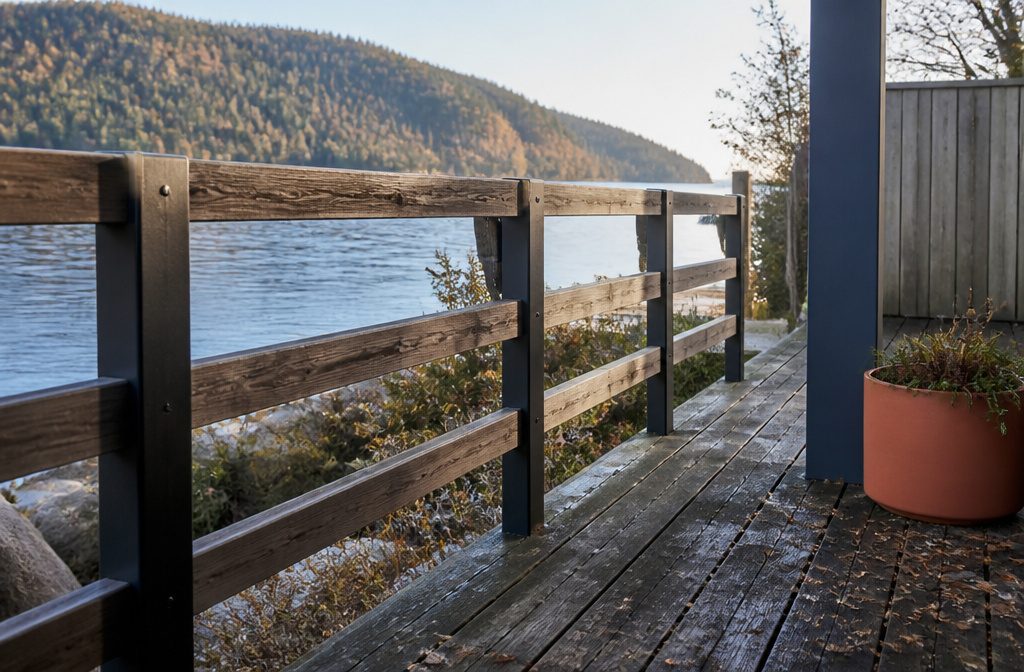
A solid run gives the most privacy but shuts out a lake or hillside view, so those sides suit a wood-and-metal design like the one on Jen Samson’s lake house deck. Check your town’s height limit first.
1. Combine Form and Function
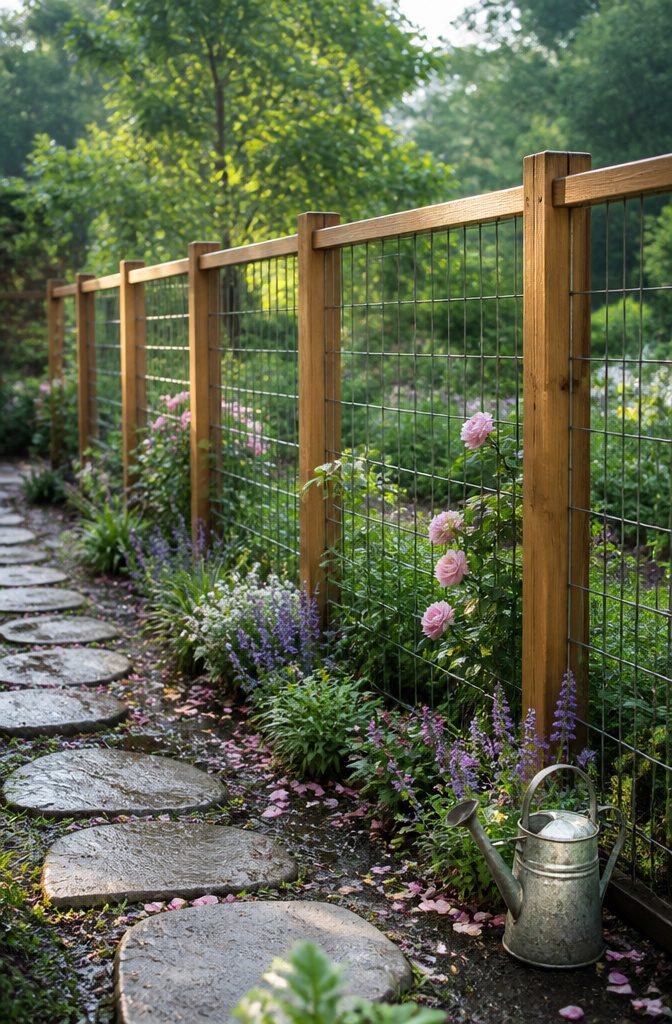
Wooden posts with wire stretched between them suit a garden or flowerbed better than solid boards. The posts and rails give the fence its frame and a natural wood look, and the wire gives vines and blooms something to climb.
Solid panels give plants nothing to grip. Wire is also harder for curious animals to get past, so it earns its place wherever pests visit the bed.
I’d pick this for yards with climbers to train or critters nearby.
It favors function over a solid look, though. You can see straight through it, so skip it if privacy is the main goal.
2. Add a Rustic Touch
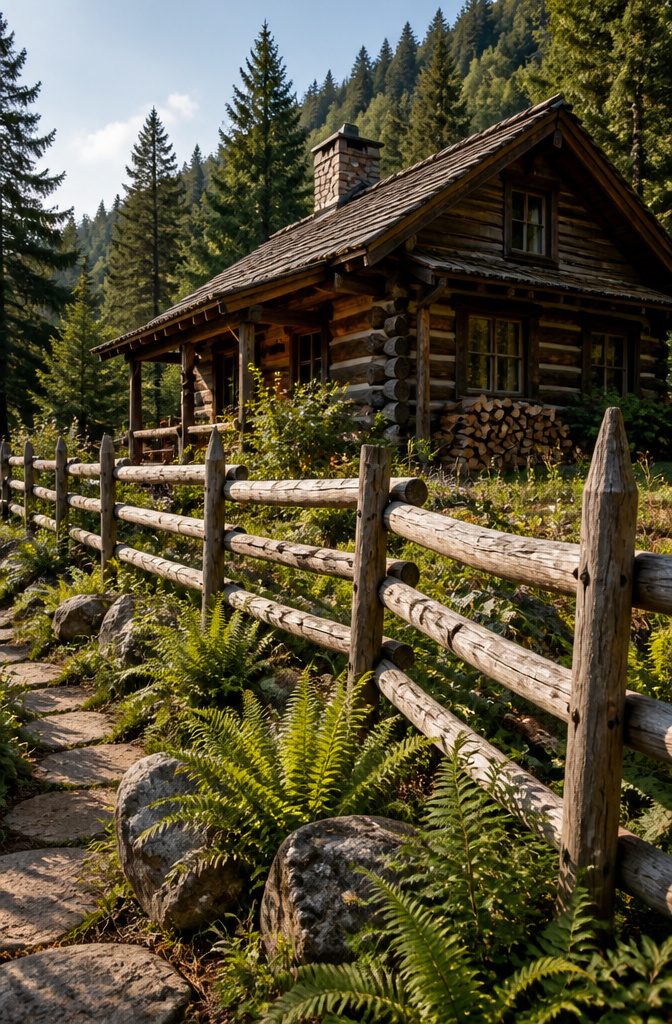
A rustic palette fence is the casual choice, and it works best around a log cabin.
Designer Emily Janak used one to encircle a log cabin, and the loose, informal build echoes the logs and adds to the mountain feel of the place. Next to a cabin, a tidy, sharp-edged fence would look out of place.
I’d pick it for looks alone. It wins on appearance and loses on security, so it fits a yard where the fence is there to frame the setting, not to keep pets in or visitors out.
If you need either, choose a different style from this list.
3. Camouflage It With Greenery
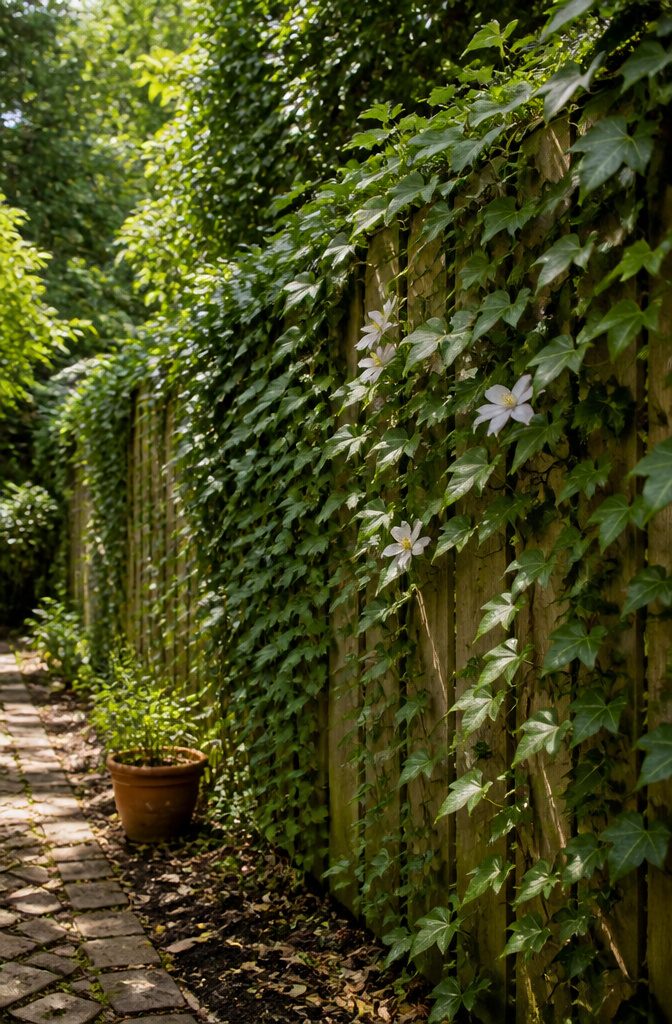
A wooden fence looks good bare, but it looks like the edge of a secret garden once it’s overgrown.
Plant climbing vines at the base of the fence and let them work their way up the boards until the wood reads as a green wall.
English ivy and clematis are the two to start with. Pick one and repeat it along the run for a uniform, hedge-like look, or alternate the two if you want the wall to feel less planned.
Either way, the plants take only a planting spot at the foot of the fence, which makes this a good fit for a small yard where a separate border has no room.
4. Section Off Outdoor Rooms
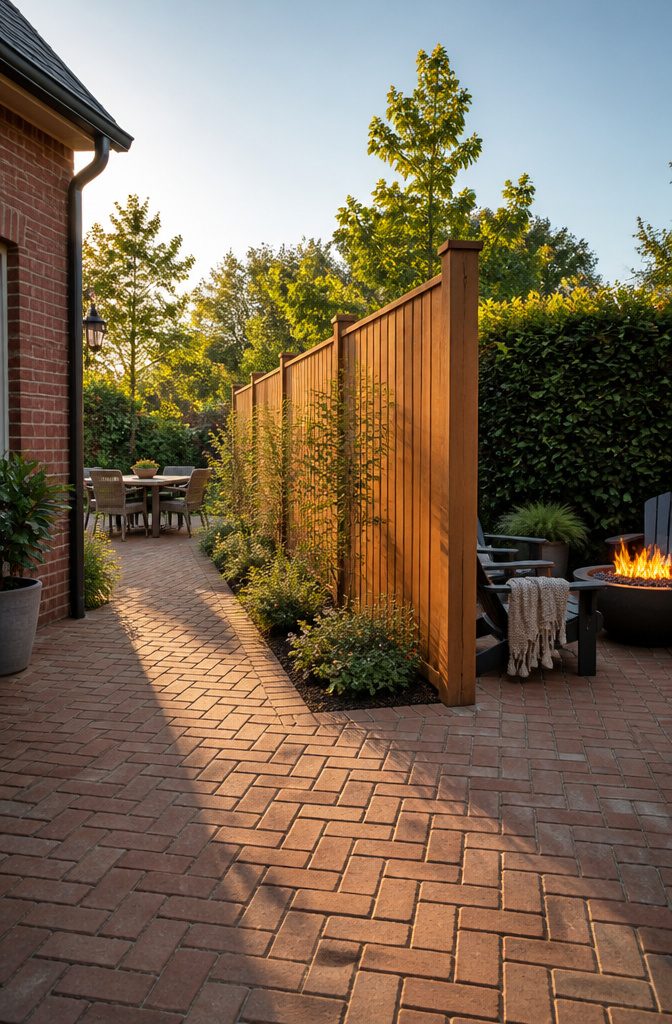
A tall wood fence works like an interior wall, and in a snug backyard it does the same job: it gives each activity its own room.
Designer Kate Abt used one to separate a brick patio and fire pit from the nearby dining area, so the two zones no longer compete for the same square footage.
The dividing line is what makes a small yard feel bigger.
Once you can’t see the whole space from one spot, each side reads as a separate place, and you spend your time wandering between them instead of looking at one small rectangle.
I’d run the fence between uses, not just along the property line. You still get the privacy and security of a tall fence, and you can also split a lawn into designated areas.
5. Add an Arbor
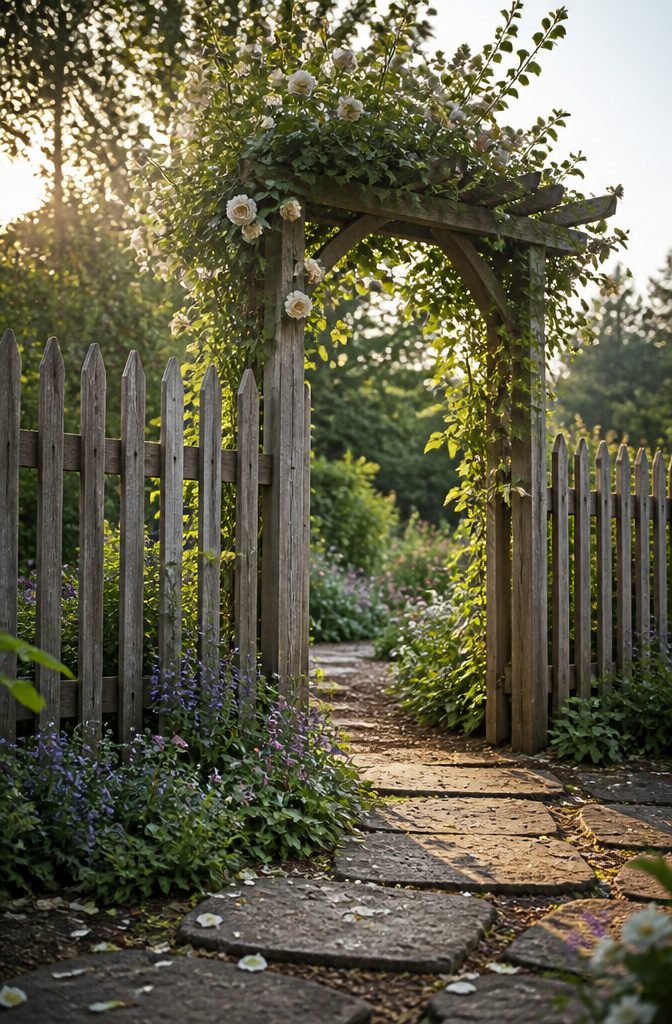
A traditional wood picket fence pairs well with an arbor, and the combination reads as cottagecore.
It looks most natural around a garden, where the arbor marks the way in. It also works to formalize a walkway or to draw guests toward the backyard.
Treat the arbor as the focal point of the entry. Center it on the path and run the pickets right up to its posts, so the fence frames it instead of stopping short of it.
I’d keep the pickets plain and let the arbor carry the detail, because two busy elements at one entry compete for attention. A climbing plant trained over the top softens the structure and makes the entry feel settled.
6. Team Two Styles
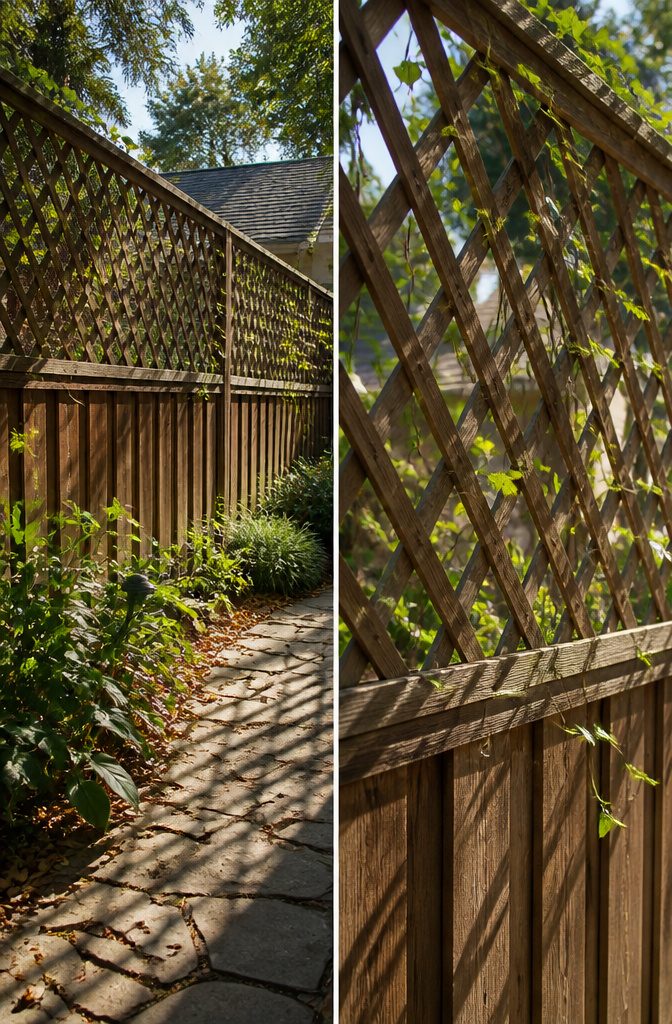
A solid board base with a lattice top gives you two looks in one fence, and each half does its own job.
The lower section is the traditional part: closed boards that hold the property line and block the view at the level you most want covered.
The lattice above is ornamental. Its open pattern adds height and a decorative edge while letting light through, so the fence reads less like a wall.
Closed boards below, open lattice above also suits climbers, since vines can weave through the gaps and soften the top line.
For a small yard I’d pick this over a full-height solid fence, which can shade beds and make the space feel boxed in. The cost is some privacy at the top, because lattice shows shapes and movement.
7. Dial Up the Drama With Black
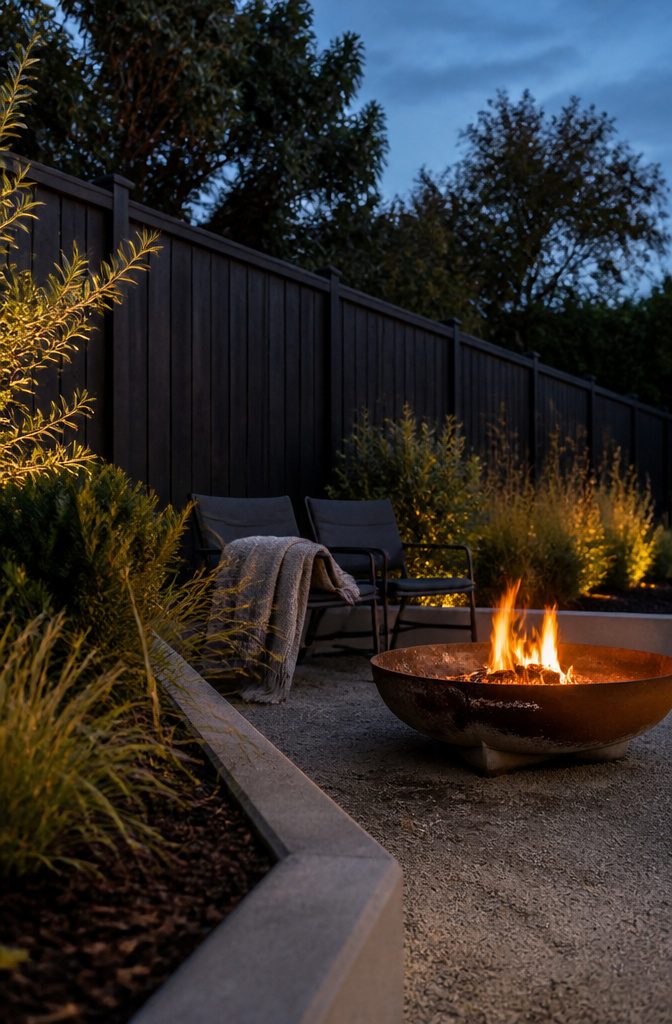
A black fence does one of two jobs depending on what sits in front of it.
Behind a fire pit and a seating area, it becomes a dark backdrop that puts the focus on the furniture and flames. Against dense planting, the same color recedes and the boundary nearly disappears.
For paint, Onyx by Benjamin Moore is the named shade to start with. The other route is shou sugi ban, the traditional technique of charring the wood’s surface.
For a first-time owner, paint is the more approachable option. Either way, black makes the fence a deliberate design statement, so it suits a yard where you want that drama more than one where you’d rather the fence go unnoticed.
8. Get Graphic
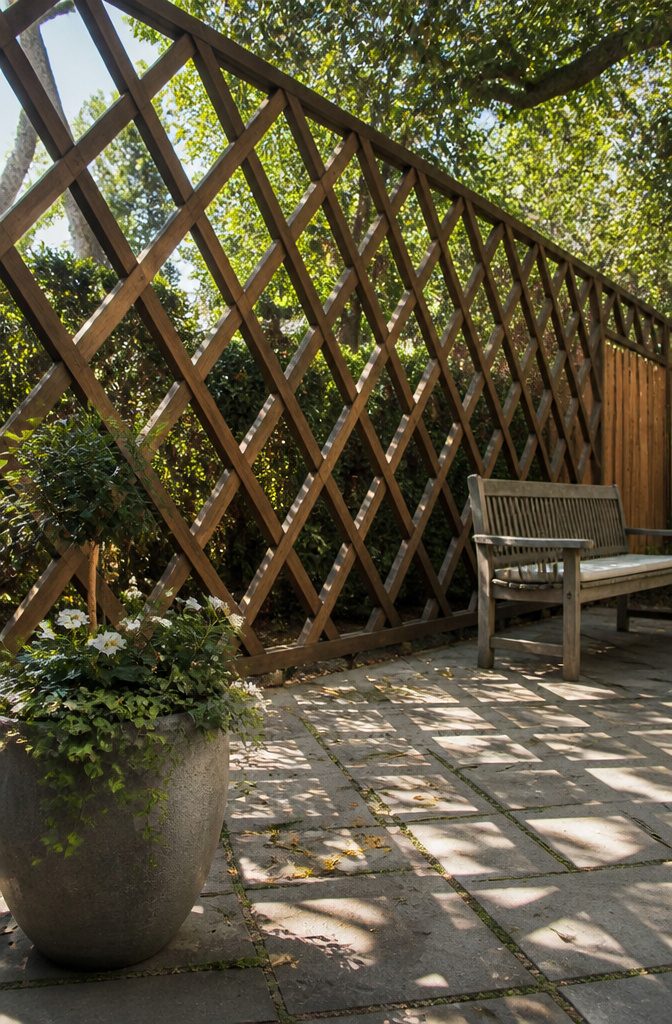
Angled slats or an oversized lattice turn a fence from a boundary into the best-looking thing in the yard.
A diagonal or diamond grid throws shadows that shift through the day, so even a bare stretch of wood has something going on.
The playful, large-scale lattice in a Southampton garden shows how this can look fresh and timeless at once.
For the one stretch people look at most, such as the wall behind a patio, I’d choose an angled or oversized lattice pattern and keep the other runs plain.
Cutting and fitting angled pieces takes more work than hanging standard boards, and a whole yard of pattern gets busy fast.
9. Maximize the View
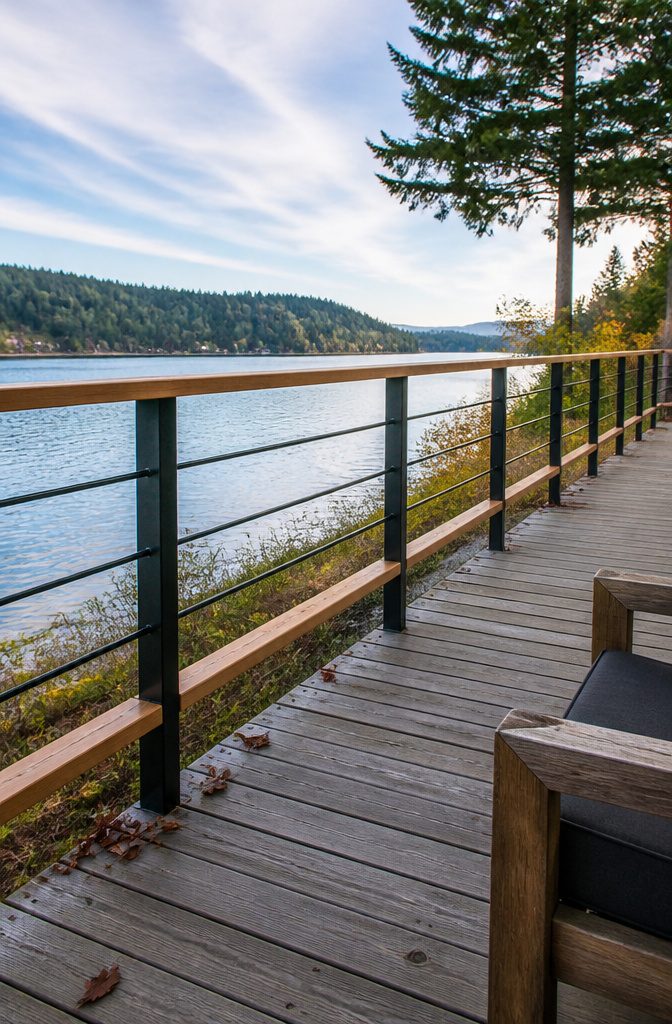
A solid run of boards is the wrong call when the yard has a view worth keeping.
A streamlined, partly see-through design frames the scenery instead of blocking it. The best example I’ve seen is the metal-and-wood combination lining the deck perimeter at a rustic lake house by designer Jen Samson.
Wood keeps the look warm, and the metal keeps the lines thin enough that the eye travels past the fence to the water.
For a yard with a lake, hillside or skyline beyond it, I’d pick this mix over full boards on the sides facing the view.
Save the solid panels for the sides where you need privacy and have nothing worth looking at.
10. Start With a Blank Slate
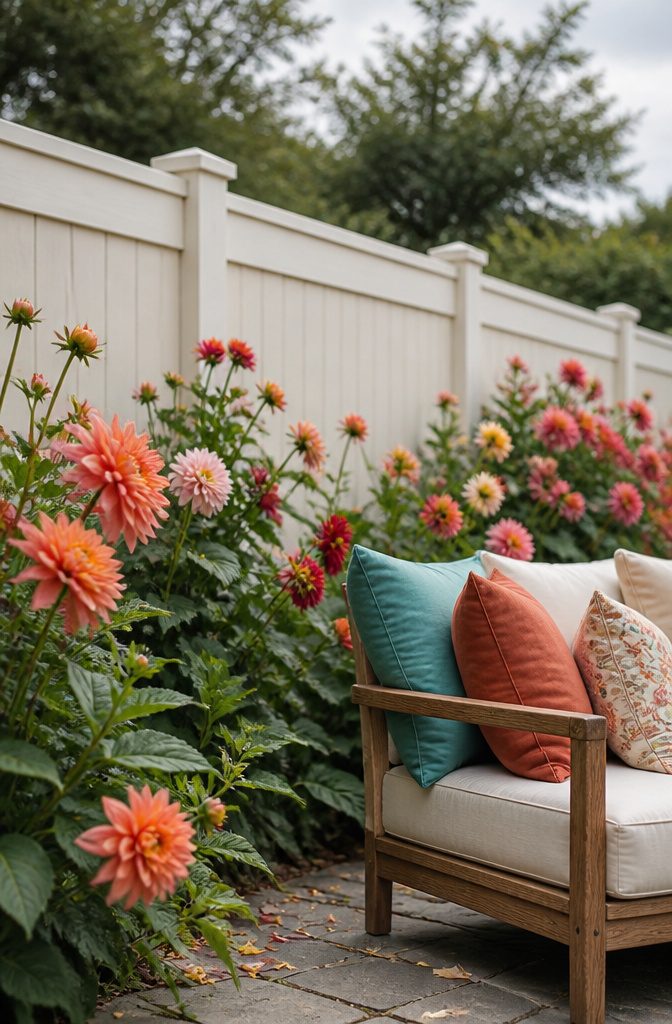
Paint the whole fence creamy white and it stops competing with anything else in the yard.
Aamir Khandwala did this at a home in Bellport, New York, and the calm, neutral backdrop lets a funky outdoor couch or a prized patch of dahlias take center stage.
I’d choose white when the plants and furniture are the main event and the boards are just the frame. Cover every panel and post, since one bare or stained section breaks the effect.
Black does the opposite.
It turns the fence into a dramatic backdrop in its own right, which suits a casual fire pit and seating area. White recedes, and black performs.
Wood Types and Cost
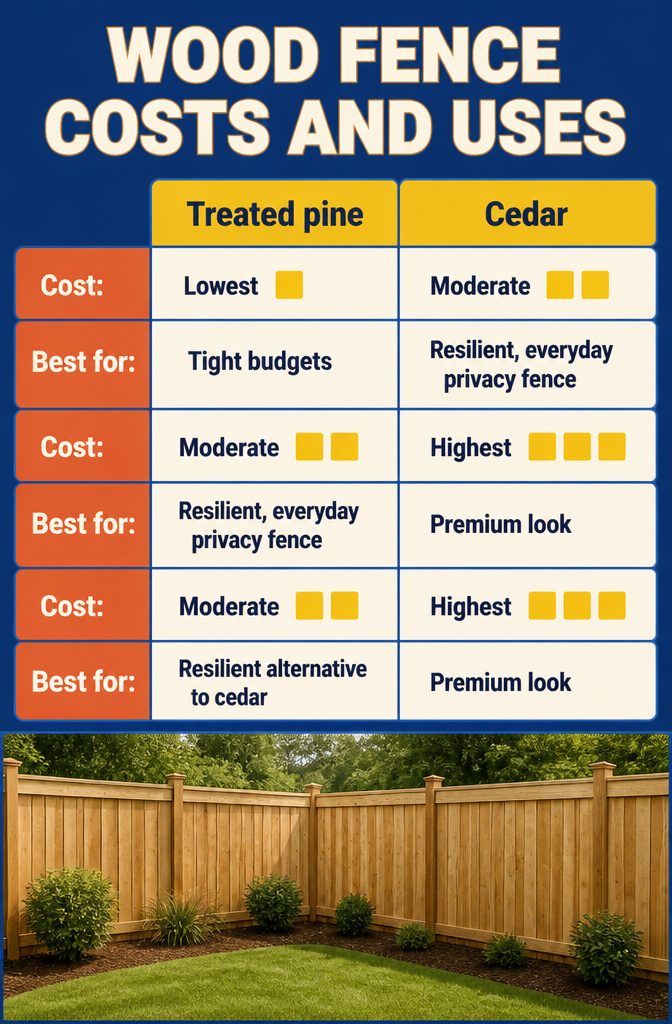
Wood costs less than wrought iron, vinyl or composite, so the real decision is which wood.
On a tight budget I would pick treated pine, and I would step up to cedar or cypress for a fence that holds up well over the years.
| Wood | Cost | Best for |
|---|---|---|
| Treated pine | Lowest | Tight budgets |
| Cedar | Moderate | Resilient, everyday privacy fence |
| Cypress | Moderate | Resilient alternative to cedar |
| Redwood | Highest | Premium look |
| Teak | Highest | Premium look |
For a DIY fence, oak or pine pallets can be taken apart and rebuilt into panels for far less than buying new boards.
Privacy and Security
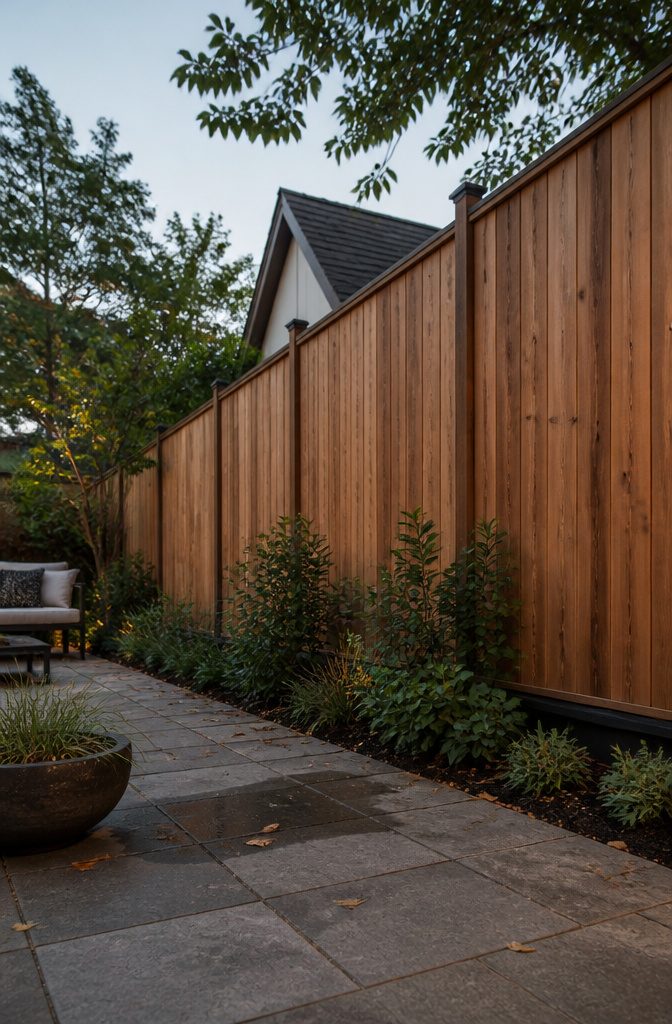
A tall, solid fence with vertical boards works like an exterior wall. It blocks sightlines from neighbors and the street, and a yard nobody can see into is a safer-feeling yard.
On a small lot or a patio, I’d pick it first. The price is the view: a solid run shuts out whatever lies past your property line, good or bad.
If you have a lake, a hillside or open fields to look at, a semi-see-through design suits you better (see the view idea below).
Before ordering boards, check your town’s fence height limit, since many cap how tall a fence can go.
Curb Appeal and Resale Value
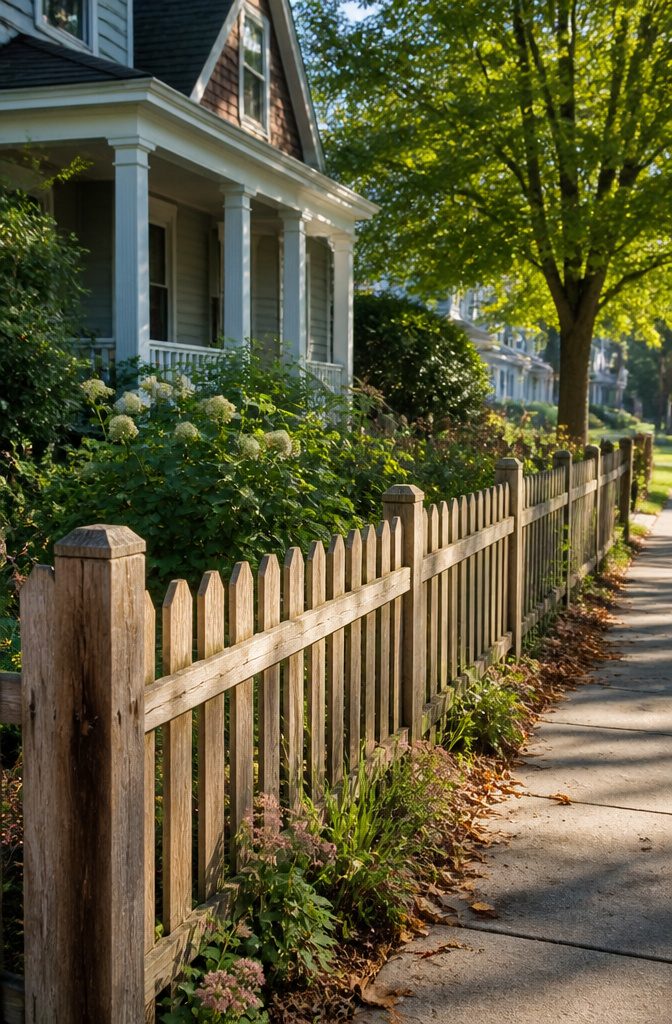
A fence improves curb appeal and privacy in one build, and it can raise what a home is worth. Still, I wouldn’t let resale math pick your design.
A fence you enjoy seeing from the kitchen window pays off every day, while a bump in value is only a maybe, so choose the style you want to look at daily.
Wood is the easiest material to justify on both counts. It looks timeless, comes in everything from picket to tall vertical-board privacy panels, and generally costs less than wrought iron, vinyl or composite.
Even an older, slightly rundown wood fence can add character to a house when you style it well.
Frequently Asked Questions
What is the cheapest wood for a fence?
Treated pine is the lowest-cost option and the one to pick on a tight budget. Cedar and cypress cost a moderate amount and hold up better over the years, while redwood and teak are the most expensive.
Which wooden fence gives the most privacy?
A tall, solid fence built from vertical boards gives the most privacy, because it blocks sightlines from neighbors and the street.
It also shuts out any view past your property line. Check your town’s fence height limit before you buy boards, since many places cap how tall a fence can be.
Is a wood fence cheaper than vinyl, composite or wrought iron?
Yes, wood generally costs less than all three. Within wood, the price depends on the species, with treated pine at the low end and redwood and teak at the top.
What kind of fence is best if I want to keep a view?
A partly see-through design, such as wood combined with metal, keeps the view because the thin lines let the eye pass through to the scenery.
Use solid panels only on the sides where you want privacy and have nothing worth looking at.
How can I cover a wooden fence with plants?
Plant climbing vines at the base of the fence and let them grow up the boards.
English ivy and clematis are good starting choices, and you can repeat one along the whole run or alternate the two. Because the plants only need a spot at the foot of the fence, this works in a small yard.
What is a good way to build a wooden fence on a budget?
Take apart oak or pine pallets and rebuild them into fence panels. This costs far less than buying new boards.
What color should I paint a wooden fence?
Creamy white makes a calm backdrop that lets furniture and plants stand out, as long as you cover every panel and post.
For a dramatic look, black works well, and Benjamin Moore’s Onyx is one shade to try. Charring the wood with the shou sugi ban technique is the other route to black.
Does a wooden fence add resale value?
It can raise what a home is worth, but the increase is only a possibility. A fence also improves curb appeal and privacy right away, so choose the style you want to look at every day.









