
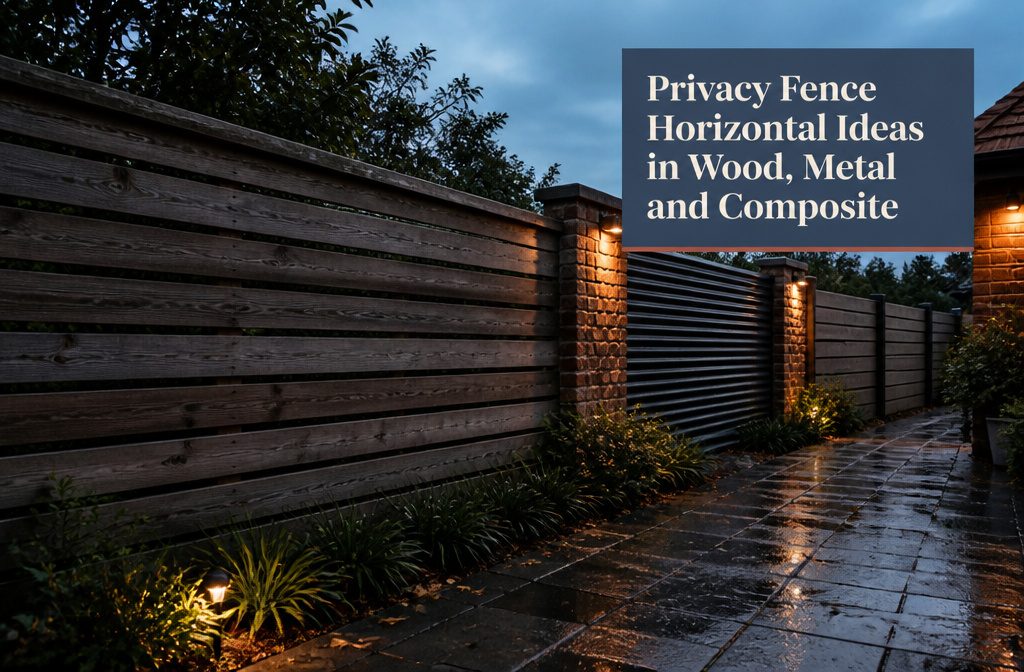
Your choice runs from pallet slats for a short pet area to corrugated steel on brick posts, and the deciding factor is how long you’ll stay.
Wood lasts 10–20 years only with regular sealing or staining; composite, vinyl and metal run 25 years or more. Horizontal can also cost more than vertical at the same height.
1. Stepped Wood for Slopes
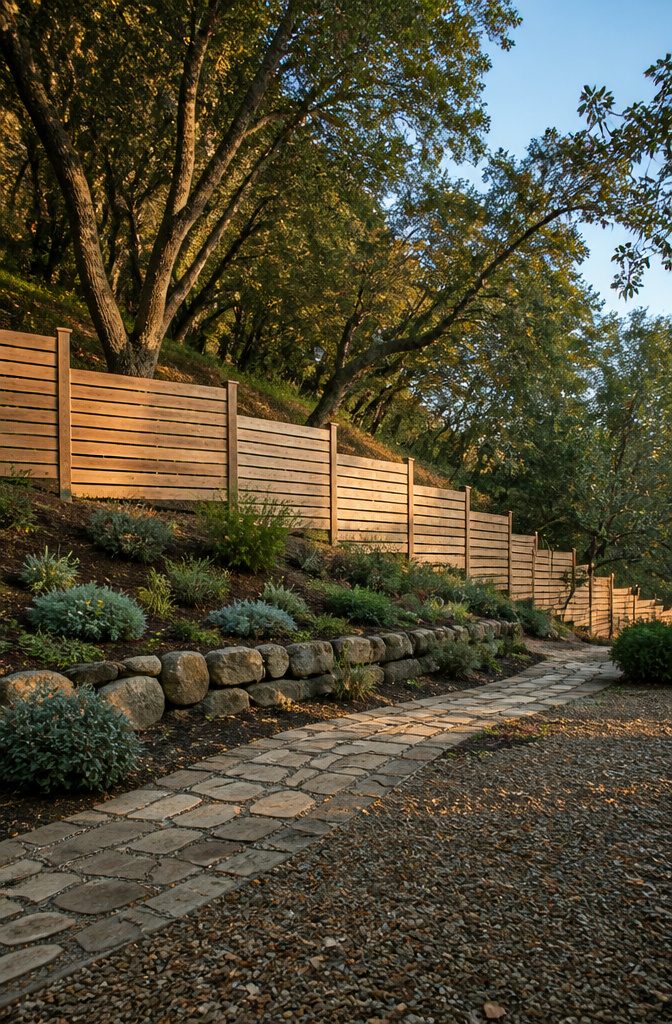
A stepped horizontal fence stacks the same number of boards in every section, so each section is the same height and sits level.
The hill makes the steps: the top line drops at each post instead of tilting with the slope. On a real grade, I’d pick it over a fence that follows the slope, because the boards stay truly horizontal.
Installation is harder, though. Each post hole sits at a different ground height, so measure the drop between posts before you buy lumber.
The steeper the grade, the bigger the gap under each step, and you’ll need to close it with an extra board or fill it with soil.
Shorter sections keep those gaps smaller on steep ground, but they mean more posts to set.
Recommended Products
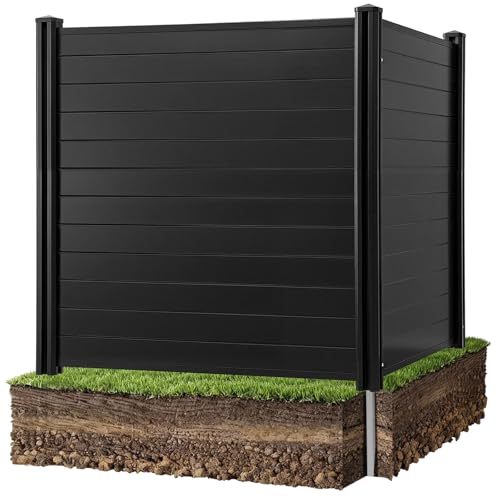
Backyard Privacy Enclosure: Our vinyl fence panel set includes 2 panels measuring 48 x 48 in, ideal for concealing outdoor items like trash bins, pool equipment, and air conditioners, keeping your backyard neat and attractive while meeting HOA guidelines

Backyard Privacy Enclosure: Our vinyl fence panel set includes 2 panels measuring 50 x 50 in, ideal for concealing outdoor items like trash bins, pool equipment, and air conditioners, keeping your backyard neat and attractive while meeting HOA guidelines

Backyard Privacy Enclosure: Our vinyl fence panel set includes 3 panels measuring 50 x 50 in, ideal for concealing outdoor items like trash bins, pool equipment, and air conditioners, keeping your backyard neat and attractive while meeting HOA guidelines
2. Horizontal Vinyl
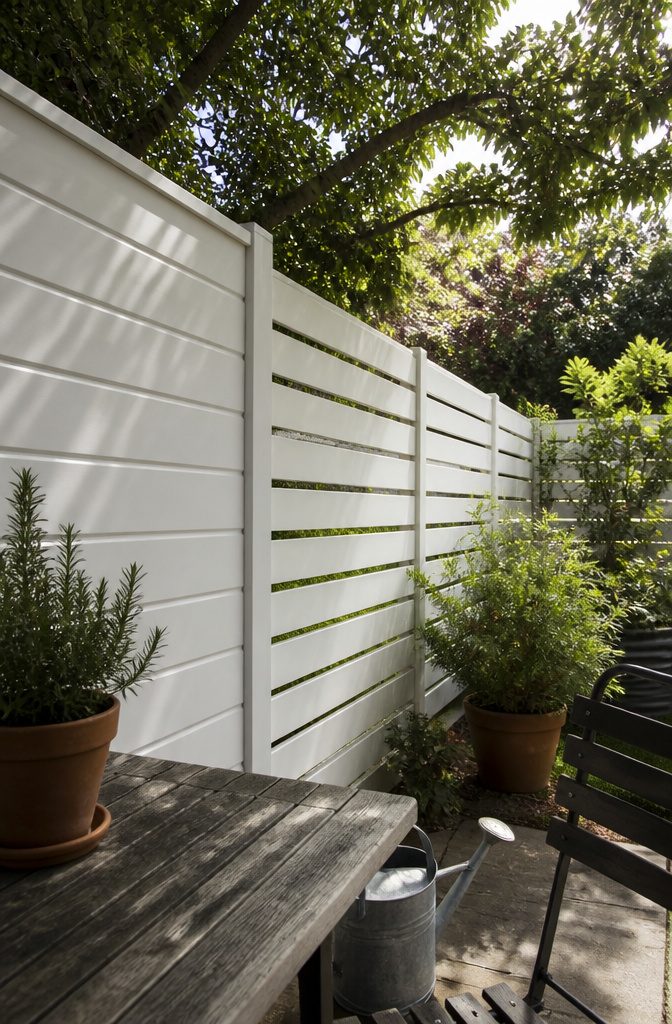
Vinyl is the pick when you want a horizontal fence and no upkeep. The boards and posts are both vinyl, so there is nothing to stain, seal or repaint, and the material holds up against weather.
The lifespan usually quoted is 25 years or more. Boards come in different sizes and designs.
Spacing is what changes your privacy.
Boards set tight form a solid wall. Versions with small gaps between boards suit a patio, where you want light and airflow, but anyone standing close can see through the slits.
I’d use gapped vinyl on the side facing your own garden and solid boards along a property line.
Recommended Products
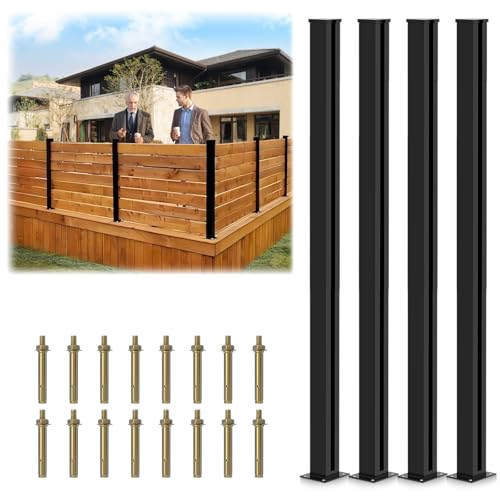
Top-Quality Aluminum Alloy Fence Post: Crafted from high-quality aluminum alloy, our fence posts offer exceptional resistance to rust and corrosion, outperforming traditional iron and wooden posts. This ensures long-lasting durability even in harsh outdoor environments (Please search ASIN: B0FHVT363Z to get the spacers you need).

Black Fence Slat - Designed for a 4' high fence, slats are approximately 44.5" in length to accommodate the bottom locking channel and to prevent the slats from being above the top of the fence. (Available Colors: Beige, Black, Brown, Gray, Green, Redwood, Royal Blue, Sky Blue, White)

Convenient Package: each set comes with 6 pieces of 1" x 1" black aluminum fences, providing enough quantity for daily use; You won't have to worry about running out while you're in the middle of building or fixing your fence
3. Aluminum in Black
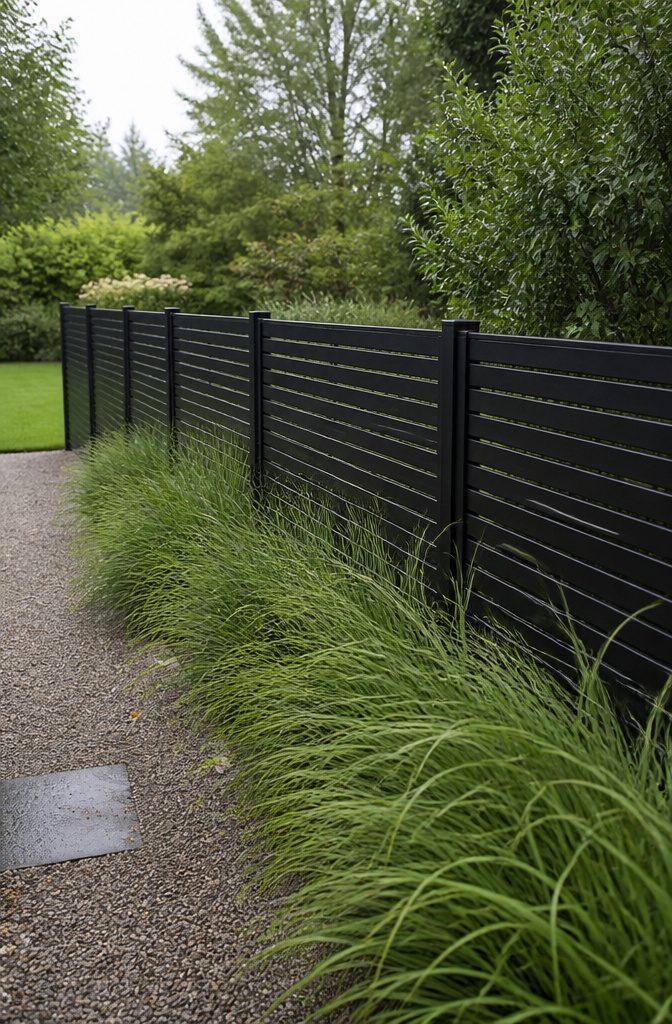
Aluminum is lightweight and rust-resistant, and it handles harsh weather better than wood does.
A powder-coat finish adds a protective layer that resists fading, scratching and corrosion, so I’d choose powder-coated aluminum over any bare or thinly painted metal. Upkeep stays low and the fence lasts.
Black is the color that makes horizontal slats look modern. Against lush green plants and trees, black aluminum on metal posts gives a crisp, contemporary line.
You can get the same color in painted vinyl, wood or composite if aluminum doesn’t fit the budget. Those finishes aren’t powder coat, so expect them to fade and scratch more readily than aluminum.
Recommended Products
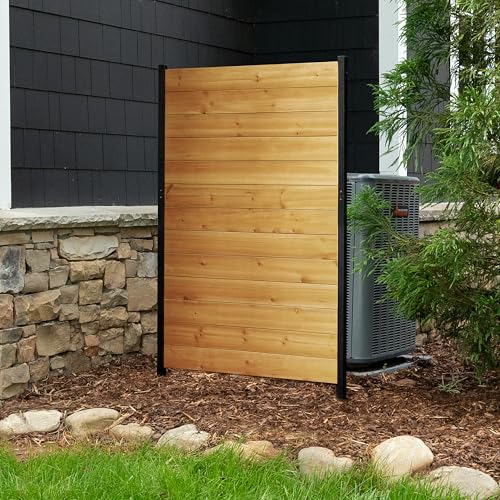
STYLISH NATURAL WOOD: This FSC certified wood screen is made with real wood meaning no two boards have the same grain color, finish, or wood knots differing it from vinyl outdoor privacy fence screen panels.

STYLISH NATURAL WOOD: This FSC certified wood screen is made with real wood meaning no two boards have the same grain color, finish, or wood knots differing it from vinyl outdoor privacy fence screen panels.

Innovative Design: The wooden fence panels posts features a U-channel design—simply attach the brackets to the posts and slide in (3/4" x 5.5") wood planks to lock. Easy DIY installation and plank replacement, even for one person, saving time, effort, and labor costs in the short and long term
4. Natural-Finish Cedar
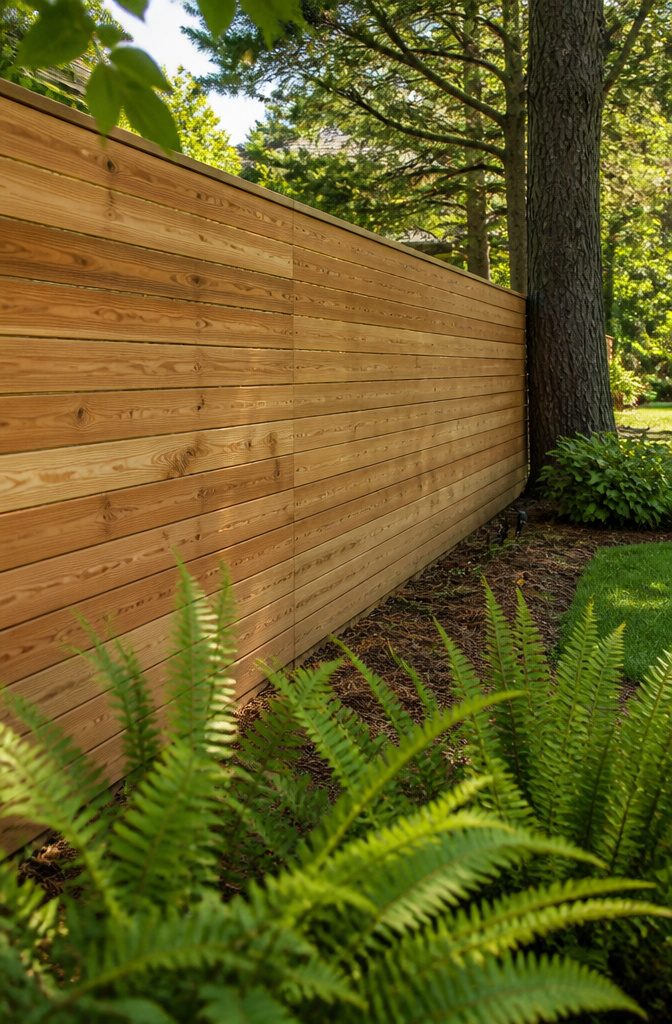
Horizontal boards set with no gaps give you a solid wall, and cedar is the wood I’d choose for it because it is naturally resistant to rot, insects and weather.
A natural finish keeps the look plain and lets the color of the wood carry the design. Redwood is the closest alternative if your lumberyard stocks it.
Douglas fir is the other route, but it needs a coat of protection. A semi-transparent stain lets the grain show through while helping block moisture penetration, UV damage and discoloration, which extends the life of the fence.
I’d pick cedar for a fence you want to leave alone, and fir when you’re willing to stain it.
Recommended Products

Neighbor Privacy, Not Blackout: Blocks direct line-of-sight while allowing airflow — designed for comfortable backyard privacy, not a solid wall or tarp.

Comes with a hard surface installation kit – No extra purchase needed.

EASY ORDERING: Everything you need for your fence project is in the box except for the final post. Only ONE additional post, BL19112, is required for the end of your project. A gate is available by searching BL19111.
5. Ipe and Mahogany
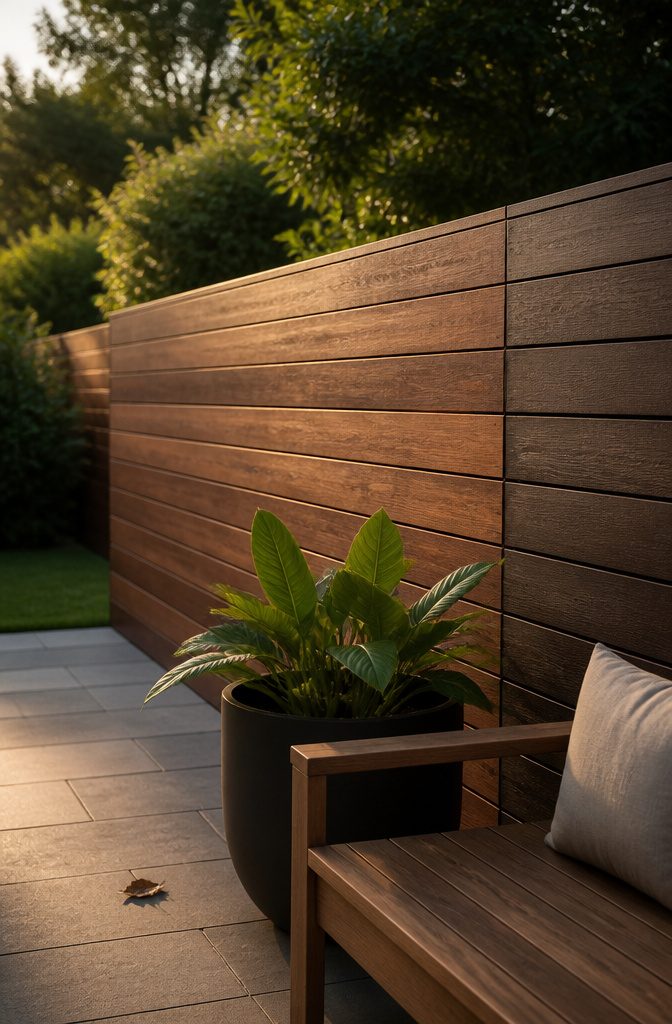
Ipe has a reputation for longevity, and its deep mix of red and brown makes a modern horizontal fence look more polished.
If I were choosing one hardwood for a fence meant to outlast a few seasons, this is the one.
Dark-stained mahogany takes a different route. Laid horizontally, the boards show off their grain, so the fence looks sleek but still has warmth and texture, which a flat painted board can’t match.
Both are premium woods and cost more than the usual cedar or pine.
Spend on them only when the fence is a feature of the yard, such as the backdrop to a patio. For a plain budget screen, skip them.
Recommended Products

DIMENSIONS: Standard 6 feet high by 6 feet wide panel size, perfect for residential privacy fencing needs

Green Fence Slat - Designed for a 6' high fence, slats are approximately 68.5" in length to accommodate the bottom locking channel and to prevent the slats from being above the top of the fence. (Available Colors: Beige, Black, Brown, Gray, Green, Redwood, Royal Blue, Sky Blue, White)

Backyard Privacy Enclosure: Our vinyl fence panel set includes 4 panels measuring 50 x 50 in, ideal for concealing outdoor items like trash bins, pool equipment, and air conditioners, keeping your backyard neat and attractive while meeting HOA guidelines
6. Painted Pine and Whitewashed Oak
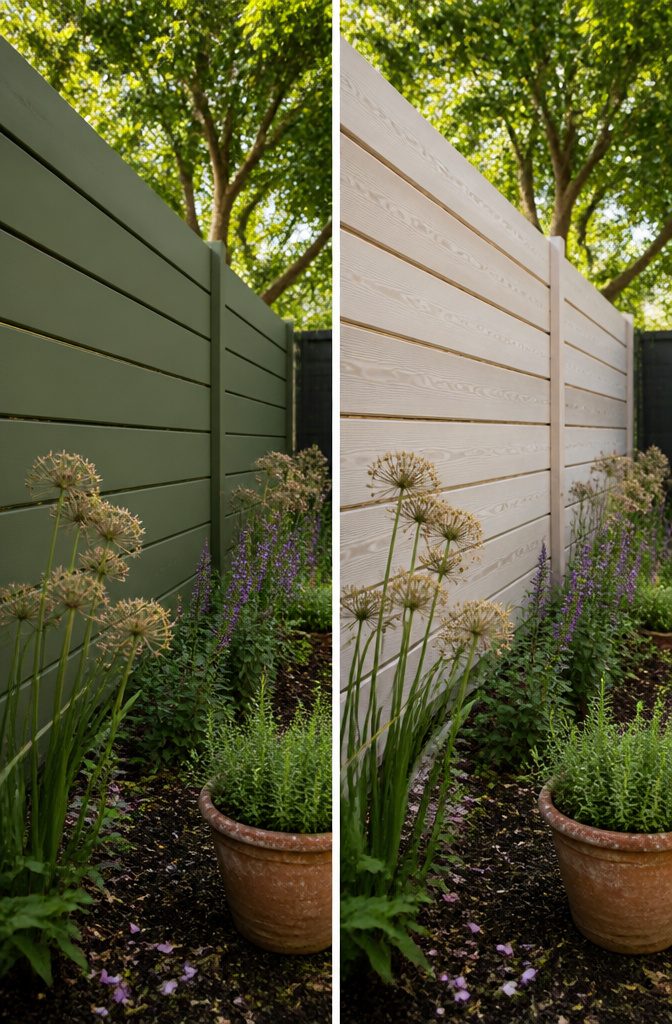
Paint turns horizontal pine boards into a solid, opaque wall, and pine is the most affordable wood in this lineup. The paint also protects the boards from the elements, so color is your main decision.
A bold shade makes the fence a feature, while a neutral tone fades behind your plants. For a first fence on a tight budget, painted pine is the one I’d pick, and it stays low-maintenance.
Whitewashed oak takes the opposite approach. The finish is semi-transparent, so the oak grain stays visible while the coating guards against UV damage, moisture and weathering, which extends the fence’s life.
Oak costs more than pine. Choose pine for flat, solid color and oak when the grain is the whole appeal.
Recommended Products

The answer to any black aluminum square fence post problem

DIY FENCE KIT: The Livingston metal fencing is a DIY-friendly solution with a modern design. Each fence section comes ready to assemble in a convenient box, offering cost-effective alternative to wood and vinyl fencing.

【Easeful Elegance】 Transform your backyard into a curated sanctuary with our innovative metal fence post. Designed for those who appreciate both form and function, these privacy fence post allow you to effortlessly assemble horizontal wooden boards into a sleek, modern fence that complements gardens, patios, and lush landscapes. No more uneven nails or messy installations—just clean lines and timeless style.
7. Cedar and Metal Mix
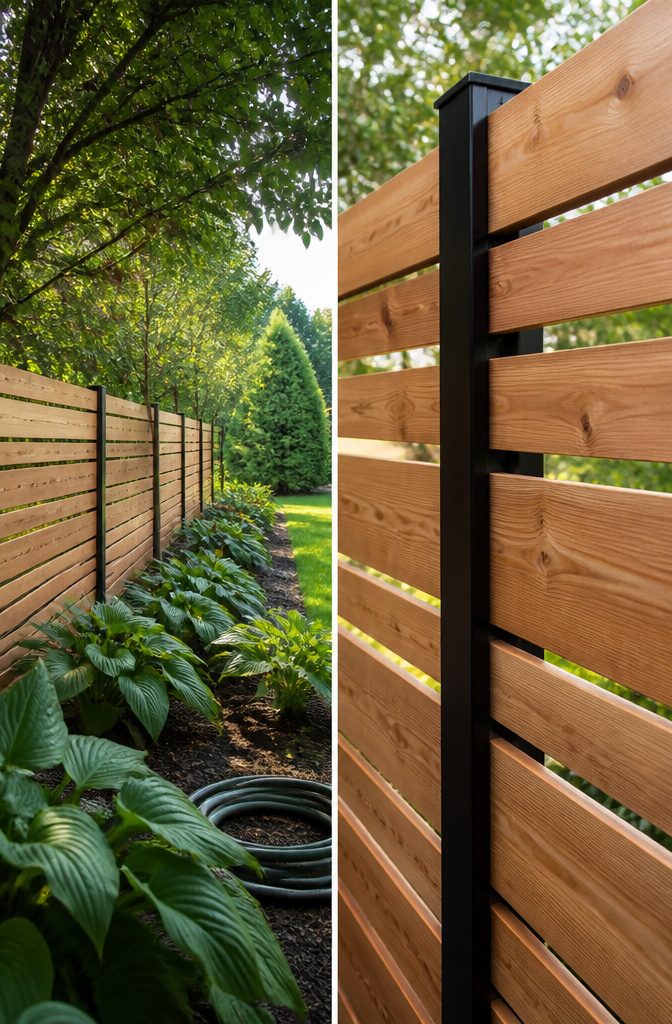
Cedar’s warm grain next to black metal is what pushes a horizontal fence toward contemporary.
The simplest version keeps the boards cedar and uses black aluminum for the posts or the top rail. A bolder version alternates cedar panels with metal panels, and it needs metal posts to carry it.
Leave slight gaps between the boards. They let light through and still hold high privacy, so a tall fence doesn’t feel like a wall.
I’d pick the aluminum-post version for most yards. Posts set 6 feet apart or less hold the cedar infill, and you can swap that infill later without touching the aluminum frame.
Recommended Products

STYLISH NATURAL WOOD: This FSC certified wood screen is made with real wood meaning no two boards have the same grain color, finish, or wood knots differing it from vinyl outdoor privacy fence screen panels.

Versatility: This wooden privacy screen provides a discreet enclosure, creating a sense of mystery and concealment. It is perfect for elevating the overall aesthetic of your outdoor space. Quickly creates a secluded retreat while adding a touch of elegance that complements any décor, indoors or out.

DIMENSIONS: Each panel measures 32” H x 48” W
8. Corrugated Steel and Brick
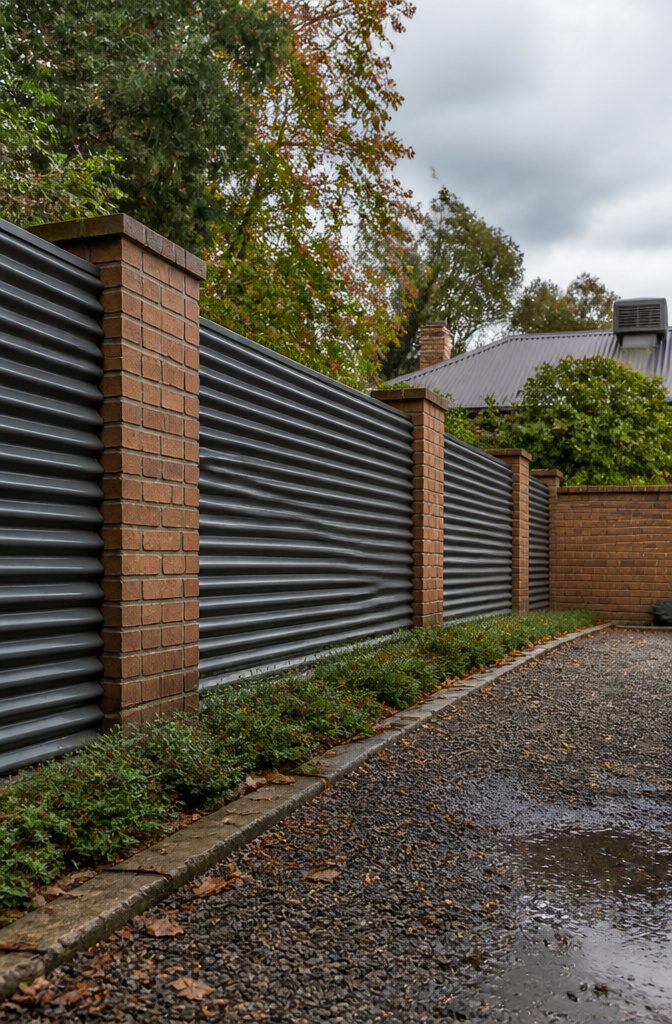
Corrugated steel panels run horizontally between brick posts give a fence the ridged, industrial look of a barn wall set in masonry.
The waves in the steel add texture that flat boards lack. Paint the brick to match your house and the posts tie the fence to the exterior; leave it bare and the brick becomes a feature of its own.
It works in front and back yards, and it should serve for the next few decades.
That lifespan comes with a heavier, more permanent build than wood slats.
Once the posts are set, changing your mind means tearing out masonry. I’d choose this fence only if your layout and house colors are settled, and I’d skip it if you rent or like to redo your yard.
Recommended Products

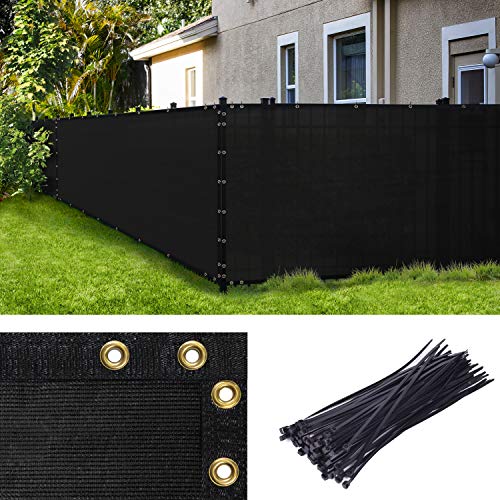
High Quality Material and Construction: Shade&Beyond privacy screen is crafted from 170 gsm UV protected NON-RECYCLED HDPE fabric; featuring durable brass grommets on each side for secure installation

Realistic Natural Look: Artificial ivy wallscreen measures 120" long and 40" wide, this artificial ivy privacy fence screen is constructed with vein-detailed green faux ivy leaves. Adjustable leaf orientation lets you tweak the look for a fuller, more organic appearance. lifelike foliage builds an elegant green backdrop and elevates visual effect for your patio, garden and living area, bringing you immersive green scenery.

Details: Artificial ivy wall is 120 inches long and 40 inches wide, with green faux ivy leaves. Made up of 12 small panels (connected).Can cover 33.33 square feet. the faux Ivy Vine are textured and look real. You can reassemble or cut to get the size you want. 50 cable ties are included to assist in installation.
9. Shadow Box Boards
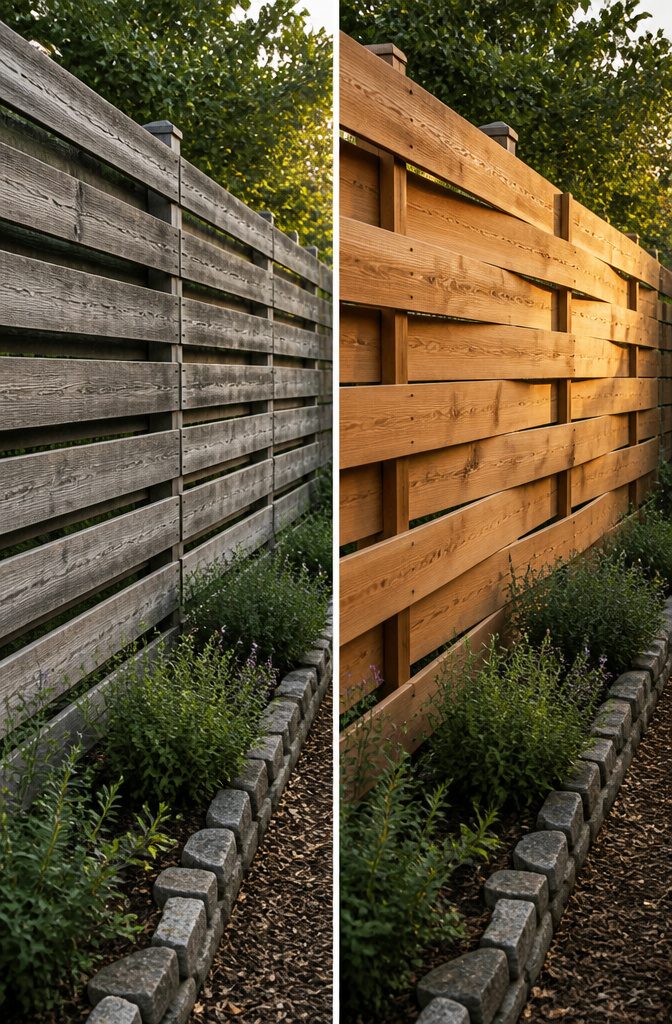
Shadow box boards alternate from one side of the posts to the other, so every second board sits in front and the ones between sit behind. Standing square to the fence, you see solid wood.
Step to an angle and you can catch slivers of the yard, so the boards must overlap enough that no sightline runs straight through. Space them too far apart and the privacy is gone.
Cedar, pine and spruce are the common woods. Pine is the cheapest, and I’d choose it for a tight budget.
Cedar costs more but looks better and is linked to repelling insects. Spruce falls in the middle on both cost and durability.
Recommended Products

Backyard Privacy Enclosure: Our vinyl fence panel set includes 3 panels measuring 50 x 48 in, ideal for concealing outdoor items like trash bins, pool equipment, and air conditioners, keeping your backyard neat and attractive while meeting HOA guidelines

1 PANEL PURCHASE: You will receive 1 unassembled panel measuring 48in H x 36in W
10. Woven, Louvered and Reed Slats
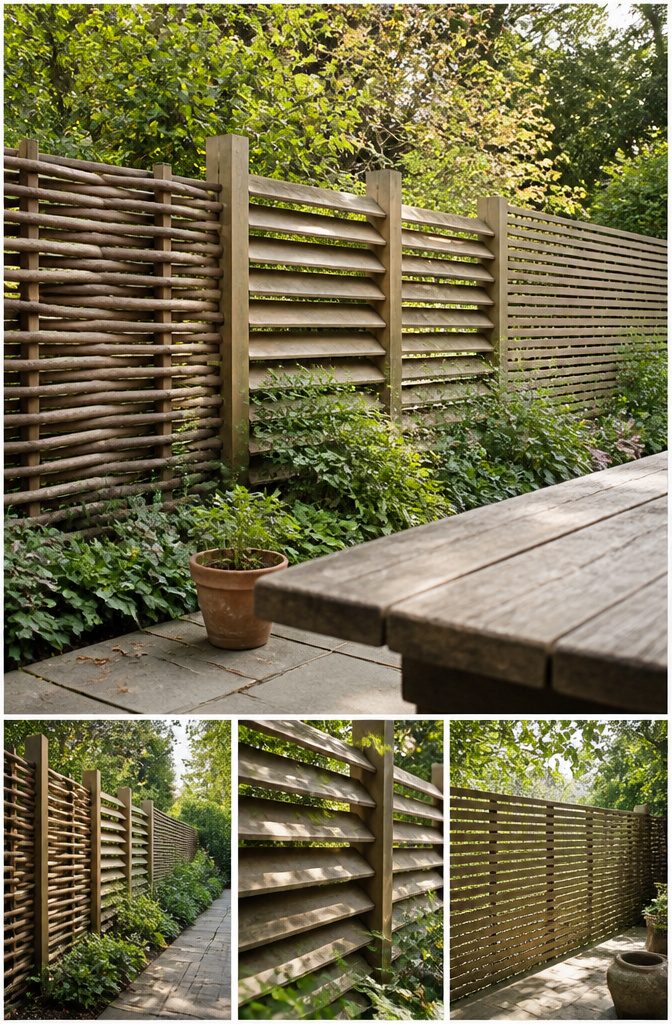
Woven fences, also called basket weave, run horizontal slats in front of one post and behind the next, which gives a rustic look.
Louvered slats let you see through while still keeping a private space on your side. Reed-style fences are simpler and more modern: narrow horizontal boards spaced evenly, with gaps that leave some visibility to the other side.
None of the three gives complete screening, so I would skip them around a hot tub or any yard a neighbor’s window overlooks.
They suit a patio edge or garden boundary where you want a defined space without a solid wall. For a rustic yard I’d pick woven; for a clean, modern house, reed.
Recommended Products

Protective Barrier Design: These aluminum square-tube deck balusters create a clean vertical barrier to help reduce oversized gaps and improve deck and stair security
Backyard Privacy: Designed for 4-foot backyard fences, offering enhanced privacy by helping block views from neighbors and busy streets.
11. Garden and Pallet Fences
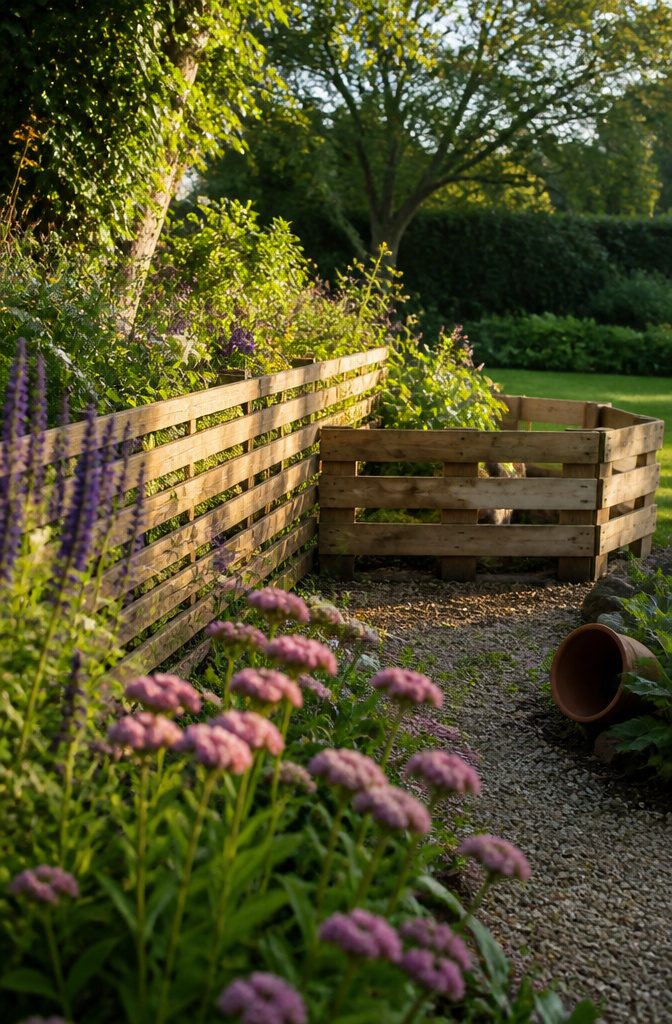
A horizontal wooden-slat garden fence gives a yard a rustic look, and its long lines frame the plants and flowers growing in front of it.
It works better as a backdrop for beds than as a wall against the neighbors, so choose it when you want the fence to flatter the garden.
Pallets are the cheaper route.
Each one is already a panel of horizontal slats, so much of the building is done before you start, and the wood is low cost and durable. I’d use them for a shorter dog or pet area, not full-height privacy.
Short runs are where they make sense. For a tall screen, buy slats cut for the job.
12. Composite and Recycled Slats
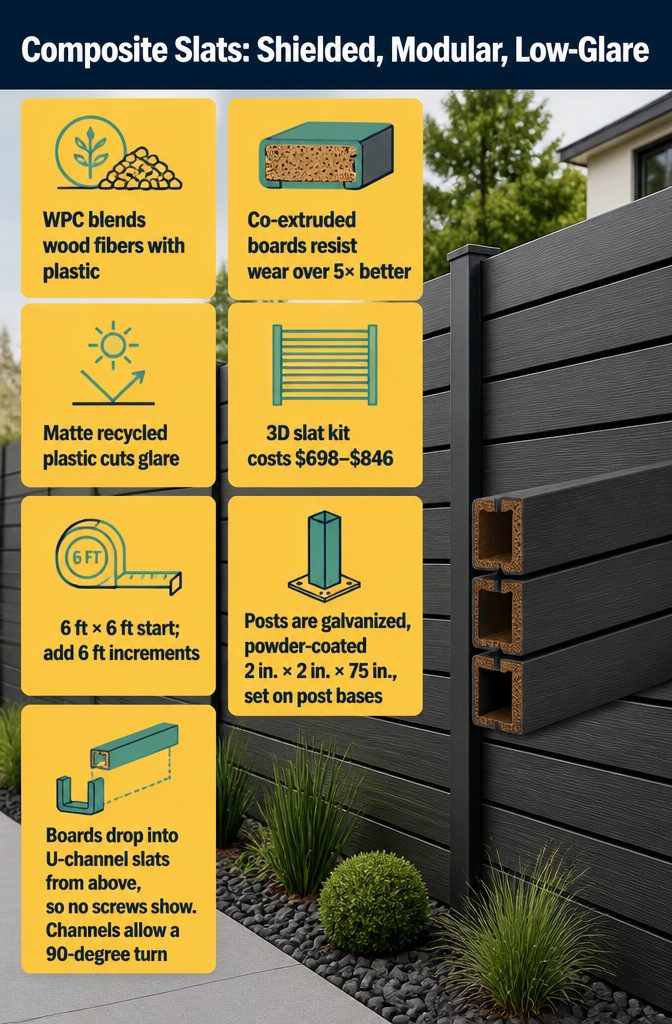
Composite gives horizontal slats a wood look without painting or staining, and I’d pay extra for the co-extruded version.
- Wood-plastic composite (WPC) blends wood fibers with plastic and resists fading, warping and insects.
- Co-extruded boards resist wear and scratches more than 5 times better than first-generation mono-extruded boards, because a polymer shield wraps the core.
- Matte recycled-plastic slats cut glare and give a sleek, understated look.
- The 3D slat kit costs $698–$846. It starts with a 6 ft × 6 ft section, and you add more in 6 ft increments.
- Posts are galvanized, powder-coated 2 in. × 2 in. × 75 in., set on post bases.
- Boards drop into U-channel slats from above, so no screws show. The channels also allow a 90-degree turn.
Materials, Upkeep and Cost
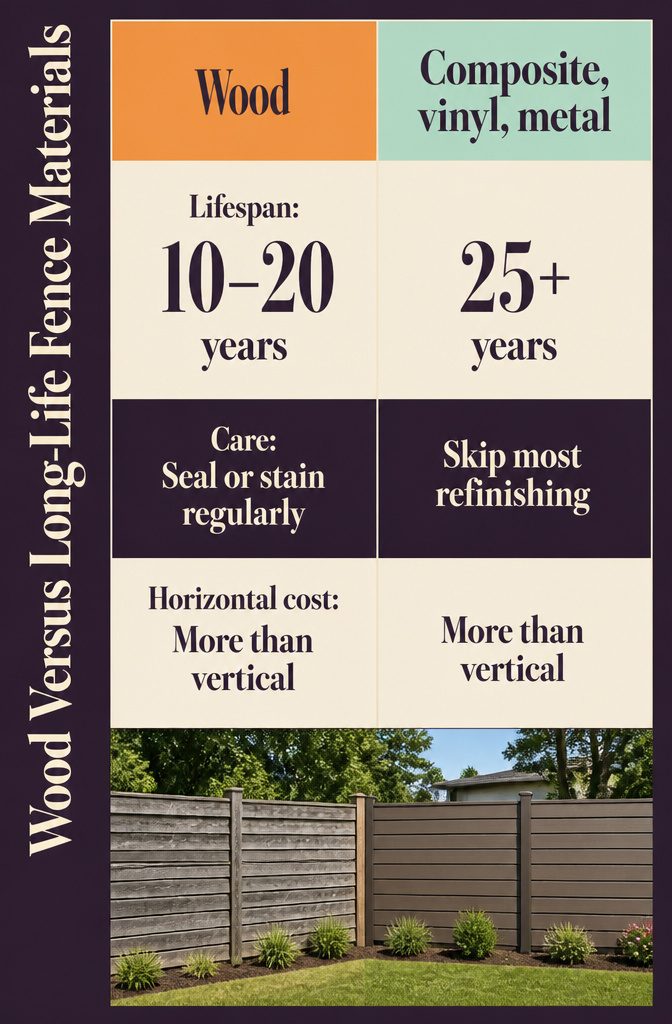
Wood asks the most of you.
Plan on 10–20 years from a wood horizontal fence, and only with proper care, meaning regular sealing or staining before the boards gray, cup or rot. Composite, vinyl and metal run 25 years or more and skip most of that refinishing cycle.
Horizontal fences can also cost more than vertical ones of the same height. Materials, construction techniques and labor all add to the bill, so get quotes for both layouts before you commit to one.
If you expect to stay in the house for decades, I’d put the extra money into a longer-lived material rather than a wood fence you’ll be restaining every few years.
Privacy and Sightlines
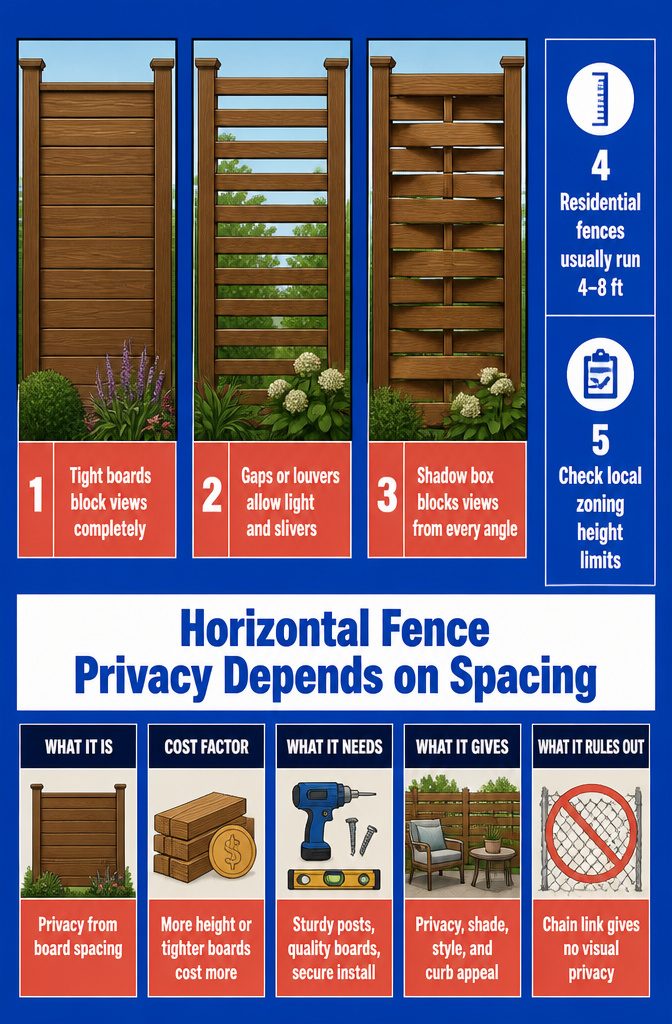
Board spacing sets how private a horizontal fence is.
Boards set tight with no gaps block the view completely. Leave gaps or add louvers and the fence becomes semi-private: more light gets through, and a neighbor may catch slivers of your patio from the right angle.
A shadow box layout alternates boards on both sides of the rails, so no one can see through it from any angle, and it still has more depth than a flat wall.
Height matters as much as spacing.
Most residential fences run 4 to 8 feet, and taller gives more screening. Local zoning sets your limit, so check it before you buy lumber.
Horizontal or Vertical
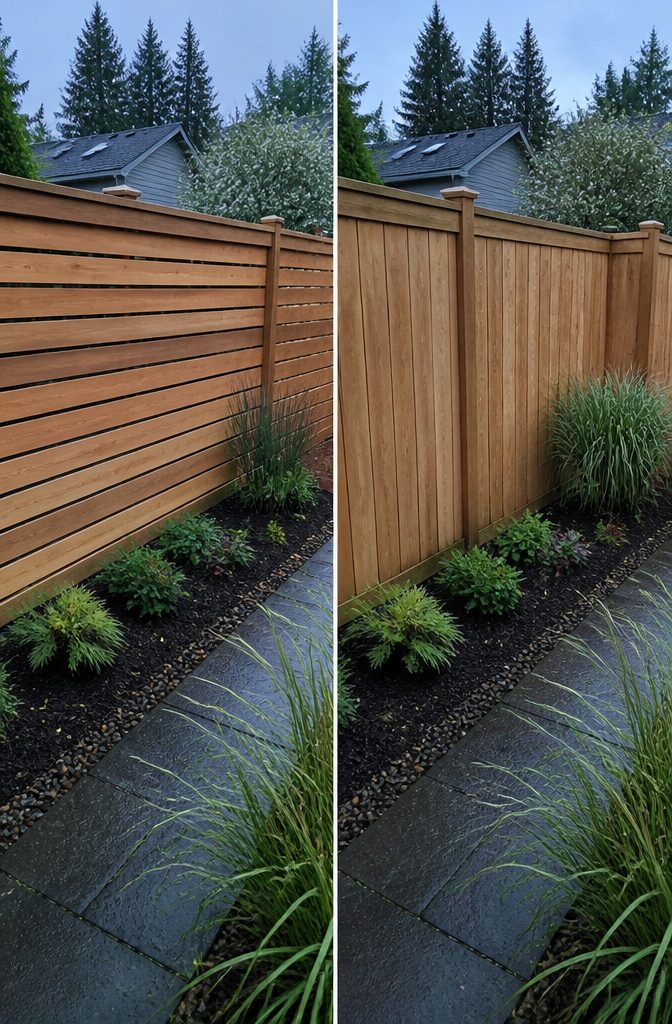
Vertical boards are the traditional choice.
They give the solid, enclosed feel most people picture when they think of a privacy fence, and they read as the more secure option. For a classic house, or a yard you want walled off completely, vertical wins.
Horizontal slats suit modern houses and small yards.
Their side-to-side lines give the illusion of a wider space, and the look stays sleek and airy instead of boxed in. For a narrow lot, I’d choose horizontal.
It also leaves more room to play with materials and layout, so the fence can follow your landscape. A vertical fence can feel restrictive, so I’d pick one only when that enclosed feel is what you want.
Frequently Asked Questions
Which is better, a horizontal or vertical privacy fence?
It depends on the look you want.
Vertical boards give the traditional, fully enclosed feel, so they suit a classic house or a yard you want walled off completely. Horizontal slats suit modern houses and small yards, and their side-to-side lines make a narrow lot look wider.
How tall can a horizontal privacy fence be?
Most residential fences run 4 to 8 feet, and a taller fence gives more screening. Your local zoning rules set the actual limit, so check them before you buy materials.
Is a horizontal fence more expensive than a vertical fence?
It can be, for a fence of the same height.
Materials, construction techniques and labor all add to the price. Get quotes for both layouts before you decide.
How long does a horizontal fence last?
A wood horizontal fence lasts about 10–20 years, and only with proper care such as regular sealing or staining. Composite, vinyl and metal fences run 25 years or more and skip most of that refinishing.
How do I build a shadow box horizontal fence?
Alternate the boards from one side of the posts to the other, so every second board sits in front and the ones between sit behind.
Overlap the boards enough that no one can see straight through from any angle. Cedar, pine and spruce are the common woods, and pine is the cheapest.









