
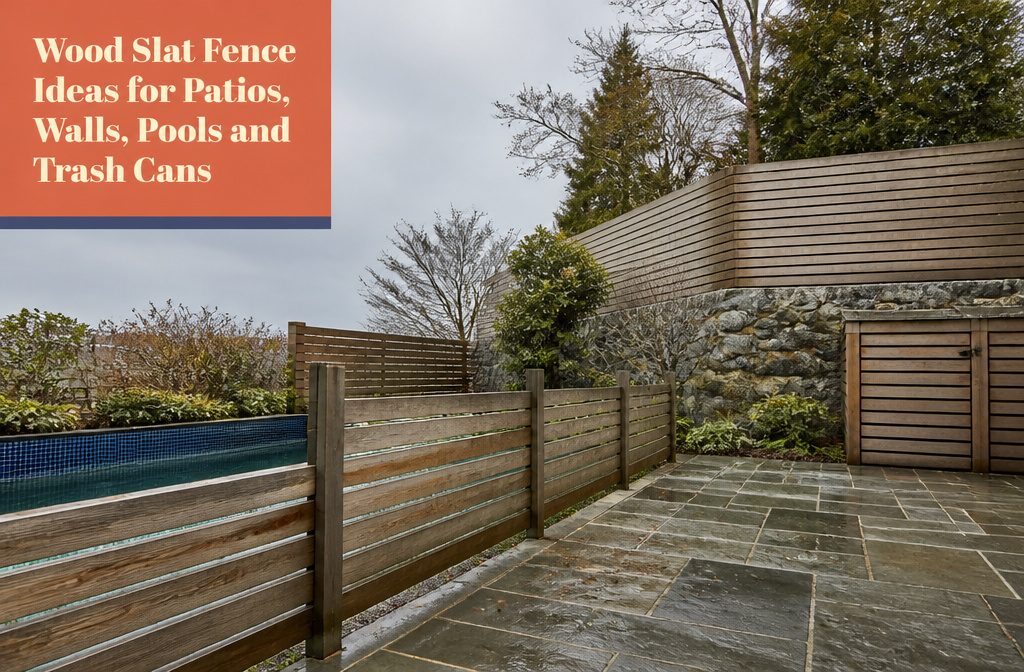
Height decides which of these fits. A 4-foot slat panel screens you only while seated, a 6-foot one hides you standing, and 8 feet suits a high sightline.
Around a pool, many local codes set barriers at about 48 inches and treat horizontal rails as a climbing risk, so check with your building department first.
1. Horizontal Wood Privacy Fence
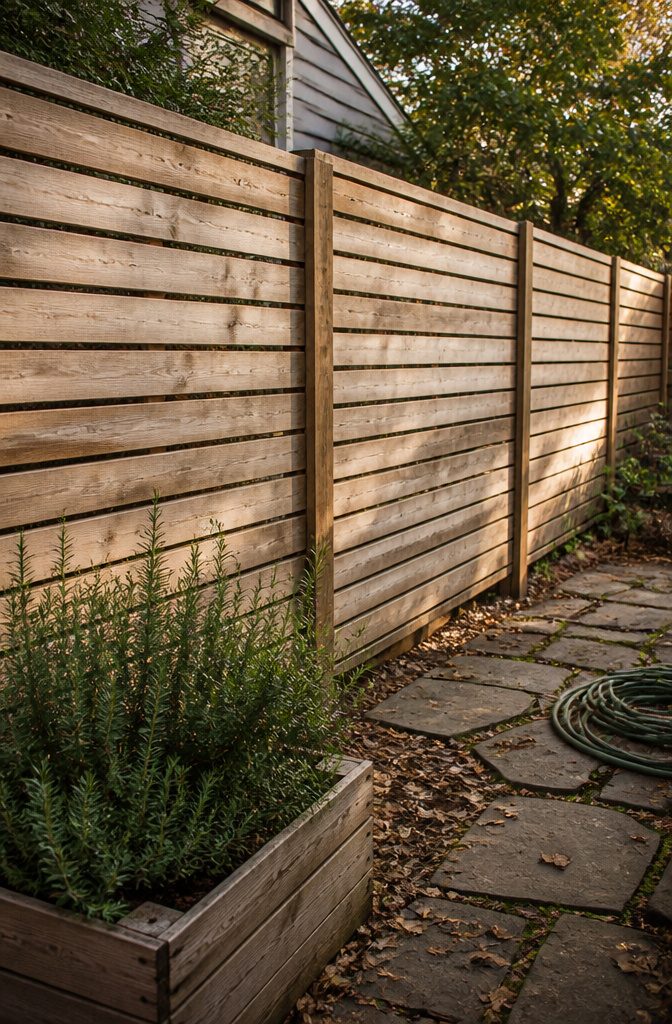
Running the slats sideways gives a privacy fence a modern, clean-lined look that vertical boards rarely match. The long horizontal lines draw the eye along the yard, and slats set close together block views from neighbors and the street.
Modular kits come in 4-foot, 6-foot and 8-foot heights. For a backyard where screening is the whole job, I’d pick the 6-foot height.
A 4-foot fence works as a divider or a half screen, but it won’t hide someone standing on the other side. The 8-foot version suits a spot with a high sightline, and it looks tall in a small yard.
2. Patio Slat Fence
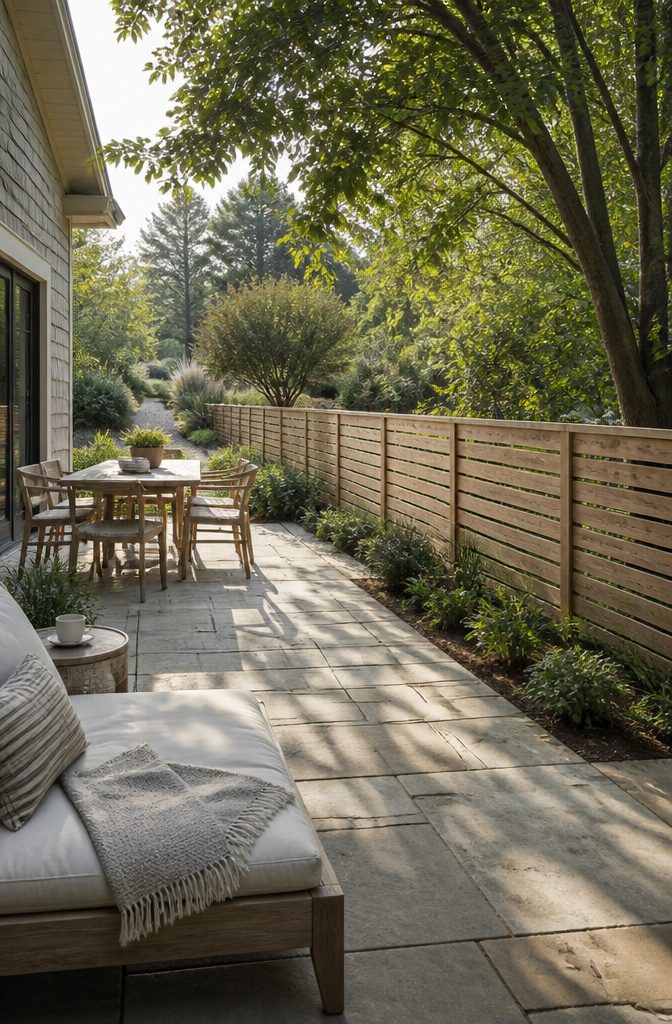
A 4-foot horizontal slat fence gives semi-privacy, and at that height it screens you when you’re seated, not when you’re standing.
Eye level at a dining table or in a lounge chair falls below the top rail, so neighbors and people walking by see slats instead of your plate.
Most adults standing look straight over it. That suits a small patio or balcony-scale space better than a tall wall, because light and air keep moving and the area doesn’t feel boxed in.
I’d pick it for dining and lounging spots. If you want cover while standing at a grill or watering plants, a taller privacy panel wins.
3. Horizontal Fence Mounted to a Wall
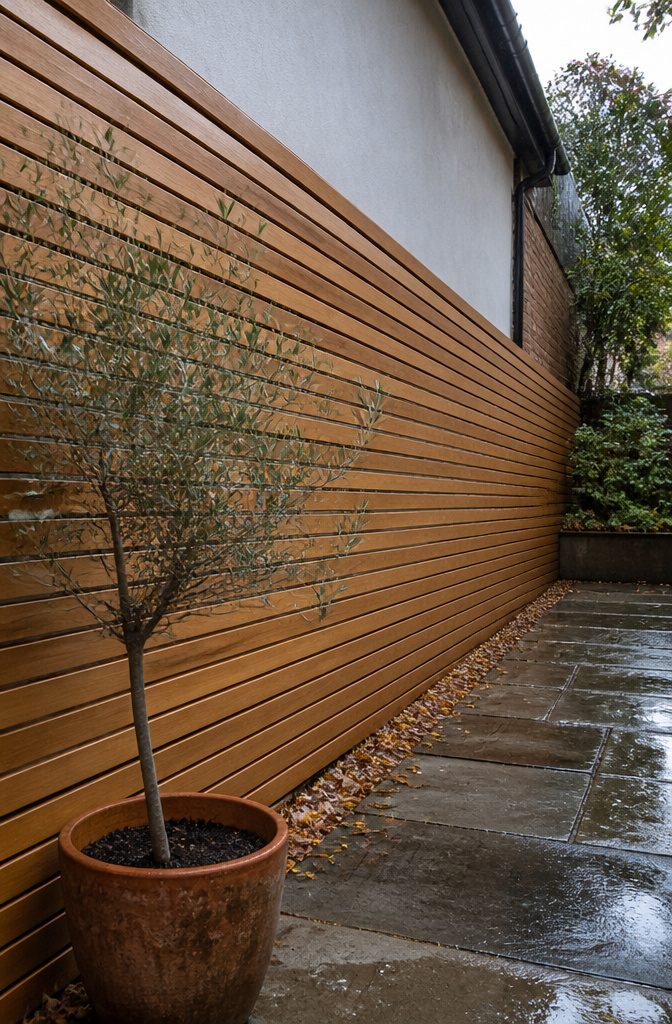
Horizontal slats fixed to an existing wall give a plain or tired surface a finished face, and they screen whatever you would rather not look at.
A bare masonry wall, the blank side of a garage or an ugly utility run are all good candidates.
I prefer this to building a separate freestanding run when the wall behind is already sound, since the wall does the structural work and the slats do the styling.
The system adapts to a property’s style, so a warm natural finish suits a traditional house and a darker stain suits a modern one. Long horizontal lines also read as deliberate design rather than a patch.
4. Trash Can Enclosure
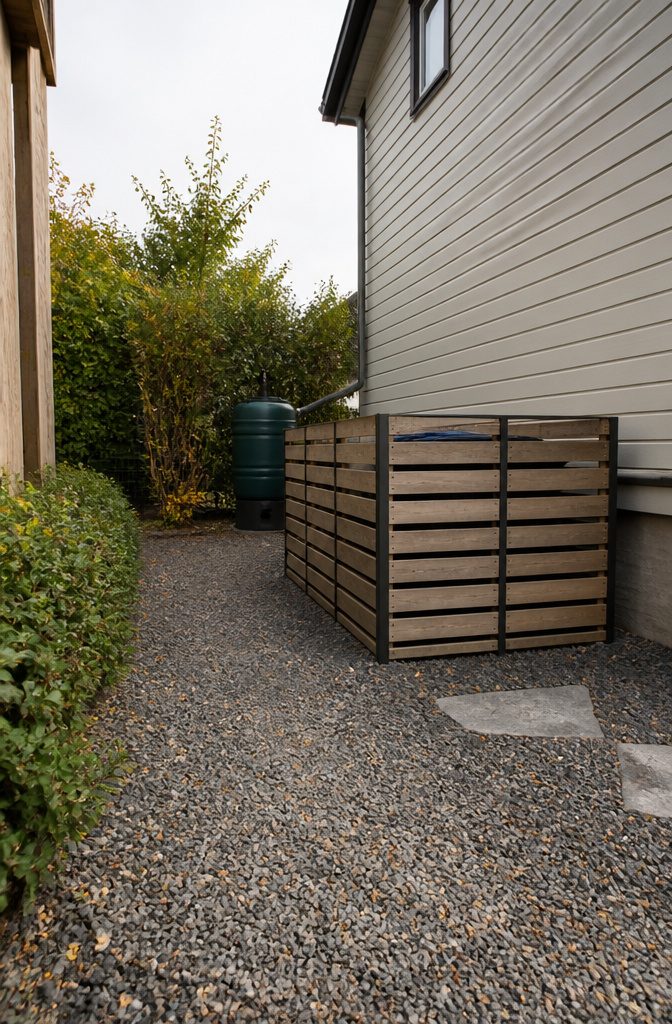
A horizontal slat screen on a metal frame hides trash cans without the cost and bulk of a full shed.
Bins are an eyesore you want out of sight, and slats do that job while letting some air move through, which helps with smell.
The metal frame suits this spot because it stays rigid when lids get slammed and cans get dragged in and out. Wood alone tends to sag at the corners under that kind of use.
I’d pick this over a solid wall for any utility corner. The same design is used at commercial sites and around other enclosures, so it holds up outside the home yard too.
5. Plain Horizontal Wood Slats
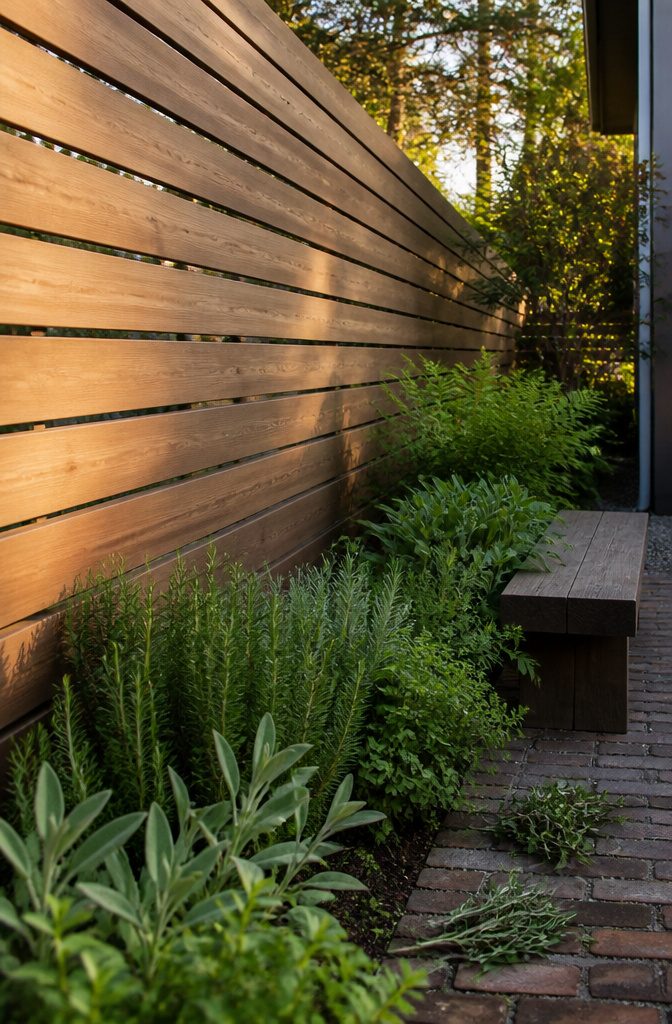
Plain horizontal slats let the wood do all the work.
With no contrasting frame around the boards, the grain, the color and the rhythm of the lines are the whole look, so board quality matters more here than in a framed design.
Pick straight, evenly colored boards, because a warped or mismatched slat has nowhere to hide.
The spacing between slats sets the character. Tight gaps read as solid and private, and wider gaps read as light and airy.
Horizontal runs also pull the eye sideways, which can make a narrow yard feel wider. I would choose this style for a calm, modern garden, and skip it if you want contrast against the house.
6. Cedar With a Metal Frame
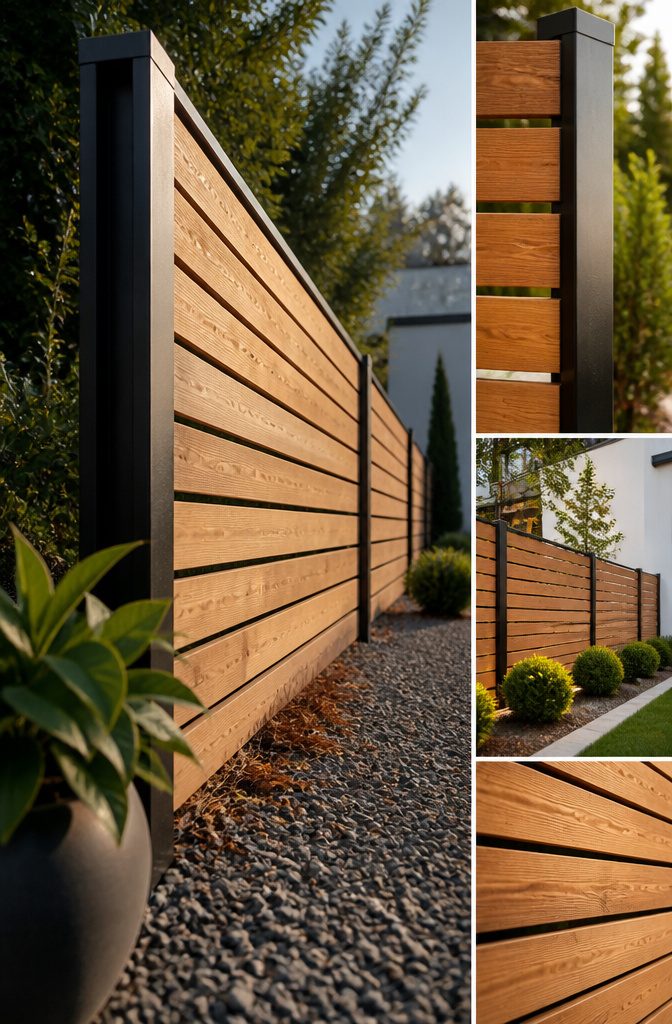
Warm cedar boards set horizontally in a dark metal frame make one of the cleanest contrasts in slat fencing: the wood looks soft and grainy, the metal looks sharp and quiet.
The frame also does real work. Each slat slides into a U-channel, so both ends are held and the boards stay level instead of drifting or sagging between posts.
The metal parts are powder-coated, and the channels are 18-gauge galvanized steel (more on those in the metal section).
Because metal posts outlast wood by decades, the cedar boards are the only part you should ever need to replace. For a run where straight lines matter, I’d pick this over an all-wood build.
7. Pool Patio Privacy Fence
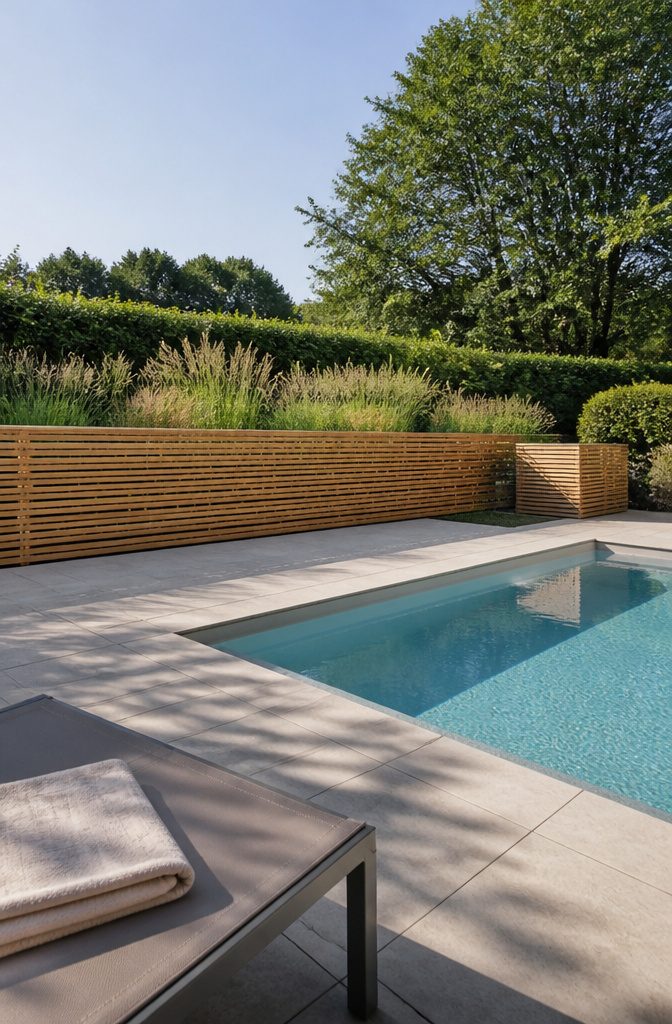
A 4-foot horizontal slat fence gives semi-privacy around a pool patio. It blocks sightlines from sitting height, and the kit system can also hide pool pumps behind the same style of panel, so the equipment matches the fence.
Taller screening would take a different panel height, so decide how much you want to hide before you order.
Pool barriers are a separate question from privacy.
Many local codes set a minimum barrier height of about 48 inches, limit gaps, and treat horizontal rails as a climbing risk, so check your local pool barrier rules before you pick slat spacing or orientation.
Your building department can tell you in one call.
8. Black Iron and Wood Slats
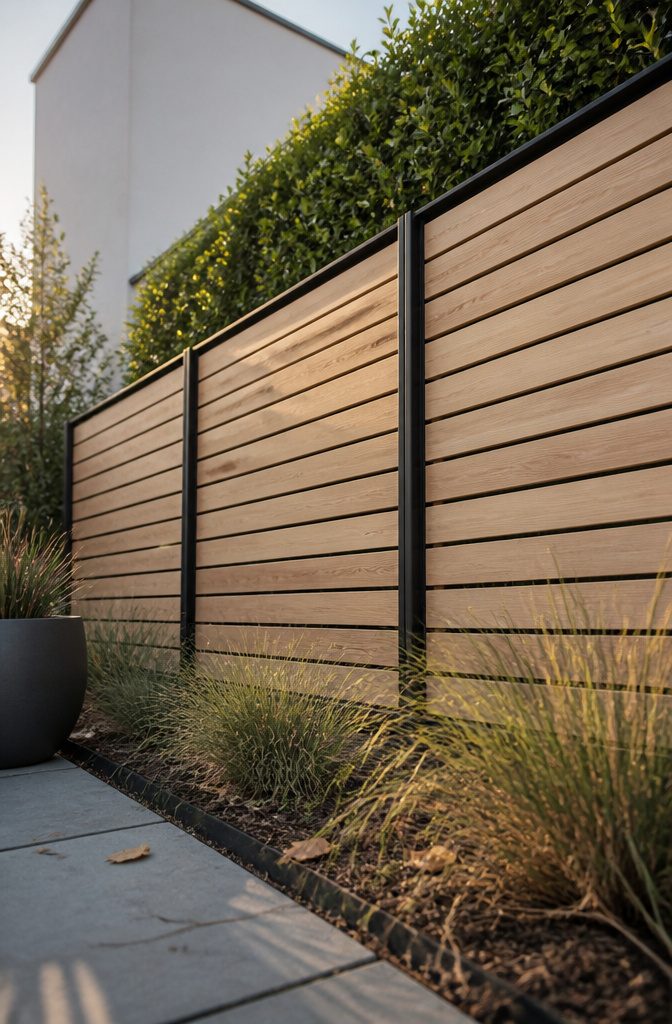
Black iron makes wood slats look warmer. A thin dark frame outlines each panel, so the boards read as a crisp, inset pattern instead of one flat wall of lumber.
Pale cedar or a light stain shows the contrast best, while dark-stained wood beside black iron loses it.
I’d choose this pairing over an all-wood fence for a modern yard.
The metal keeps the lines sharp and the boards soften them. Iron does chip and rust, so touch up scratches with exterior metal paint.
A related look is the rail fence: HighPlains metal posts with rough-cut stained cedar and black chain link.
It reads more rustic, and the chain link keeps the view open, so it suits a dog yard better than a privacy screen.
Infill Options Beyond Wood
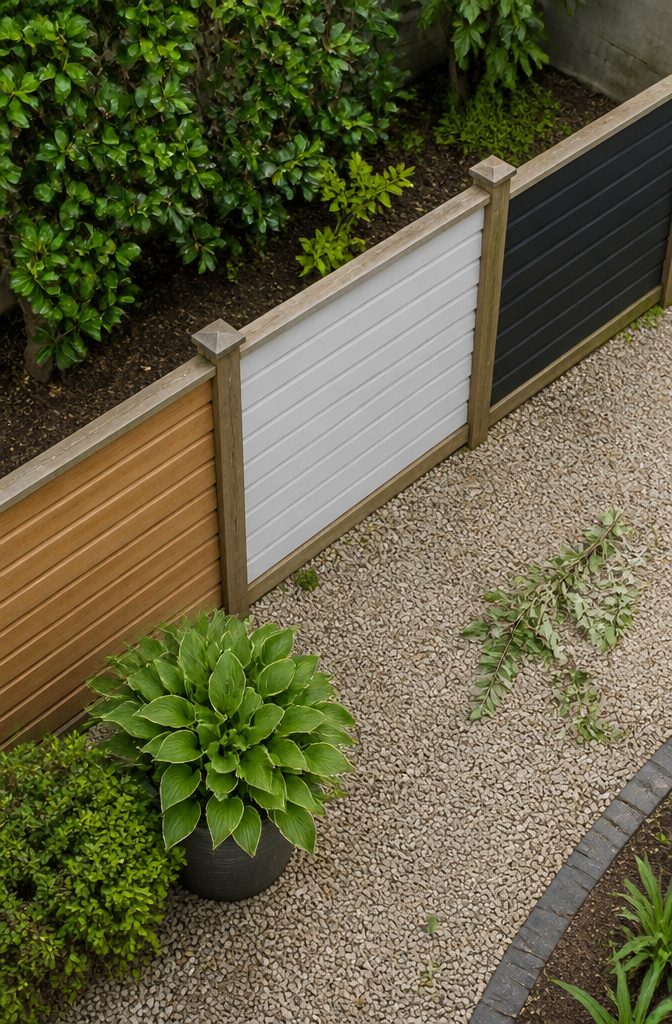
The same post-and-rail frame accepts horizontal boards or modern vertical ones, so the material is the bigger decision. Your options:
- Wood: the familiar choice, and the easiest to cut and fasten with basic tools.
- Vinyl or PVC: planks that give a uniform, clean-lined look.
- Composite fence planks: a board-shaped alternative to both wood and plastic.
- Metal: a good fit for a sleeker, modern fence, especially paired with wood.
- Other sturdy infill: anything rigid enough to fasten to the rails will work.
For a first fence, start with wood. A mistake in a board is cheap to fix, and you can swap in other materials later without rebuilding the frame.
Kit Parts and Panel Sizes
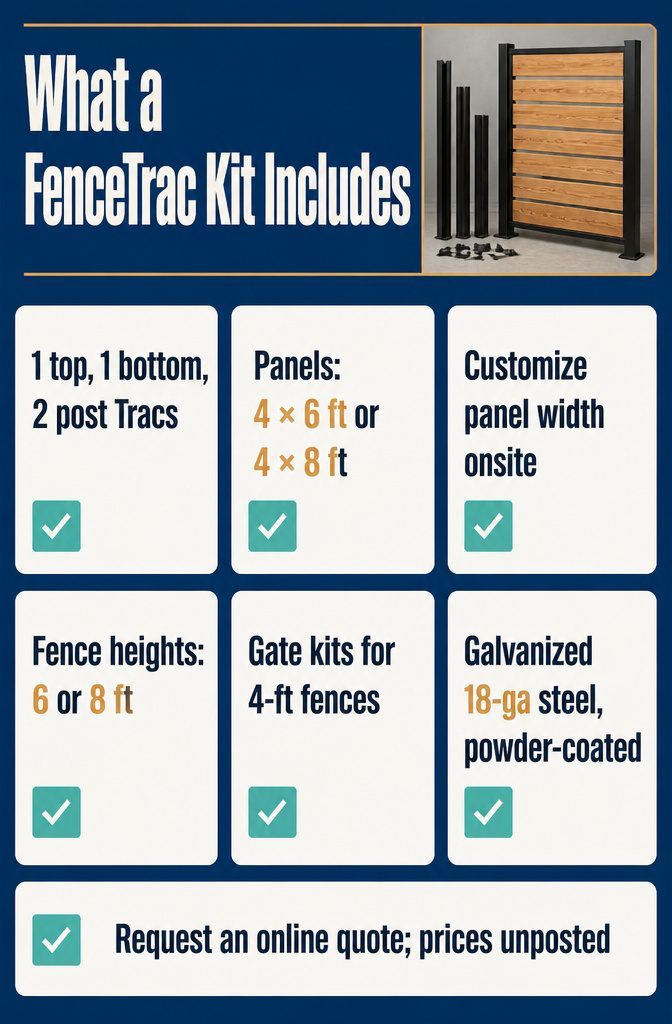
A standard 4-foot FenceTrac panel kit is a short parts list:
- 1 Top Trac, 1 Bottom Trac and 2 Post Tracs, plus hardware to assemble the metal pieces.
- Panels come 4 feet by 6 feet or 4 feet by 8 feet. Width can be customized onsite, which helps when your run doesn’t divide evenly.
- The system also builds fences 6 or 8 feet tall.
- Gate kits are available for the 4-foot wood-and-metal fence.
- The black U-channels are galvanized 18 ga. steel with a powder coat. Slotted mounting holes leave some room if a post lands slightly off.
Prices aren’t posted. Request the online quote before you set a budget.
Metal Posts and Finish
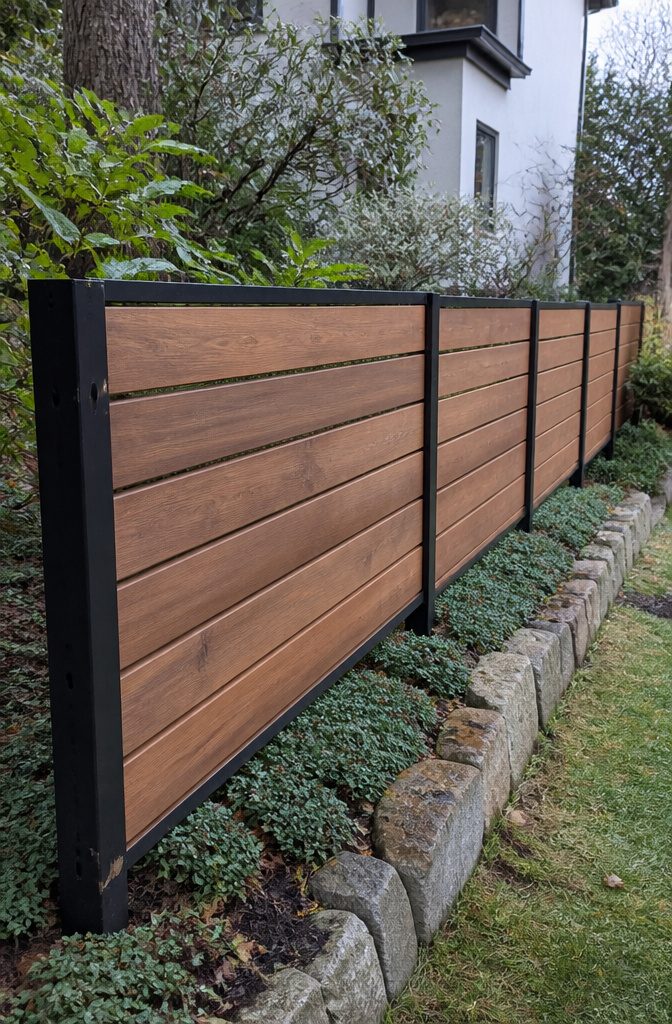
The black U-channels are galvanized 18-gauge steel with a powder-coated finish, which gives a clean black frame against cedar or other wood slats.
Slotted mounting holes let you shift a channel slightly when a wall or post isn’t perfectly plumb or evenly spaced, and few yards are dead level.
The manufacturer says its metal posts outlast wood by decades.
Treat that as a claim, not a tested result. Steel won’t rot at the base the way a buried wood post can, but a chipped powder coat can let rust start, so touch up scratches early.
The slats are still wood and will still weather. I’d still take the metal frame over wood posts.
Frequently Asked Questions
How much does a wood slat fence cost?
For the 4-foot wood and metal slat fence kit, request a quote from the maker online to get a real number.
That includes a long run such as 200 feet, where no reliable per-foot figure is available. Panels come 4 feet by 6 feet or 4 feet by 8 feet, and the width can be adjusted onsite, so give the quote your total run length.
How do you build a wood slat fence?
Use a modular kit. A standard 4-foot panel kit has 1 Top Trac, 1 Bottom Trac and 2 Post Tracs, plus hardware for assembling the metal pieces.
Each slat slides into a U-channel so both ends are held, and slotted mounting holes give some room if a post sits slightly off. Follow the instructions that come with the kit.
What type of wood is best for a slat fence?
Whatever you buy, pick straight, evenly colored boards, because a warped or mismatched slat stands out in a plain horizontal run. Pale cedar or a light stain also shows the most contrast against black metal.









