
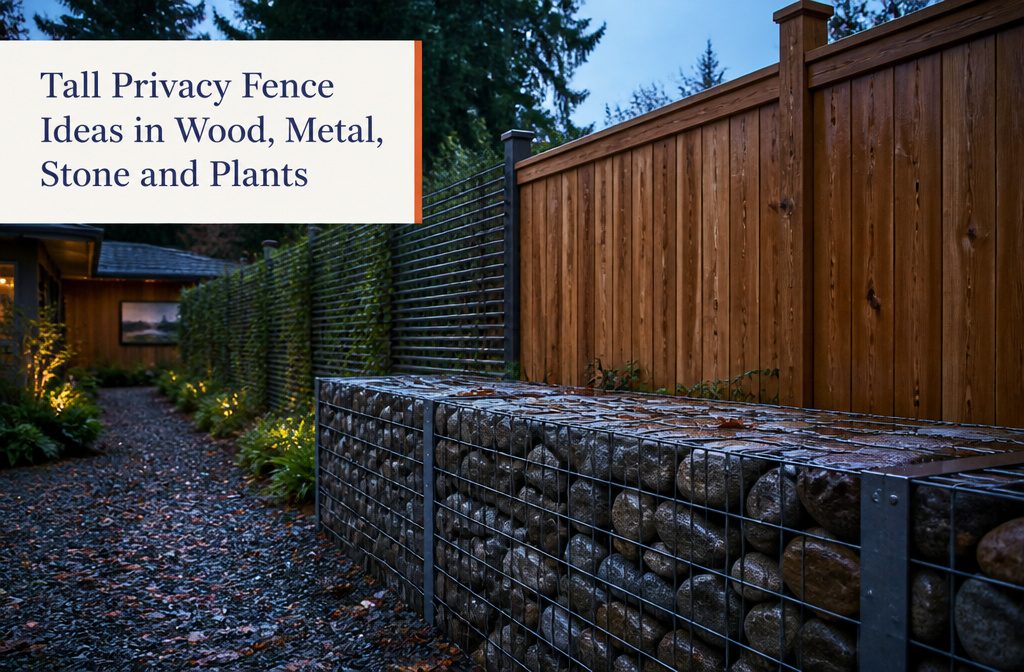
Choose by what you want to avoid: sealing every few years, street noise, or a big bill.
Composite skips the sealer, a gabion wall muffles traffic but needs steel-reinforced posts to carry the stone, and modular screens undercut a full fence. Many towns cap height at 6 feet, so call zoning before buying posts.
1. Horizontal Slatted Wood
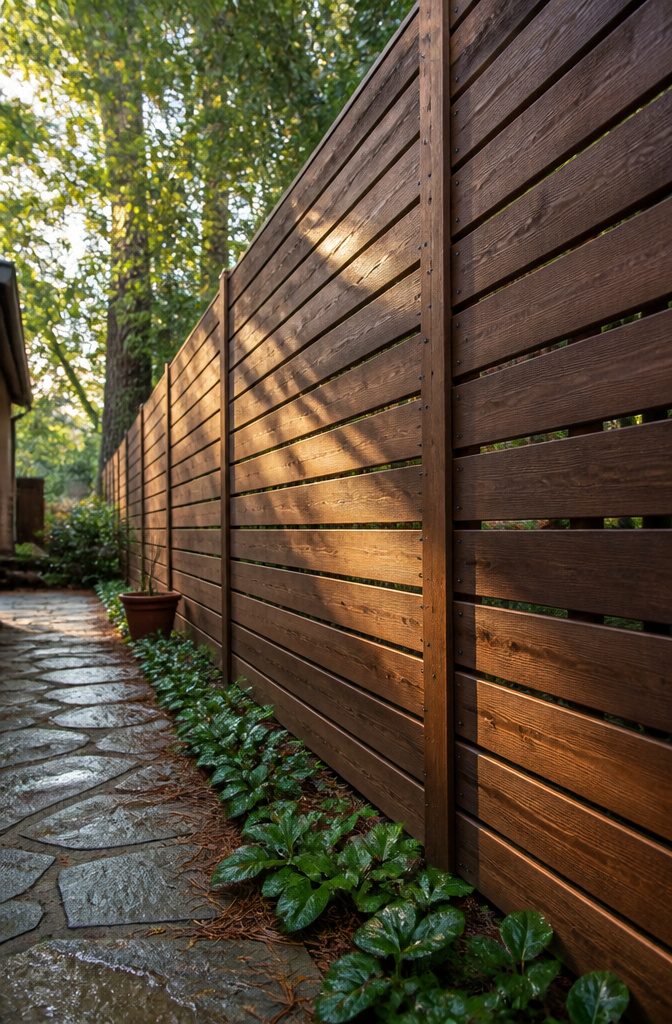
Spacing is the design choice that matters most here. Tight gaps between the horizontal slats block more of the view, wider gaps let in more light, and you can set the gap differently on each side of the yard.
Extend the posts or stack panels to reach 6–8 feet, and check local code before you buy lumber.
Cedar or redwood gives the best finish and holds up outdoors. Fasten the slats with stainless screws, which keep rust streaks from running down the boards.
A warm walnut stain feels cozy, while black looks moody and modern. Seal natural wood within 30–60 days of installing it, then recoat every 2–3 years.
Recommended Products

Green Fence Slat - Designed for a 6' high fence, slats are approximately 68.5" in length to accommodate the bottom locking channel and to prevent the slats from being above the top of the fence. (Available Colors: Beige, Black, Brown, Gray, Green, Redwood, Royal Blue, Sky Blue, White)

STYLISH NATURAL WOOD: This FSC certified wood screen is made with real wood meaning no two boards have the same grain color, finish, or wood knots differing it from vinyl outdoor privacy fence screen panels.

STYLISH NATURAL WOOD: This FSC certified wood screen is made with real wood meaning no two boards have the same grain color, finish, or wood knots differing it from vinyl outdoor privacy fence screen panels.
2. Board-on-Board Shadowbox
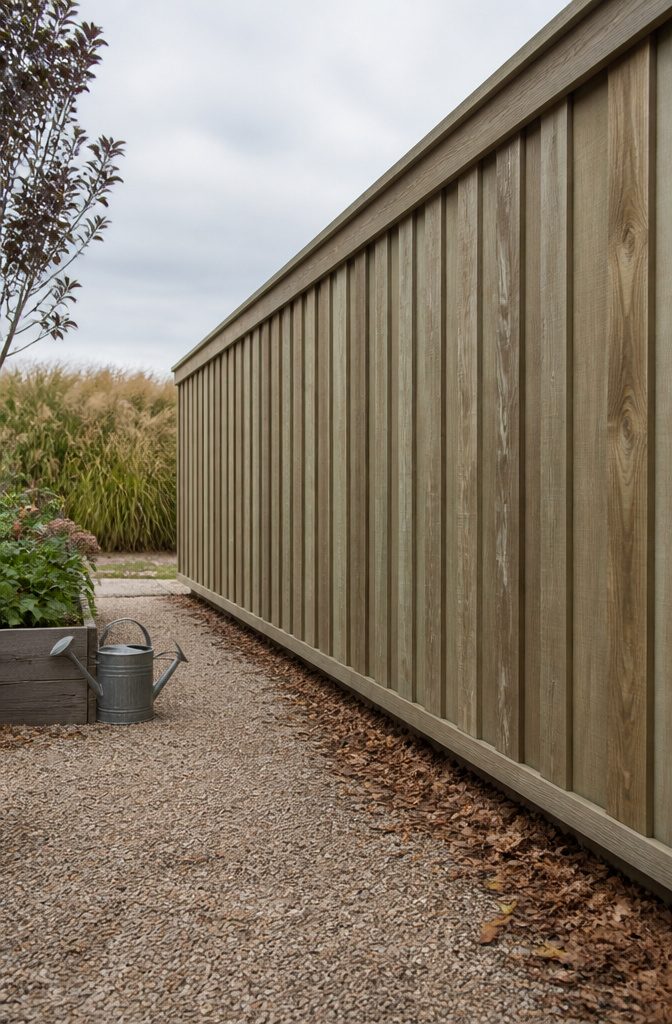
Board-on-board, also called shadowbox, stacks boards on alternating sides of the rails, so each board covers the gap behind it.
Coverage is close to total, and air still moves through the offset layers, which a solid panel can’t do. That makes it a better pick for a windy yard.
Leave 2 inches of clearance above the ground so the bottom boards don’t wick moisture from the soil.
Mixing 4-inch and 6-inch widths gives a long run some subtle dimension.
For a tight budget, I’d go with pressure-treated lumber. A decorative cap rail on top adds polish and sheds water.
Recommended Products

Multi-Functional Raised Garden Bed with Trellis: This versatile metal planter box serves triple duty as: an elevated garden bed for vegetables and flowers,a sturdy trellis for climbing plants, and a decorative privacy screen - perfect for backyards, patios, and balconies. Its space-saving design maximizes your growing area while enhancing outdoor aesthetics.

Multifunctional metal elevated planting bed: This multi-functional metal raised planter bed with trellis combines a raised planting bed, climbing frame, and privacy screen into one unit. It can be used to grow climbing plants, vegetables, and vines, easily creating an outdoor space that is both aesthetically pleasing and private. Whether in a patio or on a balcony, it makes efficient use of space, adding a touch of neatness and style to your green corner

HEAVY-DUTY STEEL WITH PRE-DRILLED HOLES Crafted from premium rustproof steel—thicker than standard planter boxes outdoor with trellis. Unlike competitors, this metal planter box with trellis comes with pre-drilled holes, matching screws, and heavy-duty zip ties for secure attachment to railings or fences. Rock-solid stability, even in high winds.
3. A Living Green Wall
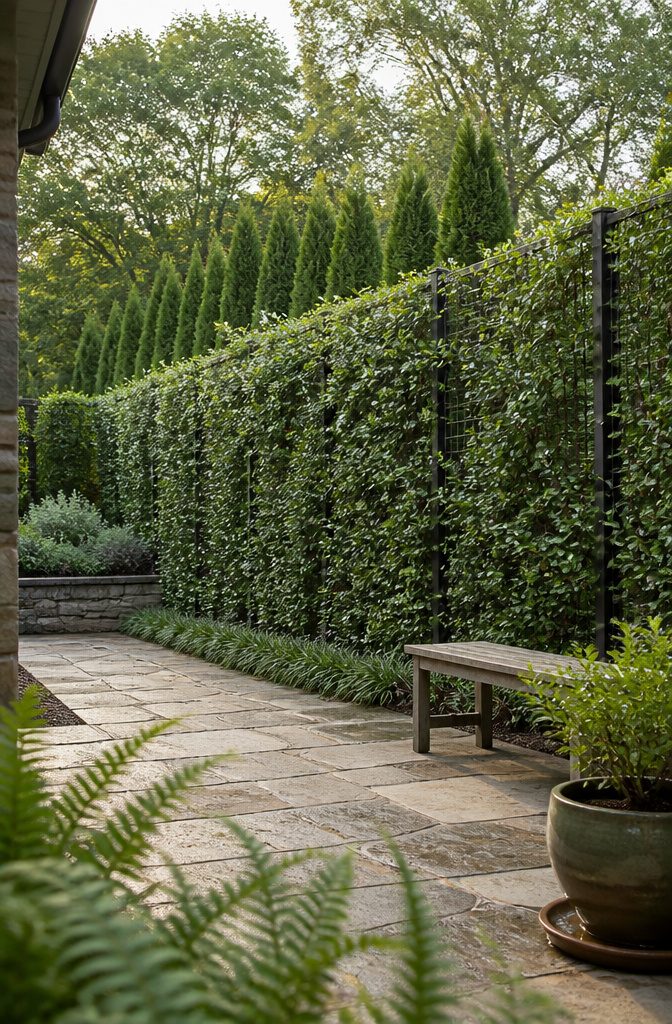
A living screen absorbs sound as well as blocking sightlines.
For instant height, I’d mount metal trellis panels on posts and plant star jasmine or honeysuckle at the base. Both grow fast and add fragrance near a patio.
For a hedge, Emerald Green arborvitae makes a neat, vertical wall when planted tight and trimmed high. Clumping bamboo gives a tropical look, but skip running types, which spread well past where you put them.
Run drip irrigation along any of these so young plants get steady water. Keep vines pruned so they don’t pry into boards or hold moisture against the wood.
Recommended Products

【6 PANEL ROOM DIVIDER】-- The max expanded size for this extra wide partition wall is 120"W X 17.7"D x 71"H and it’s advised to use it with angles. The max width with angle is 100"~110" depending on the angles displayed, large enough to form a small separate temporary room.
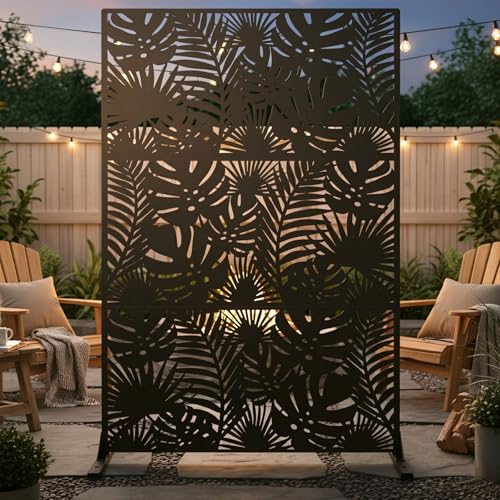
𝗢𝘂𝘁𝗱𝗼𝗼𝗿 𝗣𝗿𝗶𝘃𝗮𝗰𝘆 𝗦𝗰𝗿𝗲𝗲𝗻 𝗳𝗼𝗿 𝗣𝗮𝘁𝗶𝗼, 𝗚𝗮𝗿𝗱𝗲𝗻 & 𝗕𝗮𝗹𝗰𝗼𝗻𝘆:Transform your outdoor area with this decorative metal privacy screen. The 72x44in freestanding panel creates a modern garden divider that shields unwanted views while adding a contemporary touch to your patio, balcony, or backyard.

[Upgraded 2-in-1 Freestanding & In-Ground Design] Now featuring freestanding bases alongside ground stakes, these privacy fence panels offer two convenient setup options. Position your outdoor privacy screen on a level patio or deck using the bases, or secure it in suitable soil with the stakes for flexible placement around your garden.
4. Modular Privacy Screens
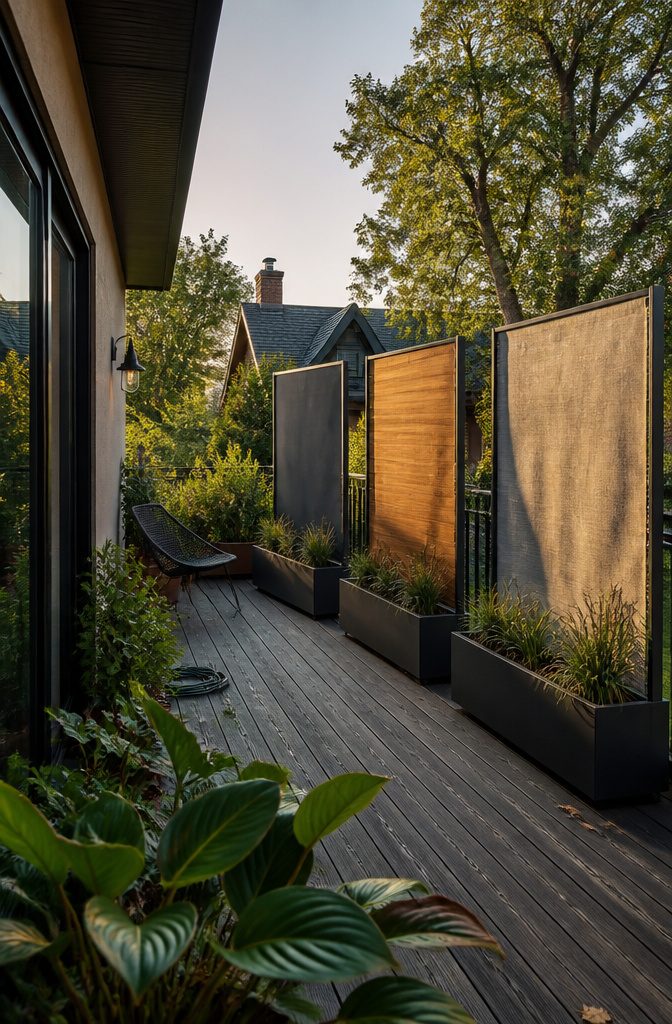
Modular screens are the pick when a fixed fence isn’t allowed or isn’t worth building.
Instead of enclosing the whole yard, you place tall panels only where the sightline is worst, such as the spot where a neighbor’s window looks onto your patio chair or the open edge of a balcony.
Anchor each panel to a planter or a post so it stands without a footing, which suits a rental.
Mixing materials keeps a row of panels from looking like a wall of identical boards. A metal panel beside a wood one, with a fabric panel between them, adds texture and softens a hard corner.
Screens cost less than a full fence and cover the problem spot the day they go up. I’d place one or two first and move them around before buying more.
Recommended Products
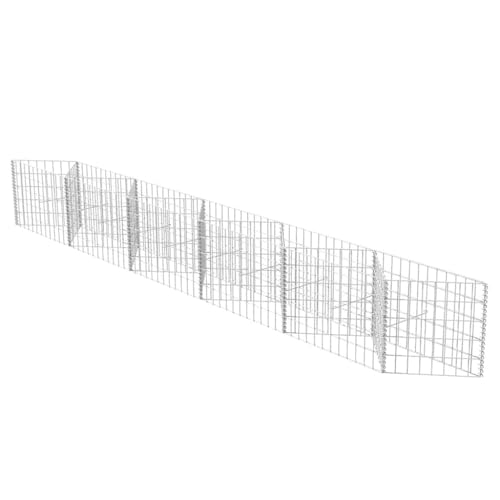
【Strong Construction】: Galvanized steel gabion basket offering rust-proof and weather-resistant properties for long-lasting garden features

This gabion wall is specially designed for garden projects, sound insulation, and privacy protection. It is meant to be an eye-catcher in your garden, patio or yard.
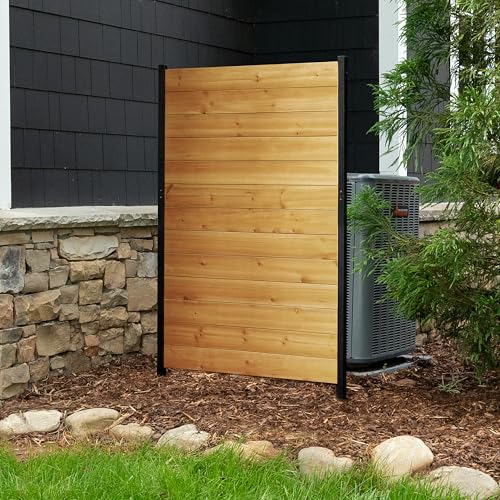
STYLISH NATURAL WOOD: This FSC certified wood screen is made with real wood meaning no two boards have the same grain color, finish, or wood knots differing it from vinyl outdoor privacy fence screen panels.
5. Corrugated Metal in a Wood Frame
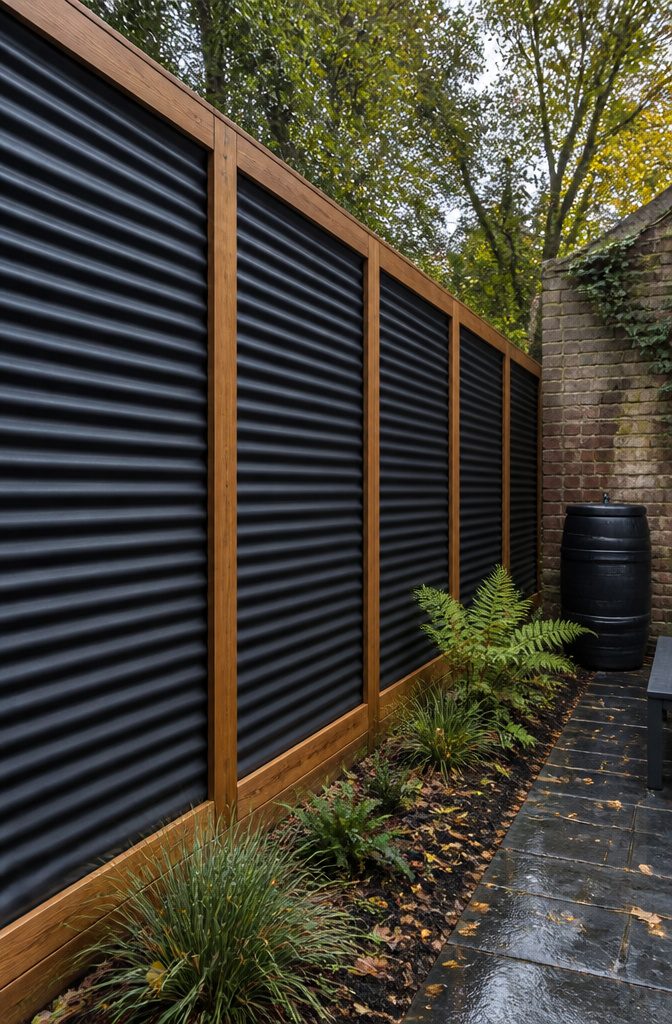
Corrugated metal panels set inside a wood frame make a solid, gap-free screen with an industrial look, and they stay budget-friendly for a tall privacy fence. The metal handles the privacy, and the wood frame holds it in place.
The detail that separates a designer finish from a shed wall is to wrap the panel edges in cedar or ipe, which hides the cut metal and warms up the surface.
Finish is a style choice. Galvanized reads bright and silvery, while a matte finish sits quieter against plantings.
I’d choose matte for a small yard, where a shiny wall draws the eye straight to the boundary. Either way, the metal asks for little upkeep, and only the wood needs your attention.
Recommended Products

1 SCREEN PURCHASE: You will receive preassembled materials to construct 1 cedar wood outdoor privacy screen in a charcoal finish with your purchase
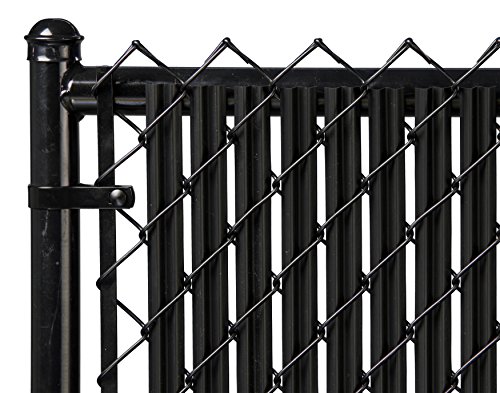
Black Ridged Slats for 6ft chain link are deliberately cut to about 68.5 inches long. These fence inserts are designed primarily for 6ft 11 or 9 gauge chain link with a two inch diamond. Also works in economy chain link with a larger diamond pattern, but privacy will be less. Slats must be installed correctly and be fully inserted inside the wire mesh of your fence to achieve the desired results. Cannot be used to extend the fence height. Not suitable for fences on a steep slope.

Beige Fence Slat - Designed for a 5' high fence, slats are approximately 56.5" in length to accommodate the bottom locking channel and to prevent the slats from being above the top of the fence. (Available Colors: Beige, Black, Brown, Gray, Green, Redwood, Royal Blue, Sky Blue, White)
6. Adjustable Louvered Panels
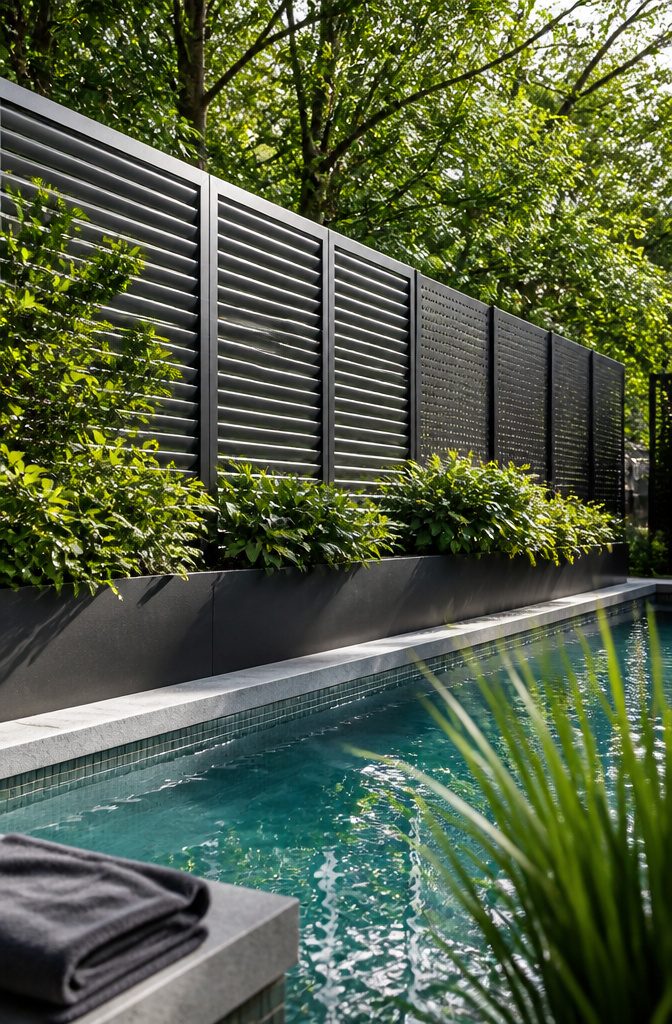
Angled slats block the line of sight into your yard while air and light still pass between them, so a tall fence doesn’t feel like a wall.
Adjustable systems let you tilt the slats: open them for sun and breeze, close them when the neighbors are out on their patio.
For material, I’d buy powder-coated aluminum, which holds up outdoors for years.
Near a pool, pond or sprinkler spray, choose aluminum or composite louvers, since wood stays damp there. Neither needs staining or sealing, which is most of the low-maintenance appeal.
To soften the look, alternate solid and perforated panels. You can also anchor the panels in deep planter boxes for extra foliage screening.
Recommended Products

【Effortless Mobility & Stability】Equipped with four smooth-rolling wheels and two lockable casters, this planter box is easy to move for optimal sunlight and layout changes, then securely locks for stable, worry-free gardening.
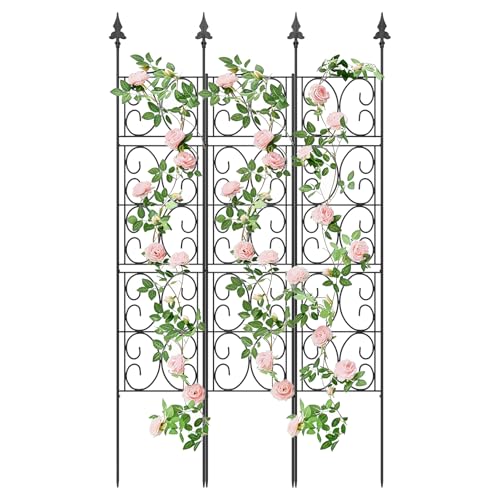
All-Metal Frame With Reinforced Welded Build: Crafted with an 8mm thick metal tube frame and 4mm solid metal mesh, this metal trellis for climbing plants outdoor provides exceptional strength and durability. Its fully welded structure and smooth powder-coated finish resist bending, rust, and breakage—keeping your garden trellises sturdy through all seasons for roses, ivy, and other climbing plants
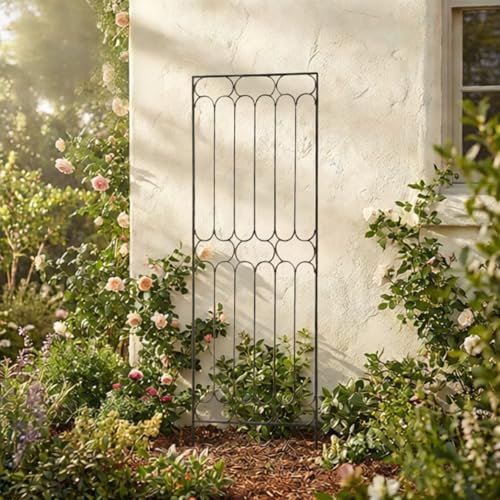
HEAVY-DUTY IRON – 26 LB STABLE FRAME - Crafted from solid iron gridwork with a reinforced tubular frame, this trellis weighs approximately 26 lbs for dependable support. Measures 69” H x 24” W and includes 13” ground spikes for secure anchoring in garden beds.
7. Pergola Toppers on a Fence
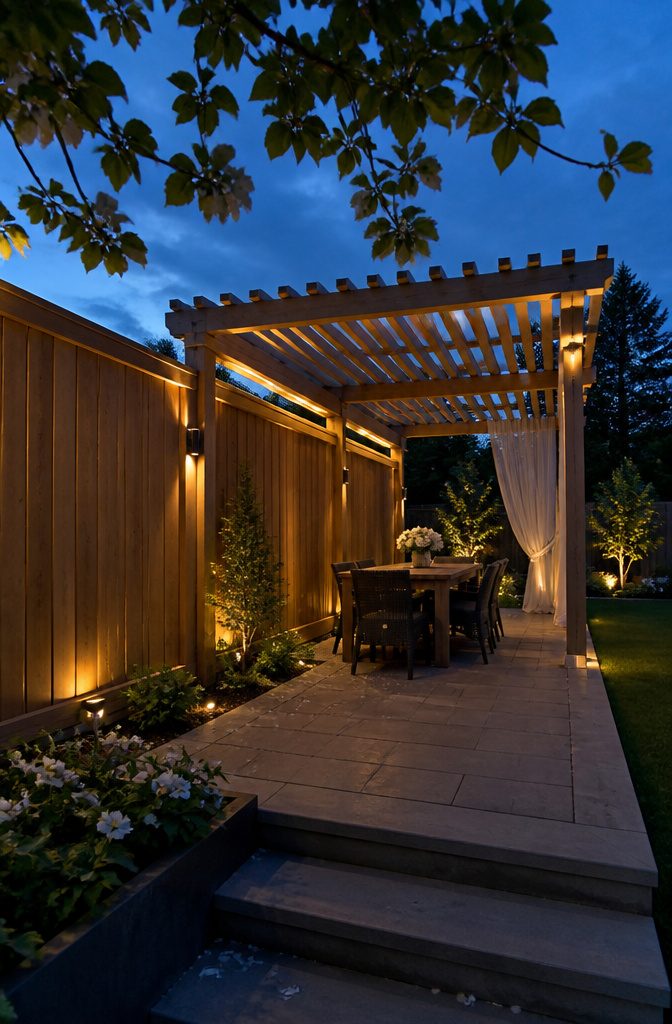
Build the fence at its normal height, then raise it only where you sit. A pergola or arbor extension over a dining table or spa screens that spot, and the rest of the yard stays open instead of walled in.
Set the rafters 6–8 inches apart for partial shade and privacy. For fast coverage, hang outdoor curtains from the topper; they close off a side in minutes, which a new vine can’t do.
Lighting finishes the spot after dark. Mount downlights along the posts, and tuck warm LEDs under the cap rails so the glow stays low and soft.
Recommended Products

𝗣𝗿𝗲𝗺𝗶𝘂𝗺 𝗪𝗲𝗮𝘁𝗵𝗲𝗿-𝗥𝗲𝘀𝗶𝘀𝘁𝗮𝗻𝘁 & 𝗥𝘂𝘀𝘁𝗽𝗿𝗼𝗼𝗳 𝗠𝗲𝘁𝗮𝗹: Crafted from thick, high-quality metal with a durable powder-coated finish, our privacy screen resists rust, rain, sun, and wind, offering reliable outdoor protection year-round.

PACKAGE INCLUDED - Fence Fabric, Iron Fence Poles, Iron Fence Rails, Ground Spikes, Base Mounts, Ground Stakes, Zip Ties. We provide zip ties for fixing fabric to the fence poles.

𝗣𝗿𝗲𝗺𝗶𝘂𝗺 𝗢𝘂𝘁𝗱𝗼𝗼𝗿 𝗠𝗲𝘁𝗮𝗹 𝗣𝗿𝗶𝘃𝗮𝗰𝘆 𝗦𝗰𝗿𝗲𝗲𝗻: Crafted from durable, weather-resistant steel, this 6ft × 3.7ft privacy panel is built to withstand outdoor conditions, providing reliable and stylish privacy for years.
8. Composite Privacy Fence
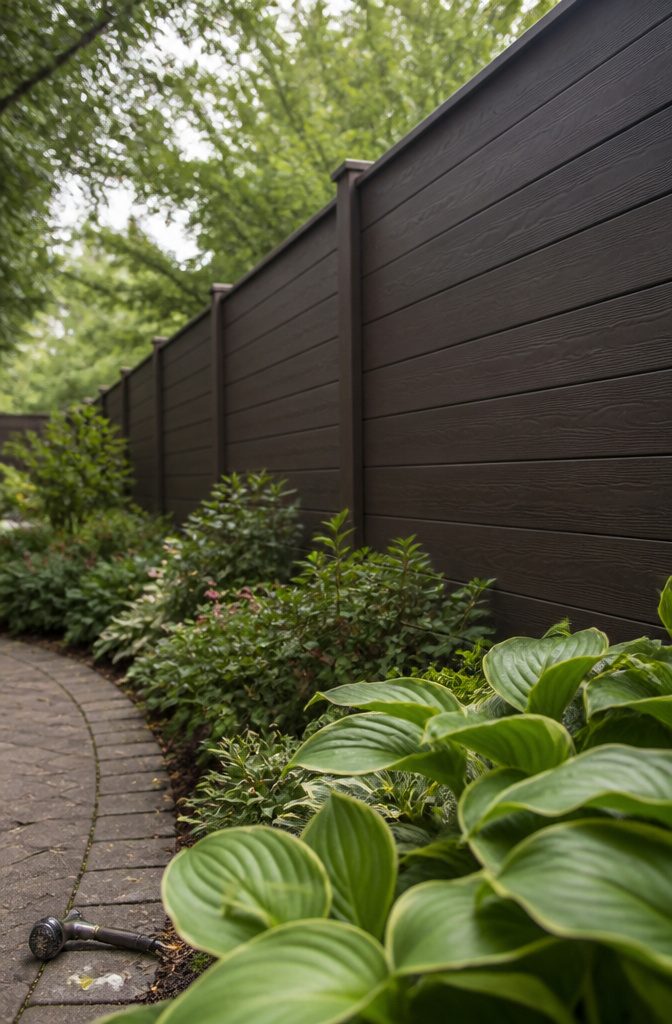
Composite gives you the clean lines of wood without the sealing schedule.
Natural wood needs sealer within 30–60 days of installation and a recoat every 2–3 years, while composite needs neither. Newer boards mimic wood in rich tones, including espresso, driftwood gray and jet black, and they resist fading.
Care is one short job: rinse the fence once a year and spot-clean with mild soap. Dark finishes like espresso and jet black tend to recede behind plantings, which suits a tall fence that could otherwise feel like a wall.
I’d pick composite over wood for anyone who wants height and would rather spend weekends in the garden than on a ladder with a brush.
Recommended Products

This gabion wall is an excellent choice for designing homely and commercial landscaping

This gabion set of three different sizes is a great choice for both home and business landscape design

This gabion wall is an excellent choice for designing homely and commercial landscaping
9. Gabion Wall
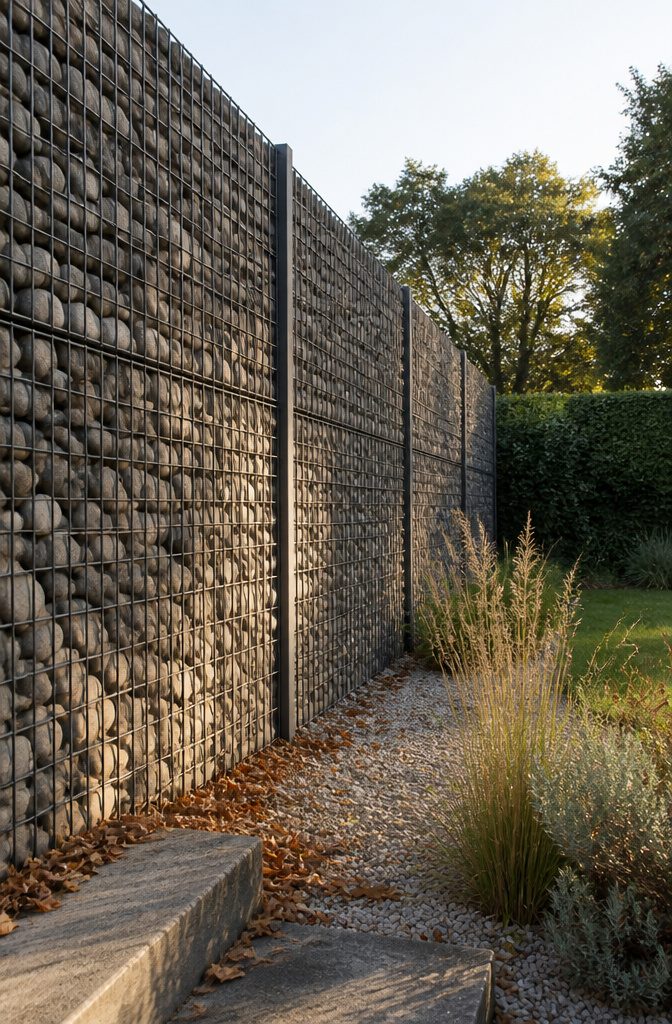
A gabion wall is a stack of wire baskets packed with stone, river rock, or recycled glass.
The dense fill makes it fully opaque, and it also buffers sound, so it suits a yard facing a busy street or a loud neighbor.
Fill changes the look more than anything else. Gray stone reads rugged, river rock reads softer, and glass catches light, so choose based on what you’ll see from the patio.
Filled baskets are heavy, which means the wall needs steel-reinforced posts to hold the load.
Skimping on posts is the shortcut I’d refuse. Prices swing with fill type and wall length, so get local quotes before you commit.
Recommended Products

White Fence Slat - Designed for a 4' high fence, slats are approximately 44.5" in length to accommodate the bottom locking channel and to prevent the slats from being above the top of the fence. (Available Colors: Beige, Black, Brown, Gray, Green, Redwood, Royal Blue, Sky Blue, White)

Black Fence Slat - Designed for a 5' high fence, slats are approximately 56.5" in length to accommodate the bottom locking channel and to prevent the slats from being above the top of the fence. (Available Colors: Beige, Black, Brown, Gray, Green, Redwood, Royal Blue, Sky Blue, White)

Gray Fence Slat - Designed for a 5' high fence, slats are approximately 56.5" in length to accommodate the bottom locking channel and to prevent the slats from being above the top of the fence. (Available Colors: Beige, Black, Brown, Gray, Green, Redwood, Royal Blue, Sky Blue, White)
10. Decorative Metal Screens
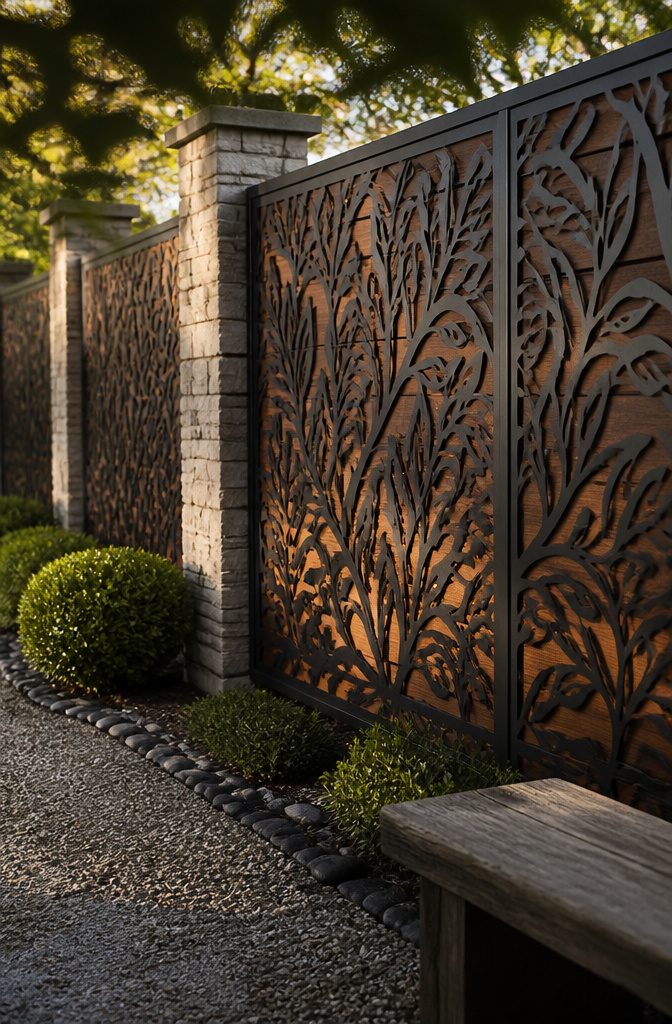
Laser-cut metal looks sharp but blocks little on its own, because the pattern is mostly open. Mount the screen over a solid backer, such as stained plywood or fiber-cement panels.
The backer supplies the privacy and the metal supplies the silhouette. Without it, you have a decorative railing, not a privacy fence.
Pick a durable finish, such as powder-coated or matte black, and upkeep drops to rinsing the panels with a hose once a year.
For a design-forward yard, I’d choose this over plain boards. It also pairs well with other materials: wood spans between metal posts, or stone columns framing wood sections.
Recommended Products

Durable Rust Resistant Metal: Made from high-quality galvanized steel, this planter box resists rust and deformation, ensuring it withstands harsh outdoor elements for years of gardening enjoyment.

Multifunctional metal elevated planting bed:This multi-functional metal raised planter bed with trellis combines a raised planting bed, climbing frame, and privacy screen into one unit. It can be used to grow climbing plants, vegetables, and vines, easily creating an outdoor space that is both aesthetically pleasing and private. Whether in a patio or on a balcony, it makes efficient use of space, adding a touch of neatness and style to your green corner.

HEAVY-DUTY IRON – 70 LB STRUCTURAL STRENGTH - Crafted from solid iron scrollwork with a reinforced tubular frame, this extra-large trellis weighs approximately 70 lbs and stands an impressive 8 feet tall (96” H x 32” W). Includes 18 inch ground stakes and two 36” external ground spikes for secure anchoring. Built for long-term outdoor performance. Two-person assembly recommended.
11. Tall Planter Wall
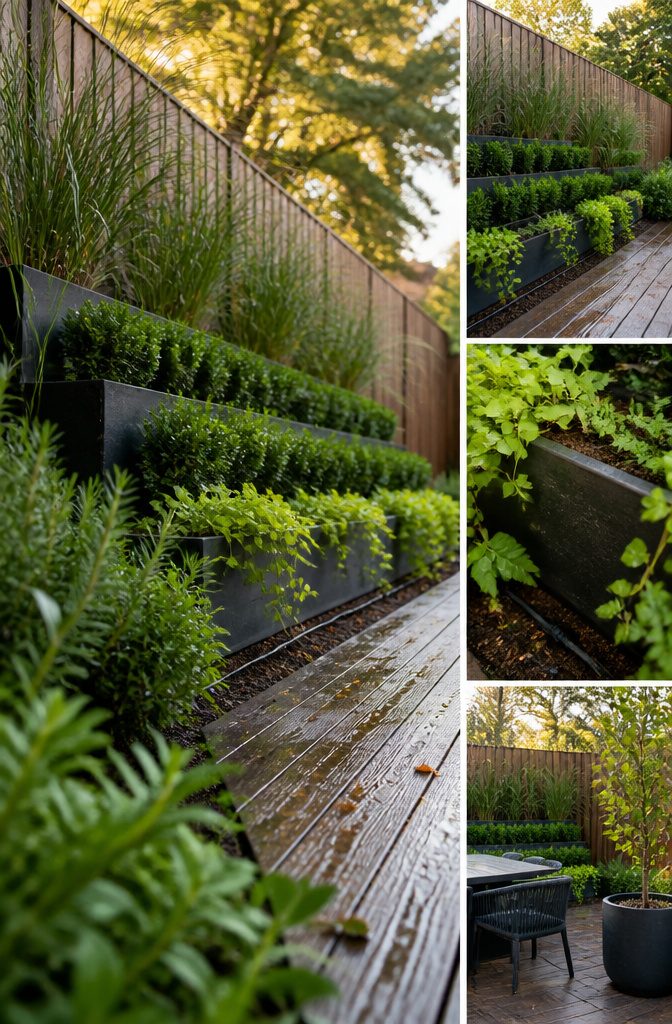
A tall planter wall in front of a plain fence gives screening right away, and the buffer can change with each season.
Build narrow, elongated planters and layer them by height: Miscanthus at the back, boxwood in the middle, and sweet potato vine spilling over the front edge. Creeping thyme and ferns also fit the front row.
Water is where these walls fail in hot weeks.
Use drip irrigation or self-watering inserts, especially if you travel. On a deck, add casters so you can rearrange the layout.
Pick by Budget and Upkeep
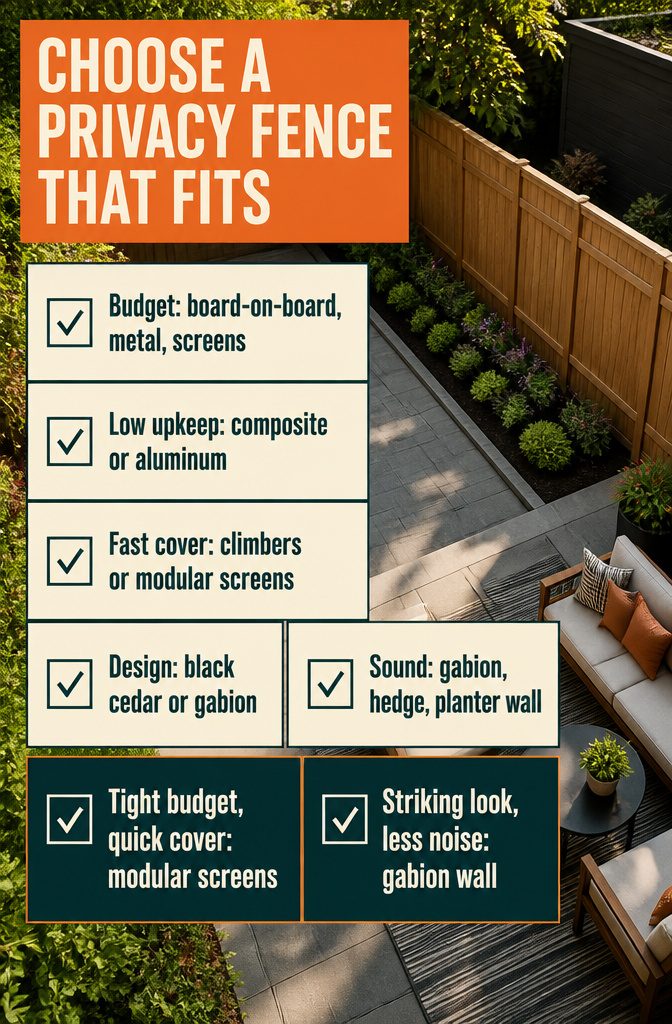
Match your top priority to these picks:
- Budget: pressure-treated board-on-board, corrugated metal with wood, or modular screens.
- Low maintenance: composite, aluminum louvers, or metal screens with a durable finish.
- Fast coverage: a trellis with fast climbers, modular screens, or a pergola topper with curtains.
- Design-forward: slatted cedar in black, a gabion wall, or decorative metal with a backer.
- Sound buffering: a gabion wall, dense hedging, or a planter wall combined with a fence.
Two entries earn a spot on more than one list.
For a small yard on a tight budget that needs cover quickly, modular screens are the pick. If you want a striking look and less noise, a gabion wall covers both.
Check Height Limits First
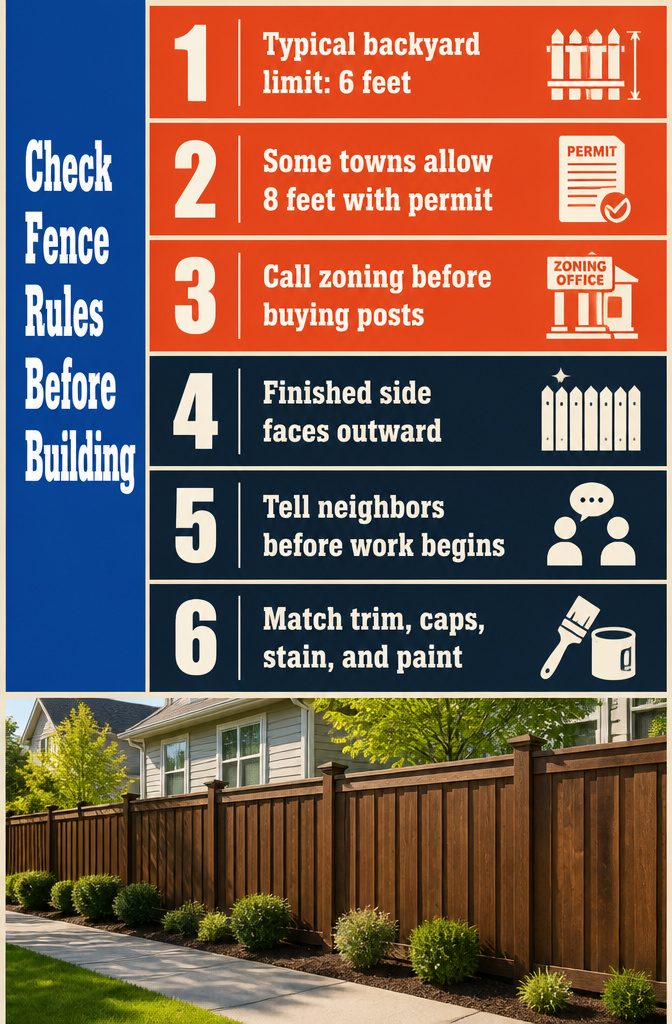
Backyard fence limits are often 6 feet, and some towns allow 8 feet only with a permit, so call your local building or zoning office before buying a single post.
Finding out the limit after the posts are set is the expensive way to learn it.
Put the finished side facing outward.
That is the standard, and it looks better from the street and from next door. Tell your neighbors before work starts, because a short conversation heads off most disputes over a fence that blocks their view.
Matching trim and caps on every section make a tall fence look planned. Keep the stain or paint coordinated with the house and gate so the height reads as deliberate.
Frequently Asked Questions
How tall can a tall privacy fence be?
Backyard fence limits are often 6 feet, and some towns allow 8 feet only with a permit.
Call your local building or zoning office before buying posts. Finding out the limit after installation is the costly way to learn it.
What is the cheapest tall privacy fence?
Pressure-treated board-on-board is the budget pick among wood fences.
Corrugated metal in a wood frame and modular screens are the other low-cost options. Modular screens cost the least because they cover only the worst sightline instead of the whole yard.
Which tall privacy fence needs the least maintenance?
Composite, aluminum louvers, and metal screens with a durable finish need the least care.
Composite needs no sealing, only an annual rinse and spot-cleaning with mild soap. Aluminum louvers need no staining or sealing.
How often should a wood privacy fence be sealed?
Seal natural wood within 30–60 days of installation, then recoat every 2–3 years.
Cedar and redwood give the best finish outdoors. Composite boards skip this schedule entirely.
What kind of tall privacy fence blocks the most noise?
A gabion wall is the strongest choice, since its dense stone fill is fully opaque and buffers sound.
Dense hedging and a planter wall placed in front of a fence also cut noise. Living screens absorb sound as well as blocking sightlines.
What is the fastest way to add privacy to a yard?
Modular screens give cover the day they go up. A trellis planted with fast climbers such as star jasmine or honeysuckle also works, as does a pergola topper with outdoor curtains that close off a side in minutes.
Can I use a tall privacy fence if I rent?
Yes, modular privacy screens suit a rental.
Anchor each panel to a planter or a post and it stands without a footing. You can also move the panels around until the sightline is covered.
Which side of a privacy fence should face out?
Put the finished side facing outward.
That is the standard practice, and it looks better from the street and from next door. Telling your neighbors before work starts also heads off most disputes.









