
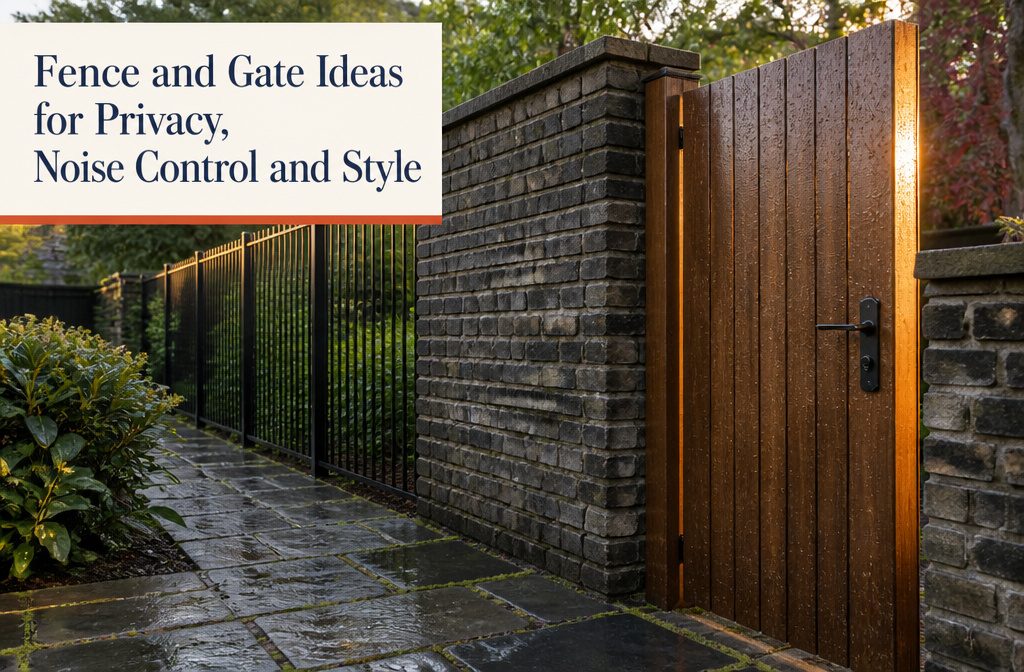
Privacy fences run $40–150 per linear foot, and the job you give the fence picks the material: brick for sound, ipe for low upkeep, aluminum or vinyl for rain and snow.
Check zoning and HOA limits on height, material and color before ordering, since a rejected design is expensive to redo.
1. Ipe Slat Screen
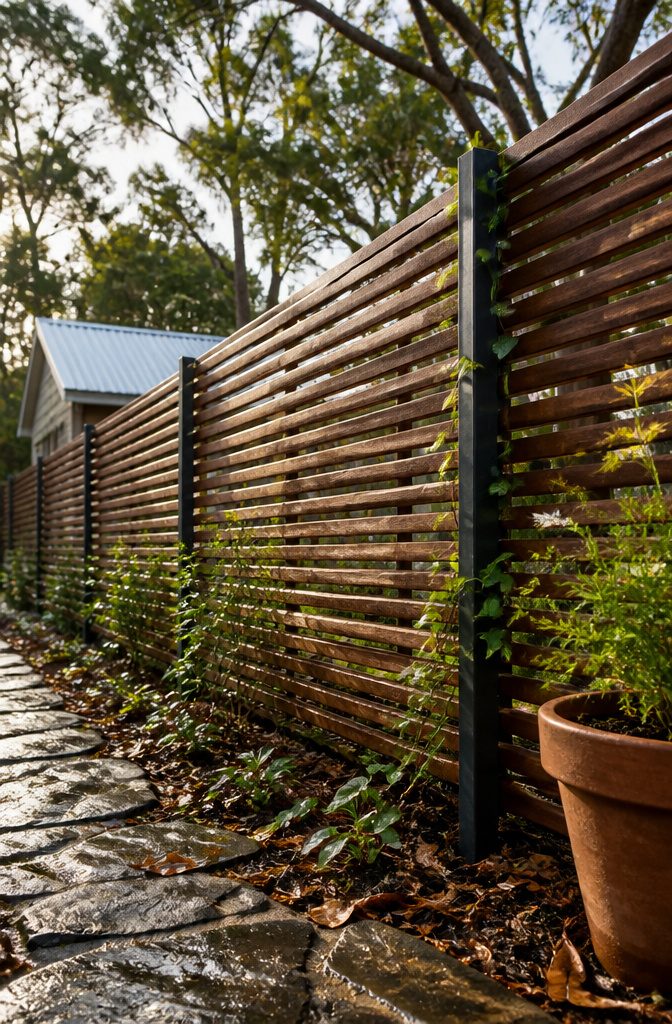
Ipe is a very hard, resilient wood, and slats of it mounted to steel posts make the lowest-upkeep screen on this list.
Hard slats resist the wear that sends softer fences back to the stain can, and steel posts skip the rot that usually starts where wood meets soil.
The result is a screen that needs almost no maintenance for many years. It also works as a trellis, so vines can climb the slats and soften the look of the wall.
Ipe slat screens cost more upfront than most other fence materials.
Ipe and steel posts both cost more than a basic pine or cedar setup, and a wood this dense is harder to cut and drill. On a tight budget, I’d hire an installer instead of attempting it yourself.
Recommended Products

【A Solid Barrier of Strength】 Made from 201 stainless steel, Uphode fence posts offers superior hardness, strength, and corrosion resistance compared to aluminum and iron and thus stands out as an excellent choice for garden posts. Given its rust-proof and anti-corrosion properties with a refined texture, pergola post is resistant to rain and weather, and free from rust and deformation over long-term use. All this provides a sturdy and durable core support for garden fences—easy adaption to various outdoor environments.

QUALITY – Our premium bamboo slat fence are all hand made, using the high quality bamboo from the subtropical monsoon climate region. Garden fence is made of split bamboo and can be used to section off parts of the garden or line a path or driveway to add a tropical charm to your outdoor living space. Bamboo is eco-friendly materials, all bamboo stakes are hand selected and hand treated.

【Easeful Elegance】 Transform your backyard into a curated sanctuary with our innovative metal fence post. Designed for those who appreciate both form and function, these privacy fence post allow you to effortlessly assemble horizontal wooden boards into a sleek, modern fence that complements gardens, patios, and lush landscapes. No more uneven nails or messy installations—just clean lines and timeless style.
2. A Brick Wall for Sound
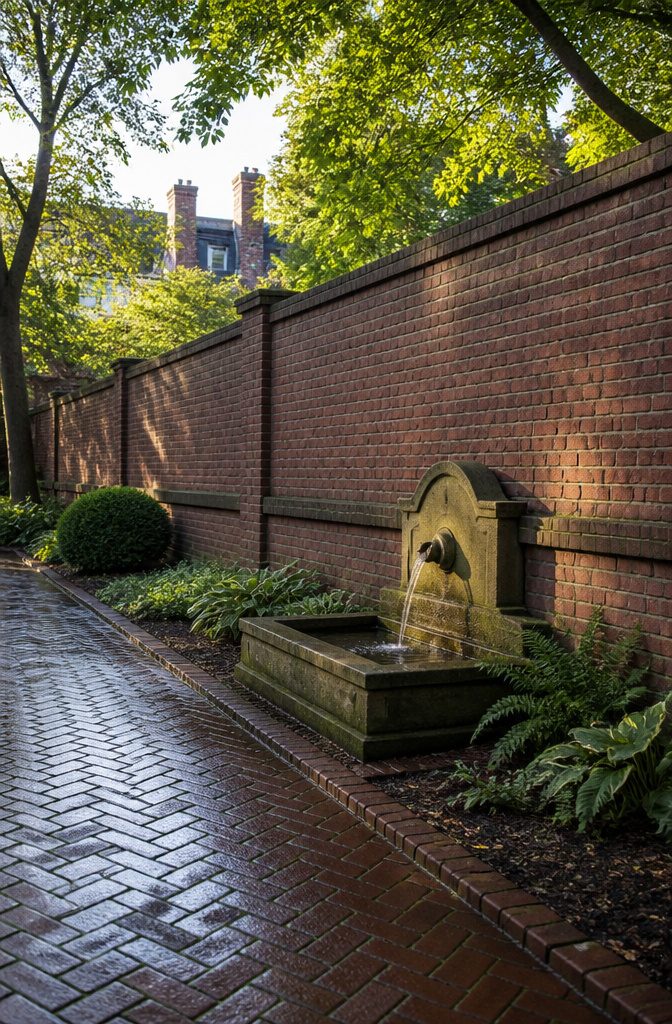
A tall brick wall does two jobs in a city yard. It drowns out the surrounding buzz, and its hard face amplifies the sound of a nearby fountain, so the water carries further than it would against a softer fence.
I’d set the fountain close to the wall on purpose to get that effect.
Brick on its own can read as one big slab. The detail worth copying is a ledger course of brick about 24 inches above grade, a subtle band that breaks up the visual height of the wall.
Brick also makes a neutral backdrop, so green foliage stands out against it without competing.
3. Steel Gate, Painted Brick Frame
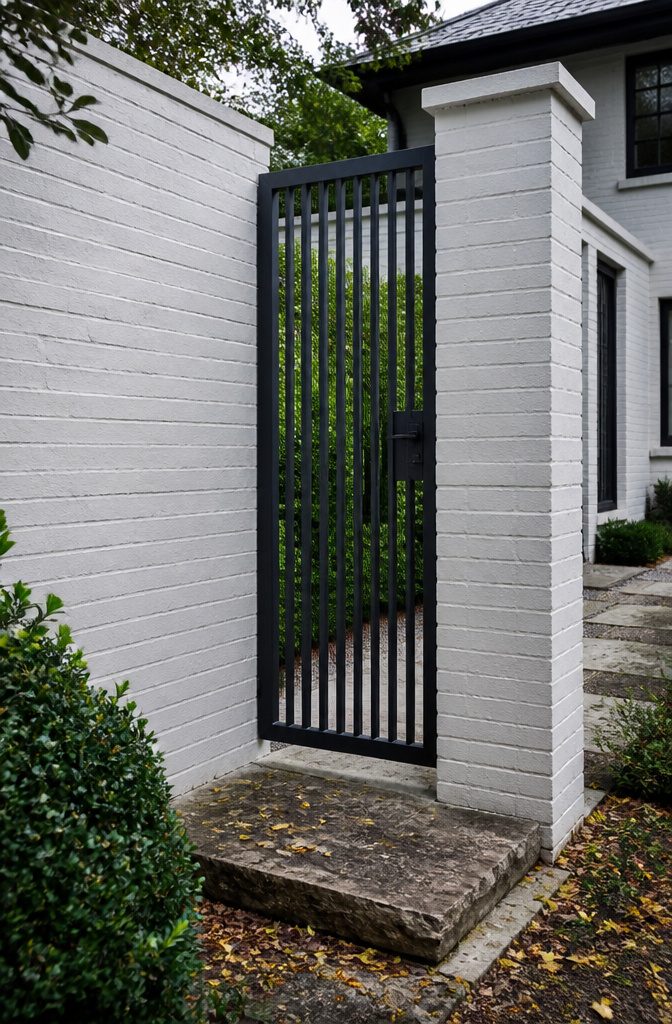
Build the wing wall and column from the same white painted brick as the house, then hang a steel gate between them.
The dark metal stands out against the pale brick, and the wall and column frame the gate like a doorway. Because the brick matches the house, the entry reads as part of the building instead of an add-on.
If your house is brick, mixing brick and steel is the combination I’d choose over an all-metal or all-wood run.
The brick carries the house’s material out to the edge of the yard, and the steel keeps the opening slim and crisp. Painting the brick to match the house is what makes the pairing look planned.
4. Horizontal Cedar Fence
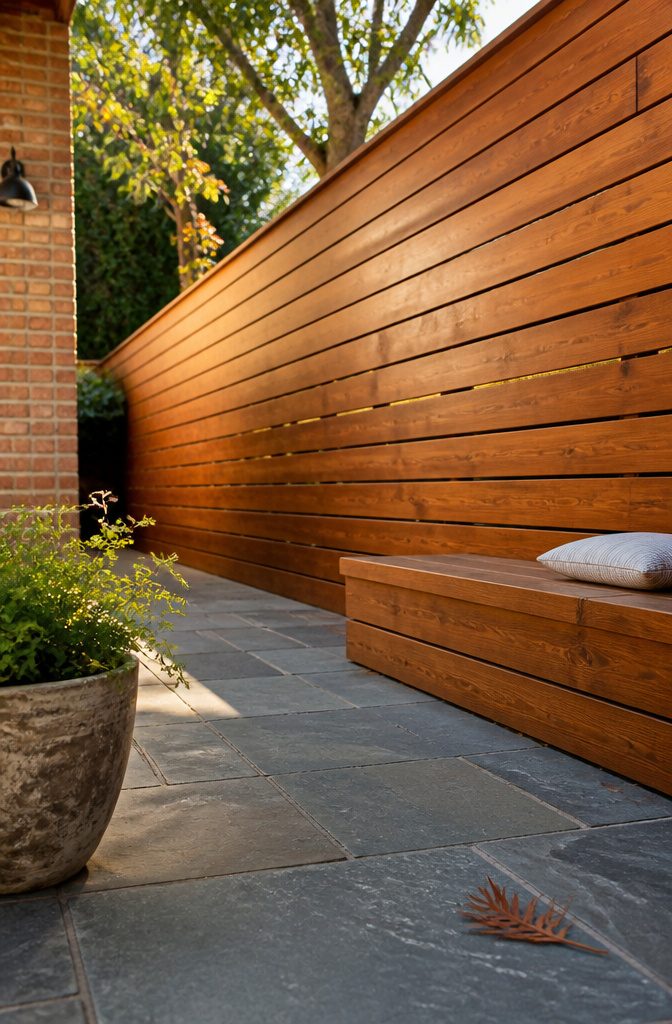
Running boards horizontally gives a fence a contemporary look and makes a yard appear longer, since the lines lead the eye along the boundary.
Stained cedar also adds warmth beside brick and offsets cool stone paving, while solid boards give you a full partition from the neighbors.
Cedar is easy to customize.
You can stain it to match the garden, and leftover boards can become built-in seating along the fence. For the best resistance, I’d look for Port Orford or Alaskan Yellow cedar, both highly resistant to decay and insects.
5. Paint the Fence French Gray
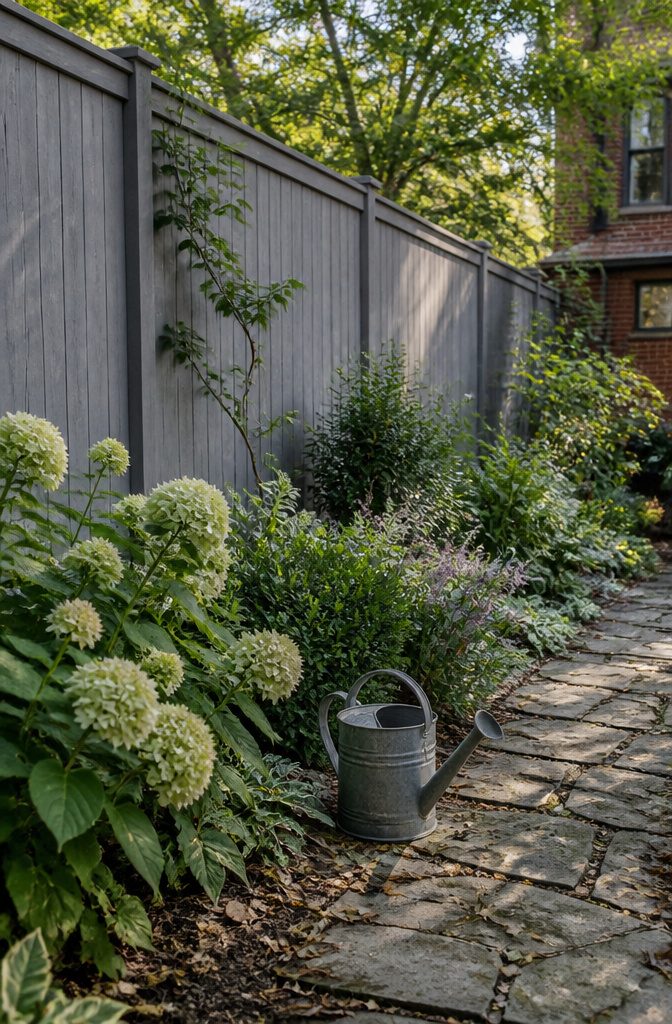
A wood privacy fence painted Farrow & Ball’s French Gray shows how a muted color works: the fence stops reading as a wall and becomes a backdrop.
Designer Zoe Feldman used it on the fence in her own Washington, DC, backyard and describes it as a soft, nuanced shade that blends into the landscape.
Foliage and flowers stand out against a quiet gray, while stark white or a bold color pulls the eye to the boards.
If plantings are the point, I’d choose a soft, muted paint over a bright color. Painted wood keeps its warmth and longevity, and you can refresh it with a new coat if you tire of the shade.
6. Screen Without Losing the View
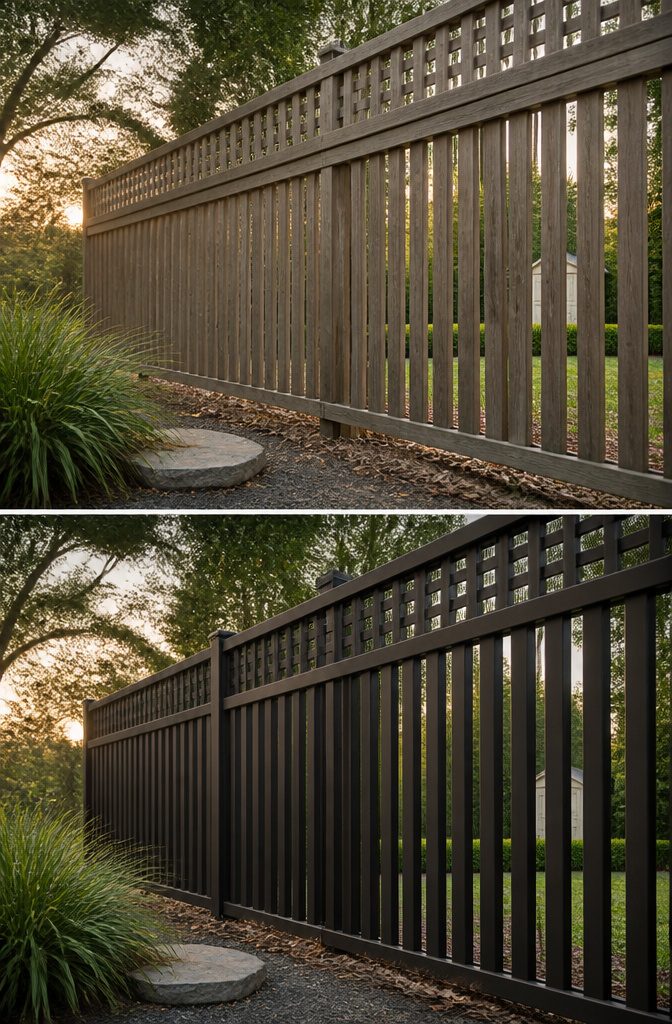
A solid fence blocks everything, while a design with narrow gaps still leaves no clear sight line and lets some of the view through.
At 6 feet, either should block most views from the ground level. Going taller has a cost:
"I’d advise not going any taller than you have to, both to save on expenses and to limit the shrinking, enclosing effect fences can have on a space."
If 6 feet falls short, add 12–18 inches of lattice on top rather than raising the whole fence.
Larger yards can use greenery, since a natural hedge often reaches 12 feet. Leave at least 2 inches under any fence for wildlife.
7. Estate and Commercial Gates
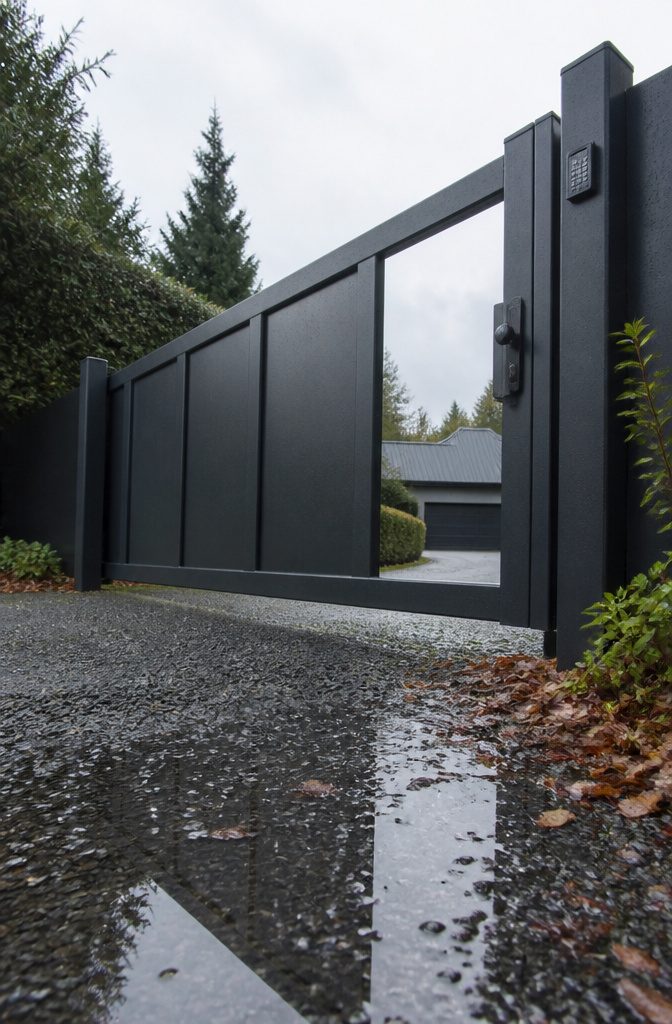
Cantilever, swing and aluminum-framed privacy gates are the large-scale options, and they mostly serve two jobs: driveway entrances and dumpster enclosures.
For the frame, I’d pick aluminum over vinyl on a driveway gate. It stays lightweight, resists rust and water damage, and holds up in rain and snow.
When security matters, put the money into a strong frame and a reliable lock before any decorative detail. A handsome gate with a weak latch protects very little.
A remote or keypad system adds convenience, since nobody has to get out of the car to open it, and it controls who comes in. Check zoning rules and any HOA limits on height or materials before you order.
8. Custom-Fit Walkway Gates
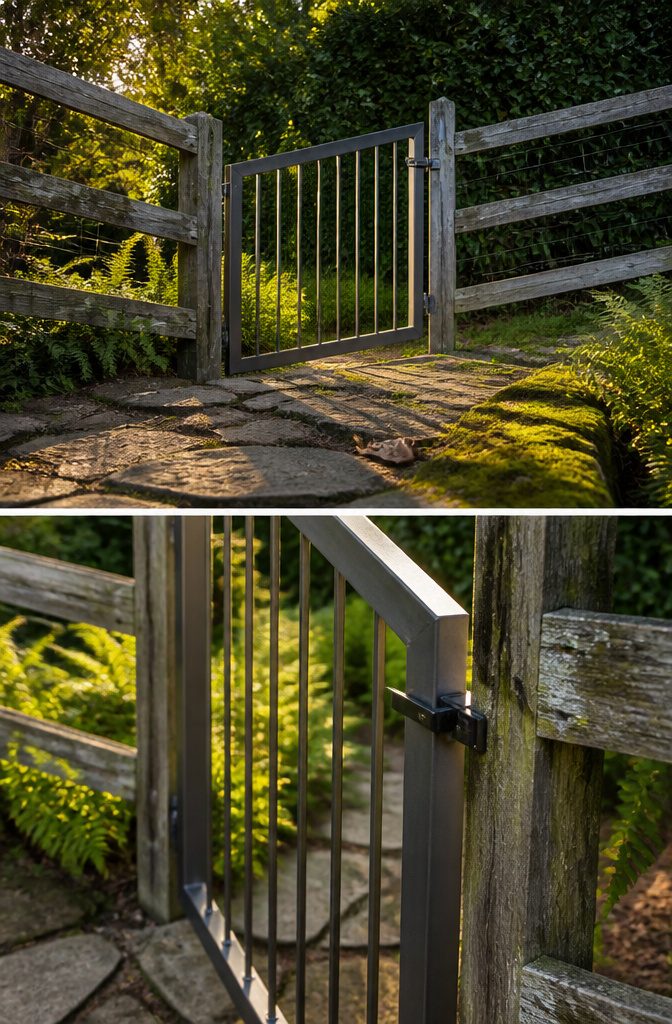
Stock gates come in set widths, so an opening that is slightly off leaves you with gaps, filler boards or a gate that hangs crooked.
Vinyl walkway gates and aluminum-frame gates can be made to the exact opening, which keeps the latch gap even and the gate in line with the fence on both sides.
Vinyl matches a vinyl fence. Aluminum gives a slimmer, lighter frame.
Slopes are where I would skip stock gates entirely. A racked gate has pickets that follow the grade, so the bottom edge tracks the ground instead of leaving a wedge-shaped gap.
I’d choose the aluminum-frame version because it stays light enough that the hinges resist sagging. Order custom whenever the opening is an odd width or the ground slopes.
Match the Fence to Your House
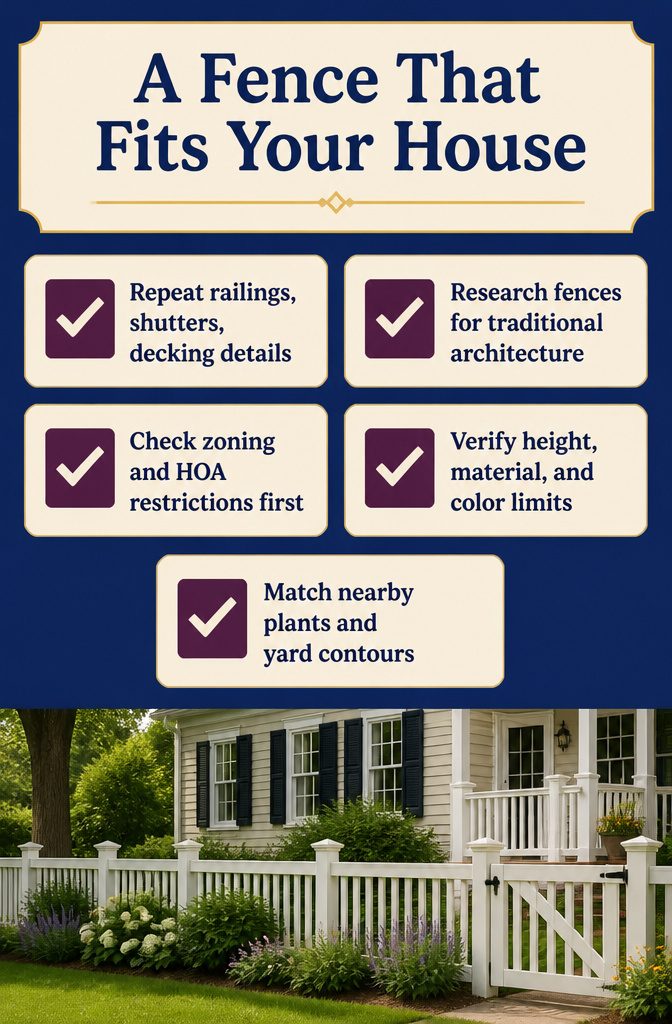
A fence looks like part of the house when it borrows details the house already has. Work through these before choosing a style:
- Study the railings, shutters and decking. Repeat their detailing, such as post caps, board spacing or paint color.
- On a traditional home, look up historical fences used with that architecture. A subtle nod to that lineage is enough; an exact replica isn’t the goal.
- Read your local zoning rules and homeowners’ association guidelines first. They often limit height, material and color, and a rejected design is expensive to redo.
- Match the surroundings. Take cues from nearby plantings, trees and the lay of the yard so the fence settles into the landscape.
Vinyl, Aluminum or Wood
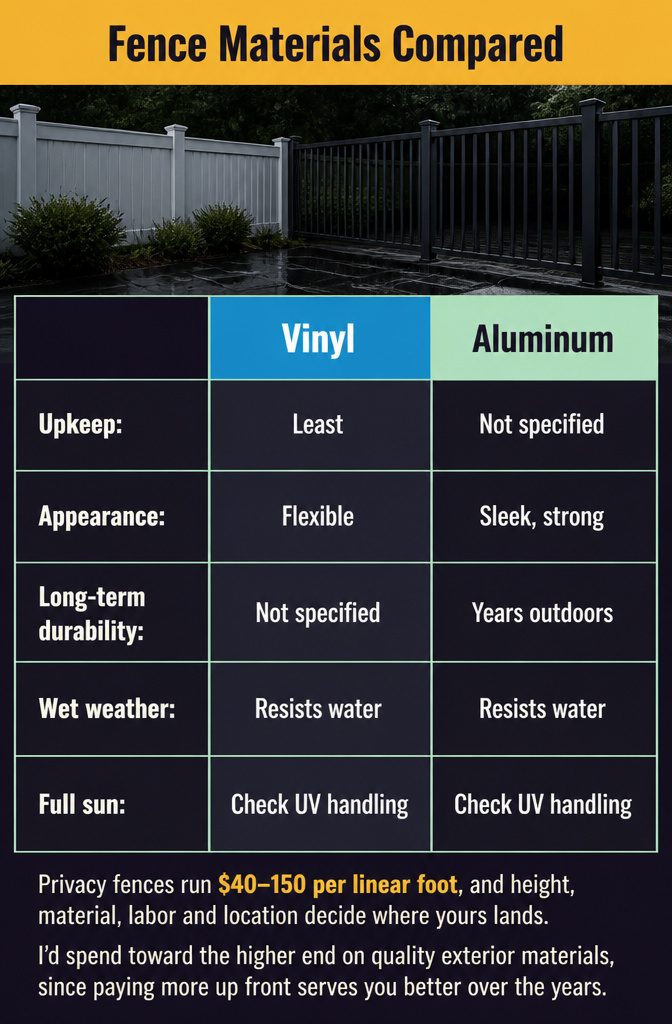
Vinyl and aluminum suit heavy rain or snow, because both resist rust and water damage. Vinyl asks for the least upkeep.
Aluminum has a sleek, strong look and holds up to the elements for years. Heat and UV affect materials differently, so check how a product handles full sun before you buy.
Wood is the most common choice for privacy fences. It is easy to install, maintain and repair, it offers the most design flexibility, and it is the more sustainable pick over vinyl.
Privacy fences run $40–150 per linear foot, and height, material, labor and location decide where yours lands. I’d spend toward the higher end on quality exterior materials, since paying more up front serves you better over the years.
Frequently Asked Questions
Are privacy fences a good idea?
Yes, if privacy is your main goal, because a solid fence blocks views completely.
Fences can also make a space feel enclosed and can restrict wildlife movement, so leave at least 2 inches under the boards for animals to pass. In a larger yard, a hedge can give privacy with less of that closed-in effect.
How tall can I make my privacy fence?
A 6-foot fence should block most views from ground level, and going taller than you need adds cost and a boxed-in feel.
If 6 feet falls short, add 12–18 inches of lattice on top instead of raising the whole fence. Check local zoning and HOA height limits before you build.
What is the best type of privacy fence?
It depends on what you want from it. Solid boards give full seclusion, while a design with narrow gaps leaves no clear sight line and still lets some of the view through.
In rainy or snowy areas, vinyl and aluminum both resist rust and water damage, and wood offers the most design flexibility.
What materials are most often used for privacy fences?
Wood is the most common choice, partly because it is easy to install, maintain and repair.
Vinyl and aluminum are the usual alternatives. If you pick cedar, Port Orford and Alaskan Yellow cedar are both highly resistant to decay and insects.
How do you choose a fence that matches your home’s style?
Copy details the house already has, such as railings, shutters and decking, and repeat things like post caps, board spacing or paint color.
On a traditional home, a light nod to the fences used with that architecture works better than an exact replica. Check zoning and HOA rules first, since they often limit height, material and color.
How much does a privacy fence cost?
Expect $40–150 per linear foot.
Height, material, labor and location decide where your fence lands in that range. Spending toward the higher end on quality exterior materials tends to pay off over the years.
How do I choose the right fence and driveway gate?
Weigh material, security, automation, design, weather, local rules and landscaping together. For a driveway gate, aluminum is a better pick than vinyl because it stays lightweight and resists rust and water damage.
Put money into a strong frame and a reliable lock before decorative details, and check zoning and HOA limits before you order.









