
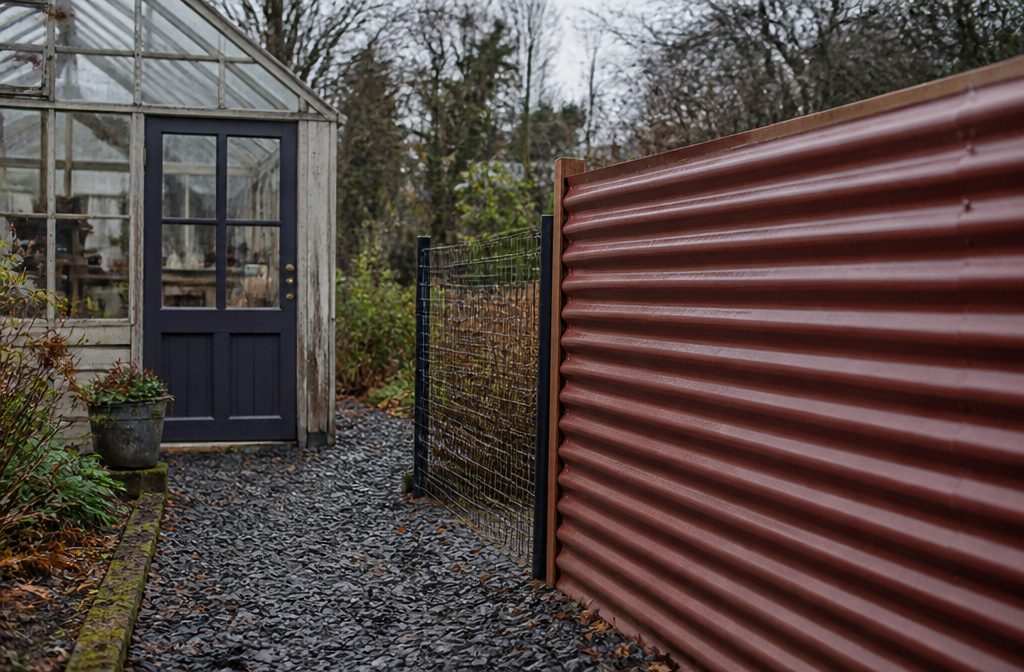
Metal fencing runs from $3–$5 per linear foot for wire to $63–$70 for aluminum slats, and how much privacy you want decides where you land.
Most metal styles are see-through, so privacy usually costs more. Corrugated steel panels are the exception, blocking the view completely at $7–$13 per foot.
1. Wrought Iron Fences
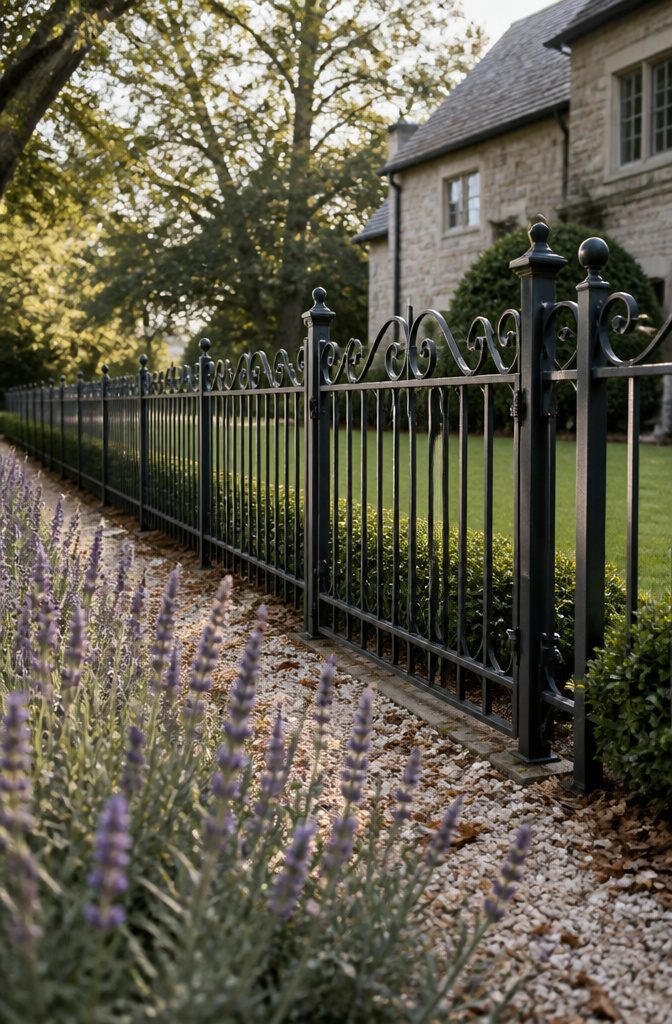
Wrought iron is heated and formed into shape, and that labor is why custom scrollwork and gate designs are possible and why it costs $26–$34 per linear foot.
Many fences sold under the name are cast iron, which is poured into a mold rather than shaped with tools.
Cast iron is cheaper but more brittle, so it breaks more easily under pressure. Some steel gets labeled wrought iron too, and I think that swap is fine for most yards.
Choose wrought iron for a formal front yard where looks matter.
Skip it near the coast unless it is powder-coated and you repaint or reseal regularly, since unprotected iron rusts. For dogs, the pickets must sit too close for a pet to squeeze through.
2. Aluminum Picket Fences
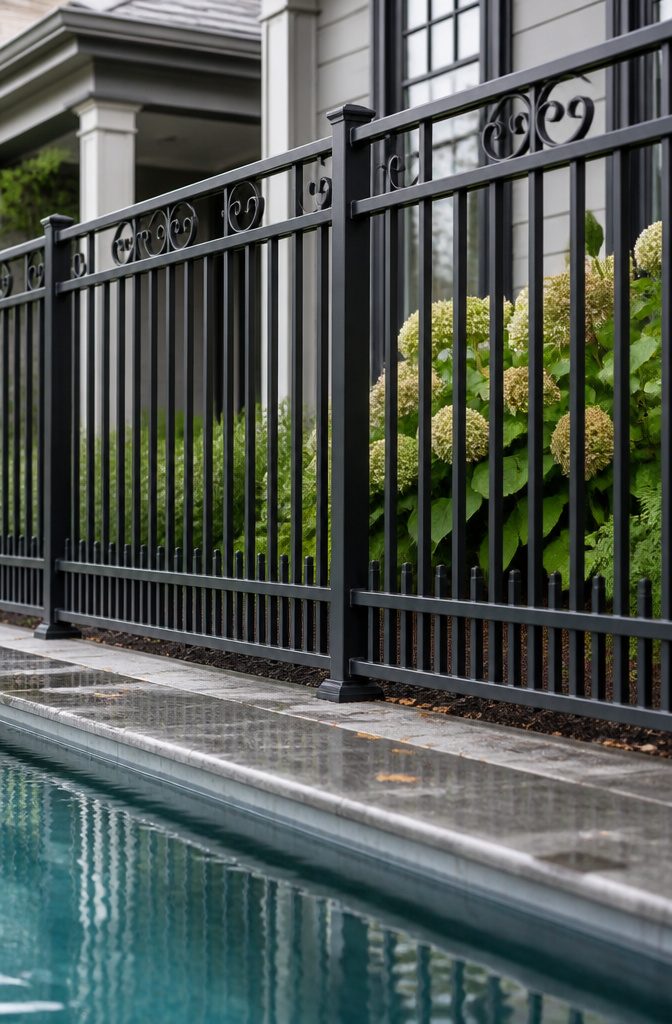
Aluminum picket fencing is built from a top rail, a bottom rail and vertical pickets between them.
It doesn’t rust, which makes it a sensible choice around a pool or in a damp yard, and powder-coated colors let you match the house trim. Some styles copy the scrolled look of wrought iron for less money.
If you have a puppy or small dog, add puppy pickets to shrink the gaps.
Expect to pay $19–$76 per linear foot. A higher grade of aluminum sits at the top of that range.
Aluminum is the softer metal.
A hard strike or storm debris can dent or bend it. It also gives no privacy, and screwed-together panels can be unscrewed from outside, so I wouldn’t count on it for security.
3. Steel Picket Fences
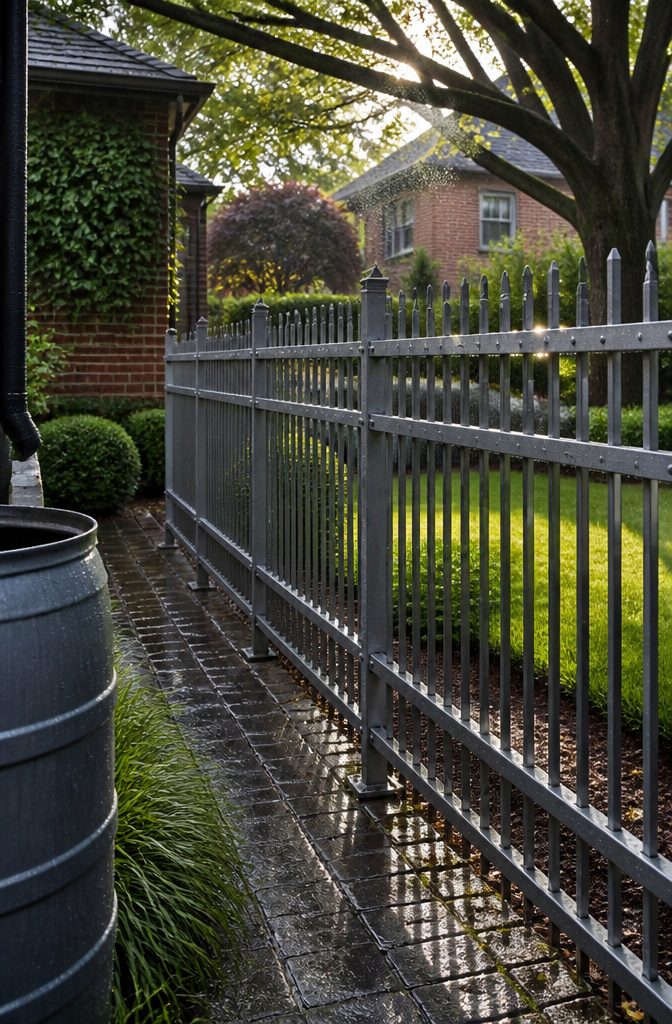
Many fences sold as wrought iron are actually steel. It comes in many of the same styles for less money, at $23–$45 per linear foot, and the panels are either welded or joined with rivets.
Steel is heavy and hard to install, so I’d hire a pro rather than plan a weekend DIY job.
Rust is the other catch. Bare steel isn’t rust-proof, and galvanized steel is the version that resists corrosion, so I’d pay for it on any fence that gets rain or sprinkler spray.
Picket styles give no privacy, though they do add value to a home. Steel suits you if you want the wrought iron look on a tighter budget and can pay for installation.
4. Chain-Link Fences
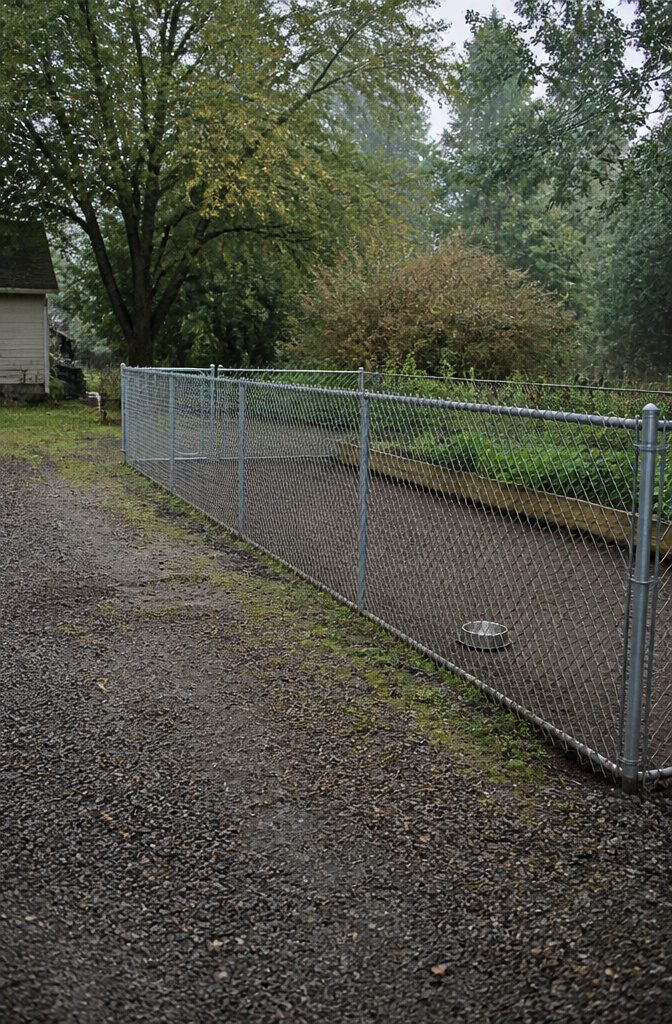
Chain-link wins on practicality and loses on looks.
At $12–$33 per linear foot, it comes in galvanized steel, stainless steel, aluminum or vinyl-coated versions, in several colors. Upkeep is low and repairs are easy.
For containing dogs, I rate it highly.
The mesh has no gaps, and a tall enough fence stops high jumpers. Bare chain-link offers no privacy, but slats woven through the mesh fix that.
Skip it if security matters.
A determined person can climb or cut through it, and barbed wire on top is banned in many residential areas. It also does not raise property value.
5. Wire Fences at $3–$5 a Foot
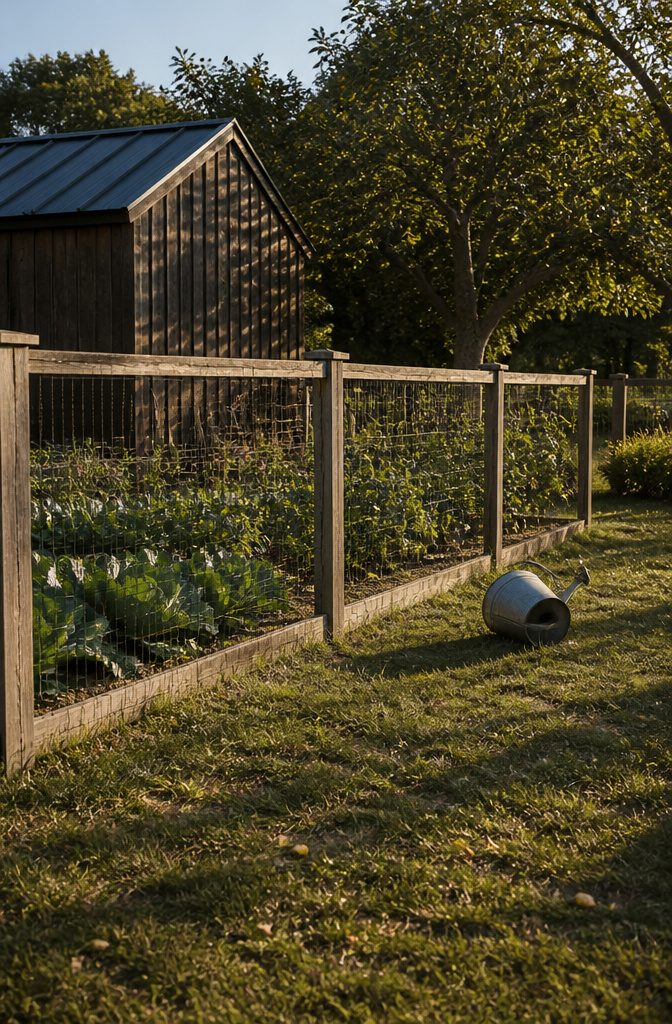
Wire fencing ranges from plain strands strung between posts to wire mesh set in frames. At $3–$5 per linear foot, it is the cheapest type on this list.
The pitch is containment: it keeps animals in or out, which makes it a practical choice around a garden bed or a dog run. It is also easy to install and easy to repair.
Privacy is close to zero, because you see straight through it, and bare wire is plain to look at.
A wooden frame around the mesh improves the look, and I would choose that over bare wire anywhere the fence faces the street.
Skip barbed and razor wire at home. Many residential areas forbid both, so check local regulations before buying.
6. Aluminum Slat Fences
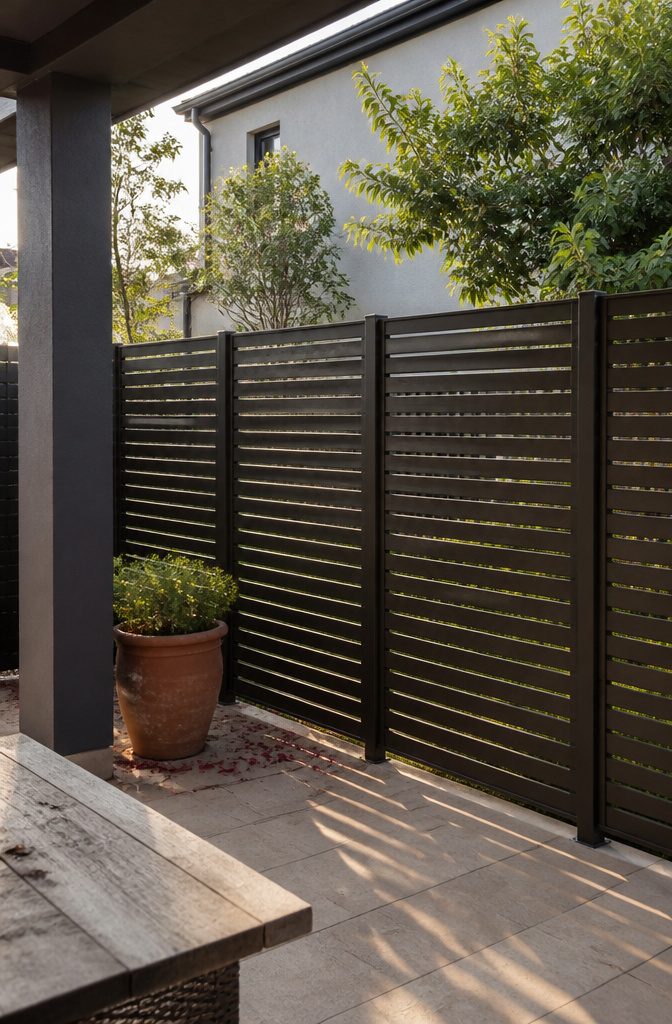
Aluminum slats give you the look of a wooden slat fence without the termite problem. The panels read as private or semi-private, and several colors are available to match your house or patio furniture.
Expect to pay $63–$70 per linear foot, the highest range of any type in this list, because a slat fence uses far more material than pickets do.
On a long run that adds up fast, so I’d price the full length before settling on the look.
Aluminum resists rust but dents when something hits it.
Slats also let less through than picket styles, so you get more screening and less see-through. DIY kits are sold at many home improvement stores.
7. Corrugated Metal Fences
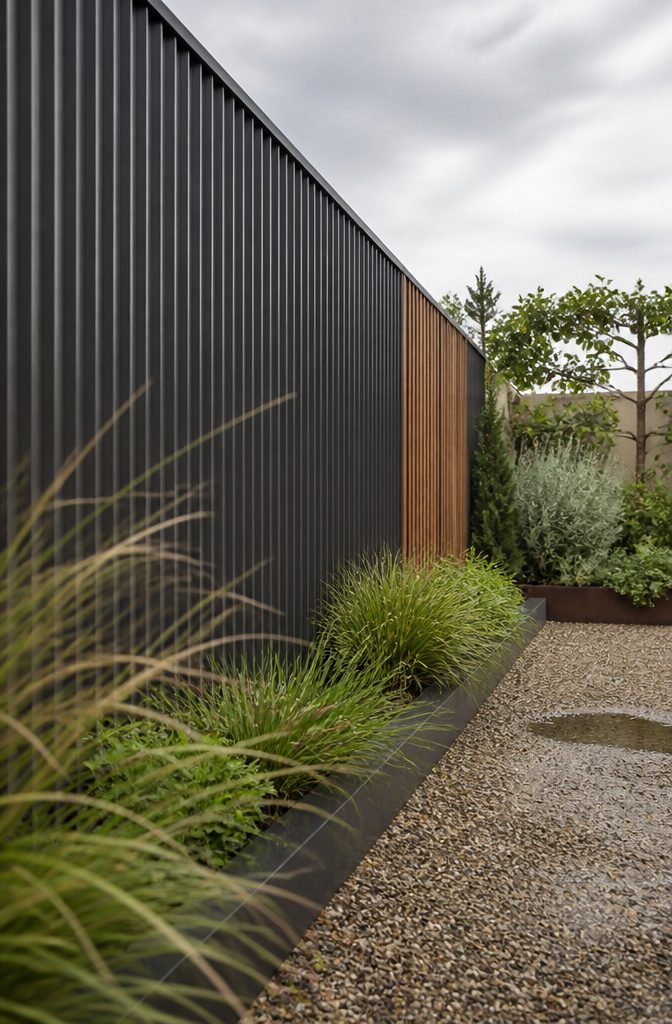
Corrugated metal fencing uses vertical steel panels that interlock into a closed screen, so nothing shows through.
Cost runs $7–$13 per linear foot. Panels measure 69-1/2 inches long on a nominal 8 ft by 6 ft layout, and one pack holds 3 steel panels and 3 aluminum aligners.
Gates pair aluminum frames with steel panels. Mixing the metal with wood panels softens the look, and I’d choose that over a solid wall of steel.
Sound echoes off the ridges, so it’s a poor choice for muffling street noise.
Edges can be sharp around children, and shapes and colors are limited. An ASTM E84-24 report covers surface burning for the myFireGuard panel sample, and a limited warranty covers eligible parts and factory finishes.
8. Metal Privacy Screens
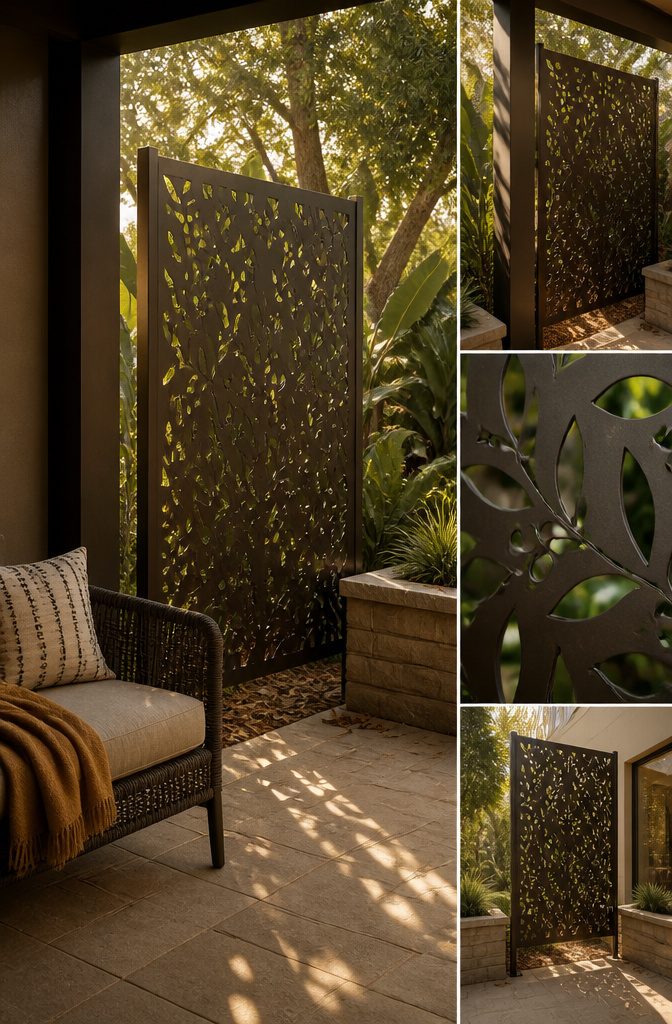
Metal privacy screens have intricate shapes cut out of the panel, so they block sight lines while still letting some light through. That suits anyone who dislikes pickets and wants a patio to stay bright.
Home improvement stores sell them, at $20–$66 per linear foot. The materials and detailed designs drive that price, so I’d keep them to small areas like a patio edge or a seating nook.
Many of these screens are decorative only.
They typically come with stand poles instead of posts you can set in the ground, which makes them a poor choice where security matters. If you want one firmly rooted, plan on hiring a professional to install it.
9. LINE Horizontal Steel Slats
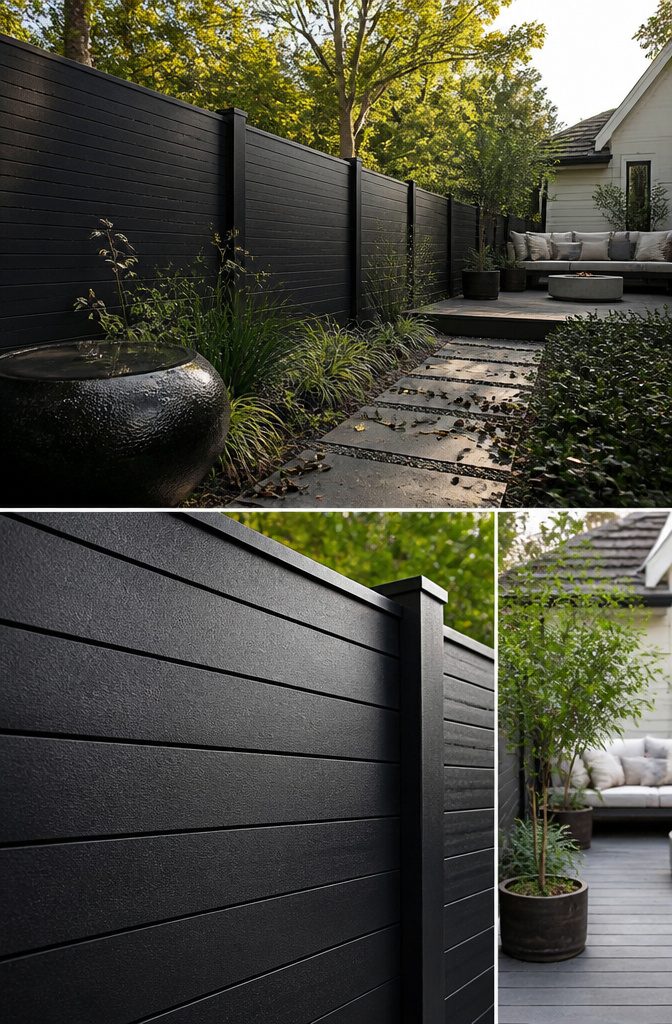
The Private Black LINE system builds horizontal fence from steel slats that measure 1 by 4 inches and run 94-1/2 inches long.
The full-privacy layout covers a nominal 8 feet wide by 6 feet high. If you want light and airflow, other layouts leave a half-inch gap or a nominal 1-inch gap between slats.
Each slat pack holds 2 steel slats and 4 PVC end caps. The hardware is the one part that changes by layout: full-privacy kits use EVA, while semi-privacy kits use stackable connectors.
Both kits include base connectors, L connectors and screws. Since the slat is identical either way, I’d pick the layout by how much you want hidden and order the matching kit.
Steel, Aluminum and Finishes
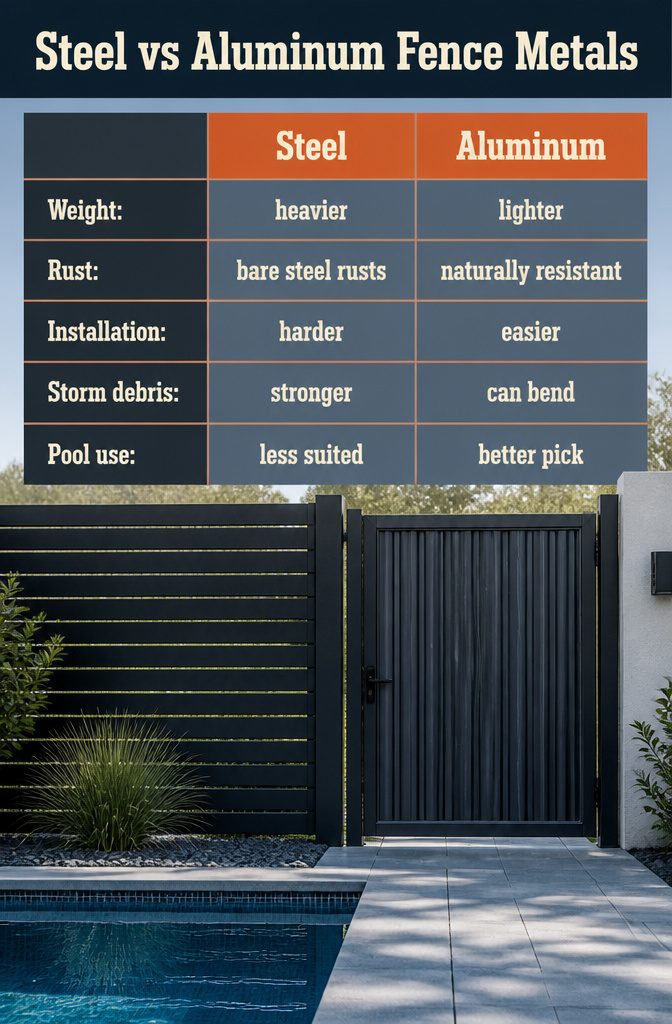
Steel is the stronger, heavier material, and it is harder to install. Bare steel rusts, so choose galvanized steel for any fence that will sit in rain or sprinklers.
Aluminum is naturally rust-resistant and lighter, which makes it the better pick near a pool, but it can bend if storm debris hits it. Powder-coated aluminum also comes in many colors.
Modern Yard uses each metal where it fits. Fixed infill, both the LINE horizontal slats and the vertical corrugated panels, is steel in Private Black, so the two styles match.
The LINE gate leaves are aluminum. Corrugated gates use aluminum frames with steel panels, which I read as a way to keep a swinging gate lighter than the fence it hangs from.
Privacy and Cost Compared
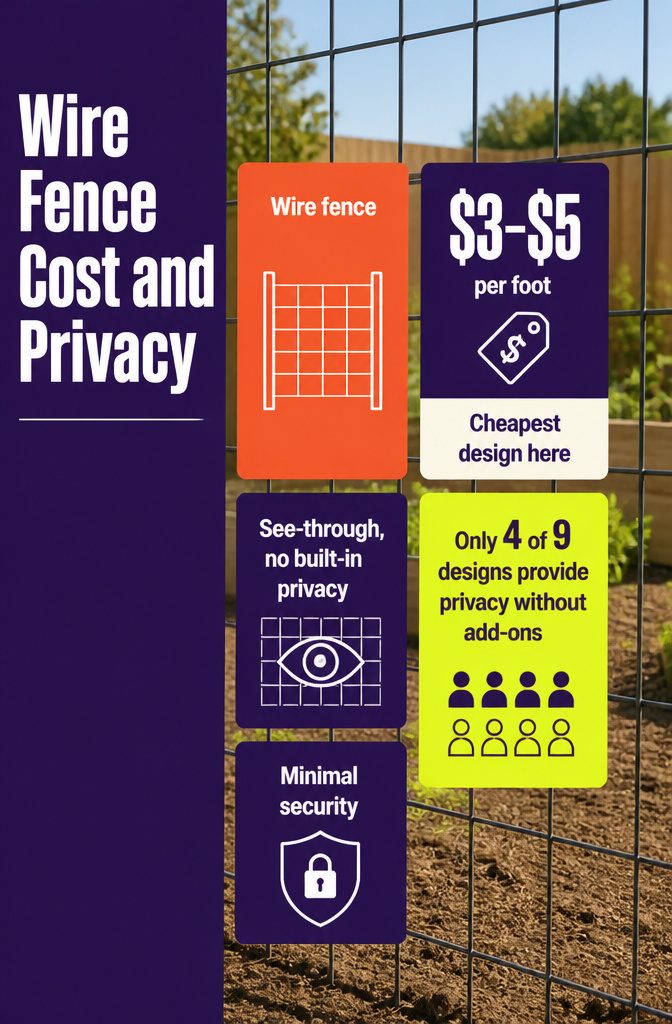
Wire fencing at $3–$5 a foot is the cheapest design here, and only 4 of the 9 designs give privacy without add-ons.
| Design | Cost per foot | Privacy | Trade-off |
|---|---|---|---|
| Wrought iron | Highest tier | See-through | Needs repainting |
| Aluminum picket | Mid | See-through | Lighter feel |
| Steel picket | Mid | See-through | Rusts if scratched |
| Chain-link | Low | See-through | Plain look |
| Wire | $3–$5 | See-through | Minimal security |
| Aluminum slat | Mid-high | Built in | Costs more than pickets |
| Corrugated | Low-mid | Built in | Industrial look |
| Privacy screens | Mid-high | Built in | Decorative, not secure |
| LINE steel slats | High | Built in | Premium price |
Choosing and Installing a Design
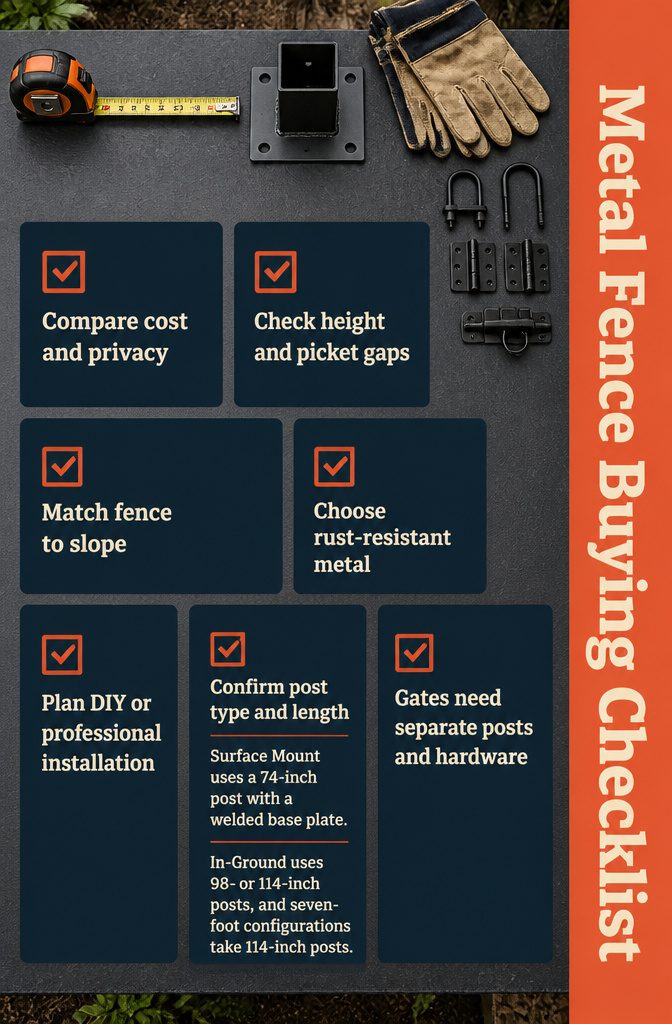
Weigh these before you buy:
- Cost and privacy: ornamental metal costs the most, but wire and chain-link are among the cheapest fences. Most metal is see-through, so privacy means slats, screens or a pricier built-in design.
- Security and durability: check height, picket gaps and climbability. Iron is strongest and aluminum weakest, yet aluminum still outlasts wood or vinyl.
- Landscaping: aluminum and chain-link follow a slope. Wet ground calls for rust-resistant metal.
- DIY: wire, chain-link, corrugated, aluminum slat and aluminum picket. Heavy or welded styles are a job for a pro.
- Repair: chain-link and wire patch easily. Other styles need whole panels replaced.
- Posts: Surface Mount uses a 74-inch post with a welded base plate. In-Ground uses 98- or 114-inch posts, and seven-foot configurations take 114-inch posts.
- Adjoining sections can share posts, but gates need their own posts and hardware.
Frequently Asked Questions
What finish do Modern Yard metal fences come in?
Private Black, a powder-coated finish, is used across the metal fence range. The fixed steel infill in both the LINE horizontal slats and the vertical corrugated panels comes in it, so the two styles match when installed side by side.
Can LINE and corrugated fences use the same spacing?
No.
LINE offers three layouts: full privacy, a half-inch gap between slats, or a nominal 1-inch gap. Corrugated panels interlock vertically into a closed screen, so there is no gap setting to choose and nothing shows through.
How does steel compare with aluminum for a metal fence?
Steel is stronger, heavier and harder to install, and bare steel rusts, so galvanized steel is the version to buy for rain or sprinkler exposure.
Aluminum is lighter and naturally rust-resistant, but it can bend or dent from storm debris. In this range the fixed fence infill is steel, LINE gate leaves are aluminum, and corrugated gates pair aluminum frames with steel panels.
What comes in the LINE and corrugated infill packs?
A LINE slat pack holds 2 steel slats and 4 PVC end caps. A corrugated pack holds 3 steel panels and 3 aluminum aligners.









