Pick by what the fence has to hold back. Hog wire in a wood frame holds large or pushy animals, while chicken wire, split-rail or a low redwood fence at 3–4 feet tall handles lighter jobs.
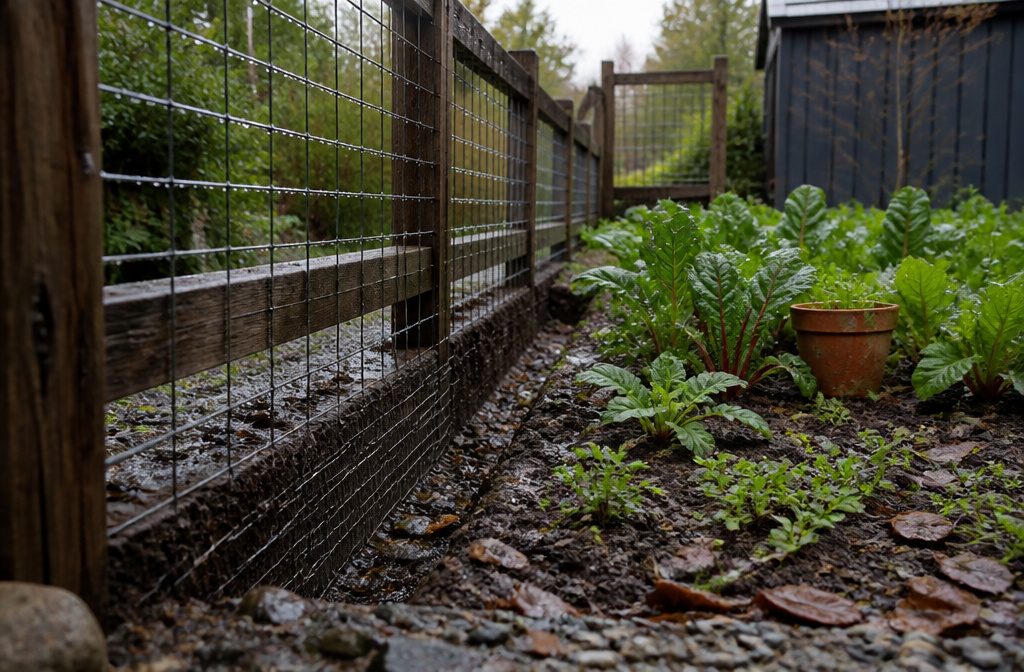
For any style that protects animals or a garden, bury the mesh a foot or two underground so critters can’t dig in.
1. Traditional Wood and Wire Fence
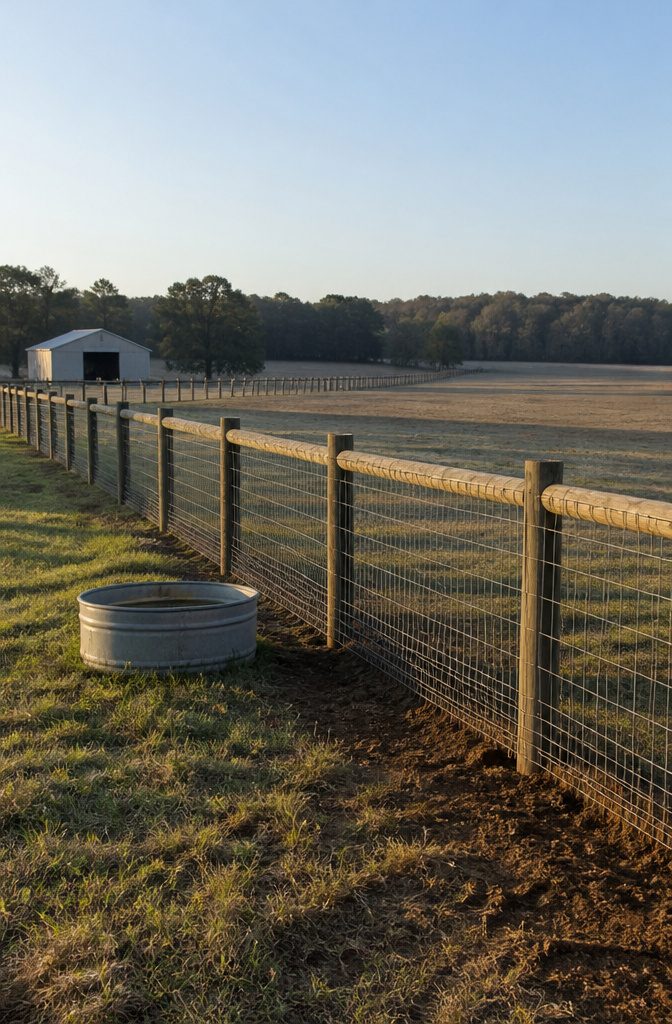
Hog wire, also called box wire, started on farms, where wood posts and rails held galvanized steel mesh strong enough to keep in hogs and other livestock.
Chicken wire belongs to the same style but uses weaker wire, so match the mesh to the animal. I’d pick hog wire for anything large or pushy and save chicken wire for light jobs.
For any fence that holds animals, bury the mesh a foot or two underground. That stops diggers, and keeps predators from tunneling in.
Steel mesh in a wood frame is also tough: it lets wind pass through instead of catching it like a solid panel, and it takes the occasional lawnmower bump without bending out of shape.
Recommended Products

𝐑𝐞𝐮𝐬𝐚𝐛𝐥𝐞 𝐅𝐞𝐧𝐜𝐞 𝐍𝐚𝐢𝐥: Fence staples for wire fencing are made of 304 stainless steel material, anti-rust and anti-corrosion, easy to install or remove with a power drill, allow repositioning.

Package includes 200 pcs steel Fencing Staples to meet your daily needs. Wire: approx. Ø 2.3 mm / length: 25 mm / width: 14 mm

Better Protect Your Farm, Ranch & Home: Our wire fence clips great for attaching wire fencing to vinyl, wood, metal or other fence posts; Get a tight hog wire fence to protect your farm and home... NOTE: If you want to order Screws for those clamps, please search B09Y8Z4BRN at Amazon
2. Modern Wood and Wire Fence
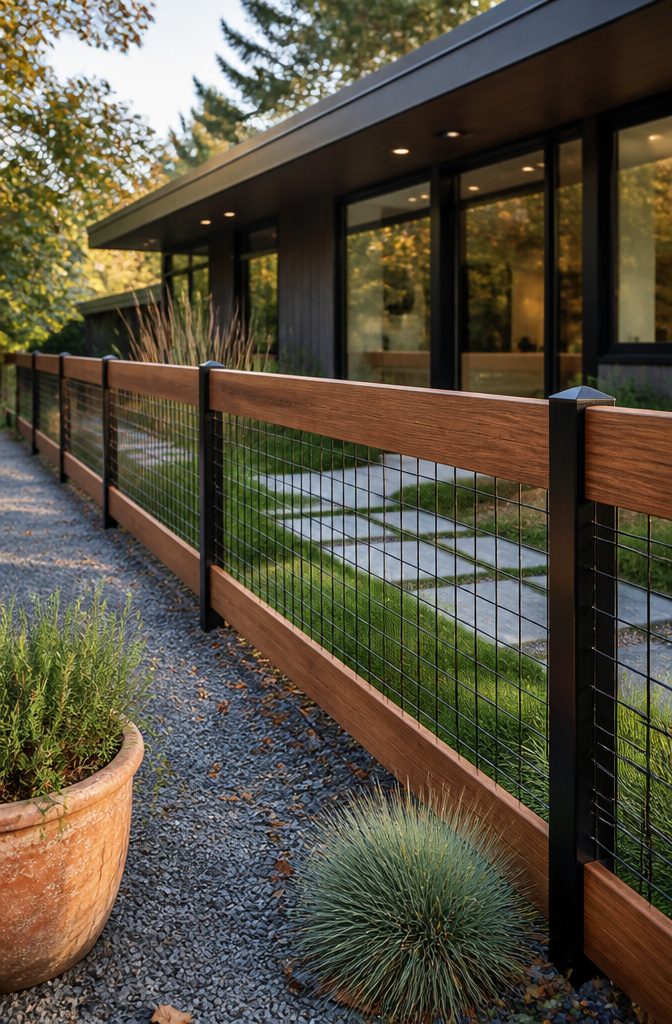
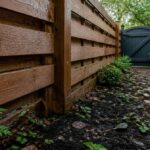
Modern wood and wire fences stay low, at 3–4 feet tall against about 6 feet for a traditional wood fence. That height defines a front yard without walling off the house, and it works just as well around a back lawn.
My pick is black steel posts, black powder-coated wire mesh and redwood slats. The dark metal fades back, so the warm wood becomes the feature.
Run the slats horizontally, since that reads more modern than vertical boards. Stone posts are another way to mix materials if you want a heavier look.
The combination fits a clean-lined modern house, and the wire nods to farm roots, so it suits a farmhouse too.
Homes caught between the two styles take it easily. The materials are simple enough for a DIY build.
Recommended Products

Premium Material: wire staples are made of high-quality carbon steel with a galvanized surface, making it resistant to oxidation and rust, breakage, and deformation, enhancing durability and maintaining high performance even in harsh environments.
Premium Material: wire staples are made of high-quality carbon steel with a galvanized surface, making it resistant to oxidation and rust, breakage, and deformation, enhancing durability and maintaining high performance even in harsh environments.

High-Quality Anti-Rust Process This hardware cloth is made from high-strength low-carbon steel wire, combining excellent strength with flexibility. After precision welding, the entire product undergoes a premium anti-rust treatment—hot-dip galvanization—with special reinforcement at all seams and corrosion-prone areas to ensure uniform, dense coating and outstanding rust resistance. This process grants the product superior weather resistance, making it an ideal choice for wire mesh fencing and long-term outdoor applications.
3. Rustic Wood and Wire Fence
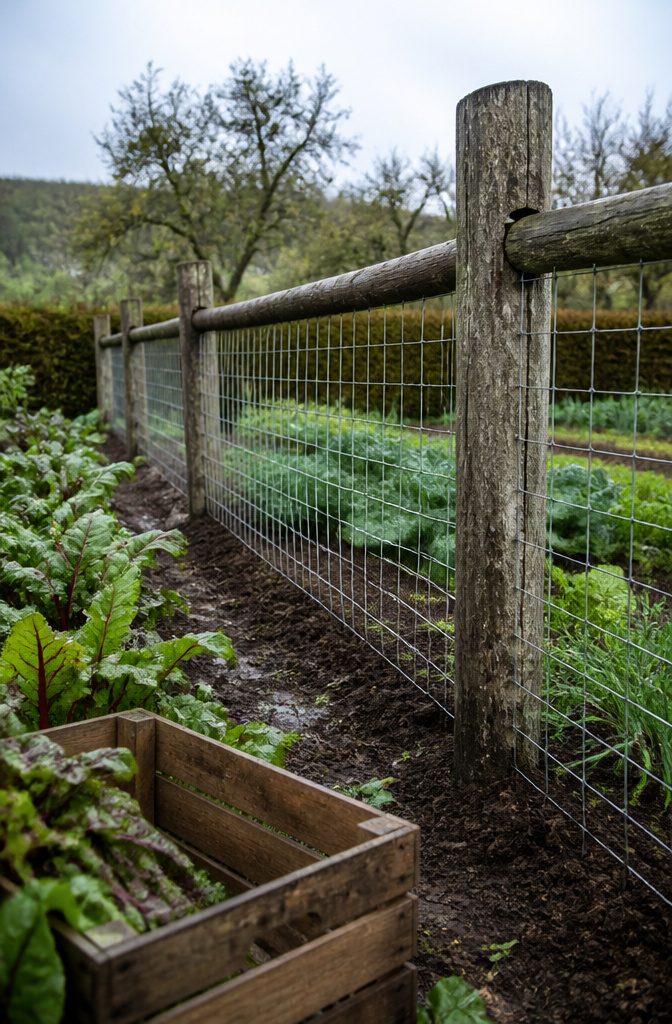
A rustic wood and wire fence keeps a dog in while leaving the view open, which a solid wood fence can’t do.
If the fence only has to contain pets, not give privacy or security, I’d choose it over solid boards.
In a garden, bury the mesh a foot or two underground so critters can’t dig under and get at your produce.
Split-rail is the classic base: two-rail or three-rail sections with wire along the inside and an occasional vertical post to hold the mesh upright.
Pallet wood slats are the cheaper option and still read as rustic. Either style works as a DIY project, or you can hire a pro if digging post holes isn’t how you want to spend a weekend.
Recommended Products

【High quality 】: Hardware cloth generally uses cold plating and hot plating process of galvanizing process, cold plating galvanizing process is easy to rust after a long time, while we use hot plating galvanizing process, can achieve a long time in the outdoor use is not easy to rust.You can use our Galvanized Wire Mesh Roll with confidence

【High quality 】: Hardware cloth generally uses cold plating and hot plating process of galvanizing process, cold plating galvanizing process is easy to rust after a long time, while we use hot plating galvanizing process, can achieve a long time in the outdoor use is not easy to rust.You can use our Galvanized Wire Mesh Roll with confidence

High quality raw materials: Mycovire’s hardware cloth chooses the strength, toughness and ductility of low carbon steel wire as the inner core. This determines the basis of the high quality of our products.
4. Decorative Wood and Wire Fence
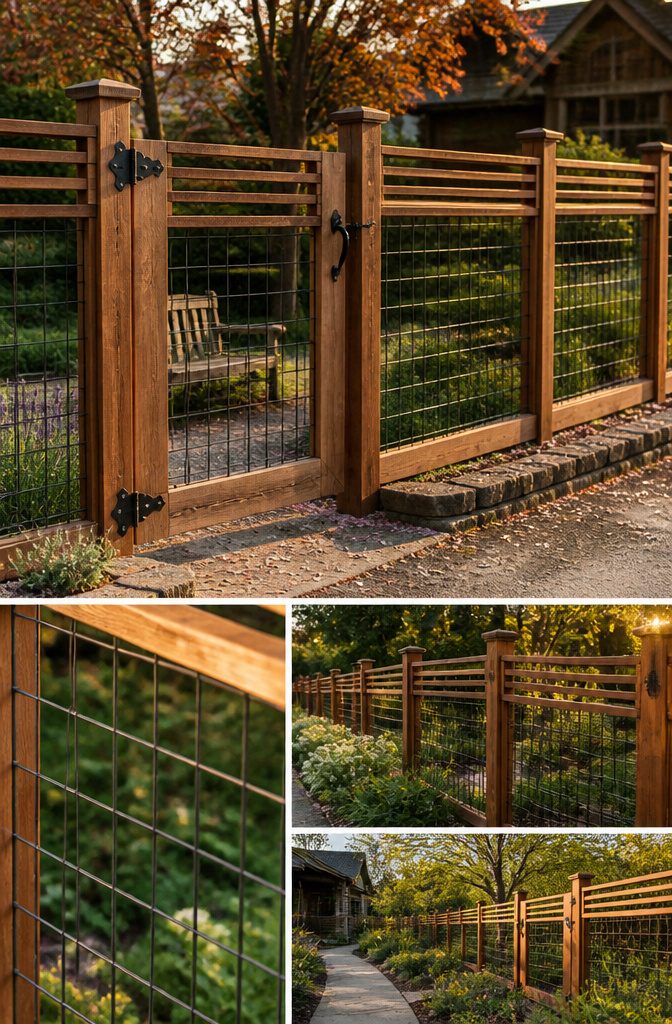
Box wire is the style I’d start with for a decorative wood and wire fence. It works like a picture frame fence, except welded wire fills the center of the wood frame instead of more boards.
The simplest way to dress it up is at the top: a row of narrow, evenly spaced horizontal slats looks more finished than a single wide board.
On the gate, swap in decorative hinges, a handle and a latch, and cap the posts. Home Depot and Lowe’s carry many designs, materials and colors.
Stain or paint the wood to match your house, or pick a bold color. For a less expected look, alternate wood sections with metal ones.
Slat Spacing for Privacy
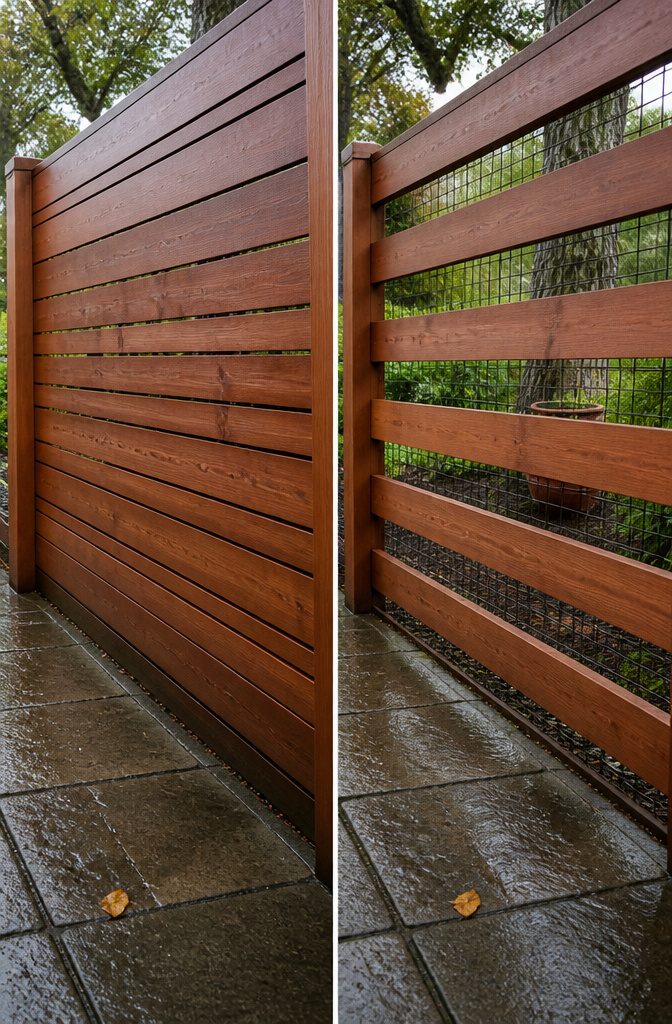
Slat spacing sets how much of your yard the neighbors see. On horizontal planks backed by wire mesh, closer spacing gives more privacy and wider gaps give a better view.
Tight slats suit the side facing a street, and wider ones suit a side that looks onto a garden. Vertical slats follow the same rule, and they read as more traditional, while horizontal runs look more modern.
Wood does the privacy work because it blocks sightlines and cuts noise.
Hog wire panels keep a fence light and open while still giving security. I would put solid wood along the patio or seating area and use hog wire where you want air and a view.
Recommended Products

[Multipurpose Use] - These Terrarium accessories are suitable for a variety of magical miniature scenes, such as dollhouses, shadow box scenes, miniature landscapes, succulents, and more. They can also be used as garden, lawn, patio, and holiday decorations.

DIMENSION: 12" (L) x 24" (H) x 10 panels, white metal fence features a unique butterfly arch design that adds a one-of-a-kind decorative touch while serving as a durable garden and animal barrier. Pick the right size for your garden to prevent unpleasant experience and potential wastage on resources.

[Multipurpose Use] - These fairy garden accessories are suitable for a variety of magical miniature scenes, such as dollhouses, shadow box scenes, miniature landscapes, succulents, and more. They can also be used as garden, lawn, patio, and holiday decorations.
Sealing Wood, Rinsing Wire
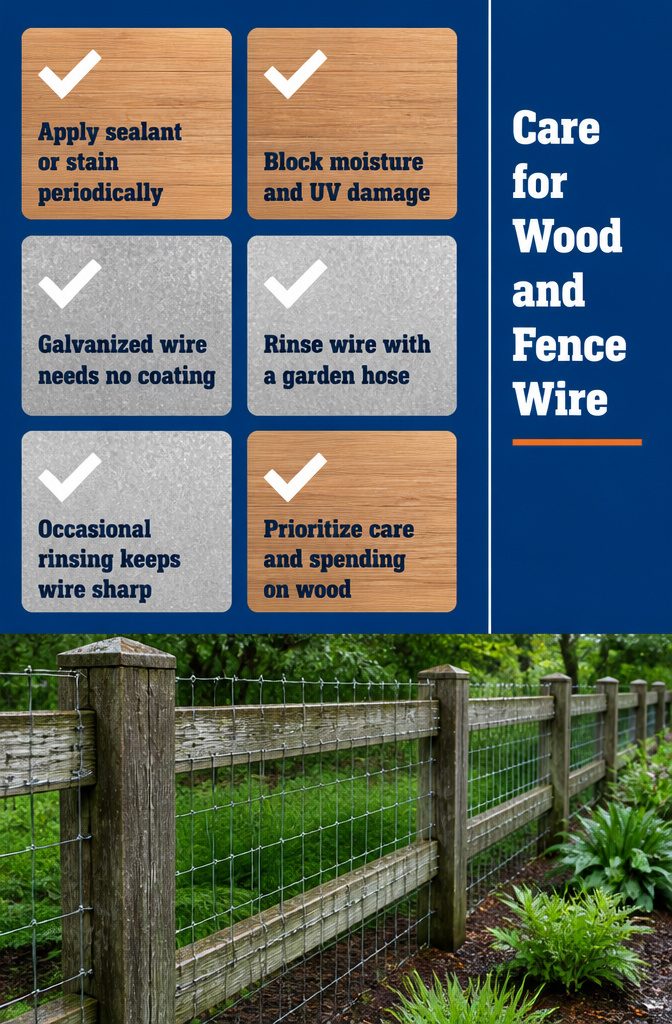
Wood and wire need different care, and only the wood asks for much.
- Treat the wood with a sealant or stain every now and then. It blocks moisture and UV damage, the two things that wear down exposed boards and posts.
- Galvanized and dip-coated wire won’t rust in rain, snow or sun, so it needs no coating of its own.
- Rinse the wire with a garden hose occasionally to keep it looking sharp.
- Put your time and money into the wood. The metal will mostly look after itself.
Recommended Products

[𝗛𝗔𝗠𝗠𝗘𝗥-𝗙𝗥𝗘𝗘 𝗜𝗡𝗦𝗧𝗔𝗟𝗟𝗔𝗧𝗜𝗢𝗡]► Easily install or remove the fence post screws with a power drill, no pre-drilling required, you can finish your fence work quickly and they will last a long time on the stakes. The perfect combination of iron parts and screws. 𝙏𝙝𝙧𝙤𝙬 𝙖𝙬𝙖𝙮 𝙩𝙝𝙚 𝙤𝙡𝙙 𝙣𝙖𝙞𝙡𝙨, 𝙪𝙨𝙚 𝙞𝙩!

Get A Tight Hog Wire Fence: Great for attaching wire fencing to vinyl, wood or metal fence posts, Better to protect your pets, dogs, chickens, livestock or other farm animals

Trustworthy Material: the fence clips are made of high quality stainless steel with good polishing and no pointed corners, have good rust resistance and oxidation resistance, you don't have to worry about rusting and breaking; The screws Also use high-quality stainless steel materials with pointed ends for convenient use. Protect your garden with our durable outdoor fence wire mounting clip.
Frequently Asked Questions
Recommended Products

[CUTTABLE, SPLICEABLE] Chicken wire mesh measures 16.9 inches x 32.8 feet, which is suitable for large areas. Galvanized chicken wire is soft and flexible but stronge. It is bendable and easy to cut. You can also join mesh together if the height is not enough. Chicken wire fencing is double hot-dip galvanized for maximum rust protection and longer life. Designed with double twist hexagonal, chicken fence is more durable and less likely to break

Premium Material: wire staples are made of high-quality carbon steel with a galvanized surface, making it resistant to oxidation and rust, breakage, and deformation, enhancing durability and maintaining high performance even in harsh environments.
What is a wood fence with wire mesh?
It is a fence with wood posts and rails, often redwood or cedar, that holds a panel of metal mesh.
It began on farms to contain hogs and other livestock, which is why it is also called hog wire or box wire fencing. Homeowners in both rural and urban areas now use it for its look and durability.
How deep should the wire mesh be buried?
Bury it 1–2 feet underground. Burying the mesh stops dogs, predators and other critters from digging under the fence, which matters most around animals and vegetable gardens.
Should I use hog wire or chicken wire?
Use hog wire for large or pushy animals, since it is galvanized steel strong enough to hold hogs and other livestock.
Chicken wire uses a weaker wire and suits light jobs. Choose the mesh based on what the fence has to hold.
How tall should a modern wood and wire fence be?
Plan on 3–4 feet. A traditional wood fence runs about 6 feet, so this lower height marks off a front yard or back lawn without closing off the house.
How much privacy does a wood and wire fence give?
That depends on the wood slats, because the wire itself is open.
Slats set close together give more privacy, and wider gaps give a better view. Many people put tight slats on the street side or around a patio and leave the wire open where they want air and a view.
Is a wood and wire fence a good choice for dogs?
Yes, if you only need to contain pets.
It keeps a dog in while leaving the view open, which a solid wood fence cannot do. It offers little privacy or security, so pick solid boards if you need either.
How do I maintain a wood fence with wire mesh?
Most of the upkeep goes to the wood.
Apply a sealant or stain from time to time to protect it from moisture and UV damage. Galvanized and dip-coated wire resists rust and needs no coating, so an occasional rinse with a garden hose is enough.
Can I build a wood and wire fence myself?
Yes, these fences are simpler to build than many other types and work as DIY projects. Pallet wood slats are a cheaper route.
If digging post holes does not appeal, a professional fence company can build it. Either way the fence is considered cost-effective, and a budget-friendly alternative to picket or chain link.