
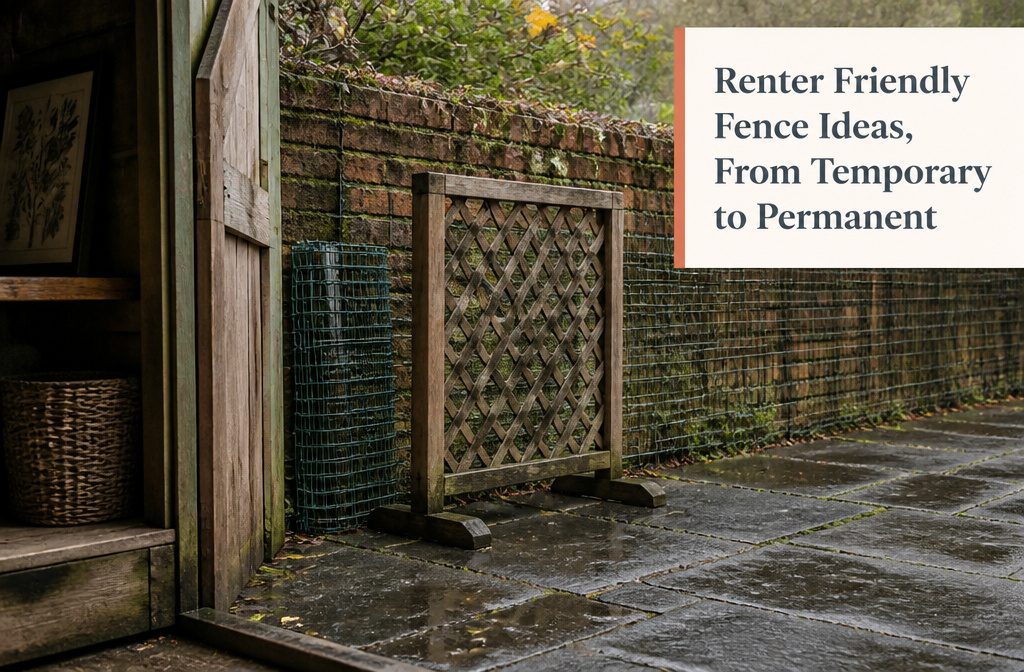
Prices run from garden netting at $0.50–$2 per linear foot to brick and stone, and what sorts them for a renter is whether the fence can leave with you at move-out.
A permanent fence needs your landlord’s permission first, and local rules may add a permit. A freestanding screen is a separate request.
1. Bamboo and Reed Screens
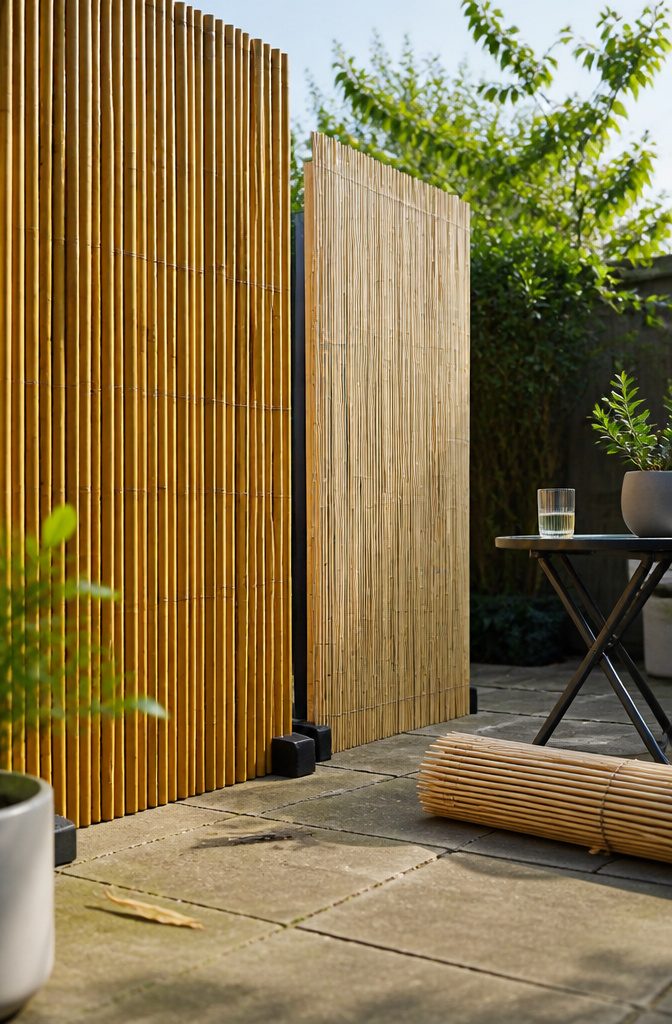
Bamboo gives full privacy and looks good from both sides, which matters when your neighbors see the back of whatever you put up.
It is one of the easiest fence types to install and can last as long as 20 years. If the canes start to split or crack, a coat of sealant helps protect them.
Reed is the thinner, usually cheaper relative. It goes up just as easily, has a lighter look, and at move-out you roll the panel up and take it with you.
On a tight budget, reed is my pick. For a screen you plan to keep, bamboo lasts longer, up to 20 years, and the extra cost is easier to justify if you expect to stay put.
Recommended Products

【Natural Reed Fencing Rolls】ZNCMRR natural fencing replaces traditional faux leaf fencing that uses plastic. Made with natural carbonized reed to double the strength and safety of plastic ones, making it a great choice for anyone looking for a less-waste life.

100% Natural Reed-No Chemical smell, Our reed fence roll are made of natural reed,Woven together with sturdy cotton threads, bamboo type fencing
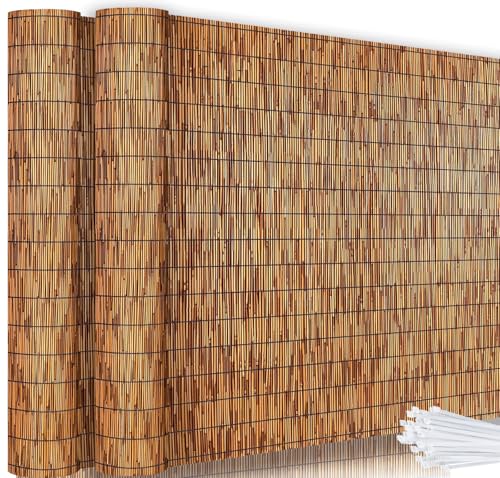
Natural Reed: The bamboo curtains for patio outdoor uses strictly selected natural wild reeds as weaving materials, which are fine and uniform, tough and straight, and have a delicate and smooth feel. The bamboo privacy fence is made using original hand-woven methods. The workmanship is fine and unique, creating a classical work of art. The faint scent of grass fills the surroundings, creating a simple and elegant atmosphere.
2. Outdoor Curtains
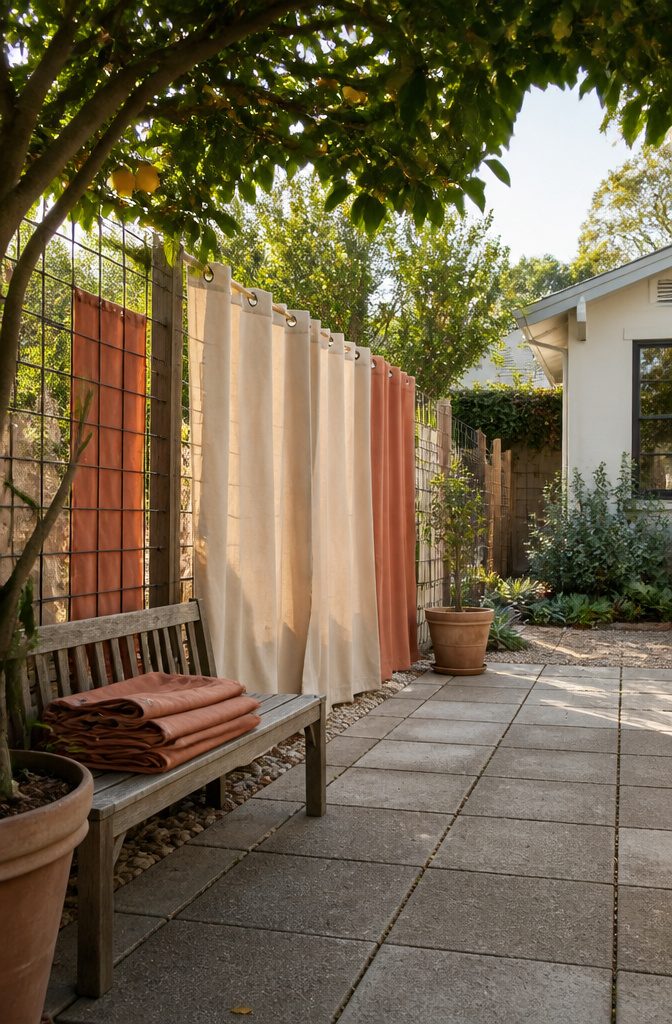
Fabric is the easiest privacy layer to remove without leaving a mark. Hang curtains from rods for a finished look, or skip hardware entirely and drape panels over a see-through fence like chain-link.
On fences with large panel openings, you can weave the fabric through the gaps. Either way, the whole screen comes down in minutes at move-out.
Weather is the limit.
Sun fades fabric and rain leaves it damp enough to mildew, so curtains suit warmer climates best. Choose outdoor-rated fabric over indoor curtains, take panels down before storms, and dry them fully before storing.
3. Hedge Panels and Tall Plants
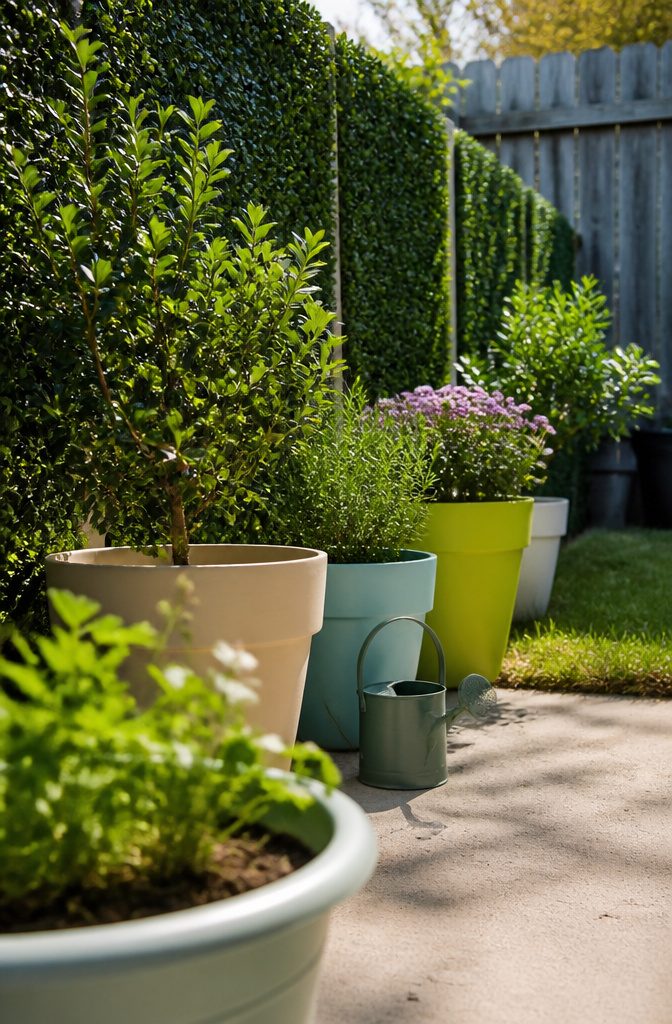
Artificial hedge panels give a rental yard the look of a clipped boxwood wall without planting anything.
Nolruo Artificial Hedge Boxwood Panels and NETAP Artificial Grass Wall Panels both stay green year-round and need no trimming, which no real hedge can match.
They also work indoors, so they aren’t wasted if you move to a place without a yard.
Tall potted plants add height and softness in front of or beside the panels.
Real ones should have dense foliage and tolerate container life, and a flowering type will draw butterflies. Artificial plants build the same barrier with no green thumb required.
Light or brightly colored pots keep the row from looking drab. For a rental, I’d pick pots over in-ground planting, since potted plants move with you.
4. Outdoor Movie Screens
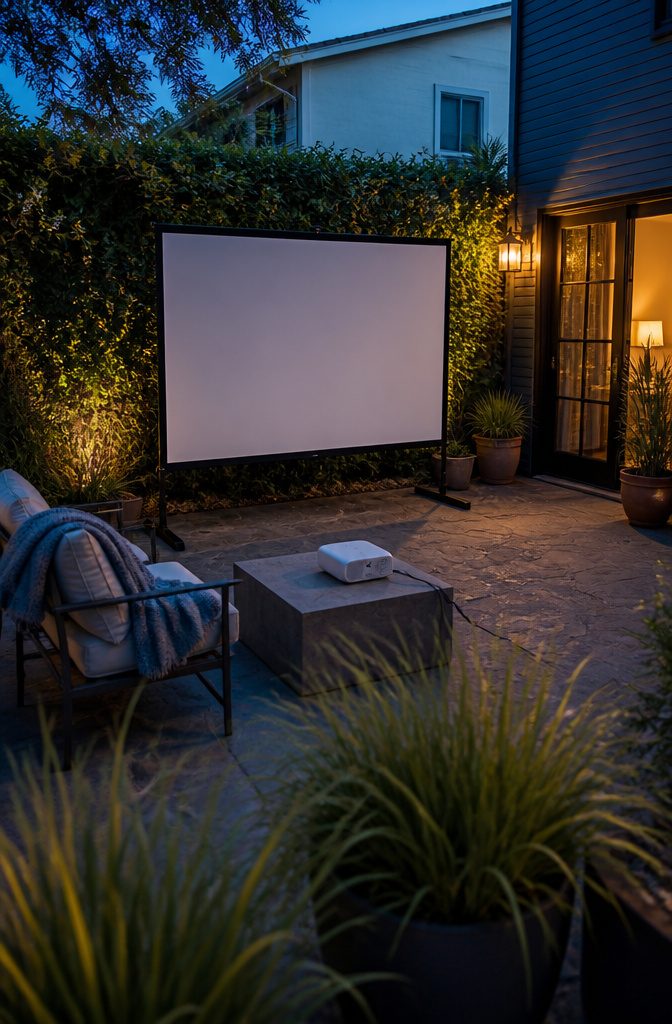
A movie screen set up in the right spot on the patio or yard can block the view from a neighbor’s window and give you a backyard theater on weekends.
The SKERELL Outdoor Projector Screen, sold on Amazon, is one example. It’s portable, so you can shift it around the yard as needed and bring it along when you move.
Privacy is where I’d rank it low. A screen only blocks the sightline it stands in front of, so it covers one angle rather than a property line, and it does nothing for noise.
Choose it if movie nights matter and the problem is a single window or one seat on the deck. For a full boundary, a sturdier option elsewhere in this list will do the job better.
5. Room Dividers
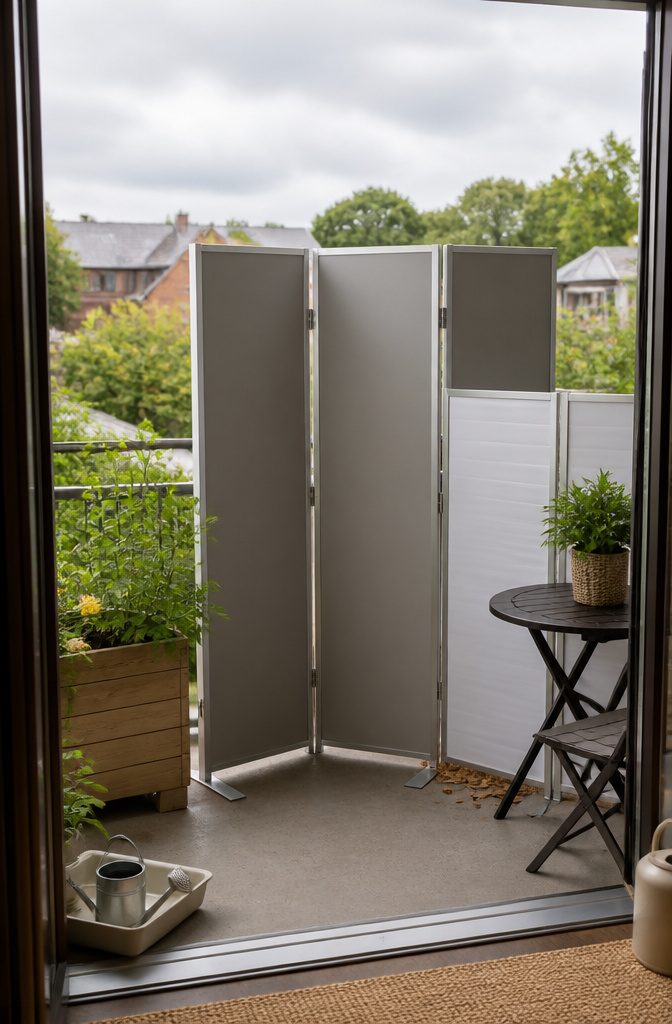
An indoor folding screen can stand on a patio or balcony with no posts, brackets or drilled holes, which is the main reason a divider suits a rental.
Nothing attaches to the building or the ground, so there is nothing to patch at move-out, and the screen goes with you to the next place.
Material decides how long it lasts outside. Aluminum and vinyl handle rain and sun best, and I’d pick either over wood for a spot that stays exposed.
A wooden divider can still work if you clean it and treat it with waterproof stain or sealant, following the manufacturer’s instructions.
Expect to repeat that care as the finish wears, because untreated wood is what gives out first in weather.
6. Crates and Pallets
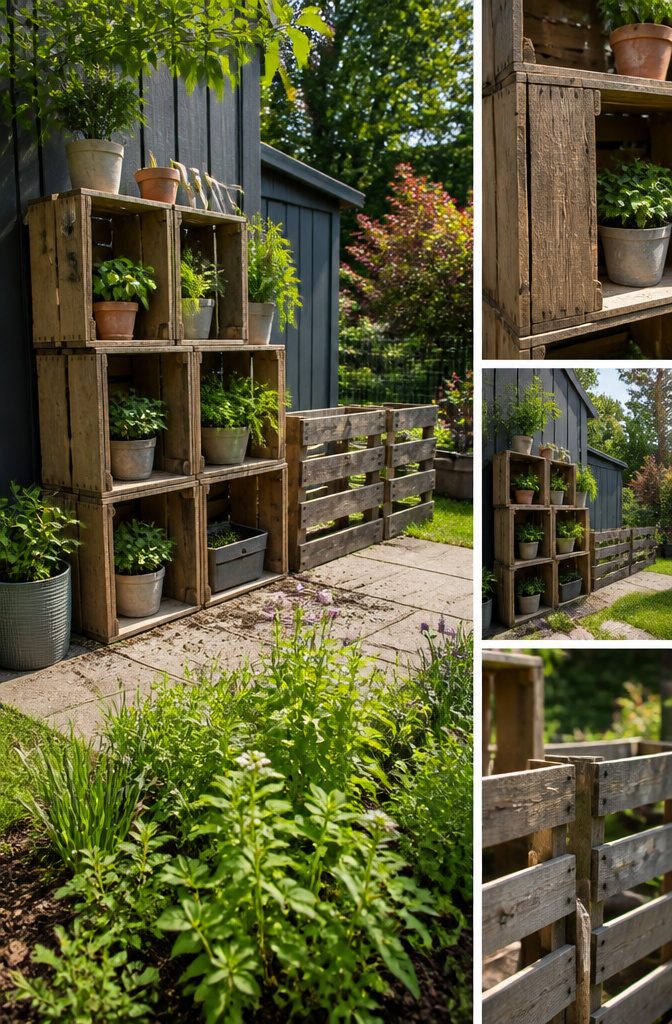
Stacked wooden crates make a freestanding screen that doubles as storage. Fasten them together with screws or wood glue, then use the openings for potted plants or garden tools.
Nothing is anchored into the ground, and the stack comes apart at move-out, so the crates either come with you or go to recycling. Old wine crates work well, and new ones are cheap at stores like Walmart.
Pallets cost even less: free to $2 per pallet, depending on what’s available near you.
They stack easily and can be customized with paint or stain. I’d use them as a boundary marker or a backdrop for planters, since pallets are not as secure as other fence types and shouldn’t be trusted where security matters.
7. Plastic Lattice Trellis
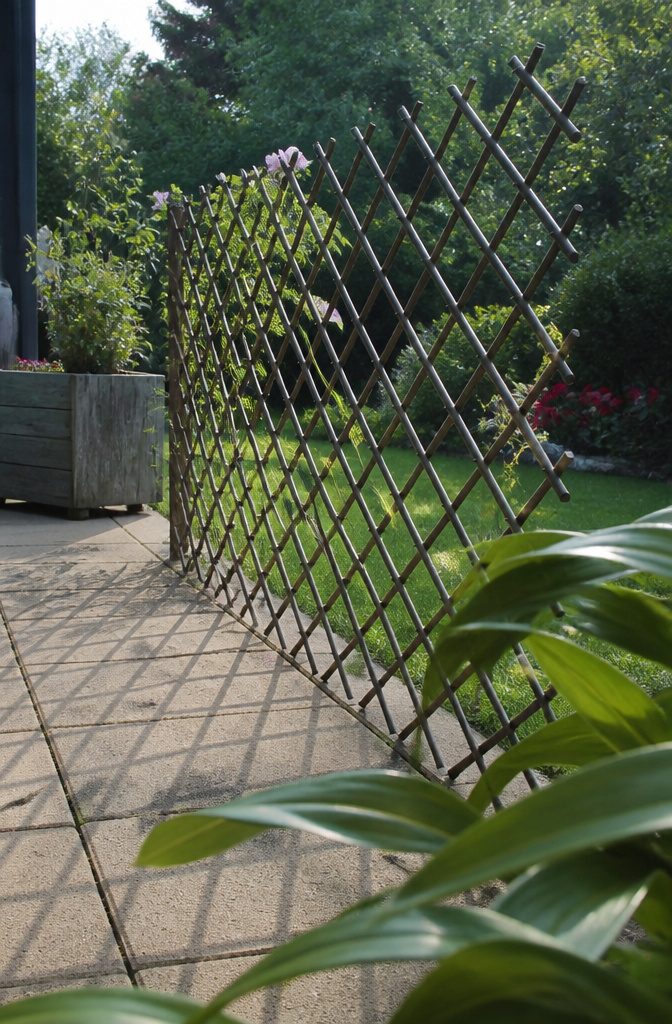
An expandable trellis suits a rental because nothing gets dug, drilled or set in concrete.
The MyGift Solid Wood Expandable Plant Trellis for Climbing Plants stretches to over 50 inches in length, weighs little, and adjusts by hand without tools, so it comes down and goes with you at move-out.
It is wood rather than plastic, but it has the same open grid as plastic lattice and supports blooming climbers the same way.
Privacy is the limit: the open gaps let people see straight through. Climbing plants fill them in as they grow, but a bare trellis is a decorative border, not a screen.
I’d use it to mark a patio edge or give vines a place to climb, and choose a solid panel where neighbors look directly in.
8. Metal and Aluminum Screens
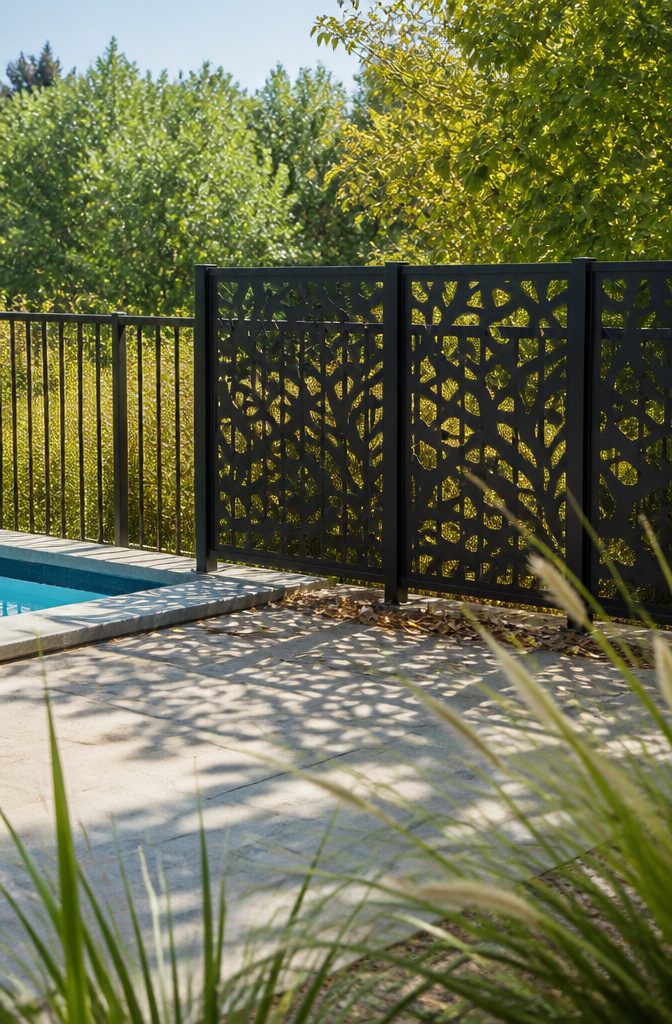
Decorative metal panels are the better pick for a rental. They handle moisture and temperature swings well, so extreme weather is no problem, and cut-outs shaped like leaves, flowers or lines give them a decorative look.
They go up easily as a fence or as a divider around a patio, a pool or indoors.
Aluminum fencing is a separate product: lightweight, easy to clean and elegant, at a price close to vinyl.
It offers little privacy or safety, and it bends and dents easily, so repairs can erase the savings. I’d use it for looks along a border, not to keep a dog in.
9. Chain-Link at $7–$12 a Foot
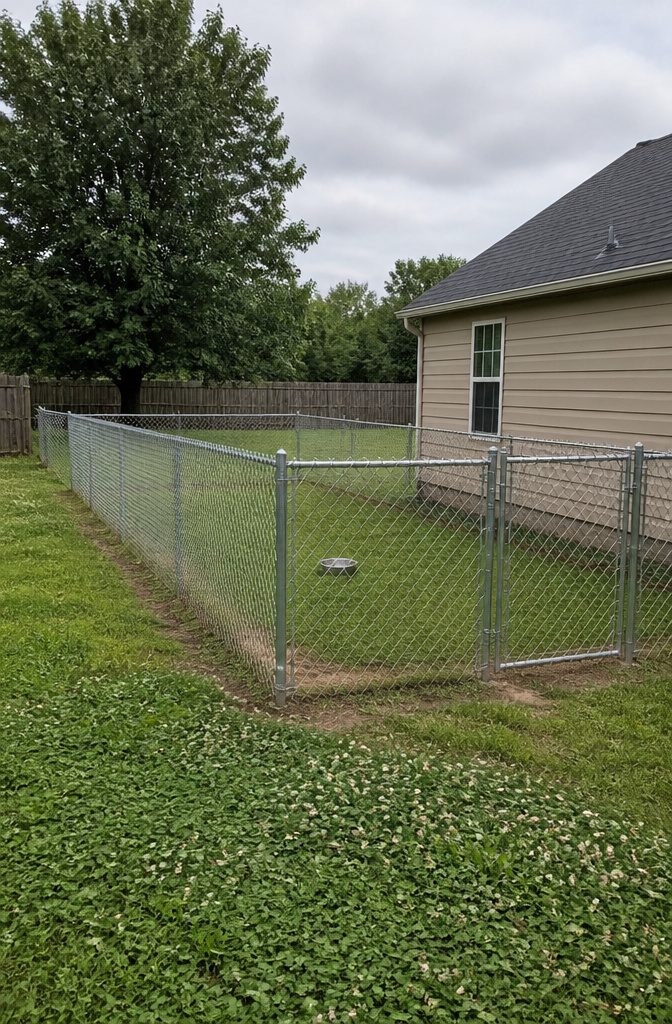
Chain-link runs $7–$12 per linear foot, which makes it one of the cheapest ways to enclose a large yard or a dog run.
It goes up quickly and comes in several heights and gauges, so you can match the fence to the size of the space and the animal.
Buy galvanized steel. Bare wire rusts at the thin links and their junctions, and a vinyl coating slows that down, though most owners end up replacing worn fence rather than repairing it.
Privacy is where it falls short.
You can see straight through chain-link, and it isn’t very sturdy, so I’d skip it if screening is the goal. For pets and big open ground, the price is hard to beat.
10. Wire Mesh and Garden Netting
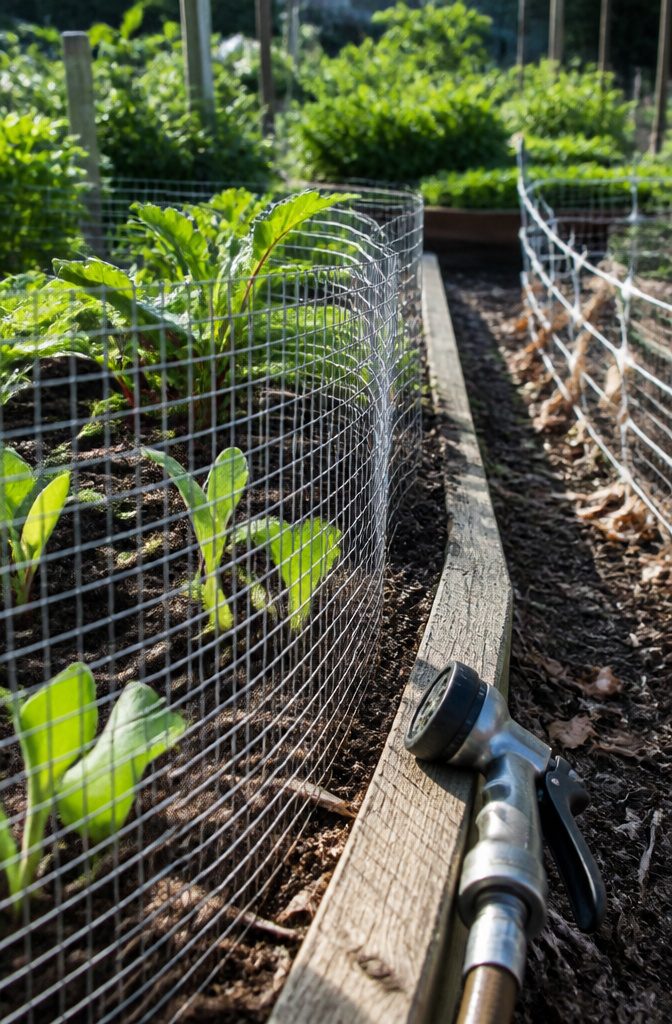
Wire mesh, often sold as chicken wire, costs $5–$8 per linear foot. It’s light enough to handle alone, bends around beds and corners, and comes in several sizes.
It keeps small animals out of a garden and protects plants from pests, but it won’t hold up for years, so treat it as a short-term barrier.
Garden netting runs $0.50–$2 per linear foot, which makes it the cheaper way to mark off a space.
It outlines a bed and shields plants, yet it gives no privacy and no security. I’d choose netting to define an area and spend the extra on mesh only when something specific needs to stay out.
11. Vinyl Fencing
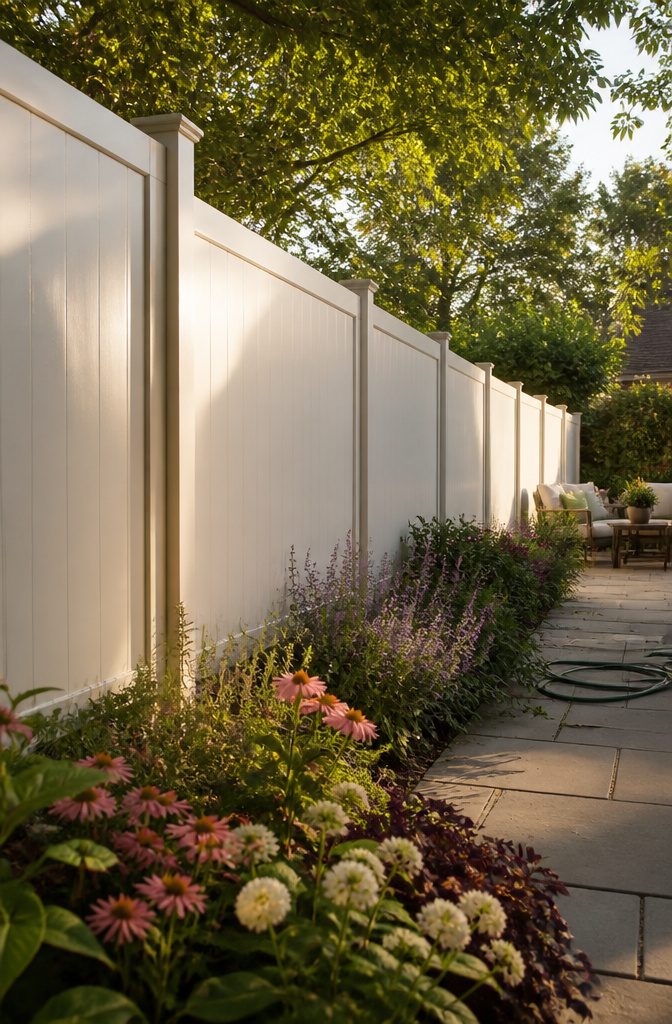
Vinyl (also called PVC) panels are lightweight and snap together, so they are among the easier fences for a renter to put up and take down without leaving permanent marks.
Expect to pay $10–$15 per linear foot, slightly more than wood. The material does not rot, splinter, crack or warp, and upkeep is mostly about discoloration, which a fresh coat of paint fixes.
Cold is the weak spot. Vinyl turns brittle in low temperatures and can collapse under harsh weather or a hard impact.
I would skip it where winters are severe and choose it for milder climates, where a stray ball or a storm is the worst it will face.
12. Wood Fencing
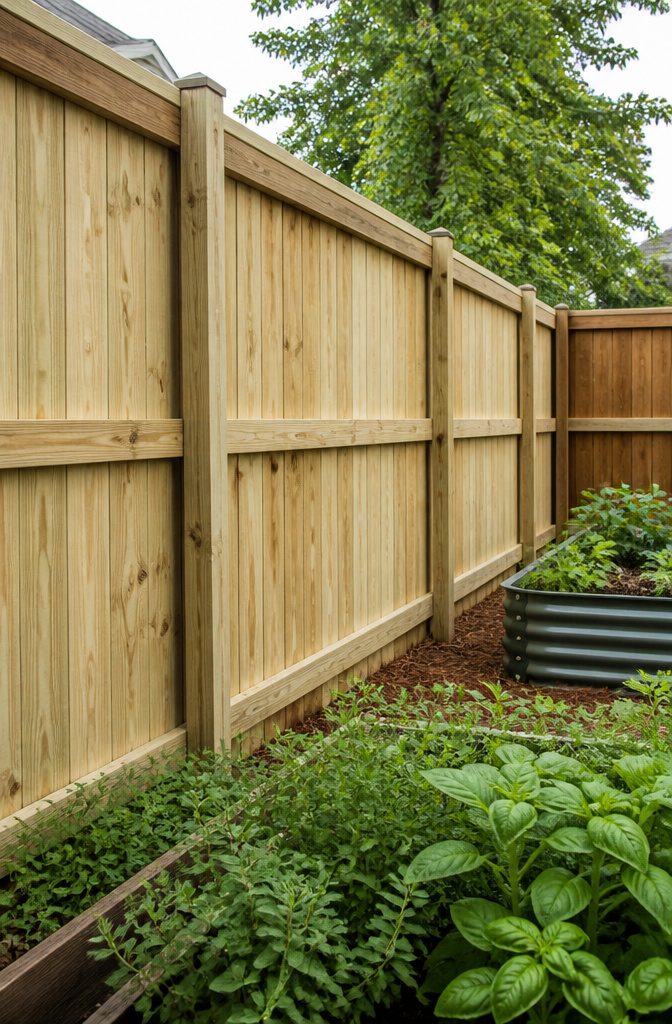
Pine and cedar are the two most common fencing woods, and both are rather inexpensive up front. Different cuts, grains, stains and paint let you match the fence to your house and garden.
The cost shows up later. Weather, vegetation and pests such as termites damage wood, and very wet or very hot, dry climates make it crack, warp and splinter.
It needs regular sealant, stain or preservative coating, which is money a renter spends on a fence they don’t own.
Pressure-treated wood costs more but comes preserved, usually with a warranty, so I’d pick it over untreated pine for anything meant to last. Keep plants off the boards to limit moisture.
13. Wrought Iron, Brick and Stone
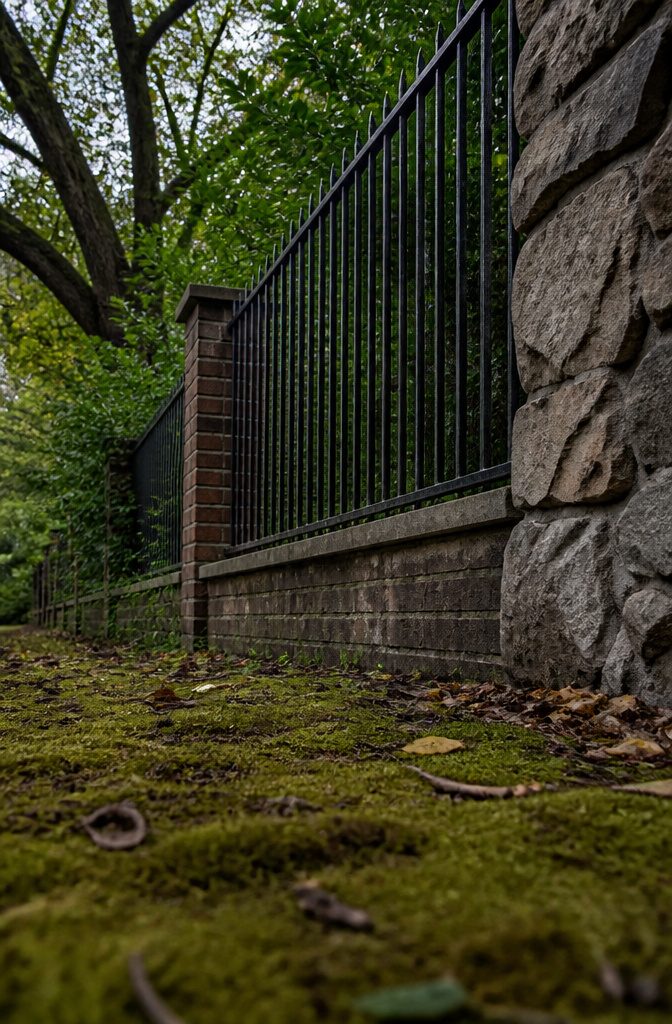
Wrought iron is strong, secure and needs little upkeep, but it is usually the most expensive fencing option, and heavy-duty iron is a job for a professional.
In wet climates it rusts where the metal wears down, so fix chips and scratches as soon as they appear.
Brick and stone shrug off weather and everyday wear. They also cost a lot, take a long, labor-heavy build, and are hard to change once finished.
I’d skip both. These are long-term commitments a renter should leave alone, since neither can come with you when the lease ends.
Match the Fence to the Job
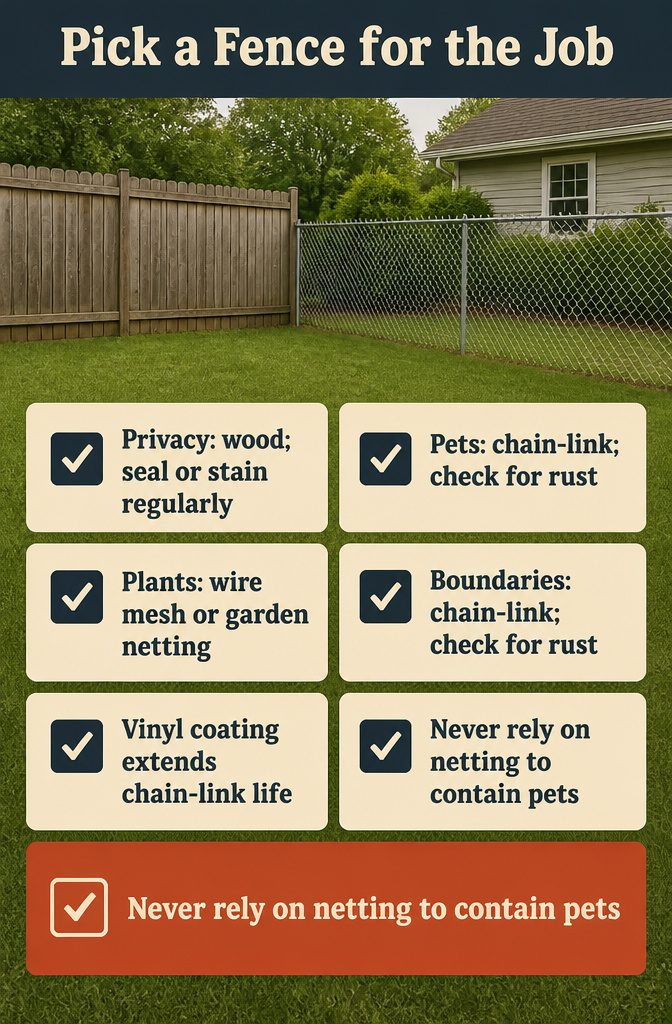
Pets settle the choice fastest. Chain-Link holds a dog in a large pen, while garden netting is too flimsy for the job.
Privacy pulls the other way: chain-link gives almost none, and wood gives more but needs regular sealing or staining. For a rental, keep netting for plants and never rely on it to contain a pet.
| Job | Best fit | Upkeep |
|---|---|---|
| Privacy | Wood Fencing | Regular sealing or staining |
| Pets | Chain-Link | Rust; vinyl coating extends life |
| Plant protection | Wire Mesh and Garden Netting | n/a |
| Boundary marking | Chain-Link | Rust; vinyl coating extends life |
Landlord Permission and Local Rules
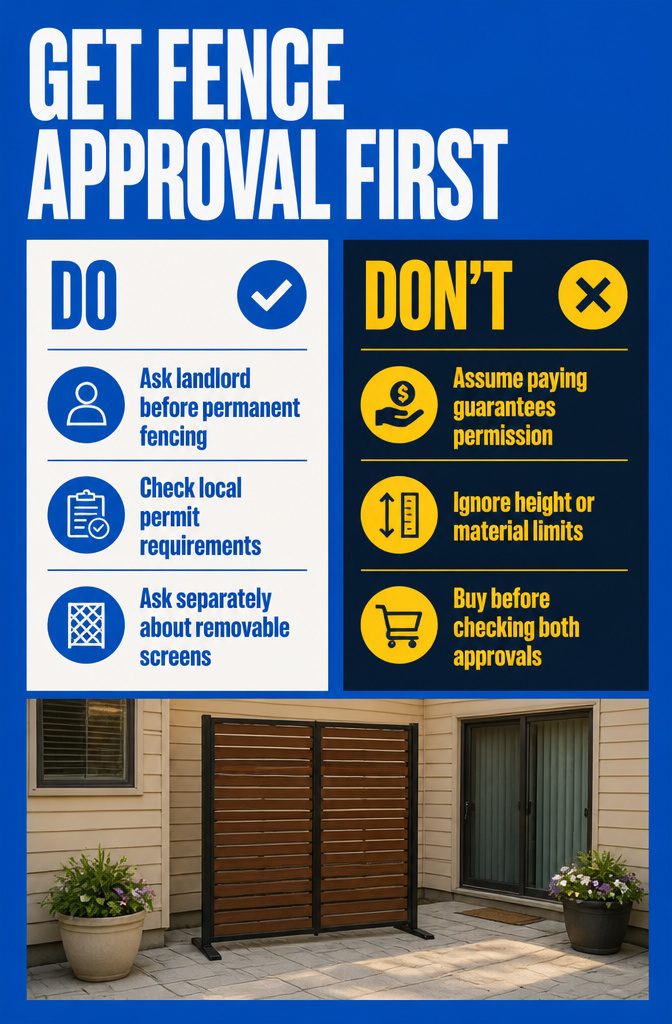
A permanent fence is the landlord’s decision, and local rules add a second layer of approval. Sort out both before you spend anything.
- A renter who wants a permanent fence needs the landlord’s permission first.
- The landlord can say no, even if you offer to pay for the fence and leave it behind.
- Local regulations may require a permit before any fence goes up.
- Those rules can also limit height and materials, so a design you like may not be allowed on your lot.
- Ask about removable options separately. A refusal on posts set in the ground doesn’t always cover a freestanding screen.
Frequently Asked Questions
What are some good temporary fence ideas for renters?
Bamboo or reed screens, outdoor curtains, folding room dividers, and snap-together vinyl panels all go up and come down without leaving permanent marks.
Garden netting and wood pallets cost less and work as boundary markers. Neither gives much privacy or security.
How much does cheap temporary fencing cost?
Garden netting is the cheapest at $0.50–$2 per linear foot, and wood pallets run free to $2 each.
Wire mesh costs $5–$8 per linear foot, chain-link $7–$12, and vinyl $10–$15. The cheapest choices give the least privacy and protection, so match the material to the job.
Is chain-link fencing a good cheap temporary fence?
It is a good value for pets and large open areas, at $7–$12 per linear foot, and it goes up quickly.
It gives almost no privacy and isn’t very sturdy. Bare wire rusts, so buy galvanized steel, and a vinyl coating slows the rust.









