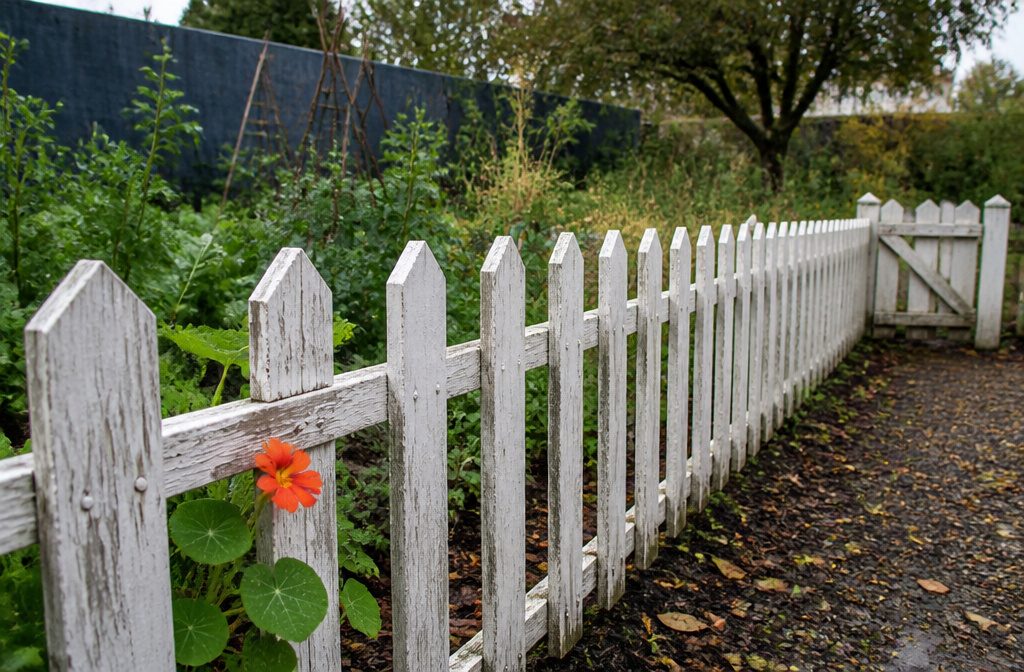
Evenly spaced vertical pickets on horizontal rails, usually 3 to 4 feet tall, make a white picket fence, in either painted wood or vinyl. Wood costs $15–35 per linear foot installed but needs repainting every 2–3 years; vinyl costs $20–45 and never needs paint.
What a White Picket Fence Is
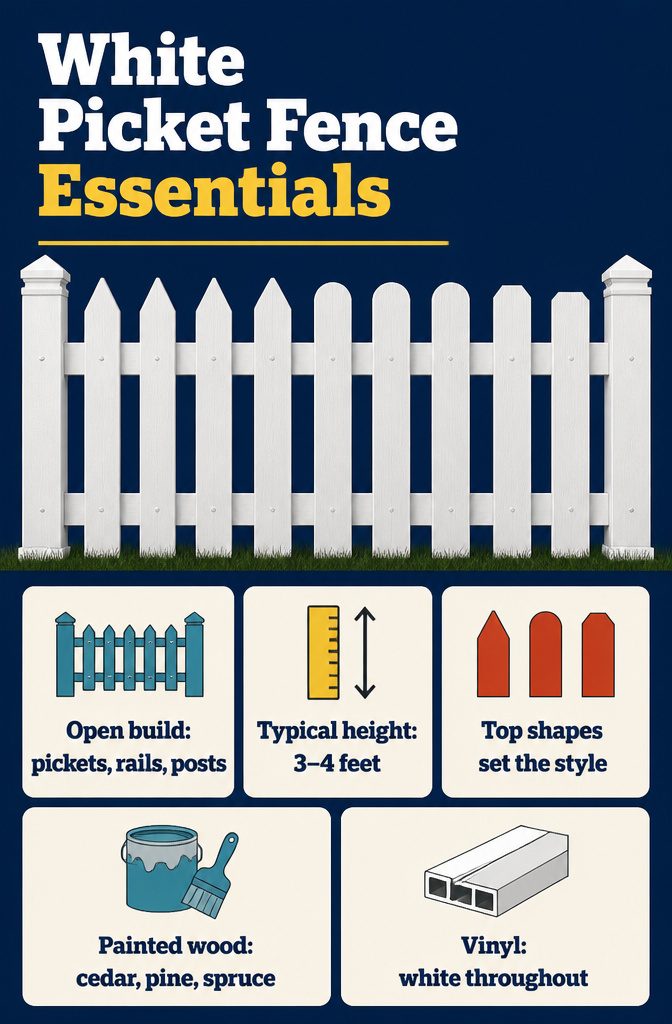
A white picket fence is an open-style fence: evenly spaced vertical boards (the pickets) attached to horizontal rails that run between posts.
Most stand 3 to 4 feet tall, high enough to mark a boundary and low enough to see over. The picket tops are pointed, rounded, or dog-eared, and the shape sets the style more than anything else.
The white comes from one of two materials.
Wood, usually cedar, pine, or spruce, is built on-site and painted. Vinyl arrives white all the way through.
The fence also stands for buying a house, settling down, and finally having a yard worth fencing in.
I understand the pull. Still, it is a fence first, and what you can spend and how much upkeep you will put up with decide whether it suits your yard.
Recommended Products

PET & CHILD SAFE: Create a safe outdoor play area for fur babies and children. Rest assured that this fence will create a sturdy barrier to protect your family.
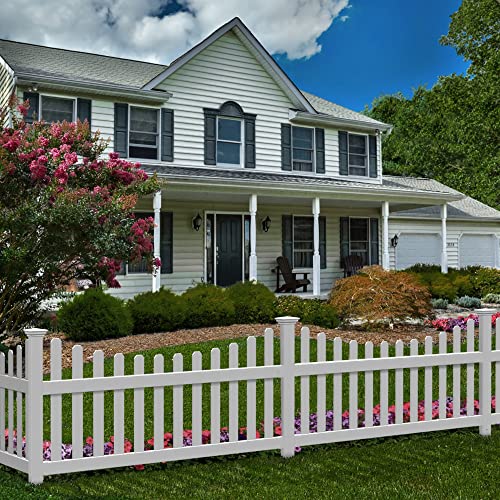
PET & CHILD SAFE: Create a safe outdoor play area for fur babies and children. Rest assured that this fence will create a sturdy barrier to protect your family.

DIMENSIONS: Each panel measures 24" W x 24" H. One box comes with 6 total linear feet of white vinyl picket fence for your garden.
Wood or Vinyl
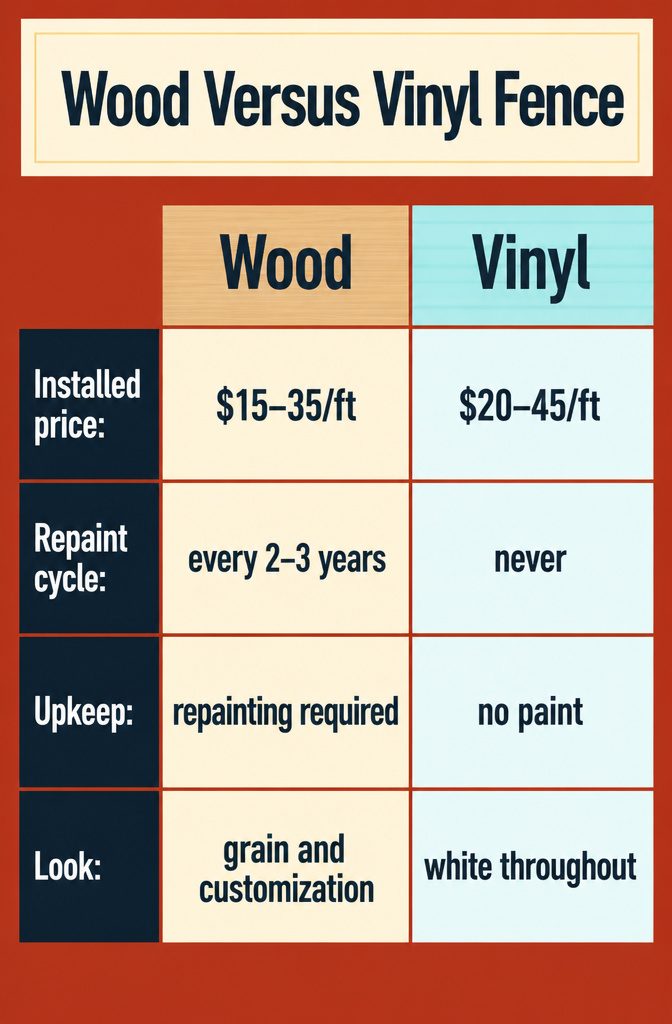
Vinyl is white all the way through, so it never needs paint, and it will not rot, warp or attract insects.
Wood offers grain, texture and the traditional look, and is easy to customize, but white paint on cedar, pine or spruce needs redoing every 2–3 years. White also shows dirt and mildew quickly.
Installed, wood runs $15–35 per linear foot and vinyl $20–45, and each DIY repaint adds $2–5 per linear foot. For anyone who wants less upkeep, I’d say vinyl is worth the extra money, because that paint cycle repeats.
Pick wood if you want real texture or like the work of painting. Cedar costs more than pine or spruce but resists rot better.
Recommended Products

Order is for a 6-Pack of fencing, giving a total of 48 feet of fencing in length

DIMENSIONS: This fence measures 40"W x 30"H ;This item brings 2 panels

【Mini Fairy Garden Decoration】Fairy garden accessories outdoor are perfect for enhancing your miniature world. Fairy garden decor like this white picket fence adds charm to any setting. Fairy Garden supplies can be used for a variety of creative DIY projects
What It Costs Installed
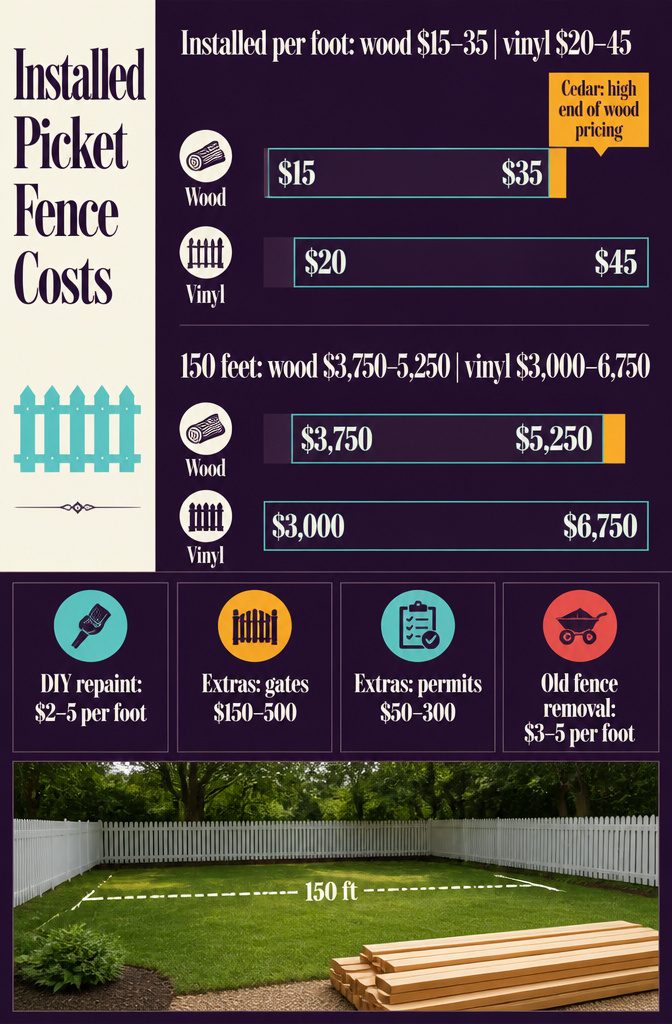
Installed price depends mostly on the material, and the two ranges overlap more than most people expect. Cedar sits at the high end of wood because it resists rot.
| Wood | Vinyl | |
|---|---|---|
| Installed, per linear foot | $15–35 | $20–45 |
| 150 feet | $3,750–5,250 (cedar) | $3,000–6,750 |
| DIY repaint | $2–5 per linear foot, each cycle | None |
Extras come on top.
Gates run $150–500 each, permits $50–300, and removing an old fence costs $3–5 per linear foot. Pine and spruce cost less upfront but need more upkeep, and white shows wear fast, so repaint cycles arrive sooner than on stained wood.
Recommended Products

EASY ORDERING: Everything you need for your fence project is in the box except for the final post. Only ONE additional post (BL19042) is required for the end of your project. The compatible gate is (BL19102).
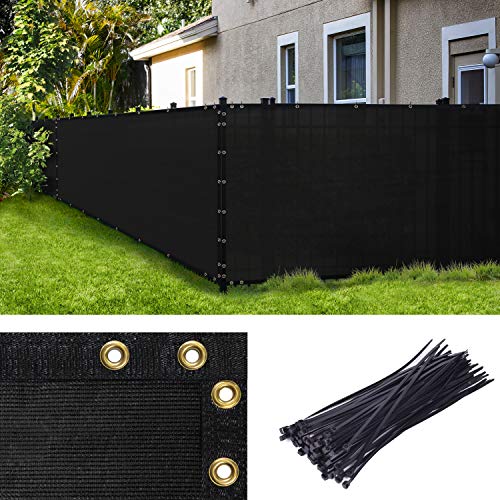
Backyard Privacy: Designed for 4-foot backyard fences, offering enhanced privacy by helping block views from neighbors and busy streets.

DIMENSIONS: Each unit is 41" H x 44" W and includes 2 complete fence panels with posts for a total of 88in of fence.
How Installation Works
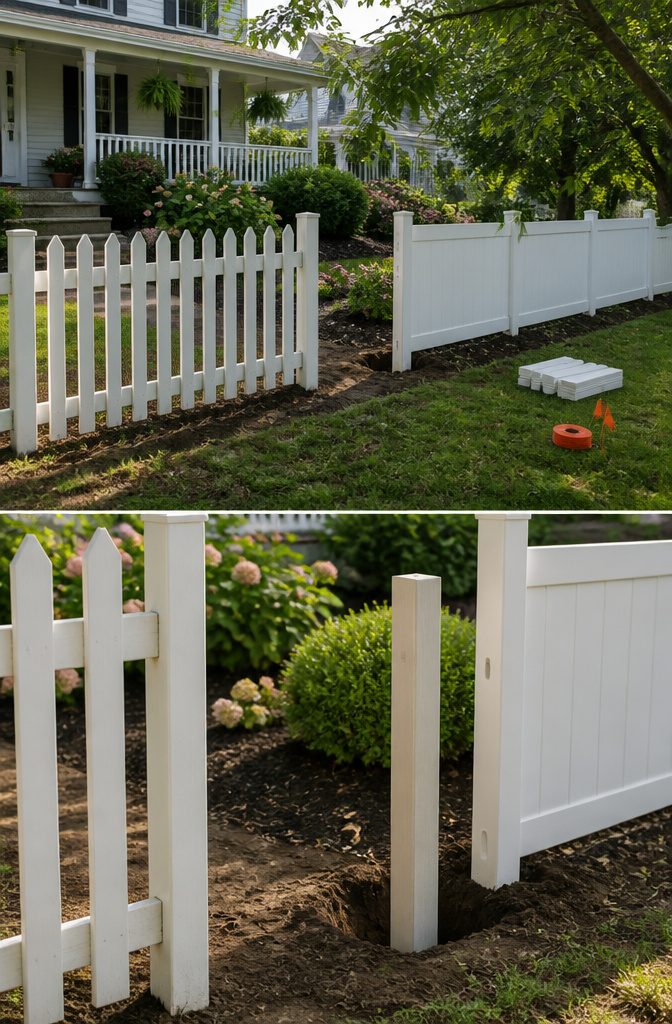
Planning comes first for either material: confirm your property survey, call 811 to have utilities marked, check permit, code and setback rules, and decide where gates go before any post is set.
Wood is built piece by piece on site.
Posts go in first, then rails, then pickets. Vinyl arrives as pre-assembled panels that slide or lock into routed posts, so it goes up faster, but post spacing has to match the manufacturer’s panel width exactly.
A professional crew typically installs 100–150 feet per day. A yard of 50–75 feet is a one-day job, while multiple gates and corners push it to two days or more.
Recommended Products

Package Content:Each set includes 6 white vinyl fence rails and 6 matching post caps,these vinyl fence parts ship ready to connect straight out of the box

Heavy Duty Metal Construction: Made of stainless aluminum sheet, sturdy metal replacement for plastic fencing brackets

Durable Aluminum Construction: The aluminum fence bracket for vinyl fencing is made from 2mm thick aluminum to resist cracking, warping, and corrosion—outlasting vinyl/PVC alternatives, even in harsh weather
Doing It Yourself
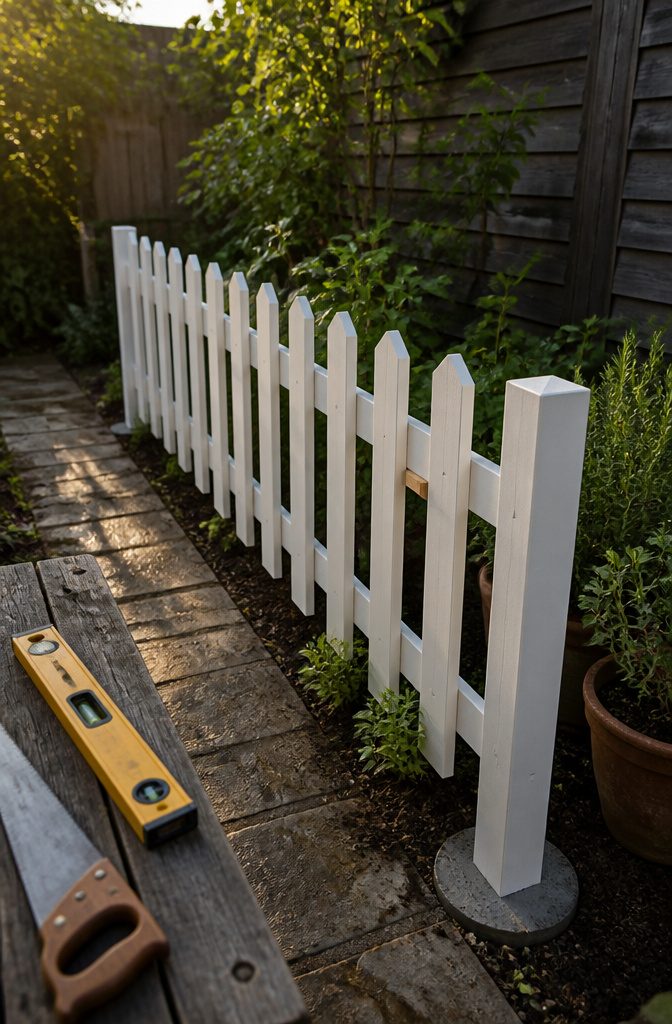
Wood is the realistic DIY choice for a white picket fence.
At 3 feet tall every flaw shows: uneven picket tops and wavy rails stand out faster than on a 6-foot fence. A spacer block cut to your gap keeps pickets consistent, and a level on every rail keeps the line straight.
Vinyl is DIY-friendly, but posts must land exactly at the panel width, and trimming a panel for odd spacing is harder than cutting a wood board.
For either material, set posts in concrete 24–30 inches deep, depending on your frost line. If a weekend of digging and leveling sounds like too much, I’d hire out the posts and rails and attach the pickets yourself.
Recommended Products

PERMANENT & STURDY: Engineered for long-term durability —complete with premium hardware for a polished, professional finish.

【STURDY&DURABLE】The cane bolt is made of thick gauge heavy duty solid steel for strength and durablitily, Black powder coating makes the gate drop rod have excellent corrosion and rust resistance.

PERMANENT & STURDY: Engineered for long-term durability —complete with premium hardware for a polished, professional finish.
Long-Term Ownership
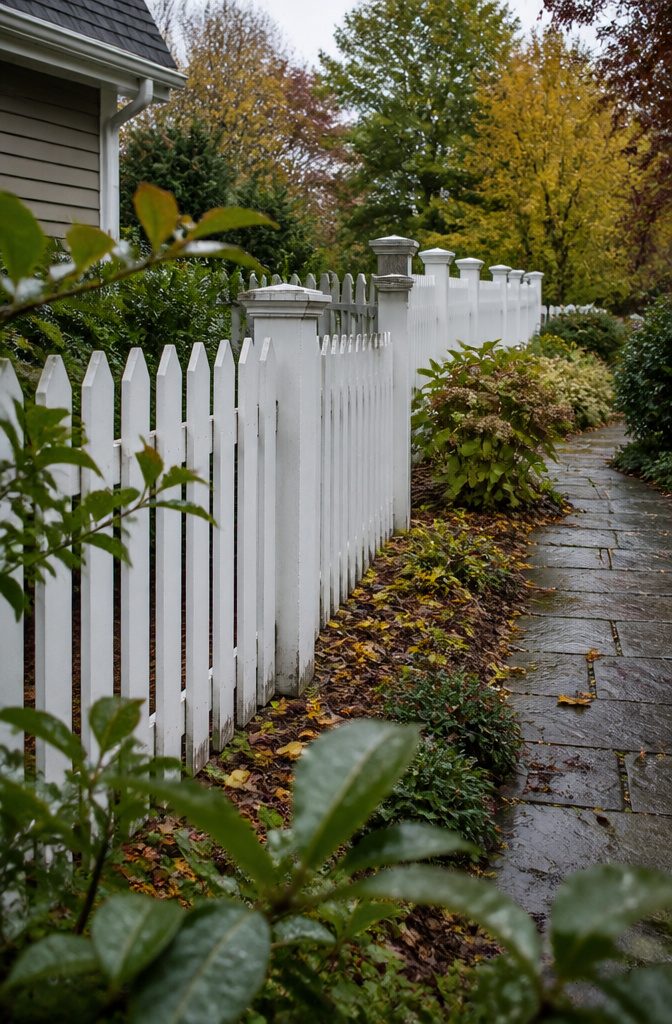
Material sets the ceiling, and upkeep decides whether wood reaches it. A well-maintained wood fence lasts 15–20 years, and cedar can pass 20 with consistent care.
Vinyl lasts 25–30 years or more with virtually no maintenance. Good installation gives either one a fair start, but only wood punishes neglect.
Plan to repaint or restain every 2–3 years, since white shows scuffs, mildew, and peeling sooner than darker colors. Skip a cycle or ignore the first soft spot of rot, and the fence loses years of life.
Over 20 years, vinyl often costs less in total than wood, though it lacks real wood’s texture. I’d pick vinyl for low effort and wood if the grain matters to you.
Recommended Products

DIMENSIONS: Each panel measures 45"H x 36" W

TOTAL 30 PANELS, 42.5FT LONGER SIZE - Included 30 panels of fences, total length: 42.5 feet, more fences, and longer lengths can meet more of your needs, including filling the gaps under the bottom of the existing fence, building garden edging border, surrounding the garden bed to avoid plant damage, etc

PORTABLE DOG FENCE: Perfect indoor or outdoor dog fence to keep your pet safe in front of doorways, entryways, porches, decks, and patios. Not recommended for large dogs.
Height and Local Limits
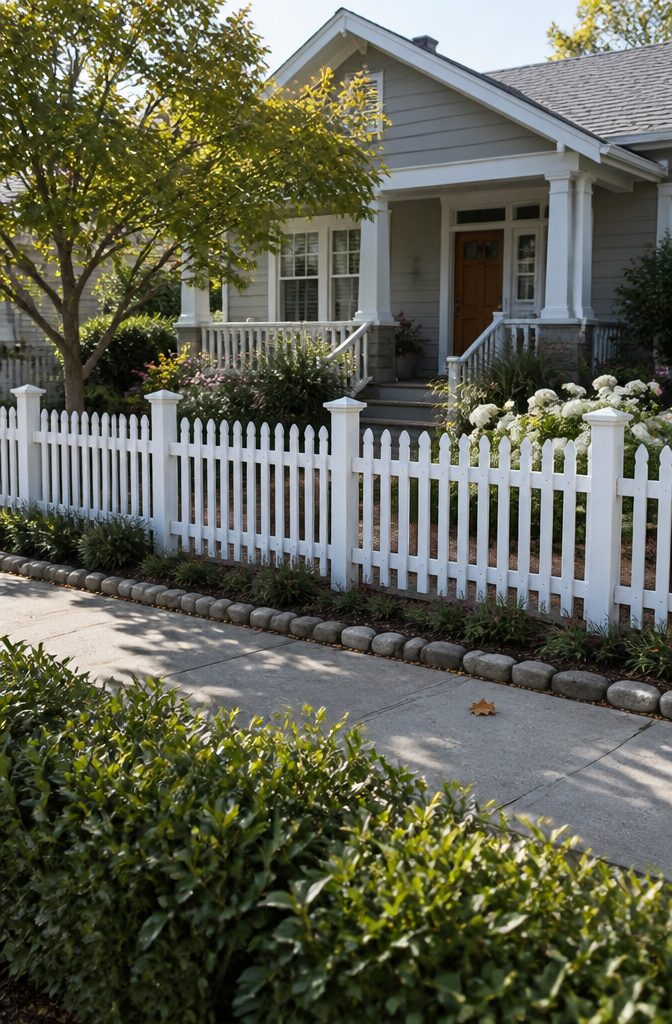
Most picket fences stand 3–4 feet tall. Three feet is the classic front-yard height: low enough to show off the house and the beds behind it, tall enough to mark the property line.
Four feet suits side yards, or a front yard where you want the fence to read as more than a border. For a front yard I’d choose 3 feet unless a dog or small children call for the extra height.
Some municipalities cap front-yard fence height.
Check your local code before you order materials, because a fence built over the limit can be ordered down, and then you pay twice. A call to your town’s building or zoning office usually settles it in a few minutes.
Recommended Products
Order is for a 4-Pack of fencing, giving a total of 32 feet of fencing in length

Perfect for DIY projects like dollhouses, fairy gardens, and micro landscapes. The sturdy yet flexible design ensures it won’t break or fade

2-Piece Mini Fence Set: This set includes 2 white mini picket fence pieces, giving you enough decorative material for small landscape arrangements, plant pot projects, dollhouse scenes, and DIY display ideas.
Keeping White Finishes Clean
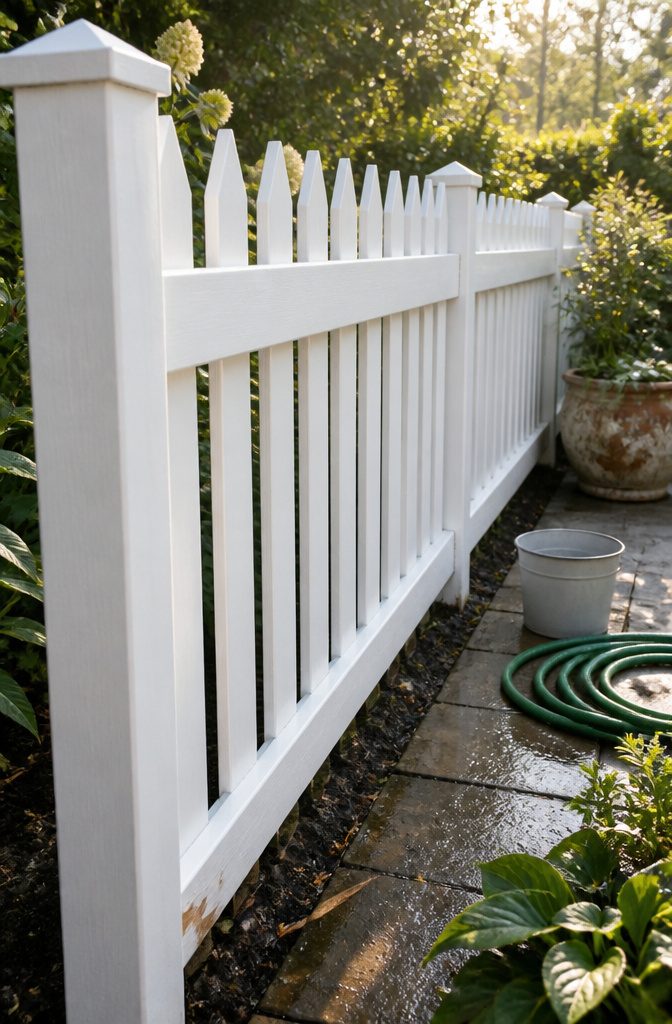
White shows scuffs, mildew and peeling sooner than darker colors, so a wood picket fence needs more frequent attention than its tidy look suggests.
Wash it once a year with a pressure washer or a wood-safe cleaning solution, and touch up chipped spots as you see them.
That routine stretches the time between full repaints, which otherwise come every 2 to 3 years. Skipping the touch-ups lets bare wood stay exposed, and early rot is what shortens a wood fence’s 15 to 20 year life.
Vinyl skips most of this. It never needs repainting, and a wash is all it asks for, which is why I’d pick it for anyone short on weekends.
Recommended Products

✔ SAVE YOUR MONEY WITH EASY INSTALLATION Patented SecureSnap assembly design enables you to assemble a gate in the matter of minutes.

DIMENSIONS: This fence panel measures 30"H x 42"W

Size Specifications: Each panel measures 36 inches high x 42 inches wide. Two panels are shipped as a set, resulting in a set size of 36 inches high x 84 inches wide. Both arched and flat top styles are available
Frequently Asked Questions
Recommended Products

Fast, Effective Repair Of Vinyl Fence Holes, Cracks, and Damage.

Rail Kit: you will receive 12 white vinyl rails and 12 matching caps that enhance your home's exterior appearance and extend outdoor performance; They add visual interest and a modern touch while blending smoothly with any white architectural scheme

Heavy Duty Metal Construction: Made of stainless aluminum sheet, sturdy metal replacement for plastic fencing brackets
How long does a white picket fence last?
A wood picket fence lasts 15–20 years with good upkeep, and cedar can pass 20 years with consistent care.
Vinyl lasts 25–30 years or more with almost no maintenance. Skipped repaints or ignored soft spots cut a wood fence’s life short.
How much maintenance does a white wood fence need?
Plan to repaint or restain every 2–3 years.
Between repaints, wash the fence once a year and touch up chipped spots as they appear. White shows scuffs, mildew, and peeling sooner than darker colors, so the work comes around faster than many owners expect.
Is a vinyl picket fence worth the extra cost?
For most homeowners who want low upkeep, yes.
Vinyl runs $20–45 per linear foot installed versus $15–35 for wood, but it never needs repainting, and over 20 years it often costs less in total. The downside is that it lacks the grain and texture of real wood.
What’s the standard height for a white picket fence?
Most are 3–4 feet tall.
Three feet is the classic front-yard height, and 4 feet suits side yards or fronts where a dog or small children call for more height. Some towns cap front-yard fence height, so check your local code before ordering materials.