
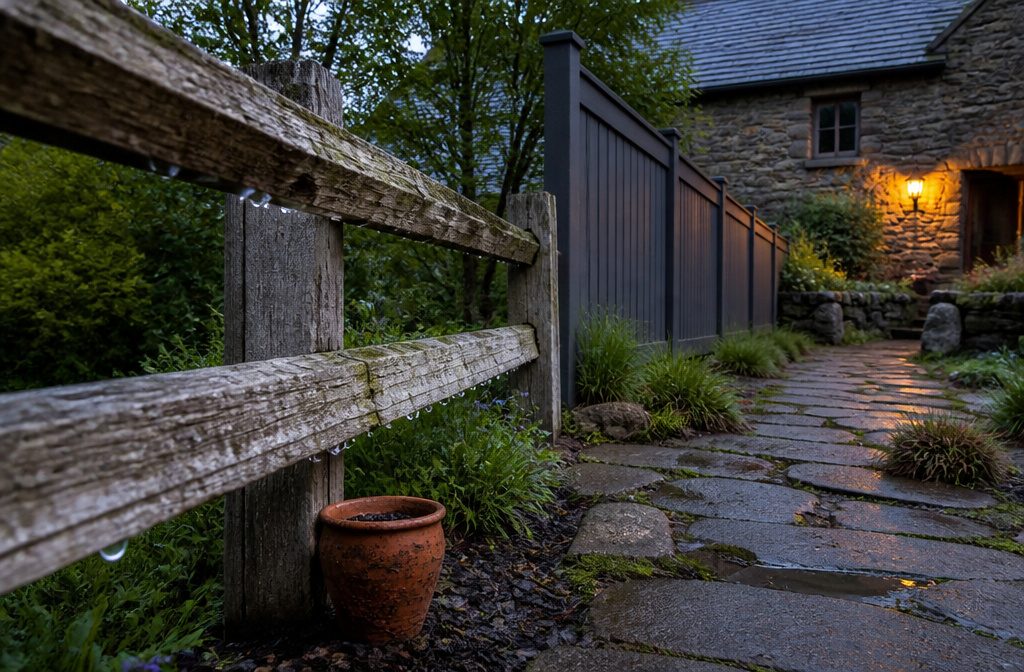
Styles run from open split rail to solid SimTek composite, and the deciding factor is what the yard does daily: contain animals, hide a view, or stay out of your weekends.
Wood is typically cheapest but needs periodic painting or staining, and gaps over 4 inches should be avoided wherever small children play.
1. Farm-Style Split Rail
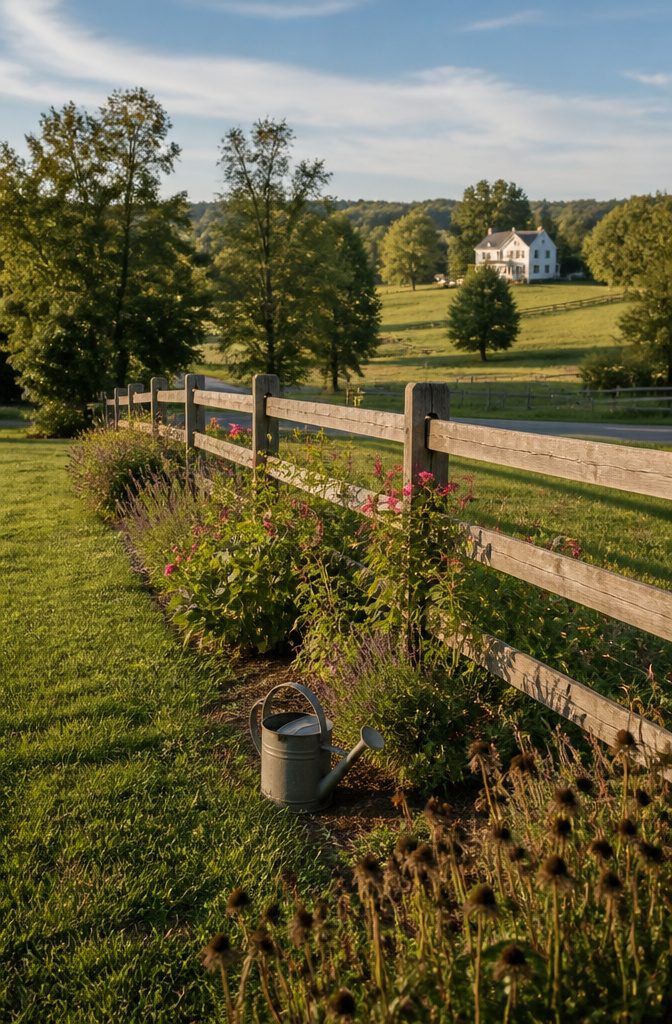
Sturdy wooden posts carry three horizontal boards, and that is the whole design.
Split rail marks where your property ends without blocking a view, so shrubs, roses or a row of perennials planted along it stay visible from the house and the road.
It is the simplest rustic wood fence in this list, and I’d choose it for a large, open yard where definition matters more than containment.
The gaps between the boards will not hold small children or dogs.
Wire mesh added along the rails will hold dogs or goats, though the fence loses some of its open look. If the yard must be animal-tight from day one, budget for the mesh at the start.
2. The X Fence
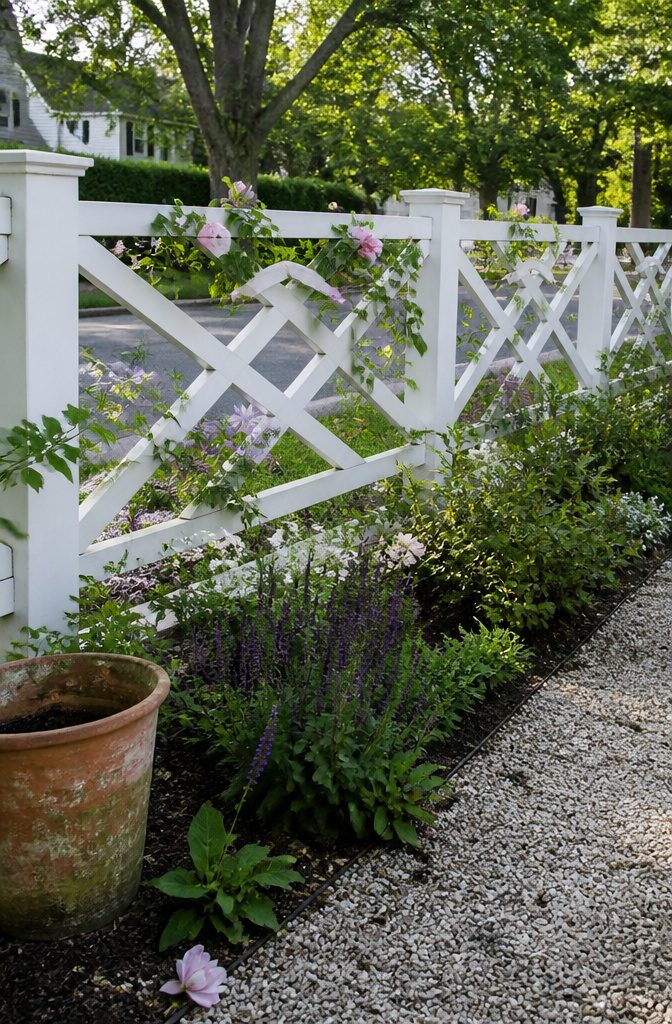
Crossed rails form a repeating X between the posts, and painted white the pattern reads as modern farmhouse without needing any other detail.
The open frame gives climbers something to grab, so clematis, climbing roses or sweet peas can weave through the gaps and soften the lines over a season or two.
This fence suits anyone who wants a defined edge around a front yard or garden bed while keeping the view of the street or the plantings.
It gives very little privacy, so I would skip it anywhere you need to hide a patio, trash bins or a neighbor’s window. In those spots, choose a solid style from this list.
3. Hog Wire Fence
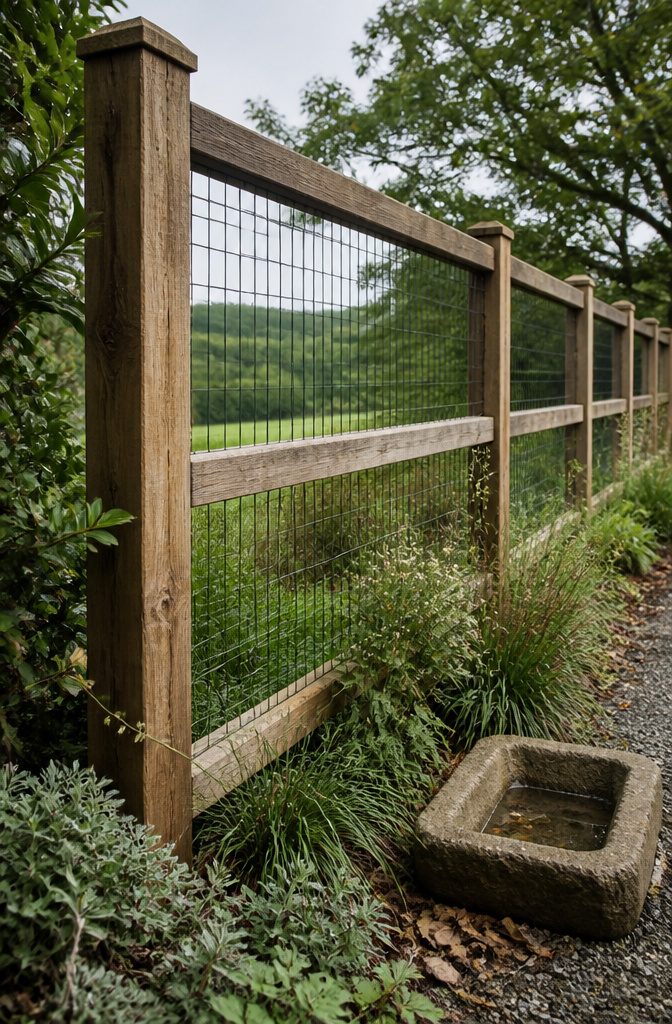
Wooden posts and rails frame panels of gridded hog wire, which leaves the fence see-through.
Grasses and groundcovers poke through the grid, so plantings at the base read as part of the fence. It is an open fence, not a privacy fence, so skip it where you need to block a view.
Panels are cost-effective, fairly easy to install, and adaptable to many styles.
Natural wood looks casual and rustic, which suits it best. Painted white or black, the wood looks more polished, but I would still pass on hog wire for a pristine, formal design.
4. White Picket Fence
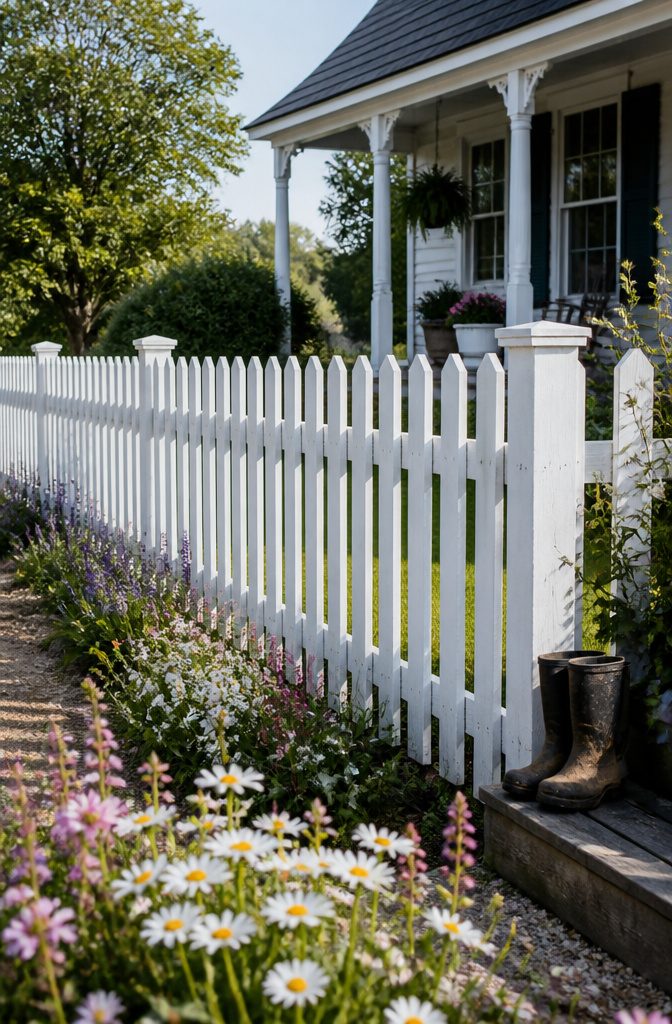
A white picket fence marks the property line without closing it off, which suits a classic American farmhouse with a front porch.
Wood is the traditional choice and usually costs less, but it weathers faster and needs periodic painting or staining.
Vinyl gives the same look from the street, and it doesn’t need repainting every few years.
I’d pick vinyl for a front yard you want to leave alone, and wood if you like the softer, homey feel and don’t mind a paintbrush.
To lean modern farmhouse, replace the curved, pointed picket tops with straight lines and sharp angles.
5. Horizontal Board Fence
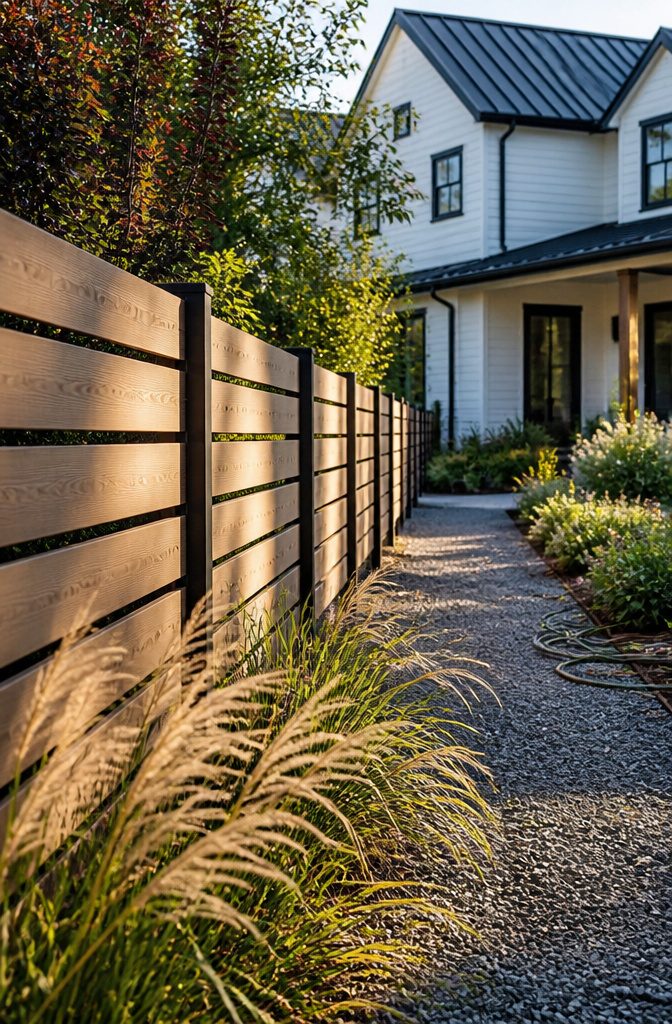
Boards laid parallel to the ground give a fence long, clean lines that look more modern than vertical boards.
That suits a newer farmhouse or a house with black trim better than a rustic one. The look has a price: this style is harder to install and can cost twice as much as a vertical board fence.
Every board sits in a visible line, so a slight tilt or an uneven gap shows from the street.
Unless you’re comfortable with a level and a lot of patience, I’d hire a pro for this one. On a tight budget, vertical boards plus a good gate give you more farmhouse for the money.
6. Cannonball Wood Fence
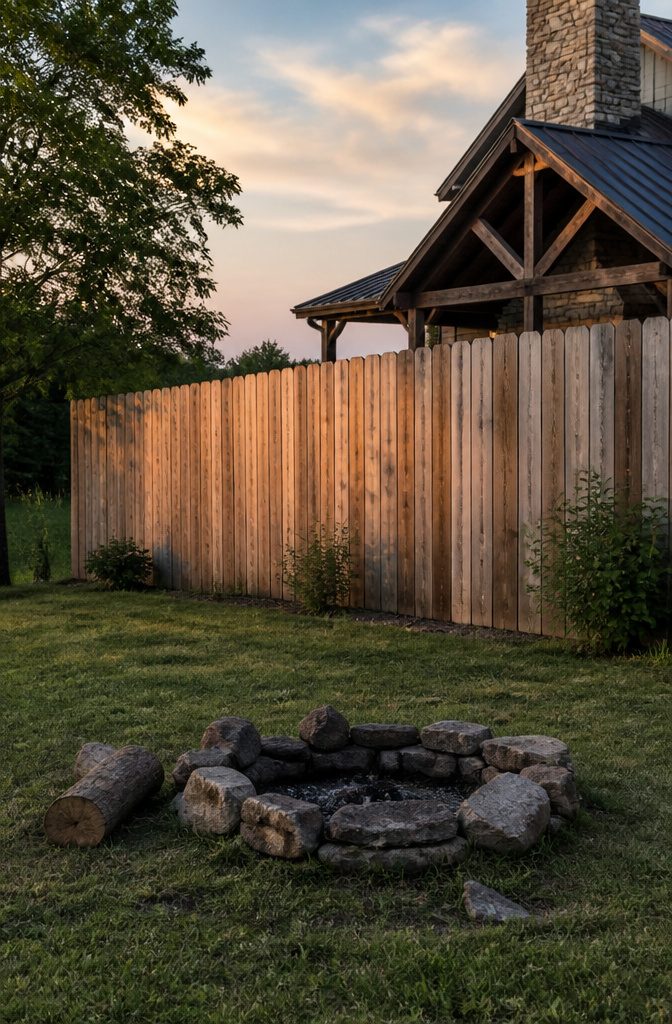
Natural grain and color variation do most of the work here.
Each board reads a little differently from its neighbor, which gives a cannonball wood fence the weathered, warm texture that suits rustic farmhouses with exposed beams and stone fireplaces. It looks best around lots of greenery and open ground.
Privacy comes with it, so I’d pick this style for a yard where you want to be left alone near a bonfire spot or a pen for farm animals.
Wood does weather faster than other materials, and it needs periodic painting or staining to hold up against sun and water. Build that recurring chore into your yearly budget before you commit.
7. SimTek Composite Fence
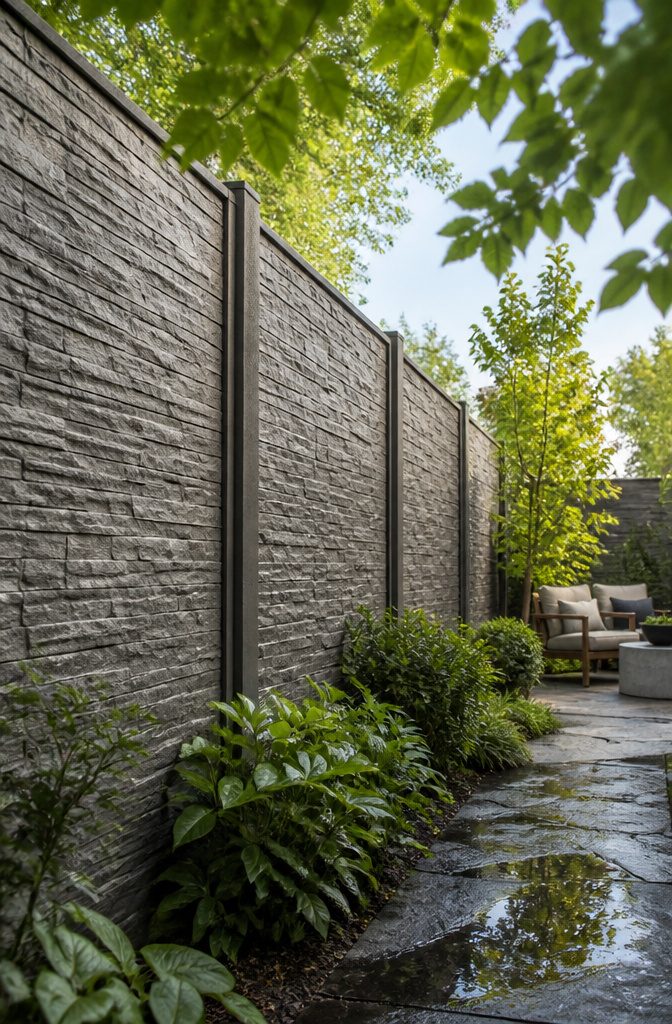
SimTek suits a farmhouse yard that is a retreat rather than a working property. The composite panels give full privacy with a stone-like look and block outside noise, so a lot beside a busy street ends up much quieter.
Unlike wood, SimTek won’t warp, crack, or need repainting, which removes the yearly maintenance that comes with a painted board fence.
I’d choose it over wood for anyone who wants a secluded yard and wants to stop thinking about the fence once it’s up.
Style is what you give up: the stone texture reads more modern-rustic than the classic rural look of split rail or pickets.
8. Wood and Metal Gate
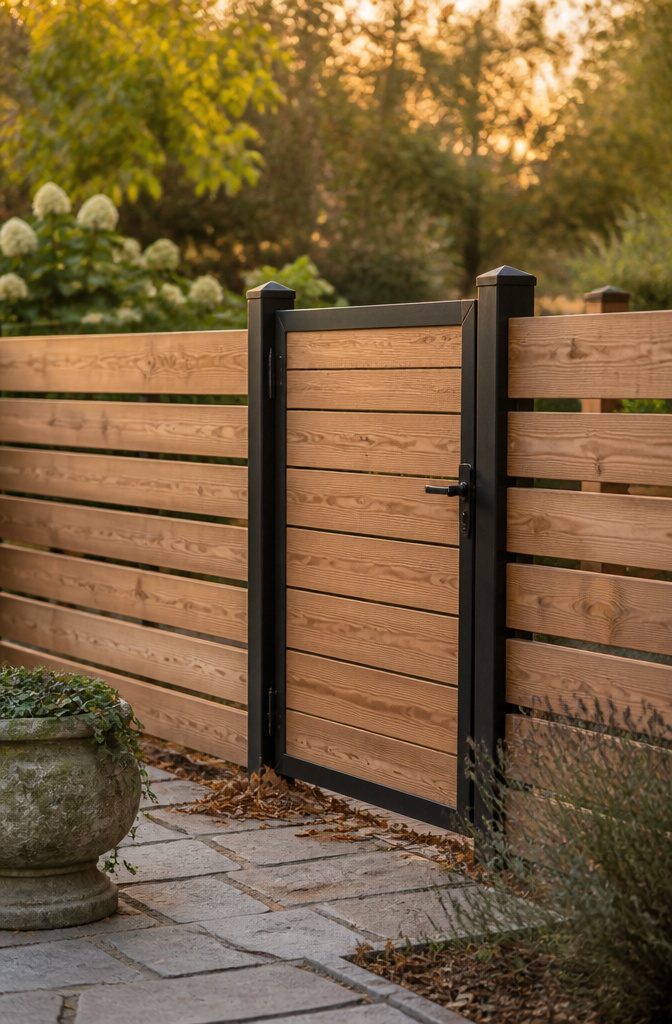
A fully custom wood-and-metal fence makes a strong architectural statement, but it is priced like one.
A common version is a modern horizontal wood fence with metal posts, top rails and door hardware, and each metal piece adds to the bill.
A better use of the budget is a single metal gate as the focal point, with standard wood fencing for the rest of the run. The wood stays at ordinary wood-fence prices, and the gate still gives the mixed-material look.
Metal costs more than wood, but it lasts longer and needs far less maintenance, so the one piece you spend extra on is also the one you’ll rarely have to refinish.
Black is the usual finish, and powder coating can match nearly any color you want.
Fit, Privacy, and the 4-Inch Gap
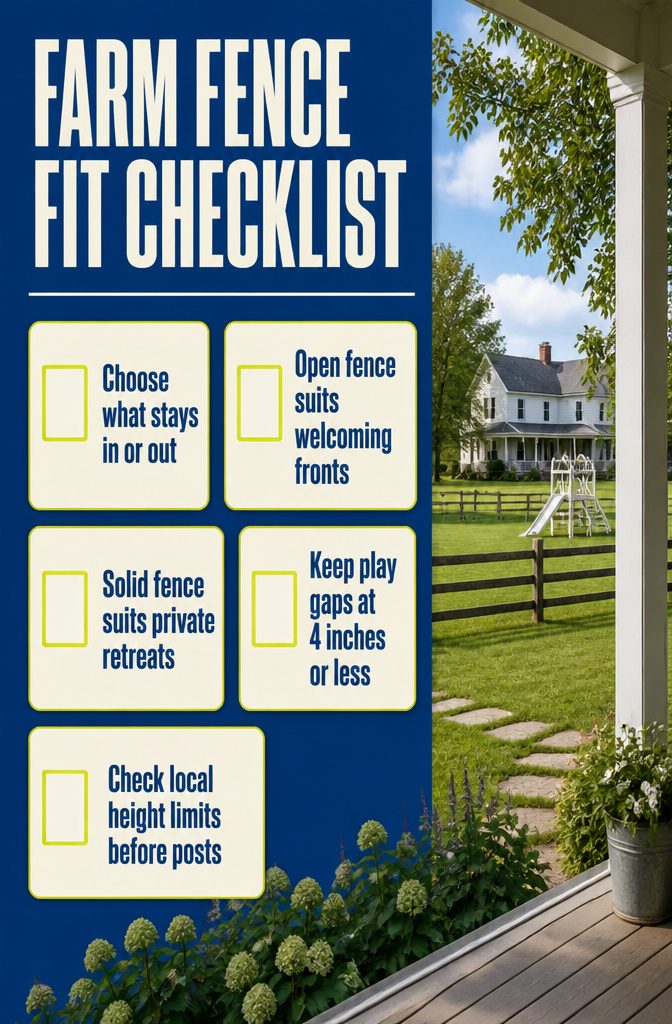
Choose the fence for what the yard does every day, then check three limits before buying.
- Animals or a garden: The fence has to keep something in or out, so decide which before you look at styles.
- Welcoming front yard: Stay open. Solid walls make a front yard feel smaller from inside and uninviting from outside, and a fence tall enough to hide the house costs curb appeal. I’d choose a see-through design here.
- Secluded retreat: A solid fence is a fair trade when privacy is the whole purpose of the space.
- Small children: Avoid gaps larger than 4 inches anywhere they play.
- Height: Local ordinances can set a maximum, so check with your city or county before you set posts.
Upkeep by Material
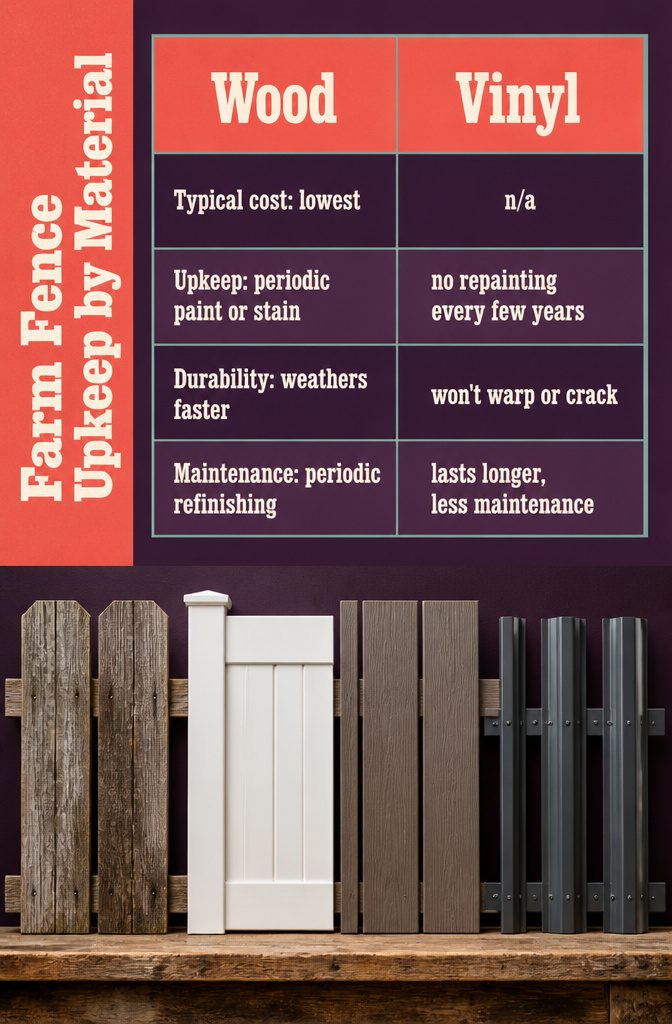
Wood is typically the cheapest farmhouse fence and the easiest to install, but it weathers faster than the alternatives.
Plan on painting or staining it periodically to protect it from sun and water. If you know you’ll skip that chore, pay more up front for a material that doesn’t ask for it.
| Material | Cost | Upkeep |
|---|---|---|
| Wood | Typically lowest | Periodic paint or stain |
| Vinyl | n/a | No repainting every few years |
| Composite | n/a | Won’t warp or crack, no repainting |
| Metal | Higher | Lasts longer, less maintenance |
On a small yearly budget, I’d choose wood and set aside the time to refinish it.









