
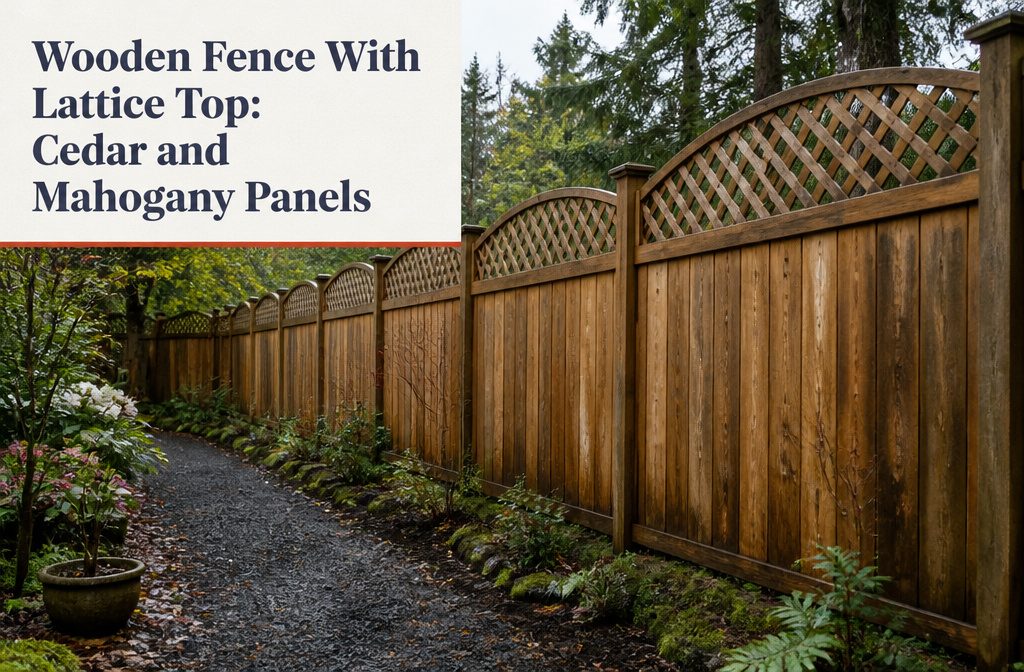
Lattice-topped fence panels come in Western Red Cedar or clear mahogany, with open lattice that passes air and light or heavier privacy lattice that screens and shades.
They ship by motor freight with a minimum quantity per shipment, so measure the whole run before ordering. The ERT-27 round-top panel, 24"W x 84"H, costs $43.32.
Western Red Cedar Panels
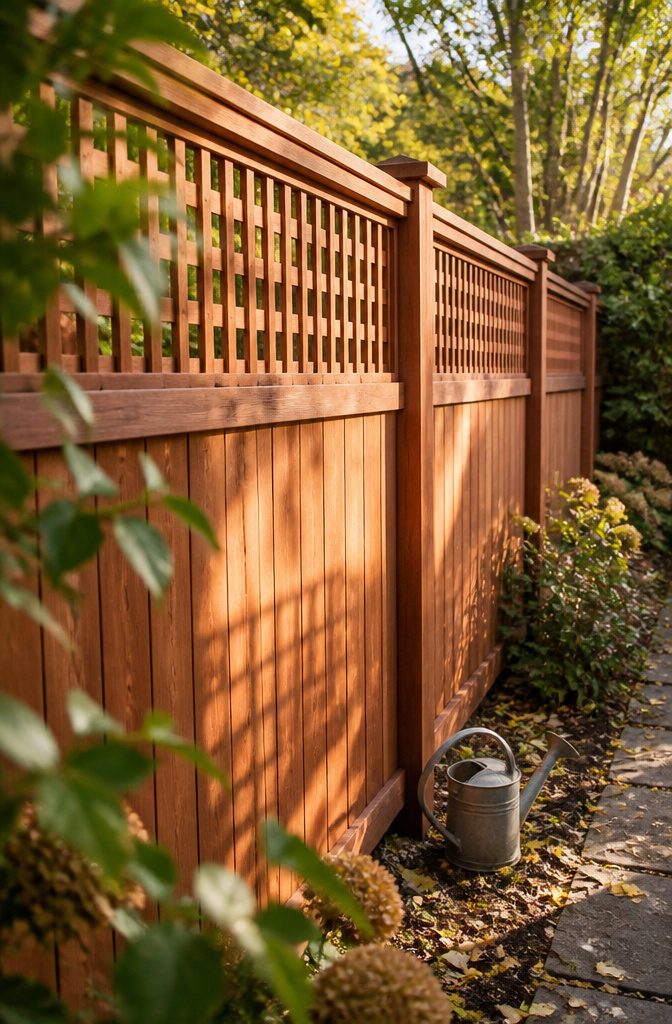
Western Red Cedar lattice comes in two weights. Open garden lattice passes air and sunlight, which suits a fence topper or a plant screen.
The heavier privacy lattice blocks more of the view and throws more shade, and I’d choose it for any spot where neighbors can see straight in.
Kiln-dried construction is available in the cedar line. Matching cedar lattice caps give the panel a clean, finished top edge, and I’d add them rather than leave the raw edge exposed.
Because of their size, the panels ship by motor freight, and each shipment has a minimum quantity. Measure the whole run before you order so you buy it in one load.
Mahogany Panels
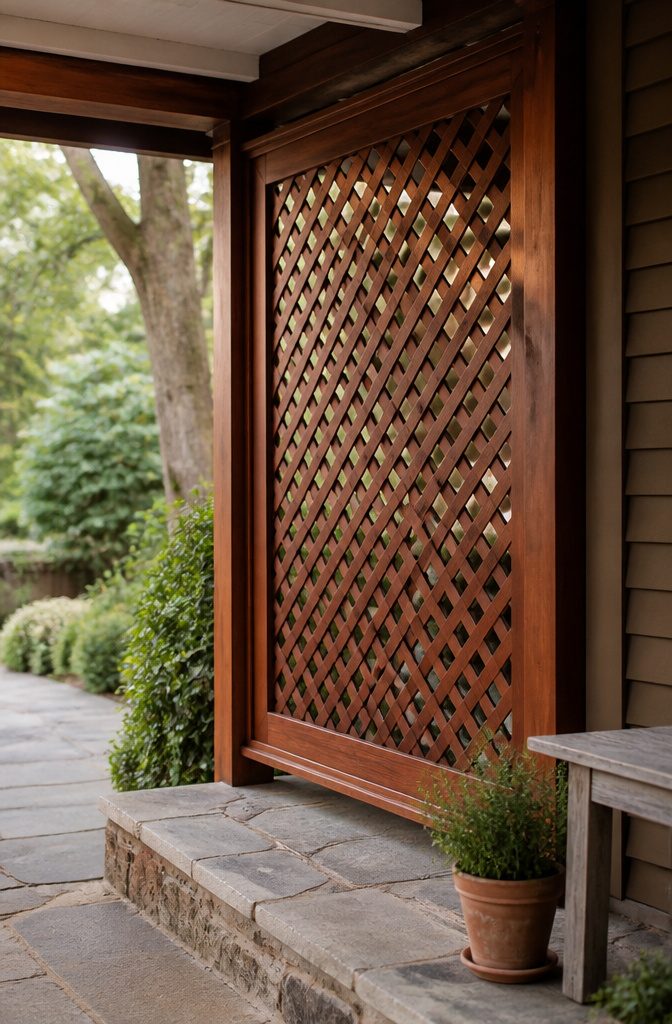
Clear mahogany is the choice when the lattice itself is meant to be looked at.
The panels have a refined, architectural appearance and work in interior or exterior spots, so the same material can carry from a porch to an indoor wall.
Cedar is the simpler choice for everyday screening. It comes kiln-dried in both open garden and heavier privacy configurations, and matching cedar caps give the edges a finished look.
I’d pick mahogany for a feature panel people see up close and cedar for a working screen. Either way, the panels ship by motor freight with a minimum quantity, so order for the whole project at once.
Square, Diagonal, and Modern Patterns
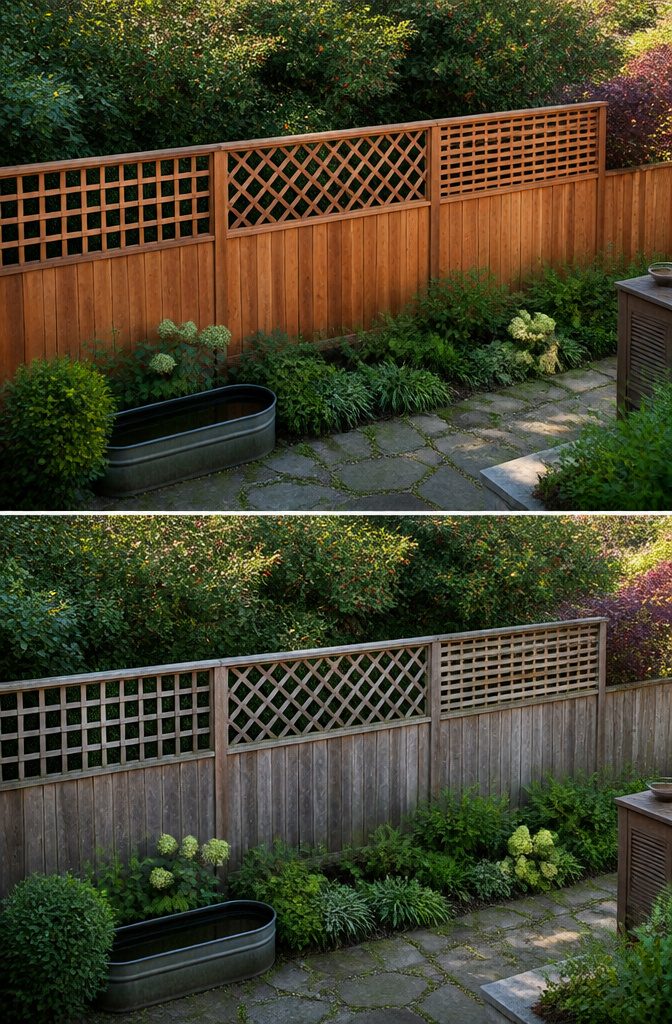
Lattice panels come in three patterns: square, diagonal and modern privacy, each offered in multiple sizes.
Square and diagonal are the open garden styles. They let air and sunlight through, so they suit a fence top that should lighten the line without boxing in the yard or the plants beside it.
I lean toward diagonal for a softer, traditional look and square for a cleaner grid.
Modern privacy lattice is the heavier build, and it is the pattern to choose when you need screening and shade, such as hiding equipment from the patio.
Expect less light and less breeze behind it, so use it only where you want that.
Estate Panels With a Flat Top
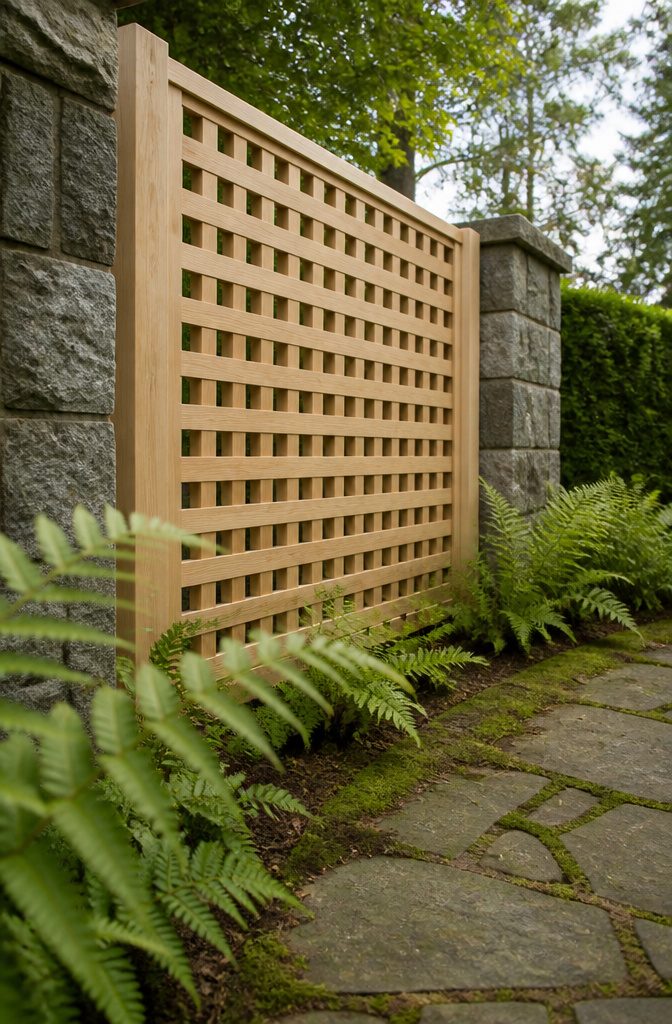
The Estate panel with a flat top arrives fully built, so there is nothing to assemble. The frame is 2×2 white cedar, and the lattice sits in a dado channel cut into it, where it is glued and nailed.
The frame itself is screwed together for extra holding strength, which matters once heavy vines load the panel.
Every piece of lattice is sanded and coated with natural tung oil, so the panel is protected for outdoor use before it leaves the box.
I’d choose the flat top over the round top for a plain, straight line along a run of fence or a wall. Panels come in many sizes, so measure your opening before you shop and match the panel to it.
Estate Panels With a Round Top
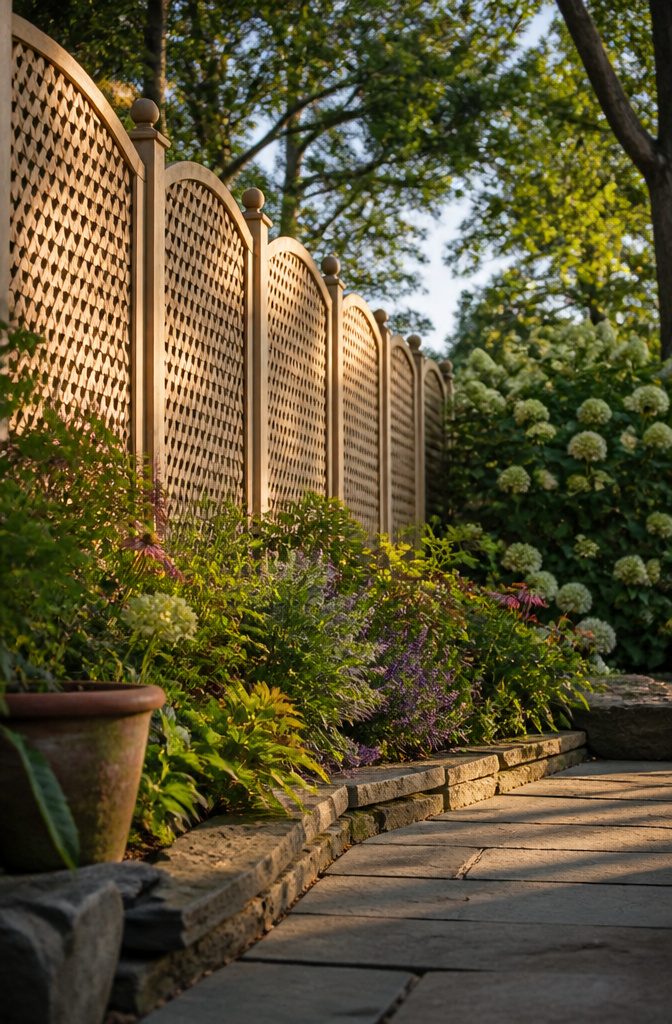
The ERT-27 is a framed Estate panel with a rounded top, 24"W x 84"H, listed at $43.32 per panel.
It uses the same framed format as the flat-top version, so the difference is only in the crown. Set side by side in a run, the arches repeat into a gentle scalloped line along the top of the fence.
That softens a tall 7-foot fence and suits cottage-style and traditional yards. A flat top gives a level, squared-off line that looks more modern.
Because each panel is only 24 inches wide, the curve repeats often, and a long run will look busier than wider panels would.
I’d use the round top where the fence is seen from the house or patio, and keep flat tops for plain side yards.
Screening and Outdoor Uses
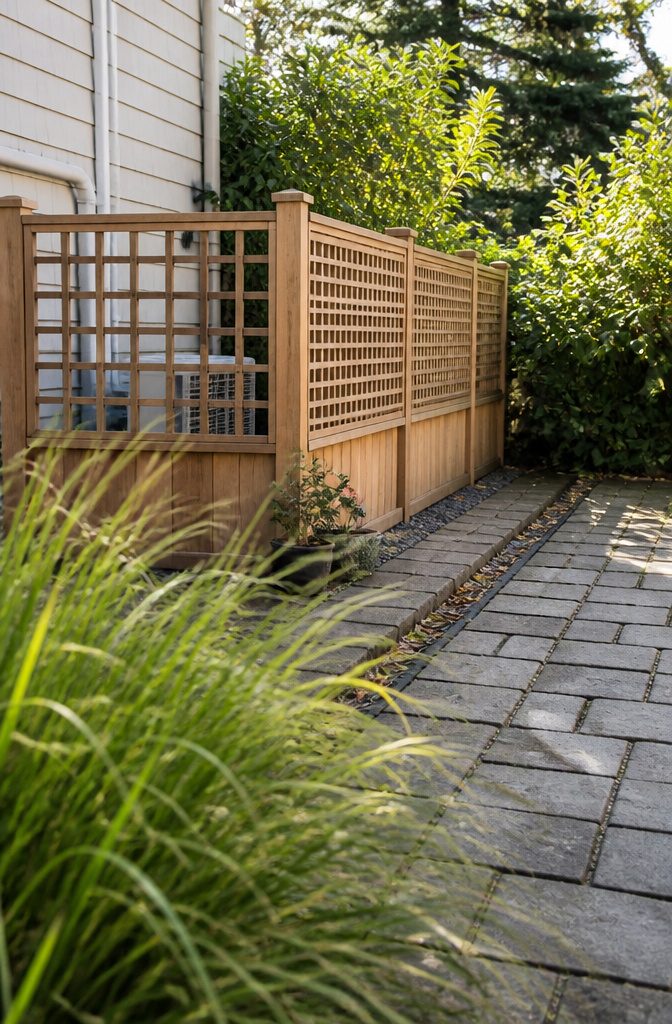
Lattice-topped panels mostly hide things or mark off space, and the choice between open and privacy lattice follows what you want to hide.
- Privacy screening: Privacy lattice gives the most cover and shade along a patio or yard edge. Open lattice screens less, but it keeps light moving.
- HVAC unit: Open lattice is the better pick, since it hides the unit and still lets air through.
- Garbage storage: Privacy lattice, since it hides what’s inside from view.
- Deck underpinnings: Privacy lattice closes in the underside most completely. Open lattice suits a deck where you want air and light underneath.
- Decks and porches: Panels define the space. Choose open lattice for breeze and sun, privacy lattice for shade.
- Garden dividers: Either style works to separate areas, and open lattice looks lighter.
The rule: open lattice for airflow and sunlight, privacy lattice for screening and shade.
Cedar, Mahogany, or Bamboo
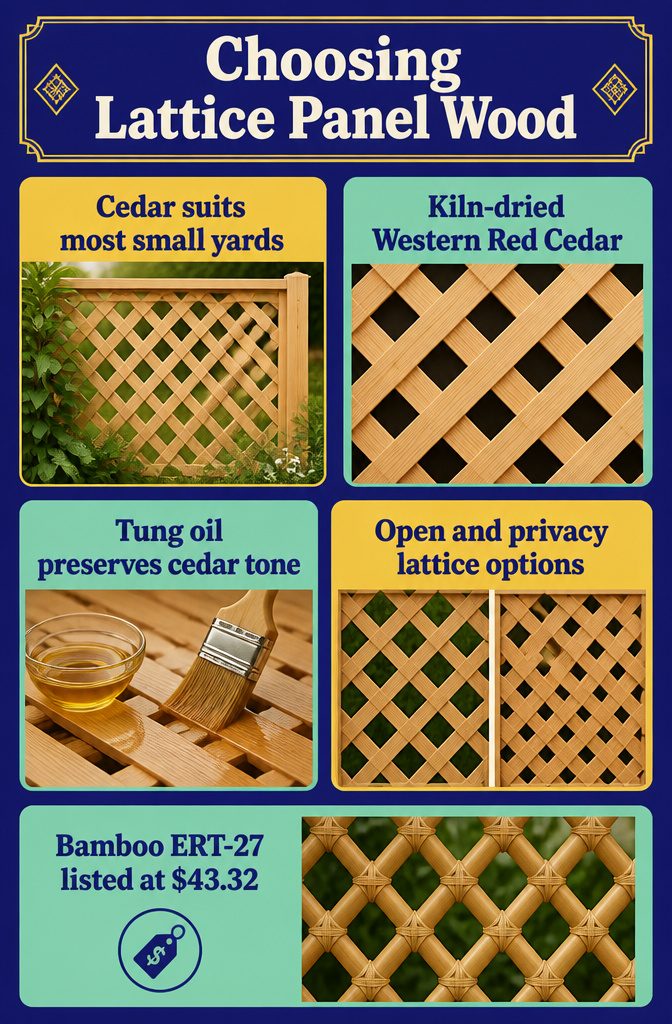
For most small yards, cedar wins. Western Red Cedar comes in a kiln-dried option, and it takes a tung oil or natural outdoor sealer finish if you want to keep the wood tone instead of letting it weather.
It also comes in both open and heavier privacy lattice, so one material covers a sunny trellis and a shaded screen.
Mahogany is the better-looking choice. Clear mahogany panels have a refined, architectural look and work indoors or out, but I’d save them for a porch or entry where people see them up close.
Bamboo lattice panels are a fair alternative if you want a different texture.
I’d still pick cedar first. ERT-27 is listed at $43.32.
Lattice for Climbing Plants
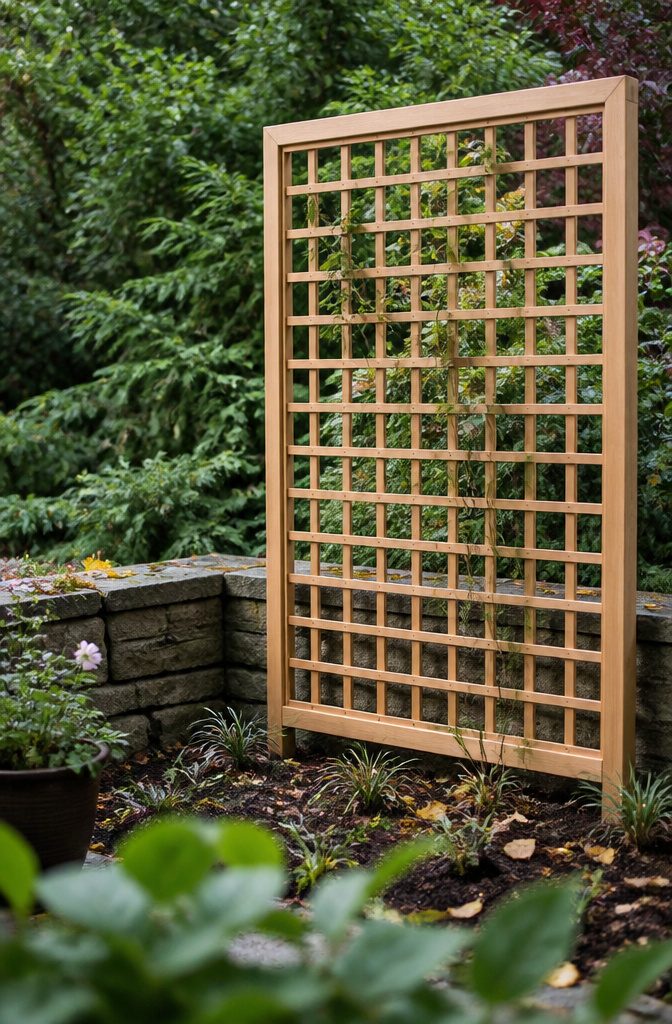
Lattice gives tendrils and stems something to grip, but the frame decides how much weight a panel can carry.
Estate panels set the lattice into a dado channel in a 2×2 white cedar frame, glue and nail it, then screw the frame together.
That construction is why a framed Estate panel is the one to buy for heavy vines, and why the same panel works as a fence section and a trellis.
The sanded lattice also comes coated in tung oil for outdoor protection.
Open lattice suits lighter garden accents, such as a backdrop behind a bed or a panel against a wall.
Vines fill the openings season by season, so the screening improves over time. A new planting leaves gaps at first.









