
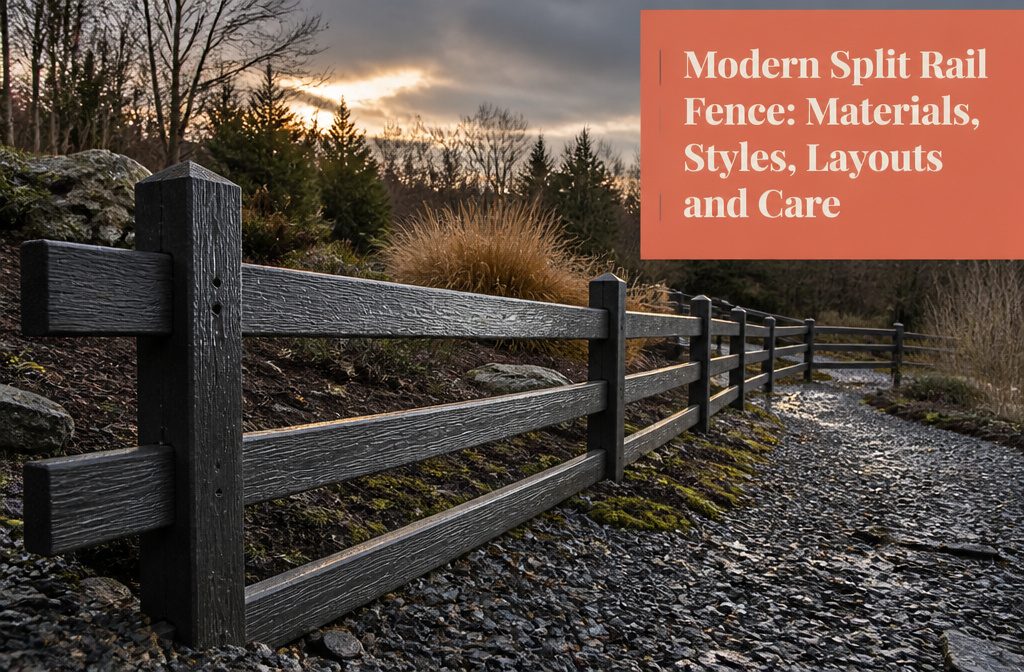
A split rail fence is 2 or 3 horizontal rails slotted into posts set about 10 feet apart, and the modern versions swap cedar for composite, vinyl, aluminum, steel or precast concrete.
Two rails leave gaps a small dog or toddler can slip through, so use three rails or add wire mesh.
Traditional Western Red Cedar
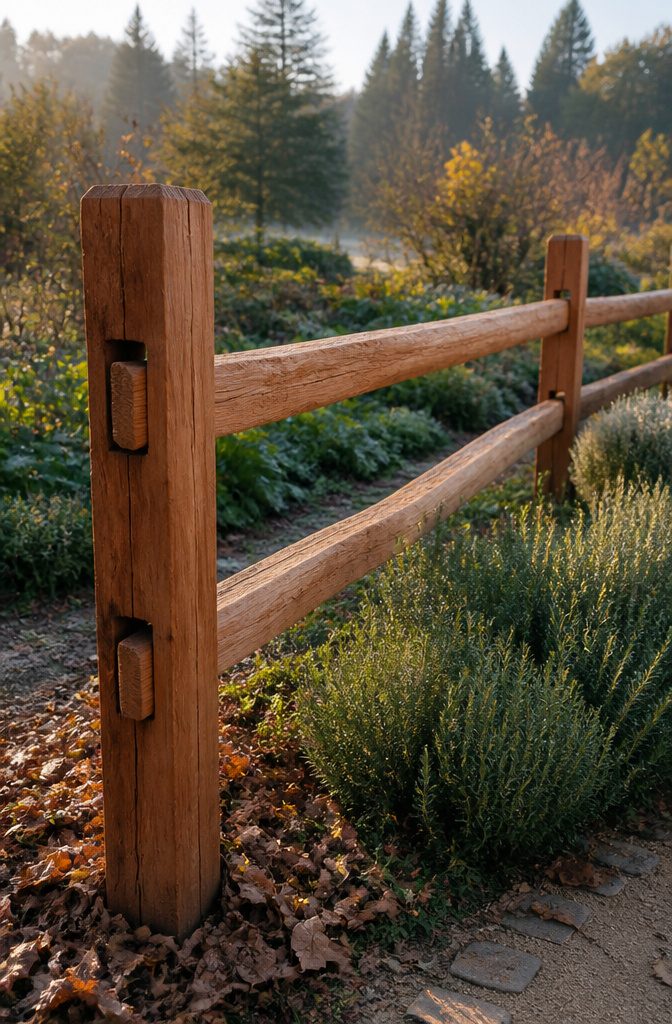
Western red cedar is the wood most people picture when they think of a split rail fence.
It’s a softwood conifer that grows mainly in the coastal regions of British Columbia and Washington State. It resists weathering and decay, and a cedar fence can last decades with little maintenance.
The traditional build is also the simplest. Each post is mortised, meaning a slot is cut into it, and two or three rails seat in those slots with no nails or screws.
Basic carpentry skills are enough to put it together. I’d choose two rails for a garden edge or short run, and three where a dog or small child could slip through the gap.
Recommended Products

Premium Quality: Eapele railing bracket is made of high-quality nylon has high hardness, is not easy to break or bend, is corrosion-resistant, and can withstand wind and rain for years of indoor & outdoor use
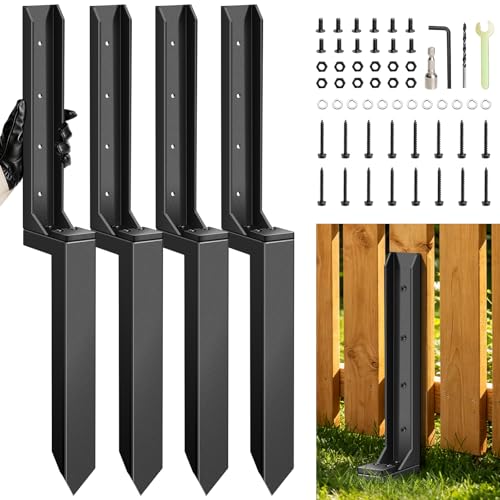
Package Includes: 4 sets of unassembled 32-inch repair stakes, 12 galvanized assembly screws, 16 galvanized fixing screws and 1 small wrench. Size: 1.96” x 31.5” (Width x Height). Buried depth: 15.75 in

Comprehensive Package Ready for Installation: the package includes 6 piece of fence cedar top post cap, colored in yellow, engineered with precision to fit your needs; This post cap can be reused, ensuring long time of use, promoting sustainability in your surroundings
Locust and Hardwood Rails
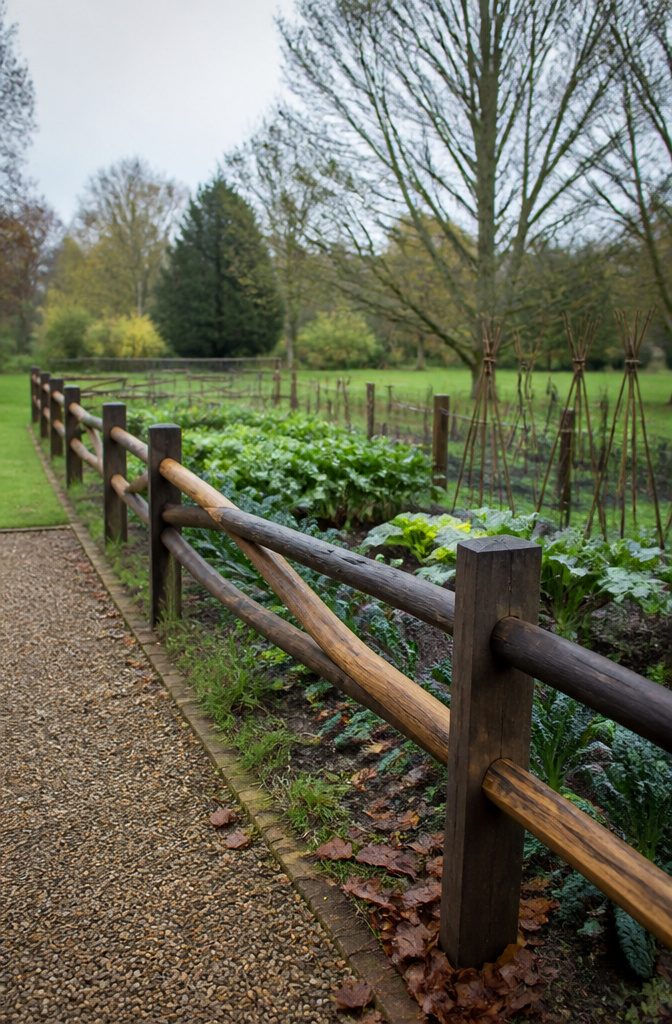
Locust is the rail I’d pick for a fence you want to forget about. The wood resists rot on its own, so low upkeep lasts the life of the fence.
The traditional design uses two intertwined rails and goes in without complex post-hole digging, which saves real effort on installation day. The look reads rustic and modern at once, depending on how cleanly you run the line.
Other hardwood rails follow the same 2-rail layout. The wood is strong yet flexible enough to handle different weather, and the simple design keeps both installation and maintenance easy.
If rot is your main worry, choose locust. If you just want a plain, low-fuss fence, hardwood does the job.
Recommended Products

3 Rails = 18 Linear ft of Rail Material: includes 6 black PVC ranch fence rails, each 72 x 1.5 x 5.5 in, so you can shop the rail pack once instead of buying piece by piece; The 18 ft total is the combined rail length only, not a 18 ft finished fence; Posts and accessories are not included

Sufficient Quantity: our product package includes 4 x Vinyl pocket rails; These are precision-crafted and come in an aesthetic white color adding value and elegance to your property; Trust our quality and design to provide your property with an attractive, durable and secure construction

DIY FENCE KIT: The Livingston metal fencing is a DIY-friendly solution with a modern design. Each fence section comes ready to assemble in a convenient box, offering cost-effective alternative to wood and vinyl fencing.
Pressure-Treated Pine
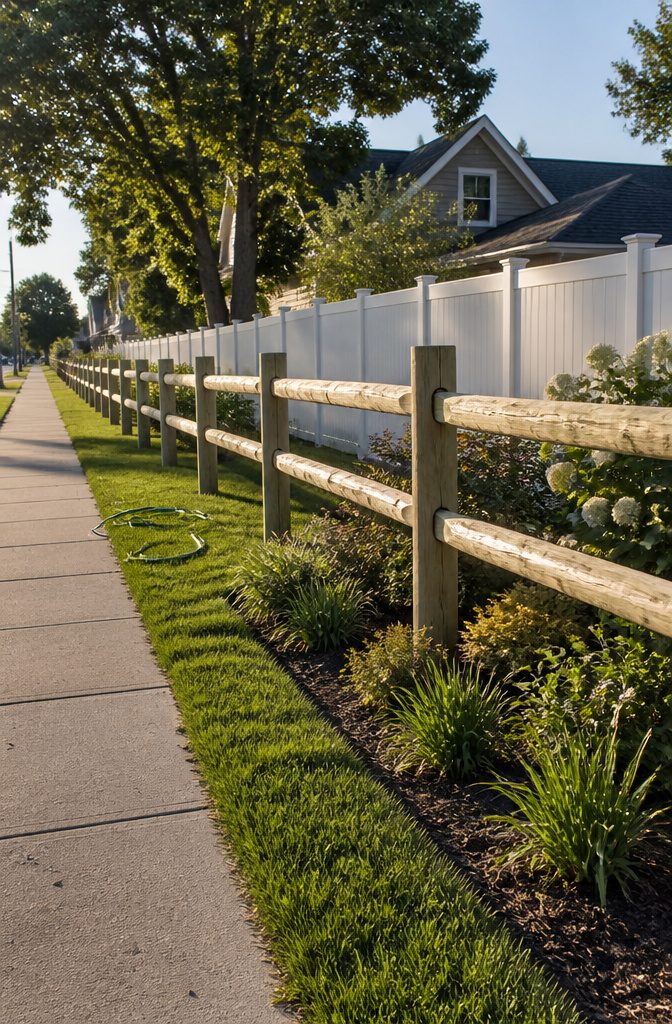
Pressure-treated pine is the first wood named among typical split rail materials, ahead of cedar and hemlock.
The logs are debarked, dried and cut into rails, which are then spaced evenly between posts. That process is why the fence holds up in harsh outdoor conditions, and it is a big part of the material’s reputation for cost-efficiency.
For a modern split rail fence, I’d start with pine. Treated pine is the practical default for a front yard or property line, and its rough log profile stands out against the white vinyl fencing common in suburban neighborhoods.
Cedar and hemlock are the other classic choices, but pine is the one I’d price first.
Recommended Products

(1) 5"x5"x78" 3-rail vinyl ranch line post

Designed for Flexible Layouts - Each set includes 5 vinyl rails, allowing you the flexibility to expand, customize, or build your fence system more efficiently. Whether you're starting a new project or upgrading existing sections, it helps create a clean, consistent, and professional-looking layout for ranches, yards, and farm spaces.

Premium Vinyl Ranch Rails; 1.5"x5.5"x94"
Reclaimed Log Rails
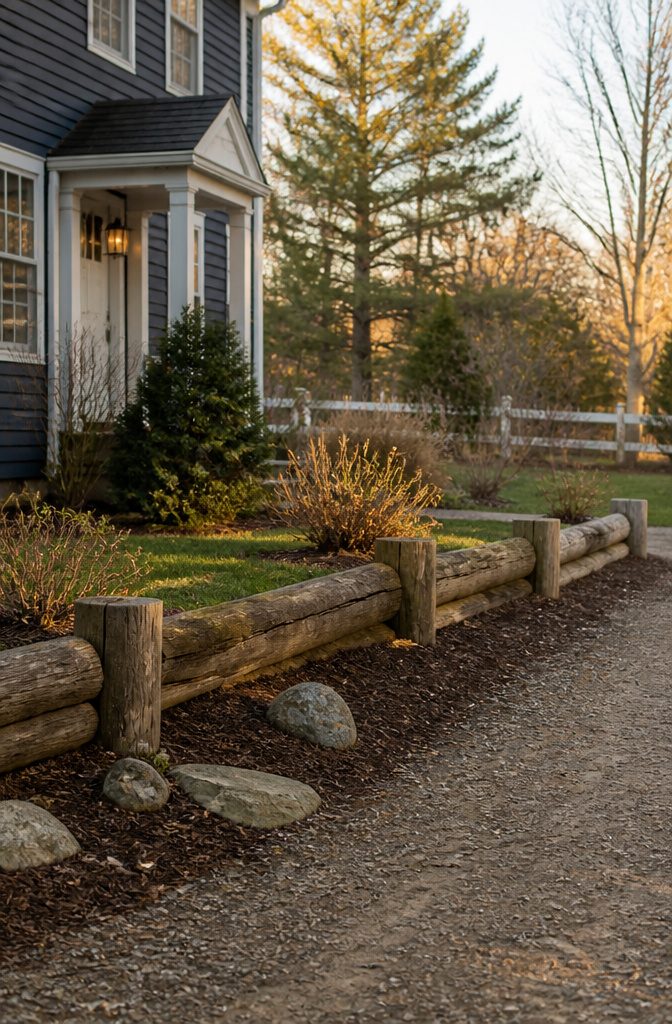
Reclaimed rails arrive already seasoned, so they go straight into the posts with no chemicals or preservatives.
That is why I’d pick them over new lumber for a rustic yard: the earthy color and weathered texture are built in from day one instead of something a new fence has to wait years to earn.
Condition varies from rail to rail, so check each one before buying and reject any that feel soft or crumble at the ends.
Log-cabin style suits this look well.
It typically uses cedar logs, and it has marked property lines and penned livestock for generations. In a small yard, it makes a low rustic edge along a garden bed or front walk.
Recommended Products

QUALITY: Jollybower bamboo slat fence is made from carefully selected natural bamboo, sourced from premium mid-latitude monsoon climates. Each fence is clean, strong, and straight. Bamboo slat rolled fencing is naturally waterproof and built to last for years.

Sufficient Quantity: our product package includes 2 x vinyl pocket rails; These are precision-crafted and come in an aesthetic white color adding value and elegance to your property; Trust our quality and design to provide your property with an attractive, durable and secure construction

T-Track Aluminum Extrusions: This T slot aluminum extrusion is easy to add on track for drill press, miter track, miter saw fence (to add fence flip stop), measuring tape, and other table saw fence system.
Composite and Vinyl Rails
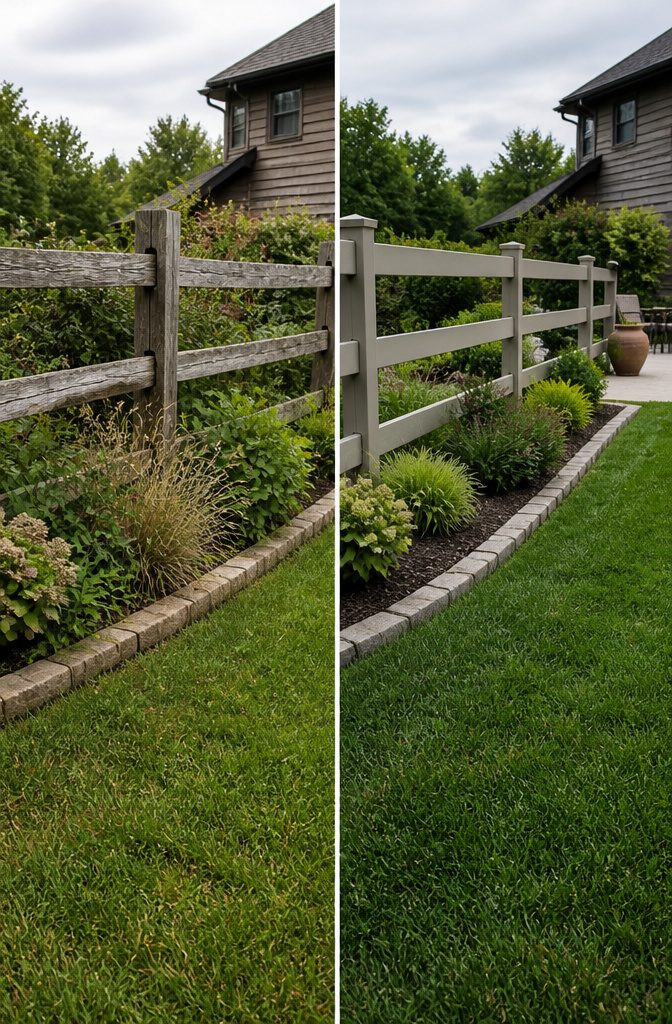
Composite is the closest match to a traditional split rail. It comes as a three-rail fence with a timber look and needs less upkeep than real wood.
Cedar costs less up front, but it won’t last as long as composite. If you plan to stay in the house for years, composite is the better buy.
Vinyl takes a different route. It won’t rot or corrode, and it comes in a range of colors and sizes, so you aren’t limited to a wood tone.
For a clean, modern line I’d pick vinyl. For a rustic look without the maintenance, composite wins.
Recommended Products

Package Content : 4 sets of unassembled 32 inch repair stakes, 12 galvanized assembly screws, 16 galvanized fixing screws, and 1 small wrenches.Size: 1.96” x31.5 ”( W” x H”). Deep ground size:15.75 in

HIGH QUALITY MATERIAL: Deck Railing Bracket is made of high strength ADC-12 Aluminum alloy cast as a whole, high temperature powder coating on the surface, durable corrosion resistance, waterproof, rust-proof, Suitable for connection and installation of outdoor Deck Wood Railing and Fence

Premium Quality: Eapele railing bracket is made of high-quality nylon has high hardness, is not easy to break or bend, is corrosion-resistant, and can withstand wind and rain for years of indoor & outdoor use
Aluminum and Steel
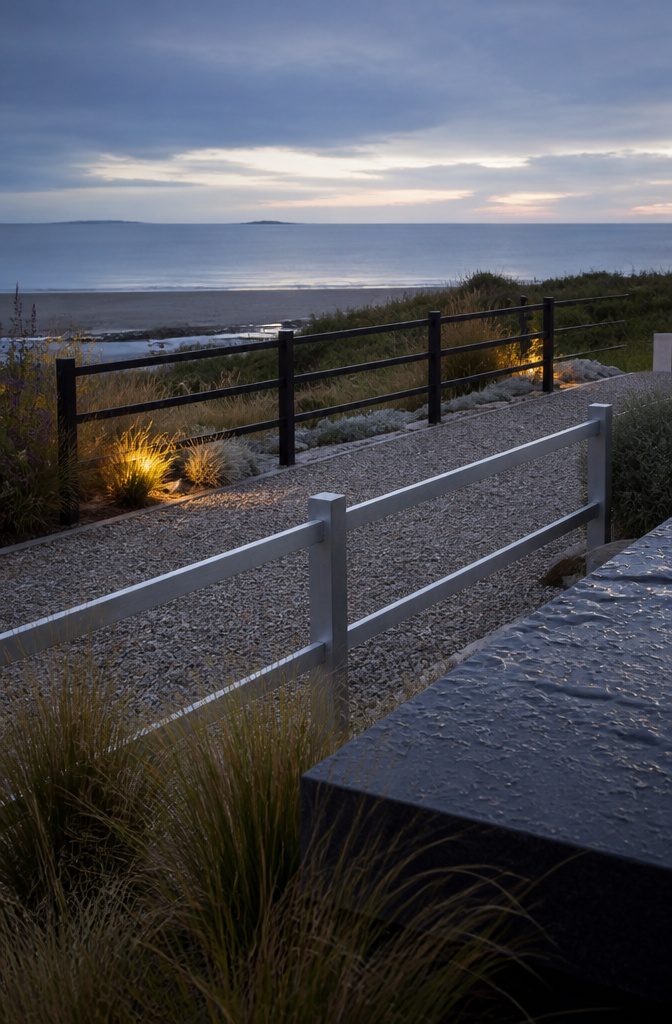
Aluminum is the better pick for a coastal or humid yard. It resists corrosion on its own, so it never needs painting or staining, which skips the recurring chore wood rails demand.
Steel suits anyone who wants the rustic split rail shape without the rot.
Heavy-duty galvanized steel with a black powder-coat finish resists weathering and corrosion, and it is sturdier and longer lasting than wood. The black finish also reads as cleaner and more modern than weathered gray timber.
I would choose aluminum near salt air or in damp climates, and galvanized steel anywhere you want more heft from the fence.
Recommended Products

Comes with a hard surface installation kit – No extra purchase needed.

DIMENSIONS: Each unit is 41" H x 44" W and includes 2 complete fence panels with posts for a total of 88in of fence.

【Premium Steel, Weather-Resistant】 This hoft fence post kit features a black fence post crafted from thickened premium Q235 steel and finished with a high-grade matte black powder coating, delivering exceptional water and rust resistance to withstand the elements. Combining modern minimalist industrial aesthetics with durability that surpasses traditional wood and iron posts, it creates a long-lasting outdoor barrier that stands the test of time.
Precast Concrete
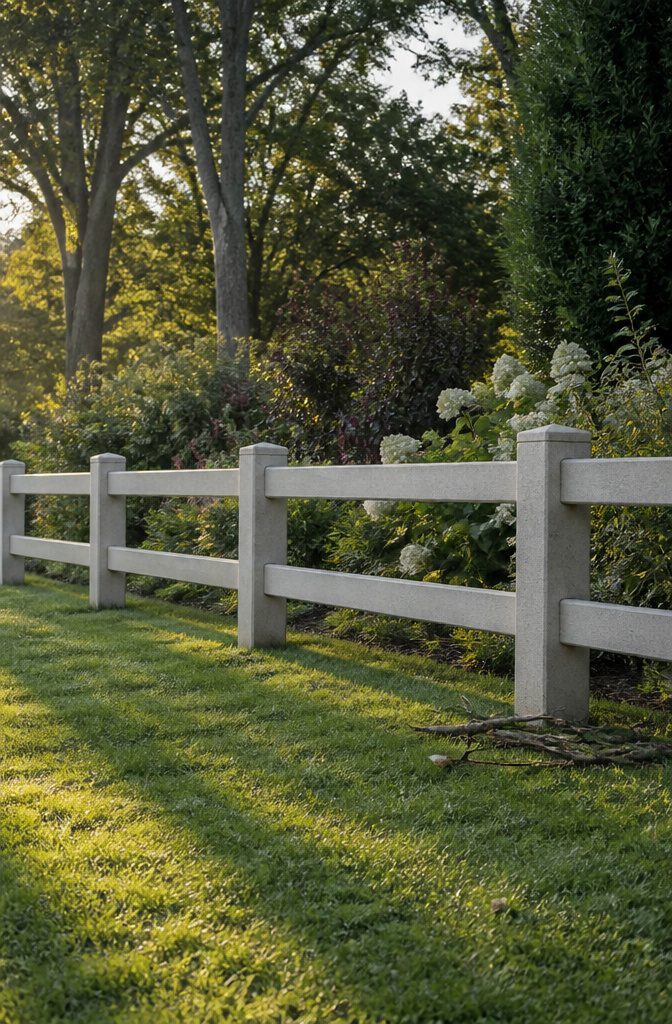
Precast concrete suits anyone who wants the split rail silhouette without the upkeep that wood and vinyl demand.
Weather resilience is the selling point: concrete has low susceptibility to rot or warping, the two problems that tend to catch up with timber rails over the years.
As a result, it does not need regular maintenance or repairs, which is a claim neither wood nor vinyl can make.
Concrete is also long-lasting and attractive, so it adds curb appeal at the front of a property as well as along a back boundary.
If you want the look of timber rails, wood is still the better match for that. If you’d rather install the fence once and stop thinking about it, I’d pick concrete.
Recommended Products

Durable Aluminum Construction: The aluminum fence bracket for vinyl fencing is made from 2mm thick aluminum to resist cracking, warping, and corrosion—outlasting vinyl/PVC alternatives, even in harsh weather

Long Lasting: made from quality nylon, the 10 pcs top rail ties are built to withstand outdoor conditions and resilience against UV exposure, ensuring your vinyl fence remains secure and visually appealing over time for residential and commercial settings
Bamboo Rails

Bamboo adds a texture that log and cedar rails don’t have. Log rails look heavy and cedar rails show wood grain, while bamboo brings a distinctive, natural, rustic character that makes the fence feel like part of the planting.
It is also durable enough to stand up to weather and last for years, so you aren’t trading looks for longevity.
I’d choose bamboo when the fence is meant to be seen, such as along a garden path, around a vegetable bed or beside a patio.
For a long property line, cedar or log rails are the more familiar choice, and bamboo is better used where its look is the point.
Recommended Products

REPLACEMENT RAIL: Made to replace damaged 1.5” x 5.5” rails for vinyl fencing panels. The Weatherables Ribbed Top Rail is the perfect replacement for your outdoor fence. Available in 6ft and 8ft lengths.

HIGH QUALITY: The fence notcher is a quality heavy duty tool with a cold-drawn steel head, durable chrome vanadium steel frame and rubber grips. Solid for long service life. Lock rails and fence in place quickly and securely.

Order is for a 4-Pack of fencing, giving a total of 32 feet of fencing in length
Wire Mesh Between Rails
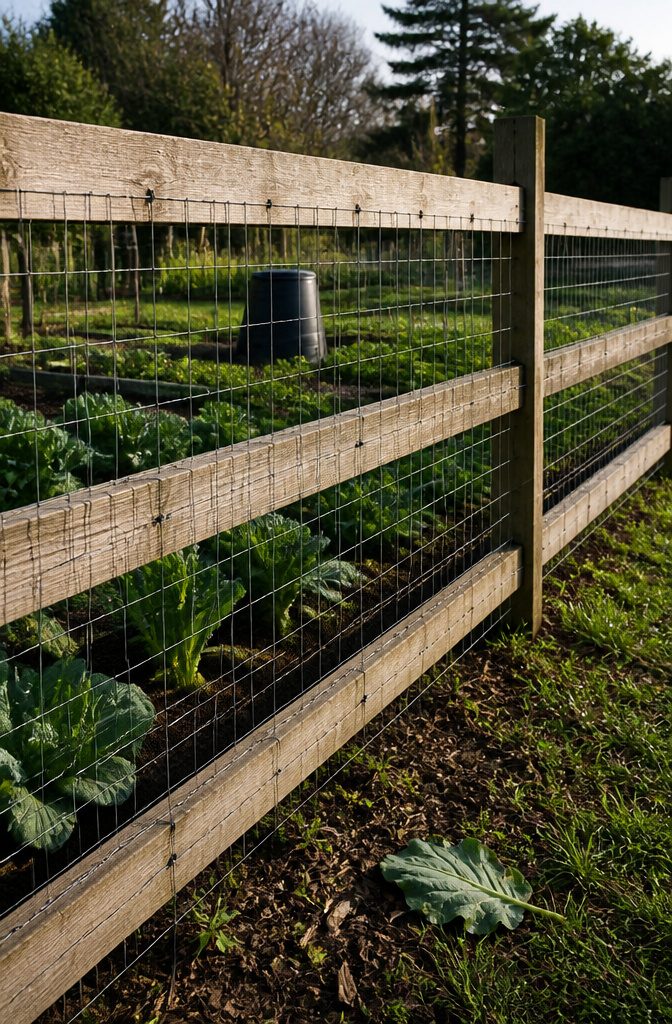
A three-board split rail fence, with two posts and three horizontal boards between them, marks a border well but leaves gaps a small dog or toddler can slip through.
Wire mesh closes those gaps and extends the fence’s life span. You can weave the mesh between sections or fasten it to each one with staples or hog rings.
Either method helps hold the rails in place. I’d pick fastening for a first build, since it’s simpler than threading mesh through.
The interwoven pattern also looks lighter than chain link, which suits a modern yard. The weave is only as durable as what anchors it, so use strong steel poles or posts.
Recommended Products

4x4 (3-5/8" x 3-5/8") Plastic Black Fence Post Caps ~ Multi-pack Quantity Item - Please verify correct quantity needed

Premium Quality: Eapele railing bracket is made of high-quality nylon has high hardness, is not easy to break or bend, is corrosion-resistant, and can withstand wind and rain for years of indoor & outdoor use

Premium Quality: Eapele railing bracket is made of high-quality nylon has high hardness, is not easy to break or bend, is corrosion-resistant, and can withstand wind and rain for years of indoor & outdoor use.
Zigzag and Crisscross Layouts
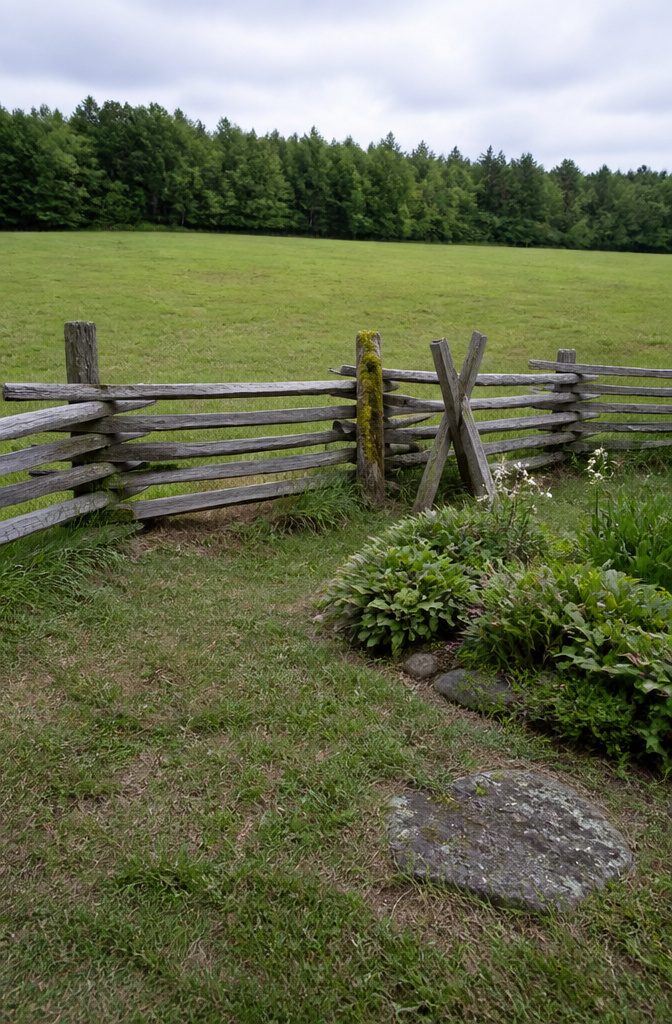
A zigzag run, with each section of rail angled off the last, marks a property line while looking softer than a straight fence.
Diagonal supports add to that: posts cut at an angle and staggered give the fence added stability and a textured look.
Cedar logs or weathered wood suit this style best. For a corner that has to hold in animals or small children, I’d choose the crisscross.
Cross 2- or 3-rail posts in an X, with 2 posts at the corner and 1 between them. It keeps the rustic look and still works as a real barrier.
Recommended Products
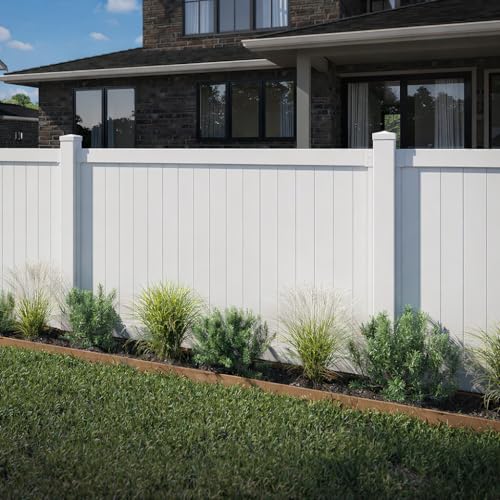
FINISHING POST REQUIRED: This vinyl fence is designed to scale, so you will need to order a finishing post to complete your yard fence or pool fence project (item BL19042). A compatible gate is available by searching BL19106.

12 Plastic Fence For Cake Decorations

✔ SAVE YOUR MONEY WITH EASY INSTALLATION Patented SecureSnap assembly design enables you to assemble a panel in the matter of minutes.( For Concrete floor Flange Kits are sold separately)
White Rails With a Hedge
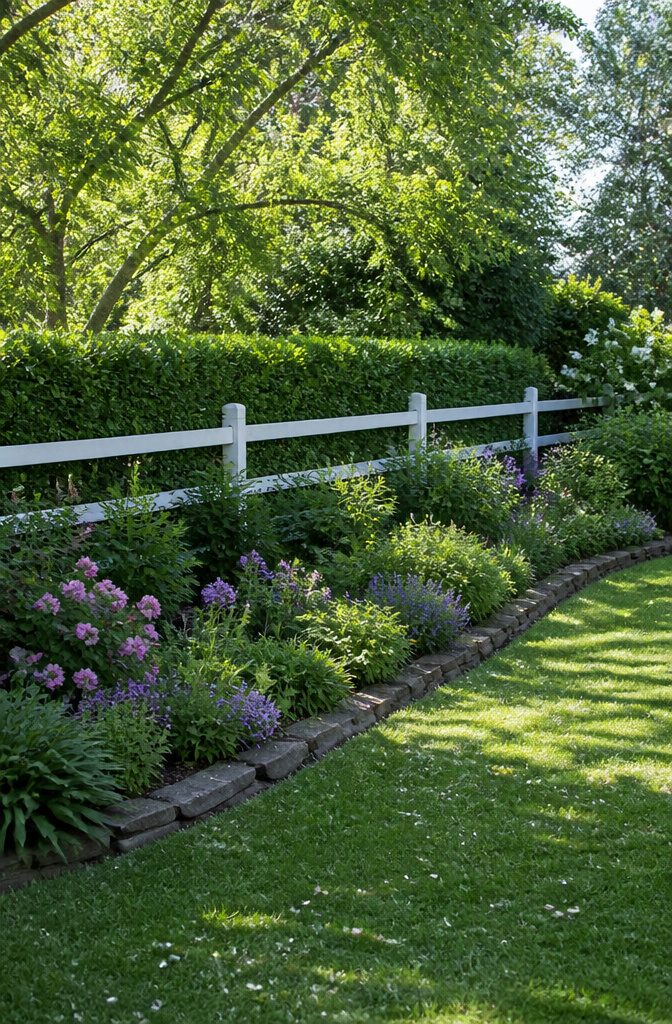
A bare two-rail fence marks a boundary and little else.
The rails run parallel along a line set in the ground, and you can see, and walk, straight through the gap between them. Painted white, they read as a crisp outline, which looks especially clean against green.
Adding a hedge changes what the fence does. The planting fills the open space and adds privacy and an extra layer of protection that two rails alone cannot give.
I’d plant the hedge slightly behind the rails rather than hard against them, so the white paint stays visible and branches don’t rub it. The rails then keep the edge defined while the hedge handles the screening.
Arbors and Gothic Posts
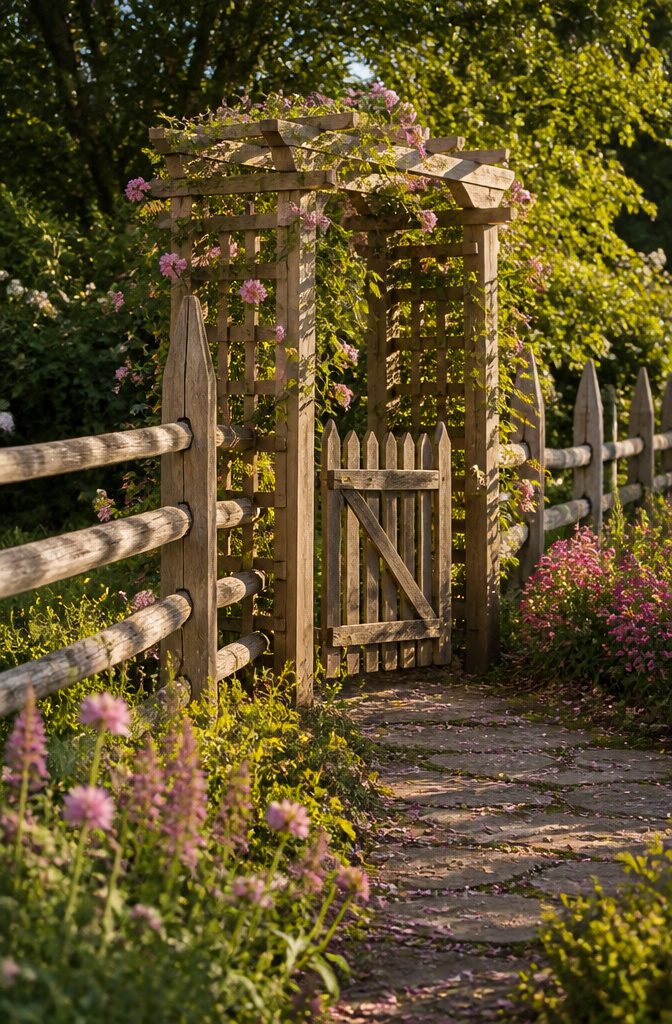
An arbor or pergola built into a split rail line adds a decorative accent and gives fragile plants and flowers some protection.
I’d put it where the line meets a gate or a planting bed, so the stacked, criss-cross rails and their log-cabin look frame the plants instead of competing with them.
Place the arbor over the gate or at a bed corner, and keep the rails around it plain.
Gothic-top posts are the cheaper way to dress up the same fence.
The pointed tops give the line an eye-catching shape with no extra structure, and the simple design stays relatively affordable. I’d choose them over an arbor when the budget is tight or the fence has no plants to shelter.
Natural Wood Choices
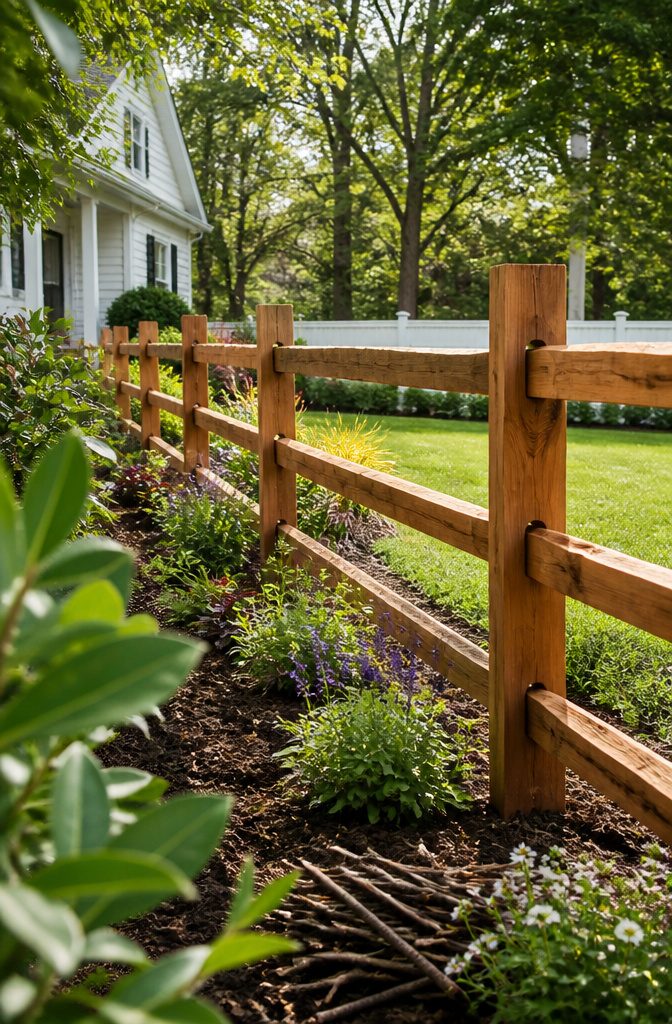
Pressure-treated pine, cedar and hemlock are the woods most split rail fences are made from.
The logs are cut into sections and spaced evenly between posts, so the wood itself is the design. Against the white vinyl common in suburbs, any of the three looks warm and distinctly different.
For a modern look that stays low effort, I’d choose cedar. It resists rot and insects, and it needs no painting or staining.
Cedar won’t last as long as composite, but it costs less. For a fence meant to mark a front yard or a flower bed rather than to hold back livestock, that trade is a good one.
Maintenance by Material
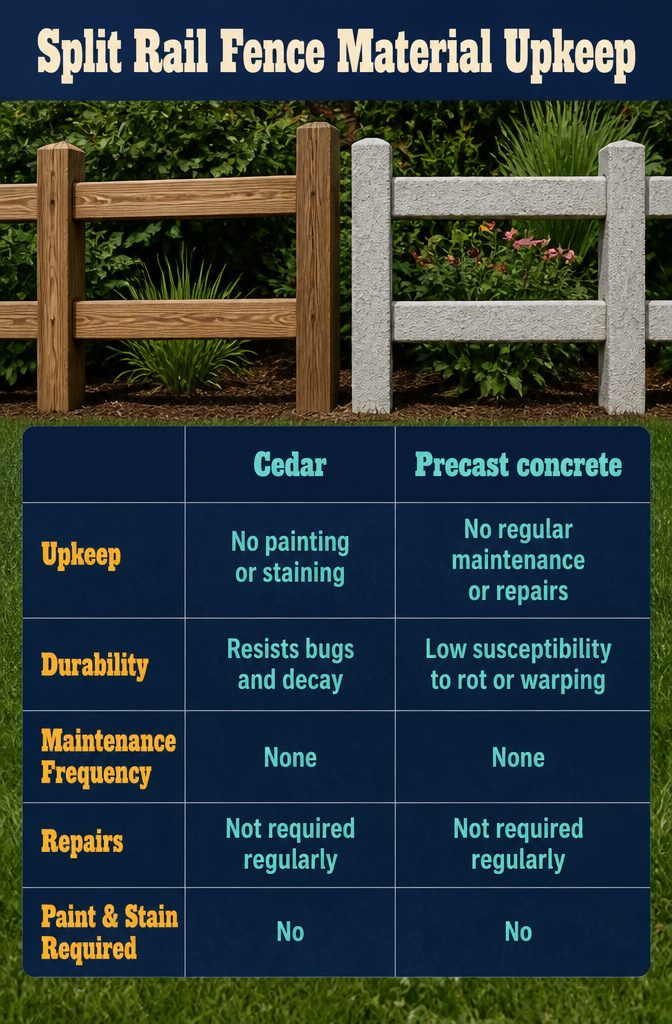
Aluminum, precast concrete and cedar all skip the paint-and-stain routine.
Cedar is the affordable one, though it won’t last as long as composite. Precast concrete is the only one described as needing no regular maintenance or repairs.
| Material | Upkeep | Durability |
|---|---|---|
| Cedar | No painting or staining | Resists bugs and decay |
| Aluminum | No painting or staining | Corrosion resistant, suits coastal and humid areas |
| Precast concrete | No regular maintenance or repairs | Low susceptibility to rot or warping |
| Locust | Low maintenance | n/a |
Rustic Boundary Uses
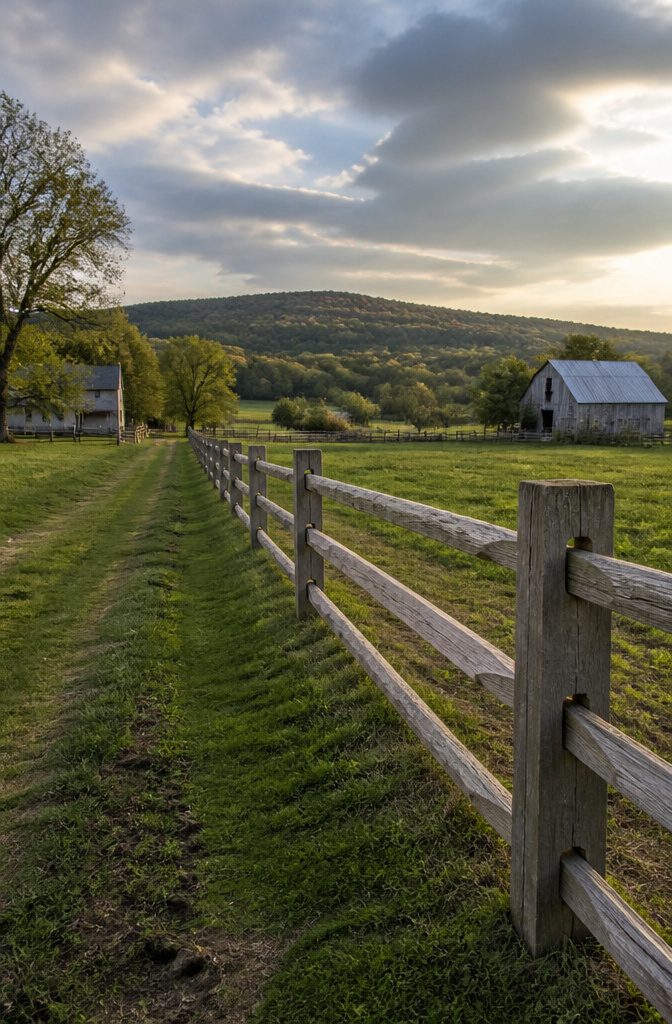
Split rail looks rustic because the rails stay rough and the posts do the structural work.
Routed posts have slots cut through them, so the rails slide in with little hardware to interrupt the natural look. Most layouts use 2 or 3 rails between posts set about 10 feet apart.
Two rails are enough to mark a property line or edge a front yard. Three rails make more sense for a pasture, where the fence has to separate livestock.
That range explains why the style fits a small city backyard as well as a ranch, a farm or open acreage.
For marking a boundary, I’d pick split rail over a solid fence: it defines the line without blocking the view.
Frequently Asked Questions
What are the different types of split rail fences?
Split rail fences vary by material and by layout. Materials include wood (pressure-treated pine, cedar, hemlock, locust and reclaimed logs), composite, vinyl, aluminum, steel, precast concrete and bamboo.
Layouts include 2-rail and 3-rail runs, zigzag lines and crisscross corners. Two rails are enough for a property line or garden edge, while 3 rails suit pastures or any spot where a dog or small child could slip through.
What is the standard length of split rail fence rails?
Rail length follows post spacing, and most layouts set posts about 10 feet apart with 2 or 3 rails between them.
That makes roughly 10 feet the working span for a rail. Exact lengths can differ by material and supplier, so check the product before you space your posts.









