
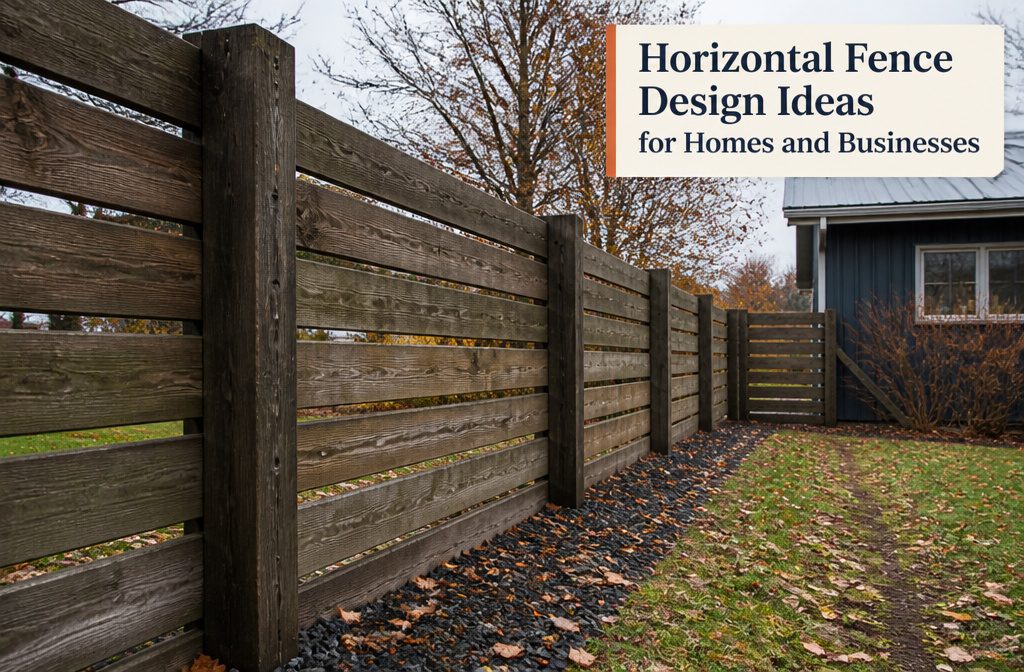
Horizontal fences run from $15–35 per linear foot for standard cedar to $45–90 for premium, and how much privacy you want decides which design fits.
Whatever you pick, nothing backs the boards between posts, so setting posts more than 6 feet apart is a mistake. Gaps between boards also need a spacer.
1. Tight-Board Privacy Fence
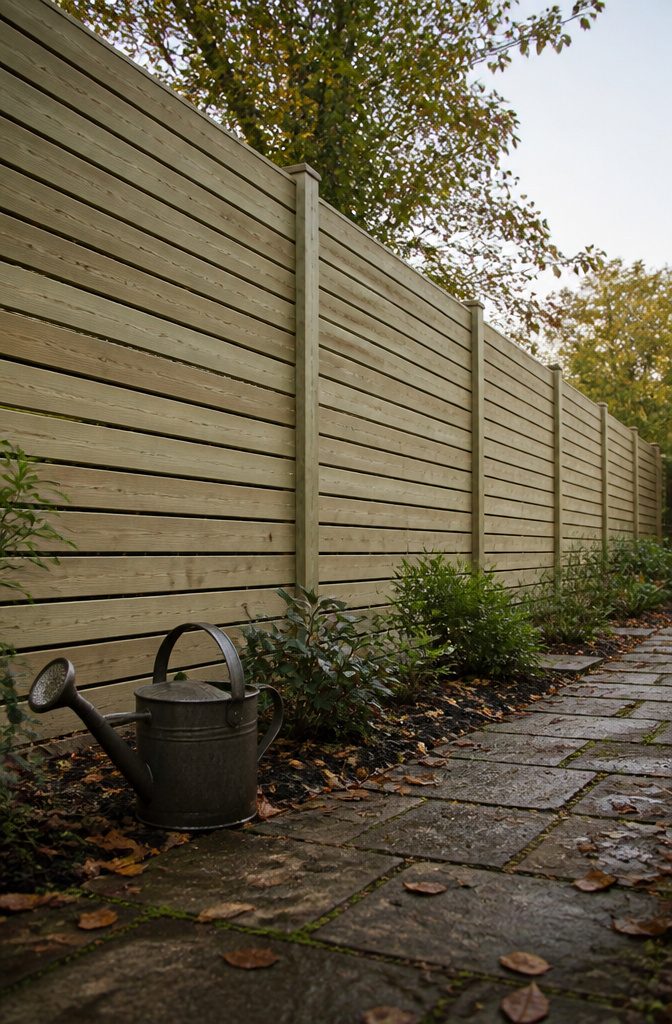
Run horizontal boards close together and you get a solid or near-solid barrier, but close should not mean touching.
Wood moves most across its width and barely at all along its length. On a horizontal fence that movement runs top to bottom, so gaps open in dry weather and close in wet.
Boards butted tight have nowhere to go when they swell, and they press against each other. I’d set every board with a 1/4-inch spacer as the baseline gap and keep it identical along the whole run.
Treated pine often goes up damp, so expect those gaps to widen as it dries. How private the fence ends up depends on that spacing and layout, not on the horizontal style itself.
Recommended Products

【Premium Steel, Weather-Resistant】 This hoft fence post kit features a black fence post crafted from thickened premium Q235 steel and finished with a high-grade matte black powder coating, delivering exceptional water and rust resistance to withstand the elements. Combining modern minimalist industrial aesthetics with durability that surpasses traditional wood and iron posts, it creates a long-lasting outdoor barrier that stands the test of time.

HEAVY-DUTY STEEL CONSTRUCTION: Made from sturdy steel to help create a strong, stable wood gate frame for fences, patios, and other outdoor gate projects.

【Premium Steel, Weather-Resistant】 This hoft fence post kit features a black fence post crafted from thickened premium Q235 steel and finished with a high-grade matte black powder coating, delivering exceptional water and rust resistance to withstand the elements. Combining modern minimalist industrial aesthetics with durability that surpasses traditional wood and iron posts, it creates a long-lasting outdoor barrier that stands the test of time.
2. Semi-Private Fence With Even Gaps
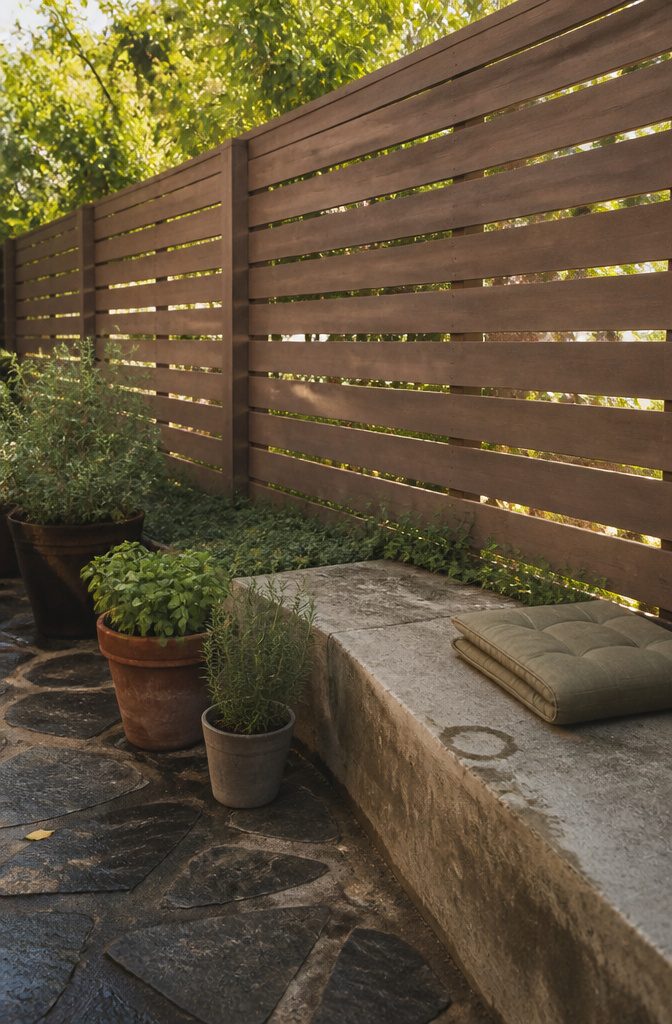
Narrow gaps of about 1/4 inch between boards let light and a breeze through while the fence still defines the space.
Even spacing matters more than the exact width. A spacer block cut to one size and set between every course keeps the gaps identical from post to post, and FenceTrac supplies its own spacers for the same job.
Judging by eye lets small errors add up board by board, and a gap that drifts is easy to spot against the sky.
I’d choose this layout for a patio, a garden or a side yard that needs airflow and light more than full screening. If neighbors can see straight into your seating area, tight boards are the better call.
Recommended Products
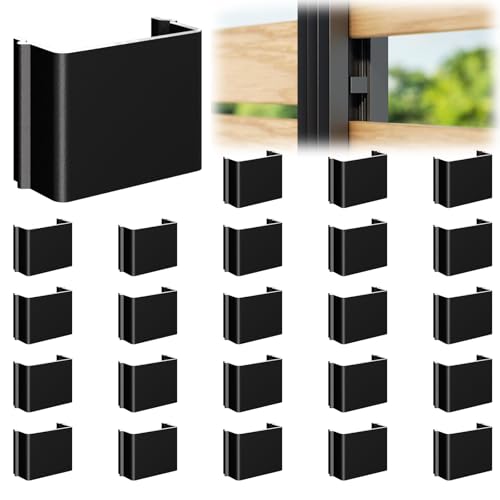
Perfect Post Alignment – Cleaner, Faster Installations: This 15mm thick fence post spacer helps you maintain perfect spacing between posts during installation, ensuring straight lines and a professional finish. Say goodbye to uneven gaps and constant measuring.

Tool-free snap-in design, no screws required. Installation can be done with bare hands, and the positioning is quick, while disassembly is also convenient.Made from high-quality, high-density nylon, it is tough, durable, and reliable, and can withstand repeated impacts. It is UV-resistant, salt- and alkali-resistant, and corrosion-resistant.

✅【Fence Alignment Tool Fit for 0.8" Groove Posts】Crafted from high-strength aluminum alloy, Tafbrik fence post spacer is spacer is purpose-built for standard 0.8-inch(4/5‘’) groove fence posts, ensuring compatibility with the most common wooden panels. This fence tool guarantees a perfect, rattle-free fit for your fence construction projects. Pro Tip: Pair it with our Aluminum Fence Post for a complete, seamless Privacy Fence installation.
3. Mixed-Width Boards
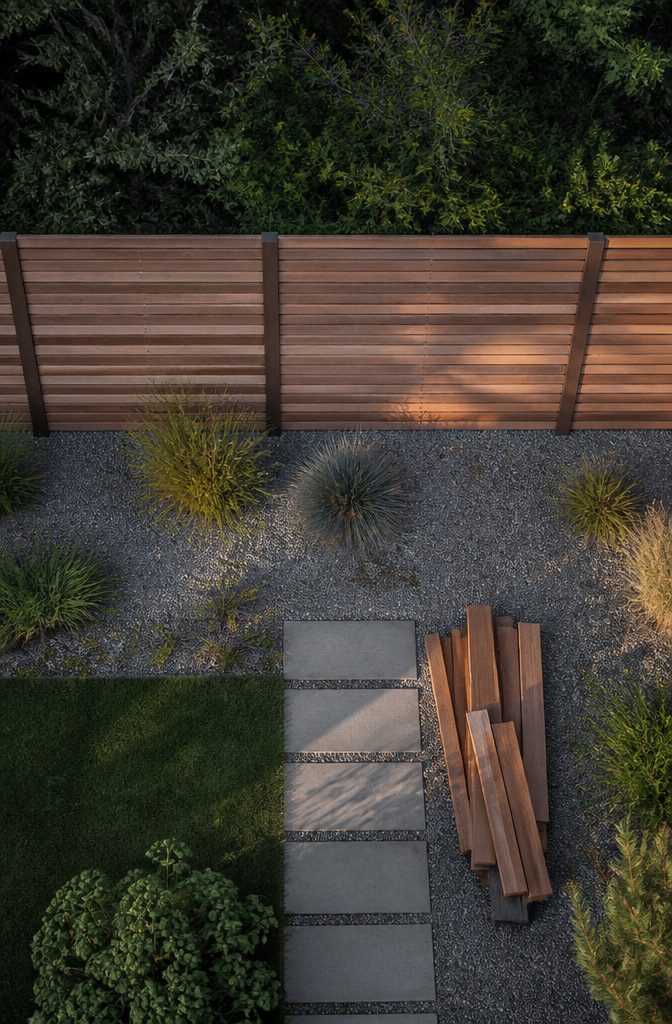
Alternating wide and narrow boards gives a plain horizontal fence a rhythm that looks custom.
Pairing a 6-inch board with a 4-inch board is the simplest version. For a more architectural look, add a wider gap every few courses so the fence breaks into bands.
Either way, I’d sketch the pattern before buying any lumber.
Draw the full height of the fence so you can see which board ends up on top, since an awkward sliver or an odd gap at the top line is the flaw the eye catches first.
Then repeat the identical sequence on every section so the lines carry across posts without a jump.
Recommended Products

Innovative Design: The wooden fence panels posts features a U-channel design—simply attach the brackets to the posts and slide in (3/4" x 5.5") wood planks to lock. Easy DIY installation and plank replacement, even for one person, saving time, effort, and labor costs in the short and long term

Brown Fence Slat - Designed for a 4' high fence, slats are approximately 44.5" in length to accommodate the bottom locking channel and to prevent the slats from being above the top of the fence. (Available Colors: Beige, Black, Brown, Gray, Green, Redwood, Royal Blue, Sky Blue, White)
4. Cap-and-Trim Framing
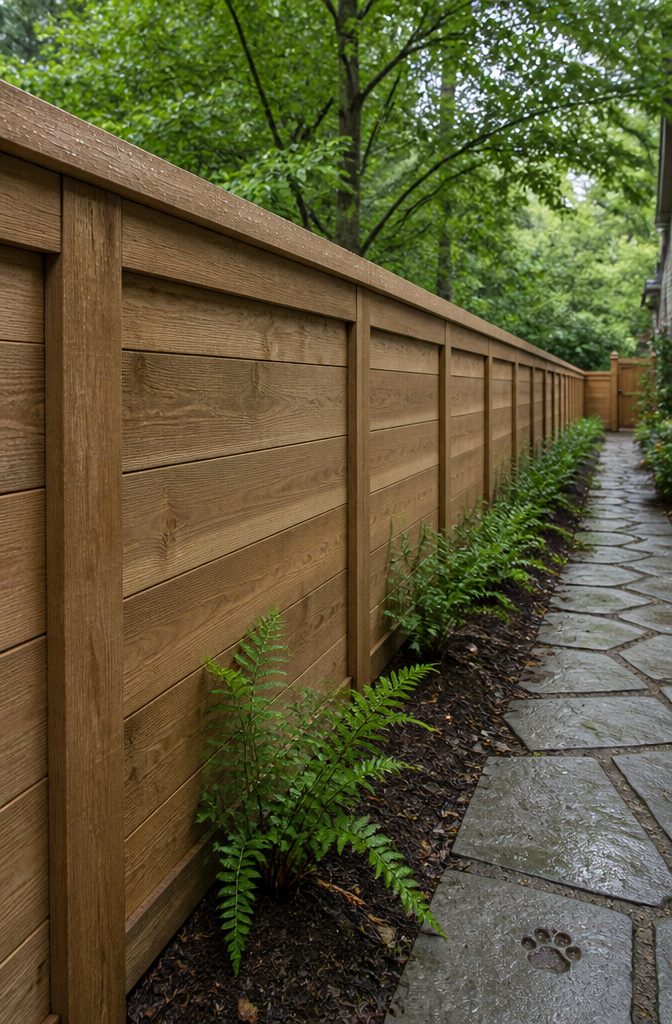
Cap-and-trim is a named horizontal style, and it comes down to two additions. A 2×6 cap board runs across the top of the posts, and vertical trim boards cover the seams where the horizontal boards meet each post.
The trim hides cut ends and fasteners, which show the most on a plain run, and it makes each stretch between posts read as a framed panel.
The cap also does practical work.
A flat top board keeps moisture out of the post tops and board ends, so water doesn’t soak in where the wood is most exposed. I wouldn’t skip it, since a horizontal fence with a top cap lasts longer.
Recommended Products
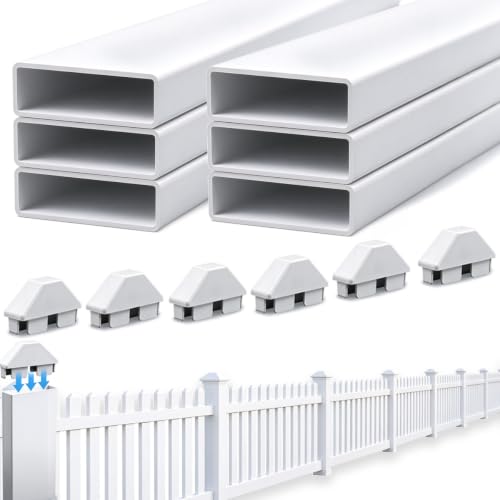
Rail Kit: These vinyl fence panels include a rail kit with 6 white vinyl rails and 6 matching caps, enhancing your home’s exterior appearance and extending outdoor performance; they add visual interest and a modern touch while blending smoothly with any white architectural scheme.

Package Includes: the package comes with 8 pieces of vinyl picket fence caps, sufficient quantity can meet your using needs, please make sure about the quantity for your installation of the fence before purchase

DIY FENCE KIT: The Livingston metal fencing is a DIY-friendly solution with a modern design. Each fence section comes ready to assemble in a convenient box, offering cost-effective alternative to wood and vinyl fencing.
5. Wood With Aluminum Accents
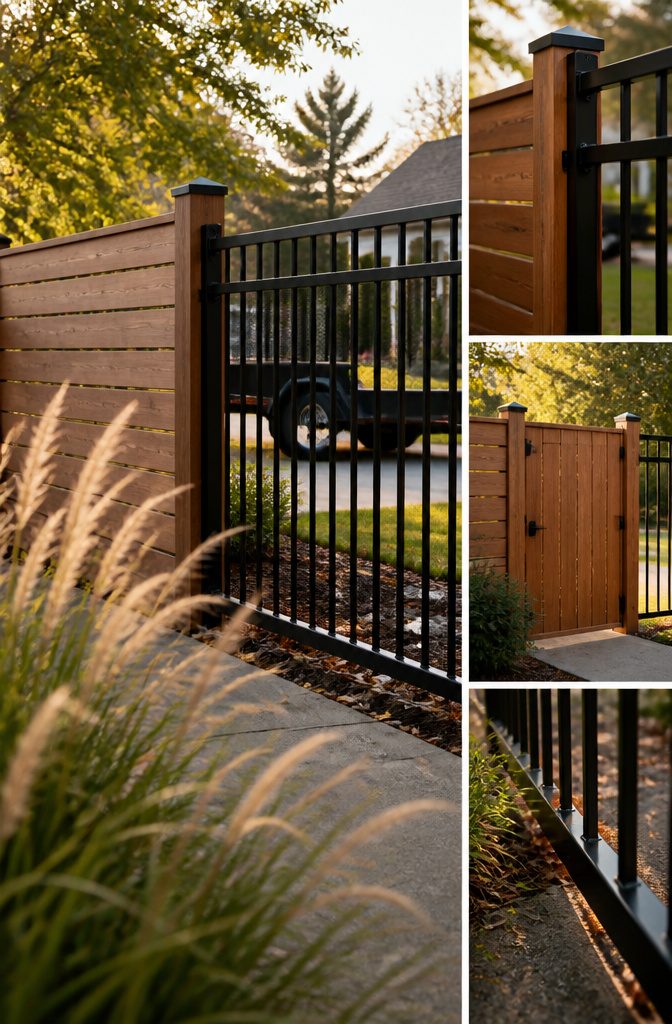
Keep the solid horizontal boards along the back of the yard, where privacy matters, and switch to ornamental aluminum where you want something to look at or through.
Good places for the change are a view you’d hate to block, a walk gate, and the stretch with a clear line of sight to the driveway.
Black or bronze aluminum looks sharpest against the wood, and I’d pick whichever matches your window frames or door hardware.
The two materials age differently.
Wood needs periodic sealing or staining to hold its color, while aluminum doesn’t rot and needs little beyond a rinse. Make the change at a post, not mid-span, so the seam looks planned.
Recommended Products

WHITE SNOWBOARD WALL DISPLAY AND STORAGE – Built for riders who want boards off the floor and easy to access, this snow board wall hanger works as a snowboard mount wall, snowboard wall mount horizontal system, snowboard mount and snowboard hanger wall mount. Four levels create clean horizontal snowboard wall mount storage for a garage, cabin, mudroom or gear room, helping organize snowboards with bindings while still leaving room for select skis and poles as secondary winter equipment. It presents boards like a display while solving daily clutter after mountain trips.

MDF Fence makes great fences for router table & other too
6. Steel Posts and Metal Accents
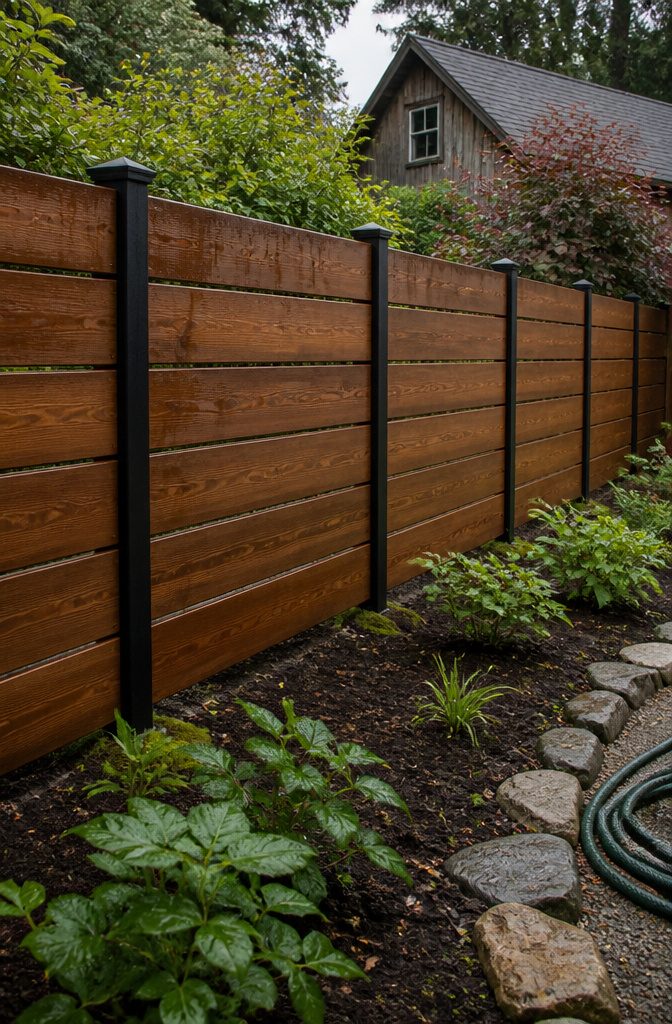
Wood posts rot where they meet the soil, and steel posts don’t. Steel posts avoid rot at the ground line, and wood trim can wrap them so the fence still looks all wood from the street.
If you want the metal to show, a slim steel post or a dark metal cap draws a crisp contrasting line between sections of horizontal boards. The dark metal also gives the warm wood grain something to stand against.
Wood posts cost less up front, and that matters on a small yard budget.
Still, the posts carry the whole fence, so I’d put the extra money into steel if you plan to keep the fence for many years. Wood posts make more sense for a short-term fence.
7. Contrasting Tones and Finishes
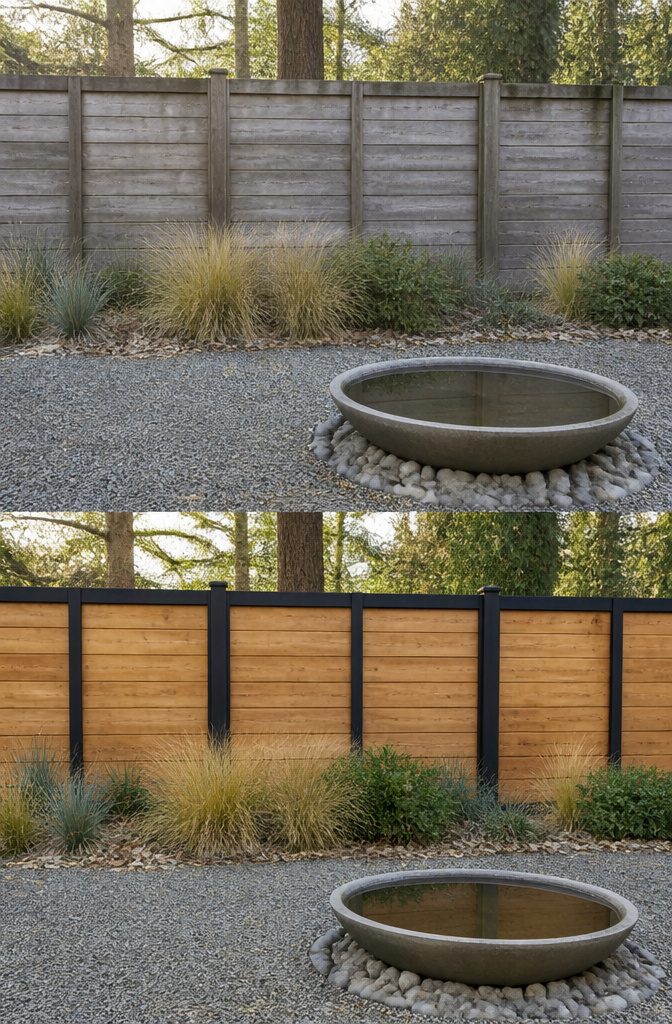
Dark posts and trim around natural boards give a horizontal fence a crisp, architectural frame.
Light trim holding darker boards works just as well. I lean toward dark posts with natural boards, because the long horizontal lines stay the main feature while the posts recede like a picture frame.
Bare cedar and treated pine weather to a silver gray, so decide early whether you want that look. Staining or painting is optional, though it adds protection as well as color.
If you let the boards go gray, the contrast with dark posts will soften over time. If you want the contrast to hold, plan on a finish.
Recommended Products

✔ 4 Gap Sizes in One Tool - Each spacer includes four precise gap options: 1/16", 1/8", 3/16", and 1/4", making it easy to meet specific building code requirements and decking material needs without switching tools.

16 Piece Pack for Long Deck Runs: our ABS deck spacer tool set contains 16 Deck Spacers, a sufficient quantity to easily handle patio renovations or long distance board laying without frequent shim adjustments, improving work efficiency; Ideal for quick, consistent spacing installation of pressure treated lumber, composite decking, and PVC decks
8. A Matching Horizontal Gate
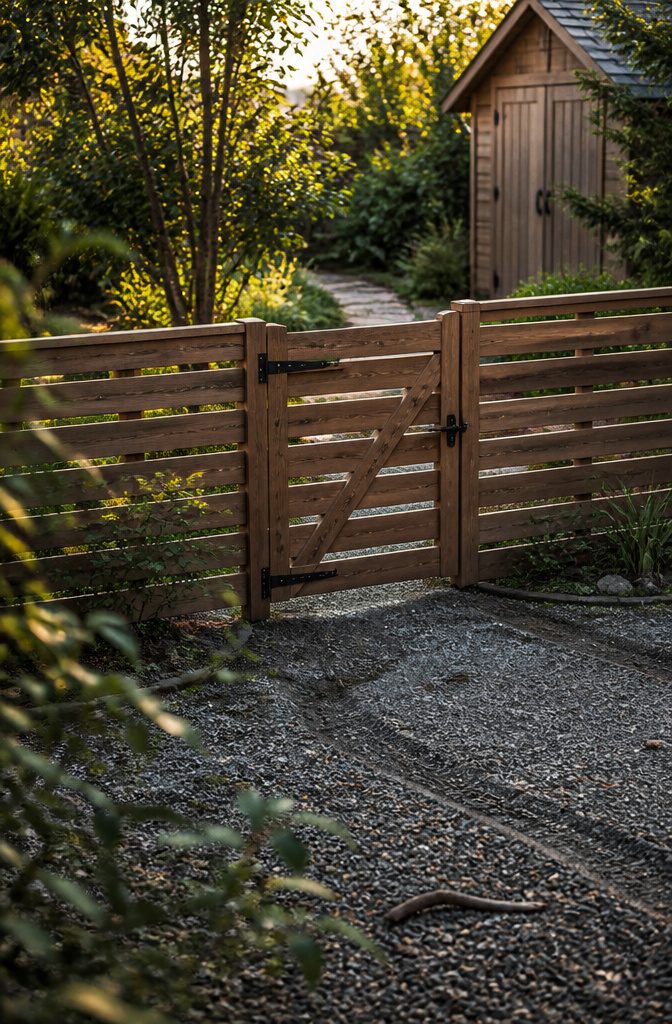
Build the gate from the same boards, gaps and trim as the fence, so the lines run straight across the opening instead of stopping at a panel that looks different.
Behind the boards, make a frame from 2×4 lumber with half-lap joints at the corners.
A wide horizontal gate pulls hard on its hinges, so add a diagonal brace from the upper hinge side down to the lower latch side, which keeps the latch end from dropping.
Heavy-duty T-hinges work best, and a 3/4-inch spacer during installation keeps everything aligned. For a wider opening, I’d split it into a double gate with a center cane bolt rather than hang one oversized leaf.
9. Horizontal Screens for Small Yards
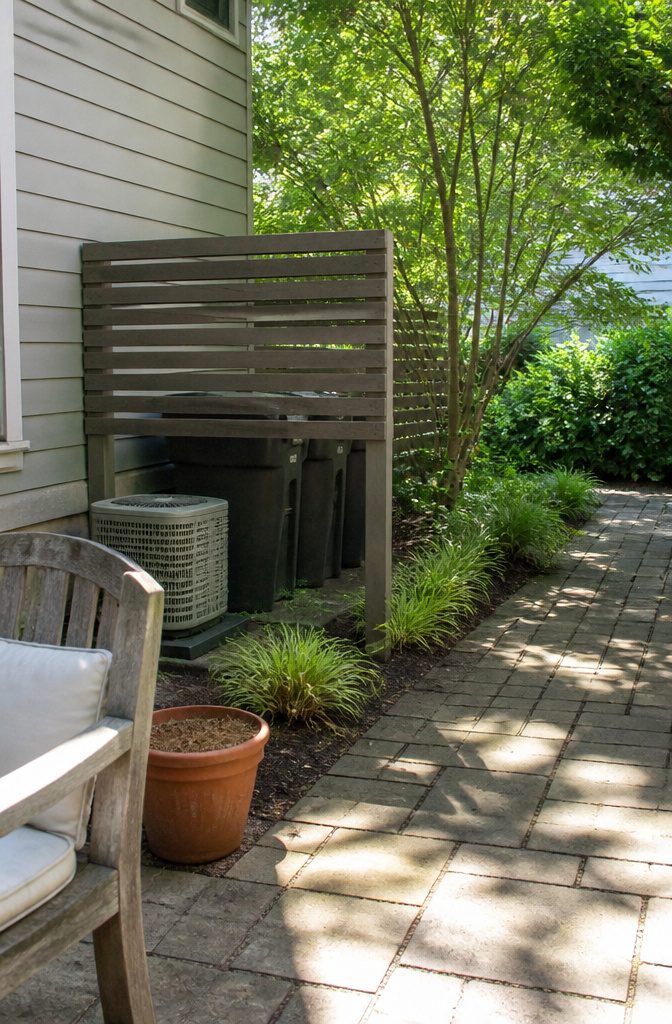
A small yard rarely needs a full perimeter fence. A few short horizontal screens can block a neighbor’s view of the patio, hide trash cans or an AC unit, or give a hot tub a private corner.
For a yard this size, I’d pick screens over a full run, because boards running sideways guide the eye along the length and make the space feel wider instead of boxed in.
The clean lines also read as modern, which suits minimalist and contemporary houses and still looks right beside craftsman or Mediterranean styles. Put the screens where you actually look from your chair or kitchen window.
Recommended Products

EASY FIT & INSTALLATION: These vinyl fence post caps by LMT Mercer are designed for 4x4 fence, deck, and gate posts. Simply slide each cap over the post for a snug fit—no complicated installation required.

Versatile: These 7/8" x 3" inch vinyl post caps are perfect for decorating and protecting square top corner stair railings, porch, fence posts actual 7/8" x 3", and more.

DIMENSIONS: This fence measures 40"W x 30"H ;This item brings 2 panels
10. Commercial Horizontal Fencing
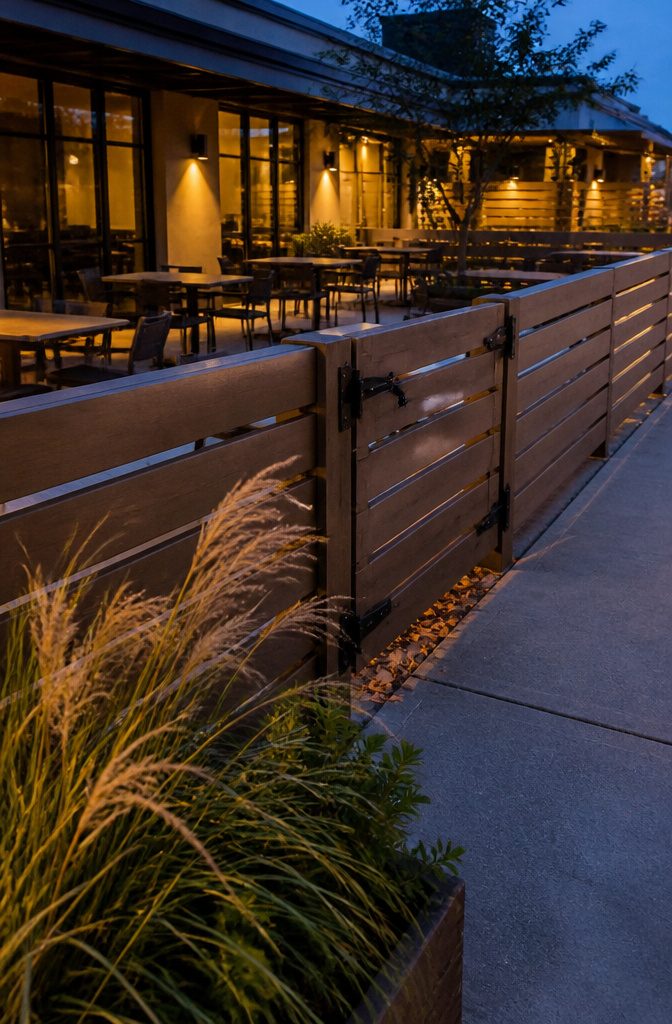
Restaurant patios, office courtyards and apartment amenity areas all suit horizontal boards, which look clean and professional.
The same style can screen a dumpster or act as a pool barrier. Commercial sites get far more foot traffic than a backyard, so spend extra on sturdy gates and heavier hardware.
Pool barrier and height rules are local, so check your county’s requirements before you draw the fence.
Virginia shows how specific they get. Chesterfield County allows 7 feet on side and rear lines and 4 feet in front, and pool guidance puts horizontal members spaced under 45 inches apart on the pool side so a child can’t climb them.
Virginia also requires a building permit for pool barriers. Treat those figures as one state’s answer, not a national rule.
Posts Every 6 Feet
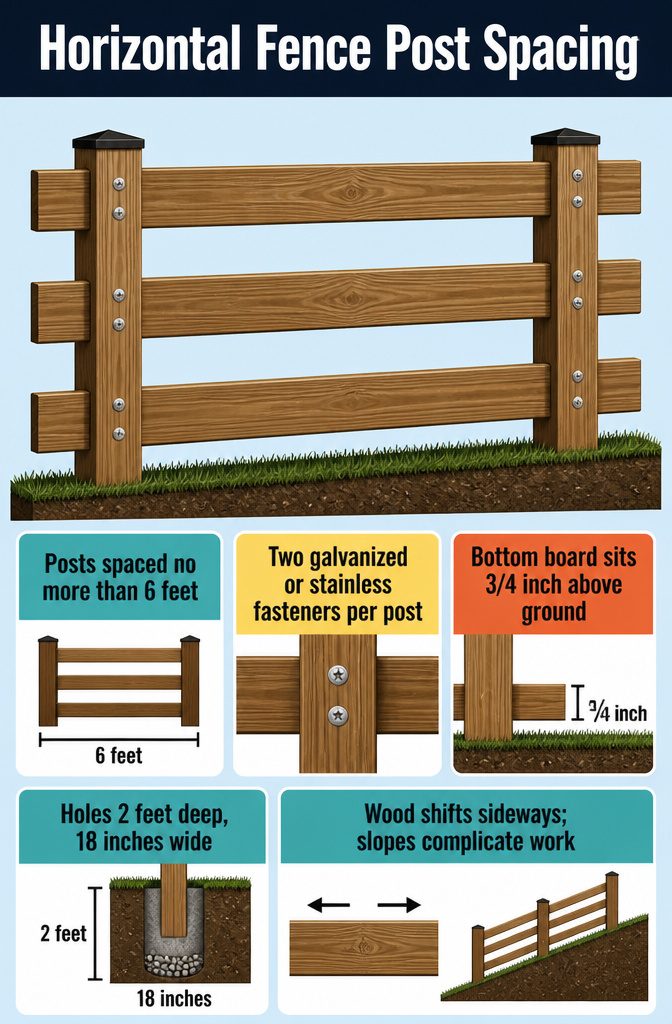
Each horizontal board spans post to post with no rail behind it, so the framing decides whether the fence stays flat.
- Set posts no more than 6 feet apart. Vertical fences can stretch to 8 or 9 feet, but I wouldn’t try that here to save on posts.
- Use two fasteners per board at every post, hot-dipped galvanized or stainless steel. This also keeps boards from cupping.
- Hold the bottom board 3/4 inch above the ground.
- Dig holes 2 feet deep (check local code), 18 inches wide, with 6 inches of gravel at the bottom and at least 6 inches below the frost line. Call 811 first.
- Expect gaps to open sideways as the wood moves. Sloped ground is also harder to work with than it is for vertical pickets.
Cedar or Treated Pine
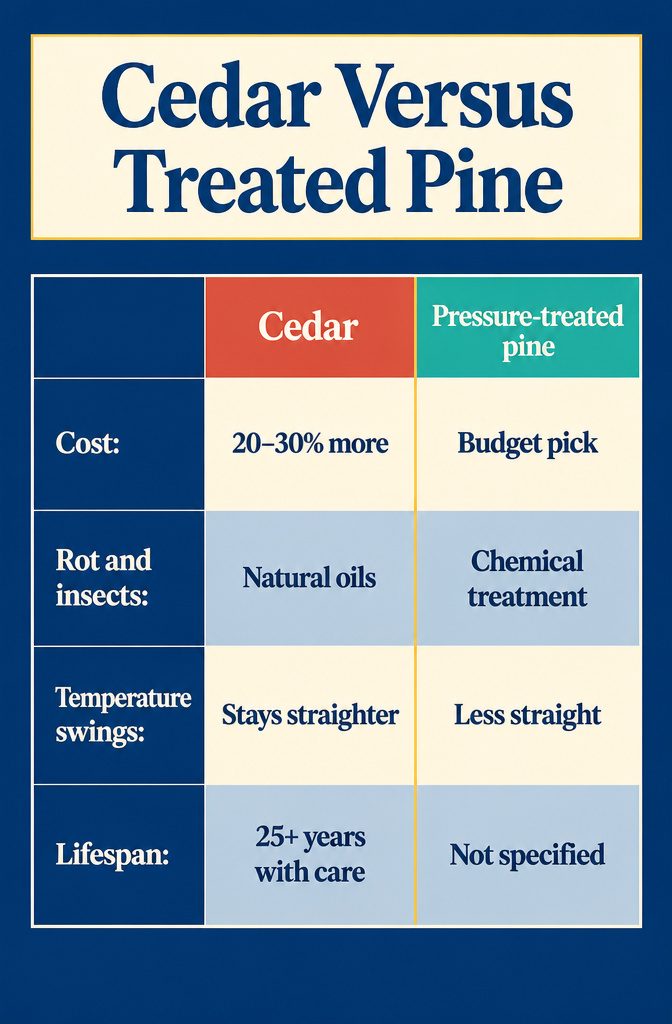
Cedar wins for most horizontal fences. Its natural oils resist rot, decay and insects without chemicals, it stays straighter through temperature swings, and it can last 25+ years with care.
It costs 20–30% more than pressure-treated pine, which is the budget pick, and I’d only choose pine when price decides everything. Either way, buy straight, clear boards, since long horizontal lines show every bow.
Horizontal cedar with standard installation runs $15–35 per linear foot, and premium cedar runs $45–90.
Professional installers add $10–30 per linear foot. A 150-foot backyard run lands between $2,250 and $4,500.
Other infill options include composite, PVC, Ipe, galvanized metal and aluminum. PVC is lighter and cheaper than composite.
Build It Yourself or Hire Out
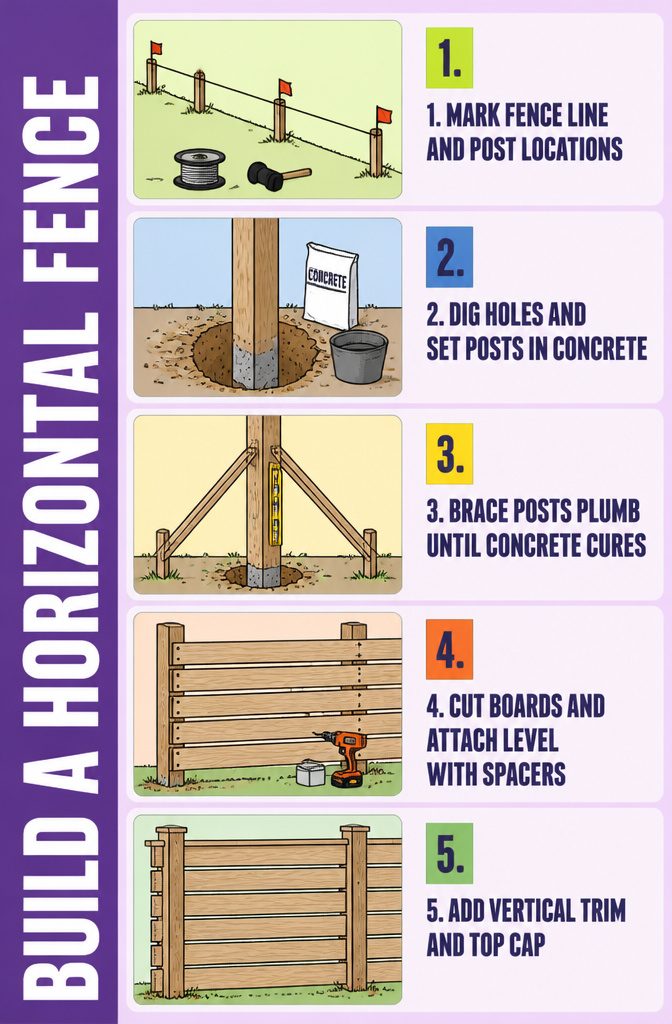
- Mark the fence line with stakes and string, then flag each post location.
- Dig the holes and set the posts in concrete.
- Brace every post plumb until the concrete cures.
- Cut the boards, then attach them level with a spacer between each one for even gaps.
- Cover the board ends with a vertical trim board at each post, then add the top cap.
A helper and materials on site can bring the install under 3 hours. Professionals usually take 1 to 2 days, but they carry insurance and a warranty.
I’d DIY if you already own a post hole digger, level and saw. Hire out if the ground is sloped or the fence needs a gate, since those are where errors show.
Frequently Asked Questions
How much does a horizontal cedar fence cost?
Standard cedar with standard installation runs $15–35 per linear foot, and premium cedar runs $45–90.
Professional installers add $10–30 per linear foot. A 150-foot backyard run comes to $2,250–4,500.
What is the best wood for a horizontal fence?
Cedar is the better pick for most horizontal fences, and pressure-treated pine is the budget option. Cedar’s natural oils resist rot, decay and insects, it stays straighter through temperature swings, and it can last 25+ years with care.
It costs 20–30% more than treated pine. With either wood, buy straight, clear boards, since long horizontal lines show every bow.
What are the advantages of a horizontal fence over a vertical one?
A horizontal fence looks modern, and boards running sideways draw the eye along the length of a yard so it feels wider. Privacy is adjustable: tight boards screen fully, while even gaps let in light and air.
The cost is more framing work, with posts at 6 feet or closer, and sloped ground is harder to build on than it is for vertical pickets.
How far apart should posts be on a horizontal fence?
Space posts no more than 6 feet apart.
Each board spans from post to post with no rail behind it, so wider spacing lets the boards sag. Vertical fences can stretch to 8 or 9 feet between posts, but a horizontal fence can’t.
Should I build a horizontal fence myself or hire a professional?
Build it yourself if you already own a post hole digger, level and saw. With a helper and materials on site, the install can take under 3 hours.
Hire out if the ground is sloped or the fence needs a gate, since errors show most there. Professionals usually take 1 to 2 days and carry insurance and a warranty.
How tall can a horizontal privacy fence be?
Local zoning sets the limit, so check with your county before you draw the plans.
In Chesterfield County, Virginia, a fence can reach 7 feet along side and rear lines and 4 feet in front. Those figures belong to one county and are not a national rule.
Can a horizontal fence be used as a pool barrier?
Yes, but pool barriers fall under local rules, so confirm them first.
Virginia’s pool guidance calls for horizontal members spaced under 45 inches apart on the pool side so a child can’t climb them, and the state requires a building permit for pool barriers. Your county’s requirements may differ.









