
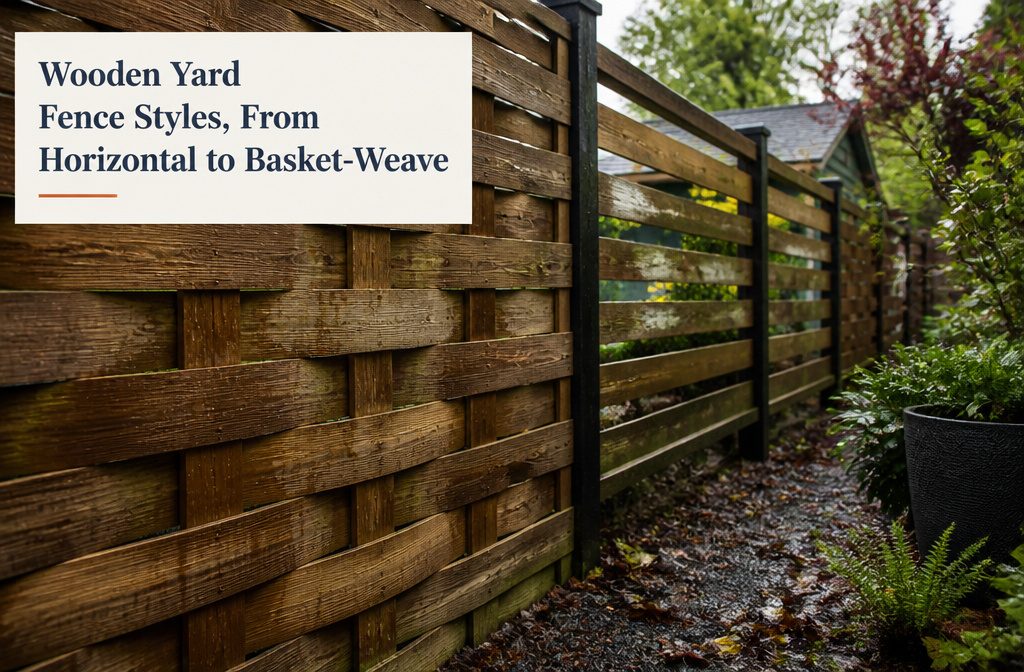
Styles here run from the plain dog-ear to woven basket-weave and cedar slats on black posts, and privacy decides which one is yours.
Tight boards block the view and the light. Open top slats let light through, but neighbors can see in unless you build the fence taller.
1. Horizontal Fence on Metal or Wood Posts
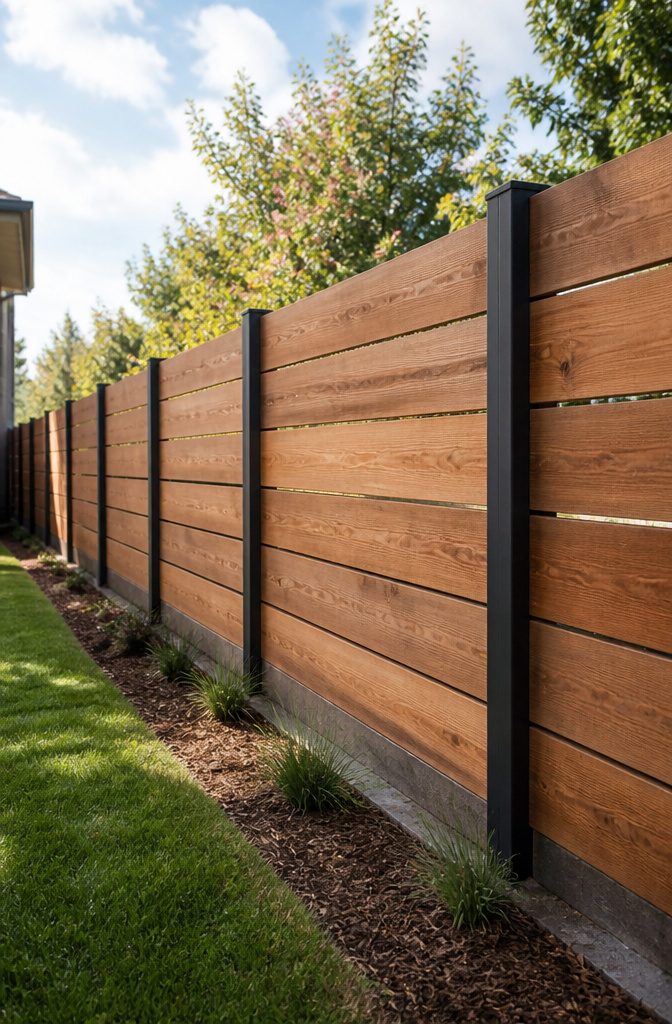
Horizontal boards give a yard the most modern look of any wood fence, and the post you choose sets the tone.
Metal posts add durability and longevity, and they suit a contemporary yard best. Pair them with a lighter wood or stain so the natural color does the work.
Wood posts lean classic. Boards set tight with no gaps give full privacy and keep children and pets from slipping through.
Spruce and cedar are the usual woods. Cedar is a natural insect repellent, and both can be pressure treated against termite damage.
For a yard with a dog or young kids, I’d pick wood posts and tight boards. For a patio where looks come first, metal posts win.
Recommended Products

Innovative Design: The wooden fence panels posts features a U-channel design—simply attach the brackets to the posts and slide in (3/4" x 5.5") wood planks to lock. Easy DIY installation and plank replacement, even for one person, saving time, effort, and labor costs in the short and long term

Backyard Privacy Enclosure: Our vinyl fence panel set includes 3 panels measuring 50 x 50 in, ideal for concealing outdoor items like trash bins, pool equipment, and air conditioners, keeping your backyard neat and attractive while meeting HOA guidelines
2. Horizontal Fence With Cap and Trim
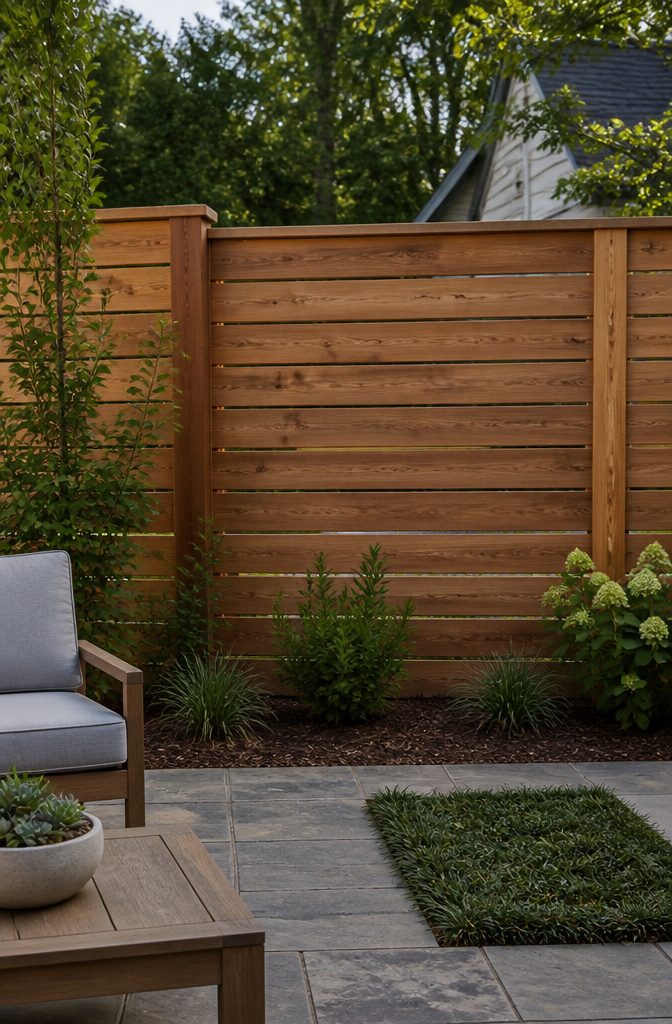
A flat cap is one extra piece of wood that runs along the top of the fence and covers the tops of the pickets.
Rain runs off the cap instead of soaking into the exposed ends, and that moisture protection is the main reason these fences tend to last.
The cap also changes the look.
It draws one clean line across the top, so the fence reads as finished instead of just stacked boards, which helps curb appeal. Privacy is close to what a stockade fence gives you.
Decorative caps and accents come in plenty of styles, so you can match the cap to your house trim or gate. I’d choose this over a plain top for any fence that faces the street.
Recommended Products
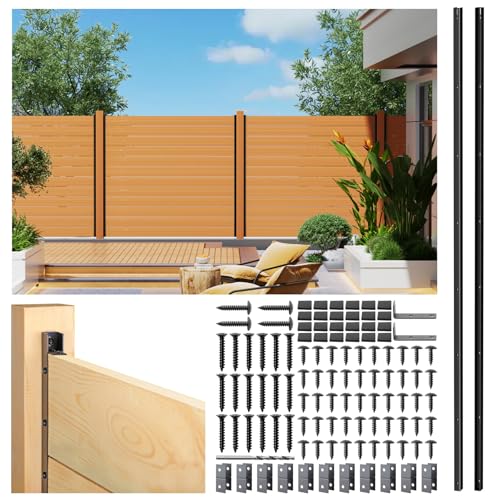
Innovative Design: The wooden fence panels posts features a U-channel design—simply attach the brackets to the posts and slide in (3/4" x 5.5") wood planks to lock. Easy DIY installation and plank replacement, even for one person, saving time, effort, and labor costs in the short and long term

Includes (1) 2 in. x 2 in. Post, 84 in. Long and (1) Post Cap

KEY FEATURES:The Fence Post is designed for the installation of continuous fence posts with a height of 4FT concrete base, With 12pc/8pc-drilled screw holes on each side of the post, Suitable for the installation of 2 types of fence planks with a standard thickness of 1in (Actual 3/4in) , Heights of 4in (Actual 3.5in) / 6in (Actual 5.5in) -Note: fence wood planks are not included, Providing you with a fast, sturdy, Aesthetically pleasing outdoor fence building solution.
3. Horizontal Fence With Top Slats
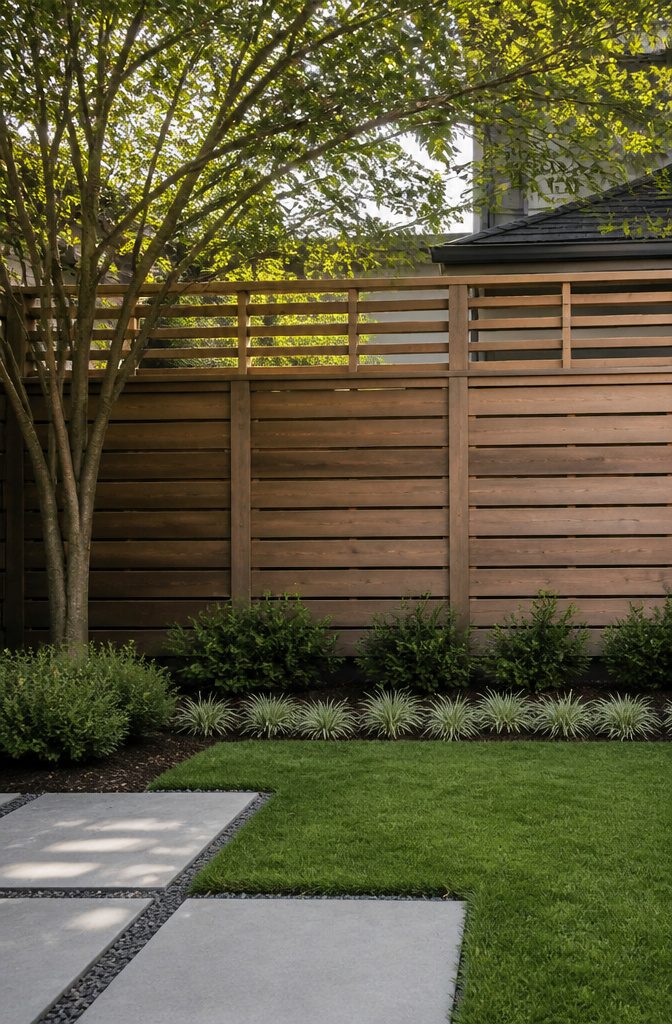
A horizontal fence with top slats leaves gaps in the upper section, so light and sightlines pass through where a solid wall would block them.
It suits a yard that would feel boxed in by full-height boards, since the open band keeps the space airy.
The cost is privacy.
Neighbors can see through the gaps, and wider openings show more. If that bothers you, build the fence taller instead of closing the gaps, because added height cuts visibility and keeps the light.
Slats of equal width look tidy, while mixed widths let you control how much shows through. I’d pick this over a solid fence for any shaded yard.
Recommended Products

【Perfect Fence to Protect Privacy】With this privacy screen fence, you could have fun with your families not worrying about losing privacy. Also, helping you cut off some noise from your neighbours to give you a peaceful environment. Your dog will not bark from outdoor things and people too.

Privacy Solution: Most economical way for privacy over chain link fence, porous decorative concealment, existing cyclone wire fence, wood retaining wall, welded wire fence, chain link fence, privacy barrier around swimming pool, block nose neighbor see through, add privacy to acre back yard backdrop, front yard, patio, garden and porch; hide street, road, construction site, pet kennel pen, block surrounding noise and street view, stops dogs from barking at neighbors.

Neighbor Privacy, Not Blackout: Blocks direct line-of-sight while allowing airflow — designed for comfortable backyard privacy, not a solid wall or tarp.
4. Horizontal Cedar With Black Posts
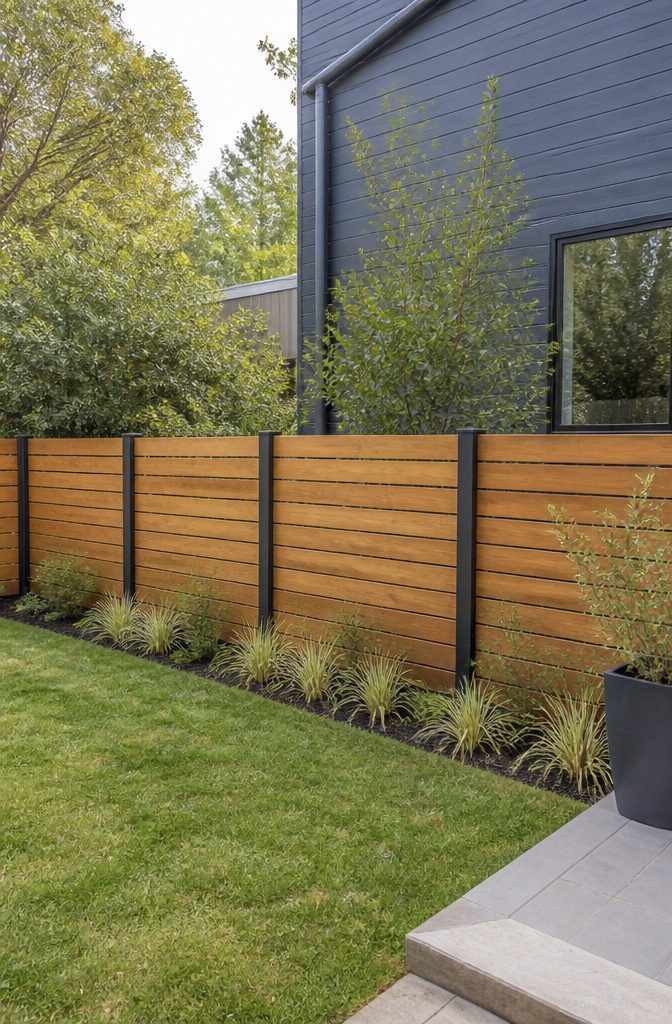
Warm cedar slats against dark posts give a modern house a clean, graphic edge, and the contrast looks as good from your patio as it does from the street.
Steel posts help a wood fence last for years, but bare metal can spoil the look. Leaving black posts exposed makes them part of the design instead of something to hide.
Privacy is the other draw.
The slats nest together, so there is little to no visibility through the fence. Cedar also resists insects naturally, which suits a fence that has to stand outdoors for years.
I’d choose this style for a modern house. On a traditional cottage, the black posts will look out of place.
Recommended Products
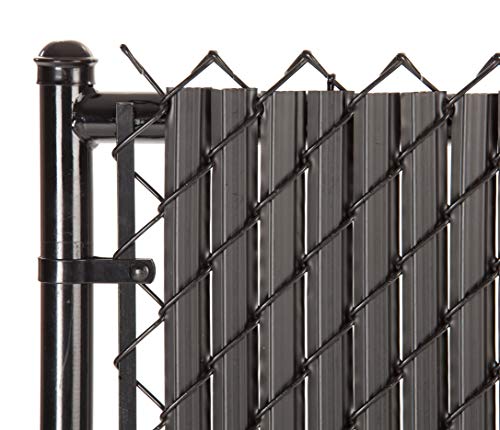
FENCE PRIVACY: Unlike fence tape, these slats are designed to easily slide vertically through your chain-link fence for optimal outdoor privacy. Determine the diamond size of your fence by measuring diagonally between the parallel wires, not corner to corner. The added privacy of the wings leaves no unsightly perforations or wave pattern. Compatible with 4', 6', and 8' height fences.

Black Fence Slat - Designed for a 4' high fence, slats are approximately 44.5" in length to accommodate the bottom locking channel and to prevent the slats from being above the top of the fence. (Available Colors: Beige, Black, Brown, Gray, Green, Redwood, Royal Blue, Sky Blue, White)

FENCE PRIVACY: Unlike fence tape, these slats are designed to easily slide vertically through your chain-link fence for optimal outdoor privacy. Determine the diamond size of your fence by measuring diagonally between the parallel wires, not corner to corner. The added privacy of the wings leaves no unsightly perforations or wave pattern. Compatible with 4', 6', and 8' height fences.
5. Cedar Privacy Fence
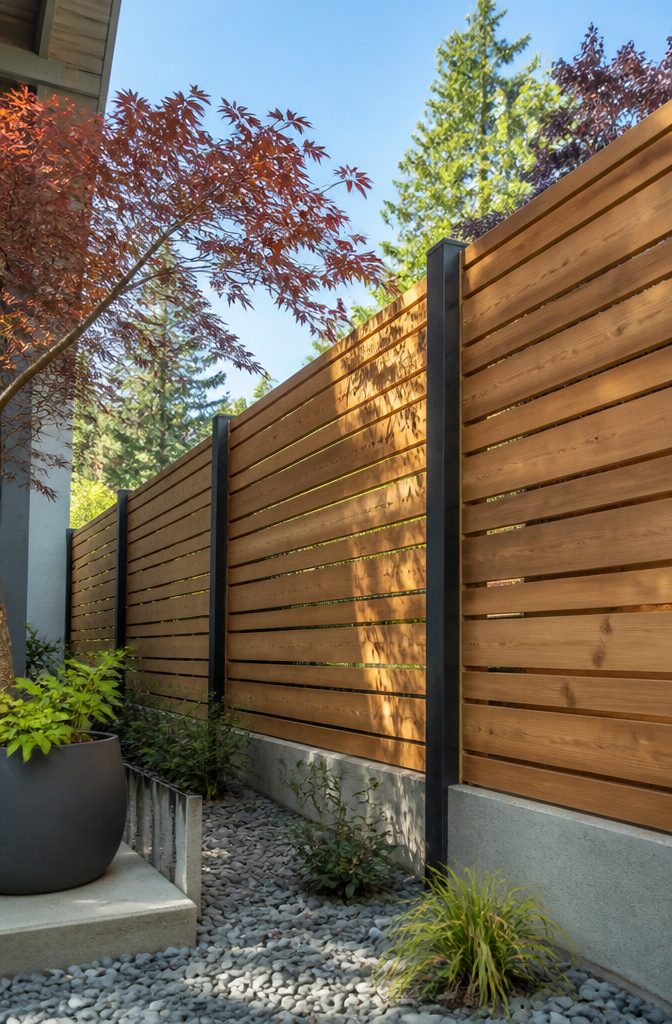
Cedar pickets give a privacy fence its cleanest lines, which is why it stays a top seller and suits nearly any house style.
Height, color, picket width and top accents are all yours to choose. Wide pickets with a decorative top look formal, while narrower pickets with a flat top look plainer and more modern.
Cedar is also one of the more durable woods you can buy, and it naturally resists insects, so it holds up without added chemicals.
Pressure treating is available if you want extra protection, but I would only pay for it where boards will sit close to wet soil. For a backyard with pets, a solid cedar fence is an easy pick.
Recommended Products

Package includes: 12 PCS cylinder wood trim molding decorative, that are 15.8 inch in length, 0.55 inch in width, and 0.39 inches in thickness

Enough Quantity and Dimensions: the package includes 12 DIY wood trims, each with a measurement of 0.79 inches in width, 15.75 inches in length and 0.2 inches in thickness; The wooden trim is delicately designed to suit every cut according to different thoughts, ensuring a nice finishing touch

Premium Solid Hardwood Molding – Milled in the USA for a durable and crisp detail
6. Slim Slatted Fence
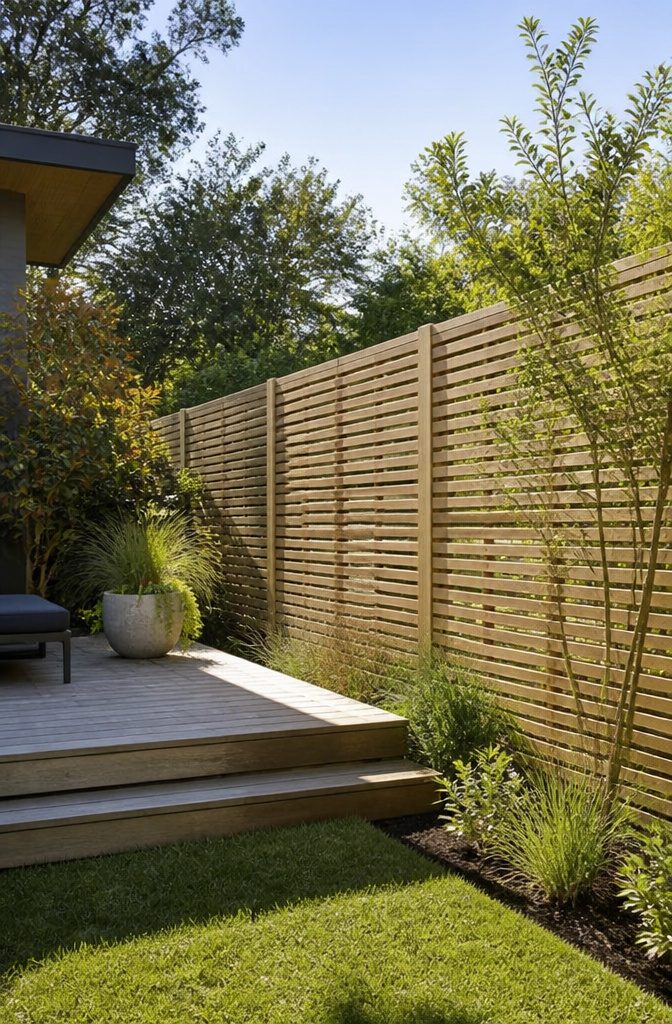
Slat width controls how much you see through the fence. Narrow slats with gaps read light and open, while wider slats set close together give more privacy.
That adjustability explains the other name, Venetian fencing, after the blinds. It suits a front yard where you want some screening without a solid wall.
For the classic-yet-modern look, red cedar is the wood to pick. The clean vertical lines work with the many available finishes, so the fence can match a contemporary house, and it goes up quickly and lasts for years.
Unlike the dog-ear, scalloped and lattice-topped styles later in this list, it has no decorative cuts. I’d choose it for a modern or minimalist house and skip it for a cottage look.
Recommended Products
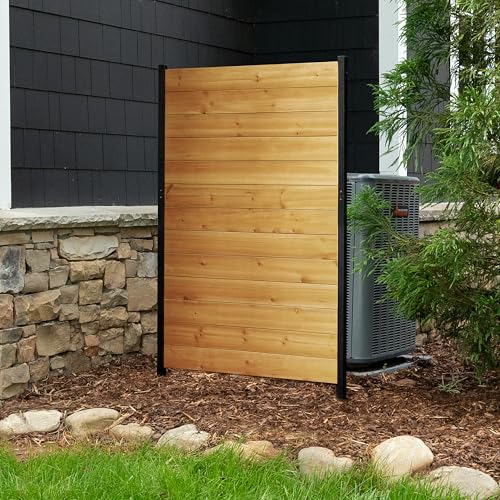
STYLISH NATURAL WOOD: This FSC certified wood screen is made with real wood meaning no two boards have the same grain color, finish, or wood knots differing it from vinyl outdoor privacy fence screen panels.

Privacy Decoration & Animal Separation: Fence panels conceal trash bins, air conditioner units and pool equipment to beautify spaces, while separating pets and wildlife from bins and machinery to avoid mess and injuries

SOLID CARBON STEEL CONSTRUCTION: Made from heavy-duty carbon steel with a rustproof black powder-coated finish, this privacy screen delivers exceptional durability and weather resistance for long-lasting outdoor use in your yard and garden.
7. Good Neighbor Fence
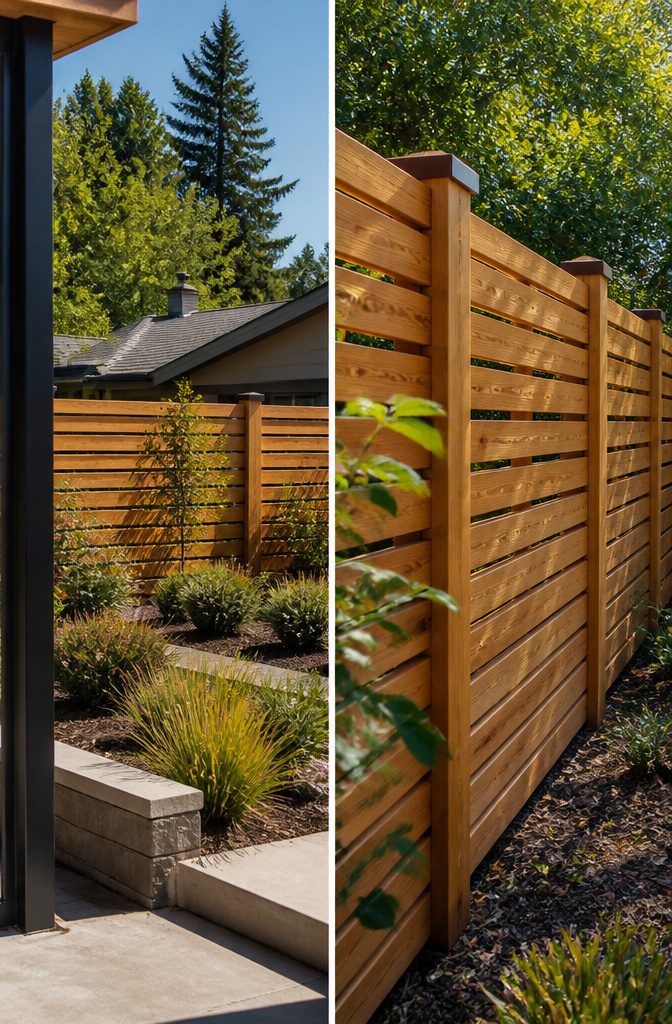
On a good neighbor fence, the panels alternate from one side of the posts to the other, so both yards see the same finished face. Nobody gets the bare back of the fence.
With a standard wood fence, one household looks at the good side and the other looks at the back.
That is where the arguments over which side faces out start. Alternating the panels ends the debate, because neither side loses.
Neighbors can also split the cost, which is why I’d choose this style for any shared property line.
There is no set price for the style, so get a quote for your length of fence before you raise the idea next door. It works for backyards and pets, and it adds privacy.
Recommended Products

SMART TWO-PIECE DESIGN: The fence posts feature a clever two-piece design (1410mm each) that assembles to a full 2660mm (8.7 ft) -taller than most competitors. The split design eliminates the need to stand on a ladder to hammer a full-length post, drastically reducing installation effort and safety risks

Garden fence post

DIMENSIONS: Each panel measures 32” H x 48” W
8. Shadowbox Fence
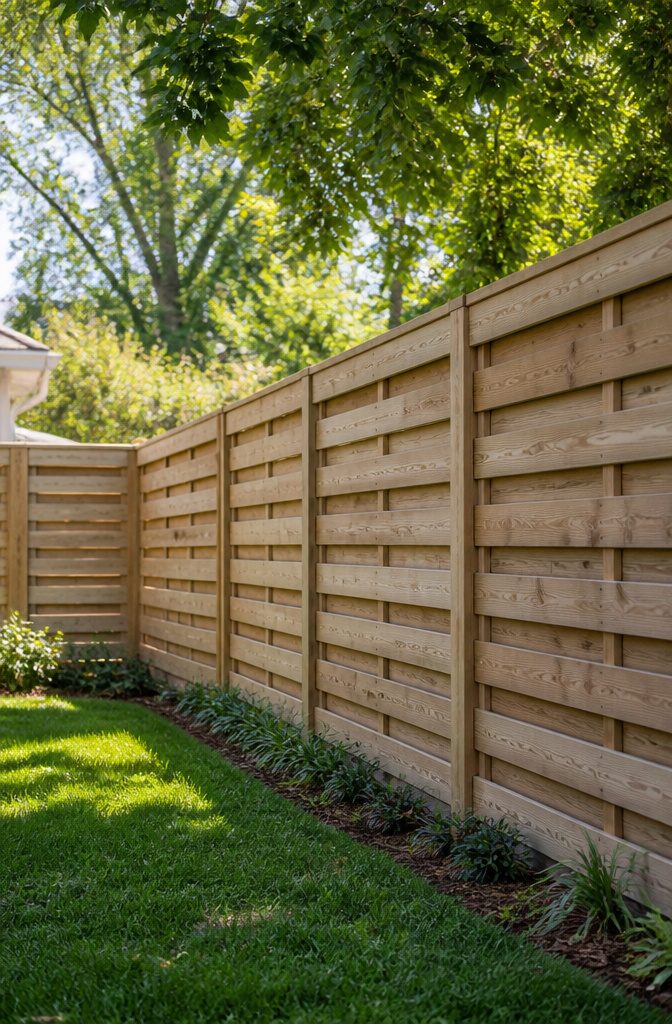
Shadowbox is a traditional wood picket design where evenly spaced pickets set how much privacy, light and air the yard gets. Narrower gaps give more privacy, and wider gaps let in more light and breeze.
That airflow keeps air moving through the yard instead of stalling against a solid wall, which is why the style suits large properties. Stain and fence height change the look further.
The horizontal version is the one I’d pick for a front yard.
Its boards run with minimal gaps and aren’t fully joined the way a stockade fence is, so some light still passes through while privacy holds. The dark-and-light contrast looks good from both sides and adds curb appeal.
Recommended Products
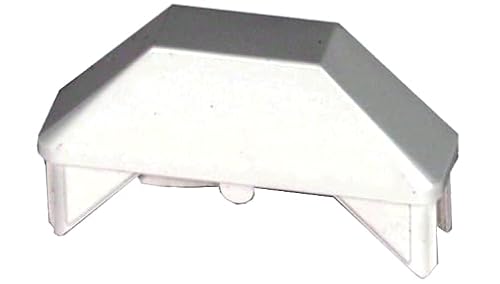
EASY FIT & INSTALLATION: These vinyl fence post caps by LMT Mercer are designed for 0.770" x 2.880" ID fence, deck, and gate posts. Simply slide each cap over the post for a snug fit—no complicated installation required.

Package Includes: the package comes with 32 pieces of vinyl picket fence caps, sufficient quantity can meet your using needs, please make sure about the quantity for your installation of the fence before purchase

TOTAL 30 PANELS, 42.5FT LONGER SIZE - Included 30 panels of fences, total length: 42.5 feet, more fences, and longer lengths can meet more of your needs, including filling the gaps under the bottom of the existing fence, building garden edging border, surrounding the garden bed to avoid plant damage, etc
9. Board-on-Board Fence
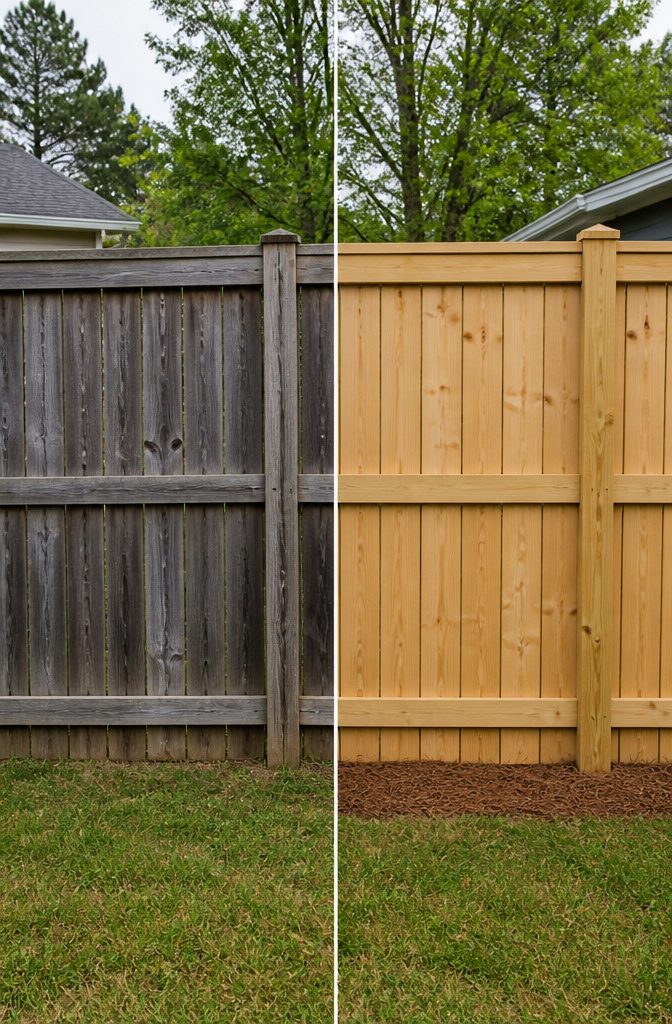
Overlapping pickets give board-on-board its staying power: the second layer covers the seams that open as wood shrinks.
Fence pickets are placed on top of other pickets to cover any previous gaps that existed between the planks. This ensures that even as your wooden fence planks shrink overtime from weather and outdoor conditions, your privacy won’t be compromised.
Some people also call the horizontal shadowbox "board-on-board," since both rely on overlap. For a stronger privacy fence than plain shadowbox spacing, which lets in light through small gaps, I’d pick board-on-board whenever privacy matters more than the light-and-dark look.
Recommended Products

White Fence Slat - Designed for a 5' high fence, slats are approximately 56.5" in length to accommodate the bottom locking channel and to prevent the slats from being above the top of the fence. (Available Colors: Beige, Black, Brown, Gray, Green, Redwood, Royal Blue, Sky Blue, White)

Brown Fence Slat - Designed for a 4' high fence, slats are approximately 44.5" in length to accommodate the bottom locking channel and to prevent the slats from being above the top of the fence. (Available Colors: Beige, Black, Brown, Gray, Green, Redwood, Royal Blue, Sky Blue, White)

Gray Fence Slat - Designed for a 4' high fence, slats are approximately 44.5" in length to accommodate the bottom locking channel and to prevent the slats from being above the top of the fence. (Available Colors: Beige, Black, Brown, Gray, Green, Redwood, Royal Blue, Sky Blue, White)
10. Dog-Ear Fence
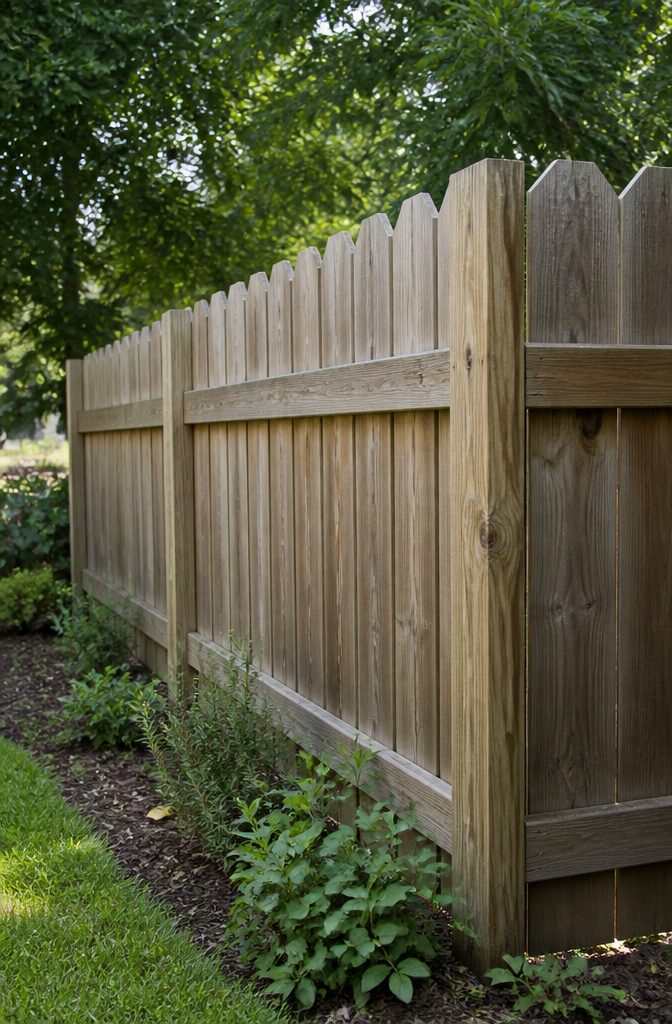
Dog-ear pickets have curved tops that look like a dog’s folded ear. That small detail is the whole design, which is why it is one of the simplest and least expensive privacy fences you can choose.
The boards sit close together, so the fence blocks sightlines into the yard, cuts wind, and softens ambient sound from the street. It also keeps pets and children contained.
If you want privacy on a tight budget, the dog-ear is the style I’d start with.
Skip it if you want a fence that makes a statement. The curved tops are a quiet detail, not a feature.
Recommended Products

Color and Size: our decorative line strips are made of non-traditional wood colors, which can easily blend into your decoration and add a touch of understated elegance; The size is 15.8 x 1.6 x 0.6 Inch (40 x 4 x 1.5cm), designed to an ideal proportion, easy to install, and will complement your wall

Premium Wood: These decorative wood trim are made from premium pine, smooth and lightweight, sturdy and durable, safe and reliable, with fine workmanship and smooth lines, making them ideal for wall decoration. They add understated elegance to any room without being overwhelming.

Package Includes: 20 decorative wood trims, each sized at 1.4 x 0.7 x 30cm, suitable for large or multiple renovation projects as cabinet trim or bobbin molding trim
11. Scalloped-Top Fence
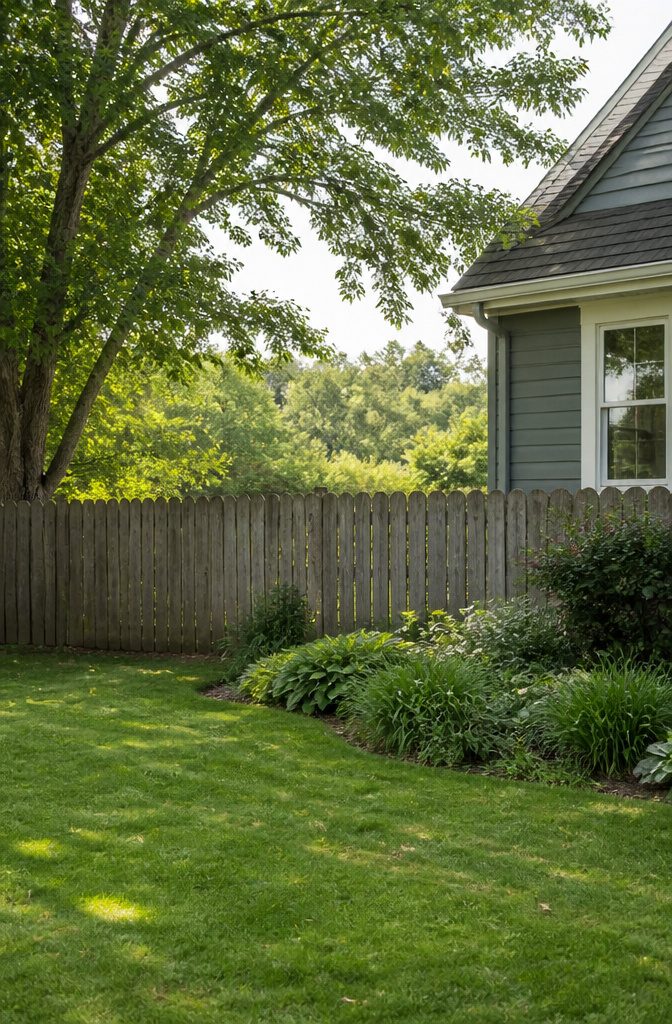
Scalloped tops dip in concave curves, so the top line rolls like ocean waves.
It is the reverse of an arched top, where the curves bulge upward. Posts often land at the peaks between the dips, and some owners customize them to emphasize those high points.
Next to a dog-ear, the difference is softness. A dog-ear finishes each board with an angled cut for a crisp, tailored edge, while a scalloped top replaces those angles with curves.
That makes it a natural match for cottage and garden-focused yards. The design is simple, so it is a good fit for a front yard where you want curb appeal without a complicated build.
12. Lattice on Top
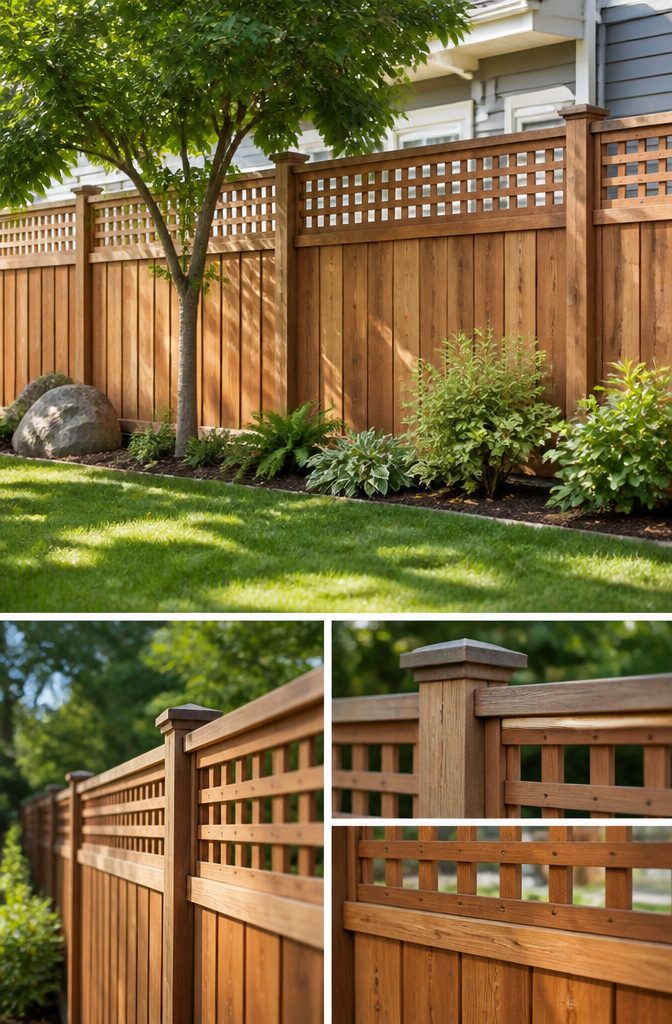
Thin wooden slats set in criss-cross lines leave small square openings, so daylight reaches the yard while kids and pets still can’t slip out.
Privacy is partial. The view into your yard is somewhat obscured, but it isn’t a solid wall.
If you garden, the open pattern is the selling point.
Lattice is ideal for climbing vines and other climbing plants, which can use the crossing slats as support, so the fence doubles as a trellis without a separate one to build.
I’d choose lattice over a solid board fence for any yard where a climber is part of the plan, and skip it if you want a patio hidden completely.
13. Basket-Weave Fence
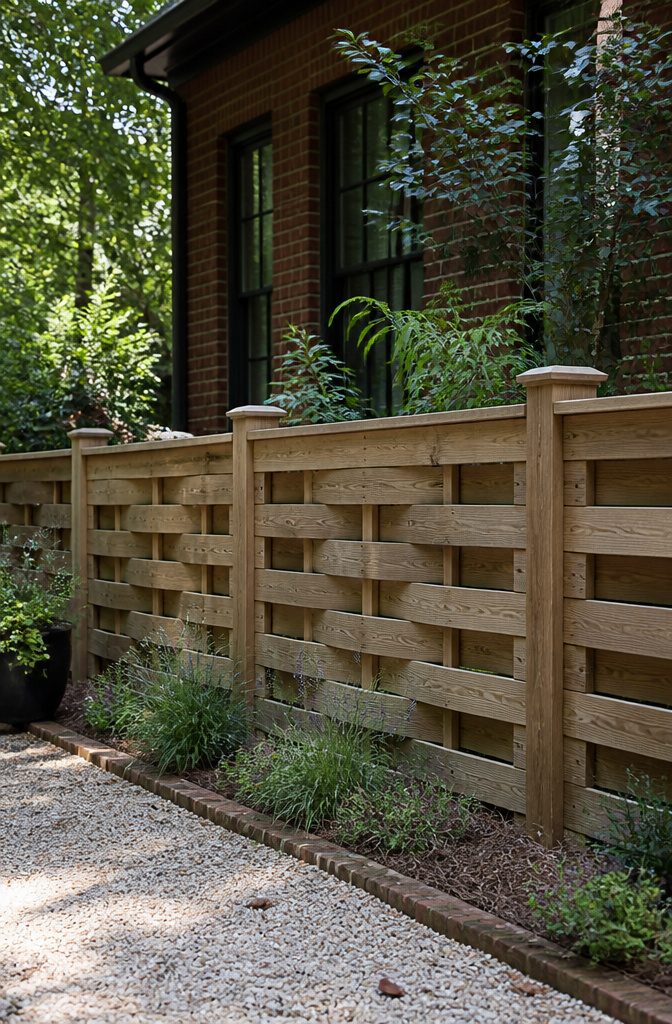
A basket-weave fence looks like a picnic basket stretched along a property line.
The horizontal material passes in front of one vertical post, then behind the next, so the boards interlock with the posts instead of sitting flat on one side.
That alternating pattern gives the fence a textured, woven surface that plain panels can’t match, and when the weave is tight it blocks sight lines well enough for a backyard.
I’d point most gardeners to wood, because the grain and stain color carry the pattern.
Vinyl versions exist, though they read as less handmade. Workmanship matters more here than on most styles: a loose weave leaves gaps that undo the privacy.
14. Wood-Framed Bull Wire
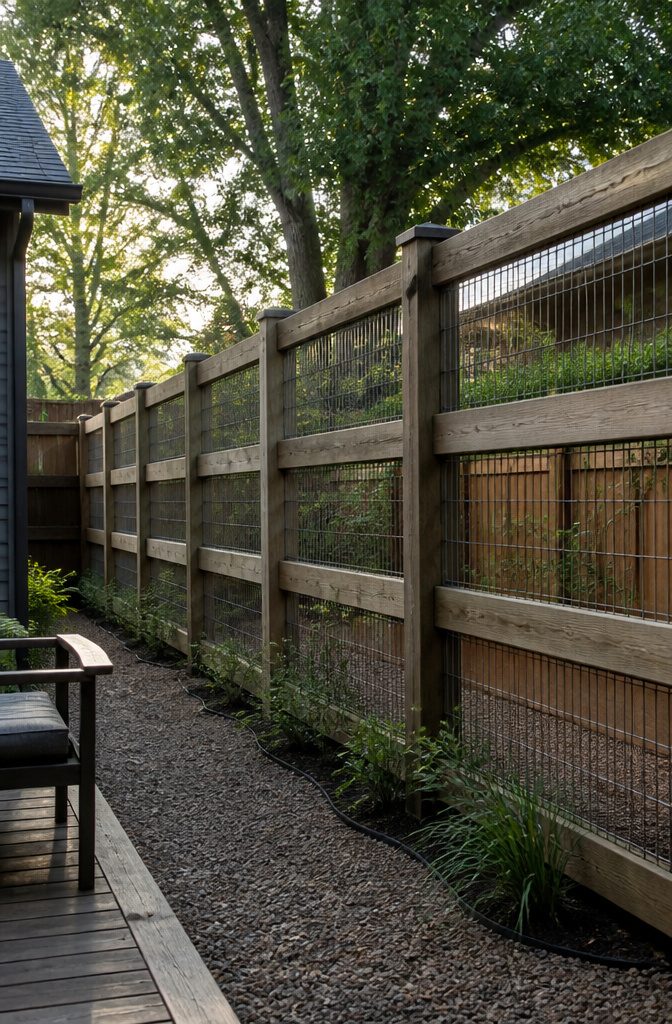
Bare bull wire or chain link lasts, needs little upkeep, and keeps pets and kids inside a front yard.
Its weakness is looks. A wooden frame around the mesh fixes most of that, adding curb appeal while the fence keeps its durability.
The wood is also where you customize. Post and rail choices change the whole character of the fence, so put your upgrade money there rather than into the wire.
A wood-framed chain link fence is my pick for a budget-minded yard with a dog: it stays secure and sturdy but no longer looks like a utility fence. If you want privacy, skip it, because the mesh shows everything.
15. Iron Pickets With Cedar Slats
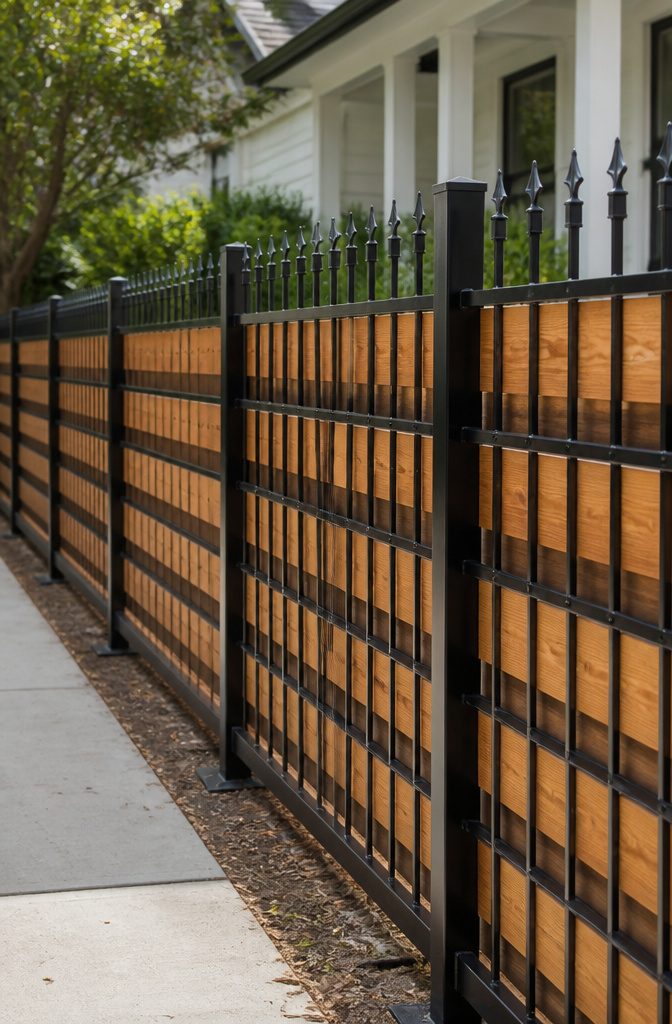
A classic wrought iron picket fence looks handsome, but it gives little privacy and little security for pets and children.
Extending the pickets and adding cedar slats fixes both problems and keeps the ornamental, heritage look of the iron. The cedar also adds warmth that bare metal lacks.
I like this style most for how it ages. Iron is the durable part, and wood is the part that weathers first.
When a slat fades or fails, you replace that slat alone, not the whole fence. Repairs stay a small job, and the iron frame keeps doing its work underneath.









