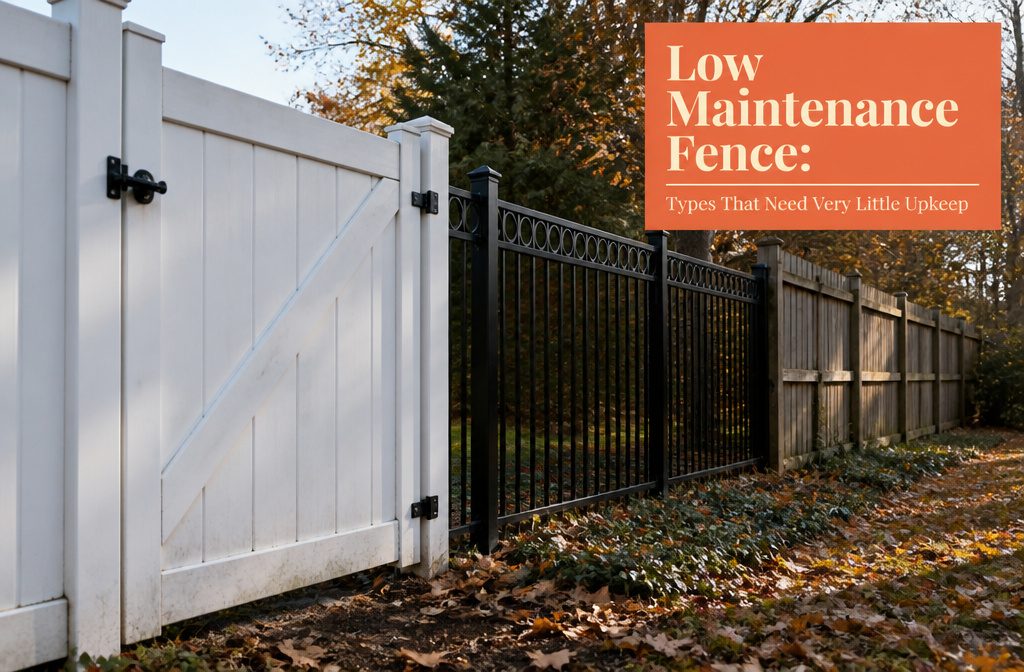
Vinyl needs the least upkeep: no painting, staining, or sealing, just a hose and soapy water. Powder-coated steel comes close, but only if it carries layered coatings of galvanizing, zinc powder coat, and e-coating.
Thin paint-only versions chip and rust. Wood asks for the most care.
1. Vinyl/PVC Fencing
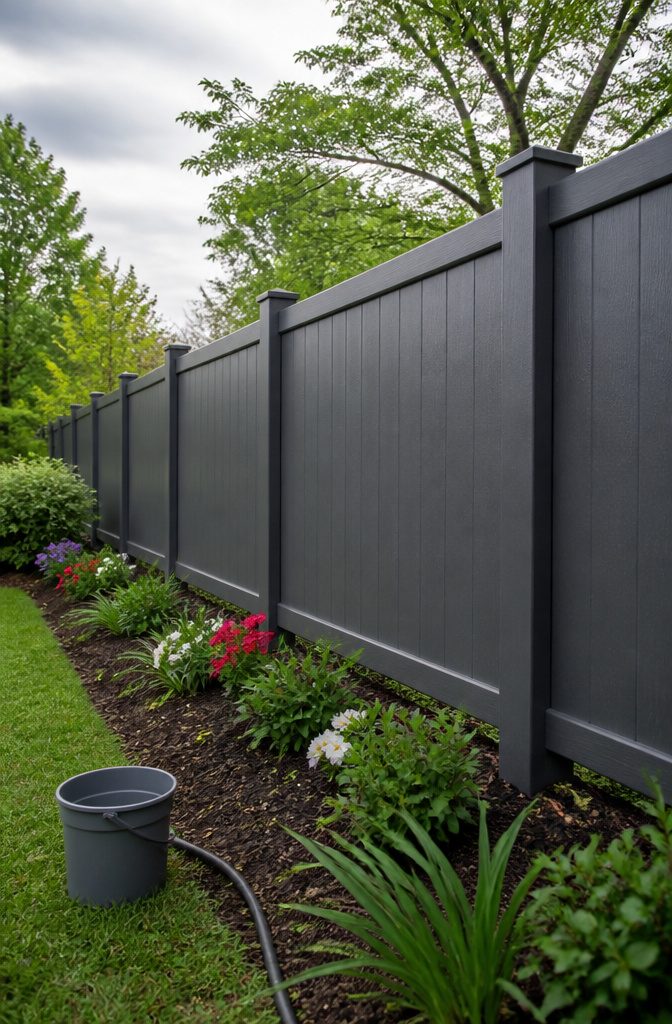
For the least effort, vinyl is the fence I’d pick. The panels never rot and never need painting or staining, so the usual yearly cycle of sanding, sealing and recoating simply doesn’t exist.
Upkeep comes down to a hose and a bucket of soap and water whenever dirt or pollen builds up.
Vinyl is also no longer limited to white.
Charcoal and espresso are now common, and a dark fence makes a good backdrop for green foliage and bright blooms. If a classic white look isn’t what you want, that’s no reason to rule vinyl out.
Recommended Products

EASY ORDERING: Everything you need for your fence project is in the box except for the final post. Only ONE additional post, BL19112, is required for the end of your project....
2. Ornamental Steel With Privacy Inserts
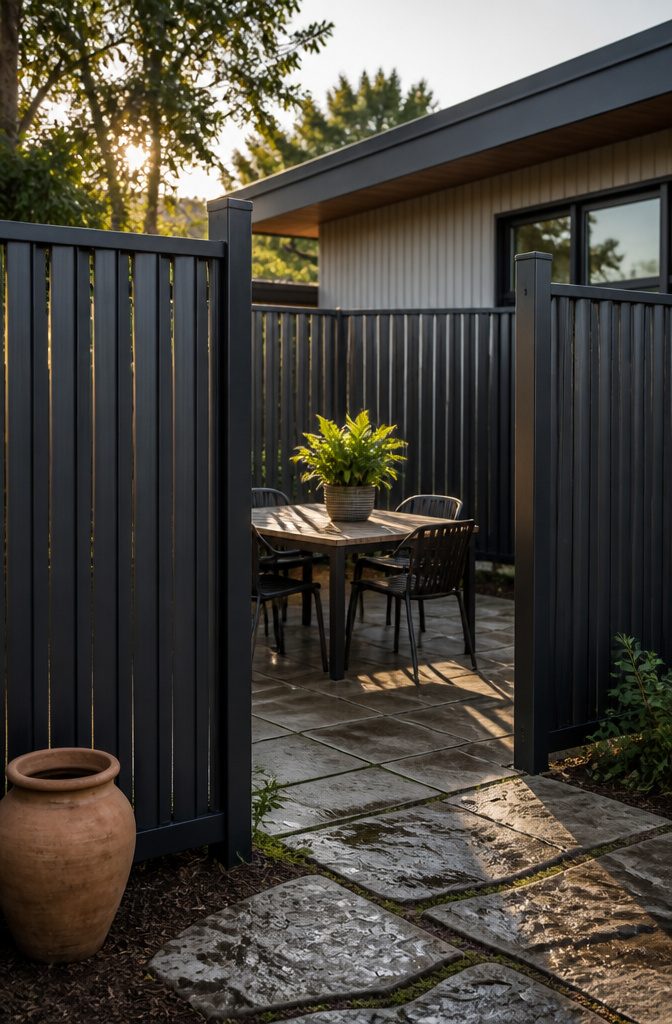
Powder-coated steel frames with privacy inserts give you seclusion without a single board to stain or seal.
The coating is baked onto the metal, so it resists chipping better than paint, and a rinse with a hose and mild soap is the usual upkeep.
Makers often rate these fences at 30+ years, so read the warranty terms before you buy.
The look is clean and contemporary, with straight lines that suit modern houses better than cottage styles. The inserts set how much privacy you get.
Vertical aluminum slats set close together block most sightlines, while wider gaps let light and glimpses through. Translucent polycarbonate panels hide detail but pass daylight, which works well on a small patio that solid walls would make feel boxed in.
Recommended Products

0-180 DEGREE ADJUSTMENT:The gear-lock joint provides multiple positions across a 0-180 degree adjustment range. Set the 26-inch extension arm upright for added height or angle it inward for privacy mesh, pet barriers and other outdoor projects.

3 CONCEALMENT PANELS:It comes with 3 fence panels.This is perfect for concealing 3 sides of an air conditioning unit. Comes in a charming charcoal color finish.Not only conceal your AC unit, add beauty and charm to your home

𝐓𝐑𝐎𝐏𝐈𝐂𝐀𝐋 𝐏𝐀𝐋𝐌 𝐓𝐑𝐄𝐄 𝐃𝐄𝐂𝐎𝐑𝐀𝐓𝐈𝐕𝐄 𝐃𝐄𝐒𝐈𝐆𝐍: Featuring an elegant laser-cut palm tree design, this outdoor privacy screen creates a relaxing tropical atmosphere while adding decorative privacy to patios, gardens, pools and backyard living spaces.
3. Metal Frame With Wood Infill
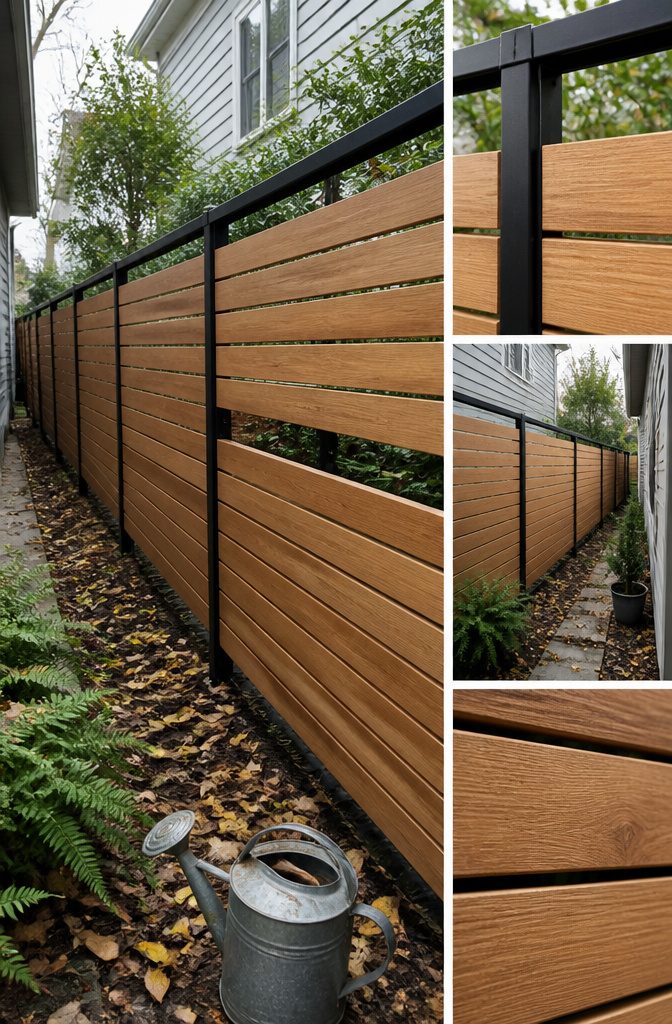
Black powder-coated aluminum or steel posts with horizontal infill boards are being called a 2026 trend. A galvanized-steel frame with wood or composite slats between steel pickets works the same way.
The slats screw in, so a damaged one comes out without disturbing its neighbors. Slots and holes are uniform, so a template, or the old board itself if it’s still intact, is all you need to cut a replacement.
Estate Ornamental from Fortress Building Products is the system I’d look at first. Keep the infill for a privacy fence between houses, or leave it out and the same frame becomes an open fence that keeps the view.
Recommended Products

STYLISH NATURAL WOOD: This FSC certified wood screen is made with real wood meaning no two boards have the same grain color, finish, or wood knots differing it from vinyl outdoor privacy fence screen panels.
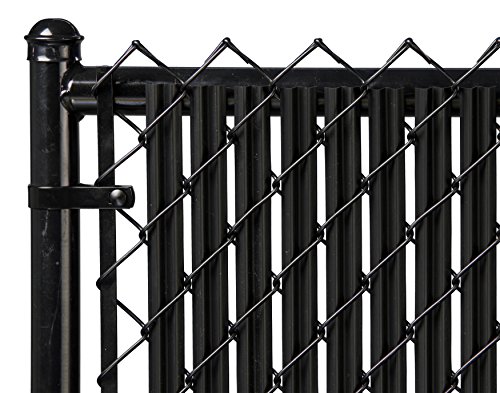
Black Ridged Slats for 6ft chain link are deliberately cut to about 68.5 inches long. These fence inserts are designed primarily for 6ft 11 or 9 gauge chain link with a two inch diamond. Also works in economy chain link with a larger diamond pattern, but privacy will be less. Slats must be installed correctly and be fully inserted inside the wire mesh of your fence to achieve the desired results. Cannot be used to extend the fence height. Not suitable for fences on a steep slope.

Quality: These black fence tapes are made of weather resistant PVC material and are designed for long-term use.
4. Horizontal Wood Planks
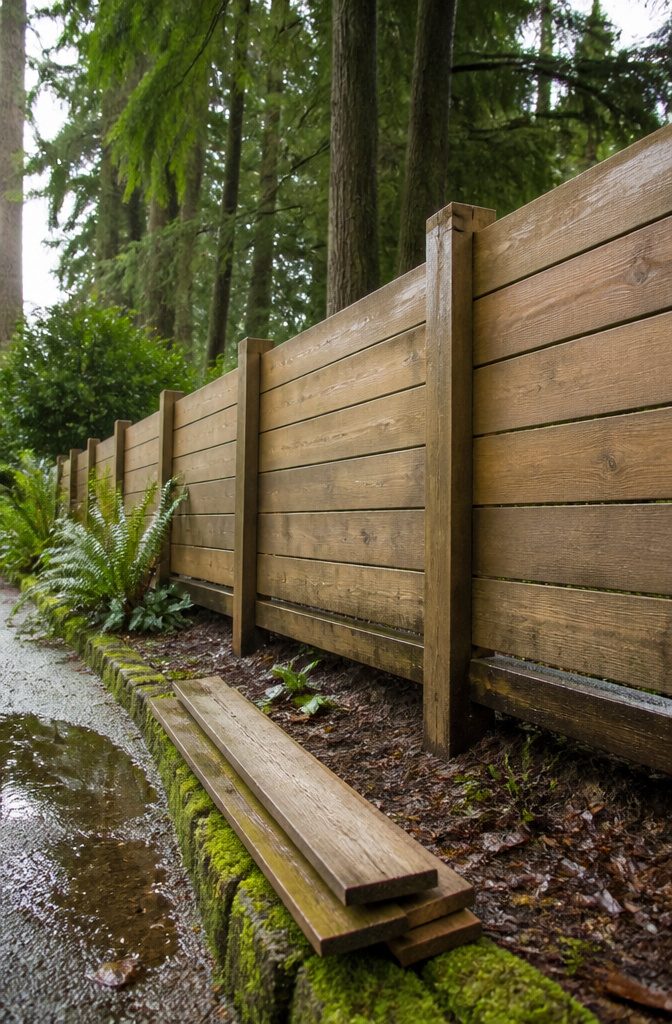
Horizontal planks in pre-treated wood can need less upkeep than traditional vertical wood styles, but they still take more care than vinyl or steel.
Expect to seal, stain, power wash and sand, each yearly or every other year depending on your climate.
Between those jobs, check that no board bottom touches soil or sits in standing moisture, and look the boards over for cracks and early rot.
In the Pacific Northwest, horizontal rails and the rail-to-post joints commonly rot, so I would inspect those first. Replacing a rotted post can mean removing and repouring its concrete footing, which turns a small repair into a much bigger job.
Recommended Products

Premium Material🌱 The panels are crafted from wood-plastic composite (WPC) with realistic wood grain texture, while the posts are made of high-strength aluminum alloy. The WPC material resists cracking and requires no maintenance, completely overcoming the drawbacks of natural wood. The aluminum alloy posts offer excellent weather resistance. Together, they create a more durable and premium outdoor solution compared to traditional products.

Beige Fence Slat - Designed for a 6' high fence, slats are approximately 68.5" in length to accommodate the bottom locking channel and to prevent the slats from being above the top of the fence. (Available Colors: Beige, Black, Brown, Gray, Green, Redwood, Royal Blue, Sky Blue, White)

Gray Fence Slat - Designed for a 4' high fence, slats are approximately 44.5" in length to accommodate the bottom locking channel and to prevent the slats from being above the top of the fence. (Available Colors: Beige, Black, Brown, Gray, Green, Redwood, Royal Blue, Sky Blue, White)
5. Steel Fencing and Rust
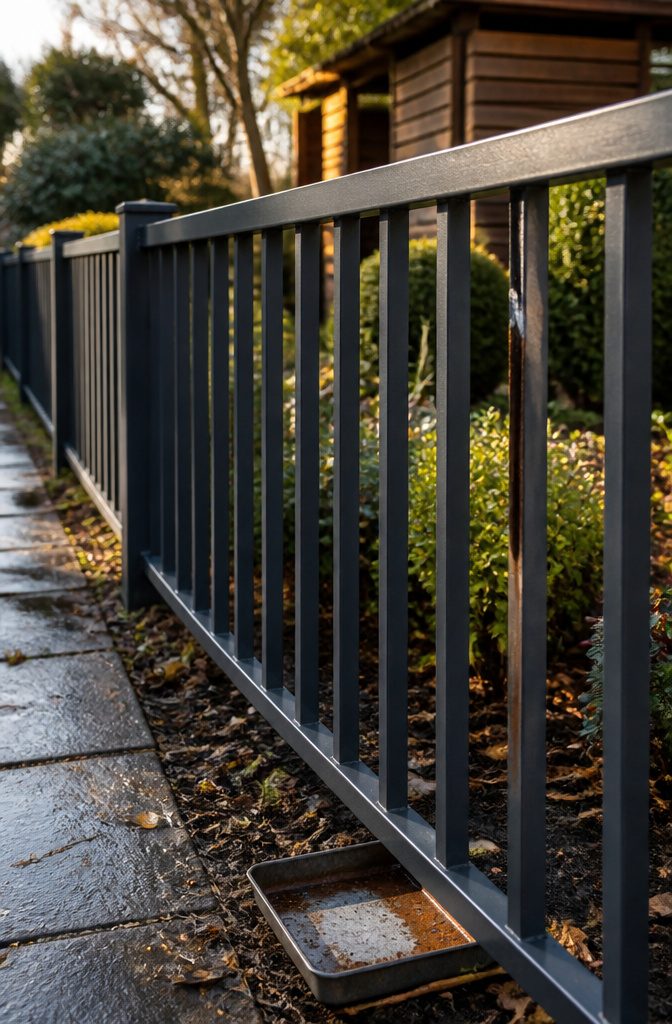
Steel removes the staining, sealing and board replacement that wood demands, but it brings rust. Bare steel rusts, so the coating decides how the fence ages.
The best finish is built in layers: thick zinc galvanization on the steel, a UV-inhibiting zinc powder coating over that, and an e-coating on top. Together they shield the metal against rust, corrosion and fading.
I would skip any steel fence where the seller can’t tell you which coatings it carries.
A thin paint-only finish chips at the first scratch, and rust spreads outward from the chip. Ask for the coating details before you compare prices, because two fences that look identical on the showroom floor can age very differently.
Recommended Products
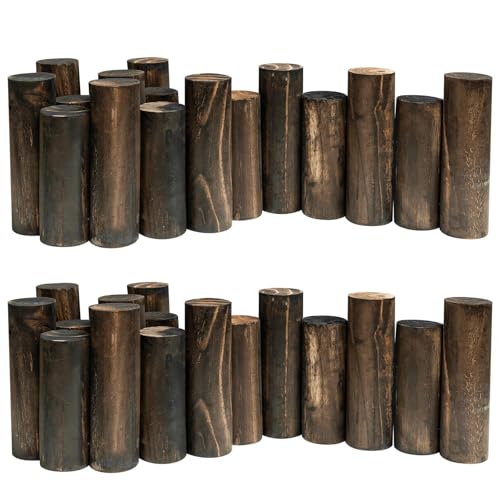
Great Value: These nice edging for landscaping are made from whole logs, while most others are assembled from planks or halved wood. It can be used for a longer time without the need for annual replacement.

Order is for a 4-Pack of fencing, giving a total of 32 feet of fencing in length

Innovative Design: The wooden fence panels posts features a U-channel design—simply attach the brackets to the posts and slide in (3/4" x 5.5") wood planks to lock. Easy DIY installation and plank replacement, even for one person, saving time, effort, and labor costs in the short and long term
Choosing for Lower Upkeep
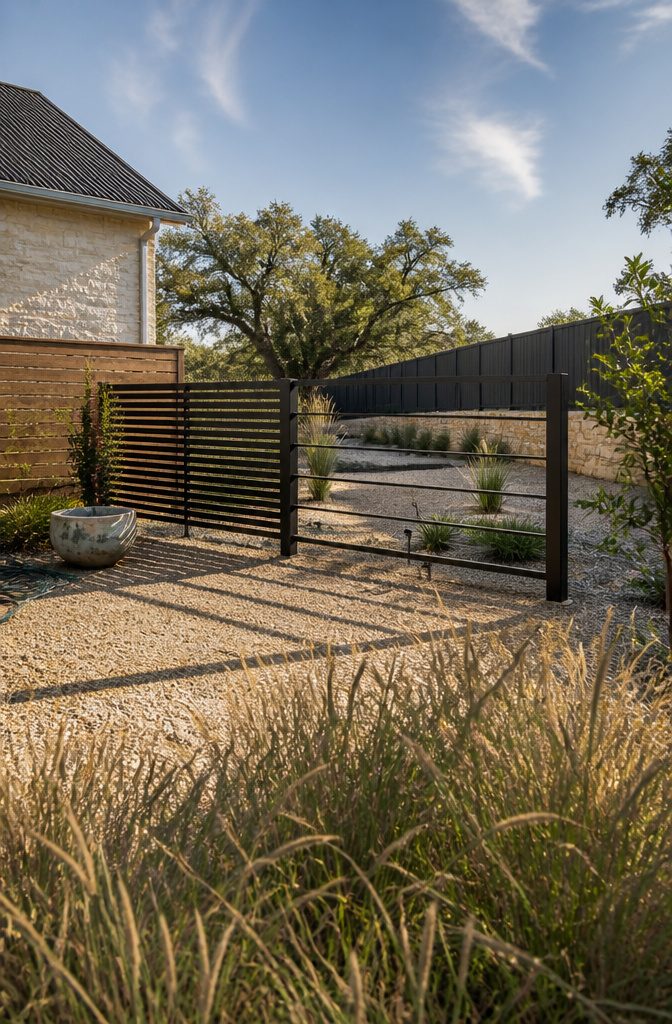
Wood asks for sealing, staining, power washing and sanding, some of it yearly and some every other year, and the other materials let you skip that list.
For full privacy, vinyl or steel with privacy inserts gives seclusion without the chores. For open visibility, a metal frame with no infill works, and a frame with removable slats can switch between the two.
For a dark look, vinyl now comes in charcoal and espresso as well as white. Horizontal wood planks suit a traditional wood look.
Climate narrows the choice. In Texas Hill Country and Central Texas, heat and UV are hard on wood, so I’d pick vinyl or powder-coated metal.
In the rainy Pacific Northwest, the horizontal rails and the rail-to-post joints rot first, which makes a metal frame the safer bet.
Recommended Products

Backyard Privacy Enclosure: Our vinyl fence panel set includes 2 panels measuring 50 x 50 in, ideal for concealing outdoor items like trash bins, pool equipment, and air conditioners, keeping your backyard neat and attractive while meeting HOA guidelines

Reinforced and Thickened Material: Qikdesign vinyl privacy screen is made of high-quality and thickened PVC material, posts on both sides are thickened and reinforced (0.2 in wall thickness), making it more durable than materials used in similar products on the market, and able to remain stable in strong winds. We can provide a 10-year warranty on our vinyl fence.

Backyard Privacy Enclosure: Our vinyl fence panel set includes 3 panels measuring 50 x 50 in, ideal for concealing outdoor items like trash bins, pool equipment, and air conditioners, keeping your backyard neat and attractive while meeting HOA guidelines
Material Trade-Offs
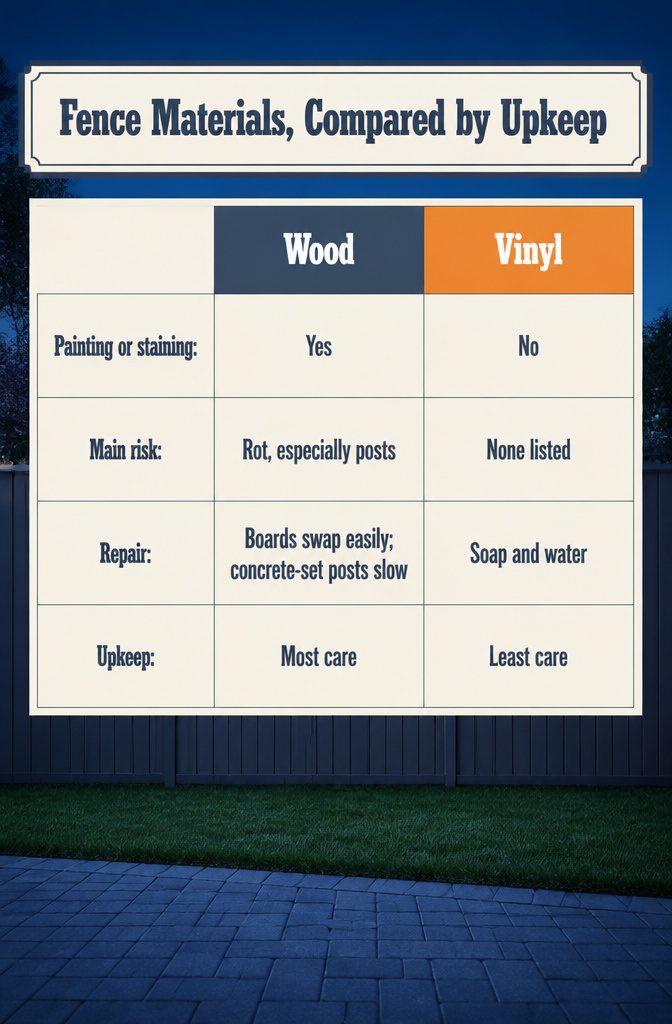
Wood needs the most care, vinyl the least, and steel falls in between depending on its coating. A steel fence is only as good as its galvanizing and powder coating, and cheap versions rust.
Mixed systems put wood or composite infill on a steel frame, so the part most likely to wear out is the easiest to replace.
| Material | Painting or staining | Main risk | Repair |
|---|---|---|---|
| Wood | Yes | Rot, posts especially | Boards swap easily; posts set in concrete are slow to replace |
| Vinyl | No | n/a | Soap and water |
| Steel | n/a | Rust where coatings are poor | Rusted spots can mean replacing large sections |
| Steel frame, wood or composite infill | n/a | Infill | Replace infill; frame stays |
Recommended Products

𝟑-𝐏𝐚𝐧𝐞𝐥 𝐅𝐮𝐥𝐥-𝐇𝐞𝐢𝐠𝐡𝐭 𝐂𝐨𝐯𝐞𝐫𝐚𝐠𝐞: Three vertically stacked metal panels assemble into one 72 in H x 44 in W outdoor privacy screen, creating tall visual separation without the cost or commitment of installing a permanent fence.

Single-Piece Solution: This 1-pack adjustable fence extender is ideal for a gate, corner, individual post or small custom project, giving you a practical extension point without purchasing more pieces than needed.

【Gravity Self-Locking Gate Latch】Automatic gate latch made from heavy gauge steel construction with superior black powder coat finish & zinc plated corrosion resistance, designed to offer simple but solid security for inward and outward swinging gates and doors, features a self-latching fingertip release-can also be operated with a wire.
Frequently Asked Questions
Recommended Products
Black Ridged Slats for 4ft chain link are deliberately cut to about 44.5in long. These fence inserts are designed primarily for 4ft 11 or 9 gauge chain link with a two inch diamond. Also works in economy chain link with a larger diamond pattern, but privacy will be less. Slats must be installed correctly and be fully inserted inside the wire mesh of your fence to achieve the desired results. Cannot be used to extend the fence height. Not suitable for fences on a steep slope.

【Heavy-Duty Surface Mount Base】Expertly engineered for concrete surface-mount installation, this Tafbrik 3-way post features a high-stability 24" vertical support. While the heavy-duty base secures firmly to concrete, the precision-cut slots are compatible with wood or composite panels (up to 0.8" thick). This reinforced, deep-welded structure ensures a rock-solid, upright fence without any digging. (Includes pre-drilled holes).

TRUE ALL-ALUMINUM — BUILT FOR LONG-TERM VALUE: Ordinary steel or mixed-metal products can be progressing from surface corrosion to rust-through—often reported online within 0.5–2 years. So this is not simply about cosmetic maintenance—removing rust and repainting the surface. Once corrosion progresses to rust-through, the metal itself has deteriorated, potentially compromising the structural integrity and eventually requiring replacement of the affected component or structure. LukLoy post is built with a true all-aluminum structure for lasting outdoor over 30 years. it resists weathering, fading, and everyday exposure with less maintenance — a smarter long-term investment for your home.
What are some design ideas for a low maintenance privacy fence?
Vinyl panels, powder-coated steel frames with privacy inserts, and metal frames filled with wood or composite slats all give privacy without yearly staining or sealing. Vinyl now comes in charcoal and espresso as well as white.
Steel inserts range from close-set aluminum slats for the most privacy to translucent polycarbonate panels that pass daylight. Horizontal pre-treated wood planks suit a traditional look, but they still need sealing and staining.
What type of fence lasts the longest?
In Central Texas, vinyl-coated chain link is reported to last the longest.
Among the fences covered here, makers often rate powder-coated steel at 30+ years, so read the warranty terms before buying. Vinyl doesn’t rot, while wood is the hardest on in hot, high-UV climates like Texas.