
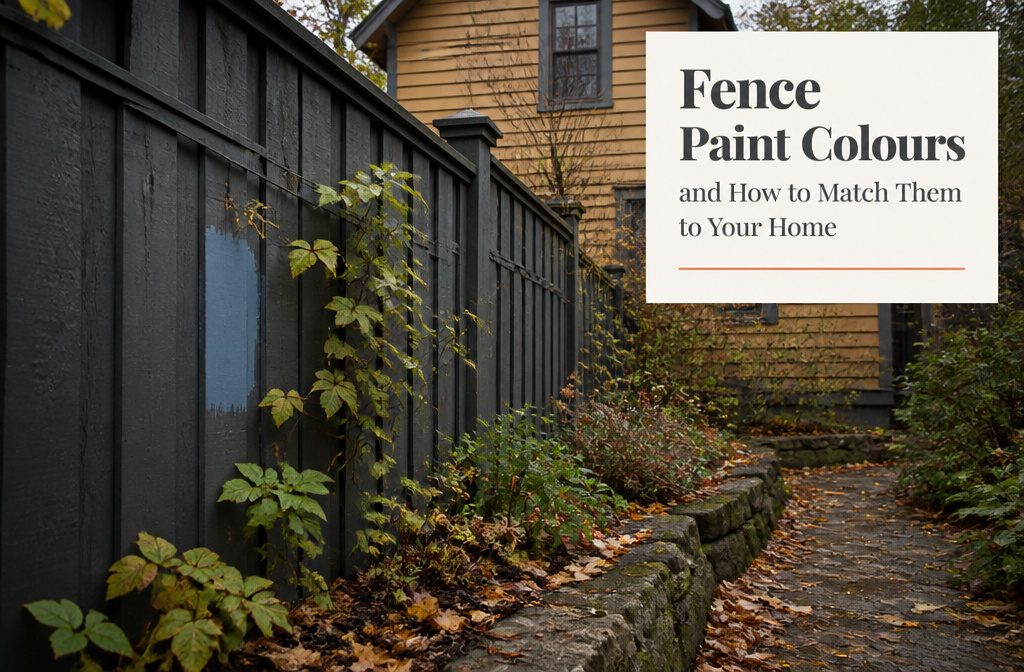
Your siding decides the fence color, whether that lands on black, gray, white, blue or a wood stain.
Warm siding makes stark white look mismatched, and a bold house usually beats a blue fence. Paint a test patch beside the plants first, and on new lumber wait 2–3 months before finishing.
1. Black
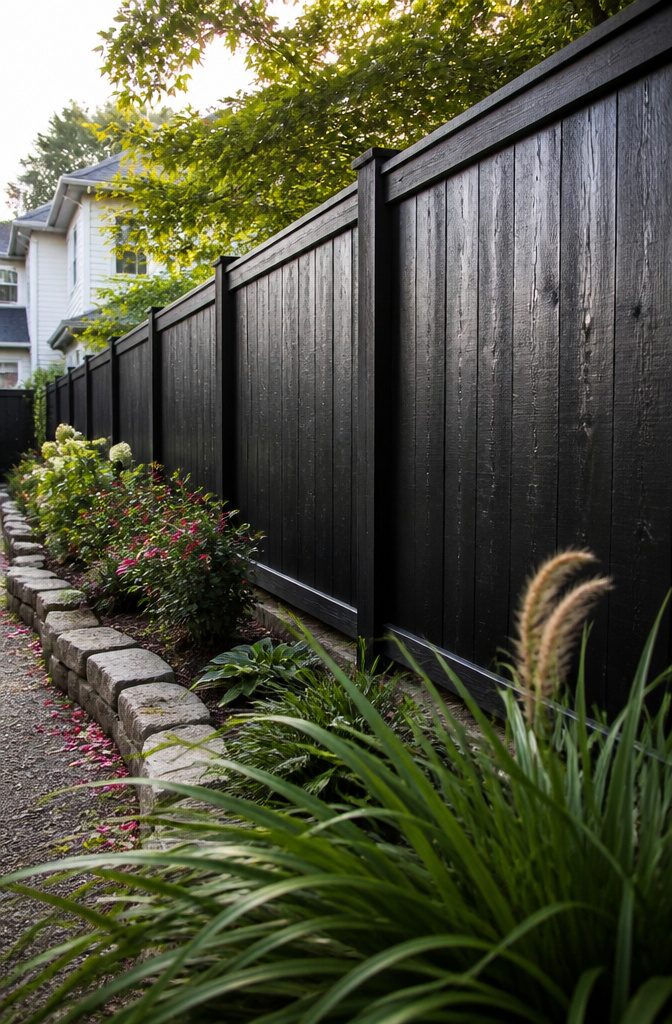
Black works as a neutral backdrop, so greenery, bright flowers and natural stone stand out against it. That makes it my pick for modern yards.
Sherwin-Williams Tricorn Black (SW 6258) is about as true and flat as an exterior black gets. Benjamin Moore Black Iron (2130-20) is the softer option, with a charcoal depth that still reads as near-black and looks refined beside natural landscaping.
Black also suits small yards, because a dark fence blurs the boundary and makes the space feel larger. It works best where plantings are thin.
If your beds are packed, deep green does the same job by blending into the leaves. On wood, a semi-transparent black stain keeps the grain visible.
Recommended Products

Ready to use, pre-mixed door and trim paint offers a fresh new look on interior or exterior metal, wood and fiberglass

Penetrates & Seals for Long-Lasting Protection – Creates a durable, weatherproof barrier that helps prevent rot, decay, and rust.

ELEVATE OUTDOOR STRUCTURES: Refresh barns, fences, sheds, and exterior surfaces with durable paint that delivers long-lasting color and protection.
2. Gray
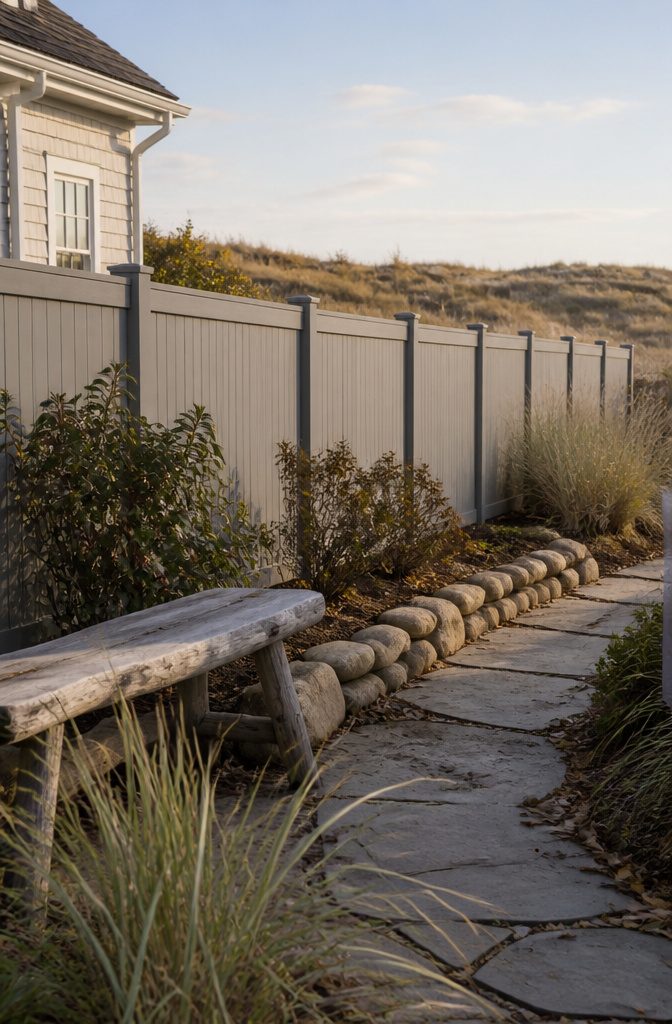
Gray is the easiest exterior neutral, because it sits comfortably beside nearly any siding color and landscape style. For a coastal house or a yard with weathered, driftwood tones, I’d choose Sherwin-Williams Gull Wing (SW 7642).
This lighter gray looks natural in a beachy setting. A modern, polished house suits Sherwin-Williams Peppercorn (SW 7674), a deep, warm charcoal that gives the fence real presence without going full black.
Both come in exterior formulas and work on painted wood or as a solid color stain. If your siding falls between those two looks, Gull Wing is the safer, softer choice.
Recommended Products

ENAMEL FLOOR PAINT: Provide your floors with an extremely durable and long-lasting finish using California Paint ALLFLOR Porch, Patio and Floor Enamel Paint.


Ideal for use on wrought iron and spot-welded metal, gutters, chain-link fences and more to repair weathered galvanized finishes
3. White
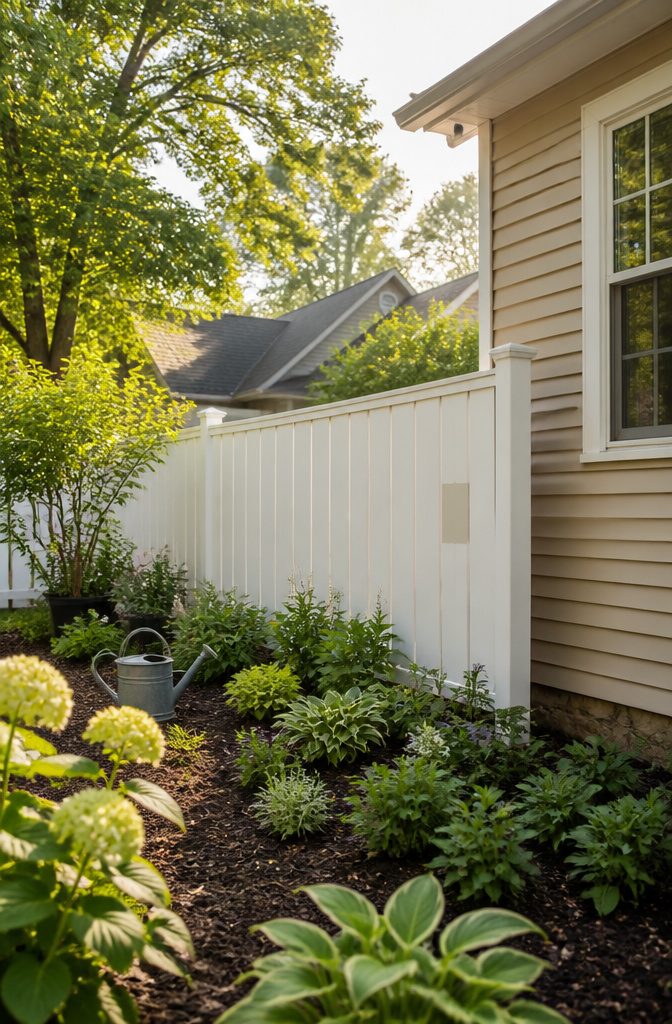
White is the traditional choice because it looks clean, bright and welcoming, and it frames a garden the way trim frames a window.
Pick a white that complements your siding rather than fighting it, since a stark white beside warm siding looks mismatched.
For a home with warm undertones, I’d choose Sherwin-Williams Alabaster (SW 7008), a creamy white without the harshness of a bright one. On a newer build, Benjamin Moore Chantilly Lace (OC-65) gives a crisper, cooler look.
White has one real drawback: light colors draw the eye forward, so a white fence can make a small yard feel smaller. Paint a test patch on the fence and check it beside your plants before you commit.
Recommended Products

Flows on smoothly and dries to a tough, durable finish
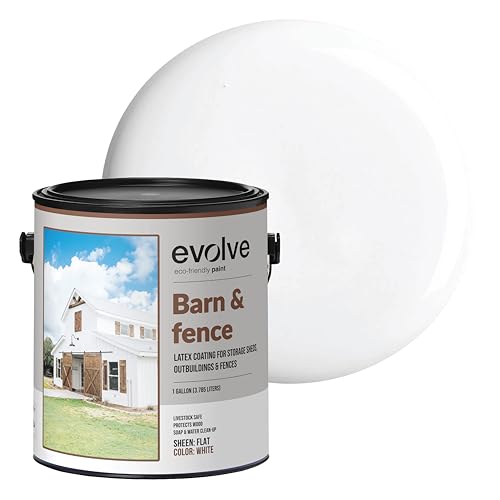
ELEVATE OUTDOOR STRUCTURES: Refresh barns, fences, sheds, and exterior surfaces with durable paint that delivers long-lasting color and protection.

Ready to use, pre-mixed door and trim paint offers a fresh new look on interior or exterior metal, wood and fiberglass
4. Blue
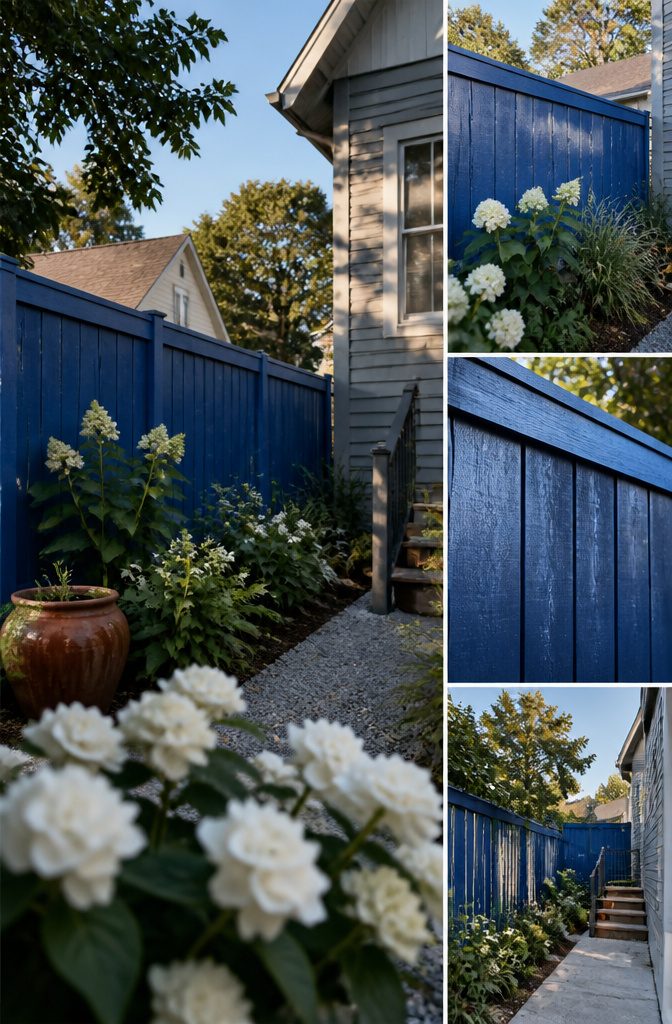
Blue gives a yard a pop of color without repainting the house.
It works best beside a gray, white, beige or other soft-colored home, where the fence is the only saturated element and adds contrast that makes the house stand out.
In the garden, a blue fence also sets off green foliage and flowers, which matters most in a small yard where the fence fills much of the view.
I would skip blue when the house is already a bold color.
Two strong colors compete, and the fence usually loses. Shades that lean toward a bright blue are the hardest to pair with a busy facade, so if you are unsure, test a sample against the siding in daylight first.
Recommended Products

Ready to use, pre-mixed door and trim paint offers a fresh new look on interior or exterior metal, wood and fiberglass

Use for a variety of indoor and outdoor project surfaces including wood, metal, plaster, masonry or unglazed ceramic

5. Natural Wood Stain
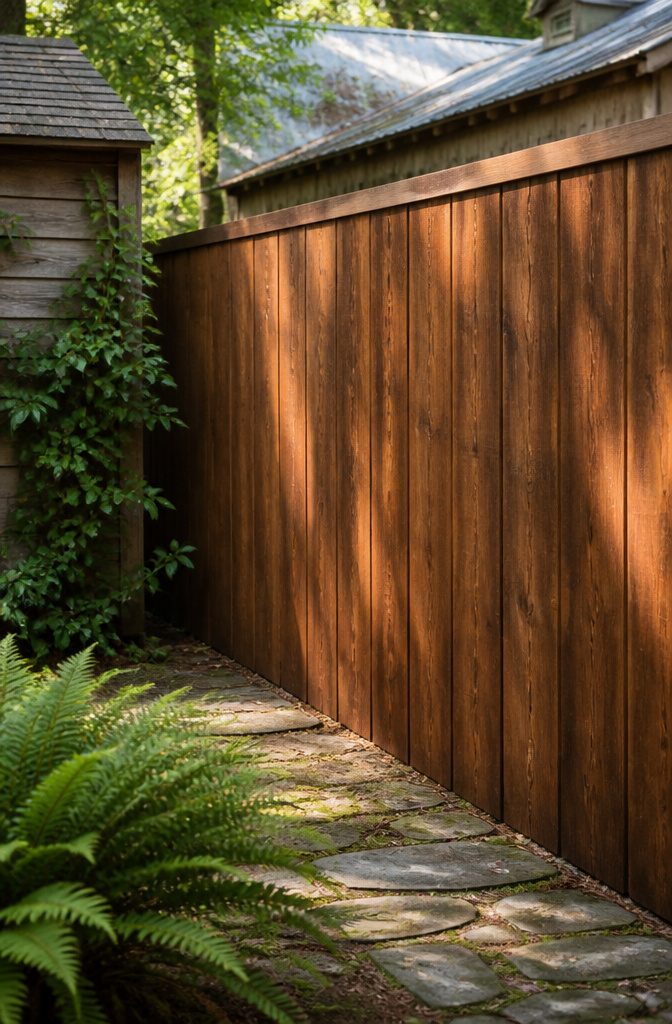
Stain suits rustic or natural-looking homes because it soaks into the wood instead of coating it, so the grain stays visible.
Paint sits on top, hides the wood and offers the widest color range, but it eventually chips and peels, which means scraping before you repaint. Stain only fades, and a recoat goes over the old coat.
For most wood fences I’d pick solid stain, which lasts 3–5 years before a recoat.
It comes in the same blacks, grays and whites as paint. Paint lifespans are quoted as 1–3 years in some places and 2–4 in others.
Transparent and semi-transparent stains show the most grain but fade faster. Save them for new or freshly sanded fences, since they won’t cover old paint.
Recommended Products
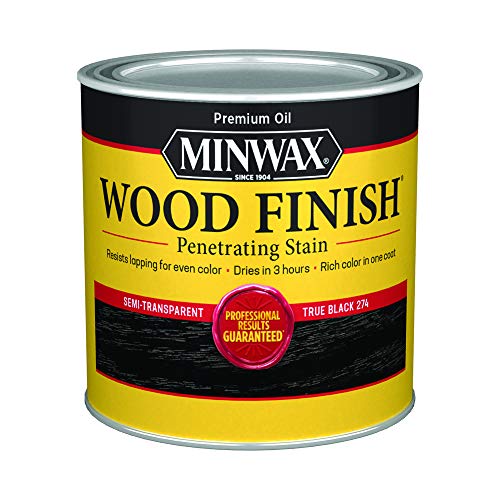
RICH EVEN COLOR – Minwax Wood Finish is a deep penetrating, oil-based wood stain that provides beautiful color and enhances the natural wood grain in one coat. It’s perfect for interior staining projects such as wood furniture, cabinets, doors and more.

BRING AGED WOOD BACK TO LIFE: The contractor's choice for restoring weathered and gray wood after proper cleaning; this long-lasting, oil-based wood stain revives natural wood character while providing excellent performance on new wood surfaces
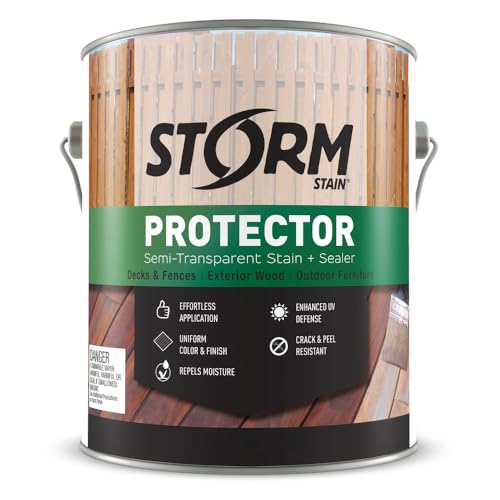
STORM PROTECTOR: Storm Protector is a penetrating, semi-transparent stain and sealer that highlights the natural beauty of the wood grain while providing protection from Mother Nature.
Match the Fence to Your Home
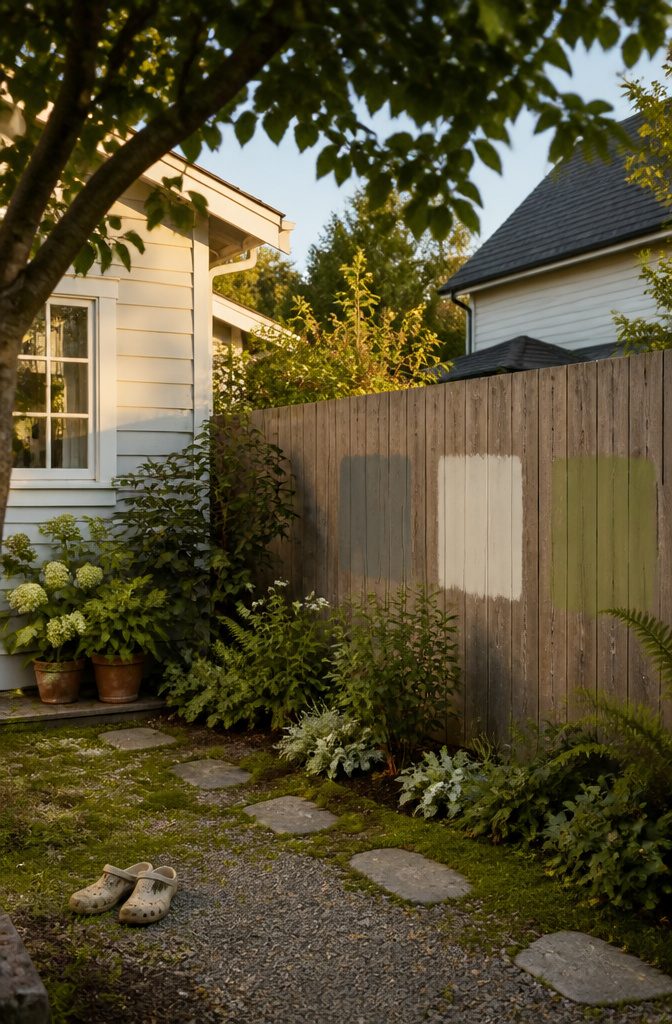
Matching the fence to the home’s trim is the traditional route, and it rarely looks wrong. The more modern route is a coordinating color that appears nowhere on the house but still sits inside its palette.
Then look at the yard. A fence in a muted shade fades behind plants and flowers and draws less attention, while a contrasting shade makes the garden stand out against it.
In a small yard I’d blend, because a quiet backdrop lets the plants carry the space.
Before buying full gallons, paint test patches on the fence itself, right beside the plants, and check them in morning and evening light. Then decide whether the fence should disappear or be a feature.
Recommended Products

🛡️ Rust Prevention & Long-Lasting Protection – Formulated as a direct to metal paint and direct to rust metal paint, this advanced coating creates a resilient shield that halts corrosion at its source. Ideal as exterior paint for metal, it preserves the strength and elegance of gates, railings, and outdoor furniture for years to come.

Durable & Weather-Resistant – Semi-gloss finish provides long-lasting protection against sun, rain, and harsh outdoor conditions.

Advanced Rust Resistance - SENVEN metal paint creates a strong, adhesive barrier that effectively shields against moisture and oxidation. It offers long-term protection, significantly reducing the risk of rust and corrosion on your metal surfaces
Pick the Right Finish
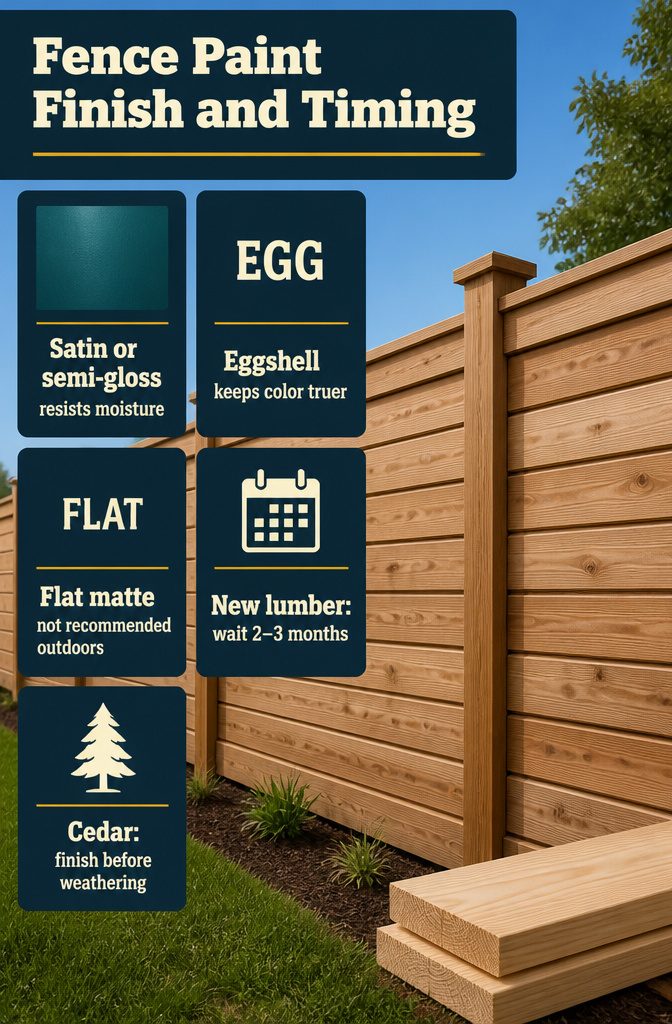
Sheen and timing decide how long a color lasts, so settle both before buying paint.
- Satin or semi-gloss wins for most fences. It resists moisture, protects the wood and wipes clean.
- Eggshell gives a truer hue when color matters more than durability. Skip flat matte, which isn’t recommended on exterior fences.
- High gloss shows every surface flaw and can look too shiny.
- On new lumber, wait 2–3 months before painting or staining. Preservatives in the wood can keep the finish from soaking in.
- Cedar is the exception. It’s already dried, so finish it before it weathers.
Recommended Products

SPRAY PAINT AND PRIMER – Krylon COLORmaxx Spray Paint and Primer delivers premium coverage and superior color with adhesion and durability. This primer and spray paint can be used on wood, metal, wicker, most plastics, glass, plaster/ceramic and more.

Ready to use, pre-mixed door and trim paint offers a fresh new look on interior or exterior metal, wood and fiberglass

Perfect for use on farm or industrial equipment such as tractors, trailers, lawn mowers and other implements
Frequently Asked Questions
Recommended Products

BRUSH ON PAINT – Krylon COLORmaxx Acrylic Latex Brush On Paint delivers premium coverage and superior color with adhesion and durability. This acrylic latex paint can be used on wood, metal, wicker, plastic/ceramic, wrought iron, drywall and masonry.

Use for a variety of indoor and outdoor project surfaces including wood, metal, plaster, masonry or unglazed ceramic
Use for a variety of indoor and outdoor project surfaces including wood, metal, plaster, masonry or unglazed ceramic
What is the best color to paint a fence?
No single color is best, but gray is the easiest neutral because it sits well beside almost any siding and landscape. For a traditional look, match the home’s trim.
For a more modern one, pick a coordinating color that is not on the house but belongs to its palette. Paint test patches on the fence beside your plants and check them in morning and evening light before buying gallons.
What fence paint color makes a yard look bigger?
Black makes a yard feel larger when plantings are thin, because a dark fence blurs the boundary. If your beds are full, deep green does the same thing by blending into the leaves.
On a wood fence, a semi-transparent black stain gives the same effect and keeps the grain visible. White tends to have the opposite effect in a small yard.
Should fence paint be gloss or semi-gloss?
Semi-gloss or satin is the better pick for most fences, since both resist moisture, protect the wood and wipe clean.
Eggshell shows a truer color if appearance matters more than durability. Avoid flat matte on exterior fences, and skip high gloss, which highlights every flaw in the surface.
What lasts longer on a fence, paint or stain?
Solid stain lasts 3–5 years before it needs a recoat.
Paint is quoted at 1–3 years in some places and 2–4 years in others. Stain fades instead of peeling, so a new coat goes over the old one, while peeling paint has to be scraped before you repaint.
When should you not paint a fence?
Do not paint or stain a new lumber fence for the first 2–3 months.
Preservatives in the wood can stop the finish from soaking in. Cedar is the exception: it comes already dried, so finish it before it weathers.









