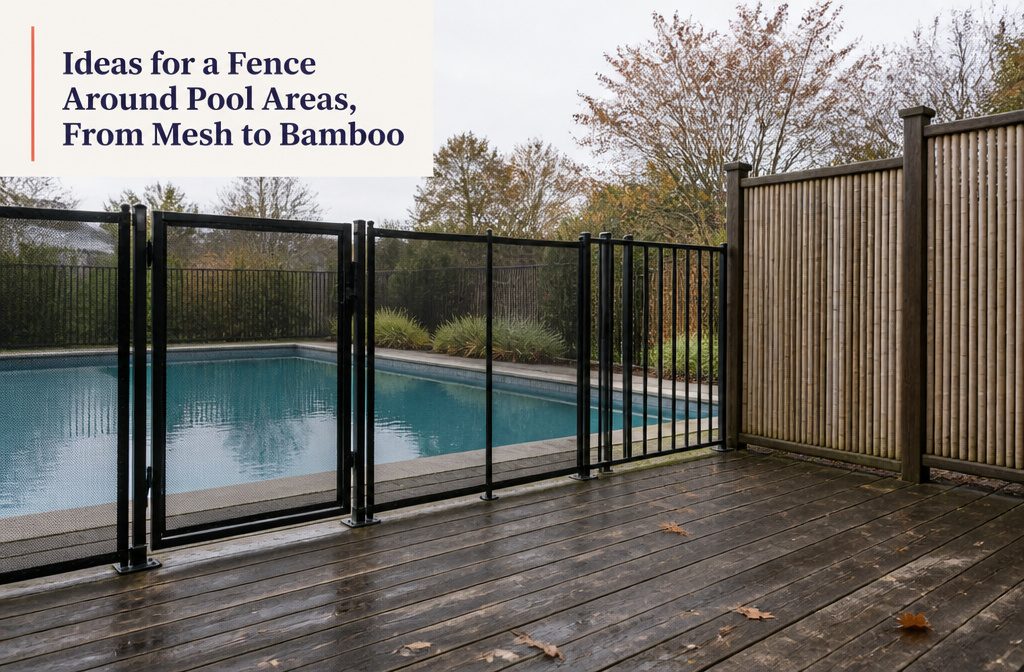
Choose by how much you want to see. Open mesh, aluminum and glass keep the water in view from the house, while solid vinyl, wood and bamboo give privacy but block it.
Whichever you pick, it needs to stand at least 4 feet tall and have a self-latching gate, and 48-inch removable mesh costs $32 per foot.
1. Removable Mesh Fencing
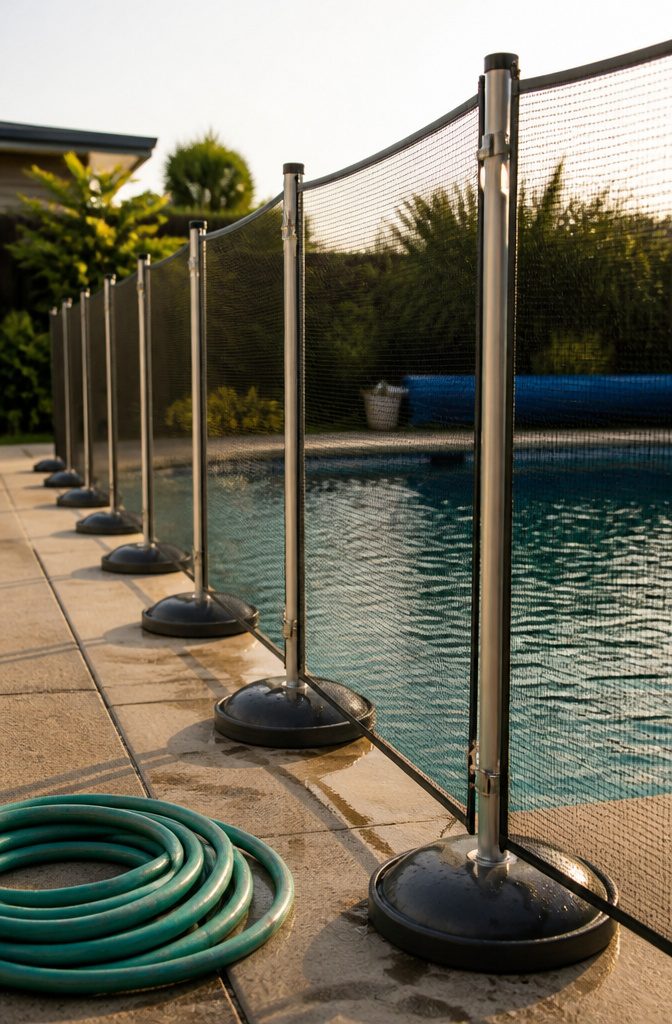
Removable mesh is the one I’d pick for homeowners who want security and flexibility. It stands on its own, so no deck drilling is needed, and it can be stored when the pool is closed.
Bases are 3 feet long and 15 inches wide, about 65 pounds filled with water, with poles every 36 inches. The poles are marine grade 6063 T6 aluminum, the hooks and eyes are 304 stainless, and the weave is 5 by 5 strands.
Heights run 48 inches at $32 per foot and 54 inches at $33. A 12-foot section weighs about 260 pounds, and the minimum order is 24 feet.
Pool Guard says its mesh meets ASTM F2286-16. That is the seller’s claim, so verify it.
Recommended Products

Removable, mesh, pool safety fencing for use around swimming pools to help protect against accidental falls into the pool.
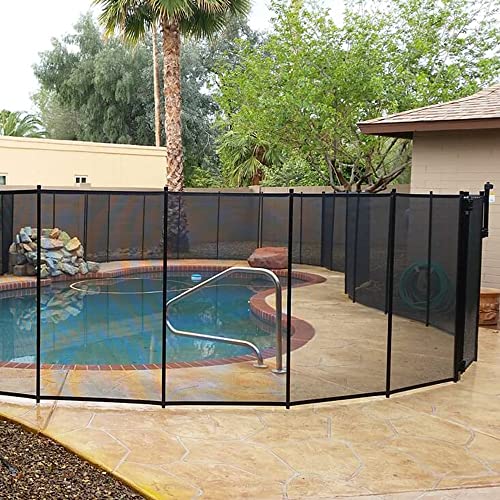
Pool Safety Fence. Our in-ground swimming pool safety fence is designed prevent your pool area from an accidental drowning. Safety Fence which it is a great choice to keep out pets or kids and gives your peace of mind that your child will be safe.
2. Aluminum Fencing
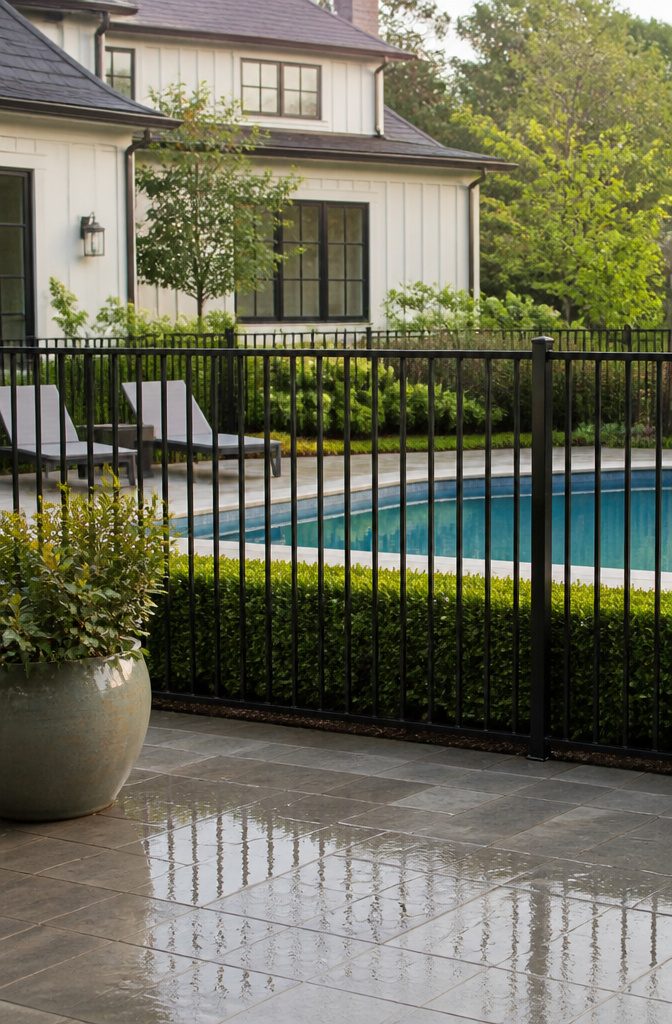
Aluminum is the fence I’d pick for a pool you want to watch from the kitchen window.
Its slim pickets keep the view open while still working as a barrier, and the metal resists rust, so there’s no staining or repainting. It’s also lightweight and affordable.
Some styles copy the look of wrought iron for less money. Look for ASTM and CPSC compliance, and check that the height and picket spacing meet pool safety standards.
The cost of that open look is privacy. Open pickets let neighbors and passersby see straight into the yard, so if you want screening, plant a hedge behind the fence or choose a solid material instead.
Recommended Products

Complies With Pool Safety Standards: Keep your pool secure with this child-proof gate latch; Equipped with a magnetic self-latching system, this magnetic gate latch helps secure potentially unsafe areas

Sturdy Gate Frame: The exquisitely crafted pool fence gate features 1" thick square aluminum poles and 3.9" long stainless steel legs, providing superior corrosion resistance and durability for long-term stability and safety.

𝗔𝗱𝗷𝘂𝘀𝘁𝗮𝗯𝗹𝗲 𝗧𝗲𝗻𝘀𝗶𝗼𝗻 𝗦𝗽𝗿𝗶𝗻𝗴𝘀: Our patented tension adjustment system allows you to customize the closing speed using the included Allen-key. Precisely align the self-closing hinges and latch posts for smooth gate operation and secure latching.
3. Fully Framed Metal Pickets
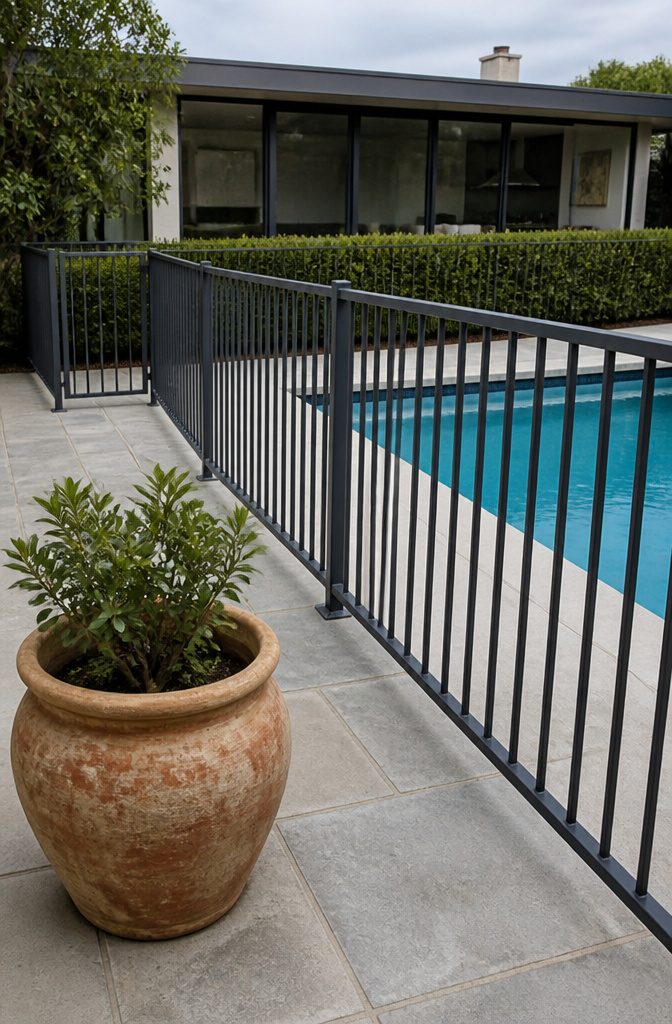
A rail frame wraps the vertical pickets on all sides, so the fence reads as one rigid panel instead of a row of bars.
The frame adds structure and durability, while the gaps between pickets stay open and keep the pool visible from the patio or kitchen window.
I’d choose it for a household that wants a see-through barrier with a finished, decorative look. Decorative pickets suit a traditional house, and plain, square lines suit a modern one.
Privacy is the weak spot: anyone walking past can see in as easily as you can see out. Over the years, plan on touching up or renewing the rust-resistant coating on the metal.
Recommended Products

PET & CHILD SAFE: Create a safe outdoor play area for fur babies and children. Rest assured that this fence will create a sturdy barrier to protect your family.

Great for Garden: Our decorative garden fence could be set up as barrier for your garden, yard and landscape patio to keep animal away from your flower, plants and vegetable

Strong & Secure Build: Constructed with heavy-duty metal and a rust-resistant black-silver finish, this pool fence provides exceptional durability for outdoor use. Reinforced metal stakes ensure a stable and secure installation around pools, patios, and gardens.
4. Elevated Wrought-Iron Fencing
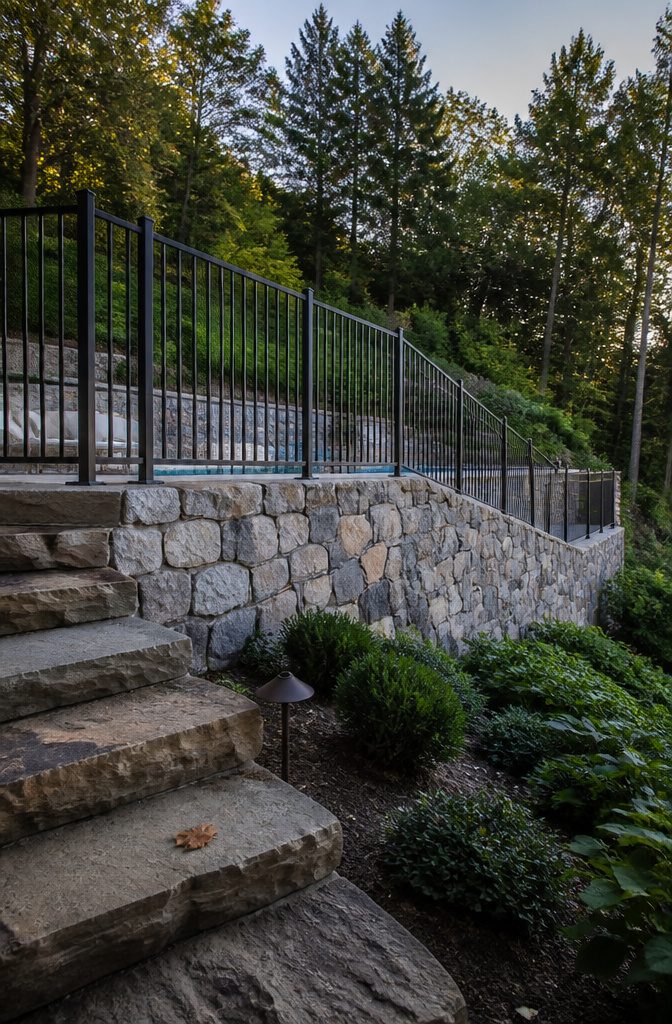
Wrought iron suits pools on a slope or multi-level patio, where it mounts directly on a retaining wall, raised patio edge or stone ledge.
Posts set into stone or concrete get strong support, and the open bars keep views and airflow clear.
Where the posts sit decides how tall the fence actually is. Height counts from the surface a child can stand on, so a wide ledge on the pool side gives small feet a step and cuts the effective height.
I’d mount the iron flush with the wall’s edge so there is no ledge to climb on. Hire a professional: mounting is more complex than a ground-set fence, and safety compliance depends on it.
Recommended Products

Attach to your new or existing fence or gates

Customizable Length Solutions: Each fence section stands 4ft tall and is designed for modularity. Connect multiple 12ft sections with the included stainless steel spring-loaded safety latches to perfectly contour around any pool shape or size, including 24ft and 48ft spans.

Comprehensive Protection: Our 4x108 ft/1.21x32.91 m pool fence offers versatile fitting for different pool shapes and sizes, especially for large pools. It not only ensures pool safety but also effectively protects pets, serving as your family's guardian.
5. Dark Metal Panels
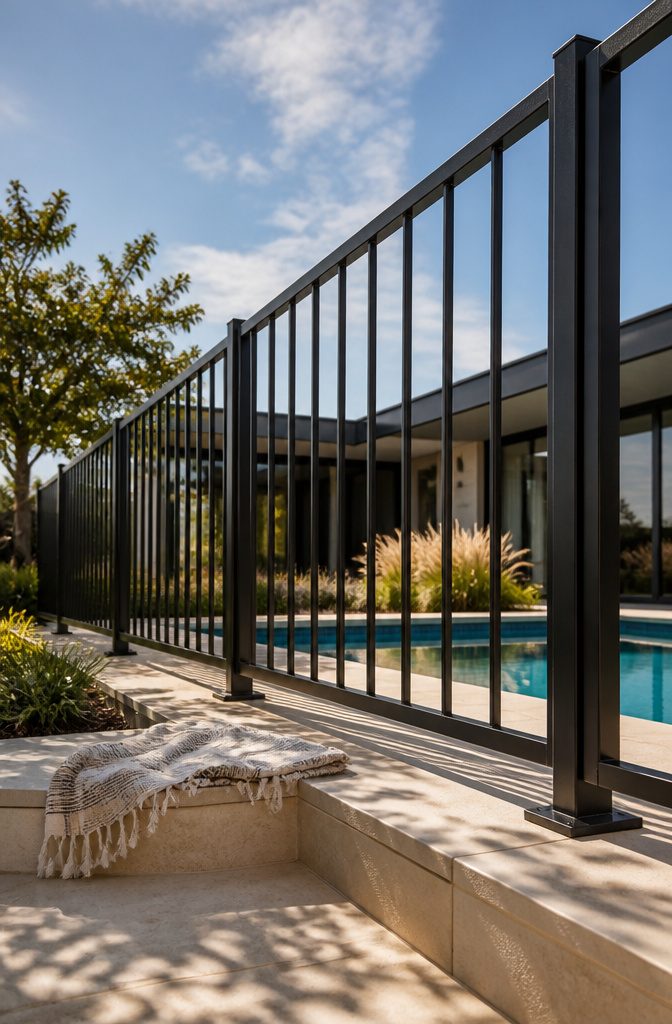
Matte black or dark metal panels suit a contemporary backyard better than most other styles. The clean lines blend with a modern house, the panels stay strong and secure around the pool, and they resist weather with minimal maintenance.
The drawbacks are privacy and heat.
Panels this open give little privacy, so neighbors can see straight into the pool area. Dark finishes also absorb heat in hot climates, which matters when young children grab the bars or walk barefoot beside the fence.
In a sunny yard, I’d touch a sample panel at midday before ordering, and I’d pick a lighter finish if the fence sits right along the pool deck.
Recommended Products


EASY ORDERING: Everything you need for your fence project is in the box except for the final post. Only ONE additional post, BL19112, is required for the end of your project. A gate is available by searching BL19111.

STYLISH NATURAL WOOD: This FSC certified wood screen is made with real wood meaning no two boards have the same grain color, finish, or wood knots differing it from vinyl outdoor privacy fence screen panels.
6. Glass Fencing
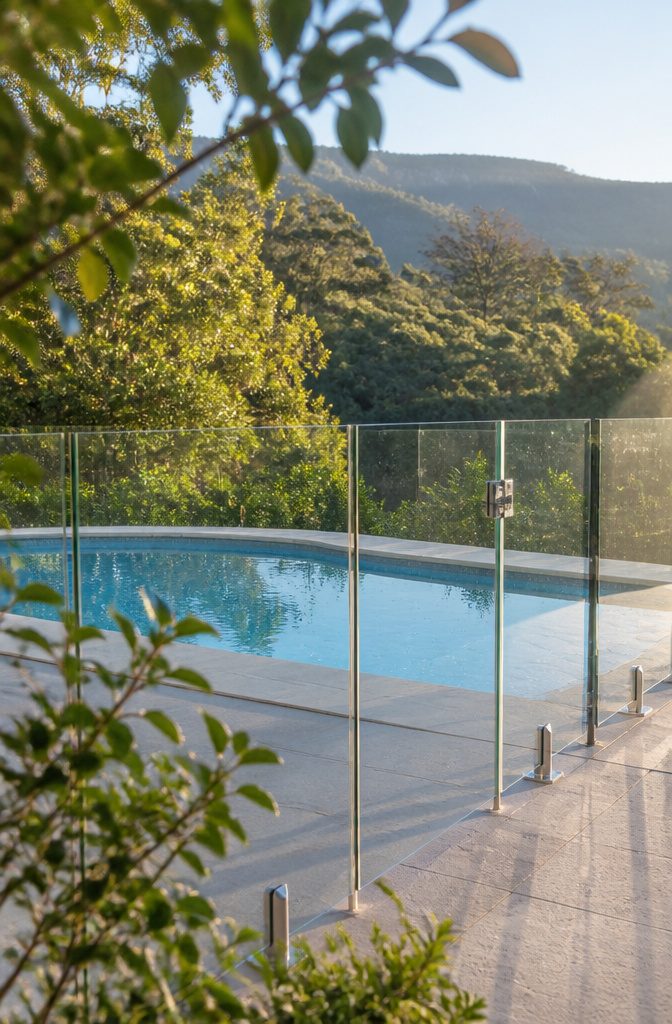
Glass panels keep the pool and the yard in clear view, which is why they suit contemporary homes and properties with a scenic backdrop.
They are also the style homeowners currently favor for a sleek, modern look. If the view is the reason you bought the house, I’d choose glass over any solid fence.
Glass is safe for children when it is installed correctly with proper gates and hardware, so the hardware and the gate matter more than the glass itself.
Professional installation typically covers secure footings, alignment to meet code and gate hardware. That is where I’d spend money rather than save it.
Plan on cleaning the panels regularly, since clear glass shows every smudge.
Many owners decide the open look is worth the chore. Check the fasteners and latches each time you wipe down.
Recommended Products

Pool Safety Fencing. VINGLI in-ground swimming pool safety fence is designed prevent your pool area from an accidental drowning. Safety Fence which it is a great choice to keep out pets or kids and gives your peace of mind that your child will be safe.

Easy to Install . VINGLI fence section comes complete with hardware and clear instructions, the 5/8'' drill bit is needed to drill holes. It is easy to install as long as you follow the instructions and use the recommended drill. Note: You can also make a fence at the interface to use as the door.

Portable & Lightweight Iron Design:Experience the perfect balance of portability and strength. Unlike bulky permanent barriers, this portable pool fence features an innovative, lightweight iron mesh design that is incredibly easy to lift, move, and reposition. It offers the sleek protection of a metal pool enclosure without the heavy, unmanageable weight.
7. Vinyl Fencing
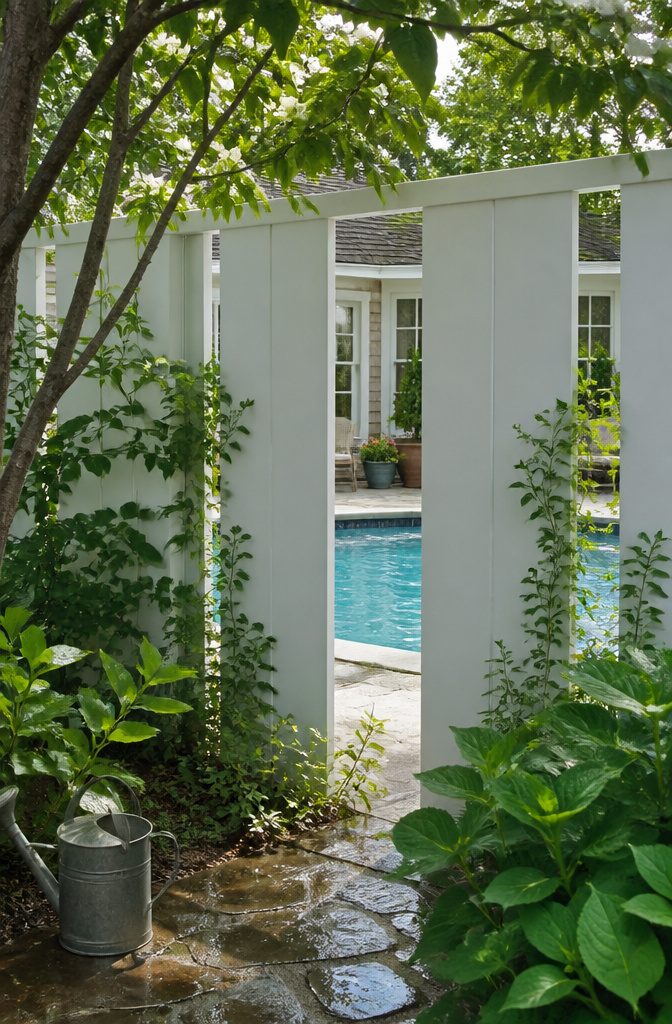
Vinyl is the low-maintenance choice.
Panels resist moisture and sun damage, and the smooth surface gives a child little to grip, which makes it hard to climb. Styles run from semi-open designs to full privacy panels.
If you want to watch the pool from the house, pick a semi-open style so sight lines stay clear.
Solid privacy panels make sense when neighbors look straight into the yard. White solid vinyl can throw glare, though, and one homeowner weighing it was warned it would make swimming less pleasant.
Shrubs or vines along the fence break that up. Cedar privacy fencing ran 40–50% more in that homeowner’s quotes, so vinyl with plantings is the cheaper way to get screening.
Recommended Products

【Adjustable Tension】 Our durable gate hinges features variable closure strength, you can easily adjust the spring tension with provided tension adjust tool according to your gate weight and dosing speed

Easy-to-install, do-it-yourself gate kit for use with the Pool Fence DIY safety system; helps keep kids safe from accidental falls into your pool

Immediate & Secure Pool Fence Connection—Upgrade mesh pool fence gate security with the Quick Lock Latch pool safety system. Perfect for replacing old DIY pool fence hooks or pool fence connectors, the durable pool fence hardware ensures fast, tool-free installation and keeps every pool fence section safely locked.
8. Wood Fencing
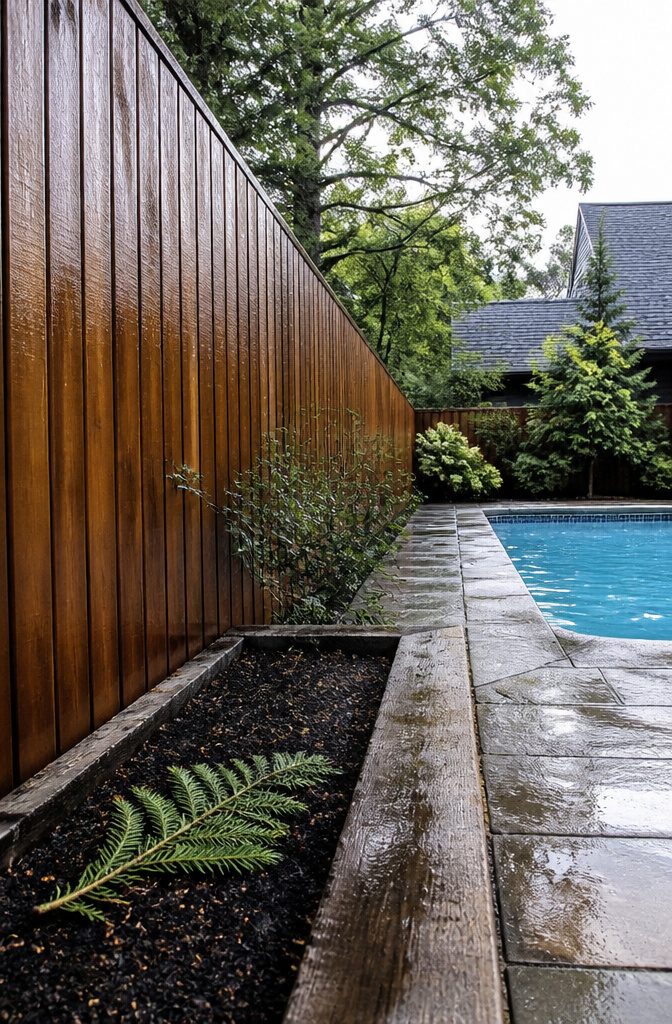
Wood gives a pool area warmth and a traditional look, and solid boards double as a privacy screen from the neighbors.
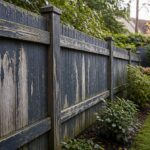
I’d choose vertical boards, because horizontal rails hand children a foothold. Splash and constant moisture wear wood faster than a dry yard would, so sealing and regular upkeep come with the material.
Wear also opens gaps. The National Drowning Prevention Alliance states the standard plainly:
Ensure your fence is completely secure and has no gaps or holes that small children or pets could crawl through.
Walk the fence line each season and replace any loose or split board before it becomes a way in.
Recommended Products

Strong & Secure Build: Constructed with heavy-duty metal and a rust-resistant black-silver finish, this pool fence provides exceptional durability for outdoor use. Reinforced metal stakes ensure a stable and secure installation around pools, patios, and gardens.

Strong & Secure Build: Constructed with heavy-duty metal and a rust-resistant black-silver finish, this pool fence provides exceptional durability for outdoor use. Reinforced metal stakes ensure a stable and secure installation around pools, patios, and gardens.

DIMENSIONS: Each unit is 41" H x 44" W and includes 2 complete fence panels with posts for a total of 88in of fence.
9. White Picket Fencing
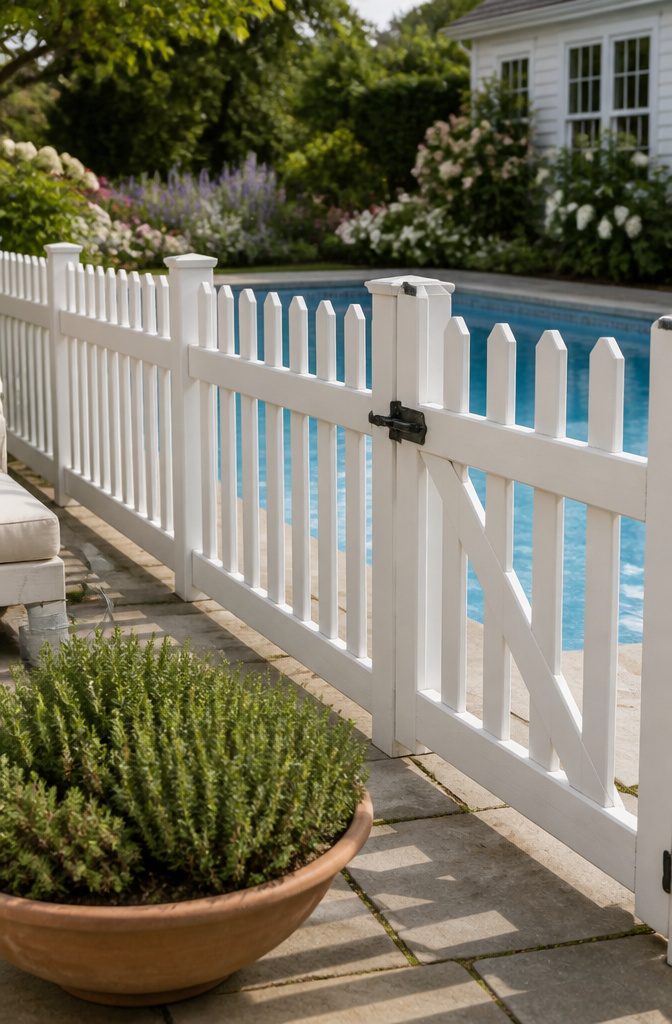
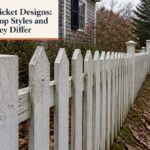
A white picket fence gives a pool yard the cottage look, and the gaps between slats keep the water visible from the patio.
It costs less than metal and takes paint or stain easily. Pickets still have to work as a barrier, so keep the fence at least 4 feet tall with gaps too narrow for a child to slip through.
Vertical slats suit that job. Horizontal rails set close together give small climbers a ladder, so I’d skip them.
Hang a self-closing, self-latching gate that swings away from the pool, and check the layout against ASTM-F1908 and your local code. Expect to repaint regularly, because wood wears out sooner than metal.
Recommended Products

High‑Quality Materials: The outdoor fence screen is made of durable polyethylene, while the poles are constructed from strong, rust‑resistant iron. Built to withstand...
10. Wood on a Stone Base
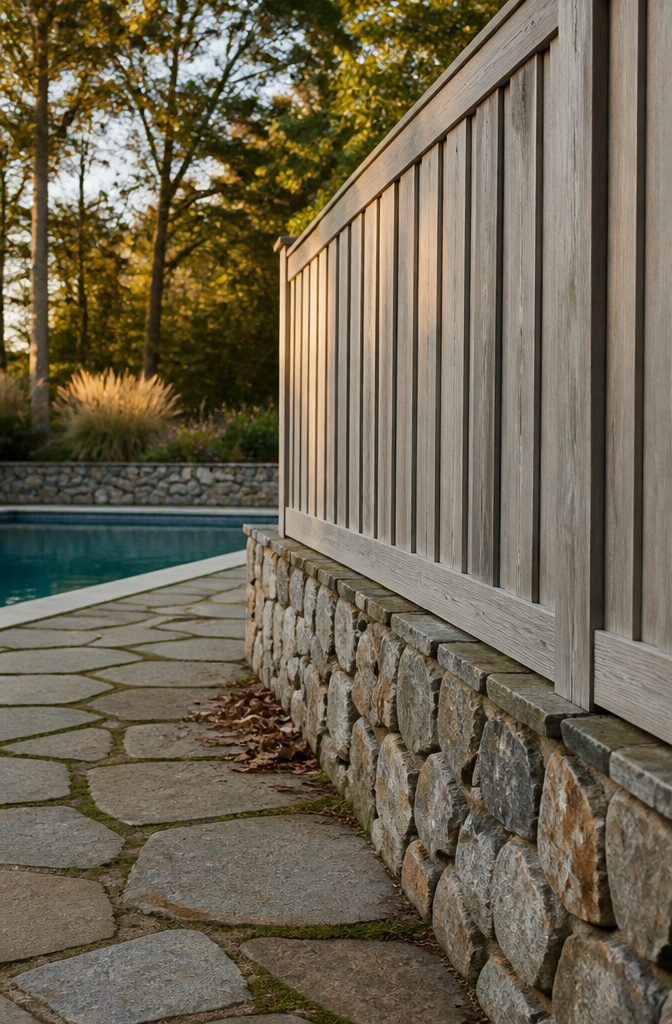
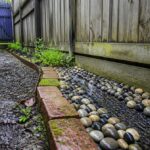
Wood fails first where it touches wet soil, and a natural-stone base lifts the bottom of the fence out of that moisture. That slows rot and gives the fence a stronger foundation.
The stone also adds texture and a more upscale look, so it suits a yard that already has stone features. A white picket fence on a stone footing is the classic pairing.
The cost is real. Installation runs higher than for a plain wood fence, and the stone means masonry work during construction, which most first-year gardeners won’t want to tackle themselves.
Choose this style when the fence is part of the landscaping. For a plain barrier on a tight budget, wood is the easier path.
Recommended Products

PRIVACY AND CHARM: Our no dig air conditioner fence is perfect for hiding unattractive backyard items such as AC units, trash cans, pool equipment, children's toys, and more.
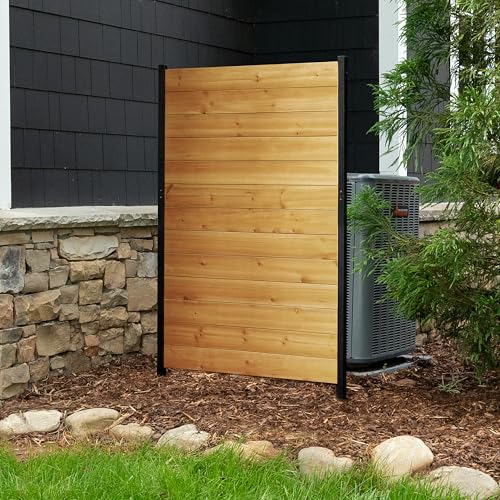
STYLISH NATURAL WOOD: This FSC certified wood screen is made with real wood meaning no two boards have the same grain color, finish, or wood knots differing it from vinyl outdoor privacy fence screen panels.

Neighbor Privacy, Not Blackout: Blocks direct line-of-sight while allowing airflow — designed for comfortable backyard privacy, not a solid wall or tarp.
11. Wood-and-Metal Hybrid
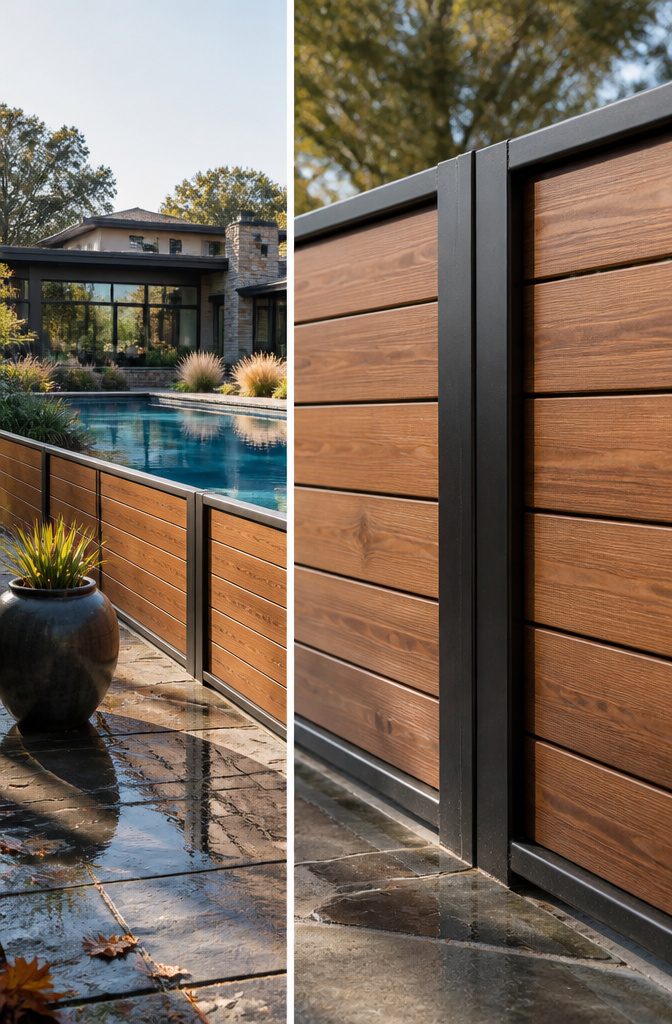
Wood panels set in metal frames give a pool fence the warmth of natural wood on a sturdier structure.
Warm wood tones against dark metal read as modern and architectural, so this style suits contemporary homes and designed landscapes better than a traditional yard.
Against an all-wood fence, the metal frame is the durability upgrade, because the structure no longer rests on wood alone. Upkeep shrinks but doesn’t vanish: the wood panels still need maintenance.
Installation also costs more than a basic fence. I’d pick this style only if the look is the reason, and the highly customizable designs make it easy to match to your house.
12. Bamboo Fencing
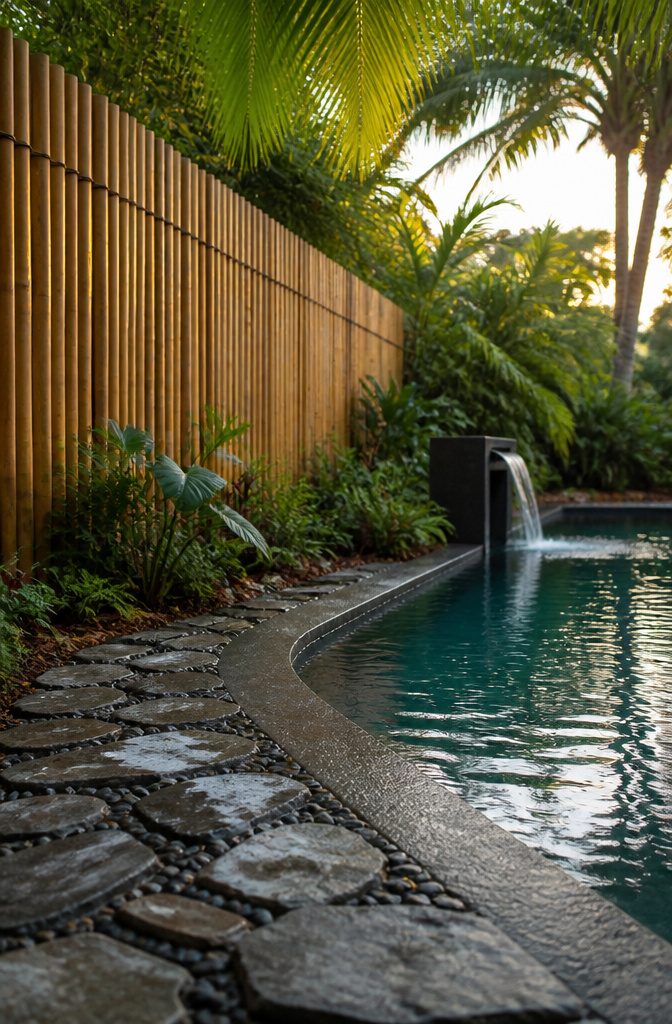
Bamboo gives a pool a tropical, natural look and is one of the few fence materials that reads as eco-friendly.
It pairs well with palm trees, stone pathways and water features, and it adds privacy and security. The material is strong and naturally resists moisture, UV rays and harsh weather, but plan on sealing it occasionally to prevent weather damage.
Fire is the real limit. Bamboo can burn, so skip it in fire-prone areas, and think twice if a grill or fire pit sits near the pool deck.
It suits homeowners who want lush, natural landscaping around the water. If you live where wildfires are a risk, choose a metal fence instead.
Gate Rules
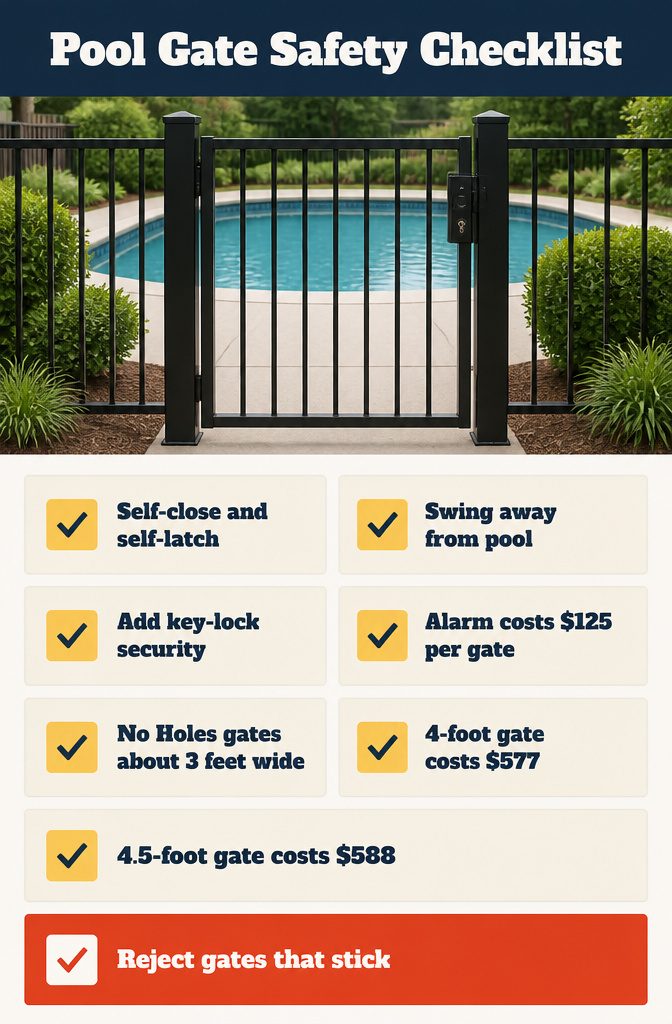
A gate is the weak point of any fence in this list, since it is the one part that moves and relies on closing properly every time. Check for these:
- Self-closing and self-latching hardware, so the gate shuts even when someone forgets.
- A swing that opens away from the pool.
- A key lock for extra security. Pool Guard’s Magna Latch uses a magnet to close and can be locked with a key.
- A battery-operated alarm that warns you in real time when the gate is left open. It costs $125 per gate and is worth it with young kids.
- Pricing and size. Gates for the No Holes system are about 3 feet wide, so count that in your fence length. They cost $577 at 4 feet tall and $588 at 4.5 feet.
Skip any gate that sticks or won’t latch, because it undermines the whole fence.
Height and Distance From the Water
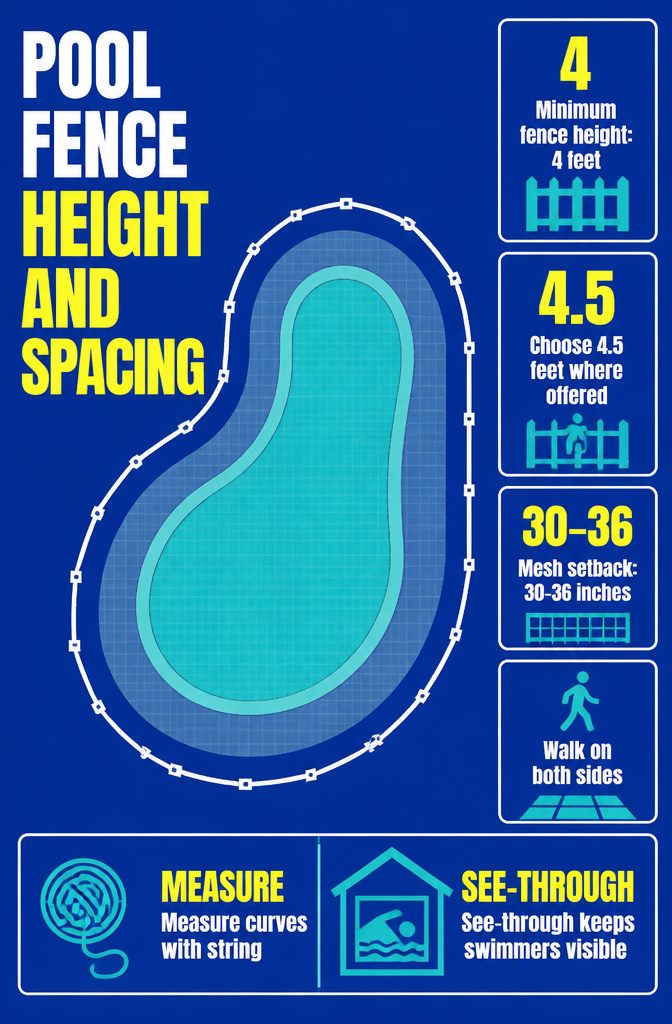
Pool fences start at 4 feet high, and 4.5 feet is worth choosing where it’s offered, because kids drag toys and furniture to a fence and climb it. Keep chairs and floats away from the line regardless.
For distance, one mesh system sets the fence 30–36 inches from the inside edge of the pool, as long as you can still walk on both sides of it.
If your yard can’t give you that walking room, pick a slimmer style or move the line before you squeeze it against the water.
On curves, lay a ball of string along the planned route, then measure the string.
See-through styles let you watch swimmers from the house, while solid ones give privacy and block that view. I’d favor the open view.
Codes, Permits and Upkeep
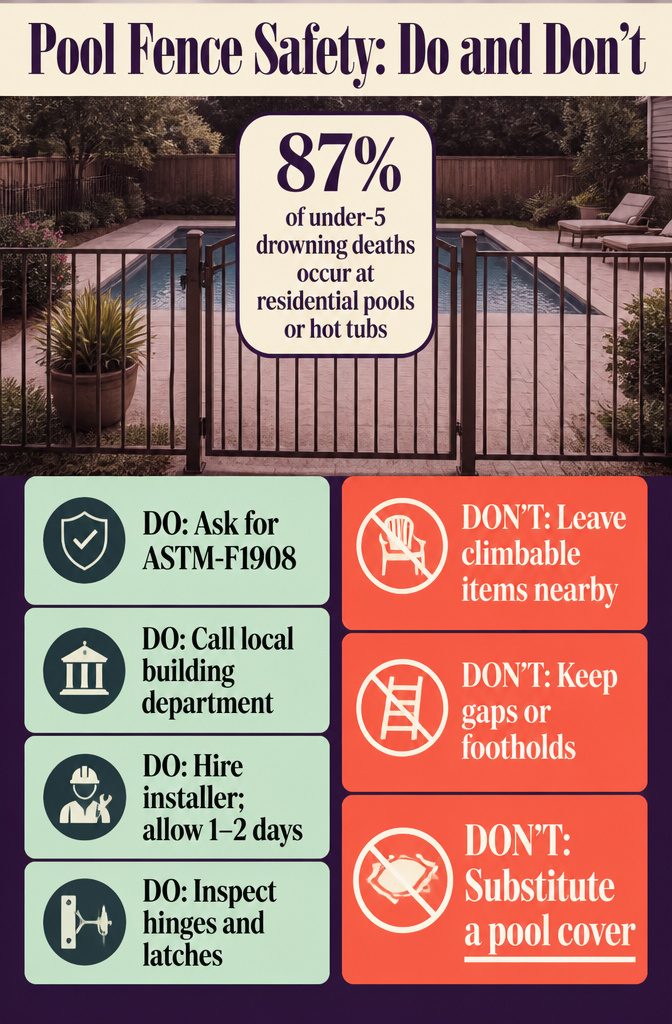
In the US, 87% of drowning deaths among children under 5 happen in residential pools or hot tubs, so the fence is a safety device first and a design choice second.
- Ask whether the fence meets ASTM-F1908 before you buy.
- Call your local building department before ordering. Permits and inspections are handled locally, and an unpermitted fence can be a costly redo.
- Hire a professional installer. The job usually takes 1–2 days.
- Check the fence regularly for damage or corrosion, especially at hinges and latches.
- Keep chairs, planters and grills away from the fence, since anything a child can climb defeats the height.
- Close any gaps and remove footholds.
- Never treat a pool cover as a substitute for a fence.
Frequently Asked Questions
What is the best fence around a pool?
Removable mesh is the top pick for homeowners who want security and flexibility.
It stands on its own with no deck drilling and can be stored when the pool is closed. Whatever material you choose, the fence should be at least 4 feet tall with a self-closing, self-latching gate.
Does a fence around a pool have to enclose the whole pool?
Yes.
A fence on all 4 sides gives the strongest protection and is required in most cases. The gate should close and latch on its own and swing away from the pool.
Is a fence around a pool required by law, and do I need a permit?
Requirements are set locally, so call your building department before you buy.
Many areas require a permit and an inspection. A fence that fails code can bring hefty fines or a costly redo, so confirm it meets ASTM-F1908.
How much does a fence around a pool cost?
One removable mesh system costs $32 per foot at 48 inches tall and $33 per foot at 54 inches, with a 24-foot minimum order.
Aluminum and vinyl typically fall in the mid range, wood varies by species and design, and glass is usually the highest cost. Gates add to the total: a 4-foot-tall No Holes gate costs $577, and a gate alarm adds $125.
What is an alternative to a fence around a pool?
Nothing replaces a fence. Safety covers, nets and alarms add protection, and hedges, walls or raised planters can work as extra barriers, but a pool cover is never a substitute.
A fence is only 1 of 5 layers of protection, so these extras go on top of it.
Are glass pool fences safe for children?
Yes, when they are installed correctly with proper gates and hardware.
The gate and hardware matter more than the glass itself, so use a professional installer. Check the fasteners and latches each time you clean the panels.
Can I install a pool fence myself?
Sometimes.
Some systems, such as freestanding mesh that needs no deck drilling, allow DIY installation. A professional installer is more likely to get the safety and code details right.
How long does it take to install a pool fence?
Most projects take 1–2 days, depending on the layout and the materials.
What pool fence styles are trending?
Glass panels, mesh fencing, solar-powered features and smart-lock technology were the top trends in 2024.
Homeowners favor glass for a sleek, modern look, while mesh remains the most reliable safety choice. Whatever the trend, the 4-foot minimum height and self-latching gate still apply.