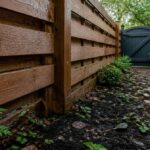
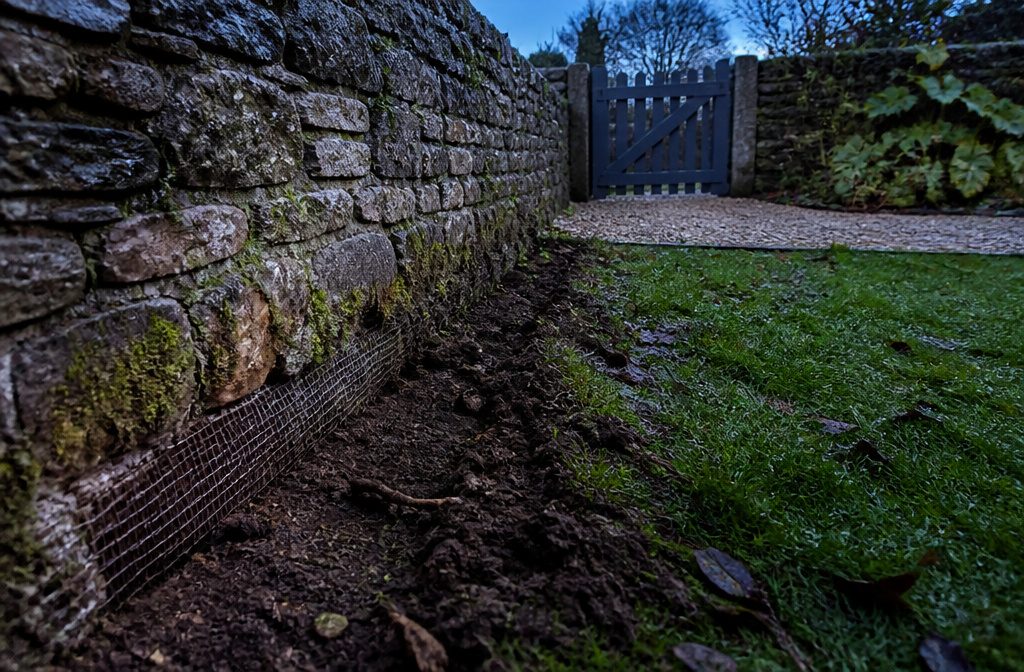
Choices run from a vinegar spray to block, brick or stone walls, and the dog’s habit decides which one fits: digging, climbing, jumping or barking.
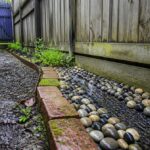
Wood, vinyl and pallet fences all let a digger tunnel under the base, so bury a barrier there. Jumpers and high-energy dogs get 6 feet.
1. Chicken Wire Fence
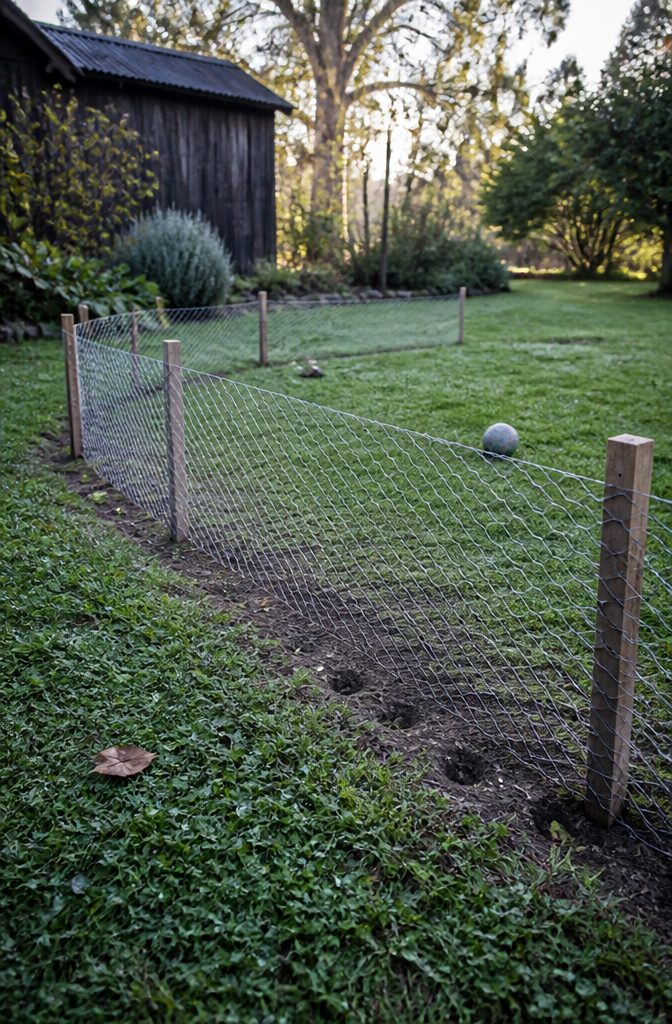
Chicken wire is the cheapest dog fence I’d recommend for a small dog, and most hardware stores carry it. A roll of wire, some stakes and a hammer are enough to put one up in a few hours.
Attach the wire to wooden stakes or metal posts around the yard. If your dog digs, bury the bottom edge a few inches underground so a dog tunneling along the fence line hits wire instead of open dirt.
Small dogs are unlikely to jump or push through it.
Larger or more aggressive dogs can force their way through the thin mesh or dig under it. For those dogs, I’d skip chicken wire or plan on reinforcing it.
Recommended Products
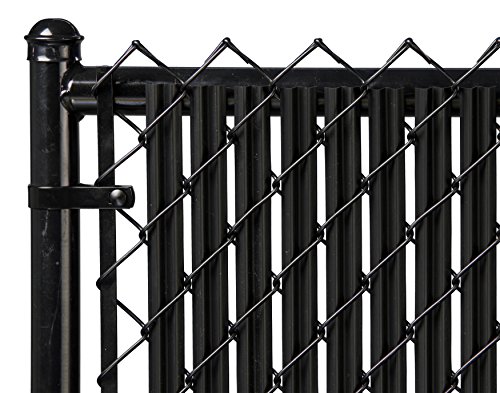
Black Ridged Slats for 6ft chain link are deliberately cut to about 68.5 inches long. These fence inserts are designed primarily for 6ft 11 or 9 gauge chain link with a two inch diamond. Also works in economy chain link with a larger diamond pattern, but privacy will be less. Slats must be installed correctly and be fully inserted inside the wire mesh of your fence to achieve the desired results. Cannot be used to extend the fence height. Not suitable for fences on a steep slope.
Black Ridged Slats for 4ft chain link are deliberately cut to about 44.5in long. These fence inserts are designed primarily for 4ft 11 or 9 gauge chain link with a two inch diamond. Also works in economy chain link with a larger diamond pattern, but privacy will be less. Slats must be installed correctly and be fully inserted inside the wire mesh of your fence to achieve the desired results. Cannot be used to extend the fence height. Not suitable for fences on a steep slope.

DIY FENCE KIT: The Livingston metal fencing is a DIY-friendly solution with a modern design. Each fence section comes ready to assemble in a convenient box, offering cost-effective alternative to wood and vinyl fencing.
2. Wooden Pallet Fence
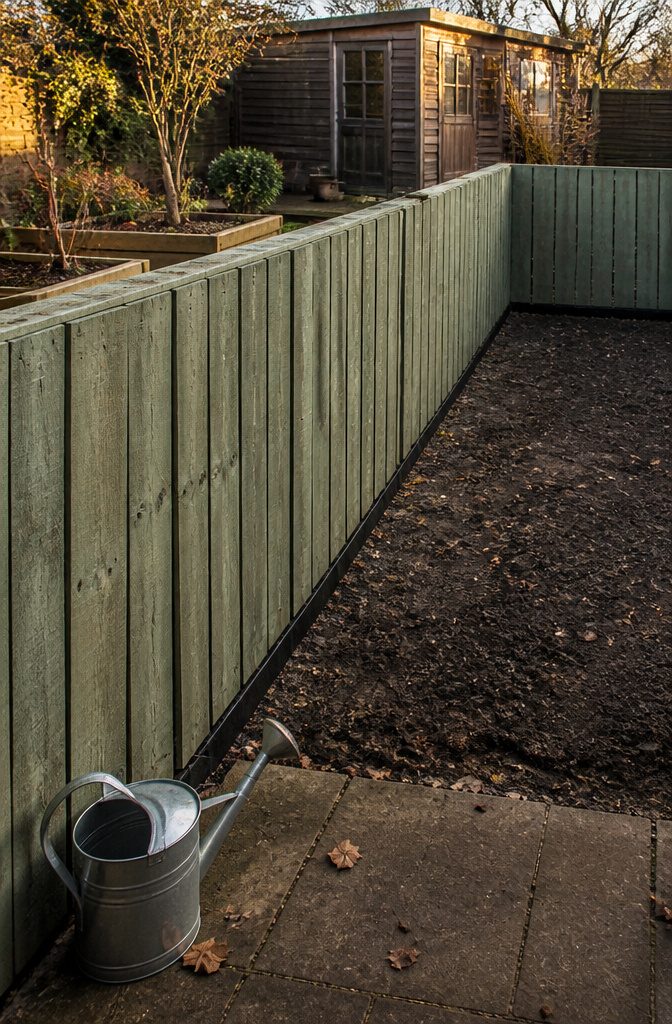
Pallets are the cheapest solid panels you can put around a dog run, since local businesses often give them away or sell them for little.
Stand them upright, line them up to cover the area, and secure them to one another with nails or screws.
Each pallet is a ready-made section, so you can run them in a straight line, bend them into an L, or box off one corner of the yard.
Paint or stain covers the raw, scrapped look and lets the fence match the rest of your space.
Pallets are sturdy and hold up outdoors, but the bare ground under them is the weak spot. Add a barrier along the bottom so a digger can’t tunnel out.
Recommended Products

TOTAL 30 PANELS, 42.5FT LONGER SIZE - Included 30 panels of fences, total length: 42.5 feet, more fences, and longer lengths can meet more of your needs, including filling the gaps under the bottom of the existing fence, building garden edging border, surrounding the garden bed to avoid plant damage, etc

SMALL GAP TO KEEP ANIMALS AWAY - These animal barrier fences can block the gap at the bottom of origin fence, extend your fence protection range, prevent your dogs from digging and escaping, keep the small animals away of your yard, garden, lawn

1.2IN GAP ANIMAL BARRIER FENCE - The upgraded garden fence gap is reduced to 1.2 inches, which is more effective than a 2-inch gap in preventing pets from escaping through the gap or other small animals from visiting and damaging your garden and yard. Extends the protection of an existing fence underground
3. Aluminum Fence
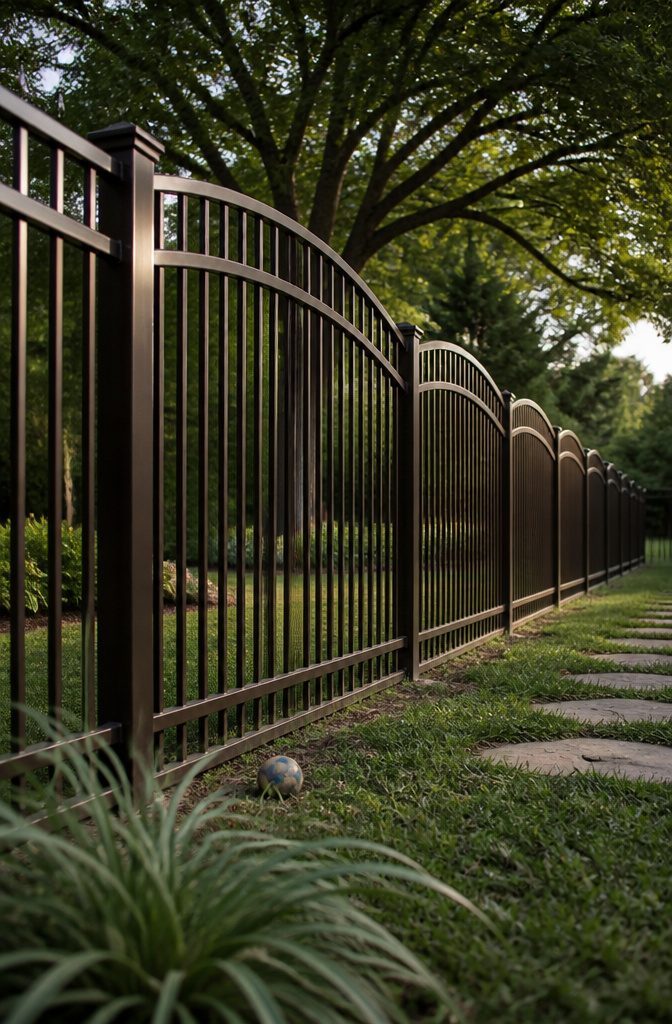
Aluminum is the fence I’d pick for a large, determined dog. It stands up to hard escape attempts, and it can be ordered in custom heights, including 6-foot and 8-foot, which suits dogs that jump.
It doesn’t rust, handles harsh weather, and needs very little upkeep. It also comes in various designs and colors, so it looks like part of the yard instead of a kennel run.
The downsides are real. Aluminum is expensive and hard to install, so on a tight yard budget wood or vinyl will stretch further.
Unless you’re comfortable with a demanding build, plan on hiring the installation out, and I’d only choose aluminum when the dog truly needs that strength.
Recommended Products

DIMENSIONS: Each panel measures 32” H x 48” W

【Rustproof & Durable】 Enhance your outdoor space with this decorative garden fence. Designed with an elegant arched shape and finished with a black rust-resistant coating, the fence is built for long-lasting durability and reliable performance in sun, rain, and wind.

Tall Garden Fence Animal Barrier: Each of 6 panels measures 42" H x 26.97" W with 1.63 inch gap, connecting to 25.67 ft total length. Effectively protects yards, patios, and flower beds by preventing small animals from crossing.
4. Vinyl Fence
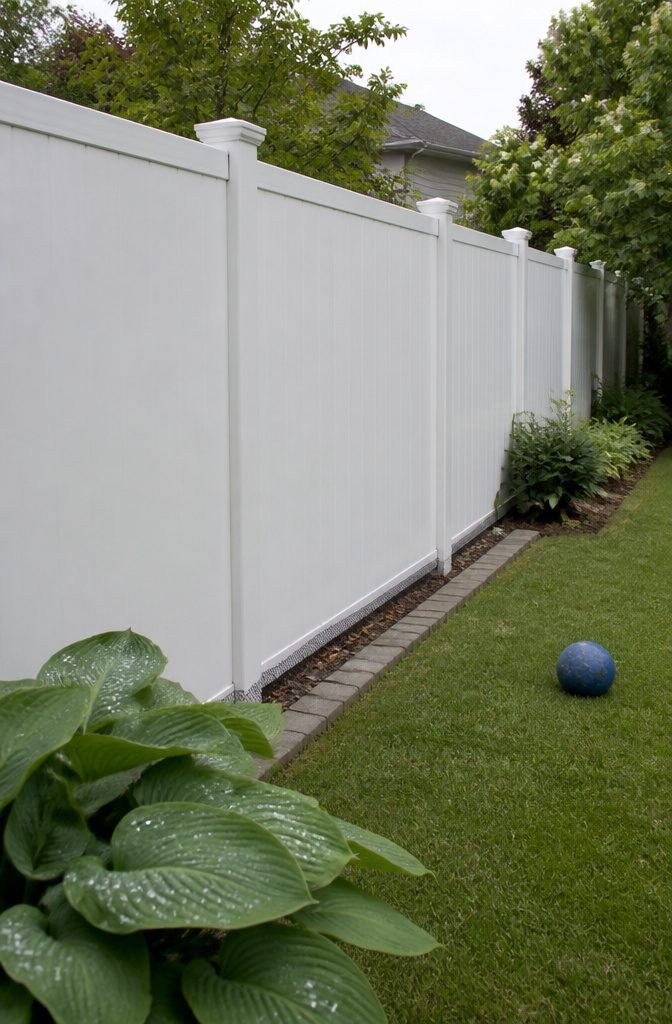
Solid vinyl panels sit side by side with no gaps, so your dog can’t watch the street and strangers can’t watch your dog.
The solid panels also cut noise, which helps with dogs that get worked up by passing cars, animals, or people.
The smooth surface gives paws no footholds, so climbing is harder, and vinyl doesn’t crack, rot, or splinter. Cleaning takes a hose and a rag.
The weak point is the bottom edge.
A determined digger can tunnel under the panels, and vinyl does nothing to stop that. Bury a barrier along the base, such as wire mesh or a row of pavers, before you trust the fence with a digger.
I’d pick vinyl for a barker or a climber, and skip it for a digger unless the base is dealt with.
Recommended Products

Premium Size & Material: 16 IN x 50FT Plastic Chicken Wire Mesh Roll – Made from high-strength plastic material, lighter and rust-proof compared to traditional metal chicken wire. This black chicken wire fencing is easy to cut and install, making it the ideal poultry netting and garden fence solution for your chicken coop

4 x 50 FT Deer Fencing: Constructed from tough, high‑density polyethylene (HDPE), it is built to be UV‑resistant, weatherproof, reusable and resistant to rot and rust. This garden fencing won't tear easily even with animal bites, provides a heavy‑duty, long‑lasting barrier that reliably shields your garden from deer, dogs, chicken and other foraging animals for years to come

Complete All-in-One Garden Protection Kit:Transform your garden into a fortress with this comprehensive plant protectors from animals kit. Each box includes a generous 49.2ft roll of premium chicken wire mesh (1.3 ft high), 100 heavy-duty nylon cable ties for secure connections, and 30 durable U-shaped ground stakes for reliable anchoring. Whether you need plant covers from animals for a single seedling or a complete barrier around an entire shrub bed, this all-inclusive set saves you time and eliminates the hassle of purchasing garden protection from animals accessories separately
5. Wooden Fence
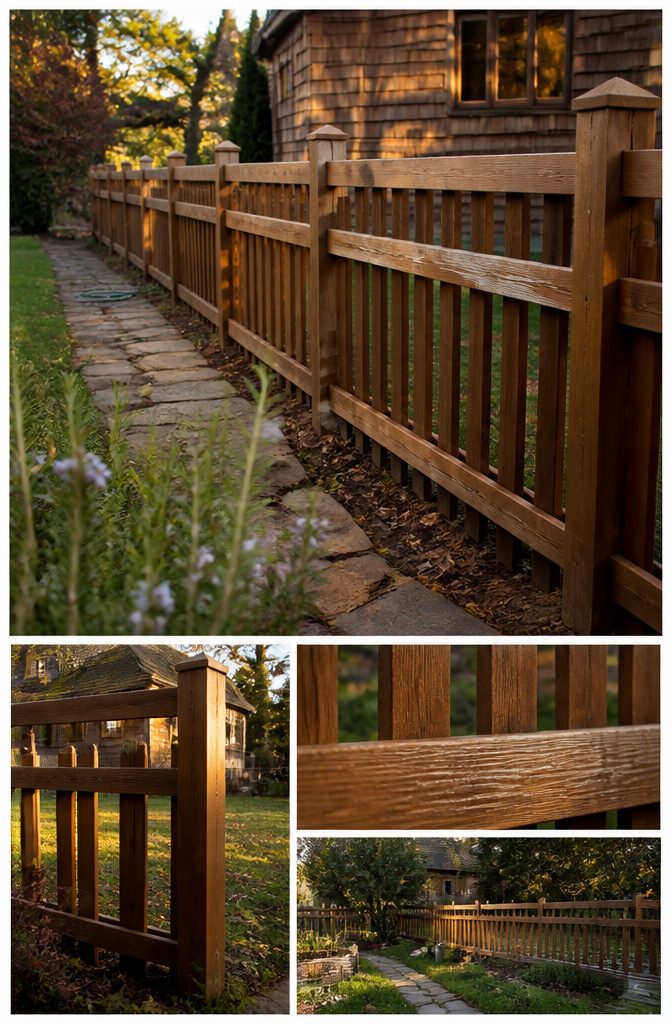
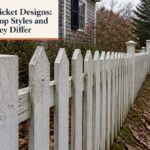
Wood is the classic dog fence, and it comes in three main styles: picket, privacy and post rail.
You can paint or stain any of them to match the house, and wood generally costs less than other fence materials, which helps on a small yard budget.
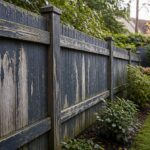
Upkeep is the price of that. Wood needs regular maintenance to prevent rot and damage, so check boards and posts each season and restain when the finish wears thin.
Digging is the other weak spot, because a determined dog can tunnel under the bottom rail. I’d walk the base of the fence regularly and fill any hollows before they deepen into a gap.
Recommended Products

Animal Barrier Fence : Garden fence is suitable for use as a path edge fence stakes, lawn, garden, vegetable garden border fence, and can effectively prevent is dogs, cats, rabbits, chickens or other rodents entering your garden to form a protective. It does not digging and easy to install. In addition to its practical uses, this garden fencing dog fences for the yard can also serve as a decorative element for your garden

Longer Size for Extended Garden Coverage:This garden fence animal barrier provides wider coverage to protect your outdoor space. Each panel measures 17" long x 13" high, and the set includes 14 pack durable metal panels, creating a total fence length of 20 feet. The longer design helps form a reliable dig barrier fence that can reduce the chances of rabbits, dogs, squirrels, and other small animals digging under your fence and entering your garden
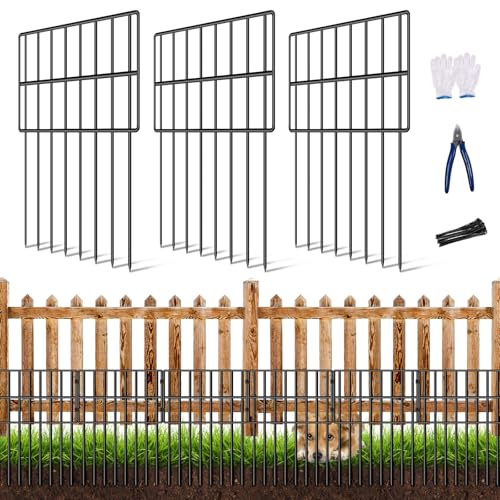
DOG BARRIER UNDER FENCE - The dog fence barrier perfectly blocks the gap at the bottom of the original fence, extending the fence's protection range. 1.5in gap spacing can prevent your dog from digging and escaping, prevent small animals from entering and damaging your garden
6. Non-Electric Dog Fence
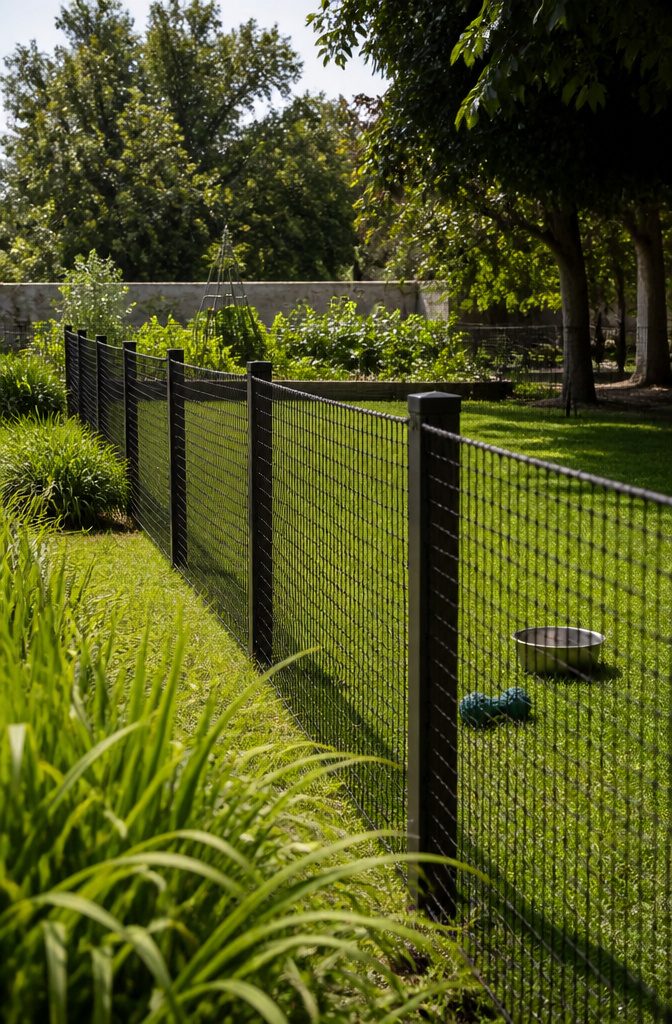
A non-electric fence keeps the boundary physical, with no shock collar involved. Pet Playgrounds, a vendor that says it has engineered dog fences for 15 years, sells DIY kits built on that idea.
The company describes them as humane, open enough to keep your view where a wood or vinyl fence would block it, and resistant to climbing, digging and chewing. It also claims a one-time upfront cost with little upkeep.
Those are the maker’s claims, not independent test results.
If you have a view worth keeping or a dog that tunnels and chews, the kit is worth pricing against a solid fence. Ask how it handles your dog’s particular escape habit before you buy.
Recommended Products

Gray Fence Slat - Designed for a 6' high fence, slats are approximately 68.5" in length to accommodate the bottom locking channel and to prevent the slats from being above the top of the fence. (Available Colors: Beige, Black, Brown, Gray, Green, Redwood, Royal Blue, Sky Blue, White)

Black Fence Slat - Designed for a 6' high fence, slats are approximately 68.5" in length to accommodate the bottom locking channel and to prevent the slats from being above the top of the fence. (Available Colors: Beige, Black, Brown, Gray, Green, Redwood, Royal Blue, Sky Blue, White)

Backyard Privacy: Designed for 6 ft backyard fences, this 5 ft 9 in tall screen offers enhanced privacy by helping block views from neighbors and busy streets.
7. Portable Dog Fence
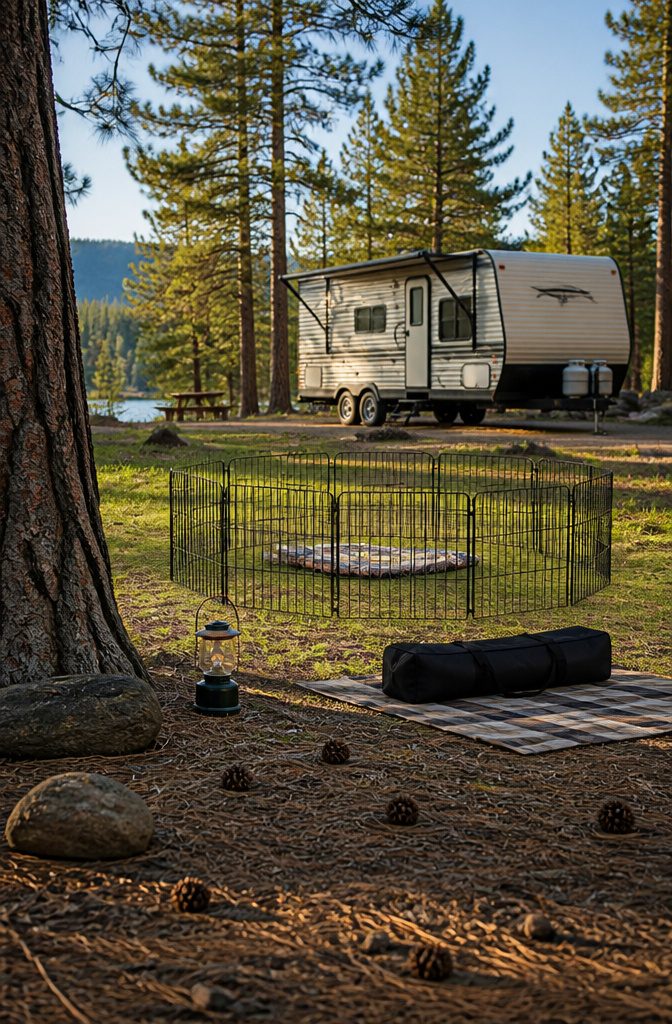
A portable dog fence folds flat, goes up in minutes without tools, and often ships with a carrying case. That makes it the right pick for camping, road trips and RV stays.
One owner with an RV trailer needed a lightweight fenced area for her two large dogs.
She found portable panels much cheaper and easier to handle than heavy metal kennels. For big dogs, I’d pick this over a kennel: a kennel you can’t lift alone tends to stay home.
It suits travelers and campers who want a safe play-and-rest space at the site. It is a temporary setup, not a yard boundary, so don’t count on it to contain a dog at home while you’re out.
Recommended Products

PET & CHILD SAFE: Create a safe outdoor play area for fur babies and children. Rest assured that this fence will create a sturdy barrier to protect your family.

TOTAL 30 PANELS, 42.5FT LONGER SIZE - Included 30 panels of fences, total length: 42.5 feet, more fences, and longer lengths can meet more of your needs, including filling the gaps under the bottom of the existing fence, building garden edging border, surrounding the garden bed to avoid plant damage, etc

30 PANELS, 42.5 FT COVERAGE - Includes 30 metal fence panels, each 13 inches high, with a total length of 42.5 feet. Use this no dig animal barrier fence to fill gaps at the bottom of an existing fence, create a garden edging border or surround planting beds. Arrange the panels to fit your yard without digging trenches or pouring concrete.
8. Temporary Mesh Fence
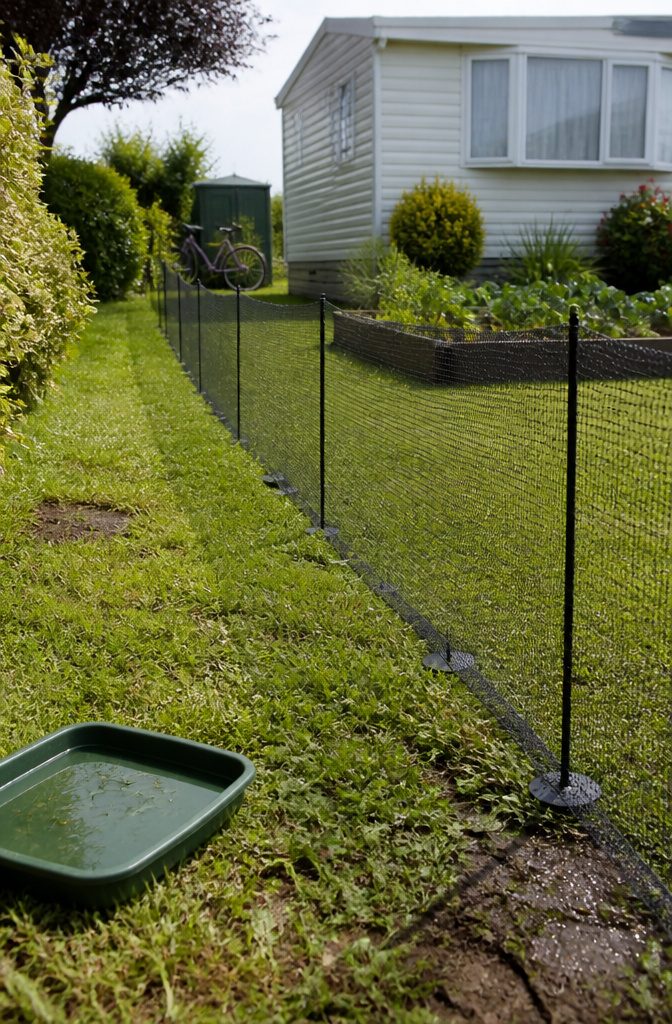
Lightweight mesh held down with stakes is one of the cheapest ways to contain a dog without building anything permanent.
It handles easily and goes up quickly. Lay the bottom edge of the mesh flat on the ground and stake it there, so a dog that tries to dig meets netting instead of open dirt.
Renters get the most out of it. There are no posts or concrete to pull out when the lease ends, so the yard stays as the landlord left it.
A dog owner in a mobile home park in Asheville, NC, who couldn’t put up a permanent fence, found temporary mesh kept her dogs safe without straining her budget.
Recommended Products

【Rustproof & Durable】 Enhance your outdoor space with this decorative garden fence. Designed with an elegant arched shape and finished with a black rust-resistant coating, the fence is built for long-lasting durability and reliable performance in sun, rain, and wind.

【Rustproof & Durable】 Enhance your outdoor space with this decorative garden fence. Designed with an elegant arched shape and finished with a black rust-resistant coating, the fence is built for long-lasting durability and reliable performance in sun, rain, and wind.

Tall Garden Fence Animal Barrier: Each of the 5 panels measures 40" H x 29" W with a 1.57-inch gap, connecting to a 11.8 ft total length. Protects flower beds, vegetable gardens, yards, and patios from dogs, rabbits, and other small animals.
9. Vinegar Spray
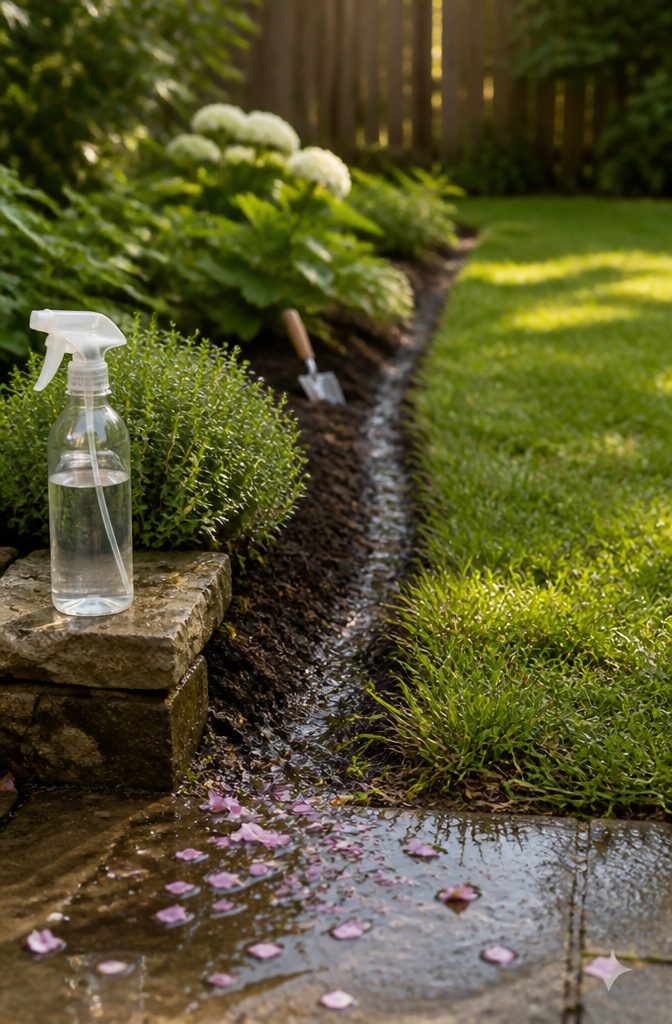
Vinegar is the cheapest repellent on this list. Mix plain white vinegar with water in a spray bottle, using vinegar from any grocery store.
Dogs have a strong sense of smell, and the pungent odor tends to keep them off treated ground. Spray a line along the edge of a yard, or spot-treat a garden bed or a corner of the patio.
I’d treat it as a nudge, not a barrier. It is not foolproof, and the smell fades, so you have to reapply it to keep the line working.
A determined dog will cross it. Where you need real containment, use it alongside a fence.
Recommended Products

[CUTTABLE, SPLICEABLE] Chicken wire mesh measures 16.9 inches x 32.8 feet, which is suitable for large areas. Galvanized chicken wire is soft and flexible but stronge. It is bendable and easy to cut. You can also join mesh together if the height is not enough. Chicken wire fencing is double hot-dip galvanized for maximum rust protection and longer life. Designed with double twist hexagonal, chicken fence is more durable and less likely to break

TEMPORARY FENCE WITHOUT A BUILD: An economical alternative to a permanent fence when time or budget is short. Skirt freshly seeded lawns, new concrete, wet paint or a garden bed, then roll it back up and store it when the job is done.

Material and size: The size of the hardware cloth is 16 inch×50 ft and 1/2 inch×1/2 inch thickness, adopt 19 guage hot-dipped galvanized material
10. Citrus Peels and Coffee Grounds

Scatter orange or lemon peels around the beds you want to protect, since dogs generally dislike the smell of citrus.
Used coffee grounds work on the same principle, and many dogs find their smell unpleasant. Both are safe for most plants, and the grounds can enrich the soil as they break down.
I rate this a mild deterrent, not a barrier. Peels dry out and lose their scent, and grounds wash away, so plan to refresh the scatter often and again after every rain.
A curious or determined dog will walk straight through it. It suits discouraging a dog from digging in one flower bed or vegetable patch, but anything a dog must not cross needs a real fence.
Recommended Products

Longer Size: Good cost performance with longer fence. Each piece of the animal barrier fence is 16.7" long and 13" high, 14 panels. The entire length of the fence set is 19.5 feet long! More quantity, longer garden fence animal barrier can more effectively prevent small animals from digging pass the fence to enter and leave the garden.

Heavy-Duty 16GA Welded Wire Construction: Built with durable 16 gauge galvanized steel wire and coated with a protective black PVC layer, this welded wire mesh fence provides reliable strength and a clean appearance for outdoor projects. The welded structure helps maintain stability while creating a secure barrier for pets, gardens, and farm areas.

[FENCE PANELS ARE NOT AVALLIBLE FOR LARGE DOGS!!!]
11. Sprinklers and Ultrasonic Devices
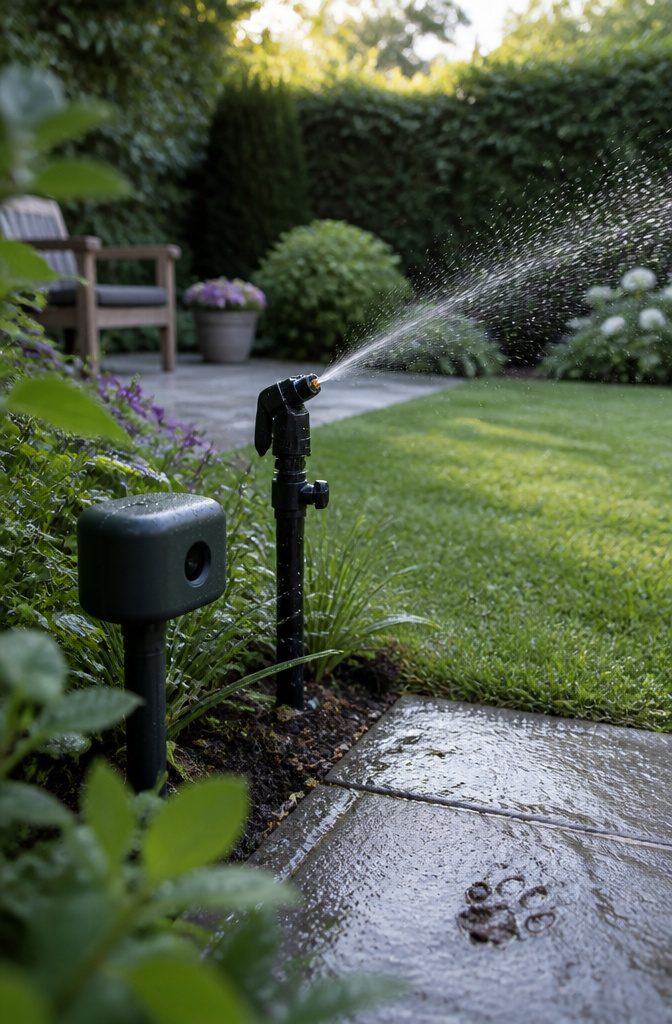
A motion-activated sprinkler sprays a burst of water when something moves past it, so a dog heading for a flower bed gets a harmless surprise.
I’d choose it over an ultrasonic device for a single bed or patio edge, because you can see exactly where it covers.
Ultrasonic devices emit a high-pitched sound that dogs find unpleasant and people can’t hear. You place them around the area you want left alone.
Neither is foolproof.
A determined or unbothered dog may walk straight through, and both need regular upkeep. Use them to protect selected spots, not to contain a dog.
12. Barrier Plants
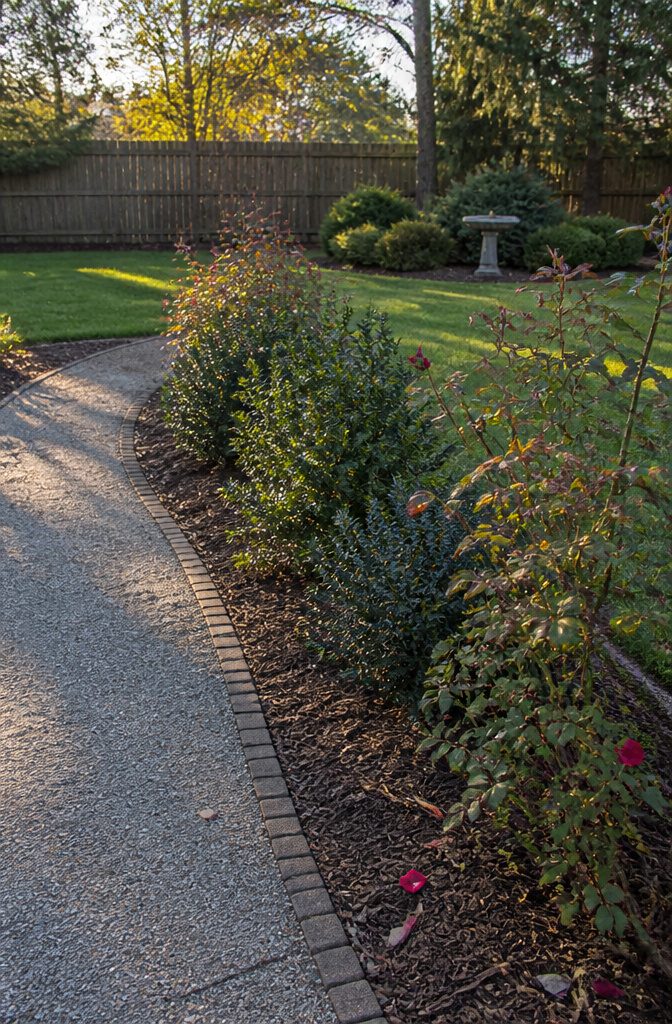
Thorny or spiky plants along the edge of a yard make the route uncomfortable, so most dogs choose another way. That suits keeping dogs out of a garden bed, a side yard or a property line.
Barrier plants are not a containment fence, because a determined dog can still push through a gap, and they won’t reliably hold your own dog in.
I’d use them as a second layer beside a real fence, not in place of one. Check every plant against a pet-toxicity list before buying, since dogs chew what they can reach.
Keep spiky growth back from paths where paws and faces pass. Plan on regular pruning and filling gaps, because a thin spot becomes the way through.
How Tall Should the Fence Be
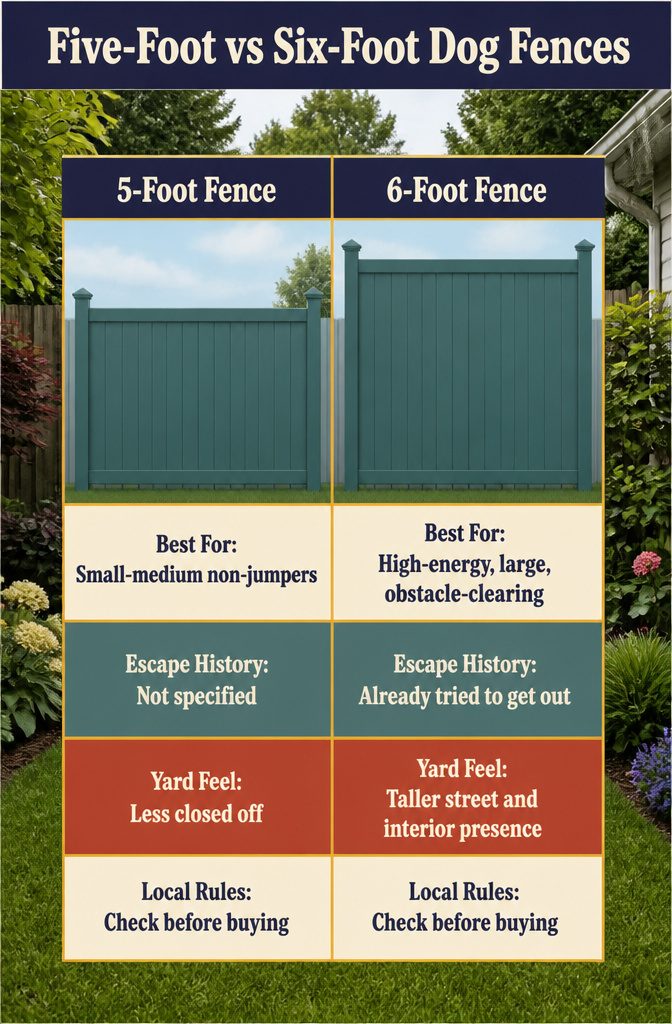
Five feet is usually enough for small to medium dogs that don’t jump, and it keeps the yard from feeling closed off.
Go to 6 feet for high-energy dogs, larger breeds and anything that clears obstacles easily. A dog that has already tried to get out gets 6 feet.
Check local rules before buying posts, because some areas set their own fence height requirements.
Height also doesn’t cover everything. A digger needs a fix at ground level, a climber needs a fence with no footholds, and a barker or an aggressive dog changes how much the fence should block from view.
Appearance counts too, since a taller fence changes how the whole yard looks from the street and from inside.
Chain Link, Wrought Iron, and Masonry
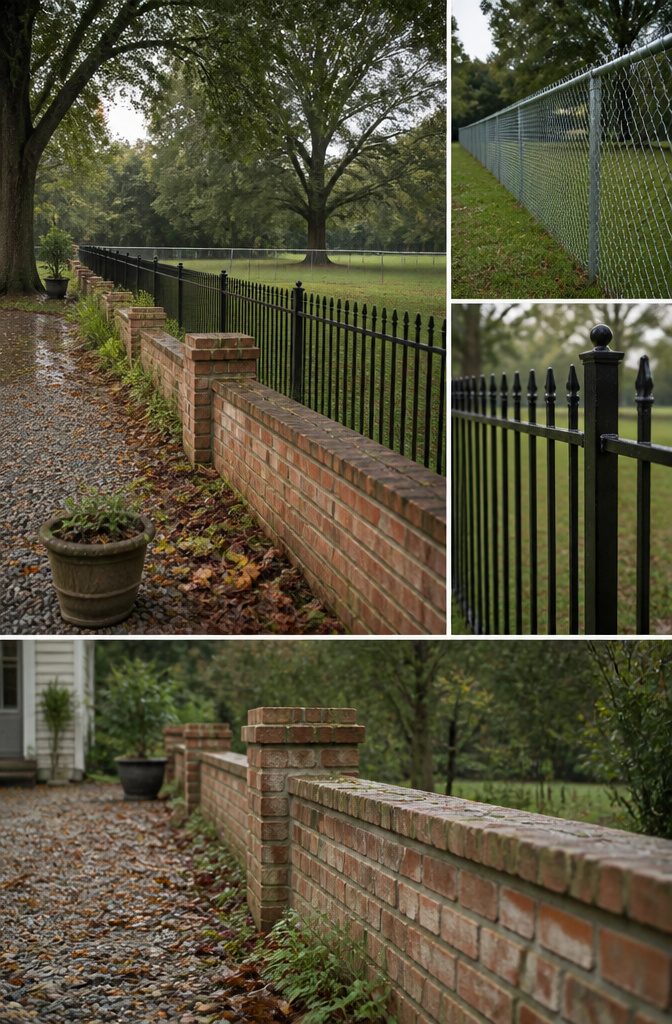
Chain link shrugs off rain, sun and snow with almost no upkeep, which makes it a sensible pick for a big yard on a tight budget.
Its weakness is the mesh: agile dogs can climb it like a ladder, so skip it for climbers.
Wrought iron looks good, but picket spacing decides whether it works. Make sure a small dog or puppy can’t fit its head through the gaps, because the body usually follows.
Block, brick or stone suits dogs that dig or chew, since there is little to gnaw and a solid footing makes tunneling harder.
It costs the most and is hard to change later, so reserve it for dogs that have beaten every other fence.
Frequently Asked Questions
What is the cheapest way to build a dog proof fence?
Chicken wire is the cheapest option for a small dog.
A roll of wire, some stakes and a hammer are enough to put it up in a few hours. Wooden pallets are the cheapest solid panels, since local businesses often give them away or sell them for little.
Bury the wire’s bottom edge a few inches, or add a barrier under the pallets, so a digger can’t tunnel out. Skip chicken wire for large or aggressive dogs, which can push through the thin mesh.
How tall should a fence be to keep a dog in the yard?
Use 5 feet for small to medium dogs that don’t jump, and 6 feet for high-energy dogs, larger breeds, and any dog that has already tried to get out.
Aluminum can be ordered in custom heights up to 8 feet for dogs that jump.
Check local rules first, because some areas set their own fence height requirements. Height won’t stop a digger or a climber, so those dogs need a fix at ground level or a fence without footholds.
What is the best type of fence for dogs?
It depends on how your dog tries to escape. Aluminum suits a large, determined dog, vinyl suits a barker or a climber, and block, brick or stone suits dogs that dig or chew.
Wood is the classic choice and usually costs less, but it needs regular upkeep. Chain link works on a tight budget but agile dogs can climb it.
Do dog perimeter fences work?
Yes, when the material fits your dog’s escape habit and you cover that fence type’s weak point.
Wood, vinyl and pallet fences let a digger tunnel under the base unless you add a barrier, chain link can be climbed, and wrought iron with wide picket spacing lets a small dog or puppy squeeze its head through.
Barrier plants, sprays and sprinklers discourage a dog from certain spots but won’t hold one in.
What is the easiest DIY dog fence?
A portable dog fence is the easiest. It folds flat and goes up in minutes without tools, but it is a temporary setup for camping or travel, not a yard boundary.
For the yard itself, staked temporary mesh goes up quickly with no posts or concrete, and chicken wire takes a few hours.
With mesh, lay the bottom edge flat on the ground and stake it down so a digger meets netting.