
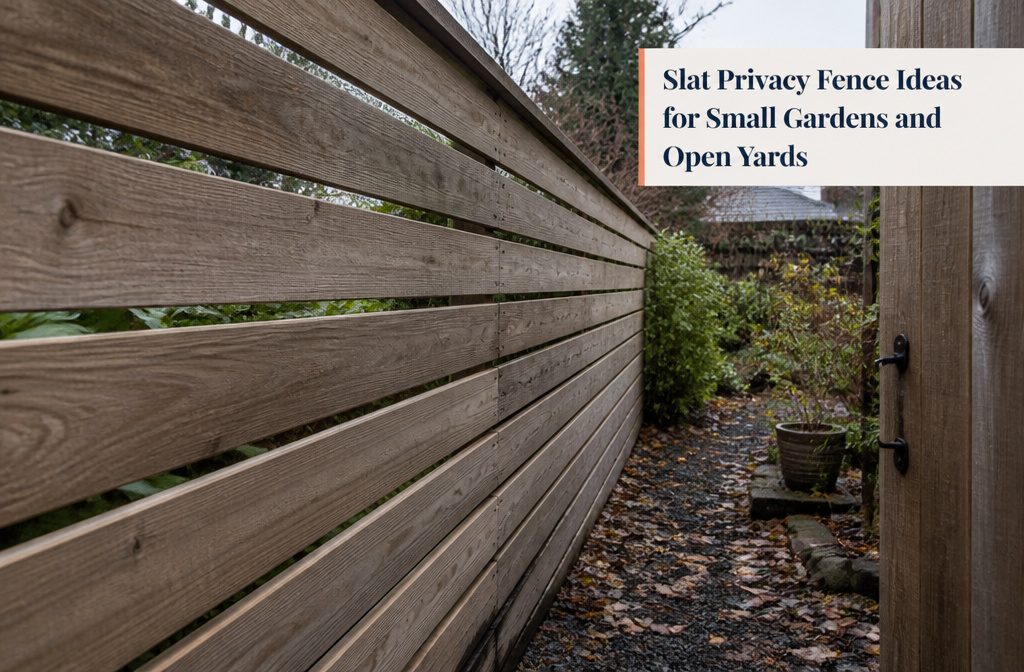
Garden shape picks the layout: horizontal slats make a short or narrow yard read wider, while vertical slats suit an older house.
Privacy shifts with slat width and spacing. Boards 70 mm wide cover more than 45 mm ones, and the 10 mm gap that eases wind load still lets thin slivers show through from the other side.
1. Choose Your Timber Species
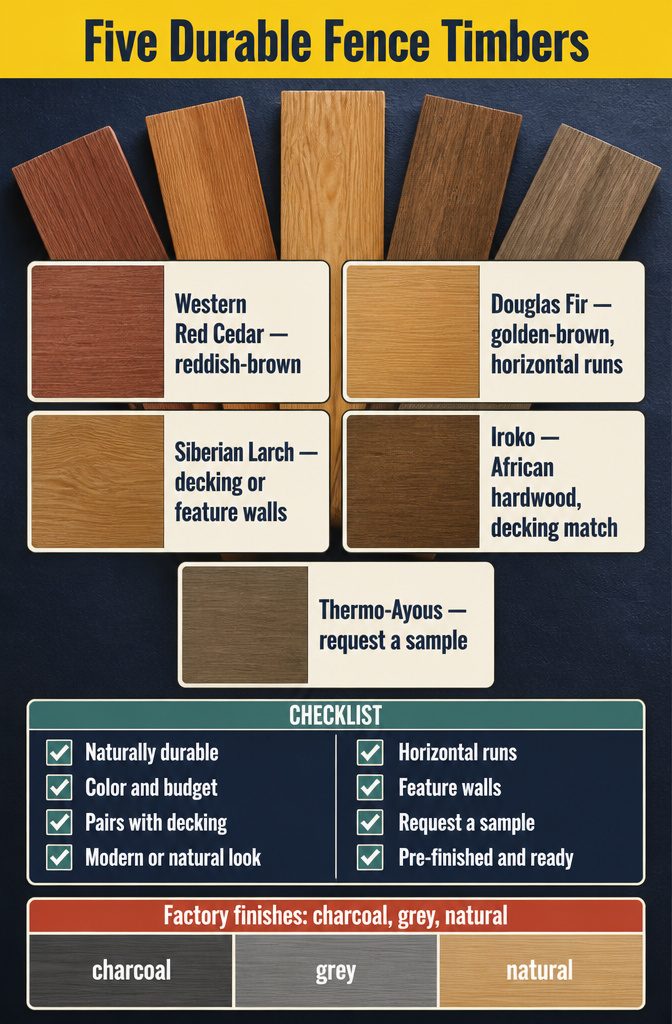
All five timbers here are naturally durable, so the choice comes down mostly to color and budget.
- Western Red Cedar: reddish-browns that suit almost any space.
- Douglas Fir: a golden-brown that looks best in horizontal runs.
- Siberian Larch: golden browns again, which I’d choose to sit beside decking or a feature wall.
- Iroko: an African hardwood, a good match for decking.
- Thermo-Ayous: the fifth durable option. Ask for a sample before you commit.
Factory-treated finishes come in charcoal, grey or natural, pre-finished and ready to go. Charcoal and grey give a modern look, while natural keeps the timber’s own tone.
Recommended Products

Perfect Fit & Easy Installation: Our Privacy Screen Fence measures precisely 5' x 50', making it a perfect fit for fences 5 feet or slightly taller. It can be easily installed on chain link fences, existing cyclone wire fences, wooden retaining walls, welded wire fences, and more. For easy and secure installation, we've included grommets placed vertically every 1 foot and horizontally every 2 feet, with 4 grommets at each corner. We also provide 80 zip ties for added convenience.

QUALITY – Our premium bamboo slat fence are all hand made, using the high quality bamboo from the subtropical monsoon climate region. Garden fence is made of split bamboo and can be used to section off parts of the garden or line a path or driveway to add a tropical charm to your outdoor living space. Bamboo is eco-friendly materials, all bamboo stakes are hand selected and hand treated.

Green Fence Slat - Designed for a 6' high fence, slats are approximately 68.5" in length to accommodate the bottom locking channel and to prevent the slats from being above the top of the fence. (Available Colors: Beige, Black, Brown, Gray, Green, Redwood, Royal Blue, Sky Blue, White)
2. Horizontal Slats for Small Gardens
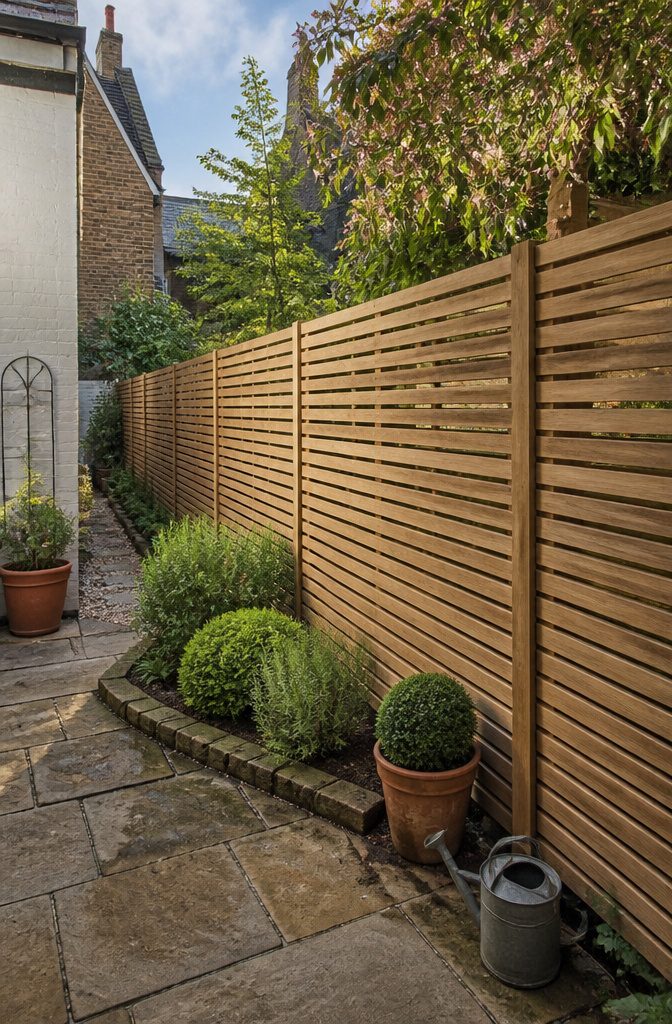
Horizontal slats stretch the eye along the length of a boundary, so a short or narrow garden reads as wider than it is.
That elongating effect is why I’d pick horizontal over vertical for a small space. The style is also called Venetian fencing, and its clean, parallel lines give a contemporary look.
Slatted fencing doesn’t block light, which helps when a small yard has little to spare, yet it still gives a strong level of privacy.
In a small garden, run the slats horizontally and keep vertical slats for spots where you want a more traditional feel.
Recommended Products

Single-Wall Privacy Slats: Designed specifically for 4' high fences, these bottom locking privacy slats are approximately 44.5" in length, ensuring a ideal fit and avoiding slats from extending above the fence top.

Double-Wall Privacy Slats with Wings: Designed specifically for 8' high fences, these bottom locking privacy slats are approximately 92.5" in length, ensuring a ideal fit and avoiding slats from extending above the fence top.
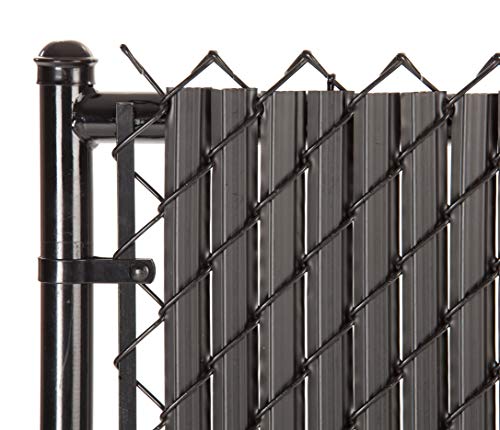
FENCE PRIVACY: Unlike fence tape, these slats are designed to easily slide vertically through your chain-link fence for optimal outdoor privacy. Determine the diamond size of your fence by measuring diagonally between the parallel wires, not corner to corner. The added privacy of the wings leaves no unsightly perforations or wave pattern. Compatible with 4', 6', and 8' height fences.
3. Traditional Vertical Slats
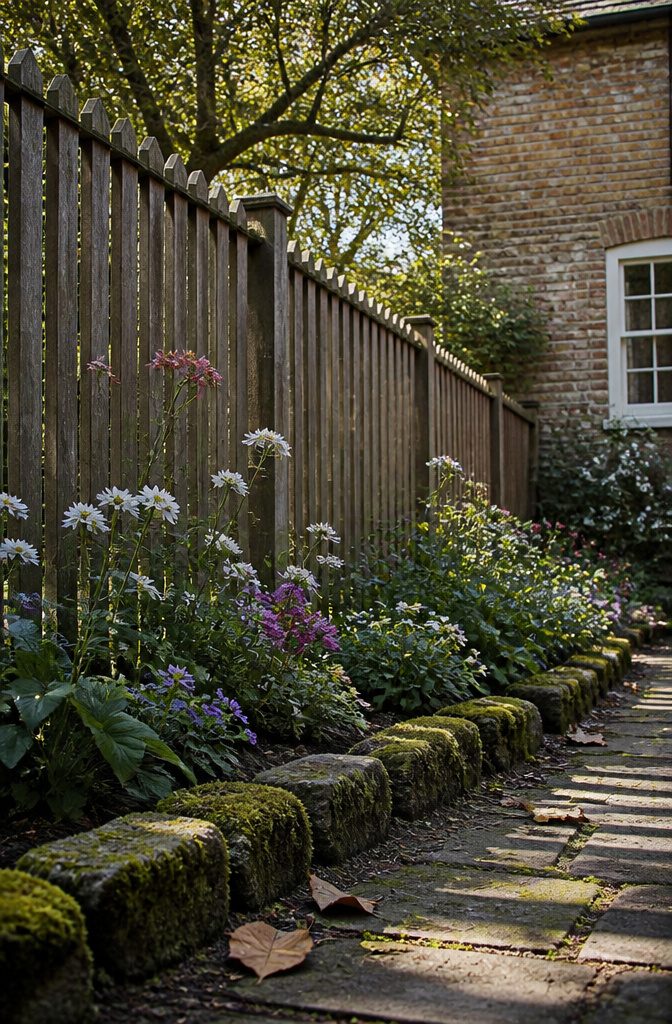
Vertical slats are still popular, and they read as slightly more traditional than horizontal ones.
The upright lines look like the boards and pickets people already associate with a fence. That makes them an easy match for an older house, a cottage-style border, or a neighbor’s existing fence line.
Horizontal slats lean contemporary by comparison, so I’d pick vertical when the house has classic details and save horizontal for a modern one.
Both styles are slatted, so the choice is about the look you want from the street and from your patio chair.
Recommended Products

Natural Wooden Garden Border Design: This wooden garden border features a unique burnt wood finish that adds rustic charm and warmth to your outdoor space. Perfect as decorative garden fence edging for flower beds, walkways, and landscaping accents.

【Upgraded Garden Fence】 Classic arch shape design garden fencing single piece size height is 22 inches(5'' stakes in soil), length is 12.6 inches, and the fence gap is 1.9 inches, total 10 pieces of fence, overall length about 11 ft. Equipped with 11 Pcs height of 17 inches metal stakes. More convenient installation. This fence will be the best choice for your beautiful garden, yard & patio!

Unique Design: You will get 4 pieces of butterfly garden fence, our decorative garden fence features a stunning novelty butterfly and flower pattern with bright, eye-catching colors; The arched metal frame and lifelike floral & butterfly motifs add a charming, elegant touch to your garden, yard, patio, or flower bed, instantly transforming your outdoor space into a beautiful that stands out from ordinary garden edging.
4. Light and Atmosphere
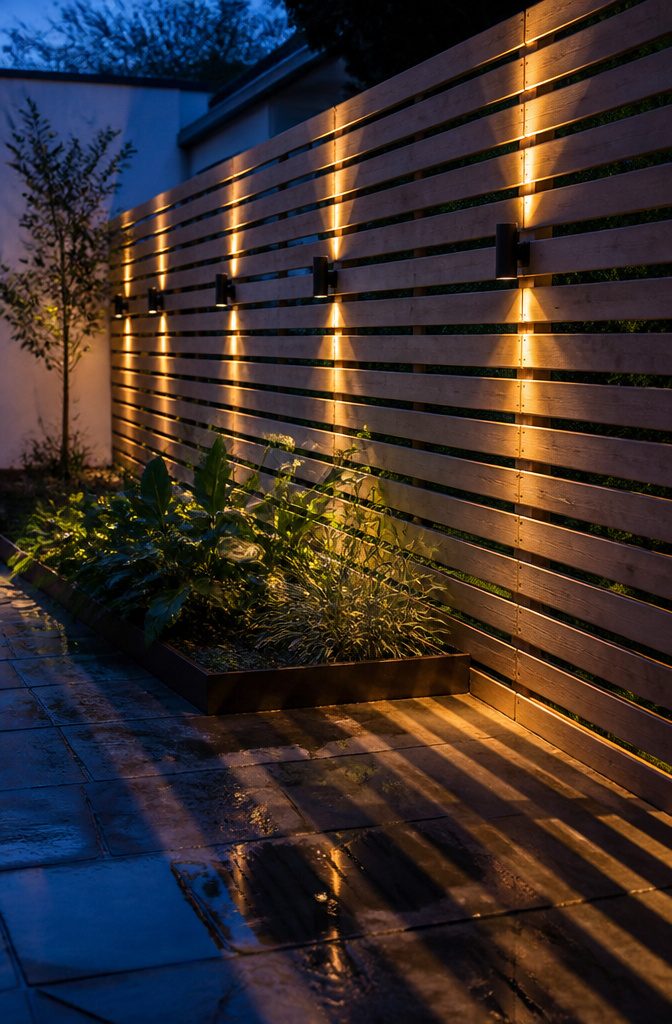
Gaps between slats let daylight through, so the yard behind a slat privacy fence stays brighter and more open than it would behind solid boards.
Plants near the fence get that light too. The openings also cast thin, linear shadows that slide across the ground and walls as the sun moves, so a plain fence shows a different pattern from morning to evening.
After dark, the same gaps work with lighting. I’d choose up-and-down lights fitted to the fence, because they wash light along the slats, echo their straight lines and keep the shadows striped instead of flat.
Run them on a timer so the effect appears every evening without a thought.
Recommended Products

[Ultra-Bright LED Bead] The fence solar lights features unique upper and lower lens LED lamp beads that concentrate light into two vibrant beams, brightening the eaves above and the paths below. The surrounding halo of crystal light from the solar panel not only enhances visibility but also creates a stunning atmosphere, reducing the need for additional light sources

🎁【Unique Light & Dazzling Nights】- Upgraded SenLuKit outdoor solar fence lights use the latest outdoor led program, equip with 3 lens which is high light transmission, can increase brightness and improve the beauty of the decoration. The lens can focus the light emitted by the led, forming a more concentrated and intense light beam, easily light up your yard at night of brightness. If you're looking for an environmentally friendly and economical way to light up your yard, this solar-powered option is sure to impress you.
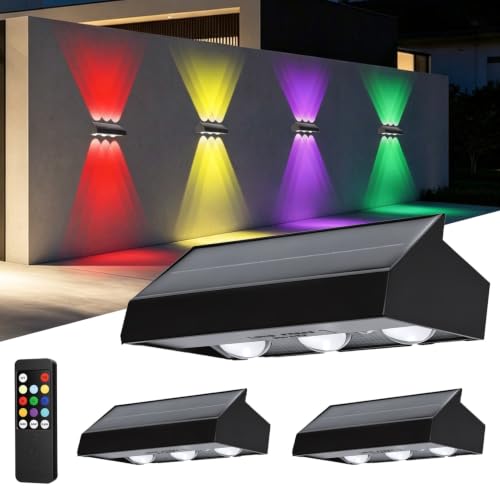
Up and Down Dual Lighting: These wall mounted solar lights cast light in two directions (up and down) for balanced illumination. Highlights garden fences, patio walls, and deck posts with a clean, dual glow.
5. Dividing Outdoor Zones
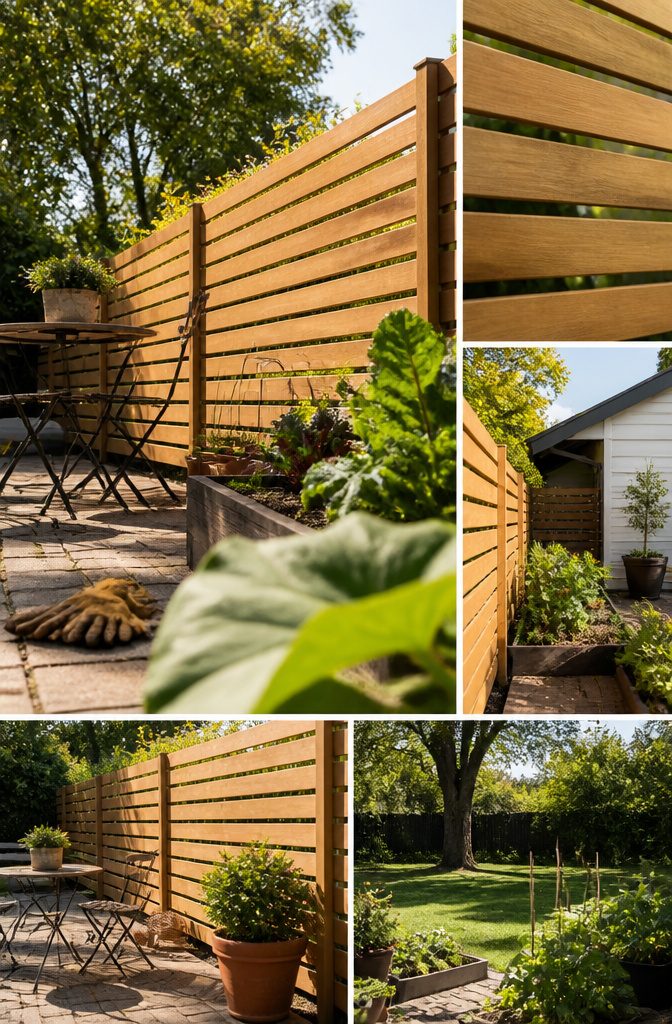
A slat privacy fence can do more than mark the property line. Set a short run of slatted panels across the middle of a yard and it separates a seating area from a vegetable bed without walling either one in.
The same panels can theme a corner: warm wood slats behind a bistro table read as a small outdoor room, and a painted screen behind a play area gives it a clear edge.
For storage, I would put a slatted screen in front of trash bins, a hose reel or a compost bin. The clutter disappears, and the screen still looks like part of the design.
Recommended Products
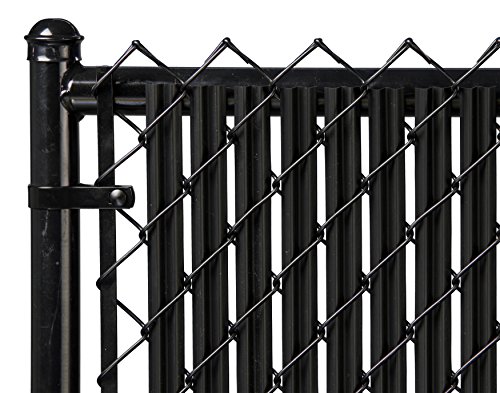
Black Ridged Slats for 4ft chain link are deliberately cut to about 44.5in long. These fence inserts are designed primarily for 4ft 11 or 9 gauge chain link with a two inch diamond. Also works in economy chain link with a larger diamond pattern, but privacy will be less. Slats must be installed correctly and be fully inserted inside the wire mesh of your fence to achieve the desired results. Cannot be used to extend the fence height. Not suitable for fences on a steep slope.

Premium Quality: The UPGRADE privacy screen for fences is made from 170 GSM non-recycled High-Density Polyethylene (HDPE). This ensures lasting durability, reliable privacy protection, and excellent weather resistance. A high-density composition makes it a dependable solution for outdoor privacy needs.

High Quality Material and Construction: Shade&Beyond privacy screen is crafted from 170 gsm UV protected NON-RECYCLED HDPE fabric; featuring durable brass grommets on each side for secure installation
6. Planting and Design Features
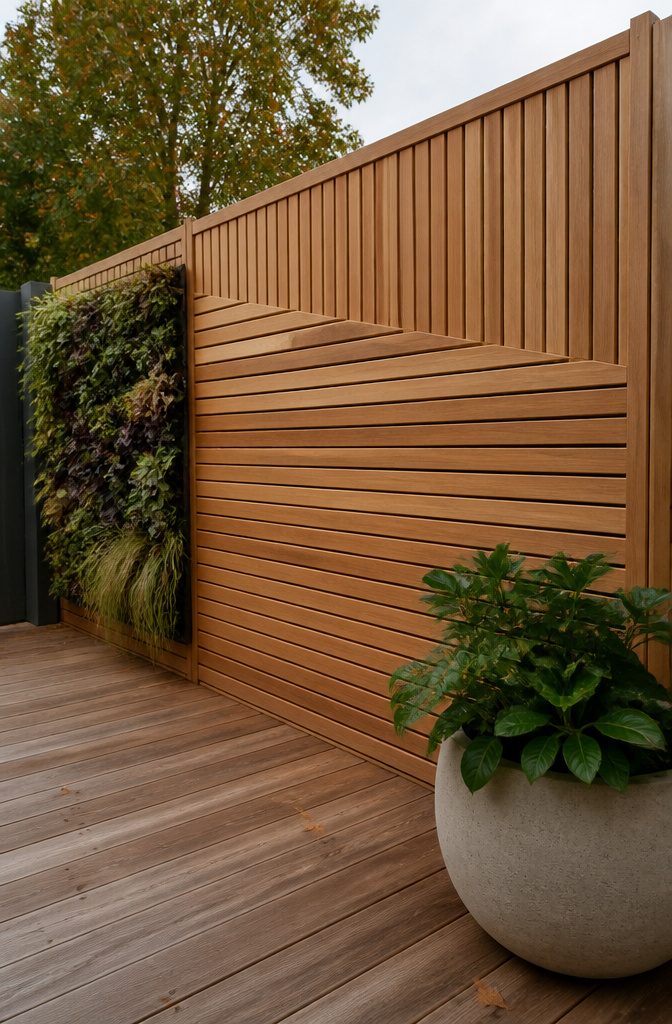
Slats make a calm backdrop, so plants read clearly against them. Flower beds at the base, a tree in front, or trailing plants spilling over the top all suit the warm tones of timber.
In a small yard I’d choose one planted feature rather than all of them. A living wall set against the slats, paired with timber decking, gives a compact patio plenty to look at without using up floor space.
If the garden already has plenty of green, make the fence the feature instead.
A distinctive slat design adds character on its own, such as a change in direction across one panel. Keep the planting beside it simple so the two don’t compete.
Recommended Products

Upgrade iCover Privacy Screen For Fence: Our privacy screen is made of heavy-duty knitted net, measuring 4 ft high by 50 ft long. It is suitable for fences with a height of 4 ft or slightly higher. Please accurately measure your fence before purchase

INCREASED PRIVACY & SECURITY: Swiftly enhance your outdoor space by adding privacy and security to your chainlink fence with the NMI Fence Privacy Weave manufactured by Pexco. Perfect for backyards, gardens, and gates, this fence weave is designed to fit 2", 2-1/4", and 2-3/8" mesh sizes.

FENCE PRIVACY: Unlike fence tape, these slats are designed to easily slide vertically through your chain-link fence for optimal outdoor privacy. Determine the diamond size of your fence by measuring diagonally between the parallel wires, not corner to corner. The added privacy of the wings leaves no unsightly perforations or wave pattern. Compatible with 4', 6', and 8' height fences.
Slat Size and Privacy
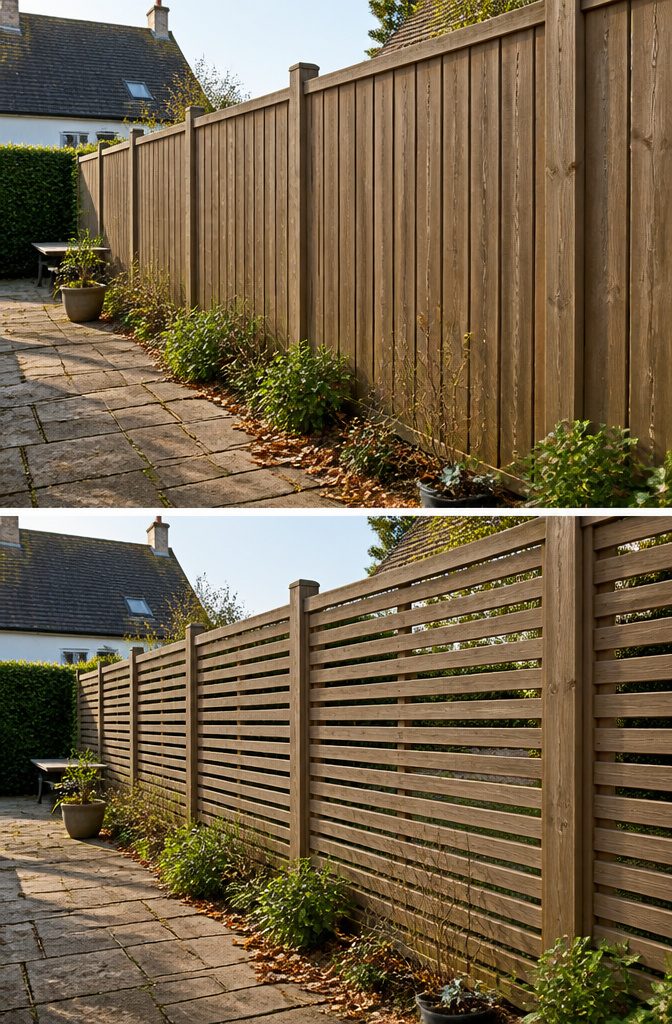
Slat width sets how much cover you get, and the two common sizes are 45 mm (about 1.75 inches) or 70 mm (about 2.75 inches).
Wider boards fill more of the run, so the fence reads as more solid from the street or the neighbor’s patio.
Alternating the slats hit-and-miss, with boards staggered from one side to the other, adds privacy without making the fence a solid wall.
For maximum privacy with a traditional feel, featherboard (close-board) fencing is the style to pick.
A fully private contemporary space calls for tongue-and-groove boarding with a V-groove or shadow gap, which gives a clean, flat face and still leaves a crisp line between boards.
Recommended Products

【5-LAYER HORIZONTAL BAR DESIGN】 Engineered with 5 reinforced horizontal bars, delivers exceptional strength, more solid, and not easy to bend, warp, and break. The gap is denser, and more effective at keeping animals out of your garden and damaging your plants. The classic arched appearance will add a touch of modern simplicity to your garden, patio and yard

【Our animal barrier fence is not suitable for blocking large animals or pets.【

【Sturdy and Rustproof】This garden fencing is made of strong metal, sturdy and stable. The surface is coated with black powder, with rust and weather proof, adaptable and durable, no digging required.
Gaps and Airflow
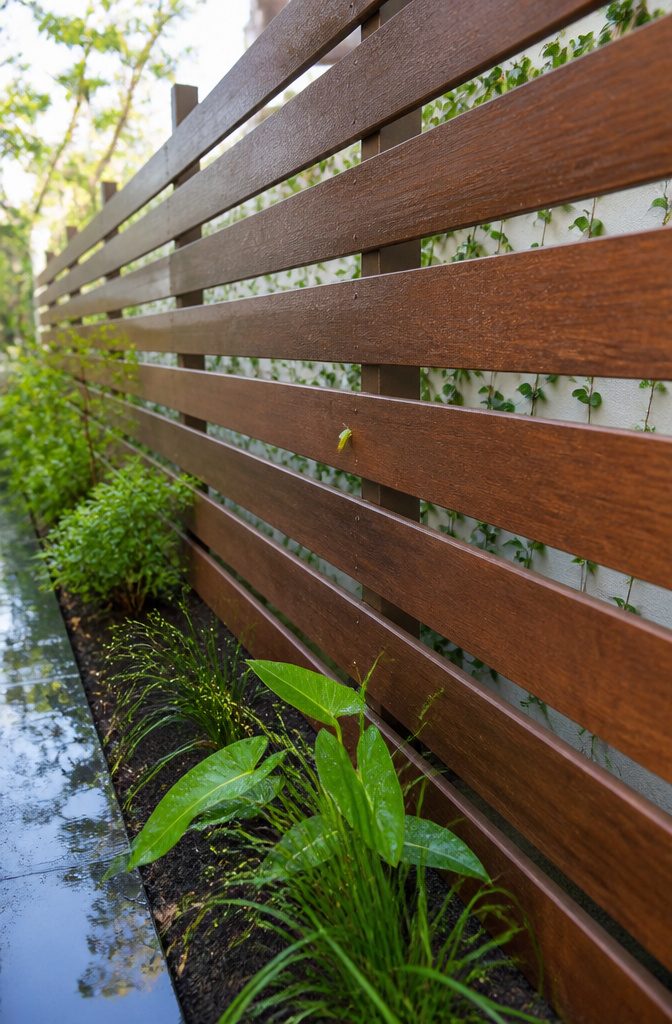
Leave a 10 mm (about 3/8 inch) gap between slats. Wind that hits a solid panel pushes on the whole face and loads the posts like a sail.
A gap lets part of that air pass through, so less force reaches the panel and the posts holding it up. The gap is narrow enough that from the other side you see only thin slivers, so privacy barely changes.
Plants on the garden side benefit too. Moving air dries leaves after rain or watering, which cuts the damp conditions fungal problems depend on.
In a small yard, I’d expect trouble first in the still corners behind a solid fence, and a gapped slat fence keeps those corners ventilated.
Recommended Products

🌈8 Lighting Modes&RGB Solar Fence Lights: Transform your outdoor space with dynamic ambiance! Choose from 8 modes including warm white, 6 colors (red, green, blue, yellow, cyan, purple), multicolor fade RGB combinations–perfect for creating festive, cozy atmospheres like Party, Holidays, Halloween, Christmas or everyday garden elegance.

【ONE REMOTE CONTROLS MULTIPLE LIGHTS】No more walking to each light or pressing buttons individually. Control multiple solar fence lights from up to 16–23 ft (5–7 m) away to turn them on or off, change colors, switch lighting modes, and activate the timer—ideal for long fences, large decks, patios, and backyards.

Perfectly Protect Your Yard Privacy: 90% visibility blocking, prevent peeping outside the yard, block nose neighbors see through, protect safety and enjoy freedom. It can also prevent animals from entering your yard, block surrounding noise and street views, block dogs' sight and prevent bark.
Frequently Asked Questions
Recommended Products

Privacy Solution: Most economical way for privacy over chain link fence, porous decorative concealment, existing cyclone wire fence, wood retaining wall, welded wire fence, chain link fence, privacy barrier around swimming pool, block nose neighbor see through, add privacy to acre back yard backdrop, front yard, patio, garden and porch; hide street, road, construction site, pet kennel pen, block surrounding noise and street view, stops dogs from barking at neighbors.

Brown Fence Slat - Designed for a 6' high fence, slats are approximately 68.5" in length to accommodate the bottom locking channel and to prevent the slats from being above the top of the fence. (Available Colors: Beige, Black, Brown, Gray, Green, Redwood, Royal Blue, Sky Blue, White)
What type of wood is best for slatted fencing?
Western Red Cedar, Douglas Fir, Siberian Larch, Iroko and Thermo-Ayous are all naturally durable, so you can choose mainly on color and budget.
Cedar has reddish-brown tones that suit almost any space, and Douglas Fir has a golden-brown tone that looks best in horizontal runs. Larch and Iroko both pair well with decking.
How do I build a slat privacy fence with horizontal slats?
Run the slats horizontally and leave a 10 mm (about 3/8 inch) gap between them, using either 45 mm (about 1.75 inch) or 70 mm (about 2.75 inch) boards.
Wider boards give more cover, and staggering the slats hit-and-miss from one side to the other adds privacy. The gap lets some wind pass through, which reduces the force on the panel and the posts.









