
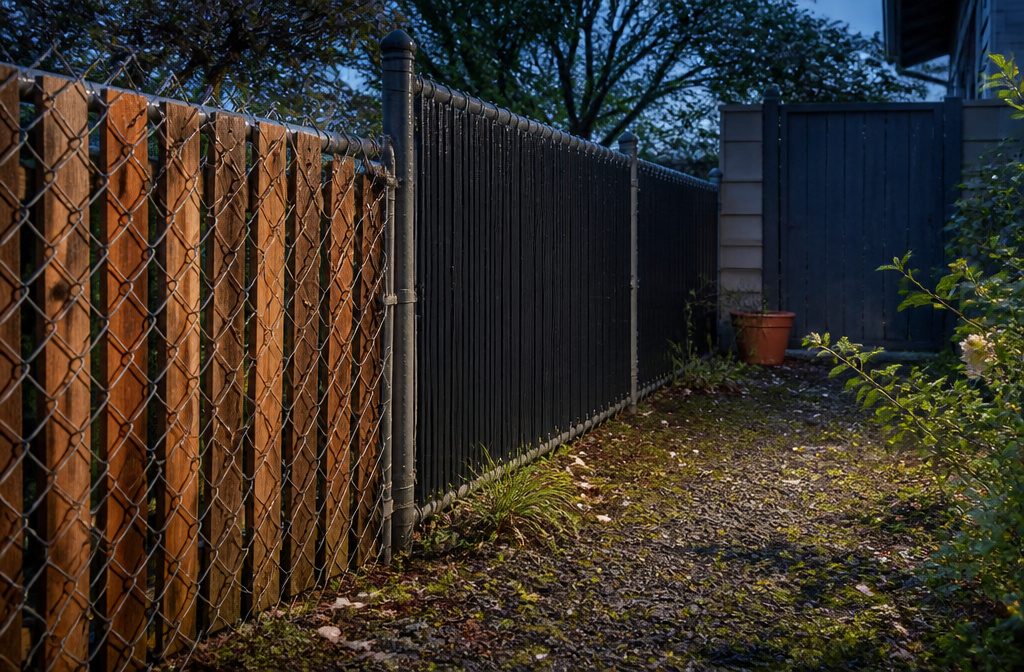
Covers run from a 50-foot mesh roll at $39.18 to vinyl panels, and the one that fits depends on how much privacy you want.
Reed and bamboo leave gaps; wood and vinyl block the view completely. Non-porous covers like plastic or canvas can act like a sail in high winds and bend the fence.
1. Privacy Slats
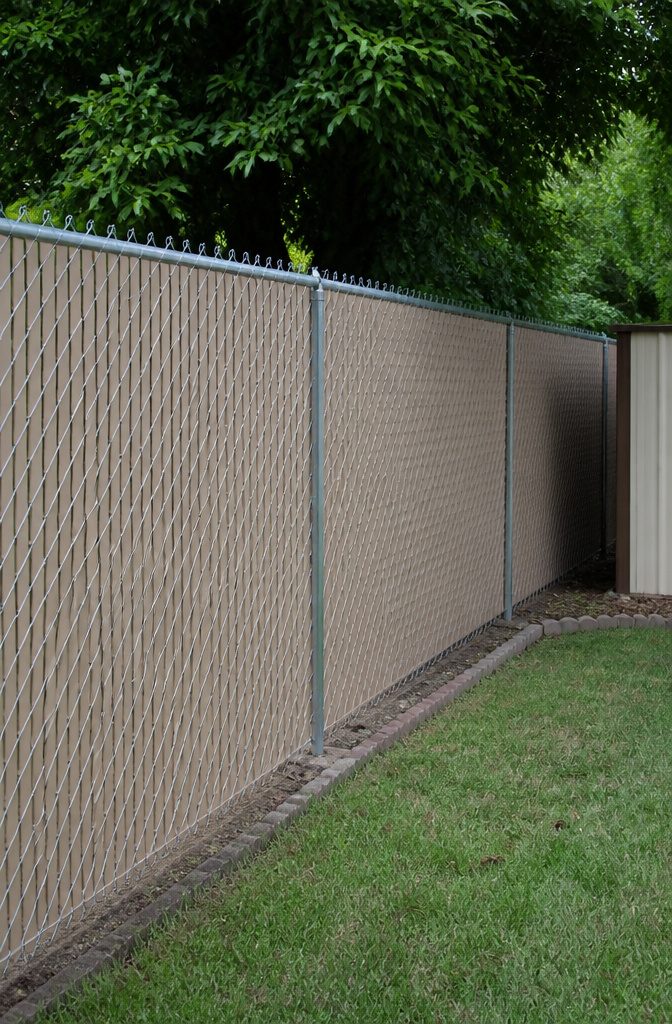
Vertical slats give chain link one of its fullest covers, and they stay put without ties. Each slat feeds down through the mesh, and a locking strip woven through the bottom row of diamonds holds the whole run in place.
Fence Source Wave Slats come in several colors, green included, and fit 4- to 8-foot fences. They cost $34.55 at Amazon.
How much privacy you get depends on the mesh opening and the slat width. A narrow diamond paired with wide slats closes the gaps best, while a large diamond leaves slits you can see through.
Measure your mesh before you buy. Maneuvering each slat through the wire is slow, but the work is simple.
Recommended Products

Quality: These black fence tapes are made of weather resistant PVC material and are designed for long-term use.

Upgrade iCover Privacy Screen For Fence: Our privacy screen is made of heavy-duty knitted net, measuring 4 ft high by 50 ft long. It is suitable for fences with a height of 4 ft or slightly higher. Please accurately measure your fence before purchase
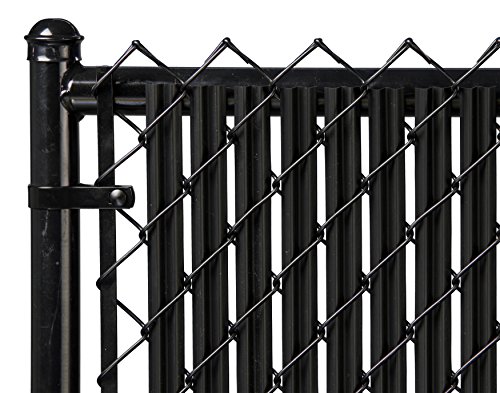
Black Ridged Slats for 4ft chain link are deliberately cut to about 44.5in long. These fence inserts are designed primarily for 4ft 11 or 9 gauge chain link with a two inch diamond. Also works in economy chain link with a larger diamond pattern, but privacy will be less. Slats must be installed correctly and be fully inserted inside the wire mesh of your fence to achieve the desired results. Cannot be used to extend the fence height. Not suitable for fences on a steep slope.
2. Privacy Tape
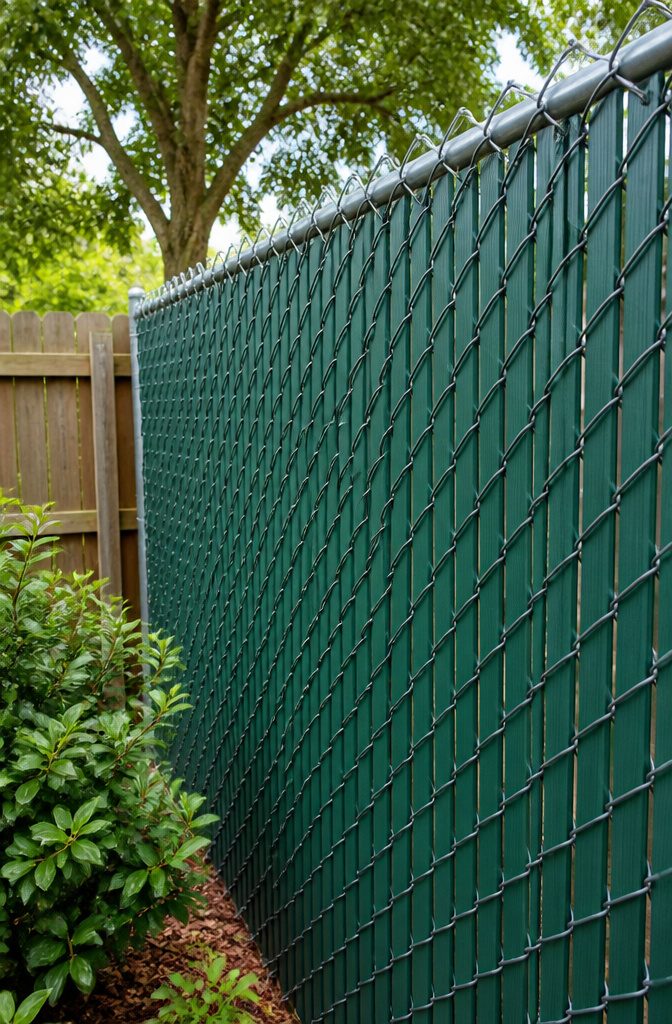
Privacy tape is a thinner, cheaper cousin of plastic slats.
You weave it diagonally through the mesh, fold over the ends, and secure them with the supplied fasteners. The diagonal path fills more of each opening, so tape blocks more of the view than slats do.
Fenpro Privacy Tape is one of the few brands available. It comes in six colors, is well reviewed on Amazon, and costs $39.98.
One reviewer calls it "agonizingly tedious to install," and I believe it, since every strand goes through by hand. I’d save tape for a short stretch, like the side of a patio, and skip it on a full yard.
Recommended Products
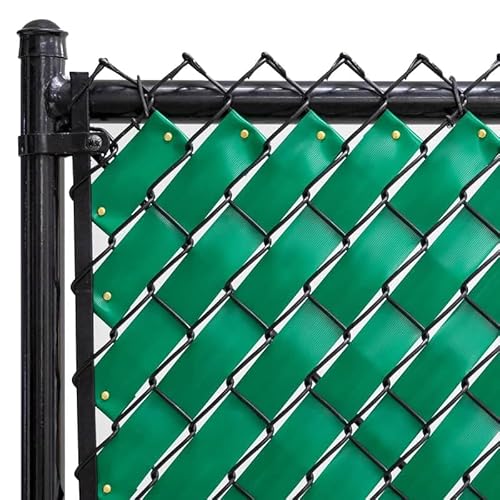
Enhanced Security: Enjoy increased privacy and protection with chain link fencing Tape (Material Depth 0.52 mm); easily integrate privacy fence tape for a more secluded outdoor space

Enhanced Security: Enjoy increased privacy and protection with chain link fencing Tape (Material Depth 0.52 mm); easily integrate privacy fence tape for a more secluded outdoor space

Enhanced Security: Enjoy increased privacy and protection with chain link fencing Tape (Material Depth 0.52 mm); easily integrate privacy fence tape for a more secluded outdoor space
3. Artificial Greenery
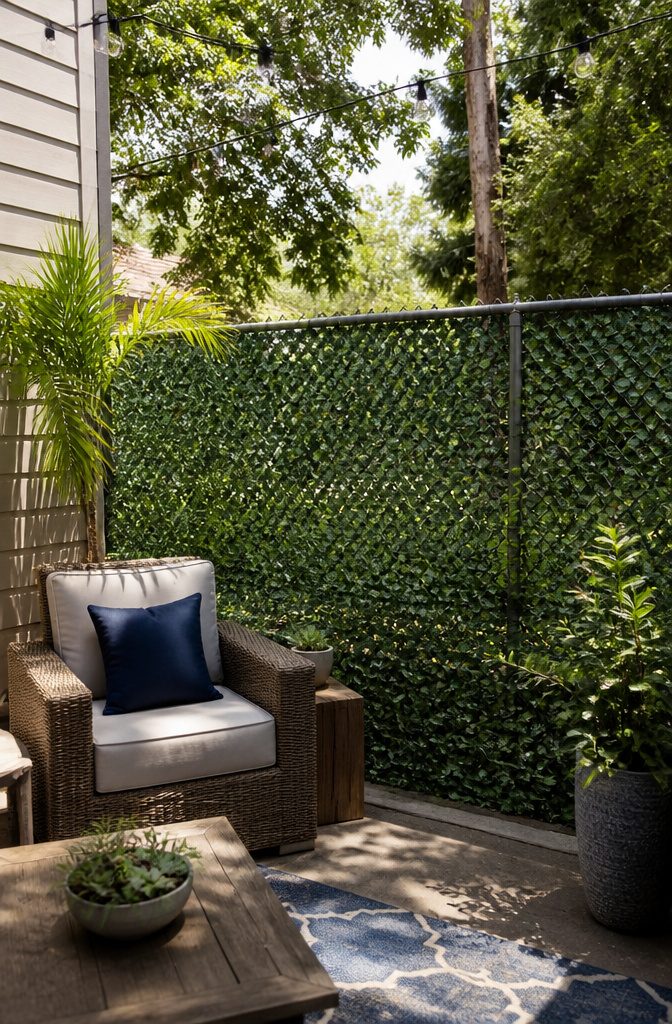
Faux ivy skips the wait that real vines demand. The Yaheetech Faux Ivy Privacy Screen is plastic leaves on a mesh backing, and it can hang on the front of the fence or drape over the top.
Each roll is 10 feet long and 38 inches wide, so a 6-foot fence needs two rolls.
Zip ties through the mesh hold it to the chain link. Snip them and you can take the screen down and store it when weather or looks call for it.
I’d keep this for small fences, since a long run means a lot of rolls and a lot of zip ties.
Plastic leaves also look fake up close, so the screen works best on a fence you view from a distance.
4. Mesh Privacy Screen
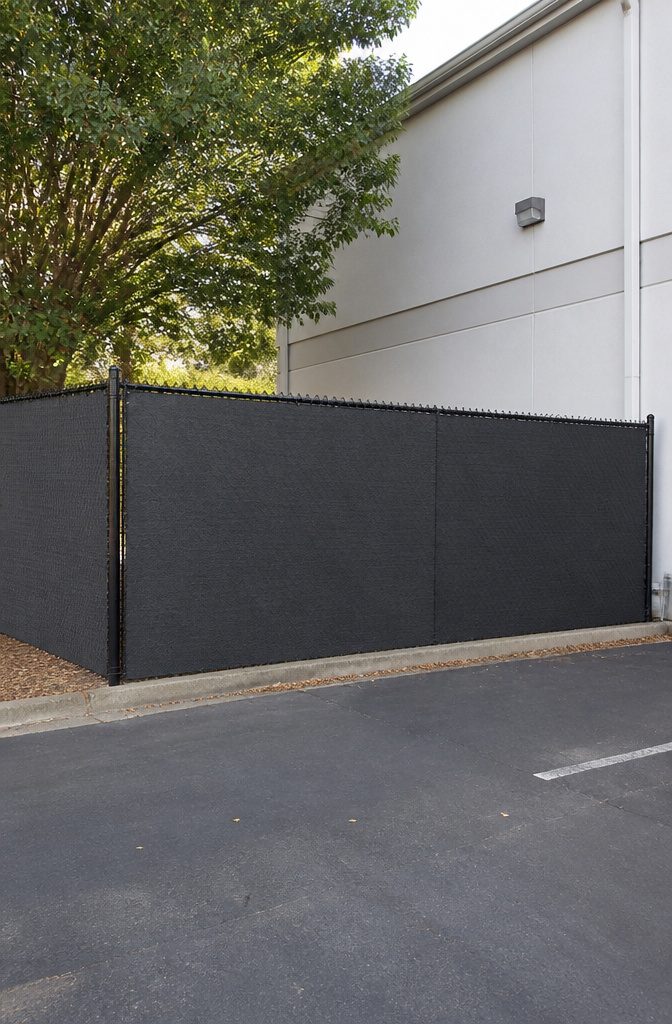
For covering a long run of chain link cheaply, I’d pick the Sunnyglade Privacy Screen. It’s polyethylene mesh with a sun-resistant coating, and each roll is 50 feet long.
Widths come in 4, 5 and 6 feet, so buy the one that matches your fence height. The price is $39.18 at Amazon, reduced 18% from $47.99, which works out to under a dollar per foot of fence.
The mesh is opaque and also throws shade, which helps if your patio table sits against the fence.
Grommets line the edges: run a zip tie through each one and around the rail, and pull every tie snug so the lightweight material doesn’t sag or flap.
It looks thinner than slats or panels, but nothing else here covers this much fence for so little.
Recommended Products

Upgrade iCover Privacy Screen For Fence: Our privacy screen is made of heavy-duty knitted net, measuring 4 ft high by 50 ft long. It is suitable for fences with a height of 4 ft or slightly higher. Please accurately measure your fence before purchase
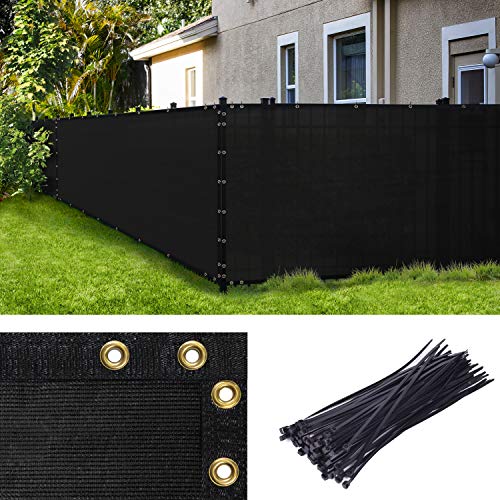
Backyard Privacy: Designed for 6-foot backyard fences, offering enhanced privacy by helping block views from neighbors and busy streets.

Privacy Solution: Most economical way for privacy over chain link fence, porous decorative concealment, existing cyclone wire fence, wood retaining wall, welded wire fence, chain link fence, privacy barrier around swimming pool, block nose neighbor see through, add privacy to acre back yard backdrop, front yard, patio, garden and porch; hide street, road, construction site, pet kennel pen, block surrounding noise and street view, stops dogs from barking at neighbors.
5. Reed Privacy Screen
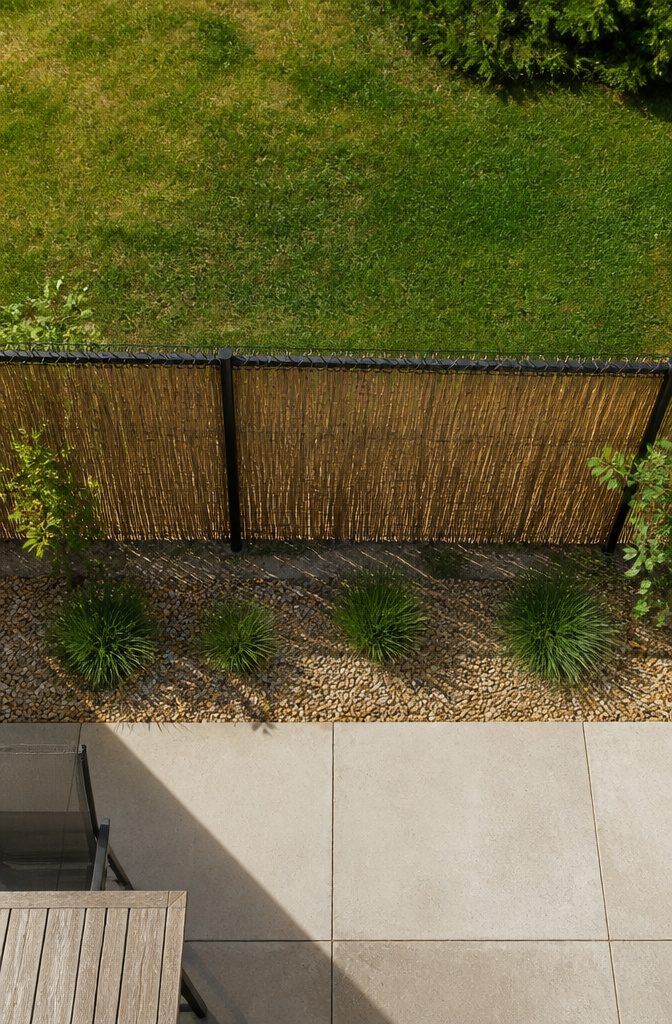
Reed gives a chain link fence a natural, textured look, and it is a rapidly renewable material.
Hardware stores carry it, but much of what they stock is cheap, so check how it is bound. I’d choose the MGP Natural Reed Fence, which is held together with natural fibers instead of wire and keeps looking good longer.
It covers a 4-foot fence completely. On a taller fence, hang it from the top rail and expect partial privacy rather than a full screen.
For installation, fasten it with zip ties to both the rails and the mesh. That keeps the panel snug against the fence instead of sagging between attachment points.
6. Bamboo Fence Panels
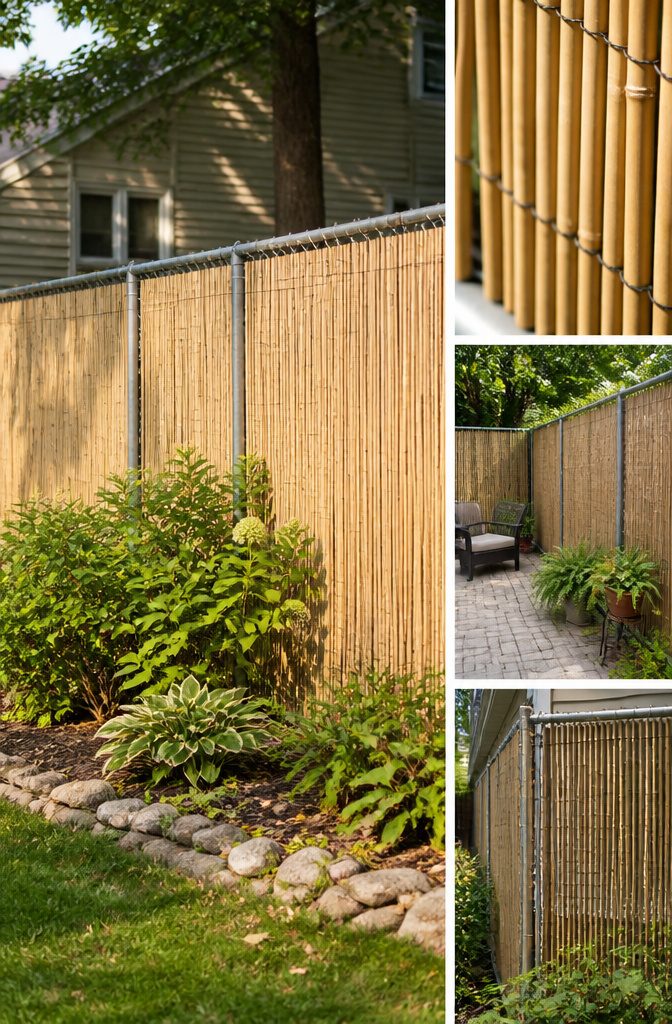
Whole bamboo poles make a sturdy cover for chain link, but they leave gaps. The poles are wider than reeds and sit farther apart, so privacy is partial, not complete.
If you want a solid screen, skip bamboo. If you want durability and a natural look, it wins.
Cover Natural Bamboo Fencing by Backyard X-Scapes uses entire poles rather than split ones.
That makes a sturdier panel that looks as good from your neighbor’s side as from yours. Each panel is 6 feet high and 8 feet wide, and it attaches to the chain link with zip ties.
7. Wood Fence Panels
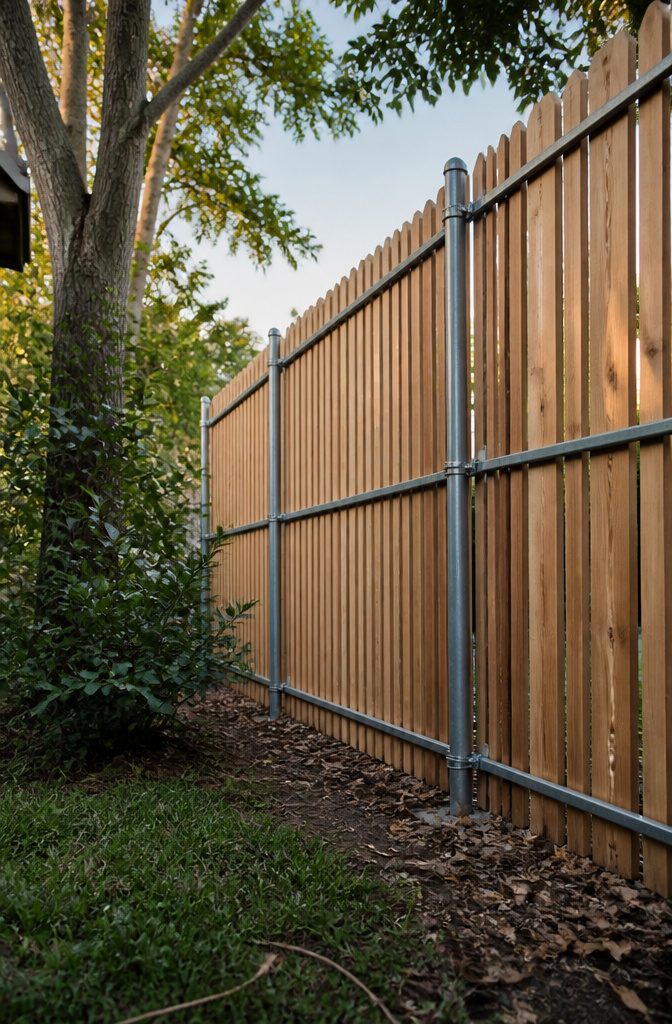
Covering a chain link fence with prefabricated cedar panels turns it into a wood fence.
This route is faster and costs less than weaving individual slats through the mesh, so I’d choose it for any run where you want full privacy. The 6-foot by 8-foot dog-eared panels block the view completely.
Attach each panel to the existing posts and rails with U-bolts, which wrap around the pipe so you don’t have to drill into it.
Cedar lasts a long time whether or not you finish it. Staining or sealing is a choice about color, not a requirement for the panels to survive.
Recommended Products

Includes a roll of chain link fence slats tape ,200 fasteners and punch tool

Included: 250-ft roll of fence weave (actual 246-ft x 0.15-ft); 200PCS Button, Puncher

8. Vinyl Fence Panels
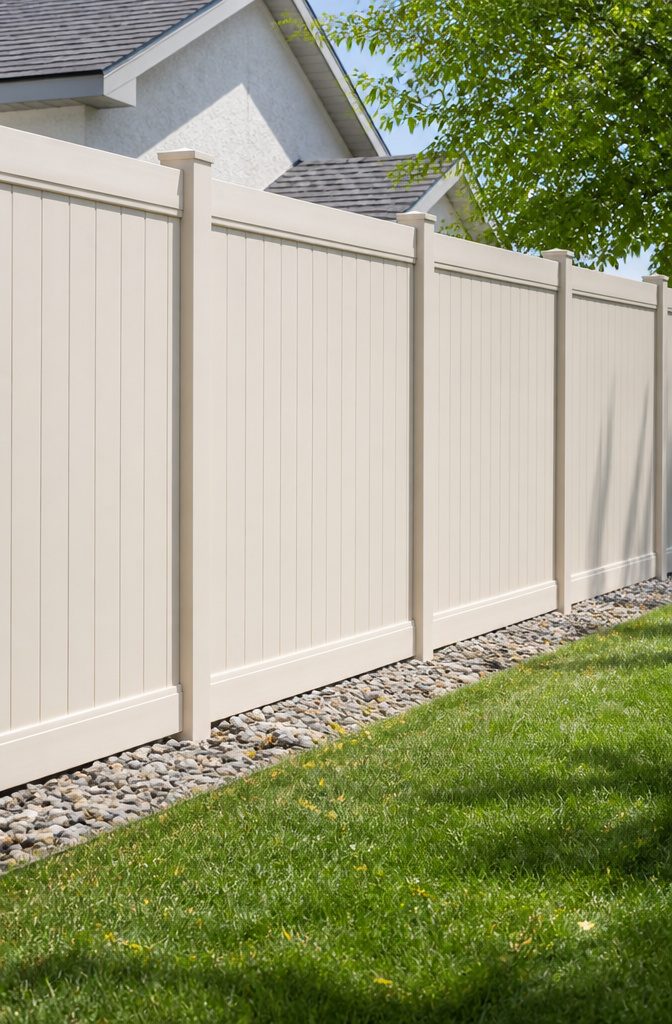
Vinyl panels give complete privacy and last longer than wood. Vinyl won’t turn gray in the sun, and an occasional washing keeps it looking new.
Vinyl tends to cost more than wood, but Freedom Brighton Fence Panels at Lowe’s run about the same as wood panels. They come in 6-foot lengths instead of 8-foot, so the same stretch of fence takes more of them.
Count the panels you need for your run, not just the price tag on one. If looks are your main concern, I’d pay the extra for vinyl, since it needs no staining or repainting to stay that way.
Choosing a Cover
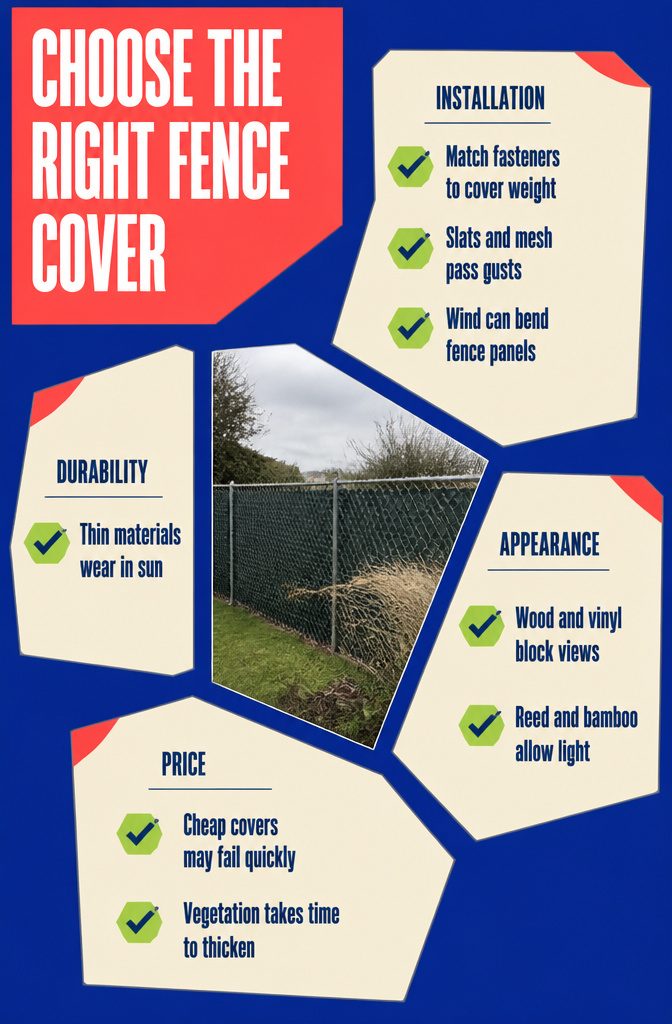
Five factors decide which cover suits your fence:
- Installation: Zip ties work for light covers, U-bolts hold heavier panels, and a locking strip grips a sheet along its whole edge.
- Air permeability: Non-porous plastic or canvas can act like a sail, so in high winds it may catch the wind and blow away, sometimes bending the fence with it. Slatted or mesh covers let gusts through.
- Durability: Sun and weather break down thin materials first.
- Appearance: Wood and vinyl give complete privacy. Reed and bamboo give partial privacy, which suits you if you still want some light and airflow.
- Price: Low-cost covers are tempting, but one that fails in a season costs more than one that lasts. Vegetation is cheap, but it takes time to grow thick enough to screen anything.
Recommended Products

【Sufficient Privacy】Balcony Privacy Screen is made of 100% new high density polyethylene(HDPE) material, which has excellent shading performance and provides 95% UV protection, 85%-90% shading rate, no recycled materials used, more healthy and safe.
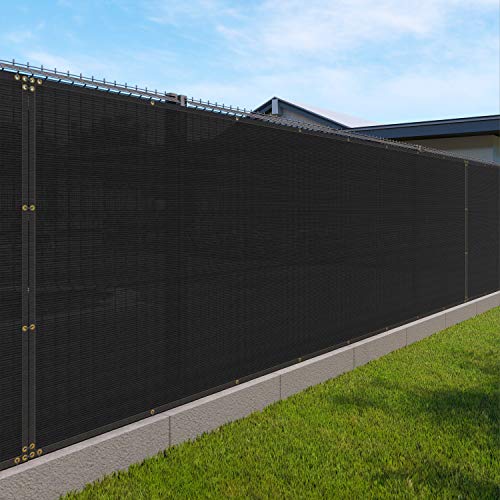
Perfectly Protect Your Yard Privacy: 90% visibility blocking, prevent peeping outside the yard, block nose neighbors see through, protect safety and enjoy freedom. It can also prevent animals from entering your yard, block surrounding noise and street views, block dogs' sight and prevent bark.

High Quality Material and Construction: Shade&Beyond privacy screen is crafted from 170 gsm UV protected NON-RECYCLED HDPE fabric; featuring durable brass grommets on each side for secure installation









