
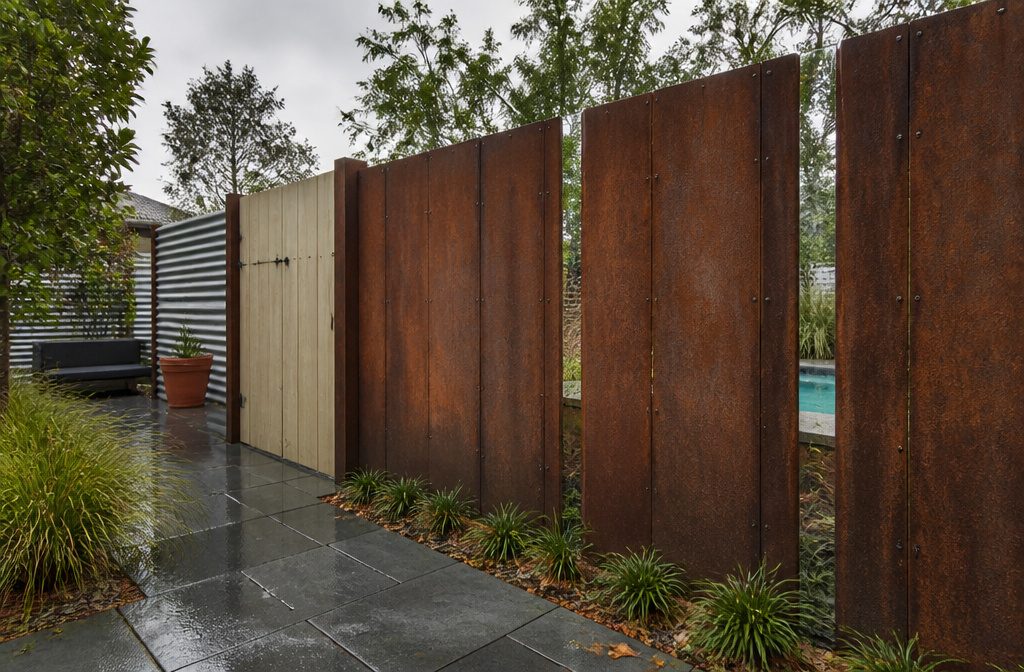
Plain gridded 2 x 6s, wavy galvanized roofing and Cor-Ten steel sit at different price points, and the job the fence has to do decides which fits: secure a pool, screen a view, or act as art.
Cor-Ten costs more. Galvanized roofing is the cheaper metal but looks good only with careful edge and fastener detailing.
1. Treat the Fence as Geometry
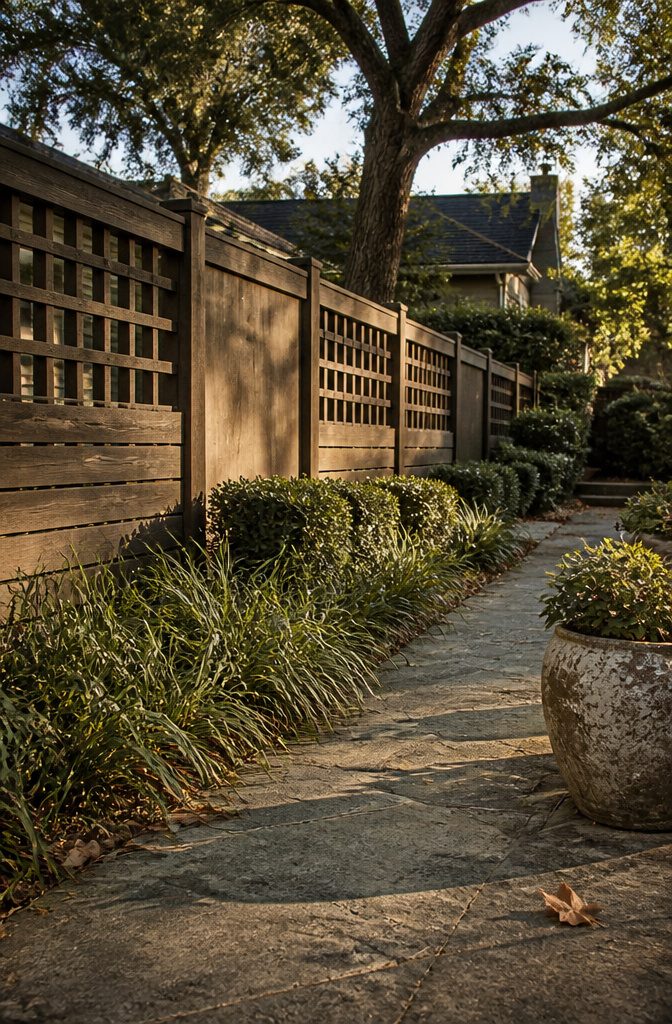
A mid century fence is hardscape, and it is the most visible piece of it because it stands up in three dimensions. Plants adapt to whatever style surrounds them.
The shapes built from wood, concrete, masonry and metal are what set the design vocabulary. So I’d stop treating the fence as a boundary and start choosing it as a line, a grid or a plane.
Horizontal boards read as lines, a repeated square pattern reads as a grid, and a solid panel reads as a plane.
This approach comes from the Expressionist painters of the early and mid-20th century, whose compositions landscape designers carried across the ground and up into vertical elements.
Recommended Products

NATURAL LOOKING LEAVES - Our faux leaves fence screen will give you a realistic look and is a beautiful decoration both indoor and outdoor.

STYLISH LATTICE PANEL DESIGN: Enhance your home or yard with our MDF lattice panels featuring an elegant oval scale grid design. Perfect for creating decorative wall panels, trellises for climbing plants outdoor or indoor, and privacy screens. Suitable for walls, fences, patios, or even garden trellises for flowers, they add style and functionality wherever placed.
NATURAL LOOKING LEAVES - Our faux leaves fence screen will give you a realistic look and is a beautiful decoration both indoor and outdoor.
2. Security, Screen or Art
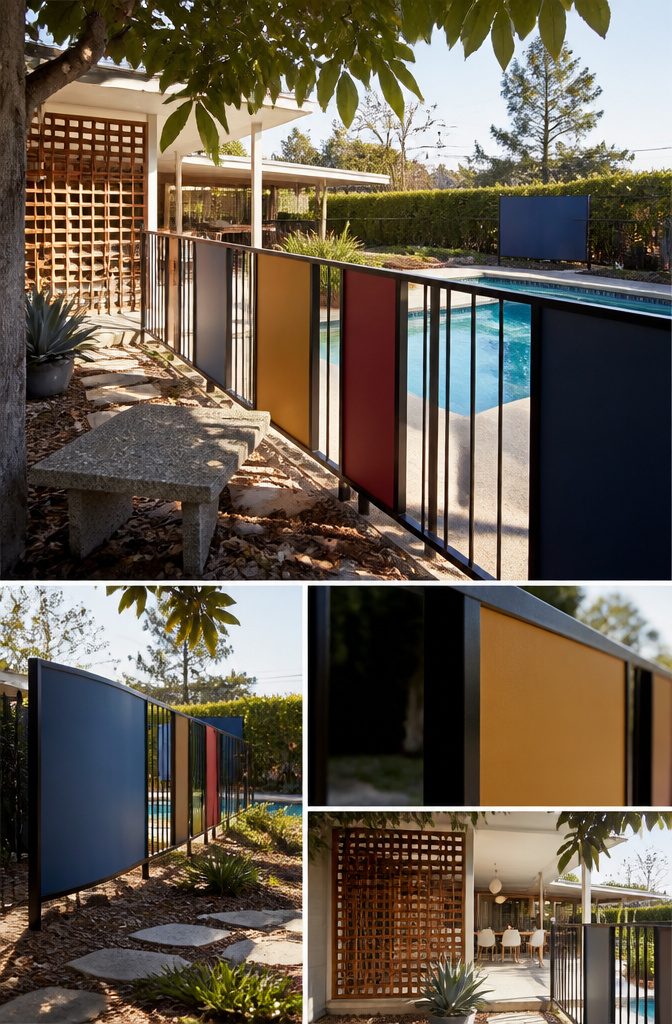
Mid-century fences run from security to screen to sculpture. A pool fence has to secure, yet bold blocks of color can turn a plain one into the showpiece of the yard.
For privacy, a single freestanding panel of gridded 2 x 6s between a dining courtyard and the street blocks enough of the view to feel private without boxing the space in.
A curving free-form panel can hide pool equipment and add shape at the same time.
At the far end, the fence is simply art. I’d let the space and how you use it set the degree of enclosure, and screen only the directions you want hidden.
Recommended Products

PACKAGE INCLUDED - Fence Fabric, Iron Fence Poles, Iron Fence Rails, Ground Spikes, Base Mounts, Ground Stakes, Zip Ties. We provide zip ties for fixing fabric to the fence poles.

𝗣𝗿𝗲𝗺𝗶𝘂𝗺 𝗢𝘂𝘁𝗱𝗼𝗼𝗿 𝗠𝗲𝘁𝗮𝗹 𝗣𝗿𝗶𝘃𝗮𝗰𝘆 𝗦𝗰𝗿𝗲𝗲𝗻: Crafted from durable, weather-resistant steel, this 6ft × 3.7ft privacy panel is built to withstand outdoor conditions, providing reliable and stylish privacy for years.

STYLISH NATURAL WOOD: This FSC certified wood screen is made with real wood meaning no two boards have the same grain color, finish, or wood knots differing it from vinyl outdoor privacy fence screen panels.
3. Materials and Bold Forms
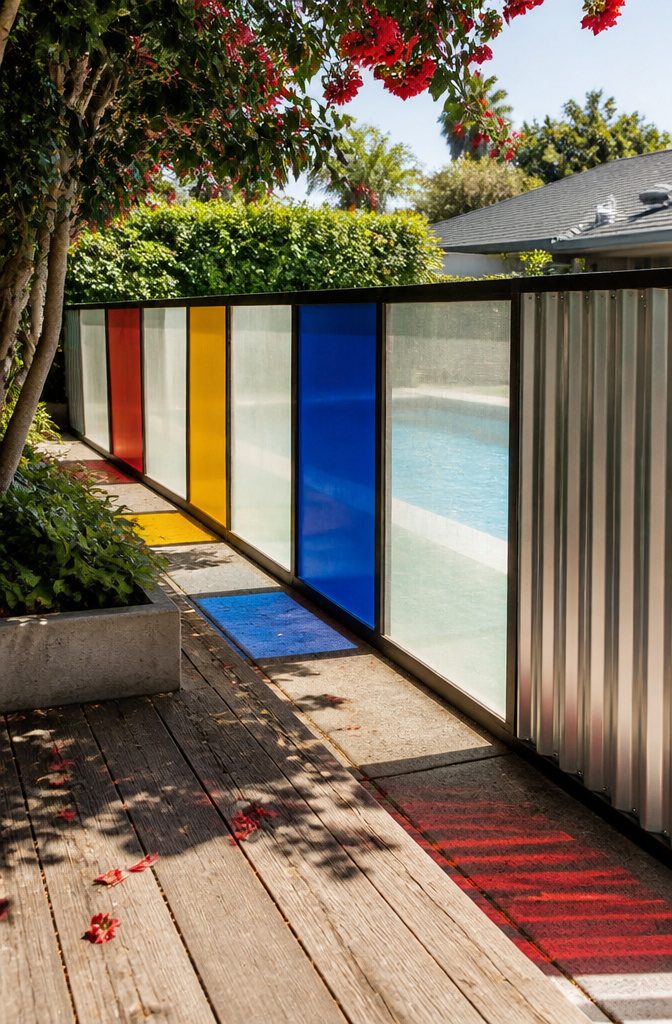
A freestanding panel of gridded 2 x 6s suits subtle privacy, such as screening an outdoor dining courtyard from street views.
It is plain lumber in a simple layout, which keeps it cheap. A curving free-form fence adds flair and hides pool equipment well.
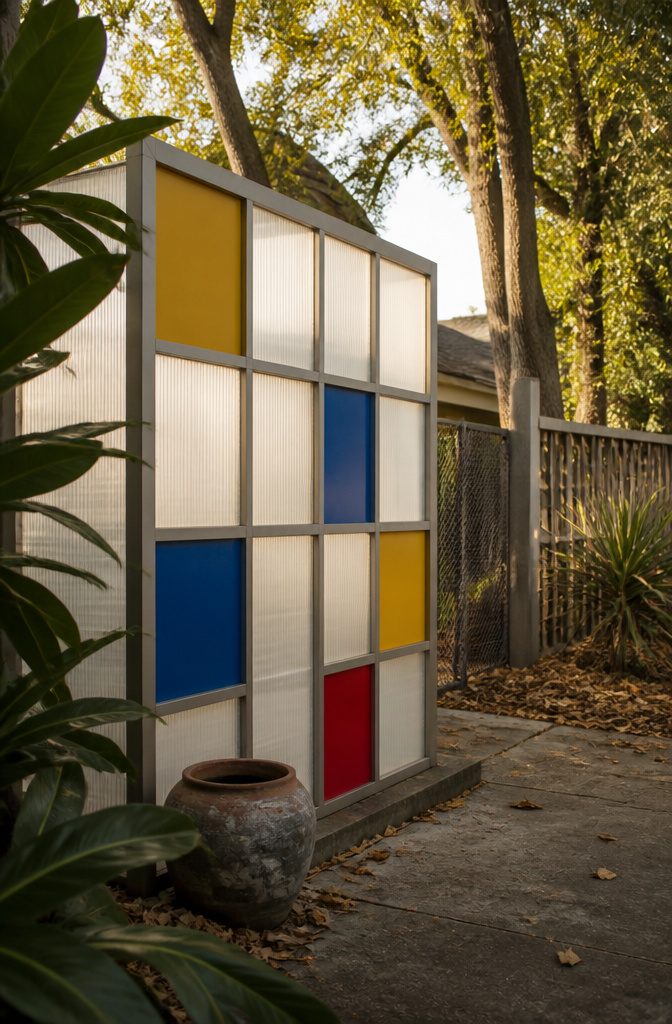
Translucent fiberglass with blocks of solid color gives the strongest Mondrian-style effect. Wavy galvanized metal roofing is an affordable metal option, but it looks good only with thoughtful detailing at the edges and fasteners.
For the most look with the least effort, add bold blocks of color to an otherwise plain fence. That one change turns a dull pool fence into a dramatic statement without rebuilding anything.
Recommended Products

Removable, mesh, pool safety fencing for use around swimming pools to help protect against accidental falls into the pool.

Pool Safety Fencing. VINGLI in-ground swimming pool safety fence is designed prevent your pool area from an accidental drowning. Safety Fence which it is a great choice to keep out pets or kids and gives your peace of mind that your child will be safe.

【𝐇𝐢𝐝𝐞 𝐎𝐮𝐭𝐝𝐨𝐨𝐫 𝐄𝐲𝐞𝐬𝐨𝐫𝐞𝐬 & 𝐈𝐦𝐩𝐫𝐨𝐯𝐞 𝐂𝐮𝐫𝐛 𝐀𝐩𝐩𝐞𝐚𝐥】Create a cleaner, more organized outdoor space with this air conditioner fence. Featuring 3 panels, each measuring 42" H x 38" W, it provides a total coverage width of up to 9.5 FT. It effectively conceals AC units, trash cans, pool equipment, generators, and utility boxes while creating a cleaner backyard appearance.
4. Fences That Shape Outdoor Rooms
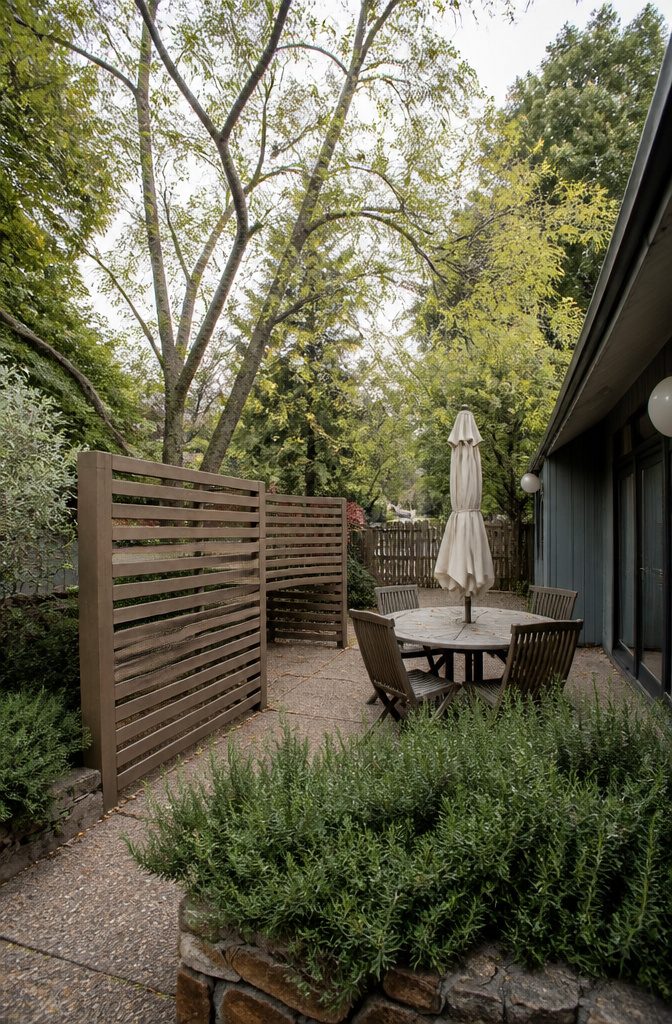
A mid century fence does not have to sit on the property line. A freestanding panel of gridded 2 x 6s, set beside a patio table, blocks street views into your dining spot without walling in the whole yard.
A curving, free-form panel can hide pool equipment, and the same move works for trash cans or a compost bin.
Panels also steer foot traffic, since people walk around them. One placed near the gate sets the path to the door and separates seating from a planting bed.
Before buying anything, I’d stand in the yard and ask what you want hidden and where you want people to walk, then put the fence there.
Recommended Products

【Perfect Fence to Protect Privacy】With this privacy screen fence, you could have fun with your families not worrying about losing privacy. Also, helping you cut off some noise from your neighbours to give you a peaceful environment. Your dog will not bark from outdoor things and people too.

Privacy Protection:Create a more private backyard, garden, or patio with the KANAGAWA fence privacy screen. It provides 90% blockage to reduce visibility from neighbors, streets, and pets, while creating a more comfortable outdoor space. The privacy screen helps reduce visual distractions that may trigger dog barking for a more peaceful environment.

Privacy Solution: Most economical way for privacy over chain link fence, porous decorative concealment, existing cyclone wire fence, wood retaining wall, welded wire fence, chain link fence, privacy barrier around swimming pool, block nose neighbor see through, add privacy to acre back yard backdrop, front yard, patio, garden and porch; hide street, road, construction site, pet kennel pen, block surrounding noise and street view, stops dogs from barking at neighbors.
5. Zigzags, Overlaps and Stepped Panels
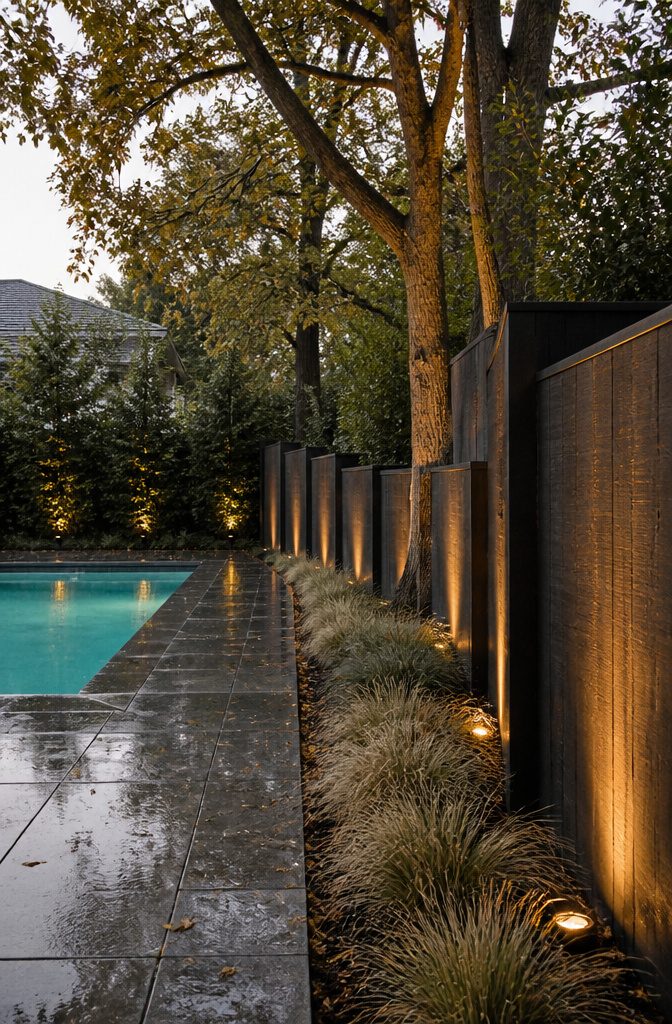
A zigzag layout hides how straight and narrow a city lot is, since the eye follows the angles instead of one long line.
Overlapping panels give a flat pool edge the same depth: each sits slightly in front of the next, and night lighting grazing them picks out the layers.
Stepped-back panels soften a straight boundary too, and they handle trees well. A masonry wall with its massive concrete footing has to detour around a trunk, while stepped panels simply step around it and the result looks planned.
The panels look like they float but stay physically connected, so the fence still encloses the yard and stays stable.
Recommended Products

Heavy Duty Metal Panels: This multi-functional corrugated metal roof panel is made of high-quality galvanized steel, featuring long-term weather resistance, corrosion resistance, waterproof performance and excellent color fastness.Ensuring reliable performance for a long time

Premium Materials - NeatiEase metal roofing panels are made of high quality galvanised steel, which has long-term weather resistance, UV resistance, corrosion resistance, no fading, no rust, waterproof.

Premium Materials - NeatiEase metal roofing panels are made of high quality galvanised steel, which has long-term weather resistance, UV resistance, corrosion resistance, no fading, no rust, waterproof.
Cor-Ten Steel and Cheaper Metal
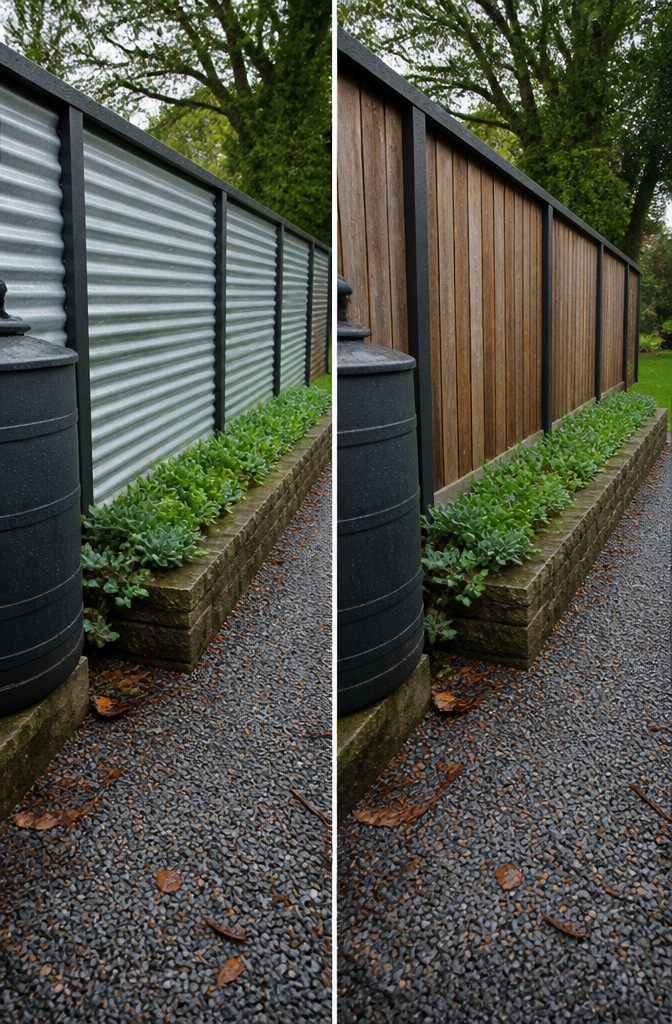
Cor-Ten steel is the popular contemporary choice for a mid-century fence, and it costs more than most alternatives.
A proposed 5-foot-high Cor-Ten fence that doubles as a retaining wall, with sedums planted along it, shows the material doing structural and planting work at once.
Wavy asbestos panels have the right profile but are not suitable today, so skip them. Galvanized metal roofing in a similar wavy shape is the affordable substitute, and I’d pick it for a tight budget.
It only works if it’s detailed thoughtfully. Give it a clean frame, finished edges and a cap, and keep the fasteners tidy, so it reads as a designed screen and not a leftover shed wall.
Eckbo, Royston and Mondrian
Garrett Eckbo and Bob Royston used fences and other vertical elements to vary how enclosed a yard feels. Royston’s curving, free-form fence, for example, screens pool equipment while adding flair.
Eckbo’s gridded layout of colored panels took its cue from the painter Piet Mondrian. Studio Cleary Landscape Architecture (SCLA) and Ted Cleary carry that lineage into their proposed designs.
Their freestanding panels pair translucent fiberglass with blocks of solid color to screen a neighbor and add depth, and the same bold blocks can turn a plain pool fence into a focal point.
For a quieter version, a freestanding grid of 2 x 6s gives subtle privacy from the street.
Recommended Products
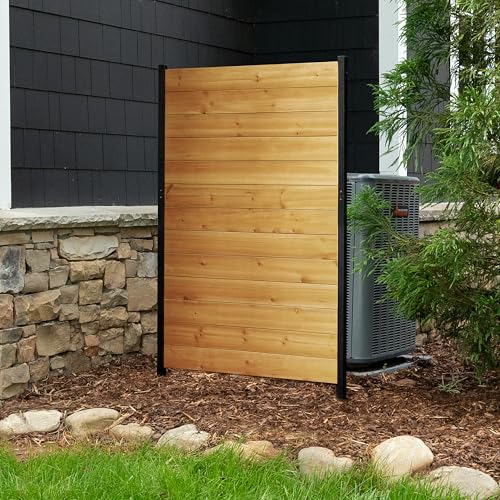
STYLISH NATURAL WOOD: This FSC certified wood screen is made with real wood meaning no two boards have the same grain color, finish, or wood knots differing it from vinyl outdoor privacy fence screen panels.

Quality Upgrade: The fence posts are upgraded to high-quality iron, which is sturdy and durable and not easy to bend. The surface is specially painted, rust-proof and durable; the fence fabric is made of heavy-duty polyethylene, suitable for outdoor use, provides good privacy protection, and can be rolled up for quick removal and storage

Outdoor Privacy Screen – Stop prying neighbors and flimsy fabrics that turn see-through! Our heavy-gauge galvanized steel panels feature a premium powder-coated finish that effectively blocks unwanted views while allowing fresh air and natural light to flow through. The precision laser-cut louver design ensures you enjoy privacy screen outdoor functionality without feeling trapped in a dark box. Engineered to withstand extreme sun, rain, and snow, this metal privacy screen outdoor resists corrosion and peeling for lasting performance. Perfect for homeowners craving a peaceful, secluded backyard oasis – reclaim your outdoor space today!
Frequently Asked Questions
Recommended Products

No Dig Required: The bottom of the air conditioner fence is connected to a flower box, which is supported by the weight of the unit so it is stable, does not need ground stakes. It protects the cement floor and is more stable and beautiful.

Design for AC Units: The precisely designed gaps between panels to hide outdoor AC units while allowing airflow, ensure optimal ventilation while maintaining privacy, helping conceal unsightly equipment without blocking heat dissipation, thus improving the performance of air conditioning units

POOL SAFETY KIT - Help to keep your outdoor above ground swimming pool safe with this 24" vinyl safety fence. Helps fight off the risk of accidental pool drownings with this pool barrier.
What materials work for a mid century fence?
Wood, concrete, masonry and metal all fit.
Popular choices include gridded 2 x 6 lumber, translucent fiberglass with solid color blocks, galvanized metal roofing and Cor-Ten steel. Pick based on how much privacy and visual impact you want.
What is the cheapest way to build a mid century fence?
Plain lumber is the lowest-cost route.
A freestanding panel of gridded 2 x 6s in a simple layout gives subtle privacy from the street. Wavy galvanized metal roofing is the affordable metal option, as long as the edges and fasteners are detailed carefully.
Is Cor-Ten steel a good choice for a mid century fence?
Yes, if the budget allows.
Cor-Ten is a popular contemporary choice but costs more than most alternatives. One proposed design uses it as a 5-foot-high fence that doubles as a retaining wall, with sedums growing through slotted cut-outs.
Can I still use wavy panels on a mid century fence?
Not the original ones.
The wavy panels popular in that era were made of asbestos, so they are not suitable today. Galvanized metal roofing in a similar wavy profile gives the same look and costs less.
Does a mid century fence have to follow the property line?
No.
It can stand anywhere it helps shape the space. A freestanding panel can block street views of a dining area, hide pool equipment or trash cans, and steer foot traffic along a path.
How do I make a plain pool fence look mid century?
Add bold blocks of solid color.
That one change turns an ordinary pool fence into a focal point without rebuilding it. The fence still has to do its security job, so the color goes on top of that function.









