
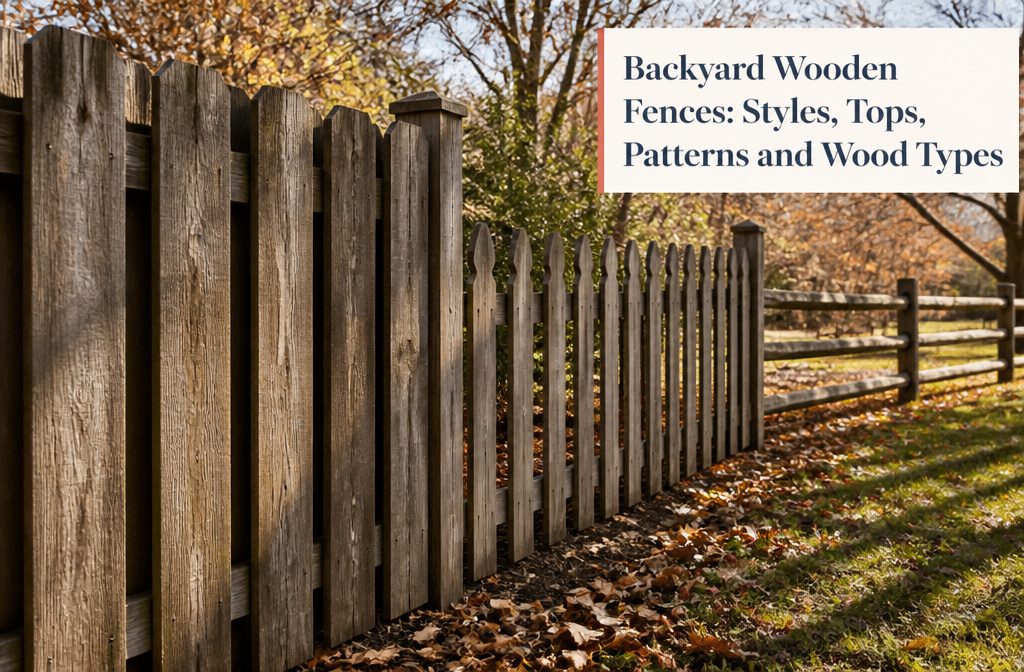
Wood fence styles range from solid 6-foot cedar privacy walls to open split-rail and picket designs, and the style you choose sets how much privacy, airflow and view you get.
Solid board-on-board or lock-board leaves almost no gaps but gives you nothing to look at; louvers, pickets and hogwire open the view and give up privacy.
Solid Privacy Fences
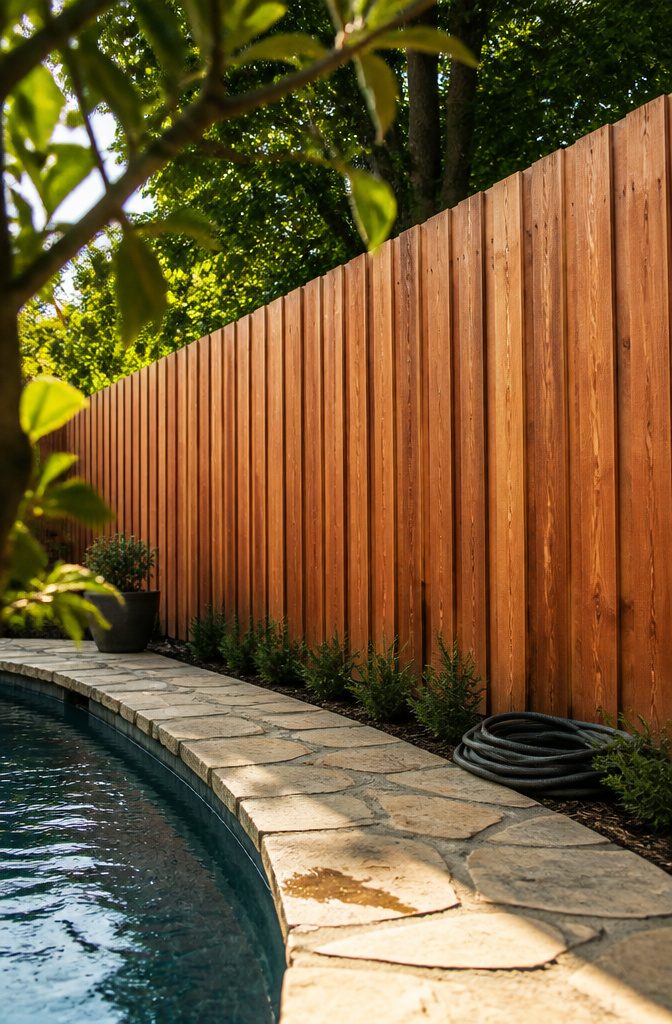
Solid panel, board-on-board, board-and-batten and lock-board fences all do the same job: they block views in.
Cedar versions usually stand 6 feet high, rarely 8. Board-and-batten puts its horizontal support rails on the inside, so the outside shows only evenly spaced, same-width boards.
Board-on-board overlaps its vertical boards at the edges, and lock-board uses interlocking panels in red cedar, redwood or pressure-treated lumber to form one continuous barrier.
For a pool area or a lot facing a busy street, I’d pick board-on-board or lock-board, since the overlaps and interlocks leave little room for gaps.
The cost is the view: a solid wall gives you nothing to look out at, so skip it if your yard has scenery worth keeping.
Recommended Products
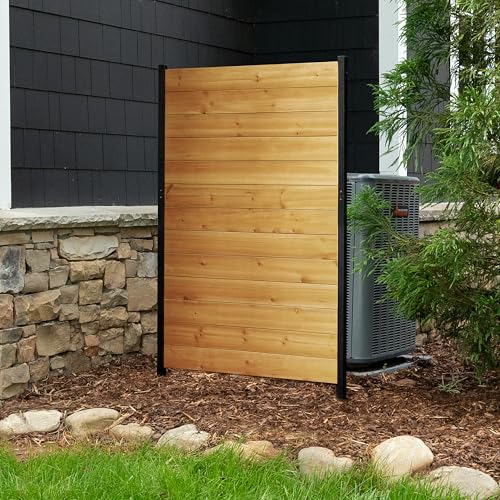
STYLISH NATURAL WOOD: This FSC certified wood screen is made with real wood meaning no two boards have the same grain color, finish, or wood knots differing it from vinyl outdoor privacy fence screen panels.

1 SCREEN PURCHASE: You will receive preassembled materials to construct 1 cedar wood outdoor privacy screen in a charcoal finish with your purchase
Good Neighbor Shadow-Box Fences
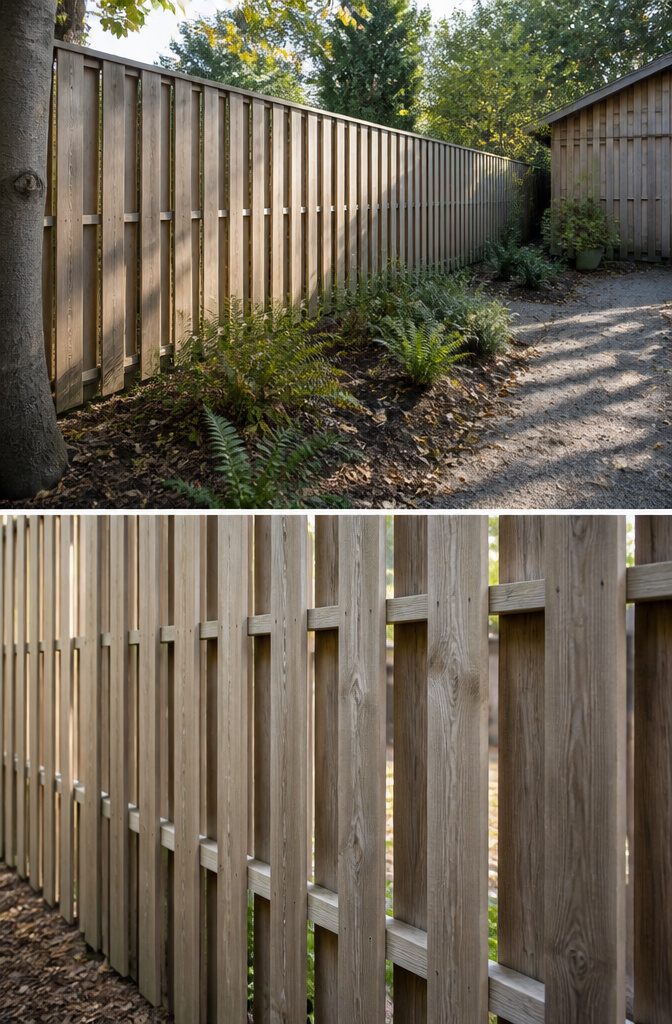
Boards fastened to alternating sides of the rails leave no bare framing facing either yard.
The boards overlap, so the fence gives privacy when you look straight at it, while still letting air and filtered light through. That airflow is a real advantage over a tight solid panel.
Both faces look the same, which suits a shared property line. Nobody ends up with the "back" of the fence, and you avoid the awkward choice of which side gets the rails.
When a neighbor will see the back, this is the style I would pick. It costs more boards than a single-layer design, but it spares you any argument over who gets the good side.
Recommended Products

【Flexible Retractable & Customizable Size】This retractable garden fence set contains 2 adjustable wooden fence panels, each adjust to 12 inches tall and 5.8 ft long with a full 11.6 ft span, paired with 6 wooden stakes for stable installation. As a flexible wooden garden fence, its stretchable modular structure fits varied yard shapes and provides neat garden fencing for yard to build customized clean outdoor edges

Decent size: Each unit includes 5 fence panels, 6 posts and a set of metal hardware. Fence panel measures 11.5” high and 35.5 wide; post measures 21.7’’ in height. Perfect fencing size for backyard flower/vegetable garden.

2-PACK SET: 12x16.5 inches, covering a total of 12 ft. Allows flexible installation for flower beds, lawns, patios, or landscaping projects. Choose the right size for your plants to avoid unpleasant experiences and potential waste of resources.
Louver Fences
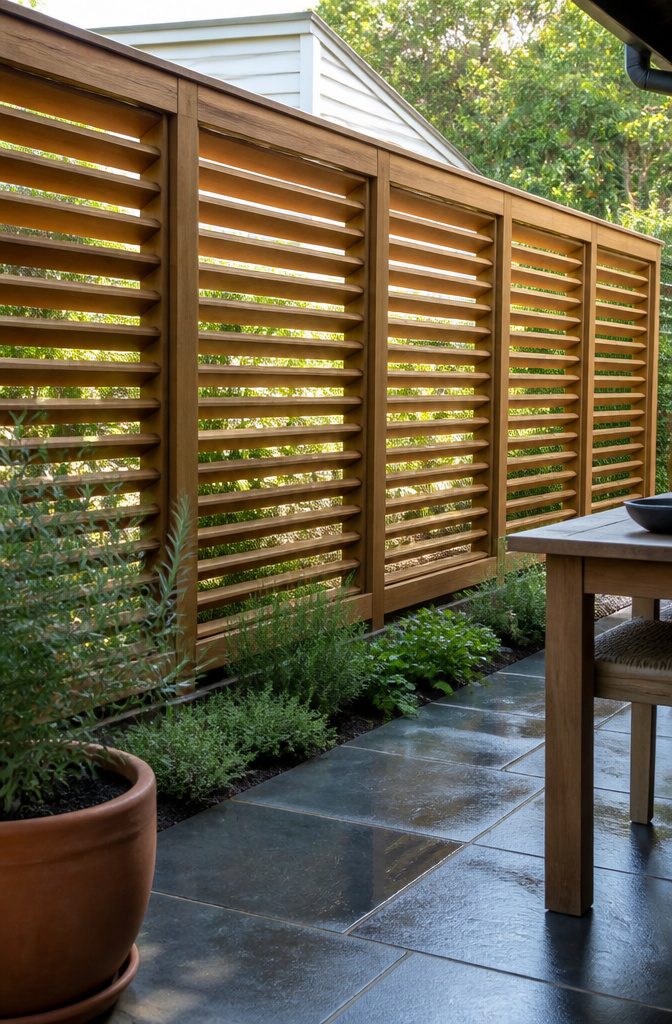
Louver fences use panels of horizontal or vertical slats, and on most of them the slats tilt. Angle the slats one way and light and air pass through while sightlines stay limited.
Close them down and the panel looks close to solid. The adjustable slats also give the fence a decorative look that flat boards don’t.
The cost is privacy. Because the slats limit visibility rather than remove it, a louver fence always gives up some privacy compared with a solid fence.
I’d pick louvers for a patio that feels stuffy or dim behind solid boards. For a property line where you want to be completely hidden, I’d stay with solid panels.
Recommended Products

STYLISH NATURAL WOOD: This FSC certified wood screen is made with real wood meaning no two boards have the same grain color, finish, or wood knots differing it from vinyl outdoor privacy fence screen panels.

Allows you create brand new fences or refit existing enclosures

Complete Heavy-Duty Kit: 1 Set Includes 22 Brackets, 10 Actuators, Screws & Rivets – everything needed to install up to 11 wooden slats (boards/slats NOT included). A comprehensive solution for your shutter project.
Picket Fences
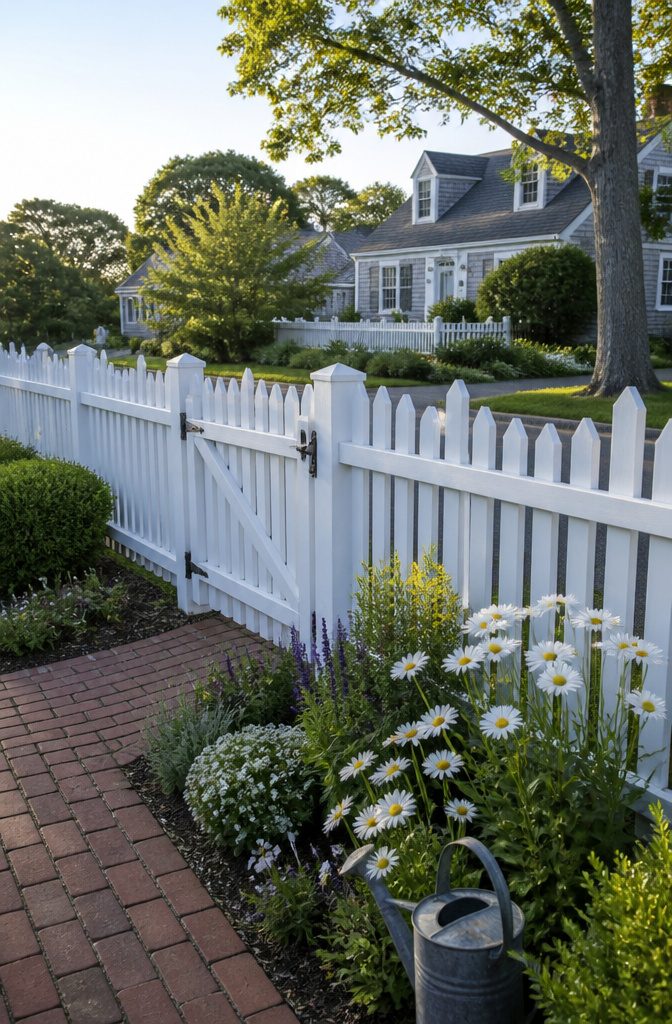
Spaced vertical boards with narrow gaps mark a boundary without closing the yard off, so a picket fence suits front yards and garden beds where you still want a view of the street.
Pickets are commonly 1 × 4 or 2 × 2 lumber, and white paint is the usual finish. Tops can be scalloped or arched for a softer line.
The Cape Cod variation runs taller, around 4 feet or more, with decorative angled tops in a pointed or rounded shape.
I’d pick it over a standard picket for a coastal or New England-style house, where the added height looks more finished. Neither style gives privacy, since the gaps that keep the yard open also let people see in.
Recommended Products

DIMENSIONS: Each panel measures 32” H x 48” W

【Metal Raven】A set of 5 metal birds, each bird has a different shape. It is designed based on the shape of real birds in nature.

Heavy-Duty Aluminum Frame - Built with rust-resistant aluminum, this fence gate is made for long-term outdoor use. Reinforced 1.2" aluminum posts provide strong support and wind resistance, while the sturdy base ensures secure ground installation. Ideal for patios, gardens, decks, and pool areas, providing enhanced security.
Dog-Ear and Straight Tops
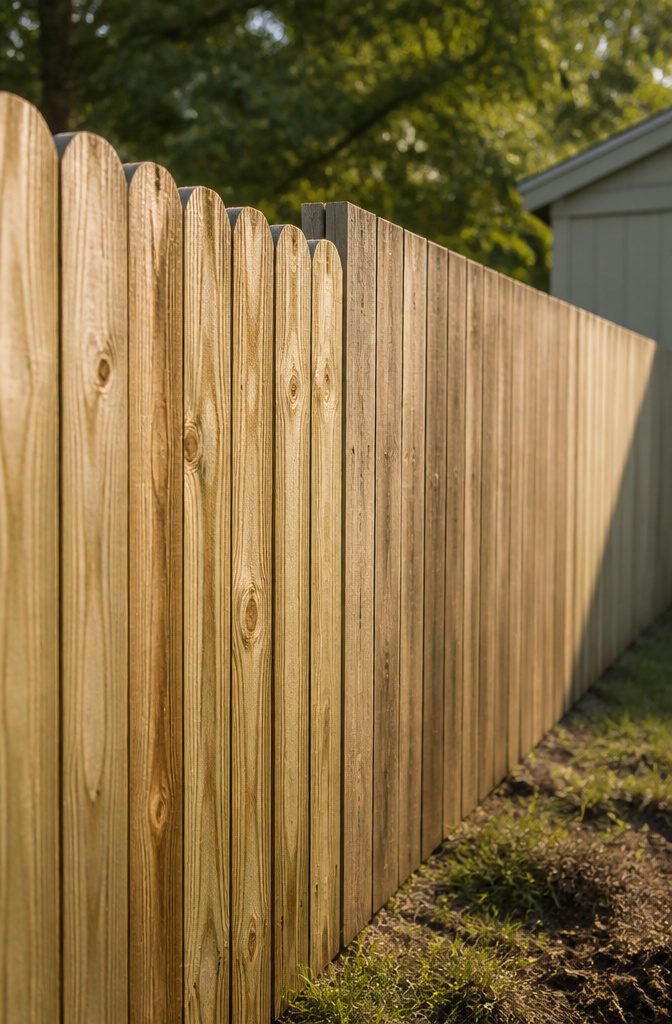
Dog-ear boards have clipped or pointed tops, and the point does real work: it sheds water and lets air move around the board tops. French Gothic points belong to the same traditional look, which suits older houses and historic neighborhoods.
A straight-top fence cuts every board to one height for a plain, level line. On a newer house with clean lines, I’d pick that over pointed tops, which can look fussy.
V-out is a third outline, with the boards angling toward the posts. On a gradual slope, slat boards set at an angle follow the ground instead of stepping along it.
Traditional fences are usually the most affordable wood option. They use a nominal 1 × 6 × 6-foot plank, with 1 × 8 or 1 × 4 occasionally available.
Recommended Products
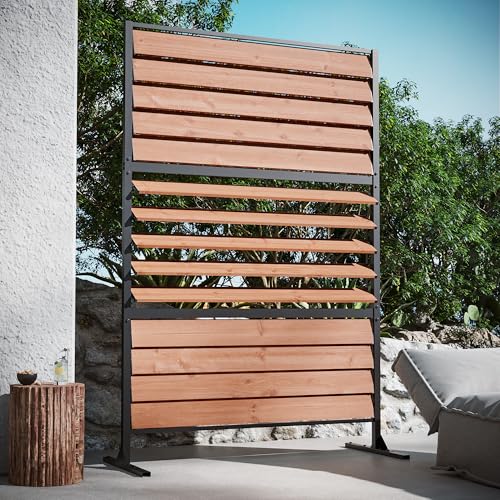
[Adjustable Louvered Privacy Fence] Uniquely control your privacy and airflow! This innovative wood privacy fence features adjustable slats that easily switch between an open, breathable setting and a closed, fully private configuration. Enjoy the ultimate flexibility of a louvered screen for your outdoor space.

1 SCREEN PURCHASE: You will receive unassembled materials for 1 cedar outdoor privacy screen with planter box with your purchase

STYLISH NATURAL WOOD: This FSC certified wood screen is made with real wood meaning no two boards have the same grain color, finish, or wood knots differing it from vinyl outdoor privacy fence screen panels.
Arched and Scalloped Tops
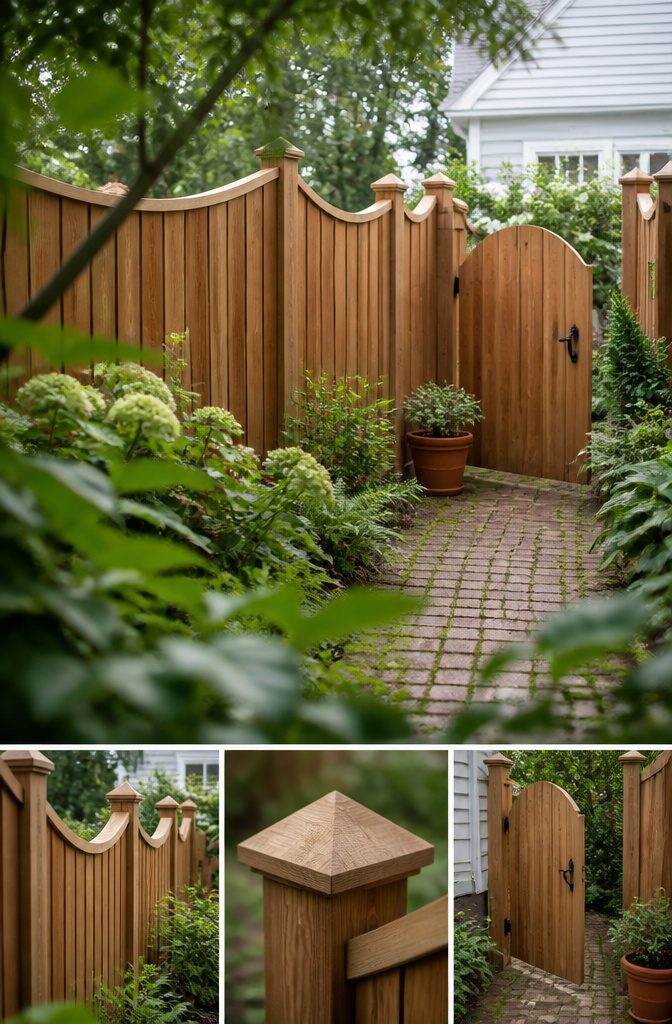
Curved tops soften a fence’s outline without giving up the traditional vertical-board structure. An arched top adds a sense of movement along the fence and frames an entryway or garden gate, while the fence still gives privacy and security.
Scalloped tops can be cut to echo your home’s details, and a Victorian house is the obvious match.
For more air at the top, a decorative-topper fence keeps a solid lower section and puts lattice or spindles above it.
Finish the posts with caps, from plain pyramids to intricate designs. Quality caps shield the post tops from water damage and weather, so I’d choose them for protection first and looks second.
Recommended Products

Redwood Fence Slat - Designed for a 7' high fence, slats are approximately 80.5" in length to accommodate the bottom locking channel and to prevent the slats from being above the top of the fence. (Available Colors: Beige, Black, Brown, Gray, Green, Redwood, Royal Blue, Sky Blue, White)

4-PACK SET: 12x30 inches, covering a total of 24 ft. Allows flexible installation for flower beds, lawns, patios, or landscaping projects. Choose the right size for your plants to avoid unpleasant experiences and potential waste of resources.
Split-Rail Fences
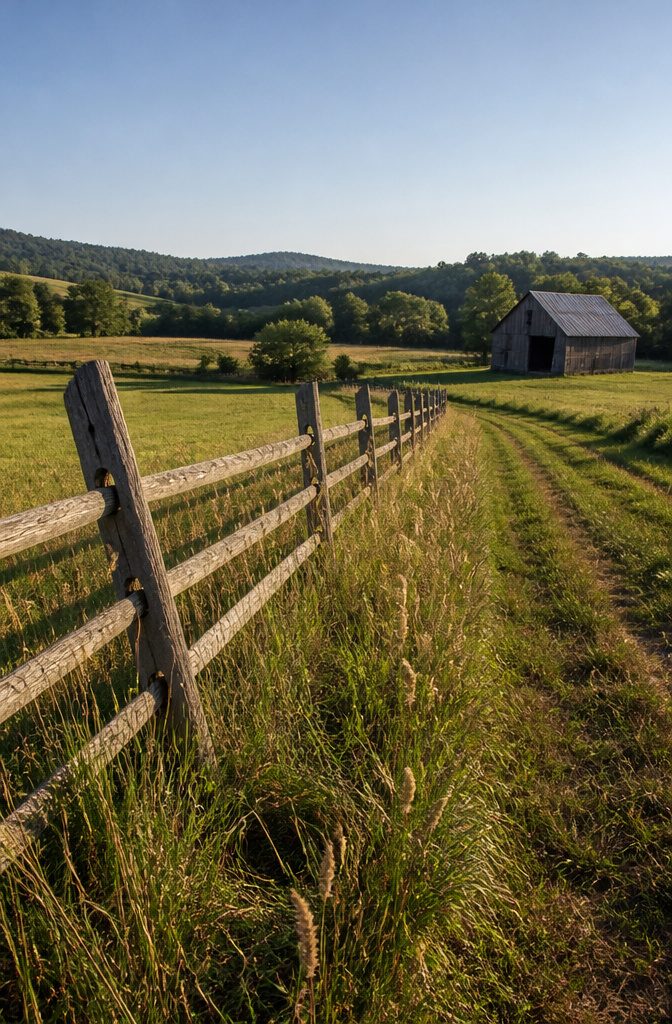
Split-rail fences are made from timber split lengthwise into rails, usually 3–4 per section, set between posts with wide gaps.
The look is rustic and the cost is relatively low. The style dates to 17th century England, where it first enclosed livestock.
Those open gaps mark a property line without blocking views or sunlight, so the fence suits farms, rural land and large suburban lots that want a casual, traditional edge.
I would skip it on a small yard. Split-rail gives no privacy and will not keep a dog in, because nothing stops a pet or a neighbor’s glance from passing between the rails.
If all you need is a visible boundary on a big lot, though, it is hard to beat for looks and price.
Recommended Products

Complete Heavy-Duty Kit: 1 Set Includes 22 Brackets, 10 Actuators, Screws & Rivets – everything needed to install up to 11 wooden slats (boards/slats NOT included). A comprehensive solution for your shutter project.

[Premium Quality & Durable] Our louvered pergola is constructed from premium materials with a black powder-coated finish, effectively resisting corrosion in damp, shaded environments and extending its service life; Seamlessly integrates with your blinds for unobstructed views, making it an ideal choice for upgrading your patio.
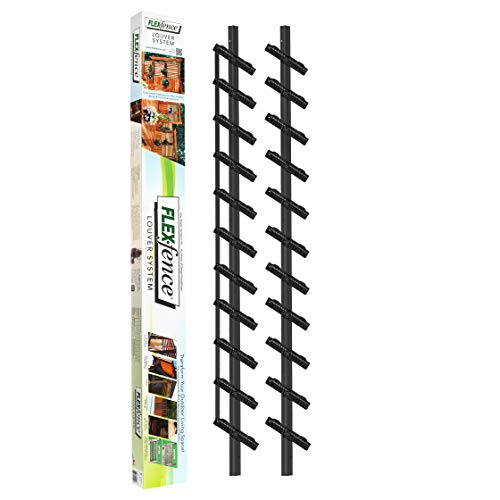
Can be used indoors and outdoors for vertical or horizontal applications
Cap-and-Trim and Picture-Frame
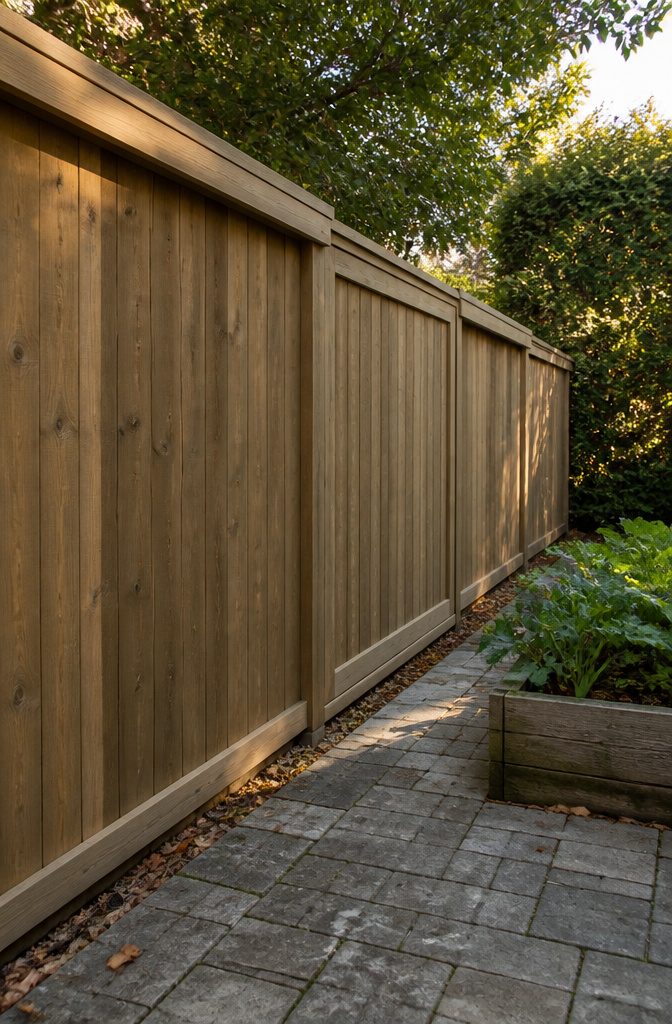
Cap-and-trim is a plain board fence with a 2×4 or 2×6 cap on top and 1×4 trim along the top and bottom of the boards. The trim hides the cut ends of the planks, so a crooked cut or uneven line disappears.
The fence also looks nearly the same from both sides, which settles most arguments with a neighbor. A 2×4 cap sits flush with a 4-inch post, while a 2×6 overhangs on both sides and looks heavier.
The cap is cosmetic, and pressure-treated lumber is the usual cheap choice. It can clash with cedar boards, so ask what is going on top.
Picture-frame fences use posts and rails to form a frame around the boards.
I’d pick this style for a yard where the fence is meant to be seen. Size, height and materials are all adjustable, and the frame adds strength.
Recommended Products

CREATING DEFINED EDGES: Wooden short fences are used to create neat edges for flower beds, pathways, and other gardens, helping contain soil, mulch, and gravel, preventing them from spilling over into other areas of the garden

12 Plastic Fence For Cake Decorations
Horizontal and Vertical-Slat Fences
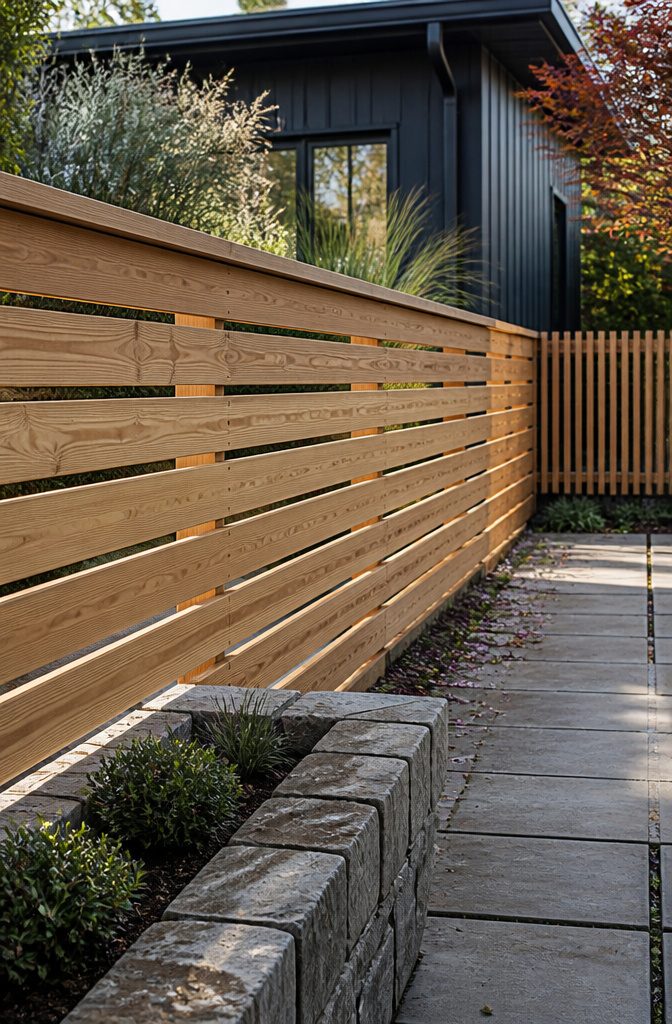
Horizontal fences use nominal 1 × 6 planks, or 1 × 4 and 1 × 3 boards for a finer, more linear look. Redwood and cedar are the usual woods, and tropical hardwoods such as Ipe, Mangaris and Mahogany are the other route.
Gap width sets the character. A gap of ¼ inch to 1 inch gives a slatted look that passes light and air, while tongue-and-groove boards leave no gaps and read as a solid wall.
A 1 × 6 cap laid flat finishes the top and suits shorter fences.
Stand the same boards upright, in narrow or standard widths, and you have a vertical-slat fence. Either direction can provide privacy and security, and I’d choose horizontal for a modern look.
Recommended Products
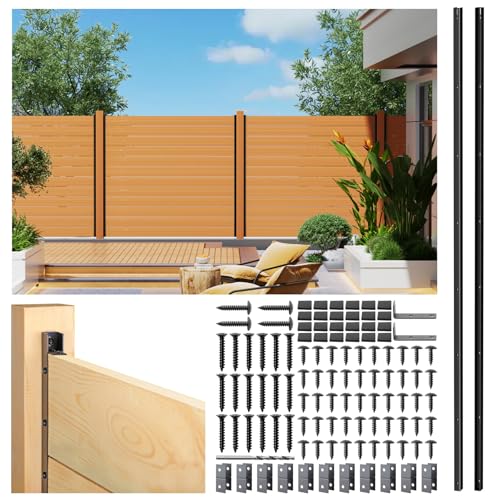
Innovative Design: The wooden fence panels posts features a U-channel design—simply attach the brackets to the posts and slide in (3/4" x 5.5") wood planks to lock. Easy DIY installation and plank replacement, even for one person, saving time, effort, and labor costs in the short and long term

Premium Fir Picket for Fencing: Crafted from high-quality Fir, this 6-foot picket is perfect for fence repair or replacement. Its natural resistance to rot and decay makes it a durable choice for your outdoor projects. The 0.55-inch thickness, 5.5-inch width, and 6-foot height ensure a perfect fit for most fence styles.

Neighbor Privacy, Not Blackout: Blocks direct line-of-sight while allowing airflow — designed for comfortable backyard privacy, not a solid wall or tarp.
Herringbone and Basket-Weave
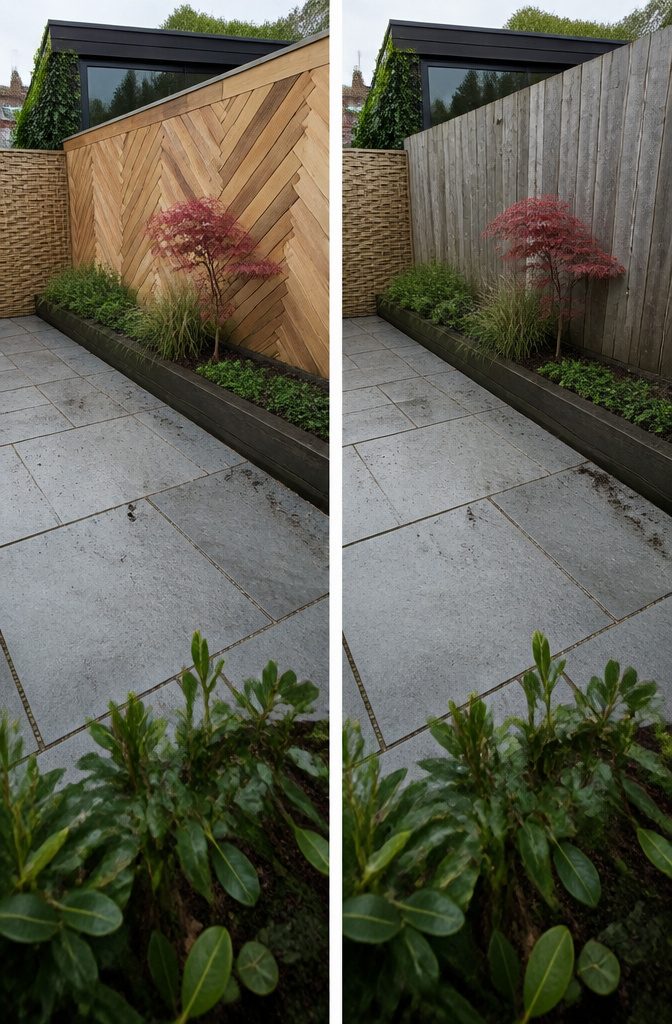
Herringbone is the dressier of the two. Lumber pieces are set in an intricate pattern, and mixing boards in different color hues makes it stand out.
In a small yard I’d use it on one wall only, the one you look at from the patio. A pattern this busy can crowd a tight space if it wraps all four sides.
Basket-weave looks rustic and classic, with planks interlaced like a woven mat. Strong planks and sturdy posts make it durable.
It works well as a decorative border around a garden bed or as a front yard fence. For a small yard I’d pick it over herringbone if plantings are the main attraction, because it adds texture without much color competition.
Pallet and Wattle Fences
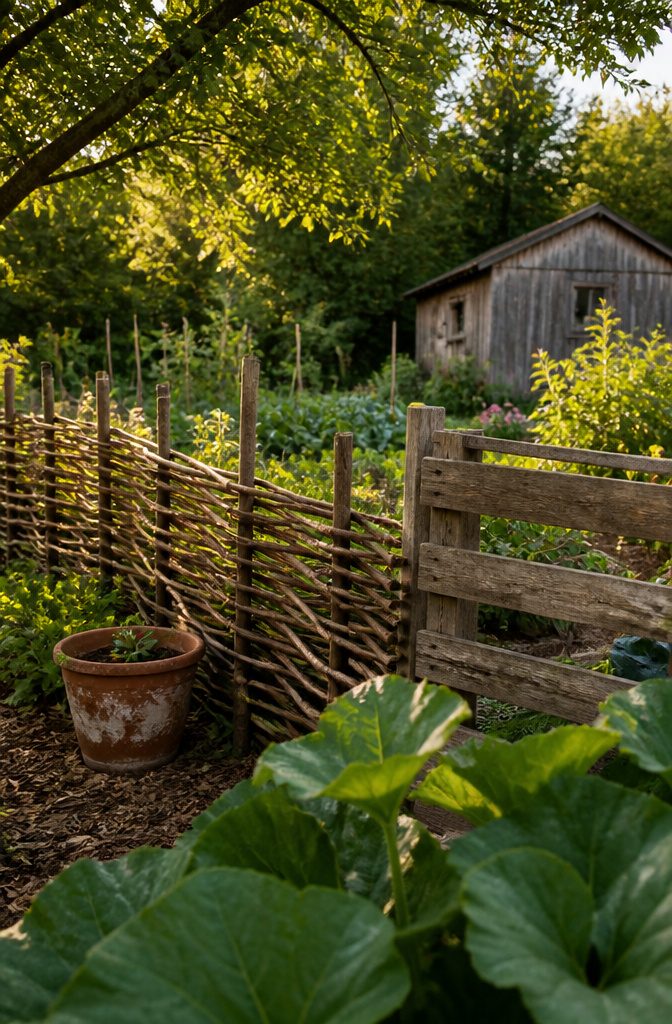
Pallets are light and easy to work with, which is why they show up in so many low-cost backyard fences. Run them horizontally for a stacked, banded line or stand them vertically; both read as rustic.
I’d call the result informal, not polished. Expect a fence that looks reclaimed, because it is.
Wattle leans further toward the natural side. Twigs and branches are woven into a lattice, a method used for centuries to protect or mark the edge of a property.
It blends into a planting bed better than milled lumber does, but it reads as a garden feature, not a formal boundary. I’d use it along a bed or border and skip it where you need a hard barrier.
Trellis Garden Fences
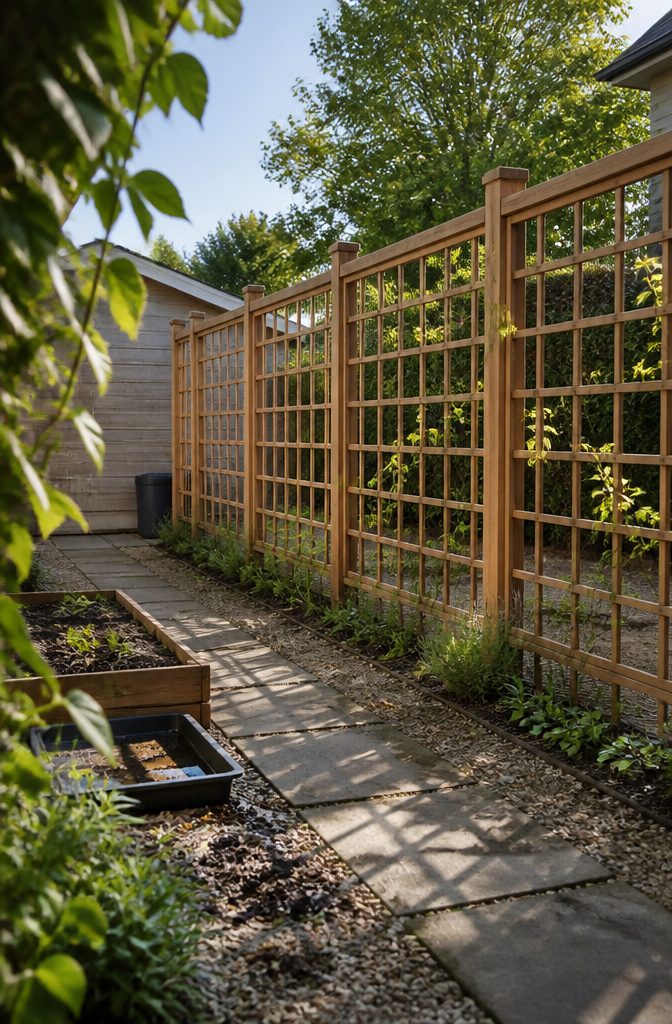
A trellis fence is an interconnected frame of posts and panels, usually wood or metal, built so plants can climb it.
The fence becomes part of the planting, which makes it the right pick for gardeners who want vines along the boundary instead of a flat wall of boards.
Expect only partial screening until the vines fill in. The open lattice lets sight lines through, so a new trellis along a property line gives little privacy in its first season or two.
I’d choose it where looks matter more than hiding the view. Where you need real cover, put it in front of a solid fence, or plan on a few seasons of growth before it does the job.
Metal, Wire and Cable Accents
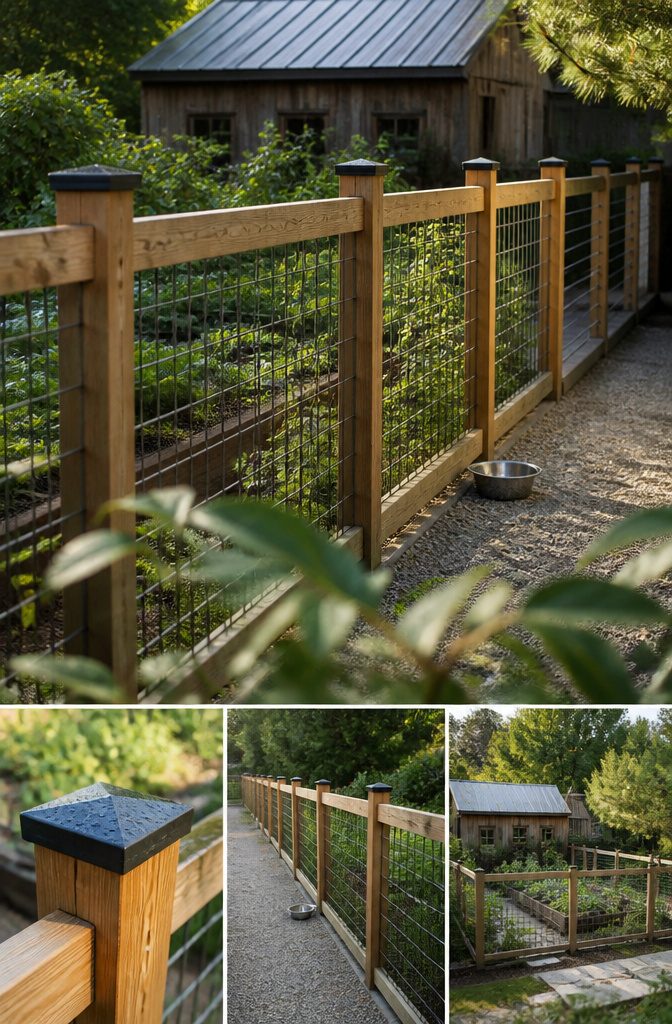
Metal accents add contrast rather than openness.
Decorative pickets along the top or ornamental post caps give a wood fence a second texture, and the metal needs far less upkeep than the wood around it. The fence below them stays as solid as you built it.
For open sightlines, look at hogwire or cable rail. Hogwire has an open feel and suits dogs and climbing vines, which can weave through the wire.
The wire you pick can change the cost of the fence dramatically, so get a price on the wire type before you settle on a design.
Cable rail strings stainless steel cables between wood or metal posts and gives great visibility. I’d pick hogwire for a dog or a vine, and cable rail when the view is the point.
Wood Types and Parts
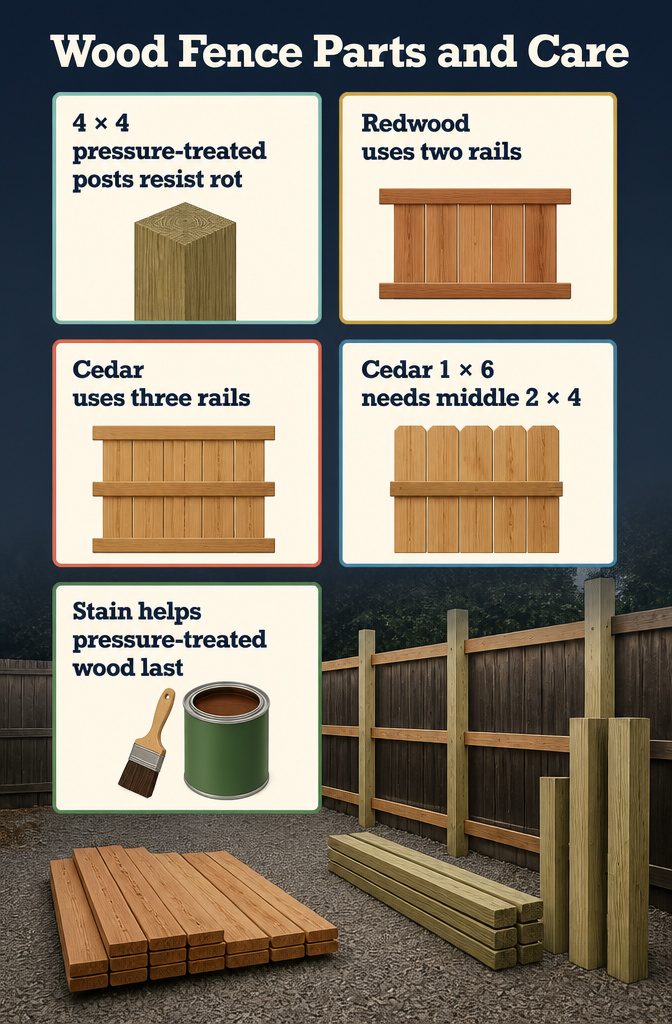
Species and hardware decide how a wood fence ages.
- Posts: Use 4 × 4 posts in pressure-treated wood, redwood, cedar or metal. Pressure-treated is the safest default, since the preservatives resist rot, decay and insects.
- Rails: Traditional redwood fences use 2 rails, and cedar fences use 3.
- Planks: Cedar 1 × 6 boards warp more, so add a middle 2 × 4 rail to keep them flat.
- Finish: Cedar stays attractive without constant painting. Pressure-treated wood lasts longer with fence stain.
Choosing for Privacy and Property
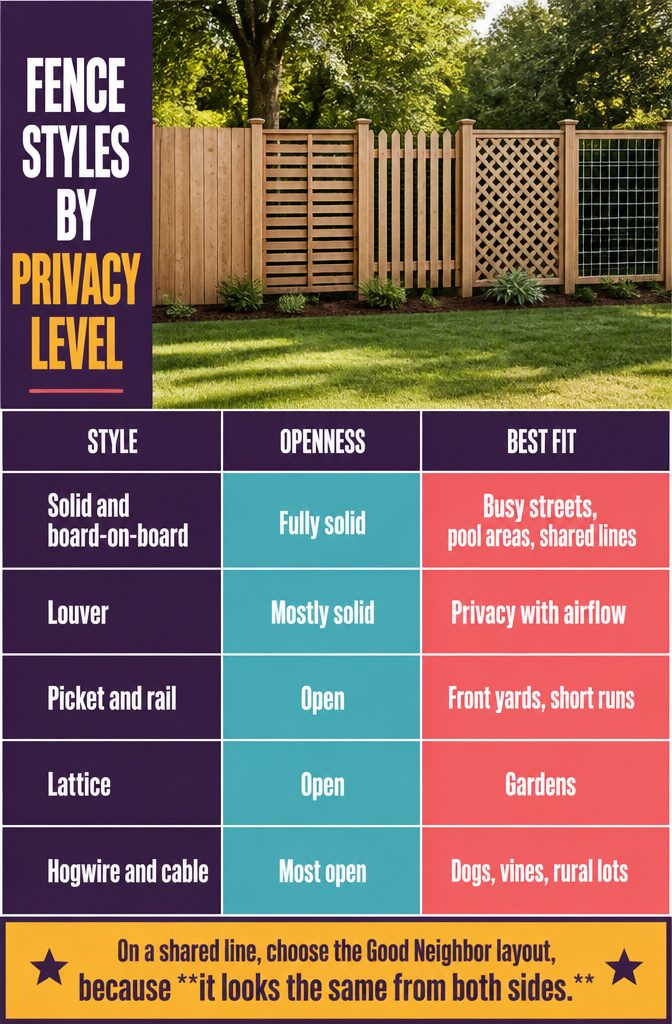
Sorted from fully solid to fully open, the styles match a lot by need.
Solid board-on-board suits busy streets and pool areas. On a shared line, choose the Good Neighbor layout, because it looks the same from both sides.
| Style | Openness | Best fit |
|---|---|---|
| Solid and board-on-board | Fully solid | Busy streets, pool areas, shared lines |
| Louver | Mostly solid | Privacy with some airflow |
| Picket and rail | Open | Front yards, short runs |
| Lattice | Open | Gardens |
| Hogwire and cable | Most open | Dogs, vines, rural lots |
White paint reads classic, stain shows off the grain, and wider gaps between horizontal boards soften a solid look.









