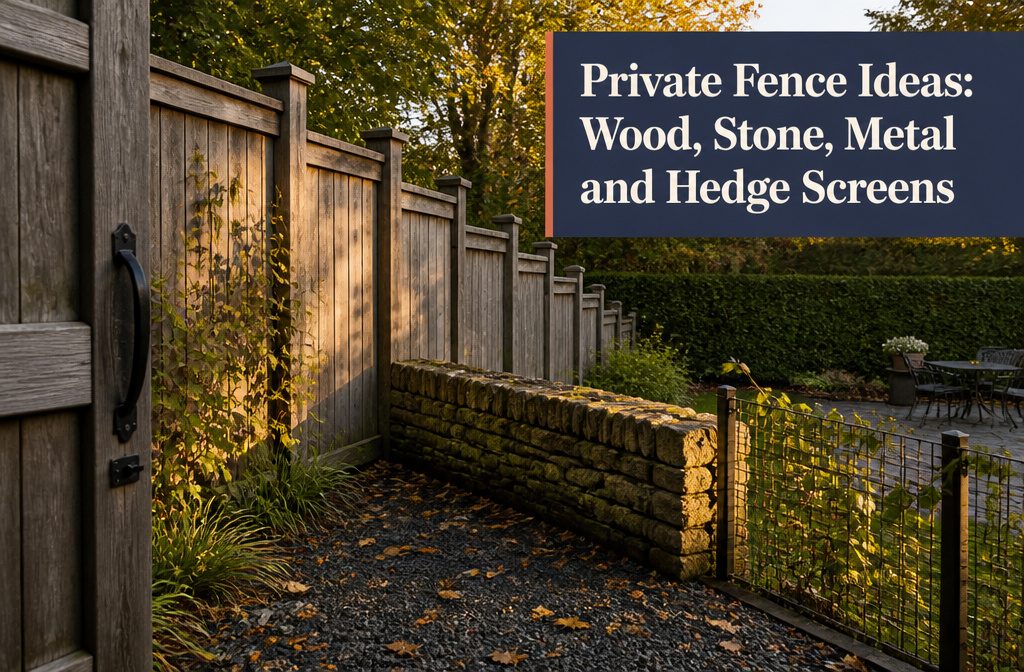
Pick by how much of the yard you need hidden, from solid boards with no gaps to open hog-wire mesh that screens nothing until vines leaf out.
Height can undo any choice: a 4-foot fence won’t hide a patio from a second-story window, so plan on 6 feet minimum and check local height rules first.
1. Stone Wall with Wood Panels
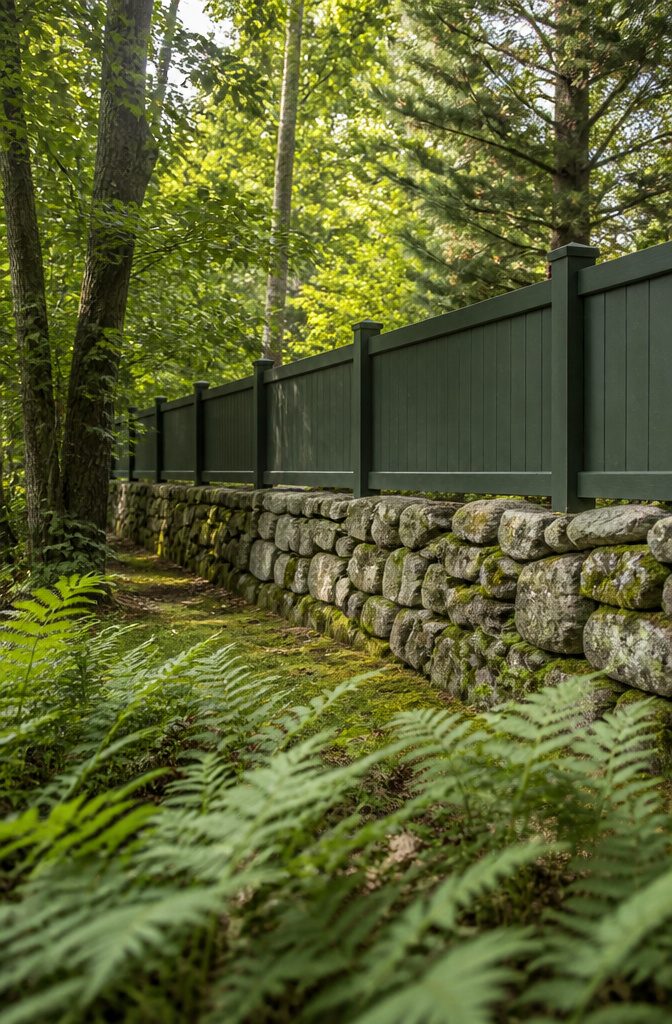
A traditional New England dry fit stone wall, laid without mortar, gives this design its weight.
The stone holds the boundary at ground level, and custom dark-green wooden privacy panels set above it supply the height the wall lacks on its own.
Dark green is the color I’d choose. From a distance it reads as foliage, so the panels blend into the garden, where brown stain or white paint would stand out against trees and shrubs.
This pairing suits older homes and wooded or heavily planted yards best.
On a new-build lot with bare lawn, the stone can look staged. Because the panels are custom, expect a carpenter’s quote rather than a catalog price.
Recommended Products

Neighbor Privacy, Not Blackout: Blocks direct line-of-sight while allowing airflow — designed for comfortable backyard privacy, not a solid wall or tarp.

1 SCREEN PURCHASE: You will receive preassembled materials to construct 1 cedar wood outdoor privacy screen in a charcoal finish with your purchase
2. Solid Panels with a Lattice Gate
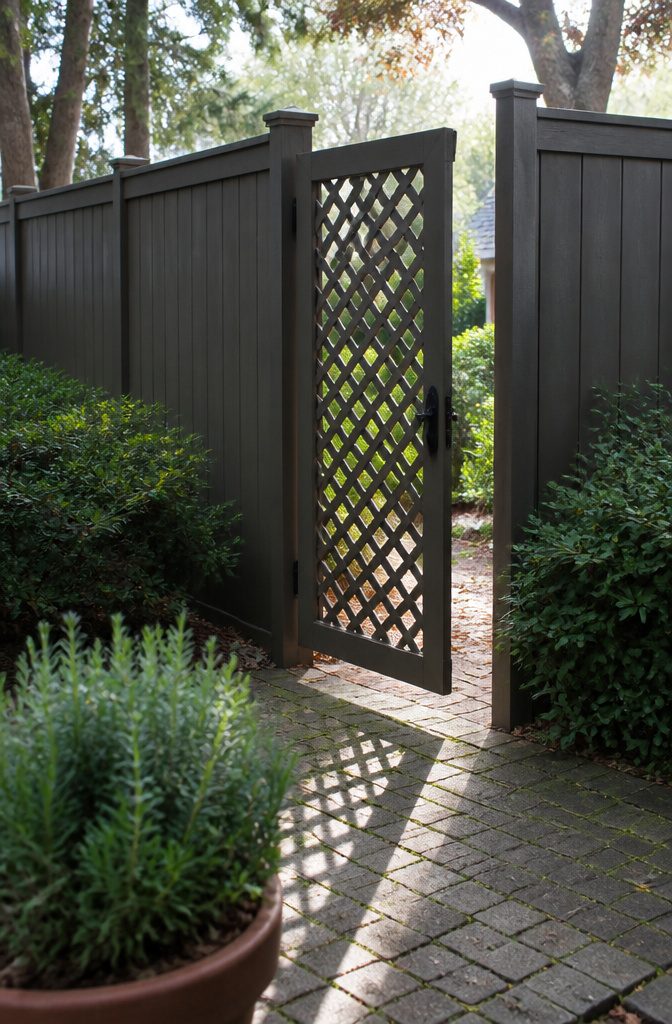
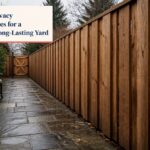
Solid panels along the sides with a lattice gate at the entry give you full screening where neighbors and passersby look in, plus a view of who is at the door.
The panels are sturdy enough to deter unwelcome visitors, human or animal, and the gate lets light through at the one spot where you want it.
I’d pick this over a fully solid run if you want privacy but dislike the boxed-in feel of a continuous wall.
A lattice gate breaks up a solid fence line, and its criss-cross pattern adds visual interest that plain boards lack.
Keep the lattice on the gate only, since carrying it along the sides gives up the screening you built the fence for.
Recommended Products
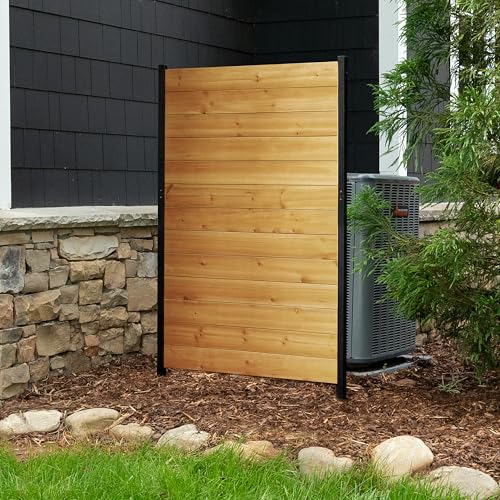
STYLISH NATURAL WOOD: This FSC certified wood screen is made with real wood meaning no two boards have the same grain color, finish, or wood knots differing it from vinyl outdoor privacy fence screen panels.

STYLISH NATURAL WOOD: This FSC certified wood screen is made with real wood meaning no two boards have the same grain color, finish, or wood knots differing it from vinyl outdoor privacy fence screen panels.

Large Coverage & Premium Material: Transform your space with 4 pieces of 47.2"x23.6" 3D wall panels, every set covers 31 sq.ft, crafted from soft porcelain Modified Clay Materials (MCM). These panels offer lightweight, high hardness, and wear-resistant properties, providing a durable and faux stone ceramic finish for both interior and exterior designs.
3. A Wood Fence That Blends In
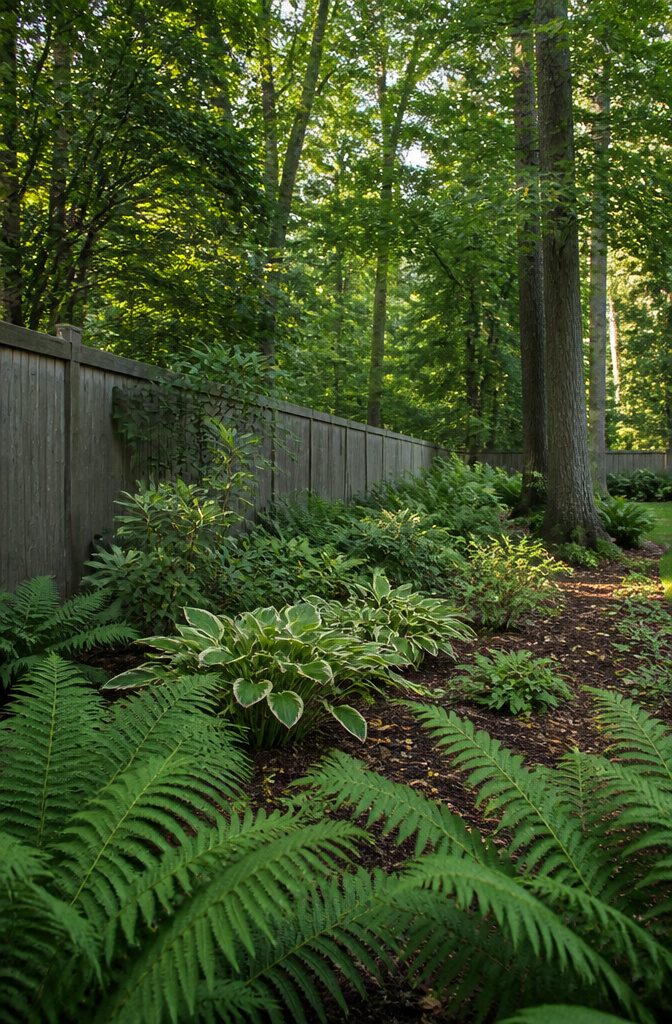
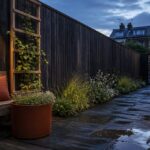
A muted finish makes a wood fence work as a backdrop instead of a boundary. Dark green suits a planted border: the boards read as shadow, and the lighter greens in front of them stand out.
Cool gray suits a yard that backs onto mature woods, because the fence fades into the tree line and the lawn flows into the trees.
Black, gray and brown are the neutral tones leading current choices, and each can be matched to your trim or roofing for a cohesive look.
Whenever the garden or the woods behind the fence is the main attraction, I’d skip the statement color. A bold fence competes with your plants, while a quiet one lets them carry the view.
Recommended Products

Upgrade today with the 2026 Latest Upgraded Version and enjoy fuller greenery, stronger installation, and instant privacy

Details: Artificial ivy wall is 120 inches long and 40 inches wide, with green faux ivy leaves. Made up of 12 small panels (connected).Can cover 33.33 square feet. the faux Ivy Vine are textured and look real. You can reassemble or cut to get the size you want. 50 cable ties are included to assist in installation.

Privacy fence: The fake leaves of this artificial ivy privacy fence screen look very realistic, and can be used to decorate rooms, gardens, fences and as a balcony privacy screen to meet your coverage needs and create a fresh, comfortable and private green background space for you.
4. Tight Natural Wood Slats
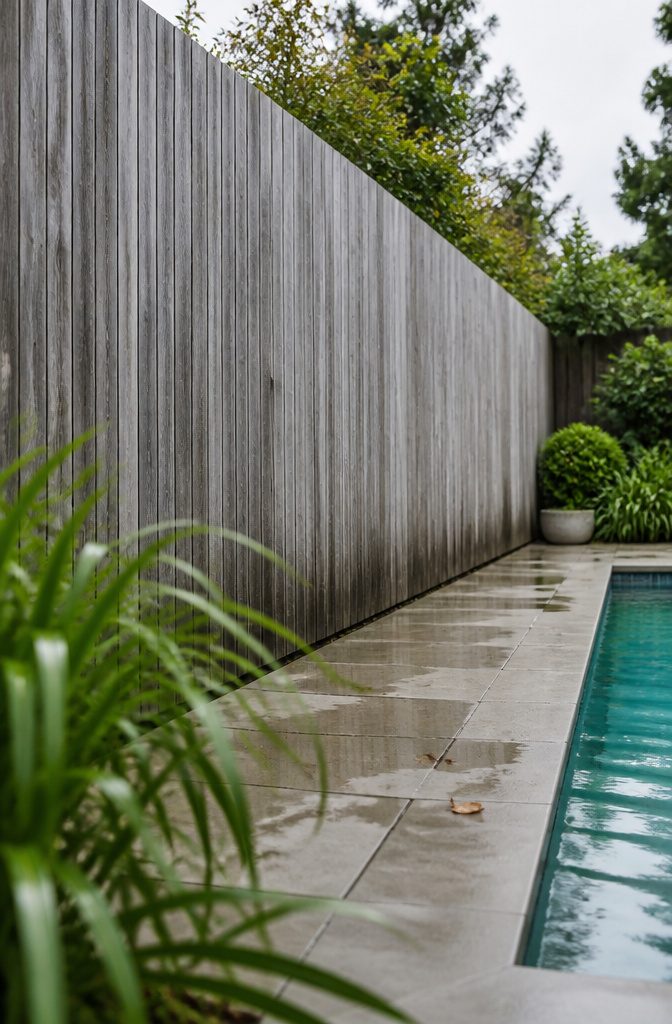
Slats set tight against each other leave almost no gap to see through, so this style gives near-full privacy around a pool. Grain and color vary from board to board, which adds more texture than a painted panel.
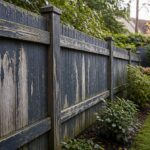
Left untreated, the wood weathers to a rustic gray. I think that aged look suits a pool better than a fresh, bright finish, and it improves as the boards settle in.
Going natural means you give up control of the color: the gray arrives unevenly, and you can’t hold the wood at its original shade without staining or sealing it.
Skipping the sealer saves yearly work, but boards near pool splash can stay damp, so plan to sweep and rinse off dirt and mildew now and then.
Recommended Products

STYLISH NATURAL WOOD: This FSC certified wood screen is made with real wood meaning no two boards have the same grain color, finish, or wood knots differing it from vinyl outdoor privacy fence screen panels.

Privacy Solution: Most economical way for privacy over chain link fence, porous decorative concealment, existing cyclone wire fence, wood retaining wall, welded wire fence, chain link fence, privacy barrier around swimming pool, block nose neighbor see through, add privacy to acre back yard backdrop, front yard, patio, garden and porch; hide street, road, construction site, pet kennel pen, block surrounding noise and street view, stops dogs from barking at neighbors.

Brown Fence Slat - Designed for a 4' high fence, slats are approximately 44.5" in length to accommodate the bottom locking channel and to prevent the slats from being above the top of the fence. (Available Colors: Beige, Black, Brown, Gray, Green, Redwood, Royal Blue, Sky Blue, White)
5. Synthetic Hedge Screening
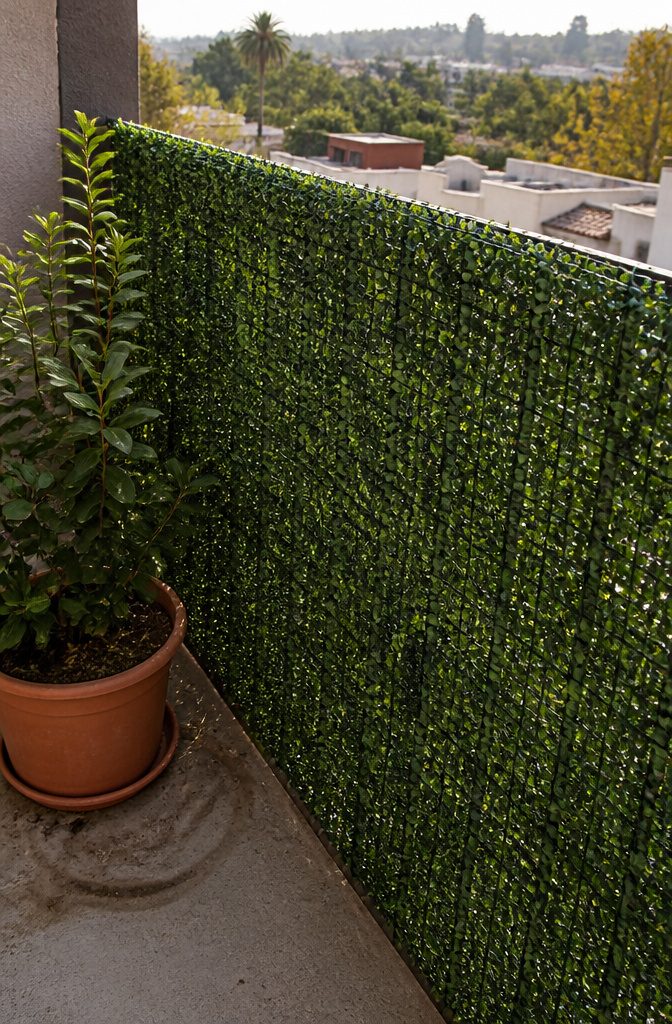
Synthetic hedge screening is green artificial foliage woven through metal mesh, built to pass for an evergreen hedge. It needs no watering and no pruning, and good synthetic material holds its color for years without fading.
For a beginner on a small budget, or anyone screening a balcony, that makes it one of the lowest-effort ways to get privacy.
The drawback is that it still reads as artificial up close.
From across a yard or from the street, the green looks like hedge. Within a few feet, the uniform leaves and the mesh behind them give it away.
I’d use it along a boundary you mostly see from a distance. If you’ll be sitting right next to it, plant a few real shrubs or pots in front to break up the flat, even look.
Recommended Products

Green Fence Slat - Designed for a 6' high fence, slats are approximately 68.5" in length to accommodate the bottom locking channel and to prevent the slats from being above the top of the fence. (Available Colors: Beige, Black, Brown, Gray, Green, Redwood, Royal Blue, Sky Blue, White)
Green Fence Slat - Designed for a 5' high fence, slats are approximately 56.5" in length to accommodate the bottom locking channel and to prevent the slats from being above the top of the fence. (Available Colors: Beige, Black, Brown, Gray, Green, Redwood, Royal Blue, Sky Blue, White)
Privacy Solution: Most economical way for privacy over chain link fence, porous decorative concealment, existing cyclone wire fence, wood retaining wall, welded wire fence, chain link fence, privacy barrier around swimming pool, block nose neighbor see through, add privacy to acre back yard backdrop, front yard, patio, garden and porch; hide street, road, construction site, pet kennel pen, block surrounding noise and street view, stops dogs from barking at neighbors.
6. Stone, Wrought Iron and Shrubs
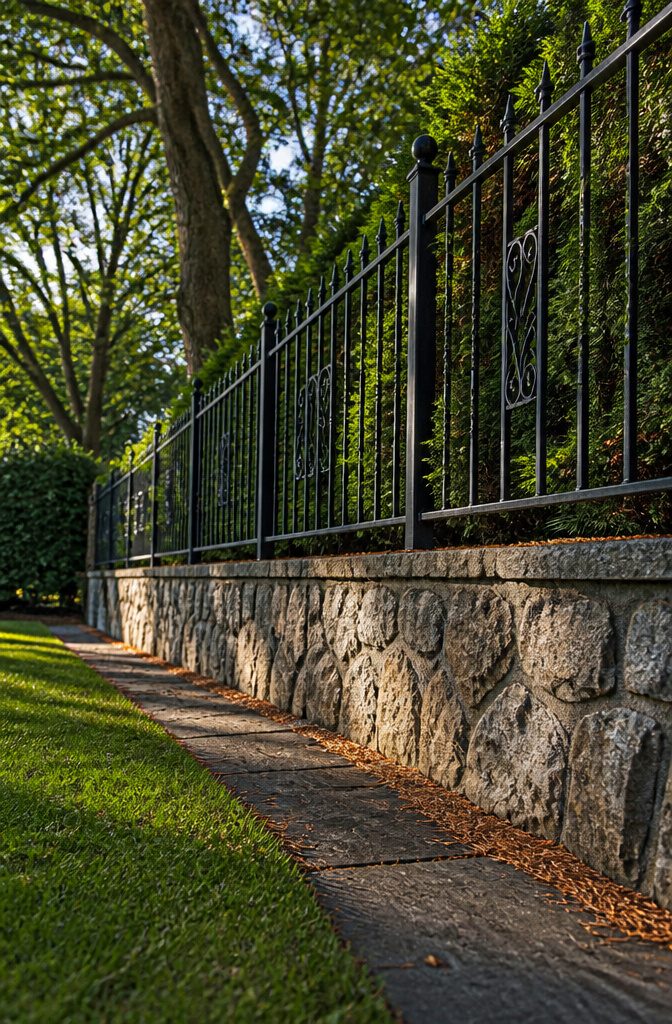
A stone wall topped with wrought iron panels works in three layers.
The stone is the solid base, the iron above it stays see-through, and evergreen shrubs planted behind the wall block sightlines a little more each year as they grow.
Because they’re evergreen, the screen holds in winter, and the shrubs soften all that hard stone and metal.
This suits a street-facing yard where you want some openness. Passersby still catch glimpses of the garden, and the height keeps deer out.
I’d pick this over a solid panel fence for the front, since a full wall can feel closed off from the street. Until the shrubs fill in, the iron lets people see straight through.
Recommended Products

EASY ORDERING: Everything you need for your fence project is in the box except for the final post. Only ONE additional post, BL19112, is required for the end of your project. A gate is available by searching BL19111.

Privacy Solution: Most economical way for privacy over chain link fence, porous decorative concealment, existing cyclone wire fence, wood retaining wall, welded wire fence, chain link fence, privacy barrier around swimming pool, block nose neighbor see through, add privacy to acre back yard backdrop, front yard, patio, garden and porch; hide street, road, construction site, pet kennel pen, block surrounding noise and street view, stops dogs from barking at neighbors.
Neighbor Privacy, Not Blackout: Blocks direct line-of-sight while allowing airflow — designed for comfortable backyard privacy, not a solid wall or tarp.
7. Picket Fence with Custom Spacing
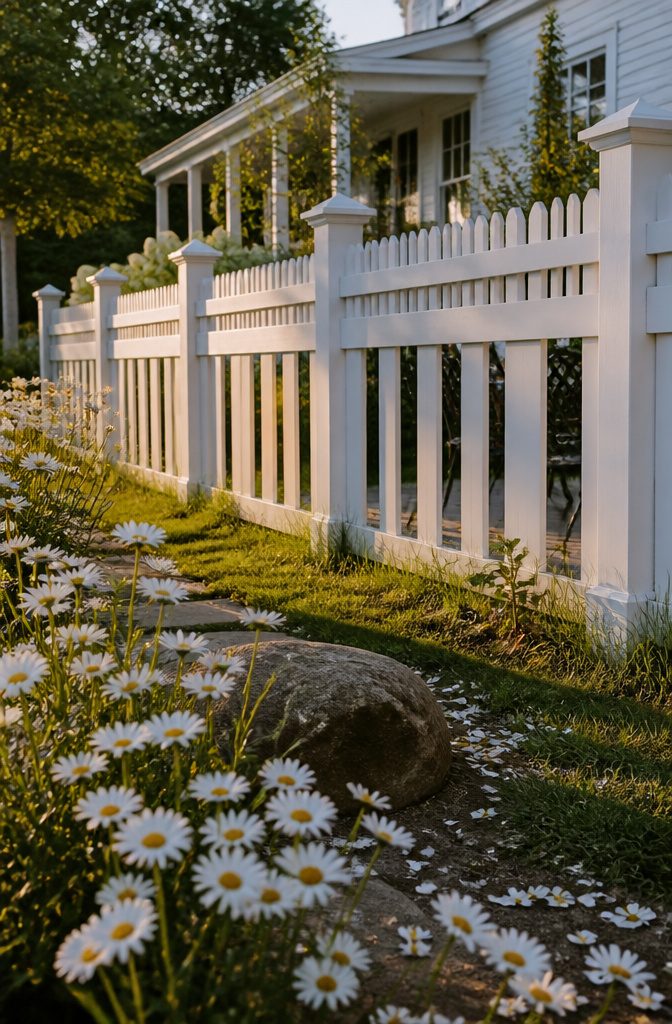
Widening the gap between pickets shifts a fence from a 1950s look toward an 1850s one. Narrow pickets along the top add a second rhythm to the line, and decorative post caps recall early New England farmhouse designs.
Spacing sets the privacy level. Tight gaps block more of the view, while wide gaps let in light and sight lines.
This is a semi-private fence, not full screening: it marks the property edge and softens the view, but anyone looking through the gaps can still see your patio chairs.
I’d use it along a front or side yard, where the look matters more than cover, and choose a solid design for a seating area.
Recommended Products

Immersive 3D Depth & Realistic Texture: Transform your space with dramatic cement-like texture and deep dimensional relief. Our panels create captivating focal walls in living rooms, bedrooms, offices, or entertainment areas—instantly elevating any interior with modern character

High-Quality Wall Panels: Our acoustic panel set is crafted with high-density polyester fiber, premium medium-density fiberboard, and a solid wood veneer. This combination provides an elegant look, superior sound damping, and excellent sound deadening, significantly improving room acoustics
STYLISH NATURAL WOOD: This FSC certified wood screen is made with real wood meaning no two boards have the same grain color, finish, or wood knots differing it from vinyl outdoor privacy fence screen panels.
8. Light Wood with Black Hardware
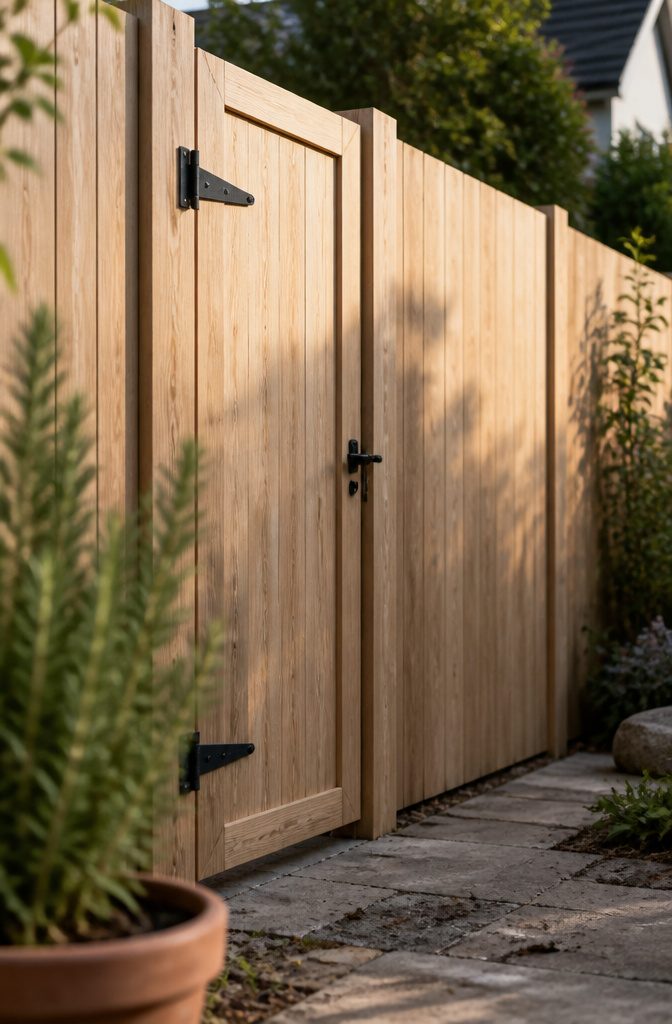
A plain light-wood fence can look unfinished until something dark breaks up the pale boards, and black hinges do that job.
Against the light wood, the hinges and latch read as deliberate details, so a basic fence looks designed rather than just built.
In a yard close to the neighbors, where privacy matters most, I’d spend on this before paying for fancier boards or decorative tops. Black hinges and hardware add contrast for a small share of the total fence cost.
Custom hinges give the strongest look, but standard black hardware on a gate or door still sets off the wood. Keep everything else simple and let the hardware be the one accent.
Recommended Products

Upgrade iCover Privacy Screen For Fence: Our privacy screen is made of heavy-duty knitted net, measuring 4 ft high by 50 ft long. It is suitable for fences with a height of 4 ft or slightly higher. Please accurately measure your fence before purchase

Details: Artificial ivy wall is 144 inches long and 72 inches wide, with green faux ivy leaves. Made up of 54 small panels (connected).Can cover 72 square feet. the faux Ivy Vine are textured and look real. You can reassemble or cut to get the size you want. 50 cable ties are included to assist in installation.

Privacy fence: The fake leaves of this artificial ivy privacy fence screen look very realistic, and can be used to decorate rooms, gardens, fences and as a balcony privacy screen to meet your coverage needs and create a fresh, comfortable and private green background space for you.
9. Solid Wood for Road Noise
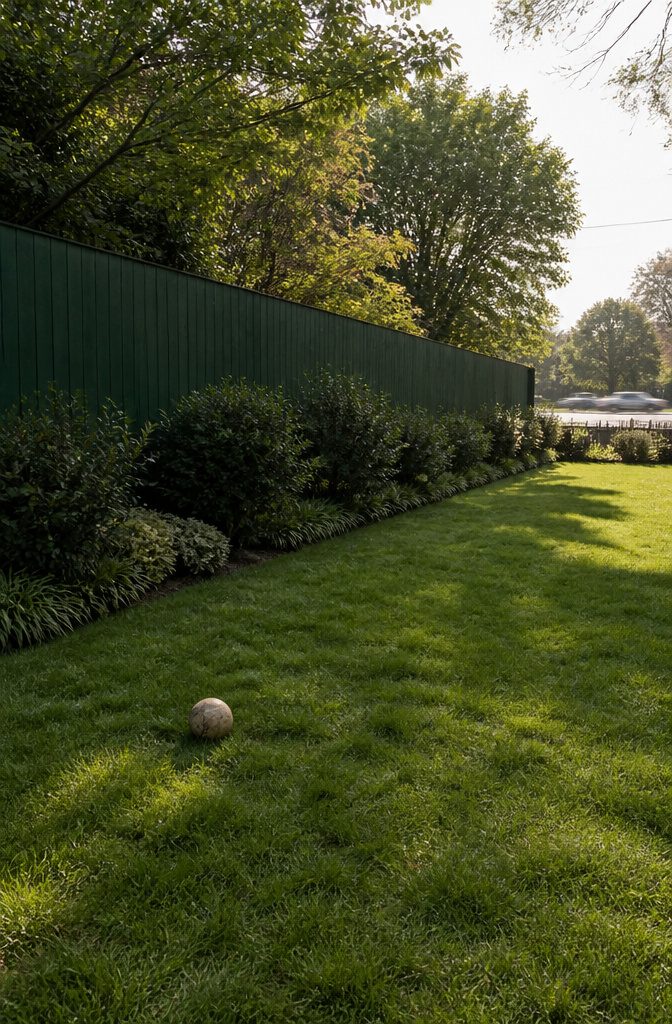
Along a busy road, a solid wood fence does two jobs at once.
The taller and more solid the fence, the more noise it blocks, so skip spaced boards on the road side. The same solid paneling keeps kids and pets inside the yard.
Shrubs planted along the fence line help suppress sound too, and a tall wood fence backed by plenty of them does a lot against traffic.
If the road is loud, I’d ask a builder about tongue-and-groove boards with acoustic material sandwiched between them, which dampens sound well beyond plain boards.
Wood is also relatively inexpensive to install and maintain, and it takes any paint color, including a dark green.
Recommended Products

Versatility: This wooden privacy screen provides a discreet enclosure, creating a sense of mystery and concealment. It is perfect for elevating the overall aesthetic of your outdoor space. Quickly creates a secluded retreat while adding a touch of elegance that complements any décor, indoors or out.

DURABLE CONSTRUCTION: Built with sturdy materials designed to withstand outdoor elements, providing long-lasting boundary and security.

Beige Fence Slat - Designed for a 6' high fence, slats are approximately 68.5" in length to accommodate the bottom locking channel and to prevent the slats from being above the top of the fence. (Available Colors: Beige, Black, Brown, Gray, Green, Redwood, Royal Blue, Sky Blue, White)
10. Corrugated Metal Framed in Cedar
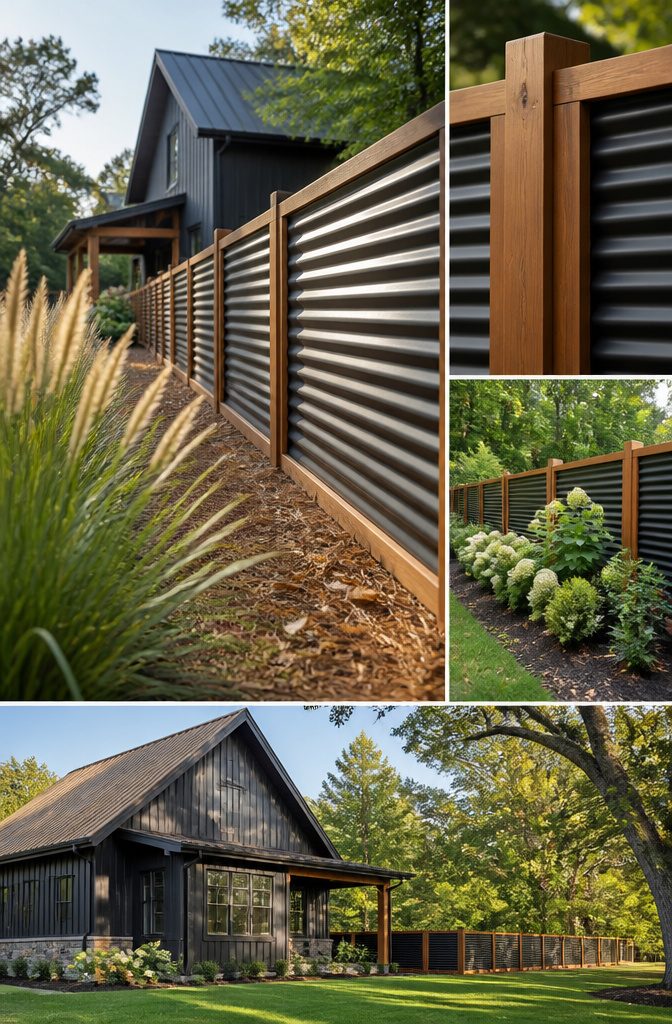
Corrugated steel panels set inside a cedar frame give you a fence that looks modern and rustic at once. The ribbed metal keeps the lines sharp, and the cedar warms them up.
Choose panels with a factory-applied finish, because a good coating resists fading, rust and UV damage. Avoid untreated wood paired with unprotected metal.
Wood holds moisture, and damp cedar against bare steel invites rust streaks that stain the frame. Seal or stain the cedar, and coat any exposed steel edge.
I’d pick this style for a contemporary house, a farmhouse or a cabin-style home, where the metal and wood each echo something on the building. It also fits almost any landscape, so a plain yard works too.
Recommended Products

SIZE: 246 feet x 0.15 feet privacy fence slat.

Quality: These green fence tapes are made of weather resistant PVC material and are designed for long-term use.
Green Fence Slat - Designed for a 4' high fence, slats are approximately 44.5" in length to accommodate the bottom locking channel and to prevent the slats from being above the top of the fence. (Available Colors: Beige, Black, Brown, Gray, Green, Redwood, Royal Blue, Sky Blue, White)
11. Hog-Wire Panels in Wood Frames
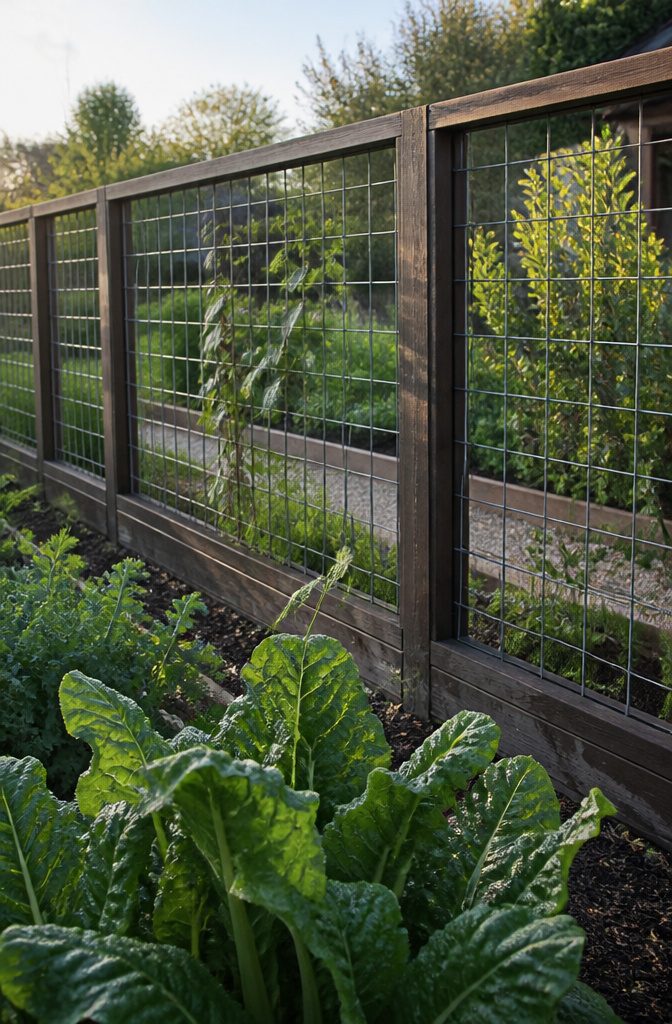
Hog wire or woven mesh panels set inside a stained wood frame give partial privacy and good airflow.
The open grid keeps pets contained, and it gives climbing vines something to grip, so a plain panel can fill in with leaves over a season or two.
It will not screen a neighbor’s view the way solid boards do.
People can see through the mesh, and vines only help once they leaf out. If a blocked sightline is the goal, I’d choose solid boards and save hog wire for a front yard, a garden edge or a modern accent.
Stain and seal the wood frame, since the wood is the part that weathers. The steel mesh holds up on its own.
12. Benches, Planters and Lights
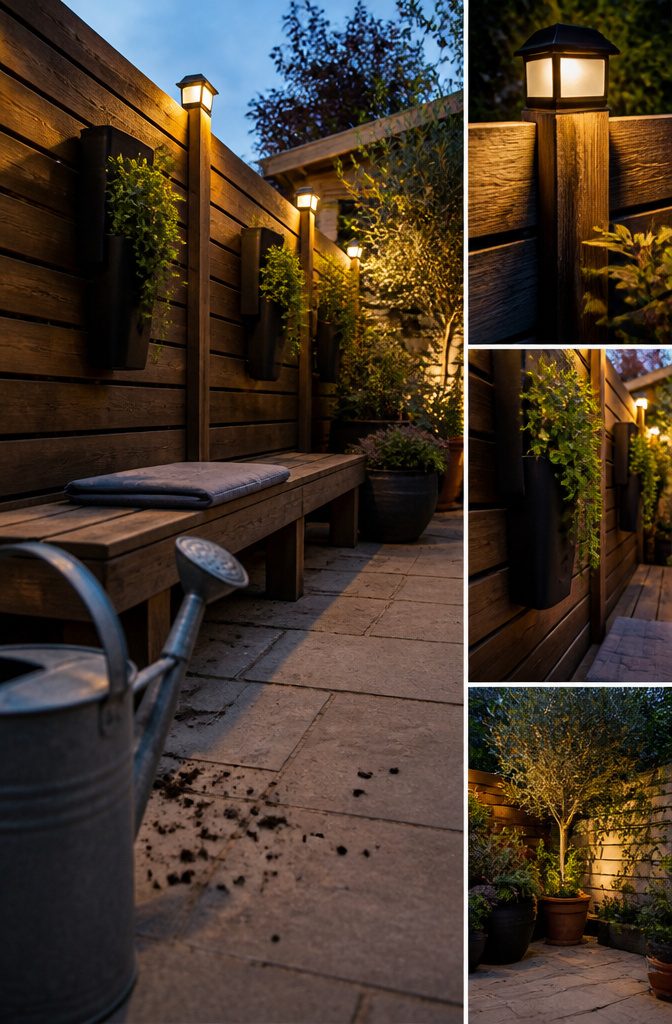
Any fence above can do more than block sightlines. These four add-ons give it a second job:
- Lights: solar or low-voltage fixtures mounted along the posts light the yard at night and help with security. Solar is the easier start for a small budget because it needs no wiring.
- Benches: a bench built along the fence line makes a spot for sitting or entertaining, and the fence panels act as the backrest.
- Planters: frame a garden bed against the fence, or hang vertical planters on the panels. On a small patio, vertical wins because it uses no floor space.
- Gate: a streamlined gate with hidden hardware keeps the fence line clean and still gives easy access.
How Much Privacy You Need
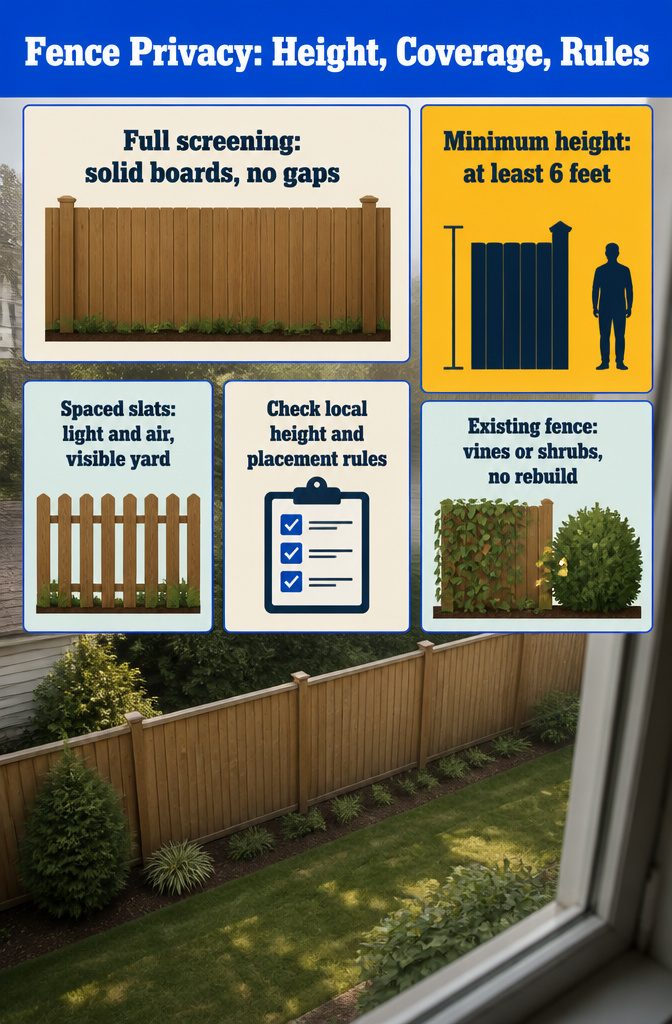
Full screening means solid boards with no gaps. Designs that keep visibility, like spaced slats, let light and air through but show your yard to anyone who looks.
A 4-foot fence will not cover a view from a two-story neighbor, so plan on at least 6 feet. Check local rules on height, placement and design before you buy, especially for front yards and corner lots.
To add privacy to an existing wood fence, solid tongue-and-groove boards give the tightest coverage, since each board’s tongue locks into the next one’s groove.
Climbing vines like ivy or honeysuckle fill in as they grow, and honeysuckle adds light yellow flowers and fragrance.
Evergreen shrubs can be shaped to fill gaps. I’d start with vines or shrubs, since they need no rebuild.
Wood, Vinyl or Composite
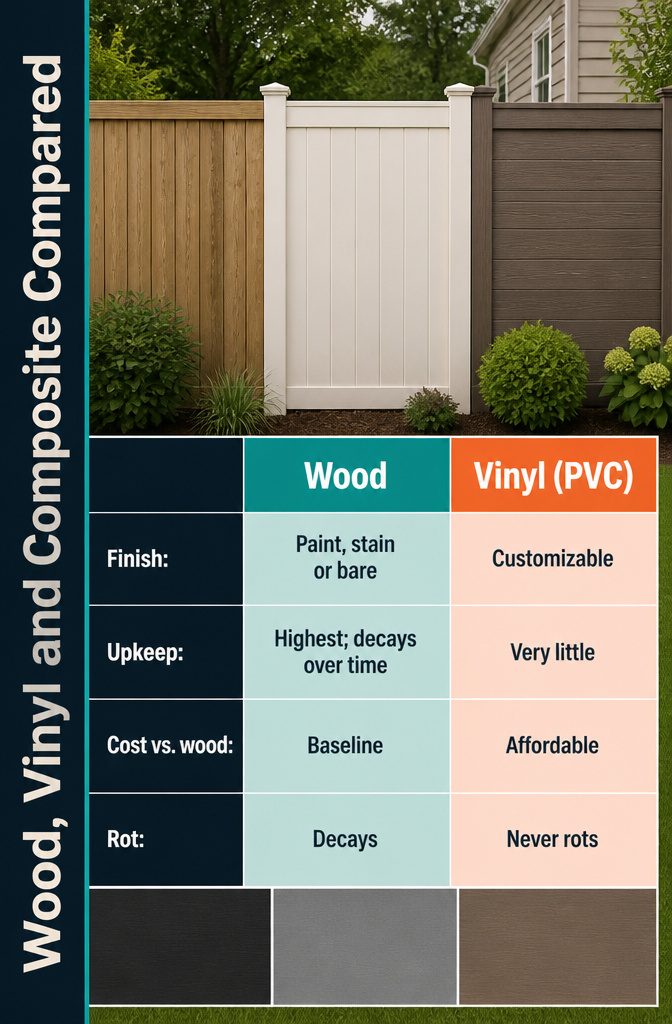
Wood is the usual choice because you can paint it, stain it or leave it bare, but it eventually decays and needs replacing.
Pick vinyl if you want the least upkeep. Composite never rots, yet it costs more than wood.
| Material | Look | Upkeep | Cost vs. wood |
|---|---|---|---|
| Wood | Natural; paint, stain or leave bare | Highest; decays over time | Baseline |
| Vinyl (PVC) | Customizable | Very little | Affordable |
| Composite | Custom-made | Never rots; repaint every few years | Higher |
For finish, black, gray and brown are the neutral choices, and they sit comfortably next to most house colors.
Frequently Asked Questions
What is the best material for a privacy fence?
Wood is the usual choice because you can paint it, stain it or leave it bare, but it decays over time and needs replacing. Vinyl takes the least upkeep, and composite never rots but costs more than wood.
Wood and vinyl are the most popular overall, so choose based on how much privacy you need, how much maintenance you will accept, your budget and your house’s style.
Can a privacy fence block noise?
Yes. The taller and more solid the fence, the more noise it blocks, so use solid boards instead of spaced ones on the road side.
Shrubs along the fence line help absorb sound too. For loud traffic, ask a builder about tongue-and-groove boards with acoustic material between them, which dampen sound well beyond plain boards.
How can you make a wooden fence more private?
Add solid tongue-and-groove boards, climbing vines or evergreen shrubs.
Tongue-and-groove gives the tightest coverage because each board locks into the next. Vines like ivy or honeysuckle and shaped evergreens fill gaps as they grow with no rebuild, so start with those.
What are some easy privacy fence ideas?
Synthetic hedge screening is one of the lowest-effort options.
It is artificial foliage woven through metal mesh, it needs no watering or pruning, and it also works on a balcony. On an existing fence, climbing vines such as ivy or honeysuckle add cover with no construction.
Synthetic hedge looks artificial within a few feet, so set a few real shrubs or pots in front of it if you will sit nearby.