
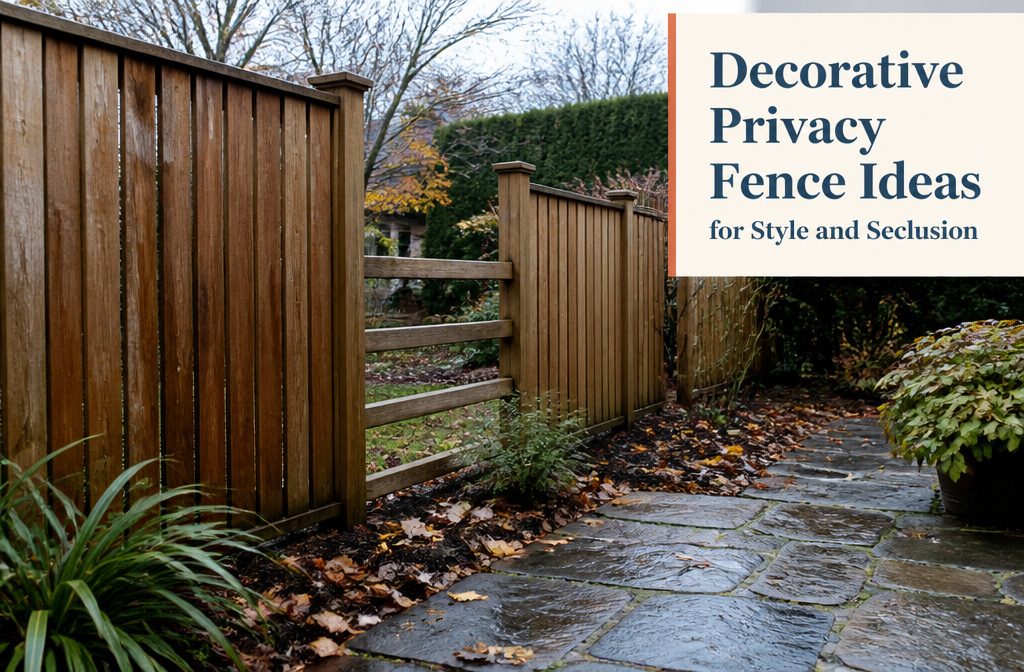
These styles run from flush horizontal boards to open 3-rail split rail, and the one that fits depends on how much light and air you will trade for privacy.
Every gap that lets a breeze through also lets a neighbor look in. Split rail and clear glass give little seclusion; flush boards keep a patio private.
1. Horizontal Slatted Wood
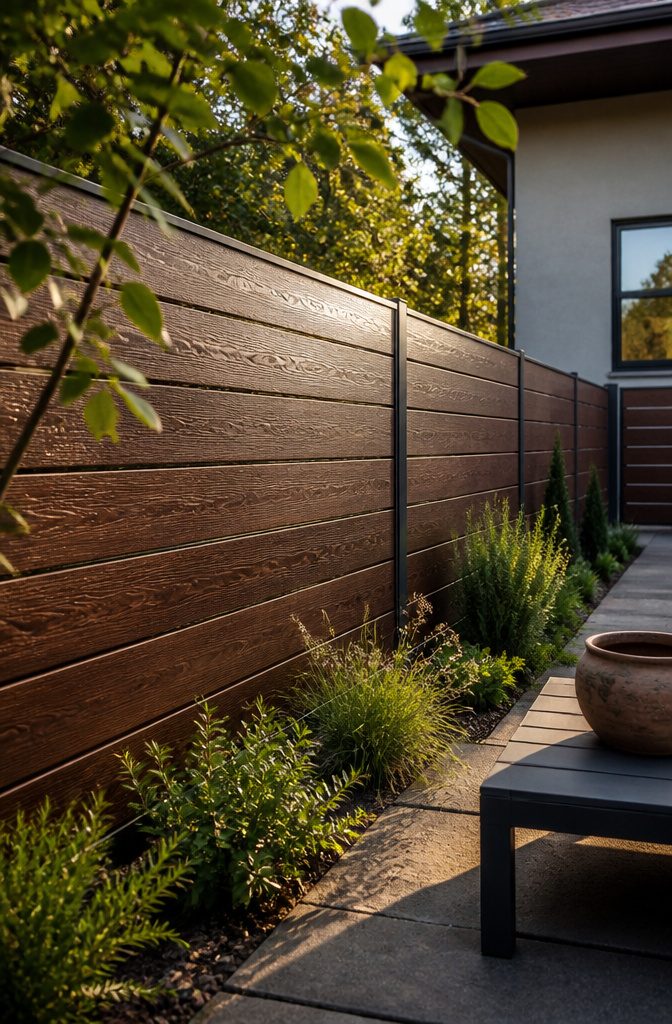
Running boards sideways instead of upright gives a plain wood fence a modern look.
The planks can sit flush, with no daylight between them, or with gaps. Gaps let in more light and air but cut privacy, so board spacing decides how private the yard feels.
For a patio or any spot a neighbor’s window can see into, I’d go flush. Along a side yard or garden border, where airflow matters more than seclusion, open spacing earns its place.
Horizontal boards take stain in a range of colors, so you can match the house. Metal posts or metal accents add a more contemporary edge.
Recommended Products
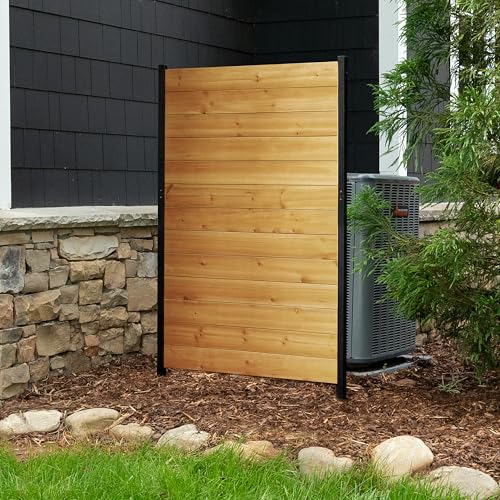
STYLISH NATURAL WOOD: This FSC certified wood screen is made with real wood meaning no two boards have the same grain color, finish, or wood knots differing it from vinyl outdoor privacy fence screen panels.

Neighbor Privacy, Not Blackout: Blocks direct line-of-sight while allowing airflow — designed for comfortable backyard privacy, not a solid wall or tarp.
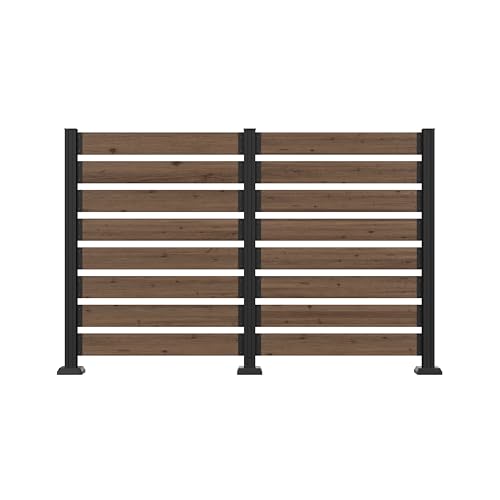
PREMIUM NATURAL WOOD – Crafted from real wood, the outdoor privacy screen showcases its own unique grain, color, and knots, unlike vinyl outdoor privacy fence screen panels that lack the authentic beauty and texture of a natural wood screen.
2. Lattice
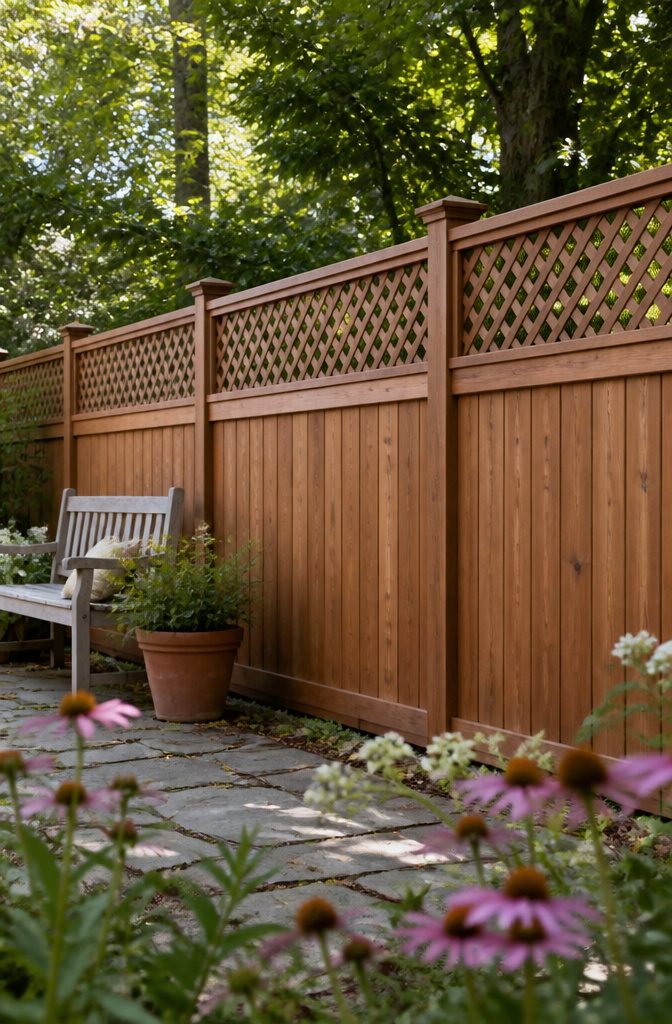
A lattice topper on a solid wood fence keeps privacy at eye level and breaks up the flat top line with a crosshatch pattern. It also lets some daylight through above the boards.
As the entire fence, lattice looks lighter and more rustic. The open weave passes more light but gives up some seclusion, so it suits a spot where you want a screen rather than a wall.
Strong wood lattice panels attach to sturdy wooden posts, with a top and bottom rail around each panel.
Those rails add stability and a finished look, and I wouldn’t skip them. Stain lattice the same way you would any wood fence, and use decorative posts and post caps to customize it.
Recommended Products

STYLISH NATURAL WOOD: This FSC certified wood screen is made with real wood meaning no two boards have the same grain color, finish, or wood knots differing it from vinyl outdoor privacy fence screen panels.

Details: Artificial ivy wall is 120 inches long and 40 inches wide, with green faux ivy leaves. Made up of 12 small panels (connected).Can cover 33.33 square feet. the faux Ivy Vine are textured and look real. You can reassemble or cut to get the size you want. 50 cable ties are included to assist in installation.

Details: Artificial ivy wall is 144 inches long and 72 inches wide, with green faux ivy leaves. Made up of 54 small panels (connected).Can cover 72 square feet. the faux Ivy Vine are textured and look real. You can reassemble or cut to get the size you want. 50 cable ties are included to assist in installation.
3. Picket Designs
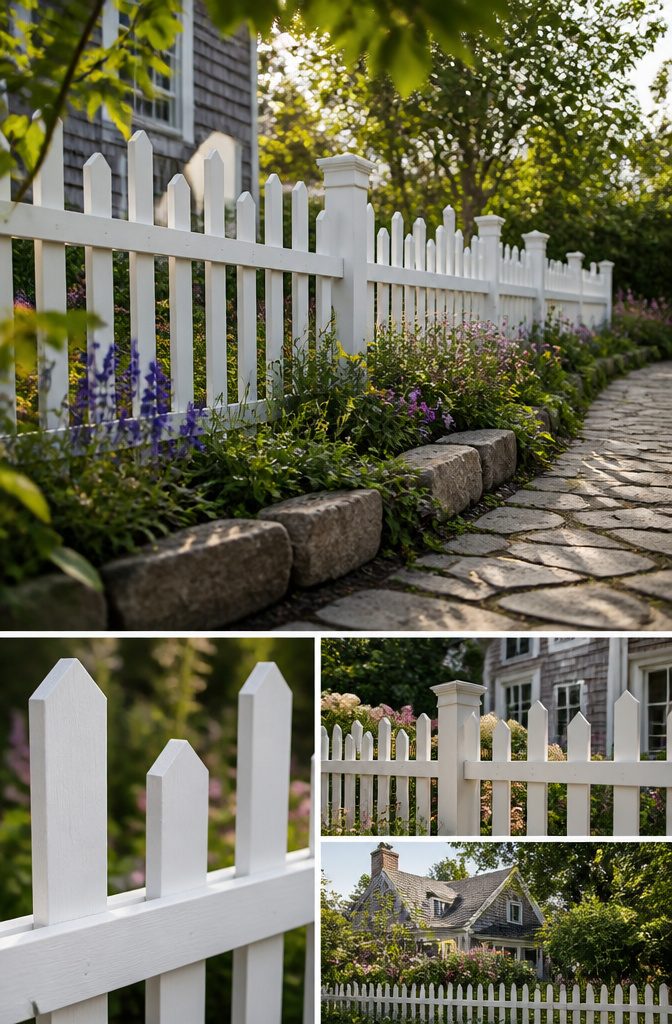
Changing the top of the picket changes the whole fence. Irregular oak pickets give a rustic, charming look, while alternating long and short spears read as modern.
A curved wave, with pickets that rise and fall symmetrically, is a popular choice. French Gothic tops form convex or concave lines along the fence and add a lot of visual interest.
The white picket fence remains the safe pick for cottages and traditional homes. Swap the post caps and picket shapes to match your house, and the same white fence can lean rustic or modern.
Pickets leave gaps between them, so I treat this style as decoration first. For real seclusion, set the boards close together or add plantings behind them.
Recommended Products

Package including: 12 pieces sharp vinyl picket caps for vinyl fencing

Premium quality vinyl cap manufactured for a true 5" x 5" vinyl fence post

Please measure the size of your posts first. This post cap ONLY fits 4" x 4" vinyl posts ( ACTUAL SIZE). Most treated posts are smaller than their advertised measurements. For example, pressure-treated 4" x4" posts typically measure 3.5" x 3.5".
4. Split Rail Fencing
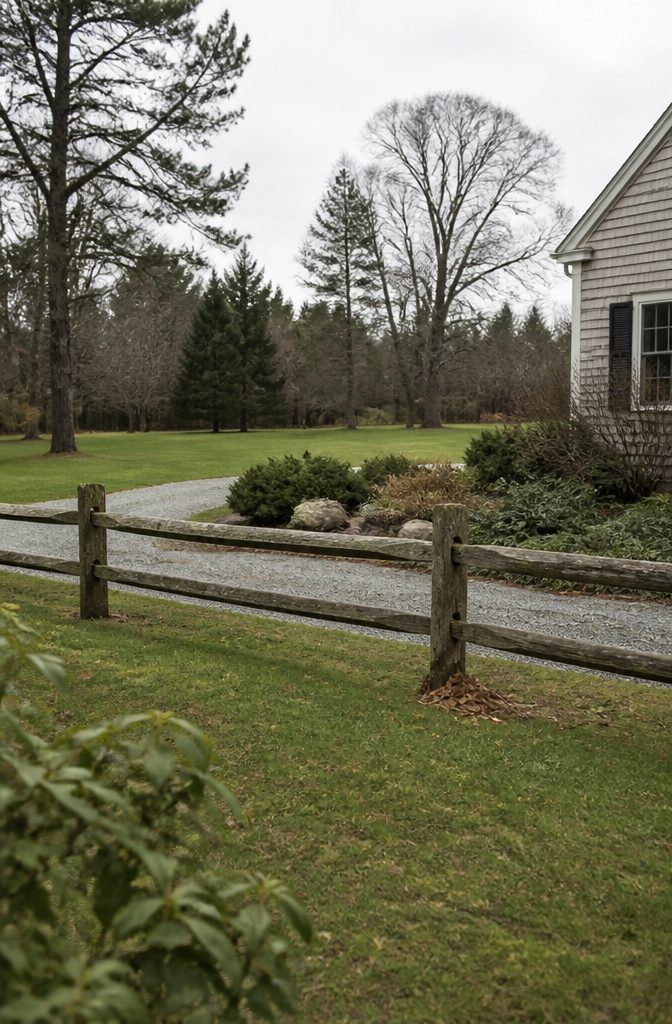
Split rail fencing is three horizontal rails with wide gaps between them, and the look is ranch all the way. Wood is the usual material, and vinyl is the alternative.
Post-and-rail, also sold as estate fencing, is the updated version of the same idea. Both were first used on ranches and other sprawling properties, but they now turn up on smaller lots too.
On its own, a split rail fence gives almost no seclusion. Those gaps leave your yard in full view of neighbors and passersby.
I’d treat it as a boundary marker with rustic charm and skip it if privacy is the reason you’re shopping. It suits a front or side edge where you want definition, not screening.
Recommended Products
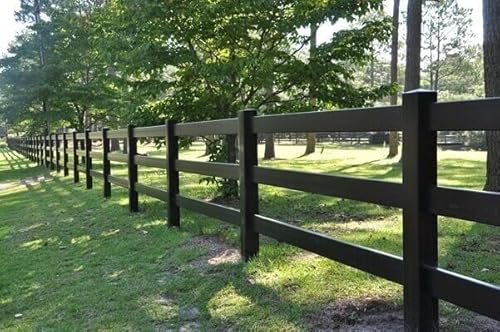
Premium Vinyl Ranch Rails; 1.5"x5.5"x94"

Premium Vinyl Ranch Rails; 1.5"x5.5"x94"
5. Ornamental Iron or Aluminum
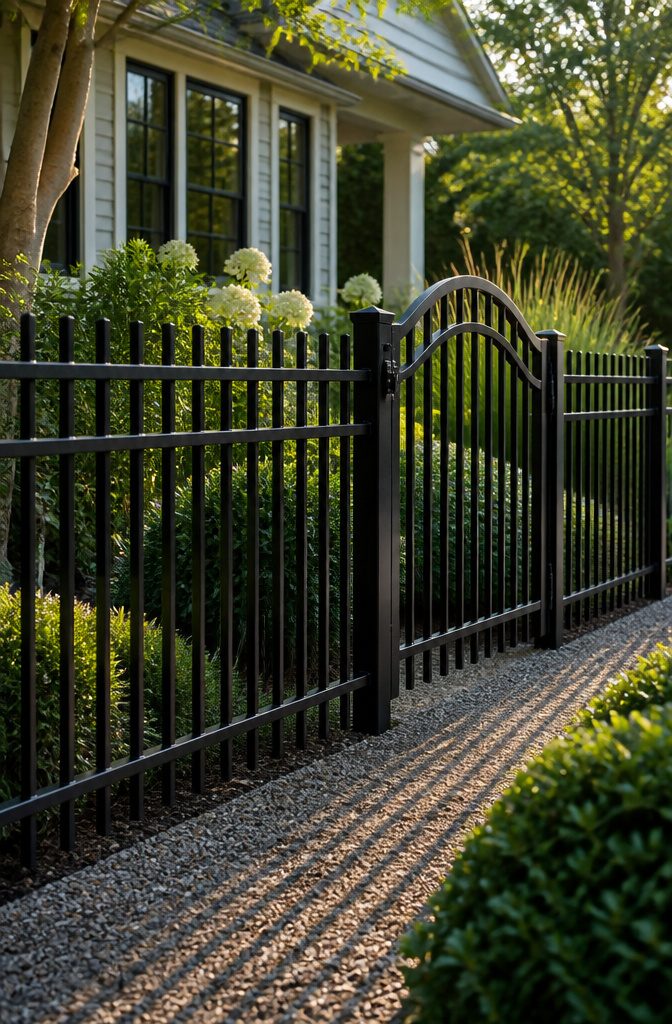
Ornamental iron comes in traditional and modern versions, and the difference is in the details on top.
Traditional fences carry quad, fleur-de-lis or butterfly scroll finials, while modern ones usually skip finials and post caps for clean lines. Aluminum looks much the same and costs less, so on a tight budget I’d choose it over iron.
Privacy is the weak point.
The gaps between rails let people see in, and unsupervised pets can slip through them. For more cover, laser-cut metal panels give a modern or rustic look and pair well with wood.
Upkeep is minimal: fresh paint every couple of years is about all it needs.
Recommended Products

【Easeful Elegance】 Transform your backyard into a curated sanctuary with our innovative metal fence post. Designed for those who appreciate both form and function, these privacy fence post allow you to effortlessly assemble horizontal wooden boards into a sleek, modern fence that complements gardens, patios, and lush landscapes. No more uneven nails or messy installations—just clean lines and timeless style.

Brown Fence Slat - Designed for a 4' high fence, slats are approximately 44.5" in length to accommodate the bottom locking channel and to prevent the slats from being above the top of the fence. (Available Colors: Beige, Black, Brown, Gray, Green, Redwood, Royal Blue, Sky Blue, White)

White Fence Slat - Designed for a 5' high fence, slats are approximately 56.5" in length to accommodate the bottom locking channel and to prevent the slats from being above the top of the fence. (Available Colors: Beige, Black, Brown, Gray, Green, Redwood, Royal Blue, Sky Blue, White)
6. Glass Fencing
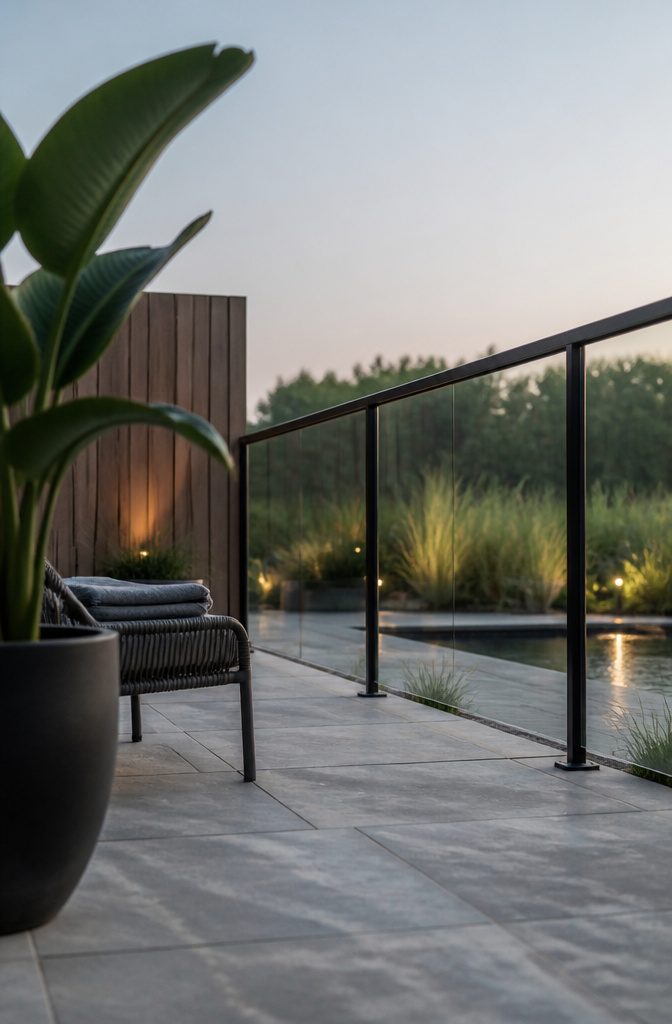
Tempered glass panels set between posts, with an optional handrail on top, give a yard the look of a balcony or terrace.
They suit contemporary and minimalist backyards best, and I’d call them a mismatch beside a cottage-style garden. Clear glass gives you a view but no seclusion, so neighbors see in as easily as you see out.
If privacy matters more than the look, skip an all-glass run and add a few glass panels to an existing fence instead.
Keep the solid sections beside your seating, and use the glass where you want light or a view. For most small yards I’d choose that mixed version, since a full glass fence leaves a patio exposed.
Recommended Products

DIMENSIONS: Each screen measures 47in H x 48.125 W

Versatility: This wooden privacy screen provides a discreet enclosure, creating a sense of mystery and concealment. It is perfect for hiding unsightly elements like trash cans, HVAC units, and pool equipment, elevating the overall aesthetic of your outdoor space

STYLISH NATURAL WOOD: This FSC certified wood screen is made with real wood meaning no two boards have the same grain color, finish, or wood knots differing it from vinyl outdoor privacy fence screen panels.
7. Mixed Materials
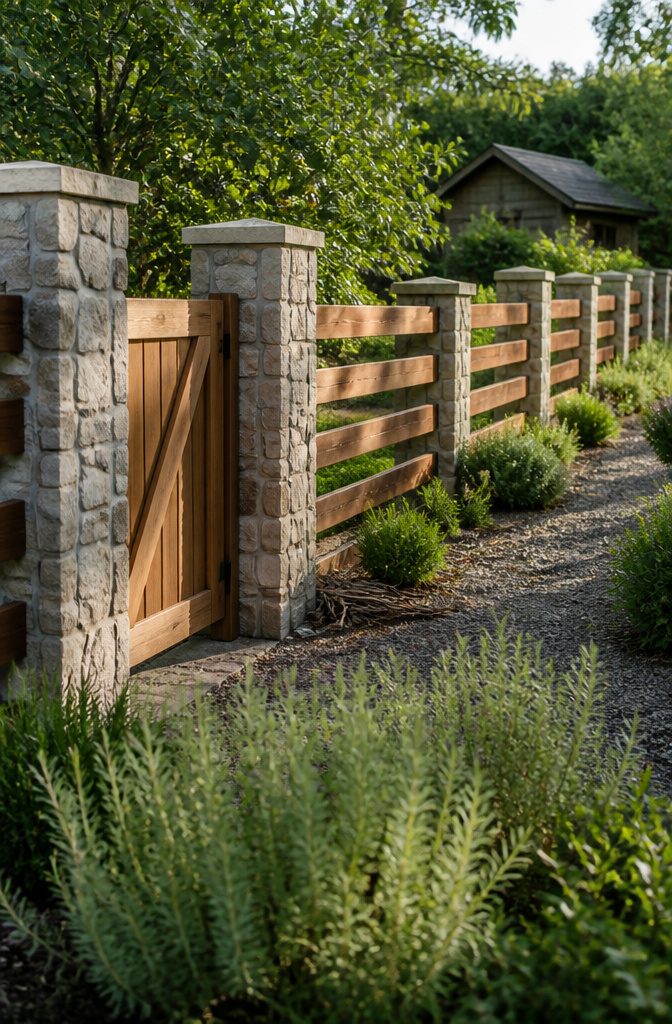
Stone posts with wooden rails is the pairing I’d try first. The stone anchors every corner and gate, while the wood keeps the run from reading as a wall.
Metal posts with wooden pickets give a slimmer, more modern look. Stone posts with iron panels look the most formal of the three, and they suit a front yard better than a casual backyard.
Each combination sets one sturdy material against one warmer or lighter material, and two materials is the limit for most yards.
Add a third, say a stone base, wood panels and a metal gate, and the eye has nowhere to rest. The fence starts to look chaotic instead of custom.
Recommended Products

Details: Artificial ivy wall is 120 inches long and 60 inches wide, with green faux ivy leaves. Made up of 18 small panels (connected).Can cover 50 square feet. the faux Ivy Vine are textured and look real. You can reassemble or cut to get the size you want. 50 cable ties are included to assist in installation.
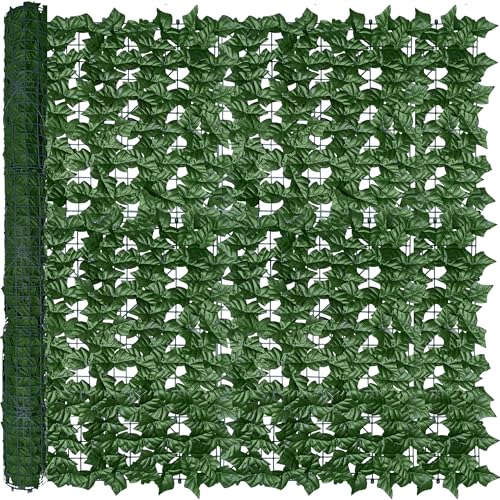
Details: Artificial ivy wall is 120 inches long and 48 inches wide, with green faux ivy leaves. Made up of 30 small panels (connected).Can cover 40 square feet. the faux Ivy Vine are textured and look real. You can reassemble or cut to get the size you want. 50 cable ties are included to assist in installation.

Privacy fence: The fake leaves of this artificial ivy privacy fence screen look very realistic, and can be used to decorate rooms, gardens, fences and as a balcony privacy screen to meet your coverage needs and create a fresh, comfortable and private green background space for you.
8. French-Window-Style Panels
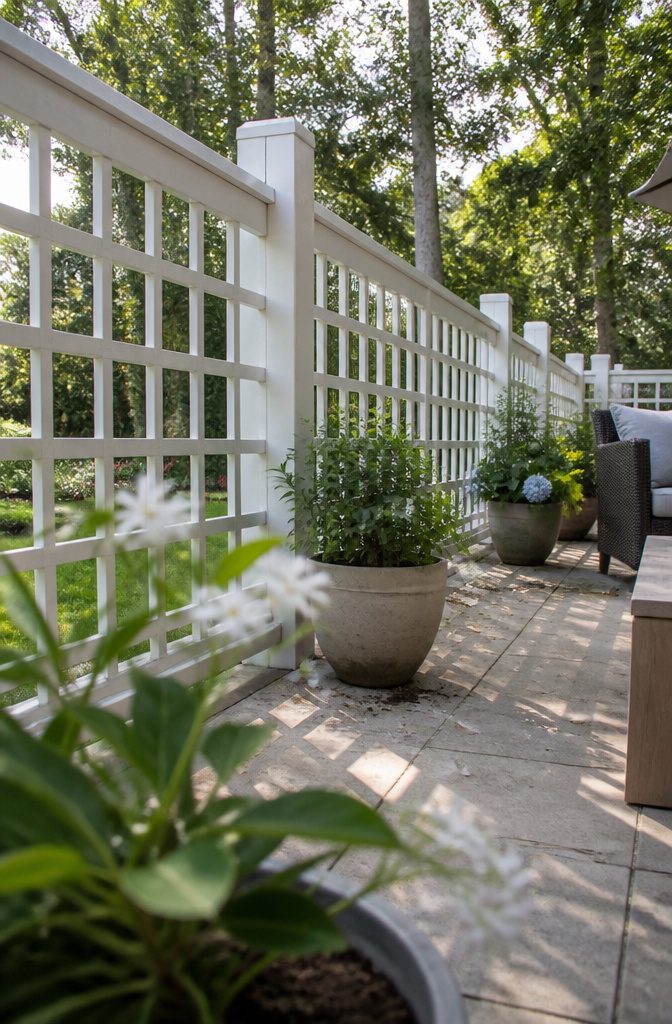
French-window panels use wide, open squares, so light and air pass straight through.
The look is upscale and unusual, and it works in front yards as well as backyards. It gives partial privacy at best, because a neighbor can see through the open squares unless you fill them.
Fill only the spots that need cover.
Grow plants within the panels beside a patio, or set potted shrubs and flowers along the fence in front of your seating. Pots have one advantage: they move if you rearrange the yard.
For a boundary that needs full screening along its whole length, I’d choose a solid style instead and use this one where openness is the point.
Recommended Products
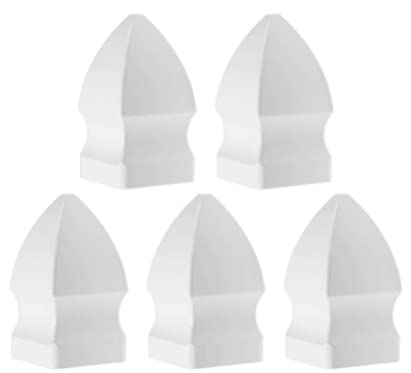
GOTHIC-STYLE SMALL PICKET FENCE CAPS: Weatherables’ vinyl fence caps offer a distinct and elegant look with a classic Spade style designed to fit your standard vinyl picket fence posts at 1.5in x 1.5in.

MEASURE POST Before ordering These post tops are designed to fit standard 4x4 fence posts, these post caps fit 3.5"x 3.5 inch up to 3.75" x 3.75-inch posts and are perfect for any outdoor fence or deck project. They slide down the post 1.5 inches; their widest outside dimension is 5.5 inches. They will install on wood, composite, metal, and vinyl posts. Also available in Actual 4"x4" size

High quality: Made of low-maintenance vinyl for 5" x 5" vinyl posts (only), durable construction, weather-proof, corrosion-resistant, resistant to bending or breaking, used for a long time.
9. Shaped Panels Around Trees and Slopes
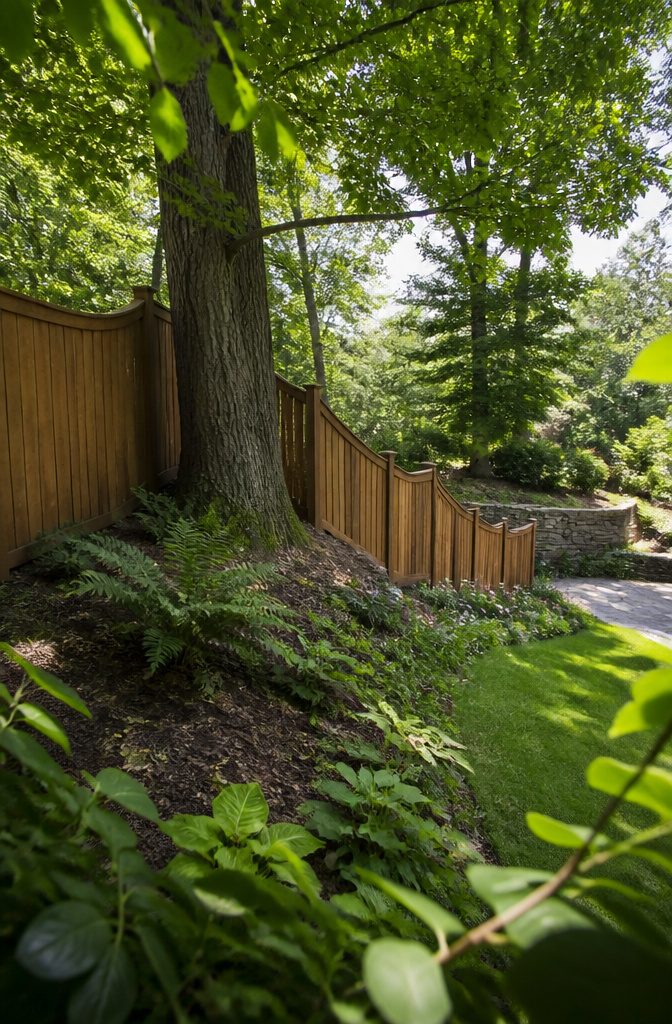
A large tree or a steep slope is a reason to change the fence, not the yard. Panels can be shaped so the trunk becomes part of the fence line, which keeps the tree and its shade.
Along a slope or a drop, tiered panels step down with the ground. I’d choose either approach over tearing up the yard, since the fence follows the landscape instead of fighting it.
Abstract planks suit the same kind of awkward site.
Set in an uneven pattern rather than a straight run, they give a one-of-a-kind look that no stock panel matches. Once the fence is in, pick shrubs and flowers that complement it and the terrain around it.
10. Color-Focused Designs
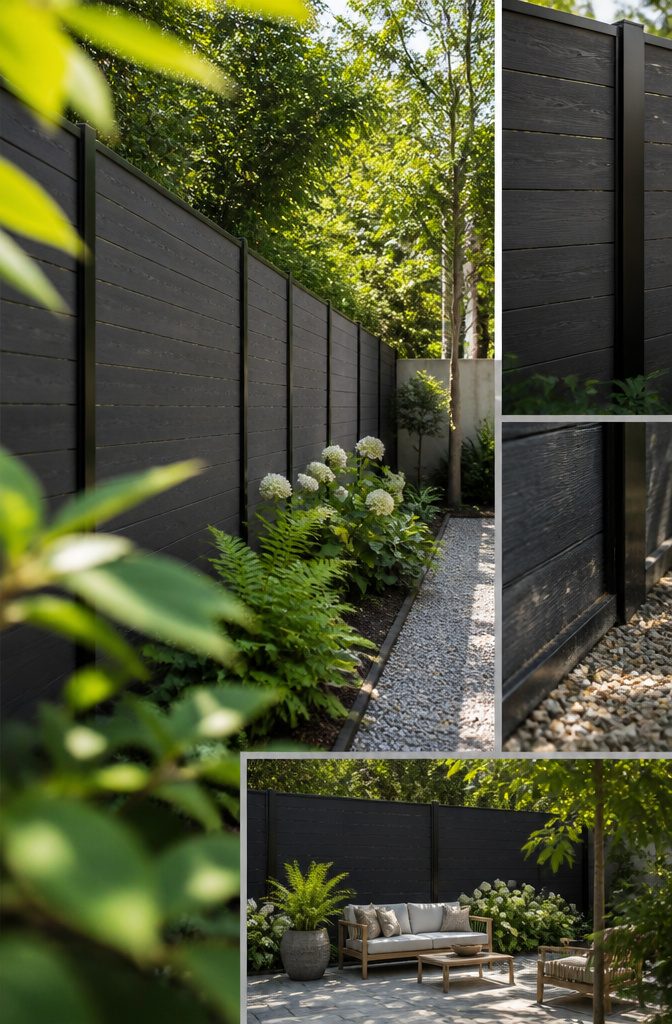
Against a lot of greenery, charcoal wins. It darkens the backdrop so the leaves read brighter, and dark gray gives a softer version of the same effect.
Light blues, greens and yellows catch natural light and make a small yard feel larger. Black and white, or natural wood with black metal trim, gives a classic fence a more contemporary look.
I’d save two-tone combinations like aqua and gray, or pink with coral orange, for a yard where the fence is meant to be the main feature.
Stain is the fastest route.
Mahogany or dark walnut can change a backyard’s look in one afternoon. Black hides dirt and dust, so it is also the easiest color to keep clean.
Recommended Products

Redwood Fence Slat - Designed for a 4' high fence, slats are approximately 44.5" in length to accommodate the bottom locking channel and to prevent the slats from being above the top of the fence. (Available Colors: Beige, Black, Brown, Gray, Green, Redwood, Royal Blue, Sky Blue, White)

READY-TO-USE DECK STAIN & SEALER: Olympic WaterGuard woodland cedar semi-transparent wood stain and sealant combines color and waterproofing in one water-based, ready-mix coat.

【PROFESSIONAL-GRADE WEATHER PROTECTION】 Provides outstanding weather resistance, effectively resisting harsh environmental factors such as rain, snow, and ultraviolet rays. The special flexible formula adapts to the thermal expansion and contraction of wood, preventing cracking and peeling.
11. Fence Art and Metalwork
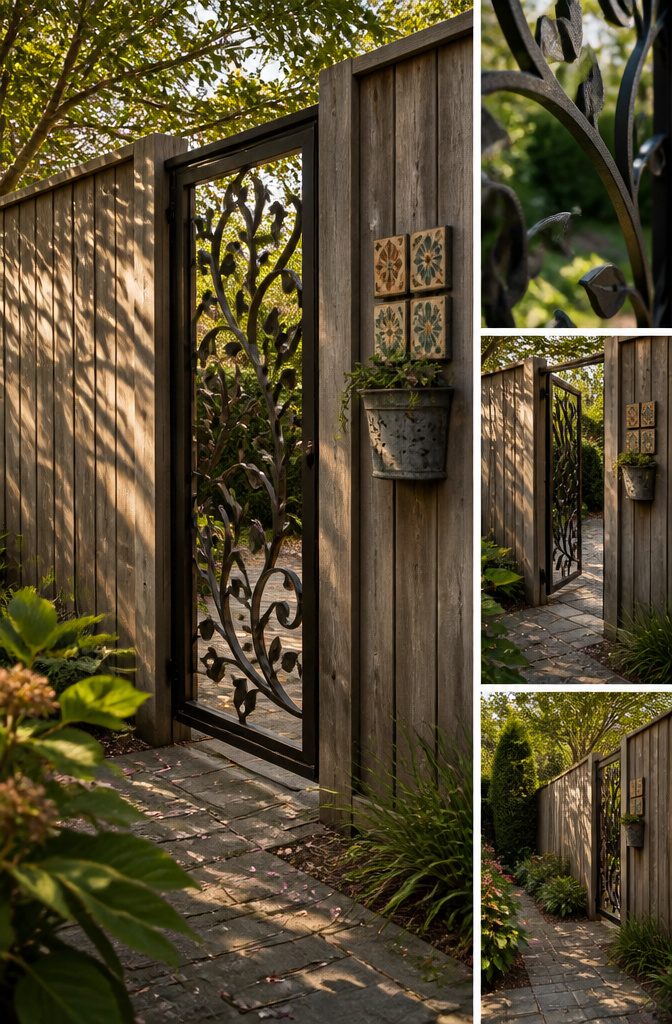
A plain privacy fence takes art well, as long as the pieces are weather-resistant: metal sculptures, wall hangings, paintings, signs, flower planters, faux windows, birdhouses and ceramic tiles all qualify.
Hang a few in a cluster rather than spacing them evenly, and try stencils for a mural or geometric pattern if you’d rather paint the boards themselves.
For the biggest change with the least work, I’d pick a decorative metal gate. It breaks up the look of the fence posts and lets light and shadow through, and it takes far less effort than swapping in metal panels.
Unique gates and balustrades work the same way: one feature piece, with the rest of the fence left alone.
12. Plants Along the Fence
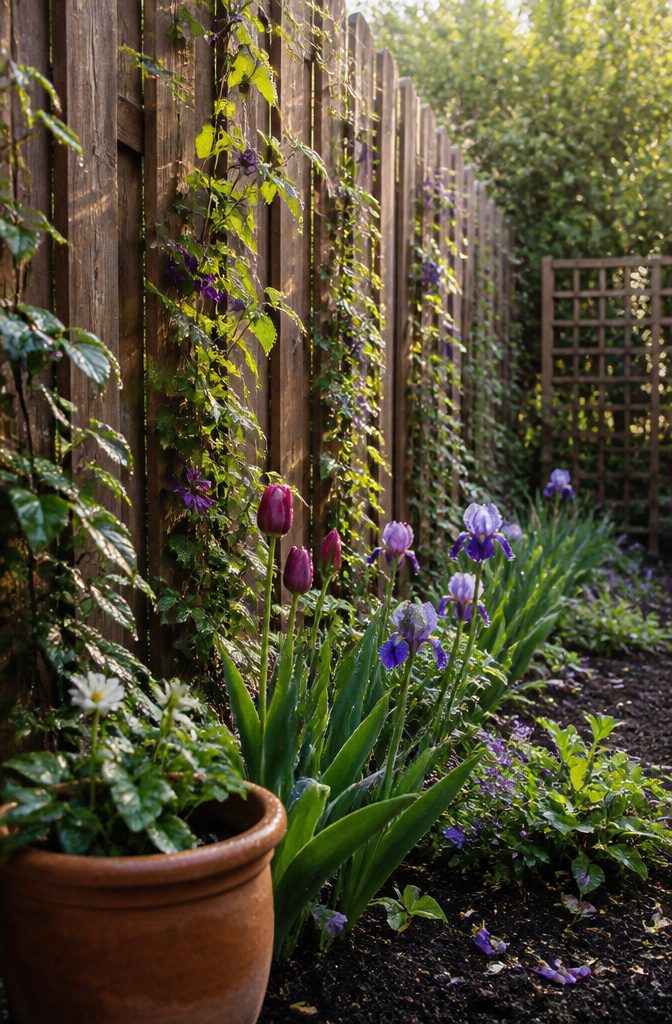
Ivy is the pick for solid green, and wisteria, honeysuckle, clematis, bougainvillea and roses add color.
Set each plant about 1 foot apart, with a gap between the stems and the fence boards so both can breathe. Climbers grow up rather than along the fence, so run strings to steer them where you want coverage.
Flowers along the base work too. Tulips, dahlias, hibiscus, chrysanthemums and irises all soften the line where fence meets soil.
In a small yard, I’d choose a live panel modular system, a trellis, or a wall planter hung between panels. A living fence also tends to need less upkeep than most other fence types.
13. A Seating-Area Backdrop
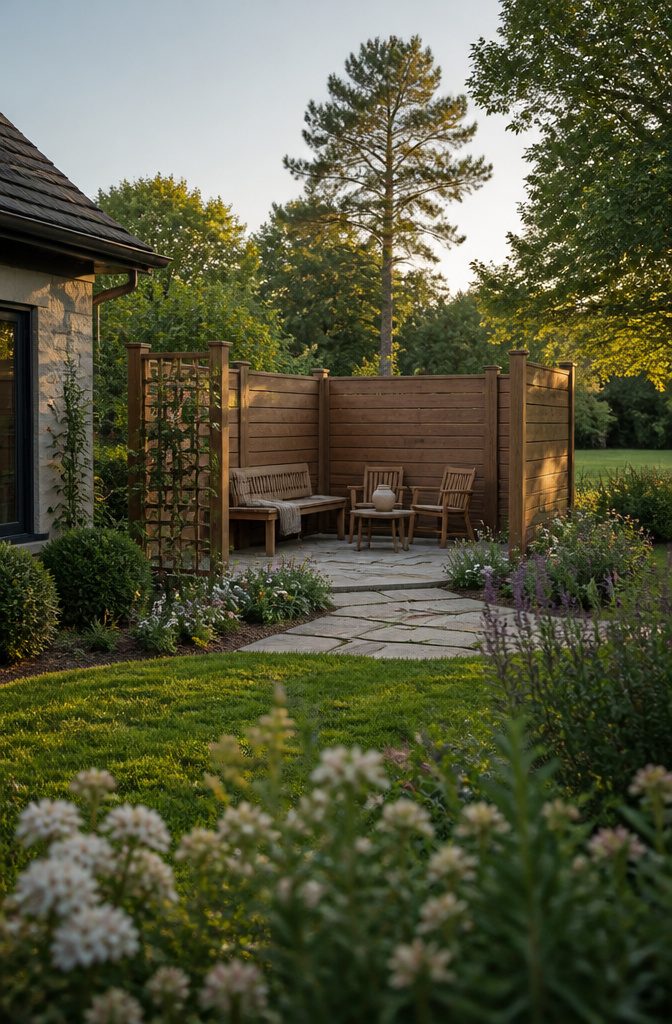
Set the seating in a corner and let the fence act as the walls.
Privacy fencing on both sides of the corner turns a patch of yard into a small outdoor room, with the open side facing the garden as the doorway.
A bench or chairs pushed back into the angle feel enclosed, and no one can look in from two directions.
I’d choose this over fencing the whole yard on a tight budget, because you only need two runs of panels.
Flowering trellises give a softer version of the same corner, but they filter the view instead of blocking it. For real seclusion, solid panels win.
14. Fence Lighting
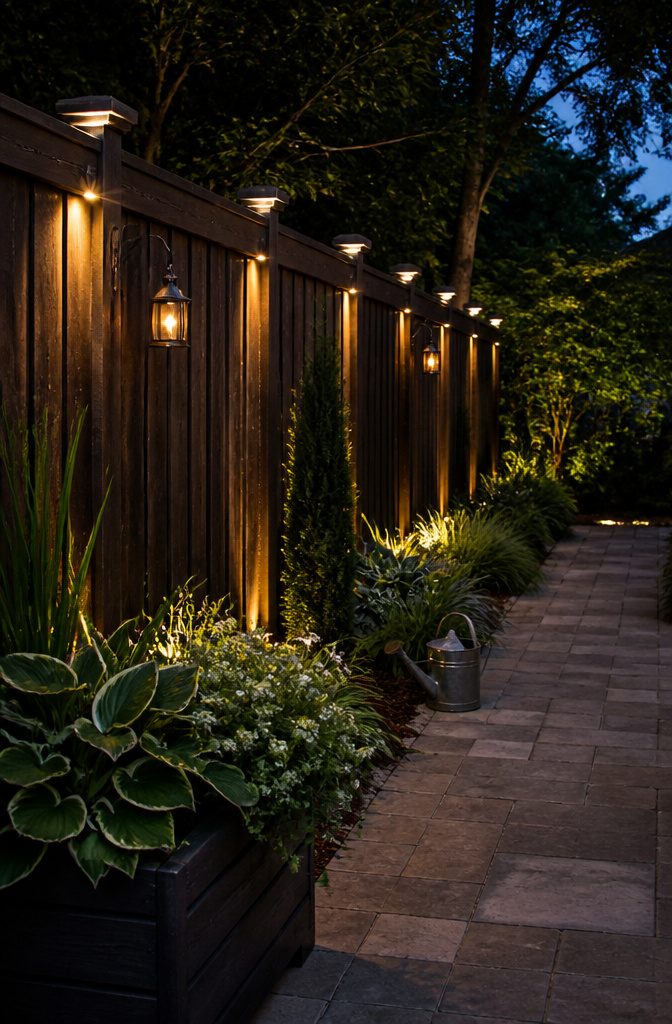
Post caps and solar domes put a point of light on top of each post, so after dark the fence reads as a row of evenly spaced dots that outlines its length and height.
Solar domes need no wiring, which makes them my pick for a small yard on a tight budget.
Match the fixture to the style: sconces and lowlights for luxurious designs, fairy lights and lanterns for rustic ones. Sconces wash light across the boards and show off their texture.
Lowlights sit near the base and glow upward, giving the fence a finished, formal look. Fairy lights strung along the top rail and lanterns hung from hooks add a softer, twinkling glow that suits a summer evening outdoors.
Privacy, Light and Air
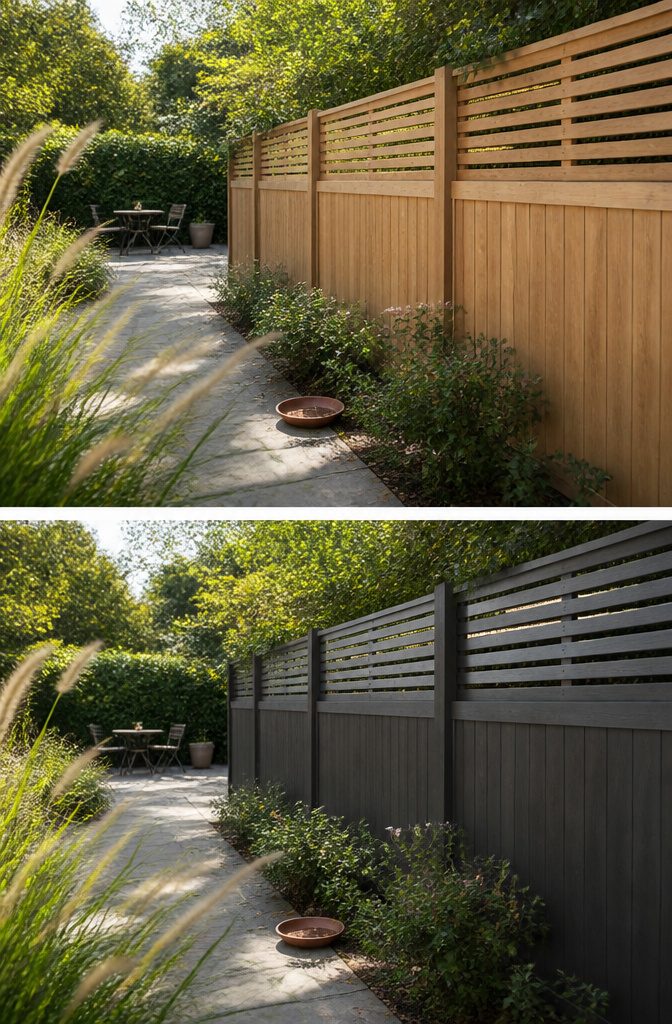
Every gap you leave for light and air is also a gap someone can look through.
Spaced, slatted and open panels keep a yard from feeling boxed in, but they screen less than solid boards. I’d use them where breeze and brightness matter more than a full wall.
A middle route is a solid fence topped with Venetian panels, a trellis or metal inserts. The top lets light and air move through, and well-placed inserts bring in more light without compromising privacy.
On slatted or picket fences, shrubs and flowers at the base add plant cover without blocking all the light. Mixing heights gives you screening where you need it and leaves the rest of the fence open.









