
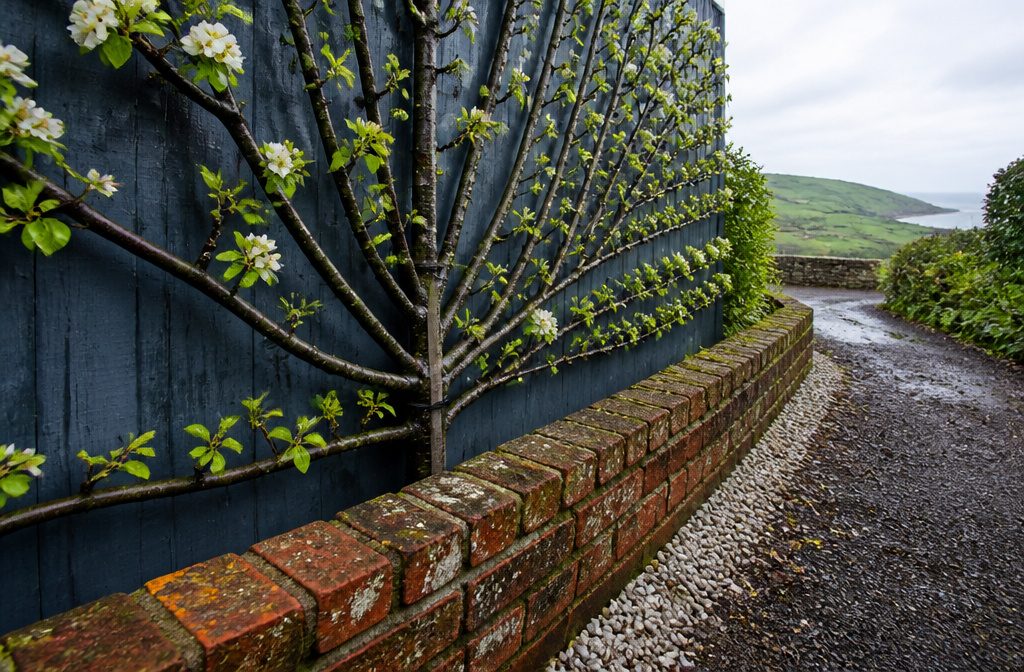
The ideas run from a gravel strip with a few rocks to brick, and the one that fits depends on what the fence line must do: give privacy, keep the view, or cut noise.
Hedges and espaliered pear screen sight but block far less noise than a solid fence, and glass hides least of all.
1. A Garden Beside the Fence
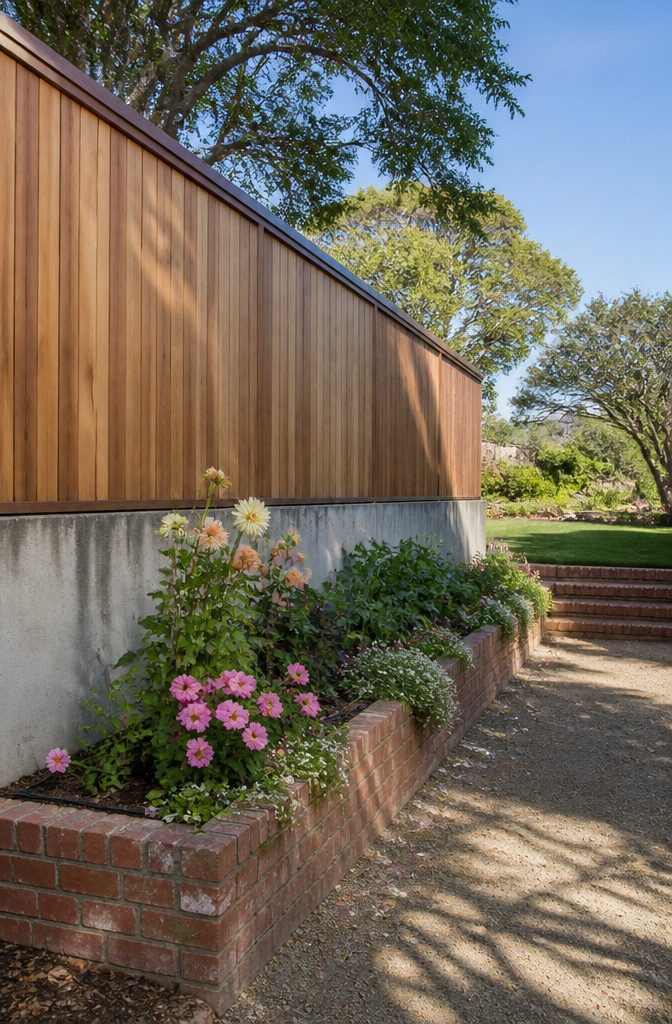
A brick raised bed in front of a concrete retaining wall faced with vertical cedar planking adds color, texture and form to a fence line, and the warm brick suits the wood.
With room to spare, split the planting in two: a flower garden for looks and a separate fruit-and-vegetable garden for the kitchen.
I’d plot the bed on paper before buying anything. Taller blooming flowers planted in front of shorter ones hide them, and each plant needs space for its roots, so read the spacing on the tag.
If daily watering isn’t realistic, run soaker hoses through the bed and connect them to a faucet through a timer. It covers hot weeks without you holding a hose.
Recommended Products

Realistic Natural Look: Artificial ivy wallscreen measures 120" long and 40" wide, this artificial ivy privacy fence screen is constructed with vein-detailed green faux ivy leaves. Adjustable leaf orientation lets you tweak the look for a fuller, more organic appearance. lifelike foliage builds an elegant green backdrop and elevates visual effect for your patio, garden and living area, bringing you immersive green scenery.

STYLISH NATURAL WOOD: This FSC certified wood screen is made with real wood meaning no two boards have the same grain color, finish, or wood knots differing it from vinyl outdoor privacy fence screen panels.

DIMENSIONS: Each panel measures 32” H x 48” W
2. Flowering Climbers
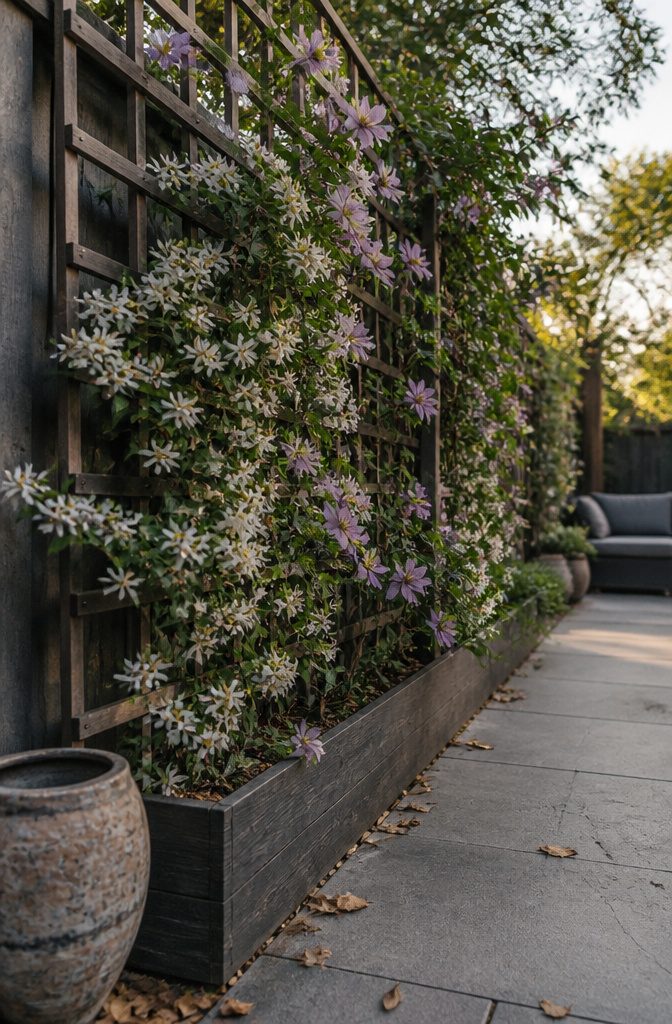
A fence covered in vines stops reading as a barrier and starts reading as part of the planting. The boards become scaffolding, the hard lines soften, and the fence visually recedes while the space still feels enclosed and private.
For scent, I’d start with star jasmine.
Its blossoms fill the air with a sweet perfume, which counts most beside a patio or a seat you actually use. Clematis is another easy climber, and the two work well side by side or on their own.
If the fence runs along paving or concrete, put a planter box with a trellis next to the fence. It gives a similar living-wall effect without any digging.
Recommended Products

Efficient Planter Raised Bed:Transform your outdoor area with this Metal Planter Box with Trellis. It seamlessly integrates a generous raised garden bed, a durable geometric trellis for climbing plants, and an elegant privacy screen. Perfect for cultivating tomatoes, cucumbers, or flowering vines, while creating a stylish and secluded nook on your patio, balcony, or in your backyard

【3-in-1 Metal Planter Box with Trellis】This 72-inch tall metal planter box with trellis serves as an elevated garden bed for flowers, vegetables, and fruits, a sturdy support for climbing plants, and a stylish privacy screen to enhance any patio, lawn, or garden space. Perfect for versatile outdoor planting and decoration.

Vertical Garden Design: This raised garden bed features a diamond lattice trellis, offering reliable vertical support for climbing roses, ivy, peas, and other vining plants. Moreover, the trellis also works as an elegant divider that adds a greater sense of privacy to patios, decks, and garden corners.
3. A Transparent Fence
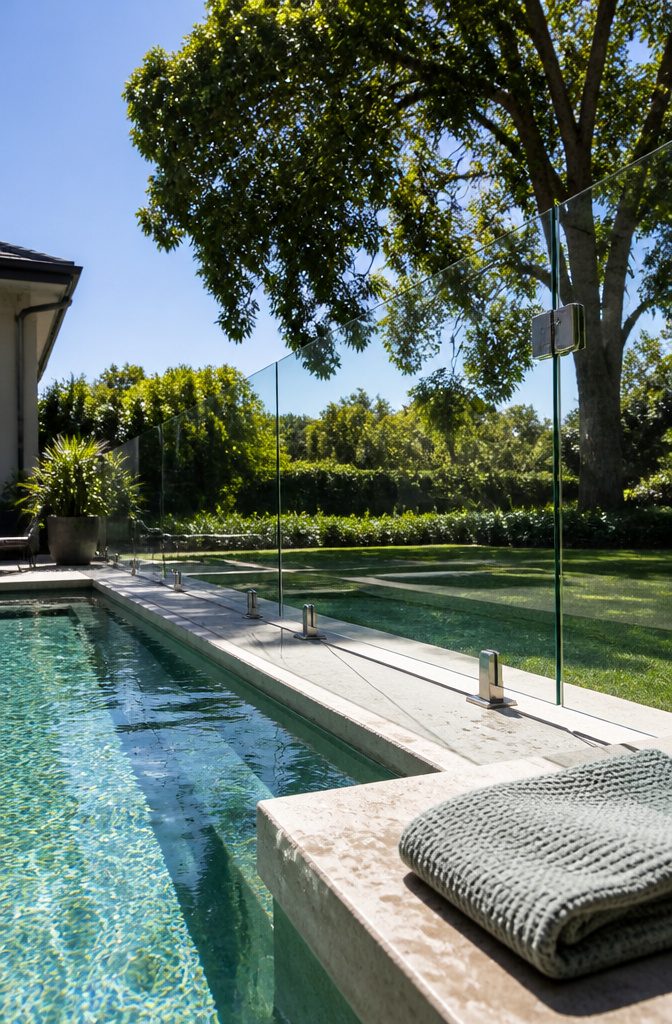
A frameless glass screen keeps the view of the water and the garden beyond it open while still enclosing the pool. Mount the latch out of children’s reach, so that entry needs an adult.
Chain link with slats is a different treatment for a different need. The slats woven through the mesh keep some screening, which suits a dog run or a utility side yard where a barrier matters more than a view.
I’d choose glass for a pool you want to look at and slatted chain link for a space you’d rather partly hide.
Recommended Products

Removable, mesh, pool safety fencing for use around swimming pools to help protect against accidental falls into the pool.
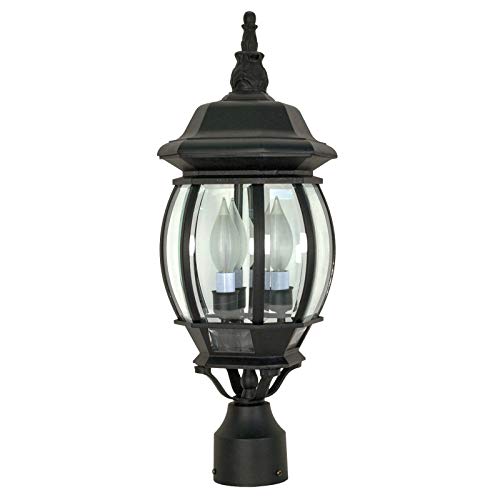
TRADITIONAL STYLE DESIGNED LANTERN: Featuring a traditional style that complements a variety of home exteriors, the Ciata Outdoor Post Lantern features a Clear Beveled Glass panel that protects the bulbs and a stately architecture that adds an elegant touch making it a must addition to any outdoor space. Ciata Textured Black finish post-top light features a Clear Glass Shade and durable weather resistant construction for enduring style.
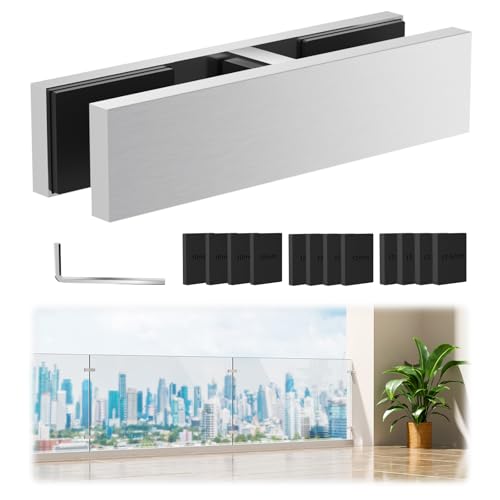
T304 STAINLESS STEEL – BUILT FOR LASTING DURABILITY: Crafted from heavy-duty T304 stainless steel with a refined brushed finish, this Gyykzz brushed railing glass to glass clamp offers dependable strength, corrosion resistance, and everyday durability. The satin surface maintains a clean, modern appearance while helping resist rust, moisture, and surface wear in indoor and outdoor railing applications.
4. A Line of Standard Trees
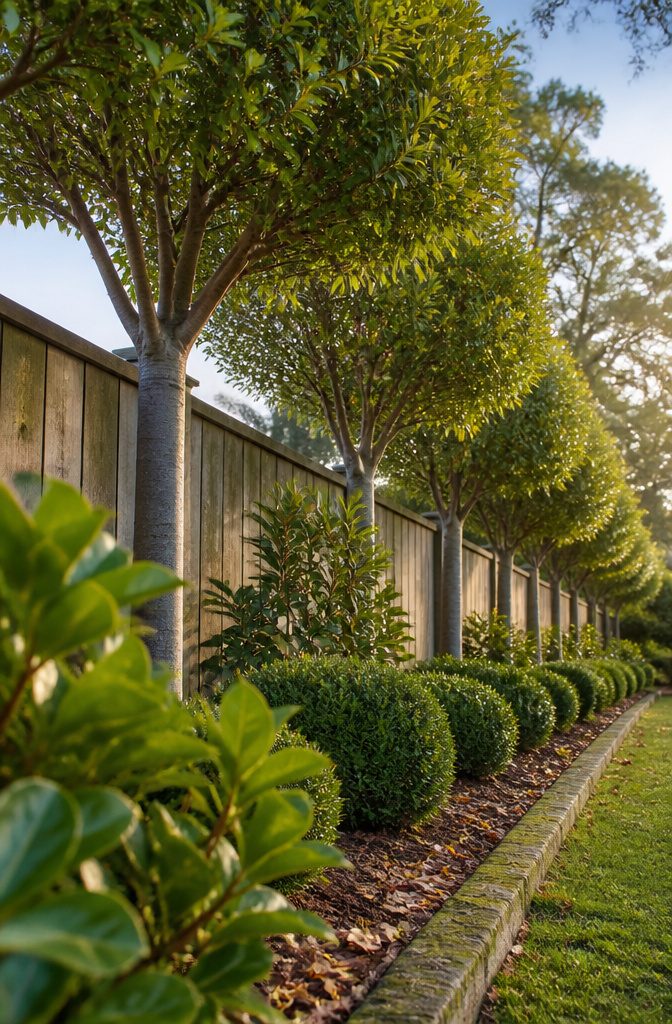
Standard trees, meaning trees with a clear trunk and a rounded canopy on top, line a fence in an orderly rhythm without the closed-in feel of a full hedge.
Light and air pass beneath the canopies, which leaves the base free for layered planting.
Good choices are Prunus caroliniana ‘Compacta’, Ficus nitida and Laurus nobilis. For a small yard I’d pick the bay laurel, since it also gives you leaves for the kitchen.
Underplant with low, rounded shapes such as Buxus japonicum ‘Globe’, Pittosporum tenuifolium ‘Golf Ball’ and Prostanthera ovalifolia ‘Verigata’. Once established they reach about 30–36 inches, so they stay well below the canopies and the trunks remain visible above them.
Recommended Products

VERSATILE APPLICATIONS: Our fence offers a wide range of uses, serving as tree guards, banister protectors, seeded lawn shields, decorative fencing, animal barriers, poultry netting, and more. Its adaptability makes it the ideal choice for temporary outdoor fencing solutions.

VERSATILE APPLICATIONS: Our fence offers a wide range of uses, serving as tree guards, banister protectors, seeded lawn shields, decorative fencing, animal barriers, poultry netting, and more. Its adaptability makes it the ideal choice for temporary outdoor fencing solutions.
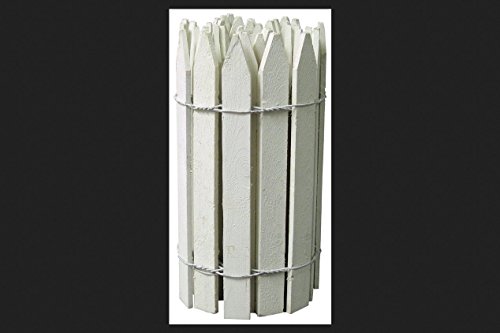
144 inches long and 16 inches high, ideal for creating boundaries in gardens
5. Layered Pots
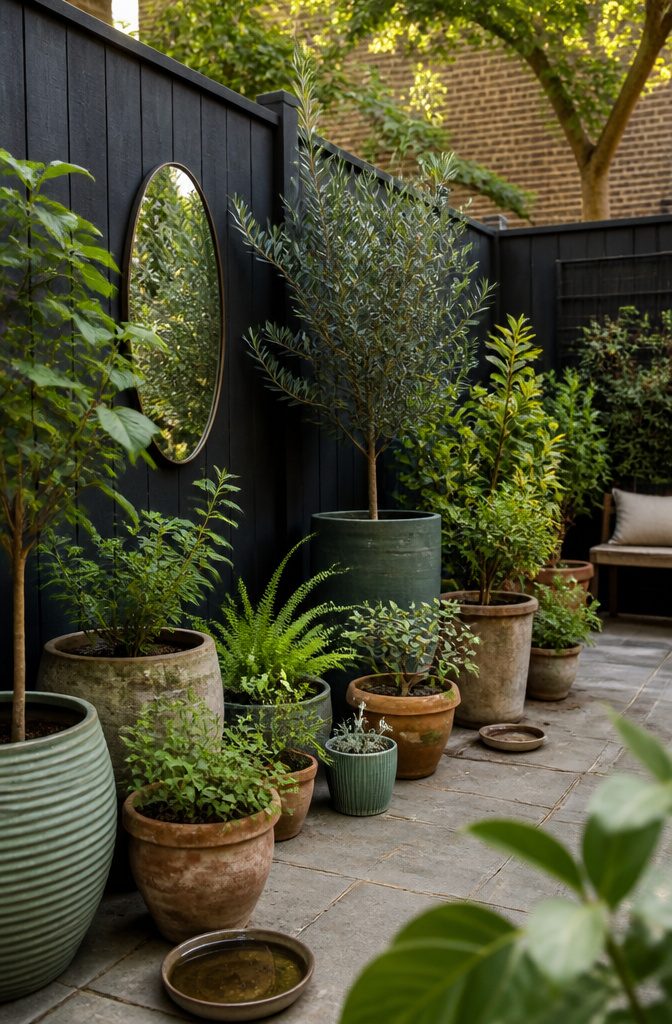
Courtyards and small gardens often rule out a dug border or a raised bed, and pots along the fence line fill the gap.
Build the display in height, with the larger planters at the back and smaller ones toward the front, so every plant stays visible instead of hiding behind a taller neighbor.
Mix sizes and heights rather than buying a matching set, because the variation creates the layers.
Pots in a similar or complementary color scheme make the grouping look planned.
A dark fence behind them makes green foliage stand out, so if you haven’t finished the fence yet, I’d go dark. An outdoor mirror can fill a bare stretch of fence between pots.
Recommended Products

CONSISTENT DRIP WATERING FOR GARDENS: Designed for slow, steady soaking, this flat soaker hose delivers water directly along your garden beds, plants, trees, and raised beds. The drip irrigation hose helps reduce runoff and evaporation by watering near the soil line instead of spraying leaves. Use it as a garden hose alternative for targeted outdoor watering, giving roots more consistent moisture while helping your flowers, vegetables, and landscaping thrive
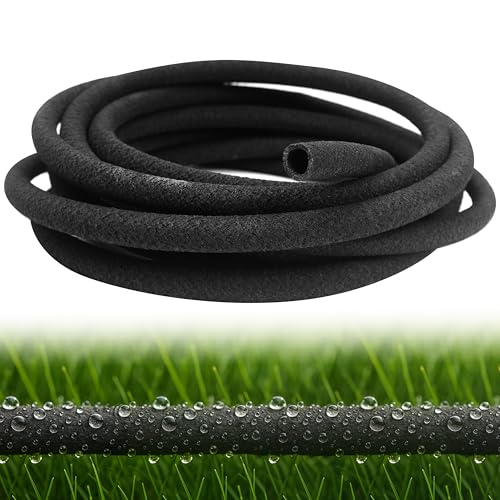
Specs: Features a 1/2" diameter and is 25ft long, providing adequate length to extend any existing watering system or drip supply.

Product Details: Gardener's Supply Co. Snip N Drip Irrigation System Connector Kit extends your existing garden soaker system with these easy-to-install garden hose & angle connectors to supply consistent watering supply to your rows of raised garden beds or planter boxes. Organizing and extending your watering system is simpler with our self-watering raised bed connector kit that is highly compatible with most garden soakers, sprinklers, and irrigation systems
6. A Water Feature
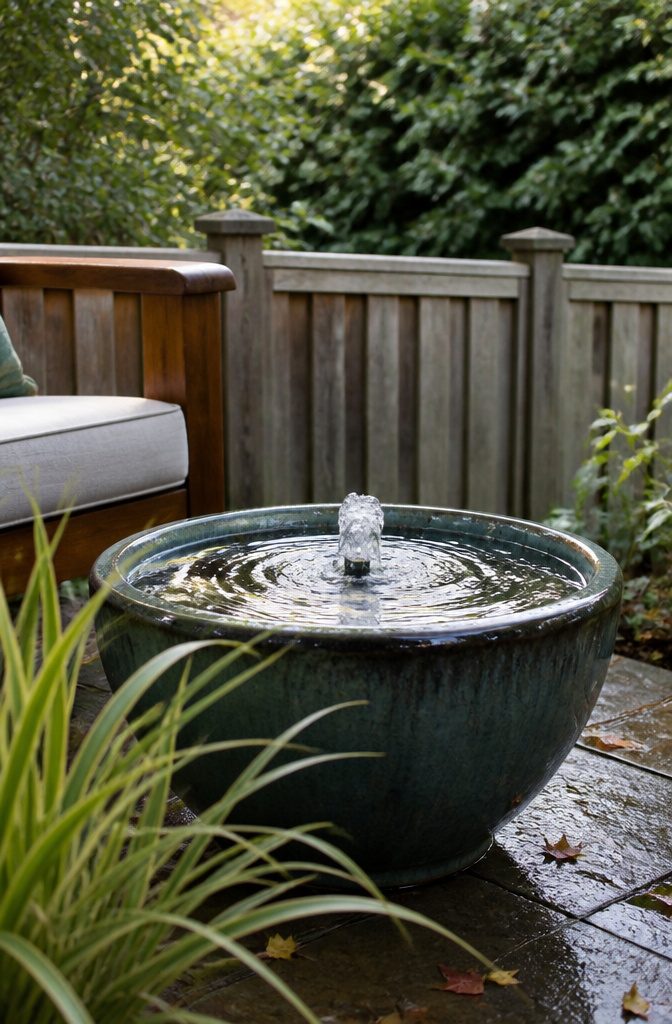
Running water gives a fence line something to listen to as well as look at.
The cheapest way to get it is a DIY fountain made from a wide container, a motor and a bubbler, set against the fence as a focal point.
Pre-made fountains and kits are the other route. For a small yard or patio, I’d choose the container build or a kit over anything larger.
A waterfall or pond looks more dramatic, but it takes more digging, planning and upkeep.
Treat it as a second-year project, after you know a fountain suits the spot. Wherever it goes, put it within earshot of your seat, since the calming sound is the main reason to have it.
Recommended Products

[Upgraded 2-in-1 Freestanding & In-Ground Design] Now featuring freestanding bases alongside ground stakes, these privacy fence panels offer two convenient setup options. Position your outdoor privacy screen on a level patio or deck using the bases, or secure it in suitable soil with the stakes for flexible placement around your garden.

1 SCREEN PURCHASE: You will receive unassembled materials for 1 cedar outdoor privacy screen with planter box with your purchase
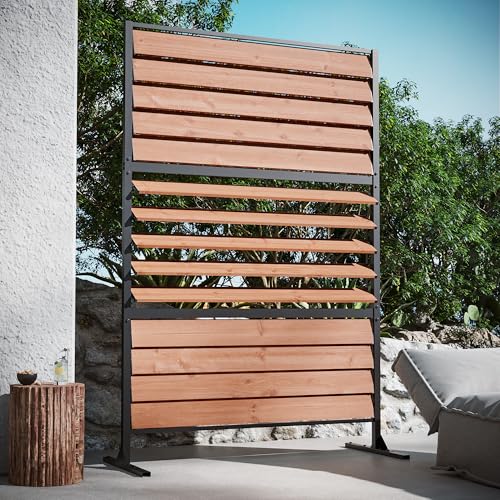
[Adjustable Louvered Privacy Fence] Uniquely control your privacy and airflow! This innovative wood privacy fence features adjustable slats that easily switch between an open, breathable setting and a closed, fully private configuration. Enjoy the ultimate flexibility of a louvered screen for your outdoor space.
7. A Rock or Zen Garden
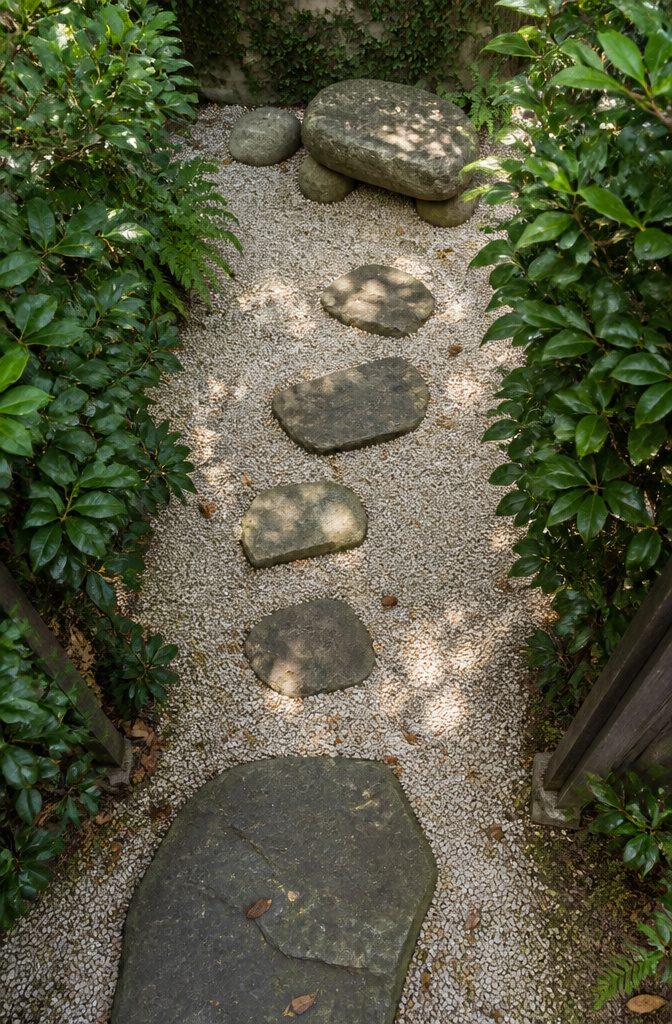
A rock garden suits anyone who doesn’t want to water flowers every day. Start with several bags of gravel from a nursery or home improvement store, enough to cover the strip along the fence.
Then set large rocks into the gravel to mark a path, form a pattern or make a seat. Flat-topped rocks work for sitting, and a small bench does the same job if you can’t find any.
I’d plant tall shrubs along the fence line and leave a gap to walk through, so the space stays hidden until you step in.
The shrubs add shade and privacy, and you can add or swap rocks over time as the layout settles.
Recommended Products


MULTIFUNCTIONAL PLANTER AND PRIVACY SCREEN: Combine gardening and outdoor privacy in one stylish design. This metal planter box with trellis provides space for flowers, climbing plants, and decorative greenery while the tall screen helps shield selected views around your patio, backyard, or balcony. It can also serve as a decorative screen near an outdoor AC unit when placed appropriately.

【Planting & Privacy】This raised garden bed combines growing space and privacy, creating a cozy outdoor corner for veggies or vines. Ideal for patios, yards, or anywhere extra coverage is needed
8. Found-Object Edging
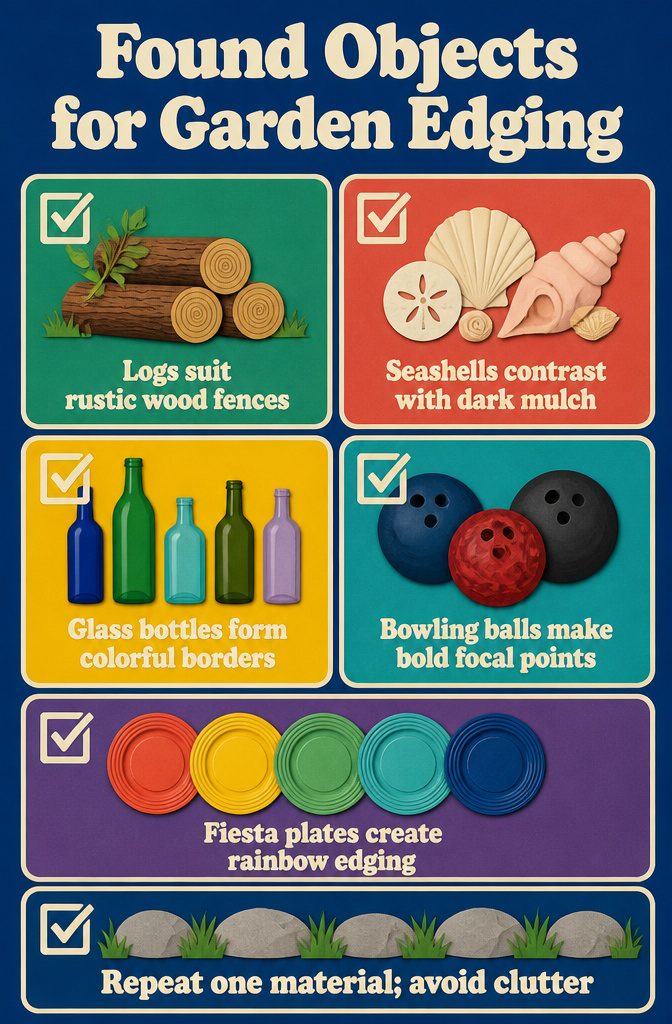
Stone or brick gives a fence-line bed the cleanest edge, and home improvement stores carry a wide variety of both. Recycled and found items make a border nobody else has:
- Logs: a natural edge that suits a rustic wood fence.
- Seashells: a pale, textured line against dark mulch.
- Glass bottles: set in a row for a colorful border.
- Bowling balls: a bold choice that works as a joke or a focal point.
- Dinner plates: a yard edged in bright Fiesta ware looked like a rainbow had landed on the lawn.
I’d pick one found material and repeat it along the whole bed. A mix of several reads as clutter, not design.
Recommended Products

T304 STAINLESS STEEL – BUILT FOR LASTING DURABILITY: Crafted from heavy-duty T304 stainless steel with a refined brushed finish, this Gyykzz brushed railing glass to glass clamp offers dependable strength, corrosion resistance, and everyday durability. The satin surface maintains a clean, modern appearance while helping resist rust, moisture, and surface wear in indoor and outdoor railing applications.

Guide for drilling 5/8" holes

【Size】The base square cover measures 3.94" in length, with a total height of 6.69", making it suitable for 3/8" to 1/2" mm thick tempered glass panels.
9. A Stepping-Stone Path to the Gate
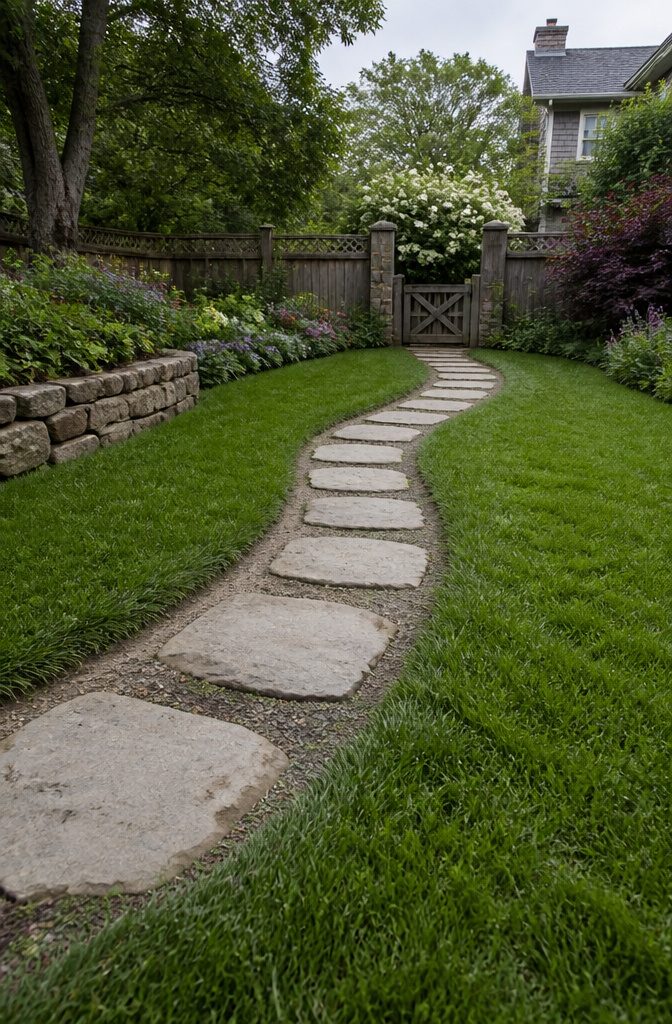
- Map the route before you cut anything. Lay a garden hose or rope from the door to the gate and walk it. Move the line until your stride lands naturally on each stone, then mark it with spray paint or flour.
- Cut along the marked line with a half-moon edger, then lift the sod inside it. A clean edge keeps the lawn from creeping back over the stones.
- Spread stone dust across the bare strip and tamp it flat. I prefer it to plain soil because it packs firm and drains, so stones don’t rock or sink after rain.
- Set each stone on the dust, press it down, and check that it sits level with the surrounding ground. Stand on it before moving to the next one.
10. Fence and Yard Lighting
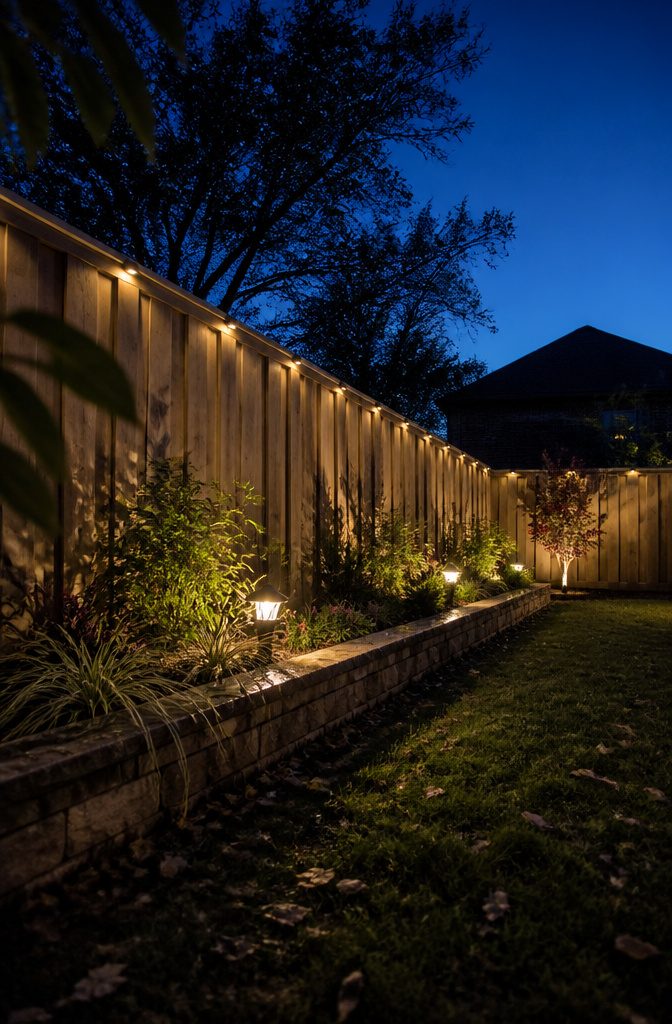
Solar lights are the better choice for a renter or a beginner on a small budget.
They stake into soil or clip to a rail, need no electrician, and move with you. Their weakness is output, so put the panel where it gets sun, not in a shaded corner.
Wired lighting in buried conduit is brighter and steadier, but it only makes sense on a fence you own. Put it on a timer so it comes on at dusk and shuts off by itself.
Hanging lights along the top rail give a soft glow.
Uplights tucked into a raised bed wash the boards with light and pick out the plants in front. Start with solar and add wiring only if you’re staying.
Recommended Products

80% WATER SAVINGS – MIXC soaker hose is engineered to deliver 0.75 gallons per hour per 15 ft. at 25 PSI, using up to 80% less water than traditional sprinklers while ensuring deep soil penetration. This soaker hose is ideal for raised garden beds, vegetable rows, flower borders, potted plants,container gardens, greenhouse benches, and landscape furrows up to 12 inches wide

Heavy duty push-on plastic couplings — Cut, shorten, or expand the hose to any length and connect multiple sections for a leak-proof, custom-fit drip irrigation system
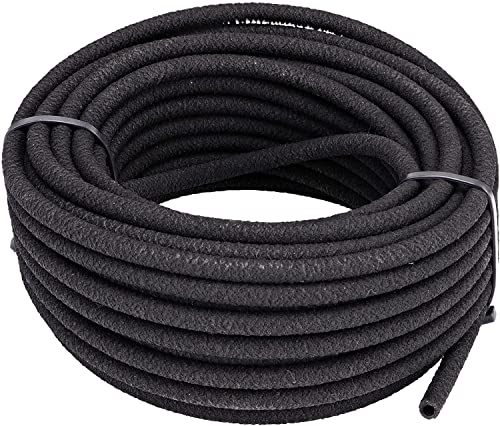
Slowly waters the soil around your plants for complete root zone hydration; Ideal for short runs on flat surfaces, such as vegetable gardens, borders, and around small plants
11. Wood and Metal Plates
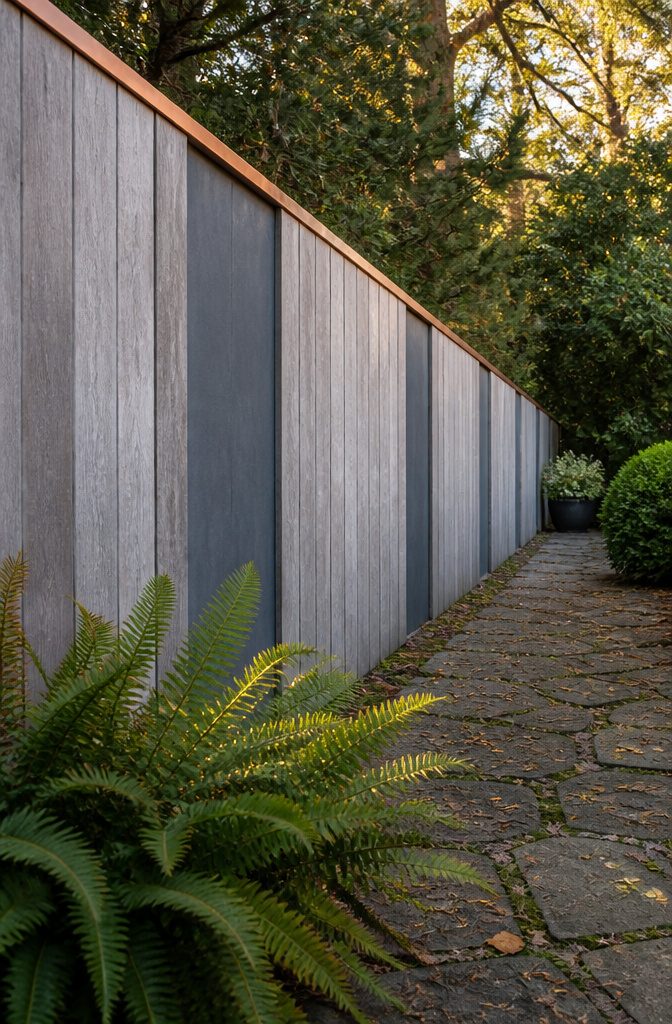
Raw vertical plank cedar is the wood fence I’d pick if you want privacy without a maintenance schedule.
It fades on its own to a light gray, so there is no stain to redo every few years, and it ages well. Planks set tight together block the view in from the neighbors.
For a more modern look, pair metal plates with wood.
The metal adds security and privacy, and the wood keeps the fence from feeling cold or industrial. Mix the two in panels or sections rather than splitting the fence half and half.
A copper cap along the top of stained cedar planking is a small finishing detail that makes the whole run look intentional.
12. Bamboo Fencing
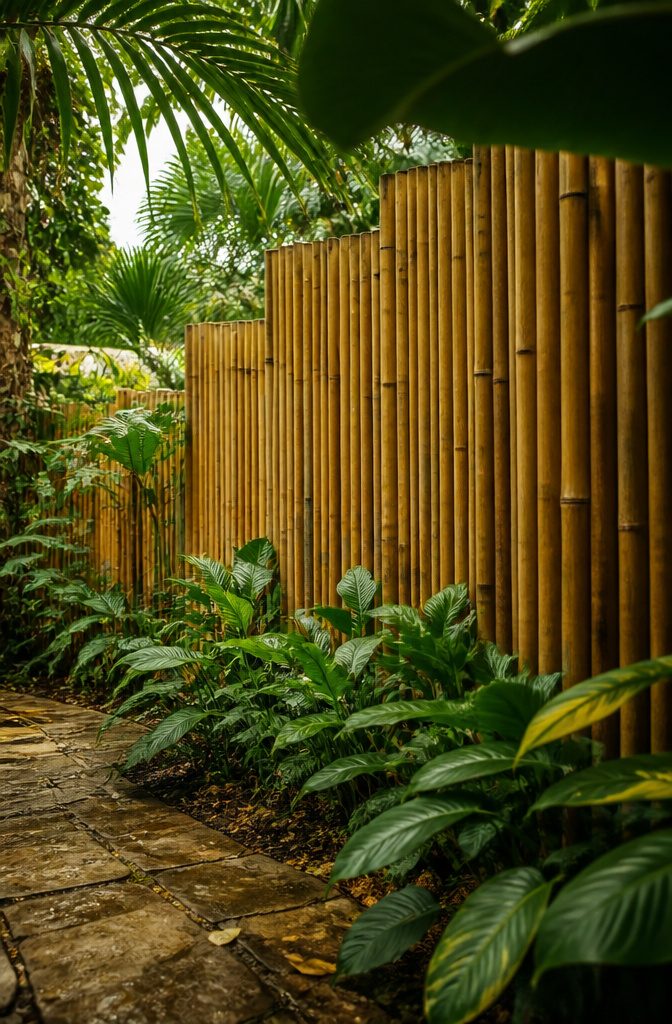
Bamboo gives a fence line a tropical, forest-like look that wood and vinyl can’t copy.
The poles are strong, and because they can be attached together, you can build a screen to the length and height your yard needs instead of settling for stock panels.
Broad-leaved, lush plants at its base make it look like part of the planting rather than a boundary.
Style is what you give up, because bamboo has a distinct look that won’t suit every house.
Bamboo suits a relaxed, informal garden and looks out of place against a formal, clean-lined house, where I’d choose painted wood or metal instead. It is also a natural material, so expect it to weather and change color outdoors.
13. Hedges and Espaliered Pear
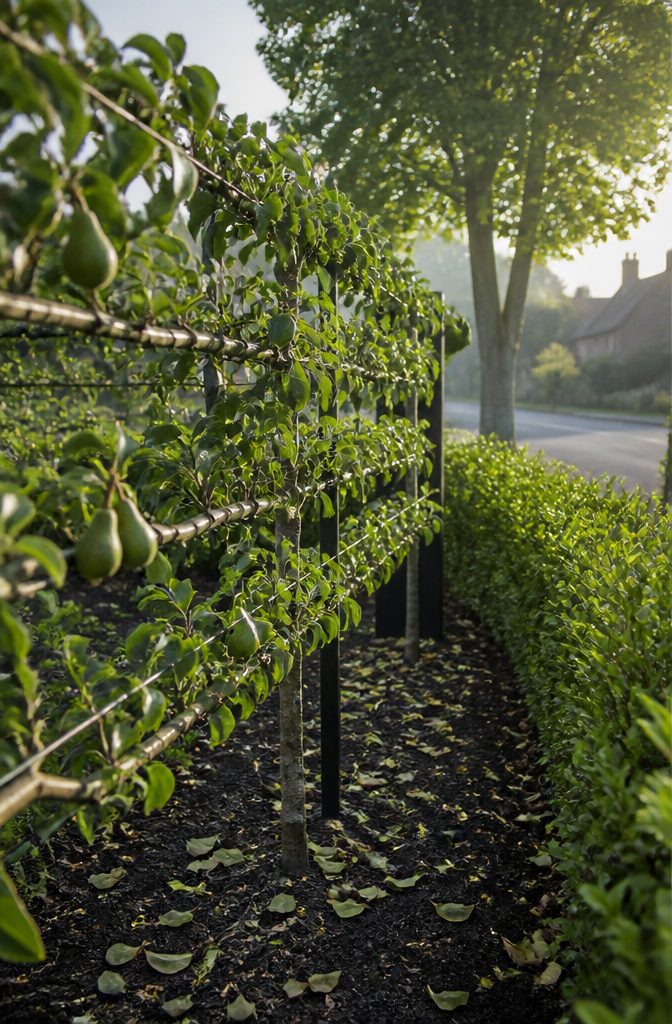
A living fence softens a property line in a way boards never do.
A hedge or a row of espaliered pear, with its branches trained flat along wires, screens part of the view but blocks far less noise than a solid fence, so a busy street still sounds like a busy street.
I’d choose a hedge or pear for a green, edible boundary and a built fence for quiet.
Both take seasons to fill in and need regular pruning. For instant screening with no watering or trimming, artificial hedge panels attached to an existing fence or frame work well, though they won’t feed birds or bear fruit.
Privacy Versus Open Views
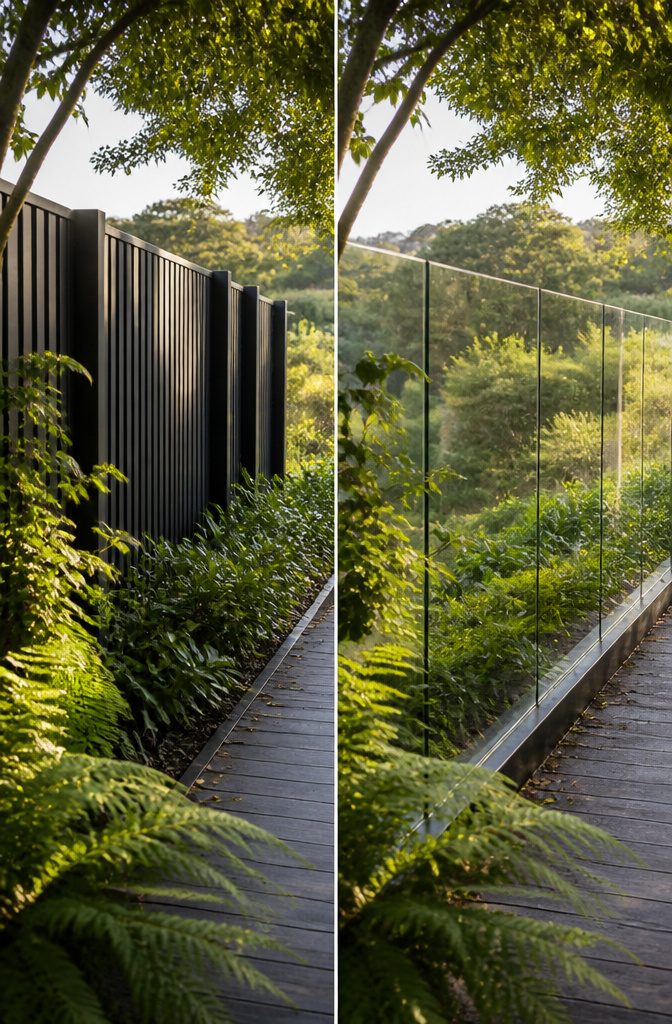
A full hedge or solid wall gives the most privacy, but it also closes the yard in, and a small space can start to feel like a box.
Layered trees, climbers on a trellis, or glass keep light and the view, though they hide less from neighbors, especially once leaves drop. Pick which matters more before you buy anything.
Screening types also differ in how much sight and noise they stop. Brick is not cheap, but it is a permanent solution and blocks both more completely than plantings can.
A young hedge or a row of climbers filters sight only as it fills in, and it quiets noise less than masonry does. Glass keeps the view and offers the least screening of all.
Matching the Fence to the House
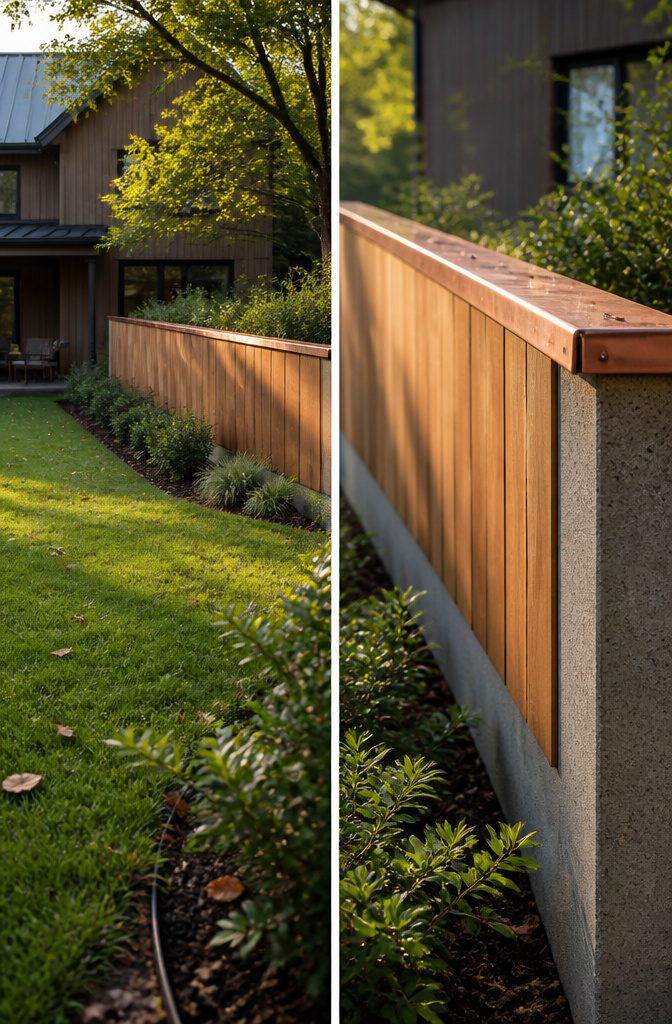
Stain the fence the same tone as the house, and the yard reads as one design instead of a house with a fence behind it.
A concrete retaining wall faced with vertical stain-grade cedar planking in the house color, then finished with a copper cap, shows how far that goes. For a softer look, paint the fence green so it fades into the planting.
On a small yard I’d pick that over a bold color. Keep the plants at the base to 30–36 inches tall so the wood stays visible at eye level.
A hedge takes more depth and makes the yard feel smaller. Most of these upgrades are DIY jobs, and many fit into an afternoon on a limited budget.









