
Prices run from under $30 for plastic netting on stakes to $264 for rolled bamboo, and the animal eating your plants decides which one fits.
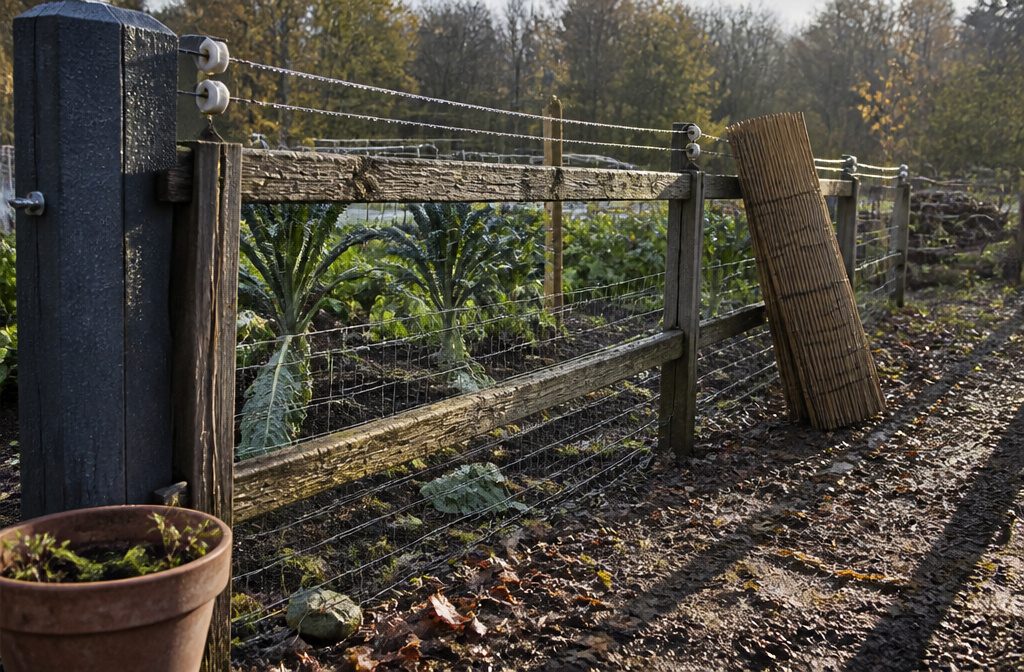
Open post-and-rail and trellis fences let small animals through unless you line them with wire, and raccoons that climb boards need two electrified wires on top.
1. Wire and Chicken Netting Enclosure
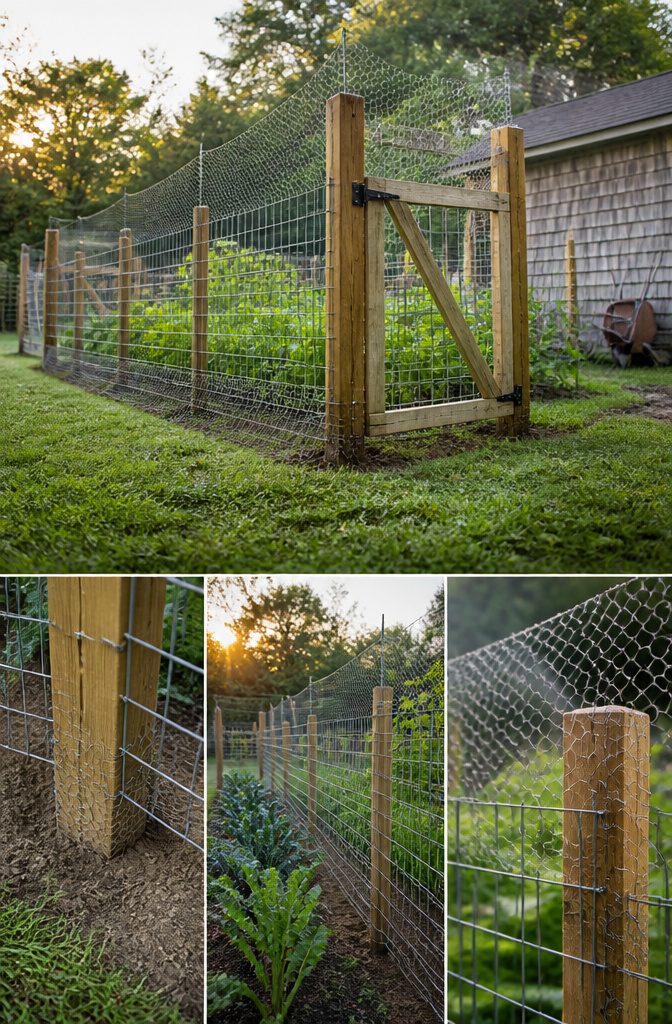
Set 8-foot 4×4 posts 2 1/2 feet deep and packed with dirt, not cement.
Stomp the soil and press it down with a shovel, then wait about a day before hanging wire. Hang the 4-foot wire first, then add chicken wire to bring the total height to 5 feet 5 inches.
About 17 inches of netting gets split between the bottom of the fence and a flap that faces the lawn. Fasten it about every 8 inches with tie wire clipped into pieces a few inches long.
The gate uses 4×4 posts and 2×4 boards.
Make the opening 5 feet 6 inches high and wide enough for a wheelbarrow, and hang it on hinges about 4 1/4 inches tall. A few posts leaned and needed diagonal braces, but the fence stayed in good shape for several years.
2. Electric Wire Add-On
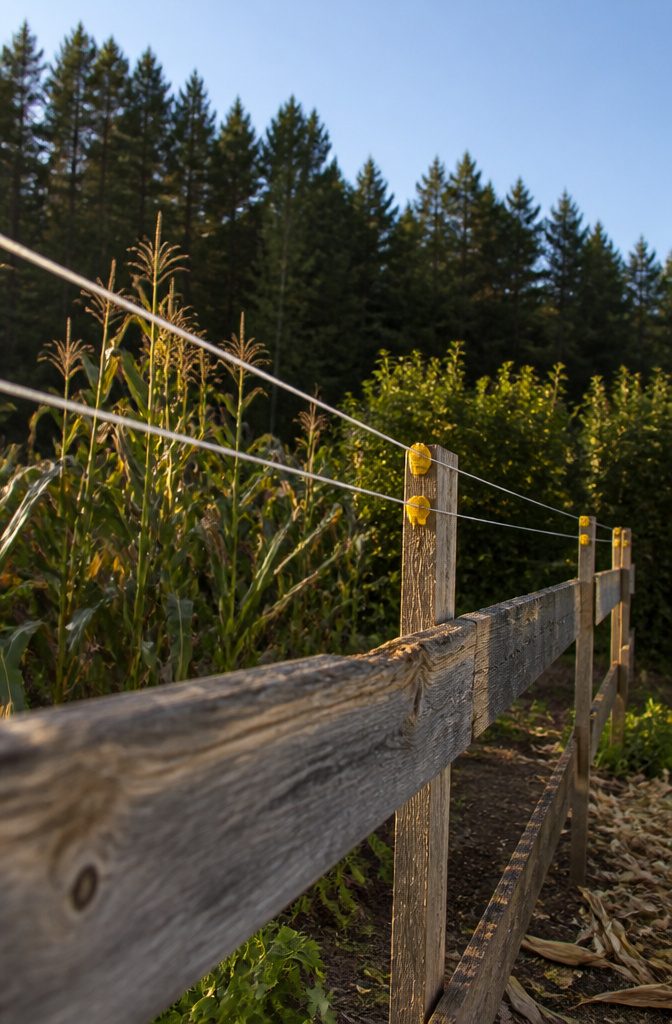
Raccoons climb wooden boards easily, and ripening corn is enough to bring them over a fence that has held up fine until then.
Electrified wire along the top stops them where the boards can’t. Aluminum wire works, held off the wood by yellow insulators fastened to the posts so the current never touches the fence itself.
Run two wires, not one.
A critter can get past a single strand, but two make the climb much harder. Because the insulators mount on posts you already have, this is an add-on you can hold back until raccoons show up.
I’d wait for the first sign of damage before wiring, since a fence with no raccoon problem doesn’t need it.
3. Plastic-Grid Fence for Raised Beds
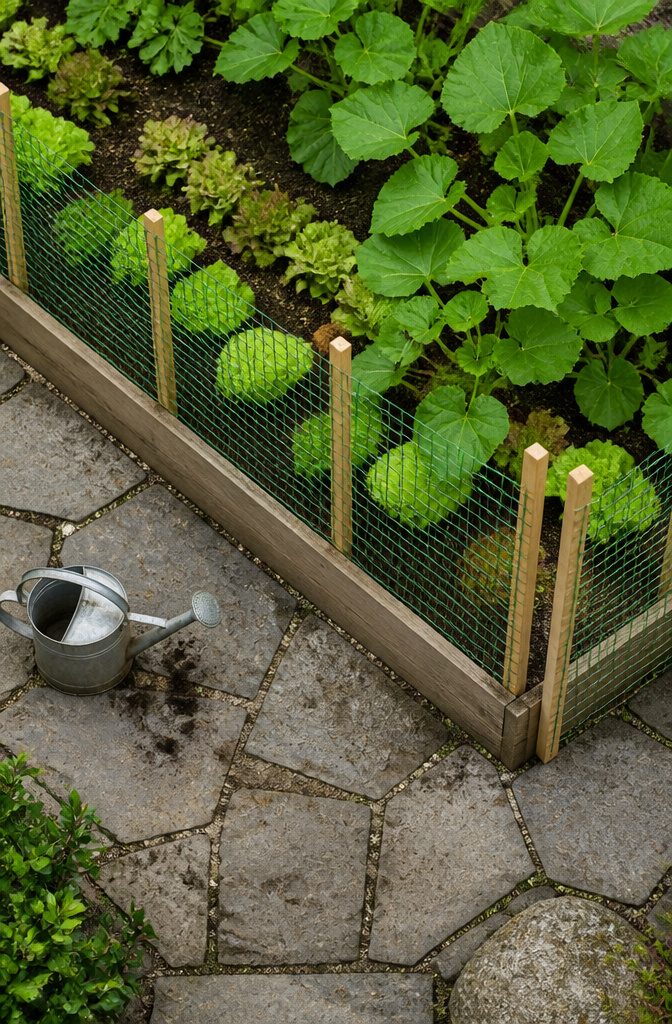
A netting fence around a raised bed costs under $30. You need 12 wood stakes (1 by 1 by 72 inches), one roll of plastic grid garden netting at least 4–5 feet high, a measuring tape, staple gun, scissors, hammer and work gloves.
Line the netting up with the top of a stake, leave 10–12 inches of stake bare at the bottom for the ground, and staple about every 6 inches.
Hammer in any staples that sit proud. Build 5–6 foot sections so the netting stays taut.
To get in, pull one stake, open the netting and set the stake back afterward. Squirrel damage stopped within two weeks, and the netting can be reused each year.
4. Black Fence with Chicken Wire
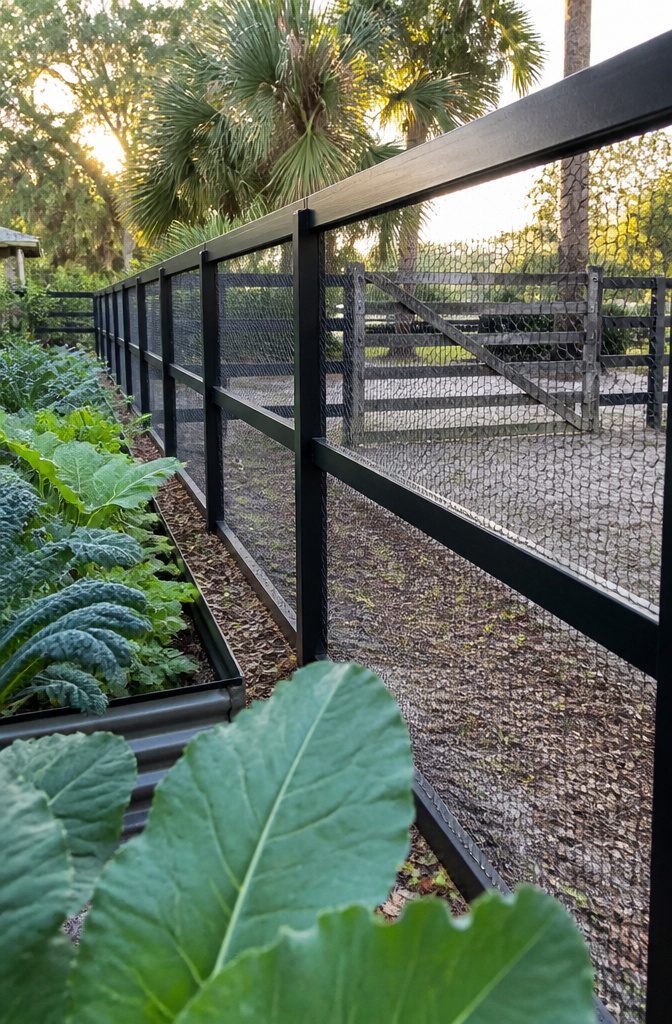
A black frame gives a classic vegetable garden a modern look and keeps the fence looking neat.
On a Florida horse farm, that is exactly the job it does around the beds, while the real defense is a layer of wire on the inside.
The fence and a layer of chicken wire keeps out the farm’s many, many animals, 95 and counting!
Treat the two parts as separate decisions.
Choose the black fence for how it looks, and count on the chicken wire to keep animals out. If your yard sees even a fraction of that traffic, the wire layer matters more than the paint.
5. Trellis Fence with Wisteria
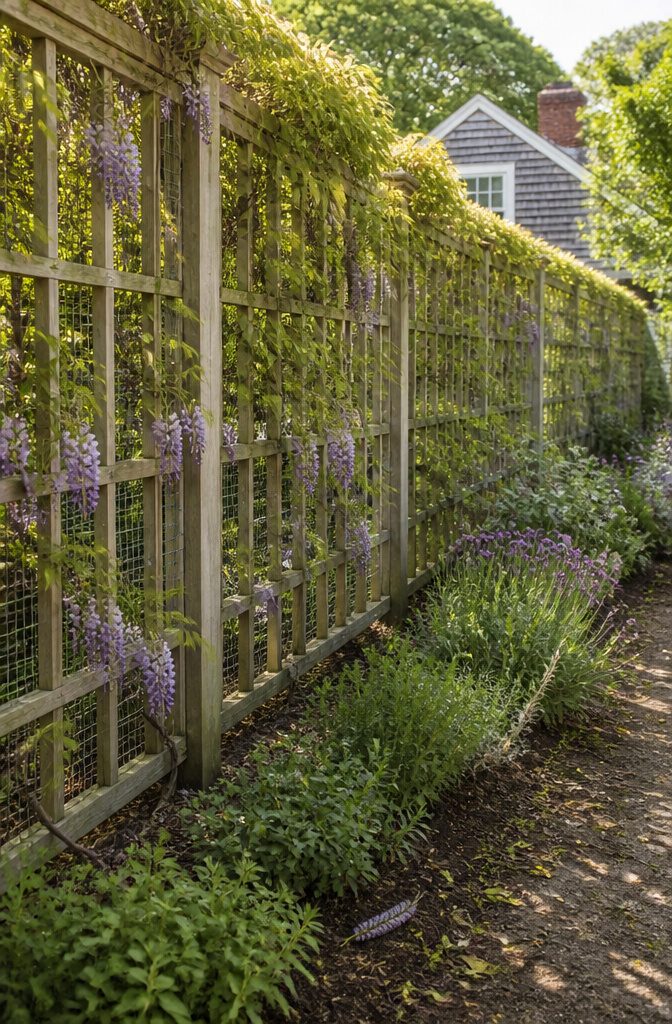
A Rhode Island yard shows how this works: the owner built the fence from trellis panels, then planted wisteria to fill the spaces between them. The panels mark the boundary, and the vines turn it into a leafy screen.
Open trellis slats are a weak barrier against animals at first. Line the garden side with fine wire mesh until the vines close the gaps.
Wisteria seeds and pods are also toxic, so plant it on the outside of the fence, away from beds where kids or pets might pick and snack.
I’d choose this style for looks and privacy, and pick a solid fence instead where animals are a problem from day one.
6. Post-and-Rail Fence
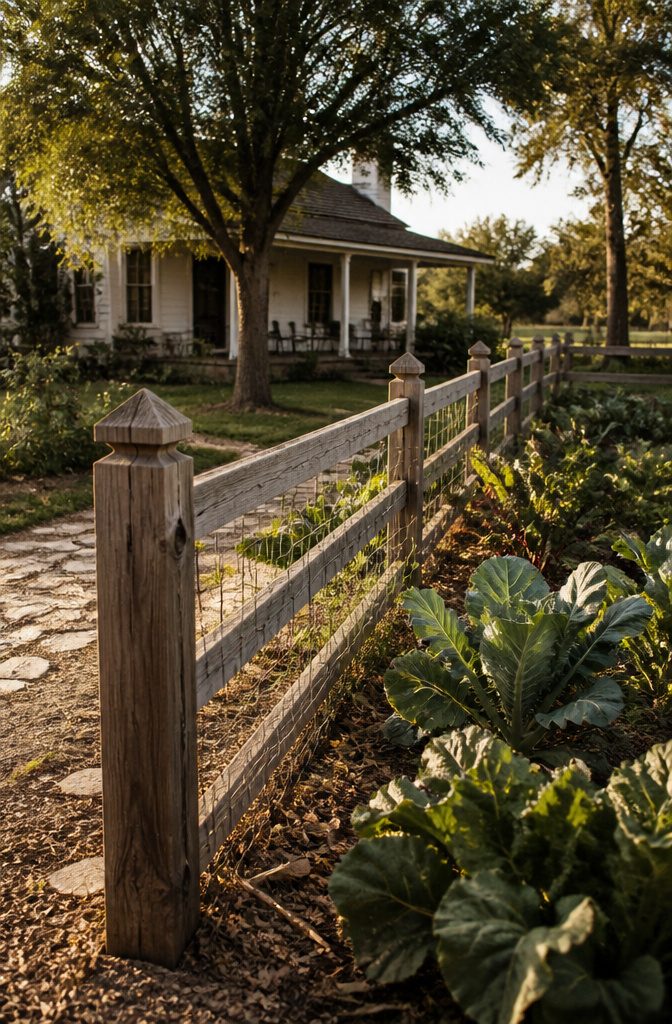
A wooden post-and-rail fence draws a clean boundary and suits older houses well.
Country Living shows a weathered one in front of an 1800s home in a California State Park, matched to the house, with mini roofs on some of the posts.
Another echoes the X-shaped porch railings of an Alabama Tudor home. Matching the house is where this style shines.
The gaps between rails are wide, though.
Open rails mark the edge but will not stop small animals, which walk or squeeze straight through. I would only choose this style for a vegetable bed if I planned to line it with wire.
Fasten fine mesh or netting to the inside face of the rails, as in the wire-and-netting enclosure, and you keep the look while closing the gaps.
7. Decorative and Privacy Fences
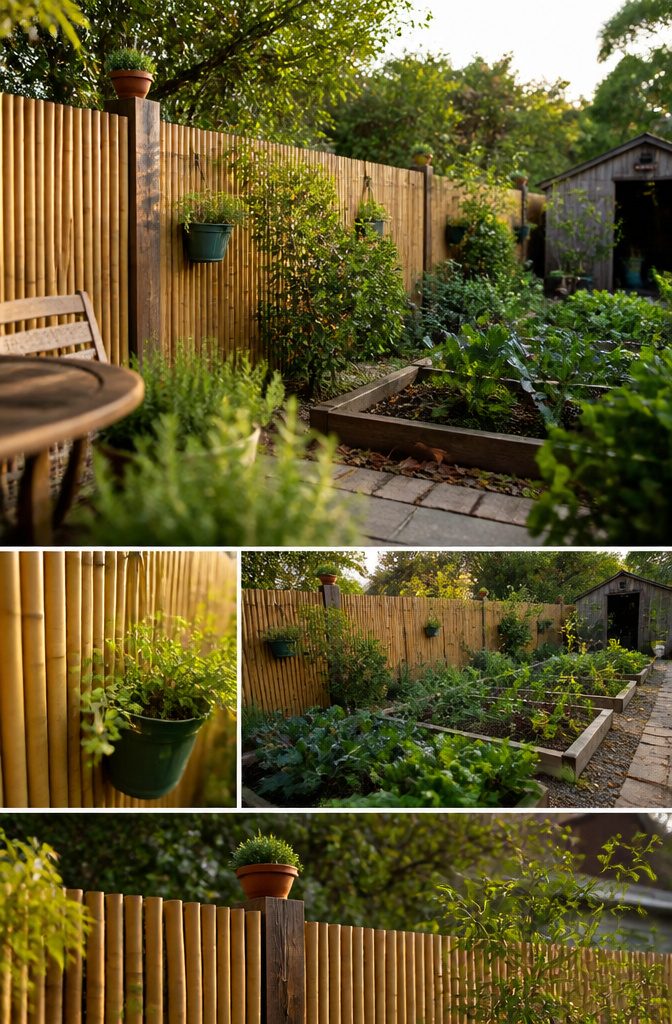
Rolled bamboo is the most natural-looking choice. Backyard X-Scapes Rolled Bamboo Fencing is listed at $264 at Wayfair, and it works either for privacy or to fence off the vegetable beds.
A horizontal privacy fence with narrow spacing between boards gives a modern look, and trees and plants planted alongside keep it from feeling stiff.
Vertical boards are the more traditional alternative. Hanging containers on a plain fence, or flower pots set on top of the posts, soften either style.
These are separate looks, not one build, so pick one and commit. For a vegetable garden, I’d choose a privacy fence dressed with plants, and check the gaps between boards or canes against the animal you’re trying to keep out.
Which Animals Cause the Damage
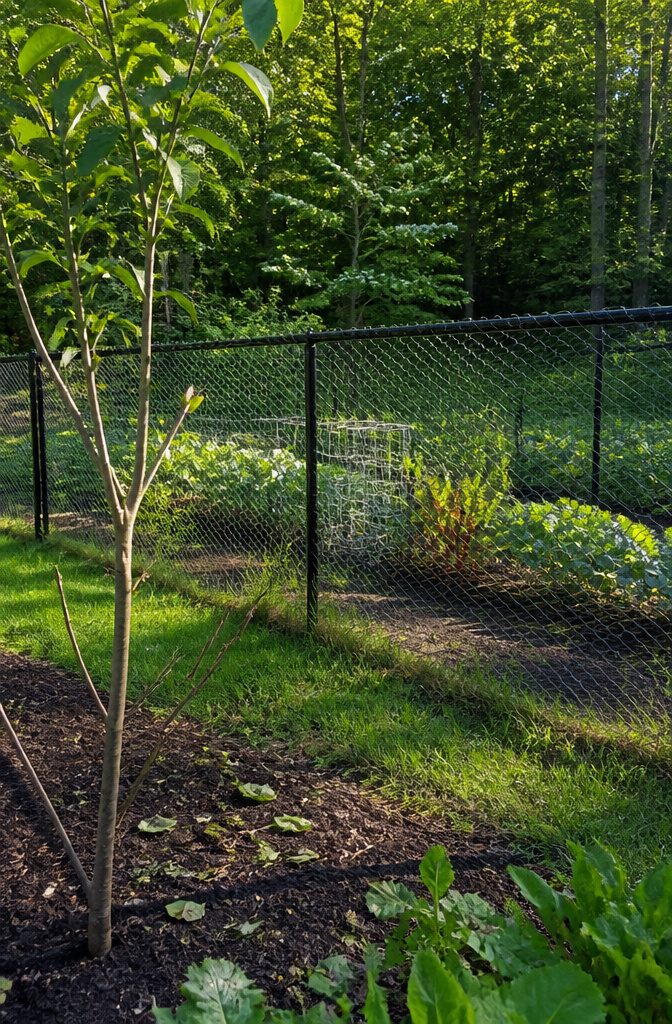
Deer and rabbits cause the damage most often. One home gardener surrounded by woods lost approximately 90% of the apple, dogwood, flowering pear and maple trees she planted, despite repeated efforts to protect them.
She fenced the vegetable garden on the logic that animals that eat saplings will eat vegetables too, and I agree: if deer and rabbits are stripping young trees nearby, expect them in your beds.
Squirrels are a smaller animal with the same result. One gardener built a fence after they damaged her fruit and vegetables.
A Florida horse farm with 95 animals and counting uses a black fence lined with chicken wire to protect its garden. Before you buy materials, spend a week noting which animal is actually doing the damage in your yard.
Fit the Fence to the Garden
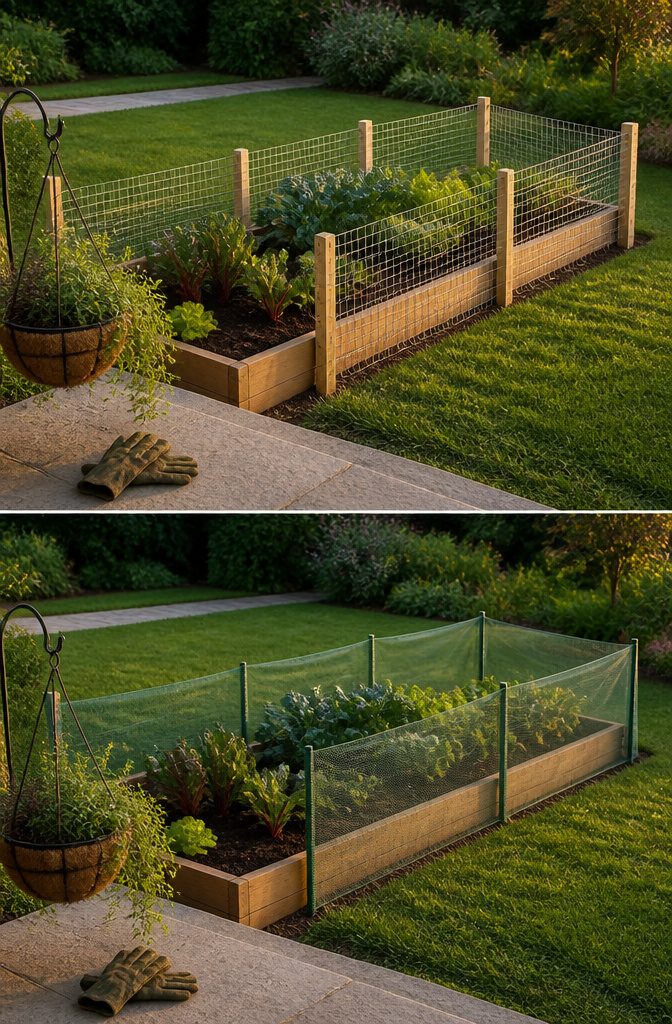
Decide what the fence is for before buying a single post. Enclosing the whole garden means you need a gate, so build it into the plan from the start.
Guarding only part of a bed, such as one arm of an L-shaped raised bed, needs no gate and far less material, and I’d choose that whenever the animal pressure is limited to one spot.
On a large bed, build in sections 5–6 feet long. Shorter runs stay taut, and you can open one area without disturbing the rest.
If the garden sits in view of the patio or street, the fence also works as a boundary or screen, so it should look like it belongs with the yard. Hanging container plants along it softens a plain screen.









