
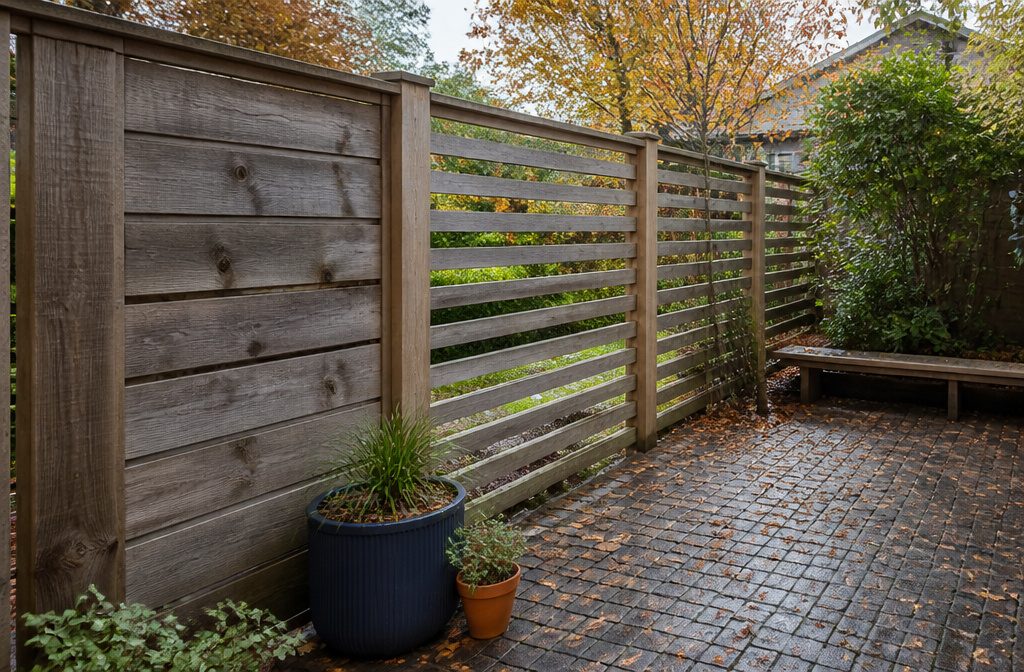
Styles run from a low picket fence that hides nothing to solid cedar, composite or vinyl that blocks every sightline, and the deciding factor is how much you need hidden. Solid panels on all sides feel boxed in.
Use slatted sections for light, with one solid panel where neighbors look in. Pools need the opposite: no gaps.
1. Solid Timber Panels
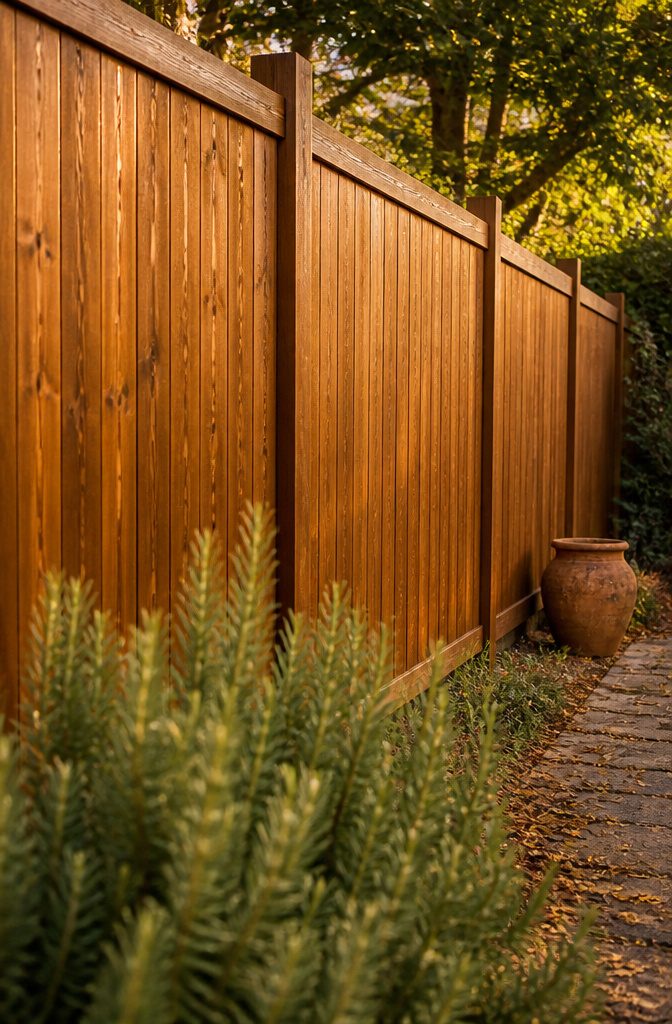
Closeboard and lap panels are the solid wood fence in most photos, with 7,800+ wooden privacy fence images listed online.
Closeboard uses vertical feather-edged boards on posts and rails; lap panels overlap boards horizontally in a timber frame. Both give full blocking, with no light through it.
Match the stain to the house and the fence recedes. Contrast it and the fence frames the plants.
Solid on every side can feel boxed in:
Avoid solid fencing on all sides, which looks overly severe or boxed-in. Combine slatted fencing that lets light through with a solid panel where you need the most privacy.
Put the solid panel where the neighbors look in.
Recommended Products
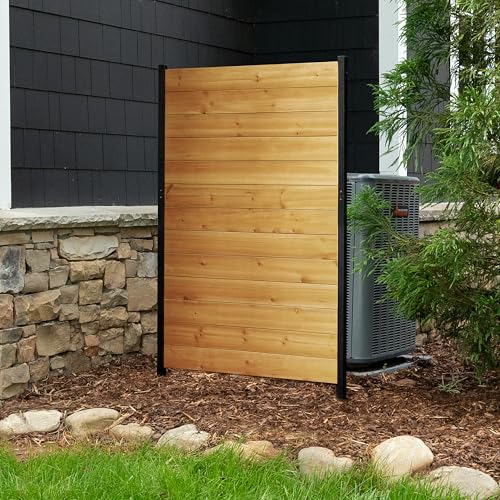
STYLISH NATURAL WOOD: This FSC certified wood screen is made with real wood meaning no two boards have the same grain color, finish, or wood knots differing it from vinyl outdoor privacy fence screen panels.

STYLISH NATURAL WOOD: This FSC certified wood screen is made with real wood meaning no two boards have the same grain color, finish, or wood knots differing it from vinyl outdoor privacy fence screen panels.

STYLISH NATURAL WOOD: This FSC certified wood screen is made with real wood meaning no two boards have the same grain color, finish, or wood knots differing it from vinyl outdoor privacy fence screen panels.
2. Slatted Horizontal Fencing
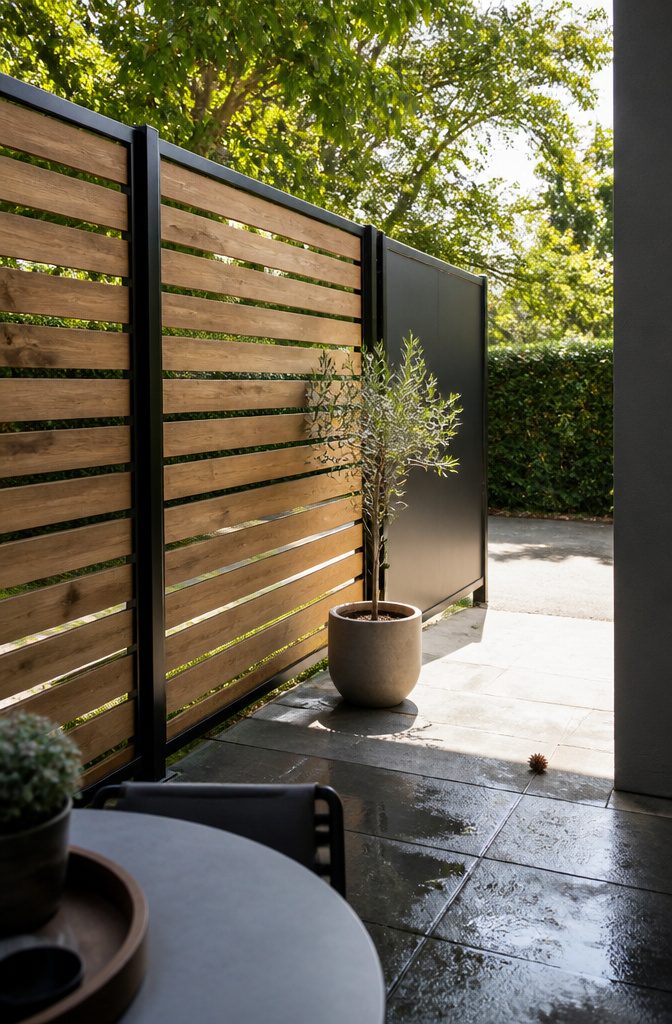
Horizontal boards read as modern before anything else.
Trex offers two versions: Horizons wraps interlocked horizontal pickets in a black metal frame for a sleek, urban look, and Horizontal adds a composite top and bottom rail that hides the frame for a more uniform finish.
I’d choose Horizons when you want the frame to be part of the design.
On a small patio facing a street or driveway, solid fence on every side feels boxed in.
Use slatted sections that let light through, with one solid panel where you need the most privacy. A slatted wood privacy screen at $135.18 is a budget way to try the look.
Recommended Products
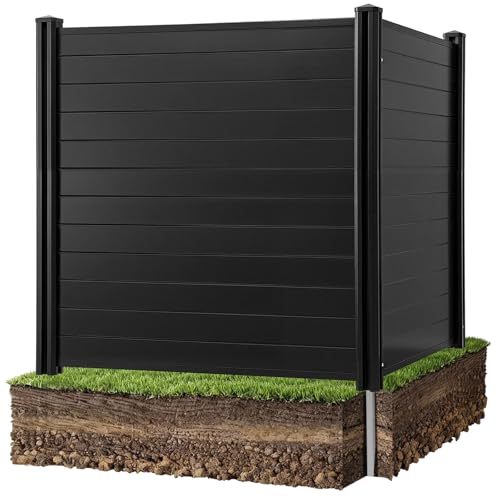
Backyard Privacy Enclosure: Our vinyl fence panel set includes 2 panels measuring 48 x 48 in, ideal for concealing outdoor items like trash bins, pool equipment, and air conditioners, keeping your backyard neat and attractive while meeting HOA guidelines

Backyard Privacy Enclosure: Our vinyl fence panel set includes 3 panels measuring 50 x 50 in, ideal for concealing outdoor items like trash bins, pool equipment, and air conditioners, keeping your backyard neat and attractive while meeting HOA guidelines

Backyard Privacy Enclosure: Our vinyl fence panel set includes 2 panels measuring 50 x 50 in, ideal for concealing outdoor items like trash bins, pool equipment, and air conditioners, keeping your backyard neat and attractive while meeting HOA guidelines
3. Wood-and-Metal Combination
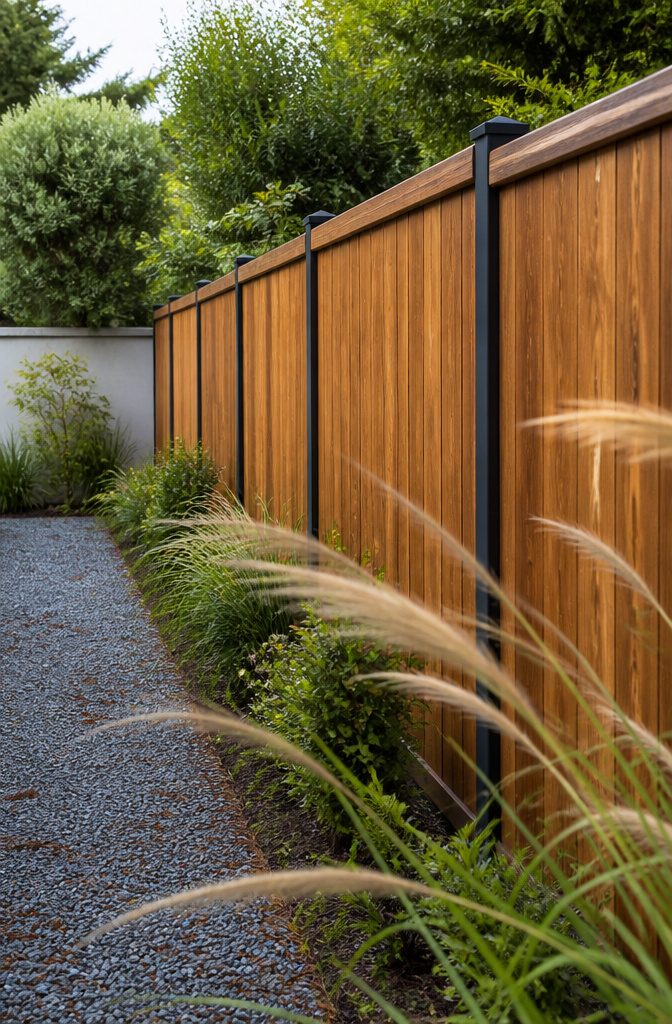
Warm wood against black metal makes a fence look designed rather than just built.
Stained cedar tongue and groove boards between vertical black H-tracs show it best: the boards close every gap, so the wood reads as a solid field and the metal as its outline.
Darker western red cedar with a black frame goes moodier and more modern.
For a flatter, more architectural look, I’d pick wide horizontal planks with black metal posts and a wood cap.
The cap repeats the plank tone along the top edge, so the dark posts stay a crisp vertical rhythm against the warm boards instead of cutting the fence into sections.
Recommended Products

【For What Size?】Actual internal size of our fence caps is 3.6”×3.6”, which is suitable for 3.5*3.5 inches to 3.6*3.6 inches wood fence post. Application for protecting the top of wood post like deck railing, wooden fence, woody handrail, porch railing and so on. NOTE that measure your posts before use and sanding is required for the wood to fit the post cover if your wood is slightly larger.

【Fit for wood post size】: The interior dimension of this 6x6 matte black pyramid cap is 5-5/8" x 5-5/8", made for 6x6 nominal size post (5-1/2"x5-1/2" actual size). Robust and beautiful!

The Last Post Cap You’ll Ever Need – Made from heavy-duty aluminum with a matte black coating, these 4x4 post caps resist scratches, fading, and cracking—far more durable than plastic or wood alternatives.
4. Composite Fencing
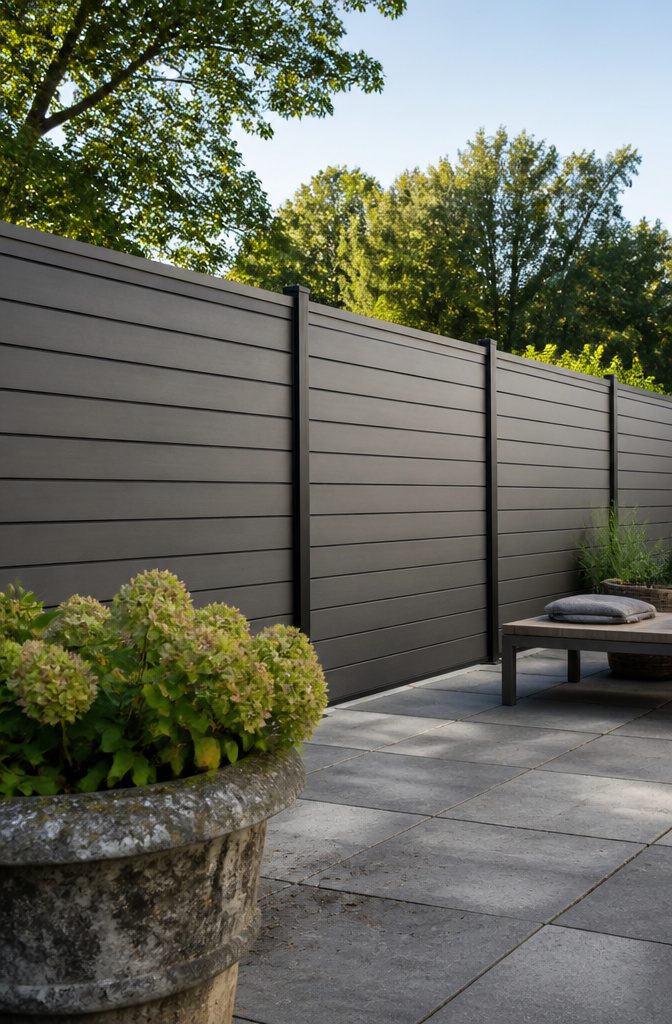
Composite boards suit a yard where wind, dust or traffic noise is the real problem.
The material is dense, so it works as a solid barrier against wind, dust and noise, which makes it a good fit around a patio where you want quiet, wind-free dinners.
Trex launched its fencing line in 2005, and the boards come in a range of looks, including panels with defined shadow lines and a taller, stately style.
Composite also has a low-maintenance reputation, and I’d pick it over vinyl or chain link when blocking the elements matters more than marking a boundary.
How it compares with wood on cost and lifespan for your fence is something I can’t settle here. Price both for your own footage before you commit.
Recommended Products

【Perfect Fence to Protect Privacy】With this privacy screen fence, you could have fun with your families not worrying about losing privacy. Also, helping you cut off some noise from your neighbours to give you a peaceful environment. Your dog will not bark from outdoor things and people too.

Upgrade iCover Privacy Screen For Fence: Our privacy screen is made of heavy-duty knitted net, measuring 4 ft high by 50 ft long. It is suitable for fences with a height of 4 ft or slightly higher. Please accurately measure your fence before purchase
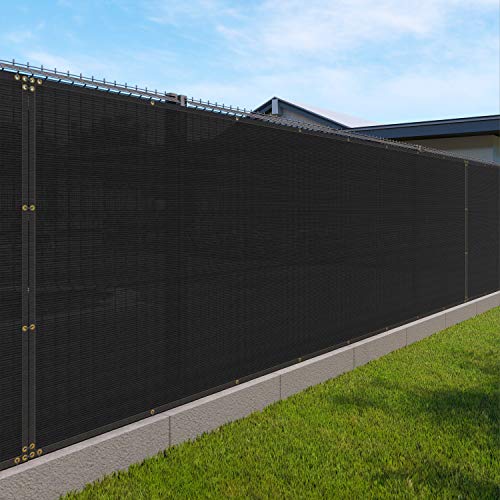
Perfectly Protect Your Yard Privacy: 90% visibility blocking, prevent peeping outside the yard, block nose neighbors see through, protect safety and enjoy freedom. It can also prevent animals from entering your yard, block surrounding noise and street views, block dogs' sight and prevent bark.
5. Vinyl and Picket Fences
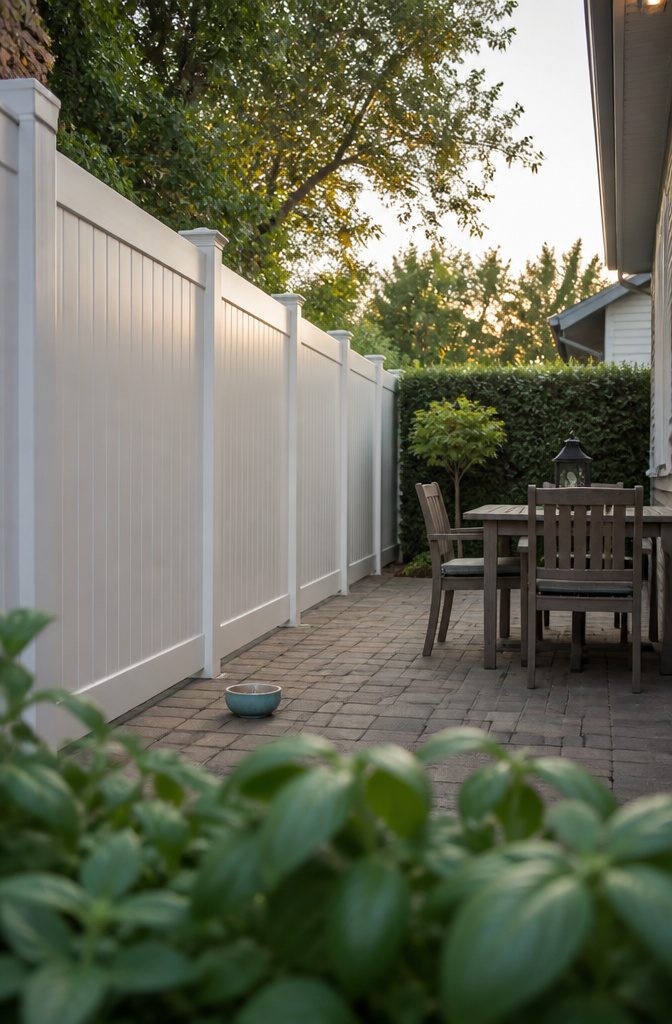
A picket fence marks a boundary and hides nothing.
The low height and the gaps between pickets let neighbors see straight in, which suits a vegetable patch that needs protection from pets and children. For more cover, grow a hedge behind it or let climbers weave between the rails.
Wherever privacy is the goal, I’d skip the plain picket and go with solid vinyl privacy panels. Tall, gap-free panels close off a dining area completely.
Tongue-and-groove pickets fit together to remove the gaps between boards, so you can keep a picket look and still screen. A no-dig vinyl picket kit is the easiest install, but it stays a low, open fence.
Recommended Products

EASY ORDERING: Everything you need for your fence project is in the box except for the final post. Only ONE additional post, BL19112, is required for the end of your project. A gate is available by searching BL19111.

DIMENSIONS: Standard 6 feet high by 6 feet wide panel size, perfect for residential privacy fencing needs

Comes with a hard surface installation kit – No extra purchase needed.
6. Bamboo and Woven Screens
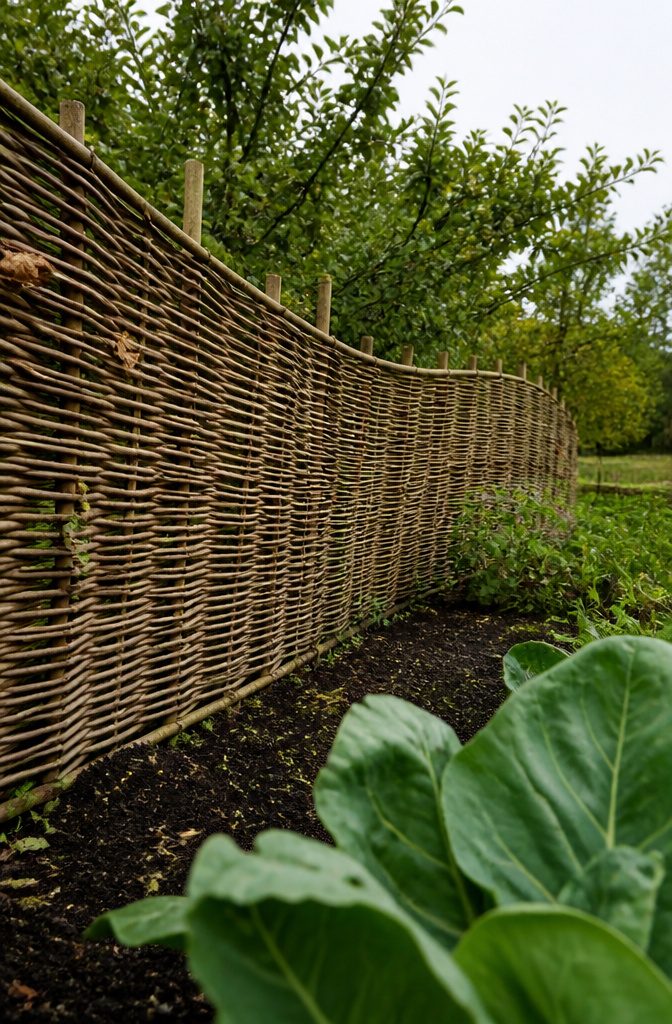
Woven hurdle panels of willow or hazel look rustic and soft where sawn boards look crisp and formal.
The weave is open, so wind passes through instead of pushing against it, and sunlight still reaches the plants behind. That makes them my pick around a kitchen garden.
They’re cheap, and they can be shaped to follow a curved boundary. Climbers grab the weave with their tendrils, so a woven panel can double as a living wall, though the plants can damage it over time.
Bamboo used as infill, screening or a gate brings the same natural, informal texture. Expect filtered screening rather than total, since the weave is open.
Recommended Products

✅ Natural Solid Wood Construction-- Crafted from real solid wood, each panel features unique wood grain, color, and natural knots—delivering a warm, organic look that vinyl or composite screens can't match.

STYLISH NATURAL WOOD: This FSC certified wood screen is made with real wood meaning no two boards have the same grain color, finish, or wood knots differing it from vinyl outdoor privacy fence screen panels.

Neighbor Privacy, Not Blackout: Blocks direct line-of-sight while allowing airflow — designed for comfortable backyard privacy, not a solid wall or tarp.
7. Metal and Iron Panels
Galvanized corrugated steel panels can replace wood entirely and give you a solid, modern fence line.
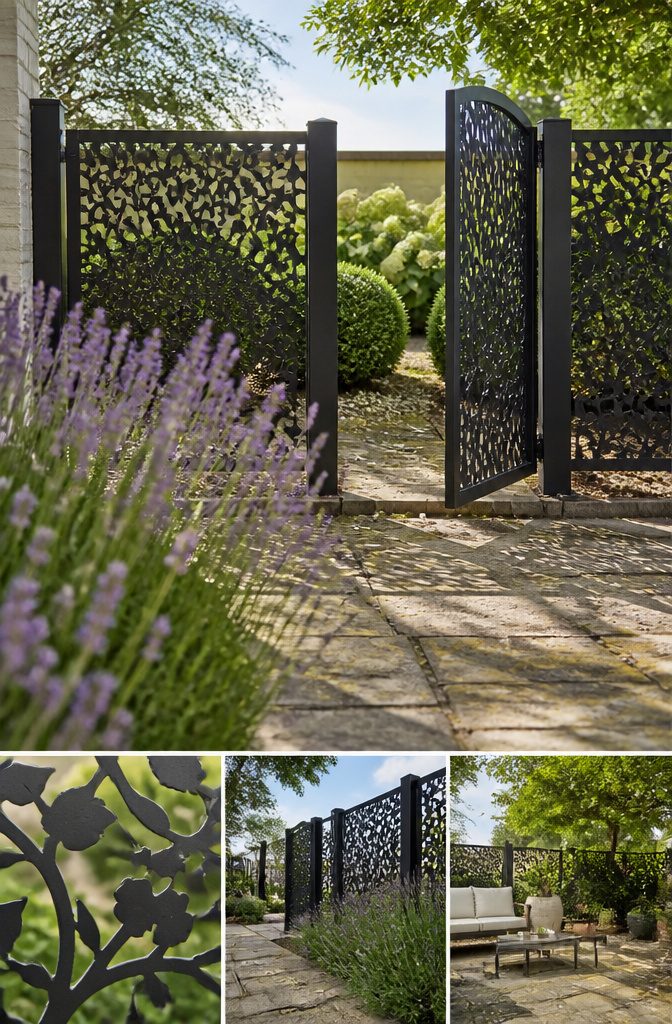
Cut-out decorative metal panels work best as a design feature, such as a short run along a patio or entry, because light and sightlines pass through the pattern.
Wrought iron railings are strong, can be painted any color, and need little upkeep, but they were made to show the view. Cut-out and iron styles trade full privacy for looks unless backed with solid panels.
Wood gates tend to sag and drag over time, so I’d pair any of these fences with a wrought iron swing gate. An arch-top walk-through looks good, and a rolling gate suits a wide opening.
Recommended Products

1 SCREEN PURCHASE: You will receive preassembled materials to construct 1 cedar wood outdoor privacy screen in a charcoal finish with your purchase

Outdoor privacy fence screen designed to significantly reduce visibility for patios, pools, balconies, gardens, and work sites.

【Natural Solid Wood with Unique Grain】Crafted from real wood, each privacy screen features its own natural grain patterns, color variations, and wood knots, bringing warmth and character to your outdoor space. Unlike vinyl or composite alternatives, the natural wood construction blends beautifully with gardens, patios, and landscaping.
8. Trellis Fencing
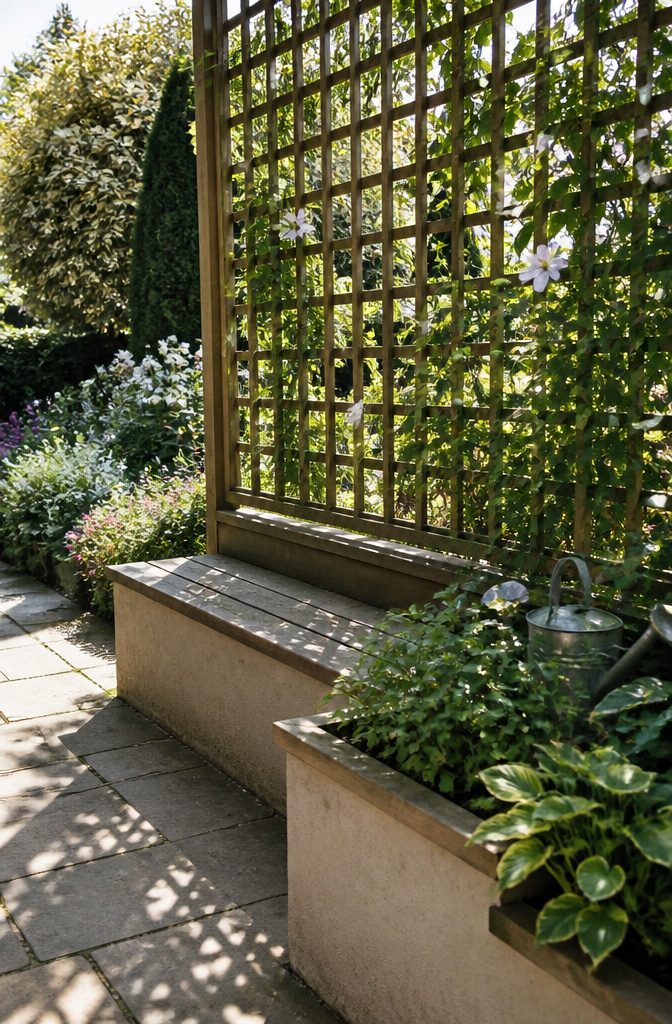
Trellis and lattice divide a yard without blocking sunlight, but they screen far less than a solid fence, so I treat them as zoning and plant support rather than a boundary.
- Lattice or square trellis sections off a sitting area, and climbing plants grown against it make a living wall.
- Wire trellis is the lighter version for roses and clematis. Keep it inside the yard, not on the outer boundary.
- Belva lattice panel trellis, $164.99: comes with a raised garden bed built in.
- MyGift wood trellis, set of 2, $159.99: about $80 per trellis.
- Ajo 6-foot lattice panel, $279.99: the most expensive per panel.
MyGift is the best value at roughly $80 a trellis. Belva only makes sense if you want the planter bed included.
Recommended Products

304 Stainless Steel: Bnuok self tapping screws are made of black oxide stainless steel 304 (18-8), featuring great corrosion and rust resistance, high strength, no deformation, not be easily stripped, offer longer service life
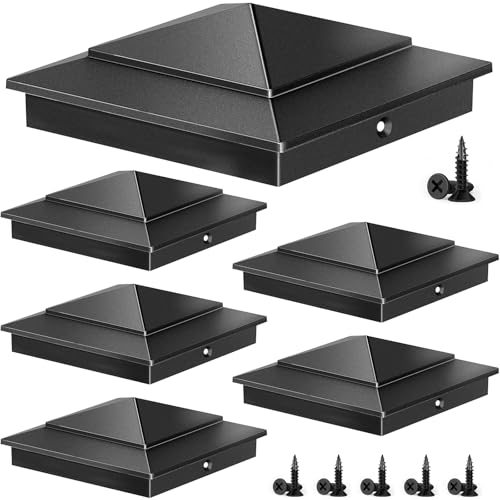
The Last Post Cap You’ll Ever Need – Made from premium Aluminum with DUAL-layer black coating, these 6x6 post caps are highly resistant to scratches, fading, and they will never crack. Unlike other pyramid caps, ours feature smooth, rounded corners for a comfortable touch—no sharp edges to worry about!

The Last Post Cap You’ll Ever Need – Made from premium Aluminum with DUAL-layer black coating, these 6x6 post caps are highly resistant to scratches, fading, and they will never crack. Unlike other pyramid caps, ours feature smooth, rounded corners for a comfortable touch—no sharp edges to worry about!
9. Living Screens
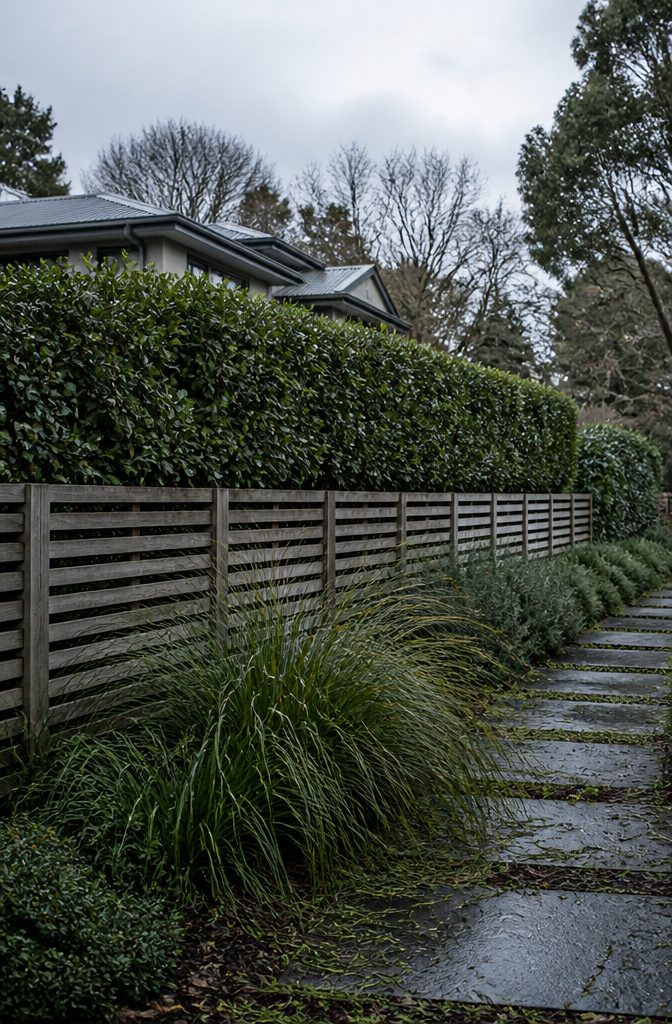
Check your USDA zone before buying anything tall. A banana plant ($35.15) grows outdoors only in zones 8 to 11, and an Areca palm ($24.73) needs partial sun, so both are poor bets in colder yards.
Tall, colorful planting along a slatted fence adds height and screens the gaps, and climbers can cover the panels themselves.
Privet or box hedge works as the boundary on its own or fills in beside a fence. In a cold zone, I’d pick a hedge over a palm every time.
Where the ground steps up, a retaining wall of vertical oak sleepers becomes a raised bed. Tall grasses on top add height, and low herbs or shrubs soften the face.
Recommended Products

Perfectly Protect Your Yard Privacy: 90% visibility blocking, prevent peeping outside the yard, block nose neighbors see through, protect safety and enjoy freedom. It can also prevent animals from entering your yard, block surrounding noise and street views, block dogs' sight and prevent bark.

Privacy Solution: Most economical way for privacy over chain link fence, porous decorative concealment, existing cyclone wire fence, wood retaining wall, welded wire fence, chain link fence, privacy barrier around swimming pool, block nose neighbor see through, add privacy to acre back yard backdrop, front yard, patio, garden and porch; hide street, road, construction site, pet kennel pen, block surrounding noise and street view, stops dogs from barking at neighbors.

Upgrade iCover Privacy Screen For Fence: Our privacy screen is made of heavy-duty knitted net, measuring 4 ft high by 50 ft long. It is suitable for fences with a height of 4 ft or slightly higher. Please accurately measure your fence before purchase
10. Patio, Corner and Pool Screens
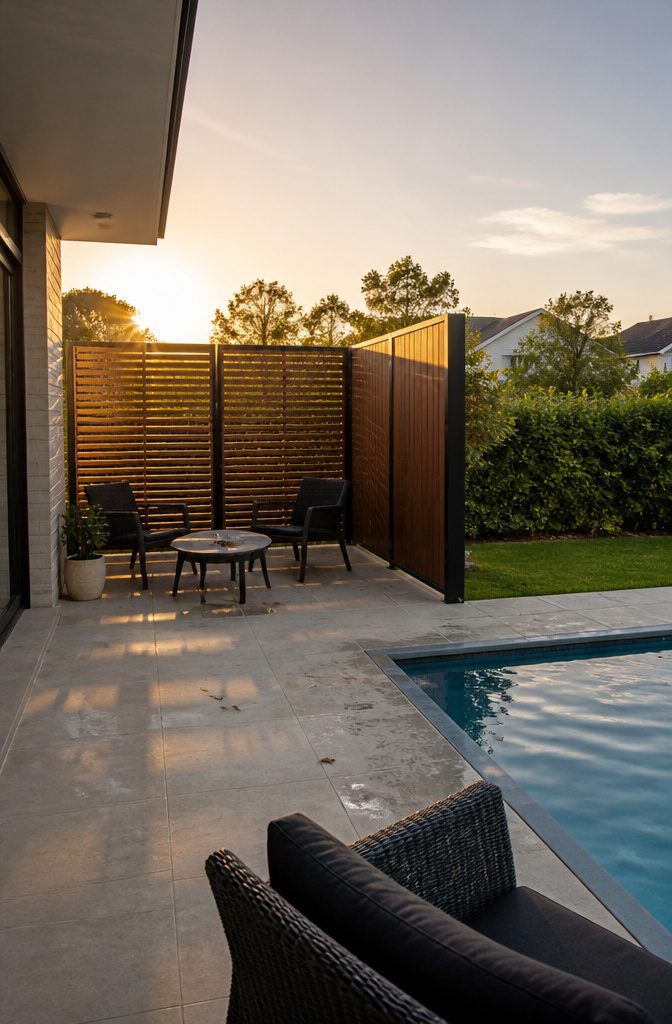
A corner nook is the simplest way to carve out a private seat, and it works in painted or natural wood, so match the finish to your house.
For a small patio facing a street or driveway, I’d skip solid panels on every side, which feels boxed in.
Use slatted panels to let light through and put one solid panel where you most want to be hidden. On a roof or balcony, horizontal slats do the same job.
Pools call for the opposite approach: a closed fence with no gaps.
Composite tongue-and-groove planks on a metal frame fit together with no spaces between boards. Black metal paired with gray stained wood also looks good around water.
Recommended Products


PRIVACY AND CHARM: Our no dig air conditioner fence is perfect for hiding unattractive backyard items such as AC units, trash cans, pool equipment, children's toys, and more.

Sufficient Quantity: our product package includes 4 x Vinyl pocket rails; These are precision-crafted and come in an aesthetic white color adding value and elegance to your property; Trust our quality and design to provide your property with an attractive, durable and secure construction
11. Garden Zoning
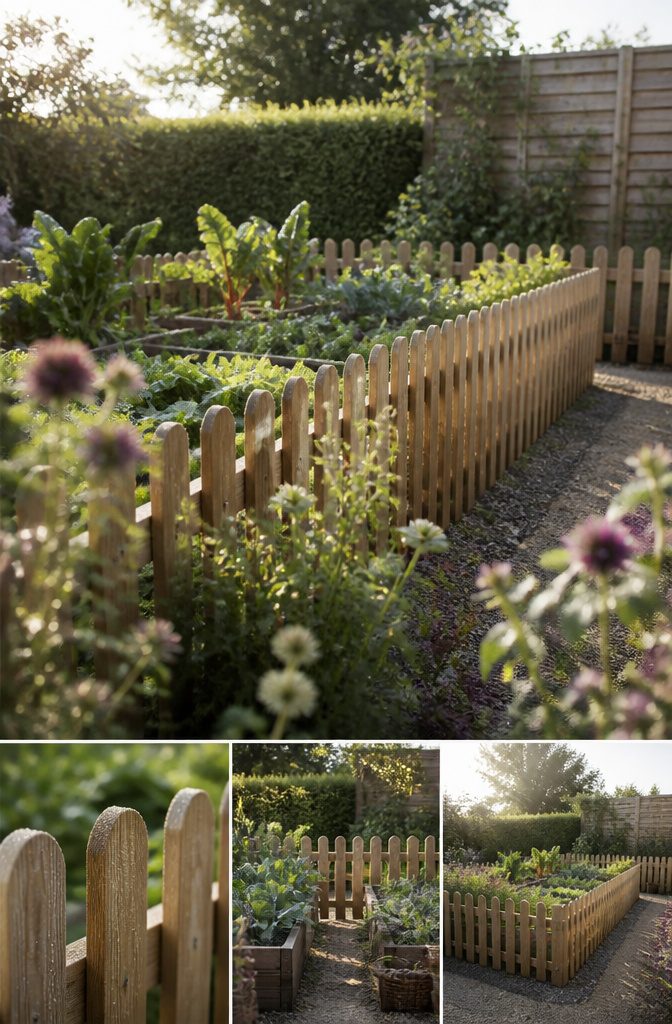
A fence inside the yard has a different job than one on the property line.
For a quiet garden, close in a back corner with solid panels and plant an herb bed edged with flowering plants, so the spot feels like a small room built for gardening.
Vegetable beds do better behind a low picket fence that keeps pets and children out.
The gaps between pickets still let you see the beds from the patio. Grow a hedge behind the fence or let climbers weave through the rails if you want more privacy.
As a backdrop, set lattice or slatted screening behind a flower border.
Lattice lets sunlight through, and climbing plants turn it into a living wall. Slatted screening gives a more modern look.
12. Fences on Slopes and Walls
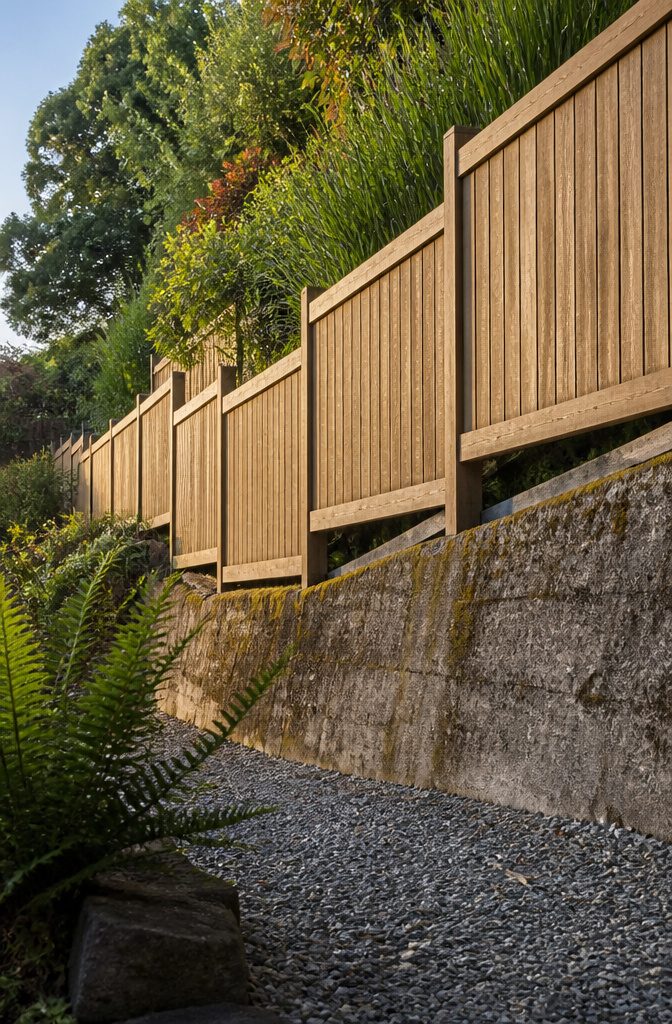
On a slope, stepped panels stay level and drop at each post. That gives a staircase outline and a wedge-shaped gap under the high side of each panel.
A raked fence tilts every panel to match the ground, so the top line runs smooth. I pick raked for a cleaner look and stepped when I’m working with rigid, pre-made panels.
Where a concrete, brick or retaining wall marks the boundary, the fence can mount directly to the top of the wall, adding privacy height without a second structure.
Setting the fence in the ground just above a retaining wall gains the same height. A taller run in one spot screens a seating area without raising the whole line.
13. Boundary and Utility Screening
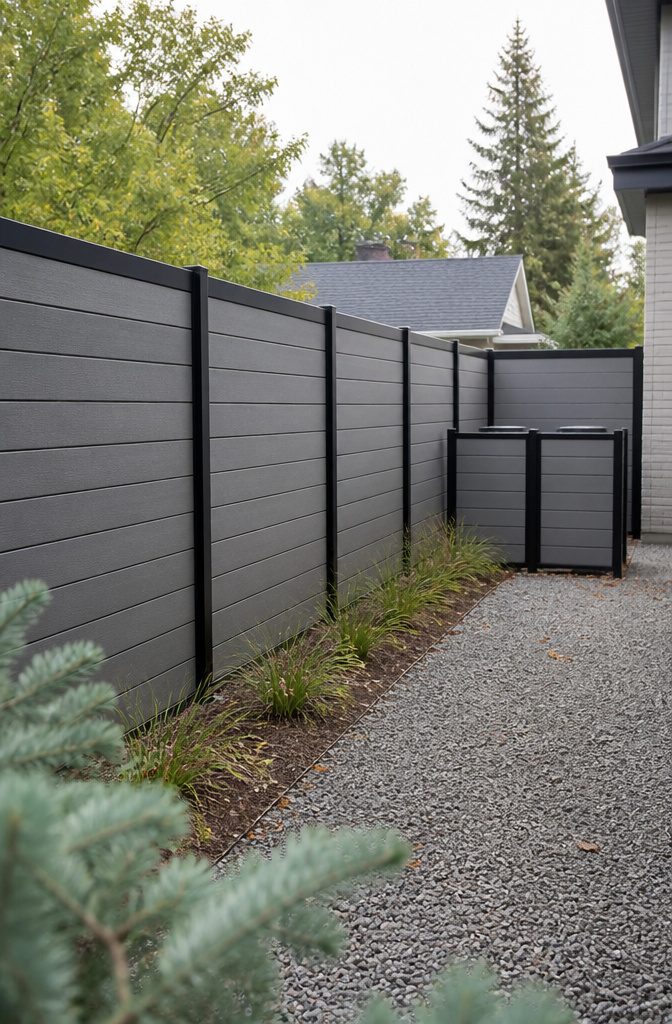
A property-line fence marks where your lot begins and ends, and a solid one adds privacy for you and your neighbors.
It is also far harder to climb than chain link, which is why commercial sites often add privacy slats or swap to solid panels. Gray composite planks on a black metal frame are one clean-looking commercial combination.
Utility screens are the simpler project. A short run of fence hides AC units, pool pump equipment, garbage cans or a generator, and matching the house or building design keeps it from looking tacked on.
For a dumpster or large generator, plan on wide double gates so trucks and service crews can still get in.
Many HOAs set fence rules, so get approval before you build.
Cedar or Pressure-Treated Pine
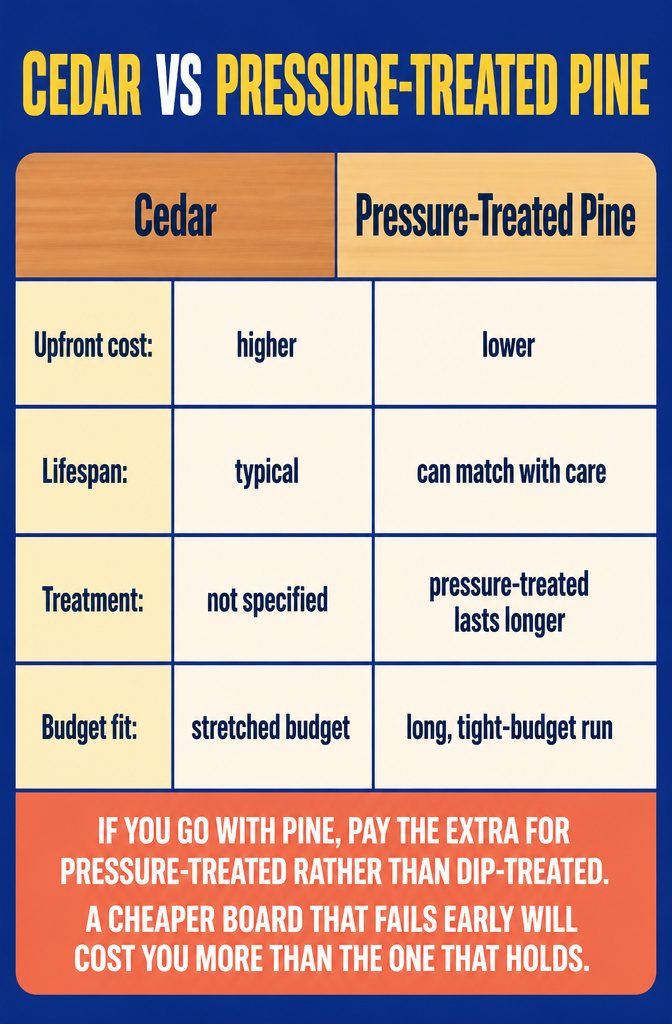
Cedar is the better timber for most privacy fences, and I’d choose it whenever the budget stretches that far.
Pressure-treated pine costs less and can last just as long if you look after it, so it makes sense for a long run of fence on a tight budget.
Check how the wood was treated before you buy.
Dip-treated boards are immersed in preservative. Pressure-treated boards also get preservative but are dried first, which lasts longer and costs more.
If you go with pine, pay the extra for pressure-treated rather than dip-treated. A cheaper board that fails early will cost you more than the one that holds.
Metal-Framed Panel Lifespan
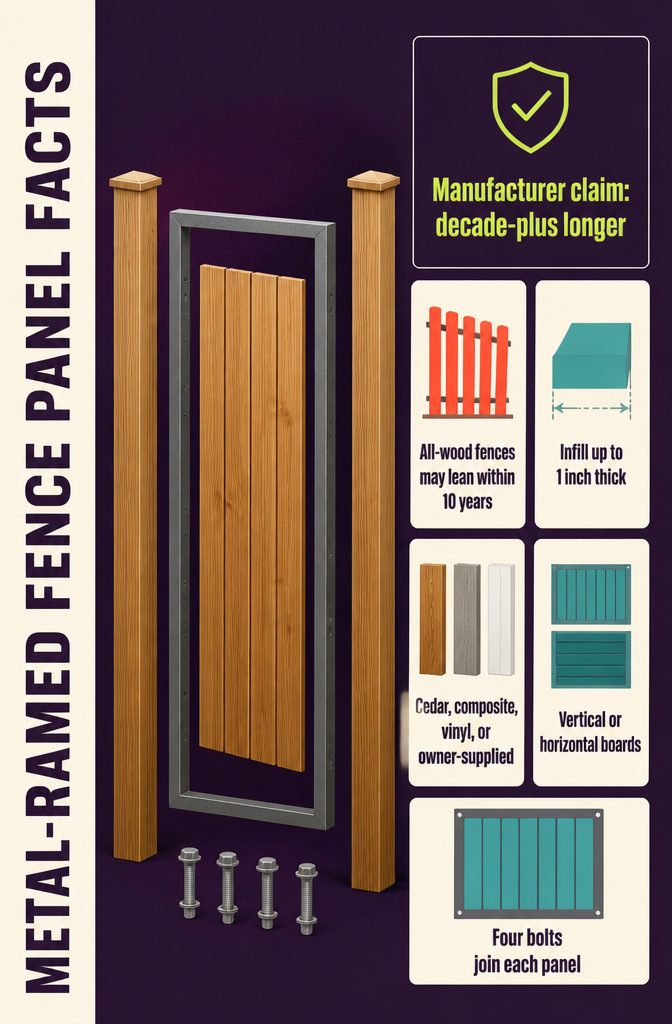
All-wood HOA fences often lean and look wavy within 10 years.
FenceTrac claims its metal-framed system can outlast all-wood by a decade or longer, but that is the manufacturer’s claim, so I’d read the warranty before counting on it. The design works like this:
- A U-shaped metal frame holds the infill between posts, so the panel keeps its shape.
- The infill can be any rigid material up to 1 inch thick.
- Cedar, composite and vinyl are the offered choices, and some owners supply their own.
- Boards can run vertical or horizontal.
- An 8-foot metal-composite panel is one finished example.
- Four bolts join the pieces of each panel.
Frequently Asked Questions
What kind of wood is best for a privacy fence?
Cedar is the better timber for most privacy fences if the budget stretches that far.
Pressure-treated pine costs less and can last just as long with good care. If you choose pine, pay extra for pressure-treated boards over dip-treated ones, since they are dried first and last longer.
How do you prevent gaps between fence pickets?
Use tongue-and-groove pickets or infill that locks together, so no spaces open between boards.
This lets you keep a picket look and still screen the yard. Around pools, composite tongue-and-groove planks on a metal frame give a fence with no gaps at all.
Should I use composite fence boards instead of wood?
Composite is the better pick when wind, dust or traffic noise is your main problem, because the dense boards act as a solid barrier.
It also has a low-maintenance reputation. Cost and lifespan for composite and wood vary by brand, grade, and region, so price both materials for your own footage before you decide.
How do you build a unique privacy fence?
Mix materials. Stained cedar tongue-and-groove boards set between vertical black metal H-tracs look custom, as do wide horizontal planks on black metal posts with a wood cap.
A metal-framed system like FenceTrac uses a U-shaped frame to hold infill up to 1 inch thick, in cedar, composite or vinyl, with boards running vertical or horizontal. Check your HOA’s fence rules before you build.









