
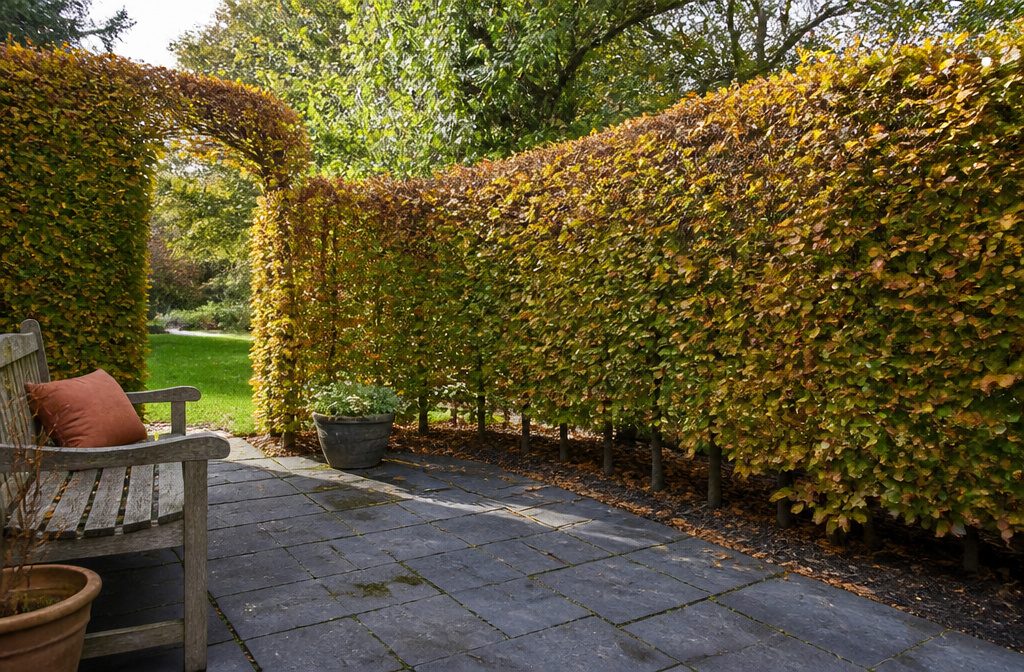
A living fence is a row of trees or shrubs planted close enough to form a dense green barrier along a property line.
It takes 2–5 years to fill in, and around a pool it cannot replace a built fence. For a patio, a hedge 4–6 feet tall closes the space in.
What a Living Fence Is
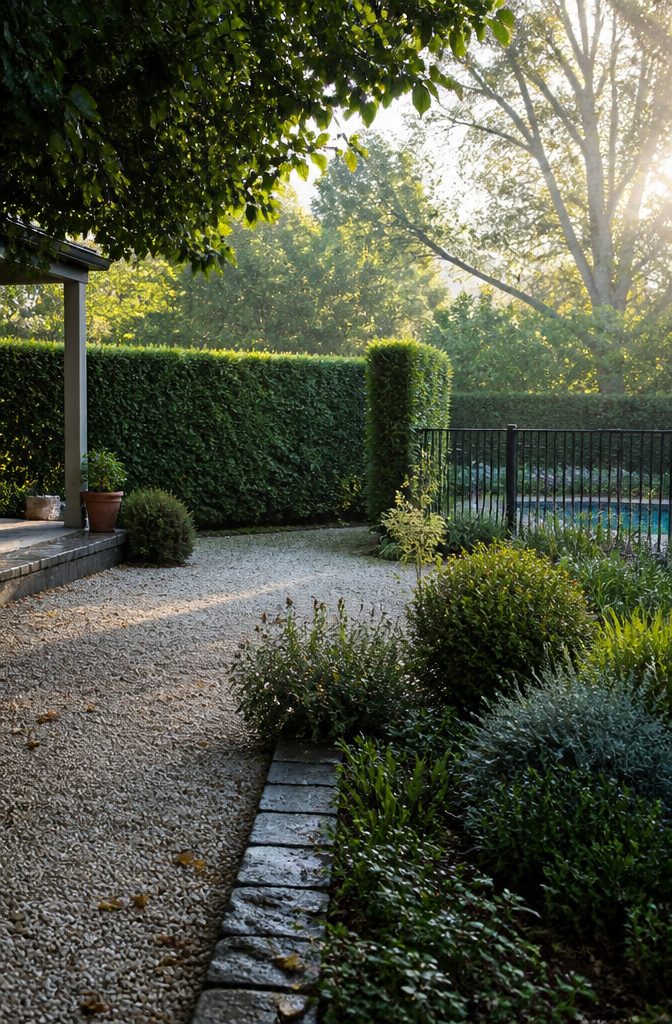
A living fence is trees or shrubs planted closely together to form a dense, green barrier. It marks the property line, adds privacy, and can divide a yard into garden rooms.
Regular pruning pulls the individual plants into one cohesive unit that reads as a single natural feature. Not every hedge needs that treatment, though, and a looser, unclipped planting is a fine choice if you like a softer edge.
Around a pool, a hedge can’t replace a built fence, since safety calls for traditional fencing there. Plant the hedge in front, and the greenery softens the fence and blends it into the garden.
Shaping Garden Spaces
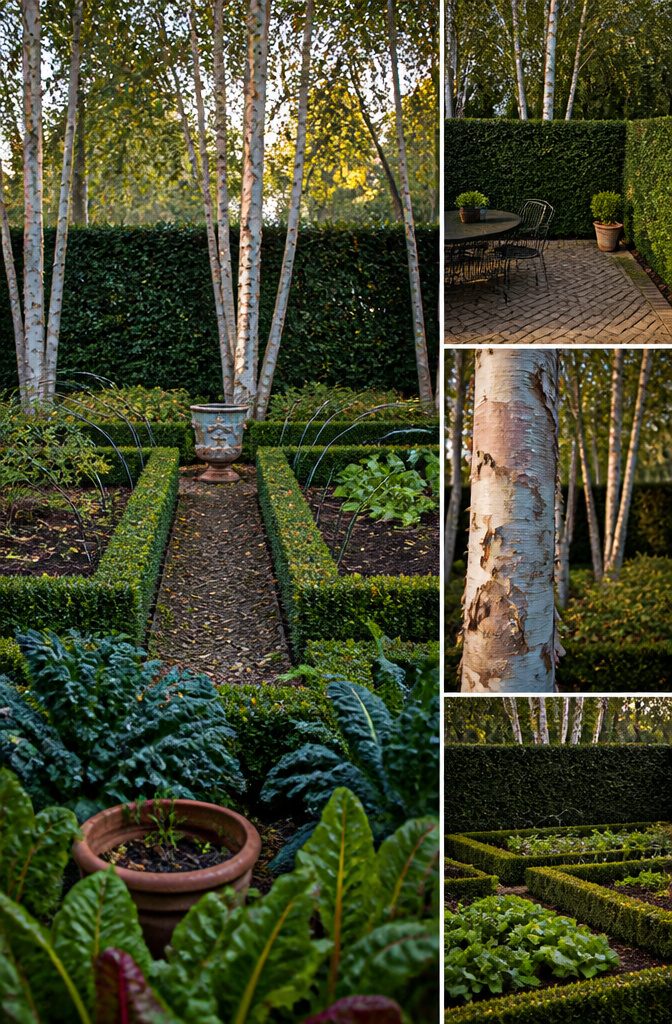
A hedge is a wall you can plant, so it does more than hide you from the neighbors.
Low hedges split a vegetable garden into zones, with one block for each crop. For a patio or seating area, use a hedge 4–6 feet tall, which closes the space in and gives it a cozy feel.
Dark evergreens also make the best backdrop I can picture for ornamental plantings.
A grove of river birches (Betula nigra Heritage™) looks its best with a dark evergreen hedge behind it, because the peeling white and pink bark stands out against the green.
Run a hedge along a walkway and it pulls visitors forward, so end the path on a decorative container, a sculpture or a specimen tree.
Choosing Hedge Plants
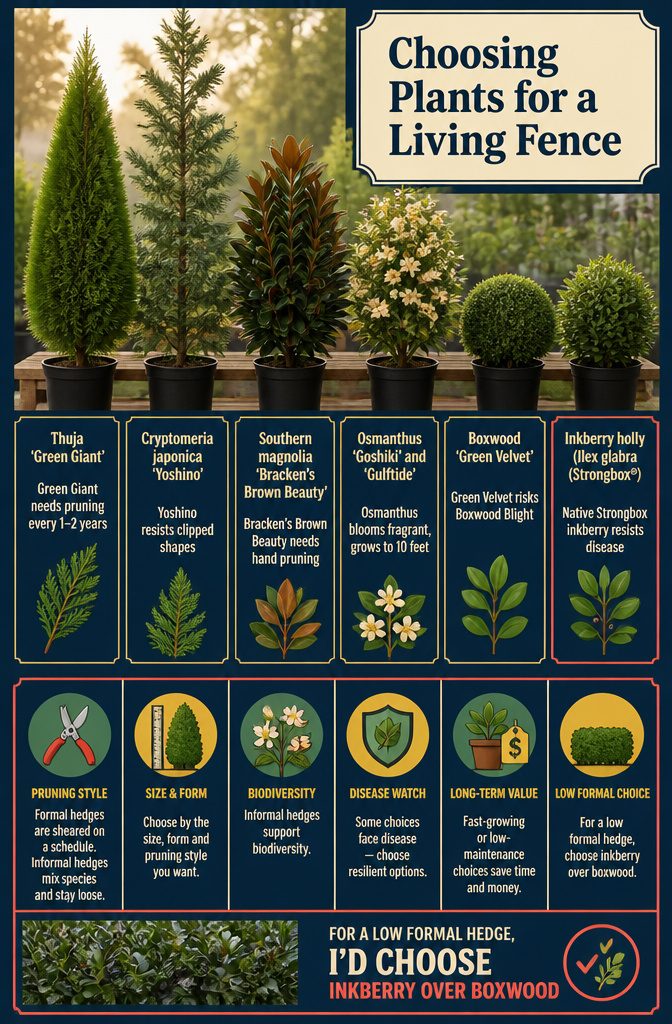
Formal hedges are sheared on a schedule.
Informal hedges mix species and stay loose, which also supports biodiversity. Choose by the size, form and pruning style you want:
- Thuja ‘Green Giant’: very fast-growing evergreen that benefits from pruning every 1–2 years.
- Cryptomeria japonica ‘Yoshino’: a tall, informal hedge over time. It does not respond well to pruning, so skip it if you want a clipped shape.
- Southern magnolia ‘Bracken’s Brown Beauty’: evergreen. Use hand pruners or a pole saw, because shearing hurts it.
- Osmanthus ‘Goshiki’ and ‘Gulftide’: intermediate hedges up to 10 feet, with fragrant blooms.
- Boxwood ‘Green Velvet’: popular, but susceptible to Boxwood Blight, so use it cautiously.
- Inkberry holly (Ilex glabra Strongbox®): a native, disease-resistant alternative to boxwood.
For a low formal hedge, I’d choose inkberry over boxwood.
Pruning a Living Fence
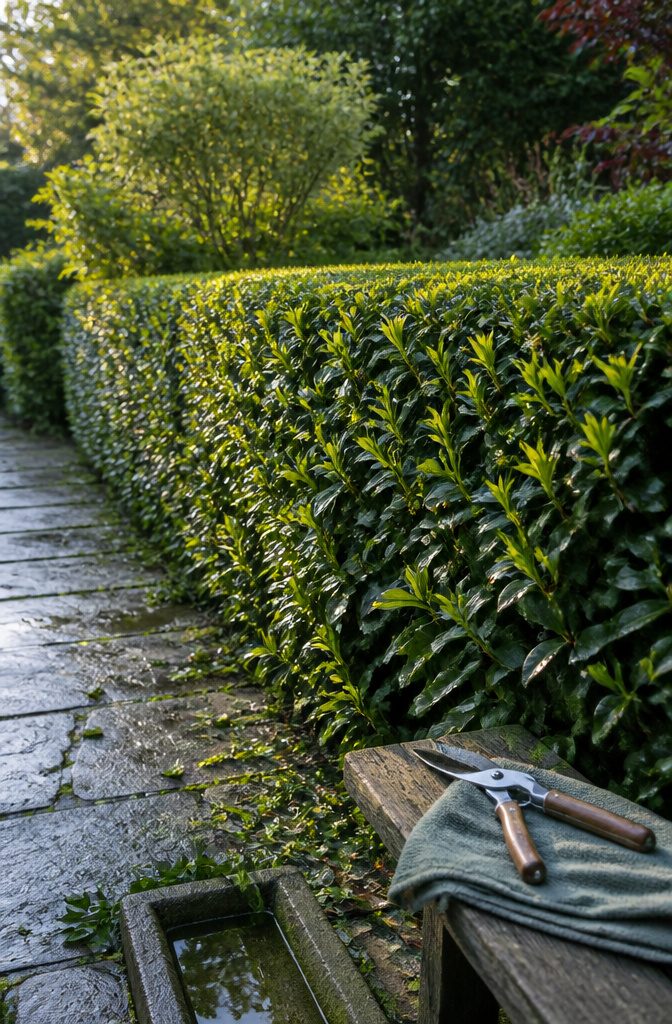
Pruning keeps a living fence dense, holds its shape, and supports plant health.
Formal hedges need the most attention: cut them in early spring and again in late summer. Informal or mixed-species hedges are easier.
A light pass with hand pruners once a year is often enough, and some need almost nothing, which leaves more cover for wildlife. Plan on at least 1 or 2 cuts a year for any hedge you want to stay tidy.
Use sharp, clean blades.
Clean cuts heal faster, and wiping the blades between plants keeps disease from traveling down the row. Magnolia and Cryptomeria resist shearing, so skip the hedge trimmer on them and let them keep their natural form.
Watering, Mulching, and Fill-In Time
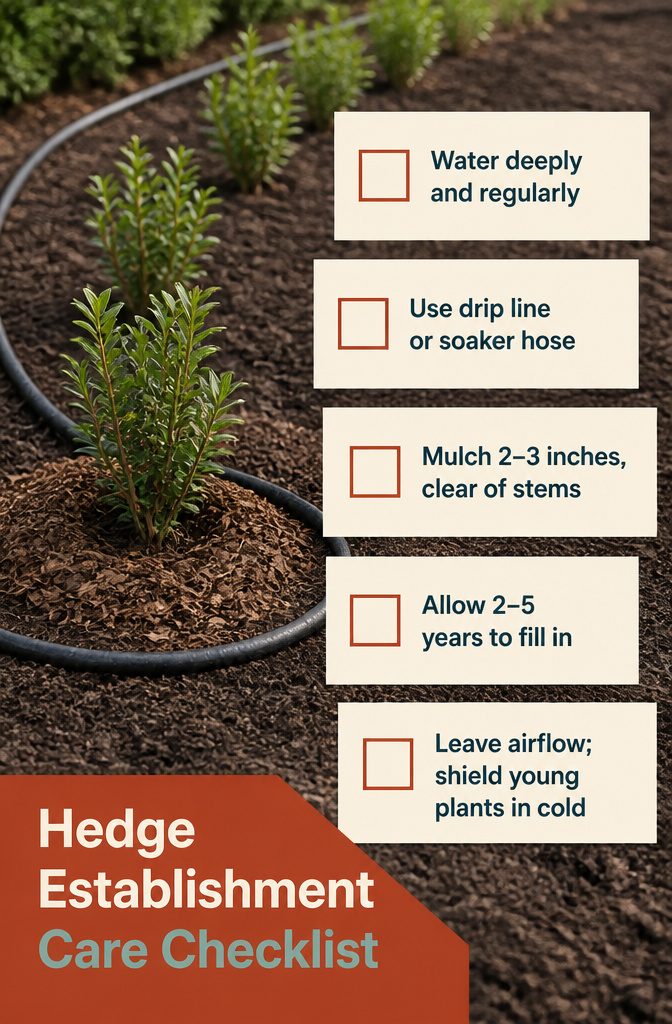
Newly planted hedges need regular, deep watering to build strong roots.
A soaker hose or drip line beats a sprinkler because it puts the water at the roots. In a drought, water deeply and less often instead of giving shallow sips every day.
Spread 2–3 inches of shredded bark or leaf mold around the base, and keep it a few inches off the stems or trunks so they don’t rot or attract pests.
Plan on 2–5 years for the hedge to fill in, depending on species and spacing.
Give plants room for airflow, since crowding invites scale insects, fungal disease and leaf spot. In cold climates, shield young plants with a burlap screen or windbreak.
Hedges for Birds and Wildlife
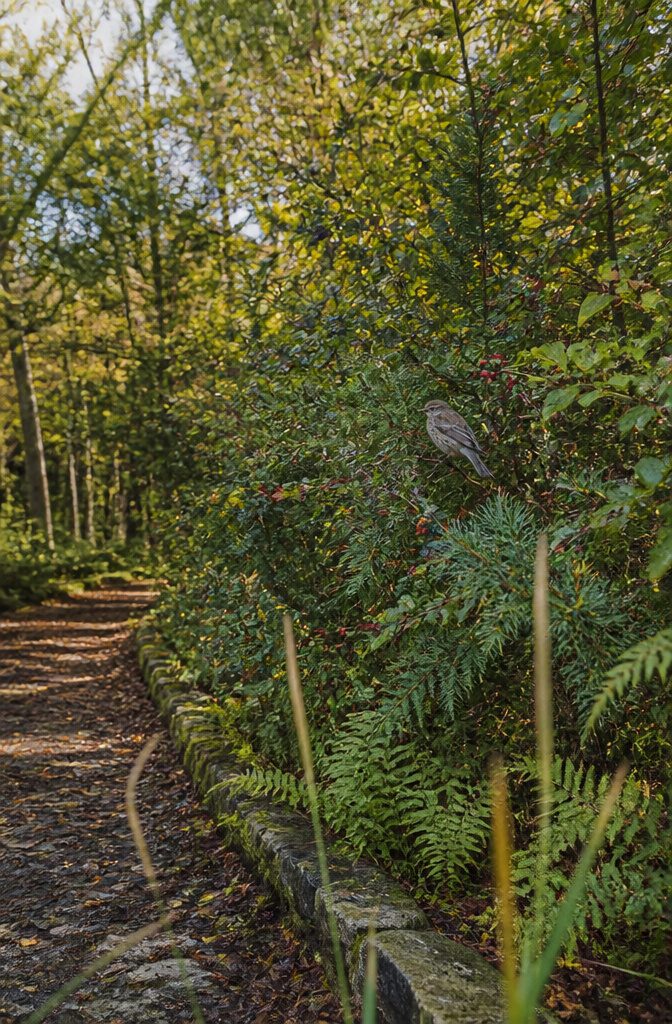
A mixed native hedge supports far more wildlife than a single row of clipped shrubs. At Stoneleigh, a public garden near Philadelphia, a hedge of native evergreen and deciduous shrubs gives birds good nesting habitat.
Two of its plants are hornbeam (Carpinus caroliniana) and spicebush (Lindera benzoin), and both are easy to copy in a home planting.
For the evergreen backbone, I’d choose Emerald Sentinel™ Eastern red-cedar (Juniperus virginiana) or American holly ‘Satyr Hill’ (Ilex opaca). Emerald Sentinel produces blue fruits that native songbirds favor, and ‘Satyr Hill’ also fruits for native birds.
Leave the hedge loose or prune it lightly by hand. That keeps it useful to wildlife and cuts down on trimming.
Espalier, Topiary, and Clipped Hedges
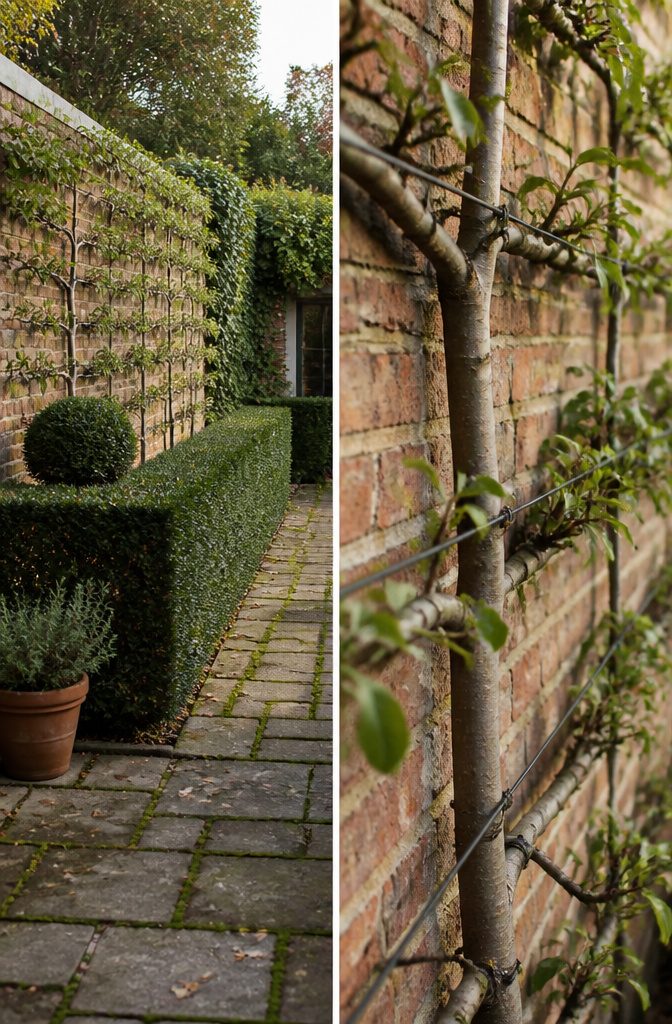
Espalier trains a tree flat against a support, such as a wall, a fence or a set of wires, so it grows as a decorative pattern instead of a mound.
It needs regular tying in of branches, but it takes up very little depth, which suits a narrow yard.
Topiary sculpts shrubs into ornamental shapes.
It asks for the most attention of the three, because a shape that loses its outline looks like a neglected bush. I’d use it as an accent, not as the whole screen.
A traditional clipped hedge is the one I’d start with. Plants are trimmed into clean geometric shapes, and a string stretched along the top gives you a straight line to cut to.
Formal shaping means committing to the shape, while an informal hedge grows into its natural outline and forgives a looser hand.
Frequently Asked Questions
What is a privacy fence garden?
A privacy fence garden uses trees or shrubs planted close together as a dense green screen, either in place of a built fence or in front of one.
It marks the property line, blocks sightlines, and can split a yard into separate garden rooms.
How long does it take a living fence to fill in?
Plan on 2–5 years, depending on the species and how far apart you plant. Leave enough room for airflow between plants, because crowding invites scale insects, fungal disease and leaf spot.
How tall should a hedge be for privacy around a patio?
A hedge 4–6 feet tall works well for a patio or seating area. At that height it closes in the space and gives it a cozy feel.
How often do I need to prune a living fence?
A formal hedge needs cutting in early spring and again in late summer.
An informal or mixed hedge often needs only a light pass with hand pruners once a year. Any hedge you want to stay tidy needs at least 1 or 2 cuts a year.
Can a hedge replace a fence around a pool?
No.
Safety calls for a traditional fence around a pool, so a hedge cannot stand in for one. Plant the hedge in front of the fence to soften it and blend it into the garden.
What are the best plants for a living privacy fence?
Thuja ‘Green Giant’ is a very fast-growing evergreen, and Osmanthus ‘Goshiki’ and ‘Gulftide’ make fragrant hedges up to 10 feet.
For a low formal hedge, inkberry holly (Ilex glabra Strongbox®) is a native, disease-resistant choice, while boxwood ‘Green Velvet’ is susceptible to Boxwood Blight.
How should I water and mulch a new hedge?
Water new plants deeply and regularly with a soaker hose or drip line so the water reaches the roots.
In a drought, water deeply and less often instead of giving shallow sips every day. Spread 2–3 inches of shredded bark or leaf mold around the base and keep it a few inches away from the stems or trunks.









