
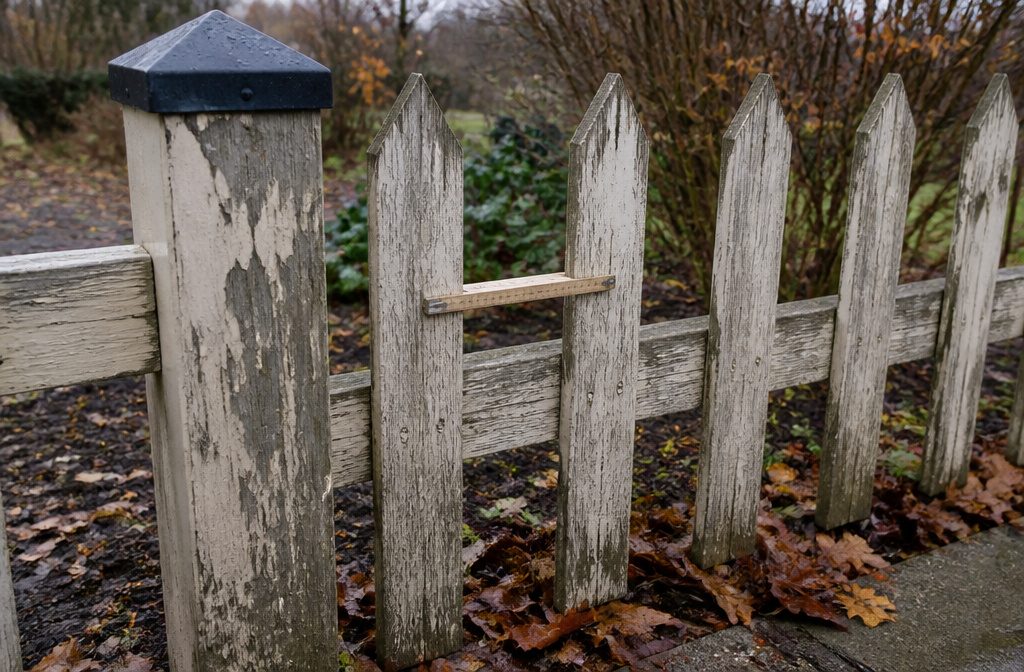
A picket fence is a row of vertical boards, usually 36 or 48 inches tall, with 2.5-inch gaps between them, fastened to rails between posts set 6–8 feet apart.
Local codes set the height limit, and it can differ between front and back yards, so check with the building department before buying lumber.
What a Picket Fence Is
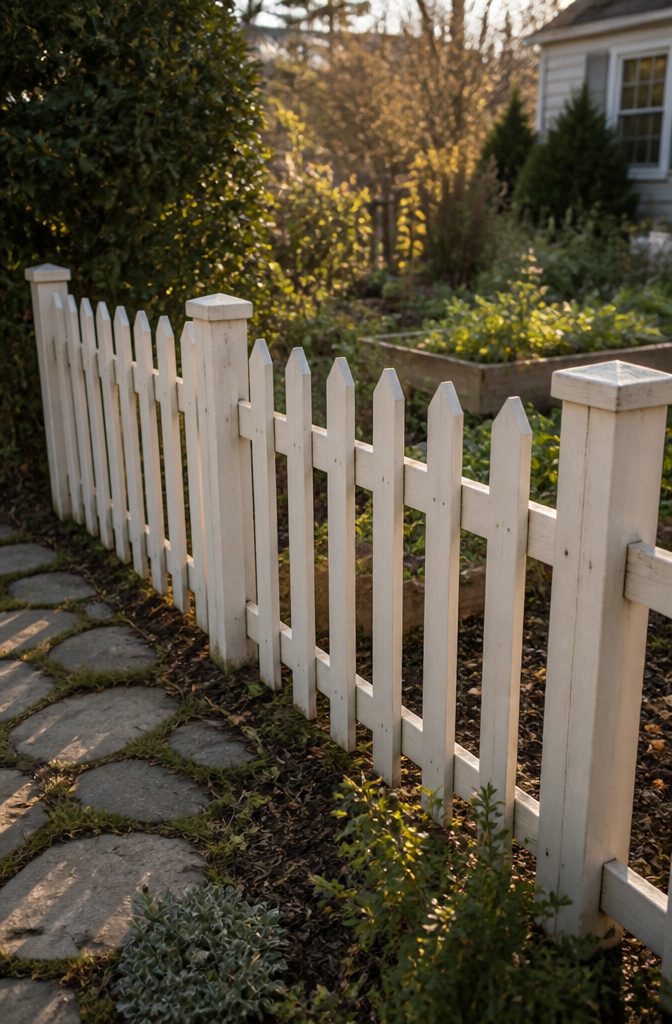
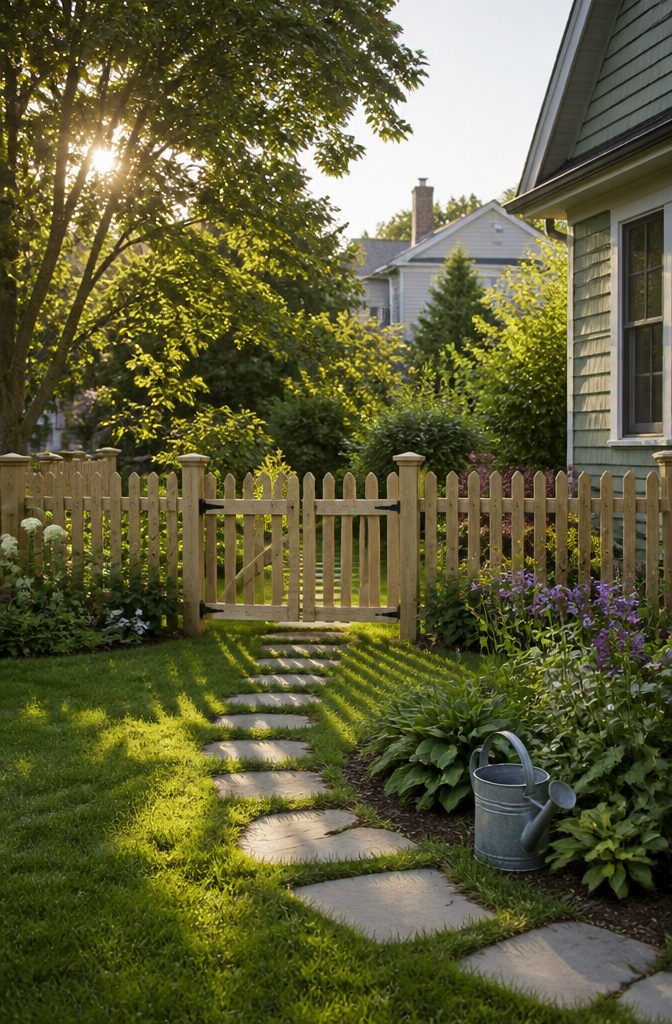
A picket fence is a row of evenly spaced vertical boards, the pickets, fastened to horizontal rails that run between posts. The gaps between pickets separate it from a privacy fence.
You can see through it, so it marks a boundary without walling off the yard. That is also why it stays short, typically 3–4 feet tall.
For a small yard, I think that open look is the main reason to choose one. The fence defines your property line, adds curb appeal, keeps pets and small children in, and protects garden beds.
Wood, vinyl, composite and aluminum all work, and the top shape of the pickets changes the style too. Both choices affect looks and upkeep, but the basic layout of pickets, rails and posts stays the same.
Recommended Products

Size: The Decorative Garden Fence Panels are 36 Inches High and 27 Inches Wide. There are 13 Panels and 1 Gate in Total, Which is 30.6 Feet. the Outer Frame is Made of Rust-resistant Metal Wire with A Diameter of 0.2 Inches. This Ensures the Fence is Stable. The 1.6-inch Spike Spacing Keeps the Animals out! The Fence Has A Bolted Door for Easy Access to the Garden

PET & CHILD SAFE: Create a safe outdoor play area for fur babies and children. Rest assured that this fence will create a sturdy barrier to protect your family.
Set the Height at 36 or 48 Inches
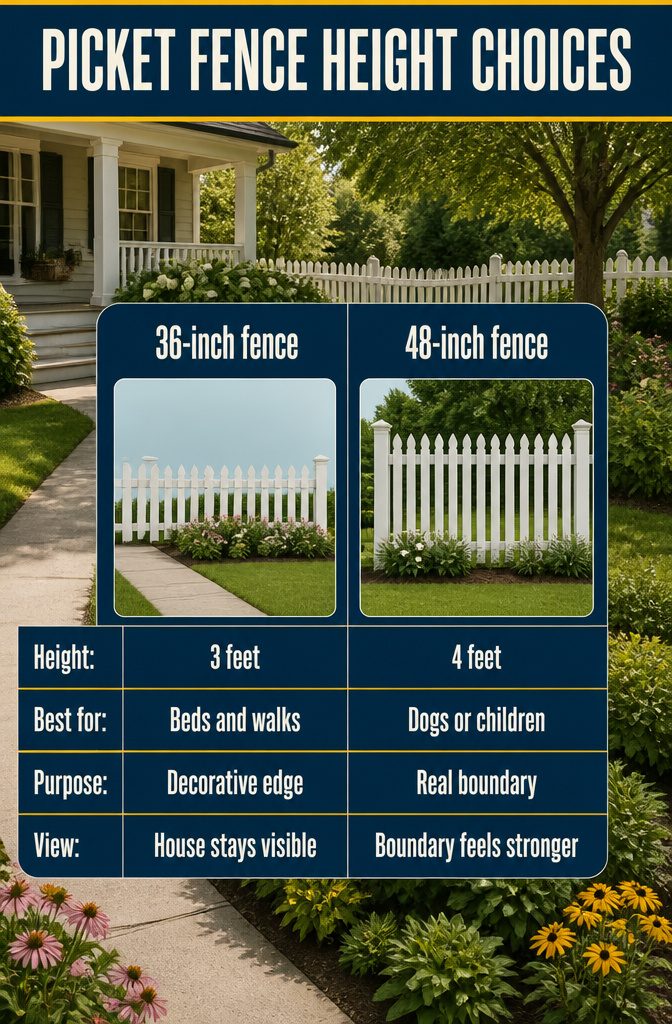
Two heights cover most picket fences: 36 inches (3 feet) and 48 inches (4 feet).
The 3-foot fence is decorative. It edges a front walk or a flower bed and leaves the view of the house open.
If the fence has to hold a dog or a small child, I’d go with 48 inches, which gives you a real boundary instead of a suggestion.
Both heights sit below a typical privacy fence. Picket gaps and a 3–4 foot height are meant to mark a space, not hide it.
Check your local regulations before buying lumber, because height limits are set locally and can differ between a front yard and a back yard.
Picket Size and Spacing
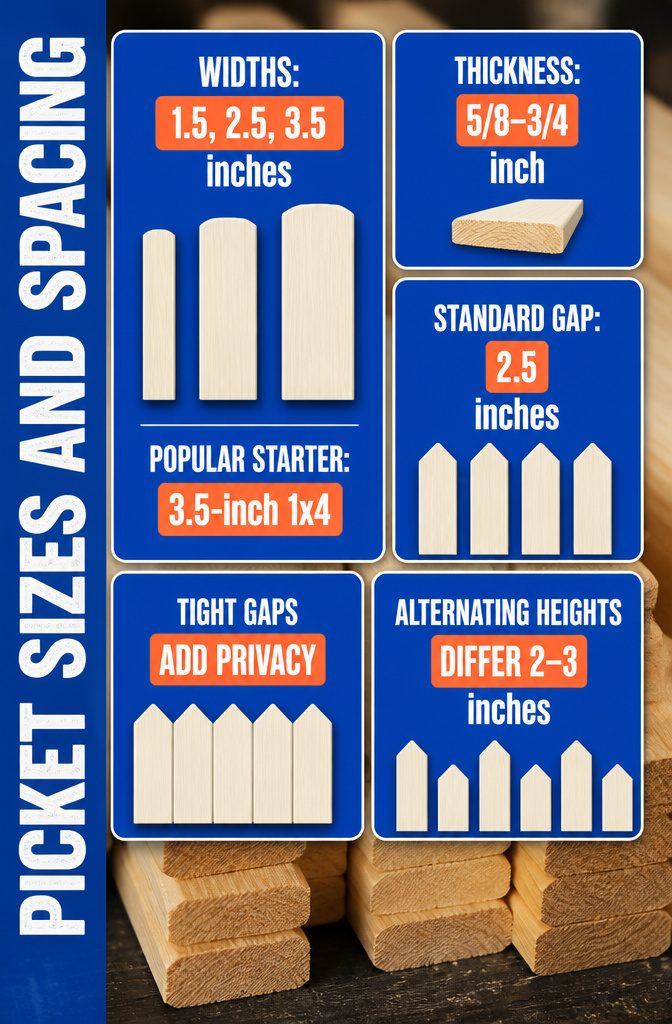
Picket fences come down to a handful of numbers, and the width of the board is the one to settle first.
- Width comes in 1.5 inches (1×2), 2.5 inches (1×3) or 3.5 inches (1×4). The 3.5-inch 1×4 is the most popular, and it’s the one I’d choose for a first fence.
- Thickness runs 5/8 to 3/4 inch, which is what a nominal 1-inch board measures.
- Gaps between pickets run 2–3 inches, and 2.5 inches is the standard.
- Tight or stockade pickets use minimal or no gap. You get more privacy and keep the picket look.
- Alternating-height pickets use two heights that differ by 2–3 inches.
Recommended Products

Product Size: The size of each mini fairy garden fences is about 90x5cm/34.43x1.96in, which can be cut into suitable lengths as needed to suit the decoration of any space.

Perfect for DIY projects like dollhouses, fairy gardens, and micro landscapes. The sturdy yet flexible design ensures it won’t break or fade

DOG FENCE: This no dig fence is great for creating an outdoor dog playpen to keep your pet contained. Have peace of mind knowing that your puppy is safe to run within the boundaries of your backyard. Ideal for small to medium sized dogs.
Post Spacing and Rail Size
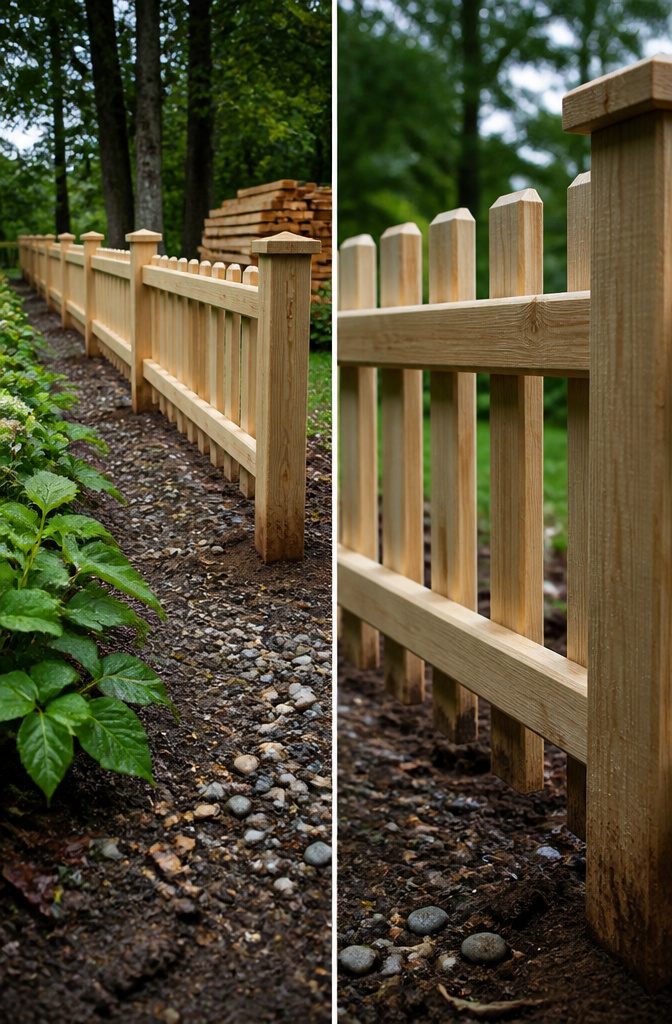
Space posts 6–8 feet apart, measured on center, meaning from the middle of one post to the middle of the next. Choose 6 feet if you want more posts holding each run, and 8 feet if you’d rather dig fewer holes.
Between the posts, two horizontal rails carry the pickets.
Each picket gets two fasteners per rail, so the rails are what tie the whole row together and keep it straight. I’d go with 2×4 rails, the most common size.
2×3 is the lighter alternative. Mount the top rail 2–3 inches below the post tops and the bottom rail 4–6 inches above the ground, which keeps the lower rail off wet soil.
Check Local Rules and Setbacks
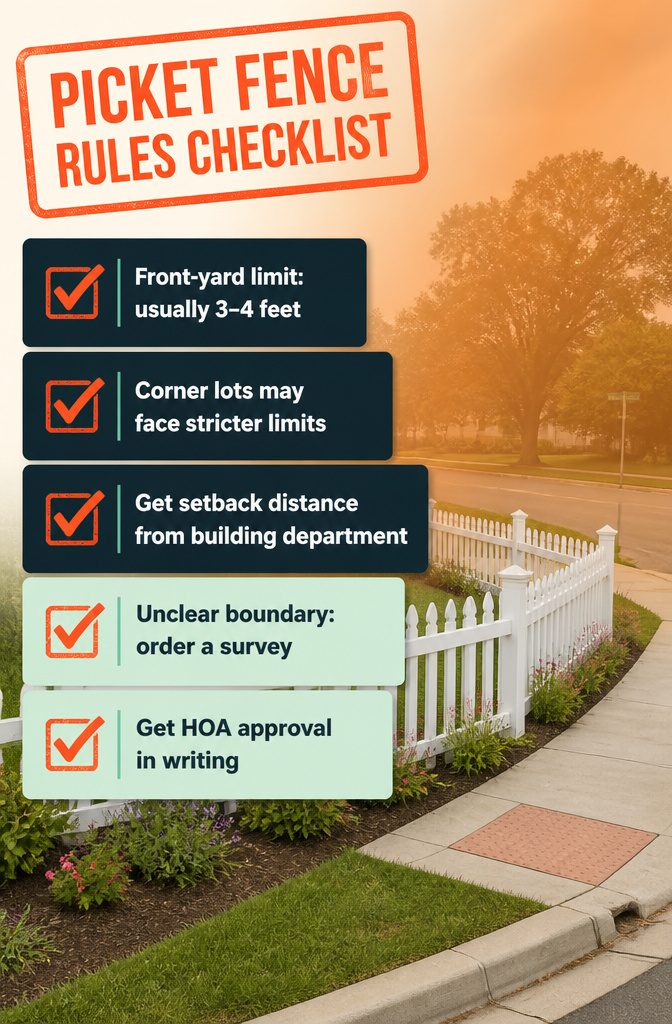
Front-yard picket fences are easier to permit than tall privacy fences, but four rules can still stop a build:
- Most codes cap front yard fences at 3–4 feet. Many areas allow fences in that range without a permit, which covers standard picket heights.
- Yards near a street can face stricter limits than the general front-yard rule, so don’t assume the 3–4 foot number applies to a corner lot.
- Setbacks set how far from the property line the fence must sit. Get that distance from the building department.
- If your boundary is unclear, order a survey before digging post holes. It settles the line before a neighbor disputes it.
- HOA rules can be tighter than the city’s. I’d get approval in writing before buying lumber.
One call to the local building department covers the first three.
Recommended Products

PREMIUM QUALITY OF GARDEN POSTS: Our fence post is made of high-quality metal and these 4-foot heavy duty fence post is designed for such as fencing in gardens with chicken wire or other light duty wire. Tabs on sign post allow you to easily attach and secure your rolled fence product to the post

【Strong Support for Wire Fence】These fence posts provide sturdy support for wire fence, chicken wire, welded wire, and garden mesh. The metal U-post design helps keep your fence line upright, secure, and properly aligned for reliable outdoor fencing setup.
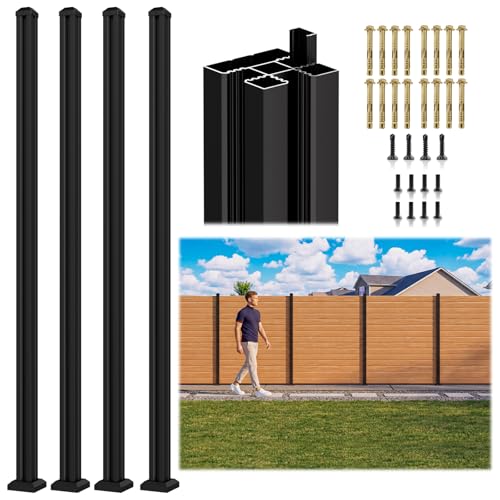
【Low-Maintenance & Built to Last】Tired of replacing wood posts that rot or metal posts that rust? Our heavy-duty aluminum fence post is rustproof, weather-resistant, and maintenance-free—perfect for harsh outdoor conditions. Unlike wood, it won’t crack, warp, or require constant upkeep, saving you time and money year after year.
Fence Height by Use
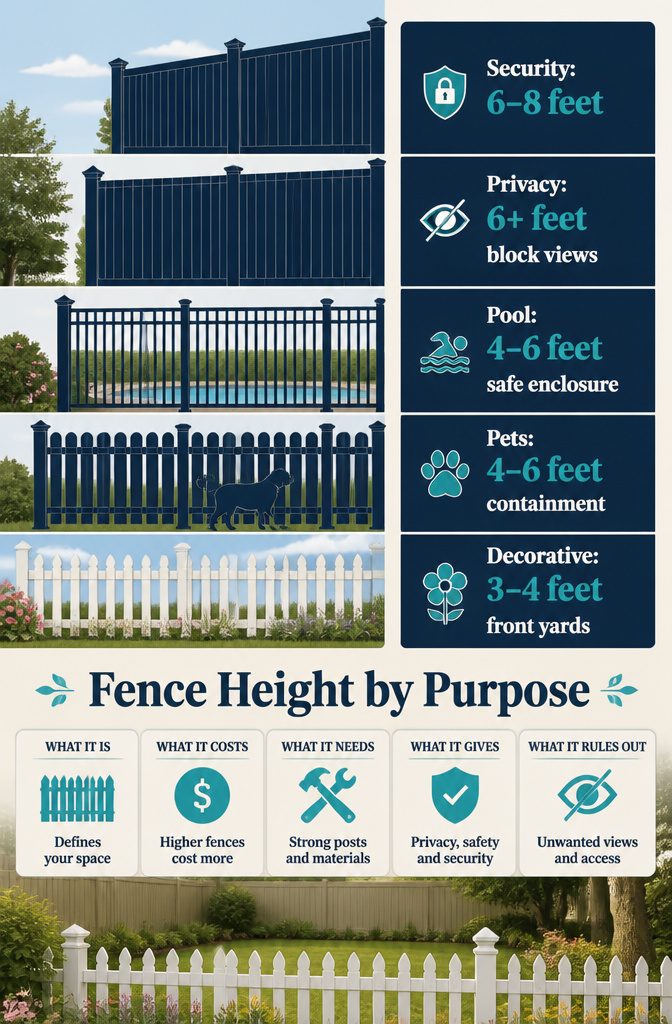
A standard picket fence sits at the decorative end, 3–4 feet, and the gaps between pickets mean it marks a boundary without blocking views.
That suits front yards and garden borders. Privacy and security call for a taller fence, and a pool or a dog calls for something in between.
| Purpose | Height | Best for |
|---|---|---|
| Decorative | 3–4 feet | Front yards, garden borders |
| Pet containment | 4–6 feet | Containing pets |
| Pool | 4–6 feet | Safe enclosure; aluminum, vinyl or wrought iron |
| Privacy | 6 feet or more | Backyards, blocking neighbors or street views; wood, vinyl, composite |
| Security | 6–8 feet | n/a |
Match Size to Your Yard
No single size fits every yard, so start with the job the fence has to do.
A front fence that marks the boundary and adds curb appeal can be light and decorative. One that holds in a dog or small child, or keeps animals out of a garden bed, should be planned around that first.
Standard fence panels run 6–8 feet wide, but picket designs often use panels 3–4 feet wide for a more delicate, traditional look. I’d choose the narrower panel for a front yard or small space.
That figure is the span between posts, not the width of any single picket. Panels of 10 feet or more save on posts but suit privacy fences better.
Recommended Products

DIMENSIONS: Each unit is 41" H x 44" W and includes 2 complete fence panels with posts for a total of 88in of fence.

Tall Garden Fence Animal Barrier: The set includes 4 panels and 1 spring lock gate, each measuring 48" H x 28.35" W with a 1.57-inch gap, connecting to a 11.4 ft total length. Protects flower beds, vegetable gardens, yards, and patios from dogs, rabbits, and other small animals.
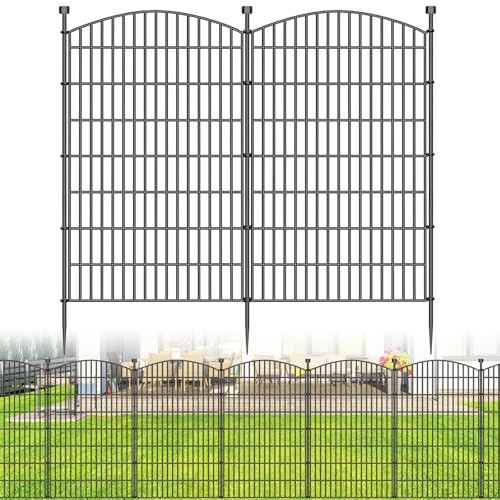
Tall Garden Fence Animal Barrier: Each of the 10 panels measures 48" H x 28.35" W with a 1.57-inch gap, connecting to a 22.6 ft total length. Protects flower beds, vegetable gardens, yards, and patios from dogs, rabbits, and other small animals.
Frequently Asked Questions
How tall should a picket fence be?
Most picket fences are 36 inches (3 feet) or 48 inches (4 feet). Use 36 inches for a decorative fence along a walk or flower bed, and 48 inches if it needs to hold in a dog or small child.
Height limits are set locally, and many codes cap front yard fences at 3–4 feet, so confirm with your building department before buying lumber.
What are the dimensions of a standard fence picket?
The most popular picket is 3.5 inches wide (a 1×4) and 5/8 to 3/4 inch thick.
Narrower pickets come in 1.5 inches (1×2) and 2.5 inches (1×3). Leave a gap of about 2.5 inches between pickets; the usual range is 2–3 inches.









