
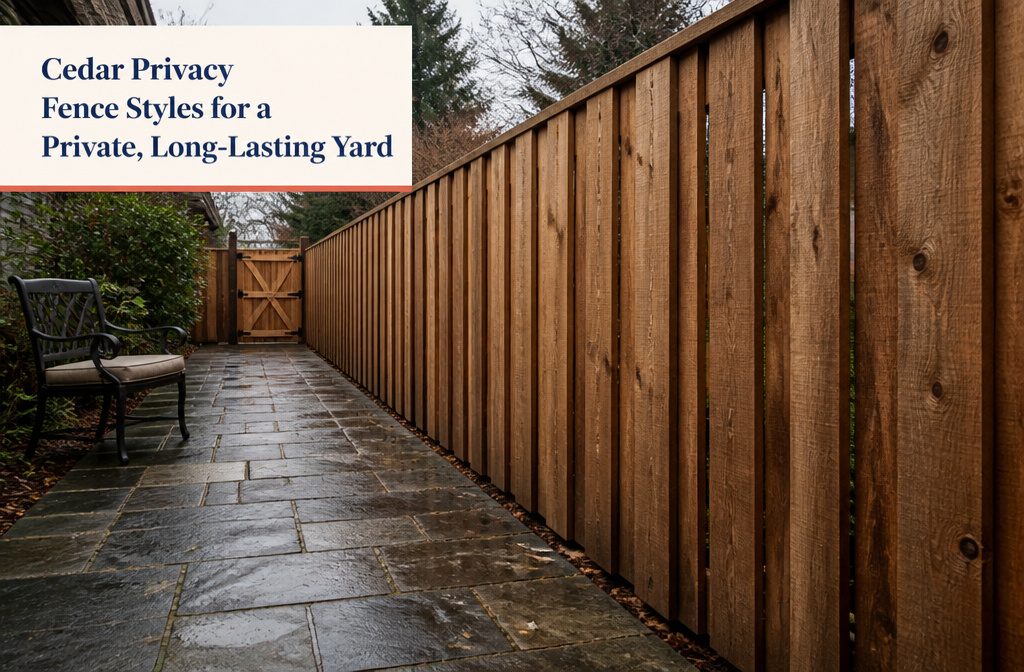
The four styles all screen a yard, and the right one depends on where you sit.
Board-on-board lets people glimpse through at an angle, so choose a solid style for a patio seat or hot tub. Before comparing bids, ask for the board thickness: suppliers sell both true ¾-inch cedar and 5/8-inch.
1. Stockade or Solid Fence
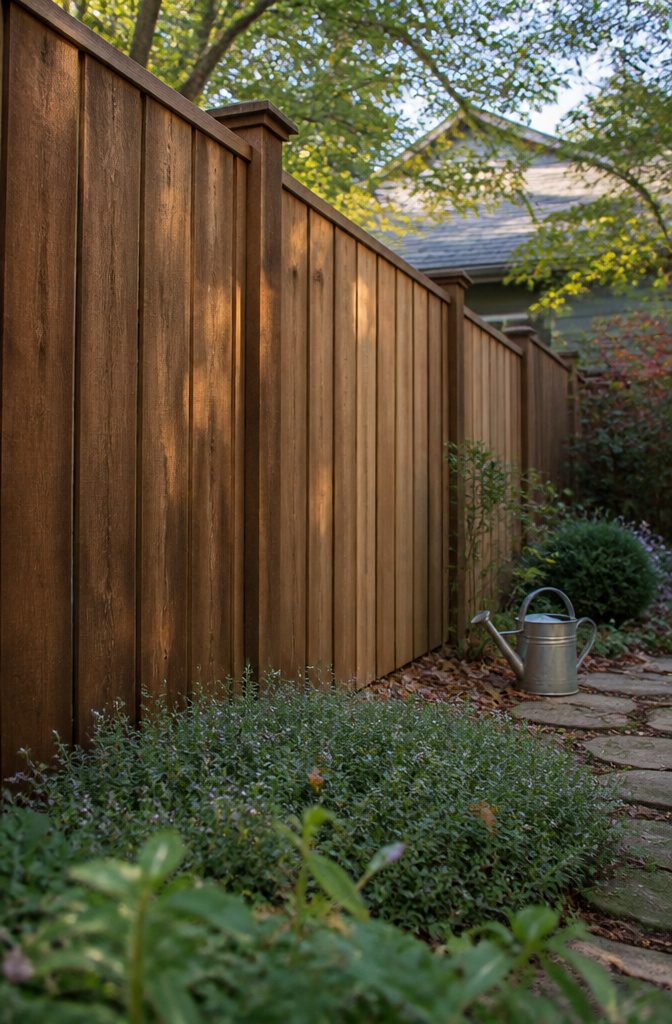
Stockade is the most direct route to full privacy.
Cedar boards sit tightly against one another to form a solid panel, so there are no gaps to see through. If privacy is your only goal, I’d start with this style.
Frederick Fence says it tends to use 1×4 or 4×6 boards, and that its boards are a true ¾ inch thick, against the 5/8-inch boards it says competitors offer.
That is the company’s claim, not a standard. Ask any installer for the actual board thickness before you compare quotes, because two bids for "cedar stockade" may not be for the same board.
Recommended Products
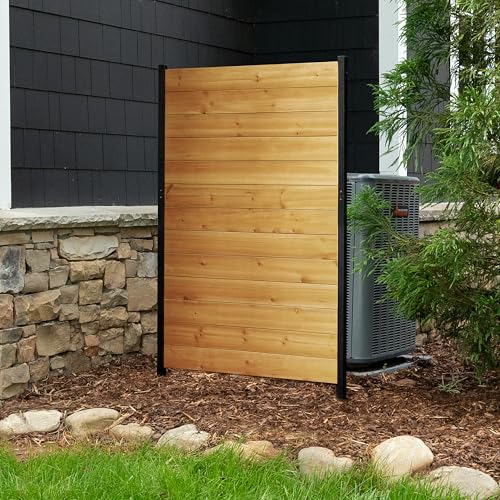
STYLISH NATURAL WOOD: This FSC certified wood screen is made with real wood meaning no two boards have the same grain color, finish, or wood knots differing it from vinyl outdoor privacy fence screen panels.

DIMENSIONS: Each panel measures 32” H x 48” W
2. Sandwich Board Fence
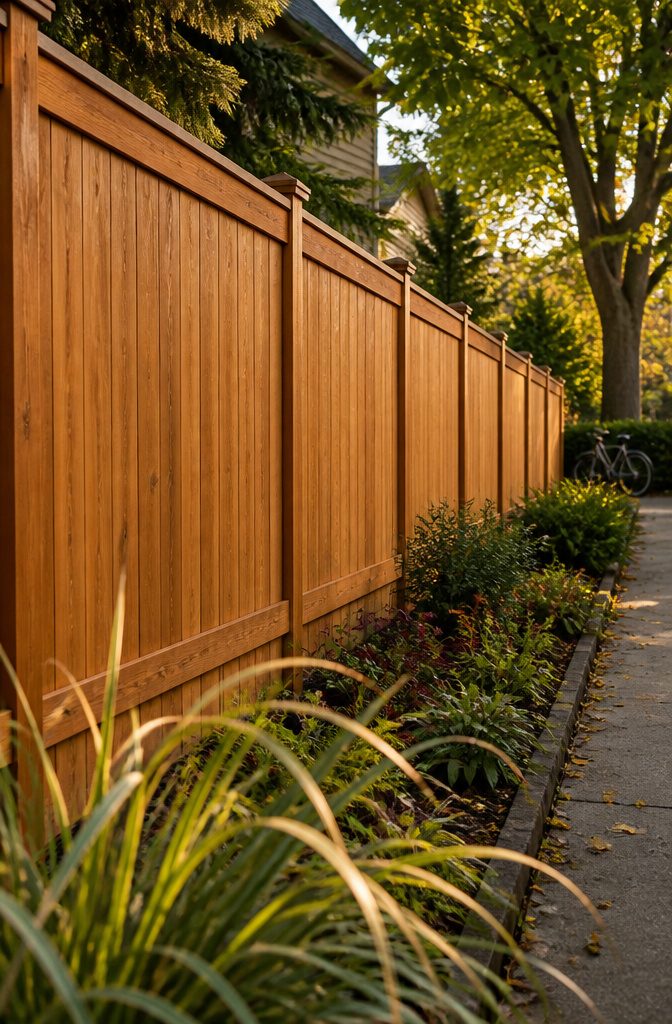
The sandwich board fence starts with the same solid panel as a stockade, then adds a rail across the top and another across the bottom. The boards sit between those two rails, which is where the name comes from.
The biggest change is the look. The rails frame each panel like a picture, so the top and base read as finished, where a plain stockade leaves the board ends exposed.
The rails also tie the boards together at both ends, so each panel holds as one unit and the tops and bottoms stay in line.
For a cedar privacy fence that faces the street, I’d choose this style over a basic stockade. A rail along both the top and the bottom is what to look for when comparing designs.
Recommended Products

Brown Fence Slat - Designed for a 4' high fence, slats are approximately 44.5" in length to accommodate the bottom locking channel and to prevent the slats from being above the top of the fence. Double Wall reinforced with Double Legs Inside - Oval wall tube provides extra durability and longevity. Two inside legs provide extra strength and help with ease of installation.

【Easeful Elegance】 Transform your backyard into a curated sanctuary with our innovative metal fence post. Designed for those who appreciate both form and function, these privacy fence post allow you to effortlessly assemble horizontal wooden boards into a sleek, modern fence that complements gardens, patios, and lush landscapes. No more uneven nails or messy installations—just clean lines and timeless style.

Package contains 4 CritterGuard fence panels
3. Board-on-Board Fence
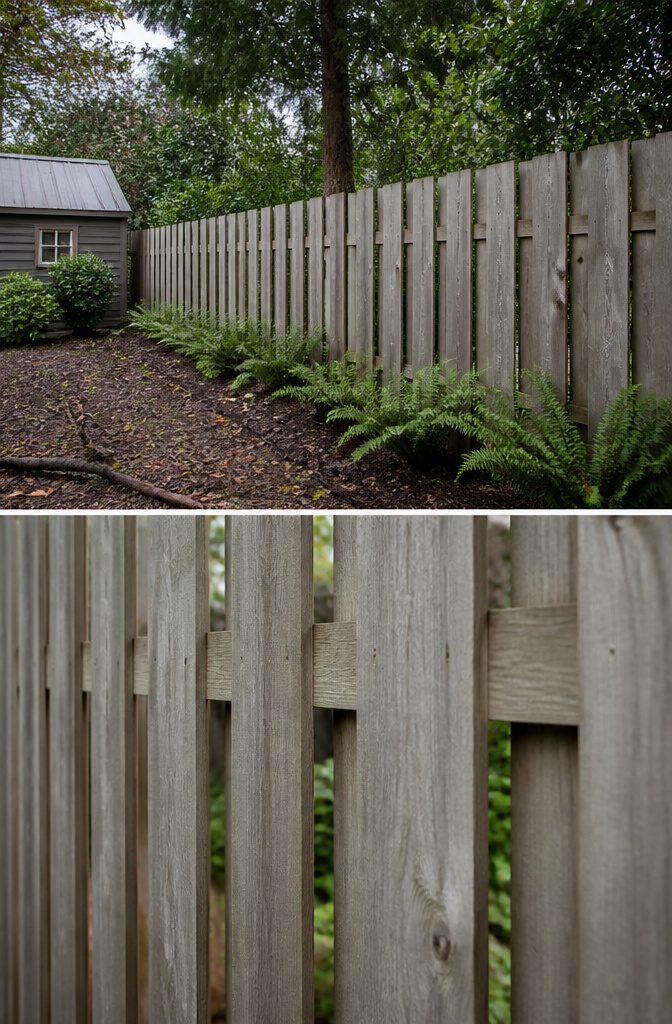
Board-on-board uses vertical cedar boards that overlap one another. Every other board is fastened to the opposite side of the rails, so the boards alternate front and back, and each one covers the seam between its neighbors.
The staggered layers also give the fence a textured, full look instead of a flat wall.
The weak spot is the viewing angle. Stand square to the fence and you see solid wood, but at an angle you can catch a slight view through to the other side.
For most yards that is fine, though I wouldn’t call the privacy absolute from every position. Before you commit, check the sightlines from a neighbor’s upstairs window or from the street.
Recommended Products

STYLISH NATURAL WOOD: This FSC certified wood screen is made with real wood meaning no two boards have the same grain color, finish, or wood knots differing it from vinyl outdoor privacy fence screen panels.

STYLISH NATURAL WOOD: This FSC certified wood screen is made with real wood meaning no two boards have the same grain color, finish, or wood knots differing it from vinyl outdoor privacy fence screen panels.
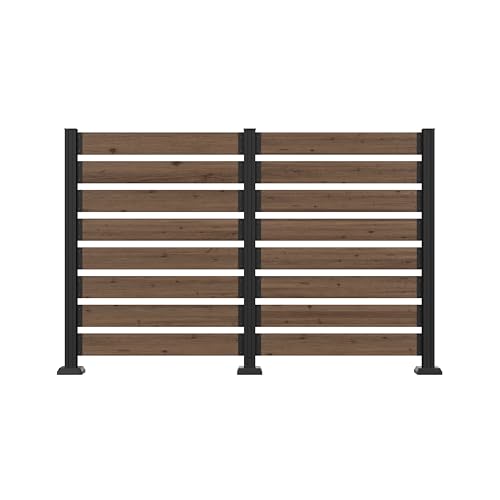
PREMIUM NATURAL WOOD – Crafted from real wood, the outdoor privacy screen showcases its own unique grain, color, and knots, unlike vinyl outdoor privacy fence screen panels that lack the authentic beauty and texture of a natural wood screen.
4. Board-and-Batten Fence
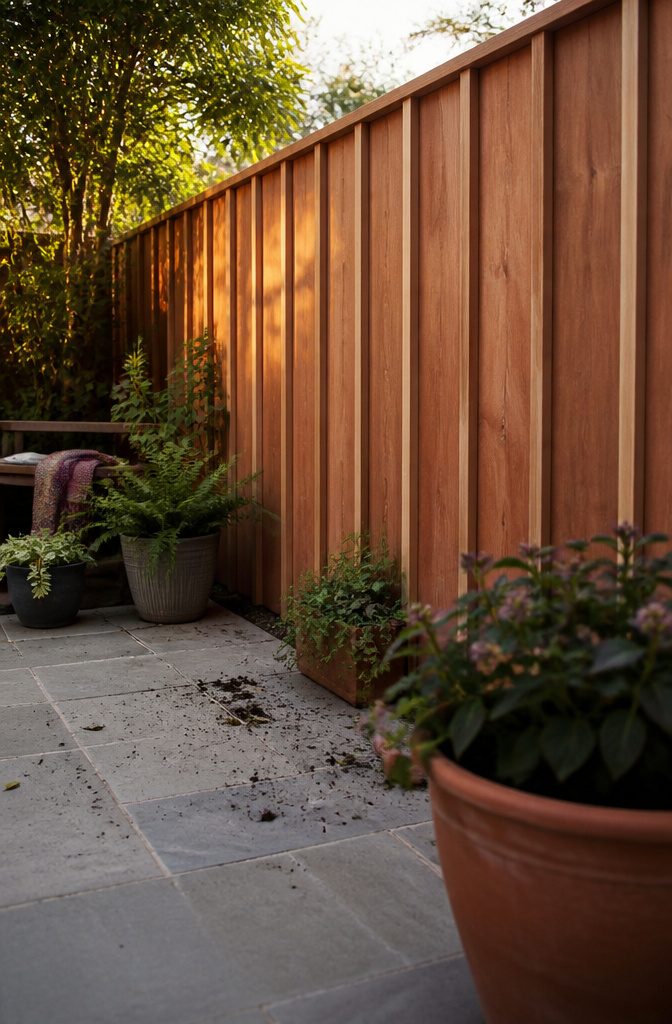
Board-and-batten starts out like a stockade fence: tall, solid boards set side by side.
The difference is a narrow strip of cedar, the batten, fastened over each seam. The battens cover the joints between boards, which hides the small gaps that wood can open as it dries and shifts.
The result looks more finished than a plain stockade. Instead of a row of separate boards, you get a flat, solid face broken by evenly spaced vertical lines.
You will also see this style called a tongue-and-groove fence.
I treat the two names as close cousins, since both aim for a tight, gap-free surface. If the fence faces the street or a patio you actually sit on, this is the look I’d pick over bare stockade.
Recommended Products

STYLISH NATURAL WOOD: This FSC certified wood screen is made with real wood meaning no two boards have the same grain color, finish, or wood knots differing it from vinyl outdoor privacy fence screen panels.
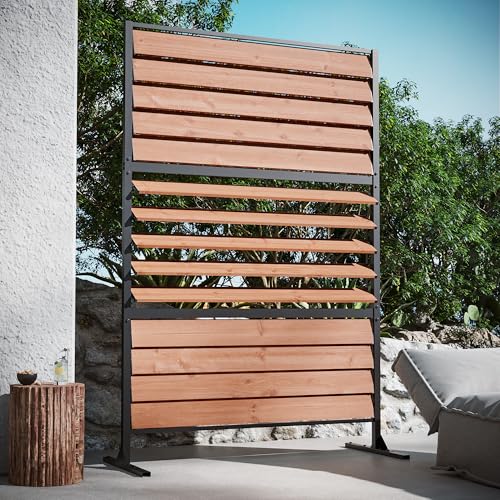
[Adjustable Louvered Privacy Fence] Uniquely control your privacy and airflow! This innovative wood privacy fence features adjustable slats that easily switch between an open, breathable setting and a closed, fully private configuration. Enjoy the ultimate flexibility of a louvered screen for your outdoor space.

【Aesthetic Design: Natural Texture】Crafted from innovative material designed to mimic authentic bark texture and woven with earthy-toned ropes for a rustic look, this privacy screen blends seamlessly into natural surroundings. The tightly woven design (very limited spacing) provides complete spy-proof privacy while adding timeless style to gardens, balconies, and patios.
What Makes Cedar Last
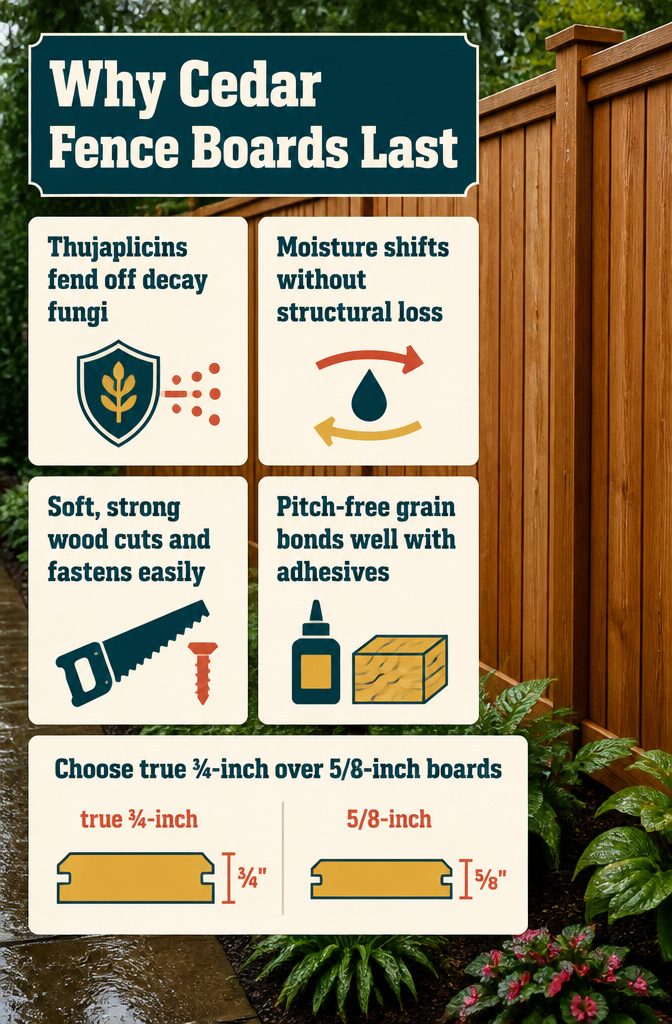
Cedar resists rot because of naturally occurring compounds called thujaplicins, which are fungicidal and hold off the fungi that cause decay.
The wood absorbs and releases moisture without losing its structure, so it holds up in wet weather and in extreme heat and cold.
Softness is an advantage here.
Cedar is flexible and easy to cut and fasten, yet still strong. Its straight grain has no pitch or resin, so adhesives bond well, and a stain or sealant will keep the natural color for years.
Check board thickness before you buy.
Some suppliers sell true ¾-inch boards, while others sell 5/8-inch. I’d pay for the thicker stock on a fence meant to last.
Recommended Products
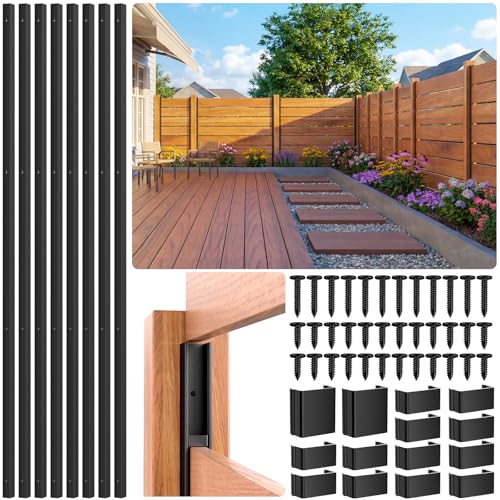
100% ALL-ALUMINUM — BUILT FOR LONG-TERM VALUE: Ordinary steel or mixed-metal products can be progressing from surface corrosion to rust-through—often reported online within 0.5–2 years. So this is not simply about cosmetic maintenance—removing rust and repainting the surface. Once corrosion progresses to rust-through, the metal itself has deteriorated, potentially compromising the structural integrity and eventually requiring replacement of the affected component or structure. LukLoy fence channel kits are built with premium 6063 aluminum for lasting outdoor over 30 years. it resists weathering, fading, and everyday exposure with less maintenance .

Order is for a 4-Pack of fencing, giving a total of 32 feet of fencing in length
Privacy and Yard Enclosure
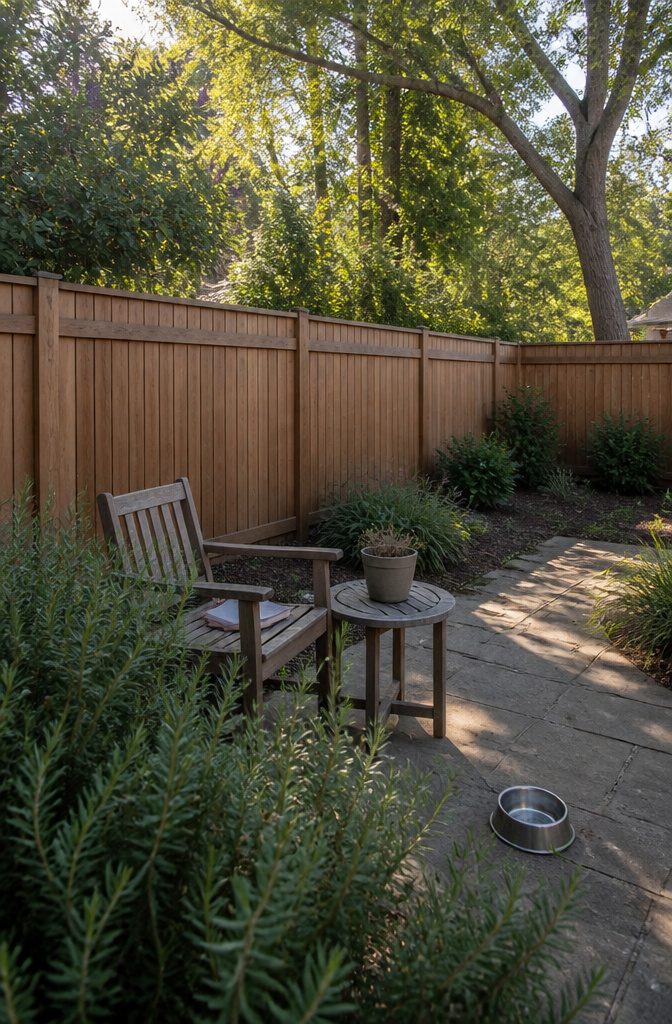
A cedar privacy fence solves the fishbowl problem. You can sit out, read, or let the dog roam without feeling watched, and the boards form a natural-looking border that sits well in a garden.
Cedar is also strong enough to keep intruders out and children and pets safely in, so one fence does both jobs.
All four styles deliver that seclusion.
For the tightest screen, I’d pick stockade, sandwich board or board-and-batten, since each reads as a solid wall. Board-on-board is nearly as private, but stand at an angle and you get a slight view through to the other side.
That suits most yards. If the spot you want hidden is a patio seat or hot tub, choose one of the solid styles.
Recommended Products

Innovative Design: The wooden fence panels posts features a U-channel design—simply attach the brackets to the posts and slide in (3/4" x 5.5") wood planks to lock. Easy DIY installation and plank replacement, even for one person, saving time, effort, and labor costs in the short and long term

DIMENSIONS: Each screen measures 47in H x 48.125 W

Versatility: This wooden privacy screen provides a discreet enclosure, creating a sense of mystery and concealment. It is perfect for elevating the overall aesthetic of your outdoor space. Quickly creates a secluded retreat while adding a touch of elegance that complements any décor, indoors or out.
Frequently Asked Questions
Recommended Products

1 PANEL PURCHASE: You will receive 1 unassembled privacy fence panel with your purchase; Purchase as many as necessary to beautify your space DIMENSIONS: Once assembled, your...
Is cedar a good choice for a privacy fence compared with pressure-treated wood?
Cedar is a strong pick for a privacy fence because it resists rot on its own. Naturally occurring compounds called thujaplicins are fungicidal and hold off the fungi that cause decay.
The wood also takes on and releases moisture without losing its structure, and it cuts and fastens easily. Whatever wood you price, ask for the actual board thickness, since some suppliers sell true ¾-inch boards and others sell 5/8-inch.









