
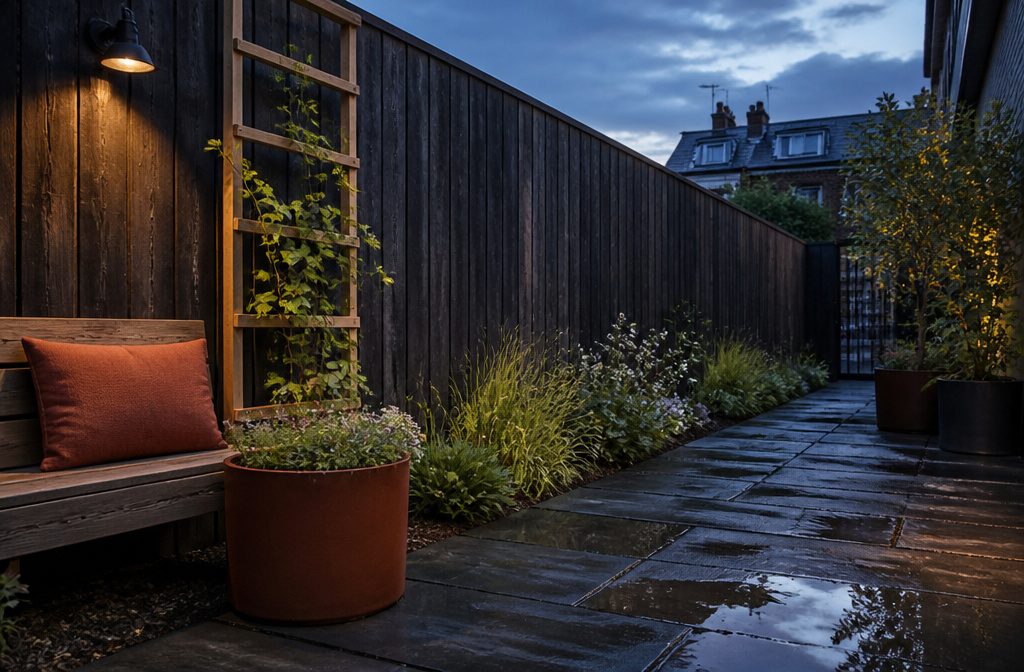
These ideas range from one bench-and-planter corner to a full-length border, and the deciding question is how much of the fence you want to tend.
Plants packed against the boards hold moisture and hide the wood, so climbers belong on a trellis or wires. Pre-made planting designs start at $19.99.
1. A Seating Area Backdrop
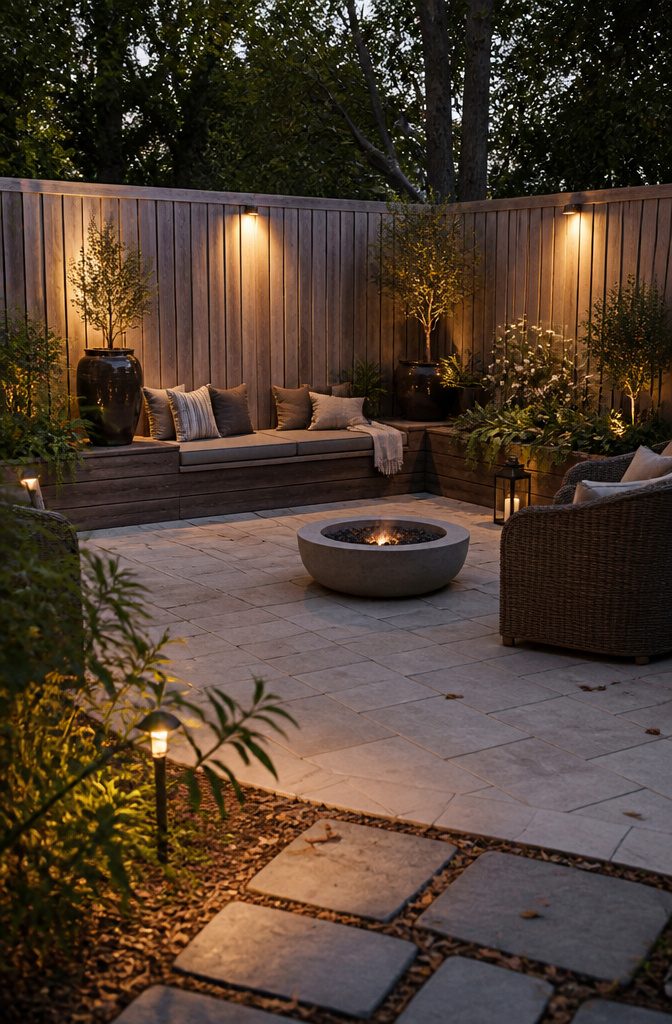
In a small yard, the fence works best as the back wall of one seating spot rather than a line you plant end to end.
Put a built-in bench or weather-resistant chairs against it, then frame the seats with raised planters and large ceramic planters so greenery rises behind and beside you.
I’d pick one seating corner and spend the whole budget there instead of spreading it down the entire fence.
Warm solar lights along the boards bring out their texture after dark. A minimalist fire pit on neutral paving stones in front of the bench gives people a reason to stay.
Recommended Products
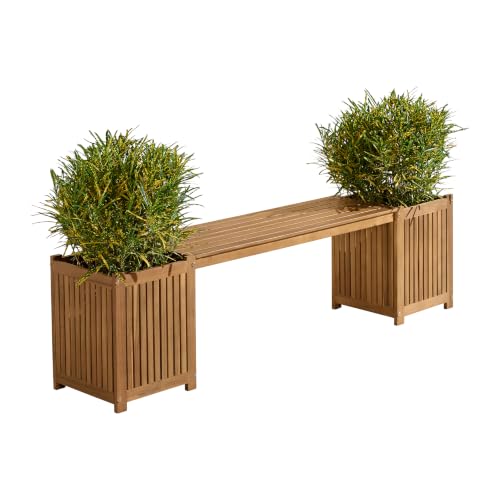
2-IN-1 OUTDOOR PLANTER BENCH - This 2-in-1 garden bench combines seating and planting space in one compact design with a bench seat in the middle and 2 planters for outdoor plants on either end, making it an ideal addition to your outdoor furniture.

Vertical Support & Hanging Display: This raised garden bed with trellis combines a spacious wooden planter box with a tall lattice panel and reinforced flat roof. The vertical garden structure provides sturdy support for climbing plants, vines, tomatoes, and flowers, while the crossbars allow you to hang baskets, lanterns, or string lights. Ideal for balcony garden, patio decor, or backyard privacy setups, it transforms small outdoor spaces into a layered planting display
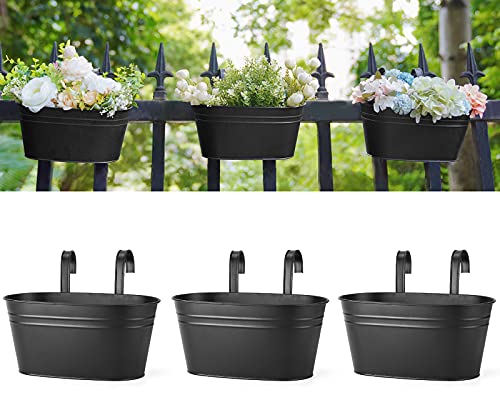
BALCONY RAIL PLANTER:Rectangular Planter was designed to maximize inside growing space allowing dirt and roots to grow strong and deep.This special design can be hung on the balcony, window, garden,railing, anywhere in the room,also can be used as desktop
2. Natural Wood and Soft Planting
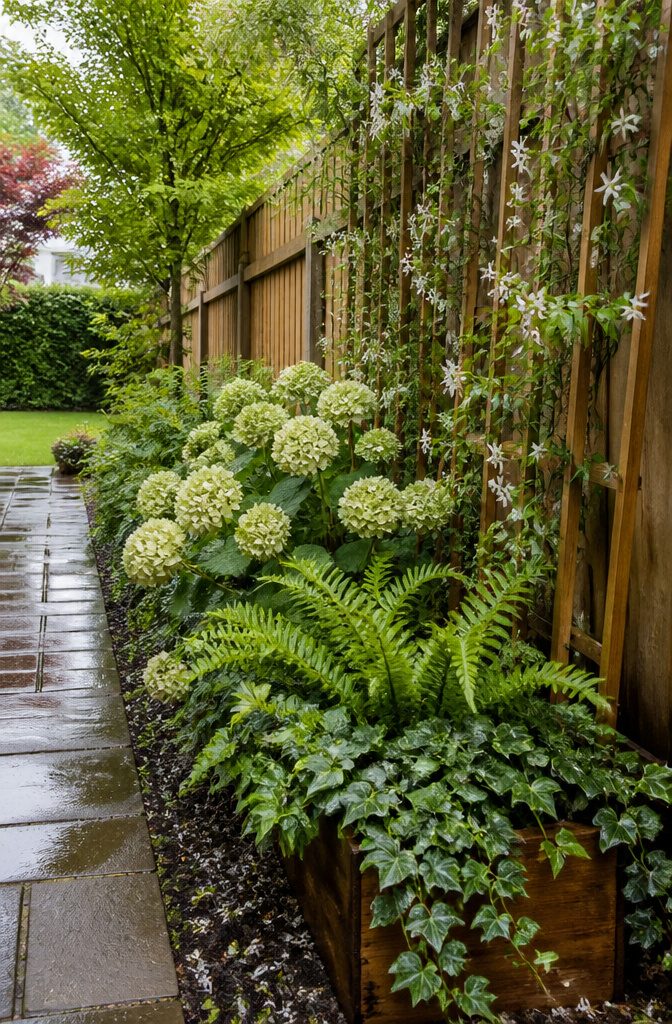
Cedar and redwood age naturally, so the fence settles into the planting instead of competing with it.
Climbing jasmine is my pick for the vertical lines, with hydrangeas in front for fuller, softer layers. Eucalyptus works too, though it needs regular pruning to stay in bounds.
The upkeep cost is the fence itself.
Foliage packed against boards holds moisture and hides them from view, so keep climbers on a trellis or wires rather than growing straight on the wood. That way you can unhook them when the fence needs attention.
Finish with oversized planter boxes of ferns or ivy. Keep the ivy in the box, trailing, instead of letting it grab the boards.
Recommended Products

Stylish Design: Space-saving raised garden bed with lovely appearance, full of children's naiveness and fun, suitable for growing herbs and vegetables

Durable Steel Frame: Constructed of heavy duty steel frame with anti-rusty coating for long time outdoor indoor use.

【 Vertical Raised Garden Bed with Trellis】Perfect for home gardening lovers, this herb planter outdoor with 4 garden boxes let you plant vegetables, herbs, and flowers in separate plant bed while the 11-inch trellis supports climbing plants like tomatoes, strawberries, vines, and peppers. The balcony raised garden beds outdoor with legs creates an optimal environment for your plants to thrive.
3. Horizontal Slats in a Small Yard
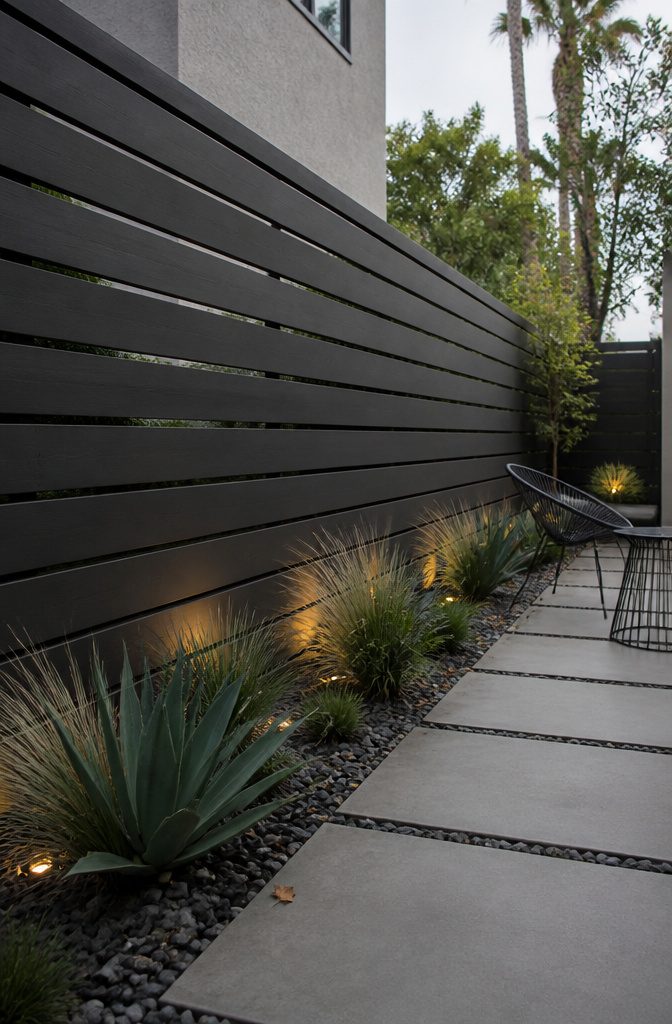
Horizontal slats pull the eye along the fence instead of up it, so a small yard reads wider.
The effect is visual only; the yard gains no actual inches. It suits contemporary homes best, where the clean lines echo the architecture.
Keep everything in front of the slats quiet.
Concrete pavers, black steel furniture, a few sculptural plants and subtle LED lighting give a polished look without crowding the strip. Agave, boxwoods and ornamental grasses hold their shape on little upkeep and handle dry spells.
Stay with a neutral palette and minimal decor, because the slats are the feature and busy extras compete with them. I’d skip a mixed flower border here.
Recommended Products

Package Contents - 20pcs crosshead hubs(for 5/64'' or 2mm cable), 5/64" x 98.43ft wire rope, 20 plastic expansion anchors, 20pcs washers, 80 PVC end caps, a small bundle of plant ties, 1 masonry drill bit, 1 Allen key, 1 all-purpose spanner, 1 instruction manual, trellis system calculator included. We offer a lifetime after-sales guarantee

175 Feet. 20 Gauge galvanzied

WHAT'S IN THE BOX (12 SETS, HUBS+CABLE): 12 cylindrical standoffs and 53 ft of 1/8" wire rope; 12 anchors, 12 screws, 40 end caps, plant ties, drill bit, screwdriver, hex key, wrench, instructions; no wire cutter, see the Cutter options
4. Layer Plants by Height
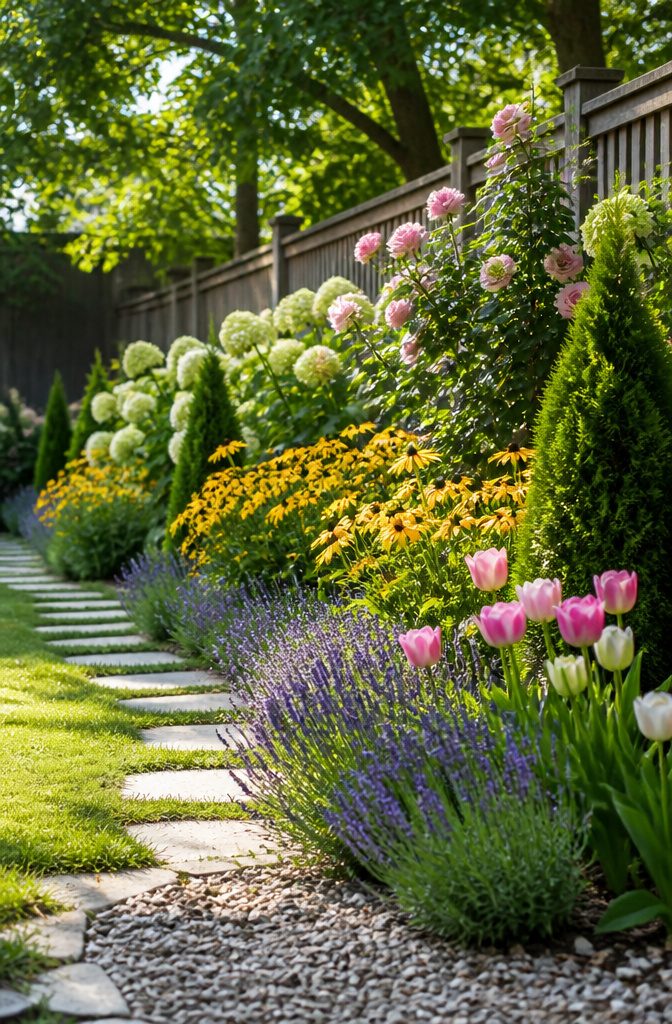
Plant in rows that step down from the fence. Put the tallest plants against the fence and the lowest blooms at the lawn or path edge, and even a narrow strip gains depth.
Hydrangeas and roses suit the back, black-eyed Susans fill the middle, and lavender and tulips sit along the front where you see them up close.
Mix evergreen shrubs in among the flowers. Perennials die back in cold weather, and the evergreens hold the border’s shape until they return.
A gravel path or a line of stepping stones along the front edge ties the layers together and gives you a place to stand while you weed.
Recommended Products

SOLID CARBON STEEL CONSTRUCTION: Made from heavy-duty carbon steel with a rustproof black powder-coated finish, this privacy screen delivers exceptional durability and weather resistance for long-lasting outdoor use in your yard and garden.

MAXIMIZE YOUR SPACE: Our balcony railing planters are designed to help you make the most of your porch or patio living space. With their rectangular shape and drainage holes, you can grow strong, healthy plants easily.

【Easeful Elegance】 Transform your backyard into a curated sanctuary with our innovative metal fence post. Designed for those who appreciate both form and function, these privacy fence post allow you to effortlessly assemble horizontal wooden boards into a sleek, modern fence that complements gardens, patios, and lush landscapes. No more uneven nails or messy installations—just clean lines and timeless style.
5. Repeat Plants for a Minimalist Look
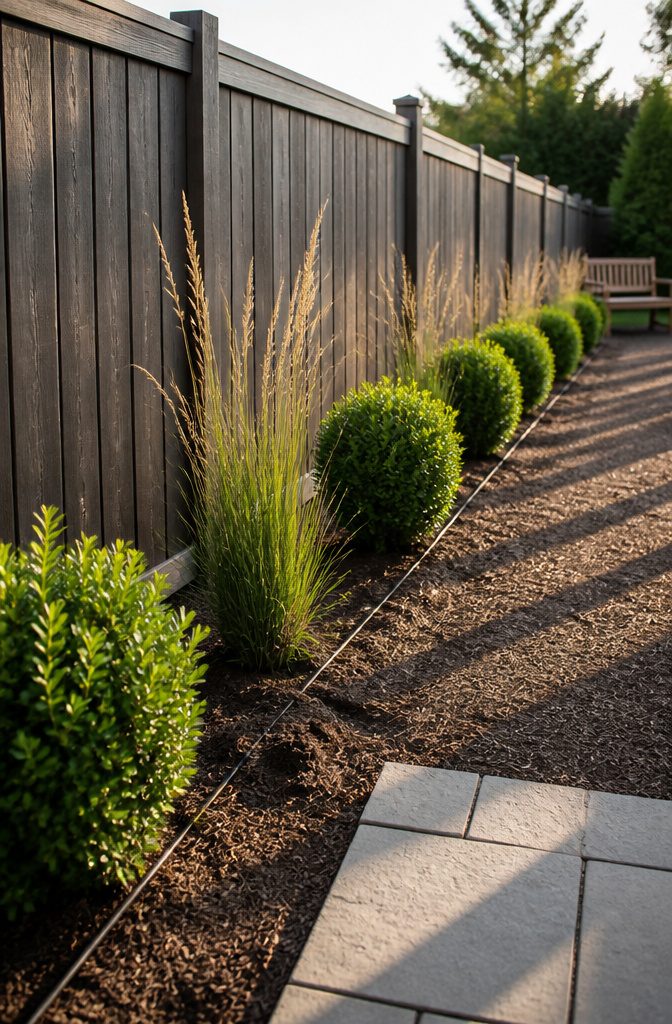
Repeat a few plants down the whole length of the fence instead of buying one of everything.
Boxwoods set at even intervals with ornamental grasses between them give the eye a rhythm that a border of single specimens can’t. Agave fits the same plan in zones where it survives the winter.
All three handle dry spells once established, so watering and replacement costs stay low. Keep the bed a plain, straight-edged strip, and limit furniture to one bench or a small table so nothing competes with the planting.
I’d spend the money on drip irrigation along the bed before adding more plant varieties. Drip tubing waters the roots instead of the leaves, helps plants stay healthy through hot months, and takes the hose out of a busy week.
Recommended Products

Collapsible Garden Fence: Adavin Decorative Garden Fence Legs are Collapsible, Each Piece of Garden Fence Measures 24 Inches in Height, 7 Inches in Collapsible Feet and 12 Inches in Width, with A Total of 20 Fence Panels for A Total Length of 20 Feet. The Garden Fence Features An Arched Design That Is Stylish and Classic, Which Can Display Plants Well. It Can Well Protect Your Yard, Garden and Vegetable Garden Plants from Small Animals

【6-PANEL DECORATIVE GARDEN FENCE】 Includes 6 arched metal fence panels, each measuring approximately 12.6"W x 16.54"H overall. When installed, about 13 inches remain above ground, and the 6 panels provide approximately 6.3 ft of straight-line coverage for flower beds, lawns, pathways and landscaped areas.

【Upgraded Garden Fence】 Blingluck classic arch shape design garden fencing single piece size height is 17 inches, length is 12.6 inches, and the fence gap is 1.9 inches, total 10 pieces of fence, overall length about 11 ft. Equipped with 11 Pcs height of 17 inches metal stakes. More convenient installation. This fence will be the best choice for your beautiful garden, yard & patio
6. A Warm, Relaxed Garden Style
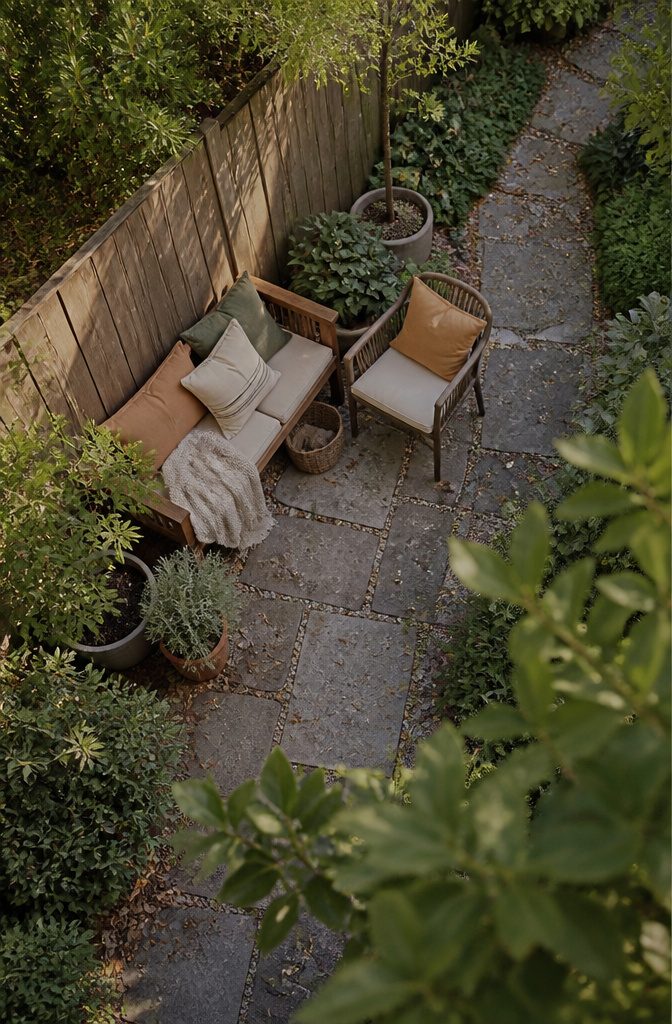
A relaxed fence-line garden should read as a room you want to sit in, so start with the furniture.
I’d pick a low wooden bench or a pair of mismatched chairs over a matching set, because a slightly collected look makes a small yard feel lived in.
Add cushions and a throw blanket in earthy neutrals like oatmeal, clay, sage and warm tan, and keep patterns quiet so the greenery stays the main color.
Outdoor-rated fabric copes with dew and light rain, but bring the throw inside when the forecast turns. Pots of different heights beside the seat soften the edges, and a basket by the armrest gives the blanket a home.
Recommended Products

Set of 2 Railing Planter Boxes: Overall Size: 16.9 x 6.9 x 35.8 inches. The OYEAL fence hanging planter set includes 6 plastic flower pots (each 16.9 x 6.9 x 5.5 inches), providing ample space to grow vegetables, herbs, and flowers in separate compartments.

SPACIOUS CAPACITY: The layout of the metal garden bed creates a generous planting area. The L-shape creates two connected growing zones that make it easy to separate herbs, vegetables, flowers, or companion plants, helping gardeners organize crops without additional dividers. The galvanized steel raised garden bed measures 47.25" W x 47.25" D x 12" H and weighs 13.2 lb. It has 8.9 cubic feet of soil capacity (about 9 bags of 1 cu ft) for deep-rooting plants like tomatoes, peppers, and carrots.

Universal Railing Compatibility:Adjustable hooks perfectly fit railings from 2 to 5 inches wide, solving the pain point of single-size hooks on the market. Whether your balcony railing is thick or thin, it can be stably installed
7. Colorful Flower Borders
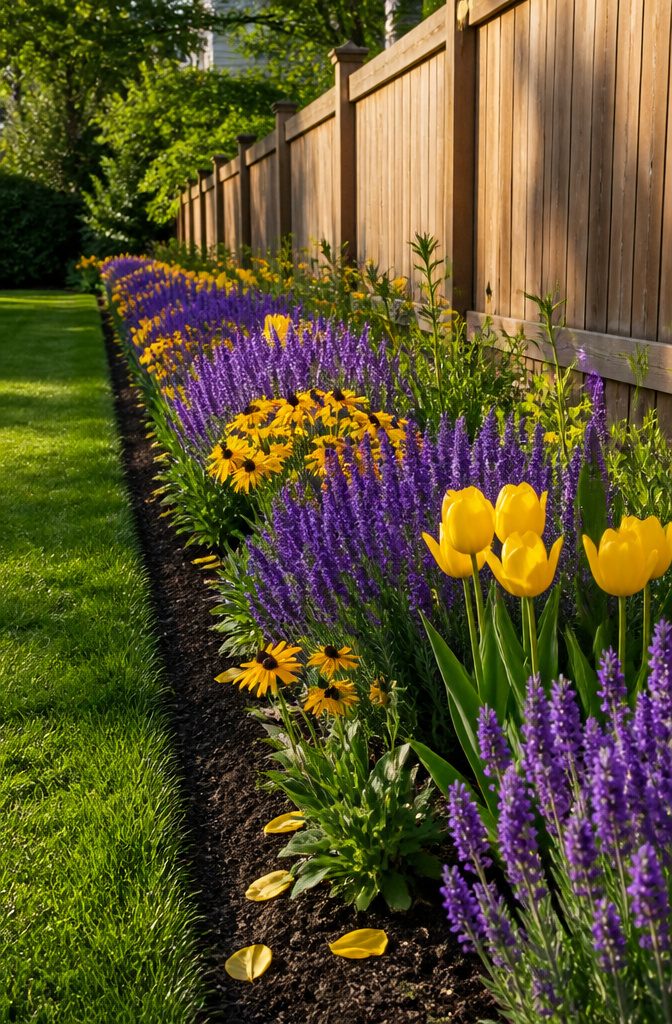
Colorful borders soften a long fence and bring in seasonal color, but a different shade every few feet makes the strip look busy. Repeat a small set of similar colors along the whole length instead of mixing many contrasting ones.
Lavender, roses, tulips and black-eyed Susans cover this well: purple lavender in three or four clusters, with yellow black-eyed Susans as the accent between them.
Tulips can hold the same spots in spring, so a yellow variety in the same places keeps the color pattern going before the summer blooms arrive.
I’d skip mixed-color packets for a fence border, since they work against exactly this kind of repetition.
Recommended Products

Integrated with a vertical trellis and a spacious planting area, the elevated garden bed with trellis provides strong support for climbing plants (like roses and clematis) while offering ample room for vegetables and herbs, making it ideal for creating a charming 3D vertical garden at home.

Durable weather-resistant structure: This raised garden bed with trellis (43.43"Dx18.27"Wx59.29"H) is constructed with premium thickened resin material, designed to help resist fading and cracking through seasonal changes while supporting tool-free assembly.

𝐄𝐥𝐞𝐠𝐚𝐧𝐭 𝐅𝐞𝐧𝐜𝐞 𝐏𝐥𝐚𝐧𝐭𝐞𝐫𝐬: Enhance your vinly fence with this beautifully designed White Metal Hanging Planter, specifically made to fit Vinyl Fence Posts. These fence planters provide a sophisticated look to your Garden, Yard, or Patio Decor, offering a sleek, elevated way to showcase your favorite greenery without cluttering the ground.
What an Online Planting Plan Includes
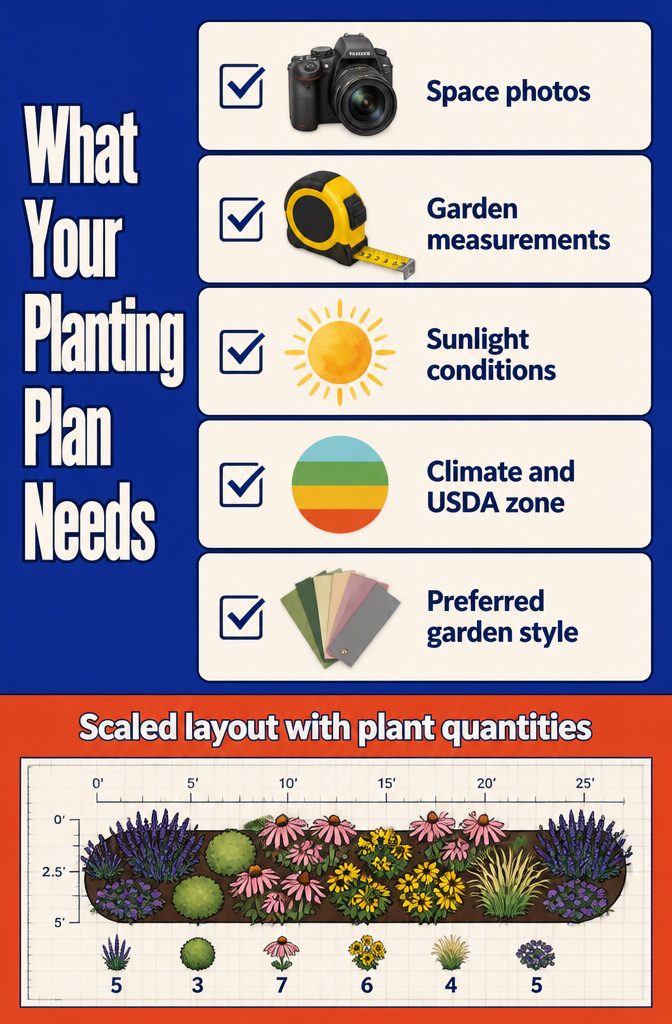
Plant By Number, an online design service, builds custom plans from what you send it.
The service isn’t fence-specific, but a fence strip fits the process. A designer works from these inputs:
- Photos of the space
- Measurements
- Sunlight
- Climate, including your USDA growing zone
- Style preferences
The plan you get back is a scaled layout with specific plants, quantities and positions. Two more points:
- You can install it yourself or give it to a local landscaper.
- The optional patented Garden Map is a full-size 1:1 planting guide that marks where each plant goes, which I’d pick if you’re planting solo for the first time.
Recommended Products

Complete Package for Convenience: the wire trellis kit Includes 61m trellis wire and 20 eye screws (diameter 2/10 inches); This package ensures you have all necessary components right at your fingertips, making set up a breeze and eliminating the need for additional purchases

【ERSATILE MOUNTING】: Designed for wall mounting on concrete, stucco, brick, masonry, siding, facade panels, or wood/vinyl fences. (Hollow walls require specialized expansion anchors). Ideal for outdoor climbing plants such as star jasmine, clematis, climbing roses, bougainvillea, grapevines, passion fruit, espalier fruit trees, and more

Package Contents - 12pcs crosshead hubs(for 5/64'' or 2mm cable), 5/64" x 53' wire rope, 12 plastic expansion anchors, 12pcs washers, 40 PVC end caps, a small bundle of plant ties, 1 masonry drill bit, 1 Allen key, 1 all-purpose spanner, 1 instruction manual, trellis system calculator included. We offer a lifetime after-sales guarantee
Online Design Prices
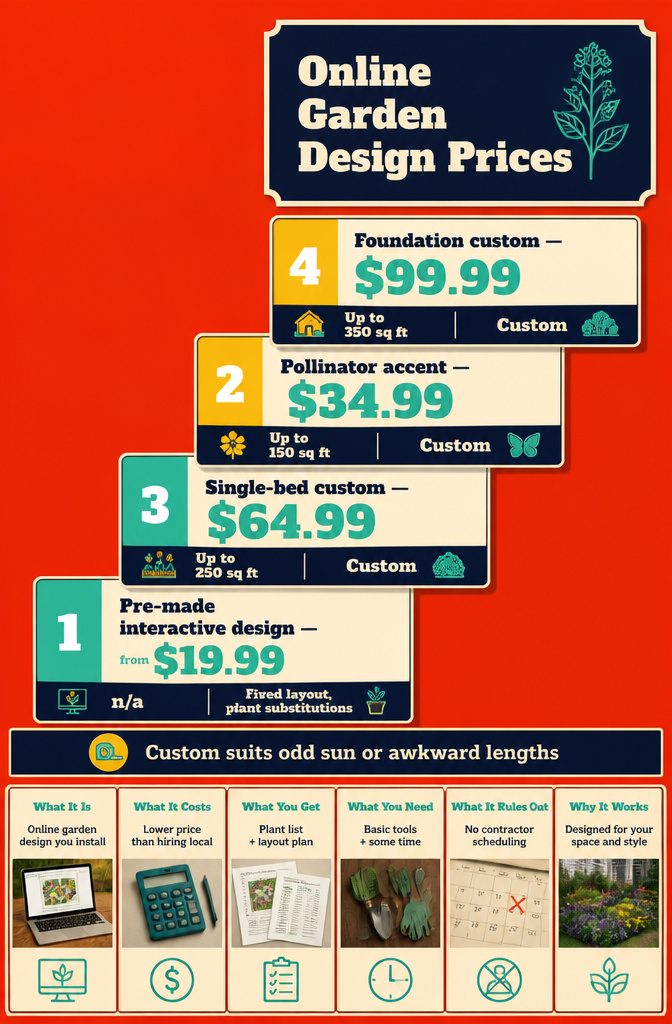
Plant By Number sells online garden design as a cheaper alternative to hiring a local landscaper, and you can install the plan yourself. A fence strip under 150 sq ft fits the lowest custom tier, and pre-made designs start at $19.99.
| Option | Price | Coverage | Type |
|---|---|---|---|
| Pre-made interactive design | From $19.99 | n/a | Fixed layout, plant substitutions |
| Pollinator accent garden | $34.99 | Up to 150 sq ft | Custom |
| Single-bed landscape design | $64.99 | Up to 250 sq ft | Custom |
| Foundation planting | $99.99 | Up to 350 sq ft | Custom |
Pick custom if your strip has odd sun or an awkward length.
Recommended Products

Durable Wall Planter: Flat-backed wall hanging planter made of high-quality durable plastic. Package includes: 4 x wall planter pots + 4 x drainage tray + 4 x drainage hole plug + 15 feet self-watering wick cord+ 8 x S-hooks + 8 x adhesive hooks + 8 x screws with anchors. Great value gift for family and friends. Size (L*W*H): 9.8"x4.3"x4.9".

SOLID CARBON STEEL CONSTRUCTION: Made from heavy-duty carbon steel with a rustproof black powder-coated finish, this privacy screen delivers exceptional durability and weather resistance for long-lasting outdoor use in your yard and garden.

Frequently Asked Questions
Recommended Products

SIZE & RUSTPROOF MATERIAL: Decorative metal garden fence with single panel size 24" high x 12" wide,10 Panels in total.This metal fence panels for front yard is made of black Iron with vinyl pvc powder coated surface will enable you to use the garden fence outdoors durably; Rustproof and durable for outdoor using yard garden beds, garden fence border garden edging and dog fences animal barrier.

Stylish and Practical: Create a 40 ft garden fencing or pathway with PROWORX's sturdy steel fence border, garden fencing 14 inch high is easy to remove and fold for storage

Unique Design: You will get 4 pieces of butterfly garden fence, our decorative garden fence features a stunning novelty butterfly and flower pattern with bright, eye-catching colors; The arched metal frame and lifelike floral & butterfly motifs add a charming, elegant touch to your garden, yard, patio, or flower bed, instantly transforming your outdoor space into a beautiful that stands out from ordinary garden edging.
Where can I get an affordable online landscape design for my fence line without hiring a local landscaper?
Plant By Number sells online designs, with pre-made layouts from $19.99 and custom plans from $34.99.
A fence strip under 150 sq ft fits the $34.99 custom tier. You can plant the design yourself or hand it to a local landscaper.
Will an online garden design work for my fence strip, climate and sunlight?
Yes, a custom plan is built from your photos, measurements, sun exposure, location and the look you want, with no in-person visit.
The designer picks plants that suit your USDA growing zone and site conditions. Pre-made designs start from a fixed layout, so go custom if your strip gets odd sun or has an awkward length.
What do I get when I order an online landscape design?
You get a scaled layout showing specific plants, quantities and positions. The plan also lists plant varieties and spacing, so you know how many to buy and how far apart to set them.
Can I install a professionally designed garden myself, and how will I know where each plant goes?
Yes.
The plan marks every plant’s position, and the optional patented Garden Map adds a full-size 1:1 guide showing exactly where each plant goes. It is a good add-on if you are planting on your own for the first time.









