
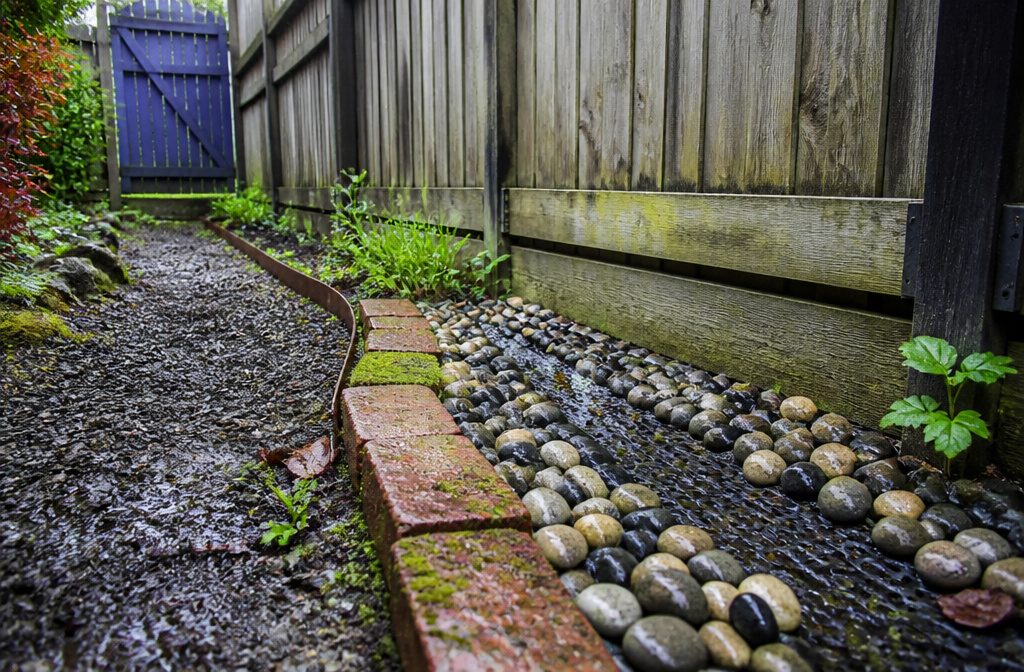
Edging for a fence line runs from plastic a beginner sets in an afternoon to concrete curbing at $15–$20 per linear foot, and lifespan separates them: steel, brick and stone stay put for years, while plastic is the one you replace.
Wherever water pools along the fence, add a permeable layer, such as a plastic grid under gravel.
1. Corten Steel Edging
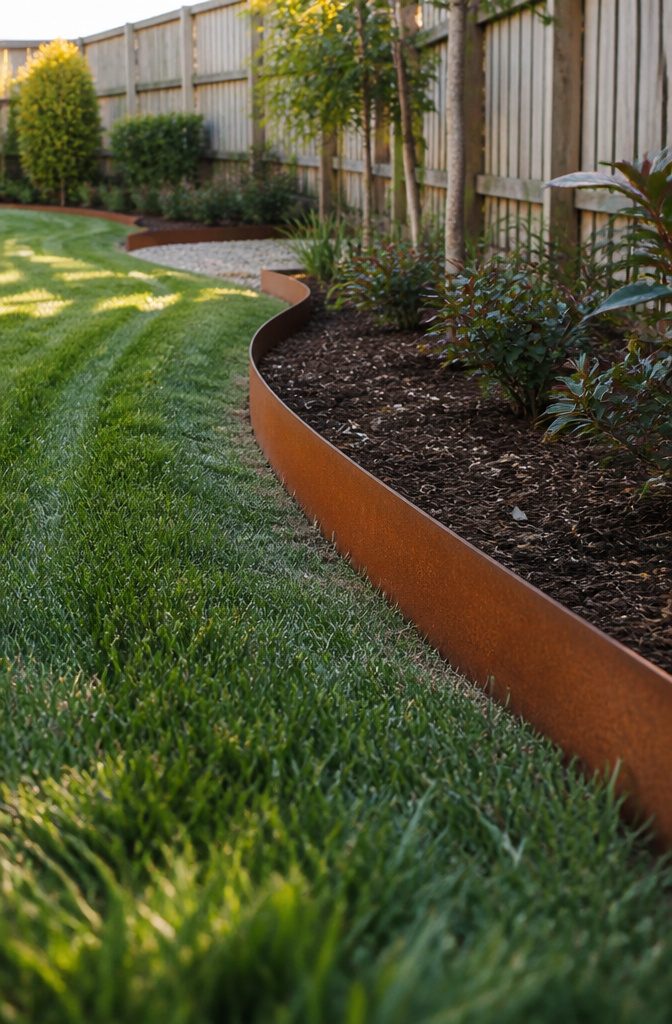
Corten steel weathers to a rust-colored skin that protects the metal underneath, so it needs no paint or sealant and looks deliberately modern next to lawn, gravel or mulch.
Thin strips bend into smooth curves, which makes it my pick for a curved lawn edge. Wood runs in straight lengths, and plastic can kink or ripple on a tight bend.
Plain steel and aluminum do the same job. Aluminum never rusts and is light to carry, while steel feels sturdier underfoot.
Metal beats wood and plastic on lifespan and a crisp edge: it won’t rot, split or heave out of the soil, and it keeps a clean line a mower can run along.
It costs more up front, and the top edge can cut bare hands, so wear gloves.
Recommended Products

𝐏𝐫𝐨𝐟𝐞𝐬𝐬𝐢𝐨𝐧𝐚𝐥-𝐆𝐫𝐚𝐝𝐞 𝐂𝐨𝐫-𝐓𝐞𝐧 𝐒𝐭𝐞𝐞𝐥 𝐄𝐝𝐠𝐢𝐧𝐠: Create sharp, long-lasting garden borders with our 6-pack of 8-inch tall Cor-Ten steel edging. Each piece measures 4 inches above ground and 4 inches below ground, making it ideal for flower beds and vegetable patches. This flexible metal border helps prevent grass overgrowth and keeps landscaping clean and organized.

Rustic Corten Steel Design: Crafted from premium rust-resistant Corten steel, this lawn edging develops a beautiful, natural rust finish over time while remaining durable against harsh weather conditions. Perfect for adding a timeless and rustic charm to your outdoor space.

[MATERIALS AND SIZE]: Landscape Edging made of high-quality corten steel, pre-rusted surface for all-weather use and maintenance-free durability.; Landscape Edging 4.5" H X 40" L, 33FT in total length.
2. Artificial-Turf Edging
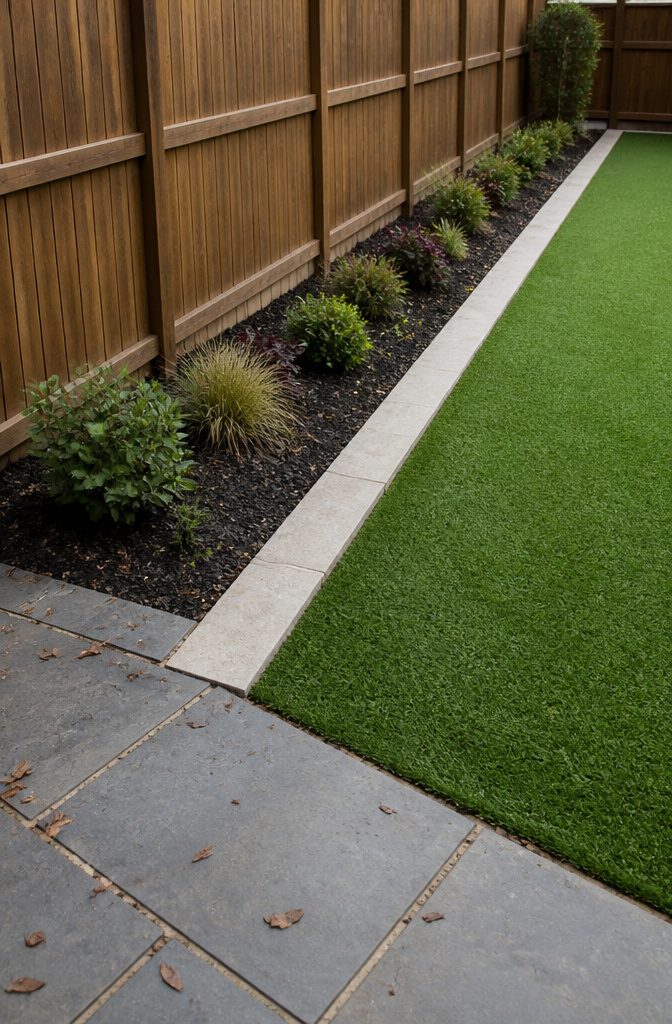
Artificial turf takes the same edging you would put beside a natural lawn: wood, metal, plastic and mulch all pair well with it.
Stone gives the cleanest finish, either a stone border or slabs and walkways, and I’d choose it over the others wherever the budget allows.
Wood, metal and plastic work fine, but the straight, hard line of stone keeps the turf looking sharp.
Pick the edge material before you order or cut anything.
Build the edging into your plan while you measure and cut the turf, so each cut follows the line the border will take. Fitting an edge to turf that is already cut leaves you working around mistakes.
Recommended Products

【6-PANEL DECORATIVE GARDEN FENCE】 Includes 6 arched metal fence panels, each measuring approximately 12.6"W x 16.54"H overall. When installed, about 13 inches remain above ground, and the 6 panels provide approximately 6.3 ft of straight-line coverage for flower beds, lawns, pathways and landscaped areas.

Quality Metal Material: Our galvanized garden edge is processed using high-precision CNC technology, ensuring accuracy down to every millimeter. Innovative 3D ripple design not only enhances the aesthetic appeal of the fence but also strengthens its structural integrity.

Landscape Edging : Our material is galvanized steel. This set contains 10 packs metal landscape edging. And our metal lawn edging with a total height of 4.5 inches, a ground height of 2 inches, and a subterranean height of 2.5 inches. Each landscape edging border is 40 inches long, and the total length of the 10 steel landscape edging is 33 feet, making it easy to create the perfect garden.
3. Retaining Walls and Slopes
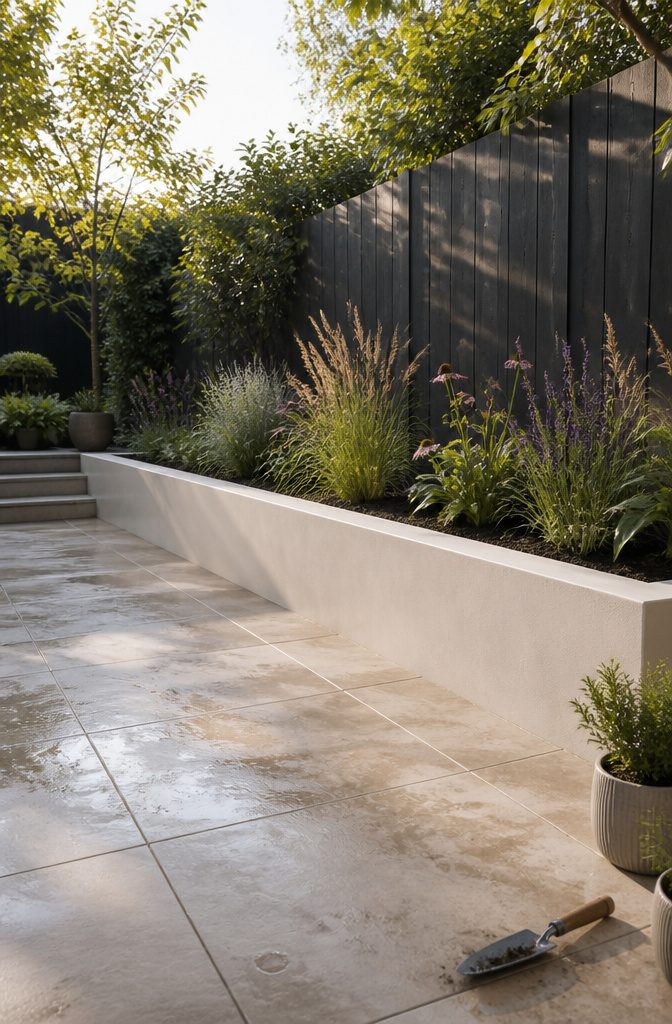
A low wall sits between edging and a true retaining wall, and it suits a fence line where you also want planting depth.
Low stone, wooden, or metal walls serve several purposes, including keeping the outside of your garden looking tidy… low walls such as these can double as raised flower beds.
— Angi
Build one against the fence and you get a border and a planting bed in a single structure.
A rendered wall with raised bedding, set against dark fencing beside porcelain patio pavers, gives clean lines and layered depth with little upkeep.
On a hillside, stone, metal or plastic edging at the base holds the foot of the slope.
Have a landscaping professional look at any slope before you build, since a failed hillside is far harder to fix than a bad border.
Recommended Products

HEAVY-DUTY INTERLOCKING PAVER SYSTEM: Strol's reinforced honeycomb cell structure locks gravel securely, supporting up to 600,000kg/m (122,889.6 lbs/f) for driveways, walkways, patios, and erosion-prone areas

DURABLE AND ECO-FRIENDLY: Crafted from 100% recycled PPE plastic, our gravel paver system delivers exceptional strength and longevity; This set includes 22 units with a 1-inch depth, covering an area of 65 square feet

【Product Details】Our 4x33 FT geo gravel grid consists of three 4x11 FT sections, covering 132 square feet. Each cell measures 8.66”x8.66” and stands 2 inch high. This modular design provides enhanced flexibility, allowing you to tailor it to various areas and terrains
4. Brick Edging
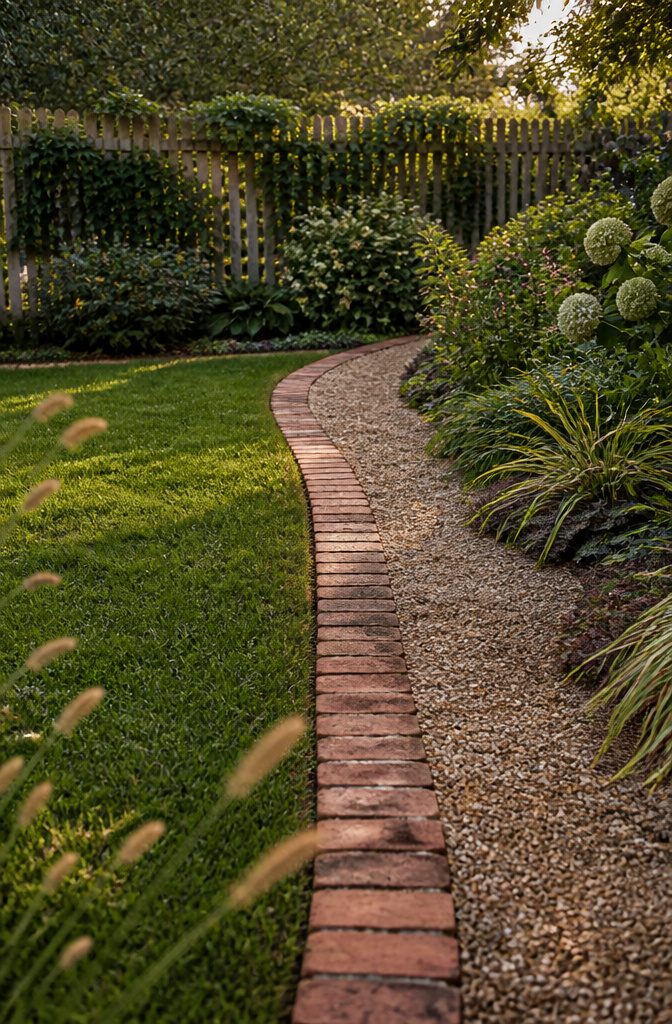
Brick gives a border something most edging can’t: every unit is the same size, so the line stays crisp along the full length of a bed. It comes in different finishes, so pick one that echoes your house or paving.
Reclaimed brick costs less and arrives already weathered, with faded color and worn corners that make a young garden look settled. I’d choose it for cottage-style beds and keep new brick for clean, modern yards.
The strongest use is a curved brick edge along a centerpiece path.
Set where the path runs between lawn and mixed borders, the curve holds the grass back from perennials, shrubs and ornamental grasses, so each reads as its own layer.
Recommended Products

EASYFLEX DECORATIVE NO-DIG LANDSCAPE EDGING: Get a beautifully landscaped yard without all the work of a dig-in lawn edging; simple installation without trenches or shovels; color may vary due to the unique manufacturing process.

【MULTI-PURPOSE】Perfect for paver edging, landscape edging, weed fabric, artificial turf, etc. Reusable and easy to store in your gardening shed.
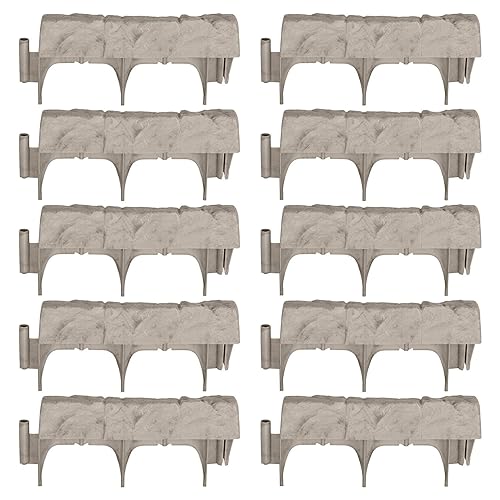
EASY INSTALLATION: Sections of edging simply slide together and can be tapped with a mallet, which eliminates digging
5. Timber and Wood Edging
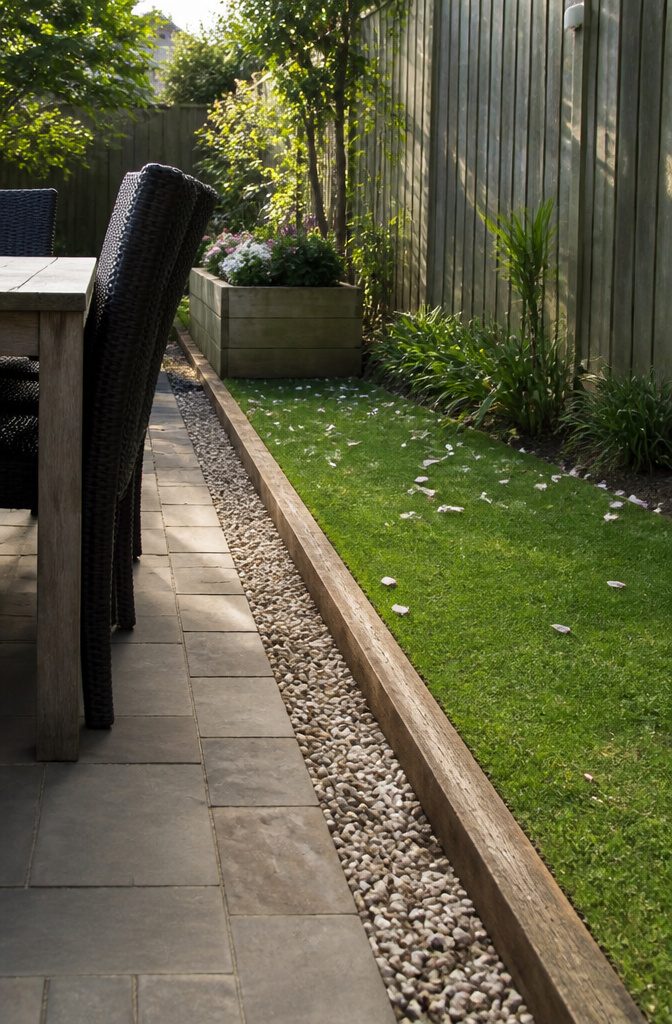
Stacked timbers turn a flat edge into a raised bed, and the extra height does real work. Deep-rooted vegetables get more soil to grow in, and the plants sit above runoff, burrowing animals and wandering weeds.
Old sleepers made into planters follow the same logic on a smaller scale. Both suit a spot beside a seating or dining area, where you see the flowers every time you step outside.
For a quieter look beside a lawn, I prefer a plain wood edge with a pebble border. It stays neat and unobtrusive, so the grass remains the main feature.
Add a planter or one raised bed for interest, and stop there. Any more starts to look busy.
Recommended Products

Stone-Look Decorative Landscape Edging: 2.75 inch tall rustic stone design complements any flower gardens and provide clean look for your gardens, flower beds, lawns, grass, raised garden beds, shrubbery, pathways, yard trees, ground pool, etc.

Realistic Faux Stone Texture: Our landscape edging boasts a lifelike stone texture with detailed surface patterns that add depth and a polished look to your outdoor space. It beautifully enhances garden beds, lawns, pathways and flower beds, bringing a natural, decorative touch to any yard.

Decorative Brick Red Finish for Rustic Charm: This short wood fence features a warm brick red finish that adds natural beauty and a decorative touch to any outdoor space. Ideal as a wood garden fence for flower beds, pathways, and yard accents.
6. Stone and Gravel Borders
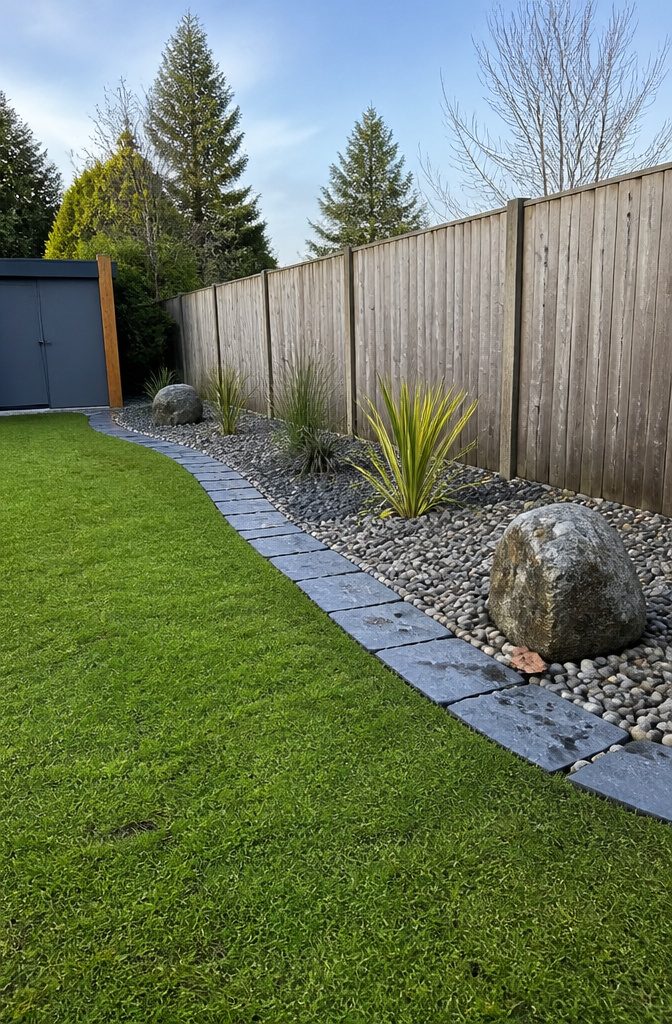
Stone edging defines a bed or path while still looking natural. Slate walkway stones give a flat, dark line, white crushed marble brightens a shady bed, and a strip of pebbles sets off a green lawn.
Carry the stone past the edge and into the bed. That helps water drain and keeps weeds from crossing the barrier.
The modern gravel garden is the lowest-maintenance version, and it’s the one I’d pick for a busy season. Fill the bed with gravel, add a few architectural plants, and set boulders where the eye needs a stopping point.
Put a plastic grid under the gravel so it stays stable and drains, which keeps water from pooling along the fence line.
Recommended Products
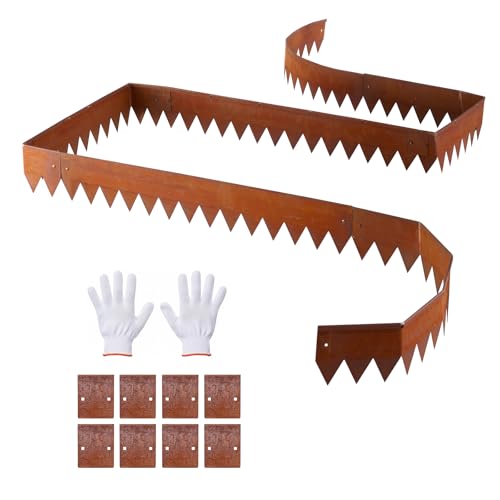
Durable Corten Steel: This metal lawn edging uses corten steel with a treated surface that helps resist rust, fading, and cracking. Outdoor borders stay neat and dependable through everyday weather changes

𝐏𝐫𝐞𝐦𝐢𝐮𝐦 𝐂𝐨𝐫𝐭𝐞𝐧 𝐒𝐭𝐞𝐞𝐥 𝐂𝐨𝐧𝐬𝐭𝐫𝐮𝐜𝐭𝐢𝐨𝐧: Made from high-quality Corten weathering steel, this 33ft landscape edging (10-pack) offers exceptional strength and durability. Designed to naturally form a stable rust-like patina over time, it provides long-lasting protection without the need for painting or maintenance.

COR TEN STEEL EDGING - Add a touch of modern sophistication to your outdoor space with our Cor ten steel garden edging. Pre-Rusted can be lasting,It also have about 50 years service life of the edging.Each pack contains 6 pieces of metal edging, each piece is 40 inches, six pieces can be 20 feet in length.Each piece of edging has a thickness of 1.0 mm.
7. Mulch with Plastic Edging
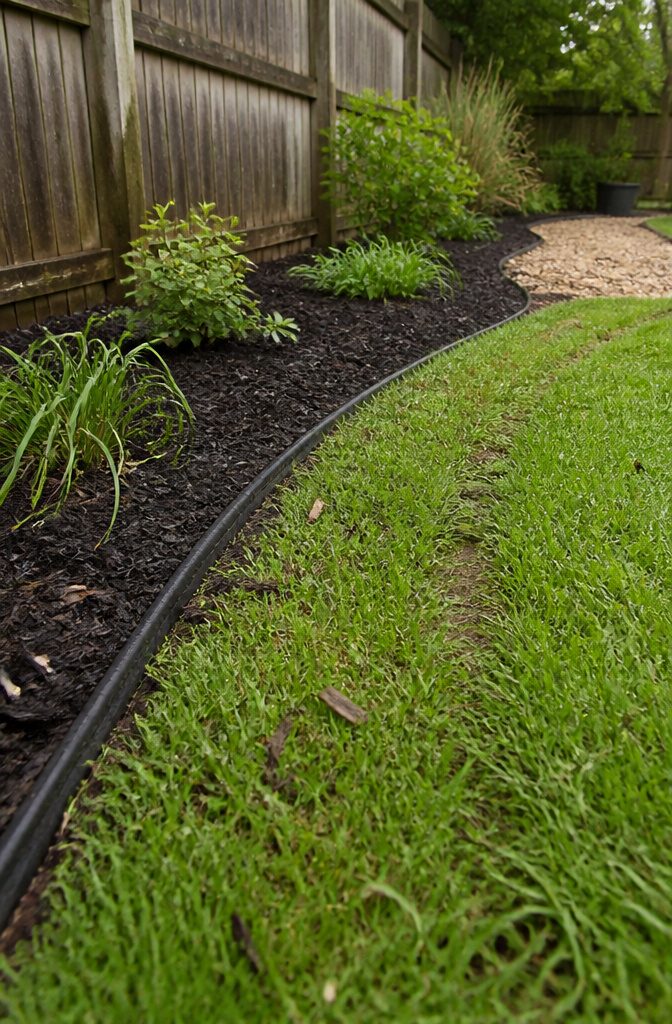
Mulch gives a bed a soft, clear edge against grass, but it creeps onto the lawn with every rain and mowing pass.
Plastic edging holds that line. It cuts with a utility knife or saw, bends around curves, and a beginner can set it in an afternoon, so I’d pick it for a first fence-line bed on a tight budget.
Plastic loses on looks and lifespan, though.
It can ripple with frost, turn brittle in strong sun, and show above the soil if you set it too high. Steel, brick and stone stay put and look finished for years, while plastic is the one you eventually replace.
Recommended Products

【Premium Black Steel Edging】Crafted from heavy-duty galvanized steel with a matte black finish, this metal garden edging resists rust and creates clean, modern lawn edging lines. It blocks invasive grass, contains mulch, and keeps borders sharp for years with zero maintenance.

𝐅𝐥𝐞𝐱𝐢𝐛𝐥𝐞 & 𝐄𝐚𝐬𝐲 𝐭𝐨 𝐈𝐧𝐬𝐭𝐚𝐥𝐥: Each panel measures 40" (L) × 5" (H), including 3" underground stakes for strong anchoring, leaving 2" visible above ground for a clean, low-profile border. The hammer-in design makes installation fast and effortless—perfect for creating neat, professional-looking edges without digging.

Premium Metal Material: Made from galvanized, rust-resistant steel with a protective coating, it stands up to rain, snow, sun, and extreme temperatures. Built for long-term outdoor landscaping in any climate
8. Ornamental Grass Borders
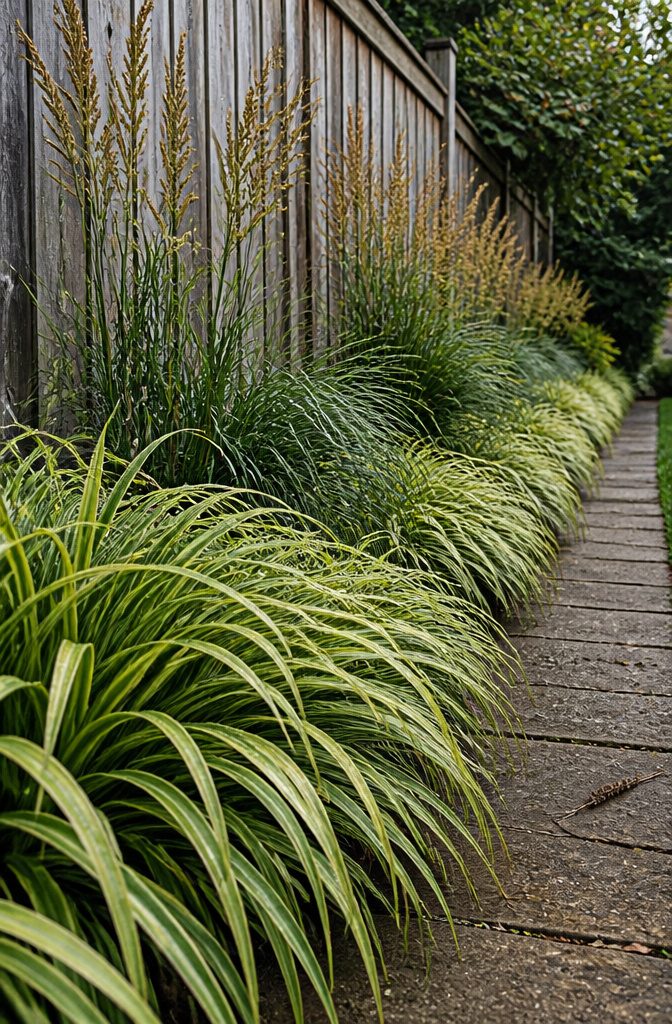
Grasses soften a fence line because the blades spill over the boundary instead of stopping at it.
Japanese sweet flag (Acorus gramineus) is a good low choice for the front of a border. A single clump can be split into about 20 divisions, so one purchase can plant a long run.
Layer the heights: shortest grass along the path or lawn, a medium one behind it, and the tallest against the fence boards. Then repeat the same groups at regular intervals along the fence instead of scattering single plants.
Repeated clumps read as a planned edge, while one of everything looks messy. I’d stick to 2 or 3 grasses.
Recommended Products

Solid Ground Support - Is your driveway sinking and forming deep ruts every time a heavy vehicle parks on it? Our geocell ground grid 3 inch system creates a structural foundation that turns soft soil into a solid load bearing surface

HEAVY-DUTY, DURABLE CONSTRUCTION : Our permeable pavers each piece measures 41 x 41 x 2.5 centimeters (16x16x1inch) and is made of thick, high-strength plastic mesh that can withstand vehicular traffic without deformation, ensuring the long-term durability of your permeable paving system

DURABLE AND ECO-FRIENDLY: Crafted from 100% recycled plastic, our gravel paver system delivers exceptional strength and longevity; This Permeable Paver System includes 14 units with a 2" depth, covering an area of 35 square feet
9. Boxwood and Hydrangeas
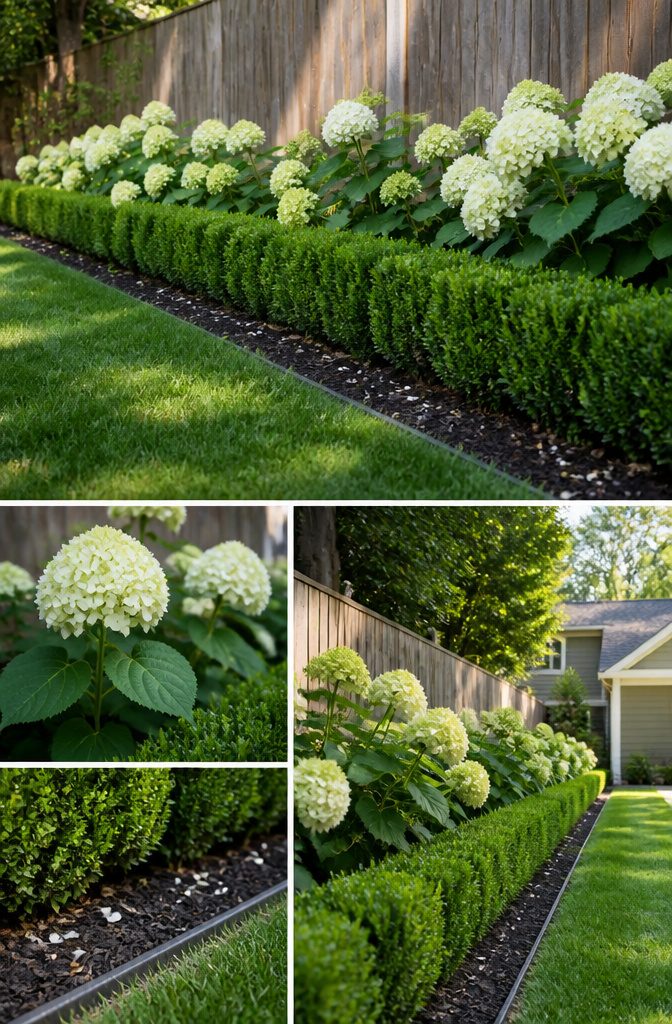
A low boxwood strip in front of a hydrangea row gives a fence line shape in winter, when the hydrangeas are bare.
Stick to one variety so the whole row grows and blooms together. I’d choose Annabelle, which can flower for up to two months in summer and sometimes blooms again in fall.
Space the plants evenly, roughly 3–5 feet apart for Annabelle. Mulch around the roots, run landscape edging along the front for a crisp line, and tuck complementary flowers into any gaps.
Water deeply while the plants are growing. Pruning depends on the variety, and Annabelle blooms on new growth, so a hard cut in late winter or early spring is safe.
Recommended Products

Professional Finish for Any Project Creates clean, polished edges and smooth transitions in artificial turf, patios, walkways, driveways, pool decks, gardens, balconies, and many other indoor and outdoor applications.

EASY INSTALLATION: Sections of edging simply slide together and can be tapped with a mallet, which eliminates digging

Natural Shape Grass Leaves: This item features realistic nature-shaped grass leaves with good surface thickness, making it quality decorative grass strips material with thick and dense grass surface that will stand up properly within a few days
10. Layered Evergreen Borders
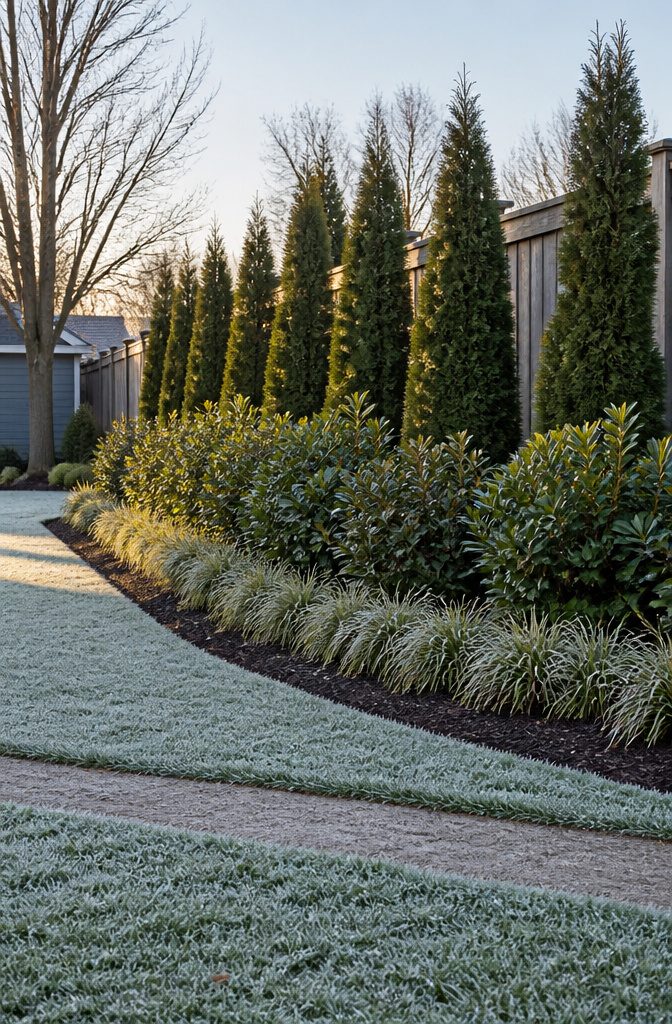
Plant arborvitae or another tall evergreen against the fence, step down to medium shrubs, then put grasses in the front row for texture.
Evergreens hold their color through winter, so when perennials die back and the fence is bare boards, the back layer still reads as a finished backdrop.
Repeating the same plant varieties along the whole fence line beats one-of-each, since repetition looks planned and a mixed row looks like leftovers.
Keep the spacing consistent and prune regularly so each layer holds its shape. Finish with dark mulch, which contrasts with the foliage, and a clean cut edge along the front of the bed.
Recommended Products

Interlocking Structure Design: The interlocking structure adopts thin tongue and groove style design which will tightly hold the each edgings, preventing the garden edgings peel off. Made of premium material, these interlocking garden border edgings stand the wear and tear, no fading, no crackling, no deformation. It can be used for a long time.
Realistic Faux Stone Texture: Our landscape edging boasts a lifelike stone texture with detailed surface patterns that add depth and a polished look to your outdoor space. It beautifully enhances garden beds, lawns, pathways and flower beds, bringing a natural, decorative touch to any yard.

Dimensions: 6.5/5 in. H x 47 in. L, Diameter per log: 1.7 in., Weight: 8 lb.
11. Climbing Roses on Trellis
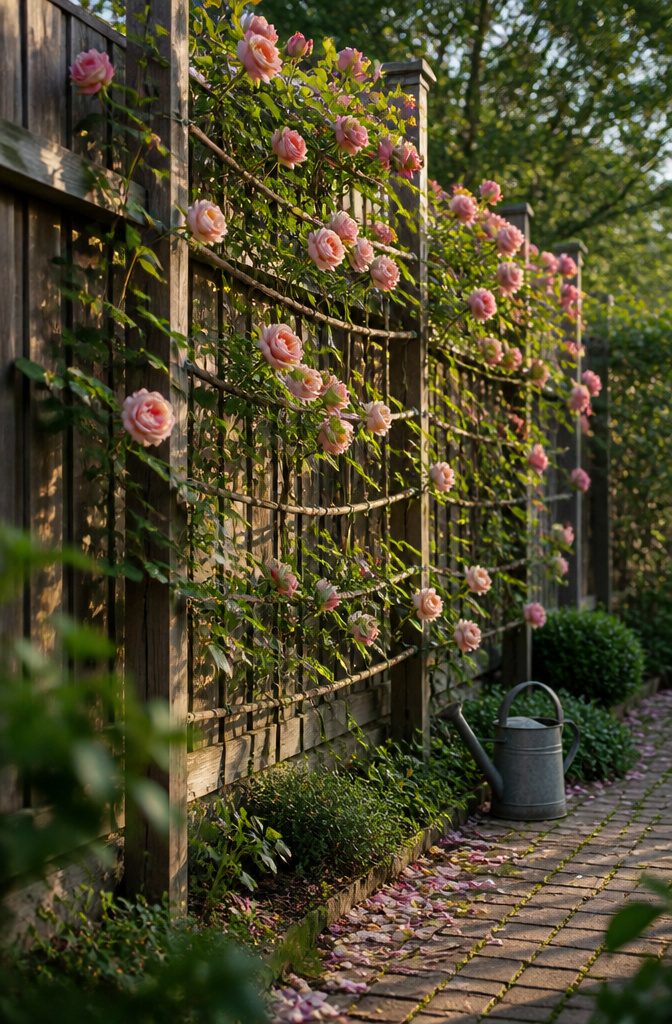
Climbing roses have no tendrils or sticky pads, so they stay up only if you tie them.
Anchor the trellis to the fence posts or a frame set in the ground, not just the boards, because a mature rose in leaf is heavy and catches wind like a sail.
Fan the long canes out and tie them with soft ties. Canes trained close to horizontal throw out flowering side shoots, while upright canes mostly grow taller and bloom only at the tip.
Prune after flowering: cut out dead, crossing or weak wood and shorten the side shoots. Water deeply at the base rather than overhead, since wet leaves invite blackspot, and keep it steady through the first season while roots establish.
12. Lavender and Wildflower Borders
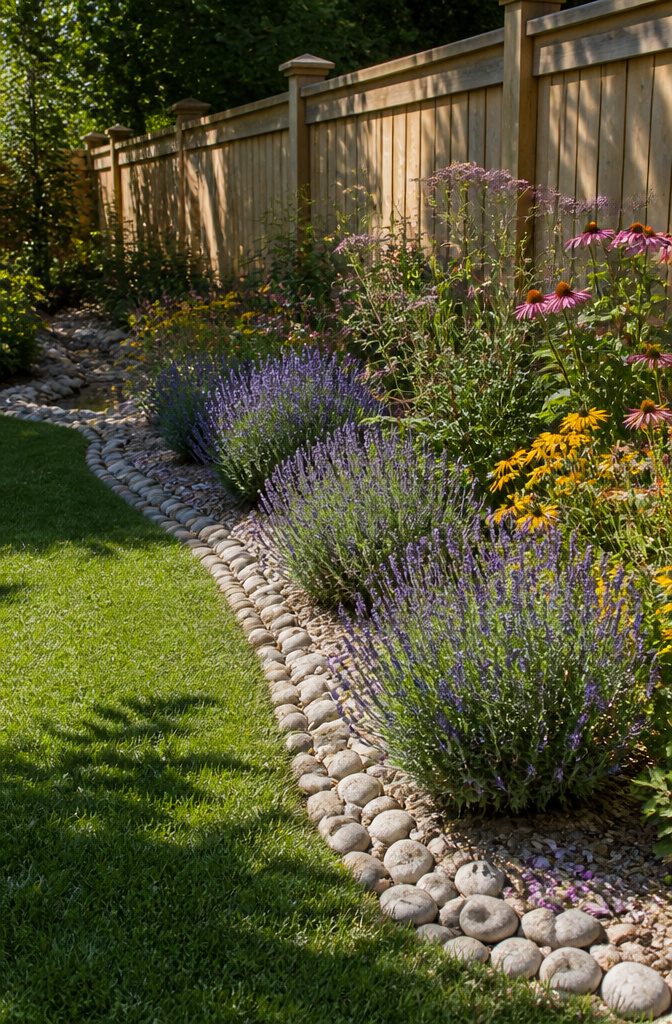
Lavender needs full sun, and gravel mulch with a stone edge suits it.
Space the plants evenly and repeat them in long sections along the fence. That repetition is what makes a border look designed instead of dotted.
Prune once a year and leave enough room between plants for air to move through. If water tends to pool, set a plastic grid under the gravel to help it drain.
Native wildflowers look best planted in drifts rather than single rows, and they give pollinators and local wildlife a steady supply of flowers.
For interest across the seasons, mix pollinator-friendly perennials and finish the bed with a pebble edge, which stands out against green lawn. The look is casual, but it takes more planning and upkeep than a plain strip.
Edging Costs per Foot
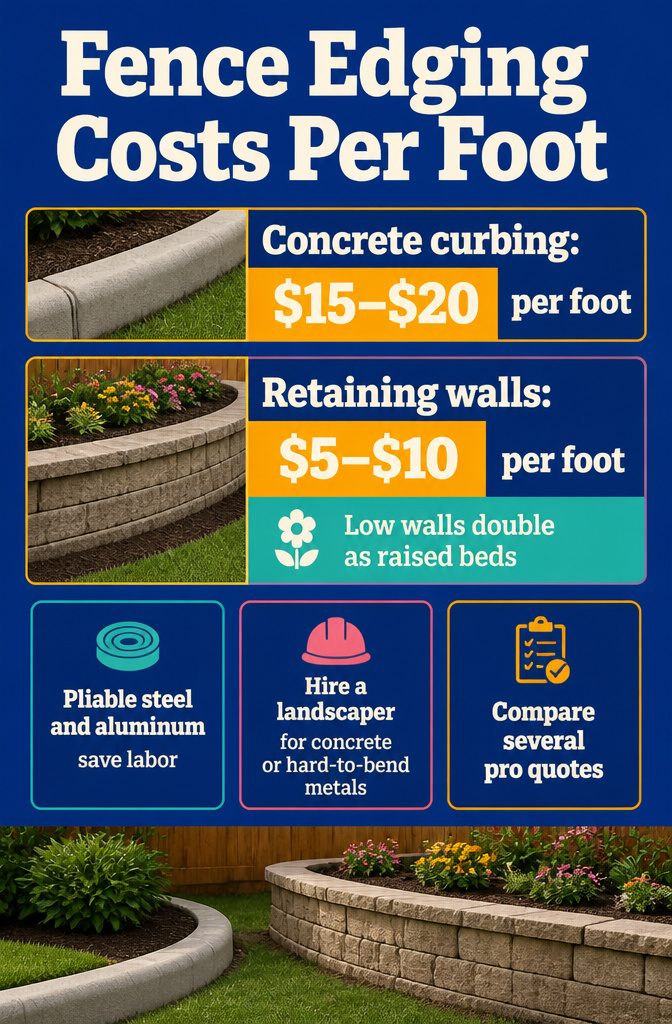
Concrete costs about three times what a low wall does, so the material choice sets most of your budget.
- Concrete landscape curbing runs $15–$20 per linear foot.
- Retaining walls run $5–$10 per linear foot. A low wall can also double as a raised flower bed.
- Many steel and aluminum strips are pliable enough to install yourself, which saves labor costs.
- Hire a landscaper for concrete curbing or for metals that are hard to bend and cut. I’d also hire one if you can’t decide on a material, since a local pro can advise on both choice and installation.
- Get quotes from several pros before you commit.
Weeds, Drainage and Upkeep
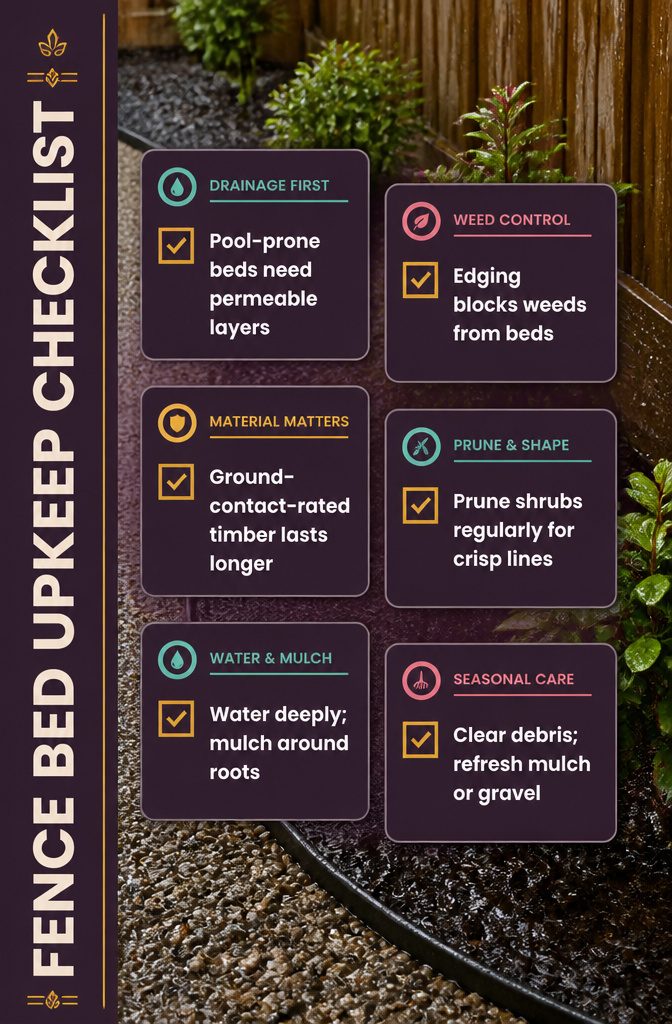
Edging changes how water moves through a bed, so the upkeep plan starts with drainage.
- Where water pools inside an edged bed, add a permeable layer beneath the top material. Plastic grids under gravel add stability and drainage, and grass paver blocks or permeable pavers work too.
- Edging between lawn and a flower, gravel or mulch bed keeps weeds from creeping across.
- Aluminum won’t rust, and steel can last a lifetime. Timber has to be rated for ground contact, or it fails early.
- Prune shrubs by variety, and regularly where you want a crisp line along the fence.
- Water deeply while plants are growing, and keep mulch around the roots.
- Clear debris each season and refresh mulch or gravel so the bed edge stays sharp.
Five Border Styles
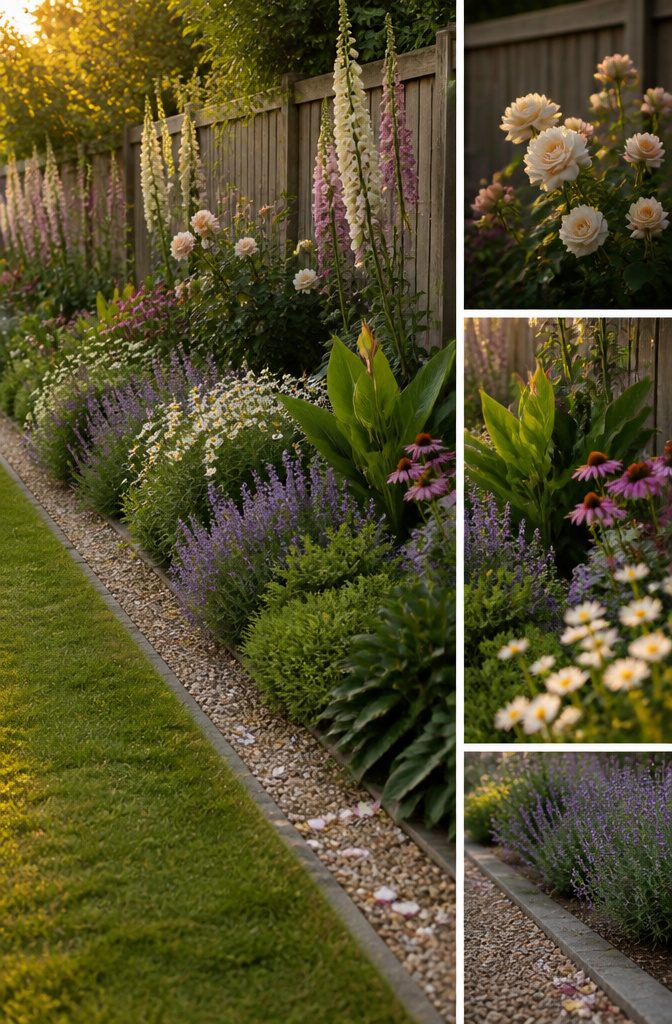
Five styles cover most fence borders, and each one works through contrast of textures, repetition and layering, with tall plants at the back and low ones in front.
- Cottage Garden: Loose and crowded. Foxglove, hollyhock and roses at the back, daisies and catmint in front, mixing spiky and round shapes.
- Modern Minimalist: One or two plants repeated in a straight line against clean edging or gravel. The repetition is the design.
- Evergreen Border: Yew, arborvitae and holly give green in winter. Mix fine needles with broad glossy leaves so the layers read apart.
- Tropical Planting: Canna, elephant ear and banana bring big, bold leaves. Set them against fine, feathery foliage.
- Native Landscape: Coneflower, black-eyed Susan and milkweed suit your local climate. Stagger heights in drifts and the bed looks natural.
Frequently Asked Questions
What can I use instead of garden edging?
Brick, stone or gravel borders, a low wall, or a plant border all mark a bed’s edge without a manufactured strip.
A low stone, wooden or metal wall costs $5–$10 per linear foot and can double as a raised flower bed. Low boxwood or ornamental grasses also define the edge with foliage rather than hardscape.
What are common mistakes when edging?
The most common mistakes are setting plastic edging too high so it shows above the soil, using timber that isn’t rated for ground contact, and cutting turf before choosing the border.
Skipping drainage where water pools inside an edged bed is another. For plant borders, scattering one of each plant instead of repeating groups makes the edge look messy.
How to landscape along a fence line?
Plant in layers: tall plants against the fence, medium ones in the middle, and the shortest along the lawn or path.
Repeat the same plants at regular intervals and keep the spacing consistent, since repetition looks planned. Finish the front with a clean cut edge, and dark mulch gives the foliage contrast.









