
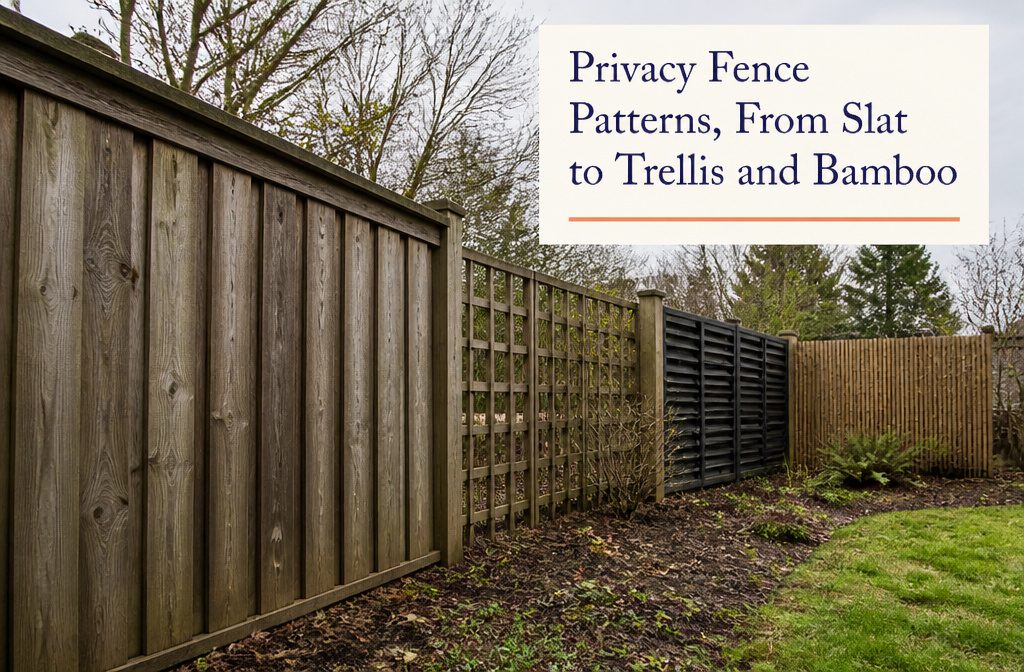
Board-on-board leaves no gaps to see through, while shadowbox, louvers, trellis and metal panels trade some privacy for air and light. Pick by how much see-through you can accept.
Louvers hide you only from certain angles, so stand where a neighbor’s window sits and check. Most residential fences also stop at about 6 feet.
1. Horizontal Slat Fences
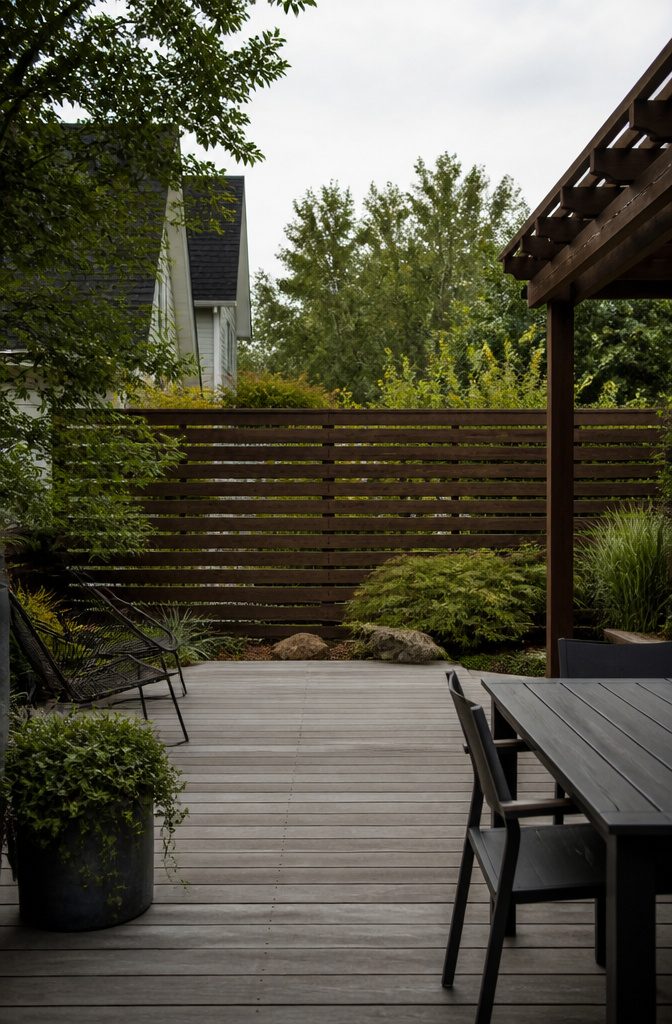
Boards running side to side pull the eye across the yard, so a narrow lot reads wider than it is.
I’d pick horizontal slats over tall vertical boards for a small, boxy yard, where upright lines can feel like walls closing in.
Cedar and treated pine are the usual wood choices, and composite is the better buy if you want less upkeep.
Trex sells two versions. Horizons shows a black metal frame around interlocked horizontal pickets, a sharp, urban look.
Horizontal adds composite top and bottom rails that hide the frame, so the fence reads as one material. The long lines also draw attention to whatever you’ve planted along them.
Recommended Products

Comes with a hard surface installation kit – No extra purchase needed.
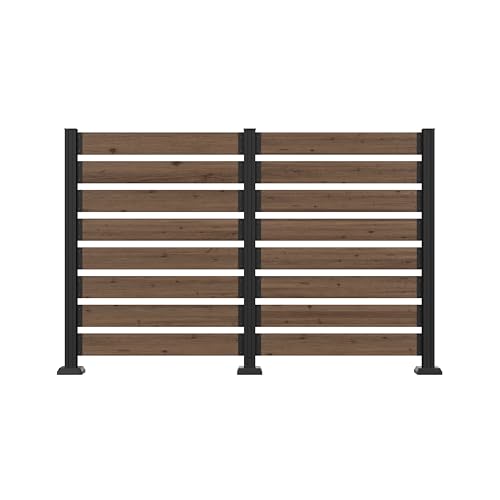
PREMIUM NATURAL WOOD – Crafted from real wood, the outdoor privacy screen showcases its own unique grain, color, and knots, unlike vinyl outdoor privacy fence screen panels that lack the authentic beauty and texture of a natural wood screen.
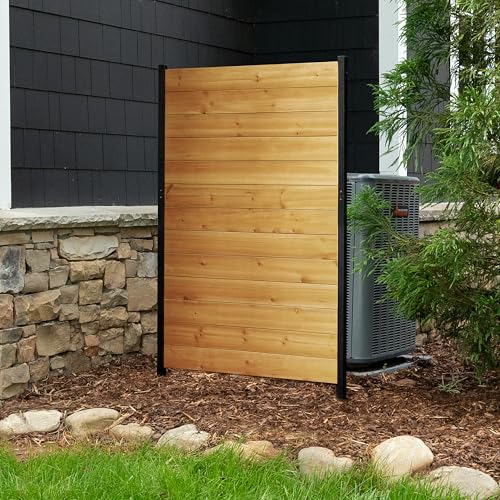
STYLISH NATURAL WOOD: This FSC certified wood screen is made with real wood meaning no two boards have the same grain color, finish, or wood knots differing it from vinyl outdoor privacy fence screen panels.
2. Board-on-Board Fences
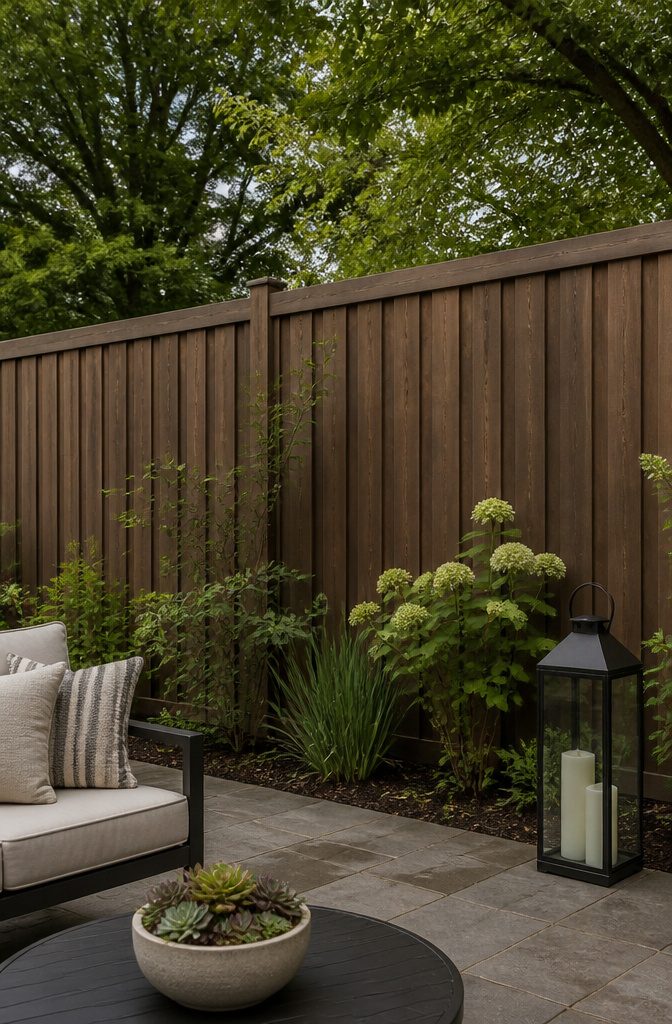
Overlapping vertical boards leave no gaps to see through, so privacy holds even after the wood shrinks.
The same overlap blocks wind well, which suits an open backyard. Natural cedar, stained pine and painted finishes all work, and the style keeps a high-end look.
Trex builds its composite fence around the same idea:
Traditional wood fencing has the unfortunate downside of losing privacy over time from bowing boards, gaps created by shrinking pickets, or knotty holes. Trex maintains privacy throughout its life with its unique interlocking picket system.
— Trex
If privacy is the reason you’re building, choose boards that overlap or interlock over single-layer pickets set side by side.
Recommended Products

Neighbor Privacy, Not Blackout: Blocks direct line-of-sight while allowing airflow — designed for comfortable backyard privacy, not a solid wall or tarp.

【Perfect Fence to Protect Privacy】With this privacy screen fence, you could have fun with your families not worrying about losing privacy. Also, helping you cut off some noise from your neighbours to give you a peaceful environment. Your dog will not bark from outdoor things and people too.

Premium Quality: The UPGRADE privacy screen for fences is made from 170 GSM non-recycled High-Density Polyethylene (HDPE). This ensures lasting durability, reliable privacy protection, and excellent weather resistance. A high-density composition makes it a dependable solution for outdoor privacy needs.
3. Shadowbox Fences
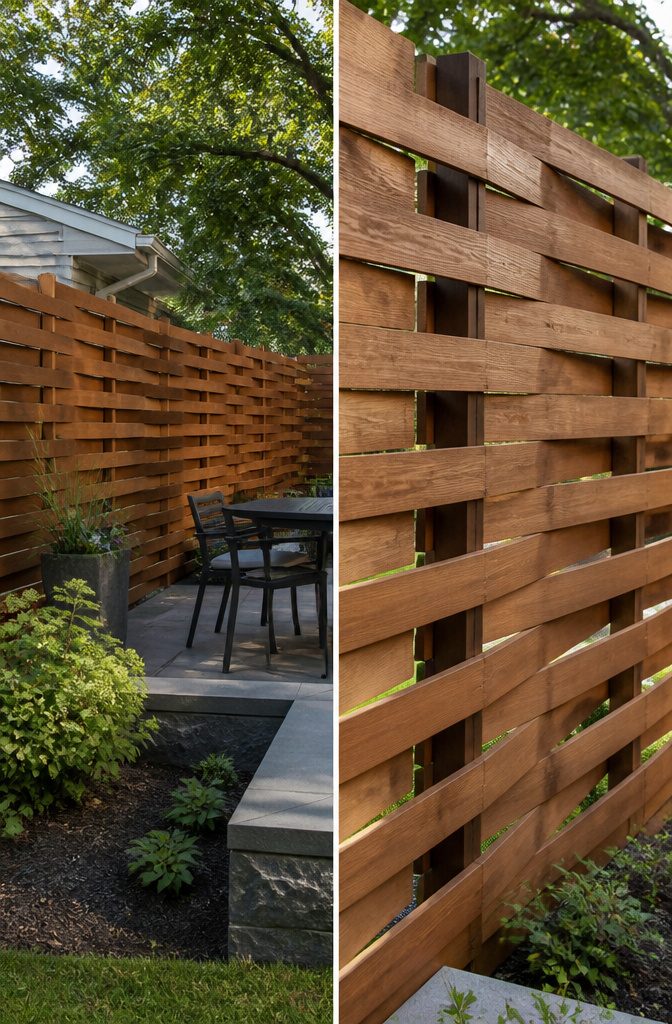
Boards alternate from one side of the rails to the other, so the fence looks like a solid wall when you face it from the street.
Air still moves through the staggered gaps, which cuts heat buildup and eases the pressure wind puts on the fence. That makes shadowbox my pick for a windy yard, or a sunny backyard where stuffy, still air is the complaint.
The cost is privacy.
From a sharp side angle, you can see slightly more through the gaps than head-on, so a diagonal sightline along the fence gets a partial view. If you need zero see-through from every angle, choose a fully solid style instead.
Recommended Products

Perfect Fit & Easy Installation: Our Privacy Screen Fence measures precisely 5' x 50', making it a perfect fit for fences 5 feet or slightly taller. It can be easily installed on chain link fences, existing cyclone wire fences, wooden retaining walls, welded wire fences, and more. For easy and secure installation, we've included grommets placed vertically every 1 foot and horizontally every 2 feet, with 4 grommets at each corner. We also provide 80 zip ties for added convenience.
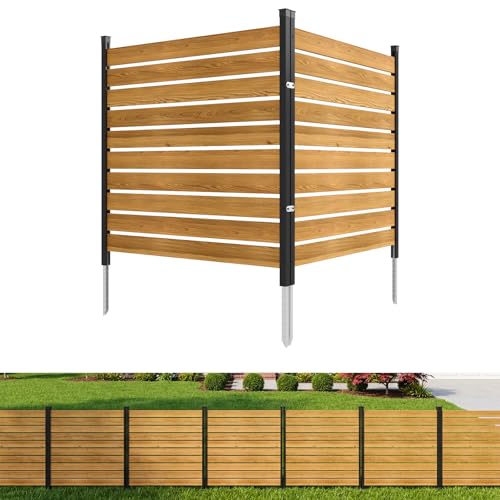
Premium Natural Solid Wood: Crafted from 100% authentic solid wood, each panel showcases unique grains and natural knots. Unlike cold vinyl or composite alternatives, our wooden screens provide a warm, organic aesthetic that seamlessly blends with your garden landscape.

STYLISH NATURAL WOOD: This FSC certified wood screen is made with real wood meaning no two boards have the same grain color, finish, or wood knots differing it from vinyl outdoor privacy fence screen panels.
4. Vinyl Privacy Fencing
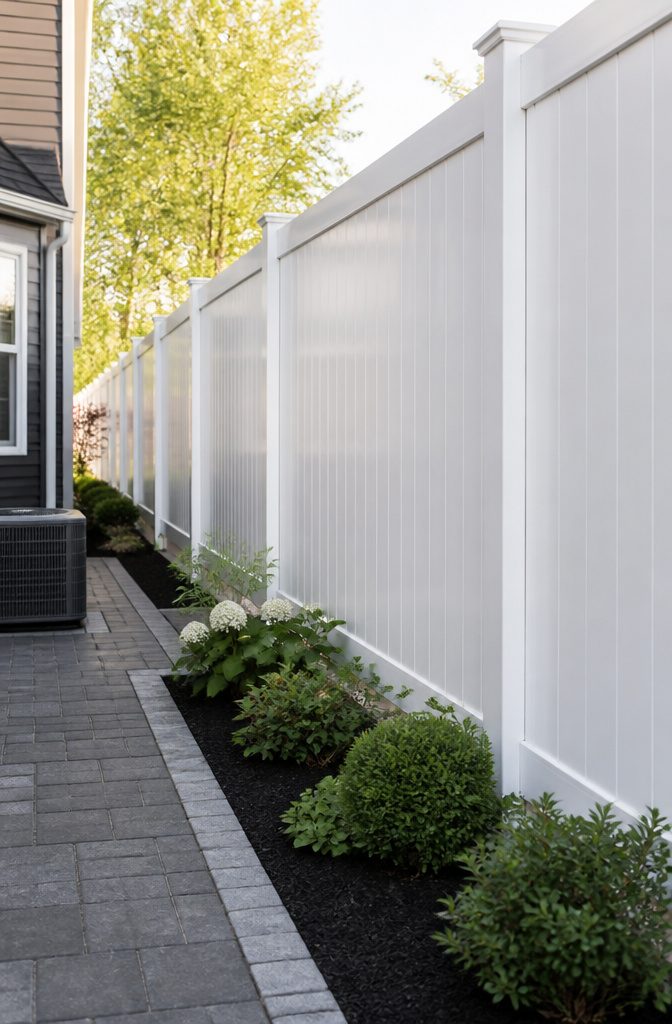
Vinyl is the privacy fence for anyone who wants the screen without the weekend chores. It resists moisture, won’t warp, and never needs staining or painting.
Occasional cleaning is all it asks for. The look is clean and uniform, and it comes in colors that suit many homes.
That consistency also makes it a good fit where HOA fencing guidelines apply. For a busy household, I’d pick it over wood for privacy with minimal upkeep.
Vinyl gives up some character, since it reads as tidy rather than rustic, so a garden aiming for a weathered, natural feel may suit another material better.
Recommended Products

1 PANEL PURCHASE: You will receive 1 unassembled panel measuring 48in H x 36in W
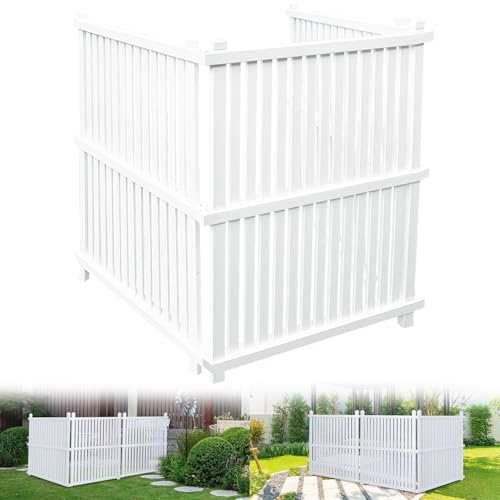
Package Content: This air conditioner fence includes the following parts: 48"W X 48"H Rails A1x3, Rails A2x3, Rails A3x3, Slats Bx54, Post Cx6, Ground Steak Dx6, Top Pointed Caps Ex6, Side Flat Caps Fx18, Long Screws Gx36, Metal Clips Hx6

Versatile Dog Fence Panels for Outdoor Yard Protection: This small garden fence set includes 14 no dig fence panels, each 17" long and 13" high, creating a 20Ft long dog fence outdoor for yard. Perfect for blocking off areas and preventing dogs or small animals from digging through your garden or fence line.
5. Composite Fencing
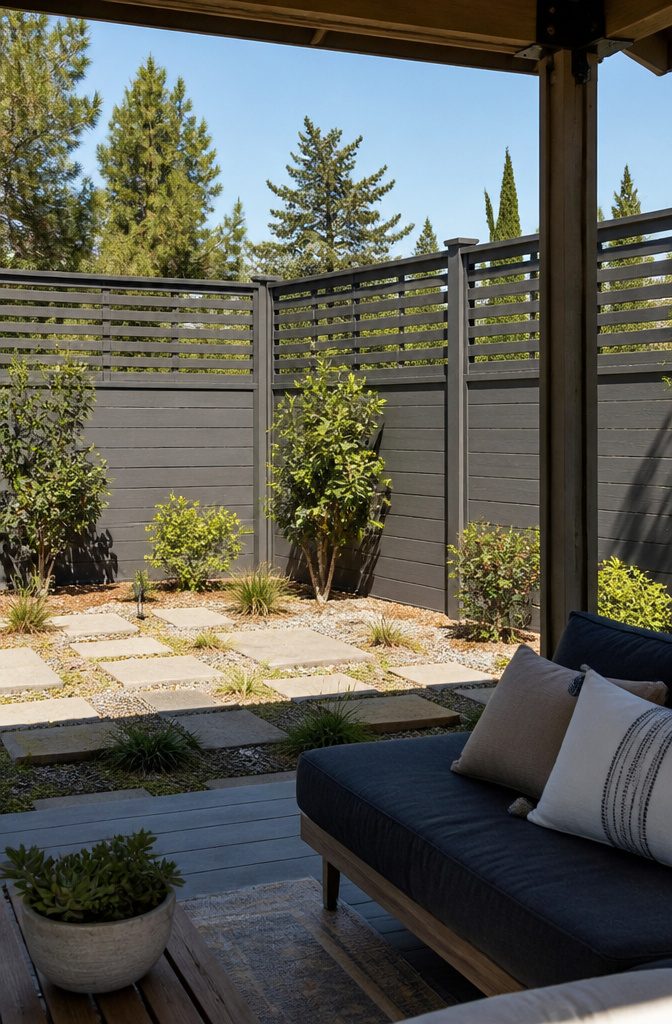
Composite fencing is wood fibers blended with recycled plastic, which gives a wood look that resists UV fading, rot, insect damage and splintering. If you don’t want to restain a privacy fence on a schedule, I’d pick it over wood.
Trex launched its fencing line in 2005, built to last at least a generation, and it goes past the standard single-height panel. Heights can vary, or panels can alternate tall and short, and you also choose color, profile, finish and orientation.
Varied heights call for a bespoke installation, so expect that extra step. Trex also says the dense boards block wind, dust and traffic noise, which helps a patio you want to dine on.
Recommended Products

Details: Artificial ivy wall is 120 inches long and 60 inches wide, with green faux ivy leaves. Made up of 18 small panels (connected).Can cover 50 square feet. the faux Ivy Vine are textured and look real. You can reassemble or cut to get the size you want. 50 cable ties are included to assist in installation.

No More Awkward Eye Contact – Finally enjoy your morning coffee or an evening read on your balcony without feeling like you're on display. Our artificial ivy privacy fence features 1,200 densely packed faux leaves – that's 1.4x more leaves than most standard panels. The leaves overlap completely, leaving zero gaps for prying eyes. Whether you're lounging in pajamas, doing yoga, or just letting the kids play, this green wall gives you true peace of mind
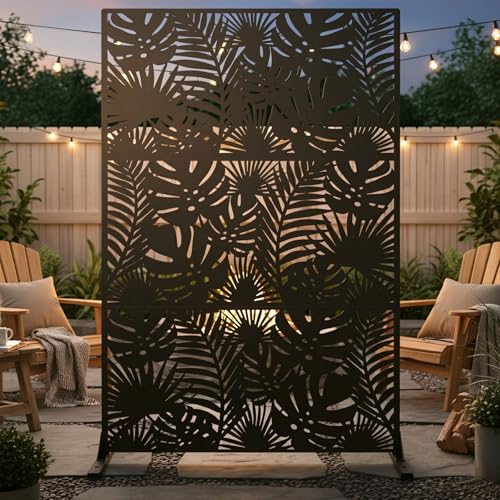
𝗢𝘂𝘁𝗱𝗼𝗼𝗿 𝗣𝗿𝗶𝘃𝗮𝗰𝘆 𝗦𝗰𝗿𝗲𝗲𝗻 𝗳𝗼𝗿 𝗣𝗮𝘁𝗶𝗼, 𝗚𝗮𝗿𝗱𝗲𝗻 & 𝗕𝗮𝗹𝗰𝗼𝗻𝘆:Transform your outdoor area with this decorative metal privacy screen. The 72x44in freestanding panel creates a modern garden divider that shields unwanted views while adding a contemporary touch to your patio, balcony, or backyard.
6. Bamboo Fencing
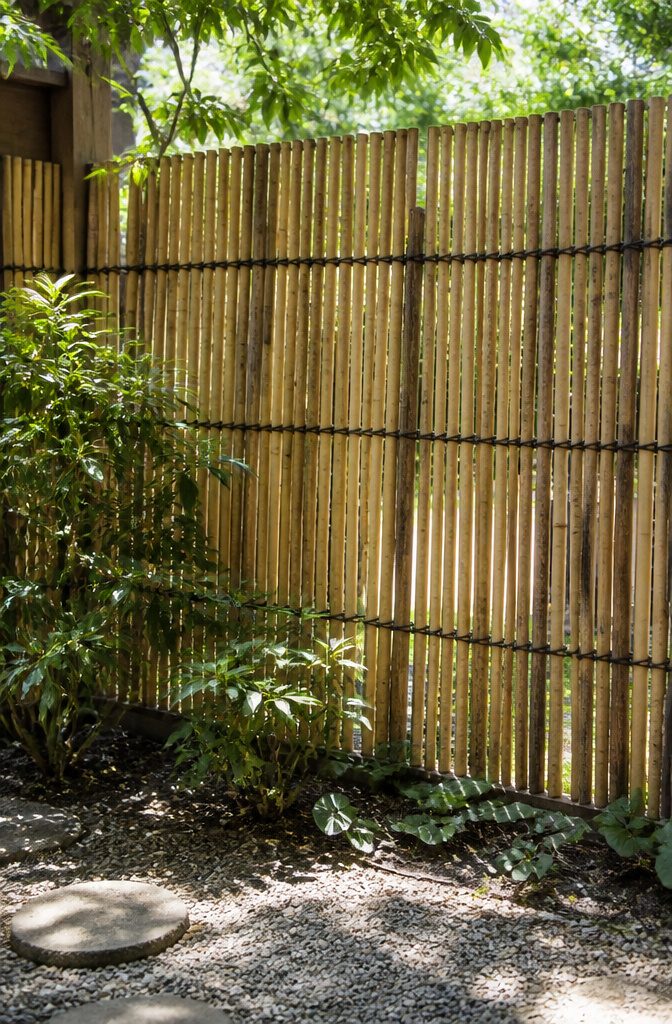
Bamboo gives a yard a warm, rustic look with a touch of natural greenery. It adds privacy around a patio or pool area, and since bamboo grows quickly and is sustainable, it suits anyone who wants a lower-impact material.
Humidity is its weak spot. Bamboo needs proper sealing to hold up in a damp climate like North Carolina’s, so plan on the sealing as part of the job, not an optional extra.
I’d choose it for a casual yard, such as a cottage-style border or a relaxed patio corner. It looks out of place beside a formal house, where the uniform lines of painted wood or vinyl fit better.
Recommended Products

STRONG & STURDY: Knitted with 220GSM Heavy Duty HDPE material, 90% UV protection. Fabricated with 1.55" black binding with double reinforced fabric on all edges for maximum life span. TFMUZERT Privacy Fence Panels for outside is Stronger and more tear-resistant.

PREMIUM NATURAL WOOD - This wood screen is made with real wood meaning no two boards have the same grain color, finish, or wood knots differing it from vinyl outdoor privacy fence screen panels which can not provide you a natural screen experience.

Privacy Solution: Most economical way for privacy over chain link fence, porous decorative concealment, existing cyclone wire fence, wood retaining wall, welded wire fence, chain link fence, privacy barrier around swimming pool, block nose neighbor see through, add privacy to acre back yard backdrop, front yard, patio, garden and porch; hide street, road, construction site, pet kennel pen, block surrounding noise and street view, stops dogs from barking at neighbors.
7. Decorative Metal Panels
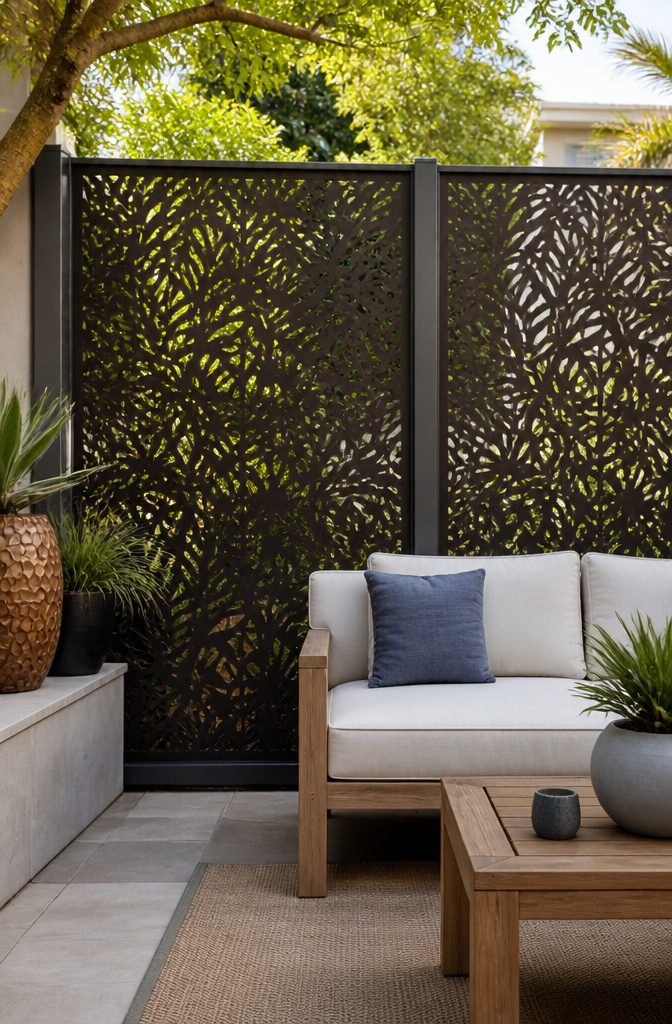
Laser-cut metal panels give a fence a pattern that reads as art from the street while still working as a secure barrier. Look for powder-coated aluminum, which stands up well to weather and suits modern homes best.
The cutouts cost you something, though. Every opening that lets light through also lets eyes through, so a dense pattern screens more than an open one, and neither matches a solid board fence for privacy.
I’d use these along a front or side yard, where style and security matter more than full screening. Pairing the panels with landscaping or a retaining wall makes the look bolder and more custom.
Recommended Products
Premium Quality: The UPGRADE privacy screen for fences is made from 170 GSM non-recycled High-Density Polyethylene (HDPE). This ensures lasting durability, reliable privacy protection, and excellent weather resistance. A high-density composition makes it a dependable solution for outdoor privacy needs.

Privacy Solution: Most economical way for privacy over chain link fence, porous decorative concealment, existing cyclone wire fence, wood retaining wall, welded wire fence, chain link fence, privacy barrier around swimming pool, block nose neighbor see through, add privacy to acre back yard backdrop, front yard, patio, garden and porch; hide street, road, construction site, pet kennel pen, block surrounding noise and street view, stops dogs from barking at neighbors.
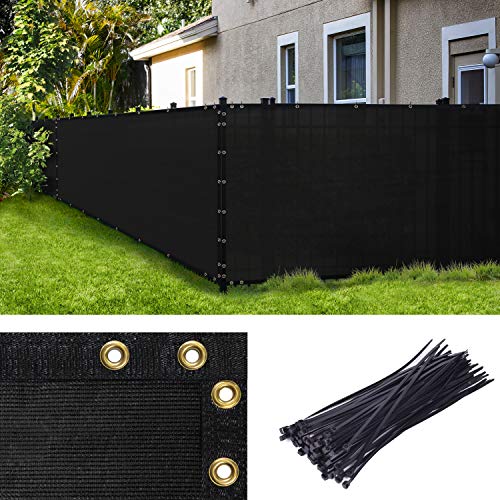
Backyard Privacy: Designed for 6-foot backyard fences, offering enhanced privacy by helping block views from neighbors and busy streets.
8. Louvered Panels
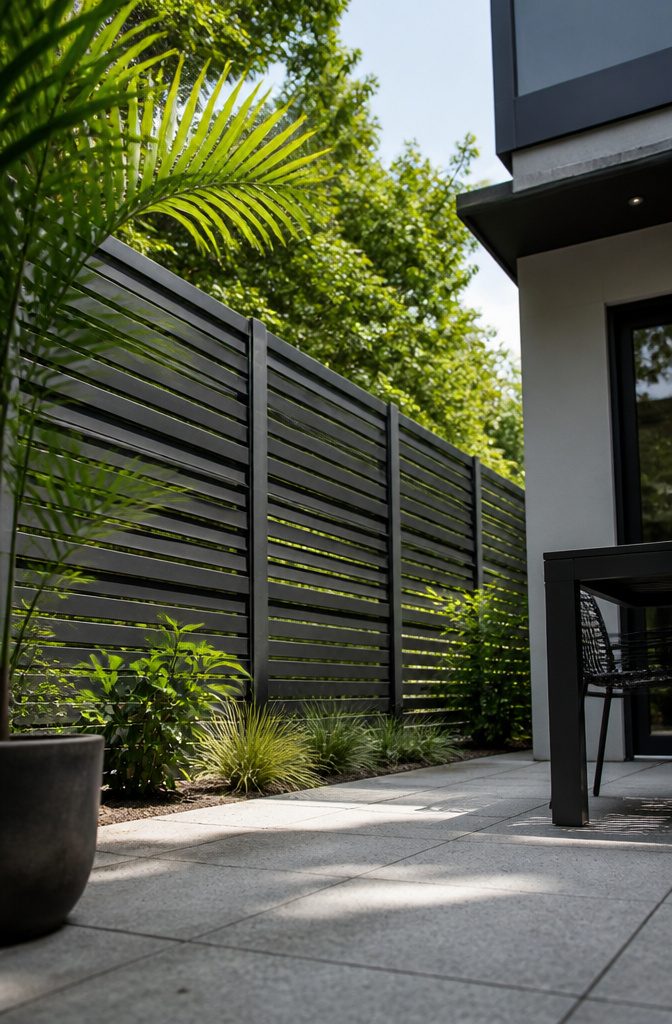
Louvered panels tilt each slat at an angle, so a person looking from the side sees boards while light and breeze pass through the gaps.
That suits a pool area or patio, where a solid fence traps heat and still air. The slats also filter sunlight, so the space feels shaded without feeling boxed in.
The limit is the angle. Privacy holds only from certain viewing angles, and someone looking straight on or along the slant can see through the gaps.
Before buying, I’d stand where a neighbor’s deck or window sits and check what shows from there. If a second-story window looks down into your yard, I’d pick a solid style instead.
Recommended Products

Beige Fence Slat - Designed for a 6' high fence, slats are approximately 68.5" in length to accommodate the bottom locking channel and to prevent the slats from being above the top of the fence. (Available Colors: Beige, Black, Brown, Gray, Green, Redwood, Royal Blue, Sky Blue, White)
Beige Fence Slat - Designed for a 5' high fence, slats are approximately 56.5" in length to accommodate the bottom locking channel and to prevent the slats from being above the top of the fence. (Available Colors: Beige, Black, Brown, Gray, Green, Redwood, Royal Blue, Sky Blue, White)

【Easeful Elegance】 Transform your backyard into a curated sanctuary with our innovative metal fence post. Designed for those who appreciate both form and function, these privacy fence post allow you to effortlessly assemble horizontal wooden boards into a sleek, modern fence that complements gardens, patios, and lush landscapes. No more uneven nails or messy installations—just clean lines and timeless style.
9. Mixed-Material Designs
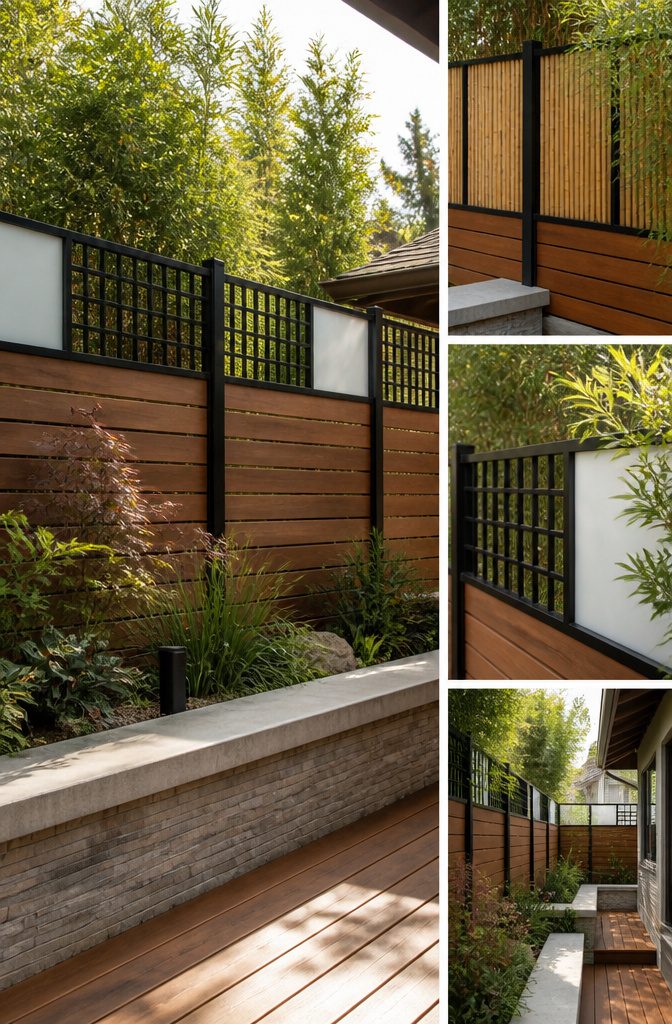
Mixed-material fences combine wood, metal and stone so the fence matches the rest of your property.
Stone columns with wood panels between them is the classic version. A metal frame around slats gives a cleaner, more modern look, and Trex builds its Horizons line this way, with a black metal frame around horizontally interlocked composite pickets.
Choose the infill by what you want from it: red cedar for a natural finish, vinyl for low maintenance, composite for long-term durability.
I lean toward composite panels in a metal or stone frame because they hold up with the least fuss.
Match the stone or metal to something you already have, such as a pergola, decking or house masonry, so the fence looks planned rather than added on.
Recommended Products

1 SCREEN PURCHASE: You will receive preassembled materials to construct 1 cedar wood outdoor privacy screen in a charcoal finish with your purchase

DIMENSIONS: Standard 6 feet high by 6 feet wide panel size, perfect for residential privacy fencing needs
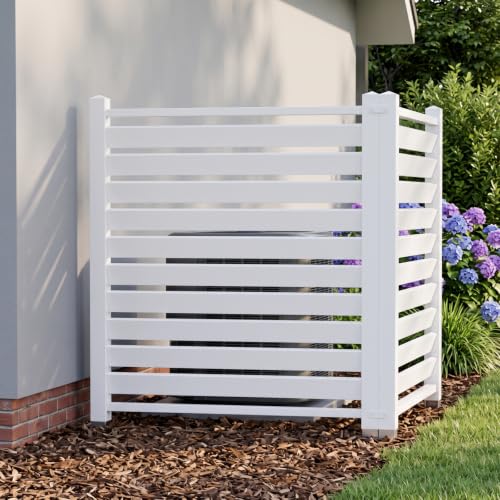
Outdoor Privacy Screens: Our louvered vinyl fence panel set includes 2 panels measuring 38 x 42 in, ideal for concealing outdoor items like trash bins, pool equipment, and air conditioners, keeping your backyard neat and attractive while meeting HOA guidelines.
10. Trellis Fencing
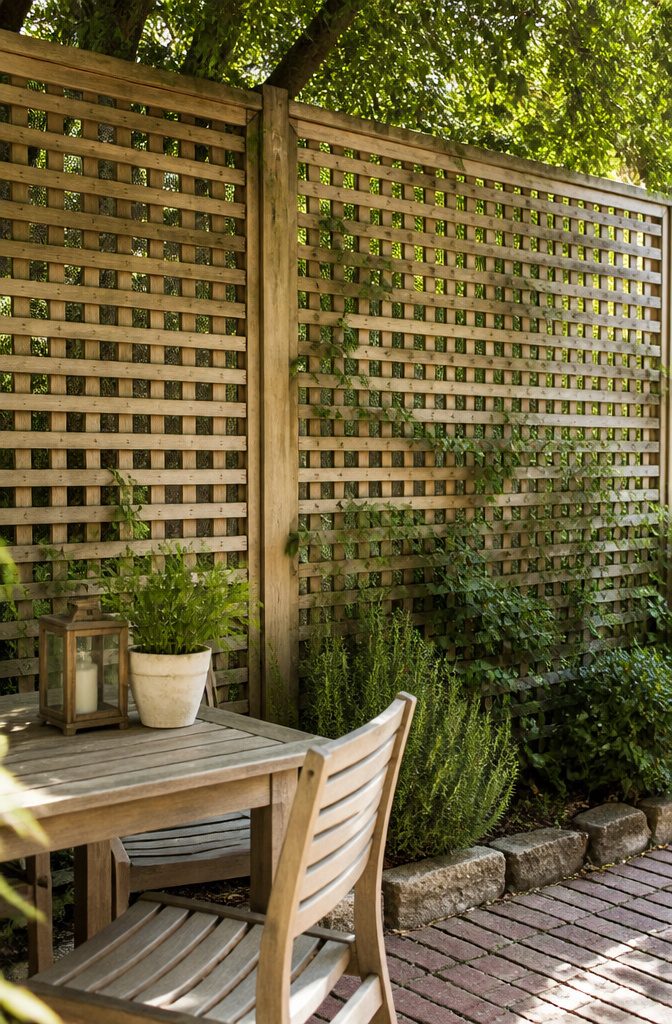
A trellis section set above a solid base gives you decoration and some privacy without the closed-in feel of a full wall.
The solid lower panel blocks sight lines at sitting height, and the open lattice above holds climbing vines and other plants.
Because lattice is open, privacy is partial. I’d skip it for a yard that faces a busy street or a neighbor’s upstairs window.
Plants close that gap. As a vine fills the lattice, the fence softens and the screen gets denser, so a solid base with trellis above works best in a garden-focused yard.
The same fence also acts as a backdrop.
A clean panel behind a flower bed frames the blooms, and the trellis adds height and texture behind them. Choose a fence color that contrasts with the plantings in front of it.
Recommended Products

STYLISH NATURAL WOOD: This FSC certified wood screen is made with real wood meaning no two boards have the same grain color, finish, or wood knots differing it from vinyl outdoor privacy fence screen panels.
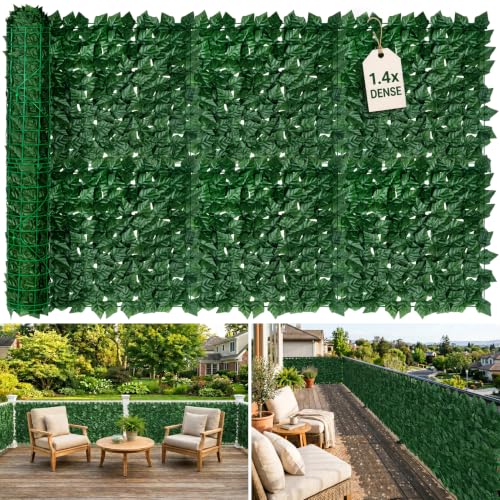
40% MORE LEAVES FOR DENSER PRIVACY COVERAGE: Featuring 1,200 faux ivy leaves, nearly 1.4x more than standard 864-leaf panels, for fuller greenery and better privacy coverage.The layered foliage helps minimize visible gaps, block unwanted views, and create a more private, comfortable outdoor space for your balcony, patio, or backyard

Upgrade today with the 2026 Latest Upgraded Version and enjoy fuller greenery, stronger installation, and instant privacy
11. Property Line and Pool Fencing
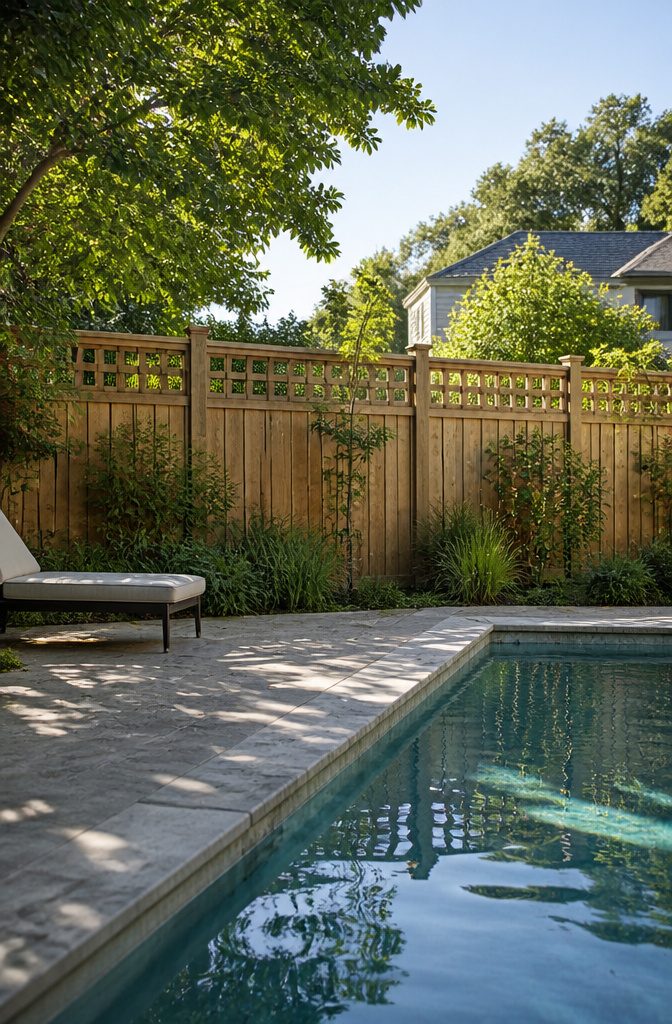
A fence on the property line does two jobs. It marks where your yard ends, and it blocks sightlines and easy access.
For that, I’d choose a solid pattern over an open one, since gaps let people see in and climb through. The fence also faces your neighbors, so pick a finish that looks good from their side too.
Pool and water-feature fencing ranks safety above privacy.
A pool barrier should be solid enough to keep children and pets out, with a gate that closes and latches on its own. Place the latch where small hands can’t reach it.
Pool rules are often stricter than ordinary fence rules, so check your local code before you buy anything. An existing privacy fence may not qualify as a pool barrier without changes.
12. Dividers and Garden Rooms
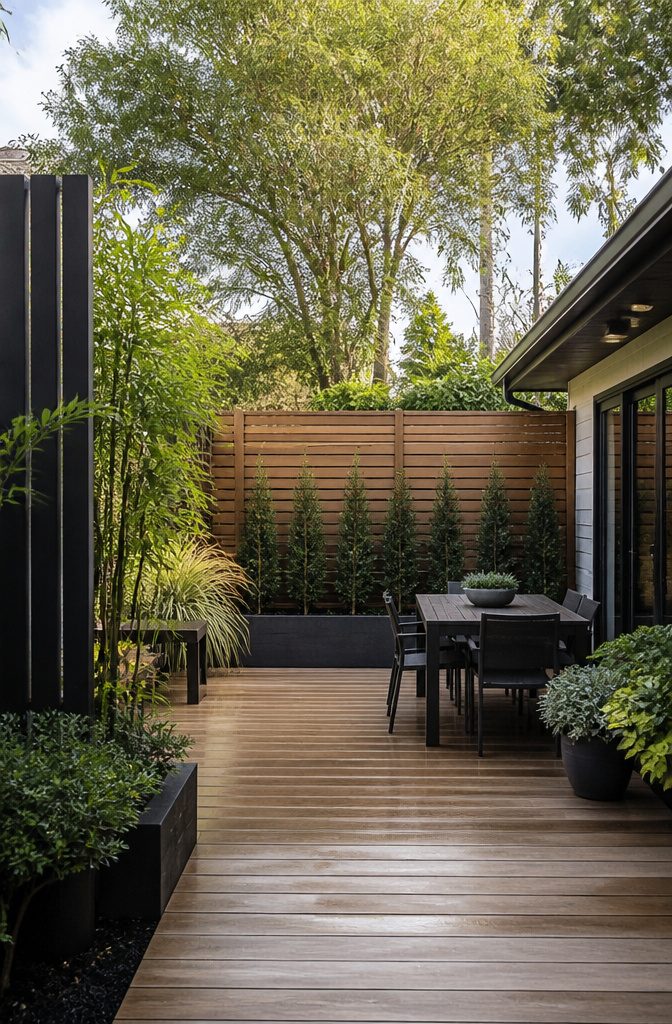
A fence inside the yard does a different job than one on the property line.
It sorts the space instead of keeping people out: a vegetable bed gets screened, a play area gets an edge, and an outdoor kitchen or dining spot gets shelter from the rest of the yard.
On a small yard or patio, I’d use the fence to build one secluded corner for gardening, such as an herb bed bordered by flowering plants.
Enclosed gardens grew out of a tradition that put plants ahead of security, so the fence can stay modest and let the foliage do the work.
Repeating the house’s fence material or color around each zone ties the home, garden and patio together, so the yard reads as connected rooms.
13. Concealing Unsightly Items
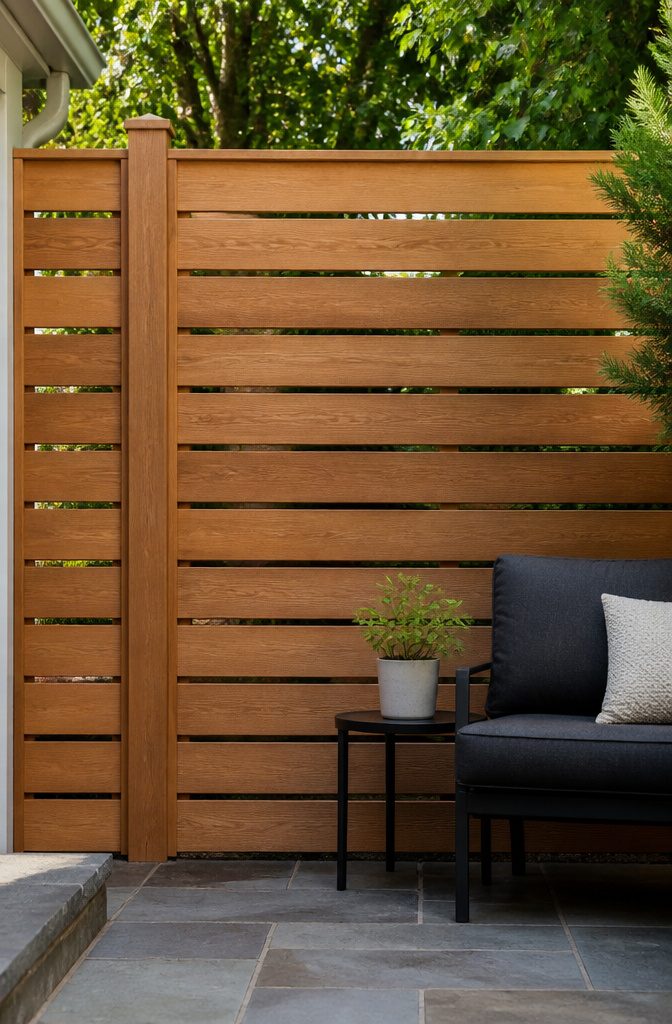
A short freestanding panel hides more than its size suggests.
For an air-conditioning unit, pool equipment or garbage cans, a 2- or 3-sided screen set a few feet out from the equipment blocks the view from your patio without walling off the yard.
I’d pick that over extending the full fence, which adds cost and length for something a single panel already solves.
Leave a couple of feet of clearance around an AC unit so air can move, and keep a gate or removable section for service access.
Garbage cans suit a deeper screen with a gate, built as a small storage nook finished to match your fence. Driveways are the exception: they’re long, so a full-length run usually makes more sense there.
Wood, Vinyl and Composite Upkeep
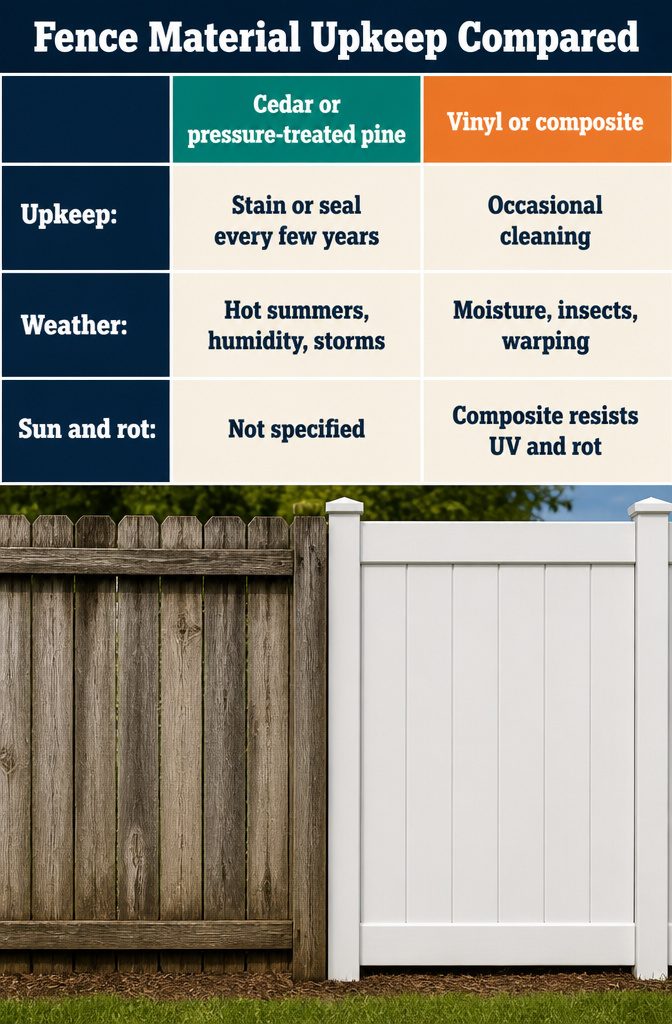
Hot summers, humidity and storms are hardest on wood.
Cedar and pressure-treated pine give a classic look, but both need staining or sealing every few years. Vinyl and composite last longest and need only occasional cleaning.
| Material | Upkeep | Resists |
|---|---|---|
| Cedar or pressure-treated pine | Stain or seal every few years | n/a |
| Vinyl | Occasional cleaning, no staining or painting | Moisture, insects, warping |
| Composite | Occasional cleaning | UV, rot |
If you’d rather not repeat a sealing job every few years, go with vinyl or composite.
I’d put vinyl in a humid yard and composite where the sun is strong. Choose wood only if the look matters more than the upkeep.
Height Limits, Permits and HOA Rules
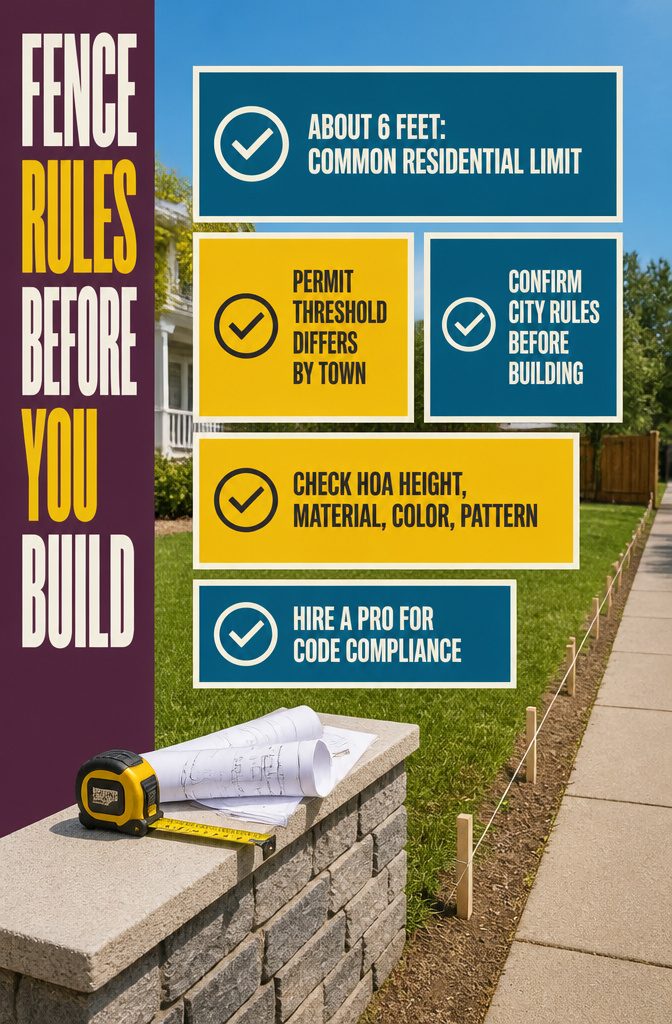
Check these before you buy a single post:
- Height: Most residential fences top out at about 6 feet. Raleigh, for example, uses that limit, so a tall privacy pattern may have to stop there.
- Permits: Many municipalities require a permit once a fence goes above a set height, and the threshold differs by town.
- HOA rules: An HOA can restrict height, material, color and pattern more tightly than the city does. Confirm both HOA and city rules before building.
- DIY or pro: A simple pattern is a reasonable DIY project. A professional is worth hiring for correct installation and code compliance.
Frequently Asked Questions
What is the best privacy fence pattern for blocking a neighbor’s view?
Board-on-board is the strongest choice, because its overlapping boards leave no gaps even after the wood shrinks. Interlocking composite pickets hold privacy the same way.
Trellis, decorative metal and louvered panels let some view through, so they work better as accents or alongside plants. If a neighbor’s second-story window looks down into your yard, pick a solid style.
Which privacy fence material lasts longest, and what upkeep does each one need?
Vinyl and composite last longest. Both need only occasional cleaning, and vinyl never needs staining or painting.
Cedar and pressure-treated pine need staining or sealing every few years. Vinyl suits a humid yard, and composite suits a spot with strong sun.
How tall can a privacy fence be in Raleigh?
Most residential fences are limited to about 6 feet, and Raleigh uses that limit.
An HOA can set tighter rules on height, material, color and pattern than the city does. Confirm both before you build.
Do I need a permit to build a privacy fence in the Raleigh area?
Often yes.
Many municipalities require a permit once a fence goes above a set height, and the threshold differs by town. Check with your town and your HOA before you buy materials.
Can I install a privacy fence myself, or should I hire a pro?
A simple pattern is a reasonable DIY project.
A professional is worth the cost for correct installation and code compliance. Designs with varied panel heights call for a bespoke installation, so hire out those.









