
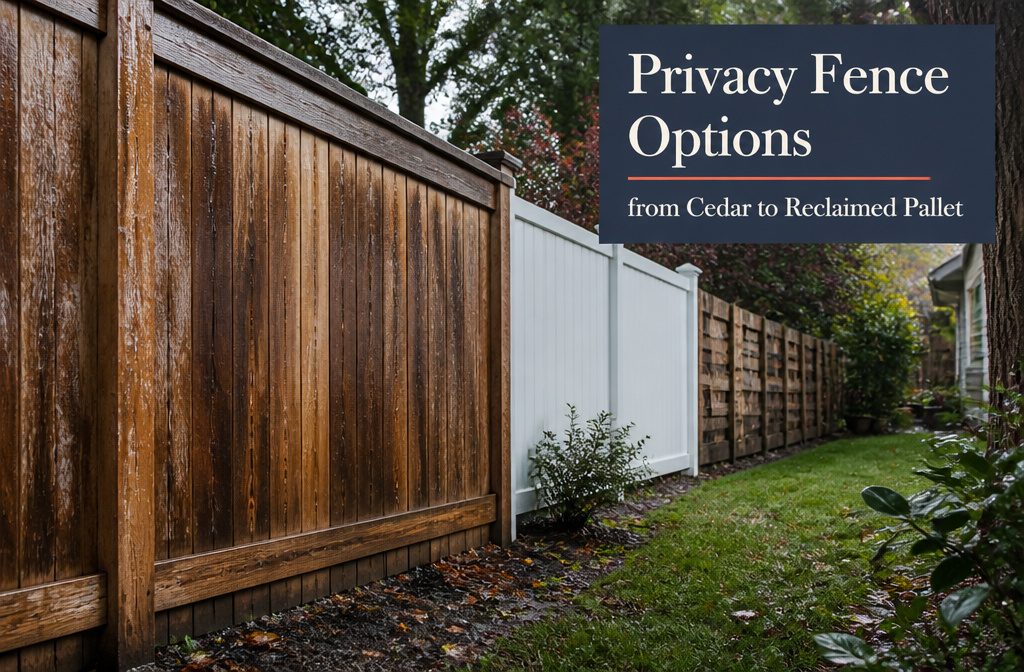
Cedar is the wood to buy, at $45–$85 per foot, but it needs fresh stain every 2–3 years.
If that upkeep is a dealbreaker, vinyl runs $60–$120 per foot, never needs staining or painting, and should last 25+ years. Either one beats pine, which costs less up front but gets replaced sooner.
1. Cedar Privacy Fence
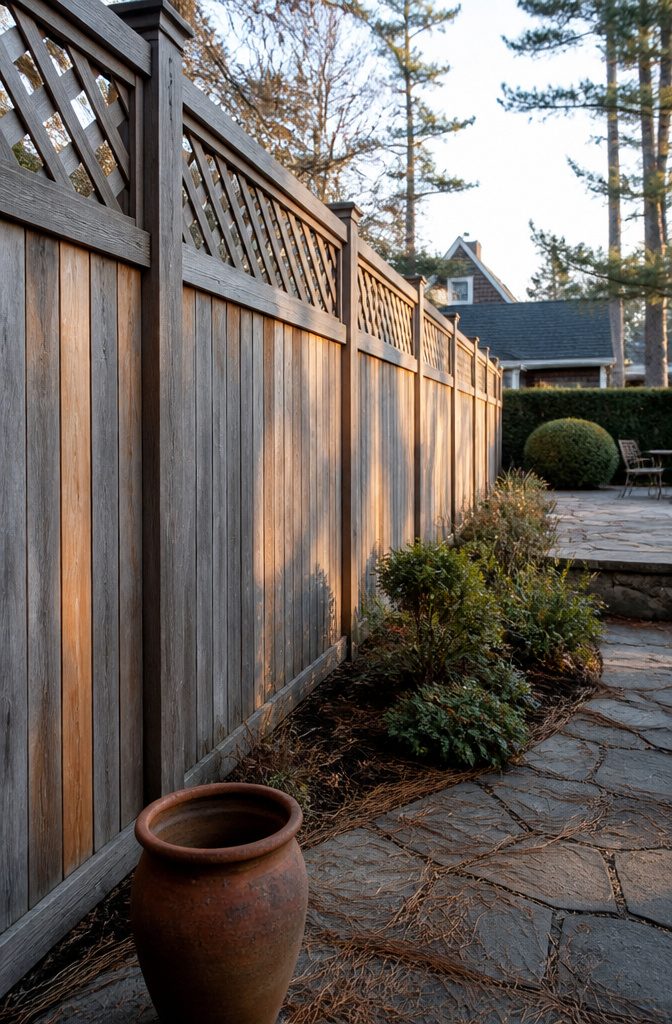
Cedar’s natural oils repel insects and resist rot, which is why it is still the default wood for privacy fences. Budget $45–$85 per foot, 15–20 years of life, and fresh stain every 2–3 years.
Pine costs less up front but needs staining every year and usually gets replaced in 10–15 years, so I’d pay for cedar. Northern White Cedar thrives in New England winters, and EcoLife treated cedar adds protection against moisture and insects.
Let new boards weather for about two months before you apply any finish. They turn silver-gray, and some owners skip staining entirely.
Pick a top edge: dog-ear, convex scallop, concave scallop, or lattice. A lattice topper adds 12–18 inches to a 6-foot fence.
Recommended Products
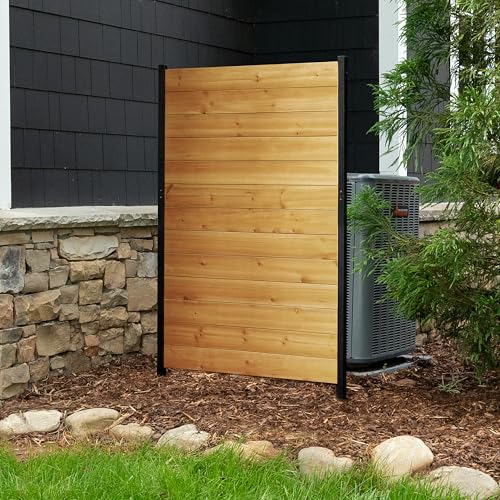
STYLISH NATURAL WOOD: This FSC certified wood screen is made with real wood meaning no two boards have the same grain color, finish, or wood knots differing it from vinyl outdoor privacy fence screen panels.

DIMENSIONS: Each panel measures 32” H x 48” W
2. Vinyl Privacy Fence
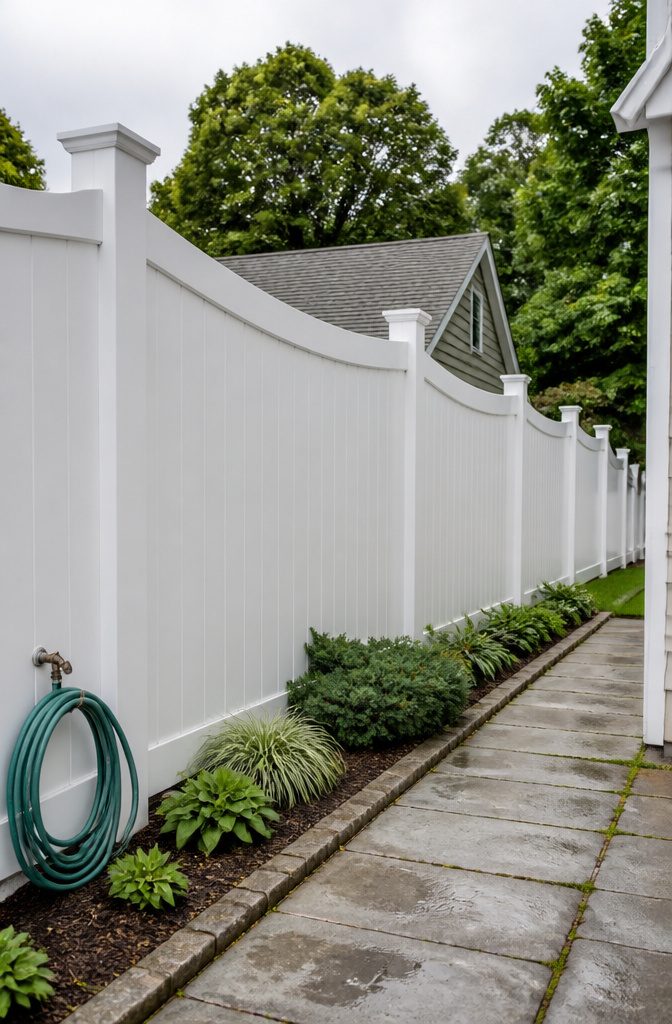
Vinyl is the low-maintenance pick: no staining, sealing or repainting. Tongue-and-groove boards lock together without gaps, and the Zachary style uses that build for a fully solid screen.
The picket styles Alexander, Autumn, DJ and Anja suit a more traditional house. Top edges come in different shapes, so choose one that matches your roofline and gate.
Expect to pay $60–$120 per foot, which is more upfront than wood. That price buys 25+ years of service, and a quality vinyl fence looks as good at 10 years as it did on installation day.
If you’d rather spend a weekend with a hose than with a paintbrush, I’d pay the extra for vinyl.
Recommended Products

MATCHING TONGUE AND GROOVE REPAIR: Swap out a warped, damaged, or missing picket without replacing your entire privacy panel. These tongue and groove pickets interlock with your existing white vinyl fence panels, so repaired sections blend in rather than standing out.


Premium grade vinyl privacy pickets
3. Solid Panel and Board-on-Board
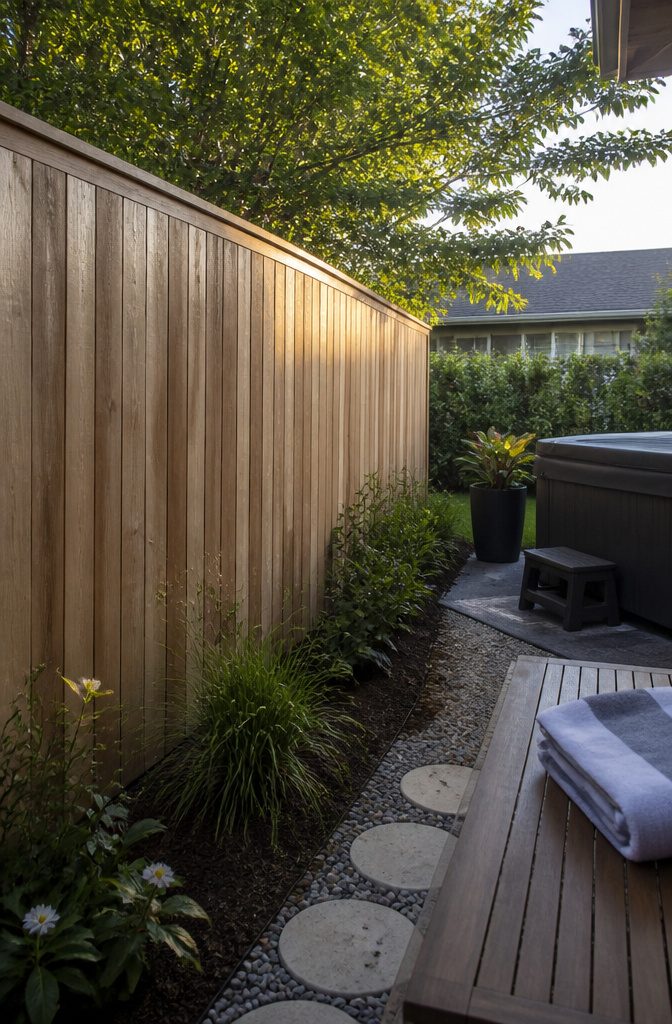
Solid panels and board-on-board both leave no gaps, so they give the most privacy and the best sound reduction of any wood style.
Panels are the simpler build. Board-on-board overlaps boards on alternating sides of the rails, which closes the seams and gives a fence that looks identical from both sides.
For a shared boundary, I’d pick board-on-board. Neither neighbor gets stuck looking at the rails, and it tends to meet HOA and neighborhood standards better than a conventional privacy fence.
The drawback is feel.
A fully solid fence can seem confining in a small yard and blocks breezes. If your space is tight, use it only where privacy matters most, such as around a hot tub or along a busy street.
Recommended Products

EASY ORDERING: Everything you need for your fence project is in the box except for the final post. Only ONE additional post, BL19112, is required for the end of your project. A gate is available by searching BL19111.

Comes with a hard surface installation kit – No extra purchase needed.
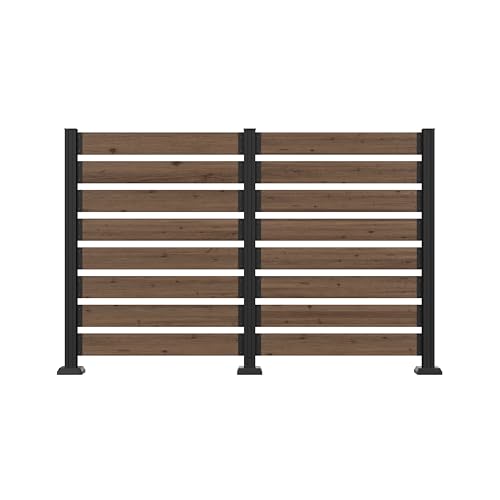
PREMIUM NATURAL WOOD – Crafted from real wood, the outdoor privacy screen showcases its own unique grain, color, and knots, unlike vinyl outdoor privacy fence screen panels that lack the authentic beauty and texture of a natural wood screen.
4. Horizontal Slat Fence
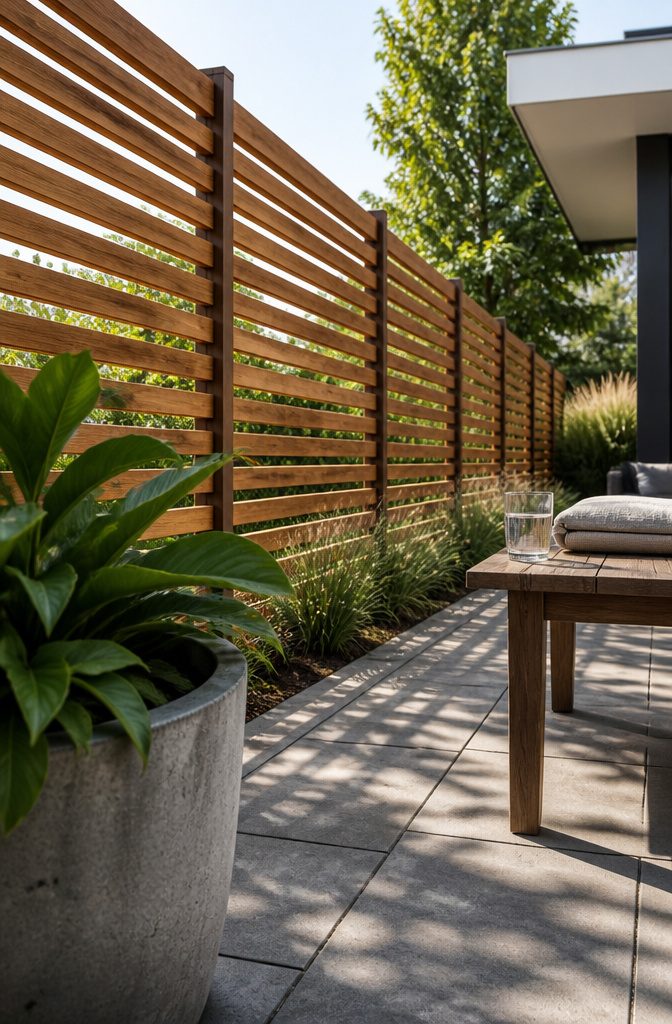
Horizontal slats give a fence a clean, contemporary look, and they suit modern homes best.
Spacing is the main design choice, and you control it. Tighter spacing means more screening but less air movement, while wider gaps let the breeze through and show more of the yard.
Slats set close together hide a patio well, though the space can feel closed in on a still day.
Wider gaps keep air flowing and let people see slivers of what’s behind the fence. I’d pick the spacing for the spot you most want hidden, such as a seating area, and loosen it along stretches where privacy matters less.
Recommended Products

Innovative Design: The wooden fence panels posts features a U-channel design—simply attach the brackets to the posts and slide in (3/4" x 5.5") wood planks to lock. Easy DIY installation and plank replacement, even for one person, saving time, effort, and labor costs in the short and long term

1 SCREEN PURCHASE: You will receive preassembled materials to construct 1 cedar wood outdoor privacy screen in a charcoal finish with your purchase

Green Fence Slat - Designed for a 6' high fence, slats are approximately 68.5" in length to accommodate the bottom locking channel and to prevent the slats from being above the top of the fence. (Available Colors: Beige, Black, Brown, Gray, Green, Redwood, Royal Blue, Sky Blue, White)
5. Shadowbox Fence
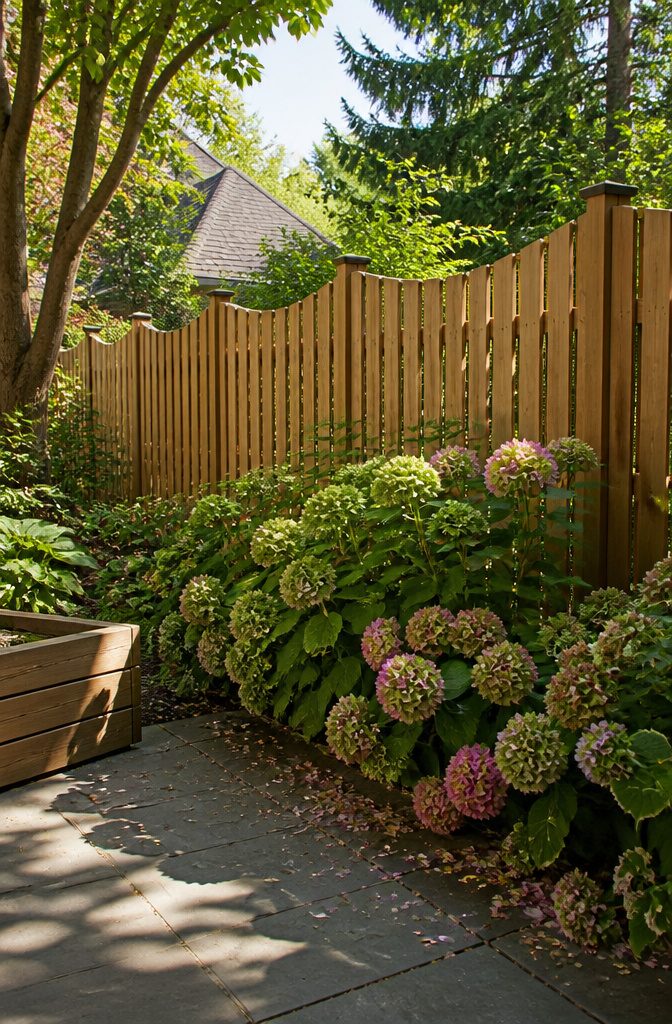
Shadowbox fencing alternates boards on either side of the rails. That gives you partial privacy, steady airflow and a face that looks the same from both sides, so neither you nor your neighbor ends up staring at the "ugly side."
Open-picket styles with 1-inch gaps between pickets are the semi-private cousin. They show more of the yard but still mark a firm boundary.
Both stand up well to wind because air passes through, and both come in cedar or vinyl.
Tops can be scalloped, dog-eared or capped with lattice. For a shared property line, I’d choose either over a solid fence, since a good neighbor fence often meets HOA and neighborhood standards better than a standard privacy fence.
Recommended Products

Versatility: This wooden privacy screen provides a discreet enclosure, creating a sense of mystery and concealment. It is perfect for elevating the overall aesthetic of your outdoor space. Quickly creates a secluded retreat while adding a touch of elegance that complements any décor, indoors or out.

STYLISH NATURAL WOOD: This FSC certified wood screen is made with real wood meaning no two boards have the same grain color, finish, or wood knots differing it from vinyl outdoor privacy fence screen panels.

STYLISH NATURAL WOOD: This FSC certified wood screen is made with real wood meaning no two boards have the same grain color, finish, or wood knots differing it from vinyl outdoor privacy fence screen panels.
6. Metal and Wood Fence
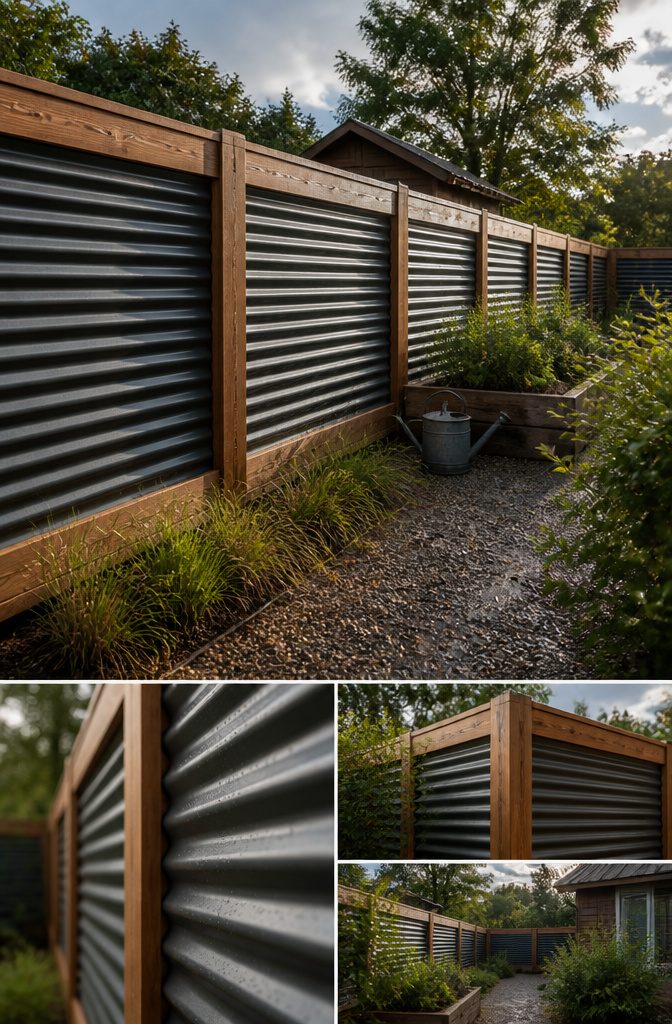
Steel or aluminum posts set in concrete hold steady through freeze-thaw cycles without heaving, and the frame lets you replace one damaged panel instead of rebuilding the run.
Aluminum costs $70–$150 per foot, lasts 30+ years and comes powder-coated in classic black or custom colors. At that price I’d choose it only if you want the long life.
Corrugated metal panels framed in cedar are the strongest look here: cool steel against warm wood gives a modern-rustic contrast that suits most yards.
Hog wire or woven mesh in a stained wood frame will trade full screening for airflow, so it works for partial privacy and not for hiding a neighbor’s patio.
Recommended Products
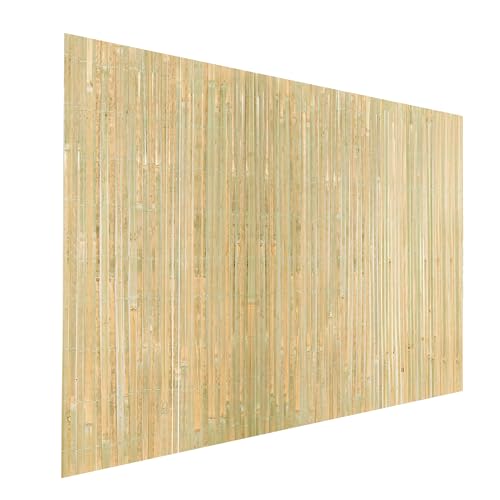
Premium Quality: Bamboo slat screen is made of natural Eco-friendly material, that is strong, durable. Our bamboo slat fence is hand-picked, after cleaning, air-drying, heat-treatment, and they are selected from McClure with excellent strength and elasticity, last long life.
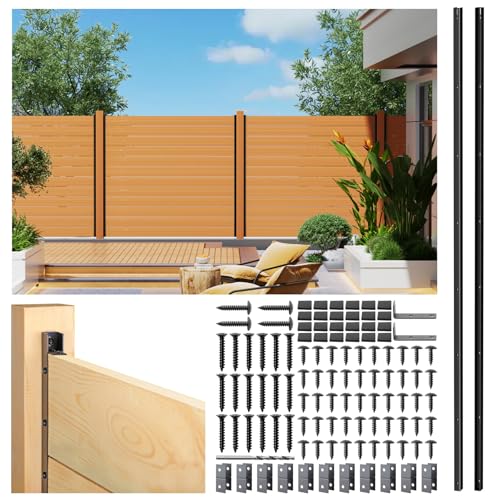
Innovative Design: The wooden fence panels posts features a U-channel design—simply attach the brackets to the posts and slide in (3/4" x 5.5") wood planks to lock. Easy DIY installation and plank replacement, even for one person, saving time, effort, and labor costs in the short and long term

PREMIUM NATURAL WOOD - This wood screen is made with real wood meaning no two boards have the same grain color, finish, or wood knots differing it from vinyl outdoor privacy fence screen panels which can not provide you a natural screen experience.
7. Bamboo Screen
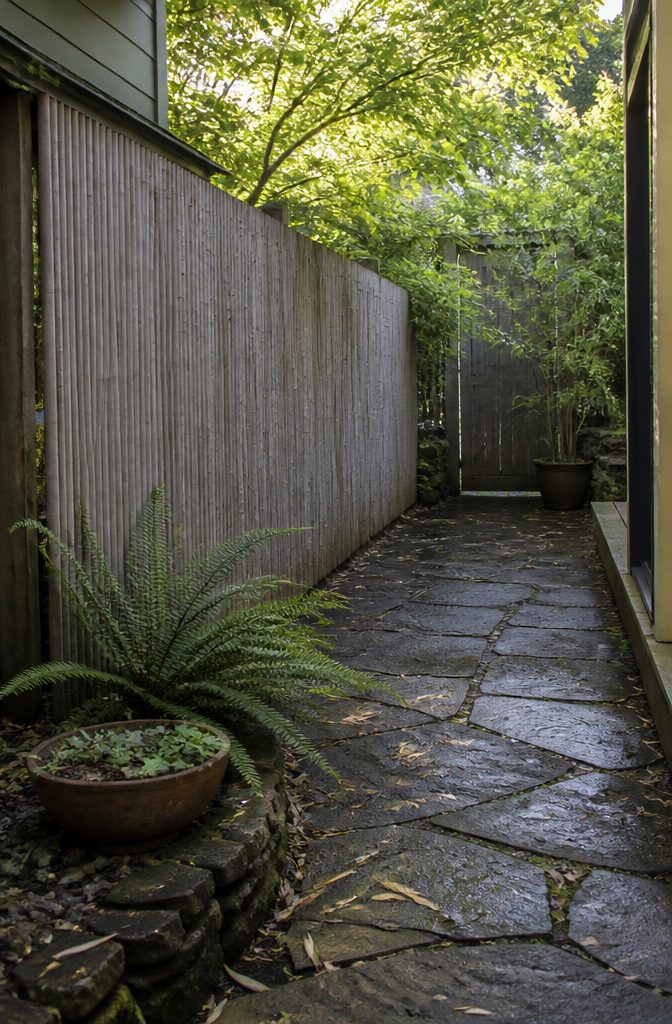
Bamboo roll screening is the fastest budget privacy fix, because it attaches to an existing fence with basic hardware.
Rolls cost under $50 each, and about 100 linear feet comes to around $300 including hardware. A built bamboo fence is a different purchase at $25–$45 per foot, and I would skip it unless the look justifies the price.
Expect 5–10 years from the canes, with the range set by your climate. They weather to a silver-gray that suits most fences.
Living bamboo is the other form.
Plant clumping varieties, not running types, which spread invasively. Cold-hardy varieties suit colder zones.
Recommended Products
Premium grade vinyl privacy pickets

MATCHING TONGUE AND GROOVE REPAIR: Swap out a warped, damaged, or missing picket without replacing your entire privacy panel. These tongue and groove pickets interlock with your existing white vinyl fence panels, so repaired sections blend in rather than standing out.

Backyard Privacy Enclosure: Our vinyl fence panel set includes 4 panels measuring 50 x 50 in, ideal for concealing outdoor items like trash bins, pool equipment, and air conditioners, keeping your backyard neat and attractive while meeting HOA guidelines
8. Gabion Wall
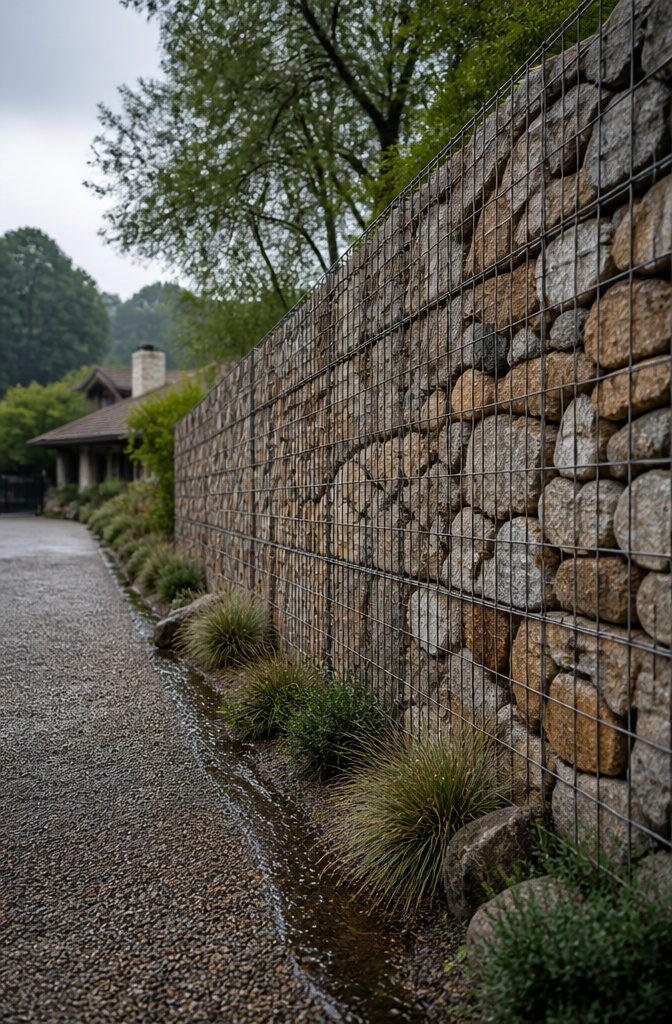
Stone-filled wire cages stack into a solid wall with a rough, industrial look, and no other style on this list blocks sound as well.
The mass of stone absorbs and deflects sound waves much more effectively than wood fencing, so I’d pick a gabion wall over cedar for any yard facing a busy road.
That same mass is the cost.
The wall needs proper foundation work before the first cage goes up, which makes it a bigger job than setting posts and hanging panels. Once it’s built, it lasts indefinitely and needs no staining, sealing or repainting.
Recommended Products

STRONG & STURDY: Knitted with 220GSM Heavy Duty HDPE material, 90% UV protection. Fabricated with 1.55" black binding with double reinforced fabric on all edges for maximum life span. TFMUZERT Privacy Fence Panels for outside is Stronger and more tear-resistant.

Privacy Solution: Most economical way for privacy over chain link fence, porous decorative concealment, existing cyclone wire fence, wood retaining wall, welded wire fence, chain link fence, privacy barrier around swimming pool, block nose neighbor see through, add privacy to acre back yard backdrop, front yard, patio, garden and porch; hide street, road, construction site, pet kennel pen, block surrounding noise and street view, stops dogs from barking at neighbors.
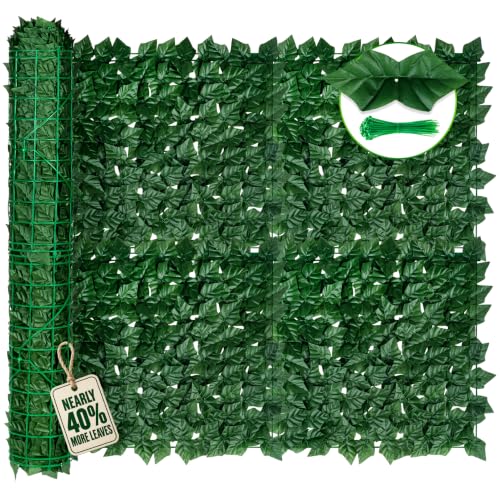
1.4X the Leaves for Fuller Privacy: This artificial ivy privacy fence screen features 1200 faux ivy leaves—about 39% more than standard 864-leaf screens of the same size. The tighter grid provides denser coverage with fewer visible gaps and less see-through.
9. Living Hedge Screen
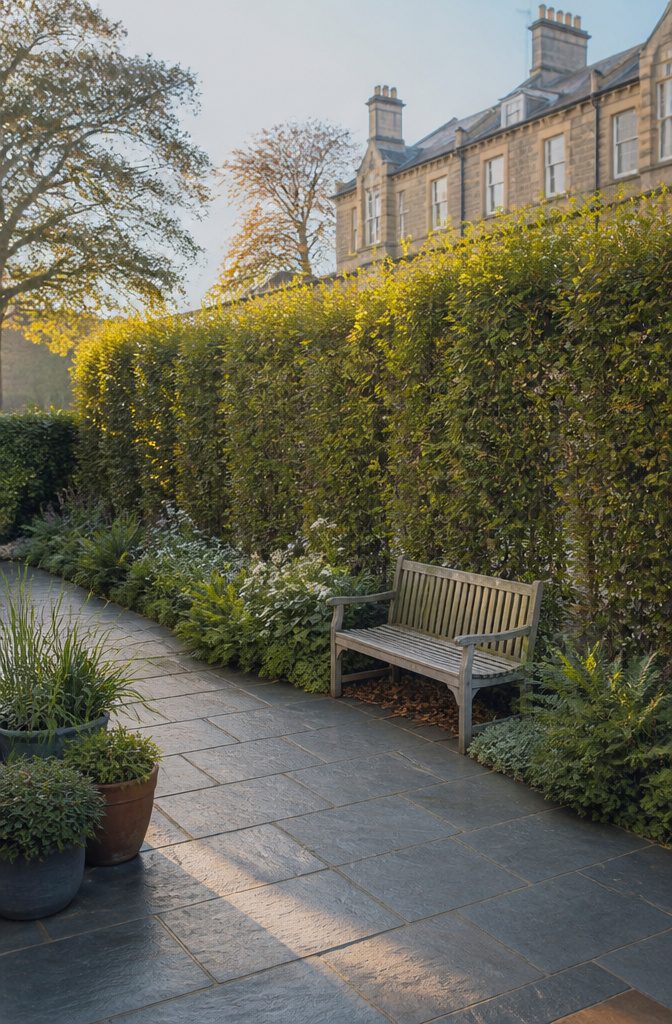
A hedge is the slowest privacy option on this list, and the only one that gets better with age.
Most hedge plants need 2–3 years to reach effective screening height, so plan on a temporary screen or an existing fence to cover the gap.
Boxwood stays compact at 3–6 feet, which suits a patio edge or seating area where you want enclosure without a wall. Hornbeam reaches 12 feet, and I’d choose it for a property line where a neighbor’s windows look straight into your yard.
Evergreen hedges and climbing vines also give birds and other wildlife a place to live, which a board fence can’t do.
Recommended Products

Pack of 6 (includes 6 boxes)

Quality: These brown fence tapes are made of weather resistant PVC material and are designed for long-term use.

Quality: These green fence tapes are made of weather resistant PVC material and are designed for long-term use.
10. Chain-Link Privacy Upgrade
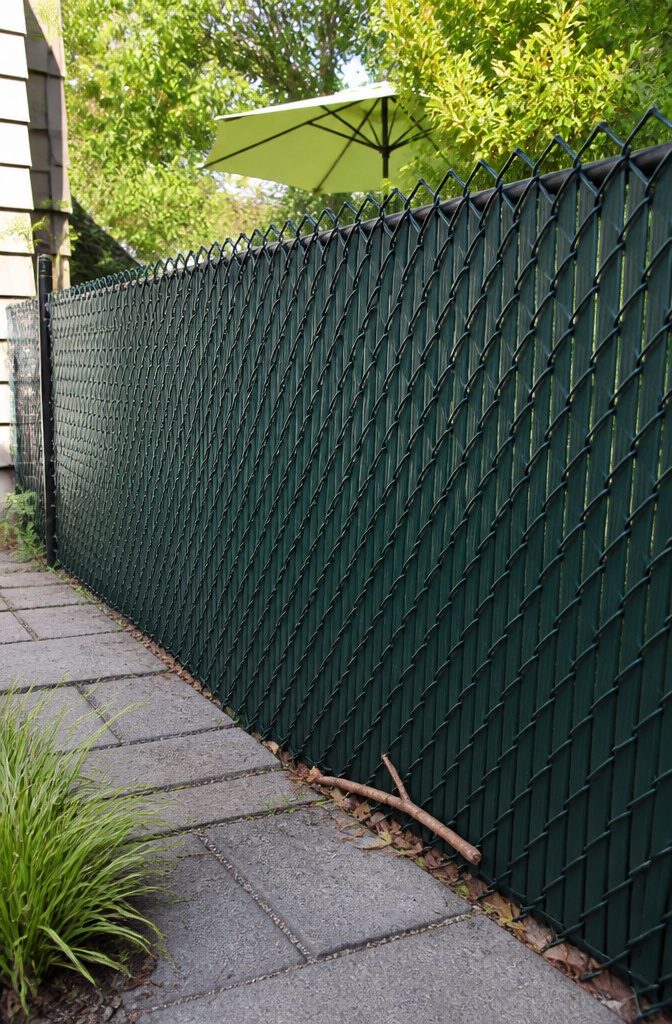
Chain-link you already own is the cheapest route to a privacy fence. Vertical slats push through the mesh without tools and give about 60% visual coverage, while fin slats reach about 90%.
Where the fence faces a neighbor’s patio or a street, I’d go straight to fin slats, because 60% still leaves roughly 40% of the view open. Costs stay low: some jobs run under $100, and a full run comes to around $200 total.
Woven branches are the free option. Fallen branches threaded horizontally through the mesh cover only 30–40%, so they work as a softener for a bare fence, not as real screening.
Recommended Products

Versatility: This wooden privacy screen provides a discreet enclosure, creating a sense of mystery and concealment. It is perfect for hiding unsightly elements like trash...
11. Composite Fence
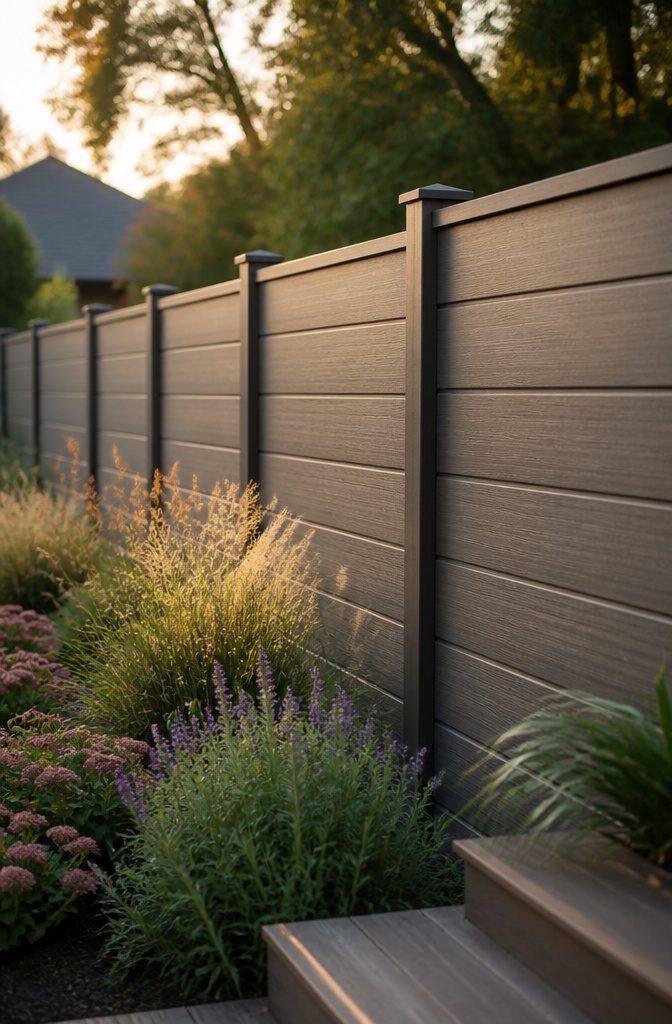
Composite panels are made from recycled wood fibers bound with polymer, so they resist fading, staining, insects and rot, and they never need a coat of stain.
Expect to pay $80–$140 per foot, which puts composite above both cedar and vinyl. That premium buys color that stays consistent for 25 years or more, plus no annual staining or sealing, and the saved maintenance eventually covers the higher price.
On a small budget, the upfront cost is the real hurdle, so I’d choose composite only if you plan to stay put. Look for brands with a 25-year warranty, and I’d skip anything that offers less.
12. Reclaimed Pallet Fence
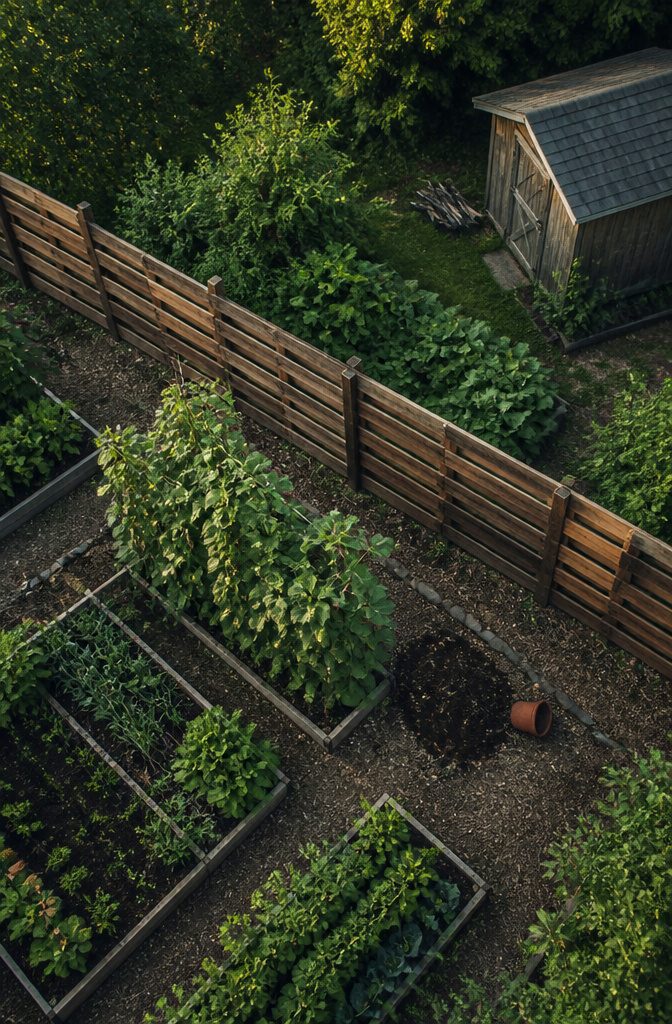
Shipping pallets make the cheapest privacy fence on this list, since most businesses give them away free.
Take heat-treated pallets only, stamped HT, because other pallets may carry chemical contamination you don’t want next to a vegetable bed or a dog’s favorite digging spot.
Pressure wash each pallet before it goes up, then seal it.
Exterior stain adds $50–$75 and improves weather resistance, so I’d budget for it from the start rather than treat it as an extra. Unfinished pallet wood left to the elements won’t look rustic for long; it will just look worn.
Expect uneven boards and some gaps, which suits a casual or cottage-style yard better than a formal one.
Solid or Semi-Private
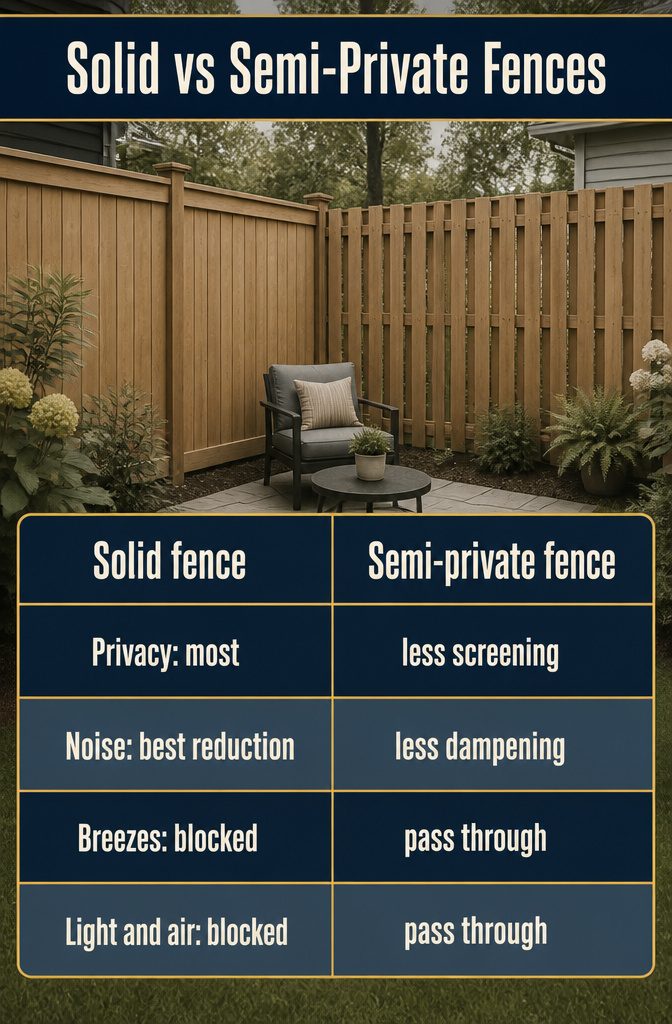
A solid fence gives the most privacy, the best sound reduction and the surest pet containment, but it can feel confining in a small yard and it blocks breezes.
Semi-private styles, such as shadowbox or open picket with 1" gaps between pickets, pass light and air and tend to draw fewer neighbor complaints.
They screen less and dampen less noise. I’d mix the two: go solid where privacy matters most, like a hot tub or busy street frontage, and semi-private along the side yards.
Staggered panels, tiered heights or a freestanding screen keep a solid run from feeling like a wall. A well-planned fence still buffers street noise and frames the yard.
Style and Yard Fit
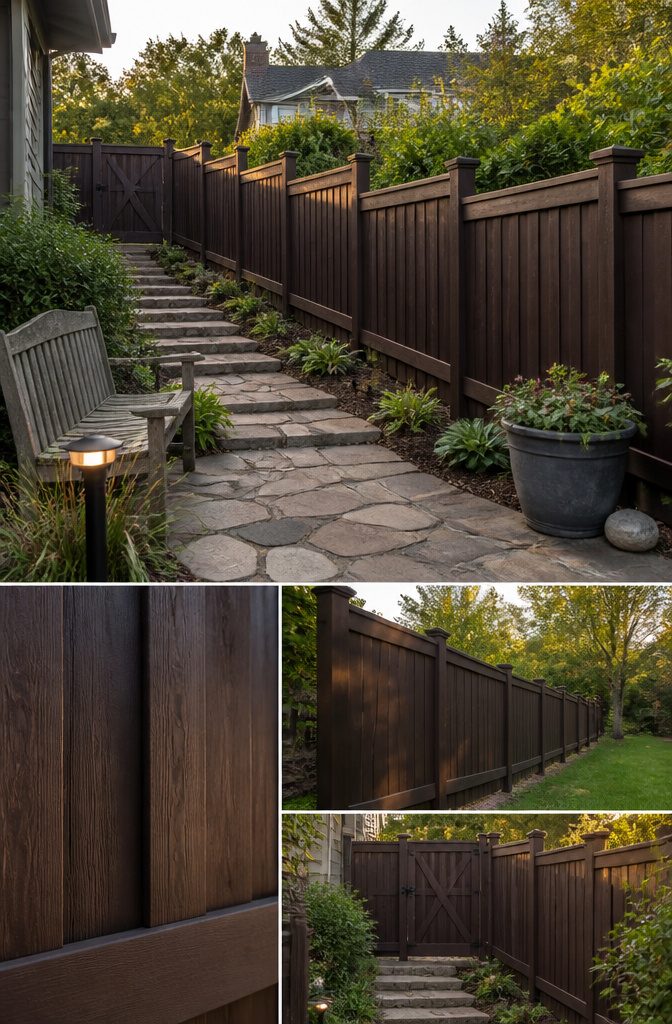
Four questions narrow the choice: how much coverage you want, how close the neighbors are, whether the yard slopes, and how much upkeep you’ll tolerate.
Wood takes more maintenance than vinyl, which is more hands-off, so budget and weekend time both count. Black, gray and brown are the safest colors because they blend into the surroundings or match trim and roofing.
On a slope, you can step the panels in level sections or install the fence to follow the contour of the ground. Not every style suits a slope, so I’d rule out rigid solid panels before falling for them.
Solar or low-voltage post lights, planters, benches and a gate with hidden hardware all earn their place. Leave about a 2-inch gap at the ground so small animals can pass.
Height Limits and Local Codes
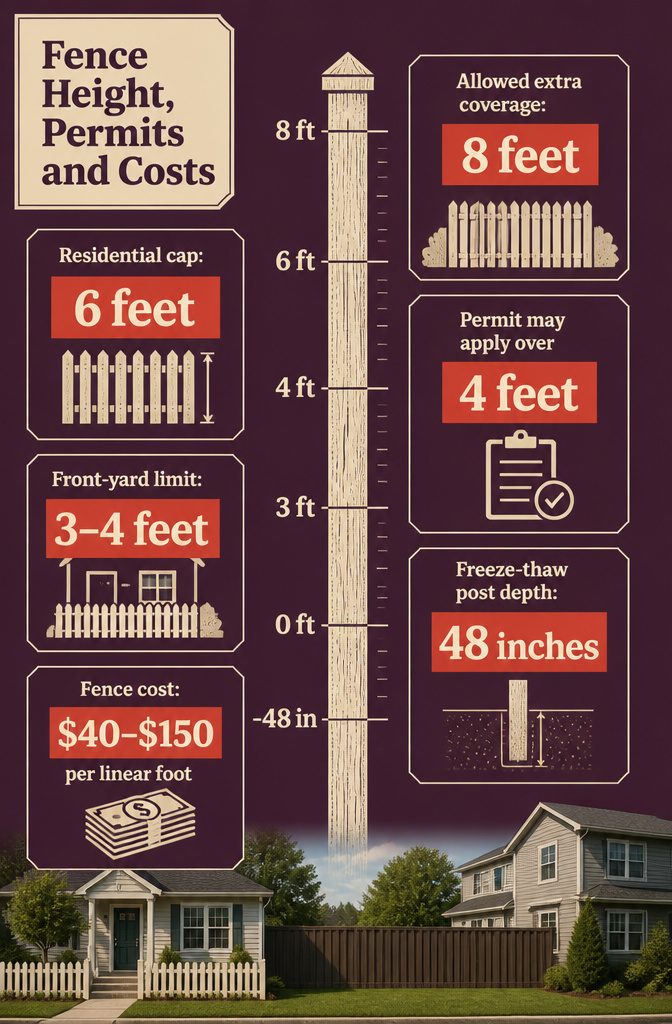
Check height limits with your local building department before pricing any material, since the code sets what you can build.
- Most areas cap residential fences at 6 feet. 8 feet gives extra coverage where it’s allowed.
- Front yards are often limited to 3–4 feet.
- Some areas require a permit for anything over 4 feet.
- Near a two-story neighbor, 6 feet is the minimum. A 4-foot fence won’t give meaningful cover.
- In freeze-thaw New England climates, posts need 48 inches of depth to resist heaving.
- Fences run about $40–$150 per linear foot overall. Professional installation adds $20–$40 per linear foot.
Frequently Asked Questions
How tall can a privacy fence be, and what codes apply?
Most areas cap residential fences at 6 feet, and 8 feet is allowed in some places for extra coverage.
Front yards are often limited to 3–4 feet, and some areas require a permit for anything over 4 feet. Your local building department sets the actual limits, and HOA rules can add restrictions on materials, colors and styles.
How much does it cost to install a privacy fence?
Plan on $40–$150 per linear foot overall, with professional installation adding $20–$40 per linear foot.
Material drives most of that spread: cedar runs $45–$85 per foot, vinyl $60–$120 and composite $80–$140. Reclaimed pallets and bamboo roll screening sit at the low end.
Solid or semi-private: which privacy fence option is better?
A solid fence gives the most privacy, the best sound reduction and the surest pet containment, but it can feel confining in a small yard and blocks breezes.
Semi-private styles such as shadowbox or open picket with 1-inch gaps pass light and air and tend to draw fewer neighbor complaints, though they screen less and dampen less noise.
Many yards do best with both: solid around a hot tub or busy street frontage, semi-private along the side yards.
What is the best privacy fence option for my yard?
Start with how much coverage you want, how close your neighbors are, whether the ground slopes, and how much upkeep you will accept. Vinyl and composite need the least maintenance, while cedar needs fresh stain every 2–3 years.
On a slope, you can step the panels or follow the ground’s contour, and rigid solid panels are the hardest style to fit. Black, gray and brown are the safest colors because they blend in or match trim and roofing.









