
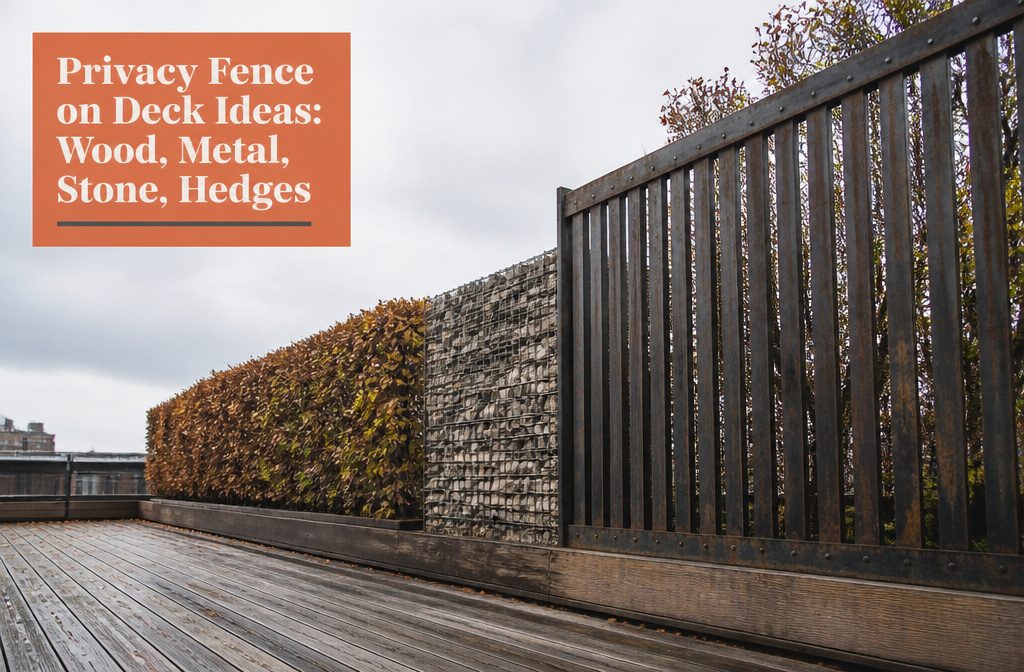
Options run from free pallets you haul yourself to gabion walls a local builder puts up, and the deciding factor is upkeep.
Wood needs annual restaining, composite needs only cleaning, and a hedge needs pruning for as long as it stands. Check local height limits and permits first, since a fence over the limit is costly to redo.
1. Close-Set Wood Boards
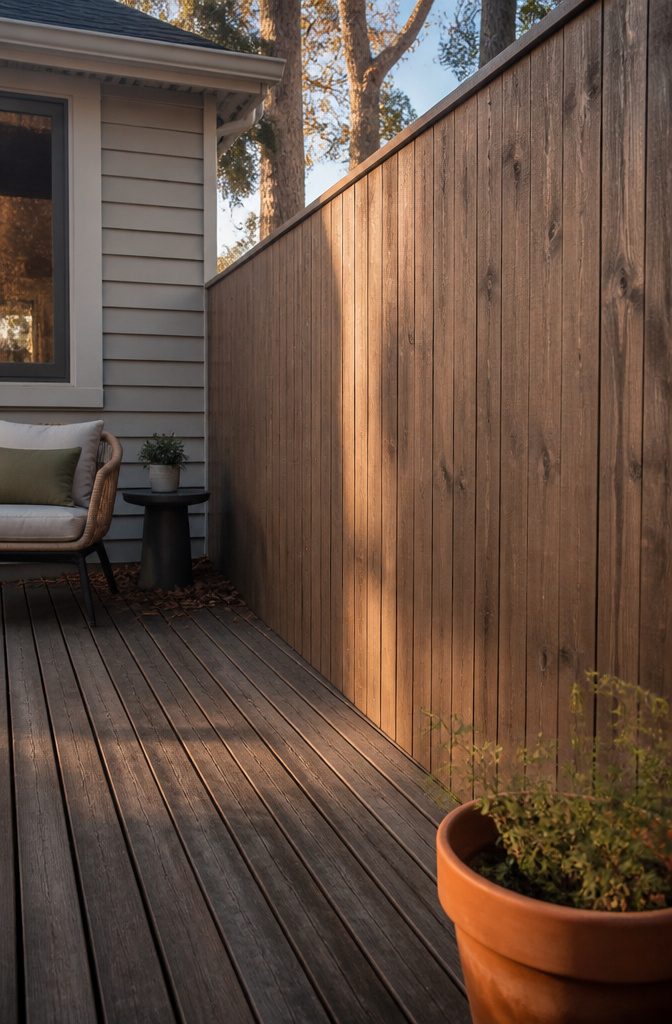
Vertical boards set tight together turn a deck edge into something close to an outdoor wall.
Gaps are what let neighbors see in, so the closer the boards sit, the more privacy and security you get. Make them taller than a standard fence and the deck starts to feel like a room.
Wood is also the familiar DIY material. Board height, construction method and slat position are all yours to change, so the look can match the house.
The cost is upkeep: wood decays, and its protective stain wears off, so expect annual maintenance to keep it from looking faded and tired. I’d choose it if you like building and don’t mind that yearly routine.
2. Composite Fencing
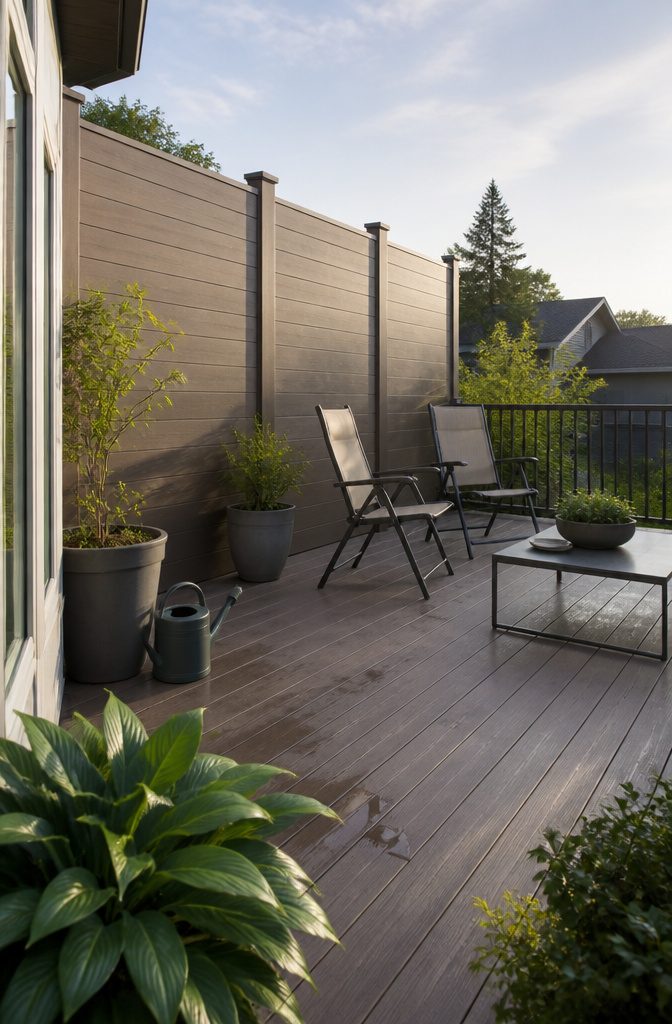
Composite wins on upkeep. Wood decays, and its protective stain wears off, so you end up restaining on a yearly schedule that costs time and money.
Composite fencing, such as Trex Composite Fence, is made from reclaimed sawdust and plastic. It resists rot, splintering, splitting, dents and peeling paint, and regular cleaning is the only upkeep it needs.
For a deck where you’d rather sit than sand, I’d pick composite over wood.
It can be a DIY install, and styles run from traditional slats to horizontal boards. It also looks good next to aluminum and steel, which helps if your deck already has metal railings.
3. Vinyl Fencing
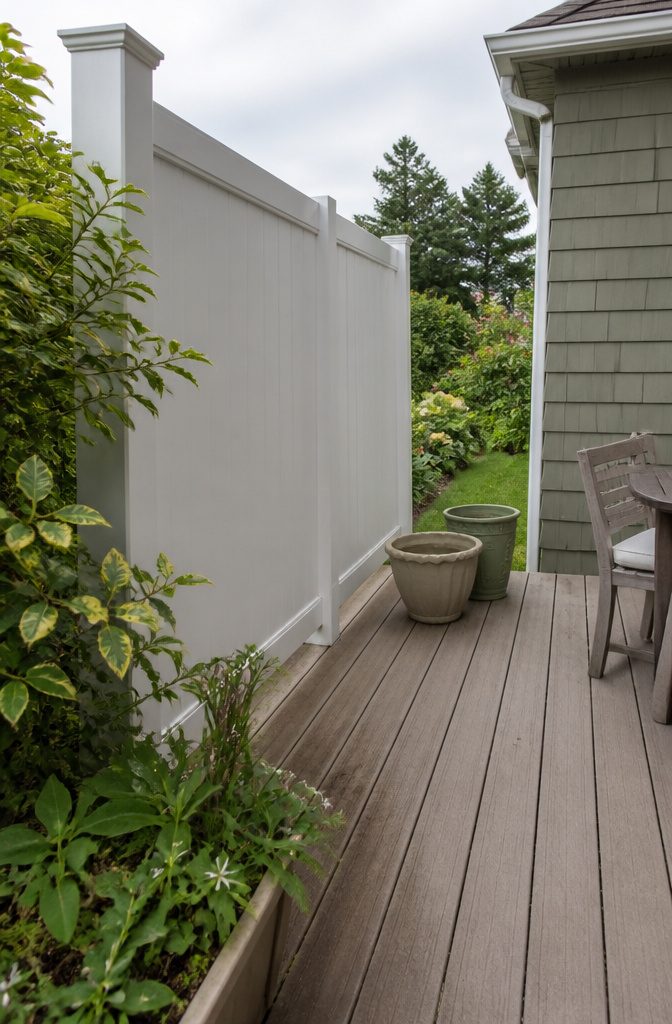
Vinyl makes the most sense on a deck where only one or two sides need screening.
It installs faster and costs less than a wood fence, and a short run means few panels and little labor. It also needs less long-term upkeep than wood, which leaves more of a small yard budget for plants.
The finish looks clean and a little upscale, and it gives real privacy and security.
I’d choose it over wood for a deck you want screened quickly and then left alone. Vinyl gives up some character: it reads as neat and uniform, so if you want the warmth of natural grain, wood suits you better.
4. Horizontal Slats
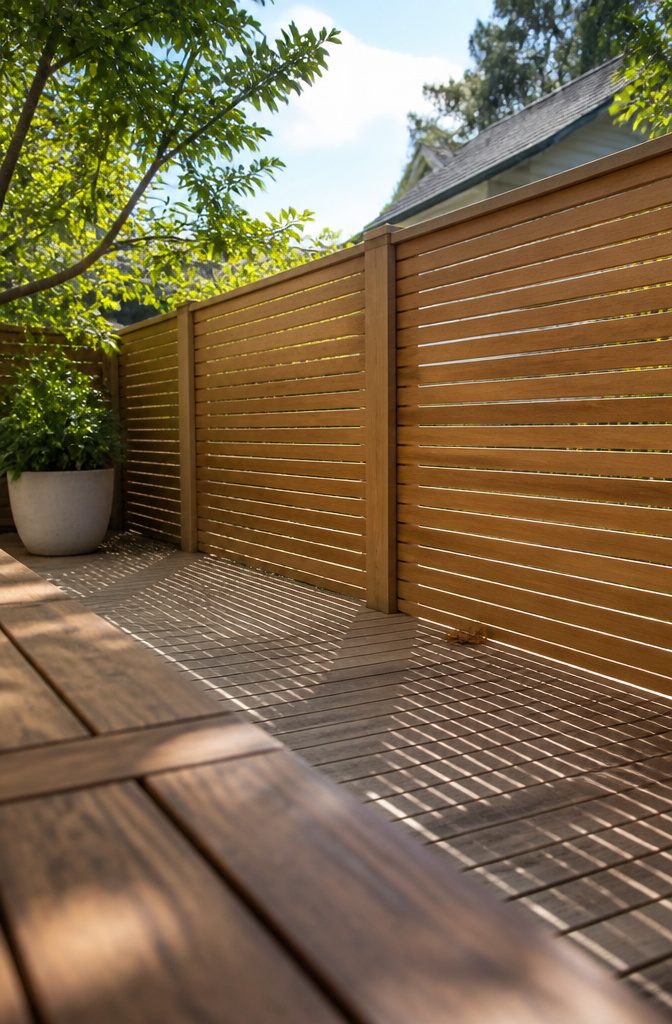
Spacing decides how private a horizontal fence is.
The tighter the slats sit, the more privacy the deck gets, because there are fewer gaps to see through. Slats spaced apart let air move across the deck, which helps in summer, but they also let people look in.
If a neighbor’s window faces your deck, I’d go tight and accept less breeze. If the deck is already screened on that side, a looser layout keeps the space from feeling boxed in.
Slat width gives you a second design choice. Mixing board widths makes the fence look custom, and color and finish change the feel again.
5. Trellis and Lattice
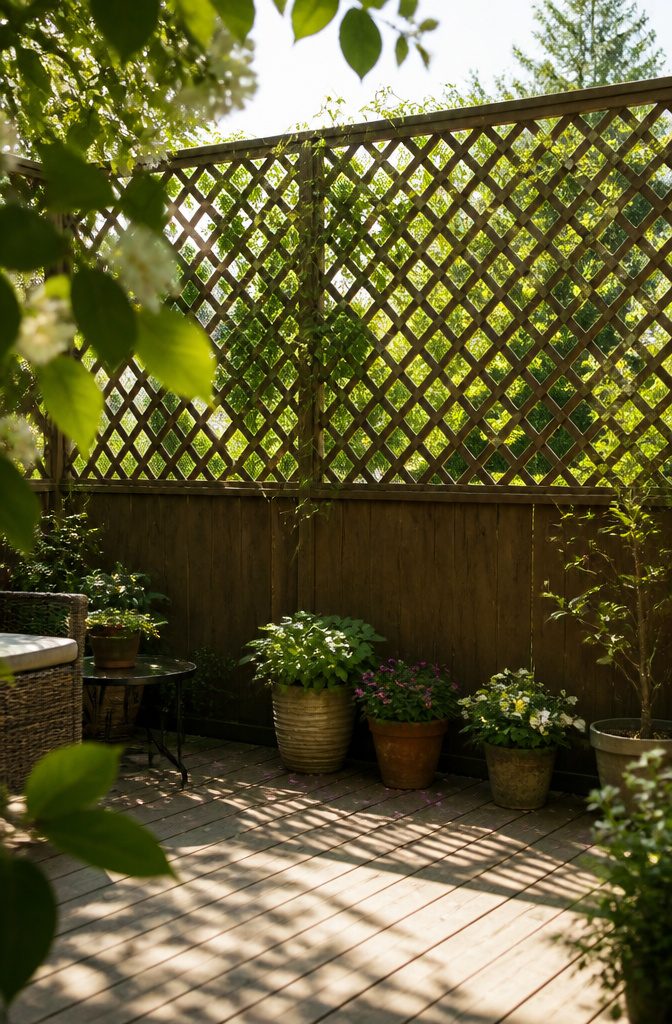
Trellis and lattice break up sightlines rather than block them. Light, wind and ambient noise pass through, so a small deck doesn’t feel boxed in the way it can behind solid boards.
That openness is also the limit: a trellis alone gives only partial privacy, and a neighbor looking straight at it will still see shapes and movement.
My pick is to mount it on top of a solid fence. The solid section covers you while you sit, and the lattice above adds height without turning the whole screen into a wall.
It also gives climbing and trailing plants something to grip, and a vine that fills in adds cover the bare panel can’t.
6. Picket and Pool Fencing
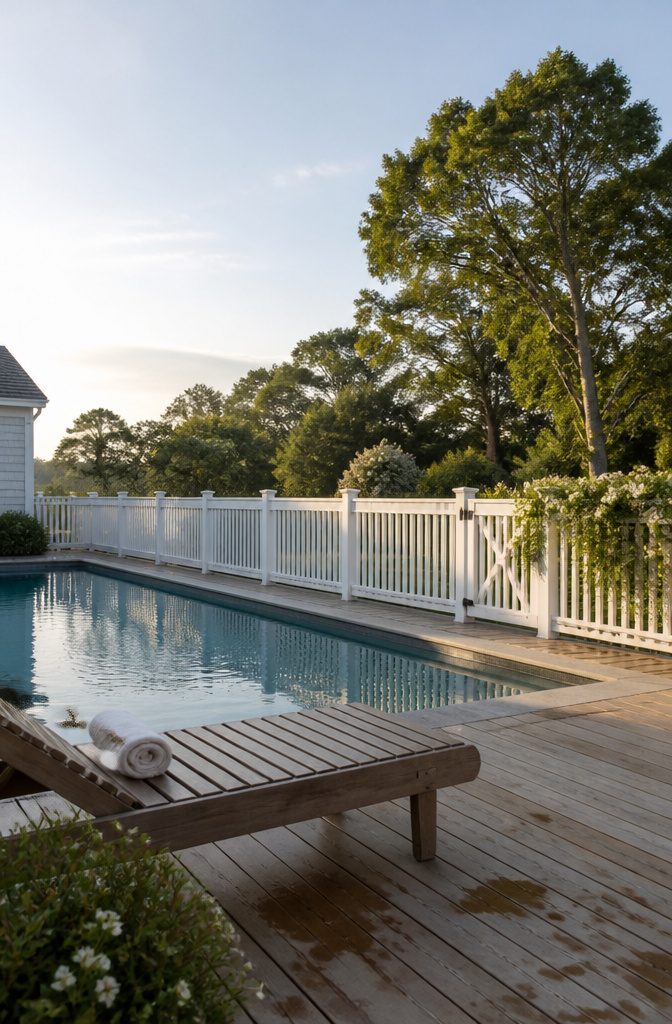
A picket fence marks off a deck without hiding anything, so I treat it as a boundary and a look, not a privacy screen.
White pickets draped with plants and flowers suit a traditional or cottage-style house. You can change the feel by varying picket length, material, finish or top-cut detail.
Around a pool deck the fence has a different job. Some states regulate fence height, railing position and picket spacing, plus gates that open outward, close on their own and latch on their own.
Check your state’s rules before buying materials, because a fence that looks right can still fail them. Design, material and color generally remain your choice.
7. Black Fencing
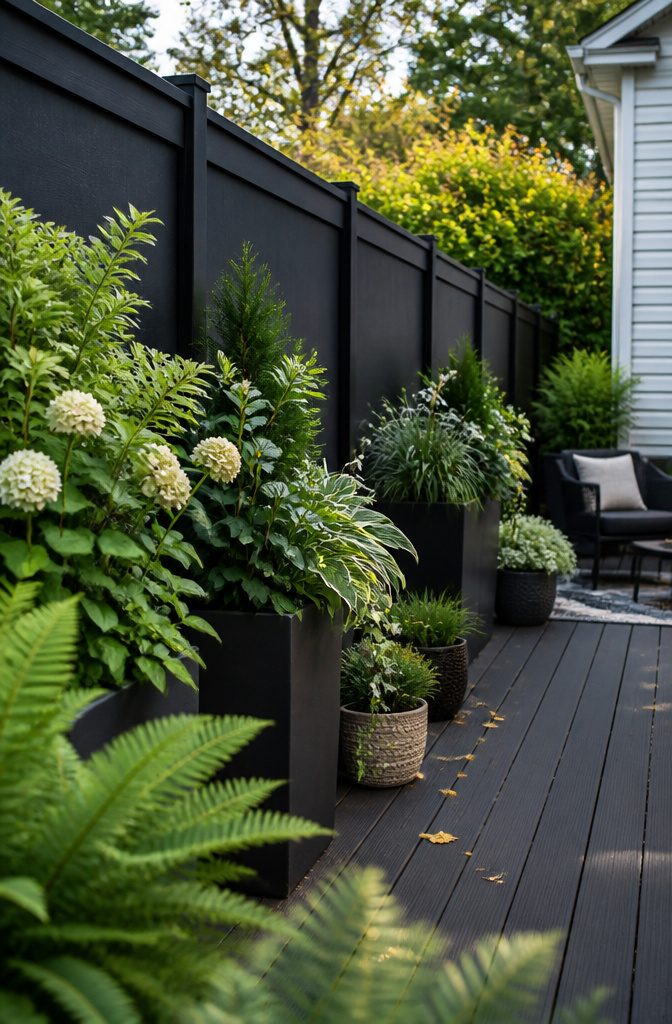
A black fence recedes behind greenery. Dark panels fade into the background, so the eye lands on whatever stands in front, and planters along the deck edge do that job well.
Foliage reads brighter against black than against wood tones or white, and pale flowers or variegated leaves stand out most. I’d pick a matte finish over gloss, since gloss shows every scuff and throws glare across the deck.
Fill the planters before you commit, though. A black fence with nothing in front of it looks heavy and makes a small deck feel boxed in.
Staggering tall planters along the run softens the edge, and a front row of lower pots gives the dark backdrop some depth.
8. Mixed-Material Panels
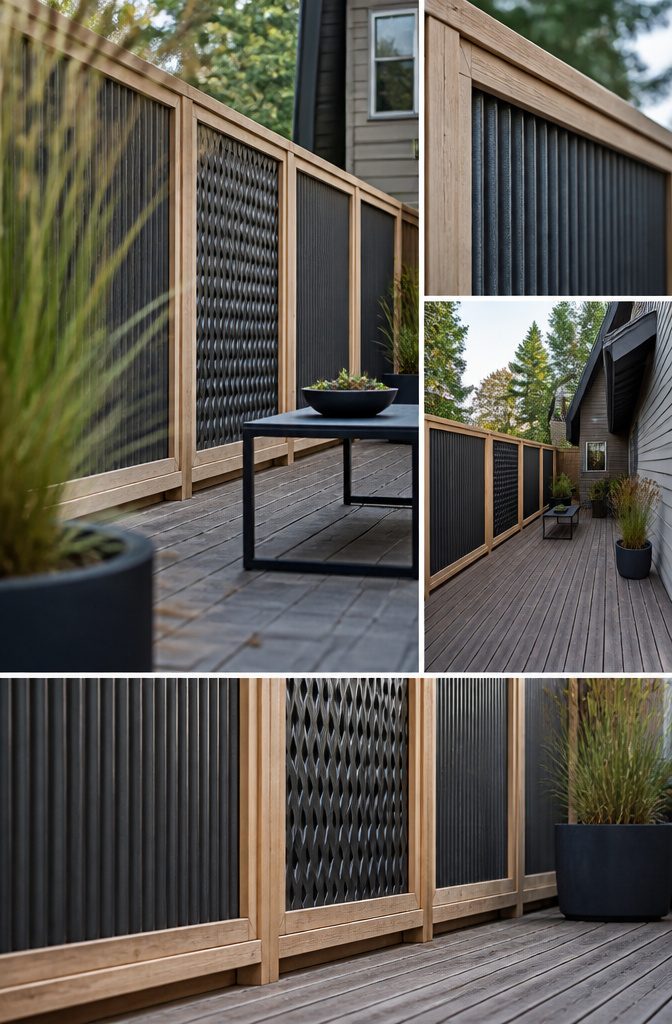
A panel fence is built from separate frames, so each section can use a different material.
Leave the frames in unfinished wood and set textured metal inserts between them for an industrial look. The wood adds warmth, and the metal adds pattern and strength.
If you’d rather buy than build, Trex Horizon Fencing already pairs metal with composite.
For a deck, I’d use one main material along the side facing your neighbor and save the second for accent panels. Mixing wood, concrete, rock, metal and glass in equal amounts tends to look like a sample board.
Patterns work the same way.
Angle boards or inserts into squares, triangles or diamonds. Curves and circles call for a skilled craftsperson, so get a quote before you commit.
9. Metal and Ironwork
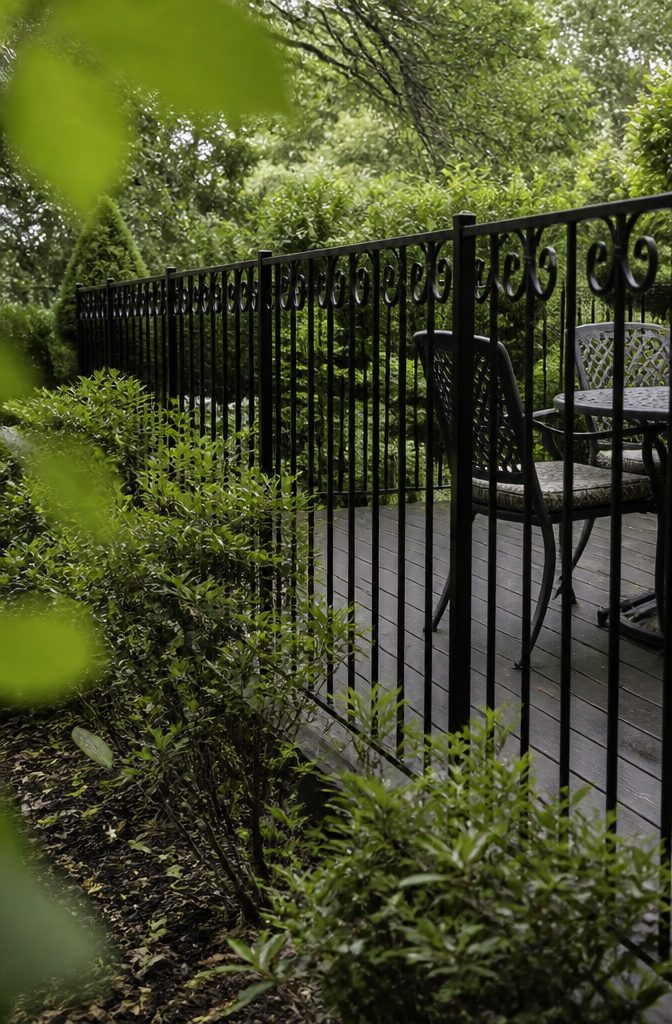
Metal reads as strong and permanent, and it works at two scales: a tall, imposing barrier along the deck edge, or a low decorative line that frames the space without closing it in. Traditional iron is the low-privacy version.
The bars look good, but neighbors can see straight through them to your chairs and table. For iron’s look with some seclusion, I’d plant trees or bushes along the outside of the fence and let them fill the gaps.
Iron alone is decoration; iron plus plantings is a privacy screen. If you need cover right away, skip iron, since new plantings take a while to fill in.
10. Stone, Gabion and Brick
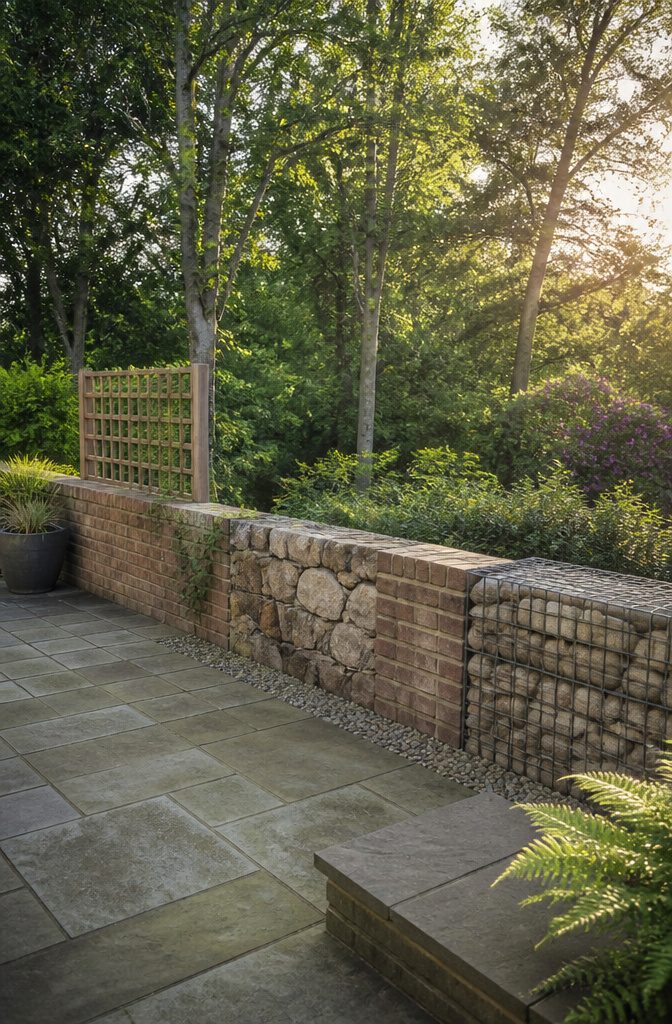
A mortared stone wall is stones stacked and joined with mortar. It has a natural look you’d see in suburbs and in places like England.
A gabion skips the mortar and holds the stones in a metal basket. It costs less than other fences a professional installs, but it’s hard to build on your own, so I’d hire a local fence builder.
A lower brick wall blocks less on its own. Add planting along it or set trellis panels on top for more coverage.
All three are heavy and permanent.
Plan them as a lasting part of the deck edge, because changing the layout later means tearing the structure out. If you might redo the space, choose a lighter material.
11. Pallet Fencing
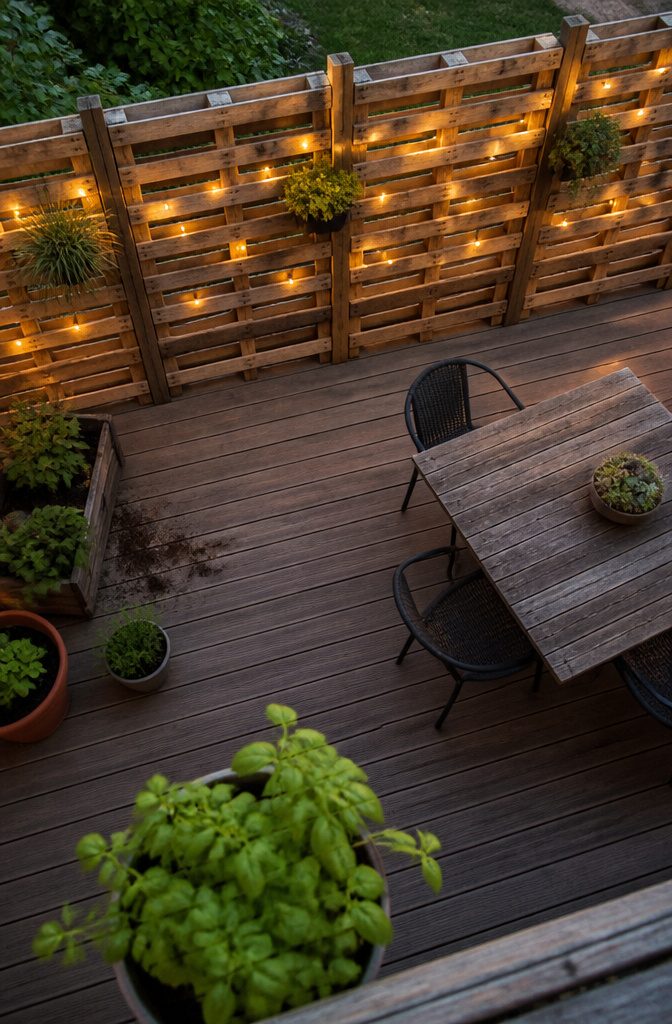
Pallet fencing is often the easiest privacy fence to install, since the panels come already assembled.
It is also the cheapest: pallets are usually free if you pick them up and haul them yourself, so line up a truck or buggy.
- Collect enough pallets to cover the length of the screen.
- Set the fence posts along the line where the screen will stand.
- Slide each pallet onto the posts.
- Fasten the pallets in place with scrap boards.
- Weave LED lights through the slats or hang planters from them.
12. Covered Wire and Fake Boxwood
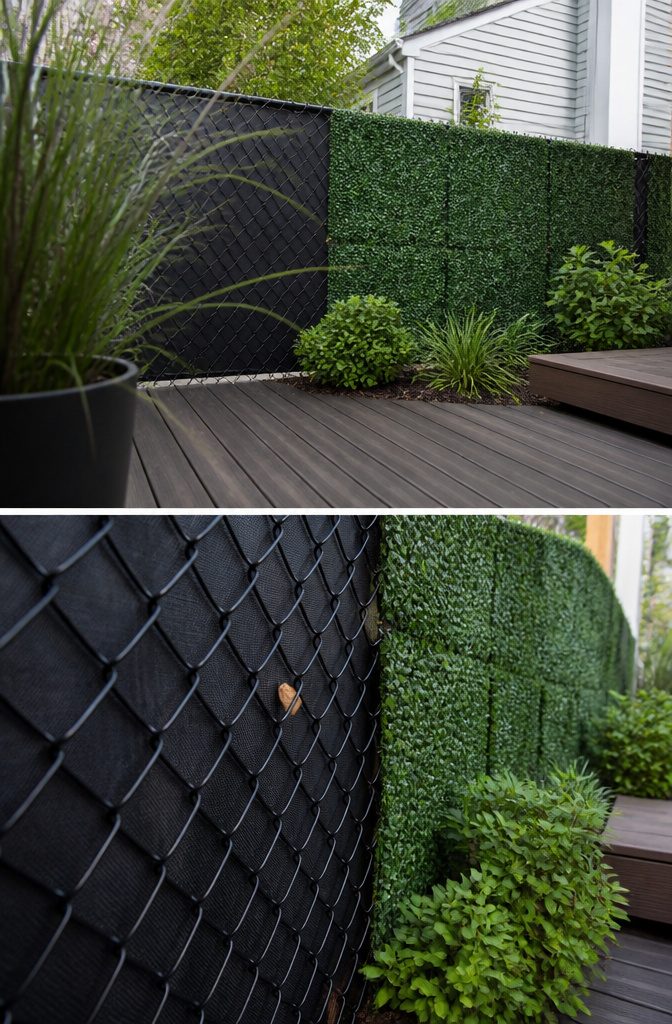
Wire fencing is cheap and keeps kids and pets safe from wildlife, but bare wire gives very little privacy.
The quickest fix is to lay mesh, tarp or fabric on one side of the wire and pull it tight. A row of bushes or small trees planted along the fence works too.
For a chain link fence that is already up and too see-through, I’d go with fake boxwood. It comes in square panels and hedge rolls, and zipper ties hold it against the wire.
You can cover the whole perimeter, or only the stretch that faces a neighbor’s window or the street, which keeps the cost down on a small deck.
13. Trees and Hedges
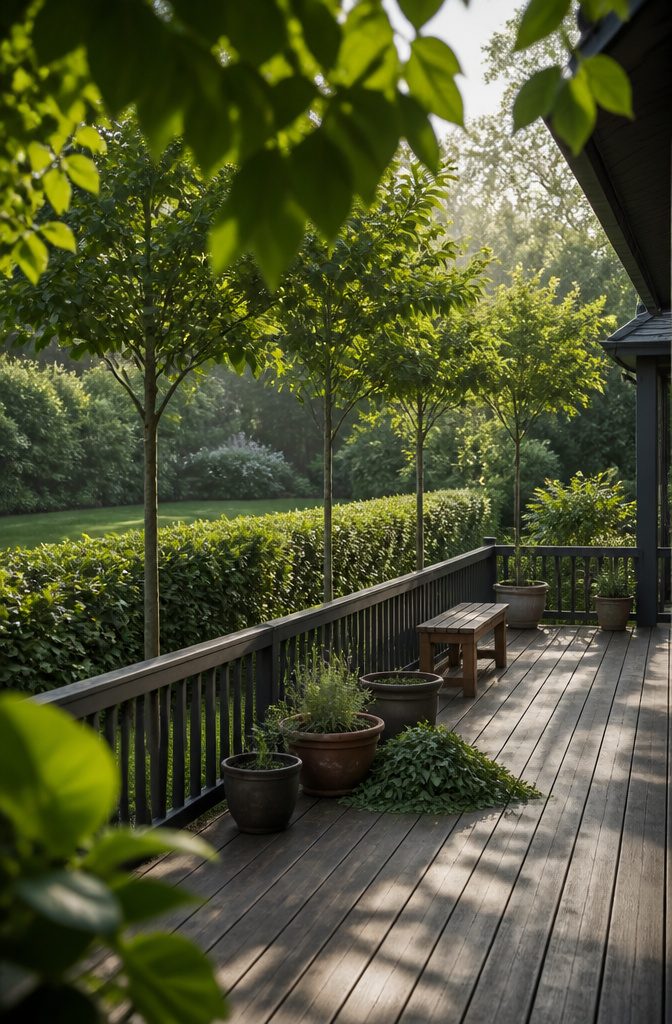
Shrubs and hedges can form the whole fence line around a deck, or stand just outside an existing fence that leaves you too exposed.
Trees add shade along with privacy, which a panel can’t. Planting outside the fence line gives the most protection.
The cost is upkeep. A hedge needs regular pruning for as long as it stands, so either put trimming on your calendar or hire a gardener to do it.
I’d choose a hedge where the deck has room beyond the rail, and skip it if you want privacy by this weekend.
If you like the hedgerow look but not the trimming, a tall wall in metal, vinyl, cellular PVC, natural wood or composite gives a similar barrier.
Materials Compared
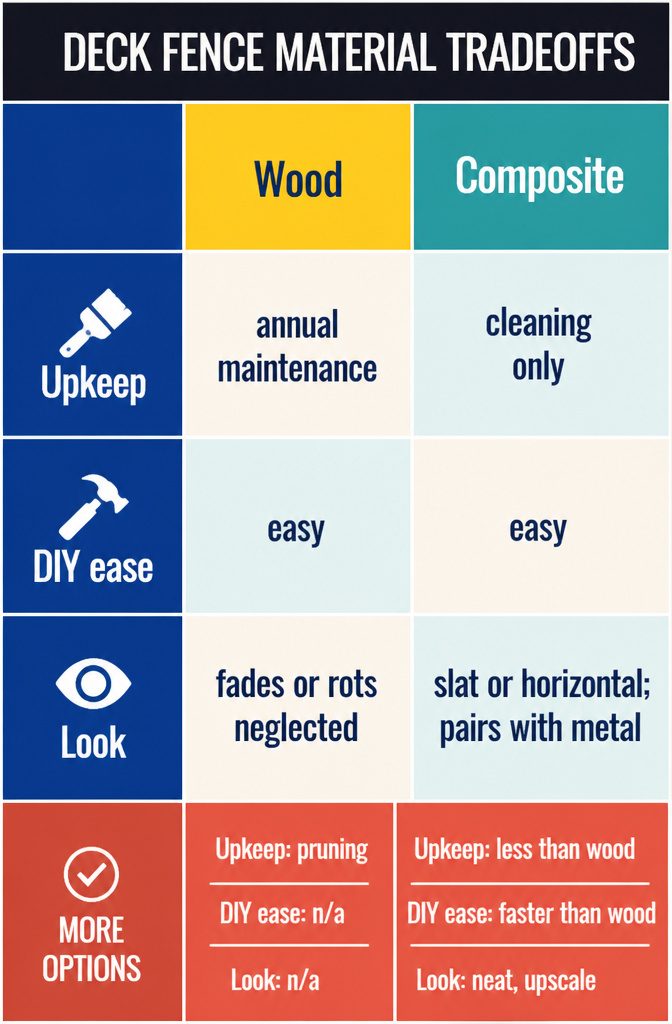
Upkeep separates these five more than looks do.
Wood asks the most of you, while pallets are the quickest to put up. Composite is the one to pick if you only want to clean the fence, not restain it.
| Material | Upkeep | DIY ease | Look |
|---|---|---|---|
| Wood | May need annual maintenance | Easy | Fades and rots if neglected |
| Composite | Cleaning only | Easy | Slat or horizontal styles; pairs with aluminum and steel |
| Vinyl | Less than wood | Faster than wood | Neat, upscale |
| Pallet | n/a | Easiest; pieces come assembled | n/a |
| Hedge | Pruning | n/a | n/a |
Closed Versus Open Screens
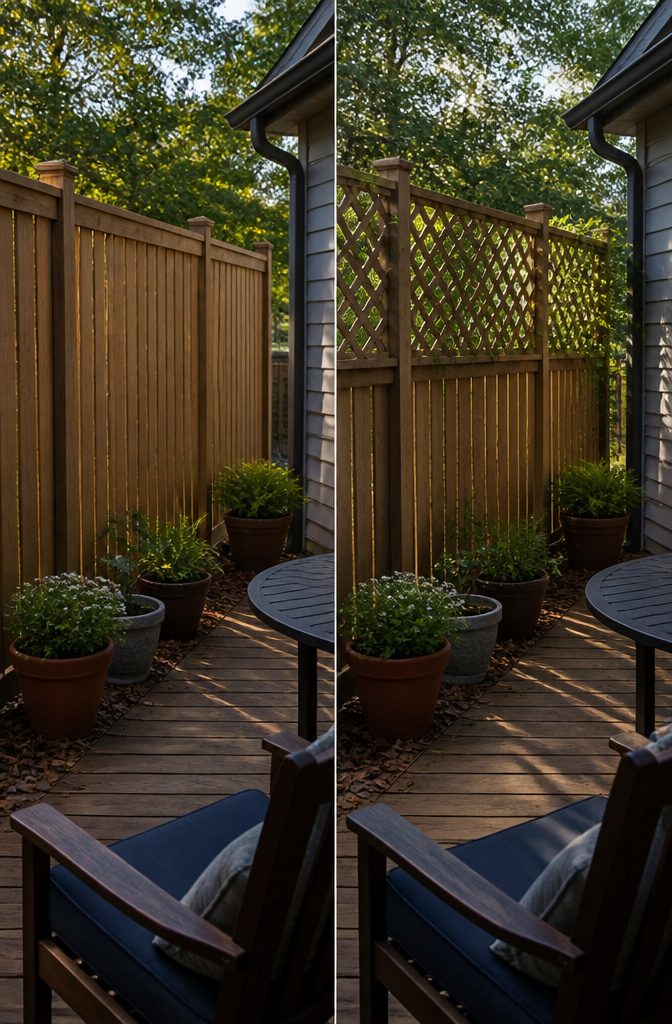
A solid vertical slat fence blocks sightlines completely, and the other options trade some of that away.
Pickets give only limited privacy, since the gaps stay open. Trellis and lattice let light, wind and sound through, which keeps a small deck from feeling boxed in.
I like them best set on top of a solid fence, where they also give climbing plants something to hold. Wire needs a cover and iron needs planting before either works as a screen.
Before buying anything, check local zoning for height restrictions, verify your ground lines, and find out whether you need a permit. A fence built past the limit or over a line is costly to redo.
Frequently Asked Questions
What is the best low-maintenance privacy fence for a deck?
Composite is the best low-maintenance choice.
It resists rot, splintering, dents and peeling paint, and cleaning is all it asks for, while wood needs restaining every year. Vinyl also needs less upkeep than wood, but composite is the pick if you never want to restain.
Which type of privacy fence is easiest to install on a deck?
Pallet fencing is usually the easiest, because the panels come already assembled.
You set posts along the fence line, slide the pallets onto them and fasten them with scrap boards. Wood and composite fences can be DIY projects too, but they take more building.









