
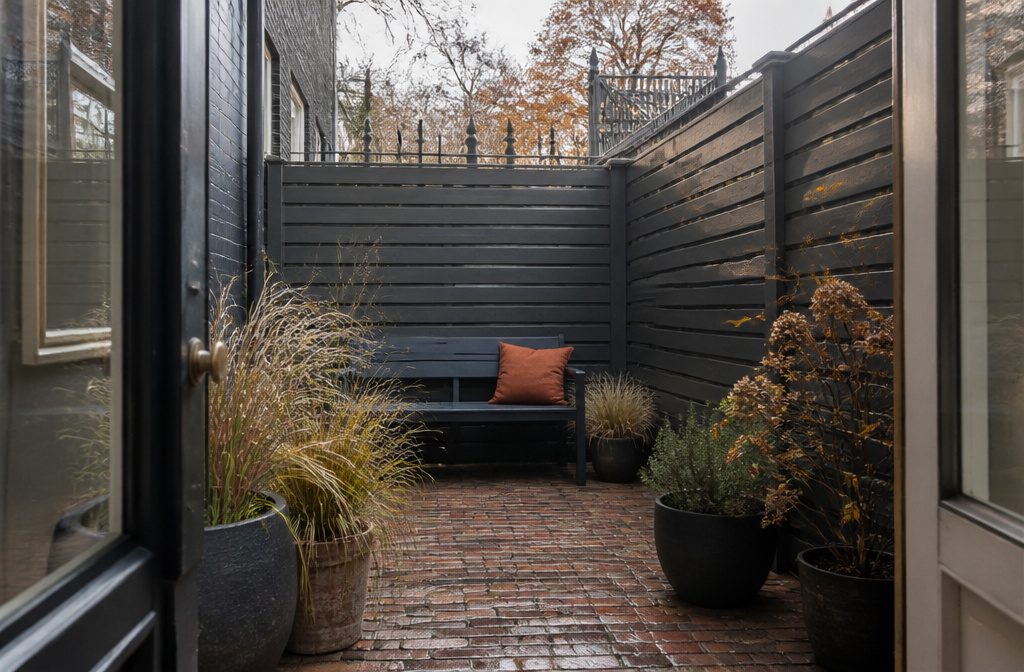
Screens, curtains, trellises and rows of planters all do a fence’s job on a patio by blocking the sightline into your seating area.
Each has a gap. An open-topped pergola with curtains won’t stop a second-floor window from looking down, and a new trellis screens little until the vines fill in.
Privacy Screens and Panels
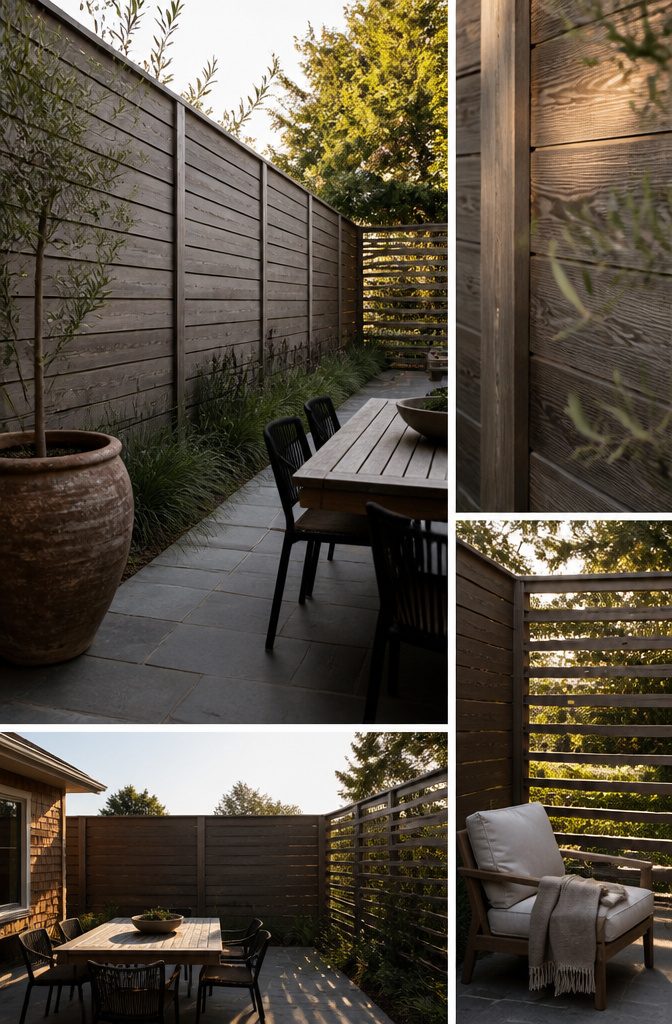
Screens interrupt a sightline, freestanding or connected in a run like fence panels.
Coverage ranges from partial to nearly total depending on design. Slatted panels pass light and glimpses of what lies beyond, while closely spaced boards or opaque panels block far more.
Decorative cutouts look good but can show more than expected when viewed straight on. Mesh shifts with weave, lighting and viewing angle, so a stated privacy percentage is not a promise.
For a neighbor’s patio facing your dining table, I’d choose opaque or tightly spaced slats along that edge.
A reading chair near a walkway needs only one angled slatted or mesh panel. Folding screens suit layouts you rearrange.
Recommended Products

【Ultra-Wide 72" x 72" Single Panel Coverage】 This freestanding privacy screen offers a generous 72-inch width and 72-inch height, providing ample coverage to block unwanted views, wind, or sunlight. The single-panel design is perfect for creating a dedicated private space in your patio, garden, balcony, or backyard without the hassle of multi-panel folding screens

𝐓𝐑𝐎𝐏𝐈𝐂𝐀𝐋 𝐏𝐀𝐋𝐌 𝐓𝐑𝐄𝐄 𝐃𝐄𝐂𝐎𝐑𝐀𝐓𝐈𝐕𝐄 𝐃𝐄𝐒𝐈𝐆𝐍: Featuring an elegant laser-cut palm tree design, this outdoor privacy screen creates a relaxing tropical atmosphere while adding decorative privacy to patios, gardens, pools and backyard living spaces.
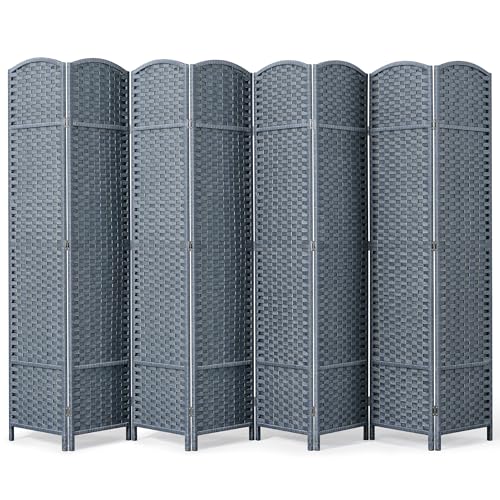
【Optimal Outdoor Privacy Dimensions】 Standing at a full 67 inches tall, with each 15.7-inch wide panel, 129 inches wide when fully extended, this privacy screen provides ample coverage to create a secluded retreat on your patio, balcony, or by the pool, blocking unwanted views and wind.
Outdoor Curtains
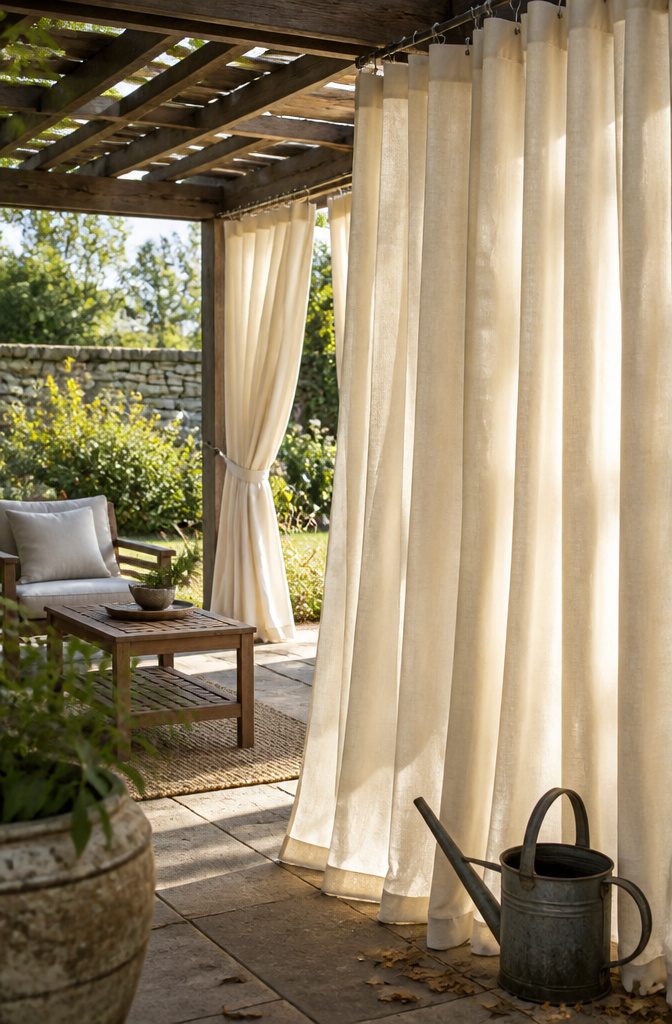
Curtains are the soft option for patio privacy. Hung from a pergola or along the edge of a covered patio, they take the hard lines off the structure and close in a seating area whenever you want.
Pulled aside, they leave the space fully open, which a fixed panel can’t do.
Fabric does ask more of you than a panel. Clean it with a mild solution approved for that fabric, and let it dry completely before you store it, because damp folds invite mildew.
For flexibility and a gentler look, I would choose curtains. If you want privacy with the least upkeep, a solid screen is the better pick.
Recommended Products

Outdoor privacy fence screen designed to significantly reduce visibility for patios, pools, balconies, gardens, and work sites.

🪟 Premium Quality Material: Our window screen is constructed from durable fiberglass mesh, boasting a radial strength of over 320N/Inch and weighing above 110g/m2. Enjoy clear views from inside your home while allowing smooth airflow and 75% UV protection.

Upgrade iCover Privacy Screen For Fence: Our privacy screen is made of heavy-duty knitted net, measuring 4 ft high by 50 ft long. It is suitable for fences with a height of 4 ft or slightly higher. Please accurately measure your fence before purchase
Pergolas With Curtains
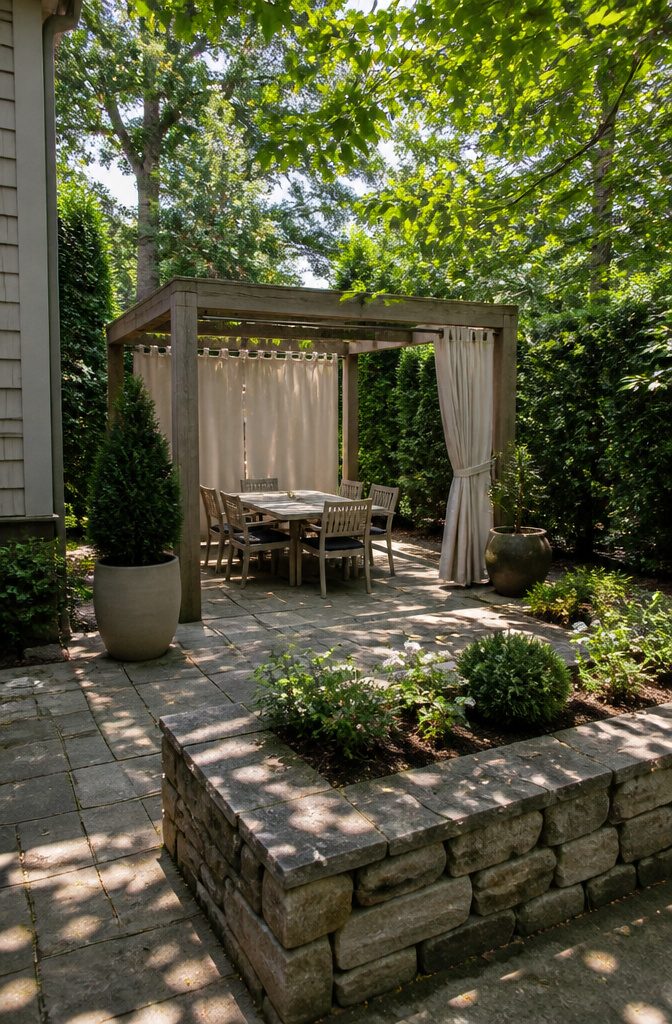
A pergola gives curtains something to hang from. The frame defines a covered patio, and the curtains close off its open sides when you want privacy and pull back when you want air and light.
That softens the space compared with a solid panel, so I’d choose this pairing for a patio that already has a frame overhead or room for one.
The limit is the top. An open-topped pergola does not block views from an upper-story window, because curtains only cover the sides and a neighbor looking down sees right over them.
If a second-floor window faces your patio, you’ll need something overhead as well, or a different option.
Recommended Products

WHAT'S IN THE PACKAGE? Each set includes 1 outdoor curtain measuring 54" wide by 84" long. The curtain features rust-proof 1.6-inch grommets that allow smooth opening and closing for easy daily use.
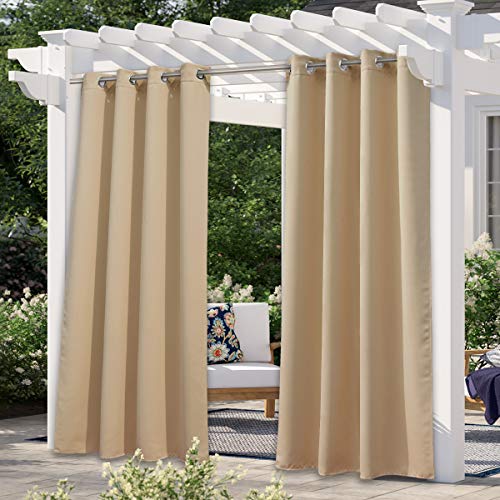
Ready Made: Sold as 1 panel. Crafted with advanced waterproof technology, ensuring durability against rain, wind, or shine. Features 1.6'' STAINLESS STEEL GROMMET for easy hanging. Both sides of the curtain are identical in material and color.

☔All-Weather Windproof & Waterproof: Made from premium 220gsm thick fabric treated with a waterproof pretreatment, these curtains shed rain and water on contact. The bottom can be anchored via back tabs (grommets, or rod pockets), combined with the included rope – effectively stopping flapping in gusty winds. Rustproof grommets ensure long‑lasting use.
Decorative Trellises
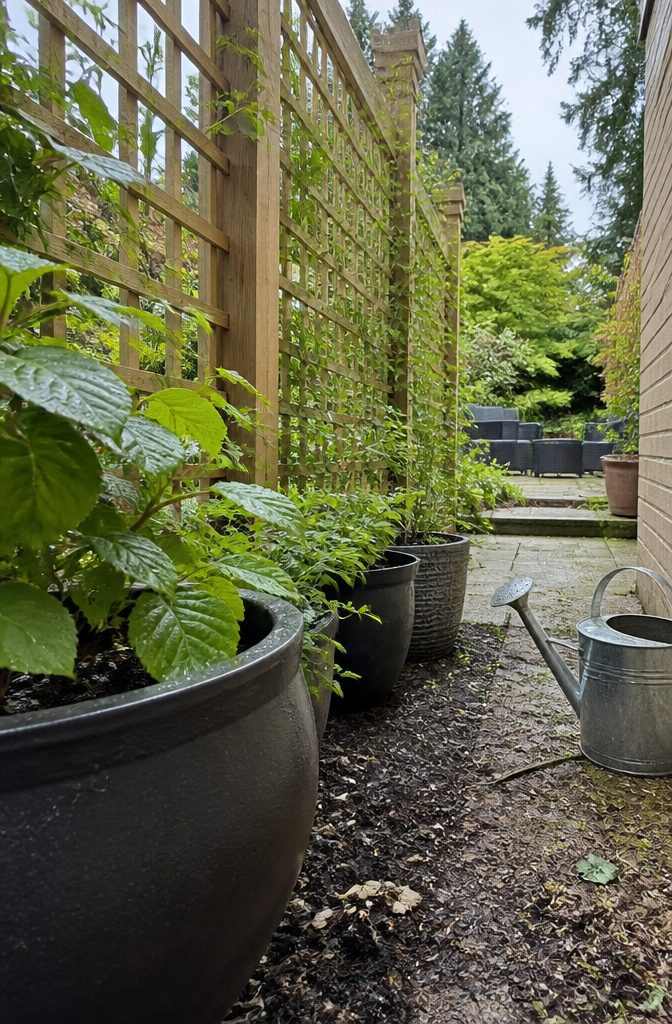
A trellis gives climbing plants something to grip, and the privacy comes from the plants, not the frame. In its first season a bare trellis screens very little, since you can see straight through the gaps.
Set containers in front of it as a backdrop while the climbers fill in, and keep them there afterward if you like the layered look.
Leave a working strip beside or behind the trellis so you can reach the plants with a watering can and pruners.
A trellis pushed flat against a wall leaves no room to prune, and tangled growth is hard to sort out later. I’d also pick a sturdy frame, because a full vine gets heavy.
Recommended Products

(Breathable Material with Some Visibility Through) Made with 100% new high density polyethylene(HDPE) material--no recycled materials used,more healthy and safe. Allow breeze and light pass through for better comfort space. Commercial solid fabric can achieve 95% UV protection to meet your requirement.Deck Shield Cover is perfect for Backyard Deck, Patio, Balcony Pool, Porch Railing.
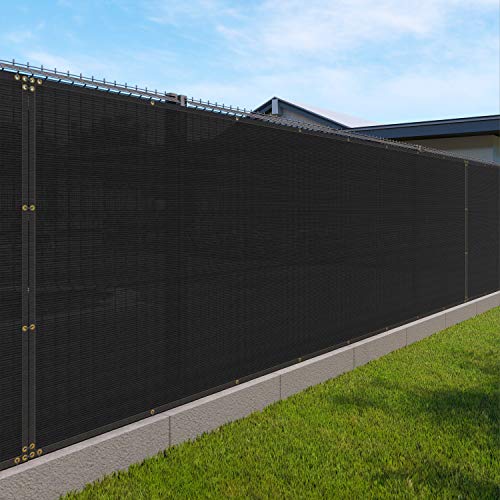
Perfectly Protect Your Yard Privacy: 90% visibility blocking, prevent peeping outside the yard, block nose neighbors see through, protect safety and enjoy freedom. It can also prevent animals from entering your yard, block surrounding noise and street views, block dogs' sight and prevent bark.

High Quality Material and Construction: Shade&Beyond privacy screen is crafted from 170 gsm UV protected NON-RECYCLED HDPE fabric; featuring durable brass grommets on each side for secure installation
Planter Dividers
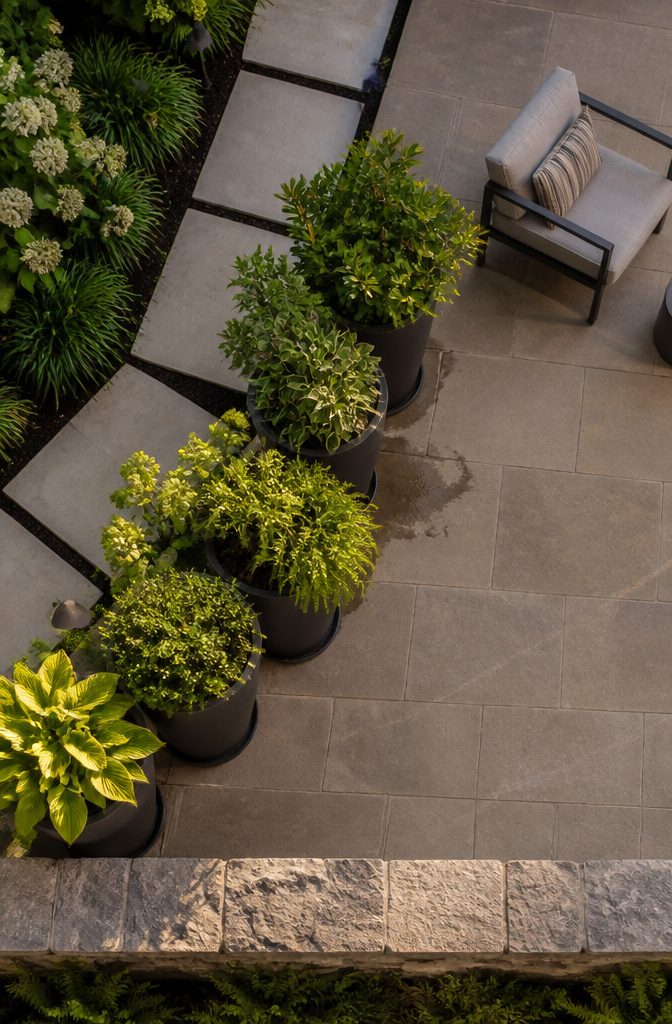
A row of tall planters set at an angle to the patio edge adds depth that a flat panel can’t, and the foliage softens straight lines. Pick them to suit the surface underneath.
A filled planter gets heavy once it’s watered, so a deck, balcony or rooftop needs a weight check first. Drainage matters as well: water should leave the pot without pooling on boards or dripping onto a neighbor below.
Read the plant tag for mature height and spread, because a screen that looks right in spring can crowd the seating by late summer.
Don’t assume a railing can carry weighted planters or a screen unless the design specifically allows it. Leaves also block sightlines but do little for noise, so planters won’t fix a loud street.
Recommended Products

[HEAVY-DUTY 16MM STEEL CONSTRUCTION]: Stronger for demanding garden use with upgraded 16mm steel tubes and 0.5mm thick tube walls. The reinforced metal frame provides greater strength and stability than lightweight garden arches.

Garden Trellis for Climbing Indoor and Outdoor: This 3-pack stackable trellis set provides flexible support for climbing plants in pots. Perfect for both indoor and outdoor use, it helps vine plants grow vertically, turning them into beautiful home decorations while saving space.
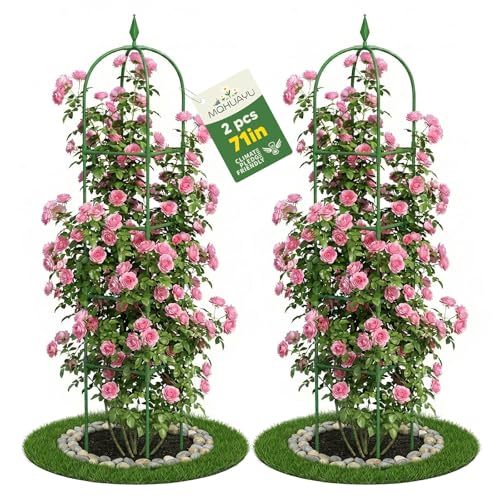
【6 Ft Adjustable Height】This 4-tier garden trellis for climbing plants provides ample space to plant thrive. With removable 4-way connectors, you can easily adjust the height as your plants grow—reaching up to 6 feet tall. It offers the flexibility needed for healthy vertical development
Placement and Style
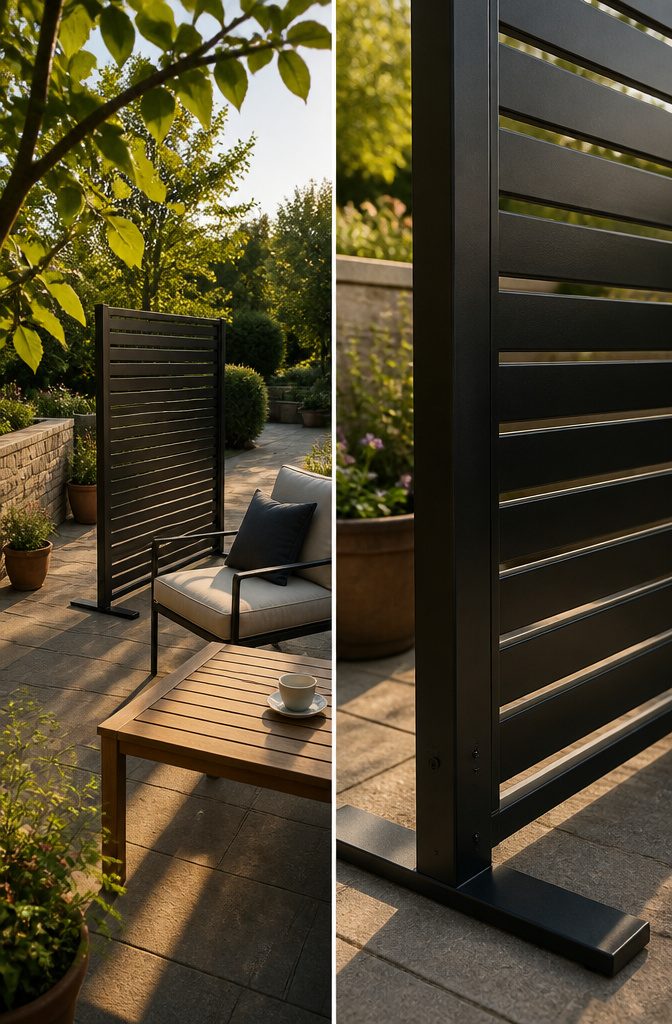
Placement often matters as much as height, so start by finding where the view into the patio begins. A dining table beside a neighbor’s patio calls for a broad partition along that edge.
A reading chair near a shared walkway needs only a narrow screen set at an angle. Screening doesn’t have to enclose the space: a panel close to the seating group gives a tucked-away feel without running the full boundary.
For style, I’d repeat one or two details already on the patio, such as horizontal railing lines, a dark metal furniture frame or the warm tones of a wood table.
One panel can frame a small seating area. Connected sections make a longer boundary look coordinated instead of pieced together.
Recommended Products

𝐃𝐮𝐫𝐚𝐛𝐥𝐞 𝐑𝐮𝐬𝐭𝐩𝐫𝐨𝐨𝐟 𝐌𝐞𝐭𝐚𝐥 𝐎𝐮𝐭𝐝𝐨𝐨𝐫 𝐏𝐫𝐢𝐯𝐚𝐜𝐲 𝐒𝐜𝐫𝐞𝐞𝐧: This freestanding privacy screen is made of thick galvanized steel with a powder-coated finish, offering all-weather resistance and rust protection. Ideal for patios, gardens, and balconies, it serves as a reliable metal outdoor privacy screen that endures rain, sun, and wind without fading or warping.
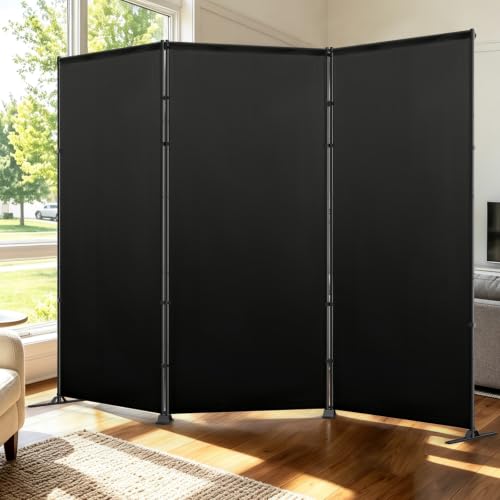
【Expansive 102" x 72" Coverage for Maximum Privacy】 This 3-panel freestanding room divider offers an impressive 102-inch width and 72-inch height, creating a wide, tall privacy barrier that effectively blocks unwanted views, sunlight, and wind. The tri-fold design delivers broad coverage in a single setup, making it ideal for sectioning off large areas on your patio, deck, garden, or open-concept indoor spaces

Details: Artificial ivy wall is 120 inches long and 40 inches wide, with green faux ivy leaves. Made up of 12 small panels (connected).Can cover 33.33 square feet. the faux Ivy Vine are textured and look real. You can reassemble or cut to get the size you want. 50 cable ties are included to assist in installation.
Materials and Upkeep
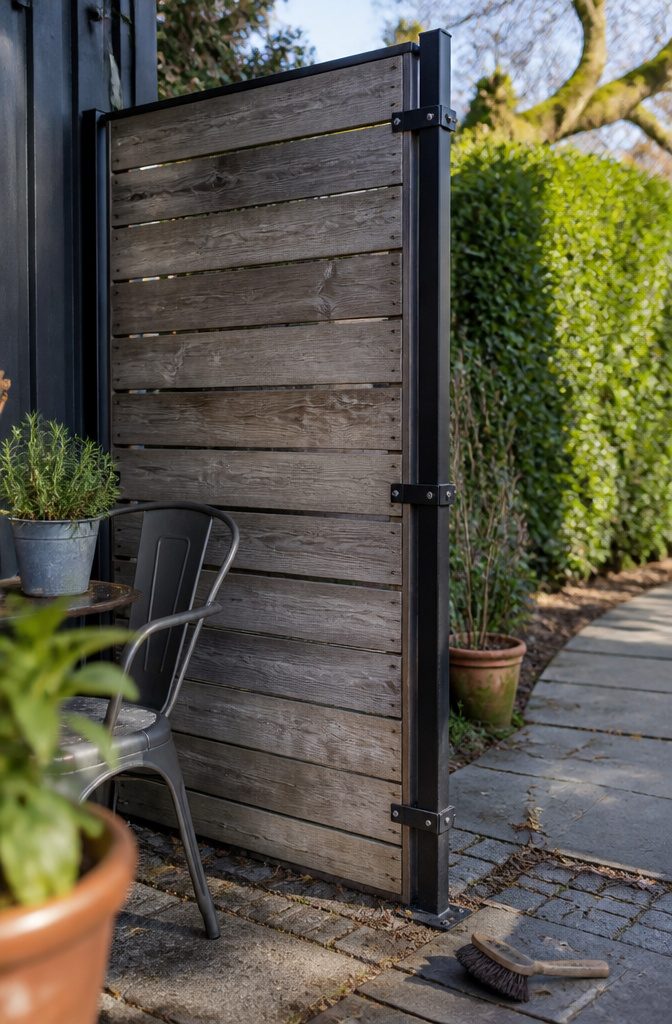
Wood brings visible grain and a familiar, architectural look to a patio. Treated wood, powder-coated metal (aluminum or steel) and durable resin are all made for year-round outdoor use, so weather alone shouldn’t rule any of them out.
Vinyl and composite panels suit a cleaner, more uniform look, while fabric and mesh read lighter and softer.
Durability often depends on the small parts. Finishes, connectors, hinges, mounting brackets and fasteners wear out before the panels do, so check them when you compare products.
For cleaning, follow the product’s care instructions. Abrasive tools or the wrong cleaner can strip the protective finish and shorten the life of the material.
Recommended Products

Package included - Your package includes 2 panels curtains. Each measuring 125 inches width and 108 inches long. Together, they create a perfect 20FT backdrop curtains. Designed to enhance your patio, porch, or gazebo, this elegant curtain offers both functionality and style.

【Sufficient Privacy】Balcony Privacy Screen is made of 100% new high density polyethylene(HDPE) material, which has excellent shading performance and provides 95% UV protection, 85%-90% shading rate, no recycled materials used, more healthy and safe.

Designed for Outdoor Work Without Eye Strain: Say goodbye to squinting and eye strain. This 2-in-1 sun shade briefcase blocks harsh sunlight, making your screen readable at parks, beaches, patios, or in RVs. Perfect for remote workers, photographers, drone pilots, and outdoor professionals.
Fit and Installation
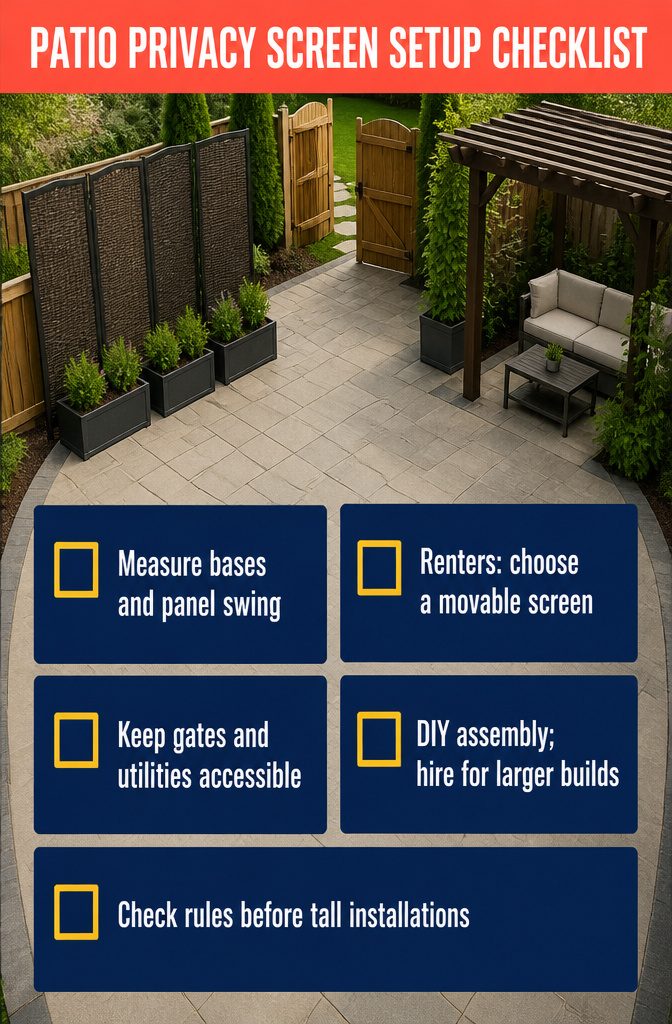
Width and height are only part of the footprint, so check these before you buy:
- Bases, supports, planters and the swing of folding panels all take floor space beyond the listed dimensions.
- A folding screen goes wherever you set it, which makes it the easier pick for renters. Fixed panels need a surface that can hold them, plus the right hardware.
- Keep gates, utilities and maintenance areas reachable. A screen you have to move every time you need access will end up in storage.
- Most screens and panels are built for DIY assembly and come with instructions. Larger or more permanent structures may be worth hiring out.
- Check property rules, association requirements and local restrictions before putting up anything tall or permanent.
Recommended Products

Waterproof Outdoor Curtains with Windproof Design: Made with durable polyester fabric and a waterproof coating, these all weather outdoor curtains protect your patio or gazebo from light rain and moisture. The tab-bottom design helps secure the panels during breezy days, reducing flapping and keeping the curtains neatly in place

【Ready Made】- Includes 2 x Curtain Panels. Each panel measures 52" wide. Available in 63", 72", 84", 95", 108", 120" and 132" lengths. Each grommet has 1.6" inner diameter that fits well most standard curtain rods. The rust proof loops are easy to install, and give the curtain years of use without tearing up edges. Please measure size before buying.
WHAT'S IN THE PACKAGE? Each set includes 1 outdoor curtain measuring 54" wide by 95" long. The curtain features rust-proof 1.6-inch grommets that allow smooth opening and closing for easy daily use.
Frequently Asked Questions
Recommended Products

STYLISH NATURAL WOOD: This FSC certified wood screen is made with real wood meaning no two boards have the same grain color, finish, or wood knots differing it from vinyl outdoor privacy fence screen panels.

90% Privacy Blockage: Up to 90% privacy blocking effectively protects your privacy. Suitable for residential site,construction site, and greenhouse covering. The fence privacy screen measures exactly 5'x 50'

【Aesthetic Design: Natural Texture】Crafted from innovative material designed to mimic authentic bark texture and woven with earthy-toned ropes for a rustic look, this privacy screen blends seamlessly into natural surroundings. The tightly woven design (very limited spacing) provides complete spy-proof privacy while adding timeless style to gardens, balconies, and patios.
What are the main options for a privacy fence for a patio?
The main options are privacy screens and panels, outdoor curtains, pergolas with curtains, trellises with climbing plants, and tall planters set as dividers. Opaque or tightly slatted panels give the most coverage with the least upkeep.
Curtains and plants give a softer look but need more care. An open-topped pergola won’t block views from an upper-story window.
Are patio privacy screens weather-resistant?
Most are.
Treated wood, powder-coated aluminum or steel, and durable resin are all made for year-round outdoor use. Hinges, brackets, fasteners and finishes usually wear out before the panels do, so compare those parts when you shop.
Do patio privacy screens need professional installation?
Usually not. Most screens and panels are built for DIY assembly and come with instructions.
Larger or more permanent structures may be worth hiring out. Check property rules and local restrictions before putting up anything tall or permanent.
How do I match a privacy screen to my existing patio style?
Repeat one or two details already on the patio, such as horizontal railing lines, a dark metal furniture frame, or the warm tones of a wood table.
Wood shows visible grain, vinyl and composite look cleaner and more uniform, and fabric or mesh looks lighter and softer. Connected sections make a long boundary look coordinated.









