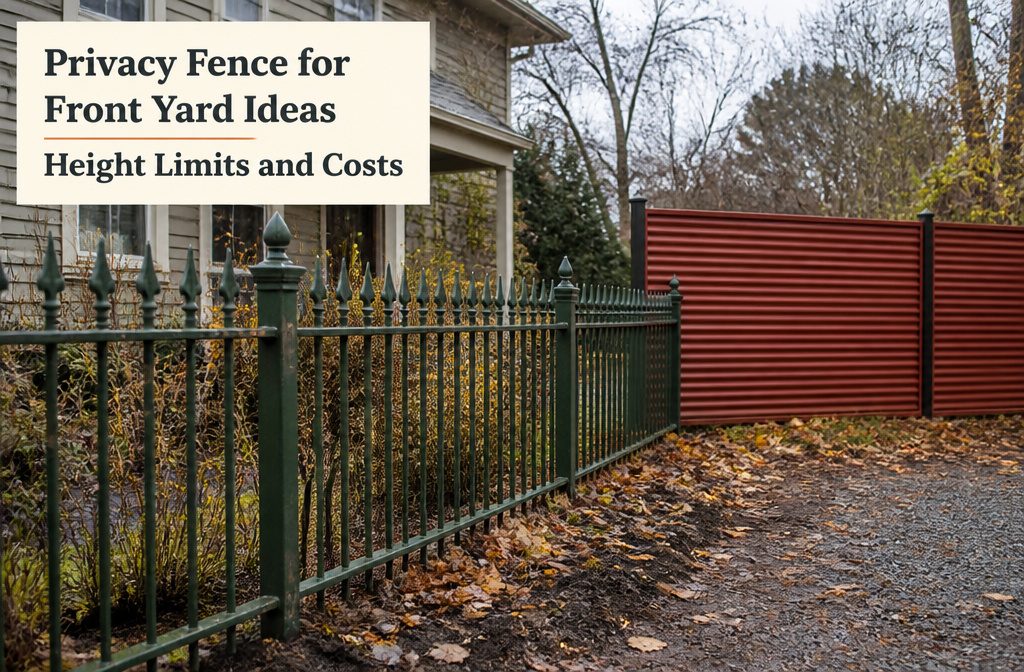
Front-yard fences run from open metal pickets to solid corrugated panels, at an average of $40–$150 per linear foot, and your local height cap decides which ones are allowed.
Most ordinances stop front fences at 3–4 feet, well below a 6-foot privacy fence, so call the planning office before you pick a style or buy materials.
1. Vertical Board Fence
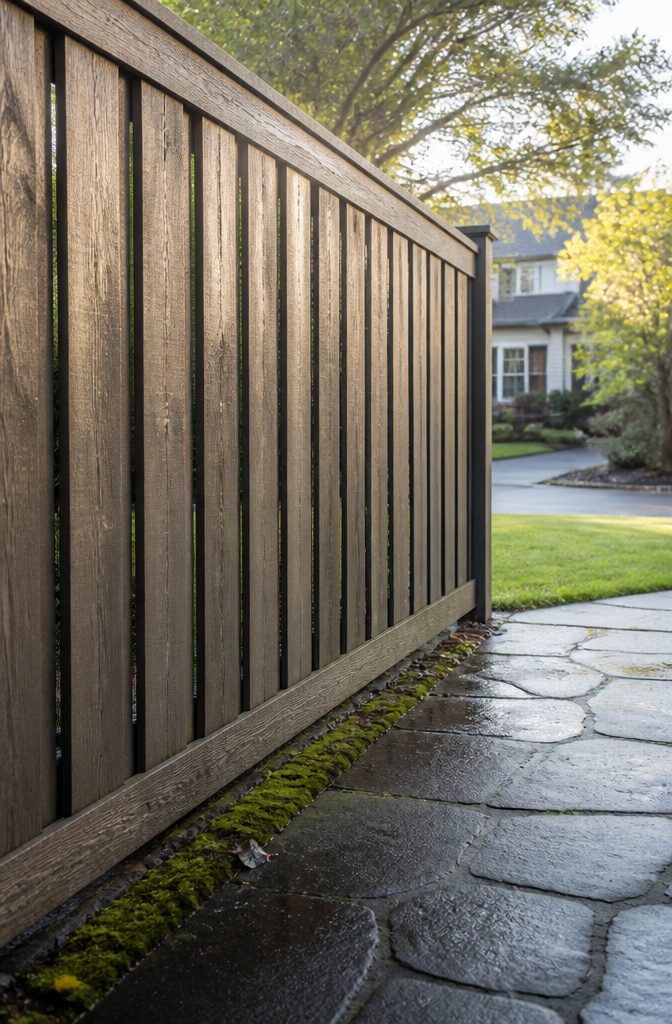
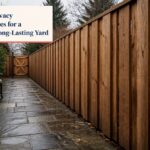
Vertical boards of uniform width are the standard back- and side-yard fence, and they are quick to install and cheap, since wood typically costs less than other materials. Packed tight, though, a front-yard run can read as a wall.
Spacing the boards with gaps of up to 4 inches looks more inviting from the sidewalk. Wider gaps give up privacy, so I’d start narrow and check the view from the street before fastening the rest.
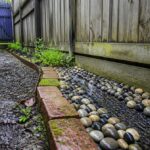
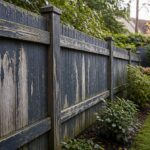
Add a kickboard along the bottom. It keeps the main boards out of contact with soil and moisture, which matters because wood weathers faster than other fence materials and needs periodic staining or paint.
I’d count it as part of the basic build, especially on uneven ground.
Recommended Products
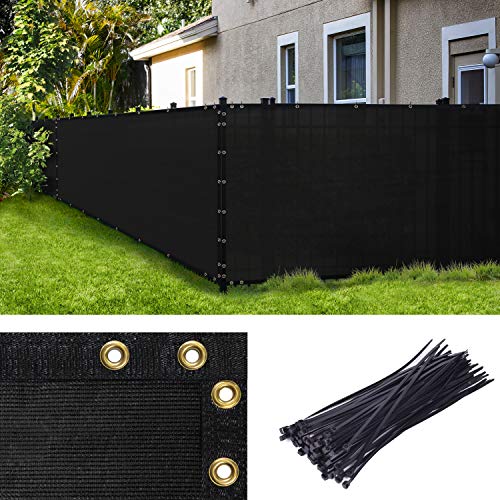
Backyard Privacy: Designed for 4-foot backyard fences, offering enhanced privacy by helping block views from neighbors and busy streets.

Heavy-Duty & Breathable Fence Privacy Screen: Crafted from 90% new, high-density HDPE fabric, this outdoor privacy screen is built to last. The elastic, breathable material is reinforced with 3 metal grommets per edge, creating an exceptionally durable and tear-resistant fence screen that withstands the elements.
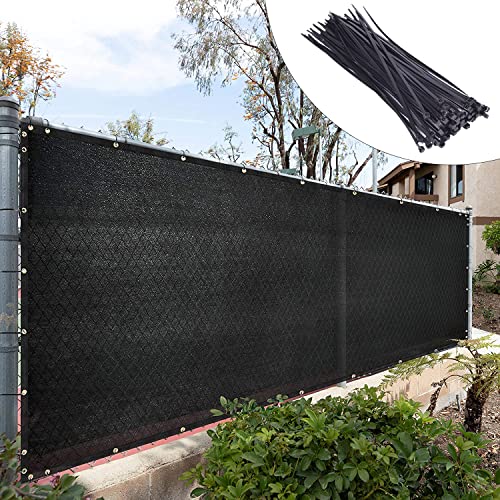
Measurement: Actual height is 3' 9" , made to fit perfectly on 4 footer fence.
2. Horizontal Slat Fence
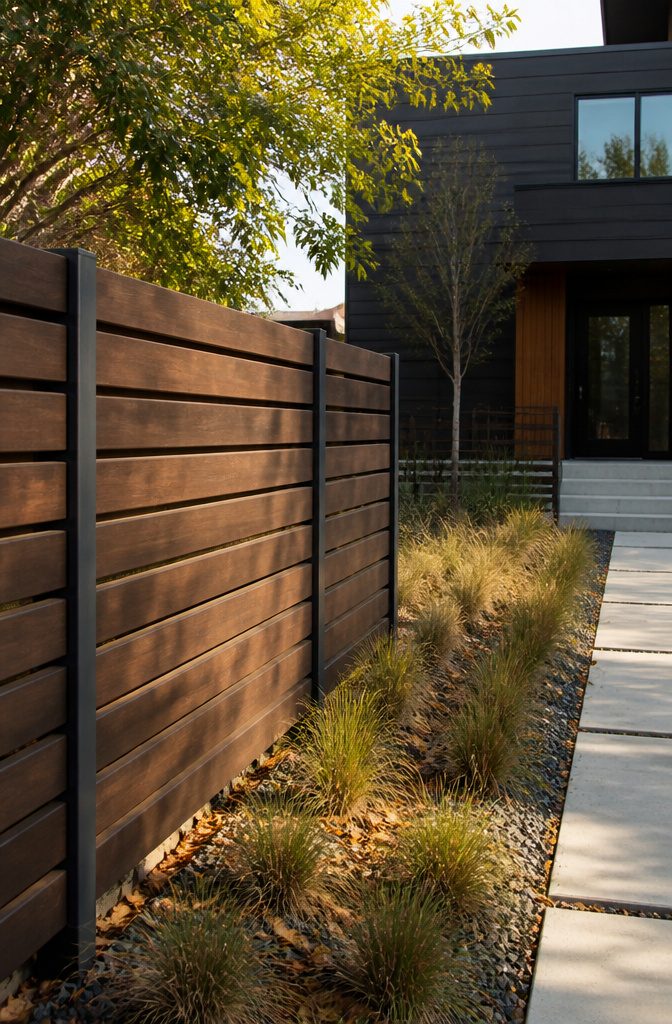
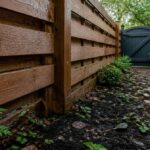
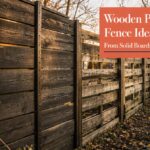
Horizontal slats give a front yard a flat, modern line that vertical boards can’t match.
Ipe wood slats on steel posts are a good example: the dense, dark wood sits in a thin steel frame, and the combination suits contemporary homes far better than a traditional picket.
Metal slats give the same clean look if you want to skip wood.
Expect to pay for it. Horizontal wood fences are harder to install, because every board has to stay level across the whole run and the posts need careful spacing.
They can cost twice as much as a vertical-board fence. I’d skip this style on a tight budget or for a first DIY fence, and choose it when the house itself has clean, modern lines.
Recommended Products

Quantity Meets Quality: the package arrives with 4 wood to steel post corner adapters, these fence brackets provide a comprehensive solution for full fence applications; Intended for 2 1/2" (2 3/8" OD) x 6" steel posts, these steel to wood fence brackets can be applied at four corners of wooden fences, facilitating stable and reliable fixation for steel posts

The iron brackets can be used to securely fix 2-1/2" (2-3/8" OD) wooden fence poles

Made of galvanized iron, it is sturdy and resistant to rusting, thus suitable for long-term use.
3. White Picket Fence
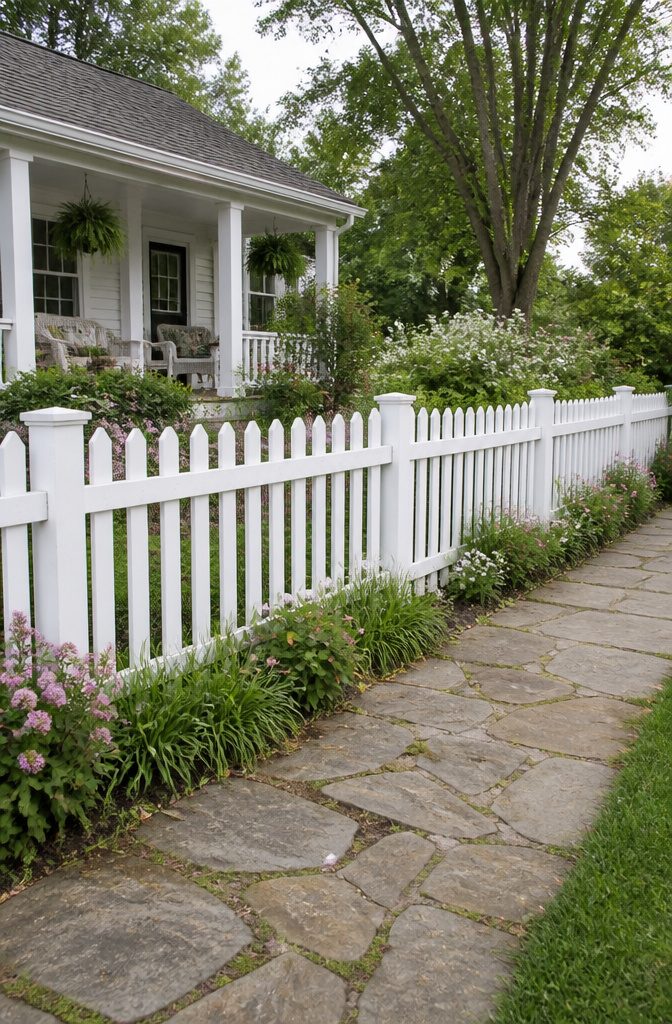
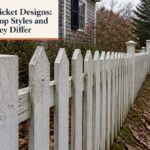
A white picket fence marks the edge of a yard and sets a style, but it hides almost nothing.
The evenly spaced pickets leave gaps, so passersby see straight through, and I would skip this style if screening is the goal. What it does well is define the property line and keep pets and children in.
Wood is the traditional material, and it brings repainting that vinyl skips. White vinyl gives the same look, and it resists weathering and never needs repainting.
That makes it my pick for anyone who wants the picket look without the upkeep. It comes in several colors and textures too.
Pointed or rounded tops read as classic cottage style. Straight, angular tops look more modern.
Recommended Products

Miniature Adorable Size: This outdoor fairy garden accessory measures 90cm (35.5") in total length and 5cm (2") in height. Its perfectly miniature size helps create enchanting tiny landscapes and enhances your fairy garden supplies collection.

PORTABLE DOG FENCE: Perfect indoor or outdoor dog fence to keep your pet safe in front of doorways, entryways, porches, decks, and patios. Not recommended for large dogs.

Elsjoy 6 pack mini fairy garden ornament fence, each measures 35 x 2 inches and the total length is 210 inches. The mini fence is an excellent tool for creating a mystical miniature garden in a flowerpot or garden area, suitable for succulent, dollhouse, shadowbox, etc.
4. Split-Rail and X Fences
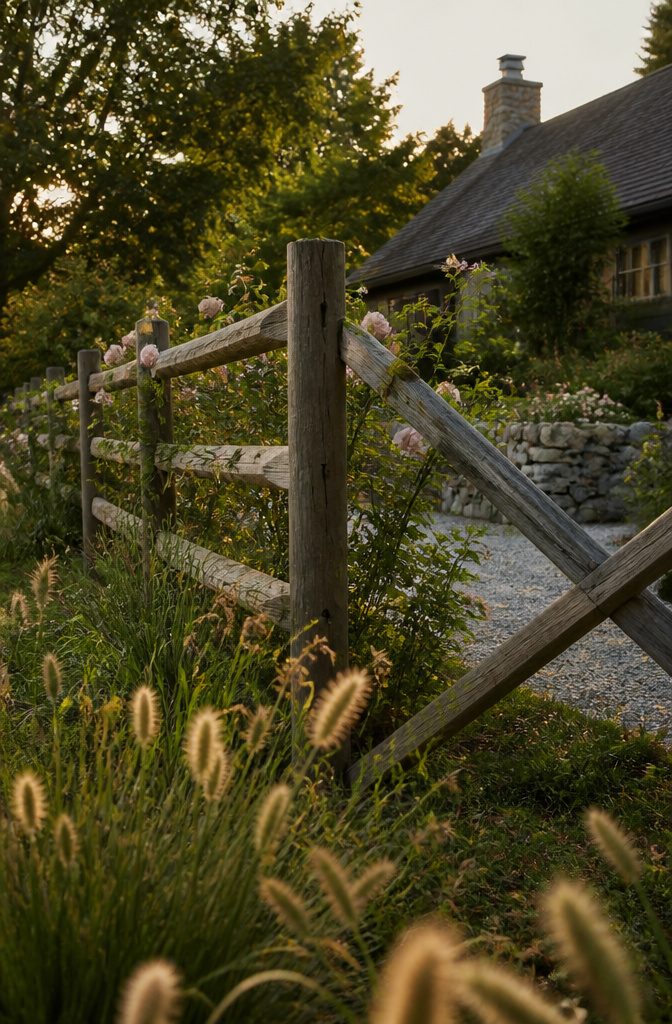
A classic split-rail fence runs three horizontal rails between posts, and the open gaps let vines, shrubs and tall grasses grow straight through. It marks a property line and suits a rustic or cottage-style front yard.
It does not contain children or dogs, because both can slip between the rails. The X fence swaps straight rails for crossed ones, which reads as farmhouse or, in a clean finish, contemporary.
Neither style gives real privacy unless you plant along it.
Without plantings, passersby see straight through. I’d pair split rail with a loose row of shrubs or climbing roses, and let the X fence carry a trailing vine.
If screening from the street is your main reason for fencing, skip both and look at the solid styles elsewhere in this list.
Recommended Products

DIMENSIONS: Each panel measures 32” H x 48” W

【Upgraded Garden Fences】Upgraded with a 1.1-inch ultra-narrow wire spacing—significantly tighter than the standard 1.5-inch gaps. This garden fence animal barrier provides superior protection, effectively preventing rabbits, puppies, and other small critters from squeezing through to damage your delicate plants, flower beds

Order is for a 4-Pack of fencing, giving a total of 32 feet of fencing in length
5. Board-on-Board and Shadow Box
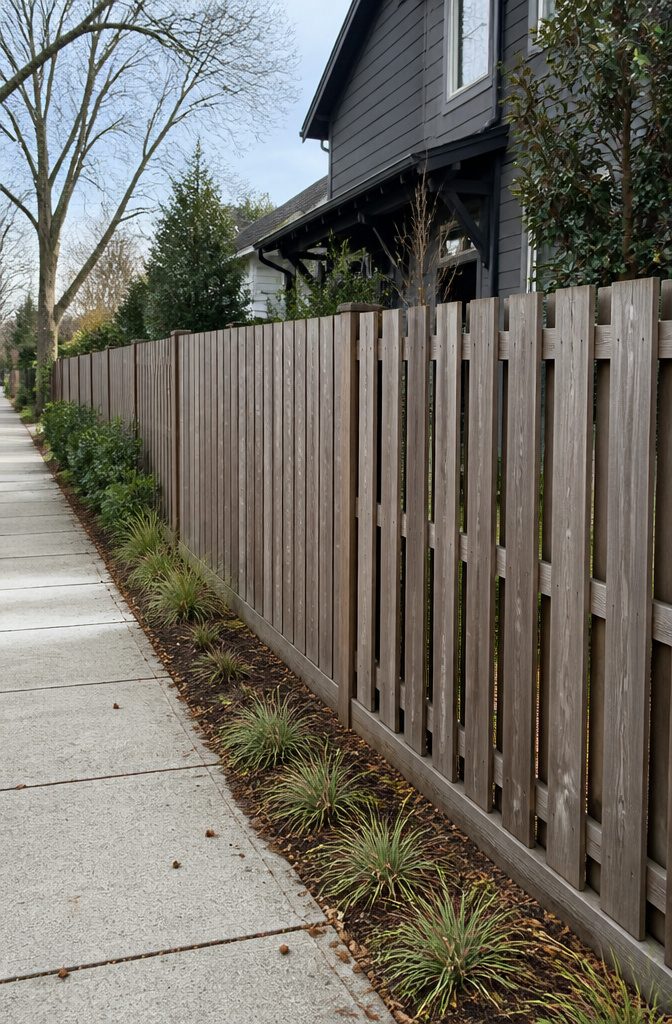
Board-on-board is the more opaque of the two. Its pickets sit in two overlapping layers, with the top layer covering all or part of the bottom one, so views close up and street noise drops.
For a front yard facing a busy sidewalk, I’d choose it over shadow box. The Good Neighbor version uses the same overlapping layers, built to block views and cut noise.
Shadow box places pickets on both sides of the fence with a gap between them, so it looks finished from either side.
That counts in a front yard, where you and the street each see a face. It reads lighter and more open than board-on-board, so choose it when looks from both sides matter more than full screening.
Recommended Products

High Quality--- This privacy screen fence is made of high-density polyethylene HDPE material, it's durable and breathable, and with a dark green color it can provide about 90% UV protection and visibility blockage.

High-Quality Materials: The frame of the chain link fence gate is made from durable galvanized steel, ensuring exceptional durability and rust resistance in all weather conditions.

【Perfect Fence to Protect Privacy】With this privacy screen fence, you could have fun with your families not worrying about losing privacy. Also, helping you cut off some noise from your neighbours to give you a peaceful environment. Your dog will not bark from outdoor things and people too.
6. Metal Picket and Wrought Iron
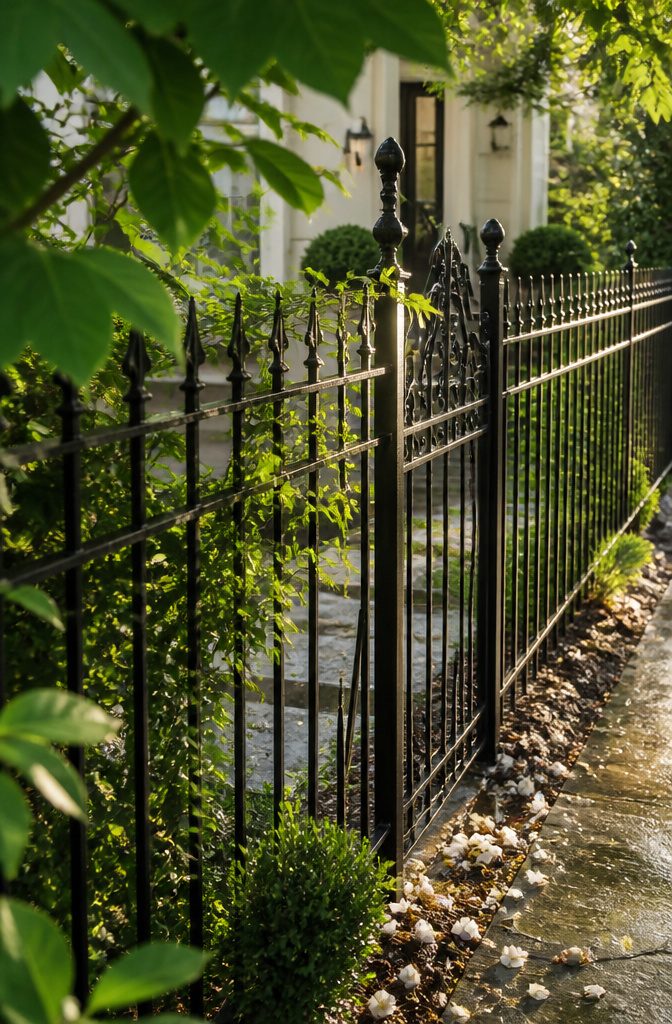
Slender vertical pickets set at even intervals nearly disappear from the street, so metal gives a front yard a clear edge without a wall.
Pointed tops add a security feature, since they make the fence harder to climb. Ornamental wrought iron goes further with scrollwork and finials, and it gives vines something sturdy to grip.
Bare metal gives almost no privacy, though, because you see straight through it.
Plan on plants to do the screening: a climbing vine trained along the rails fills the gaps over a season or two, and a row of shrubs behind the fence adds more cover.
Metal costs a good deal more than wood up front but lasts much longer. I’d pick it if you expect to stay put for years and want a fence you won’t replace.
Recommended Products

Fence Brackets material is Alloy steel, easy install and widely used to strengthen the stability of the pipe line ;No fear of outdoor wind and rain and other bad weather

TRUE ALL-ALUMINUM — BUILT FOR LONG-TERM VALUE: Ordinary steel or mixed-metal products can be progressing from surface corrosion to rust-through—often reported online within 0.5–2 years. So this is not simply about cosmetic maintenance—removing rust and repainting the surface. Once corrosion progresses to rust-through, the metal itself has deteriorated, potentially compromising the structural integrity and eventually requiring replacement of the affected component or structure. LukLoy post is built with a true all-aluminum structure for lasting outdoor over 30 years. it resists weathering, fading, and everyday exposure with less maintenance — a smarter long-term investment for your home.

【Transform Your Outdoor Space】 You've built fences before, but let's redefine modern elegance together with wooden fence panels posts. The install privacy panels fence post delivers a swift installation process paired with timeless sophistication, empowering you to craft sleek, sturdy privacy barriers for gardens, patios, and backyards. Unleash your creativity—your dream sanctuary starts here.
7. Wood and Metal Mixes
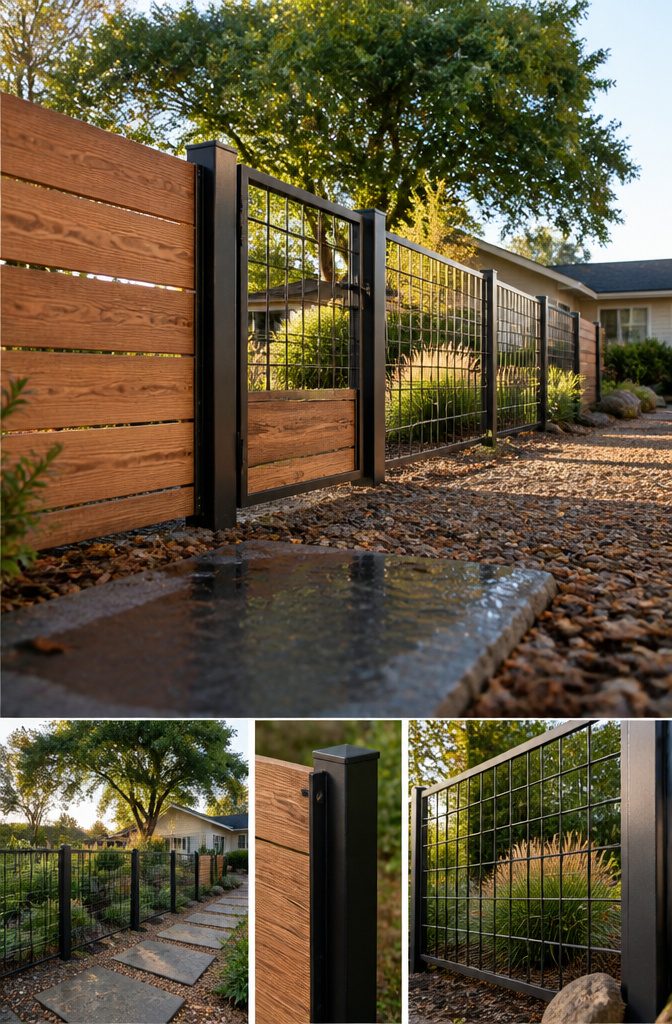
Wood panels on metal posts keep the warm look of a wood fence and drop its weak point.
Wooden posts rot and warp over time, which weakens the whole structure, and metal posts are far less prone to either. For a front yard, I would spend on the posts first.
Hog-wire panels framed by wood posts and rails cost less, install fairly easily, and stay relatively open, so they screen less than solid boards.
They suit informal or rustic yards. Natural wood looks casual; white or black paint dresses it up.
Fully custom wood-and-metal fences make a strong statement but run expensive. To control cost, limit the metal to a focal gate and build the rest at standard wood fence prices.
Recommended Products

Dimensions: This mini fence with gate measures 35.43 x 1.96 inches. Its versatile size allows flexible arrangement into various layouts—such as curves or squares—making it perfect for creating diorama scenes (like miniature fairy gardens or sand trays), or serving as a partition in dollhouse settings.

DIMENSIONS: Each panel measures 24" W x 24" H. One box comes with 6 total linear feet of white vinyl picket fence for your garden.

【Wonderland Garden Decoration】Elevate your miniature world with fairy garden decor to any Wonderland Garden decoration and an essential Wonderland Garden accessory. The classic white finish and realistic fence design add a whimsical touch to any indoor or outdoor setting
8. Vinyl and Composite
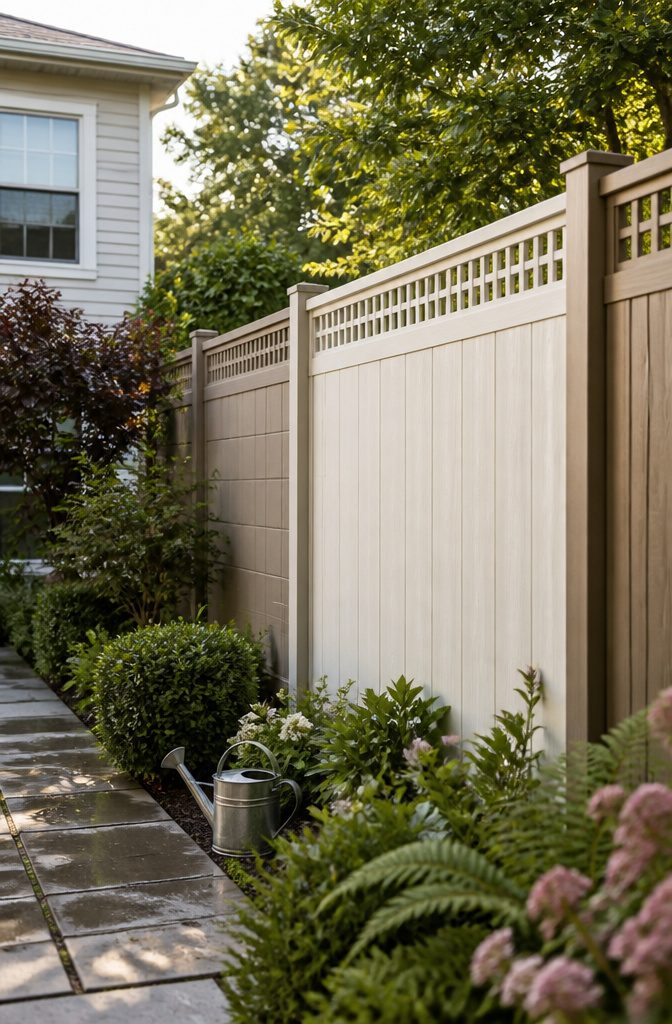
Vinyl is the low-effort choice for a front yard. It resists weather, never needs repainting, and comes in many colors and textures, including wood-look boards.
Vinyl lattice gives a lighter, more open look, and mixed colors, such as tan accents against a lighter panel, add interest while keeping full seclusion.
Vinyl is cheap and durable, yet its manufacture raises pollution concerns and it may leach chemicals into soil, so I’d keep it away from vegetable beds.
Some styles also look flat next to wood or metal, so view a full panel in person before buying.
Composite blends wood fibers with plastic and is partly recycled, which suits buyers who want durability with a lighter footprint.
Recommended Products

Redwood Fence Slat - Designed for a 5' high fence, slats are approximately 56.5" in length to accommodate the bottom locking channel and to prevent the slats from being above the top of the fence. Double Wall reinforced with Double Legs Inside - Oval wall tube provides extra durability and longevity. Two inside legs provide extra strength and help with ease of installation.

Material: Crafted from durable BPA/phthalate-free vinyl
9. Lattice Fences
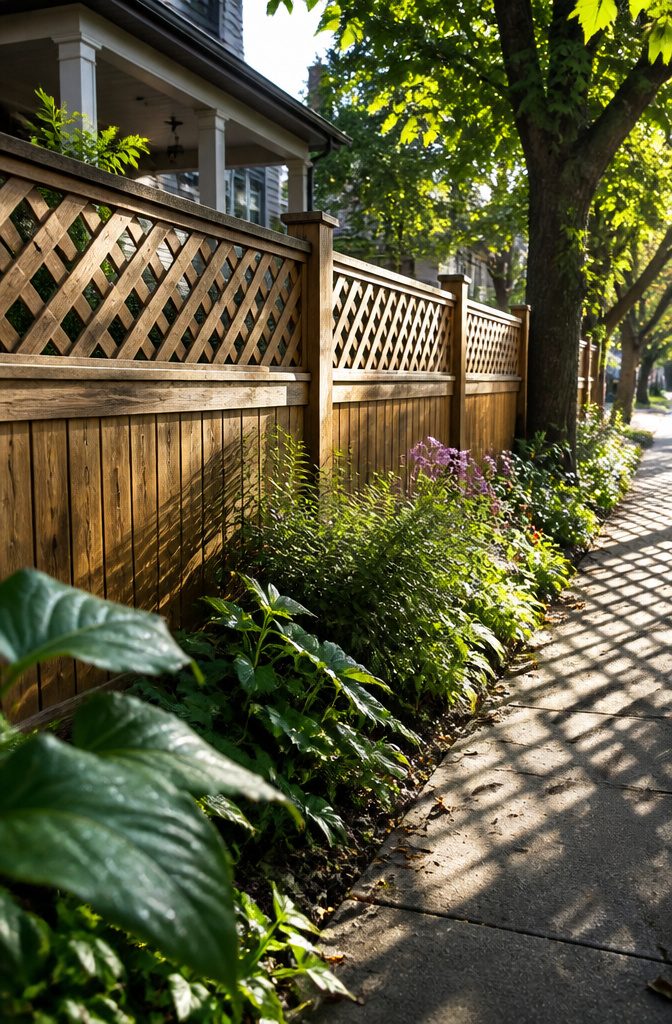
Diamond-pattern wood lattice passes sun and breeze while giving partial privacy, so a front yard keeps its open feel. Thick-slat lattice screens more noise and still admits sun, which suits a yard facing a busy street.
Piano-key designs alternate solid vertical slats with a lattice top, adding rhythm and texture. I’d choose that style when you want the fence to look like part of the architecture.
Lattice also adds height cheaply.
Setting 12–18 inches of lattice on top of a solid fence gains privacy with less visual bulk than a taller solid board. Front yards usually cap fence height, so confirm your limit before you size the lattice.
Recommended Products

High Quality: CRnets privacy fence screen are made from 170 GSM fabric. The dimensions of the privacy screen are 4 feet x 50 feet. However, due to the fabric's stretchability, it is suitable for fencing that is 4 feet tall or slightly taller.

90% Blockage for Privacy: Helps reduce views into your backyard, patio or pool area, creating a more private outdoor space.

Natural Reed: The bamboo curtains for patio outdoor uses strictly selected natural wild reeds as weaving materials, which are fine and uniform, tough and straight, and have a delicate and smooth feel. The bamboo privacy fence is made using original hand-woven methods. The workmanship is fine and unique, creating a classical work of art. The faint scent of grass fills the surroundings, creating a simple and elegant atmosphere.
10. Hedge or Living Fence
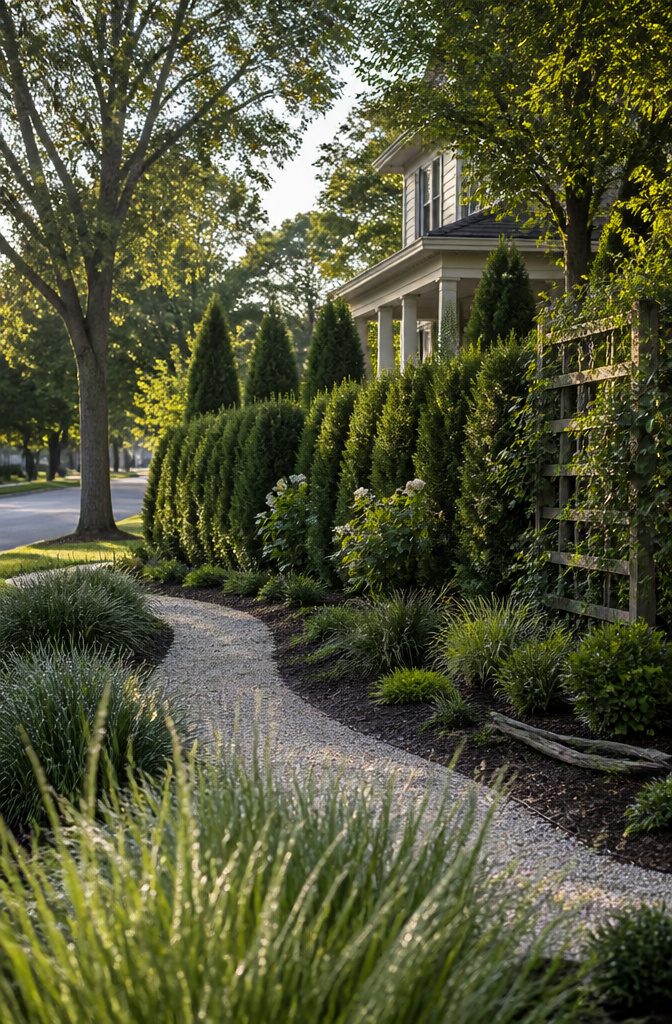
A hedge of tall shrubs, small trees or ornamental grasses gives privacy without the walled-off look of a solid fence, and it also cuts wind and street noise.
Privacy hedges often reach 12 feet, twice the height of a 6-foot fence, so check your local height rules before you buy plants.
Vines on a lattice or wrought-iron fence are the other route. Leaves fill the gaps in the metal and soften its hard lines, so the front yard reads as a garden rather than a barrier.
I’d set the plants against wooden posts or a trellis, which supports their growth and gives the screen year-round interest.
Recommended Products

【Heavy-Duty Surface Mount Base】Expertly engineered for concrete surface-mount installation, this Tafbrik 3-way post features a high-stability 24" vertical support. While the heavy-duty base secures firmly to concrete, the precision-cut slots are compatible with wood or composite panels (up to 0.8" thick). This reinforced, deep-welded structure ensures a rock-solid, upright fence without any digging. (Includes pre-drilled holes).

{PREMIUM QUALITY} Galvanized Steel Construction For Durability And Corrosion Resistance, Heavy Duty And No Deformation,Don't Need To Change Frequently, So You Have More Time To Enjoy Life.And For The Convenience Of Our Customers, The Package Include 12 Pipe Grip Ties(2-3/8"), 48screws, A Drill And a Pair Of Gloves

Innovative Design: The wooden fence panels posts features a U-channel design—simply attach the brackets to the posts and slide in (3/4" x 5.5") wood planks to lock. Easy DIY installation and plank replacement, even for one person, saving time, effort, and labor costs in the short and long term
11. Chain-Link and Reclaimed Screens
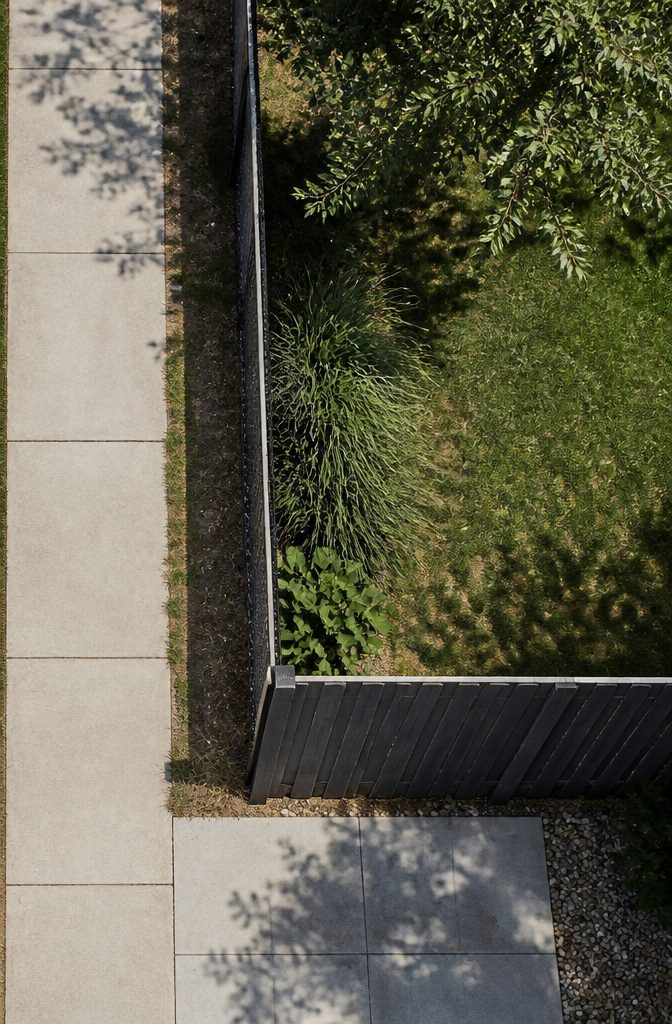
If you already have a chain-link fence, privacy slats or mesh woven into the open weave are the cheapest way to get screening, and this reads best from the street.
The panels look uniform, and the posts and rails stay in a clean line.
Mesh also cuts wind flow, which helps on an exposed corner. The metal frame still shows, so it will look more utilitarian than wood.
Reclaimed doors, pallets and salvaged fence panels cost less and add real texture and charm.
I’d use them only when the pieces match in size and finish. A run of mismatched doors looks like a scrap pile from the sidewalk, and one coat of paint in a single color helps tie them together.
12. Corrugated Metal and Glass
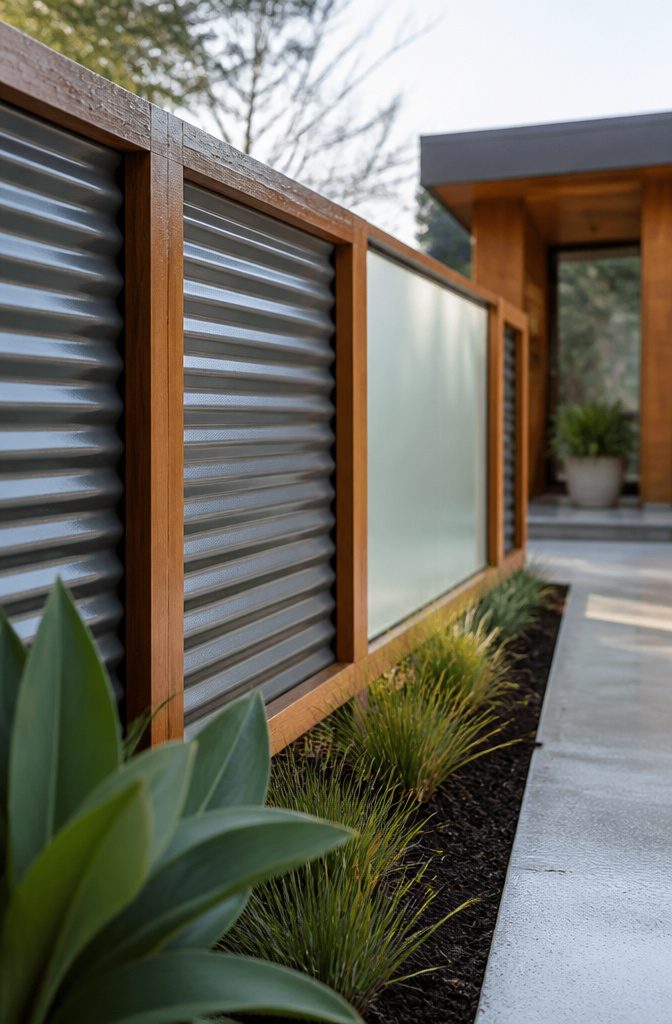
Corrugated metal panels are solid, so they block views completely, and the ridges throw shifting light and shadow across the surface.
Left bare, they read as industrial. Framing the panels in wood, or adding wood accents, softens that, and it’s the version I’d choose for a fence facing the street.
Frosted or tinted glass screens obscure the view but still let daylight through, which keeps a porch or entry bright. Metal or wood framing both work, and etched patterns add some interest.
Both styles suit modern homes and look out of place on a traditional cottage.
Front-yard fences are often held to stricter height limits than backyard ones, so check your local rules and permit requirements before ordering, and ask specifically about glass.
Front Yard Height Limits
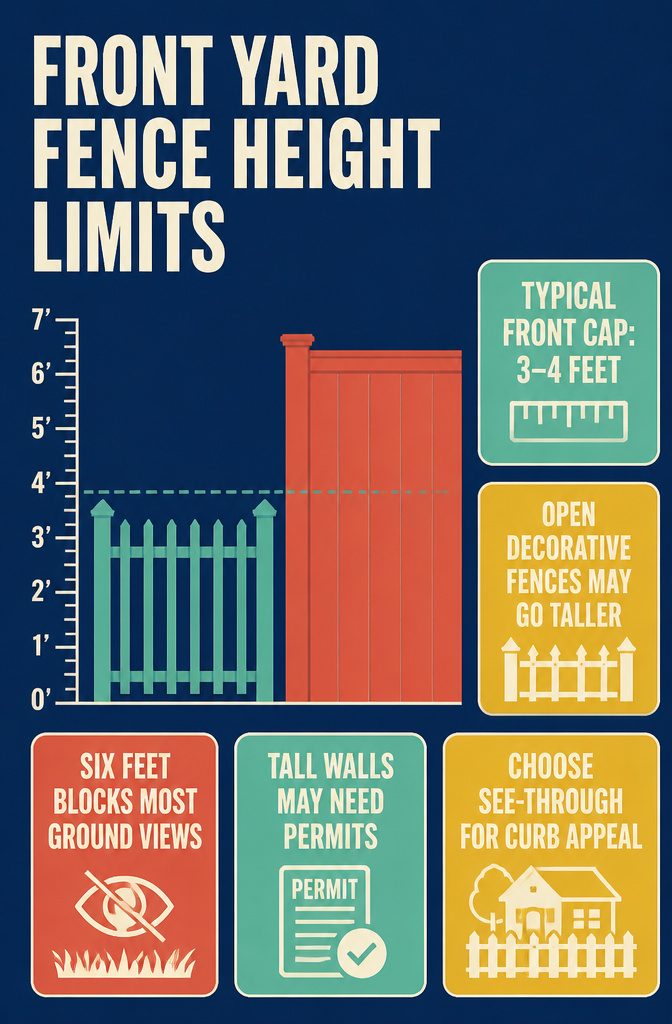
Front yard rules are stricter than backyard rules. Most local ordinances cap front fences at 3–4 feet, though some allow taller decorative fencing if it keeps sight lines open near the driveway.
A 6-foot fence blocks most views from the ground, so it sits well above that cap, and walls that tall may need a permit even where they’re allowed. Call your city or county planning office before you buy materials.
Height also changes how the space feels.
Tall opaque fencing makes a front yard seem smaller from the inside and less welcoming from the street, and it can cut curb appeal considerably. For the front, I’d choose a fence with some see-through quality over a solid wall.
Safe Gaps for Kids and Pets
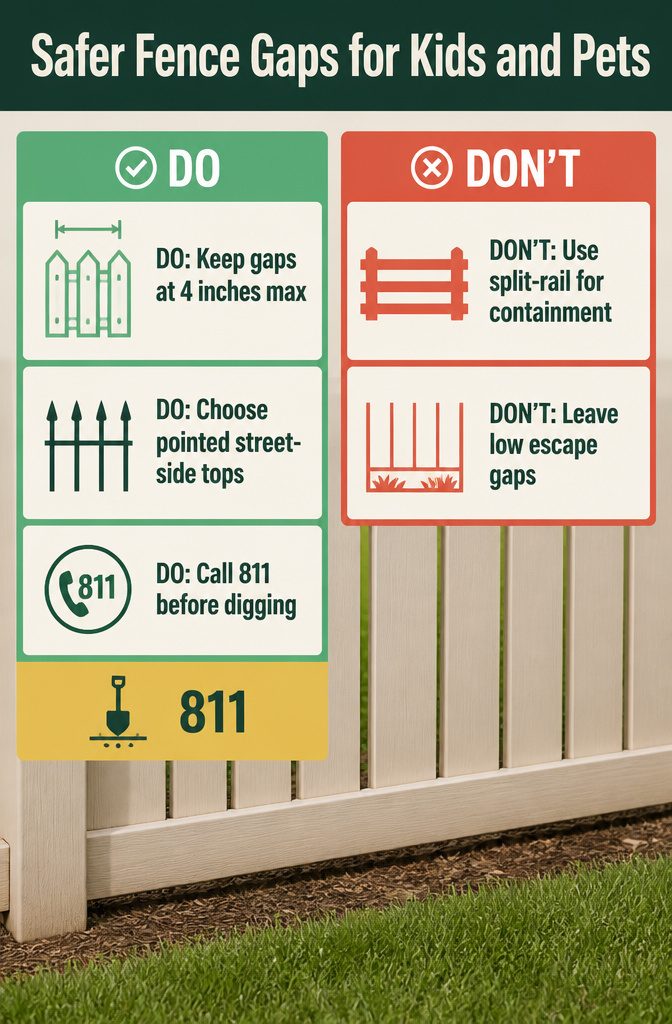
Gaps and hardware matter more than height when kids, pets or foot traffic are involved:
- Keep every opening between pickets, slats and rails no larger than 4 inches where small children play. A wider gap can trap a head.
- Skip split-rail if you need containment. The wide-open rails let kids and dogs walk straight through, so it marks a boundary and nothing more.
- Choose pointed metal tops on the street side if deterring entry is the goal. They make climbing over unappealing.
- Check low spaces under panels and between posts as well. Dogs and toddlers use them as easily as side gaps.
- Building it yourself? Call 811 before digging post holes so buried utility lines get marked first.
What Fences Cost and Need
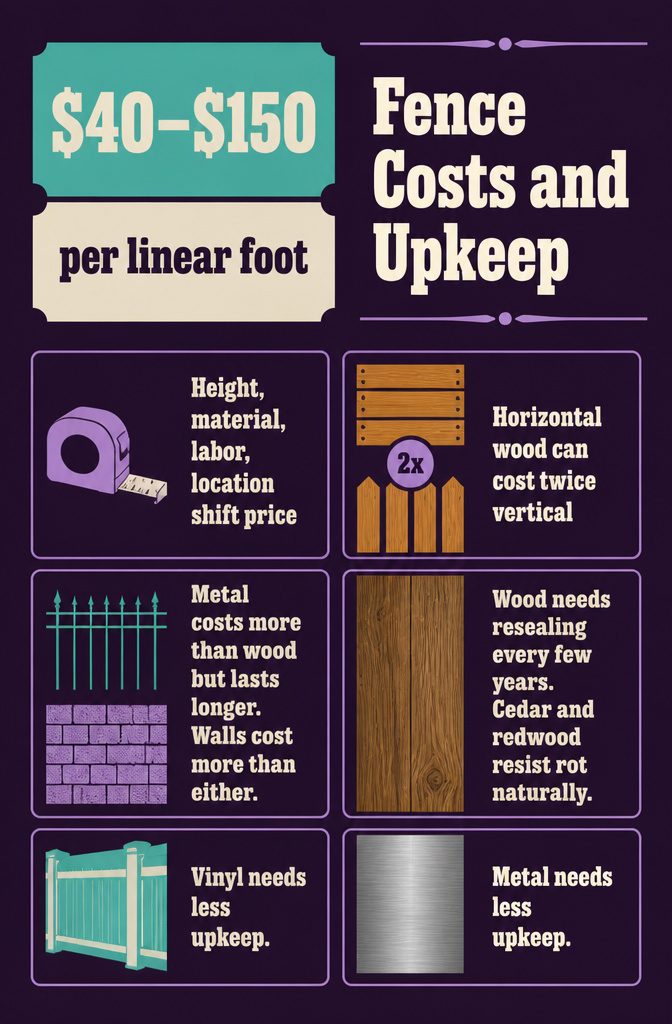
The range is wide, so price your actual frontage before settling on a style.
On average, homeowners can expect to spend between $40 to $150 per linear foot.
Where your fence lands in that range depends on these points:
- Height, material, labor and location all move the price.
- Horizontal wood can cost twice as much as vertical.
- Metal costs more than wood but lasts longer. Walls cost more than either.
- Wood needs resealing every few years. Cedar and redwood resist rot naturally, which stretches that interval.
- Vinyl and metal need less upkeep, so a higher price can pay back over time.
Frequently Asked Questions
How tall can a privacy fence be in a front yard?
Most local ordinances cap front yard fences at 3–4 feet, though some allow taller decorative fencing if it keeps sight lines open near the driveway.
A 6-foot fence blocks most ground-level views, but it sits well above that cap and may need a permit. Call your city or county planning office before buying materials.
How much does a front yard privacy fence cost?
Expect to pay $40–$150 per linear foot on average.
Height, material, labor and location move the price within that range, and horizontal wood can run twice the cost of vertical boards. Metal costs more than wood up front but lasts longer.
What is the best material for a front yard privacy fence?
Wood is the most common choice, with vinyl the next most common. Wood looks warm and usually costs less, but it needs periodic staining or sealing.
Vinyl resists weather and never needs repainting, metal is strong and lasts longest, and composite combines durability with recycled content. Match the choice to your local codes, your home’s style and how much upkeep you will accept.
How do I choose a privacy fence that matches my home’s style?
Take cues from the home’s exterior carpentry, colors, textures and architecture, so the house and fence read as one design from the street.
Horizontal slats, corrugated metal and glass suit modern homes. Pointed or rounded picket tops suit cottage style.
Are privacy fences a good idea for a front yard?
Sometimes. A privacy fence creates seclusion, but a tall solid one makes a front yard feel smaller from the inside and less welcoming from the street, and it can cut curb appeal.
Solid fencing can also divide wildlife habitat. A lower fence, or one paired with plantings, often works better at the front.
Can I install a privacy fence myself?
Yes, most easily with wood, PVC or chain link. Call 811 before digging post holes so buried utility lines get marked.
Horizontal wood fences are harder because every board has to stay level, so skip that style for a first project. Check local height rules and permit requirements before you start.
How do I maintain a privacy fence?
Clean it routinely, inspect it once a year, and repair damage promptly.
Wood needs resealing every few years, and cedar or redwood resists rot naturally, which stretches that interval. Vinyl and metal need less upkeep.