The right choice depends on what the strip beside your fence allows: a brick raised bed, climbers on a trellis, or pots where you can’t dig.
Whichever you pick, leave 12–18 inches between the plants and the boards. Fast growers like ‘Green Giant’ arborvitae add up to 3 feet a year and will outgrow that gap.
1. Raised Bed Along the Fence
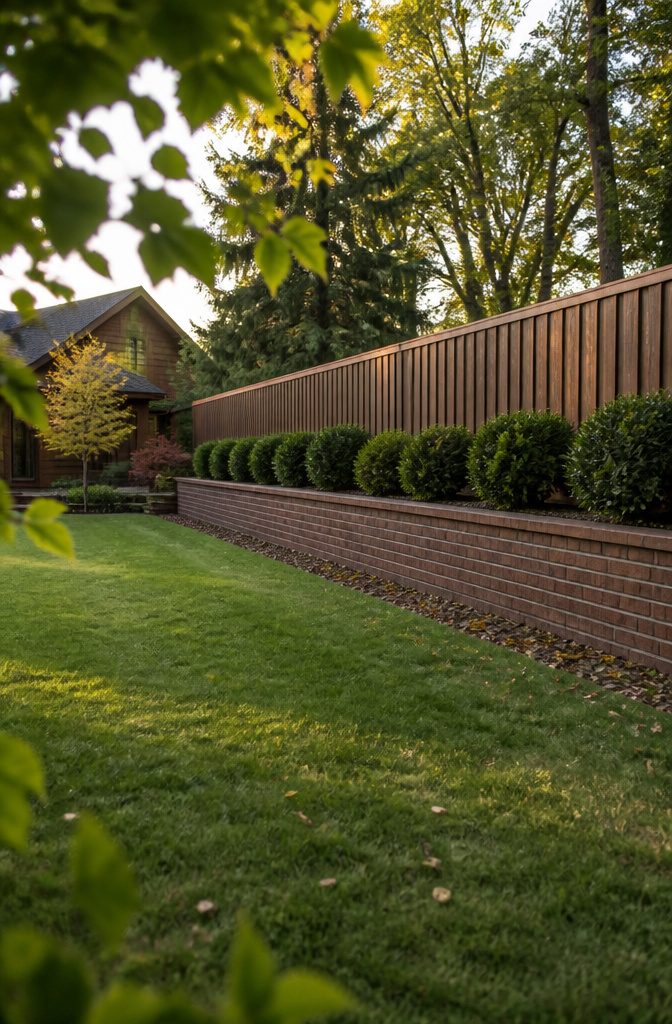
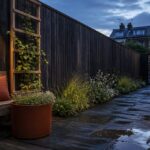
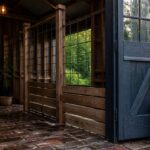
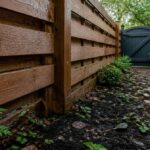
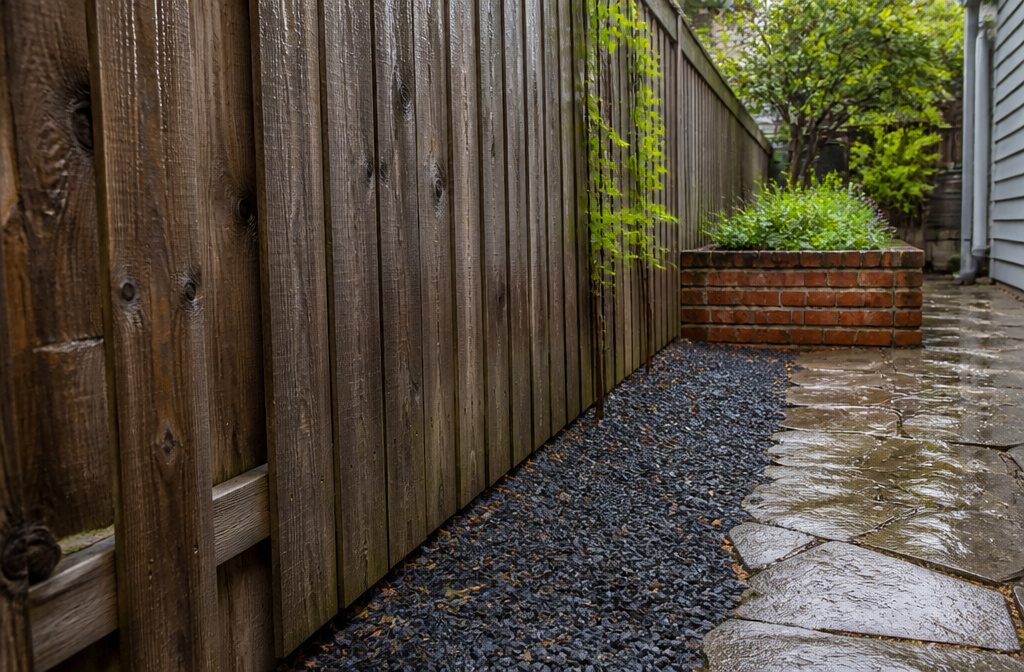
A fence can double as a retaining wall. Face the concrete wall with stain-grade vertical cedar planking, and match the stain to the house so the whole yard reads as one piece.
A copper cap along the top adds a finishing detail. A brick raised bed brings color and texture, and a row of canopy trees behind it gives privacy and scale.
Keep the plants at the base low. Buxus japonicum ‘Globe’, Pittosporum tenuifolium ‘Golf Ball’ and Prostanthera ovalifolia ‘Verigata’ reach about 30–36 inches once established, so the cedar stays visible at eye level.
I’d choose this over a hedge, which takes more depth and makes a yard feel smaller. Hanging lights and uplights make the cedar glow after dark.
2. Flowering Climbers
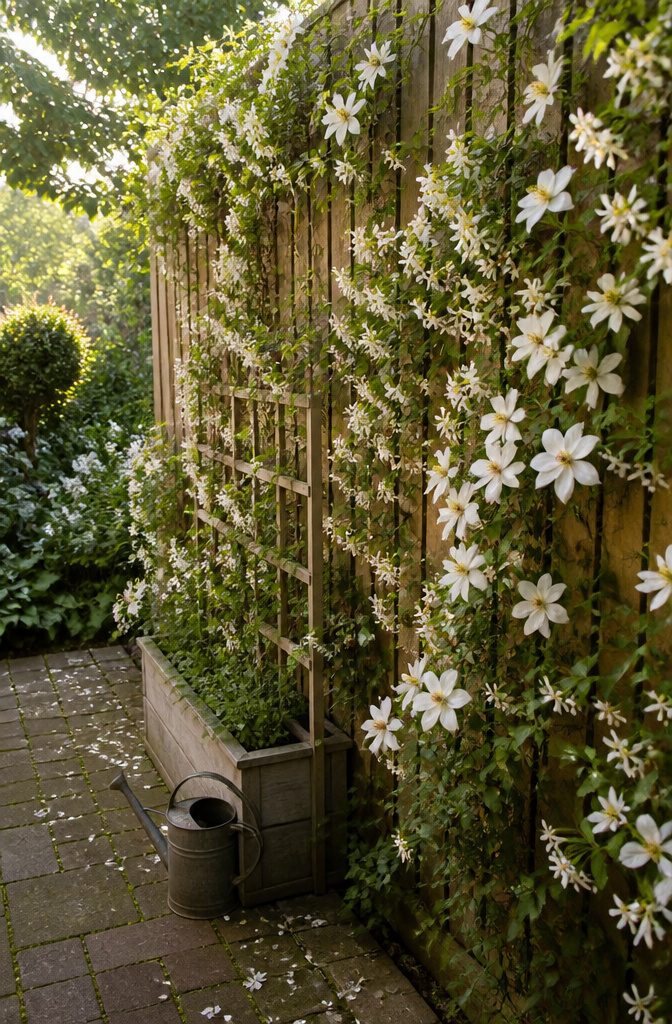
Star jasmine fills the air with perfume, and clematis adds flowers. ‘Sweet Autumn’ clematis is vigorous, grows tall and wide, and screens a fence for privacy. Virginia creeper turns from green to brilliant orange in fall.
Solid wood fences give tendrils nothing to grip, so screw on trellis panels or wire first. Where you can’t plant in the ground, set a planter box with a trellis against the fence.
Growing upward changes how the boards read:
By encouraging plants to grow vertically, the design invites the fence to visually recede, softening its presence and blending it into the landscape.
Height pulls the eye off the fence.
3. Keep an Open View
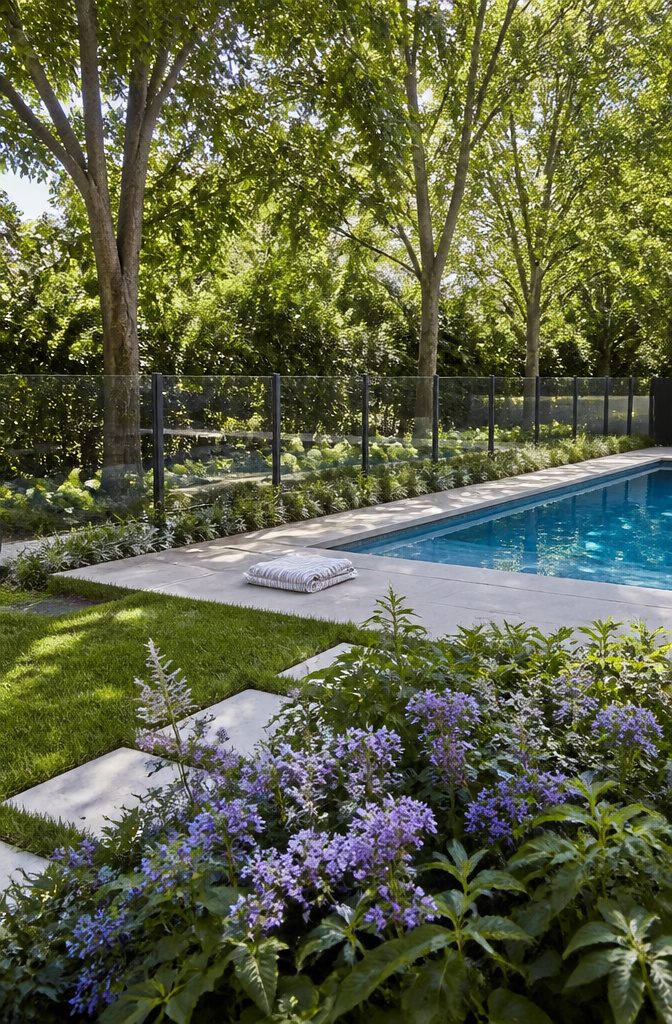
A fence doesn’t have to vanish behind a wall of green. Along a see-through pool barrier, low planting keeps the sightlines clear, so the pool, lawn and beds still read as one connected space.
Standard trees work the same way: start the canopy above the fence line, keep the layers beneath low, and the fence stays visible while the treetops soften the view of the neighbors.
For real privacy, go tall instead. Zebra Grass grows 5–8 feet tall and 4–6 feet wide, and Maiden Grass reaches 5 or 6 feet tall and 4 to 5 feet wide.
Maiden Grass gets bigger each year, so I’d leave generous room between either grass and the boards. Pick one approach per stretch of fence: open or screened.
4. Standard Trees in a Row
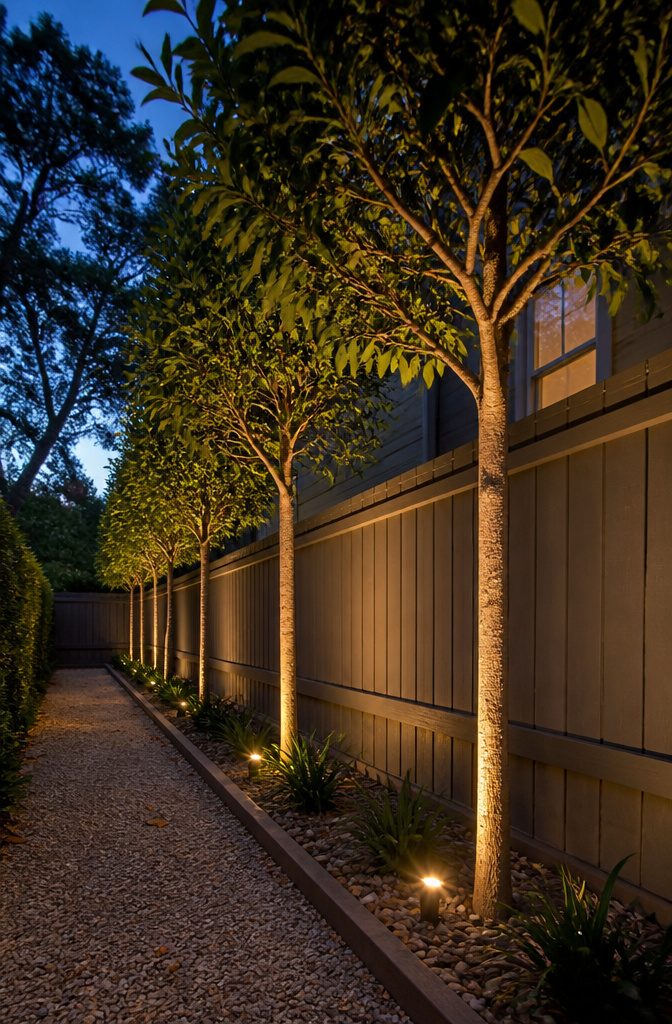
Standard trees have a clear trunk and a canopy on top, so the leaves block the neighbor’s window while the open trunks keep the strip from feeling walled in. A full hedge rarely manages that.
Good candidates include Prunus caroliniana ‘Compacta’, Ficus nitida and Laurus nobilis. Space them evenly and light each trunk from below for a tailored, structured look.
For a tight strip, ‘Skyrocket’ juniper can reach 20 feet tall but stays only 3 feet wide. Cupressina spruce grows 20–30 feet tall and also stays narrow.
Chanticleer pear blooms in April and May, turns orange to red-purple in fall, and drops little litter. These narrow picks come from an Idaho recommendation, so check each against your USDA zone before buying.
5. Layered Pots
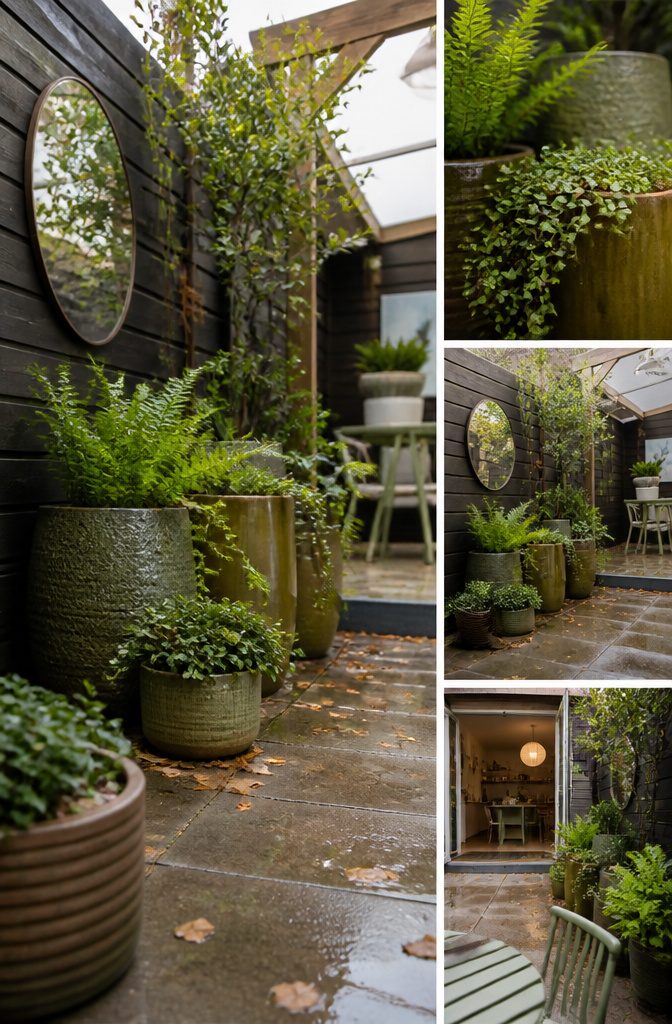
Pots solve the fence line wherever digging borders or building raised beds isn’t possible, which covers most courtyards, patios and rentals.
Build them like a border: set the largest planters against the fence and step down to smaller, shorter pots in front, so every plant stays visible.
Vary both size and height. Mismatched pots look planned if their colors sit in one family or complement each other, so secondhand containers work fine on a small budget.
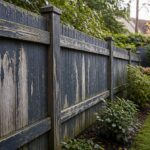
A dark fence behind makes green foliage stand out, so I’d fill that backdrop with leafy plants.
An outdoor mirror can fill a bare stretch of fence, too. When the lease ends, the whole layered display moves with you.
Spacing 12–18 Inches
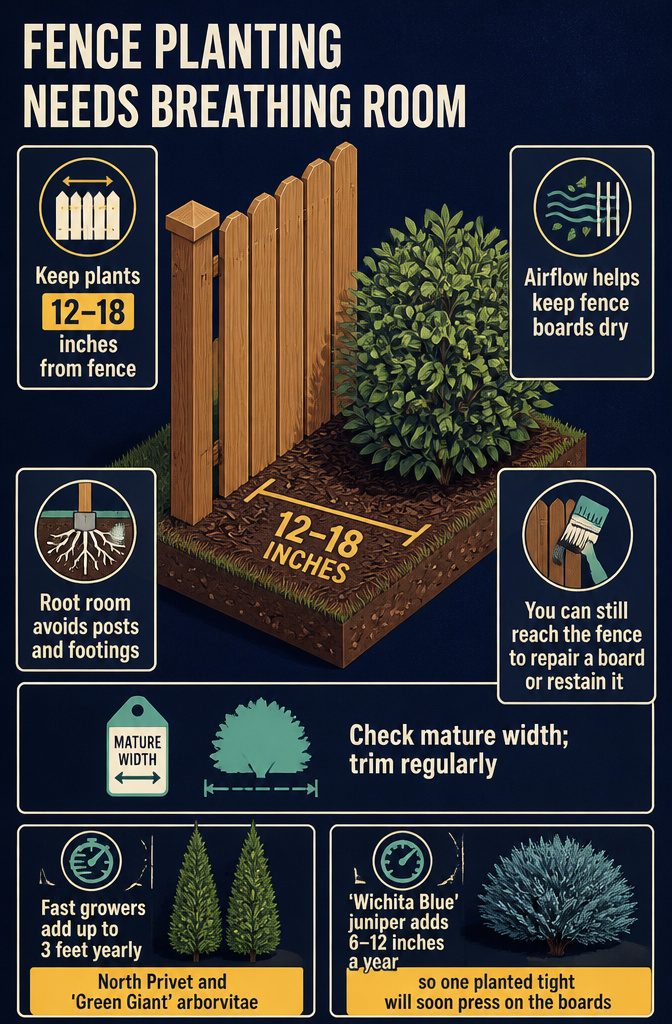
Start with 12–18 inches between the plant and the fence. That gap does three jobs:
- Air moves between the leaves and the boards, which keeps the wood from staying damp.
- Roots have room to spread without crowding posts and footings.
- You can still reach the fence to repair a board or restain it.
Then adjust for the plant:
- Check the tag for mature width. If it will spread wider than your gap, set it farther back.
- Fast growers like North Privet and ‘Green Giant’ arborvitae can each add up to 3 feet a year. Give them extra room and plan on regular trimming.
- ‘Wichita Blue’ juniper adds 6–12 inches a year, so one planted tight will soon press on the boards.
Low-Maintenance Plant Choices
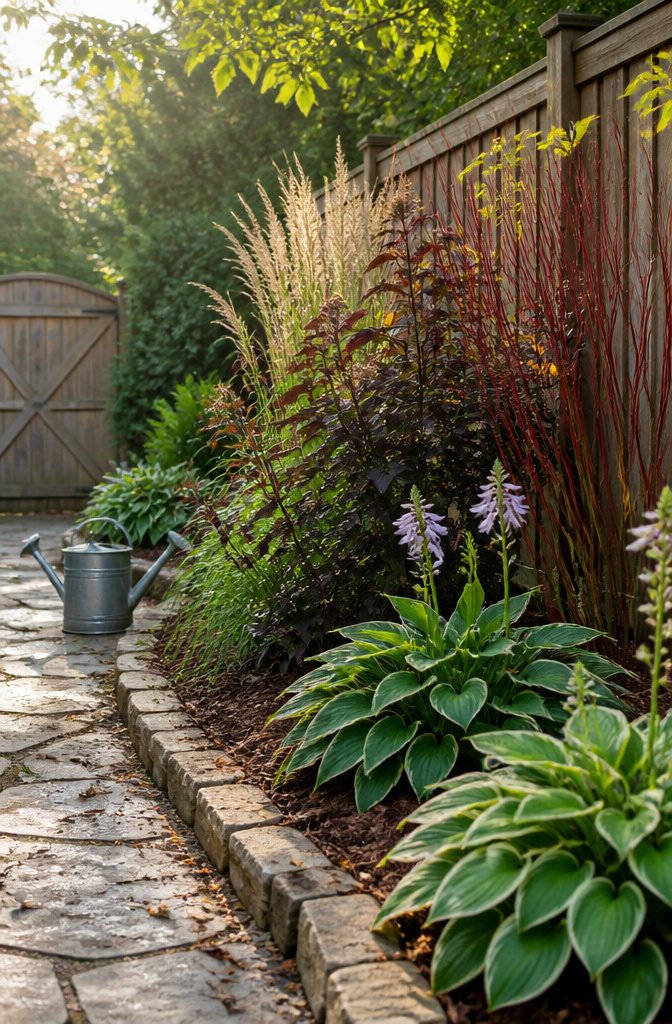
Native plants already suit your local climate and soil, so they usually need less water, fertilizer and pest control than imported picks. Group plants with matching light and water needs, and read the tag before you buy.
Then break up the row. Pair an upright grass like Karl Foerster with Diablo Ninebark, which has deep purple leaves, or Red Twig Dogwood, which grows up to 8 feet tall.
Tuck hostas in front for leaf texture. ‘Autumn Brilliance’ Serviceberry adds white spring flowers, purple June berries that birds love and red-orange fall color.
Stagger bloom times so something is always changing. These examples come from Idaho, so confirm which natives suit your own region with a local extension office or native plant society.
Frequently Asked Questions
How do you landscape along a fence?
Decide whether each stretch of fence should stay visible or be screened, and stick to one approach per stretch.
Set plants 12–18 inches from the boards and check each plant tag for mature width, since a wider plant needs more room. That gap keeps air moving, gives roots space, and leaves you access to repair or restain the fence.
What should I plant along a fence?
Match the plant to the job. Ornamental grasses add texture, movement and softness against the hard lines of a fence, and Zebra Grass reaches 5–8 feet tall for privacy.
Low shrubs that stay 30–36 inches keep the fence visible, and climbers like clematis or star jasmine need trellis panels or wire on a solid wood fence.
Skip willows, ash, quaking aspens, cottonwoods and poplars, which drop sticks and have aggressive roots.