
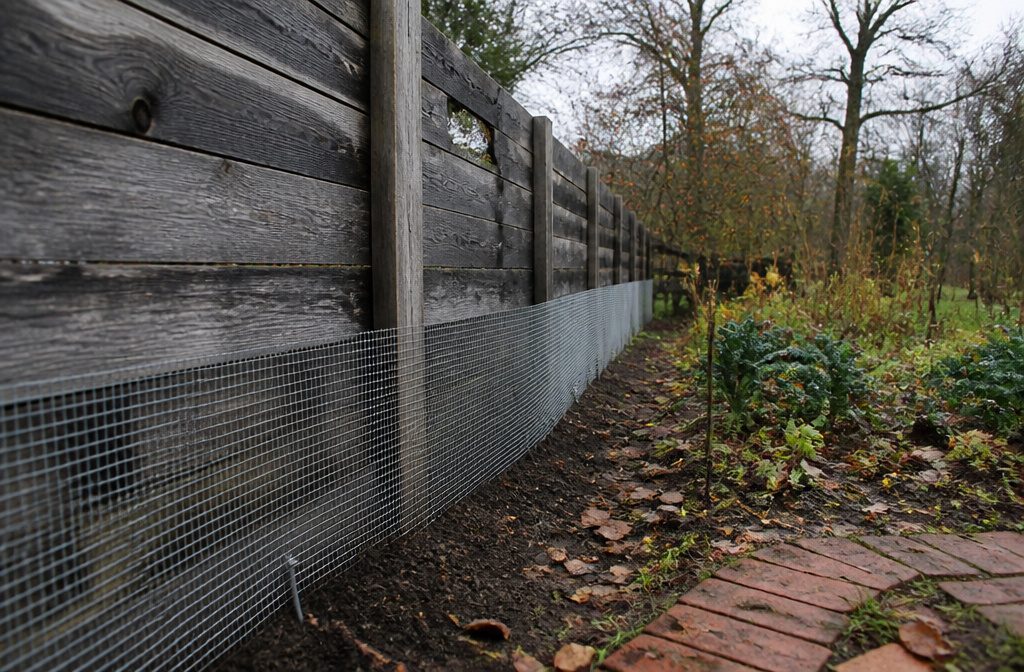
Any fence stops only the animals it was built for. Deer need at least 6 feet of height, while rabbits push through any opening larger than 1 inch.
For both, one tall fence with a fine base, such as a double-layer kit with metal pinned flat to the ground, beats paying for two barriers.
Rodent Barrier With Overlap
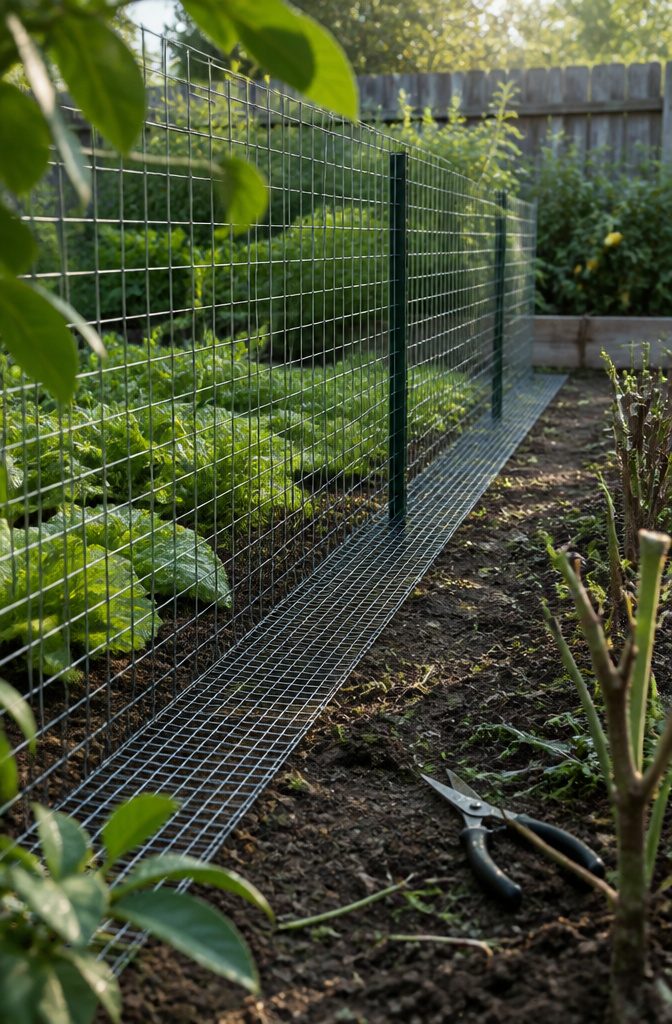
For a garden with both deer and rodents, a double-layer kit with a layer of metal fencing pinned flat to the ground is the setup I’d pick.
The kit comes in steel or poly. The overlapped metal lies along the base and is staked down, so animals that dig or push under hit metal instead of soil.
With the overlap in place, one fence keeps out burrowing animals and the ones that stay above ground.
It needs no electric wires, so there is no charger or outlet to deal with.
From a distance it’s built to look nearly invisible, which helps in a small yard where a visible cage would dominate the view. Trimming along the base takes more care, since the overlap sits right there.
Recommended Products

This deer net is economical, made for enclosing small areas that need protection from deer damage, to cover plants or deer deterrent

Effective Animal Barrier: Our deer fence netting helps keep deer, rabbits, squirrels, raccoons and other small animals out of your garden while protecting vegetables, fruit trees, shrubs and flowers from damage. This heavy-duty deer netting is also strong enough to work as a temporary fence for chickens, dogs and other pets. Reinforced black rope edges on the top and bottom make the fence easier to secure to stakes, T-posts or frames while helping it stay upright without sagging
Single Layer With Overlap
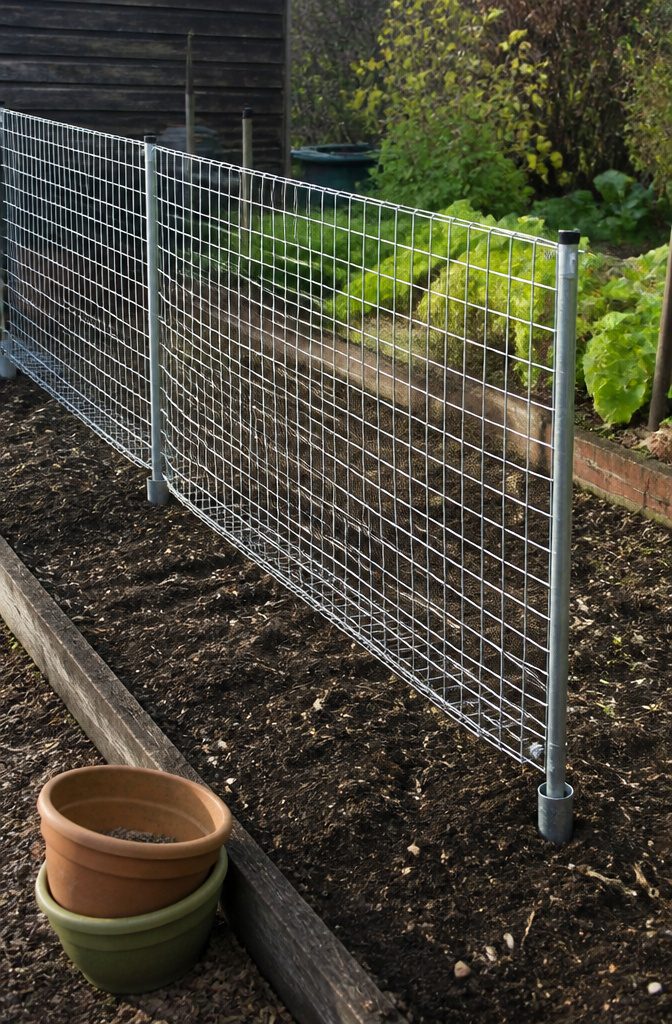
Deer and other animals that don’t chew through fencing are what this version is built for, and it’s the one I’d pick for a renter. Ground sleeves stay in the soil through the gardening season.
The posts drop into them and lock with a set screw. At season’s end the whole fence comes out, so you can till the bed or store it until next year, and only the sleeves stay behind.
The system is patent-pending, which makes it a good fit for anyone who can’t make permanent changes to a yard, or who simply wants a fence that isn’t there in winter.
If gnawing pests like mice or rabbits visit your beds, a single layer is the wrong tool, and the rodent barrier version is the better buy.
Recommended Products

𝗣𝗿𝗲𝗺𝗶𝘂𝗺 𝟯𝟬𝟰 𝗦𝘁𝗮𝗶𝗻𝗹𝗲𝘀𝘀 𝗦𝘁𝗲𝗲𝗹 𝗠𝗲𝘀𝗵: Made from durable 304 stainless steel wire mesh, this wire mesh roll is rust-resistant, corrosion-resistant, and built for long-lasting indoor and outdoor use. Unlike traditional stainless steel wool or steel wool, this metal mesh won't easily rust, burn, or break down over time, providing a reliable hole filler for years.

REAL STAINLESS STEEL FABRIC: Engineered for maximum durability, Roban Blocker is made of high-quality stainless steel fabric. Unlike standard materials that degrade, this rust-proof barrier is "Tested to Last," providing a permanent solution for your property.

👉5-INCH X 30-FOOT ROLL👈 Rust-resistant 304 stainless steel wire mesh for suitable rodent barriers, hole filler and mesh screen. This selected option measures 5 inches wide by 30 feet long; 53-foot and 103-foot lengths are available as other options.
Fence Without a Rodent Barrier
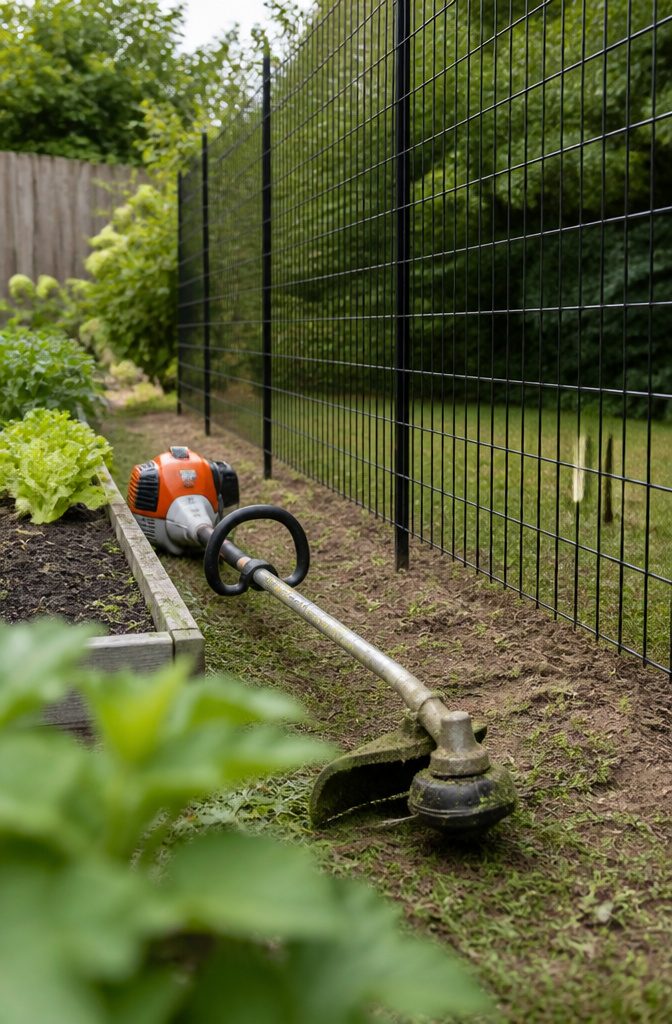
The simplest build has no rodent barrier staked along the base and no overlap laid out on the ground.
The fence goes up and that is all. Without anything pinned at the bottom, a string trimmer can run right under the fence line, so keeping the strip beneath it tidy takes far less effort.
The cost is the ground protection the first two options provide. With no base layer, the bottom of the fence gets none of that protection.
I’d choose this version only when weeding ease matters more to you than defending the lower edge. If low-level protection is the reason you’re building, pick one of the layered setups instead.
Recommended Products

【SPACE-SAVING】Compared to hinged or swinging gates, sliding gates are ideal for narrow spaces. This kit maximizes usable area and eliminates blocked pathways.

DIMENSIONS: Each panel measures 24" W x 24" H. One box comes with 6 total linear feet of white vinyl picket fence for your garden.

Gate Hinge 270-Degree Rotation: Heavy Duty Gate Hinges achieve near-flat folding with an 270-degree swing arc, allowing wide wood gates, fence doors to open completely flat against adjacent surfaces - perfect for maximizing space.
Anti-Climb Extenders
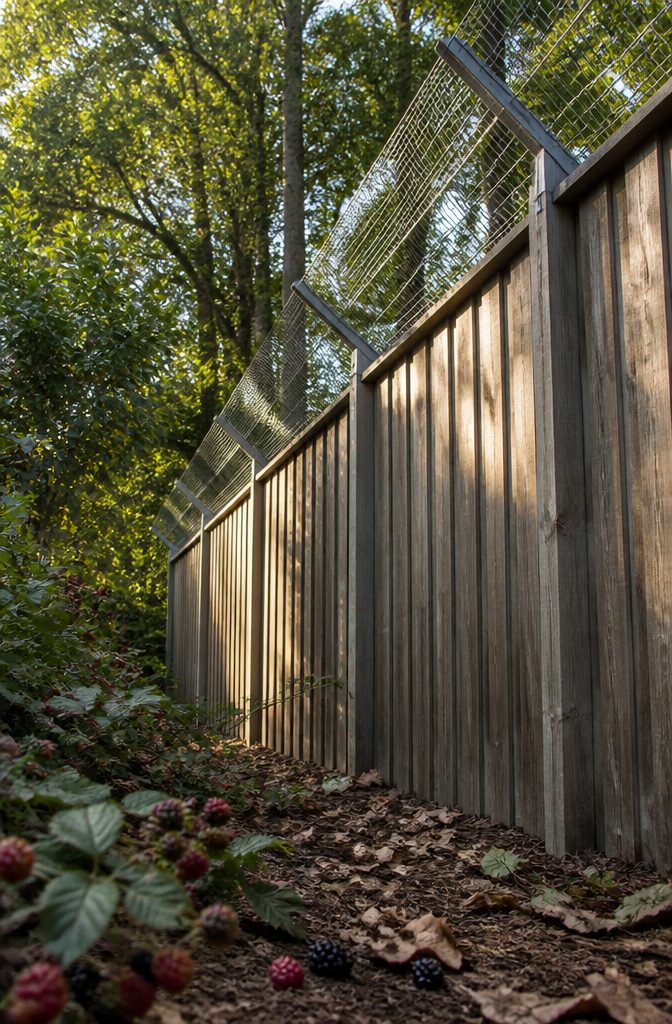
Raccoons and cats treat an ordinary garden fence as a ladder.
Anti-climb extenders are hardware add-ons that stop them from scaling it, so a fence that looks tall enough still keeps them out. They target raccoons, cats and other climbing animals.
Extenders solve climbing, not digging, so they are the wrong fix if the damage comes from burrowing or squeezing under. A fence built against ground-level pests does little against a raccoon that simply goes over the top.
I would add extenders only when you have seen a climber in the beds, and pair them with a rodent barrier if you get both kinds of visitor.
Recommended Products

Made of Aluminium alloy for extra durability.

Fence pole anchor spike for soft ground installation.

THE ULTIMATE CHOICE - Postsaver Pro-Wrap’s are an innovative rot protection system that's totally unique. Proven & independently tested by the AWPA, this fence cover provides 100% rot protection to wooden posts & impressively extends their life by 20 years. Over 10M+ sold!
Enclosed Fence With a Top
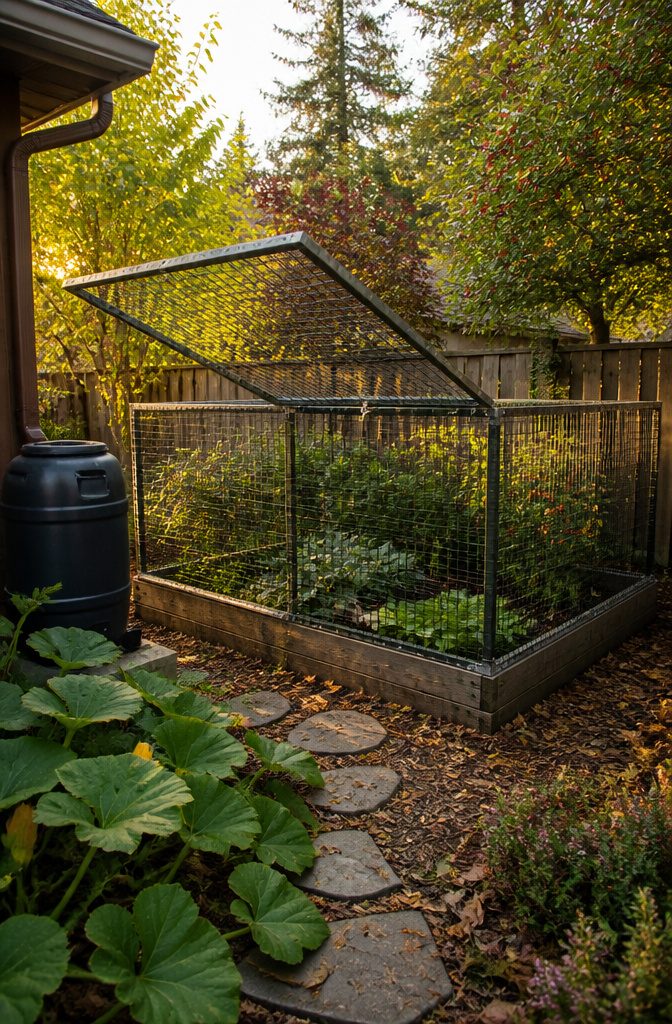
Adding a top to all four sides turns the fence into a cage, with mesh stretched across the roof as well as the walls.
Birds drop in from above and squirrels climb straight over an open-top wall, so a plain fence does nothing against either.
If they are going after berries, seedlings or ripening tomatoes, a covered enclosure is the only fence style that works.
Against rabbits, groundhogs and other animals that stay on the ground, a roof only adds cost and makes weeding harder. Make the lid a hinged frame or a removable panel so you can still reach the bed.
Recommended Products

Ethical Deterrence: The sharp stainless steel spikes create a harmless barrier to intimidate raccoons, squirrels, pigeons, crows, and rodents without causing injury.
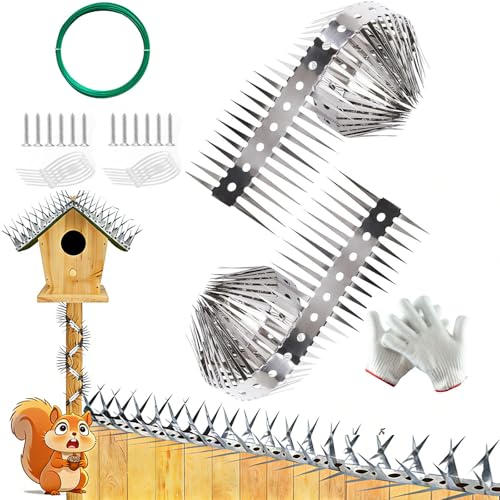
Ethical Deterrence: The sharp stainless steel spikes create a harmless barrier to intimidate raccoons, squirrels, pigeons, crows, and rodents without causing injury.

1. 6-Pack Value Security Pack This set includes 6 anti-climb metal spikes for full perimeter coverage around your home, garden, fence and boundary walls. Enough for large-area installation, perfect for property safety upgrade and daily outdoor security protection.
Extensions for an Existing Fence
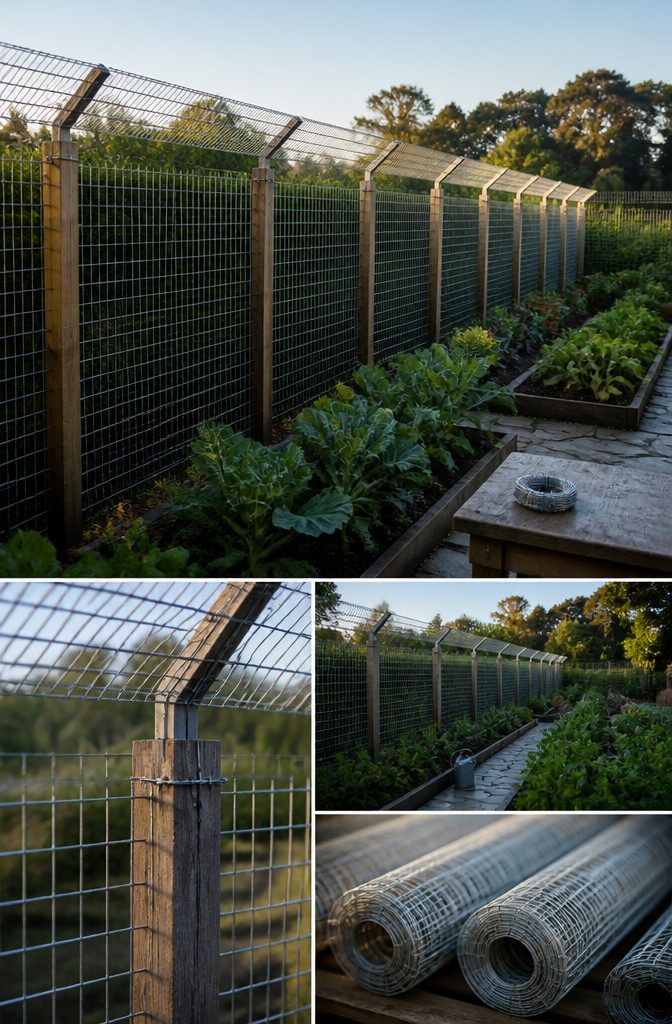
Extension kits raise the height of a fence you already own, which makes them the simplest fix when the existing fence is sound but too short.
Deer need a minimum of 6 ft of total height, so measure what you have before you order.
Some versions add an overhang, sold as a no-climb canopy, and I’d choose that style wherever animals climb or jump rather than push through.
Homeowners can install these kits themselves.
They come with the accessories you need, plus instructions that include drawings and videos. The installation can be permanent, or seasonal if you’d rather take it down after the growing season.
Recommended Products

Humane Protection – Helps keep out hungry and destructive deer and other critters from your garden, protecting fruits, vegetables, and flowers. A practical and humane alternative to expensive metal fences, chemicals, and traps.
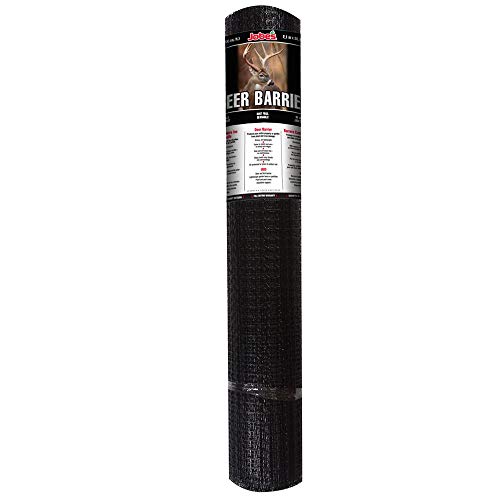
Tough durable deer fence; Protects landscape and crops from deer and other animals

Size: Deer netting size 7 feet x 100 feet; garden netting mesh size 3/4"; color: black; Easy to use accessories included: 10pcs installation nails & 50pcs cable ties
Match the Fence to the Animal
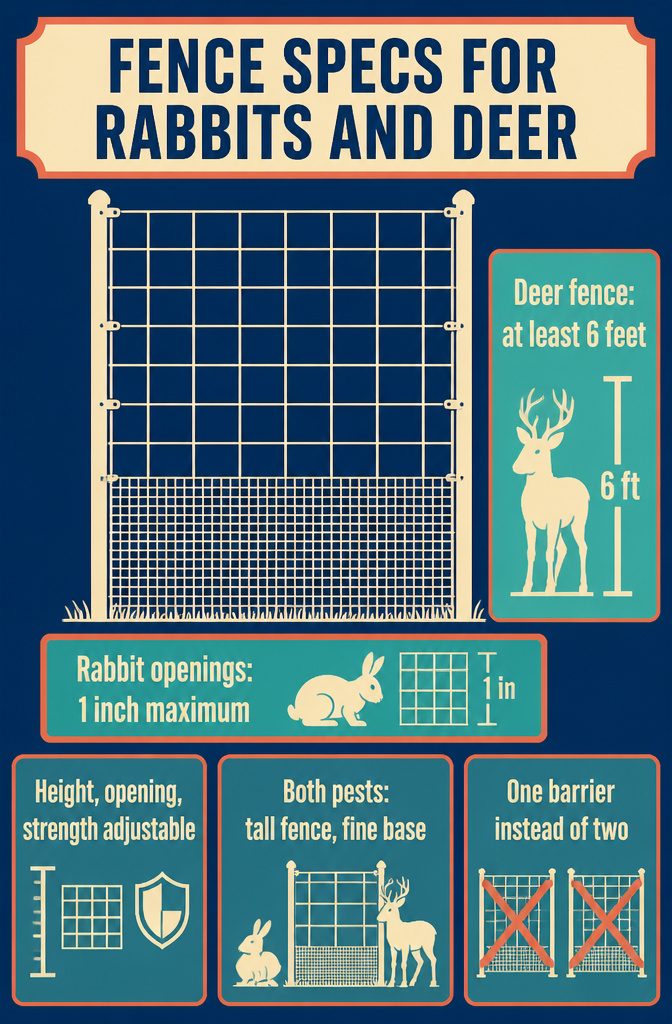
Rabbits push through anything larger than a 1-inch opening, so the bottom of the fence decides whether they get in.
Choose a fence with openings of 1 inch or smaller at ground level, even if the upper section uses a wider mesh. Deer are a height problem, and a deer fence needs at least 6 feet of height to do its job.
Fencing comes in many configurations, with height, opening size and strength all adjustable to the space and the pest. If you have both animals, I’d build one tall fence with a fine base rather than paying for two separate barriers.
Recommended Products
👉Upgraded Steel Wool and Cooper Mesh👈 - This Stainless Steel Mesh is designed to stuff all kinds of openings to prevent unwanted guests or air from entering your home or office building.It is rustproof and works great to seal weep-holes and around plumbing,A/C,vents, and other places where your unwanted guests enter.This wire mesh is double fold tube design and Semi-flexible,,easier to bend but not easy to break.,especially easier worked into Tight Spots than steel wool and cooper mesh

PREMIUM COPPER BUILD: Made from refined 0.18 mm thick copper, this copper mesh resists rust and corrosion better than steel wool alternatives for long lasting indoor and outdoor use

HIGH QUALITY MATERIAL: This knitted flexible wire mesh is made of 304 stainless steel mesh, excellent rust prevention, sturdy and durable, excellent quality
Fence Height by Garden Size
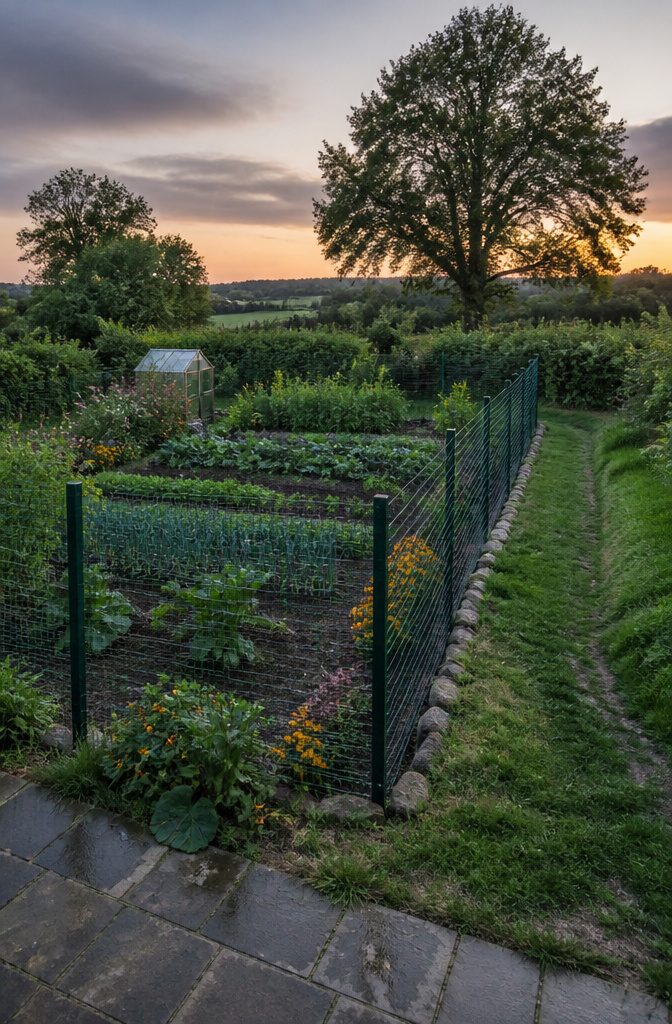
Fence height rises with the length of fence you run.
A garden with 100 linear feet of perimeter calls for a 6-foot fence. Larger gardens, and any spot with high animal pressure, need 8 feet or more to give enough coverage.
Treat those heights as a guide rather than a rule. Your yard’s layout and how often deer or rodents pass through matter as much as the footage.
If your garden sits near a regular animal route, I’d lean toward the taller height, because a fence that’s a foot too short does the job of no fence at all.
Recommended Products

【Complete Package & Multiple Size Options】This fence post repair kit is available in 2-pack and 4-pack sizes to match diverse outdoor repair demands. Equipped with split 31.5”x4.72” two-part fence post repair stakes and complete installation hardware, it supports fast assembly for various fence fixing projects

【Complete Package & Multiple Size Options】This fence post repair kit is available in 2-pack and 4-pack sizes to match diverse outdoor repair demands. Equipped with split 31.5”x4.72” two-part fence post repair stakes and complete installation hardware, it supports fast assembly for various fence fixing projects

270-Degree Rotation: Achieve near-flat folding with an 270-degree swing arc, allowing wide wood gates, fences, and doors to open completely flat against adjacent surfaces - perfect for maximizing space.
Frequently Asked Questions
Recommended Products

THE ULTIMATE CHOICE - Postsaver Pro-Wrap’s are an innovative rot protection system that's totally unique. Proven & independently tested by the AWPA, this fence cover provides 100% rot protection to wooden posts & impressively extends their life by 20 years. Over 10M+ sold!
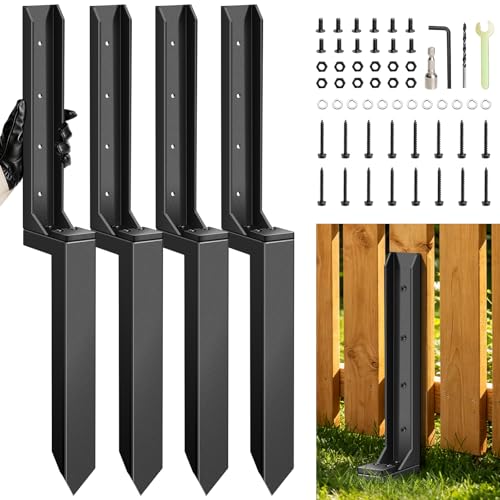
Package Includes: 4 sets of unassembled 32-inch repair stakes, 12 galvanized assembly screws, 16 galvanized fixing screws and 1 small wrench. Size: 1.96” x 31.5” (Width x Height). Buried depth: 15.75 in

25 TAN POOL FENCE HOLE CAPS INCLUDED – Each pack comes with 25 durable tan fence caps designed to fit 1-inch pool fence pole deck sleeves. Covers holes cleanly when fence is removed.
What is the best type of garden fence for keeping out deer and rabbits?
One tall fence with a fine base covers both. Make it at least 6 feet high for deer, and use openings of 1 inch or smaller at ground level, since rabbits push through anything larger.
If digging animals also visit, the double-layer kit with metal fencing pinned flat to the ground adds protection at the bottom.
Can I install a garden fence myself?
Yes.
The kits are made for homeowner installation and come with the accessories you need, plus instructions that include drawings and videos. You can set the fence up permanently or take it down after the growing season.
What is the best garden fence for renters or for taking down after the planting season?
A removable fence with ground sleeves is the best fit.
The sleeves stay in the soil during the season, the posts drop in and lock with a set screw, and at season’s end you pull the fence to till the bed or store it.
This single-layer style is the wrong choice if mice or rabbits are a problem, so pick the rodent barrier version in that case.









