
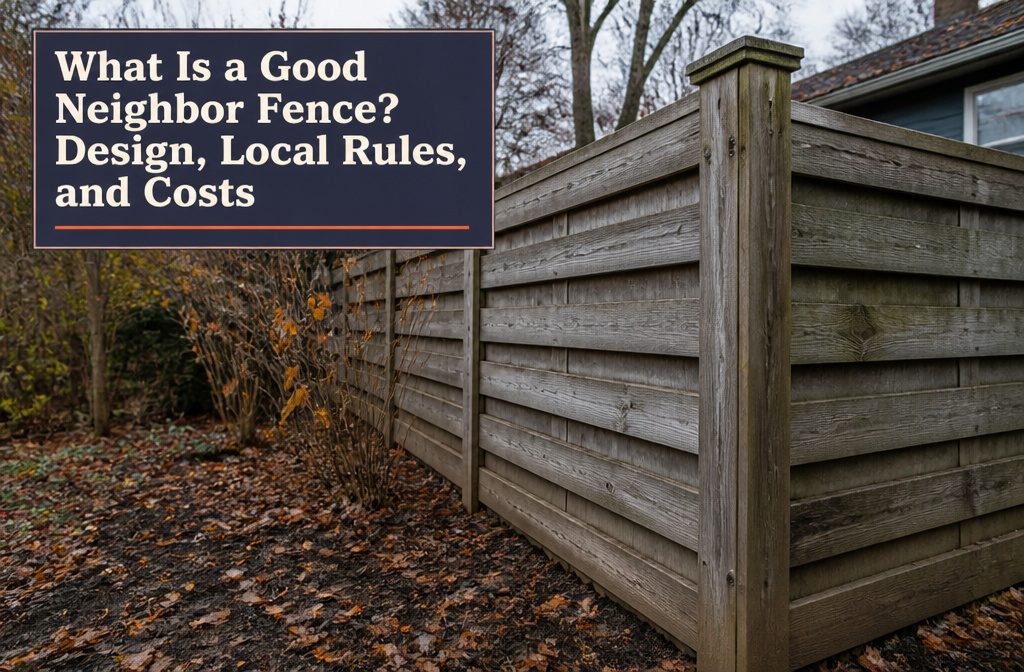
In Illinois, a neighbor owes nothing toward your fence unless both owners sign a written agreement, and splitting is uncommon.
When it is agreed, the usual deal is half each: $2,500 apiece on a 150-foot, $5,000 fence. A good neighbor fence also means one that looks finished from both sides, so settle who pays before calling a contractor.
What a Good Neighbor Fence Means
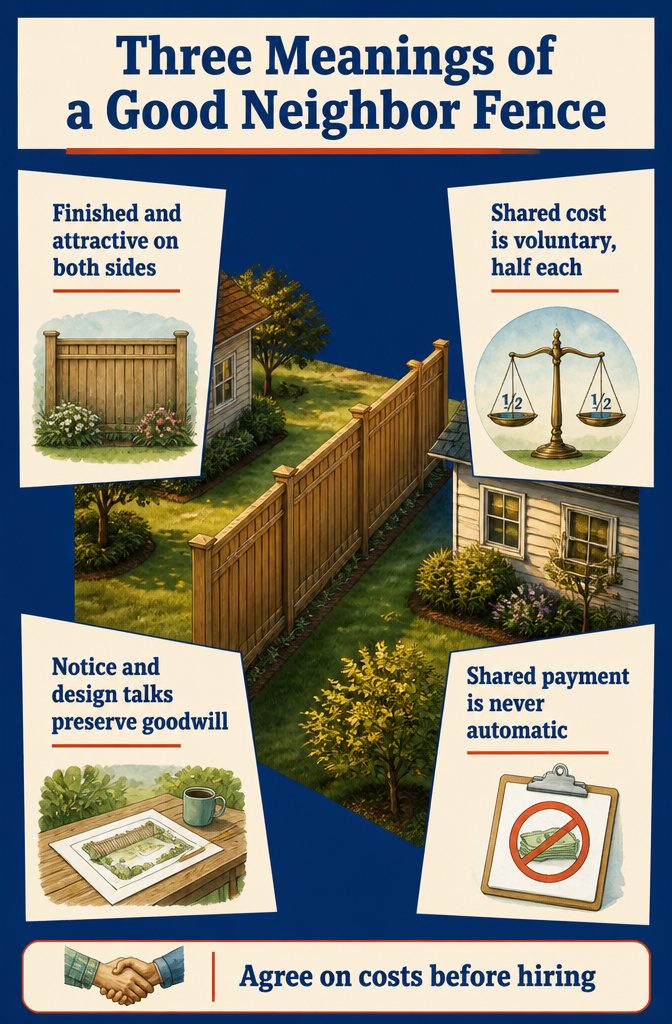
A good neighbor fence looks finished and attractive from both sides, with no bare framing facing one yard. The term is also used for a boundary fence whose cost and upkeep two neighbors share equally.
That shared arrangement is voluntary, and each owner pays half of the total.
A third meaning concerns the process rather than the fence: giving notice, talking through the design, respecting the property line, and keeping goodwill during construction. I’d rank that one highest, since neighbors in suburban areas often stay for decades.
The name isn’t tied to one definition, so shared cost is never automatic. Settle who pays before anyone calls a contractor.
Recommended Products

DIMENSIONS: Each panel measures 24" W x 24" H. One box comes with 6 total linear feet of white vinyl picket fence for your garden.

(Breathable Material with Some Visibility Through) Made with 100% new high density polyethylene(HDPE) material--no recycled materials used,more healthy and safe. Allow breeze and light pass through for better comfort space. Commercial solid fabric can achieve 95% UV protection to meet your requirement.Deck Shield Cover is perfect for Backyard Deck, Patio, Balcony Pool, Porch Railing.
Alternating Boards and Panels
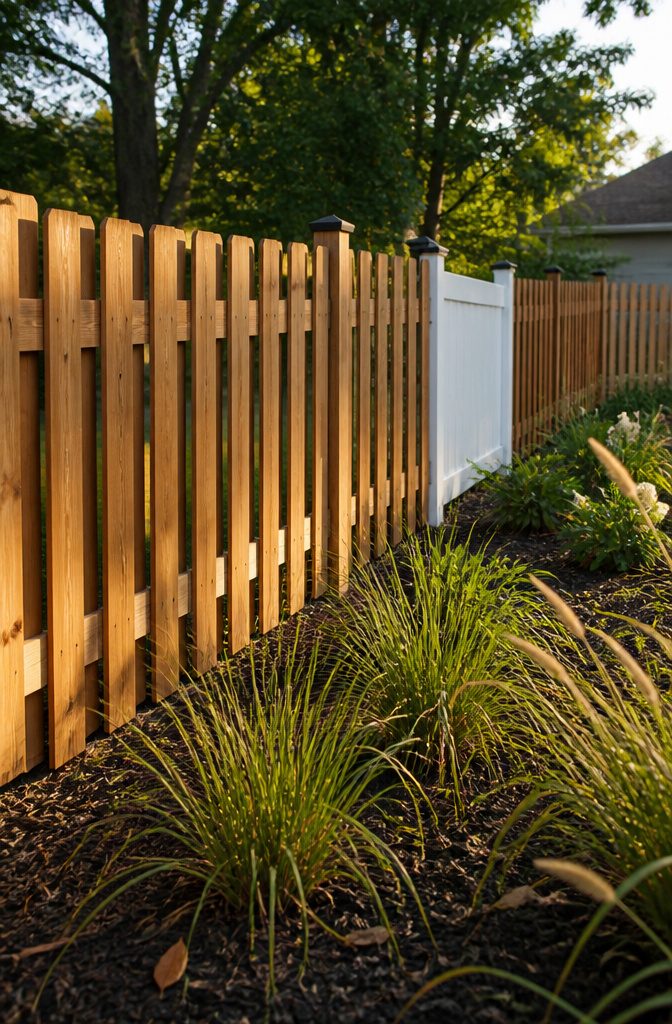
Alternating boards or panels put the posts and rails on one side for a stretch, then on the other, so neither neighbor looks at bare framing.
Vinyl and aluminum panels fit between the posts and give a clean face on both sides.
Colors run from classic white to coastal cedar, and vinyl never needs painting or staining, which is why I’d steer anyone short on weekends toward it.
Shadowbox cedar alternates pickets on opposite sides of horizontal rails, so it looks identical from both yards.
The gaps give semi-privacy rather than full screening, but they let wind through, which cuts storm damage compared with solid panels. Horizontal board uses the same alternating logic with the boards running sideways, for a different look than vertical pickets.
Recommended Products


【Gravity Self Locking Gate Latch】Privacy Fence Latch made from heavy gauge steel construction with Superior Black Powder Coat Finish & Zinc Plated corrosion resistance, features a self-latching fingertip release, designed to latch in or out swinging gates and doors up to 3 inch thick.

Property Lines and Local Rules
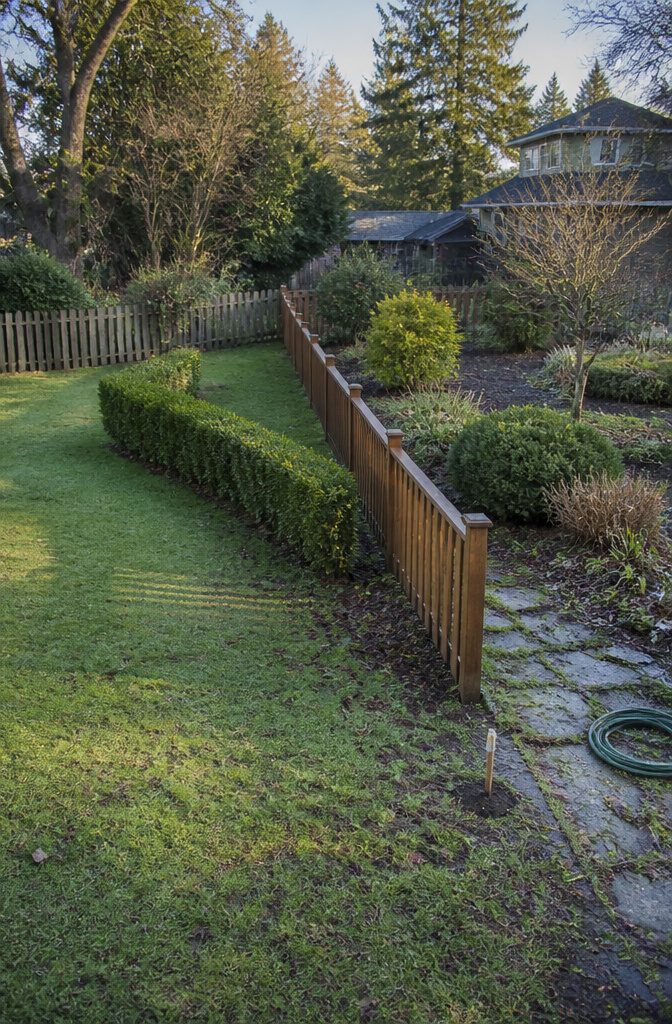
Existing fences, hedges, and old stakes are poor evidence of where your lot ends, and plenty of them sit well off the true line.
A licensed land surveyor will mark the corners and give you a written record, and I would pay for one before setting a single post.
A shared fence belongs centered on the line, and only once both owners agree where that line is. Build from one person’s guess and you risk a dispute or a tear-out.
Next, call your city or county about local ordinances, and read your HOA rules if you have an HOA. Height limits, permits, setbacks, and approved styles or materials vary from street to street, so check before you buy anything.
Recommended Products
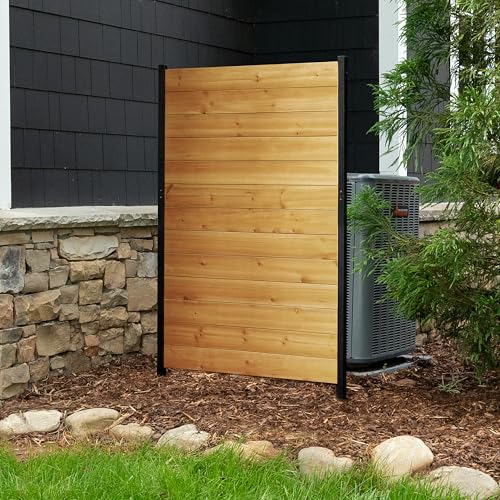
STYLISH NATURAL WOOD: This FSC certified wood screen is made with real wood meaning no two boards have the same grain color, finish, or wood knots differing it from vinyl outdoor privacy fence screen panels.

STYLISH NATURAL WOOD: This FSC certified wood screen is made with real wood meaning no two boards have the same grain color, finish, or wood knots differing it from vinyl outdoor privacy fence screen panels.

STYLISH NATURAL WOOD: This FSC certified wood screen is made with real wood meaning no two boards have the same grain color, finish, or wood knots differing it from vinyl outdoor privacy fence screen panels.
Talking to Your Neighbor
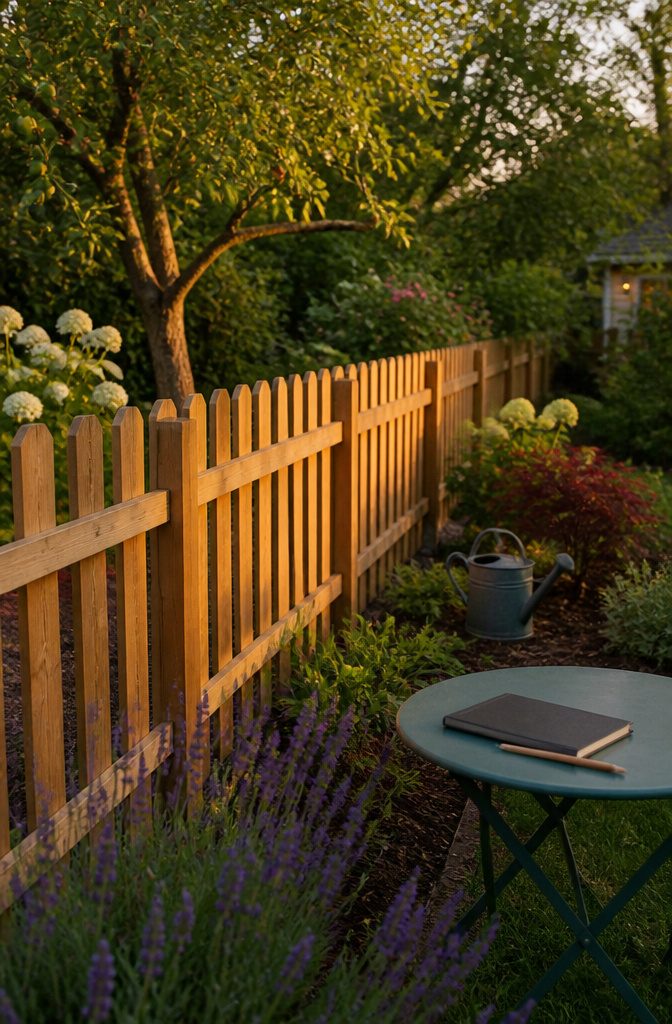
Tell your neighbor 2–4 weeks before the crew arrives, in person if you can, then follow up in writing. Walk the line together and talk through style, materials, and where the boundary sits.
Cost-sharing is uncommon, so don’t count on it. If your neighbor declines, build on your own side of the line, provided local rules allow it.
Stay calm, and keep dated written records of what you each agreed.
Height, privacy, color, and timing are the easiest points to compromise on. If talks stall, contact your HOA or a legal expert before any posts go in.
This conversation is the part of a good neighbor fence your neighbor actually experiences.
Recommended Products

DIMENSIONS: Standard 6 feet high by 6 feet wide panel size, perfect for residential privacy fencing needs

Privacy Solution: Most economical way for privacy over chain link fence, porous decorative concealment, existing cyclone wire fence, wood retaining wall, welded wire fence, chain link fence, privacy barrier around swimming pool, block nose neighbor see through, add privacy to acre back yard backdrop, front yard, patio, garden and porch; hide street, road, construction site, pet kennel pen, block surrounding noise and street view, stops dogs from barking at neighbors.

PET & CHILD SAFE: Create a safe outdoor play area for fur babies and children. Rest assured that this fence will create a sturdy barrier to protect your family.
Costs and Splitting the Bill
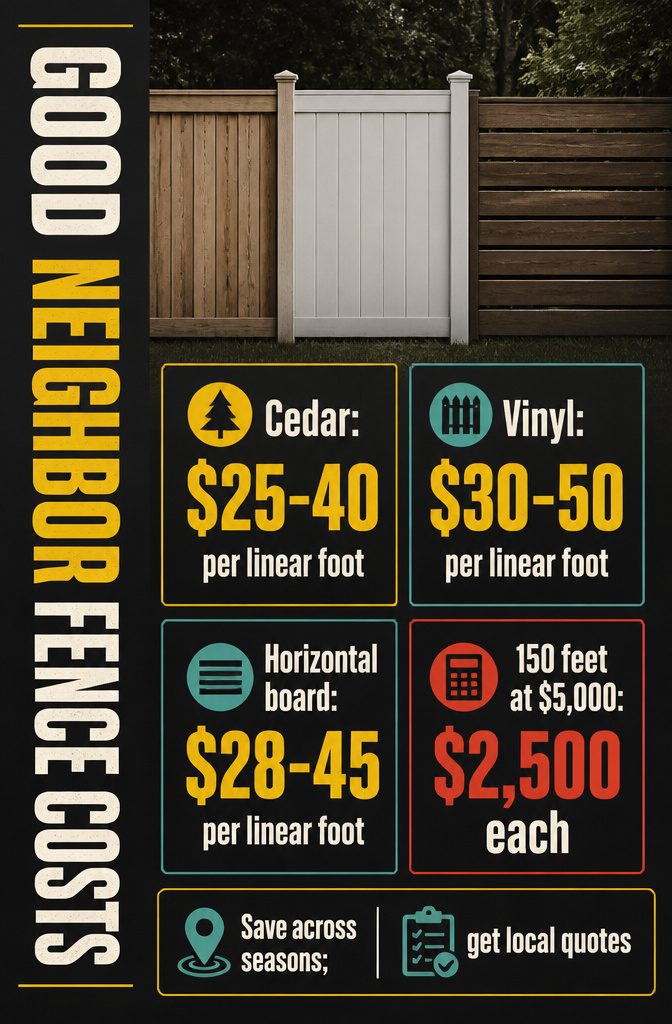
Some fence companies describe a good neighbor fence as an equal split: both owners are responsible, so each pays half. Elsewhere, sharing is a favor, not a rule, and your neighbor can say no.
Chicagoland installed prices run $25–40 per linear foot for cedar, $30–50 for vinyl and $28–45 for horizontal board. Those are regional figures, so get local quotes.
A 150-foot fence at $5,000 works out to about $33 a foot, or $2,500 per neighbor. That is often less than each household spends on a separate budget fence, and the shared one can be better material.
Still, $2,500 is several times a yard budget of $500–800 a year. I’d plan to save for it across a few seasons.
Recommended Products

DIMENSIONS: Each panel measures 32” H x 48” W

NO-DIG GARDEN FENCE FOR SMALL DOGS: Create a visible boundary around gardens, patios, or yards—discourages wandering without permanent installation (light pet barrier).

DIMENSIONS: Each unit is 41" H x 44" W and includes 2 complete fence panels with posts for a total of 88in of fence.
Installing and Choosing a Contractor
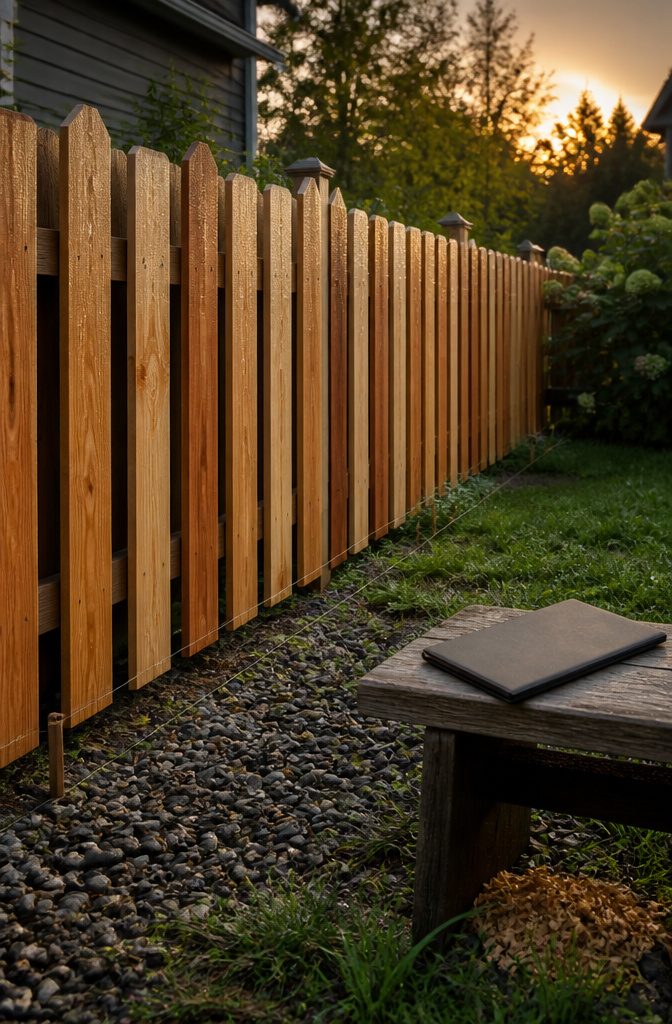
Placement decides whether a good neighbor fence works, so treat it as part of the job rather than something the crew sorts out on installation day.
Ask the contractor where they believe the property line falls and how they know. A fence set even slightly off the boundary can start a dispute no matter how well it’s built.
Next, confirm they understand the symmetrical design: both neighbors should see the same face, not one finished side and one bare side.
Last, read the contract against the written agreement between you and your neighbor, and make sure the two match.
This isn’t a step-by-step build guide. How the crew installs it is theirs to explain; the line, the look, and the paperwork are yours to check.
Recommended Products

PORTABLE DOG FENCE: Perfect indoor or outdoor dog fence to keep your pet safe in front of doorways, entryways, porches, decks, and patios. Not recommended for large dogs.
(Breathable Material with Some Visibility Through) Made with 100% new high density polyethylene(HDPE) material--no recycled materials used,more healthy and safe. Allow breeze and light pass through for better comfort space. Commercial solid fabric can achieve 95% UV protection to meet your requirement.Deck Shield Cover is perfect for Backyard Deck, Patio, Balcony Pool, Porch Railing.
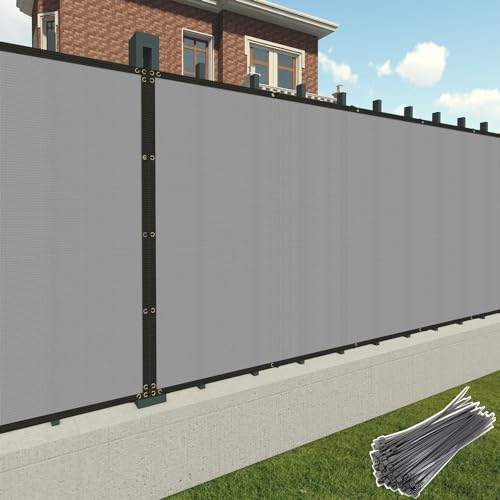
Inexpensive Privacy Solution: Block the view of neighbors, reduce pet noise, prevent wild animals from entering your yard, and protect the safety of young children. Privacy fence panels for the outside are great for condo/apartment balconies, porch railing, backyards and gathering areas, pools, and patios. Can also be used for residential, commercial, and construction sites
Illinois Cost and Height Rules
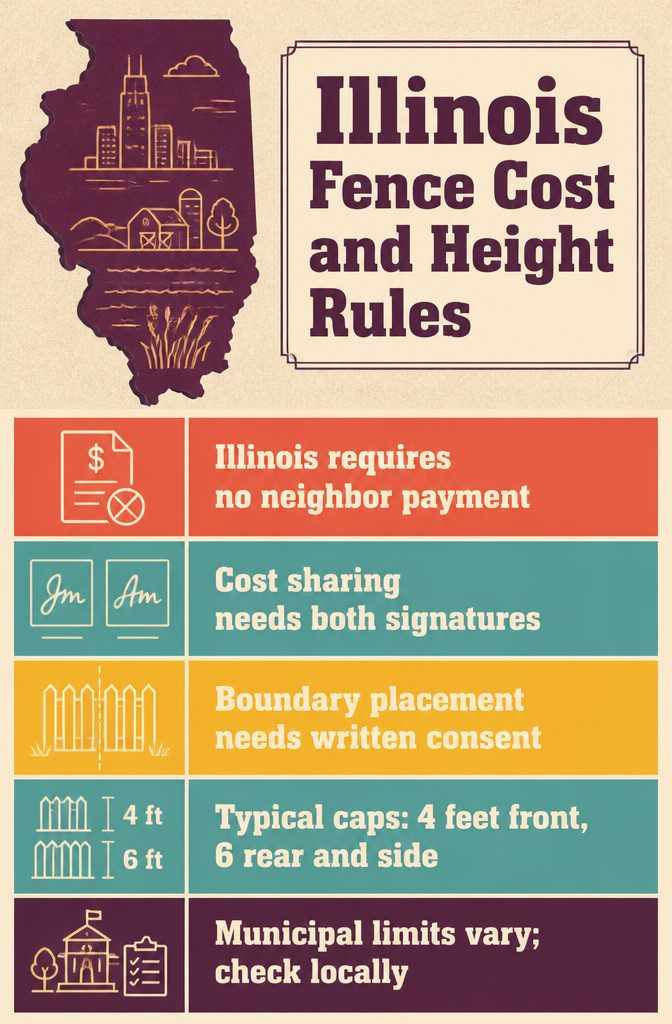
In Illinois, a neighbor has no legal duty to pay for your fence. State law doesn’t require cost sharing unless both owners sign a written agreement, and that arrangement is uncommon.
The default is that a fence sits entirely on one owner’s land, so whoever builds it pays for it. Placing it on the boundary line takes the neighbor’s written consent.
Height limits are set locally.
Illinois towns typically cap residential fences at 4 feet in front yards and 6 feet in rear and side yards, but the exact numbers vary by municipality. Check with your city or village before you buy materials.
These are Illinois rules, not national ones. Some states do require neighbors to share costs, so readers elsewhere should look up their own state and local codes.
Recommended Products

DURABLE MATERIAL: Gate latch for wooden fence is made of high-quality carbon steel, ensuring long-lasting durability and strength for your gate latch needs

What the Written Agreement Covers
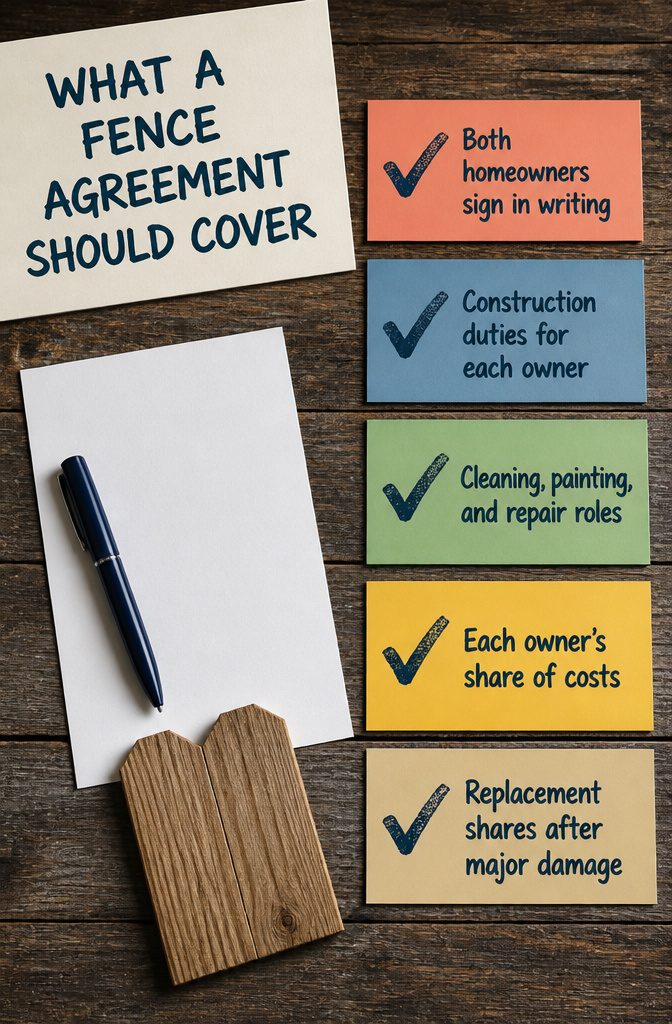
A good neighbor fence needs a written agreement between both homeowners, and a verbal "sounds fine" won’t hold up later. I’d want it to cover:
- Construction: what each owner is responsible for when the fence goes up on the property line.
- Maintenance: who handles cleaning, painting and repairs.
- Costs: what each owner pays. The usual arrangement is half each for construction, maintenance and replacement.
- Replacement: the share each owner pays if significant damage means the fence has to come down and be rebuilt.
- Consent: both owners agree to any cost-sharing in writing, so neither can later dispute the split.
Putting these in writing heads off most disputes before they start.
Recommended Products

1 SCREEN PURCHASE: You will receive 1 screen with planter box with your purchase. Please note primary image displays 3 separate screens with planter boxes

1 SCREEN PURCHASE: You will receive preassembled materials to construct 1 cedar wood outdoor privacy screen in a charcoal finish with your purchase
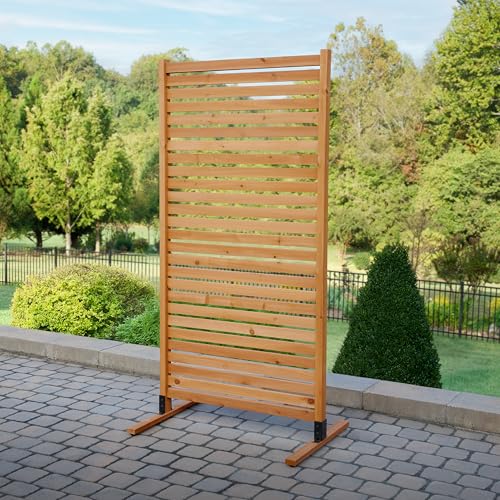
STYLISH NATURAL WOOD: This FSC certified wood screen is made with real wood meaning no two boards have the same grain color, finish, or wood knots differing it from vinyl outdoor privacy fence screen panels.
Maintenance and Replacement
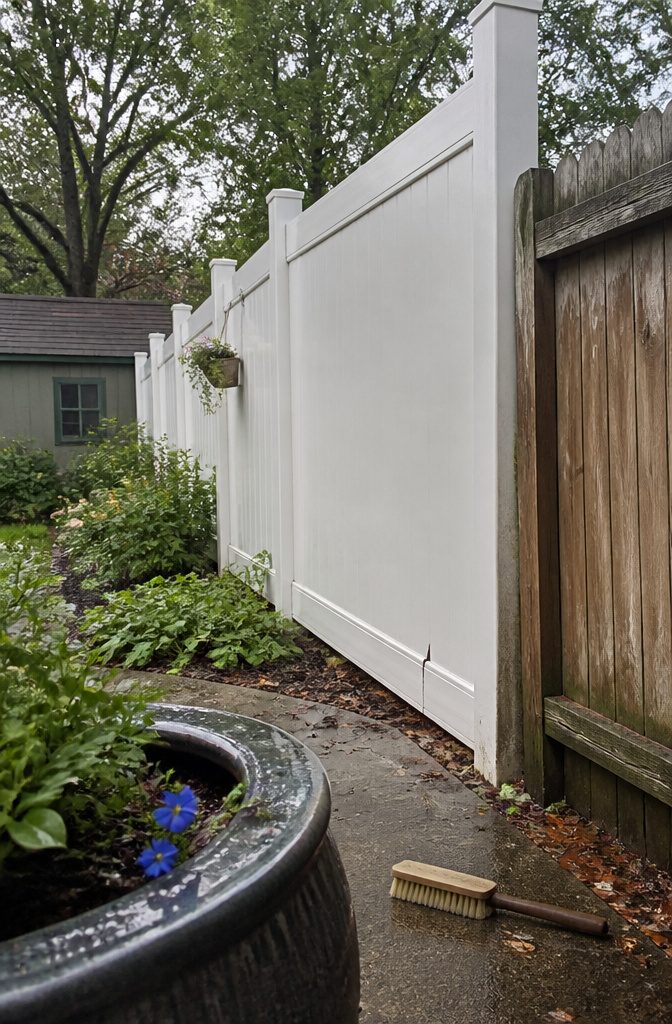
Under a shared arrangement, both homeowners pitch in on cleaning, repairs, repainting and eventual replacement when the fence wears out. Many good neighbor fences come with no such plan, and upkeep rests on goodwill.
That works until a board rots and each side assumes the other will deal with it. I’d settle who handles what before the first post goes in: who washes, who repaints, and how replacement gets split.
Vinyl takes one job off that list, since it needs no painting or staining, and its panels fit between the posts so both sides look finished. If you’d rather not argue about upkeep, that’s the material I’d choose.
Recommended Products

INCREASED PRIVACY & SECURITY: Swiftly enhance your outdoor space by adding privacy and security to your chainlink fence with the NMI Fence Privacy Weave manufactured by Pexco. Perfect for backyards, gardens, and gates, this fence weave is designed to fit 2", 2-1/4", and 2-3/8" mesh sizes.

EASY ORDERING: Everything you need for your fence project is in the box except for the final post. Only ONE additional post, BL19112, is required for the end of your project. A gate is available by searching BL19111.

Premium construction: The vinyl construction of these privacy panels ensures that they will maintain their structure and appearance in the harshest of weather conditions. 3” x 3” support posts provide much greater stability than the smaller posts commonly found on competing brands. It is a beautifying addition to your home’s aesthetic that provides long-lasting protection.
Frequently Asked Questions
Recommended Products

This fence is designed for semi-permanent residential applications that are not subject to intense wear and tear; not recommended to contain large dogs.

【Easeful Elegance】 Transform your backyard into a curated sanctuary with our innovative metal fence post. Designed for those who appreciate both form and function, these privacy fence post allow you to effortlessly assemble horizontal wooden boards into a sleek, modern fence that complements gardens, patios, and lush landscapes. No more uneven nails or messy installations—just clean lines and timeless style.

【ANIMAL BARRIER FENCE KIT】You will get 16 animal fence panels, 1 wire cutter, 1 pair of gloves and 32 cable ties. The diameter of the fence poles has increased by 25%, and the dog fence barrier is more sturdy. 1.29 inch spike spacing fence, more effective than 2-inch gap to prevent small animals from entering your garden. Each animal barrier fence no dig is 12 inches high and 13 inches long. There are 16 fences in total, with a total length of about 17.3 feet.
What is a good neighbor fence?
A good neighbor fence looks finished from both sides, with no bare posts or rails facing either yard.
The term is also used for a boundary fence whose cost and upkeep two neighbors split equally. That split is voluntary, so settle who pays before you hire a contractor.
How high can a good neighbor fence be?
Height limits are set locally. Illinois towns typically cap residential fences at 4 feet in front yards and 6 feet in side and rear yards, but the exact numbers vary by municipality.
Call your city or village, and check your HOA rules if you have one, before buying materials.
What if my neighbor doesn’t agree to a good neighbor fence?
You can build on your own side of the line, as long as local rules allow it.
In Illinois a neighbor has no legal duty to pay for your fence unless both owners sign a written agreement. If talks stall, contact your HOA or a legal expert before any posts go in.
What are the benefits of a good neighbor fence?
Both households get a finished face, so neither yard looks at bare framing.
If your neighbor agrees to share the bill, each owner pays half; on a 150-foot, $5,000 fence that is about $2,500 each. Talking through the design and the line together also tends to keep relations friendly.
How is maintenance handled for a good neighbor fence?
Under a shared arrangement, both owners split cleaning, repairs, repainting, and eventual replacement.
Many fences have no such plan, and upkeep depends on goodwill until something breaks and each side assumes the other will fix it. Put who does what, and how replacement is divided, in the written agreement before construction starts.









