
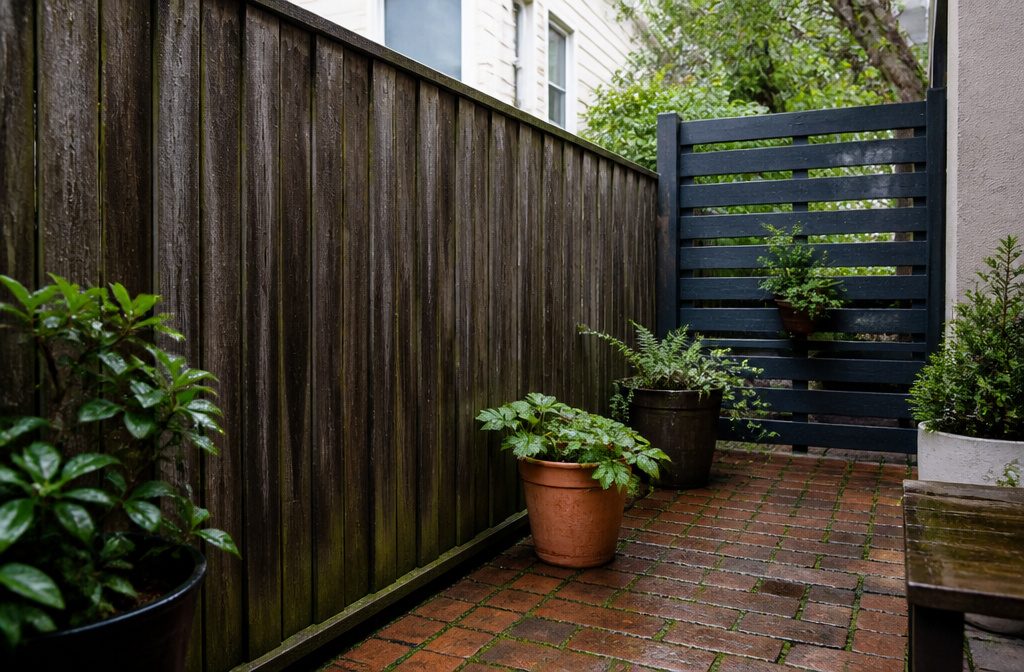
Solid stockade panels are the best pick for a yard close to a neighbor’s windows or facing street noise, because tight boards leave no gaps and cut more noise than lattice.
The cost is airflow and light: a solid wall casts shade and can close in a small patio. Small patios do better with lattice or a slatted screen.
1. Wood Lattice Screens
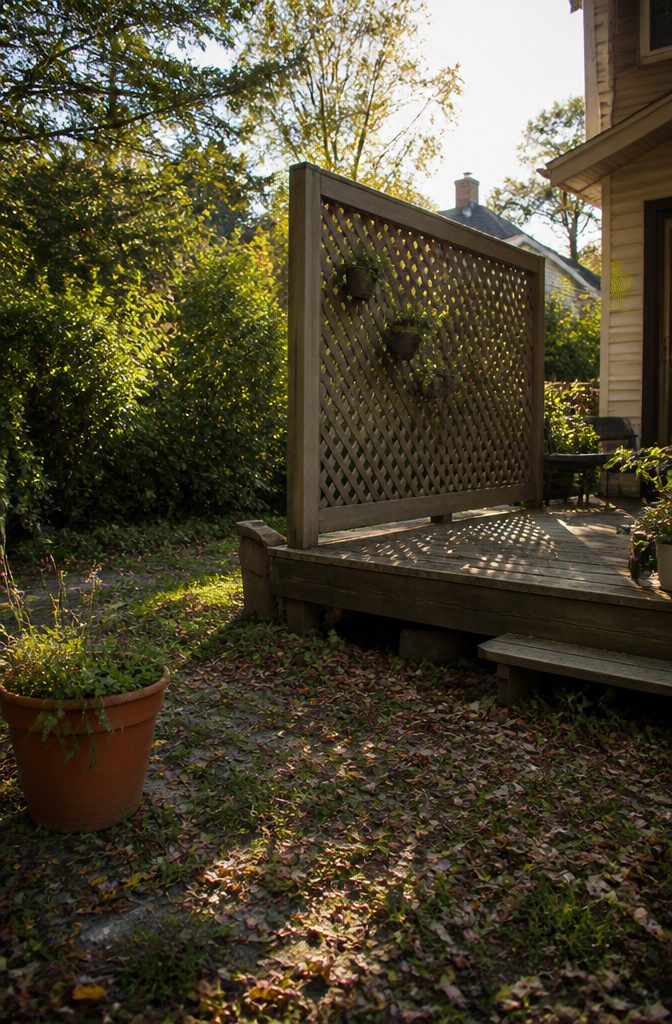
Lattice is strips of wood crossed in a square or diagonal pattern, and the small gaps pass light and air.
That also makes it the weakest privacy choice among the wood screens. Skip lattice if you want noise reduction or a solid sightline block; stockade panels, with boards set tight together, do both better.
Panels are sold at lumberyards and home improvement stores. For a DIY build, set each panel in a thick wood frame and attach it to an existing deck, or dig posts into the ground and set them in concrete.
Lattice also takes paint, and potted plants can hang in the openings, which is the reason I’d pick it.
Recommended Products

Details: Artificial ivy wall is 120 inches long and 40 inches wide, with green faux ivy leaves. Made up of 12 small panels (connected).Can cover 33.33 square feet. the faux Ivy Vine are textured and look real. You can reassemble or cut to get the size you want. 50 cable ties are included to assist in installation.

Elegant Privacy Solution: This wooden privacy screen create a private retreat with a stylish privacy screen that not only divides spaces but also seamlessly complements your interior décor, enhancing both aesthetics and privacy.
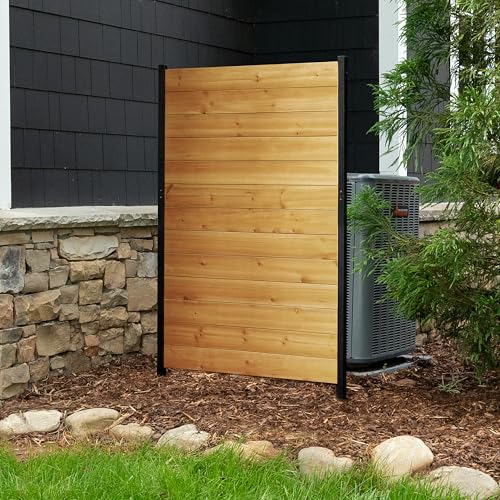
STYLISH NATURAL WOOD: This FSC certified wood screen is made with real wood meaning no two boards have the same grain color, finish, or wood knots differing it from vinyl outdoor privacy fence screen panels.
2. Solid Stockade Panels
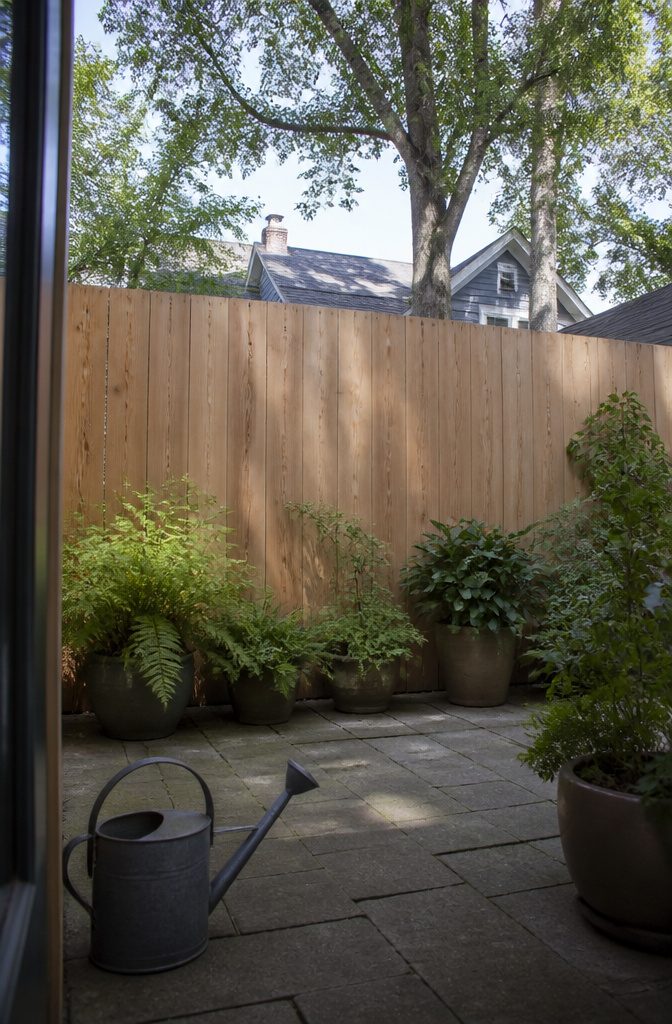
Tightly placed boards leave no gaps, so a stockade panel blocks sightlines completely and cuts more noise than lattice does. That makes it my pick for yards close to a neighbor’s windows or facing street noise.
The cost is airflow and light.
A solid wall stops breezes and casts shade, which can leave a small patio and the plants beside it feeling closed in. If you want filtered light or a little air moving through, choose lattice or a slatted screen instead.
Check your HOA rules before you decide. Some require tall, solid fences, and in that case stockade may be the style you end up with anyway.
Recommended Products

Neighbor Privacy, Not Blackout: Blocks direct line-of-sight while allowing airflow — designed for comfortable backyard privacy, not a solid wall or tarp.

Made from Solid 300×250D high-quality Oxford cloth, with an average weight of more than 160g.Protect your space from the wind, sun, and unwanted visibility.

Upgrade iCover Privacy Screen For Fence: Our privacy screen is made of heavy-duty knitted net, measuring 4 ft high by 50 ft long. It is suitable for fences with a height of 4 ft or slightly higher. Please accurately measure your fence before purchase
3. Board-on-Board Screens
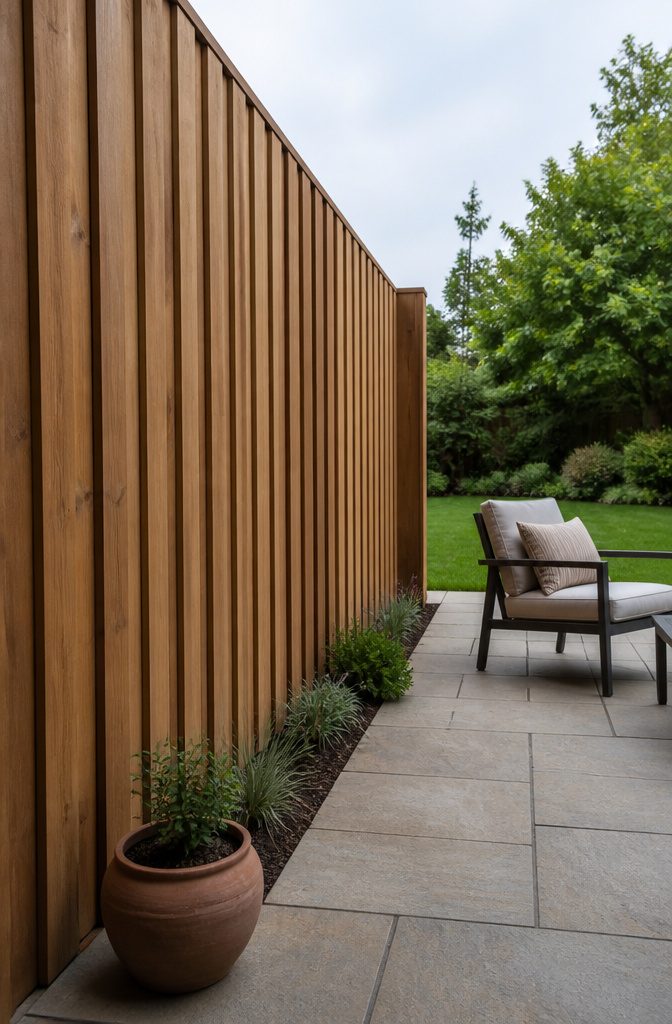
Board-on-board is the sturdy choice among wood screens.
Its vertical slats overlap in layers, so standing square to the screen you see wood and nothing else. Stockade panels set boards edge to edge, and as the wood dries the seams can open into thin gaps.
The overlap has one weakness.
Someone standing off to the side can catch a slight sightline through the layers, because the angle lets the eye slip between the slats. That rarely matters along a straight property line.
If a neighbor’s window sits at an angle to your patio, skip board-on-board and pick a style that closes the gap, or move the screen closer to your seating so the angle gets steeper than the gaps allow.
Recommended Products

MDF Fence makes great fences for router table & other too Make you own brackets or use our aluminum fence blank (Sold Separately) The following is included: 2- 16" x 4" MDF...
4. Vinyl Screens
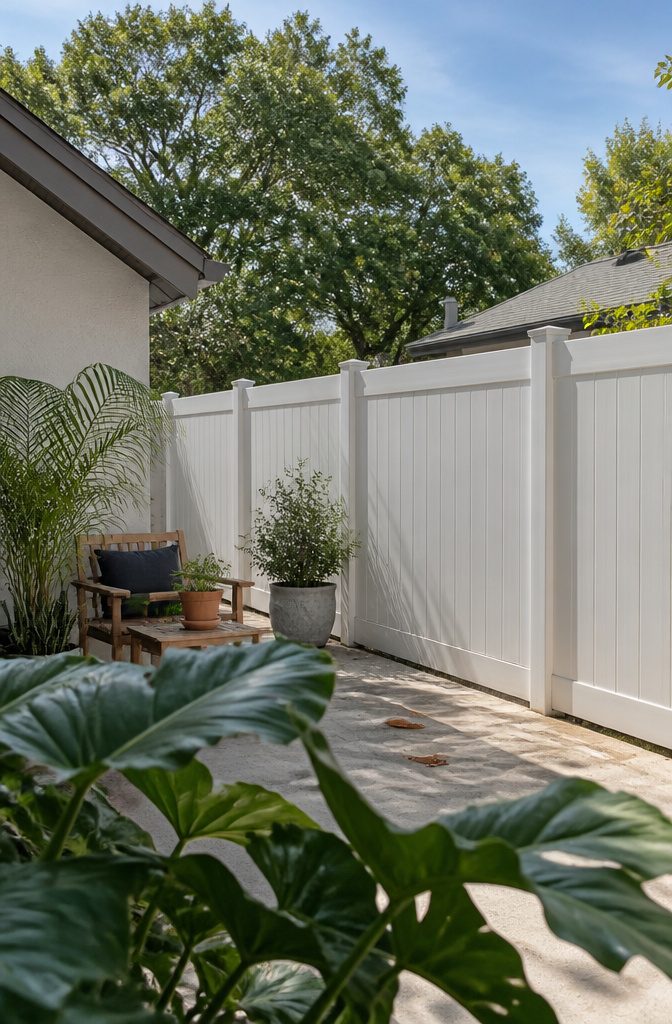
Vinyl is the pick if you want a screen that needs almost no upkeep. It costs more than wood, but the panels are stronger and last far longer, so the extra money buys you years without restaining or replacing.
Vinyl comes in the same patterns as wood: lattice, stockade and board-on-board. Colors, shapes and sizes vary widely, and you can order panels made to your specs.
Skip vinyl if your budget is tight or you want the look of real wood.
Vinyl reads as plastic up close, and no pattern changes that. On a small budget, a wood screen costs less up front and still gives you the privacy.
Recommended Products


EASY ORDERING: Everything you need for your fence project is in the box except for the final post. Only ONE additional post, BL19112, is required for the end of your project. A gate is available by searching BL19111.

DIMENSIONS: Each panel measures 45"H x 36" W
5. Fixed or Movable Screens
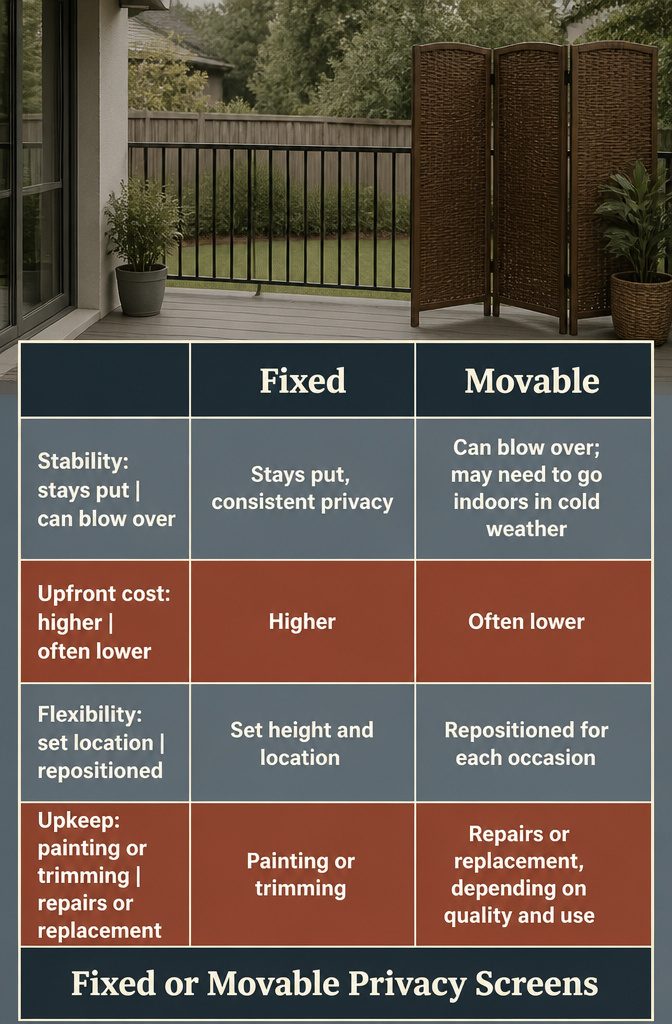
Fixed screens (fences, walls, hedges) give steady privacy and can be built to blend with the landscape. Movable ones (curtains, folding screens, portable panels) suit small spaces and changing needs.
On a patio or balcony I’d pick movable. In a yard where neighbors see in daily, a permanent screen is worth the higher upfront cost, because freestanding panels can blow away in a gust.
| Fixed | Movable | |
|---|---|---|
| Stability | Stays put, consistent privacy | Can blow over; may need to go indoors in cold weather |
| Upfront cost | Higher | Often lower |
| Flexibility | Set height and location | Repositioned for each occasion |
| Upkeep | Painting or trimming | Repairs or replacement, depending on quality and use |
Recommended Products

STYLISH NATURAL WOOD: This FSC certified wood screen is made with real wood meaning no two boards have the same grain color, finish, or wood knots differing it from vinyl outdoor privacy fence screen panels.

STYLISH NATURAL WOOD: This FSC certified wood screen is made with real wood meaning no two boards have the same grain color, finish, or wood knots differing it from vinyl outdoor privacy fence screen panels.

【Customizable Layout for Any Space】 Featuring 6 interlocking panels (each 45.5" W × 15.7" D × 72" H), this freestanding fence panel offers a fully flexible layout to fit your unique outdoor needs. Whether you set it up as a deck privacy screen to define your seating area or as a stylish divider to separate different garden zones, it delivers the perfect balance of modern elegance and practical function
6. Decorative Aluminum Screens
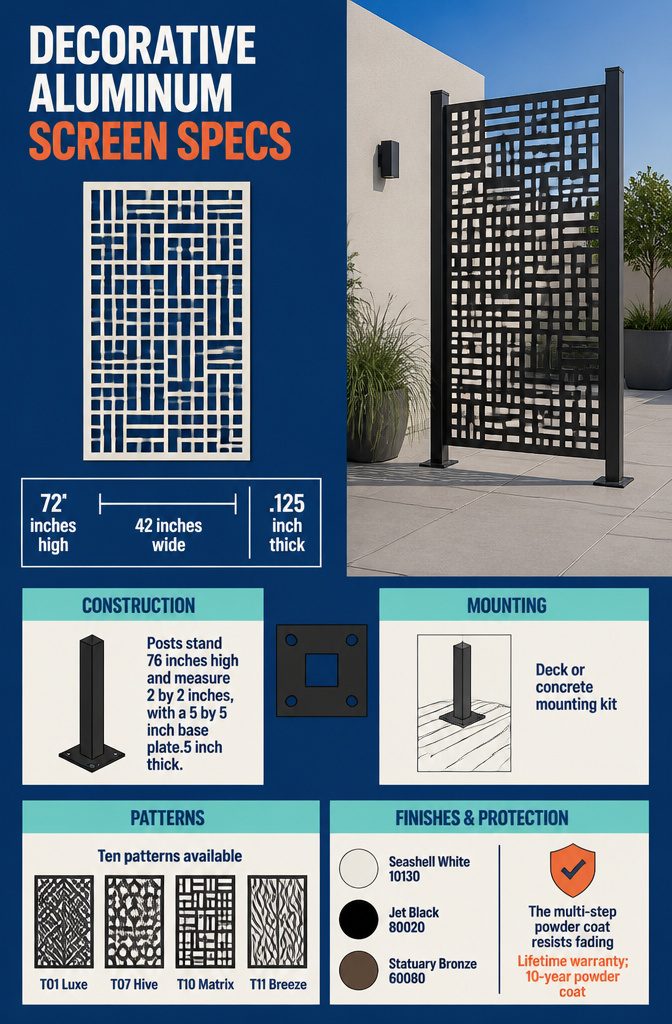
Trex aluminum panels suit modern patios, and the specs are easy to plan around:
- Each panel is 72 inches high and 42 inches wide, only .125 inch thick, and made from US-made aluminum.
- Posts stand 76 inches high and measure 2 by 2 inches, with a 5 by 5 inch base plate .5 inch thick.
- A mounting kit anchors the posts to a deck or concrete patio.
- Ten patterns are available, including T01 Luxe, T07 Hive, T10 Matrix and T11 Breeze.
- Finishes include Seashell White 10130, Jet Black 80020 and Statuary Bronze 60080.
- The multi-step powder coat resists fading and carries a lifetime warranty plus a 10-year powder-coat warranty.
Skip these if you want a living or natural look. Cut metal reads as architecture, not garden.
Recommended Products

This expandable faux ivy fence privacy screen are made of real woods with realistic look artificial leaves.Free replacement within 3 months if you are not satisfied with our products.

Made of glass-filled polypropylene, a UV- stable material which prevents any scratches

Soft Pink Rose Cluster Privacy Fence – Designed with lifelike green leaves and small pink rose clusters, this expandable faux greenery fence adds a romantic floral look to balconies, porches, patios, gardens, fences and walls
7. Composite Panels
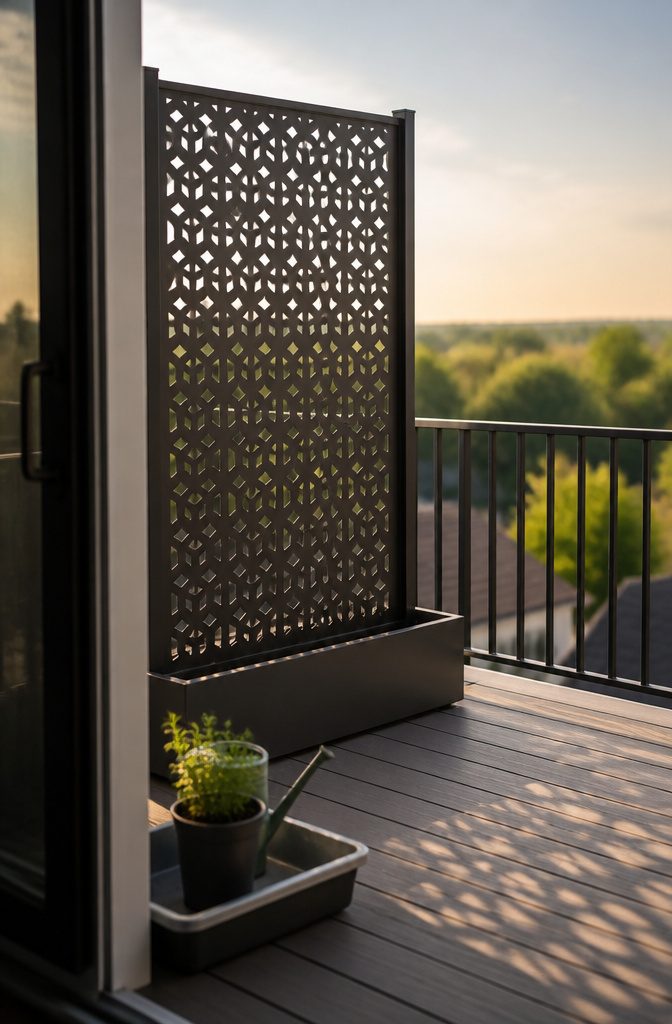
Composite panels weigh so little that one person can mount them on a fence or stand them on a patio or balcony.
Many are double-sided, which helps when both your side and the neighbor’s side are in view. The material is weatherproof and UV-resistant, and recycled-polymer versions come in a wide range of cutout patterns.
The pattern sets how private the screen feels.
Open designs block the view while passing air and filtered light, which keeps a small space from feeling walled in. I would pick a denser pattern for the spot where you sit, since an open one gives up some privacy.
Skip freestanding composite panels in a windy spot unless you can anchor them. Light weight is the selling point, and it also lets wind push them over.
Recommended Products

Upgrade today with the 2026 Latest Upgraded Version and enjoy fuller greenery, stronger installation, and instant privacy

DIMENSIONS: Standard 6 feet high by 6 feet wide panel size, perfect for residential privacy fencing needs

Made from Solid 300×250D high-quality Oxford cloth, with an average weight of more than 160g.Protect your space from the wind, sun, and unwanted visibility.
8. Garden Art Panels
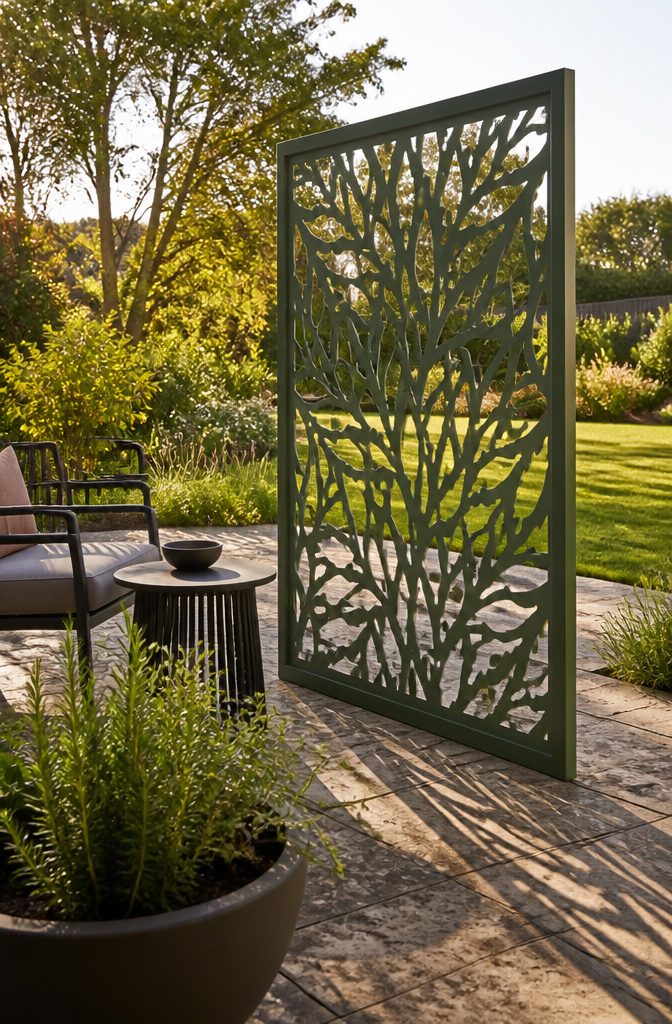
A garden art panel screens one spot, not a whole boundary.
You choose the pattern, the size and the color, so one panel or a short run can wall off a seating corner while the rest of the yard stays open.
Size it to the sightline from your chair. Place it between where you sit and whatever you want blocked, and it does its job with very little material.
Panels with laser-cut patterns cover less than a solid fence, since the openings let people see through.
Skip these panels if you need full-height privacy along a property line, because a decorative panel won’t seal a yard the way a full fence does.
For a single patio corner, I think it’s one of the better-looking ways to get a private spot.
9. Fence Toppers
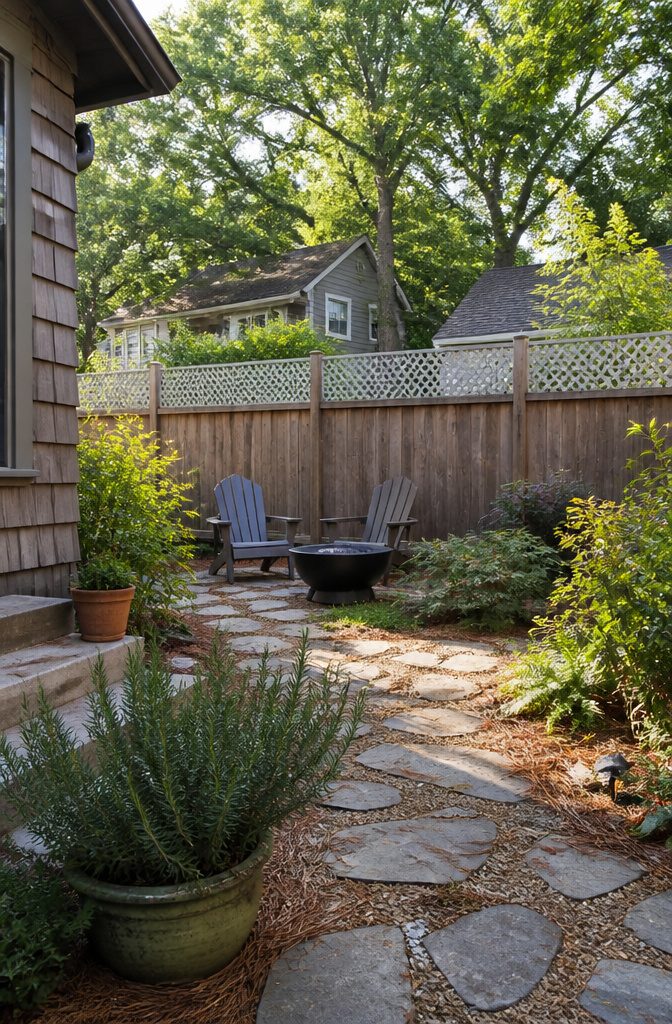
A fence topper is a lightweight composite panel that sits on top of a fence or wall you already have, adding a decorative border along the top edge and extra privacy.
It suits a yard where the fence stands solid but is too short, so neighbors on a deck or a second floor can still see over it. The light material keeps the added load on your existing posts small.
Adding height can push a fence past the legal limit, so check local zoning and HOA fence height rules before you buy. A quick call to your city or HOA office settles it.
Skip this idea if you have no fence or wall. A topper needs something to sit on, and a freestanding screen is the better route.
Recommended Products
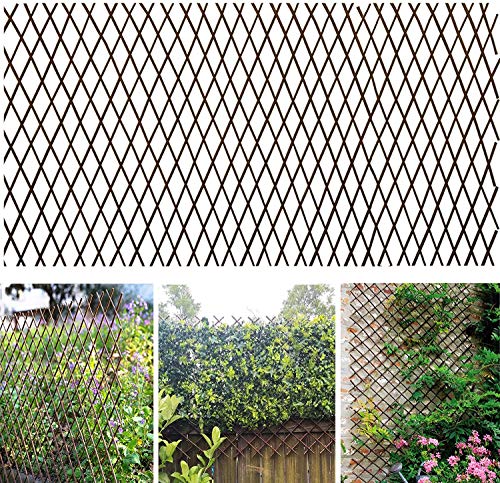
Willow Garden Trellis:This vine trellis are made of 100% real willow,willow sticks is are about 1/4” to 3/8” thick

EASY INSTALL: Installs without digging holes, pouring concrete, or tearing up your yard.

Premium Quality: The UPGRADE privacy screen for fences is made from 170 GSM non-recycled High-Density Polyethylene (HDPE). This ensures lasting durability, reliable privacy protection, and excellent weather resistance. A high-density composition makes it a dependable solution for outdoor privacy needs.
10. Metal Privacy Screens
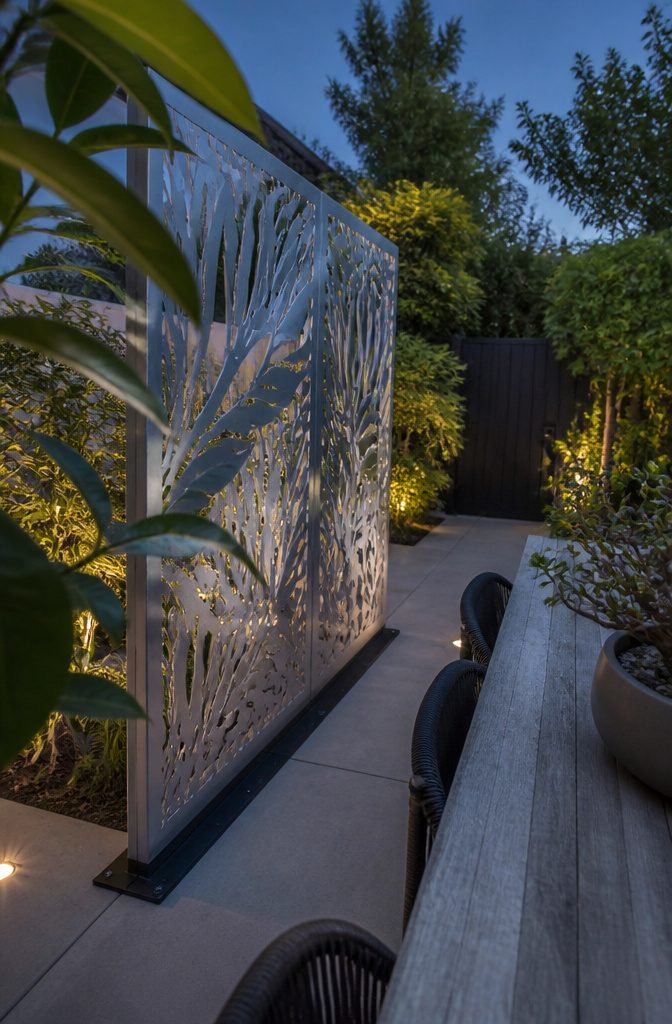
Laser-cut galvanized steel panels add a decorative pattern that a plain wood screen doesn’t.
The galvanized finish is rust resistant, so they hold up outdoors. They can be mounted to a wall or fence, or stand alone as a divider.
A freestanding panel must be secured to a surface for stability, and most need some assembly first. I’d choose metal when you want the screen to be a focal point, not just a barrier.
Renters who can’t drill into a deck or patio should skip this one. Without anchoring, a freestanding panel won’t stay steady, and a screen that needs no fasteners will serve you better.
Recommended Products

1 SCREEN PURCHASE: You will receive preassembled materials to construct 1 cedar wood outdoor privacy screen in a charcoal finish with your purchase

(Breathable Material with Some Visibility Through) Made with 100% new high density polyethylene(HDPE) material--no recycled materials used,more healthy and safe. Allow breeze and light pass through for better comfort space. Commercial solid fabric can achieve 95% UV protection to meet your requirement.Deck Shield Cover is perfect for Backyard Deck, Patio, Balcony Pool, Porch Railing.

【Customizable Layout for Any Space】 Featuring 6 interlocking panels (each 45.5" W × 15.7" D × 72" H), this freestanding fence panel offers a fully flexible layout to fit your unique outdoor needs. Whether you set it up as a deck privacy screen to define your seating area or as a stylish divider to separate different garden zones, it delivers the perfect balance of modern elegance and practical function
11. Faux Boxwood Panels
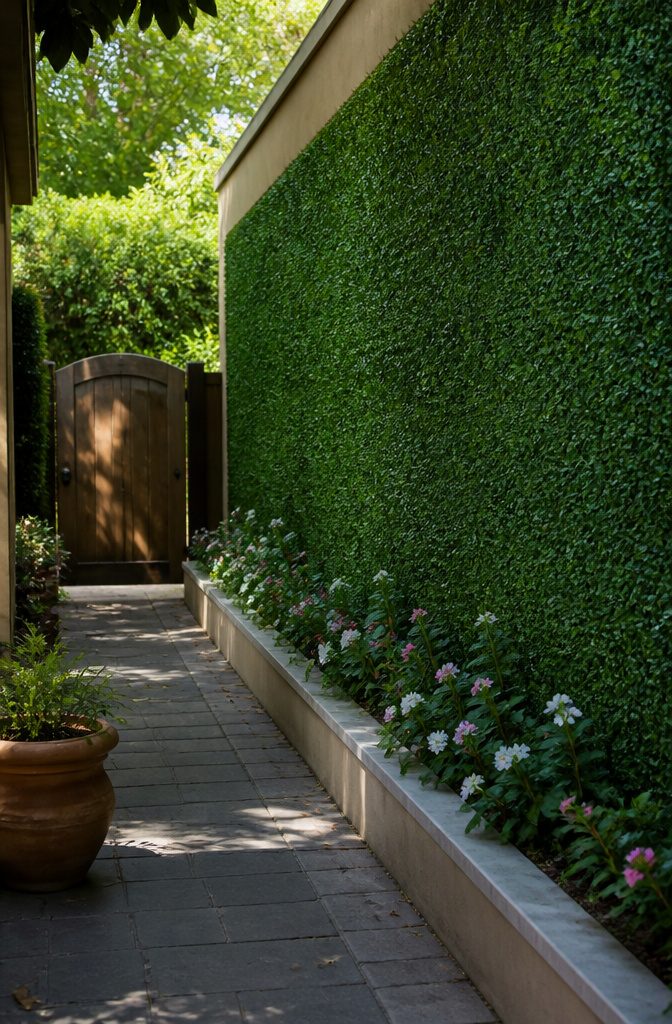
Faux boxwood panels give you a green wall with no watering, pruning or trimming. Secure them in a planter or mount them on a fixed wall, and the hedge looks the same in July and January.
Real boxwood and arborvitae are low-maintenance as living screens go, but they still need water while they establish, some shaping, and time to fill in. Panels give full coverage the day they go up.
Skip them if you want living plants, or if artificial greenery bothers you up close. A wall of identical panels can look flat next to real shrubs, and it won’t change with the seasons.
12. Wood Fence Wall Kits
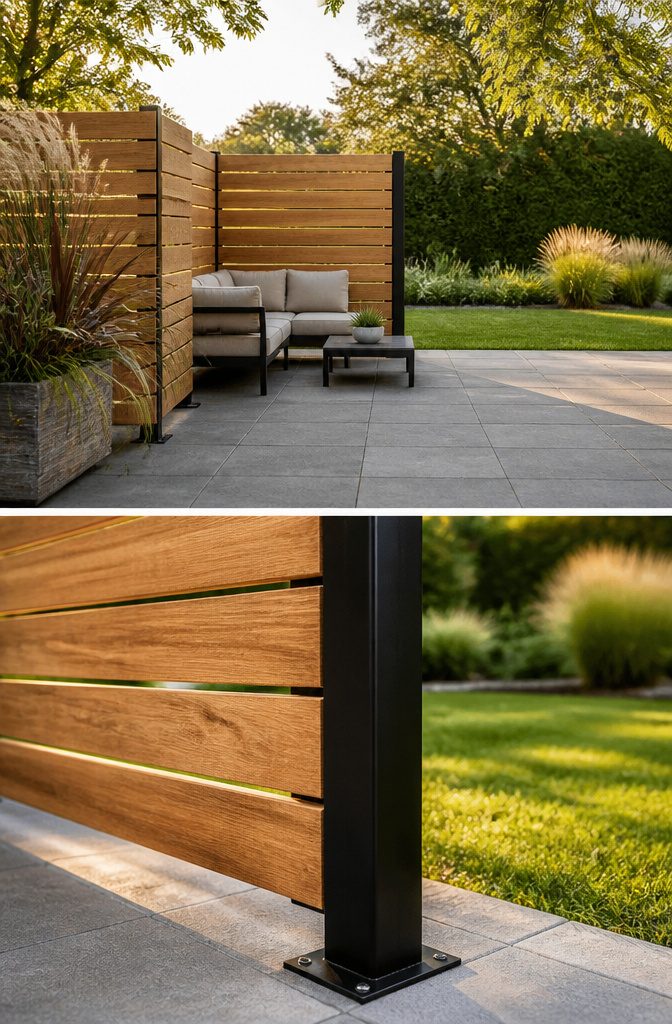
A wood fence wall kit pairs horizontal wood planks with aluminum end posts.
You can size it to the length of your patio edge or the corner you want enclosed. Because the posts anchor each end, a DIY installer mostly stacks and fastens planks instead of designing a fence from scratch.
Horizontal boards also look different from vertical ones. They make a short run read wider and more modern, while vertical boards draw the eye up and look more traditional.
I’d skip this one if you want a portable screen you can move next season, since the posts are meant to stay put.
It’s also a poor pick for a fully solid sound barrier. A plank wall gives privacy from view, not quiet.
13. Planters With Trellis
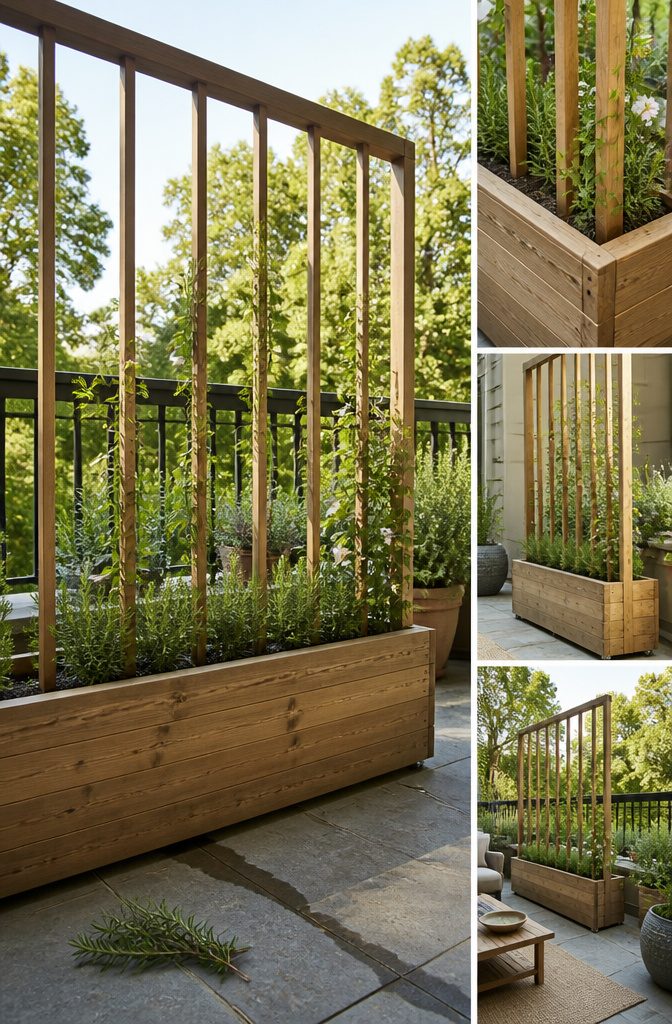
A planter with an attached vertical trellis is a privacy screen you can move.
The box holds the roots while vines or flowers climb the trellis, so it works on a patio or balcony where nothing can go in the ground.
Set several units side by side and they form a whole wall. You can rearrange them when the sun shifts or when you move.
I like rosemary in one of these boxes, since you get something to cook with while the screen grows in.
Skip this option if you want privacy on day one.
Vines need a full season to fill in, so the trellis will look thin at first. A solid panel is the better buy for an immediate screen.
Match the Screen to Your Yard
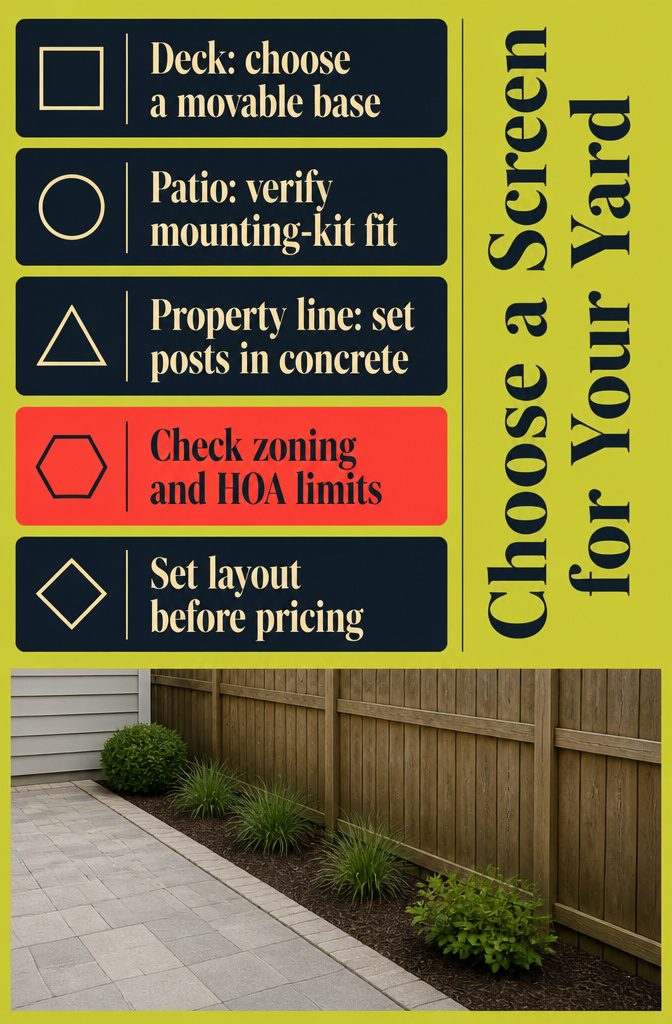
Privacy level and layout narrow the choice faster than style does, and each setup mounts differently.
- A little extra privacy on a deck: a screen with its own frame or base sits on the boards and can move later. Skip anything that needs digging.
- A patio: a mounting kit holds the panel in place without breaking up the surface. Check that the kit suits your paving before you buy.
- Permanent coverage along a property line: posts set in concrete give the firmest hold. Mark utility lines before digging.
- Rules: check local zoning and HOA rules on height, style and material before you buy. Some limit all three, and a rejected screen is expensive to take down.
- Cost: it varies by material and installation, so settle the layout first and price it second.
Materials and Upkeep
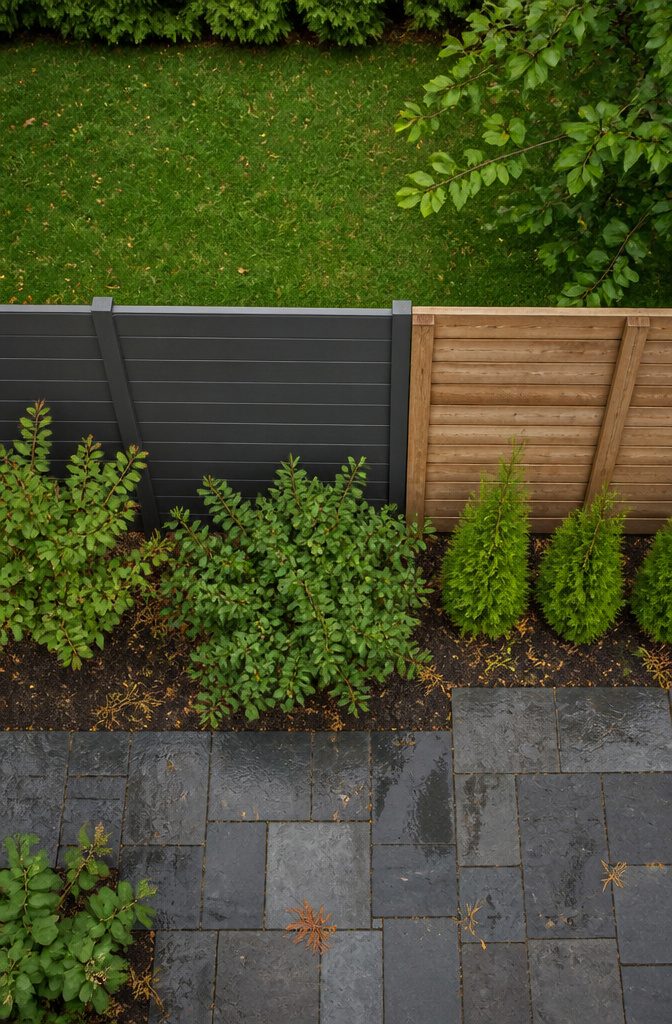
Vinyl asks for the least upkeep of any material here, and it costs more than wood up front.
Powder-coat aluminum is low-maintenance and fade-resistant. Galvanized steel gives the same sleek, industrial look with similar durability.
Composite stands up to weather and UV. Cedar and redwood look warmest, but they need periodic sealing or staining, so I’d choose them only if the grain matters to you.
Plants are the other route.
Arborvitae, boxwood and laurel are the low-maintenance picks, though a hedge takes a few seasons to fill in. For the least work, go with vinyl, composite or powder-coat aluminum, and save wood and hedges for when appearance comes first.
Frequently Asked Questions
What is the best material for a backyard privacy screen?
For the least upkeep, choose vinyl, composite or powder-coat aluminum.
Cedar and redwood look warmest but need periodic sealing or staining. Hedges, or lattice with climbing plants, suit a natural look, and curtains or other movable screens suit a small patio or balcony.
If you want the most privacy, pick solid stockade panels over lattice, since they block sightlines and cut more noise.
How can I style a backyard privacy screen?
Match the styling to the look you want.
For a natural feel, grow climbing plants or hang planters on the screen. For a boho feel, add macrame hangings, ceramic planters, outdoor curtains or fairy lights.
For a more elegant feel, paint the screen a soft color, hang outdoor artwork or add a water feature. For a modern look, use metal or vinyl with geometric shapes and a simple color palette.









